ダイアログデザインとは?実際に機能する AI 会話の構築
Turn this article into takeaways for your work.


Each assistant summarizes the article only for you and suggests best practices for your work.
ある通信会社が顧客サービスチャットボットを導入しました。料金請求、アカウント変更、障害についての質問に答えることができました。ユーザーが「解約したい」と入力します。ボットは「本日はどのようなご用件でしょうか?」と返答します。ユーザーが「アカウントを解約する」と再入力すると、ボットは「アカウント関連のご質問にお答えします。ご請求情報を更新されますか?」と回答しました。
解約フローを誰も設計していなかったのです。ユーザーは怒って電話をかけてきました。ボットは技術的に動作していましたが、ダイアログデザインは完全に失敗していました。
ダイアログデザインとは、AI システムと人間の会話を、意図した目的を確実に果たし、予期しない入力を適切に処理し、ユーザーをソーシャルメディアに向かわせるような苛立ちを生まないよう構造化する規律です。
ダイアログデザインの対象範囲
ダイアログデザインは、UX デザイン、言語学、AI システムアーキテクチャの交差点に位置します。ボットが何を言うかだけでなく、目標に向かって会話をどう構造化するかが問題です。
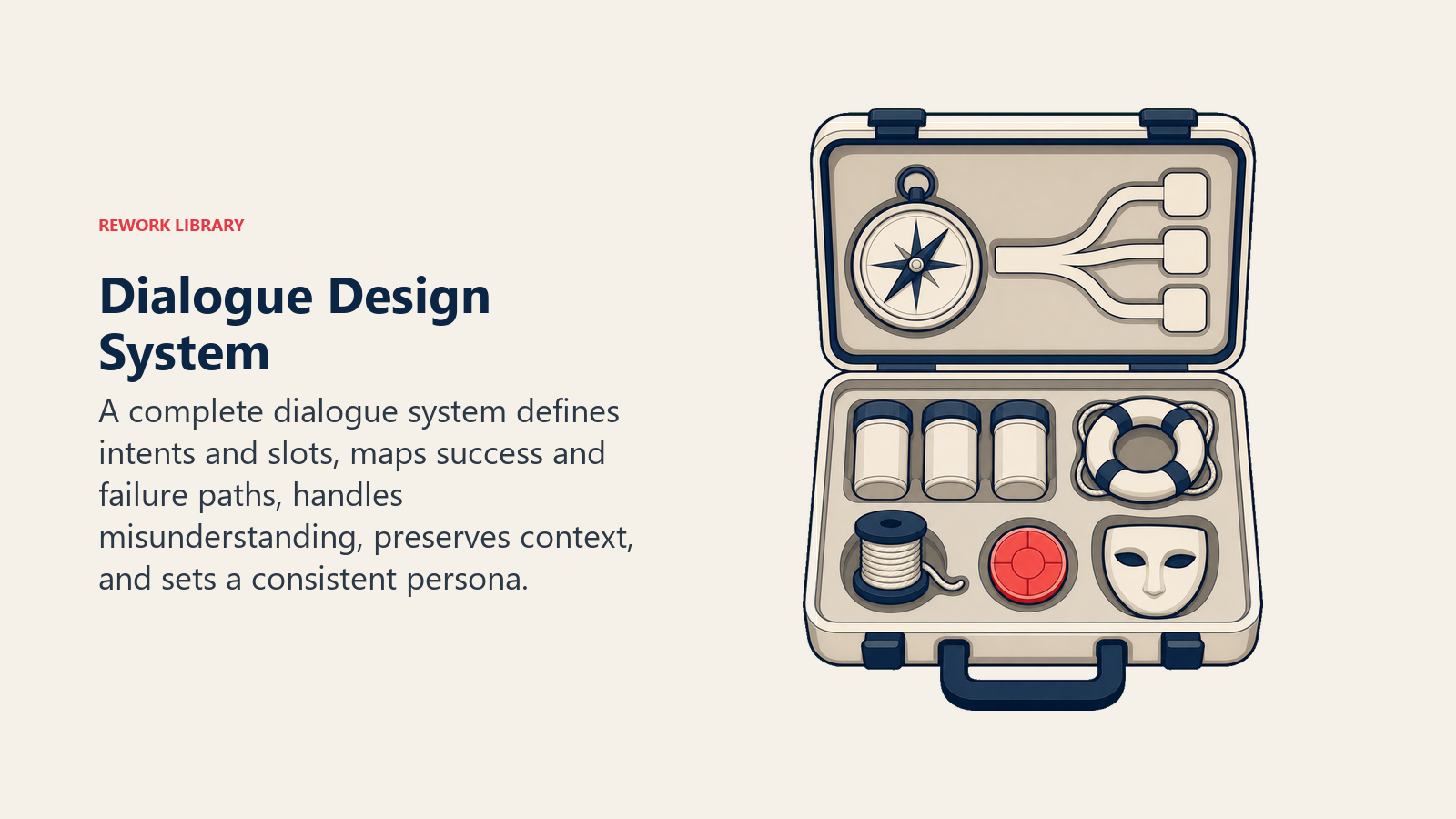
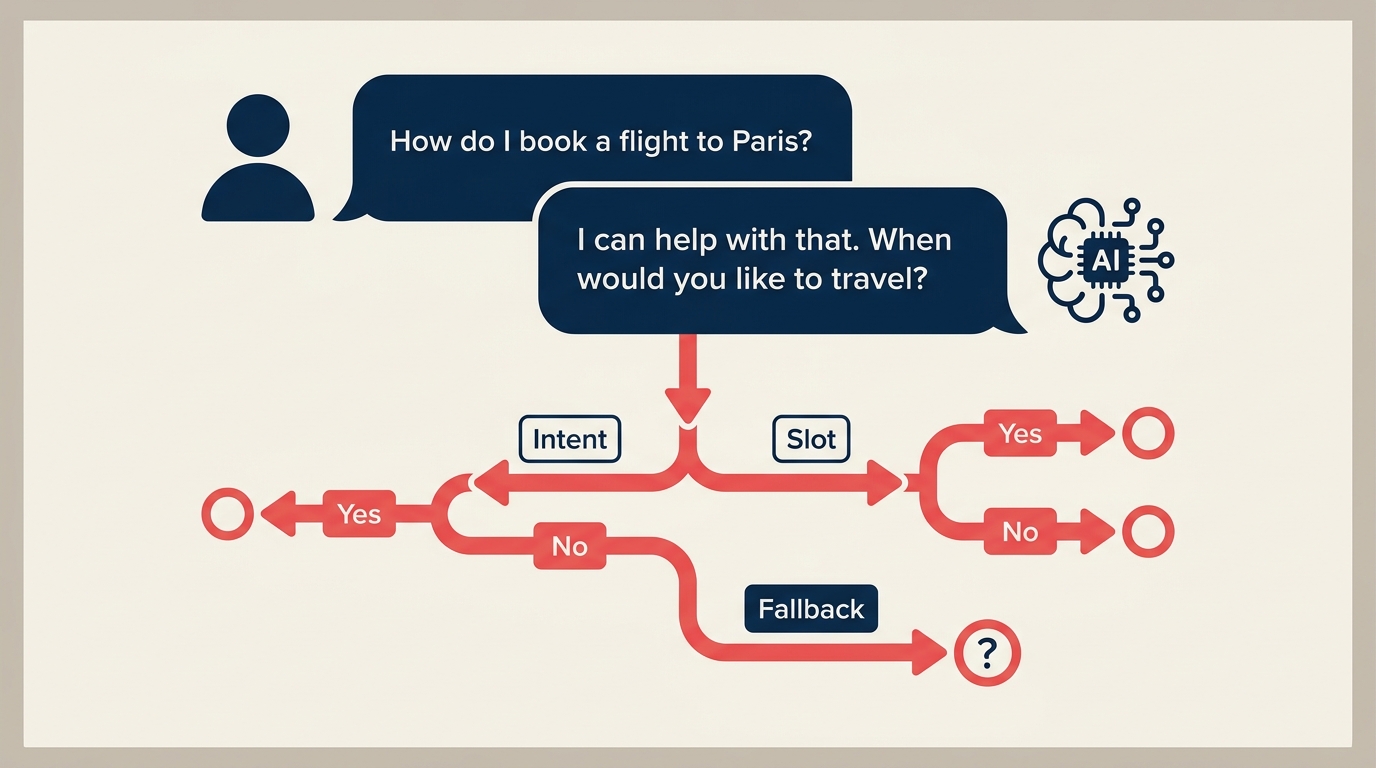
インテントとスロットの設計は、システムが理解できることを定義します。インテントはユーザーの目標のカテゴリです(「予約を取る」「注文状況を確認する」「価格情報を得る」)。スロットはそのインテントを実現するために必要な変数です(「いつ」「注文番号は」「どの製品か」)。ダイアログデザインは、システムが処理するインテント、収集が必要な情報、そしてその順序を決定します。
フロー設計は会話のパスを描きます。目標指向のタスクでは、ハッピーパス(ユーザーが必要な情報を提供し、タスクが正常に完了する)、明確化パス(ユーザーが曖昧な入力を提供し、システムが追加情報を必要とする)、エラーパス(システムが理解できない、またはユーザーが無効な入力をする)、エスカレーションパス(会話がシステムの範囲を超え、人間に引き継ぐ)を定義することを意味します。
フォールバック処理は、システムが理解できないときに何が起きるかを決定します。フォールバックの設計が悪いことがダイアログへの苛立ちの源になることがほとんどです。「理解できませんでした、別の言い方をしてください」をひたすら繰り返し、代替案を提示せずエスカレーションもしないシステムは、ダイアログデザインの失敗が生む問題であり、良い設計によって防ぐことができます。
ペルソナと声は AI がどのように自身を表現するかを定義します。トーン、フォーマリティ、回答の長さ、ユーザーの名前を使うかどうか、問題が起きたときの謝罪の扱い方: これらの選択が、インタラクションの雰囲気を形作ります。金融サービスのアシスタントは消費者向けリテールのチャットボットとは聞こえ方が違いますが、それはルールによるものではなく、意図的なペルソナ設計の結果です。
エスカレーション設計は、会話がいつどのように人間に引き継がれるかを定義します。エスカレーションパスのないダイアログデザインは、AI では解決できない問題を抱えたユーザーを閉じ込めます。適切なトリガーの選択、引き継ぎ時のコンテキスト保持、転送前のユーザー期待値の設定など、エスカレーションを上手く設計することは、顧客満足度に大きく影響します。
ルールベースから LLM ベースのダイアログへの移行
チャットボットの歴史の大部分において、ダイアログデザインは明示的な決定木の構築を意味していました。すべてのパスを事前に想定してコーディングする必要がありました。ユーザーが X と言ったら、ノード Y へ進む。これによりシステムは予測可能になりましたが、脆くもなりました。設計者が想定したことしか処理できなかったのです。
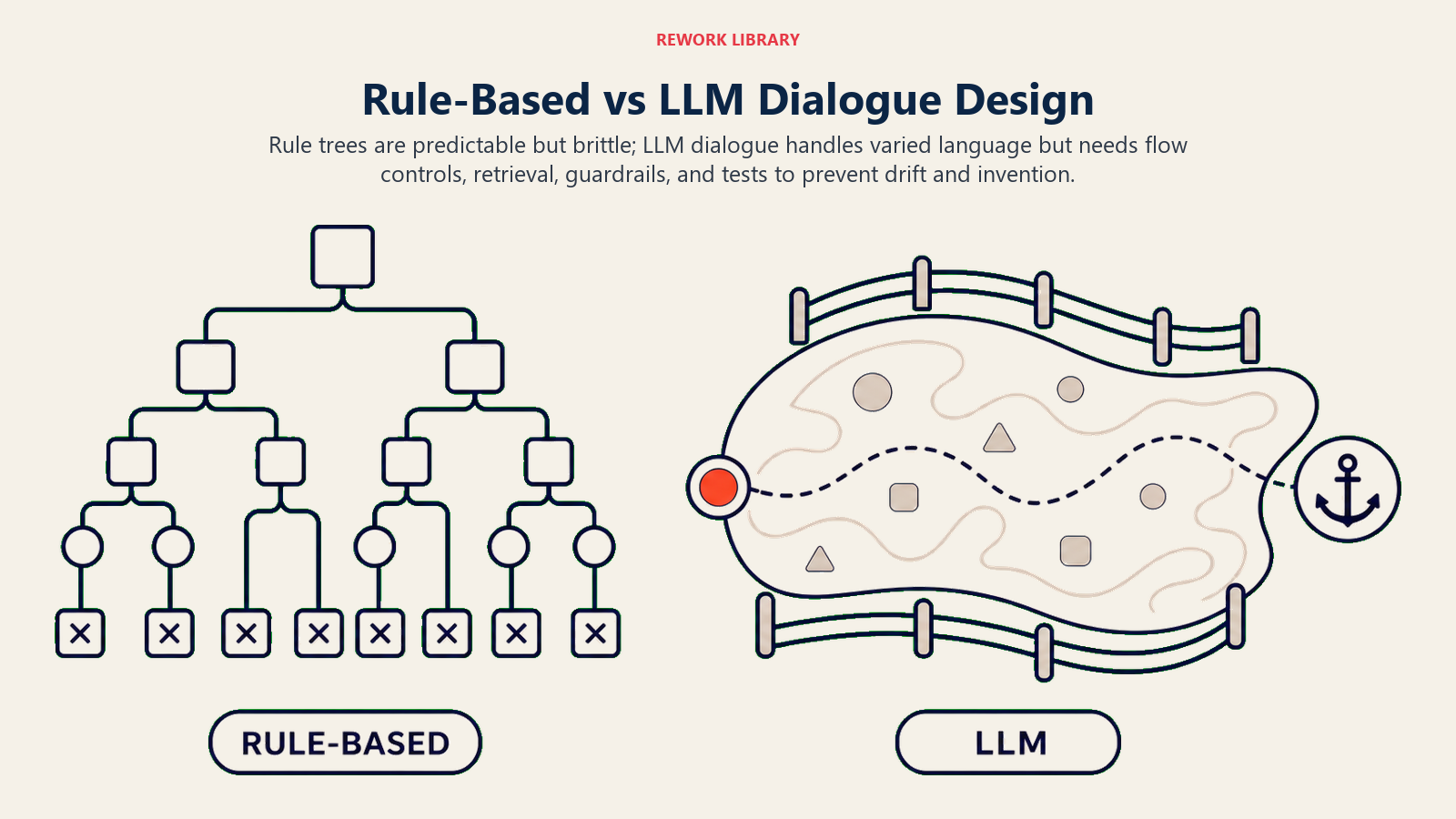
大規模言語モデルはこの設計の課題を大きく変えました。LLM ベースの会話 AI は、明示的にコーディングされたことのない入力を理解して応答できます。ユーザーが同じインテントを何十通りもの方法で表現でき、モデルはすべてを処理します。これによってルールベースシステムの脆さの多くが解消されました。
一方で LLM は異なる設計上の課題をもたらします。明示的なフロー制御がなければ、会話は脱線することがあります。モデルは過度に親切になり、意図したスコープ外の質問に答えようとすることがあります。知らないことについて答えを作り上げることもあります。同じ状況を会話ごとに異なる形で処理する可能性もあります。
LLM ベースシステムの現代的なダイアログデザインでは、プロンプトエンジニアリングでシステムの目的と制約を定義し、フロー制御で会話を目標に向けて誘導し、ガードレールでスコープ外の動作を防ぎます。設計者の仕事は、明示的な決定木の構築から、モデルが動作するコンテキストと制約の設計へと移行しています。
効果的なダイアログのためのデザインパターン
段階的な開示は情報を一度にすべて要求するのではなく、段階的に収集します。名前、日付、時間の順に質問する予約フローは、3 つ同時に聞くよりも会話らしく感じられ、認知負荷も軽減されます。
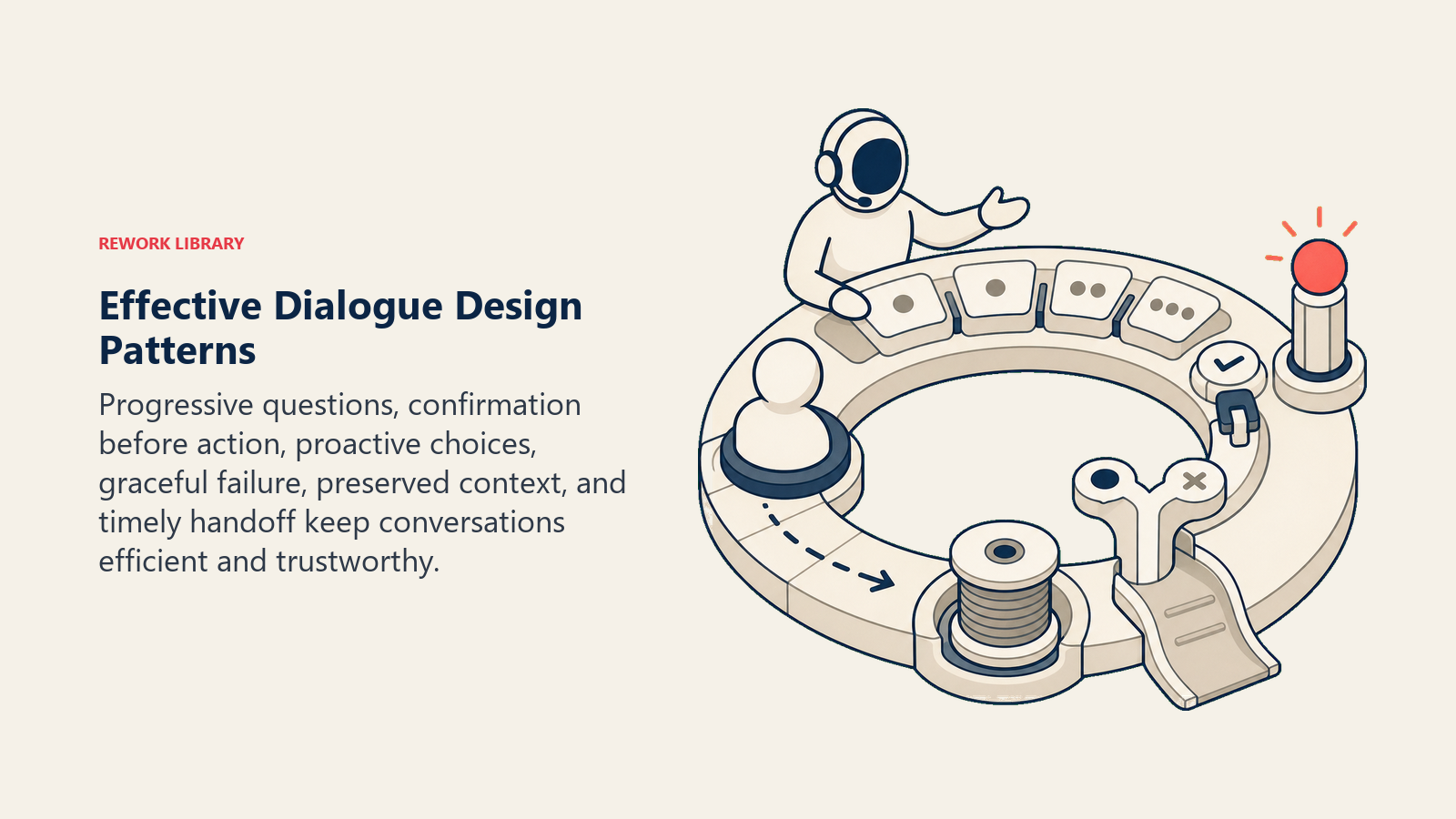
アクション前の確認。 状態を変えるアクション(フォーム送信、支払い処理、メッセージ送信)では、良いダイアログデザインはアクションを実行する前に確認を取ります。これによりミスが減り、ユーザーの信頼が高まります。
積極的なガイダンス。 ユーザーの入力が曖昧または不完全な場合、選択肢を提示することがオープンな質問より効果的です。「X のことですか、それとも Y ですか?」という形は「どういう意味か教えていただけますか?」より機能します。
graceful degradation(優雅な失敗)。 AI が要求に応えられない場合、その失敗は不透明ではなく、情報的で役立つものであるべきです。「直接返金の処理はできませんが、対応できる請求チームにおつなぎします」は設計された失敗です。「その要求は理解できません」はそうではありません。
コンテキストの保持。 ユーザーは会話が以前に言ったことを覚えていることを期待します。セッション内で状態を維持しないダイアログデザインは、毎回コンテキストを再説明しなければならないユーザーを苛立たせます。
音声インターフェースのダイアログデザイン
AI 音声エージェントと音声インターフェースは、オーディオチャネル特有のダイアログデザインの課題を提示します。ユーザーは言われたことを読み返すためにスクロールできません。ターンは呼吸と集中力の持続時間によって制限されます。音声認識のエラーは、どのルールも想定しなかった入力を生み出します。
音声向けダイアログデザインでは、確認パターン、より短い応答の長さ、明確なターン交代の合図により大きな重みが置かれます。音声 AI から人間のエージェントへのエスカレーションパスは、冷たい転送ではなく温かい引き継ぎのように感じられる必要があります。これらの要件は、テキストベースの設計とは異なる方向性を示しています。
ダイアログデザインはなぜビジネス機能なのか
ダイアログデザインが貧弱だと、顧客向けアプリケーションへの AI 投資の ROI が損なわれます。ユーザーを電話に向かわせるほど苛立たせるチャットボットは、節約できるコストより多くのサポートコストを生み出します。質問の順序が間違っていたり重要な情報を収集し損ねる営業資格確認ボットは、単純なウェブフォームより質の悪いリードを生みます。
ダイアログデザインは一度きりの活動ではありません。デプロイ後の会話ログの分析、特にフォールバックとエスカレーションのパスは、設計上の失敗がどこに集中しているかを明らかにします。ユーザーが行っているのにシステムが処理できていない会話こそが、次に投資すべき場所を示す最も明確なシグナルです。
ダイアログデザインを設定作業ではなく規律として扱う組織、専任のデザイナー、レビュープロセス、反復的な改善サイクルを持つ組織は、一度きりのセットアップとして扱う組織より、一貫して効果的な AI を活用したインタラクションを構築します。
関連する AI 概念
- 会話 AI - ダイアログデザインが機能するより広い技術分野
- プロンプトエンジニアリング - ダイアログシステムにおける LLM の動作を形作る入力設計
- AI ガードレール - ダイアログデザインの決定を施行する技術的制御
- AI 音声エージェント - 音声特有のダイアログデザインの課題
- 自然言語処理 - ユーザー入力を処理する基盤能力
- Human-in-the-Loop - エスカレーション設計と人間への引き継ぎパターン
- AI ハルシネーション - ダイアログデザインのガードレールが対処する重要なリスク
外部リソース
- Google Conversation Design Site - 音声とテキストのダイアログデザイン原則の包括的なリファレンス
- Nielsen Norman Group on Chatbot Design - チャットボットのインタラクションを成功または失敗させる要因についての UX 研究
- Voiceflow Blog - 会話フローの構築と改善のための実践的なガイド
ダイアログデザインについてよくある質問
ダイアログデザインとは何ですか?
ダイアログデザインとは、AI システムと人間の会話を確実に目標達成できるよう構造化する実践です。システムが処理するインテント、会話フローの構造、理解できない入力への応答方法、AI が提示するペルソナ、そして会話がいつどのように人間にエスカレーションされるかを網羅します。
ルールベースのチャットボットと LLM ベースの会話 AI でダイアログデザインはどう違いますか?
ルールベースのチャットボットは、設計者がすべての会話パスを明示的に想定する必要があり、予測可能ですが脆いです。LLM ベースのシステムははるかに広い範囲の入力を理解できますが、異なるデザインアプローチが必要です。システムのスコープを定義するプロンプトエンジニアリング、会話を目標に向けて維持するフロー制御、スコープ外の動作を防ぐガードレールなどです。設計者の仕事は、決定木のマッピングからコンテキストと制約の形成へと移行します。
最も一般的なダイアログデザインのミスは何ですか?
フォールバックとエスカレーションのパスを軽視することです。ダイアログデザインの多くの努力はハッピーパス(ユーザーが想定通りのことを言い、タスクが完了する)に向けられます。しかしユーザーは誤解したり、トピック外の質問をしたり、システムが対応できない要求をしたり、苛立ったりもします。よく設計されたフォールバックのないシステムはユーザーを混乱のループに閉じ込め、エスカレーションパスのないシステムはユーザーを罠にかけます。これらのパスは主要なフローと同じくらいの設計上の注意を必要とします。
デプロイ後にダイアログデザインをどのように改善しますか?
会話ログを分析し、特にユーザーが会話を放棄した場所、繰り返した場所、フォールバックハンドラーが最も頻繁に発動した場所を確認します。これらのパターンが、設計したものとユーザーが実際に試みることの間のギャップを明らかにします。実際の会話データに基づく反復的な改善は、仮定に基づく事前設計より一貫して優れた結果をもたらします。

Co-Founder, Rework.com