Social Media for Dentists: Content Strategy, HIPAA Compliance, and Before/After Photos That Build Trust
Turn this article into takeaways for your work.


Each assistant summarizes the article only for you and suggests best practices for your work.
Social media for dentists works best when it reduces the anxiety that keeps people from booking, then feeds your local search presence. Focus on Facebook and Google Business Profile for reach, Instagram for cosmetic before/after cases, and TikTok for under-35 patients. Post 3-4 times a week with consent-documented, HIPAA-compliant content, and track new-patient source on your intake form.
Social media in dentistry isn't optional anymore, but most dental practices are doing it wrong. Not wrong in a catastrophic way, but wrong in a way that makes it feel like effort without return. Generic "Smile Monday" posts, stock photo infographics about flossing, and sporadic before/after photos with no context or consent protocol don't build trust or generate appointments.
The practices growing their patient base through social media are doing something different. They're showing real people (their team, their patients with consent, their community presence) in a way that reduces the anxiety barrier that keeps people from booking dental appointments. Dentistry has a specific patient acquisition challenge that social media is uniquely positioned to solve: most people who need dental care delay or avoid it because they're anxious or don't know what to expect. Authentic social content that shows the team, the environment, and real clinical outcomes addresses that anxiety before the patient ever calls.
Social media works best as part of a broader digital presence. Dental website optimization and local SEO for dental practices create the foundation that social content reinforces. Here's how to build a social strategy that's sustainable, compliant, and actually works.
Key Facts: Social Media and Dental Patient Acquisition
- 70% of patients report that a healthcare provider's social media presence influenced their choice of provider, with Facebook and Instagram being the most commonly cited platforms (PatientPop Healthcare Consumer Report, 2023)
- Before/after photo posts generate 3-5x higher engagement than educational text posts on Instagram for dental practices
Platform Strategy by Practice Type
Not every platform deserves equal investment. Your time and content budget should concentrate where your target patients actually are.
Facebook remains the highest-reach platform for dental practices targeting patients 35 and older. Community groups, local business pages, and Facebook's geographic targeting for paid content make it the most practical platform for most independent dental practices. A Facebook presence with consistent posting (3-4 times per week), active response to comments and messages, and occasional paid promotion to local zip codes can reliably generate new patient inquiries at lower cost than Google Ads for many markets.
Instagram is the platform for cosmetic and aesthetic cases. If your practice does veneers, Invisalign, whitening, or any procedure with significant visual results, Instagram is where those results reach people who are actively thinking about their smile. The audience skews 25-44, which is the ideal age range for elective cosmetic procedures. Before/after content performs particularly well here, and Instagram's carousel format allows case storytelling across multiple images.
TikTok is the fastest-growing acquisition channel for practices targeting patients under 35. Educational content, day-in-the-life videos, and myth-busting content about dentistry perform well with younger audiences who've largely grown up avoiding dental care due to cost or anxiety. The production bar is lower than Instagram, as authenticity outperforms polish here, but consistency and relevance matter. A dentist explaining "what actually happens during a root canal" in a 60-second TikTok captures people in the consideration phase who would otherwise never click an ad.
Google Business Profile (GBP) is the most underused "social" channel in dentistry. GBP allows you to post updates, photos, and offers directly to your search result listing, visible to everyone who finds you through Google Maps or local search. Regular GBP posts signal to Google that you're an active business and appear directly in front of patients at the highest-intent moment: when they're searching for a dentist. Post to GBP at least once per week. The same patient-attraction logic applies to online reputation management for dentists, where your Google Business Profile review count directly shapes which practice a prospective patient chooses.
This is where social media and SEO for a dental clinic overlap. Google's local ranking factors lean heavily on relevance, distance, and prominence, and social activity feeds prominence in two practical ways. First, fresh GBP posts and photos keep the profile active, which correlates with stronger map-pack visibility. Second, social content drives branded searches: a patient who sees your before/after reel on Instagram often searches your practice name on Google before booking, and branded search volume is a prominence signal. Treat your social calendar and your local SEO for dental practices plan as one system, not two, so every post does double duty.
| Channel | Primary job | SEO contribution |
|---|---|---|
| Google Business Profile | Convert local searchers | Direct ranking signal (freshness, photos, posts) |
| Reach patients 35+ | Branded search lift, review referrals | |
| Showcase cosmetic results | Branded search lift, backlink-worthy portfolio | |
| TikTok | Reach under-35 patients | Brand awareness feeding name searches |
Content Types That Work for Dentists
The content categories that consistently perform for dental practices:

Team culture posts: Photos and short videos of the team, behind-the-scenes moments, new staff introductions, office celebrations. These humanize the practice and reduce the fear factor. A patient who has seen the hygienist's face 15 times before their first appointment arrives with a very different anxiety level than one who walks in blind. Investing in patient comfort and amenities gives you even more genuinely shareable content: updated waiting rooms, spa-style features, and technology upgrades all photograph well and signal quality.
Educational content: Short explanations of procedures, myth-busting content ("You don't need to wait six months between cleanings if you have gum disease. Here's why."), and "what to expect" content for common procedures. Educational posts build authority and answer the exact questions patients Google before calling. A patient education content strategy that runs across your blog and FAQ pages gives your social team a constant supply of research-backed material to adapt into short-form posts.
Community involvement: Sponsoring a local sports team, participating in a charity event, hosting a school dental education program. These posts signal community investment and resonate particularly well on Facebook with established community members.
Patient appreciation: With explicit consent and HIPAA-compliant documentation, patient appreciation posts (celebrating milestones like treatment completion, sharing patient gratitude messages) create social proof that's far more persuasive than any ad.
Office environment: Tours of your newly renovated space, your new equipment, your amenities. A prospective patient who has seen your operatory, your sterilization area, and your consultation room before arriving has already partially overcome the anxiety of the unknown.
Before/After Photos: The Right Way
Before/after clinical photography is the highest-performing content category for cosmetic dental practices on Instagram, and the category with the most compliance risk if handled incorrectly. The right way to do this isn't complicated, but it requires a process.
Clinical photography standards: Consistent lighting (ideally a ring light or professional photo light kit, not overhead operatory lights), consistent background, consistent retraction technique, and standardized angles (frontal, lateral, and close-up views). Cases photographed inconsistently look unprofessional even when the clinical outcome is excellent.
Consent documentation: Every patient whose clinical photography you intend to use on social media, your website, or any marketing material must sign a written photo release. This is separate from your general treatment consent form. The release should specify: the purpose (marketing and educational use on social media, website, and printed materials), the platforms, and whether it's revocable. Keep signed releases in the patient record.
HIPAA-compliant photo release language must not include Protected Health Information (PHI) unless the patient has specifically consented to its disclosure. For dental before/after photos, this means: don't include the patient's name, date of birth, or treatment dates in social posts. The procedure type ("porcelain veneers," "full smile makeover") is generally acceptable to mention without identifying PHI, but consult with a healthcare attorney for your specific state regulations. The HHS Office for Civil Rights has settled enforcement actions against dental practices specifically for social media disclosure of patient PHI. The consequences are real and documented.
Instagram formatting: Square or portrait format (4:5 ratio) performs best for Instagram feed posts. Carousel posts (swipe-through) allow you to show multiple angles of a case, which performs better than single images. Add descriptive text: not just "before and after," but the patient's presenting concern, the treatment provided, and the outcome. This builds educational value alongside the visual impact. Practices that invest in cosmetic dentistry revenue strategy have a natural content advantage here. High-visibility cases like veneers and whitening generate the before/after portfolio that drives Instagram engagement.
HIPAA Compliance on Social Media
HIPAA compliance on social media is more intuitive than it sounds, but the specific violations that create liability for dental practices are worth knowing explicitly.
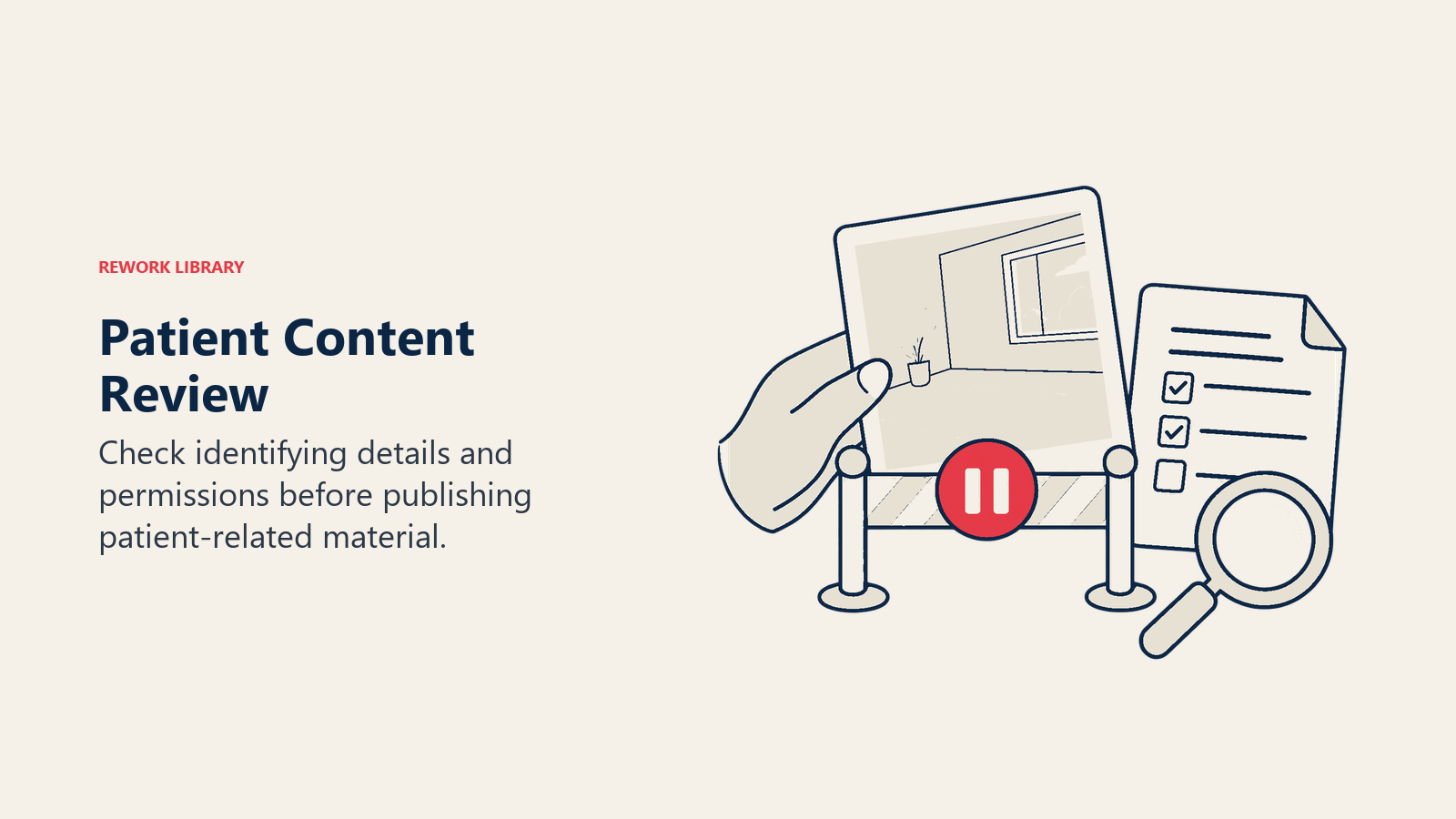
What you can post without issue: Team photos, office environment, educational content about procedures (without patient identifiers), community involvement, your own dentist's credentials and accomplishments.
What requires explicit patient consent: Any photo, video, or story that could identify a patient, including before/after photos even if the patient's face isn't shown (if the patient could be identified by other features, treatment details, or context), patient testimonial videos or quotes that include their name, and any content describing a patient's specific dental history or treatment.
Handling comments and DMs: Never respond to a comment or direct message in a way that confirms or reveals a patient's status or treatment. The HIPAA Privacy Rule summary from HHS explains what constitutes protected health information and how covered entities (including dental practices) must safeguard it. If someone comments "Thank you for fixing my crown last week, it's perfect!" the safest compliant response is a generic acknowledgment like "So glad you're happy with your visit!" that neither confirms nor denies the treatment specifics. Don't respond to DMs requesting clinical advice with clinical information; direct them to call the office.
Review response rules: Responding to Google or Yelp reviews is not technically a social media HIPAA issue, but the same principle applies. Don't confirm or deny that someone is a patient in your response. Respond generically: "Thank you for your kind words. Our team works hard to make every visit comfortable."
Staff social media policy: Your team should have a written social media policy that prohibits posting any patient-identifiable content from the practice environment, even on their personal accounts. This includes photos of operatories with patients in the chair, waiting room shots, and any content that could identify patients by appearance or context. Clear communication policies extend beyond social media. Patient communication strategies cover the broader framework for how your team interacts with patients across every channel.
Content Calendar and Consistency
Consistency matters more than quality on social media. A practice that posts three times per week, every week, with average content will outperform one that posts twelve times in a burst and then goes quiet for two months. Algorithms favor regularity, and audiences forget about accounts that disappear.
Realistic posting frequency by practice size:
- Solo practice with no dedicated marketing staff: 3-4 posts per week (Facebook + GBP, Instagram optional)
- Practice with part-time marketing support: 4-5 posts per week across Facebook and Instagram, GBP weekly
- Practice with full-time marketing coordinator: Daily posting across platforms, active story content, TikTok presence
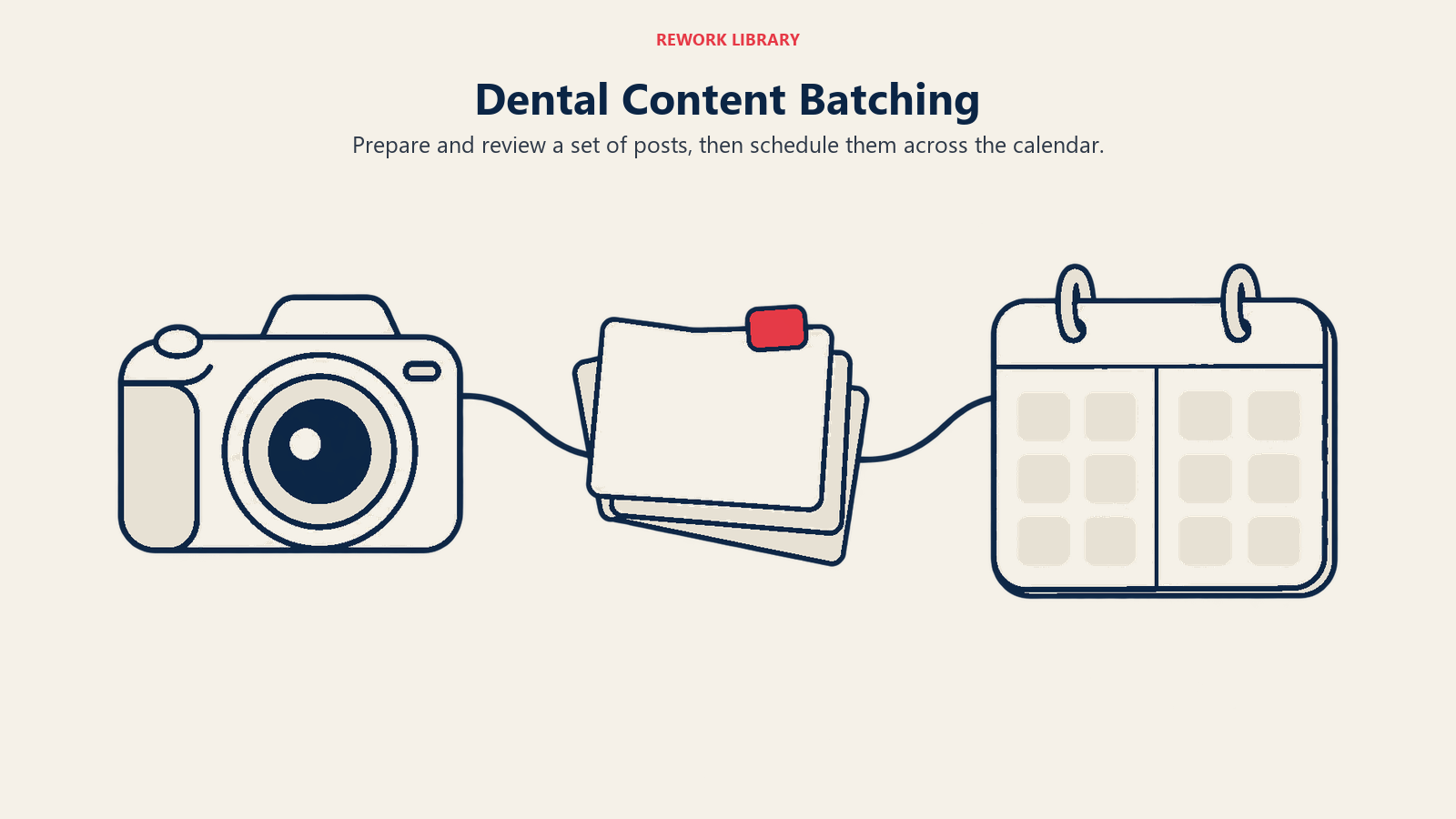
Batching content creation is the operational solution for practices without full-time marketing staff. Dedicate 90 minutes every two weeks to taking photos around the office, capturing short video clips of the team, and writing captions for the next 14 days. Schedule them in advance using tools like Later, Buffer, or Meta's native scheduling tool. Video marketing for dental clinics follows the same batching logic. Shooting a half-day of footage every month produces enough material to sustain a consistent video presence without disrupting daily operations.
Repurposing content across platforms multiplies your effort. A before/after case you photograph for Instagram becomes a GBP post, a Facebook post, and potentially a website gallery addition with minimal additional work. An educational video you shoot for TikTok can be trimmed and posted to Instagram Reels and Facebook Reels.
Measuring Social Media ROI
Social media ROI for dental practices is harder to attribute precisely than Google Ads, but it's measurable with the right systems.
Ask every new patient how they heard about the practice. Build this into your intake form. Over 3-6 months, you'll see whether "social media" or "Instagram" appears consistently in your source attribution.
Track patient source in your practice management software. If you can link social media to 5-10 new patients monthly at an average lifetime value of $4,000 per patient, the math on your social media investment becomes clear. For practices running paid social campaigns alongside organic content, Google Ads for dentists provides a useful benchmark. Comparing your paid and organic acquisition costs reveals which channel delivers better returns for your market.
Engagement benchmarks by platform for dental practices (what "good" looks like):
- Facebook: 1-3% engagement rate on organic posts
- Instagram: 2-5% engagement rate, with before/after and team posts trending toward the higher end
- TikTok: Views matter more than engagement rate; 1,000+ views per video is a reasonable baseline for early-stage accounts
The CDC's oral health data shows that a significant proportion of U.S. adults avoid dental care. Social content that reduces anxiety and demystifies procedures directly addresses one of the most documented barriers to patient acquisition.
Frequently Asked Questions
Which social media platform is best for a dental clinic?
Facebook and Google Business Profile deliver the most reliable new-patient inquiries for most practices, because they reach patients 35 and older and tie directly into local search. Instagram is best for cosmetic and aesthetic cases with strong before/after visuals, and TikTok works for reaching patients under 35. Most independent clinics should anchor on Facebook plus GBP and add Instagram only if they do cosmetic work.
Does social media help a dental clinic rank on Google?
Indirectly, yes. Active Google Business Profile posting is a direct local ranking signal, and social content drives branded searches, where patients look up your practice name after seeing your posts, which feeds the prominence factor Google uses for the map pack. Social media does not replace on-page and citation work, but it reinforces your local SEO when run as one combined system.
How often should a dental practice post on social media?
A solo practice with no marketing staff should post 3-4 times a week, mainly on Facebook and GBP. Practices with part-time marketing support can run 4-5 posts a week across Facebook and Instagram with weekly GBP updates. Consistency matters more than volume: regular posting outperforms occasional bursts.
Can dentists post before and after photos without breaking HIPAA?
Yes, with a process. Every patient whose clinical photos you publish must sign a written photo release that is separate from treatment consent, and posts must exclude protected health information such as the patient's name, date of birth, and treatment dates. The procedure type, like veneers or whitening, is generally acceptable to mention. Confirm specifics with a healthcare attorney for your state.
How do you measure social media ROI for a dental practice?
Ask every new patient how they heard about you and capture the answer on your intake form, then track patient source in your practice management software over 3-6 months. If social media links to even 5-10 new patients a month at an average lifetime value near $4,000, the return is clear. Compare those acquisition costs against paid channels like Google Ads.
Learn More

Business Consultant
On this page
- Platform Strategy by Practice Type
- Content Types That Work for Dentists
- Before/After Photos: The Right Way
- HIPAA Compliance on Social Media
- Content Calendar and Consistency
- Measuring Social Media ROI
- Frequently Asked Questions
- Which social media platform is best for a dental clinic?
- Does social media help a dental clinic rank on Google?
- How often should a dental practice post on social media?
- Can dentists post before and after photos without breaking HIPAA?
- How do you measure social media ROI for a dental practice?
- Learn More