Online Reputation Management for Dentists: Reviews, Response Strategies, and HIPAA Compliance
Turn this article into takeaways for your work.


Each assistant summarizes the article only for you and suggests best practices for your work.
Before a new patient calls your practice, they've already made a tentative judgment. They've read your reviews, looked at your star rating, and compared you to two or three competitors on Google. The dentist with 280 reviews at 4.8 stars and the dentist with 40 reviews at 4.2 stars are not competing equally for that patient, even if their clinical skills are identical.
This isn't speculation. Patient acquisition economics shift measurably based on review volume and rating. Practices that build a systematic approach to reputation management fill schedules faster, spend less per new patient, and command higher valuations when the time comes to sell or partner with a DSO.
The problem is that most practices treat reviews as something that happens to them rather than something they actively manage. A few patients leave reviews unprompted, a negative review goes unanswered for weeks, and the practice loses patients to competitors who run a tighter reputation operation. Reputation management works in concert with patient communication strategies, how your team interacts with patients at every touchpoint is what generates the positive experiences worth reviewing. This guide covers how to build a systematic reputation operation.
Key Facts: Online Reviews and Patient Decisions
- 72% of patients check online reviews before selecting a dentist (PatientPop, 2023)
- Moving from a 4.2 to a 4.8 star average can increase new patient inquiries by 25-30% (BrightLocal, 2023)
- Practices with 50+ reviews on Google convert 35% more profile visitors into calls than those with fewer than 20 (Semrush, 2024)
Review Platform Priorities for Dentists
Not every review platform matters equally. Prioritize based on patient acquisition impact:
Google Business Profile is the single most important review platform for dental practices. Google reviews appear directly in local search results and Google Maps, where the majority of new patient searches happen. A strong Google profile with consistent review velocity outweighs the combined influence of every other platform for most practices.
Healthgrades matters disproportionately for patients searching for specific procedures or practitioners by name. It's the first or second result when someone searches your name directly. If your Healthgrades profile is sparse or has a low rating while your Google profile is strong, you're losing patients at the name-search stage.
Zocdoc functions differently from the others. It's a booking platform first, review platform second. Practices that accept Zocdoc appointments will have reviews accumulate there automatically. Maintain a strong profile if you're on the platform.
Yelp has significant influence in some markets (particularly on the West Coast and in urban areas) and almost none in others. Check your existing Yelp traffic and compare it to Google before investing energy here. The platform is also notoriously aggressive about filtering reviews, which frustrates practices that can't get legitimate reviews to stick.
Focus 80% of your review generation effort on Google. Once your Google profile is strong, expand systematically to Healthgrades and any platform where you're currently below your competitors. For a deeper dive into managing the full lifecycle of reviews, dental review management covers the specific tools, workflows, and response templates that work across all major platforms.
Systematizing Review Generation
The biggest review generation mistake practices make is the passive approach: hoping satisfied patients will leave reviews on their own. Most won't. Research consistently shows that 70 to 80% of patients who would leave a positive review simply don't get around to it without a direct ask.

The three-step system that works:
1. Timing the ask correctly. The optimal moment is immediately after a positive patient interaction, before they leave the office or before the emotional memory fades. For routine appointments that go well, asking at checkout is appropriate. For more involved procedures (implant placement, Invisalign fitting, cosmetic work), a same-day or next-day follow-up text or email performs better because patients are reflecting positively on the outcome.
2. Automated follow-up. Manual review requests are unsustainable at scale. Platforms like Birdeye, Weave, and Podium integrate with your practice management software and automatically send review requests to patients after appointments. The message is short, personalized with the patient's name, and links directly to your Google review page. A well-tuned automation generates 15 to 40 reviews per month for an active practice without requiring staff involvement beyond setup. These same platforms often power dental recall and recare systems, so a single platform investment can drive both review generation and appointment reactivation.
3. In-office QR codes. Physical signage at checkout with a QR code linking to your Google review page captures patients who prefer to act in the moment. Simple framing: "Enjoyed your visit? We'd love to hear about it." This supplements digital follow-ups for patients who don't open texts or emails reliably.
One firm rule: don't incentivize reviews. Offering discounts, gift cards, or any benefit in exchange for reviews violates Google's policies and the FTC's endorsement guidelines. It also creates legal risk. The ask should be genuine, not transactional. The ADA provides a practical toolkit for managing online reviews that addresses best practices, response templates, and the ethical considerations specific to dental practices.
HIPAA-Compliant Review Responses
This is where dental reputation management gets complicated. When a patient leaves a review mentioning their procedure, diagnosis, or experience, your response options are constrained by HIPAA. Specifically, you cannot confirm or deny that someone is a patient of your practice, and you cannot disclose any protected health information in response to a review, even if the patient disclosed it themselves. The HHS Office for Civil Rights has settled cases against dental practices that improperly disclosed patient information in public review responses, with penalties in the tens of thousands of dollars.
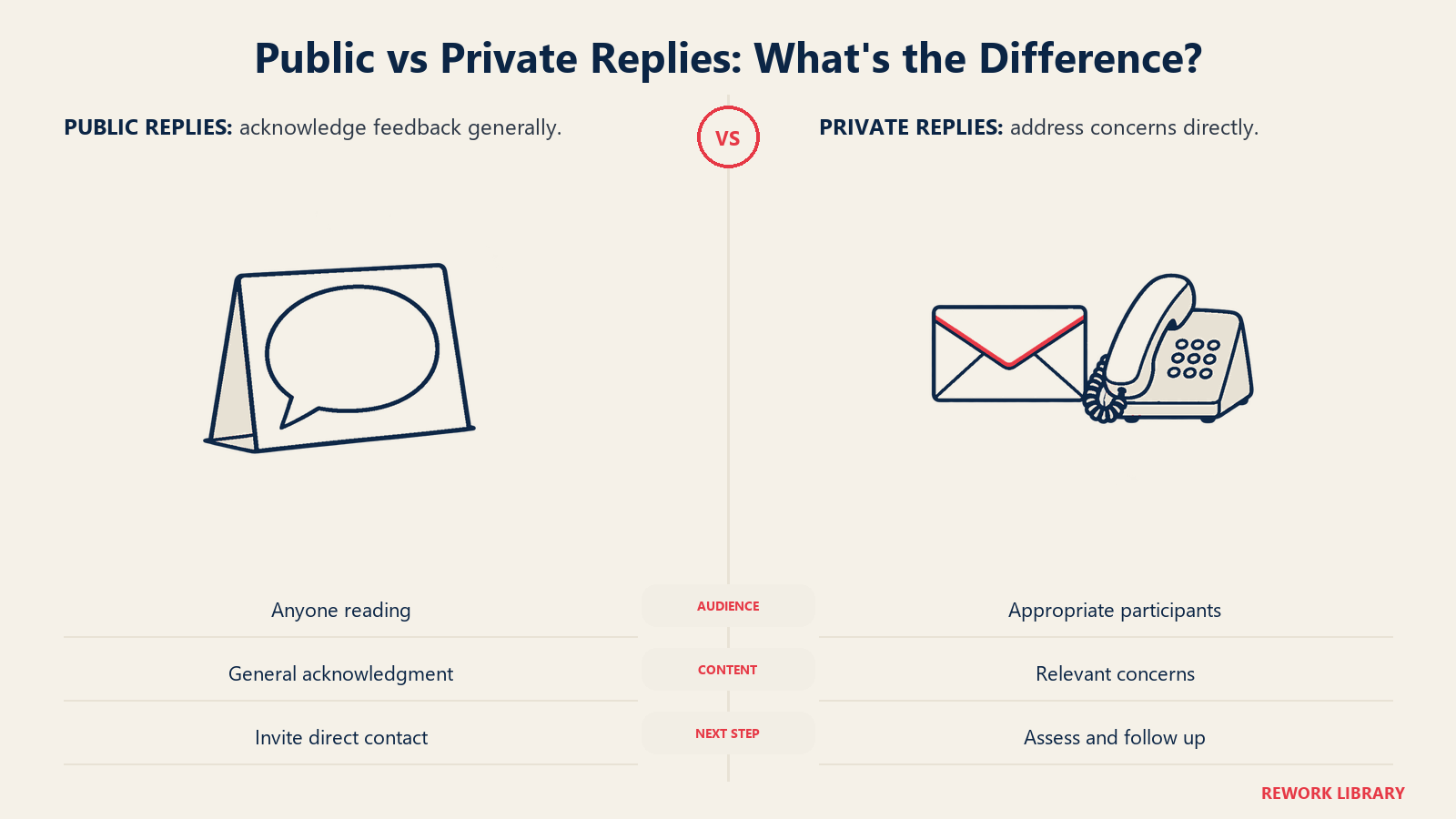
This doesn't mean you can't respond. It means you respond in a way that neither confirms nor denies patient status while demonstrating that you take all feedback seriously.
Positive review response framework:
"Thank you so much for the kind words! We're proud of the care we provide and love hearing when patients feel well taken care of. We look forward to seeing you again, and please don't hesitate to reach out if you ever have questions."
This response is warm, professional, and contains zero PHI. It doesn't confirm the person is a patient ("all patients who visit us") but it doesn't need to. The tone does the work.
Neutral review response framework:
"Thank you for sharing your experience. We take all feedback seriously and are always looking for ways to improve the care and service we provide. Please feel free to reach out to our office directly at [phone number] if you'd like to discuss your visit further."
This is appropriate for 3-star reviews that mention specific issues without being overtly negative. It demonstrates responsiveness without getting defensive.
Negative review response framework:
"Thank you for taking the time to share your feedback. We're sorry to hear your experience didn't meet your expectations. We hold ourselves to high standards and want every patient to feel well-cared-for. We'd welcome the chance to speak with you directly, please contact our office at [phone number] so we can better understand your concerns."
The critical elements: acknowledge the feedback, express genuine concern, invite an offline conversation, and provide direct contact information. Don't mention anything about treatment, specific interactions, or patient status.
Handling Negative Reviews
Negative reviews are inevitable. How you handle them publicly matters as much as the review itself. Research from Harvard Business Review shows that businesses that reply to reviews, including negative ones, see measurable improvements in their overall ratings over time, because it demonstrates how the practice handles problems and signals genuine accountability to prospective patients reading the exchange.
Response timing: Respond within 24 to 48 hours of a negative review appearing. Delays signal that you don't monitor your reputation or don't care. Many practice management platforms send alerts when new reviews appear; set these up if you haven't.
De-escalation language: Avoid anything that sounds defensive, accusatory, or clinical. "We take patient safety very seriously" is fine. "That's not how we operate" or "We have no record of this complaint" are not. Even if the review is factually inaccurate, your public response is read by hundreds of prospective patients who have no context. The underlying service issues that generate negative reviews often trace back to front office interactions, front office excellence for dental practices addresses the specific communication breakdowns that most frequently appear in negative reviews.
Taking conversations offline: Every negative response should include an invitation to continue the conversation directly with a phone number or direct email. Some patients who feel heard privately will update their review. Don't ask them to do so explicitly in your public response, but once you've resolved the situation privately, it's appropriate to mention that the platform allows review updates.
Flagging false reviews: If a review is clearly fraudulent (someone who was never a patient, a competitor's post, spam), use Google's "Flag as inappropriate" function. Include documentation if you have it. Google's resolution process is slow and inconsistent, so don't rely on flagging as your primary strategy for negative reviews. Bury bad reviews with volume of legitimate positive ones.
Reputation Monitoring and Alerts
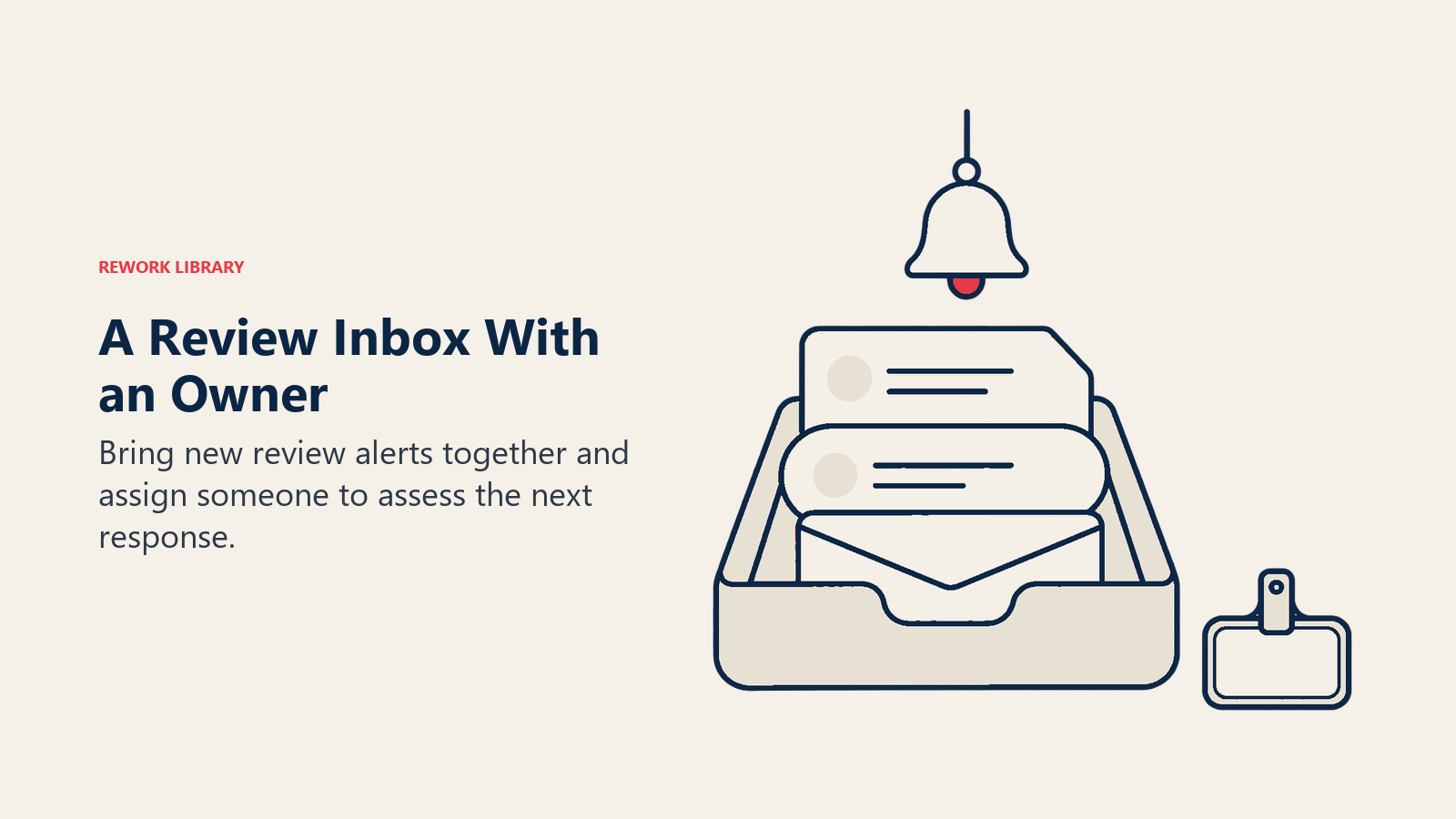
You can't respond to reviews you don't know about. Build a monitoring system that catches new reviews as they appear:
Google Alerts: Set up an alert for your practice name so any web mention surfaces in your email. This catches reviews on platforms you might not check regularly.
Platform notifications: Enable email or SMS notifications in your Google Business Profile, Healthgrades, and Yelp accounts. Most practice management software (Dentrix, Eaglesoft, Open Dental) integrates with reputation platforms and surfaces review alerts directly.
Dedicated reputation platforms: Birdeye and Podium both offer review monitoring dashboards that aggregate reviews from multiple platforms into a single feed. For a practice actively managing reputation, these tools pay for themselves quickly in time saved and response rate improvement.
Competitive monitoring: Track your top three local competitors' review velocity and average rating. If a competitor is generating significantly more reviews per month than you, they're likely running a more systematic ask process. Understanding the gap helps you set realistic targets.
Review velocity benchmarks: A solo practice with 10 to 15 active hygiene patients per day should target 8 to 15 new Google reviews per month with a systematic ask. A multi-doctor practice seeing 30 to 40 patients daily should target 25 to 50 per month. Sustained velocity matters as much as total count because Google's ranking algorithm gives weight to recency. A strong review profile also reinforces your dental market positioning, the combination of high volume and high rating lets you claim a quality-leader position in your market that's difficult for competitors to replicate quickly.
Reputation as a Practice Asset
The business case for reputation management extends beyond marketing. When a DSO or private equity group evaluates your practice for acquisition, your Google rating and review volume are visible, quantifiable signals of patient satisfaction and market position. With the U.S. dentistry market exceeding $190 billion and consolidation accelerating, practices with strong public reputations attract more buyer interest and command higher valuations. Practices with 4.7+ star averages and 200+ reviews command higher multiples and more buyer interest than comparable practices with thin or average review profiles. For practices considering a dental group and DSO transition, a clean review profile is one of the fastest ways to increase the multiple a buyer is willing to pay.
For the day-to-day economics, consider what reputation improvement does to your patient acquisition cost. If your practice generates 40 new patients per month from Google organic search and your profile conversion rate improves from 8% to 11% after increasing your review count and rating, that's 12 additional new patients per month with no increase in ad spend. At an average first-year patient value of $600 to $800, that's $7,200 to $9,600 per month in incremental revenue from reputation work alone.
This is why practices that treat reputation management as an ongoing operational function rather than a one-time cleanup project consistently outgrow competitors who don't.
Learn More