Dental Team Compensation Models: Base Pay, Production Bonuses, and Benefits That Attract Top Talent
Turn this article into takeaways for your work.


Each assistant summarizes the article only for you and suggests best practices for your work.
Dental compensation models are the structures practices use to pay clinical and administrative staff: straight salary, hourly, production-based percentage, daily rate, and hybrid base-plus-bonus. The right model aligns pay with production while keeping total labor cost near 25-35% of collections. Most practices win on retention by matching each role to the model that fits its output, not by raising the hourly rate alone.
A hygienist who earns $48 per hour and leaves after 14 months costs you more than a hygienist earning $52 per hour who stays five years. This is the math most practice owners miss when they focus on the dollar amount rather than the compensation structure underneath it. The number matters. But misaligned incentives, opaque bonus structures, and pay that doesn't reflect market reality will cost you more in turnover, disengagement, and missed production than any raise.
Compensation design is a strategic decision with direct practice growth implications. Get it right and you attract the clinical talent that builds a patient base. Get it wrong and you cycle through staff while competitors lock in the best hygienists and associates in your market. Compensation strategy connects directly to reducing dental staff turnover. The two are inseparable, and a compensation review that ignores turnover cost will undercount the ROI of paying above market.
This article covers compensation models by role, the mechanics of production-based structures, benefits that genuinely differentiate you in the market, and how to build a review cadence that keeps your pay competitive without blowing up your overhead.
Key Facts: Dental Team Compensation
- Dental labor costs typically represent 25-35% of practice collections; practices above 33% are often underproducing relative to their payroll (ADA Health Policy Institute, 2024)
- Associate dentists on production-based compensation outperform salaried associates by an average of 15-20% in annual collections
Compensation Models Overview
Five models cover most of what you'll encounter or need to implement in a dental practice. Each fits different roles, practice stages, and incentive goals.
Straight salary gives employees predictability and you budget clarity. It's best for roles where output variability is low: front office coordinators, dental assistants in practices where chair time is tightly scheduled. The problem is it doesn't reward production, and in a clinical setting, that means you're paying the same for a great day and a slow one.
Hourly pay is the most common model for hygienists and assistants. It's flexible, easy to calculate, and understood by everyone. The downside is it creates no incentive beyond showing up and completing the schedule.
Production-based pay (typically a percentage of the provider's net production) aligns incentives with output. This works well for hygienists and associates but requires clear definitions: production vs. collections, gross vs. net, and what happens when insurance adjustments or write-offs reduce the base.
Daily rate is common in markets where hygienists work at multiple offices or fill in as temps. It provides predictability for both parties without tying payment to variable schedule density.
Hybrid base-plus-bonus is increasingly the competitive standard for hygienists. A guaranteed hourly rate provides security; a bonus triggered by production above a threshold rewards high-volume days. This model retains the benefits of both approaches without the risk exposure of pure production compensation.
Hygienist Compensation Structures
Hygiene production typically represents 25-35% of a practice's total production. Getting the hygienist compensation structure right isn't a staffing detail. It's a production lever.
The most effective structure for a hygienist in a busy suburban practice today is a hybrid: hourly base at market rate (typically $42-$60/hour depending on region) plus a bonus of 25-30% of hygiene production above a daily threshold. The threshold should be set at approximately 90% of the hygienist's expected average daily production, so strong days trigger the bonus without requiring exceptional performance every session.
Avoid hygiene bonuses that are too easy (the hygienist earns them regardless of effort) or too hard (they never trigger, so they stop functioning as incentives). Calibrate the threshold against 3-6 months of actual production data from that chair.
One common mistake is structuring hygiene bonuses on collections rather than production. Collections lag production by 30-90 days and fluctuate based on insurance processing outside the hygienist's control. Production-based bonuses are cleaner and more motivating.
For practices with strong periodontal programs, a separate bonus for perio upgrade acceptance or full-mouth debridement production can align the hygienist's clinical recommendations with practice revenue, but be careful here. Incentives that push clinical recommendations risk compromising patient care standards. The right framing is rewarding thorough diagnosis and appropriate treatment, not sales volume. Practices optimizing hygiene department production typically find that well-designed production bonuses (framed around patient outcomes rather than volume targets) improve both clinical quality and revenue simultaneously.
Associate Dentist Compensation
Associate compensation is the highest-stakes compensation decision a practice owner makes, and it's the one most frequently done wrong.
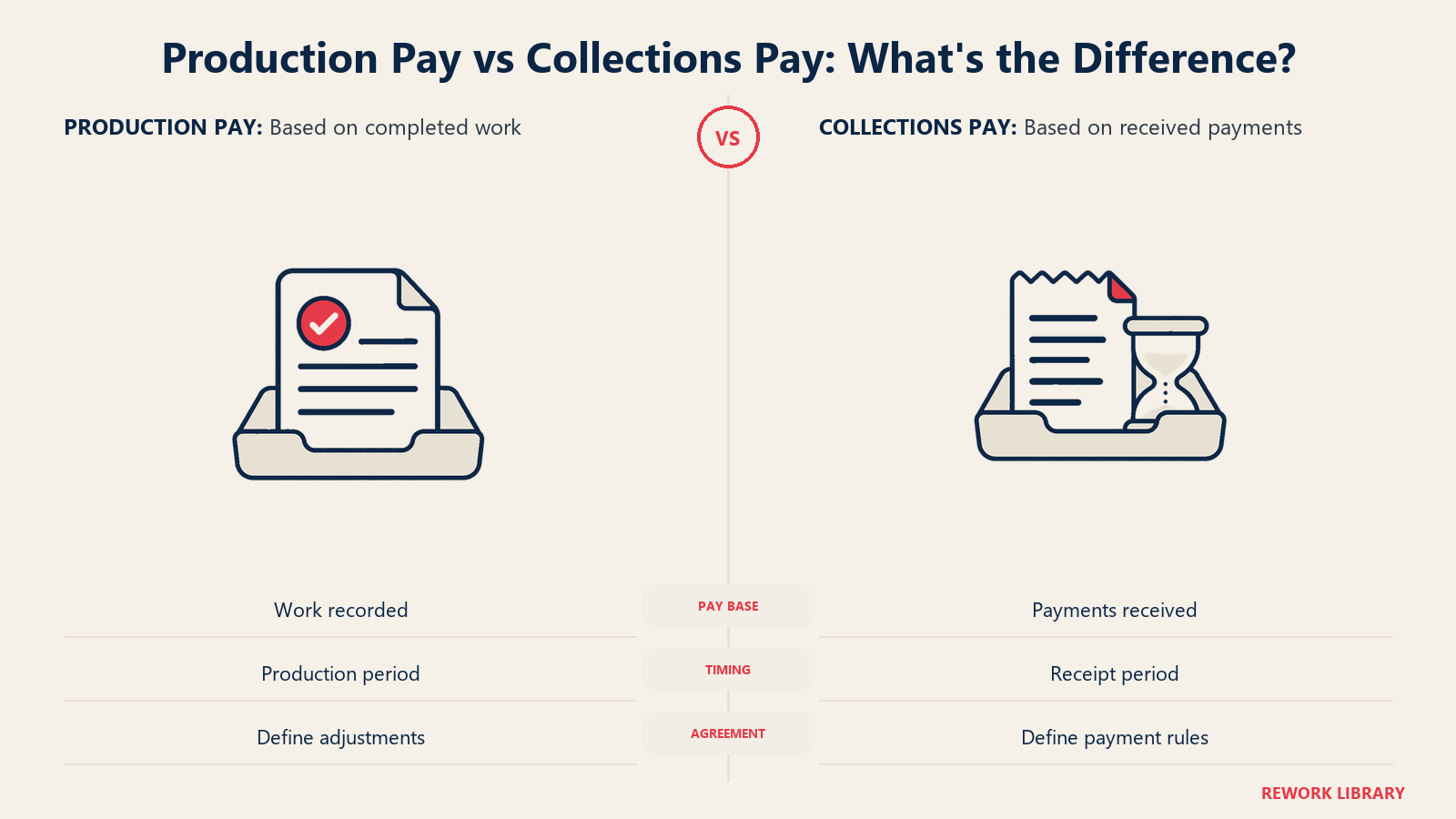
The production percentage norm sits at 28-35% of net production, with most new graduates starting at 30% and experienced associates earning 32-35%. Some high-volume specialty practices offer percentages above 35%, but that's uncommon in general dentistry without an ownership pathway attached.
The production vs. collections distinction is critical. Production-based compensation pays the associate for work completed regardless of whether insurance or the patient pays. Collections-based compensation (pay as a percentage of what actually comes in) exposes the associate to delays and write-offs outside their control. Production-based agreements are more associate-friendly and increasingly the expectation in competitive markets.
Guarantee structures have become standard in associate recruitment. A daily or monthly minimum (regardless of production) is common for the first 6-12 months while an associate builds their schedule. After that, the guarantee typically phases out or becomes a floor below which base production rarely falls.
If you're structuring an associate agreement with an ownership pathway in mind, build the compensation trajectory into the agreement from the start. An associate who expects a clear path to partnership but doesn't see it codified will start exploring other options at year two or three. That's expensive for both parties. The associate-to-partner pathway article details how to structure this trajectory so compensation, equity milestones, and production expectations are all aligned from day one.
Administrative and Front Office Pay
Front office roles rarely get the compensation attention they deserve, which is part of why turnover in these positions runs high relative to clinical staff.
Scheduling coordinators and front desk staff: Hourly rates vary by market, from $18-$22 in lower-cost markets to $26-$35 in urban areas. The role requires insurance knowledge, phone skills, and patient relationship management. These are capabilities that should be compensated above minimum wage or basic retail pay.
Office managers: Practice size determines range, but $50,000-$80,000 annually is a reasonable band for a competent manager in a single-location practice. Practices with 3+ providers or multiple locations need to be at the higher end of this range or above it to retain experienced management.
Bonus structures for administrative staff require care. Bonuses tied to collections or new patient numbers can create pressure to push for insurance approvals or rush patient conversations that should be slow. A better structure is a team bonus paid quarterly based on practice-wide production goal achievement, which rewards collective performance without creating role-specific incentive conflicts.
Don't create bonus structures that incentivize front office staff to collect money aggressively from patients in ways that damage the relationship. Your office manager should be rewarded for building a healthy, high-producing practice, not for squeezing short-term collections.
Benefits That Differentiate
When two practices offer similar hourly rates, benefits decide the hire. Most dental practices offer some benefits. The ones that attract top candidates offer the right benefits for the candidate they're trying to recruit.
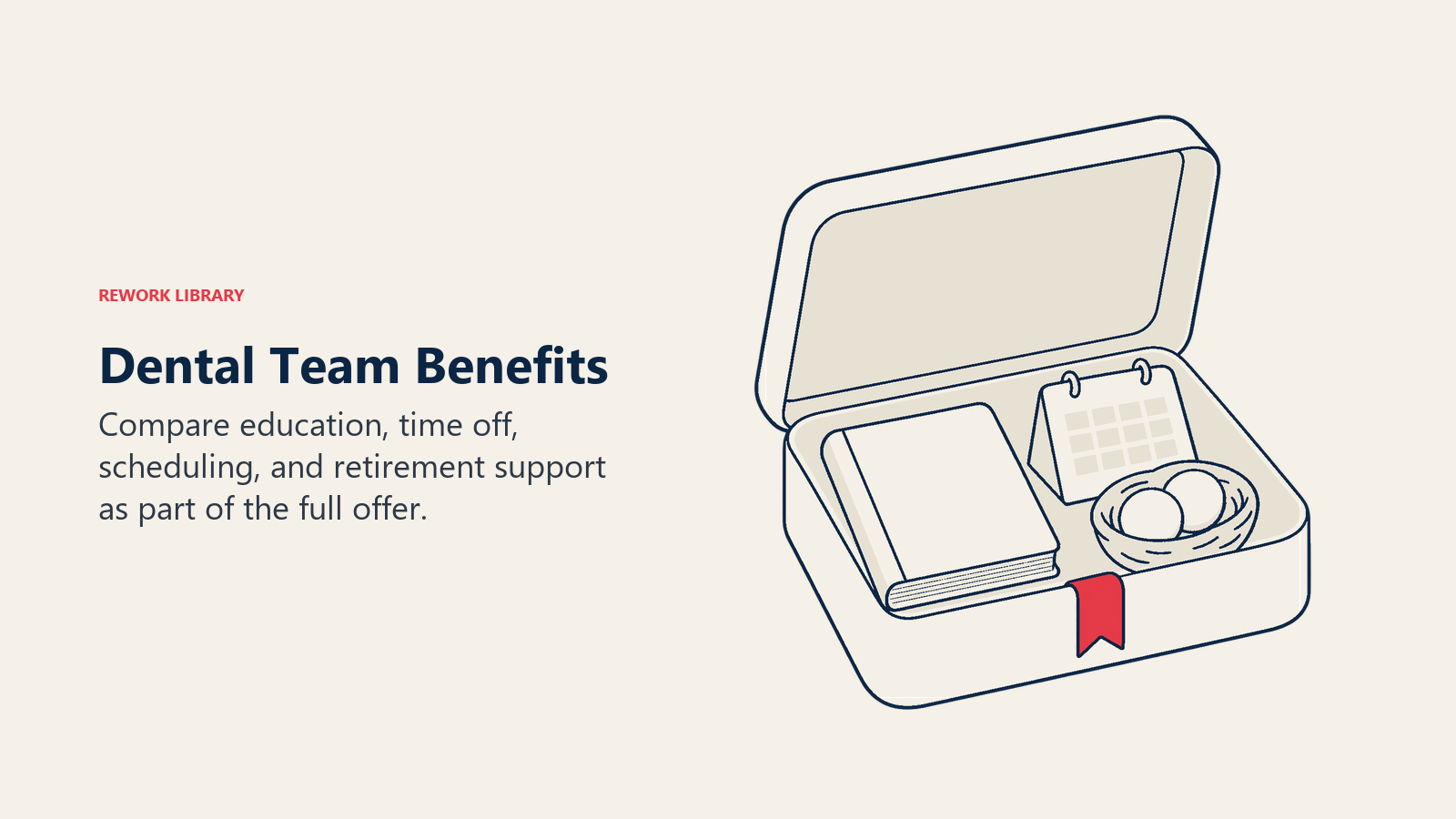
Continuing education allowances ($1,500-$3,000 annually for clinical staff) signal that you invest in your team's professional growth. For hygienists and assistants who take their licenses seriously, this matters more than the dollar value. See continuing education for dental teams for how to structure CE budgets and programs that candidates actually value during the offer stage.
Retirement matching (even 3% matching on a SIMPLE IRA or 401(k)) creates real financial value and long-term retention incentive. Many independent practices don't offer retirement benefits at all, which makes offering any matching a meaningful differentiator.
Flexible scheduling is increasingly a deciding factor, particularly for hygienists with young families or those working at multiple practices. According to the ADA Health Policy Institute, about 3 in 5 dentists cite recruiting and retaining hygienists as their top staffing challenge, making non-monetary benefits a critical differentiator. Four-day work weeks, consistent scheduling, and predictable days off are benefits that cost you nothing in cash but require intentional schedule management.
Paid time off benchmarks have risen. Clinical staff expect at minimum 10-15 days PTO annually, and practices offering 3-5 days are losing candidates before the conversation gets to salary.
Uniform allowances, malpractice coverage for associates, and CE conference attendance round out a competitive total compensation package. Price these out. A full package (base pay, bonus potential, benefits, and PTO) has a total value that exceeds the hourly rate by 25-40%. Communicate that total value clearly to candidates.
Building a Compensation Review Cadence
Annual compensation reviews aren't optional in this market. Hygienists who haven't had a raise in two years while the market has moved $6/hour already have one foot out the door, even if they haven't said so.
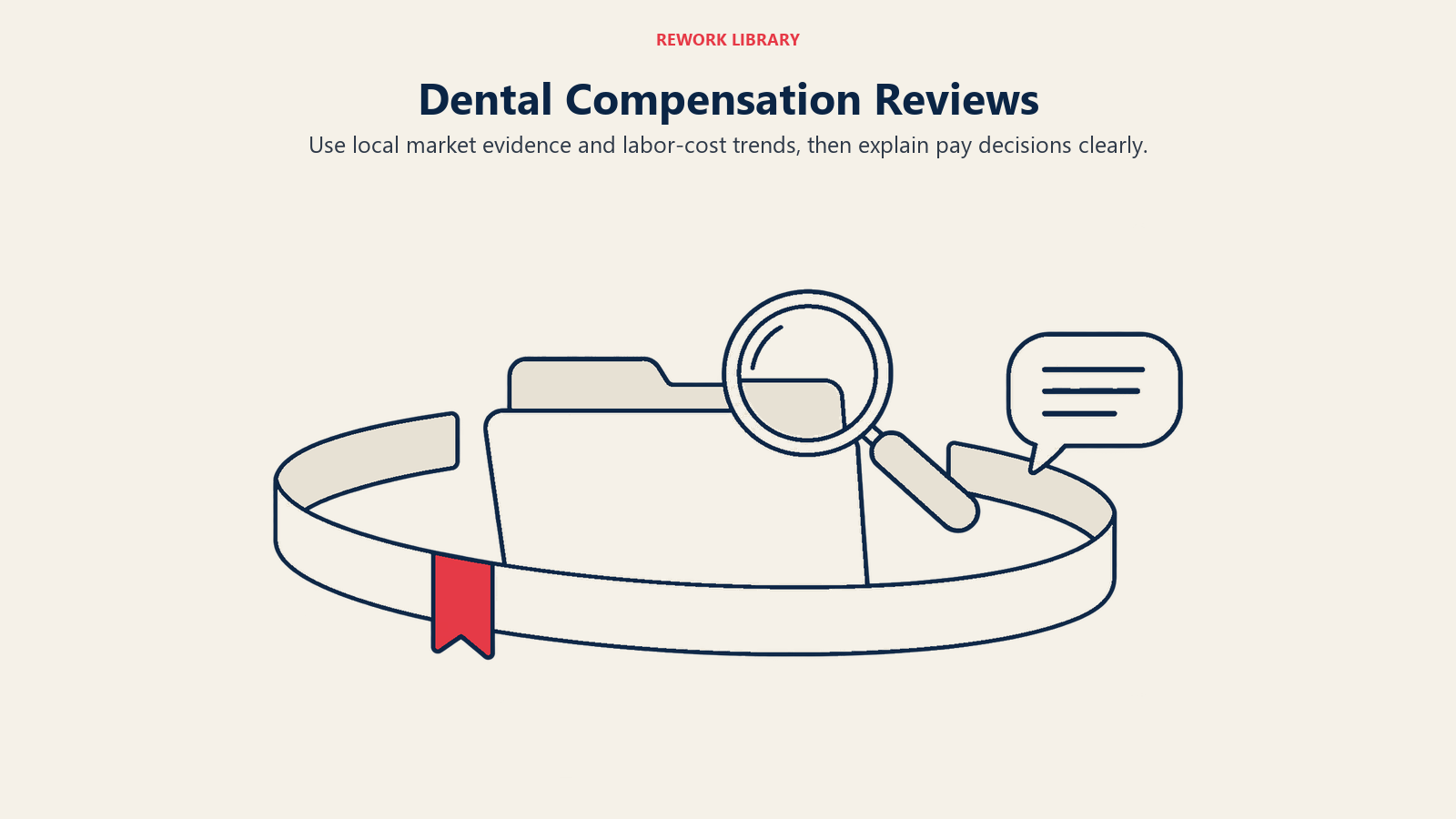
Review your pay benchmarks against regional data at least once per year. State dental association surveys, the ADA Salary Survey, and local dental CPA networks provide market data that's more accurate than national averages. A compensation review is also an opportunity to assess your full recruiting position. Combining the benchmarking process with the sourcing strategies covered in hiring dental professionals gives you a more complete picture of your competitive standing.
When you adjust compensation, communicate the reasoning directly. "We reviewed market rates in our area and updated your pay to reflect your value and what competitive practices are offering" lands better than an unexplained increase on a paycheck. Transparency about the why builds more loyalty than the number itself.
Track your total labor cost as a percentage of collections monthly. If it creeps above 30-32%, you have either a production problem or a compensation structure problem, and you need to know which before you act. The ADA's practice management benchmarks provide a useful framework for evaluating your overhead percentages in context. Key financial metrics for dental practices provides the full overhead benchmarking framework, including where labor cost fits within total practice overhead targets.
Frequently Asked Questions about Dental Compensation Models
What are the main dental team compensation models?
There are five: straight salary, hourly pay, production-based pay (a percentage of net production), daily rate, and hybrid base-plus-bonus. Hourly suits assistants, production-based fits associates, and hybrid base-plus-bonus has become the competitive standard for hygienists because it pairs a guaranteed rate with a bonus on high-production days.
What percentage of production should a dental associate earn?
The norm sits at 28-35% of net production. New graduates typically start near 30%, and experienced associates earn 32-35%. Base the percentage on production rather than collections so the associate is not exposed to insurance delays and write-offs outside their control.
What should dental labor cost be as a percentage of collections?
Total labor cost usually runs 25-35% of practice collections. If yours creeps above 30-32%, you have either a production problem or a compensation-structure problem, and you need to know which before adjusting pay.
How do you structure a hygienist bonus?
Pay an hourly base at market rate plus a bonus of 25-30% of hygiene production above a daily threshold set near 90% of expected average daily production. Base the bonus on production, not collections, so it stays motivating and is not distorted by insurance processing.
Learn More