Patient Comfort & Amenities: How Dental Clinics Reduce Anxiety and Win Loyalty
Turn this article into takeaways for your work.


Each assistant summarizes the article only for you and suggests best practices for your work.
Dental anxiety affects an estimated 36% of the population, with 12% suffering from extreme fear. These aren't just patients who have a mildly unpleasant time in the chair. They're patients who cancel, reschedule repeatedly, avoid treatment until it becomes a crisis, and never refer anyone. And when they do work up the courage to come in, they're acutely sensitive to every environmental cue that signals whether your practice is different from the traumatizing experience they're dreading.
The hidden cost of dental anxiety in practice revenue is significant. A hygienist who can't fill her schedule because anxious patients won't commit to recare appointments loses 8-12 appointment slots per month. An operatory that stays partially productive because anxious patients delay complex restorative for 2-3 appointment cycles is generating 60-70% of its revenue potential. And patients who quietly leave for a competitor that makes them feel less anxious never tell you why they left. Their absence shows up in your dental recall and recare systems as attrition you can't easily explain.
Comfort investments aren't a luxury add-on for a premium patient experience. They're a patient retention and revenue strategy, one of the few with a measurable and relatively fast return.
Key Facts: Dental Anxiety and Practice Revenue
- 36% of the U.S. population reports moderate dental anxiety; 12% report extreme dental fear (International Journal of Dentistry, 2023)
- Practices offering comfort amenities report 15-25% improvement in treatment acceptance rates for complex procedures (Dental Advisor, 2023)
- Anxious patients who have a positive comfort experience are 3x more likely to refer friends and family than non-anxious patients who had an average experience
A census-matched survey published in the Journal of the American Dental Association found that 72.6% of U.S. adults report some level of dental fear, with 26.8% reporting severe fear, a significantly higher figure than earlier global estimates.
Understanding Patient Anxiety
Dental anxiety clusters around a few core triggers, and knowing which ones drive your specific patient population shapes which investments make the most sense.
Primary anxiety triggers:
- Fear of pain (the most common, cited by 71% of anxious patients)
- Loss of control (the inability to speak, move, or stop the procedure)
- Embarrassment about oral health condition or previous dental avoidance
- Sensory overwhelm: the sounds, smells, and sensations of dental equipment
- Prior negative experiences, including childhood dental trauma
Demographics most affected. Young adults (18-34) and older adults (65+) report the highest levels of dental anxiety. Women report higher anxiety rates than men, though men are more likely to avoid treatment entirely as a result of it. The NIDCR's national data on periodontal disease illustrates one downstream cost of avoidance: adults who go years without dental visits carry significantly higher rates of untreated periodontal disease, the kind of advanced case that then reinforces their original anxiety about dental treatment. Patients from lower-income backgrounds often have compounding anxiety about cost, which intersects with clinical anxiety and creates double barriers to treatment. For these patients, patient financing options for dental practices can lower the cost barrier, while comfort amenities address the clinical anxiety that compounds it.
The revenue link. Anxious patients who aren't adequately managed in your clinical environment exhibit predictable behaviors: they schedule less frequently, they accept fewer treatment recommendations, they cancel at higher rates, and they're less likely to refer. A single anxious patient who leaves your practice after one uncomfortable visit and finds a competitor who handles their anxiety well represents a lifetime value loss of $8,000-$15,000 in a mid-sized U.S. market.
Sensory and Environmental Design
The waiting room is the first clinical test. Before the patient has opened their mouth or seen a drill, they're forming judgments about your practice based on what they see, hear, and smell.
Reception area ambiance. Practices that use commercial dental imagery (large photos of teeth, dental equipment displayed prominently) in reception areas inadvertently prime anxious patients before they've even been called. Neutral, warm décor (living plants, natural textures, art that's unrelated to dentistry) reduces anticipatory anxiety at the physiological level. This isn't interior design preference. There's measurable cortisol response data behind it.
Lighting matters more than most practices acknowledge. Fluorescent overhead lighting in waiting rooms increases alertness and vigilance, the exact states you don't want an anxious patient in. Warmer incandescent or LED lighting at lower intensity creates a calmer physiological baseline.
Sound management. The sound of drilling travels further and louder than most dentists realize. Waiting room music or white noise systems that genuinely mask clinical sounds (not just background music that dental equipment cuts through) have a direct effect on anxiety. Volume matters: music at a level that requires raising your voice to speak over it is counterproductive. Aim for ambient background, not distraction. Patients who arrive already anxious also notice wait times acutely, pairing sound management with the wait time optimization strategies that reduce how long they actually sit in the waiting room is the strongest combination.
Scent. Dental practices have a distinctive smell (eugenol, dental materials, sterilization chemicals) that is a powerful anxiety trigger for patients with prior negative experiences. Diffusing mild, non-medical scents (lavender, citrus) in reception and operatories has been shown to reduce anxiety markers and increase patient-reported comfort. Don't overdo it; a powerful fragrance creates its own sensory problem. But even a mild scent that displaces clinical odors makes a measurable difference.
Operatory design. Patients in the reclined chair position have limited visual field control. What's in their line of sight (ceiling tiles, overhead light, the instrument tray) shapes their anxiety. Practices that mount screens overhead (for patient entertainment) or position intraoral camera monitors in the patient's visual field give patients something constructive to look at and a sense of engagement rather than passive submission.
Temperature control in individual operatories, rather than building-wide HVAC, gives clinical staff the ability to adjust quickly when a patient is cold or warm. Anxious patients already feel a loss of control, and being physically uncomfortable only amplifies it.
Comfort Amenities That Move the Needle
Not all comfort investments produce equal returns. Here's a cost-benefit breakdown based on patient satisfaction data and retention outcomes.
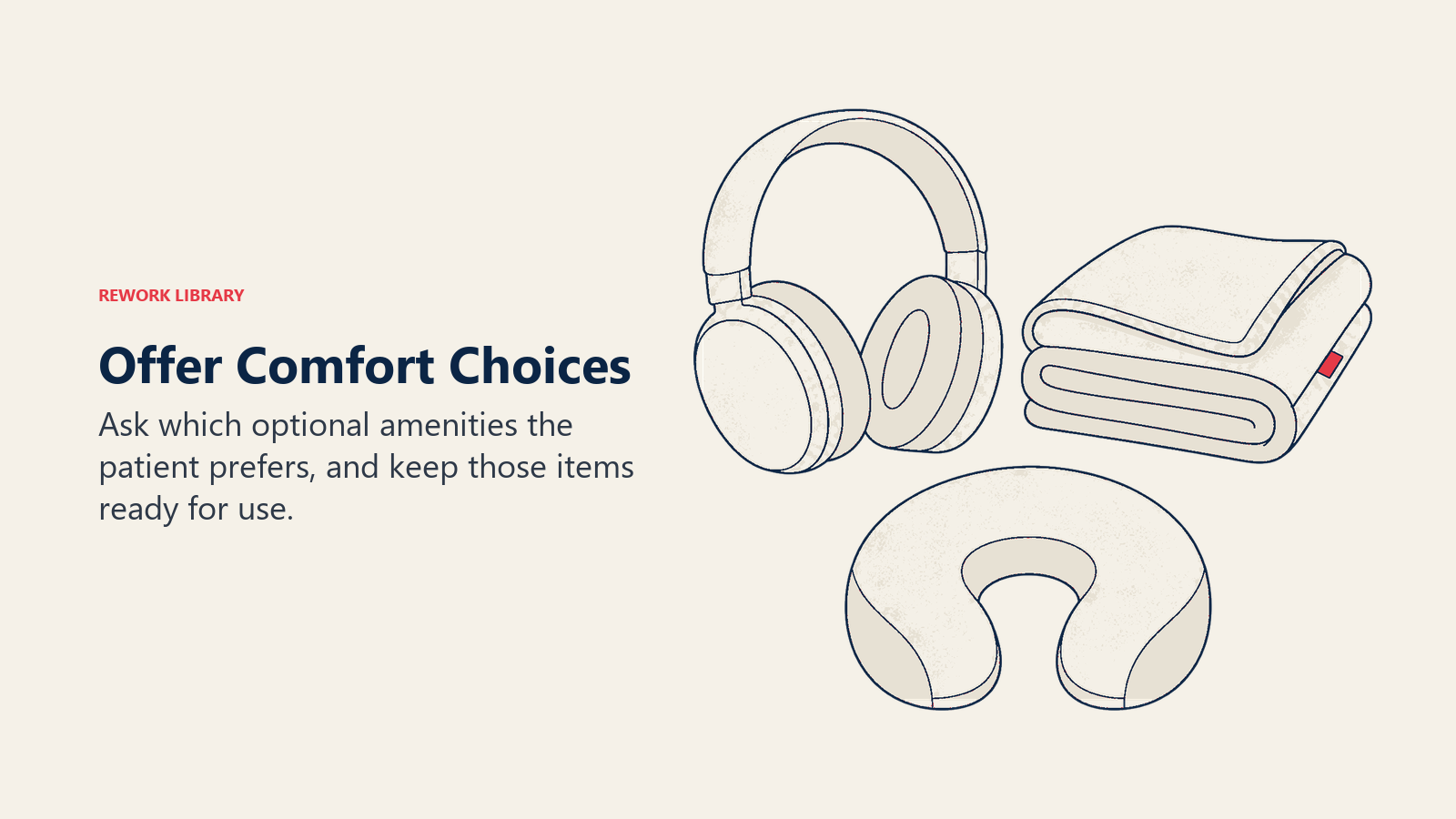
High impact, low cost:
Neck pillows: Patients in the dental chair for more than 20 minutes often experience neck and back discomfort from the reclined position. A washable memory foam neck pillow added to a chair at the start of a long appointment costs under $30 per operatory and generates significant positive comment in patient satisfaction surveys.
Warm blankets: Dental operatories often run cold for clinical reasons. A warm blanket on the patient's lap before a long procedure is one of the highest-rated comfort touches in patient surveys, consistently. Heated blanket dispensers for reception areas (for patients who are chilled waiting) cost $150-200 and get used.
Lip balm and protective glasses: Lips dry quickly under the overhead light. Disposable lip balm applicators and protective eyewear that's comfortable (not just safety glasses) are small touches that anxious patients notice.
High impact, moderate cost:
Noise-canceling headphones: Allowing patients to listen to their own music or a podcast during procedures removes the anxiety-inducing sound of dental equipment almost entirely. A decent set of over-ear noise-canceling headphones runs $150-250. Most practices report this as one of the highest-return single investments in patient comfort, particularly for patients undergoing longer restorative procedures.
Ceiling-mounted entertainment: Flat screens mounted overhead for patient viewing during treatment cost $300-600 per operatory installed. Patient-reported anxiety during procedures drops significantly when patients have visual engagement during treatment. The effect is strongest for anxious patients and children.
Aromatherapy diffusers: Essential oil diffusers in operatories cost $30-80 each. Lavender has the strongest evidence base for anxiety reduction in dental settings. A randomized controlled trial published in PMC found that ambient lavender scent in the reception area produced measurable reductions in patient anxiety scores, and a subsequent meta-analysis confirmed aromatherapy is effective at reducing dental anxiety across multiple study populations.
High impact, significant investment:
Massage chair cushions: Chair cushion inserts that provide gentle vibration and heat run $400-600 per unit. They're standard in premium practices and genuinely reduce procedure-length discomfort.
Weighted blankets: Weighted blankets (12-20 lbs) are increasingly used in dental settings for severe anxiety patients. Cost is $100-200 per blanket, requires laundering protocol. The evidence for anxiety reduction via deep pressure stimulation is strong.
Comfort amenity cost-benefit summary:
| Amenity | Cost Per Operatory | Patient Impact | ROI Timeline |
|---|---|---|---|
| Neck pillow | $25-40 | High | Immediate |
| Warm blanket | $150-200 | High | Immediate |
| Noise-canceling headphones | $150-250 | Very High | 1-3 months |
| Ceiling TV | $300-600 | High | 3-6 months |
| Aromatherapy diffuser | $30-80 | Medium-High | Immediate |
| Massage cushion | $400-600 | High | 6-12 months |
| Weighted blanket | $100-200 | High (for anxious patients) | 3-6 months |
Sedation Options as a Retention Tool
For patients with moderate to severe anxiety, environmental amenities alone aren't enough. Sedation is the actual clinical solution, and practices that offer it see significantly better retention and treatment acceptance from anxious patient populations.
Nitrous oxide. The most accessible and commonly offered sedation option. Onset in 2-3 minutes, recovery in 10-15 minutes post-removal, no restrictions on driving post-procedure. Fee: $50-150 per appointment. Every general dentist can administer nitrous without additional licensure in most states. If you don't currently offer it, the barrier is only the equipment investment ($800-1,500 for a delivery unit) and the overhead cost of the gas. Sedation services are also a meaningful component of adding specialty services to your dental practice, they attract patients who have been avoiding care entirely, generating revenue that wouldn't otherwise exist.
Oral sedation. Prescription anxiolytic medications (typically triazolam or diazepam) taken before the appointment. Patients need a driver and shouldn't operate machinery for the remainder of the day. Provides moderate sedation for most patients. Requires the dentist to have completed a training course in most states. Fee: $150-300 per appointment. Highly effective for patients who can't tolerate nitrous or need deeper sedation for longer procedures.
IV sedation. Deep sedation administered by an anesthesiologist or a dentist with an IV sedation permit (training requirements vary significantly by state). Required for severely anxious patients or complex oral surgery. Fee: $400-800 per appointment depending on duration. Not practical as a daily offering unless your practice sees high volume of complex cases or severe phobia patients.
Marketing sedation services. Many practices offer nitrous or oral sedation but don't advertise it prominently. "Sedation dentistry available" on your website homepage and a dedicated landing page for anxious patients are low-cost marketing moves that attract the segment of new patients most likely to delay care indefinitely at non-sedation practices.
Measuring Comfort ROI
Comfort investments should be tracked like any other operational investment. The measurement framework is straightforward.
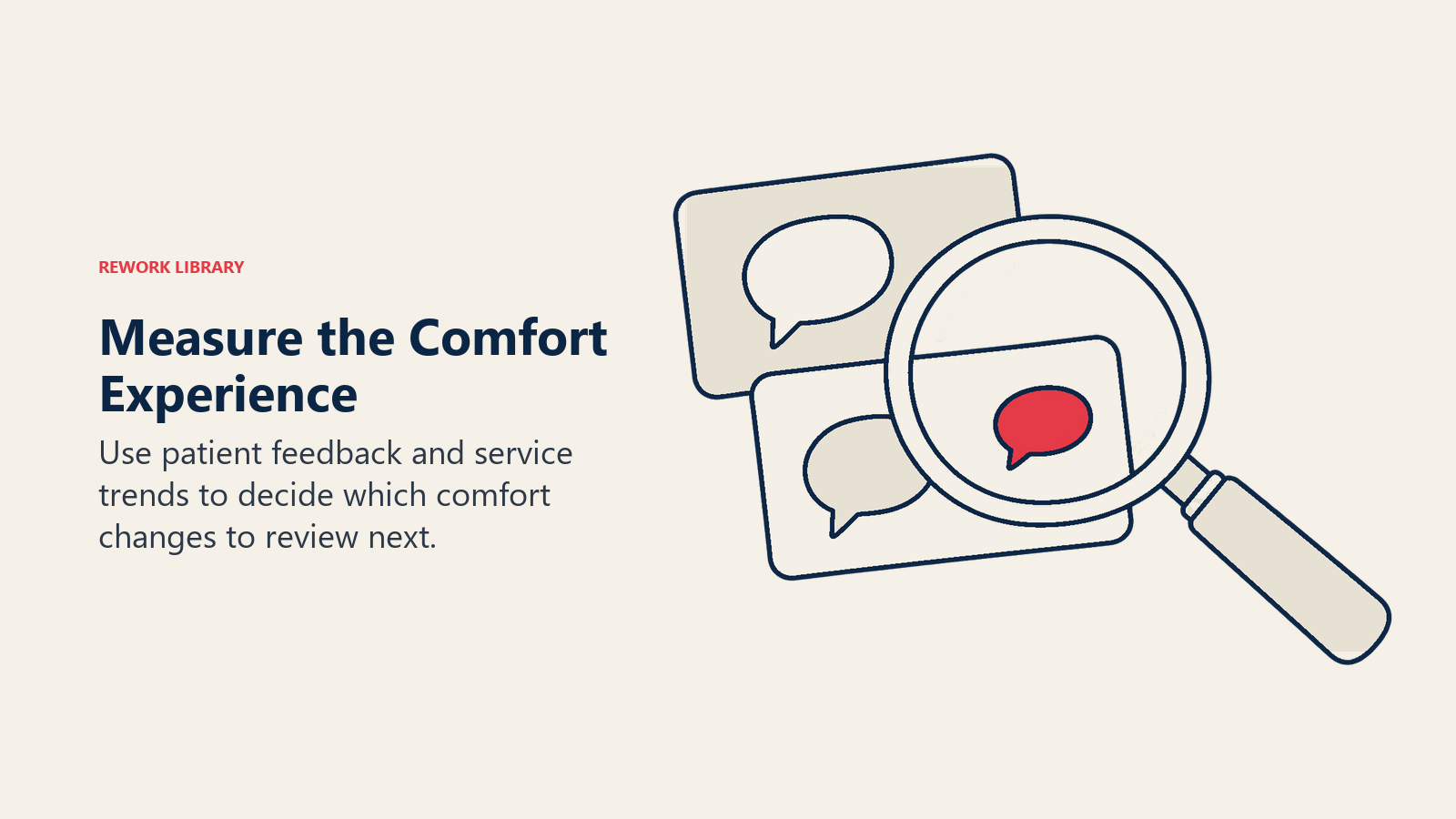
Patient satisfaction surveys. Include comfort-specific questions in your post-visit survey: "How would you rate the comfort of your experience today?" and "Were there any aspects of the visit that made you anxious or uncomfortable?" The first measures your baseline. The second identifies specific improvement opportunities.
Recall rate by anxiety profile. If your practice management software allows you to flag anxious patients (either by patient-reported anxiety level at intake or by clinical notes), track their recall rate separately. A practice investing in comfort amenities should see anxious patient recall rates converge toward the overall practice recall rate over 12-24 months.
No-show rate tracking. Anxious patients no-show at higher rates than general patients. If your overall no-show rate is 8% but you can identify that a specific subset of patients (consistently late schedulers, complex restorative patients, specific demographics) is no-showing at 15-20%, those are disproportionately anxious patients, and comfort investments will move that number.
Review sentiment. Pull your last 50 Google and Healthgrades reviews and identify how many mention comfort, anxiety, gentleness, or the specific amenities you've invested in. Track that percentage quarterly. Positive comfort mentions in reviews serve double duty: they measure your progress and they're the most effective new patient marketing for anxious prospective patients reading the reviews. Building a steady stream of these reviews is the core task of dental review management, comfort investments generate the raw material, and the review system captures it publicly.
Prioritizing by Practice Size and Patient Demographic
Not every practice needs the same investment profile. A practice serving primarily young professional patients in an urban market has different anxiety patterns than a family practice in a rural community.
Solo practices (1-2 providers): Start with noise-canceling headphones, warm blankets, and neck pillows. These cost under $500 total and generate immediate positive patient comment. Add nitrous if you don't already have it. The ROI on these investments is typically measured in weeks, not months.
Group practices (3-5 providers): All of the above, plus ceiling TVs in operatories and massage cushions for the busiest chairs. If you have pediatric patients, a separate kid-focused reception area with specific amenities (age-appropriate entertainment, different lighting) returns significant parent satisfaction and reduces pediatric no-shows.
Multi-location practices (5+ providers): Standardize a comfort amenity package across all locations. The branding value of consistent comfort experience (patients who visit multiple locations of yours or who refer family members) is significant. Consider IV sedation at your highest-volume location if you see meaningful case complexity. Standardizing comfort protocols across locations is part of the broader operational challenge described in multi-location dental practice management.
Learn More