PRINCE2 Methodology: Principles, Themes, and Processes
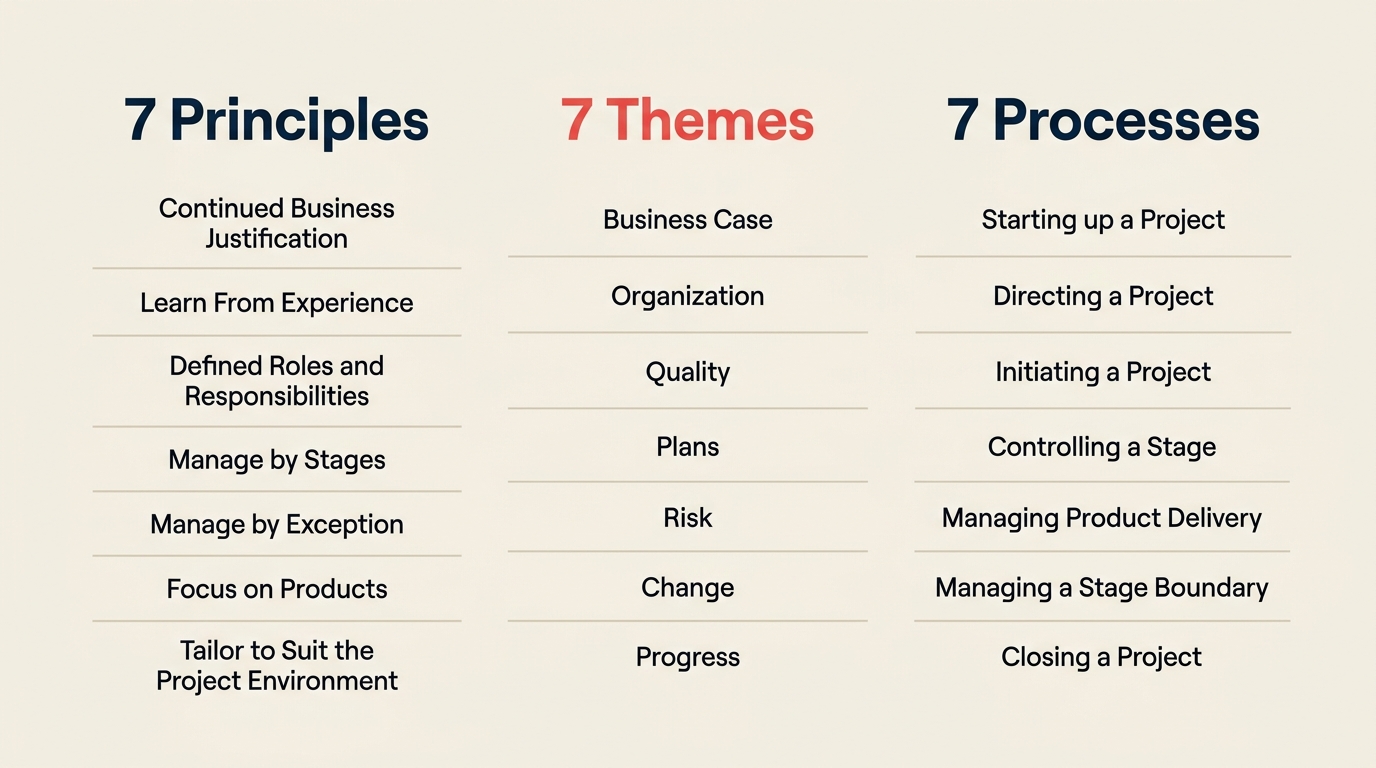 PRINCE2 methodology gives project teams a repeatable, scalable framework for running controlled, auditable projects. PRINCE2 (PRojects IN Controlled Environments) started as a UK government standard in 1989 and has since grown into one of the most widely used project management approaches in the world. It works because it separates what you need to do from how you do it, which means teams can adapt it to almost any industry or project size.
Turn this article into takeaways for your work.


Each assistant summarizes the article only for you and suggests best practices for your work.
What is PRINCE2?
PRINCE2 is a process-based, stage-gated project management method developed by the UK government's Central Computer and Telecommunications Agency. It provides a structured framework of 7 principles, 7 themes, and 7 processes that guide a project from startup through delivery and formal closure.
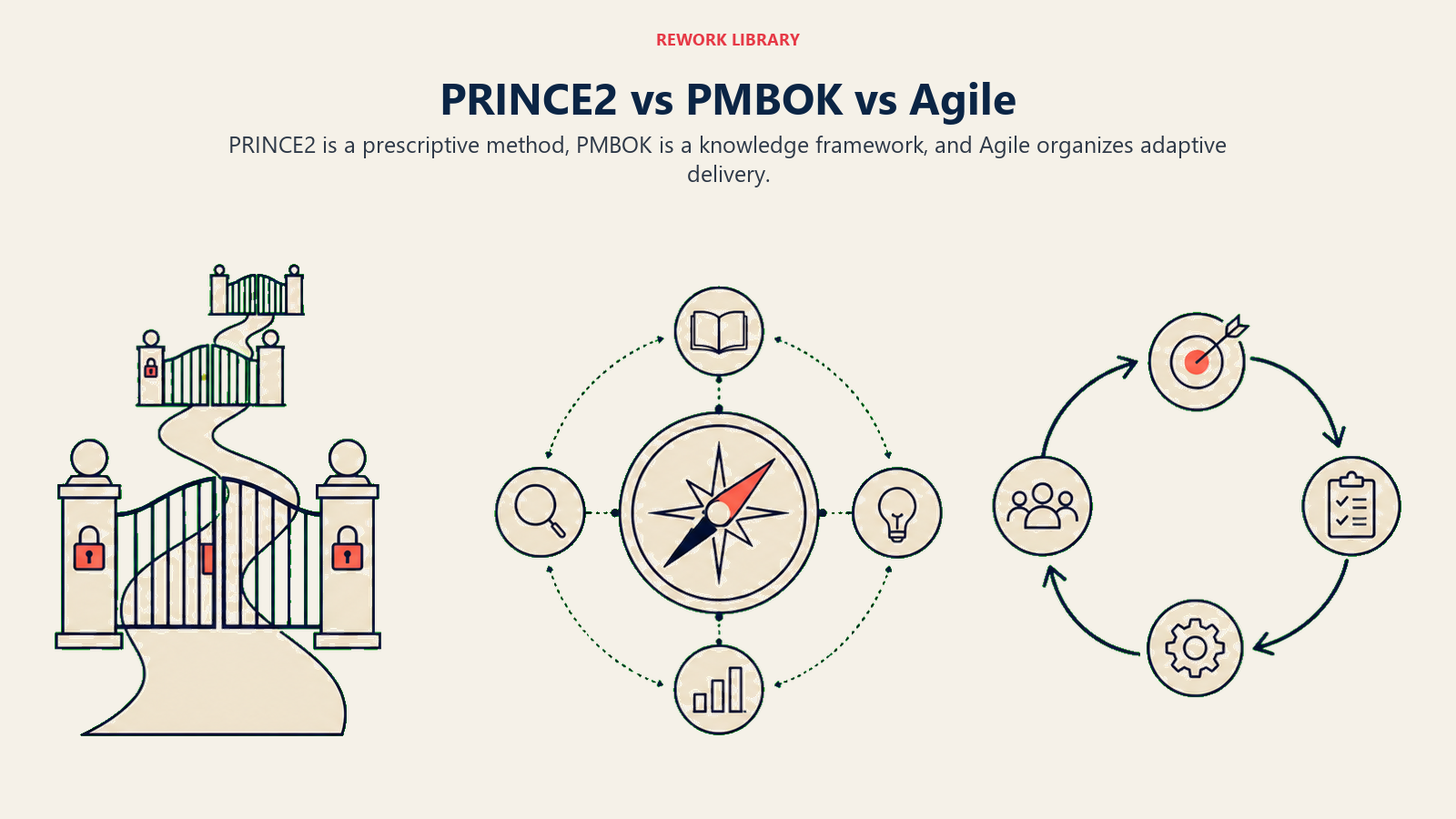
Unlike PMBOK (Project Management Body of Knowledge), which is a broad set of guidelines and knowledge areas published by PMI (Project Management Institute), PRINCE2 is prescriptive. It tells you not just what good project management looks like, but how to organize your project into defined stages, who makes decisions at each gate, and what documents you need to produce.
The method is scalable by design. A small three-month IT rollout uses the same seven processes as a multi-year infrastructure program. The difference is how much rigor you apply at each stage.
Key Facts
PRINCE2 is active in over 150 countries and has issued more than 1.8 million certifications globally, making it the dominant structured project method outside North America. (AXELOS, 2023)
Approximately 90% of UK government IT projects run under PRINCE2 or a PRINCE2-derived approach, reflecting its origins as a public-sector standard. (UK Cabinet Office, 2022)
A 2021 survey by the Project Management Institute found that organizations using a defined project methodology reported 28% fewer project failures than those without one, reinforcing the value of structured frameworks like PRINCE2.
The 7 Principles, Themes, and Processes of PRINCE2
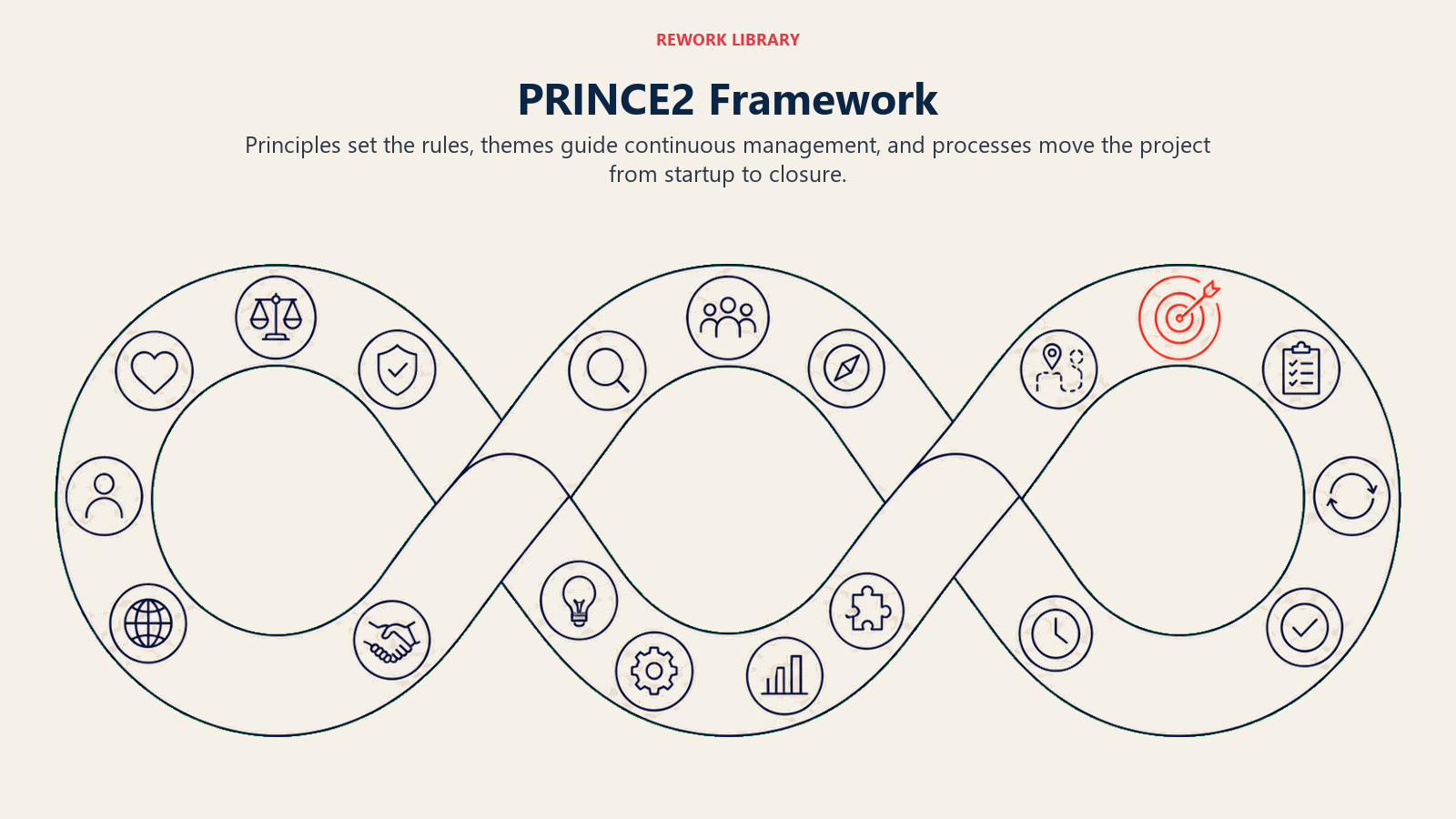
PRINCE2 is built on three interlocking layers. Principles are non-negotiable rules. Themes are knowledge areas you must address continuously. Processes are the sequential steps a project follows from start to finish.
7 Principles
| Principle | What It Means |
|---|---|
| Continued business justification | A project must have a valid business case at all times. If justification disappears, the project stops. |
| Learn from experience | Lessons from previous projects must be sought, recorded, and applied. |
| Defined roles and responsibilities | Every project has a project board, project manager, and team manager with clear accountability. |
| Manage by stages | Work is planned and controlled in discrete management stages, not as one long block. |
| Manage by exception | Each level of management sets tolerances; escalation only happens when those tolerances are breached. |
| Focus on products | A project exists to produce outputs (products), not just to perform activities. |
| Tailor to suit the project | The method must be adapted to the size, environment, complexity, and risk profile of the project. |
7 Themes
| Theme | Purpose |
|---|---|
| Business Case | Defines why the project is worth doing and tracks ongoing justification |
| Organization | Establishes the governance structure, roles, and responsibilities |
| Quality | Sets what the products must do and how they will be verified |
| Plans | Describes how and when objectives will be achieved |
| Risk | Identifies, assesses, and controls threats and opportunities |
| Change | Manages requests to alter approved products or plans |
| Progress | Monitors actual performance against the plan and forecasts viability |
7 Processes
| Process | When It Runs | Key Output |
|---|---|---|
| Starting Up a Project (SU) | Pre-project | Project brief, outline business case |
| Directing a Project (DP) | Throughout | Project board decisions and authorizations |
| Initiating a Project (IP) | Initiation stage | Project Initiation Documentation (PID) |
| Controlling a Stage (CS) | Each delivery stage | Work packages, issue register, progress reports |
| Managing Product Delivery (MP) | Each delivery stage | Completed, quality-checked products |
| Managing a Stage Boundary (SB) | End of each stage | Updated plans, business case review |
| Closing a Project (CP) | Final stage | End project report, lessons report |
PRINCE2 vs PMBOK vs Agile
Choosing a framework depends on your organization's governance needs, project complexity, and how much flexibility your team requires.
| Dimension | PRINCE2 | PMBOK | Agile (Scrum) |
|---|---|---|---|
| Origin | UK government (1989) | PMI, USA (1996) | Software industry (2001) |
| Type | Prescriptive method | Knowledge framework | Iterative mindset |
| Structure | 7 principles / 7 themes / 7 processes | 10 knowledge areas / 5 process groups | Sprints, backlog, ceremonies |
| Stage gates | Yes, mandatory between stages | Optional milestones | Sprint reviews |
| Documentation | Significant (PID, business case, registers) | Significant | Minimal |
| Best for | Governance-heavy or regulated projects | Large, complex programs | Software, product development |
| Flexibility | High (tailoring built in) | High (guidelines, not rules) | Very high |
| Certification body | AXELOS / PeopleCert | PMI | Scrum Alliance / PMI |
PRINCE2 and PMBOK are not mutually exclusive. Many organizations use PRINCE2 as the operational method and refer to PMBOK for deeper knowledge in specific areas like procurement or stakeholder engagement. For a detailed breakdown of agile vs waterfall trade-offs, that comparison helps you decide where PRINCE2 sits in your delivery mix.
Benefits of PRINCE2
Clear governance at every stage. The project board model means decision-making authority is explicit. The project manager runs day-to-day delivery; the board approves stage transitions. There's no ambiguity about who can authorize scope changes or extra budget.
Built-in business justification. The business case isn't a one-time document. PRINCE2 requires you to review and confirm it at every stage boundary. If the expected benefits no longer justify the cost, you stop. That discipline saves organizations from pouring money into projects that have already drifted off course.
Scalable to any size. A startup running a three-person product launch and a government department managing a national IT rollout both use PRINCE2. The tailoring principle means you strip out what you don't need without breaking the method.
Portable across industries. PRINCE2 was designed for IT but has since spread to construction, healthcare, finance, and education. The framework is sector-agnostic because it focuses on governance and product delivery, not domain-specific practices.
Widely recognized certification. PRINCE2 Foundation and Practitioner certifications are recognized by employers across Europe, Asia-Pacific, and the Middle East. They transfer across industries in a way that domain-specific certifications often don't.
Limitations of PRINCE2
Documentation overhead can slow small teams. The full set of PRINCE2 management products (project brief, PID, risk register, quality register, lessons log, issue register) can feel heavy on a small project. Tailoring is supposed to address this, but teams without PRINCE2 experience often don't know what to cut.
It assumes a relatively stable scope. PRINCE2 works best when you can define what you're building before you start. For projects where requirements evolve rapidly, a pure PRINCE2 approach can conflict with the speed that iterative methods offer. Many teams combine PRINCE2's governance layer with agile methodology in delivery stages.
Learning curve for new practitioners. The three-layer model (principles, themes, processes) is logical once you understand it, but the vocabulary and documentation requirements take time to internalize. Organizations rolling it out for the first time typically need training investment before they see benefits.
Not prescriptive on scheduling tools. PRINCE2 tells you to create plans but doesn't specify how. A Gantt chart, a work breakdown structure, or a milestone chart are all valid. Teams without strong planning skills sometimes treat this flexibility as permission to skip rigorous planning entirely.
How to Apply PRINCE2
PRINCE2 runs projects through six sequential management stages. Each stage boundary is a decision point for the project board.
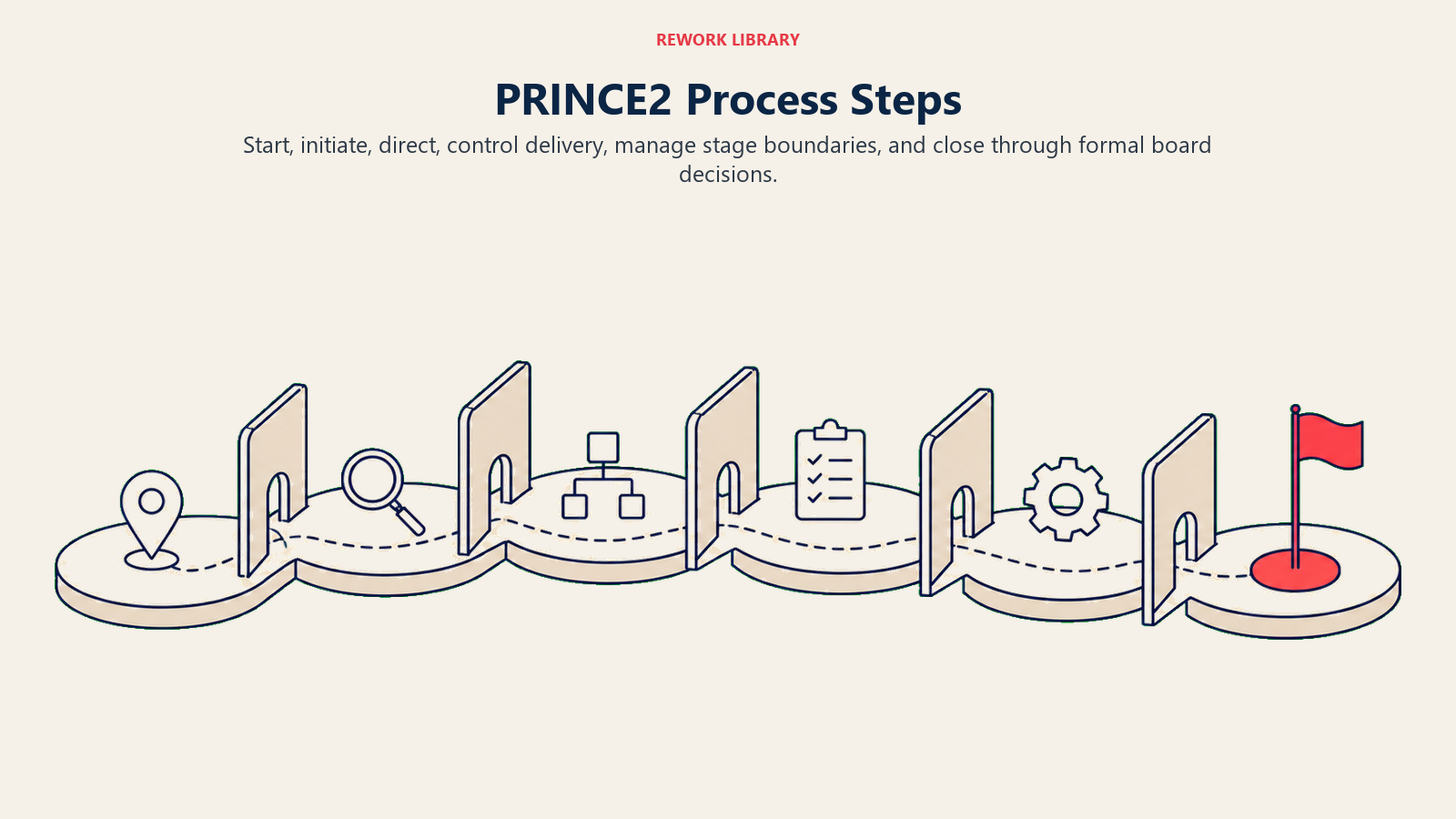
Step 1: Starting Up a Project
Before the project begins formally, the project mandate triggers the creation of a project brief. The project manager and executive work together to confirm whether the project is viable and worth initiating. The output is an outline business case and a brief that the project board uses to authorize initiation.
Step 2: Initiating a Project
This is where detailed planning happens. The team creates the Project Initiation Documentation (PID), which contains the business case, project approach, quality management approach, risk management approach, change control approach, and the project plan. The project board reviews the PID and decides whether to proceed.
Step 3: Directing the Project
The project board doesn't manage day-to-day work. Instead, it authorizes stages, handles exceptions that breach tolerances, and confirms project closure. This process runs continuously throughout the project, not just at one point. A well-structured project charter often feeds directly into the authorization step here.
Step 4: Controlling a Stage
Within each delivery stage, the project manager assigns work packages to team managers, monitors progress, manages issues and risks, and reports to the project board. The stage plan drives daily activity. When something breaches a tolerance, the project manager raises an exception report rather than making unilateral decisions.
Step 5: Managing Product Delivery
Team managers accept work packages, build or deliver products, and hand them back to the project manager after quality checks. This process keeps delivery teams focused on producing defined outputs rather than just completing tasks. The product description specifies what "done" looks like before work starts.
Step 6: Managing a Stage Boundary and Closing
At the end of each stage, the project manager updates the project plan, refreshes the business case, updates the risk register, and prepares the next stage plan for project board approval. When the final stage ends, the Closing a Project process produces the end project report, benefits review plan, and lessons report. The project board formally accepts the outputs and disbands the project.
Understanding the full project life cycle helps teams see how PRINCE2's stage boundaries map to broader delivery phases in their organization.
PRINCE2 Examples: When to Use It
| Project Type | Good Fit? | Why |
|---|---|---|
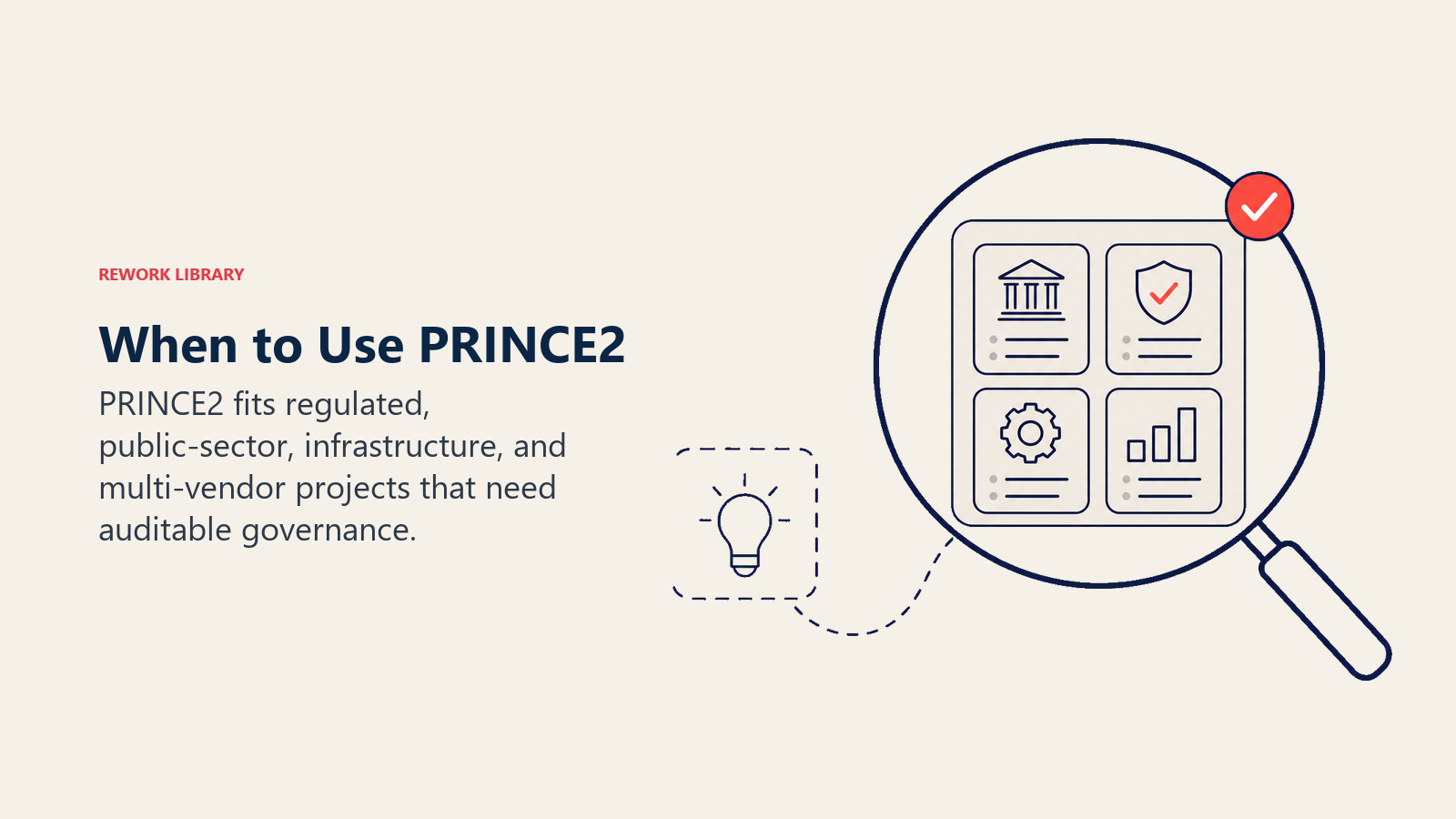
| Government or public sector IT | Excellent | Governance requirements align naturally with PRINCE2's controls |
| Regulated industry (finance, healthcare) | Excellent | Audit trails, defined roles, and stage-gate reviews meet compliance needs |
| Large infrastructure or construction | Good | Fixed scope with defined deliverables suits the product-focused approach |
| Multi-vendor programs | Good | Clear accountability and change control reduce supplier disputes |
| Small internal software project | Moderate | Use with heavy tailoring; strip documentation to essentials |
| Startup MVP development | Weak | Rapid iteration and changing requirements clash with stage-gate assumptions |
| Ongoing operational work | Poor | PRINCE2 is for temporary projects with a defined end point, not BAU |
For projects that sit in the "moderate" zone, a hybrid approach works well. Use PRINCE2's governance shell (board structure, stage gates, business case reviews) and run waterfall methodology or agile sprints inside each stage, depending on the nature of the work.
Best Practices: Dos and Don'ts
| Do | Don't |
|---|---|
| Tailor the method to your project size | Apply every management product to every project regardless of scale |
| Review the business case at every stage boundary | Treat the business case as a one-time approval document |
| Define product descriptions before assigning work | Let teams start work without a clear definition of done |
| Use the manage by exception principle to protect management time | Escalate every minor issue to the project board |
| Capture lessons throughout, not just at the end | Save the lessons log for the closing report and forget earlier learning |
| Combine with agile delivery inside stages where scope is fluid | Try to force a rigid waterfall into stages where requirements will change |
| Establish a project management office (PMO) to standardize PRINCE2 across the portfolio | Let each project manager interpret the method differently |
For complex programs with multiple interconnected projects, risk management practices slot naturally into PRINCE2's risk theme and support the manage by exception principle at the program level.
Related Reading
- What is Agile Methodology
- Agile vs Waterfall
- Waterfall Methodology in Project Management
- Project Charter
- Project Life Cycle
- Work Breakdown Structure
- Project Management Office (PMO)
- Project Risk Management
- Milestone Chart
- Critical Chain Project Management
- Task Dependencies
PRINCE2 methodology has earned its place as the default governance framework in public-sector and regulated-industry projects for a reason. It forces the hard conversations early: Is this project still worth doing? Who has the authority to change scope? What does "done" actually mean? Teams that build those habits into their delivery culture tend to ship more predictable work, with fewer surprises at the finish line.

Senior Operations & Growth Strategist
On this page
- What is PRINCE2?
- Key Facts
- The 7 Principles, Themes, and Processes of PRINCE2
- 7 Principles
- 7 Themes
- 7 Processes
- PRINCE2 vs PMBOK vs Agile
- Benefits of PRINCE2
- Limitations of PRINCE2
- How to Apply PRINCE2
- Step 1: Starting Up a Project
- Step 2: Initiating a Project
- Step 3: Directing the Project
- Step 4: Controlling a Stage
- Step 5: Managing Product Delivery
- Step 6: Managing a Stage Boundary and Closing
- PRINCE2 Examples: When to Use It
- Best Practices: Dos and Don'ts
- Related Reading