Descrição de Cargo de Engineering Manager (Modelo + Habilidades)
Turn this article into takeaways for your work.


Each assistant summarizes the article only for you and suggests best practices for your work.
Toda descrição de cargo de Engineering Manager ou atrai o candidato certo ou o filtra antes mesmo de você conversar com ele. Acerte o escopo, a lista de habilidades e o sinal de remuneração, e você vai gastar suas rodadas de entrevista avaliando fit, não corrigindo expectativas desalinhadas.
Este guia traz um modelo pronto para copiar e colar, uma tabela de habilidades, um gráfico comparativo de cargos e uma checklist curta para escrever anúncios de vaga que funcionam.
O que um Engineering Manager faz?
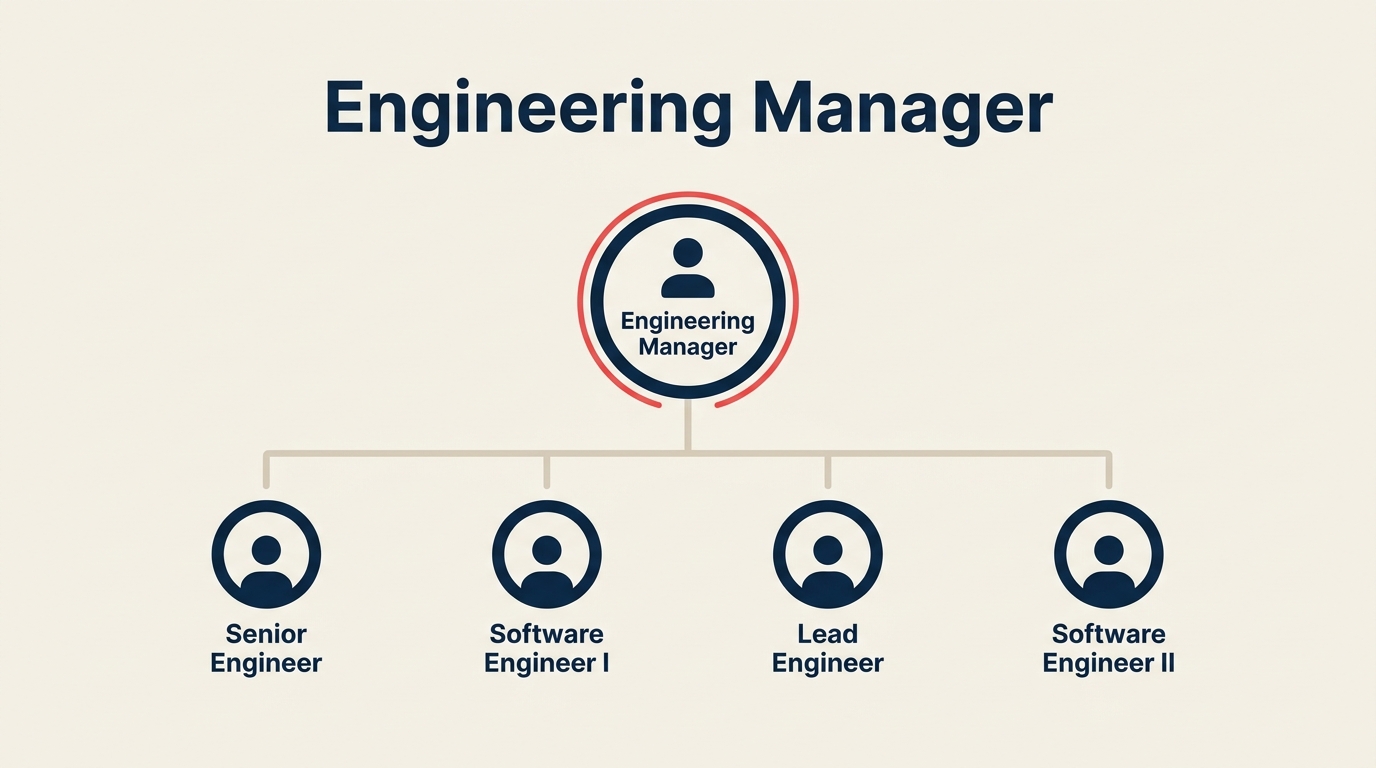
Um Engineering Manager (EM) lidera uma equipe de engenharia de software, combinando gestão de pessoas com supervisão técnica e responsabilidade pela entrega. O EM é responsável pelo resultado da equipe, pelo crescimento de carreira dos contribuidores individuais e pela execução do dia a dia do roadmap de produto ou plataforma.
Diferente de um engenheiro sênior, a principal alavanca do EM é a equipe, não o próprio código. Diferente de um VP of Engineering, o EM permanece próximo do trabalho e deve desbloquear engenheiros, conduzir 1:1s, fazer revisões de qualidade de código sem se tornar um gargalo, e trabalhar junto com o produto na definição de escopo e prioridades.
Principais Dados
- Salário anual mediano (EUA): US$ 167.020 para profissionais de garantia de qualidade de software e engenheiros de software com responsabilidades de gestão (US BLS, Occupational Employment Statistics, maio de 2023; a categoria do BLS mais próxima de Engineering Manager)
- Crescimento da vaga (2022-2032): projeta-se que os cargos de desenvolvedor de software e gerentes relacionados cresçam 25% ao longo da década (US BLS, Computer and Information Technology Occupations, 2023)
- Amplitude de controle típica: de 4 a 8 subordinados diretos na maioria das empresas de tecnologia, com equipes maiores muitas vezes divididas em squads sob EMs sênior
Modelo de descrição de cargo de Engineering Manager
Copie e personalize o bloco abaixo. Substitua o texto entre colchetes pelas suas especificidades.
Cargo: Engineering Manager
Equipe: [Plataforma / Produto / Infraestrutura / Mobile / etc.]
Localização: [Cidade, Estado / Remoto / Híbrido]
Reporta-se a: [VP of Engineering / Director of Engineering / CTO]
Visão geral do cargo
Estamos buscando um Engineering Manager para liderar uma equipe de [4-8] engenheiros que constroem [breve descrição do que a equipe é responsável]. Você será responsável pela entrega, qualidade e crescimento de cada engenheiro da sua equipe. Você trabalhará de perto com produto e design para transformar um roadmap em software entregue, e ajudará a definir a direção técnica de [área de produto ou plataforma].
Este cargo é ideal para alguém que realmente gosta de gerenciar pessoas, consegue manter conversas técnicas em profundidade e quer ser responsável pelos resultados da equipe, não apenas pela própria produção.
Principais responsabilidades
- Conduzir 1:1s semanais, avaliações trimestrais e conversas de desenvolvimento com todos os subordinados diretos
- Ser responsável pelo planejamento de sprints, refinamento do backlog e coordenação de releases da equipe
- Trabalhar com product managers para definir o escopo de funcionalidades, negociar prazos e resolver conflitos de prioridade
- Definir e acompanhar OKRs, velocidade e métricas de qualidade no nível da equipe
- Participar de revisões de arquitetura e design para manter a qualidade do código e do sistema
- Liderar contratações: escrever descrições de cargo por nível, conduzir entrevistas e fazer propostas calibradas
- Escalar e resolver incidentes, interrupções e problemas de produção na sua área
- Identificar e resolver problemas de clima da equipe antes que afetem a retenção ou a produção
- Representar a engenharia em fóruns de planejamento multifuncionais e revisões com stakeholders
Qualificações obrigatórias
- Mais de 5 anos de experiência em engenharia de software, com pelo menos 2 anos gerenciando engenheiros
- Capacidade comprovada de entregar projetos complexos em uma equipe de 4 ou mais pessoas
- Experiência conduzindo avaliações de desempenho e conversas de calibração
- Facilidade para ler e discutir código, desenhos de sistema e trade-offs de arquitetura em [sua stack principal: ex.: Python/Go, React/TypeScript, Java, etc.]
- Comunicação escrita e verbal sólida para equipes distribuídas e com prioridade assíncrona
- Experiência com frameworks de entrega Agile/Scrum ou Kanban
Qualificações desejáveis
- Experiência escalando uma equipe de [tamanho atual] para [tamanho-alvo] por meio de contratação e onboarding
- Vivência em [domínio relevante: ex.: infraestrutura de dados, mobile de consumo, compliance em fintech]
- Familiaridade com [ferramentas específicas: ex.: Jira, Linear, Datadog, GitHub Actions]
- Experiência anterior como tech lead antes de migrar para a gestão
- Exposição à responsabilidade por rotação de plantão e gestão de SLA
O que oferecemos
- Salário-base: [US$ X a US$ Y] dependendo da experiência e da localização
- Bônus anual por desempenho: [10-20% do salário-base]
- Equity: [detalhes de RSU ou opções]
- Cobertura de saúde, odontológica e oftalmológica, com % do prêmio pago pela empresa
- Verba de aprendizado: [US$ X/ano] para cursos, livros e conferências
- Regime [Remoto / Híbrido]: [detalhes sobre expectativas de presença no escritório]
- Caminho claro para Senior EM, Director of Engineering ou VP of Engineering
Principais habilidades e competências
| Habilidade | Por que importa |
|---|---|
| Gestão de pessoas | EMs passam a maior parte do tempo com contratação, coaching e desempenho, não com código. Fraqueza aqui significa perda de engenheiros. |
| 1:1s e coaching | 1:1s regulares e estruturados são a principal ferramenta para desbloquear engenheiros e identificar riscos de retenção cedo. |
| Entrega de projetos | A capacidade da equipe de entregar de forma previsível é o resultado mais visível do EM. Isso exige negociação de escopo, identificação de riscos e gestão de dependências. |
| Julgamento técnico | EMs não precisam escrever código de produção diariamente, mas precisam identificar erros de arquitetura, revisar pull requests com qualidade e conquistar a confiança dos engenheiros sênior. |
| Contratação | Muitos cargos de EM incluem a responsabilidade pelo funil de contratação completo da equipe. Uma contratação ruim custa de 6 a 12 meses de produtividade perdida e desorganização na equipe. |
| Comunicação com stakeholders | EMs traduzem prazos e restrições de engenharia para a linguagem de negócios voltada a produto, design e públicos executivos. |
Engineering Manager vs tech lead vs engenheiro sênior
Esses três cargos costumam ser confundidos em anúncios de vaga. As diferenças importam porque misturá-los cria expectativas erradas para os candidatos e para o resto da organização.
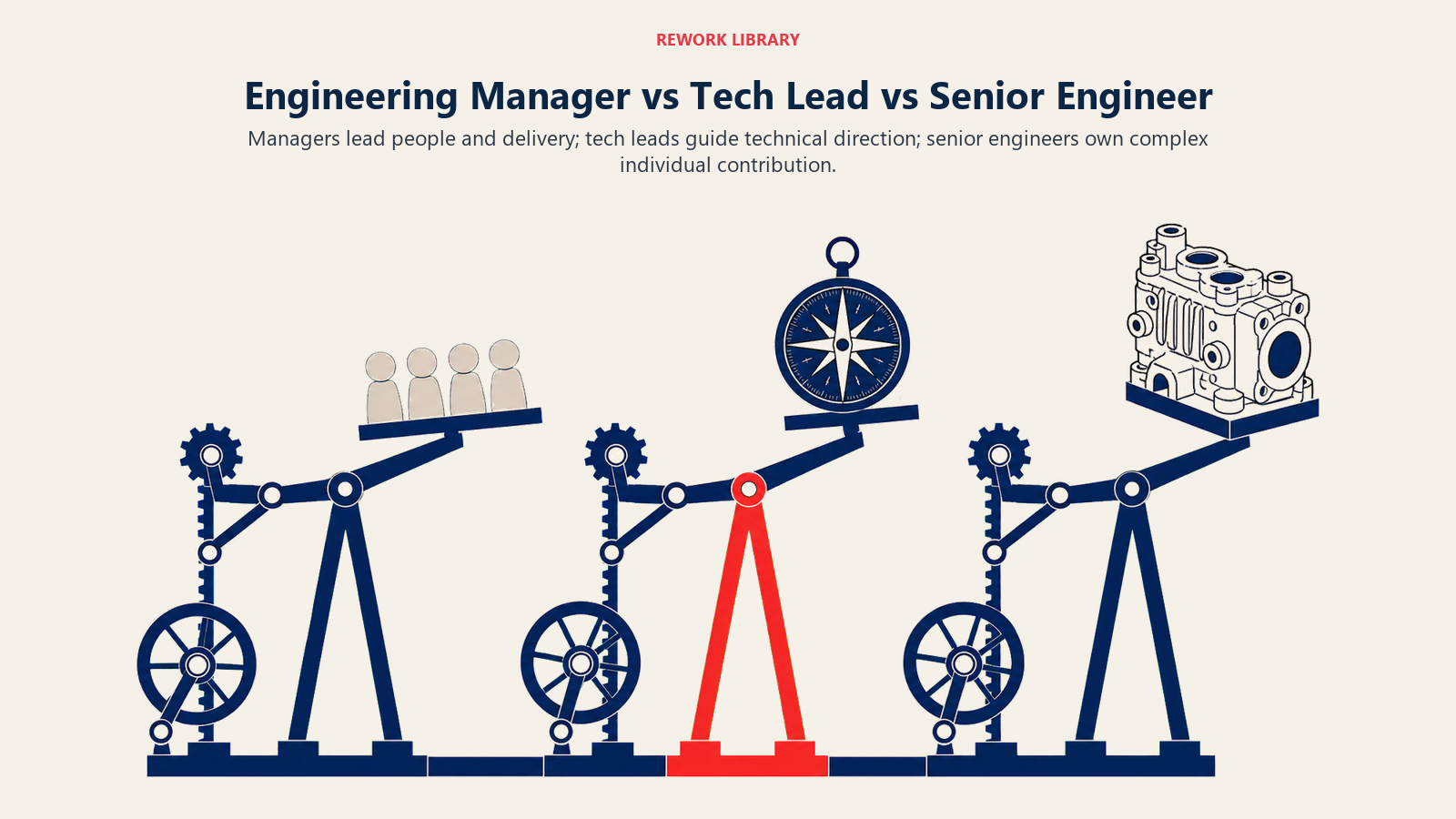
| Dimensão | Engenheiro Sênior | Tech Lead | Engineering Manager |
|---|---|---|---|
| Foco principal | Produção técnica individual | Direção técnica de um projeto ou squad | Pessoas, processos e resultados da equipe |
| Responsabilidade | Seu próprio código e desenhos | Qualidade técnica e arquitetura em uma área de funcionalidades | Entrega da equipe, contratação e crescimento de carreira |
| IC vs. gestão | Contribuidor individual | Contribuidor individual com responsabilidades de coordenação | Gestor de pessoas (avaliações de desempenho, remuneração, promoção) |
| Contribuição de código | Alta (produção principal) | Moderada (lidera pelo exemplo, pode reduzir com o tempo) | Baixa a nenhuma na maioria das empresas (revisa, não escreve) |
| Trilha de carreira | Trilha IC (Staff, Principal) | Pode continuar IC ou migrar para EM | Trilha de gestão (Senior EM, Director, VP) |
| Reporta-se a | EM ou tech lead | EM | Director ou VP of Engineering |
Um tech lead que quer continuar técnico não deveria ser empurrado para um cargo de EM. Muitas empresas perdem tech leads fortes ao tratar a gestão como a única forma de progressão de carreira.
Como escrever uma descrição de cargo de Engineering Manager eficaz
Passo 1: Acerte o nível e o escopo da equipe
Anúncios vagos atraem candidatos vagos. Especifique o tamanho da equipe, o que ela é responsável e a estrutura de reporte. "Engineering Manager, Growth" não diz quase nada ao candidato. "Engineering Manager, Growth (6 engenheiros, responsável pelo funil de aquisição, reporta-se ao VP of Product Engineering)" mostra em 10 segundos se o cargo é adequado para ele.
Passo 2: Liste resultados, não apenas tarefas
Substitua "gerenciar uma equipe de engenheiros" por "entregar a área de produto [X] para [Y usuários] com menos de [Z]% de taxa de incidentes críticos." Resultados atraem candidatos orientados a resultados e dão parâmetros claros aos entrevistadores.
Passo 3: Separe requisitos obrigatórios de desejáveis
Estudos mostram consistentemente que mulheres e candidatos de grupos sub-representados só se candidatam quando atendem a quase 100% dos requisitos. Uma lista de 15 requisitos sem distinção entre obrigatórios e desejáveis vai reduzir seu pool de candidatos sem melhorar a qualidade. Coloque os bloqueios reais em "Obrigatório" e mantenha a lista de "Desejável" honesta.
Passo 4: Seja específico sobre a stack técnica e o tamanho da equipe
"Experiência com a nossa stack técnica" não significa nada. Nomeie as linguagens, frameworks e ferramentas. Para um cargo de EM, a stack define o quão técnica deve ser a régua da entrevista e se um candidato de outro ecossistema consegue se adaptar rápido. O tamanho da equipe importa porque gerenciar 3 engenheiros e gerenciar 12 são trabalhos diferentes.
Passo 5: Inclua remuneração e trilha de crescimento
Divulgar a faixa salarial agora é exigido por lei na Califórnia, no Colorado, em Nova York e em Washington. Além da conformidade, anúncios com faixa salarial recebem mais candidaturas e reduzem o tempo até a proposta, porque os candidatos se autosselecionam no nível certo. Adicione a trilha de promoção (Senior EM, Director) para que os candidatos saibam que o cargo tem futuro.
Perguntas de entrevista para Engineering Managers
Liderança e gestão de pessoas
- Descreva uma vez em que você teve que dar um feedback de desempenho difícil a um subordinado direto. O que você disse, e o que aconteceu depois?
- Como você estrutura seus 1:1s? Quais temas você aborda consistentemente?
- Conte sobre uma vez em que você teve que desligar alguém ou colocá-lo em um plano de desempenho. Como você se preparou para essa conversa?
Entrega e execução
- Descreva um projeto que atrasou o prazo. O que causou o atraso, e o que você faria diferente?
- Como você decide quando contestar o escopo do produto e quando se comprometer com um prazo?
- Quais métricas você acompanha para avaliar a saúde e a produção da sua equipe?
Julgamento técnico
- Descreva uma decisão de arquitetura que sua equipe tomou no último ano. Quais opções vocês consideraram, e como decidiram?
- Como você se mantém atualizado sobre o trabalho técnico da sua equipe sem se tornar um gargalo na revisão de código?
Contratação e formação de equipe
- Como você calibra decisões de nivelamento na contratação? O que diferencia um Engenheiro Sênior de um Staff Engineer no seu framework?
- Descreva o canal de sourcing mais eficaz que você já usou. Por que ele funcionou?
FAQ da Descrição de Cargo de Engineering Manager
Qual é a diferença entre um Engineering Manager e um tech lead?
Um tech lead é um contribuidor individual que orienta a direção técnica de um projeto ou squad. Um Engineering Manager é um gestor de pessoas: conduz avaliações de desempenho, faz recomendações de remuneração e é responsável pela entrega e retenção da equipe. Algumas empresas combinam os cargos em equipes menores, mas separá-los dá mais foco a ambos.
Os Engineering Managers ainda escrevem código?
Depende do tamanho da empresa e da fase da equipe. Em startups em estágio inicial, os EMs costumam contribuir com código diretamente. Em empresas com mais de 50 engenheiros, a maioria dos EMs escreve pouco ou nenhum código de produção. O valor deles vem de multiplicar o resultado da equipe, não de aumentar a própria produção. A maioria das descrições de cargo em empresas médias e grandes espera que os EMs revisem, orientem e ocasionalmente prototipem, não que carreguem tickets de sprint.
Qual é o tamanho típico de equipe para um Engineering Manager?
A amplitude de controle mais comum é de 4 a 8 subordinados diretos. Abaixo de 4, o cargo muitas vezes não justifica a dedicação integral à gestão. Acima de 8, a qualidade da comunicação tende a cair e a atenção individual sofre. Senior EMs ou "gestores de gestores" podem supervisionar organizações maiores por meio de líderes de equipe.
Qual é a faixa salarial de um Engineering Manager nos EUA?
Segundo dados do US Bureau of Labor Statistics (maio de 2023), o salário anual mediano para desenvolvedores de software e cargos relacionados com responsabilidades de gestão é de cerca de US$ 167.000. A remuneração total varia bastante: em polos tecnológicos de alto custo como São Francisco e Seattle, a remuneração-alvo (salário-base mais equity) para EMs experientes costuma ultrapassar US$ 250.000. Cargos remotos e de mercado intermediário tendem a variar entre US$ 130.000 e US$ 180.000 de salário-base.
Devo exigir formação em Ciência da Computação para um cargo de Engineering Manager?
Uma exigência de diploma filtra principalmente candidatos que aprenderam engenharia por caminhos alternativos: bootcamps, autodidatismo ou áreas correlatas. Muitos EMs fortes têm formações fora da Ciência da Computação. Um filtro melhor é a capacidade comprovada de entregar software, liderar engenheiros e participar de discussões técnicas sobre trade-offs. Concentre os requisitos em experiência e resultados, não em credenciais.
Construir uma organização de engenharia forte começa com clareza no próprio processo de contratação. Uma descrição de cargo precisa sinaliza aos candidatos que você sabe o que precisa, e dá ao seu painel de entrevistadores um parâmetro consistente para avaliar. Use o modelo acima como ponto de partida, personalize-o para o escopo e a stack reais da sua equipe, e revise-o sempre que o cargo evoluir.
Para modelos de contratação relacionados, veja a descrição de cargo de UX Designer, a descrição de cargo de Full Stack Developer e a descrição de cargo de Cloud Architect. Se você estiver estruturando a organização de produto mais ampla, a descrição de cargo de Group Product Manager e a descrição de cargo de AI Engineer cobrem cargos adjacentes que costumam se reportar à liderança de engenharia ou trabalhar de perto com ela.
Para as habilidades de gestão mais importantes assim que alguém assume esse cargo, os artigos sobre liderança vs gestão e delegação valem a pena compartilhar durante o onboarding.

Senior Customer Retention Strategist
On this page
- O que um Engineering Manager faz?
- Modelo de descrição de cargo de Engineering Manager
- Visão geral do cargo
- Principais responsabilidades
- Qualificações obrigatórias
- Qualificações desejáveis
- O que oferecemos
- Principais habilidades e competências
- Engineering Manager vs tech lead vs engenheiro sênior
- Como escrever uma descrição de cargo de Engineering Manager eficaz
- Passo 1: Acerte o nível e o escopo da equipe
- Passo 2: Liste resultados, não apenas tarefas
- Passo 3: Separe requisitos obrigatórios de desejáveis
- Passo 4: Seja específico sobre a stack técnica e o tamanho da equipe
- Passo 5: Inclua remuneração e trilha de crescimento
- Perguntas de entrevista para Engineering Managers