Descrição de Cargo de AI Solutions Architect (2026): Habilidades da Era da IA, Responsabilidades e Guia de Contratação
Turn this article into takeaways for your work.


Each assistant summarizes the article only for you and suggests best practices for your work.
Toda organização que corre para lançar capacidades de IA esbarra na mesma barreira: cientistas de dados brilhantes construindo modelos que nunca chegam à produção, e equipes de cloud implantando infraestrutura que não corresponde ao que o negócio realmente precisa. O AI Solutions Architect é a pessoa que derruba essa barreira. Este modelo de descrição de cargo de AI Solutions Architect oferece às equipes de contratação uma estrutura pronta para uso, cobrindo responsabilidades, habilidades, referências salariais e as perguntas que os candidatos mais fazem.
O Que Faz um AI Solutions Architect?
O AI Solutions Architect atua na interseção entre estratégia de negócio e entrega técnica. Enquanto um cientista de dados foca no desempenho do modelo e um engenheiro de cloud foca na confiabilidade da infraestrutura, o AI Solutions Architect é responsável pelo quadro completo: como uma capacidade de IA se encaixa no problema de negócio, qual plataforma e quais padrões fazem sentido, como todas as peças se conectam e como uma prova de conceito se transforma em um sistema de produção que a empresa consegue realmente manter.
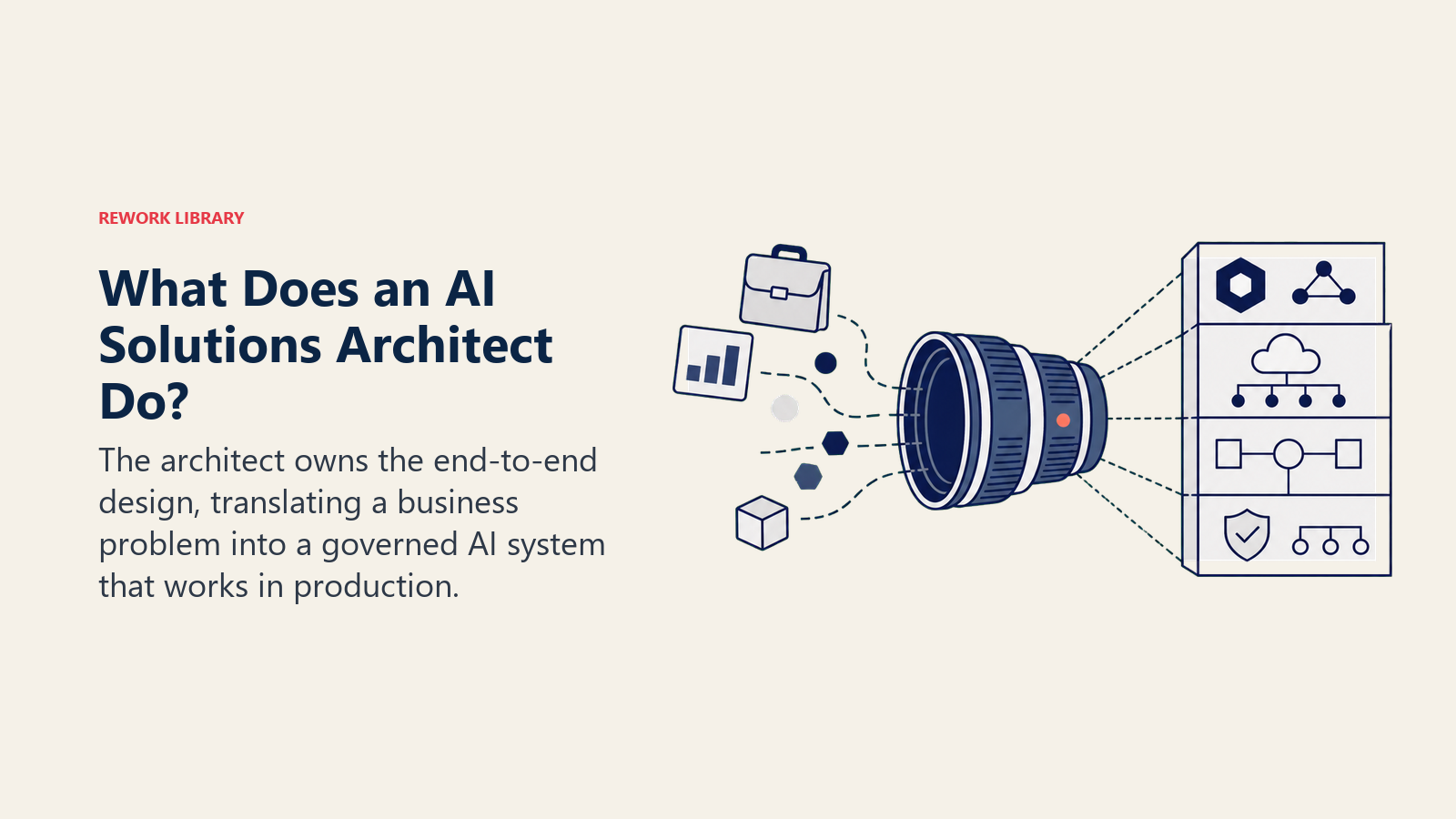
No dia a dia, isso significa traduzir uma meta executiva vaga ("usar IA para reduzir o churn") em uma arquitetura concreta: quais fontes de dados alimentam o sistema, qual plataforma de ML hospeda o modelo, como as previsões chegam às aplicações downstream, onde ficam os guardrails e qual é o perfil de custo em escala. O arquiteto então orienta as equipes de engenharia durante a construção, valida cada ponto de integração e permanece envolvido até que o sistema esteja em produção e estável.
Principais Fatos
- A demanda por arquitetos de IA está crescendo fortemente: o Relatório de Empregos Emergentes de 2024 do LinkedIn listou funções de arquitetura e engenharia relacionadas a IA entre as que mais crescem na América do Norte, com um aumento substancial nas vagas ano a ano em vários setores empresariais. (LinkedIn, 2024)
- Os gastos com serviços de cloud para IA e ML ultrapassaram US$ 100 bilhões globalmente em 2024, com uma parcela significativa ligada ao design de soluções e trabalho de integração, e não apenas ao poder computacional bruto. (Synergy Research, 2024)
- A maioria das organizações relata que a maior barreira para a adoção de IA não é a qualidade do modelo, mas a complexidade de integração e a falta de supervisão arquitetural. (McKinsey, State of AI 2024)
Por Que Este Cargo Importa em 2026
O AI Solutions Architect está no centro de uma das maiores expansões tecnológicas da história. As organizações estão correndo da experimentação com IA para implantações em nível de produção, e a lacuna entre essas duas etapas é quase inteiramente um problema de arquitetura. Fechar essa lacuna é o trabalho do arquiteto.
O que muda em 2026 é o escopo da "arquitetura". Ele agora inclui escolher entre modelos de fundação de fornecedores versus alternativas open-source com fine-tuning, projetar pipelines RAG com os trade-offs certos de retrieval e especificar onde a supervisão humana precisa ser incorporada a um workflow agêntico. Essas não são perguntas que um arquiteto de cloud ou um cientista de dados consegue responder sozinho. O AI Solutions Architect é dono da stack completa: problema de negócio, fluxo de dados, camada de modelo, integração, governança e monitoramento operacional.
A IA torna o arquiteto mais produtivo em cada etapa, sem torná-lo menos necessário. Reconhecer padrões entre APIs de fornecedores, gerar templates de IaC, analisar projeções de custo entre configurações de serving, tudo isso acelera. O que a IA não consegue fazer é decidir qual arquitetura é certa para este negócio, este perfil de risco e esta equipe. Esse julgamento continua sendo o resultado mais valioso do arquiteto.
Habilidades e Ferramentas de IA para AI Solutions Architect em 2026
Os gestores de contratação devem tratar a fluência em IA como um requisito técnico de primeira classe para este cargo, não como um diferencial:
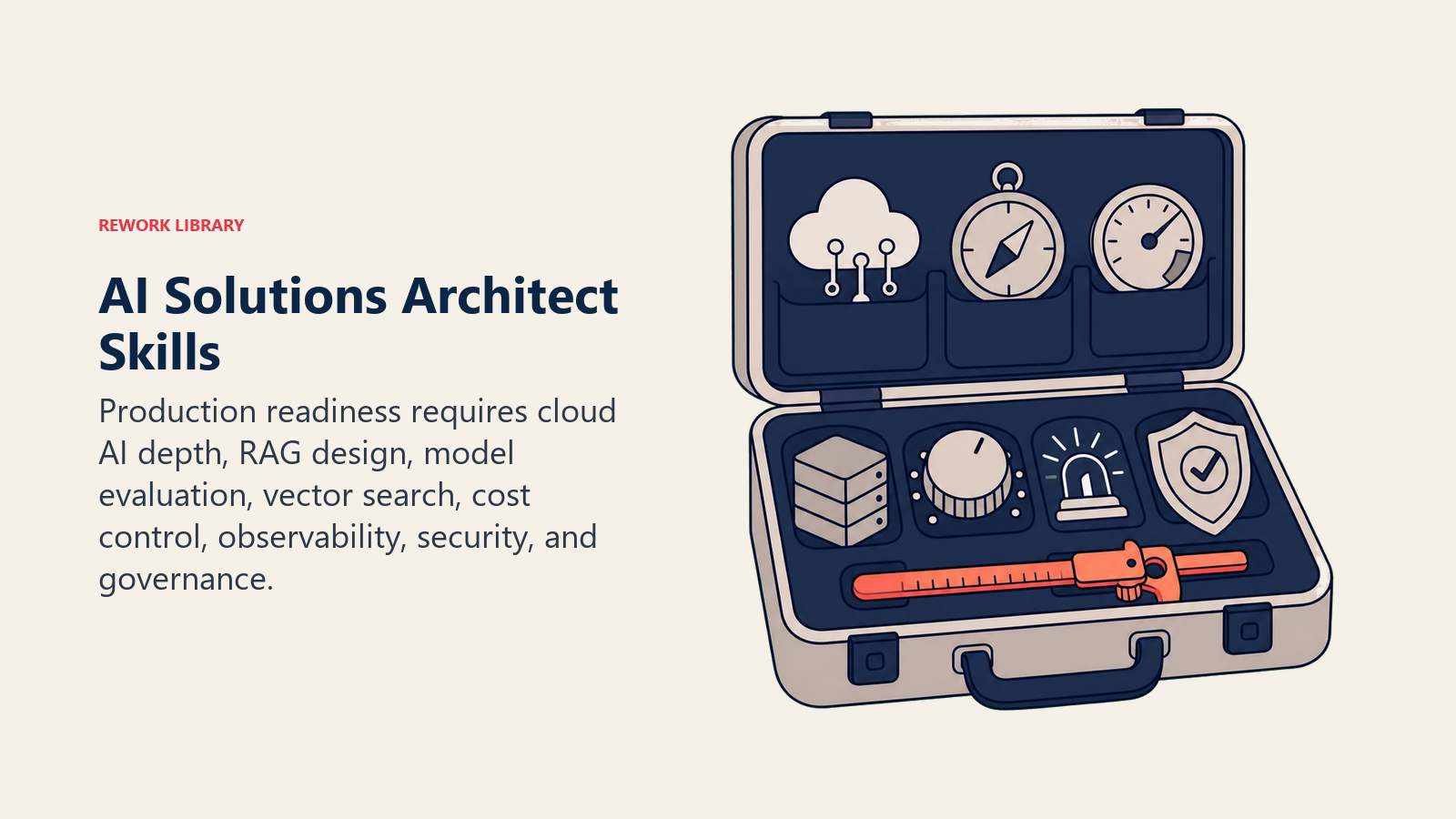
- Profundidade em plataformas de IA na cloud: experiência em produção com Azure AI Studio, AWS Bedrock ou Google Vertex AI, não apenas familiaridade, mas saber quais serviços tratam governança corporativa, controle de custos e requisitos de compliance em escala.
- RAG e infraestrutura vetorial: design prático de pipelines de retrieval-augmented generation usando bancos de dados vetoriais (Pinecone, Weaviate, pgvector), com consciência das estratégias de chunking, dos trade-offs entre modelos de embedding e das implicações de latência/custo no volume de consultas.
- Frameworks de orquestração: domínio prático de LangChain, LlamaIndex ou equivalentes para workflows de agentes com múltiplas etapas; capacidade de avaliar quando uma camada de orquestração agrega valor em vez de apenas complexidade.
- Serving de modelos e otimização de inferência: compreensão de estratégias de batching, quantização, destilação de modelos e inferência serverless versus dedicada para implantações de produção com boa relação custo-benefício.
- Prompt engineering como arquitetura: escrever e sistematizar templates de prompt reutilizáveis para ferramentas internas; definir padrões de governança de prompts (versionamento, testes, rollback) para que mudanças em prompts não degradem silenciosamente os sistemas em produção.
- Design de agentes de IA: especificar arquiteturas agênticas, seleção de ferramentas, gestão de memória/contexto, posicionamento de guardrails e checkpoints de human-in-the-loop, para workflows em que cadeias autônomas de IA substituem processos manuais de múltiplas etapas.
- Contexto de mercado: a demanda por arquitetos capazes de conectar IA e sistemas corporativos cresceu fortemente ano a ano, e a remuneração de arquitetos fluentes em IA fica consistentemente acima de cargos de arquitetura comparáveis sem foco em IA. Candidatos que não conseguem demonstrar experiência em arquitetura de IA em produção são cada vez mais eliminados já na primeira etapa.
Trabalhando ao Lado de Agentes de IA
O AI Solutions Architect é a pessoa que decide quais agentes de IA são construídos e depois os utiliza. Em 2026, o conjunto de ferramentas de um arquiteto maduro inclui:
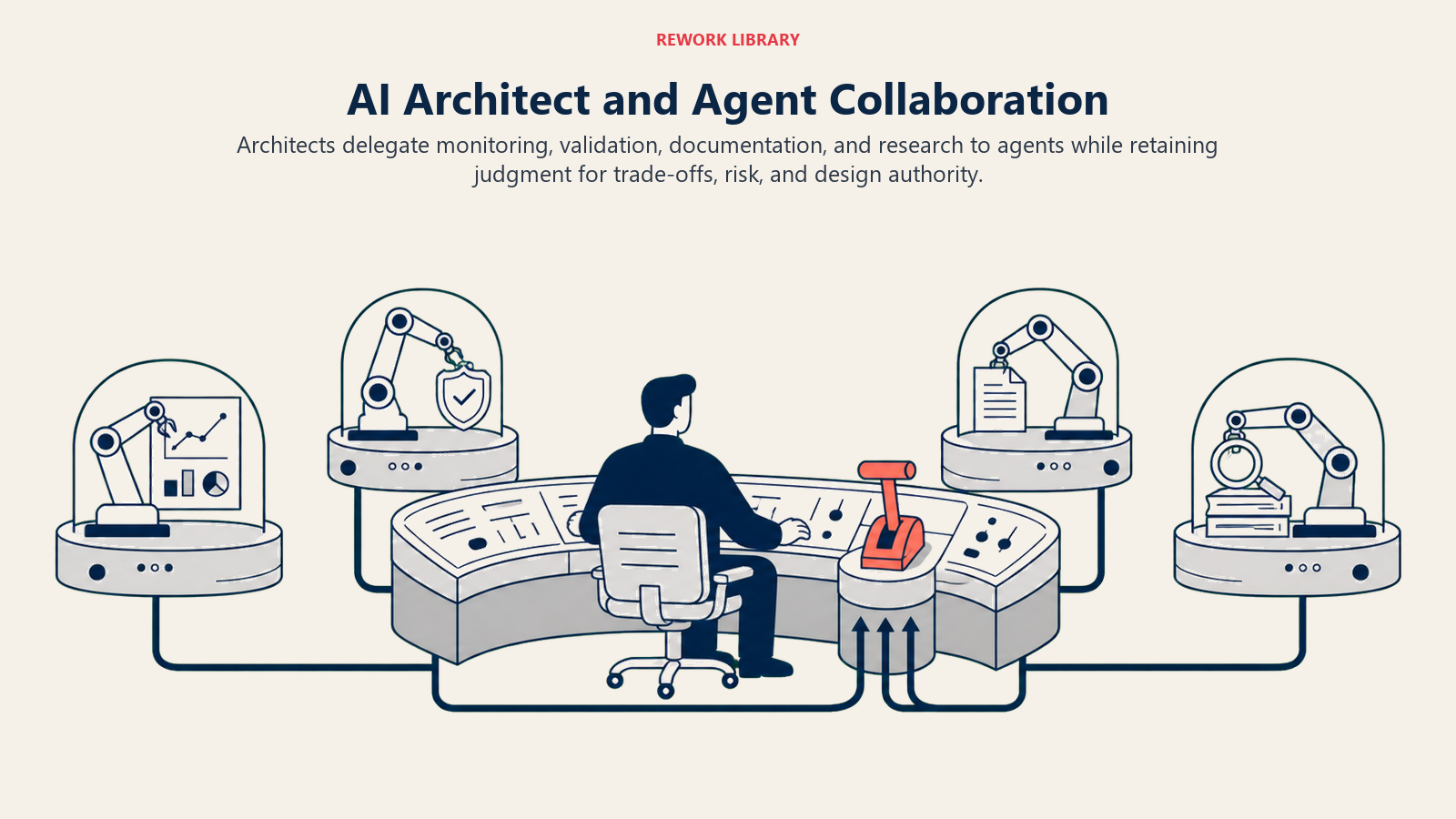
O que os agentes gerenciam: agentes de monitoramento de infraestrutura que sinalizam picos anômalos de custo ou desvios de latência; agentes de pipeline de deployment que validam mudanças de configuração em relação às regras de governança antes da promoção; agentes de otimização de custo que modelam o gasto com inferência entre configurações de serving e apresentam alternativas mais baratas.
O que o arquiteto assume: decisões de design de sistema que envolvem trade-offs de negócio (build vs. buy, latência vs. custo vs. precisão), aprovação final da arquitetura de segurança, seleção de fornecedores e negociação de contratos, alinhamento entre equipes sobre a estratégia de IA, e qualquer decisão em que uma escolha errada crie exposição de compliance ou dívida técnica irreversível.
A linha de divisão: os agentes aceleram o trabalho diagnóstico e generativo, apresentando opções, sinalizando desvios, gerando IaC padronizado. O arquiteto revisa os resultados, aplica o contexto de negócio que o agente não consegue acessar e toma a decisão final. Os melhores arquitetos em 2026 são mais rápidos por causa de seus agentes, não substituídos por eles. Eles tratam o resultado dos agentes como um bom primeiro rascunho, bem pesquisado, e não como uma resposta final.
Responsabilidades do AI Solutions Architect
O cargo abrange estratégia, design e orientação técnica prática. Espera-se que seu AI Solutions Architect seja responsável por, ou contribua para, todos os itens a seguir:
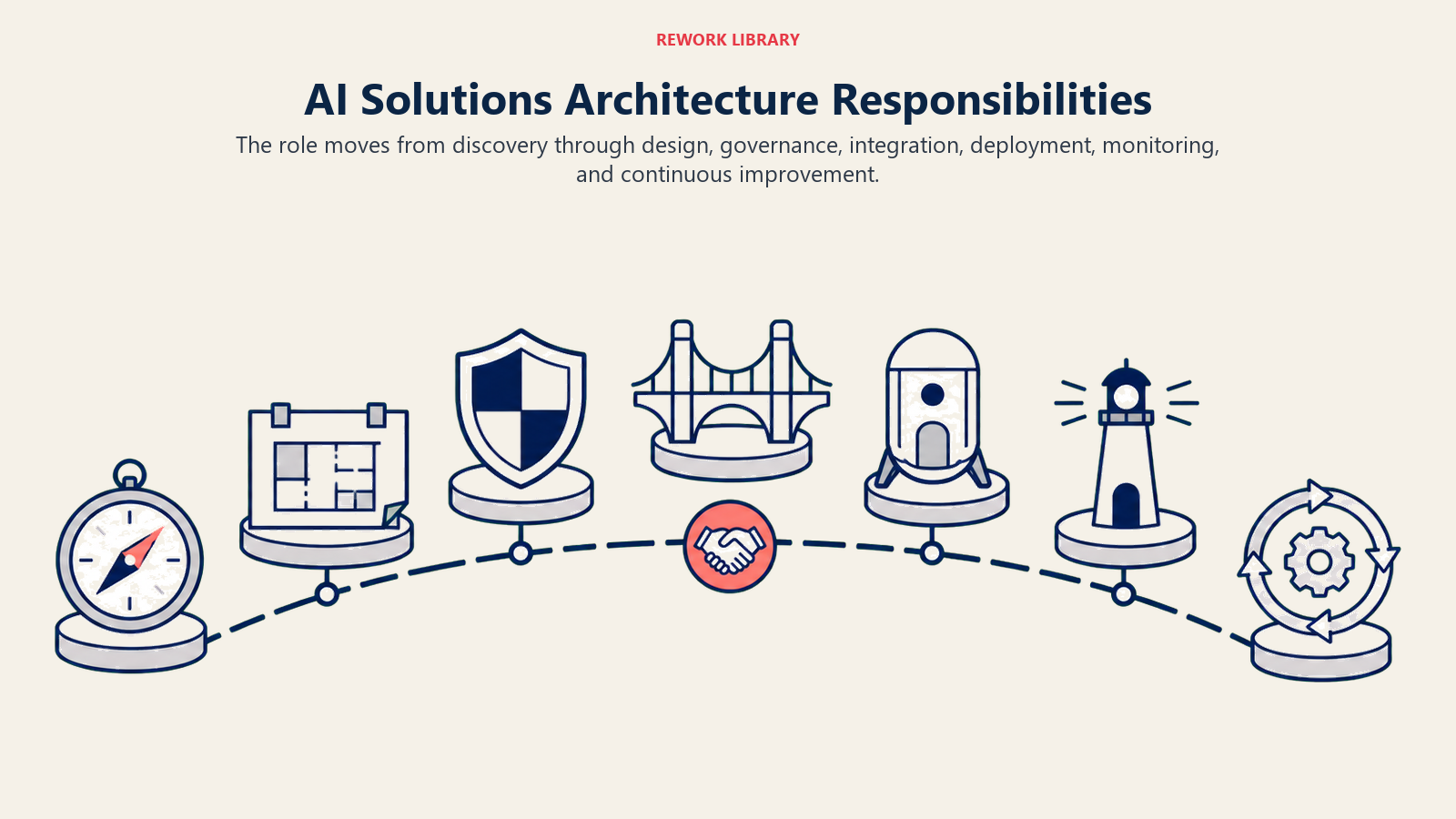
- Design de solução: traduzir requisitos de negócio em blueprints de arquitetura de IA ponta a ponta, definindo fluxos de dados, estratégias de serving de modelos e pontos de integração com sistemas existentes.
- Seleção de plataforma e padrões: avaliar e recomendar plataformas de ML, provedores de LLM, bancos de dados vetoriais, frameworks de orquestração e padrões de deployment (batch vs. tempo real, embutido vs. servido por API) para cada caso de uso.
- Arquitetura de sistemas de ML e LLM: projetar sistemas que incorporem large language models, pipelines de retrieval-augmented generation (RAG), workflows de fine-tuning e frameworks de agentes quando apropriado.
- Integração e design de API: definir como os serviços de IA se conectam a aplicações corporativas, data warehouses e APIs de terceiros, incluindo design de contratos, versionamento e padrões de tratamento de erros.
- Segurança e governança: incorporar controles de acesso, requisitos de privacidade de dados, monitoramento de modelos, detecção de viés e registro de auditoria em cada arquitetura desde o primeiro dia, e não como um adendo posterior.
- Tradução para stakeholders: comunicar trade-offs técnicos com clareza a product managers, lideranças de negócio e engenheiros, transformando decisões de arquitetura em linguagem sobre a qual stakeholders não técnicos possam agir.
- Caminho de POC até a produção: liderar avaliações de prova de conceito e ser responsável pelo plano de engenharia que leva experimentos bem-sucedidos a implantações de produção confiáveis e escaláveis.
- MLOps e prontidão operacional: definir cadências de retreinamento de modelos, dashboards de monitoramento, estratégias de detecção de drift e planos de rollback para que os modelos implantados permaneçam precisos ao longo do tempo.
- Avaliação de fornecedores e ferramentas: conduzir avaliações estruturadas de fornecedores de IA, provedores de modelos de fundação e ferramentas SaaS, construindo uma recomendação defensável com custo, capacidade e risco pontuados.
- Otimização de custos: modelar os custos de computação e inferência já na etapa de arquitetura, para que o negócio saiba com o que está se comprometendo antes de o sistema ser construído, e projetar para eficiência de custo desde o início.
Requisitos e Qualificações
Obrigatório
- 6 anos ou mais em arquitetura de software ou cloud, com pelo menos 2 anos trabalhando diretamente com sistemas de IA ou ML em ambientes de produção.
- Sólida compreensão dos fundamentos de machine learning: aprendizado supervisionado e não supervisionado, avaliação de modelos, modos de falha comuns e quando o ML é ou não a ferramenta certa.
- Experiência prática com os serviços de IA/ML de pelo menos um grande provedor de cloud (AWS SageMaker, Azure Machine Learning ou Google Vertex AI).
- Familiaridade com padrões de integração de LLM: prompt engineering, pipelines RAG, vector stores e pelo menos um framework de orquestração (LangChain, LlamaIndex ou similar).
- Fortes habilidades de design de sistemas: sistemas distribuídos, design de API, arquitetura orientada a eventos e padrões de pipeline de dados.
- Experiência trabalhando com equipes de engenharia de dados e compreensão de como a qualidade dos dados afeta o desempenho dos modelos.
- Comunicação escrita e verbal clara: este cargo apresenta regularmente decisões de arquitetura a públicos não técnicos.
Desejável
- Formação em MLOps ou experiência com ferramentas como MLflow, Kubeflow ou Weights and Biases.
- Certificações em AWS, Azure ou Google Cloud (nível profissional de arquiteto ou especialidade em ML).
- Experiência em setores com forte exigência de compliance: saúde (HIPAA), finanças (SOC 2, GDPR) ou governo.
- Familiaridade com frameworks de governança de IA e práticas de gestão de risco de modelos.
- Experiência anterior como technical lead ou principal engineer conduzindo revisões de arquitetura.
Modelo de Descrição de Cargo de AI Solutions Architect
Use o bloco abaixo como ponto de partida. Ajuste o nome da empresa, o contexto da equipe e a stack tecnológica específica para se adequar ao seu ambiente.
Cargo: AI Solutions Architect Localização: [Cidade / Remoto / Híbrido] Reporta-se a: [CTO / VP de Engenharia / Head de IA]
Resumo do cargo
Estamos em busca de um AI Solutions Architect para ser responsável pelo design e pela entrega de sistemas de IA corporativos. Você trabalhará com equipes de negócio, dados e engenharia para transformar ambições de IA em arquiteturas prontas para produção, orientando desde a seleção de plataformas até o monitoramento pós-lançamento. Este é um cargo sênior de contribuidor individual, com influência significativa sobre como as capacidades de IA são construídas e governadas em toda a organização.
Principais responsabilidades
- Projetar arquiteturas de soluções de IA ponta a ponta que resolvam problemas reais de negócio, da ingestão de dados até o serving do modelo e a integração downstream.
- Avaliar plataformas de IA, provedores de LLM e ferramentas de ML; produzir recomendações estruturadas com análise de custo, capacidade e risco.
- Liderar iniciativas de prova de conceito: definir o escopo, executá-las e construir o roadmap de produção quando os experimentos derem certo.
- Definir padrões de integração entre serviços de IA e sistemas corporativos existentes, incluindo contratos de API, contratos de dados e tratamento de erros.
- Incorporar requisitos de segurança, privacidade e governança em cada arquitetura desde a fase de design.
- Traduzir decisões técnicas de arquitetura em comunicação clara e não técnica para stakeholders de produto e de negócio.
- Estabelecer padrões para práticas de MLOps, incluindo monitoramento de modelos, gatilhos de retreinamento e procedimentos de rollback.
- Trabalhar em parceria com equipes de engenharia de dados para garantir que os pipelines de dados atendam aos requisitos de qualidade e latência de cada sistema de IA.
Qualificações obrigatórias
- 6 anos ou mais em arquitetura de software ou de soluções, com pelo menos 2 anos em ambientes de IA ou ML em produção.
- Proficiência em pelo menos uma grande plataforma de IA/ML na cloud (AWS, Azure ou GCP).
- Experiência comprovada com integração de LLM: pipelines RAG, design de prompts, bancos de dados vetoriais e frameworks de agentes.
- Fortes habilidades de design de sistemas, abrangendo sistemas distribuídos, APIs e pipelines de dados.
- Excelentes habilidades de comunicação, com histórico de apresentar decisões técnicas a stakeholders não técnicos.
Qualificações preferenciais
- Experiência com MLOps usando ferramentas como MLflow, Kubeflow ou Weights and Biases.
- Certificação de arquiteto de cloud ou especialidade em ML.
- Experiência em setores regulados (saúde, finanças ou governo).
- Experiência gerenciando processos de revisão de arquitetura ou padrões técnicos.
O que oferecemos
- Salário competitivo e pacote de equity.
- Modelos flexíveis de trabalho remoto ou híbrido.
- Orçamento para aprendizado e conferências, para educação continuada em IA e arquitetura.
- Acesso a ferramentas de IA de ponta e recursos de computação.
- Oportunidade de moldar a estratégia de IA em nível de toda a organização.
Salário e Perspectivas de Carreira
A remuneração de AI Solutions Architects reflete a combinação entre profundidade em arquitetura e conhecimento de domínio em IA. As faixas abaixo são para os Estados Unidos; ajuste para baixo entre 20% e 30% na maioria dos mercados europeus e entre 30% e 40% no Sudeste Asiático.
| Nível | Faixa anual típica (USD) |
|---|---|
| Nível intermediário (4-6 anos de experiência) | $150,000 - $190,000 |
| Sênior (7-10 anos de experiência) | $190,000 - $240,000 |
| Principal / Staff (10+ anos) | $240,000 - $300,000+ |
| Distinguished / Fellow | $300,000 - $400,000+ |
A maioria dos pacotes de remuneração nesse nível combina salário base com equity (RSUs ou opções) e um bônus anual. A remuneração total pode superar significativamente o salário base nas empresas de tecnologia maiores.
Fluência em IA por Nível de Experiência
| Nível | Expectativa de fluência em IA |
|---|---|
| Nível intermediário (4-6 anos) | Usa ferramentas de IA diariamente: Copilot ou Claude para documentação e revisão de código, serviços de IA da plataforma de cloud para trabalho de POC, prompt engineering para ferramentas internas |
| Sênior (7-10 anos) | Constrói e mantém bibliotecas de prompts e workflows de agentes reutilizáveis; define padrões de MLOps que incorporam monitoramento assistido por IA e detecção de drift |
| Principal / Staff (10+ anos) | Projeta processos de arquitetura aumentada por IA em toda a organização; supervisiona frameworks de agentes de IA que abrangem múltiplas equipes de produto; define políticas de governança para implantações agênticas |
Fluência em IA nesse nível não é sobre usar o ChatGPT para escrever. É sobre projetar sistemas em que os componentes de IA sejam elementos arquiteturais de primeira classe, com contratos definidos de confiabilidade, segurança e custo.
A trajetória de carreira além de AI Solutions Architect costuma levar a cargos como Principal Architect, Head of AI Architecture ou VP of Engineering. Alguns arquitetos migram lateralmente para liderança de produto ou criam consultorias focadas em IA. A demanda está crescendo mais rápido que a oferta, o que mantém a remuneração competitiva e os prazos de contratação longos.
Para empresas de médio porte que não conseguem competir em salário base, um escopo de trabalho mais amplo, um potencial de equity relevante e acesso direto à liderança executiva são diferenciais eficazes.
Cargos Relacionados e Como Eles Diferem
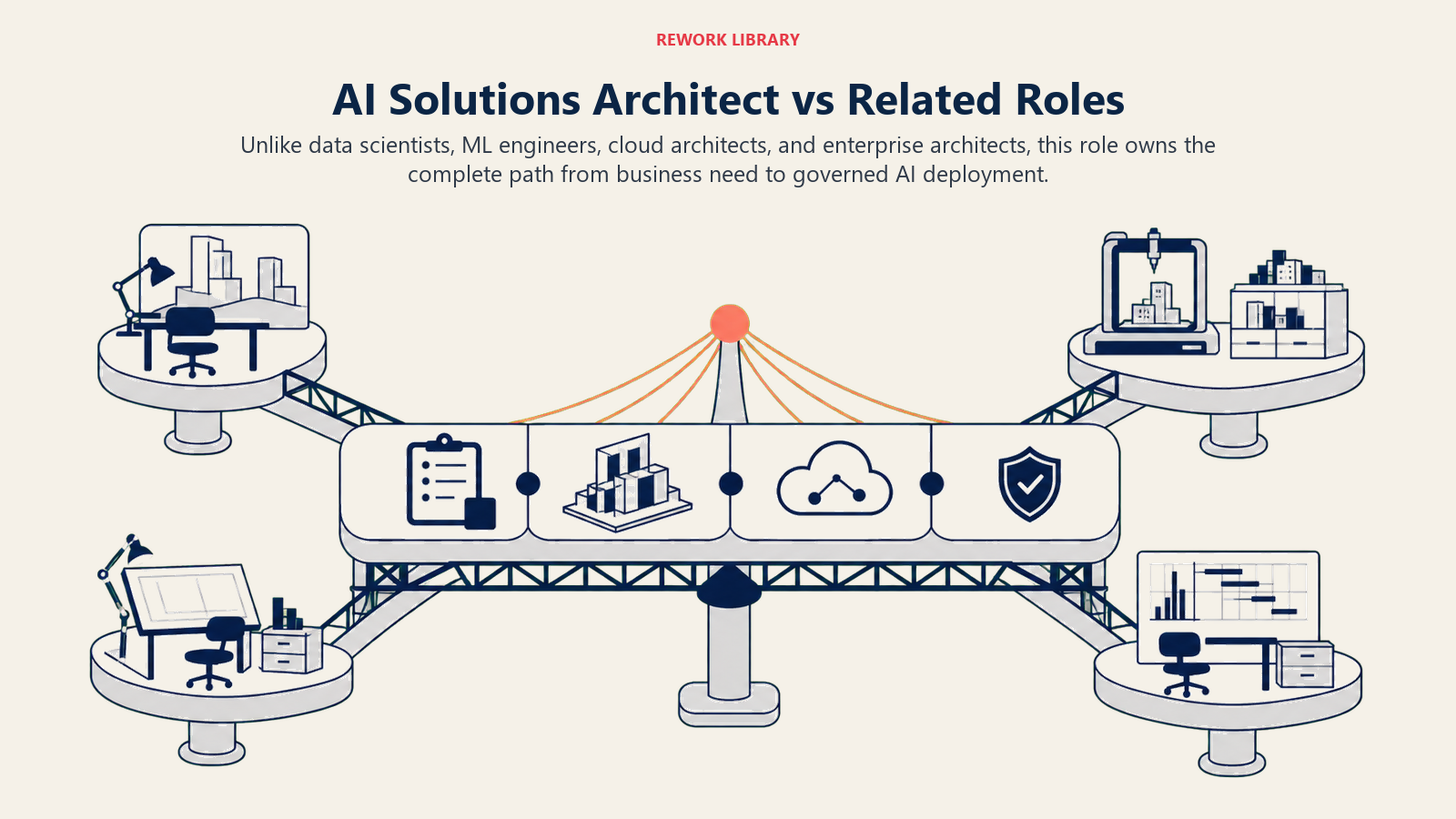
Este cargo costuma ser confundido com títulos adjacentes. A tabela abaixo esclarece as diferenças para que os gestores de contratação possam fazer uma escolha segura entre eles.
| Cargo | Foco principal | Contrate quando |
|---|---|---|
| AI Solutions Architect | Design de sistemas de IA ponta a ponta: da necessidade de negócio até a implantação em produção, governança e integração | Você precisa de alguém para ser responsável por como as capacidades de IA são construídas em toda a organização, e não apenas um modelo ou uma plataforma |
| Cloud Architect | Design de infraestrutura de cloud: computação, rede, armazenamento, confiabilidade e custo entre plataformas de cloud | Seu principal desafio é estratégia de plataforma de cloud, migração ou escalabilidade de infraestrutura, e não o design de sistemas específicos de IA |
| Solutions Engineer | Design técnico voltado para pré-vendas e para o cliente: definir como um produto de fornecedor se encaixa no ambiente do cliente | Você precisa de suporte técnico para ciclos de vendas ou onboarding de clientes, e não para o desenvolvimento interno de sistemas de IA |
| AI Engineer | Desenvolvimento de modelos, pipelines de treinamento e otimização de inferência: construir e lançar modelos de IA | Você já tem a arquitetura definida e precisa de alguém para construir e operar os modelos propriamente ditos |
Na prática, muitas organizações contratam um AI Engineer e um AI Solutions Architect juntos: o arquiteto projeta o sistema e o engenheiro constrói a camada de modelo. Da mesma forma, o AI Solutions Architect e o Cloud Architect costumam colaborar de perto, com o cloud architect responsável pela plataforma subjacente e o arquiteto de IA responsável pelas camadas específicas de IA construídas sobre ela.
Se a sua necessidade for mais restrita (implantar uma única ferramenta de IA para um cliente ou uma equipe específica), um AI Implementation Specialist pode ser a contratação mais adequada. E se você precisa de alguém para gerar conteúdo ou workflows com IA em vez de projetar sistemas, um Generative AI Developer atende melhor a esse escopo.
Contratar um AI Solutions Architect é uma das decisões de maior impacto que uma organização pode tomar ao escalar a IA de experimentos para produção. A pessoa certa reúne o contexto de negócio para fazer as perguntas certas, a profundidade técnica para projetar sistemas confiáveis e as habilidades de comunicação para alinhar todos em torno de um plano. Use este modelo como ponto de partida, adapte-o à stack e à cultura reais da sua equipe e não deixe de lado a transparência salarial. É uma das formas mais rápidas de filtrar candidatos que levam o cargo a sério.
Para modelos de contratação relacionados, veja nossos guias para os cargos de Software Architect, MLOps Engineer e AI Engineer.

Senior Customer Retention Strategist
On this page
- O Que Faz um AI Solutions Architect?
- Por Que Este Cargo Importa em 2026
- Habilidades e Ferramentas de IA para AI Solutions Architect em 2026
- Trabalhando ao Lado de Agentes de IA
- Responsabilidades do AI Solutions Architect
- Requisitos e Qualificações
- Obrigatório
- Desejável
- Modelo de Descrição de Cargo de AI Solutions Architect
- Salário e Perspectivas de Carreira
- Fluência em IA por Nível de Experiência
- Cargos Relacionados e Como Eles Diferem