Descrição de Cargo de Assistente Administrativo (2026): Habilidades da Era de IA, Responsabilidades e Guia de Contratação
Turn this article into takeaways for your work.


Each assistant summarizes the article only for you and suggests best practices for your work.
Uma descrição de cargo clara para assistente administrativo poupa semanas de idas e vindas às equipes de contratação, atraindo candidatos que já entendem o escopo da vaga. Assistentes administrativos são a espinha dorsal operacional de qualquer equipe ou departamento, e um anúncio vago atrai candidatos que estão superqualificados ou que não têm as habilidades essenciais de escritório que você realmente precisa.
Este guia traz um modelo completo, uma lista realista de responsabilidades, benchmarks salariais e uma comparação direta com o cargo de assistente executivo, para que você contrate o perfil certo já na primeira tentativa.
O Que Faz um Assistente Administrativo?
Um assistente administrativo oferece suporte administrativo e organizacional a uma equipe, departamento ou gestor. No dia a dia, isso significa manter as agendas em dia, cuidar da correspondência, manter registros organizados, apoiar reuniões e garantir que as operações do escritório não fiquem para trás.
O cargo é propositalmente amplo. Em uma empresa pequena, um único assistente administrativo pode cuidar da recepção, do pedido de suprimentos, da reserva de viagens e de suporte básico à contabilidade, tudo ao mesmo tempo. Em uma organização maior, o cargo costuma ser especializado: uma pessoa cuida da gestão de agenda, outra do controle de documentos, uma terceira gerencia contatos com fornecedores. De qualquer forma, a função principal é a mesma: remover atritos das pessoas e dos processos que o assistente apoia.
Principais Fatos
- O US Bureau of Labor Statistics contabilizou aproximadamente 3,7 milhões de assistentes administrativos e secretários empregados em 2023, tornando essa uma das maiores categorias ocupacionais do país (BLS Occupational Employment Statistics, 2023).
- A remuneração anual mediana de secretários e assistentes administrativos foi de US$ 46.600 em maio de 2023, com os 10% mais bem pagos ganhando acima de US$ 72.000 (BLS Occupational Outlook Handbook, 2024).
- O emprego nessa categoria tem projeção de queda de 9% entre 2023 e 2033, em grande parte devido à automação de tarefas rotineiras, mas a demanda continua forte para assistentes que lidam com coordenação complexa e trabalho que exige julgamento (BLS, 2024).
Responsabilidades do Assistente Administrativo
Assistentes administrativos mantêm o trabalho recorrente de coordenação preciso em agendas, correspondência, reuniões, suprimentos, viagens e integração de novos funcionários.

- Gerenciar e coordenar agendas de um ou mais membros da equipe, marcando reuniões, resolvendo conflitos de horário e enviando lembretes no momento certo.
- Cuidar da correspondência recebida e enviada: redigir e-mails, encaminhar mensagens às pessoas certas e manter uma comunicação profissional em nome da equipe.
- Preparar, formatar, revisar e distribuir documentos, relatórios e apresentações conforme solicitado.
- Manter sistemas de arquivamento organizados, tanto físicos quanto digitais, para que os registros fiquem acessíveis e em conformidade com as políticas de retenção da empresa.
- Atender telefonemas, receber visitantes e ser o primeiro ponto de contato do escritório ou departamento.
- Coordenar a logística de reuniões: reservar salas, providenciar equipamentos, encomendar catering, preparar pautas e fazer atas.
- Gerenciar o estoque de suprimentos do escritório, fazer pedidos quando o estoque estiver baixo e acompanhar faturas de fornecedores para dar suporte básico à contabilidade.
- Reservar viagens, hospedagem e transporte para os membros da equipe e preparar itinerários detalhados.
- Inserir, atualizar e manter dados nos sistemas da empresa, garantindo precisão e integridade.
- Apoiar a integração de novos funcionários preparando materiais de espaço de trabalho, credenciais de acesso e cronogramas de orientação.
- Cuidar de projetos especiais conforme designado, o que pode incluir pesquisa, coordenação de eventos ou suporte administrativo entre departamentos.
Requisitos e Qualificações
Habilidades e experiência obrigatórias
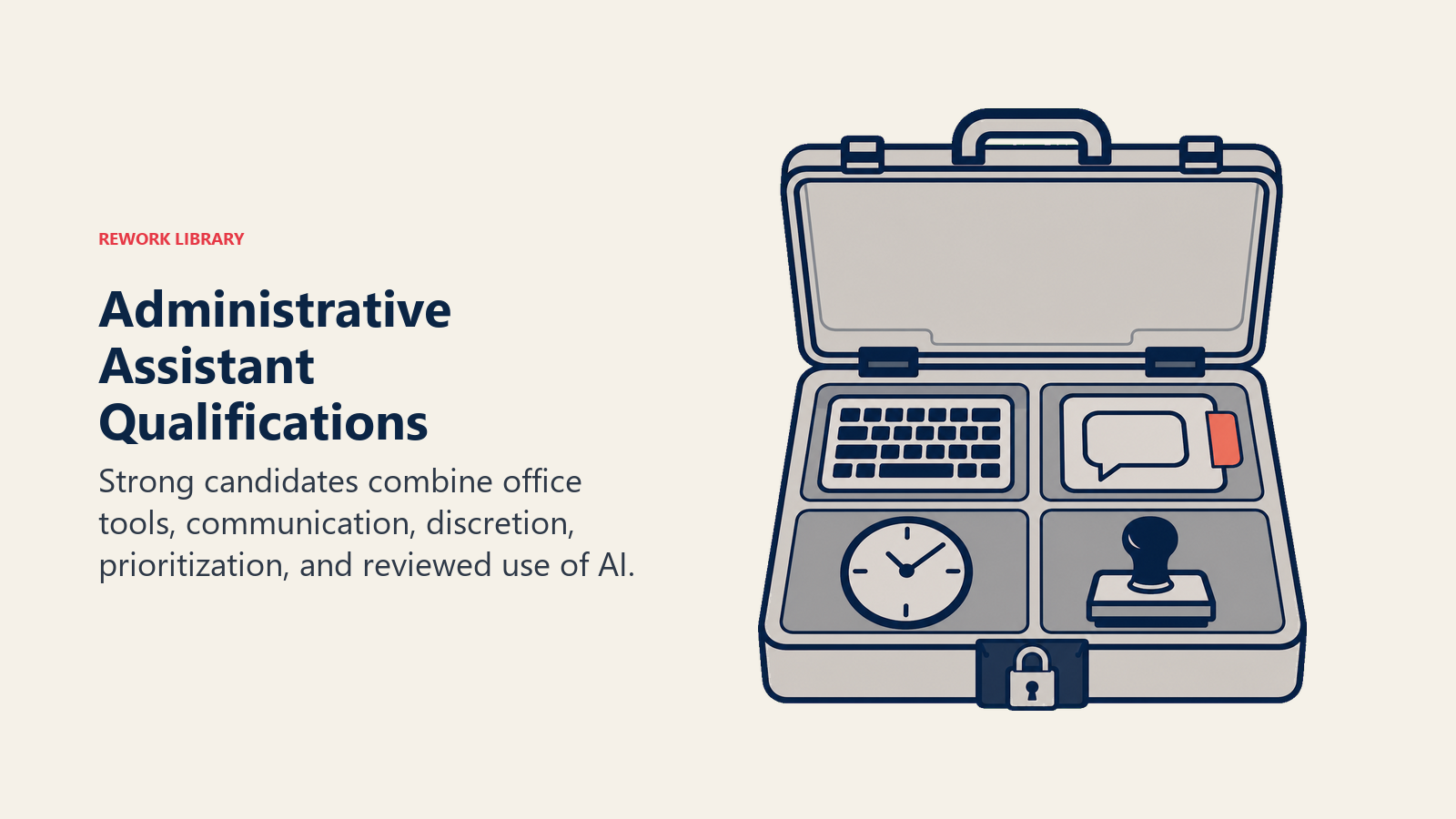
- Ensino médio completo ou equivalente; formação técnica ou superior é preferencial para cargos com mais responsabilidade.
- 1 a 3 anos de experiência administrativa, de escritório ou de suporte operacional (cargos de nível inicial podem aceitar menos tempo).
- Domínio do Microsoft Office (Word, Excel, Outlook, PowerPoint) ou dos equivalentes no Google Workspace.
- Excelentes habilidades de comunicação escrita e verbal, incluindo etiqueta profissional em e-mails.
- Capacidade comprovada de gerenciar múltiplas prioridades e prazos sem perder detalhes.
- Facilidade com entrada de dados e manutenção de registros organizados em sistemas digitais e físicos.
- Discrição com informações confidenciais, incluindo questões de pessoal e documentos sensíveis para o negócio.
- Assiduidade e pontualidade confiáveis; este é um cargo em que outras pessoas dependem da sua consistência.
- Familiaridade com ferramentas de IA (ChatGPT, Claude, Copilot ou equivalentes) para tarefas de redação e resumo.
Diferenciais
- Experiência com ferramentas de gestão de projetos ou colaboração, como Asana, Trello ou Microsoft Teams.
- Familiaridade com ferramentas de agendamento com IA (Calendly AI, Microsoft Copilot for Outlook) e ferramentas de transcrição de reuniões (Otter.ai).
- Familiaridade com softwares básicos de contabilidade ou controle de despesas (QuickBooks, Expensify).
- Experiência dando suporte simultâneo a uma equipe de cinco pessoas ou mais.
- Vivência em um setor específico relevante para o cargo (saúde, jurídico, imobiliário, financeiro).
- Habilidades bilíngues ou multilíngues, especialmente em regiões com base de clientes diversa.
- Experiência coordenando eventos ou gerenciando mudanças de escritório.
Fluência em IA por nível de experiência
| Nível | Expectativa em relação à IA |
|---|---|
| Nível inicial | Usa ferramentas de IA diariamente para redigir correspondência e resumir notas de reunião; revisa os resultados da IA antes de enviar |
| Nível intermediário | Cria modelos de prompt reutilizáveis para tarefas administrativas recorrentes; configura ferramentas de agendamento e triagem de caixa de entrada |
| Sênior | Desenha fluxos de trabalho administrativos potencializados por IA para a equipe; supervisiona agentes de IA que cuidam de agenda, viagens e correspondência de rotina; treina assistentes mais novos no uso eficaz de IA |
Formação
A maioria das equipes aceita o ensino médio completo aliado a uma experiência relevante consistente. Uma formação técnica em administração de empresas ou um diploma superior em qualquer área pode sinalizar boas habilidades organizacionais. Uma certificação formal (por exemplo, Certified Administrative Professional, do IAAP) é um diferencial genuíno, mas raramente é exigida em cargos padrão.
Por Que Este Cargo Importa em 2026
Assistentes administrativos são a espinha dorsal operacional de qualquer equipe ou departamento. Isso não mudou. O que mudou é a cara do dia a dia quando a IA assume as partes mais repetitivas do trabalho.
Quando ferramentas de IA cuidam dos primeiros rascunhos da correspondência de rotina, transcrevem automaticamente notas de reunião e conduzem as negociações de agendamento na agenda, o tempo do assistente administrativo passa a se concentrar em uma coordenação que exige julgamento: saber qual stakeholder envolver em uma questão delicada, perceber o clima em um assunto confidencial, decidir como sequenciar prioridades concorrentes quando o executivo está indisponível. São exatamente essas as habilidades que fazem um ótimo assistente administrativo se destacar, e elas ficam mais visíveis, não menos, quando a IA absorve a camada mecânica. Equipes que investem em assistentes administrativos capacitados em IA costumam perceber que o executivo apoiado se torna mensuravelmente mais eficaz.
Habilidades e Ferramentas de IA para Assistentes Administrativos em 2026
A fluência em IA está deixando de ser um "diferencial" para se tornar uma expectativa básica em cargos administrativos de organizações médias e grandes. A demanda por profissionais administrativos com habilidades em IA cresceu aproximadamente 144% ano a ano, e cargos que exigem proficiência em IA pagam um prêmio salarial de cerca de 56%.
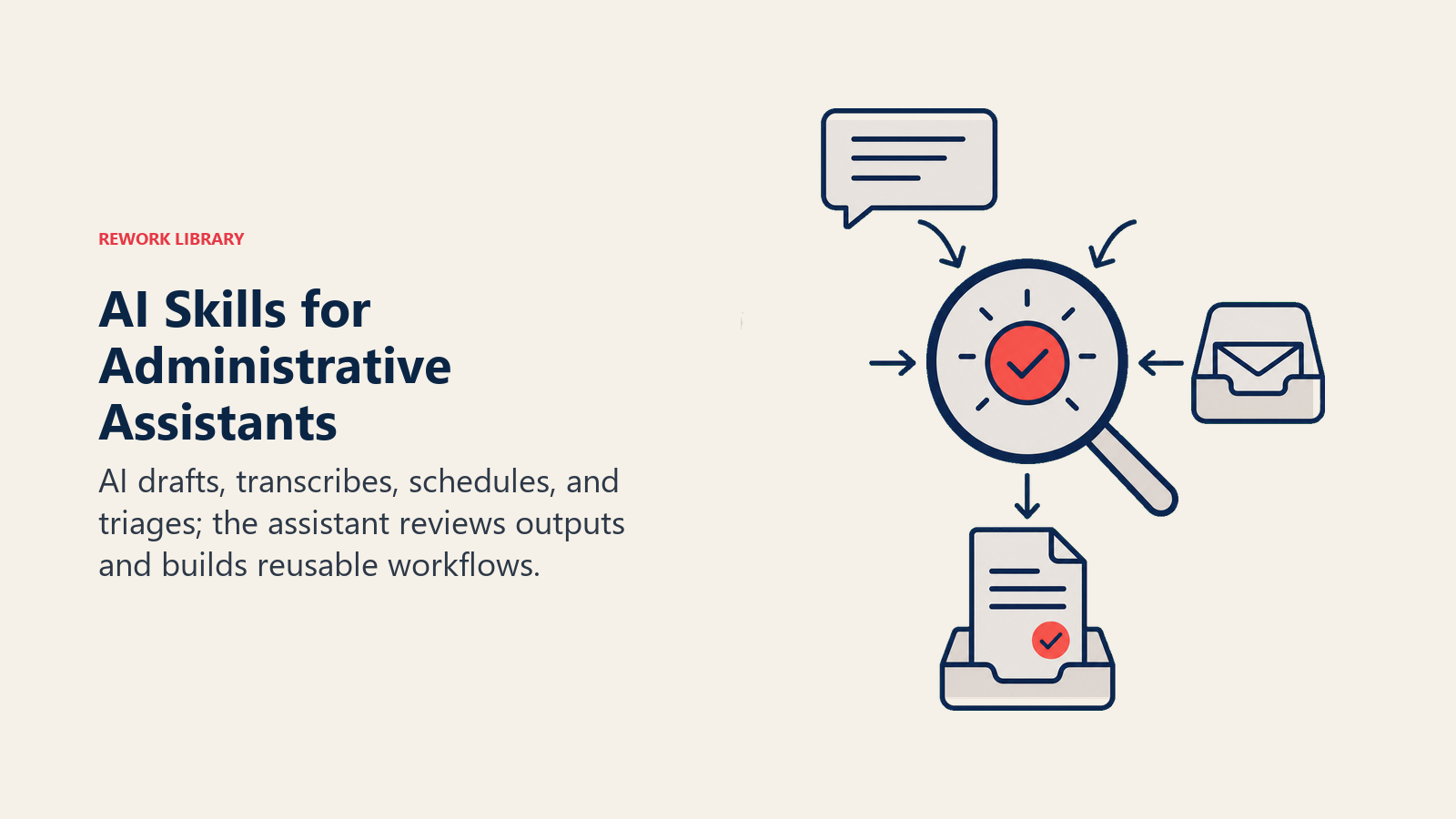
- ChatGPT ou Claude para redigir correspondência, resumir longas threads de e-mail, preparar briefings de reunião e compor primeiras versões de documentos e relatórios em nome de gestores ou equipes.
- Otter.ai ou Microsoft Copilot para transcrição automática de reuniões e extração de itens de ação: o assistente revisa e organiza o resultado da IA em vez de fazer anotações do zero durante a reunião.
- Calendly AI e Microsoft Copilot for Outlook para otimizar o agendamento: a IA cuida do vaivém da logística de reuniões enquanto o assistente foca em decisões prioritárias e agendamentos complexos com múltiplas partes.
- Copilot para triagem de caixa de entrada: sinalização de prioridade sugerida por IA e rascunhos de resposta para e-mails de rotina, com o assistente revisando e enviando em vez de compor do zero.
- Fluência em prompts para fluxos administrativos: bons assistentes administrativos em 2026 mantêm modelos de prompt para tarefas recorrentes, como redigir briefings executivos, preparar pautas de reunião, resumir decisões de longas cadeias de e-mail e gerar resumos de itinerários de viagem.
- Criação de fluxos de IA reutilizáveis: configurar automações no Zapier ou Make que combinam ferramentas de agenda, e-mail e IA de anotações, para que a coordenação de rotina aconteça com o mínimo de etapas manuais.
Em entrevistas, os candidatos capazes de descrever como usam ferramentas de IA para lidar com a camada rotineira, e de explicar com clareza o que fazem com o tempo economizado, são os que estão preparados para os cargos administrativos modernos.
Trabalhando ao Lado de Agentes de IA
Agentes de IA hoje cuidam da primeira camada de muitas tarefas administrativas. O valor do assistente administrativo passa a estar na supervisão, no julgamento e nos relacionamentos que os agentes não conseguem navegar.
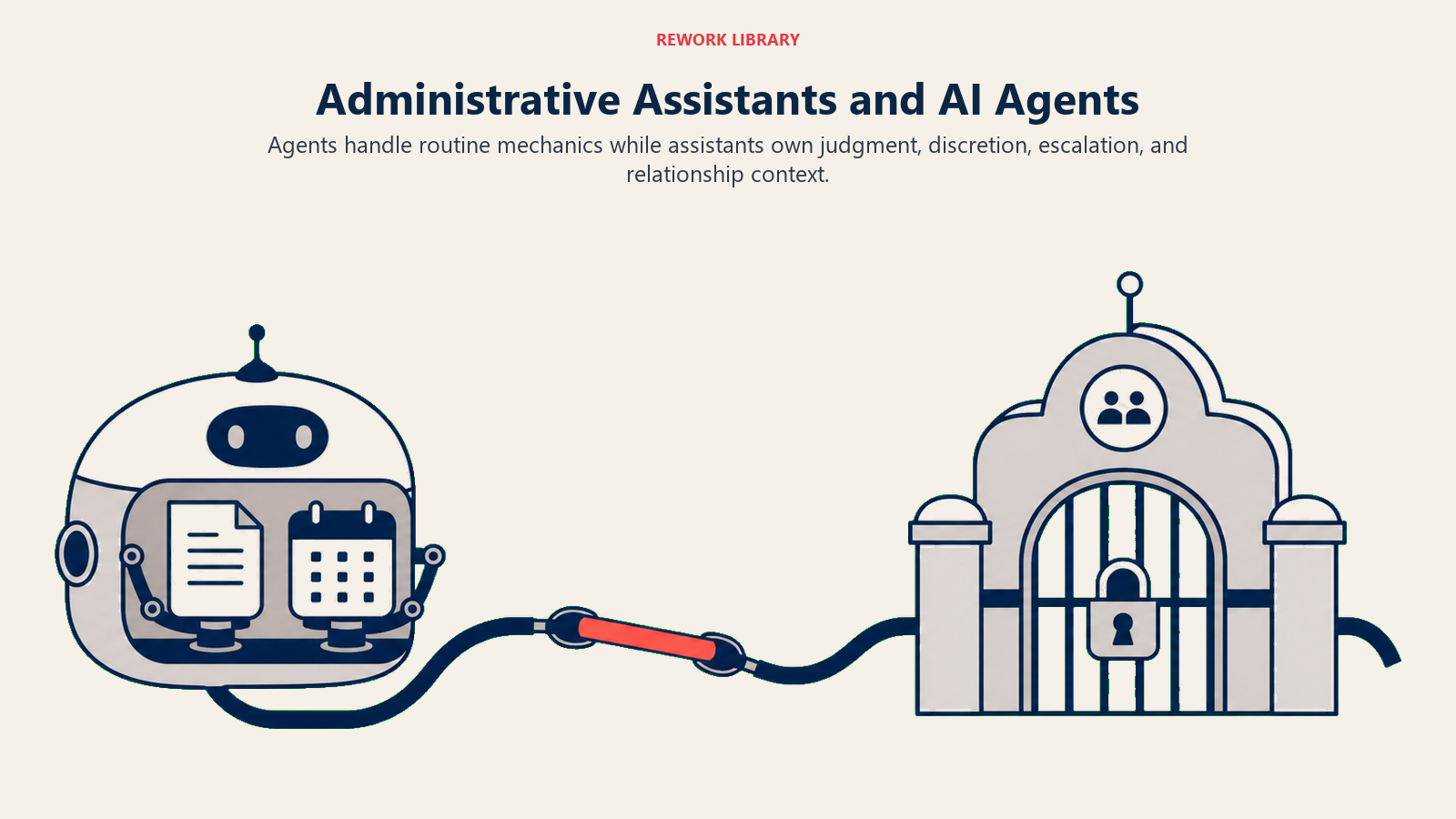
- O que os agentes cuidam: negociações de agendamento na agenda, pesquisa de reservas de viagem e rascunhos de itinerário, transcrição e anotações de reunião, primeiras versões de respostas para correspondência de rotina, acompanhamento de pedidos de suprimentos e entrada básica de dados nos sistemas da empresa.
- O que o assistente administrativo assume: o julgamento sobre relacionamento com stakeholders (saber quando escalar e para quem), o tratamento de informações confidenciais, as decisões prioritárias quando solicitações concorrentes chegam ao mesmo tempo, o suporte executivo com nuances (antecipar necessidades que o executivo ainda não verbalizou) e qualquer situação em que o tom, a discrição ou o conhecimento organizacional determinem a resposta certa.
- A linha de transição: um agente de IA redige uma resposta para uma consulta de fornecedor e agenda um follow-up no calendário; o assistente administrativo revisa o rascunho, ajusta o tom com base no que conhece sobre esse relacionamento com o fornecedor e decide se o executivo precisa ser envolvido antes do envio. O agente cuida da mecânica; o assistente cuida do julgamento.
Assistentes administrativos fluentes em ferramentas de IA e claros sobre o que assumem pessoalmente são consistentemente os mais eficazes nas equipes de 2026.
Benchmarks Salariais de Assistente Administrativo
A remuneração varia de acordo com o setor, o tamanho da empresa, a localização e a complexidade da carga de coordenação. Os setores jurídico, financeiro e de saúde costumam pagar mais do que organizações sem fins lucrativos ou do setor educacional. Candidatos fluentes em IA, com experiência comprovada no uso de ferramentas de IA para agendamento e redação, estão conseguindo um prêmio salarial em relação a colegas na mesma faixa de experiência.
| Nível | Faixa típica (EUA) |
|---|---|
| Nível inicial (0 a 1 ano) | US$ 35.000 a US$ 45.000 |
| Nível intermediário (2 a 4 anos) | US$ 45.000 a US$ 58.000 |
| Sênior (5+ anos) | US$ 58.000 a US$ 72.000 |
| Líder / Coordenador de Escritório | US$ 68.000 a US$ 85.000 |
| As faixas refletem o salário base. Consulte o BLS Occupational Outlook Handbook e o Glassdoor para dados regionais atualizados. |
A localização geográfica tem um efeito significativo. Assistentes administrativos em Nova York, San Francisco e Seattle podem ganhar de 20 a 35% acima da mediana nacional. Cargos administrativos remotos existem, mas são menos comuns do que em posições de trabalho de conhecimento, já que a coordenação presencial do escritório continua sendo parte essencial do trabalho para muitos empregadores.
Para efeito de comparação, o cargo de gerente de operações de negócios, que muitas vezes evolui a partir de uma formação administrativa, alcança de US$ 85.000 a US$ 130.000 quando o escopo se expande para a responsabilidade por processos e a prestação de contas entre departamentos.
Modelo de Descrição de Cargo de Assistente Administrativo
Resumo do cargo
A [nome da empresa] está buscando um Assistente Administrativo organizado e proativo para apoiar nosso [equipe/departamento] nas operações diárias, no agendamento e nas comunicações. Você será a pessoa que mantém tudo funcionando: gerenciando agendas, cuidando da correspondência, mantendo registros e atuando onde quer que haja necessidade de coordenação. Este é um cargo para alguém que assume de verdade a responsabilidade pelos detalhes dos quais os outros dependem.
Principais responsabilidades
- Gerenciar agendas e coordenar o agendamento de [nomes dos gestores ou departamento].
- Cuidar da correspondência e das comunicações recebidas; redigir e enviar e-mails em nome da equipe conforme necessário.
- Preparar e formatar documentos, relatórios e apresentações.
- Manter sistemas de arquivamento digitais e físicos organizados.
- Coordenar a logística de reuniões: reservar salas, encomendar catering, preparar pautas e fazer atas.
- Pedir e acompanhar suprimentos de escritório; fazer a interface com fornecedores e processar faturas básicas.
- Reservar viagens e preparar itinerários para os membros da equipe.
- Inserir e manter dados nos sistemas da empresa com precisão.
- Apoiar projetos especiais e iniciativas entre departamentos conforme designado.
Qualificações obrigatórias
- [1/2/3]+ anos de experiência administrativa ou de suporte de escritório.
- Domínio de [Microsoft Office / Google Workspace].
- Excelentes habilidades de comunicação escrita e verbal.
- Capacidade de gerenciar múltiplas prioridades e manter a precisão sob pressão de tempo.
- Discrição com informações confidenciais.
Qualificações preferenciais
- Experiência com [ferramentas de gestão de projetos: Asana, Teams, Notion].
- Familiaridade com [ferramentas ou softwares específicos do setor].
- Formação técnica ou superior em administração de empresas ou área relacionada.
- Certificação Certified Administrative Professional (CAP).
O que oferecemos
- [Faixa salarial: US$ X a US$ Y, dependendo da experiência e da localização]
- [Benefícios de saúde, odontológico e oftalmológico]
- [Política de PTO]
- [Regime híbrido/presencial]
- [Orçamento para desenvolvimento ou apoio educacional, se aplicável]
Como Escrever uma Descrição de Cargo de Assistente Administrativo
Um anúncio genérico atrai candidatos genéricos. Estas etapas ajudam você a escrever algo específico o suficiente para filtrar quem realmente tem o perfil certo.
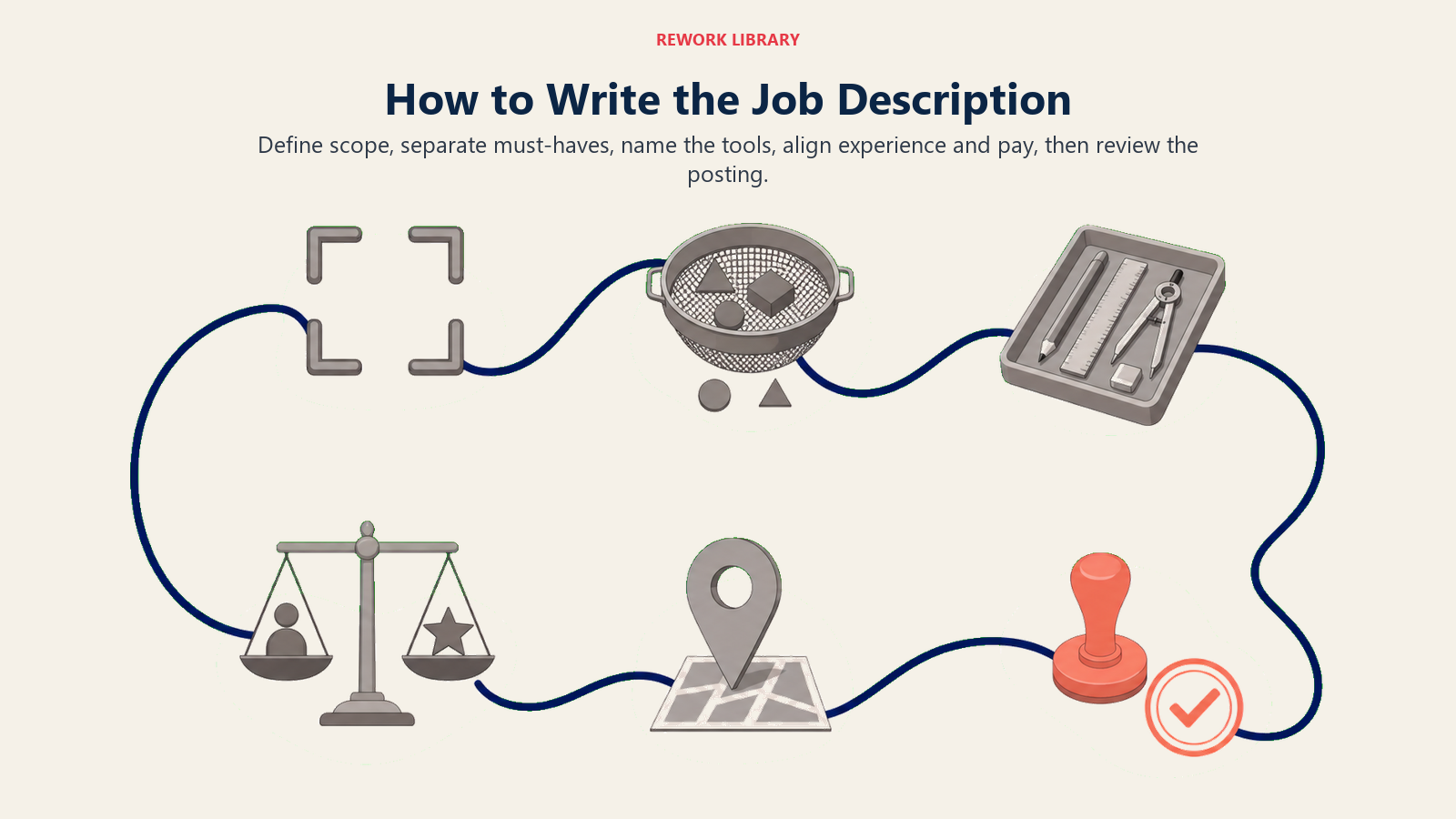
Etapa 1: Defina o escopo real do suporte
Comece listando exatamente quem o assistente vai apoiar e o que essas pessoas mais precisam. É um único executivo? Um departamento de doze pessoas? Uma equipe multifuncional sem liderança clara? A resposta molda tudo o mais na descrição. Um cargo de suporte a toda a equipe exige resiliência para lidar com múltiplas tarefas; um cargo de suporte focado em uma única pessoa exige discrição e capacidade de antecipação.
Etapa 2: Separe o obrigatório do desejável
Seja honesto sobre o que o cargo realmente exige desde o primeiro dia. Se o seu CRM é o Salesforce, diga isso. Se você precisa de alguém à vontade com relatórios básicos de despesas, diga isso também. Mas não liste 14 habilidades "obrigatórias" que na verdade são preferências, porque você vai filtrar bons candidatos que poderiam aprender no cargo.
Etapa 3: Seja específico sobre sistemas e ferramentas
Cite o software real. "Domínio do Microsoft Office" praticamente não diz nada aos candidatos em 2025. "Gestão intensa de agenda no Outlook para uma equipe de oito pessoas em três fusos horários" diz exatamente no que a pessoa está se metendo. A especificidade também desestimula candidatos que estão apostando em um possível encaixe.
Etapa 4: Estabeleça expectativas realistas de experiência
Cargos administrativos de nível inicial podem funcionar com 0 a 1 ano de experiência se a sua integração for sólida. Cargos de nível intermediário que apoiam diretores ou equipes complexas precisam de 2 a 4 anos. Tenha cuidado com a exigência de "3 a 5 anos" em cargos que pagam abaixo de US$ 50.000; isso sinaliza um descompasso entre expectativa e remuneração e vai prejudicar o volume de candidaturas.
Etapa 5: Inclua uma localização e um regime de trabalho claros
Assistentes administrativos, mais do que a maioria dos cargos, costumam precisar de presença no escritório. Se o cargo for totalmente presencial, diga isso logo de início. Candidatos que preferem trabalho remoto não vão se candidatar, o que economiza tempo de todo mundo. Se você oferecer regime híbrido, especifique os dias.
Etapa 6: Revise a clareza e a consistência
Leia o rascunho final como se você fosse um candidato que não conhece sua empresa. O resumo do cargo condiz com as responsabilidades? O nível de experiência exigido condiz com a faixa salarial? O tom está consistente? Se você quiser ver uma versão mais sênior deste cargo, confira nosso modelo de diretor de operações (COO) para comparar escopo e expectativas.
Assistente Administrativo vs. Assistente Executivo
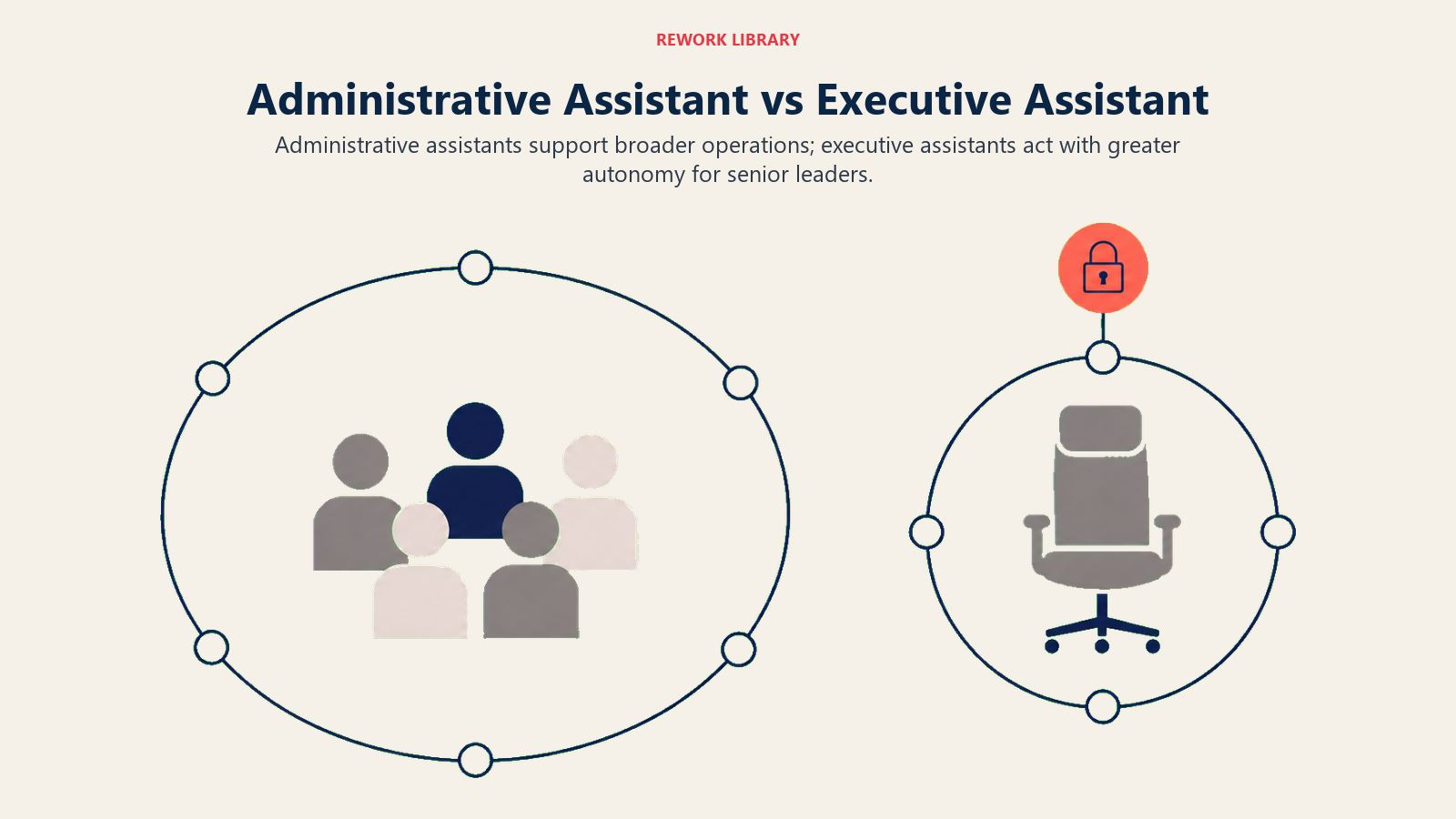
Esses dois cargos são frequentemente confundidos, e contratar o errado custa tempo e dinheiro. Aqui está a distinção principal.
| Dimensão | Assistente Administrativo | Assistente Executivo |
|---|---|---|
| Quem apoiam | Uma equipe, departamento ou gestor | Um ou mais executivos seniores (VP, C-suite) |
| Escopo | Operações gerais de escritório, agendamento, trabalho administrativo | Gestão estratégica de agenda, preparação de reuniões de diretoria, comunicações executivas, viagens em grande escala |
| Autoridade decisória | Limitada; escala para o gestor | Maior autonomia; age em nome do executivo dentro de um escopo definido |
| Experiência típica | 1 a 4 anos | 5 a 10+ anos, muitas vezes com histórico específico em assistência executiva |
| Faixa salarial (EUA) | US$ 35.000 a US$ 72.000 | US$ 70.000 a US$ 120.000+ |
| Nível de confidencialidade | Padrão | Alto; frequentemente lida com questões sensíveis de negócios e de pessoal |
A pergunta mais simples a se fazer é: essa pessoa precisa pensar e agir em nome de um líder sênior quando ele está indisponível? Se sim, contrate um assistente executivo. Se o cargo é um suporte mais amplo à equipe, sem esse nível de representação, um assistente administrativo é o perfil certo.
Para suporte voltado ao cliente que combina habilidades administrativas e de atendimento, o modelo de representante de atendimento ao cliente cobre um conjunto de requisitos relacionado, mas distinto.
O trabalho administrativo é estrutural, não periférico. Equipes que investem em um assistente administrativo genuinamente bom costumam perceber que a eficácia de outras pessoas aumenta de forma mensurável, porque o atrito que estava sendo absorvido silenciosamente agora é tratado por alguém que assume essa responsabilidade. Escreva a descrição de cargo para refletir esse valor, e você vai atrair candidatos que entendem o que o cargo realmente contribui.
Para modelos de contratação relacionados, confira nossos guias de assistentes executivos, gerentes de operações de negócios e representantes de atendimento ao cliente.

Senior Customer Retention Strategist
On this page
- O Que Faz um Assistente Administrativo?
- Responsabilidades do Assistente Administrativo
- Requisitos e Qualificações
- Por Que Este Cargo Importa em 2026
- Habilidades e Ferramentas de IA para Assistentes Administrativos em 2026
- Trabalhando ao Lado de Agentes de IA
- Benchmarks Salariais de Assistente Administrativo
- Modelo de Descrição de Cargo de Assistente Administrativo
- Como Escrever uma Descrição de Cargo de Assistente Administrativo
- Etapa 1: Defina o escopo real do suporte
- Etapa 2: Separe o obrigatório do desejável
- Etapa 3: Seja específico sobre sistemas e ferramentas
- Etapa 4: Estabeleça expectativas realistas de experiência
- Etapa 5: Inclua uma localização e um regime de trabalho claros
- Etapa 6: Revise a clareza e a consistência
- Assistente Administrativo vs. Assistente Executivo