Descrição do Cargo de Gerente de Operações de Negócios (2026): Habilidades para a Era da IA, Responsabilidades e Guia de Contratação
Turn this article into takeaways for your work.


Each assistant summarizes the article only for you and suggests best practices for your work.
O Que Você Vai Encontrar Neste Guia
- Modelo completo de descrição de cargo para funções de gestão de operações de nível pleno a sênior
- Orientação sobre remuneração, incluindo fatores de prêmio salarial por fluência em IA e como comparar as taxas atuais de mercado
- Perguntas estratégicas de entrevista sobre otimização de processos e liderança multifuncional
- Adaptações específicas por setor para tecnologia, saúde, serviços financeiros e manufatura
- Variações de contexto para ambientes corporativos, startups e trabalho remoto/híbrido
- Sinais de alerta e dicas de avaliação para analisar capacidades de liderança em operações
Um Gerente de Operações de Negócios atua como a espinha dorsal da eficiência organizacional, conectando estratégia e execução para impulsionar a excelência operacional. Esse cargo combina pensamento estratégico com gestão prática para otimizar processos, administrar recursos e garantir operações de negócios integradas entre departamentos.
Principais Destaques
- Faixa Salarial: Competitiva; cargos sênior com fluência em IA obtêm um prêmio salarial relevante, faça o benchmark via Glassdoor ou PayScale para sua região metropolitana e setor
- Nível de Experiência: Cargo de nível pleno a sênior que exige de 5 a 8 anos de experiência em operações
- Competências Essenciais: Otimização de processos, colaboração multifuncional, análise de dados, liderança de equipe
- Trajetória de Crescimento: Diretor de Operações, VP de Operações, Chief Operating Officer (COO)
- Demanda no Setor: Alta em tecnologia, saúde, serviços financeiros e manufatura
- Flexibilidade Remota: Oportunidades híbridas e remotas cada vez mais disponíveis
Por Que Esse Cargo É Importante
Gerentes de Operações de Negócios são essenciais para escalar organizações e manter a vantagem competitiva. Eles transformam a visão estratégica em processos acionáveis, garantindo que as empresas operem com eficiência enquanto se adaptam às mudanças de mercado.
O que torna esse cargo mais valioso em 2026, e não menos, é justamente a ascensão da IA. Quando agentes de IA assumem relatórios rotineiros, monitoramento e coordenação, o tempo do gerente de operações humano se volta para o que a IA não consegue fazer: julgar quais compensações fazer, entender as dinâmicas organizacionais, conquistar a confiança de líderes de departamento com prioridades conflitantes e projetar processos que sejam de fato resilientes, e não apenas documentados. Um Gerente de Operações de Negócios qualificado e fluente em IA obtém a visibilidade de um analista e o alcance de uma equipe maior sem aumentar o quadro de funcionários.
O cargo também assumiu uma nova responsabilidade: ser a pessoa que decide como as ferramentas de IA se encaixam nos fluxos de trabalho operacionais, onde ficam as barreiras de segurança e quem assume a responsabilidade quando um processo automatizado produz um resultado incorreto. Essa função de governança não existia cinco anos atrás.
Habilidades e Ferramentas de IA para Gerente de Operações de Negócios em 2026
A demanda por profissionais de operações fluentes em IA cresceu acentuadamente, com pesquisas indicando prêmios salariais por habilidades em IA de cerca de 50% ou mais para cargos sênior de operações. Para Gerentes de Operações de Negócios, isso significa desenvolver fluência prática com as ferramentas que estão remodelando a forma como as equipes de operações trabalham.

- Plataformas de automação de processos: ferramentas como Make, Zapier e Microsoft Power Automate para automatizar fluxos de dados entre departamentos, cadeias de aprovação e relatórios recorrentes sem suporte de engenharia
- Relatórios assistidos por IA: usar o Copilot for Microsoft 365 ou ferramentas similares para gerar rascunhos iniciais de resumos executivos, análises de variação e narrativas de KPI a partir de dados brutos, depois revisando para garantir precisão e bom senso
- Engenharia de prompts para o trabalho de operações: criar bibliotecas de prompts reutilizáveis para tarefas recorrentes, como atualizações de status de projetos, resumos de riscos, extração de itens de ação de reuniões e briefings para stakeholders
- Agentes de fluxo de trabalho com IA: implantar e supervisionar agentes de IA leves para tarefas como coordenação de agendamentos, fila de acompanhamento de fornecedores e alertas de monitoramento orçamentário
- Business intelligence com camadas de IA: usar recursos aprimorados por IA no Power BI ou Tableau para identificar anomalias e prever tendências em vez de construir dashboards manualmente
- Letramento em dados operacionais: saber em quais insights gerados por IA confiar e quais validar, além de estruturar as entradas de dados para que as ferramentas de IA produzam resultados úteis
- Gestão de mudanças para adoção de IA: liderar transições em nível de departamento quando novas ferramentas de IA substituem processos manuais, incluindo planos de treinamento e gestão de resistência
Trabalhando ao Lado de Agentes de IA em Operações de Negócios
Em 2026, os agentes de IA lidam com uma parcela cada vez maior do trabalho de coordenação e monitoramento que tradicionalmente ocupava os gerentes de operações. Entender a transição de responsabilidades entre humano e IA agora é uma competência essencial.
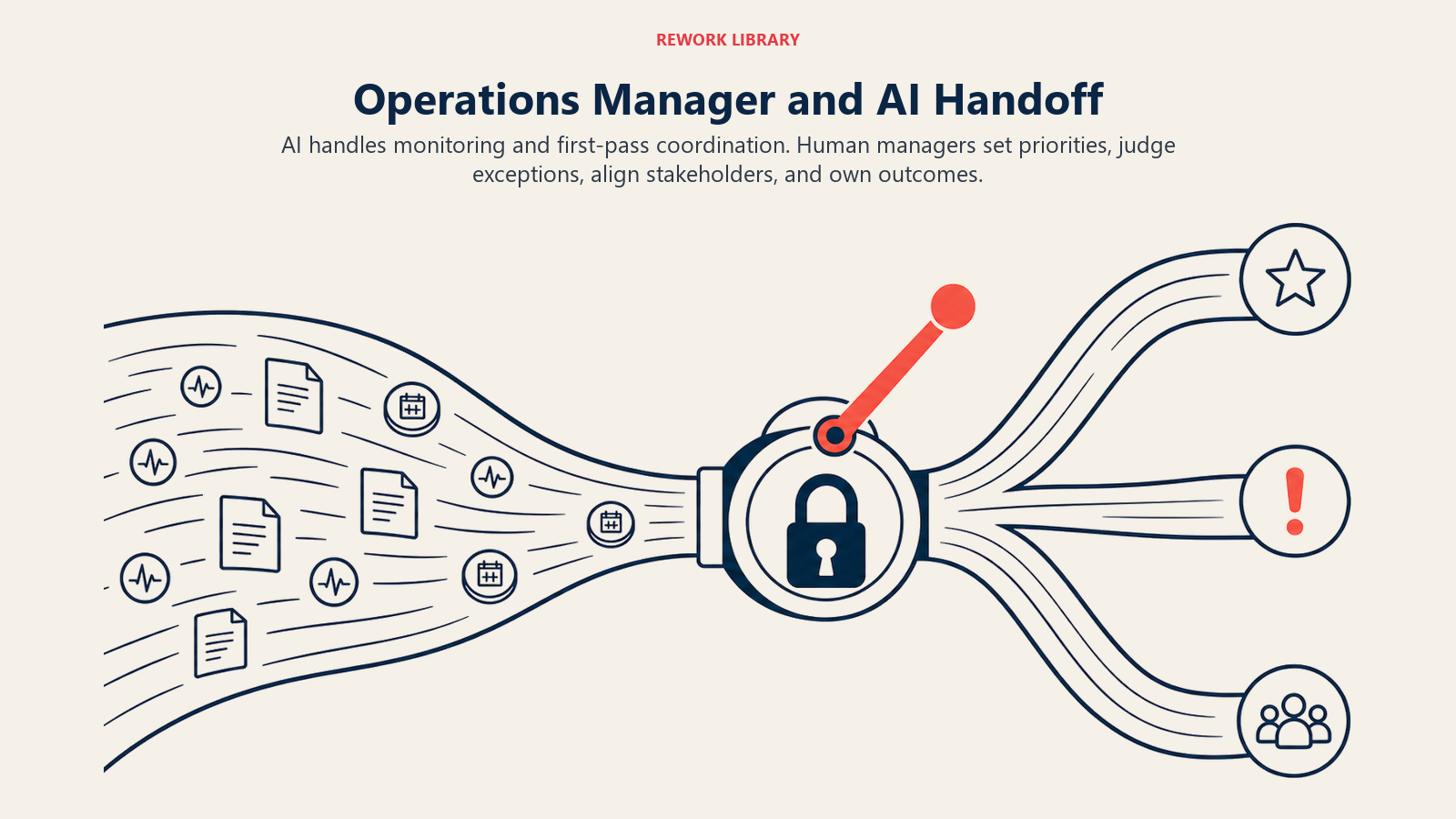
O que os agentes de IA fazem: agregação rotineira de dados entre sistemas, geração de relatórios e dashboards preliminares, monitoramento de KPIs em busca de violações de limites e sinalização delas, rascunhos iniciais de documentos (POPs, briefings de projeto, resumos de fornecedores), logística de agendamento e acompanhamento de itens de ação entre projetos.
O que cabe ao humano: as decisões de julgamento que a IA não consegue tomar com confiabilidade. Isso significa decidir quais riscos operacionais escalar e como, entender as dinâmicas políticas de uma iniciativa multifuncional, negociar com líderes de departamento cujas prioridades realmente conflitam, perceber quando uma métrica parece boa mas algo está realmente errado, e assumir a responsabilidade por decisões que afetam o trabalho das pessoas.
A transição: um fluxo de trabalho de operações bem projetado e potencializado por IA funciona assim: o agente reúne informações e elabora recomendações; o gerente revisa, ajusta considerando o contexto e toma a decisão; o agente então executa e monitora o resultado. O papel do gerente muda de coletor de dados para autoridade decisória e projetista de sistemas.
O que isso significa para a contratação: candidatos que tratam as ferramentas de IA como uma forma de transferir totalmente o julgamento representam um risco. Procure pessoas que consigam avaliar criticamente os resultados da IA e saibam quando substituí-los.
Modelo Principal de Descrição de Cargo
Sobre o Cargo
Estamos em busca de um Gerente de Operações de Negócios experiente para impulsionar a excelência operacional e a execução estratégica em toda a nossa organização. Você será responsável por otimizar processos de negócio, gerenciar iniciativas multifuncionais e garantir a alocação eficiente de recursos para apoiar nossos objetivos de crescimento.
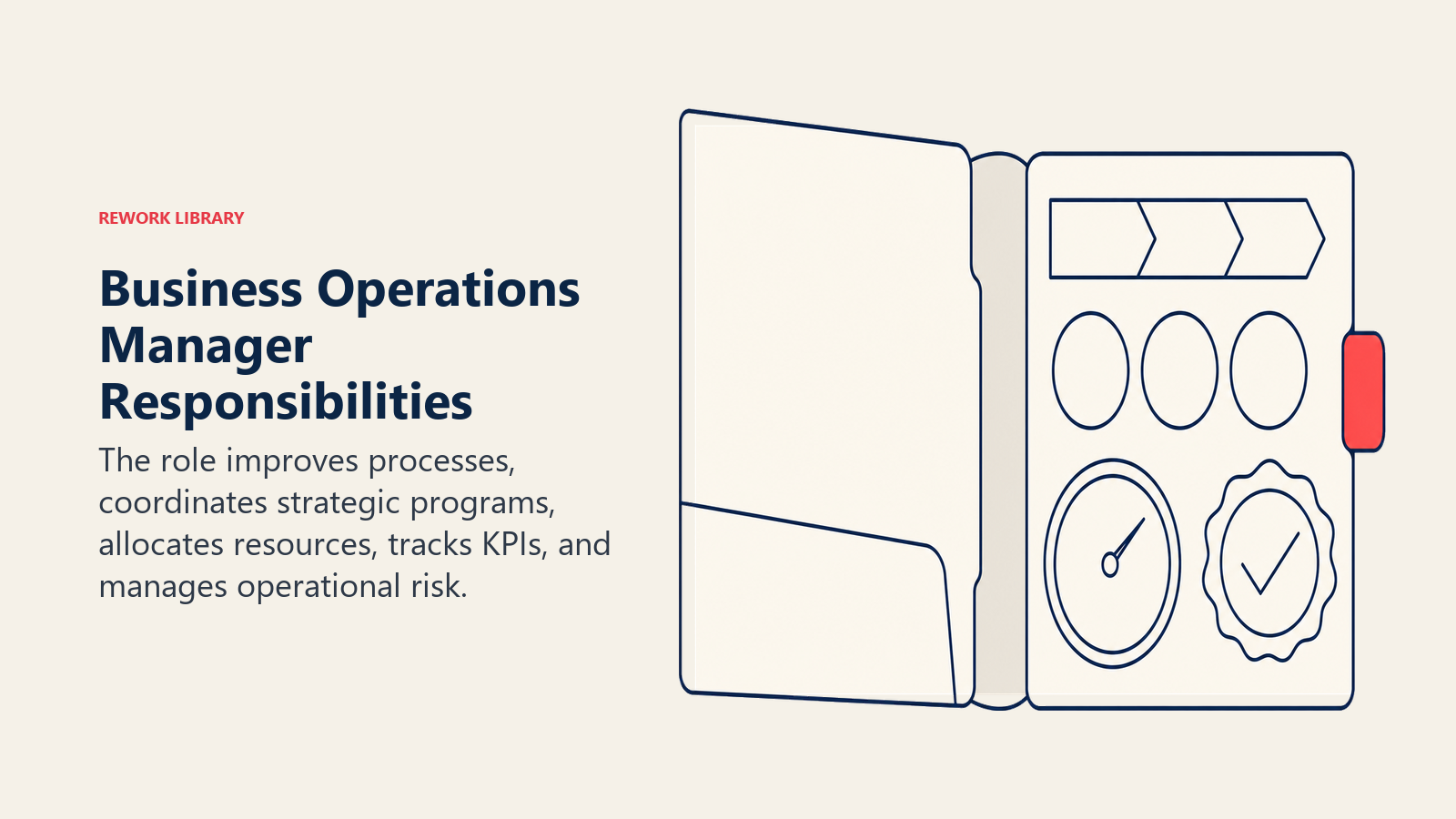
Como nosso Gerente de Operações de Negócios, você trabalhará em estreita colaboração com a liderança sênior para traduzir metas estratégicas em planos operacionais. Você liderará iniciativas de melhoria de processos, gerenciará métricas operacionais essenciais e colaborará com departamentos como finanças, vendas, marketing e desenvolvimento de produto para garantir a execução impecável dos objetivos de negócio.
Este cargo oferece um potencial de crescimento significativo e a oportunidade de gerar um impacto relevante no sucesso da nossa organização. Você terá autonomia para implementar soluções inovadoras enquanto trabalha com uma equipe dinâmica comprometida com a excelência operacional.
Principais Responsabilidades
- Planejamento e Execução Estratégica: Desenvolver e implementar estratégias operacionais alinhadas aos objetivos da empresa e que impulsionem o crescimento do negócio
- Otimização de Processos: Analisar processos existentes, identificar ineficiências e implementar melhorias para aumentar a produtividade e reduzir custos
- Colaboração Multifuncional: Trabalhar em parceria com líderes de departamento para coordenar projetos, resolver desafios operacionais e garantir alinhamento entre as equipes
- Gestão de Desempenho: Estabelecer KPIs, monitorar métricas operacionais e preparar relatórios executivos sobre o desempenho do negócio e a saúde operacional
- Gestão de Recursos: Supervisionar a alocação orçamentária, os relacionamentos com fornecedores e o planejamento de recursos para otimizar a eficiência operacional
- Liderança de Projetos: Liderar iniciativas estratégicas e projetos especiais desde a concepção até a execução, garantindo entrega no prazo e os resultados desejados
- Desenvolvimento de Equipe: Gerenciar e orientar os membros da equipe de operações, promovendo o crescimento profissional e mantendo altos padrões de desempenho
- Gestão de Riscos: Identificar riscos operacionais, desenvolver estratégias de mitigação e garantir a conformidade com os requisitos regulatórios
- Implementação de Tecnologia: Impulsionar a adoção de ferramentas e sistemas operacionais para melhorar a eficiência e a visibilidade dos dados
- Comunicação com Stakeholders: Apresentar insights e recomendações operacionais à liderança executiva e aos membros do conselho
Requisitos
Qualificações Obrigatórias:
- Graduação em Administração de Empresas, Gestão de Operações ou área correlata
- De 5 a 8 anos de experiência progressiva em gestão de operações ou operações de negócios
- Histórico comprovado de melhoria de processos e otimização operacional bem-sucedidas
- Fortes habilidades analíticas com proficiência em ferramentas de análise de dados e relatórios
- Experiência gerenciando equipes multifuncionais e liderando iniciativas estratégicas
- Excelentes habilidades de gestão de projetos, com certificação PMP como diferencial
- Proficiência avançada no pacote Microsoft Office, especialmente Excel e PowerPoint
- Fortes habilidades de comunicação e apresentação para interações em nível executivo
- Fluência comprovada em ferramentas de IA compatível com o nível de experiência (veja a progressão abaixo)
Expectativas de Fluência em IA por Nível:
- Cargos de operações iniciais / início de carreira (0 a 3 anos): usa ferramentas de produtividade com IA diariamente, Copilot, assistentes de escrita com IA, modelos de automação, e consegue explicar o que fez e por quê
- Nível pleno (3 a 6 anos): cria bibliotecas de prompts e automações de fluxo de trabalho para tarefas recorrentes da equipe; avalia criticamente os resultados gerados por IA e sabe quando substituí-los
- Sênior / este cargo (6+ anos): projeta processos operacionais potencializados por IA de ponta a ponta, seleciona e implanta ferramentas de IA adequadas ao problema, e supervisiona agentes de IA que executam fluxos de trabalho operacionais; orienta o restante da equipe sobre o uso seguro e eficaz da IA
Qualificações Desejáveis:
- MBA ou pós-graduação em negócios ou operações
- Experiência com sistemas ERP (SAP, Oracle, NetSuite)
- Certificação Six Sigma Green Belt ou Black Belt
- Experiência nos setores de tecnologia, saúde ou serviços financeiros
- Experiência com ferramentas de business intelligence (Tableau, Power BI)
- Experiência prática com plataformas de fluxo de trabalho com IA (Make, Power Automate ou equivalente)
O Que Oferecemos
- Remuneração Competitiva: Salário-base compatível com a experiência, a fluência em IA e o escopo do cargo
- Bônus por Desempenho: Potencial de bônus anual de 10% a 20% com base no desempenho individual e da empresa
- Benefícios Abrangentes: Planos de saúde, odontológico e oftalmológico, com contribuição da empresa para os prêmios
- Desenvolvimento Profissional: Reembolso educacional, participação em conferências e apoio a certificações
- Oportunidades de Crescimento: Trajetória de progressão clara para cargos de Diretor e VP
- Equilíbrio entre Vida Pessoal e Profissional: Horário híbrido flexível com opções de trabalho remoto
- Participação Acionária: Opções de ações ou concessões de equity para cargos sênior de operações
Variações de Contexto
Ambiente Corporativo
Grandes empresas geralmente exigem Gerentes de Operações de Negócios com experiência em estruturas organizacionais complexas, conformidade regulatória e gestão de múltiplos relacionamentos com stakeholders. Esses cargos costumam envolver a coordenação com equipes globais e a implementação de padrões operacionais em toda a empresa.
Ambiente de Startup
Startups buscam gerentes de operações que consigam acumular múltiplas funções e construir processos do zero. Essas posições exigem adaptabilidade, capacidade de improvisação e habilidade para criar sistemas escaláveis enquanto trabalham com recursos limitados e prioridades que mudam rapidamente.
Contexto Remoto/Híbrido
Cargos remotos de operações exigem habilidades excepcionais de comunicação, proficiência em ferramentas de colaboração digital e a capacidade de gerenciar equipes distribuídas com eficácia. Essas posições costumam envolver a implementação de processos com foco digital e a manutenção da coesão da equipe além das fronteiras geográficas.
Considerações por Setor
| Setor | Requisitos Específicos |
|---|---|
| Tecnologia | - Experiência com metodologia Agile - Conhecimento do ciclo de vida de desenvolvimento de software - Conformidade com privacidade e segurança de dados |
| Saúde | - Expertise em conformidade com a HIPAA - Protocolos de garantia de qualidade - Requisitos de relatórios regulatórios |
| Serviços Financeiros | - Experiência com conformidade SOX - Frameworks de gestão de risco - Preparação e coordenação de auditorias |
| Manufatura | - Gestão da cadeia de suprimentos - Princípios de manufatura enxuta (Lean) - Conformidade com segurança e regulamentações |
| E-commerce | - Sistemas de gestão de estoque - Otimização da experiência do cliente - Coordenação de operações multicanal |
| Serviços Profissionais | - Gestão de relacionamento com clientes - Alocação e utilização de recursos - Otimização da entrega de serviços |
Guia de Remuneração
Informações Salariais
A remuneração dos Gerentes de Operações de Negócios varia amplamente de acordo com o porte da empresa, o setor e a geografia. Cargos em tecnologia e serviços financeiros costumam pagar acima da taxa geral de mercado. Posições remotas podem oferecer remuneração competitiva, mas tendem a se concentrar no ponto médio da faixa.
O sinal salarial mais relevante no momento é a fluência em IA: cargos que exigem explicitamente experiência em projetar ou supervisionar fluxos de trabalho potencializados por IA estão obtendo um prêmio mensurável, pesquisas apontam para cerca de 50% ou mais acima de cargos comparáveis sem essa exigência no nível sênior.
O que mais afeta a remuneração:
- Setor da indústria (tecnologia, serviços financeiros e saúde pagam prêmios em relação às operações de negócio em geral)
- Porte da empresa e estágio de crescimento (empresas em estágio de crescimento costumam trocar parte do salário por equity)
- Localização geográfica e custo de vida (regiões metropolitanas de alto custo têm faixas salariais-base mais altas)
- Fluência em IA e capacidade comprovada de construir e supervisionar fluxos de trabalho automatizados
- Anos de experiência relevante e escopo de responsabilidade multifuncional
- Formação acadêmica e certificações profissionais (PMP, Six Sigma, MBA)
Para números atualizados, cruze dados do Glassdoor, Levels.fyi (para tecnologia) e PayScale usando sua cidade, setor e porte de empresa específicos como filtros. Números pontuais ficam desatualizados rapidamente.
Perguntas de Entrevista
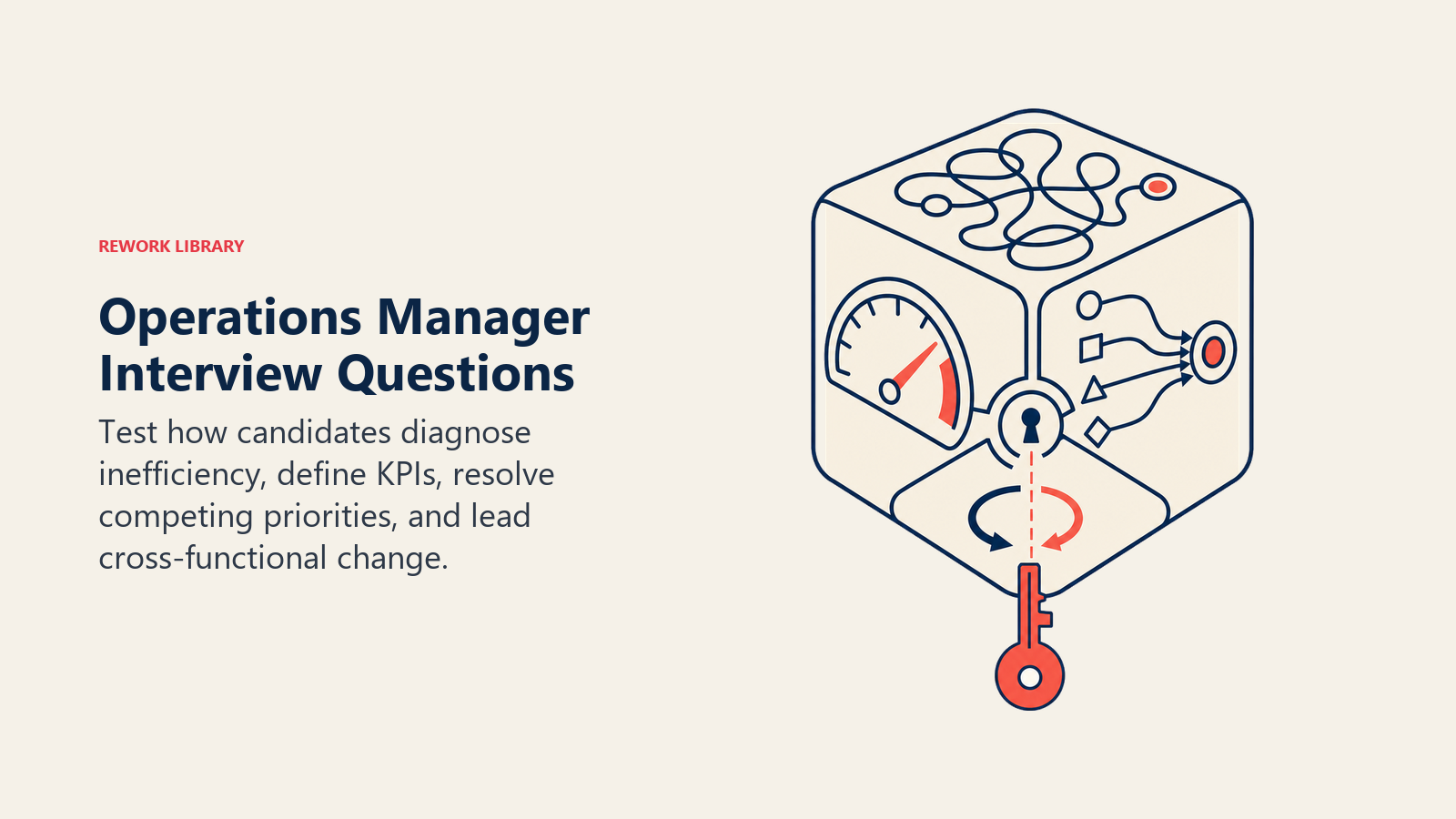
Avalie como os candidatos diagnosticam ineficiências, definem KPIs, resolvem prioridades conflitantes e lideram mudanças multifuncionais.
Perguntas Técnicas/Funcionais
Descreva uma ocasião em que você identificou uma ineficiência operacional significativa. Como você analisou o problema e qual solução implementou? Avalia habilidades de resolução de problemas e experiência com melhoria de processos
Como você aborda o desenvolvimento de KPIs para um novo processo de negócio? Explique sua metodologia. Avalia o pensamento analítico e a expertise em mensuração de desempenho
Explique como você gerenciaria um projeto multifuncional com prioridades conflitantes vindas de diferentes departamentos. Testa habilidades de gestão de projetos e de stakeholders
Quais ferramentas e metodologias você usa para mapeamento e otimização de processos? Avalia a proficiência técnica e a abordagem sistemática
Como você equilibra a eficiência operacional com inovação e flexibilidade nos processos de negócio? Avalia o pensamento estratégico e a adaptabilidade
Descreva sua experiência com gestão orçamentária e alocação de recursos em operações. Testa as capacidades de gestão financeira e planejamento
Como você implementaria um novo sistema operacional em múltiplos departamentos com o mínimo de disrupção? Avalia habilidades de gestão de mudanças e implementação
Quais métricas você acompanharia para medir o sucesso das melhorias operacionais? Avalia a expertise em mensuração e avaliação
Perguntas Comportamentais
Conte sobre uma ocasião em que você precisou tomar uma decisão operacional difícil com informações limitadas. Como você abordou a situação? Avalia a tomada de decisão sob incerteza
Descreva uma situação em que você precisou gerenciar prioridades conflitantes entre departamentos. Como você resolveu? Testa habilidades de resolução de conflitos e negociação
Dê um exemplo de quando você precisou influenciar a liderança sênior para apoiar uma mudança operacional. Qual foi sua estratégia? Avalia habilidades de comunicação e influência
Conte sobre uma ocasião em que uma iniciativa operacional liderada por você não saiu como planejado. Como você lidou com isso? Avalia resiliência e resolução de problemas
Descreva uma situação em que você precisou construir consenso entre membros da equipe que discordavam da sua proposta operacional. Testa habilidades de liderança e colaboração
Perguntas de Aderência Cultural
Como você se mantém atualizado sobre as melhores práticas operacionais e as tendências do setor? Avalia o compromisso com o aprendizado contínuo
O que mais motiva você a trabalhar com operações de negócios? Avalia a paixão e o alinhamento cultural
Como você lida com a pressão de gerenciar múltiplos prazos conflitantes? Testa a gestão do estresse e a priorização
Descreva o relacionamento de trabalho ideal que você gostaria de ter com a liderança executiva. Avalia o estilo de comunicação e as expectativas
Dicas de Contratação
Guia Rápido de Sourcing
- Recrutamento no LinkedIn: Busque profissionais com experiência em "Operations Manager," "Business Operations," ou "Process Improvement"
- Associações do Setor: Operations Leadership Network, APICS, Project Management Institute
- Redes Profissionais: Entre em contato com consultores da McKinsey, Deloitte e PwC, que frequentemente migram para cargos de operações
- Indicações Internas: Aproveite a rede de contatos dos funcionários atuais, especialmente em cargos de finanças e estratégia
Dicas de Otimização de Anúncios
- Enfatize oportunidades de crescimento e impacto estratégico
- Destaque as ferramentas e sistemas tecnológicos utilizados
- Inclua metodologias específicas de melhoria de processos
- Mencione oportunidades de colaboração multifuncional
Sinais de Alerta a Evitar
- Falta de conquistas quantificáveis: Incapacidade de fornecer métricas ou resultados específicos de cargos anteriores
- Habilidades de comunicação fracas: Dificuldade em explicar conceitos operacionais complexos com clareza
- Resistência à tecnologia: Demonstra relutância em adotar novas ferramentas ou processos digitais
- Tendências de microgerenciamento: Foca excessivamente em controlar detalhes em vez de supervisão estratégica
- Experiência multifuncional limitada: Trabalhou apenas dentro de departamentos ou funções isoladas
- Inflexibilidade: Incapaz de adaptar abordagens com base na cultura da empresa ou nos requisitos do setor
Para Empregadores Contratando Gerentes de Operações de Negócios
Qual é a diferença entre um Gerente de Operações de Negócios e um Gerente de Operações?
Gerentes de Operações de Negócios geralmente têm responsabilidades estratégicas mais amplas e atuam em múltiplas funções, enquanto Gerentes de Operações costumam focar em áreas operacionais específicas, como manufatura ou logística.
Devo exigir um MBA para este cargo?
Embora um MBA possa ser valioso, a experiência relevante e os resultados comprovados são mais importantes. Concentre-se em candidatos que demonstrem pensamento estratégico e excelência operacional, independentemente da formação acadêmica.
Qual a importância da experiência no setor?
O conhecimento do setor é útil, mas nem sempre essencial. Fortes habilidades operacionais, experiência em melhoria de processos e adaptabilidade costumam ser mais valiosos do que uma formação específica no setor.
Qual o tamanho de equipe que um Gerente de Operações de Negócios costuma gerenciar?
Isso varia conforme o porte da empresa, mas geralmente fica entre 2 e 10 subordinados diretos, com influência mais ampla sobre 50 a 200 funcionários por meio de projetos multifuncionais.
Como avaliar o pensamento estratégico nas entrevistas?
Peça aos candidatos que analisem um desafio operacional hipotético, expliquem como abordariam a entrada em um novo mercado ou descrevam como contribuíram para o planejamento estratégico em cargos anteriores.
Para Candidatos: Cargos de Gerente de Operações de Negócios
Quais trajetórias de carreira levam a cargos de Gerente de Operações de Negócios?
Caminhos comuns incluem analista de negócios, gerente de projetos, consultor de gestão, coordenador de operações ou gerentes funcionais em finanças, RH ou outros departamentos.
Como posso demonstrar impacto operacional sem experiência direta em operações?
Destaque melhorias de processo, economia de custos, ganhos de eficiência ou projetos multifuncionais que você liderou em qualquer cargo. Quantifique suas conquistas com métricas e resultados específicos.
Quais certificações são mais valiosas para este cargo?
PMP (Project Management), Six Sigma Green Belt e certificações específicas do setor são muito valorizadas. Considere programas de excelência operacional de organizações como APICS ou IIE.
Como me preparar para os aspectos estratégicos das entrevistas?
Pesquise os desafios operacionais da empresa, estude as tendências do setor e prepare exemplos de como você contribuiu para iniciativas estratégicas ou melhorias de negócio.
Qual é a progressão de carreira típica a partir deste cargo?
Gerentes de Operações de Negócios geralmente avançam para cargos de Diretor de Operações, VP de Operações ou COO. Alguns migram para posições de gestão geral ou cargos executivos.
Qual a importância da proficiência tecnológica para os cargos modernos de operações?
Muito importante. A familiaridade com sistemas ERP, ferramentas de business intelligence, softwares de gestão de projetos e plataformas de análise de dados é cada vez mais essencial para o sucesso.

On this page
- Principais Destaques
- Por Que Esse Cargo É Importante
- Habilidades e Ferramentas de IA para Gerente de Operações de Negócios em 2026
- Trabalhando ao Lado de Agentes de IA em Operações de Negócios
- Modelo Principal de Descrição de Cargo
- Sobre o Cargo
- Principais Responsabilidades
- Requisitos
- O Que Oferecemos
- Variações de Contexto
- Ambiente Corporativo
- Ambiente de Startup
- Contexto Remoto/Híbrido
- Considerações por Setor
- Guia de Remuneração
- Informações Salariais
- Perguntas de Entrevista
- Perguntas Técnicas/Funcionais
- Perguntas Comportamentais
- Perguntas de Aderência Cultural
- Dicas de Contratação
- Guia Rápido de Sourcing
- Dicas de Otimização de Anúncios
- Sinais de Alerta a Evitar