Descrição de Cargo de Assistente Executivo (Modelo + Exemplos)
Turn this article into takeaways for your work.


Each assistant summarizes the article only for you and suggests best practices for your work.
Uma descrição de cargo de assistente executivo clara é o que diferencia um gerente de agenda de um parceiro estratégico de negócios. Assistentes executivos em nível sênior atuam como multiplicadores de força para os líderes que apoiam, e a qualidade do seu anúncio de vaga determina quem aparece no seu pipeline.
Este guia traz um modelo completo, um detalhamento realista de habilidades, benchmarks salariais e dicas práticas para escrever um anúncio que atraia os candidatos certos.
O Que Faz um Assistente Executivo?
Um assistente executivo (EA) administra as demandas operacionais e de comunicação que, de outra forma, consumiriam o tempo de um líder sênior. No essencial, isso significa controlar a agenda, a caixa de entrada e o cronograma. Mas, em nível sênior, o cargo se estende a um território leve de Chief of Staff: preparar materiais para o conselho, gerenciar comunicações com stakeholders, coordenar projetos multifuncionais e atuar como um filtro de decisões para que o executivo possa focar em trabalho de maior impacto.
O escopo depende fortemente do executivo que o profissional apoia. Um EA de um CEO em uma empresa com 500 funcionários provavelmente cuida da preparação para o conselho, de briefings para investidores e de comunicações com parceiros externos, além da agenda do dia a dia. Um EA de um COO pode dedicar mais tempo à coordenação operacional, ao acompanhamento de projetos e ao follow-up entre equipes. Ambos os cargos exigem alto julgamento, discrição e a capacidade de representar o executivo com confiabilidade em interações externas.
Principais Fatos
- O Bureau of Labor Statistics dos EUA reporta aproximadamente 3,7 milhões de assistentes administrativos executivos empregados nos EUA, tornando essa uma das maiores categorias ocupacionais de suporte profissional (BLS, Occupational Employment and Wage Statistics, 2024).
- A remuneração anual mediana de secretárias executivas e assistentes administrativos executivos foi de US$ 67.980 em maio de 2023, com os 10% mais bem pagos ganhando acima de US$ 98.000 (BLS, 2024).
- O emprego nessa categoria é projetado para cair 6% entre 2022 e 2032, à medida que algumas tarefas de agendamento e caixa de entrada passam a ser tratadas por ferramentas de IA, mas a demanda por EAs sêniores que lidam com trabalho de alto julgamento e gestão de stakeholders permanece estável (BLS Occupational Outlook Handbook, 2023-24).
Responsabilidades do Assistente Executivo
Assistentes executivos administram agendas, caixas de entrada, viagens, briefings, acessos, itens de ação, trabalho confidencial e projetos especiais.

- Administrar a agenda do executivo de ponta a ponta: agendar reuniões internas e externas, resolver conflitos e proteger o tempo de foco.
- Cuidar da triagem da caixa de entrada: redigir respostas, sinalizar itens urgentes e manter a correspondência fluindo sem exigir a atenção do executivo em cada mensagem.
- Planejar e reservar viagens nacionais e internacionais, incluindo itinerários, hotéis, transporte terrestre e opções de contingência quando os planos mudam.
- Preparar materiais de briefing, pautas e leituras prévias para reuniões, sessões do conselho e compromissos externos, para que o executivo chegue totalmente informado.
- Fazer atas de reunião e acompanhar itens de ação, fazendo follow-up com stakeholders para fechar pendências.
- Atuar como primeiro ponto de contato para partes internas e externas que buscam acesso ao executivo, aplicando julgamento sobre o que exige escalonamento.
- Coordenar entre departamentos prioridades sensíveis ao tempo, atuando como elo entre o executivo e os líderes de equipe.
- Processar relatórios de despesas, faturas e o acompanhamento do orçamento do gabinete do executivo.
- Administrar documentos confidenciais, contratos e comunicações com total discrição.
- Apoiar projetos especiais, solicitações de pesquisa e tarefas pontuais dentro do escopo do executivo.
- Organizar e preparar materiais para reuniões do conselho, chamadas com investidores e offsites de liderança.
Requisitos e Qualificações
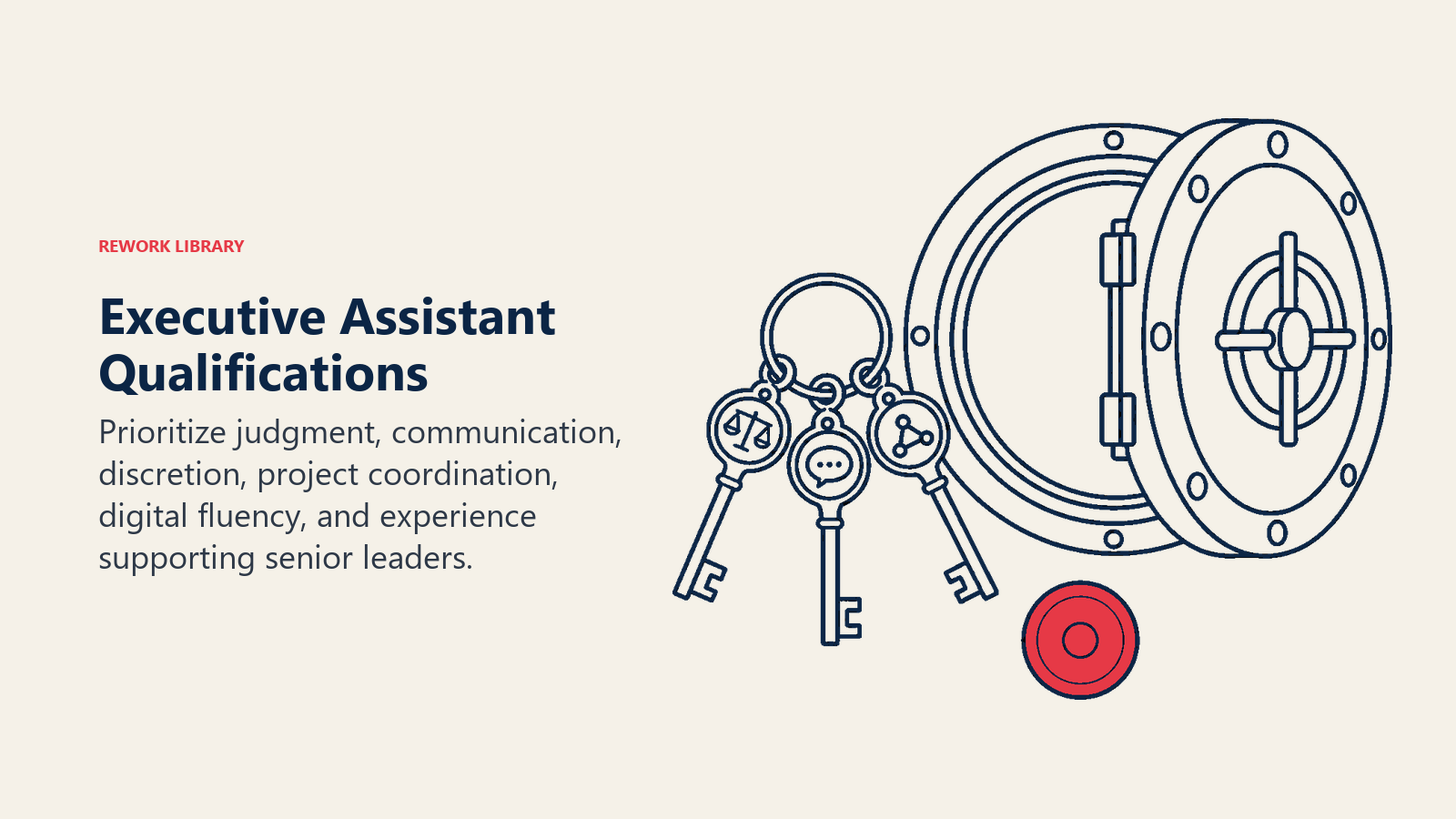
Priorize julgamento, comunicação, discrição, coordenação de projetos, fluência digital e experiência apoiando líderes sêniores.
Habilidades e experiência obrigatórias
- 3 a 7+ anos de experiência apoiando executivos de nível C ou vice-presidência sênior, dependendo da senioridade do cargo.
- Habilidades excepcionais de comunicação escrita e verbal. Você vai redigir correspondências em nome do executivo e representá-lo em interações com membros do conselho, investidores e clientes sêniores.
- Proficiência avançada com ferramentas de agenda e produtividade: Google Workspace ou Microsoft 365, Zoom, Slack e plataformas de gestão de tarefas.
- Capacidade comprovada de administrar prioridades concorrentes em um ambiente de ritmo acelerado sem perder precisão nos detalhes.
- Alta inteligência emocional e discrição. EAs em nível sênior têm acesso a informações comerciais sensíveis e precisam tratá-las com o julgamento adequado.
- Fortes habilidades de coordenação de projetos: acompanhar entregas, fazer follow-up sem que seja preciso pedir e manter tarefas logísticas complexas nos trilhos.
- Experiência administrando logística de viagens internacionais e agendamentos em múltiplos fusos horários.
Diferenciais
- Experiência anterior em um cargo voltado ao negócio antes de migrar para uma posição de EA (operações, financeiro, comunicações ou similar). EAs que entendem o contexto do negócio tomam decisões melhores.
- Experiência com processos de governança do conselho: ferramentas de portal do conselho, preparação de materiais e elaboração de atas.
- Familiaridade com funções de operações de negócios e exposição a orçamento ou acompanhamento financeiro.
- Proficiência em um segundo idioma, particularmente para EAs que apoiam executivos com viagens internacionais frequentes.
- Experiência com CRM ou ferramentas de dados para acompanhar relacionamentos e atualizações de pipeline do executivo.
- Experiência anterior em uma empresa de porte semelhante ou de crescimento mais acelerado.
Formação
A maioria das empresas exige diploma de bacharel ou experiência prática equivalente. A área de formação importa menos do que julgamento, profissionalismo e experiência relevante como EA. Algumas organizações priorizam candidatos com formação em administração de empresas, comunicações ou operações, mas o histórico profissional supera consistentemente as credenciais para esse cargo.
Benchmarks Salariais de Assistente Executivo
Os salários variam significativamente com base na senioridade do executivo apoiado, no porte da empresa, no setor e na localização. Estas faixas refletem cargos de tempo integral nos EUA.
| Nível | Faixa típica (EUA, 2025) | Observações |
|---|---|---|
| EA de nível inicial (1-3 anos) | US$ 50.000 a US$ 65.000 | Apoiando nível de diretoria ou vice-presidência |
| EA de nível intermediário (3-6 anos) | US$ 65.000 a US$ 90.000 | Apoiando SVP ou C-suite em empresa de médio porte |
| EA sênior (6+ anos) | US$ 90.000 a US$ 130.000 | Apoiando CEO/C-suite em empresa enterprise ou de alto crescimento |
| EA Chief of Staff (8+ anos) | US$ 120.000 a US$ 160.000+ | Funções leves de CoS, interface com o conselho, gestão de parceiros externos |
| As faixas refletem o salário-base. Fonte: dados de BLS, Glassdoor e LinkedIn Salary, 2025. Cargos em Nova York e na região da Baía de São Francisco costumam ficar 20-30% acima destes valores. |
Modelo de Descrição de Cargo de Assistente Executivo
Defina o relacionamento com o executivo, a autoridade de decisão, os fluxos de trabalho principais, as métricas de sucesso e o contexto de negócio por trás do cargo.

Visão geral da empresa
[Nome da empresa] é uma empresa de [setor, porte, estágio] focada em [missão ou produto principal]. Estamos crescendo e buscando um Assistente Executivo de alto calibre para apoiar nosso [CEO / COO / líder do C-suite] enquanto escalamos.
Resumo do cargo
Estamos contratando um Assistente Executivo que atuará como uma extensão do nosso [CEO/COO/nome do executivo/cargo]. Este não é um cargo puramente administrativo. Você vai administrar uma agenda e caixa de entrada de alto volume, preparar briefings e materiais para o conselho, coordenar projetos em toda a empresa e representar o executivo com profissionalismo em interações externas. Se você prospera em ambientes de ritmo acelerado, é um comunicador forte e traz julgamento genuíno para situações ambíguas, gostaríamos de ouvir de você.
Principais responsabilidades
- Administrar a agenda e a caixa de entrada do executivo; proteger o tempo de maior impacto e manter a correspondência fluindo.
- Planejar e reservar viagens nacionais e internacionais complexas com itinerários completos.
- Preparar briefings de reunião, pautas e materiais para o conselho/investidores.
- Acompanhar ações de reunião e fazer follow-up entre equipes para fechar pendências.
- Atuar como primeiro ponto de contato e gatekeeper para partes internas e externas.
- Coordenar prioridades multifuncionais em nome do executivo.
- Processar relatórios de despesas e administrar o acompanhamento do orçamento do gabinete.
- Lidar com comunicações e documentos confidenciais com discrição.
- Apoiar a preparação de reuniões do conselho e processos de governança.
- Assumir projetos especiais e pesquisas conforme necessário.
Qualificações obrigatórias
- [3/5/7]+ anos de experiência apoiando executivos de nível C ou sênior.
- Comunicação escrita e verbal excepcional.
- Domínio avançado de Google Workspace ou Microsoft 365, Zoom e Slack.
- Capacidade demonstrada de administrar prioridades concorrentes com atenção aos detalhes.
- Alta discrição com informações comerciais sensíveis.
- Experiência com logística de viagens internacionais.
Qualificações preferenciais
- Formação em operações, financeiro ou uma função voltada ao negócio.
- Experiência com processos e materiais de governança do conselho.
- Experiência anterior em uma [startup/empresa enterprise/empresa de crescimento acelerado].
- Proficiência em um segundo idioma.
O que oferecemos
- [Faixa salarial: US$ X a US$ Y dependendo da experiência]
- [Estrutura de participação acionária/bônus, se aplicável]
- [Regime remoto/híbrido/presencial]
- Benefícios de saúde, odontológico e oftalmológico
- [PTO, licença parental e outros benefícios]
Como Escrever uma Descrição de Cargo de Assistente Executivo
Etapa 1: Defina qual executivo este cargo apoia
O escopo de um cargo de EA é definido por quem a pessoa reporta. Apoiar um CEO de uma empresa de capital aberto exige experiência em governança do conselho e habilidades de comunicação voltadas a investidores. Apoiar um COO pende mais para coordenação operacional e gestão de projetos entre equipes. Defina isso desde o início, porque determina tudo o mais: o nível de experiência necessário, as soft skills que importam e a remuneração que você precisará oferecer.
Etapa 2: Seja honesto sobre o escopo
Um dos erros de contratação mais comuns para cargos de EA é escrever uma descrição genérica que subestima ou superestima o trabalho real. Se o seu EA vai precisar redigir comunicações para o conselho, participar de reuniões de liderança sênior e administrar projetos estratégicos, diga isso explicitamente. Se o cargo é principalmente agendamento e logística de alto volume, diga isso também. Enganar candidatos leva a rotatividade rápida.
Etapa 3: Declare o nível de senioridade com clareza
Os títulos de EA variam de "coordenador" a "Chief of Staff" na prática. Use os anos de experiência exigidos e a descrição das tarefas para sinalizar onde esse cargo se posiciona. "3+ anos apoiando executivos de nível diretoria" e "7+ anos apoiando C-suite em empresa de capital aberto" vão atrair grupos de candidatos bem diferentes.
Etapa 4: Aponte os requisitos de estilo de trabalho
Cargos de assistente executivo dependem fortemente do relacionamento. Uma incompatibilidade no estilo de comunicação ou no ritmo de trabalho gera atrito rapidamente. Se o seu executivo prefere uma cadência específica (briefing diário, resumo de fim de dia), opera em um conjunto particular de ferramentas ou tem opiniões fortes sobre como sua caixa de entrada funciona, apontar isso no anúncio economiza tempo de todos.
Etapa 5: Trate explicitamente as expectativas de confidencialidade
EAs lidam com dados sensíveis de remuneração, deliberações do conselho, discussões de fusões e aquisições e decisões de pessoal. Candidatos que nunca trabalharam nesse nível de confidencialidade precisam entender no que estão se metendo. Apontar isso no anúncio atrai candidatos que já operam dessa forma profissionalmente.
Etapa 6: Especifique os requisitos de presença no escritório
Muitos cargos de EA exigem presença física. Se o seu executivo espera que o EA esteja no escritório cinco dias por semana, diga isso. Candidatos que descobrem isso tarde no processo vão desistir, e você terá desperdiçado o tempo de ambos os lados.
Assistente Executivo vs. Assistente Administrativo
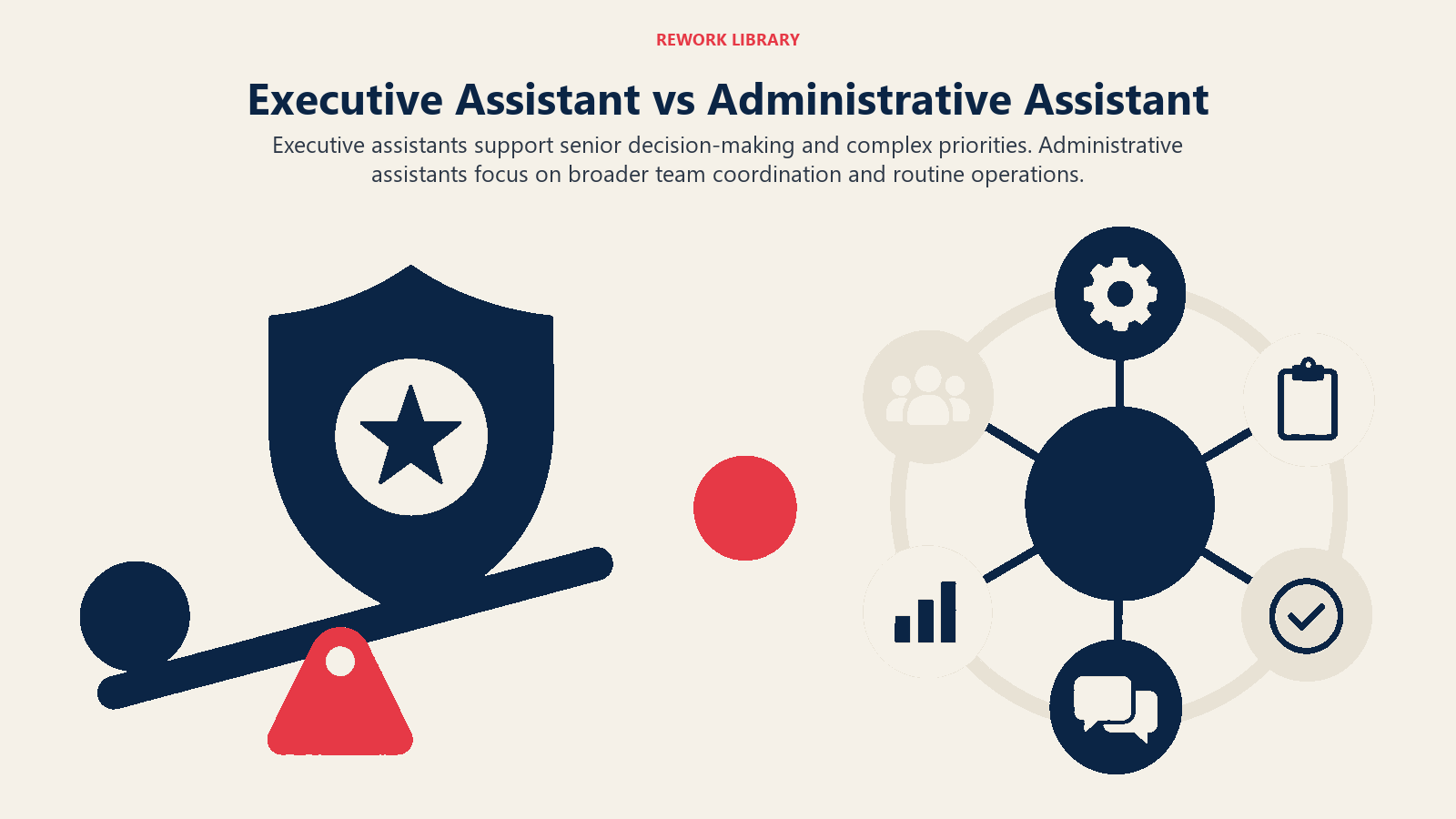
Assistentes executivos apoiam a tomada de decisão sênior e prioridades complexas. Assistentes administrativos focam em uma coordenação de equipe mais ampla e operações rotineiras.
Esses cargos costumam ser confundidos, mas diferem significativamente em escopo, senioridade e no julgamento exigido.
| Fator | Assistente executivo | Assistente administrativo |
|---|---|---|
| Linha de reporte típica | C-suite ou vice-presidência sênior | Líder de equipe, gestor de departamento ou gestor de escritório |
| Escopo principal | Gestão estratégica de agenda, preparação para conselho/investidores, comunicação com stakeholders, coordenação de projetos multifuncionais | Agendamento, arquivamento, entrada de dados, logística de escritório, suporte de recepção |
| Julgamento exigido | Alto. Situações ambíguas frequentes com informação incompleta | Moderado. Principalmente processos estabelecidos |
| Nível de confidencialidade | Muito alto. Acesso a materiais do conselho, fusões e aquisições, dados de remuneração | Moderado. Informações em nível de departamento |
| Remuneração (EUA, 2025) | US$ 65.000 a US$ 130.000+ | US$ 40.000 a US$ 60.000 |
| Plano de carreira | Chief of Staff, Diretor de Operações, Escritório do CEO | Assistente executivo, gestor de escritório, coordenador de operações |
O teste prático: se a pessoa que você está contratando precisará tomar decisões de julgamento sem consultar o executivo primeiro, você está contratando um EA. Se o trabalho é principalmente execução de processos com instruções claras, você está contratando um assistente administrativo.
O cargo de assistente executivo é uma das contratações de maior alavancagem que uma equipe de liderança pode fazer. Bem feita, uma EA forte devolve 15 a 20 horas por semana a um executivo sênior. Malfeita, uma contratação ruim cria atrito, falhas de comunicação e problemas de confiança difíceis de desfazer. Uma descrição de cargo que reflita com precisão o escopo, a senioridade exigida e a dinâmica de trabalho é a primeira triagem. Use este modelo como ponto de partida e personalize as responsabilidades e qualificações para corresponder ao estilo de trabalho real do seu executivo e ao estágio atual da sua empresa.
Para guias de contratação relacionados, veja nossos modelos para Chief Executive Officer, Chief Operating Officer e Gerente de Operações de Negócios.

Senior Customer Retention Strategist
On this page
- O Que Faz um Assistente Executivo?
- Responsabilidades do Assistente Executivo
- Requisitos e Qualificações
- Benchmarks Salariais de Assistente Executivo
- Modelo de Descrição de Cargo de Assistente Executivo
- Como Escrever uma Descrição de Cargo de Assistente Executivo
- Etapa 1: Defina qual executivo este cargo apoia
- Etapa 2: Seja honesto sobre o escopo
- Etapa 3: Declare o nível de senioridade com clareza
- Etapa 4: Aponte os requisitos de estilo de trabalho
- Etapa 5: Trate explicitamente as expectativas de confidencialidade
- Etapa 6: Especifique os requisitos de presença no escritório
- Assistente Executivo vs. Assistente Administrativo