Lead Conversion Rate: Formula and How to Improve It
Turn this article into takeaways for your work.


Each assistant summarizes the article only for you and suggests best practices for your work.
Your lead conversion rate is the single number that answers the question every sales and marketing leader asks: "Of all the people who showed interest, how many actually became customers?" It is a deceptively simple metric, but getting it right, and then improving it, separates the teams that grow predictably from the ones that chase volume and wonder why revenue stays flat.
This guide covers the formula, industry benchmarks, and five proven steps to move the number.
What is lead conversion rate?
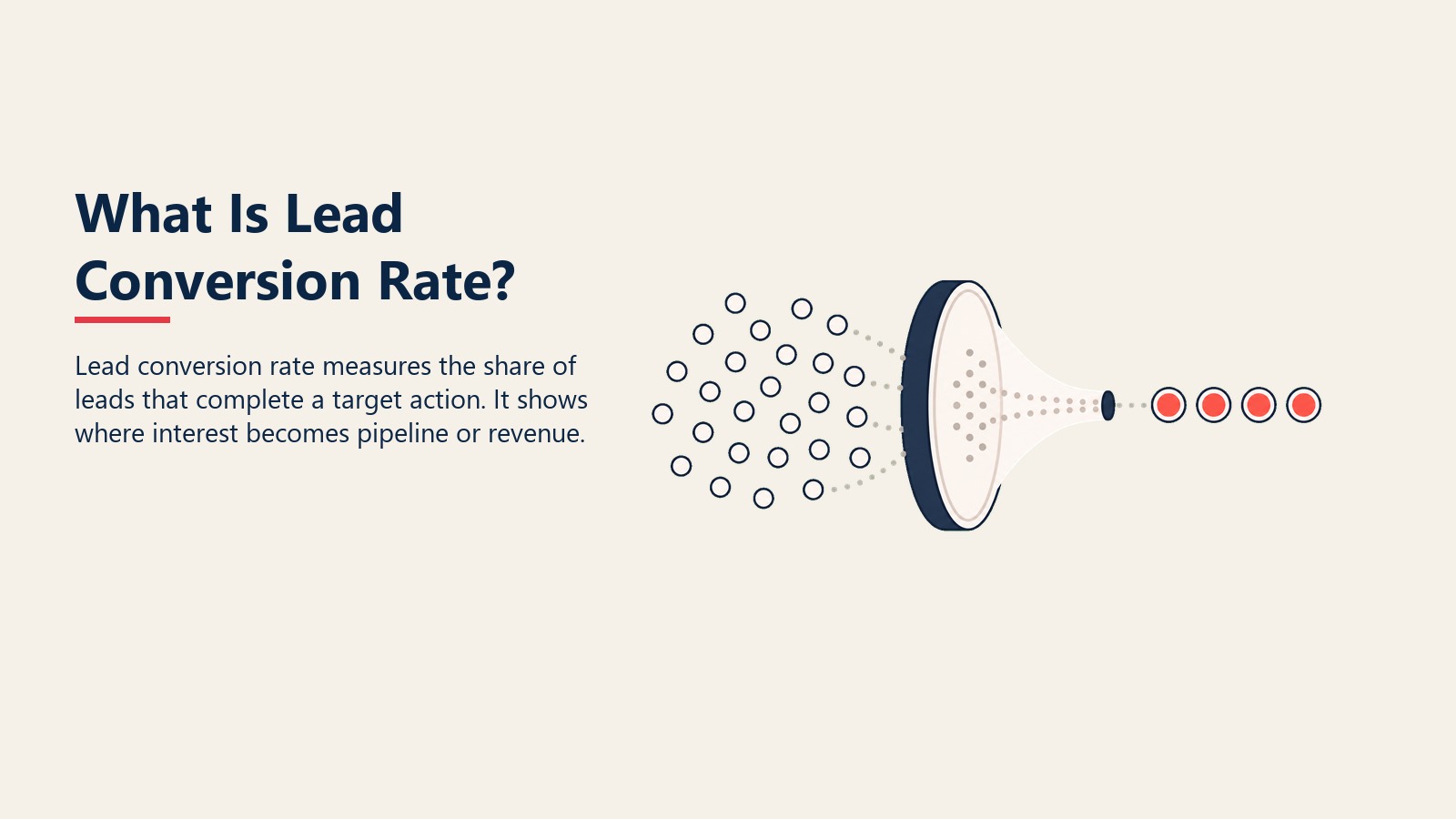
Lead conversion rate is the percentage of leads that complete a desired action at a given stage of your funnel. That action might be responding to outreach, booking a demo, becoming a sales-qualified lead, or signing a contract. The definition shifts depending on which funnel stage you are measuring, but the core math stays the same.
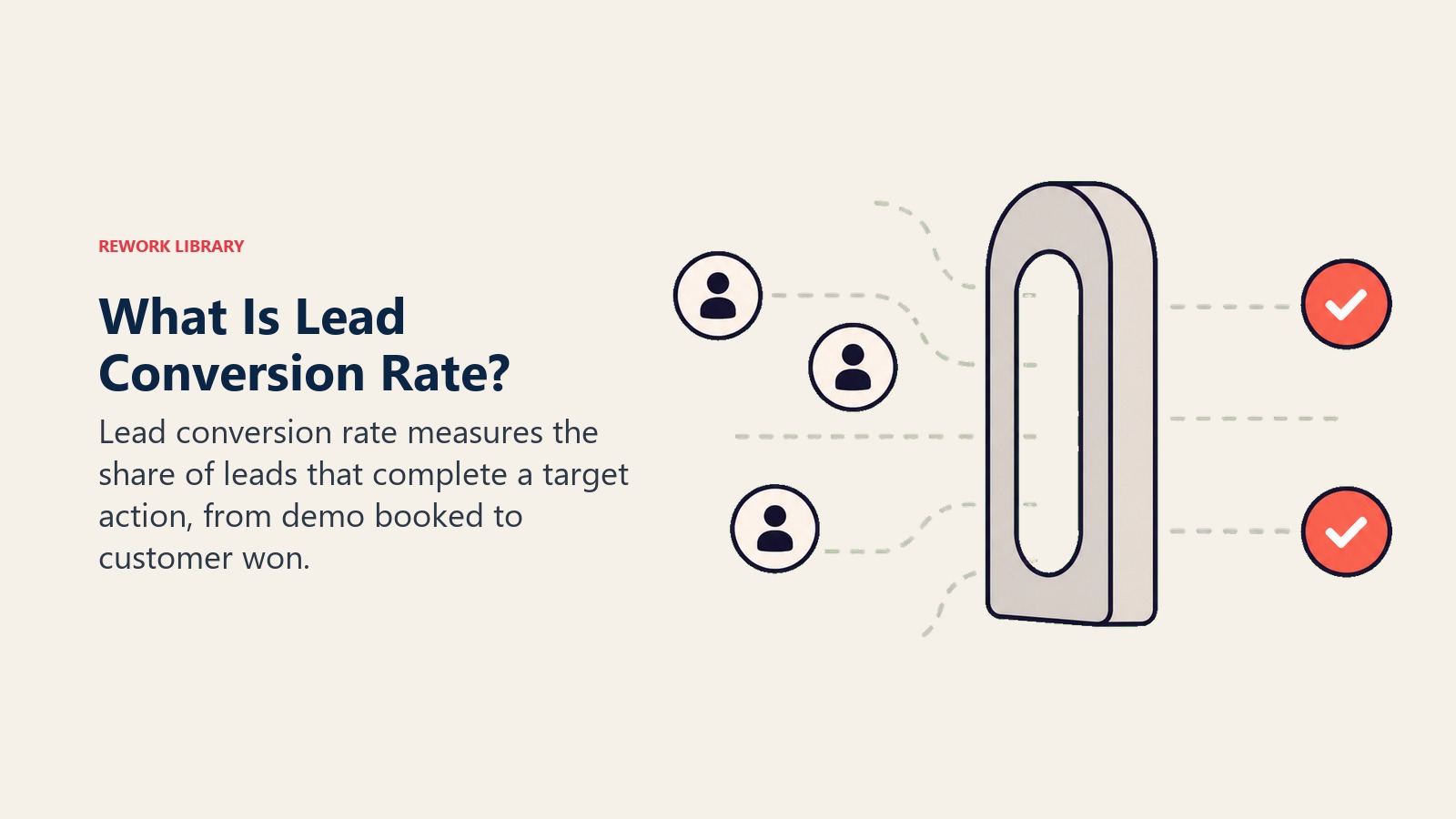
At the broadest level, "lead conversion rate" typically refers to the percentage of all inbound or outbound leads that eventually become paying customers. At narrower funnel stages, the same formula measures how many leads advance from one step to the next. Teams that track both see the full picture: where volume enters and where it disappears.
Why it matters: A low conversion rate means your team is spending time and budget on leads that never close. A high conversion rate means your qualification process, nurturing, and sales execution are aligned. Small improvements compound quickly. Moving from 2% to 3% conversion on 1,000 monthly leads produces 10 extra customers per month without acquiring a single additional lead.
Key Facts
- Across B2B industries, the average lead-to-customer conversion rate sits between 1% and 5%, with top-performing teams reaching 8-10% (Forrester, 2024).
- MQL-to-SQL conversion averages around 13% industry-wide, though this varies sharply by channel and deal size (Demand Gen Report, 2023).
- Companies that respond to leads within five minutes are far more likely to qualify them than those that wait 30 minutes or more, which shows that speed directly affects conversion, not just volume (Harvard Business Review, 2011, still replicated in modern benchmarks).
How to calculate lead conversion rate
The formula is:
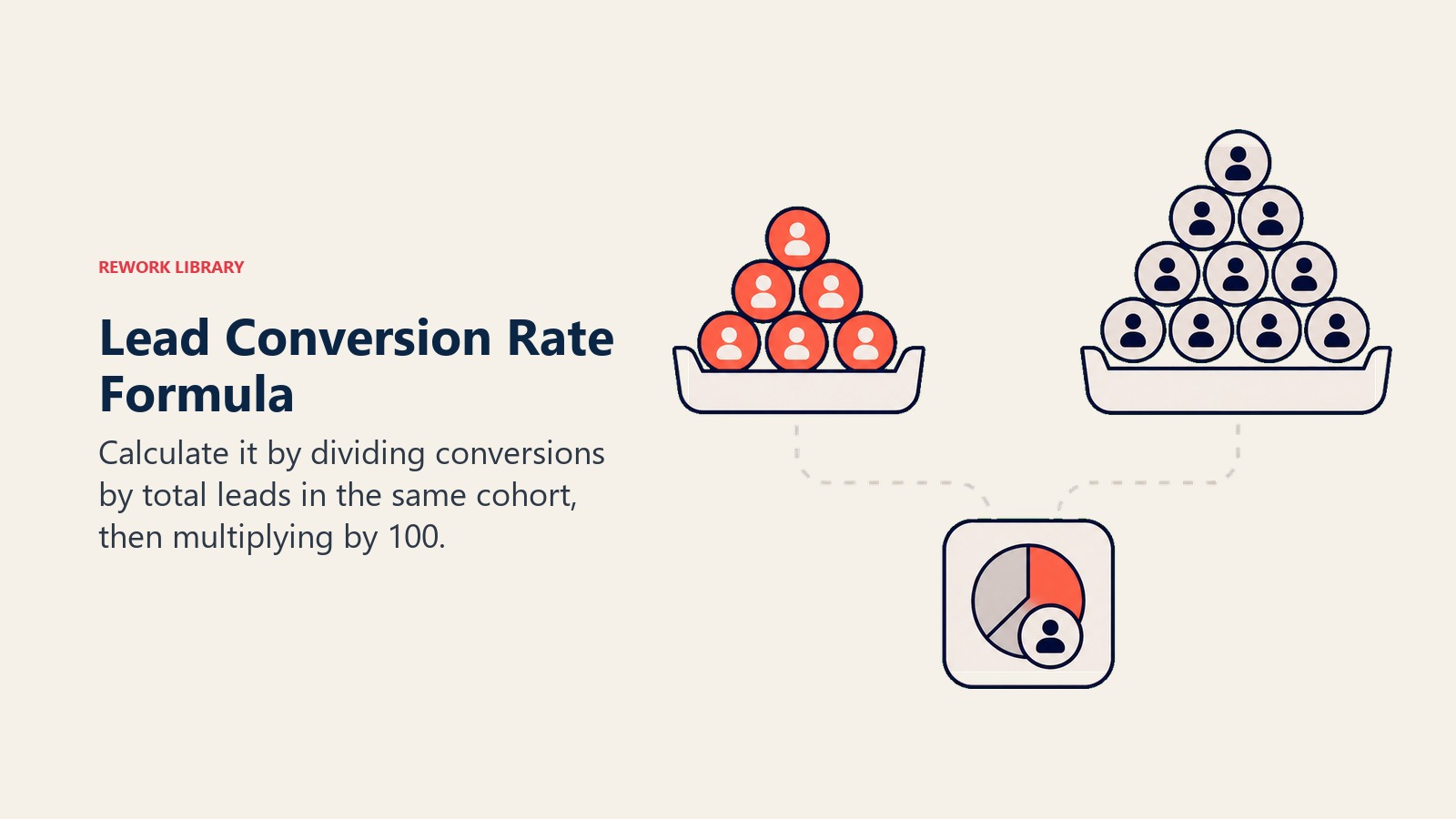
Lead Conversion Rate (%) = (Number of Conversions / Total Leads) x 100
So if 1,200 leads entered your funnel last month and 36 became customers, your rate is:
(36 / 1,200) x 100 = 3%
The formula is the same at every funnel stage. If 400 of those 1,200 leads became MQLs, your lead-to-MQL rate is 33%. If 80 of the MQLs became SQLs, your MQL-to-SQL rate is 20%. Stacking these stage rates gives you a full conversion waterfall.
Which leads go in the denominator? Be consistent. If you include every raw contact (including cold list pulls and low-quality form fills), your rate will look lower than a team that counts only engaged, opt-in leads. Neither is wrong, but comparing your number to a benchmark only makes sense if you are using the same definition. Most teams count leads that have taken at least one qualifying action.
Measure by cohort, not snapshot. A lead that enters in January might not close until March. If you divide this month's customers by this month's raw leads, you are mixing two different cohorts and your rate will fluctuate for reasons that have nothing to do with performance. Use a rolling 90-day cohort for a cleaner read.
What is a good lead conversion rate?
There is no single "good" number. Conversion rates vary by funnel stage, acquisition channel, average contract value, and industry. A high-volume, low-ACV SaaS product might see very different rates than a services firm with a long enterprise sales cycle.
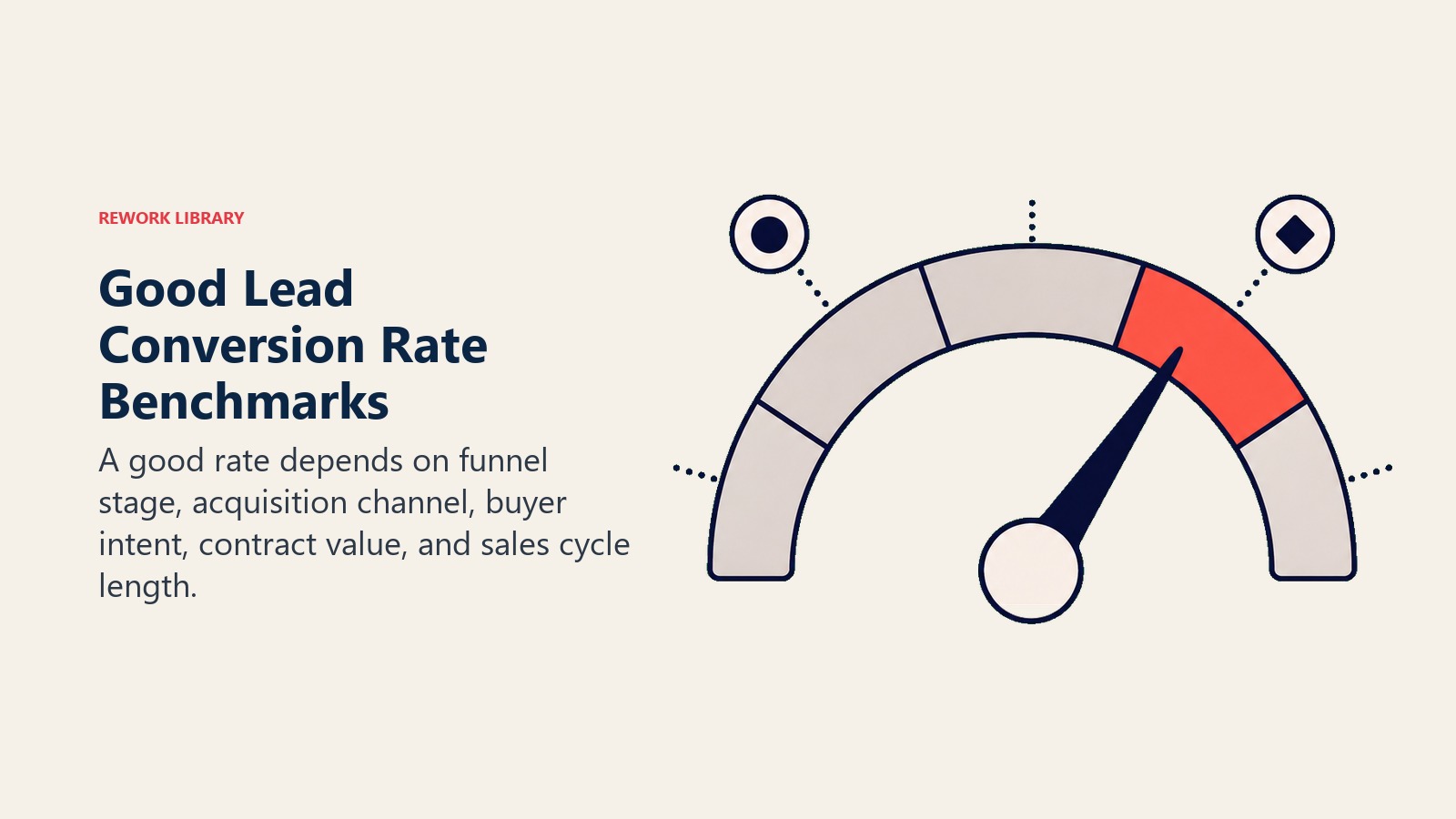
The table below shows approximate ranges based on published B2B benchmarks. Use them as a starting point, not a verdict.
| Funnel Stage | Approximate Conversion Rate Range |
|---|---|
| Raw lead to MQL | 20% - 40% |
| MQL to SQL | 10% - 25% |
| SQL to Opportunity | 40% - 65% |
| Opportunity to Closed-Won | 20% - 40% |
| Overall lead to customer | 1% - 5% (top performers 8%+) |
| Acquisition Channel | Approximate Lead-to-Customer Rate |
|---|---|
| Inbound content / SEO | 3% - 6% |
| Paid search | 2% - 4% |
| Outbound cold email | 0.5% - 2% |
| Referral / partner | 8% - 15% |
| Event / webinar | 4% - 8% |
Referral leads convert at three to five times the rate of cold outbound because the trust and context transfer with the introduction. If your referral rate is low, that is often a faster lever to pull than optimizing cold channels.
How to improve your lead conversion rate
Step 1: Cut your response time
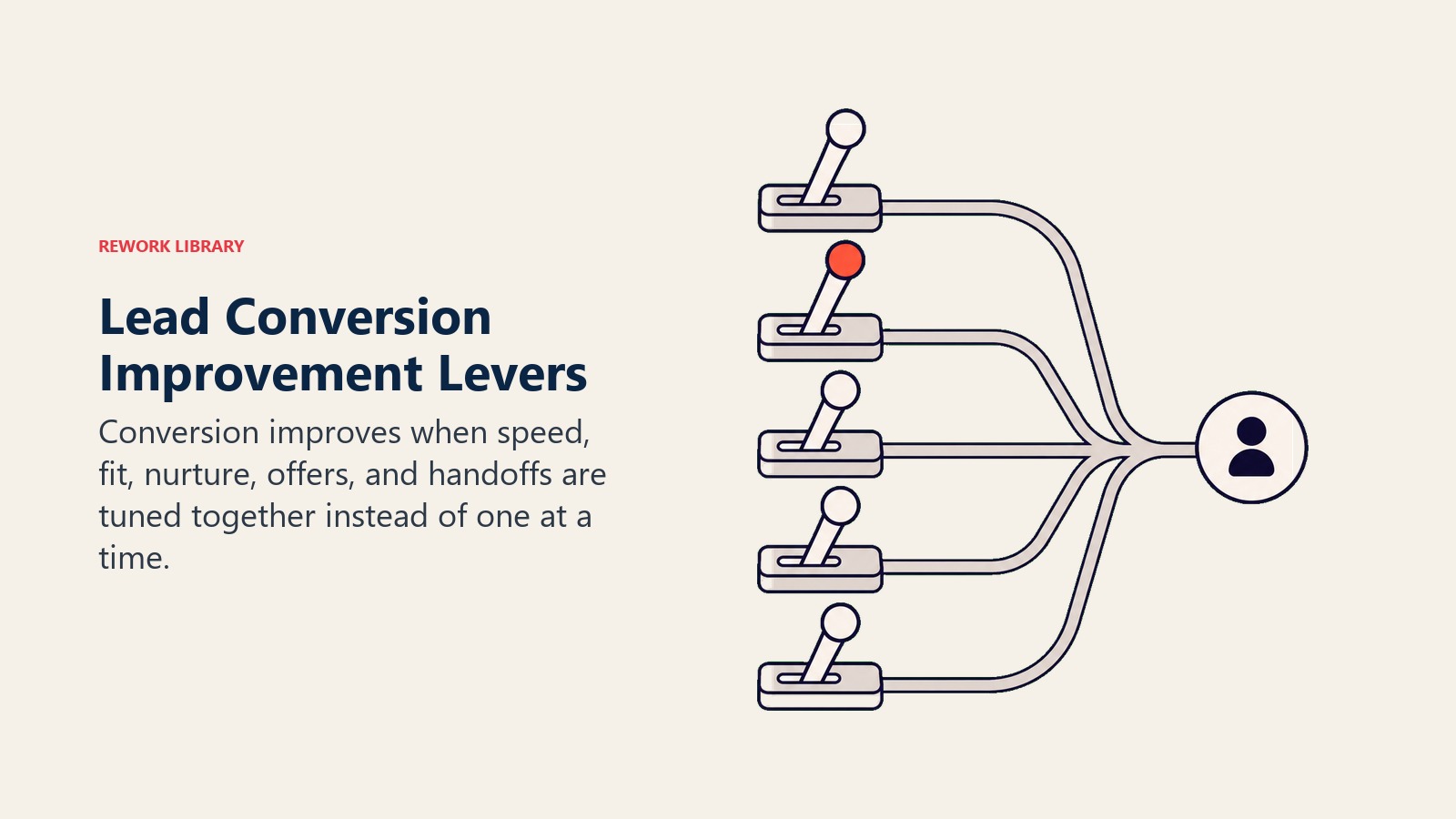
The single fastest way to lift conversion is to contact leads faster. Most companies take 47 hours to make a first contact attempt (a figure that has barely moved in a decade). Leads contacted within five minutes are dramatically more likely to connect and qualify than leads that sit for hours. This is because prospects are in active buying mode when they raise their hand. An hour later, they are in a meeting. A day later, a competitor may have already booked a call.
Audit your lead response time by channel and rep. Set a target of under five minutes for inbound web leads. Use automation to send an immediate acknowledgment and book a calendar slot while a rep picks up the phone.
Step 2: Qualify leads before they reach sales
Conversion rates collapse when sales reps work leads that were never a real fit. Before you try to close more, fix the front of the funnel. A clear lead qualification framework tells your team exactly which leads to pursue and which to disqualify early.
Define your ideal customer profile. Score leads based on firmographic fit (industry, company size, role) and behavioral signals (pages visited, content downloaded, demo requests). Pass only those above your threshold to MQL or SQL status, and review the threshold quarterly to make sure it is calibrated correctly.
Step 3: Build a lead nurturing program
Most leads are not ready to buy when they first appear. Industry data consistently shows that a large share of leads that are disqualified today will buy something in the next 12-24 months, just not from whoever gave up on them. Lead nurturing programs keep your brand in the conversation between the first touch and the point when a prospect is ready to evaluate.
Good nurturing is not a drip sequence of feature announcements. It is a sequence of useful, relevant content that maps to where the prospect is in their thinking. Early-stage leads need education. Mid-stage leads need proof. Late-stage leads need confidence that switching or buying is safe.
Step 4: Optimize the offer at each stage
Conversion at each funnel stage depends on the offer matching the prospect's current level of commitment. Asking a cold lead to book a 45-minute discovery call is too much friction. Asking a warm, demo-ready prospect to "download an ebook" is too little. Map your conversion offers to funnel stages:
- Top of funnel: low-friction content (guide, assessment, benchmark report)
- Mid-funnel: demonstration of value (webinar, product walkthrough, case study)
- Bottom of funnel: confidence builders (free trial, ROI calculator, reference call)
Test one variable at a time. Even small copy changes on a call-to-action or landing page can move conversion rates by meaningful percentages when you have enough volume to read the result.
Step 5: Align sales and marketing on definitions and handoffs
Misaligned teams kill conversion silently. Marketing sends leads that sales ignores. Sales blames lead quality. Marketing blames follow-through. Both are partially right, and neither has the data to prove it.
Fix this with a shared service-level agreement. Marketing commits to delivering a certain volume of MQLs that meet an agreed profile. Sales commits to contacting every MQL within a defined time window and logging the outcome. Review the sales funnel stages together monthly. Track MQL-to-SQL conversion as a shared metric, not a marketing metric or a sales metric.
Conversion rate analysis at each stage, reviewed together, is the fastest way to surface where leads are actually getting stuck.
Lead conversion rate vs other metrics
Teams sometimes confuse lead conversion rate with close rate or win rate. Here is the difference:
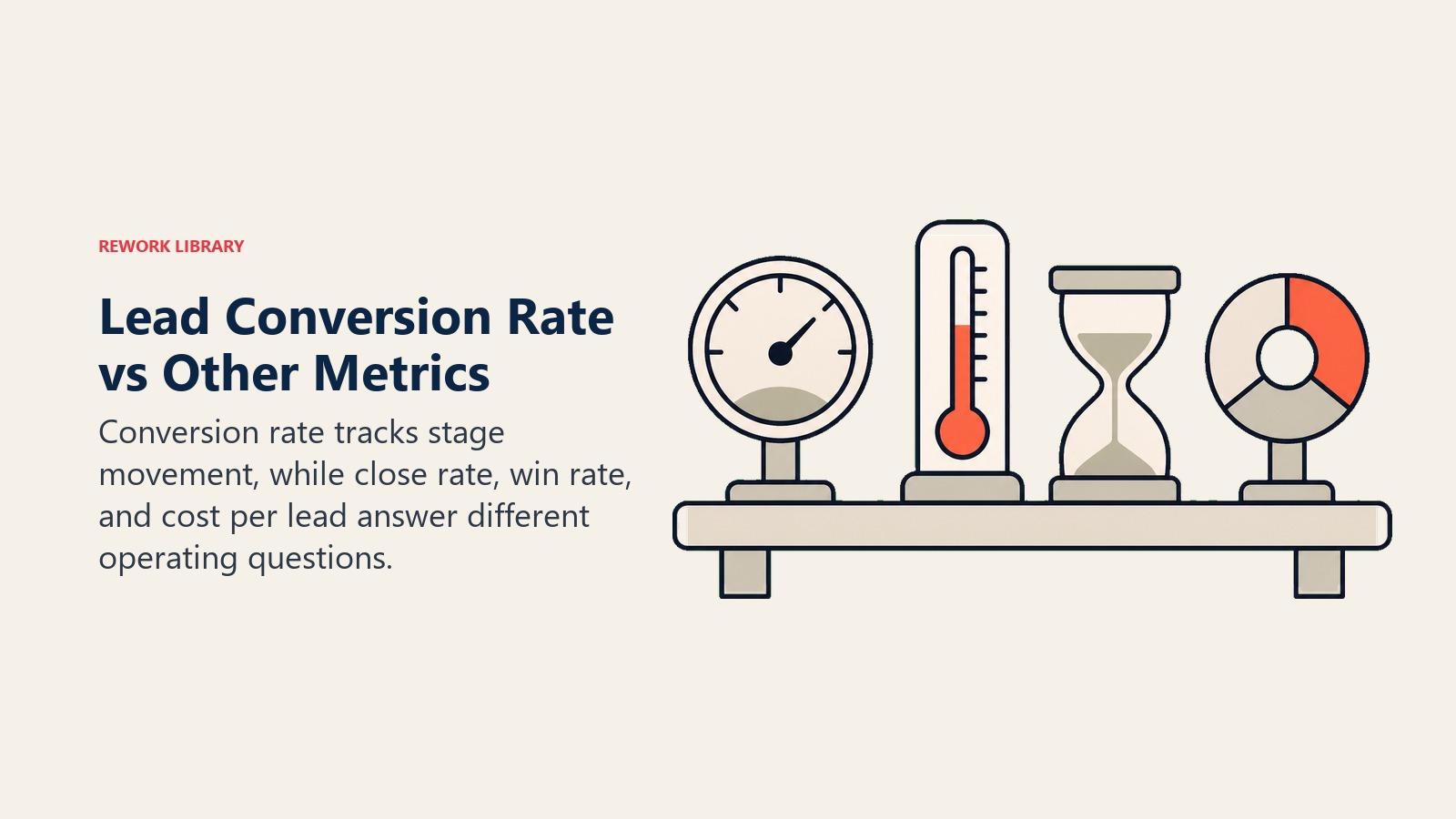
Lead conversion rate measures the percentage of leads that become customers, starting from the very top of the funnel. It captures the full pipeline journey.
Close rate (or win rate) measures the percentage of opportunities or deals in active negotiation that close. It starts much further down the funnel and is a sales execution metric, not a lead quality metric.
MQL-to-SQL conversion rate measures a single stage transition and is primarily a marketing-to-sales handoff metric.
Cost per lead measures efficiency of acquisition. A low cost per lead matters less if conversion is also low. The two metrics work together: you want low cost and high conversion, not just one.
If your overall lead conversion rate is low but your close rate on active opportunities is high, the problem is in the early funnel (qualification, nurturing, fit). If your close rate is low but you have plenty of qualified opportunities, the problem is in sales execution.
Common lead conversion rate mistakes
Measuring too broadly. An "all leads to all customers" rate hides which funnel stages are leaking. Always break the rate down by stage, channel, and lead source.
Optimizing for volume instead of fit. Running more ads to get more leads helps only if those leads can convert. Adding unqualified volume makes your rate look worse and exhausts your sales team.
Ignoring speed. Many teams invest in nurturing and qualification while letting response time stay at 24 to 48 hours. Speed is the cheapest conversion lever available and the most consistently underused.
Comparing to industry averages without adjusting for context. A 2% rate might be excellent for outbound enterprise software and a disaster for inbound SaaS with low ACV. Make sure your benchmark accounts for your deal size, sales cycle, and channel mix.
Treating conversion rate as a lagging indicator only. Most teams report it after the period closes. But you can lead-manage conversion by tracking intermediate signals: contact rates, first-meeting booking rates, demo-to-opportunity rates. These give you time to intervene in the current period.
Frequently Asked Questions about Lead Conversion Rate
What is a normal lead conversion rate for B2B companies?
Most B2B teams see lead-to-customer rates between 1% and 5%. Referral-heavy pipelines and inside sales teams with tight qualification often hit 8% or higher. The range is wide because it depends on ACV, sales cycle length, and acquisition channel.
Can I improve conversion without changing my lead volume?
Yes. In fact, that is often the better path. Improving qualification criteria, response speed, and nurturing sequences can double or triple conversion on the same volume of leads. More volume amplifies a conversion problem if the root cause is fit, not quantity.
How often should I measure lead conversion rate?
Monthly is the standard reporting cadence, but use a 90-day rolling cohort rather than a snapshot so you account for longer sales cycles. Review by channel and stage, not just total.
What is the difference between lead conversion rate and landing page conversion rate?
Landing page conversion rate measures the percentage of page visitors who fill out a form or take a specific action. Lead conversion rate tracks what happens to those leads after they enter your funnel. Both matter, but they measure different parts of the acquisition journey.
My conversion rate dropped this month. What should I check first?
Start with lead source mix. If a new campaign brought in a large batch of low-fit leads, the denominator grew without a matching increase in closable opportunities. Then check response time. A spike in first-contact lag (caused by rep capacity, holidays, or routing errors) can lower conversion with no change in lead quality. Your lead conversion rate will not move from a single tactic. But every percentage point you add compounds across every lead that enters your funnel from that point forward. Start with the stage that leaks the most, fix it, measure for 60 days, then move to the next.

Principal CRM Strategist
On this page
- What is lead conversion rate?
- How to calculate lead conversion rate
- What is a good lead conversion rate?
- How to improve your lead conversion rate
- Step 1: Cut your response time
- Step 2: Qualify leads before they reach sales
- Step 3: Build a lead nurturing program
- Step 4: Optimize the offer at each stage
- Step 5: Align sales and marketing on definitions and handoffs
- Lead conversion rate vs other metrics
- Common lead conversion rate mistakes