Sales Negotiation Tactics: How to Protect Margin and Close on Your Terms
Turn this article into takeaways for your work.


Each assistant summarizes the article only for you and suggests best practices for your work.
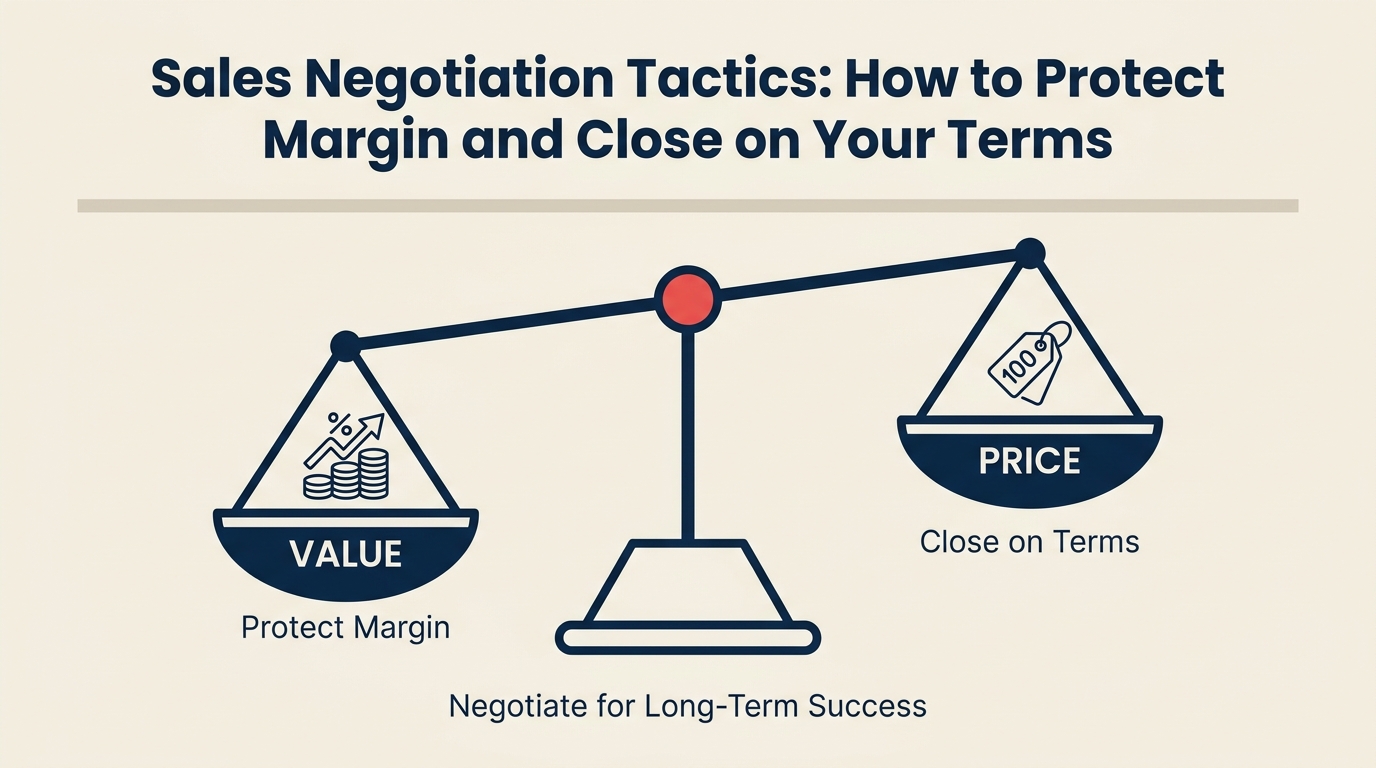
Here's the negotiation mistake most B2B sales reps make: they treat it as a conversation about price when it's actually a conversation about value.
Buyers who push for a discount are almost never purely motivated by budget. They're testing whether the rep believes in the value of what they're selling. A rep who caves on price at the first ask just told the buyer that the original price was inflated and that there's more room to cut. The negotiation has barely started.
The reps who close at or near full price aren't tougher or luckier. They've done preparation that most reps skip, they have a framework for what they'll give and what they won't, and they know how to anchor the conversation on outcomes rather than line items.
Key Facts: Sales Negotiation Benchmarks
- 84% of B2B buyers will ask for a price reduction at some point in the deal cycle, regardless of whether they actually have a budget constraint. (RAIN Group Sales Research)
- Sales reps who receive formal negotiation training close deals at 5 to 10% higher margin than untrained peers, with no difference in close rate. (Sales Executive Council)
- 61% of reps say they "always" or "usually" give a discount when asked, without any counter-move or trade. (HubSpot State of Sales)
- The average B2B discount given is 15-20% off list price, but deals where the rep had a clear value narrative during negotiation averaged only 8-10% discount. (McKinsey Pricing Research)
- 70% of negotiation leverage in B2B deals comes from the quality of discovery done in earlier stages, not from late-stage tactics. (Gartner)
Before the Negotiation: The Preparation That Determines the Outcome
Most negotiation happens in the preparation stage, not in the room. Reps who go into a pricing conversation without knowing their BATNA, their walk-away point, and the buyer's alternatives are improvising. Improvisation favors the more experienced party, which is usually the buyer.
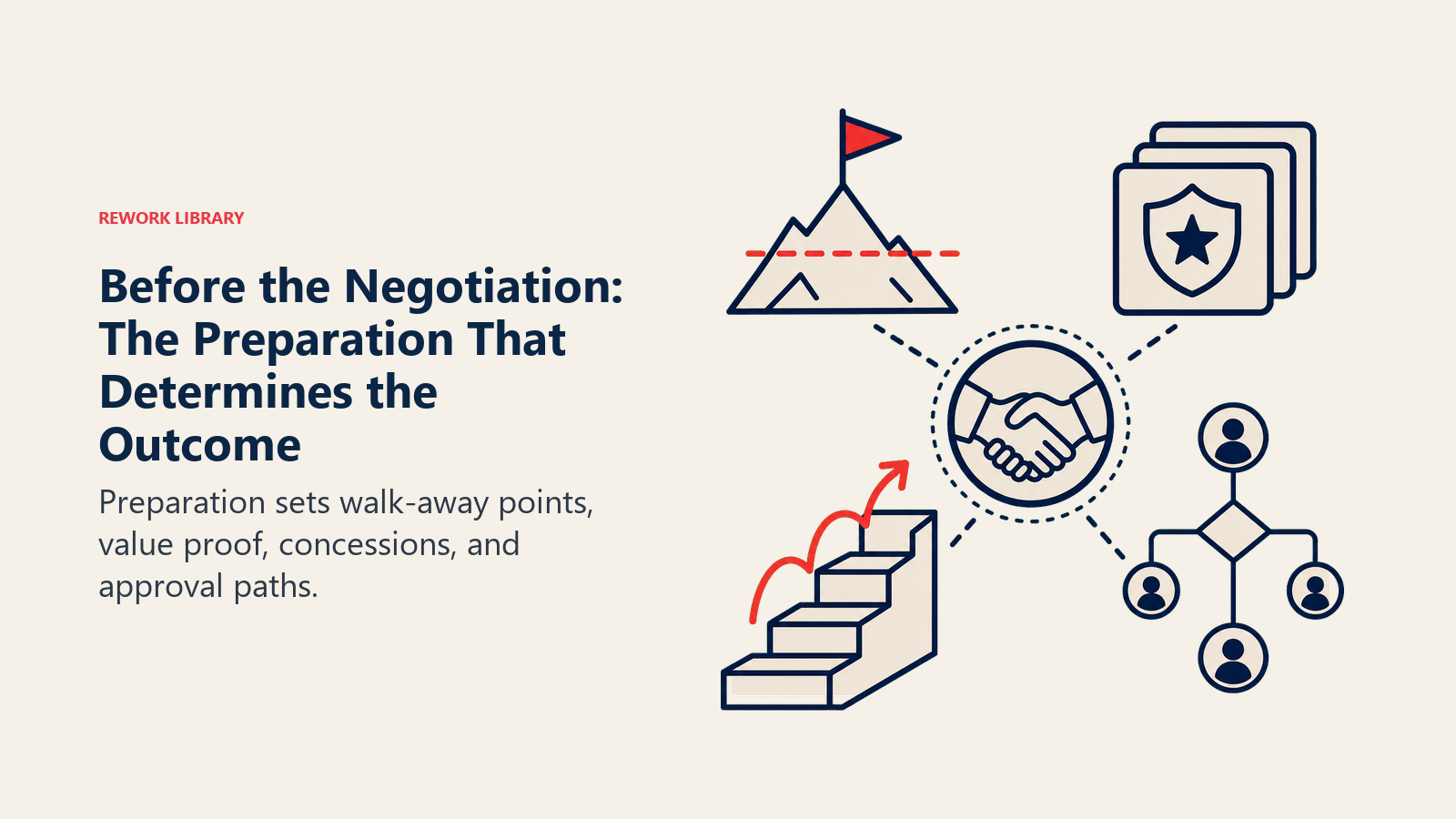
Know your value story cold. Before any negotiation, you need to be able to articulate the buyer's expected ROI in specific, defensible numbers. What is the cost of their current problem? What outcome does your solution drive? What's the dollar value of that outcome over 12 months? If you can't answer this credibly, you're not ready to defend your price.
The most powerful negotiation tool is a well-built business case constructed with the buyer during discovery. A prospect who told you in week 2 that their current solution costs them $400K a year in wasted productivity cannot turn around in week 8 and tell you $85K is too expensive. The case they built with you is now working against the discount request.
Map the stakeholders and their constraints. Economic buyers care about ROI and risk. Technical buyers care about implementation complexity and maintenance. End users care about workflow disruption. When a buying committee asks for a discount, which stakeholder is actually driving it? A CFO with a real budget freeze has different leverage than a procurement person running a standard squeeze play. Knowing the difference changes your response.
Define your concession structure in advance. Great negotiators know before the conversation starts exactly what they're willing to give, in what sequence, and at what cost. Never make up concessions on the fly. Common concession levers in B2B SaaS:
- Contract length (annual vs. multi-year)
- Payment terms (net-30 vs. upfront)
- Implementation support (included vs. reduced scope)
- Add-on features or seats
- Customer success tier
Each has a real cost to your business. Know the cost. Trade each one deliberately, not reflexively.
Negotiation Frameworks That Work in B2B
The Value-First Anchor
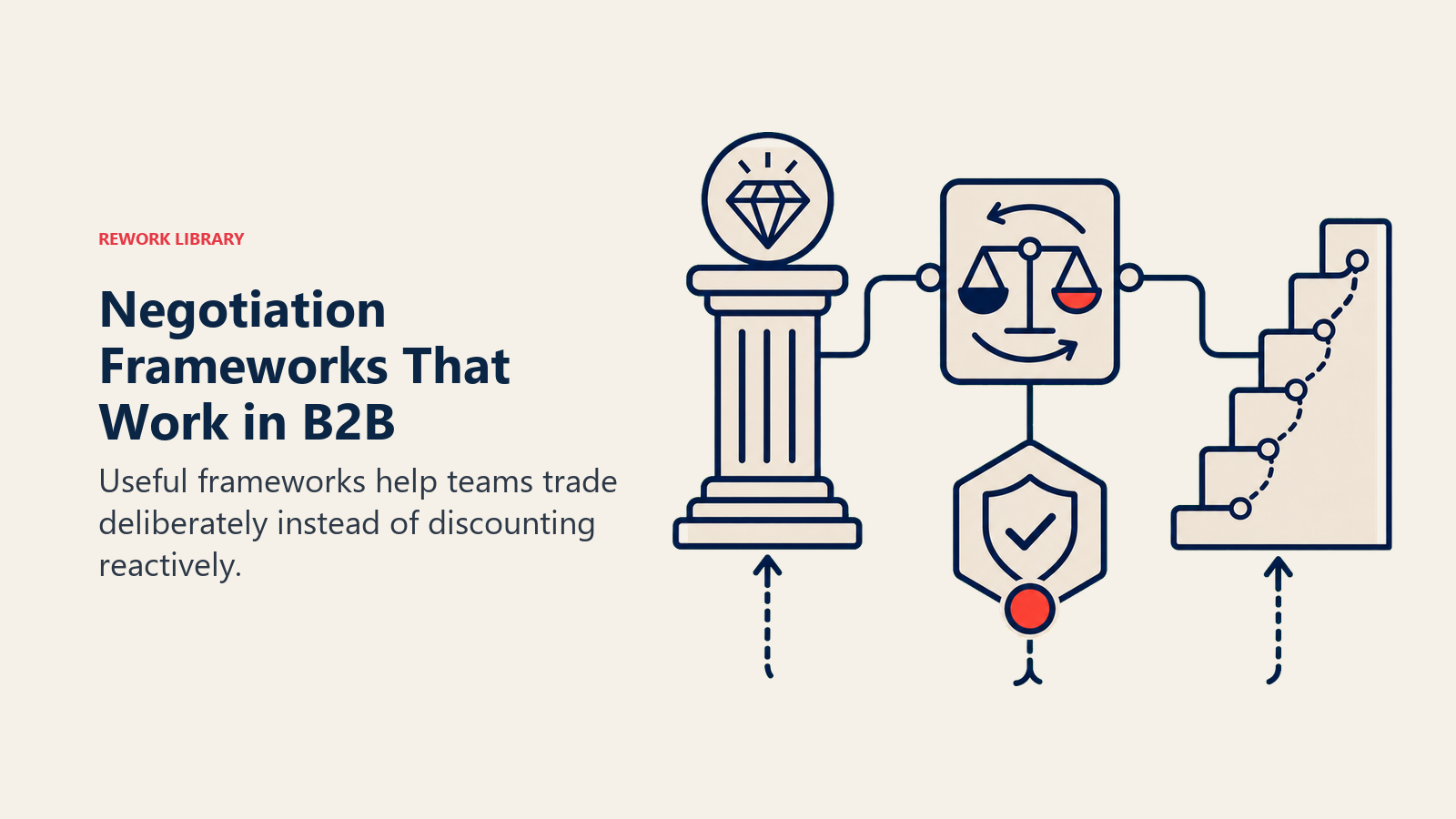
Never lead with price flexibility. Lead with value reinforcement.
When a buyer asks for a discount, the instinctive (wrong) response is to immediately offer one or to say "let me see what I can do." Both signal that your price is negotiable before you've done any work to defend it.
The value-first anchor looks like this: "Before we talk about price, I want to make sure we're still aligned on the expected impact. You told me in our second call that your team spends roughly 15 hours per week on [problem]. At the industry average fully-loaded cost for that role, that's about $180,000 per year in labor cost. Our solution eliminates 80% of that. At our current pricing, you get full payback in under 7 months. Is the ROI model still holding up on your end?"
This reframes the conversation from "is this price reasonable" to "is this investment defensible given the expected return." Most buyers, faced with their own data, either drop the discount request or shrink it significantly.
The Conditional Concession
If you're going to give something, always get something in return. This is the most important single principle in negotiation. An unconditional concession signals weakness and invites further requests.
The formula: "I can work with you on [X] if we can get [Y]."
In practice: "I can reduce the first-year price by 8% if we move to a 2-year contract." Or: "I can include implementation support at no cost if we can get purchase orders signed by end of quarter."
Every concession should be traded, not given. And the things you trade for (longer contract, faster close, referral introduction, expanded scope) should have real value to your business.
The Deal-at-Risk Frame
Used sparingly and only when you have genuine alternatives, the deal-at-risk frame is powerful. It acknowledges the current negotiation impasse and introduces the possibility that the deal may not happen.
"I want to be straight with you. We're at a point where I've moved as far as I can on price given our cost structure. I believe strongly that this is the right solution for your team. But if we can't find a way to make the numbers work on both sides, I'd rather we have that conversation honestly now than extend this back and forth for another two weeks."
This only works if:
- You mean it (empty threats destroy credibility instantly)
- You've genuinely exhausted reasonable flexibility
- The buyer has a real reason to move forward that your solution uniquely solves
Late-Stage Pressure Tactics and How to Counter Them
Professional procurement teams run standard plays. Knowing them in advance removes the surprise.
The eleventh-hour price cut: the deal is essentially done, everything is agreed, and then procurement sends a new email asking for a 15% reduction. They're betting that after months of work, you'll give something to save the deal.
Counter: "We've already built a business case together that justifies our pricing. Adding a new variable this late in the process isn't a negotiation, it's a test. I'm not going to change our pricing in the final hour. What I'm happy to do is make sure we get the contract finalized so your team can start getting value."
The competitor gambit: "We've had a conversation with [competitor], and they're coming in significantly lower."
Counter: ask for specifics. "I'd like to understand what they're offering at that price point. Are they comparable on [specific capability that matters to them]? What's included in their implementation? What's their support model?" Most competitor comparisons fall apart under questioning because buyers are comparing list prices to different scope. If the competitor genuinely is apples-to-apples cheaper, you have a value gap to address, not a price problem.
The authority escalation: "This has to go to [CFO / Board / Legal]. They're going to need a lower number."
Counter: "I'd love to help you make the case internally. Can we schedule a call where I can walk through the business case directly with [CFO]? It's typically faster and easier when I can answer questions directly rather than through a relay." This both shortens the cycle and ensures the business case doesn't get summarized incorrectly by someone who isn't bought in.
Closing the Negotiation
Negotiations that don't close aren't negotiations. They're conversations. At some point, you need to drive toward a decision.
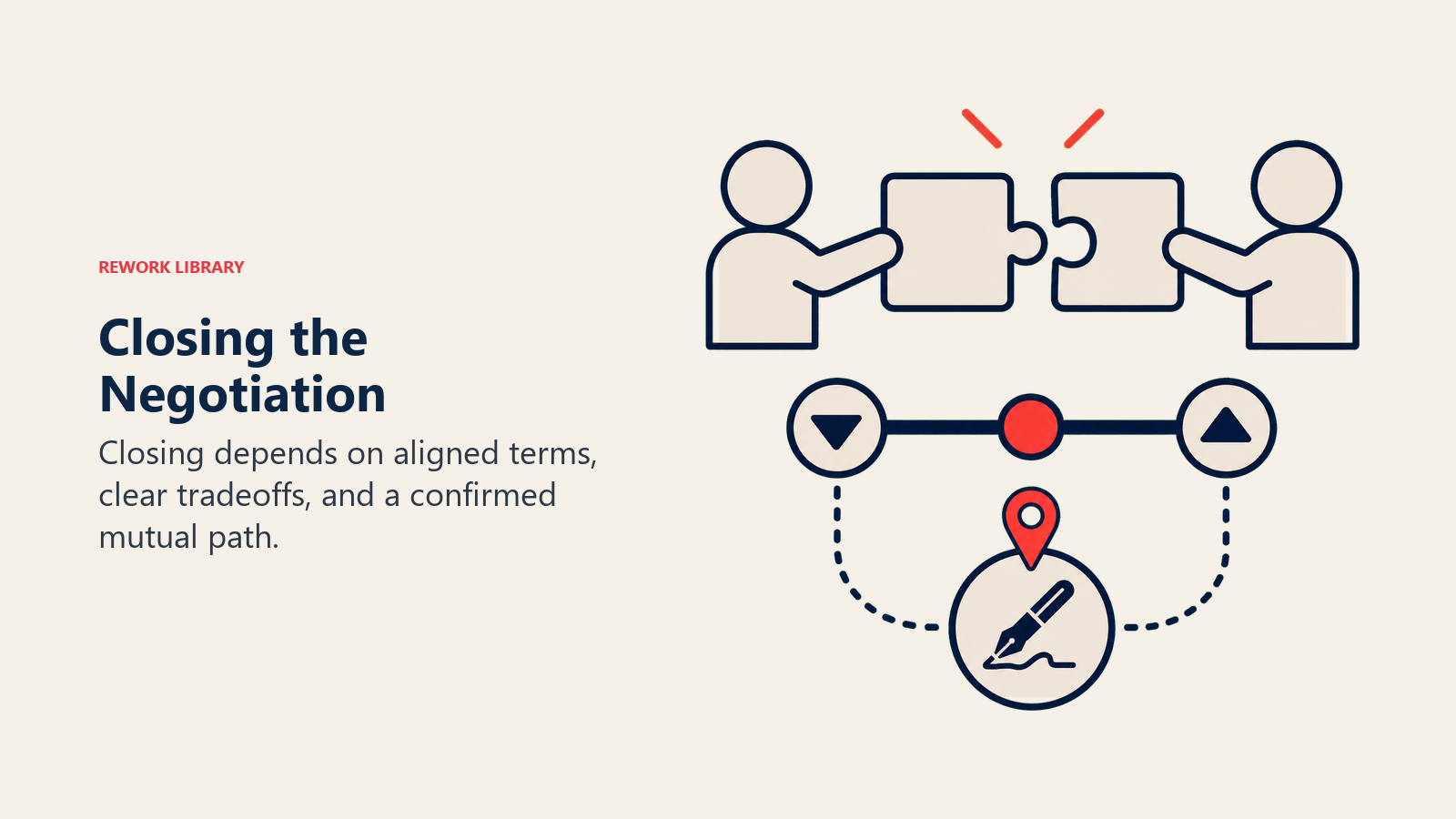
The most effective close in a negotiation is the conditional timeline: "If we can get to an agreement on [final point] by [date], I can guarantee [specific thing: pricing, implementation start, additional seat at no cost]. What do you need from me to make that happen?"
This closes in both directions: it creates a specific action for you and a specific action for the buyer, with a real deadline attached to something of value.
Never ask "does this work for you?" That invites another round of objections. Ask instead: "What is the one remaining thing that would make this work?" That identifies the real blocker and focuses the close.
After the Deal Closes
The negotiation sets the tone for the relationship that follows. If you held firm on value and closed at a fair price, the buyer respects the relationship. If you gave away everything they asked for, you've trained them to squeeze you on every renewal.
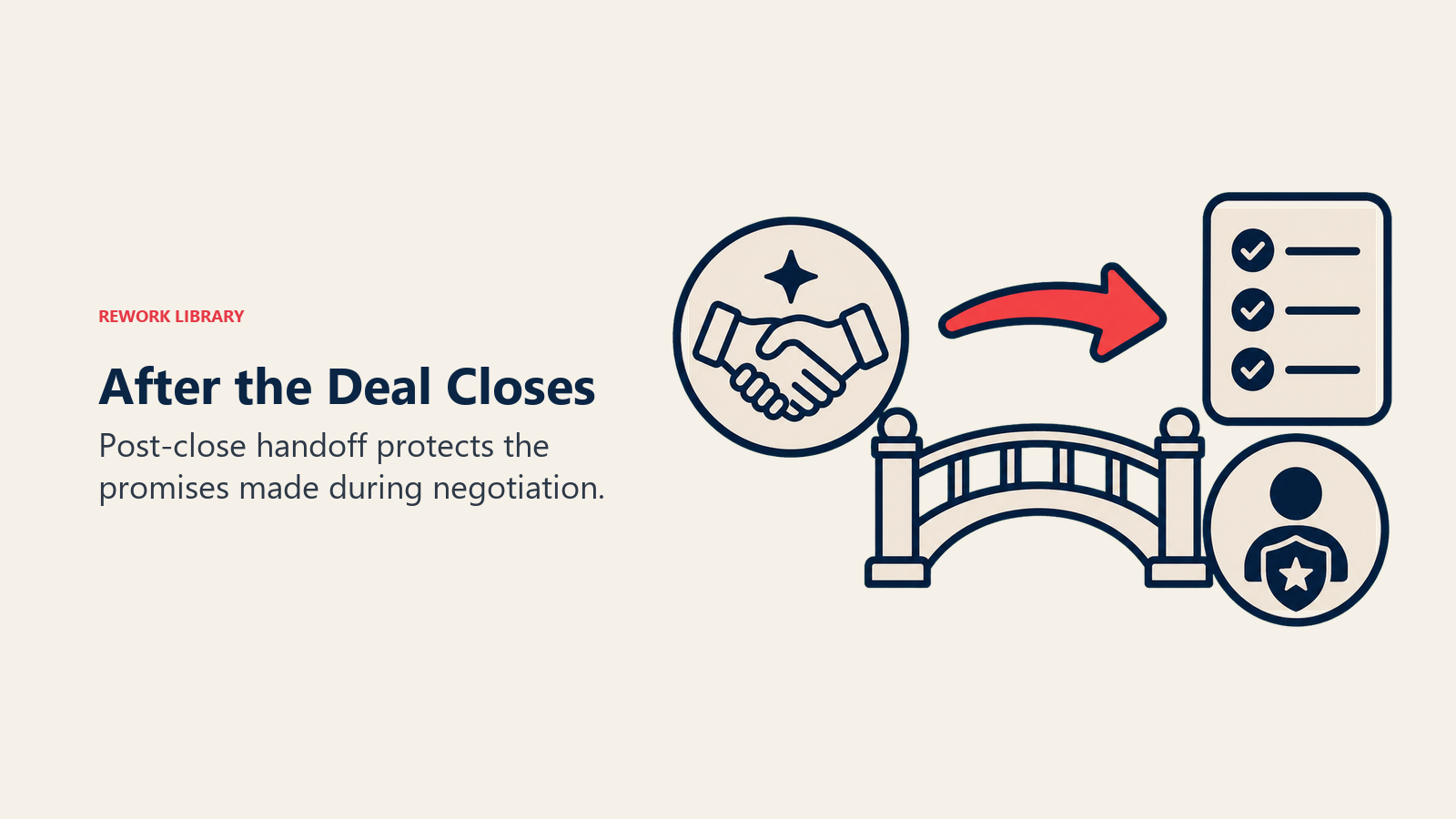
Document the close terms clearly and make sure the success metrics you established during discovery are formally tracked. At your 90-day review, point back to the ROI model and show progress. When renewal comes, your customer success motion should already have built the case for full renewal at or above the original price.
The best negotiation you ever have is the one you won't have: a customer who's seen the ROI doesn't need to be negotiated with at renewal. They've already decided it's worth it.
Connecting Negotiation to Pipeline Health
Negotiation problems are often lead quality problems in disguise. Reps who face constant discount pressure are often selling to prospects who were never fully qualified. A prospect who doesn't believe in the ROI, who doesn't have the budget, or who was mis-routed to a rep who specializes in a different segment will always push on price.
Strong lead scoring and MQL to SQL qualification processes reduce negotiation friction by ensuring reps are entering conversations with prospects who have a genuine problem that your solution solves at a price they can defend internally. When the qualification is right, the negotiation is easier.
Related resources:

Principal CRM Strategist
On this page
- Before the Negotiation: The Preparation That Determines the Outcome
- Negotiation Frameworks That Work in B2B
- The Value-First Anchor
- The Conditional Concession
- The Deal-at-Risk Frame
- Late-Stage Pressure Tactics and How to Counter Them
- Closing the Negotiation
- After the Deal Closes
- Connecting Negotiation to Pipeline Health