Lead Magnet: Ideas, Examples, and Best Practices
Turn this article into takeaways for your work.


Each assistant summarizes the article only for you and suggests best practices for your work.
A lead magnet converts anonymous visitors into known prospects by offering something genuinely useful in exchange for contact information. Get it right, and your pipeline fills with qualified leads who already trust you before your first conversation.
What is a lead magnet?
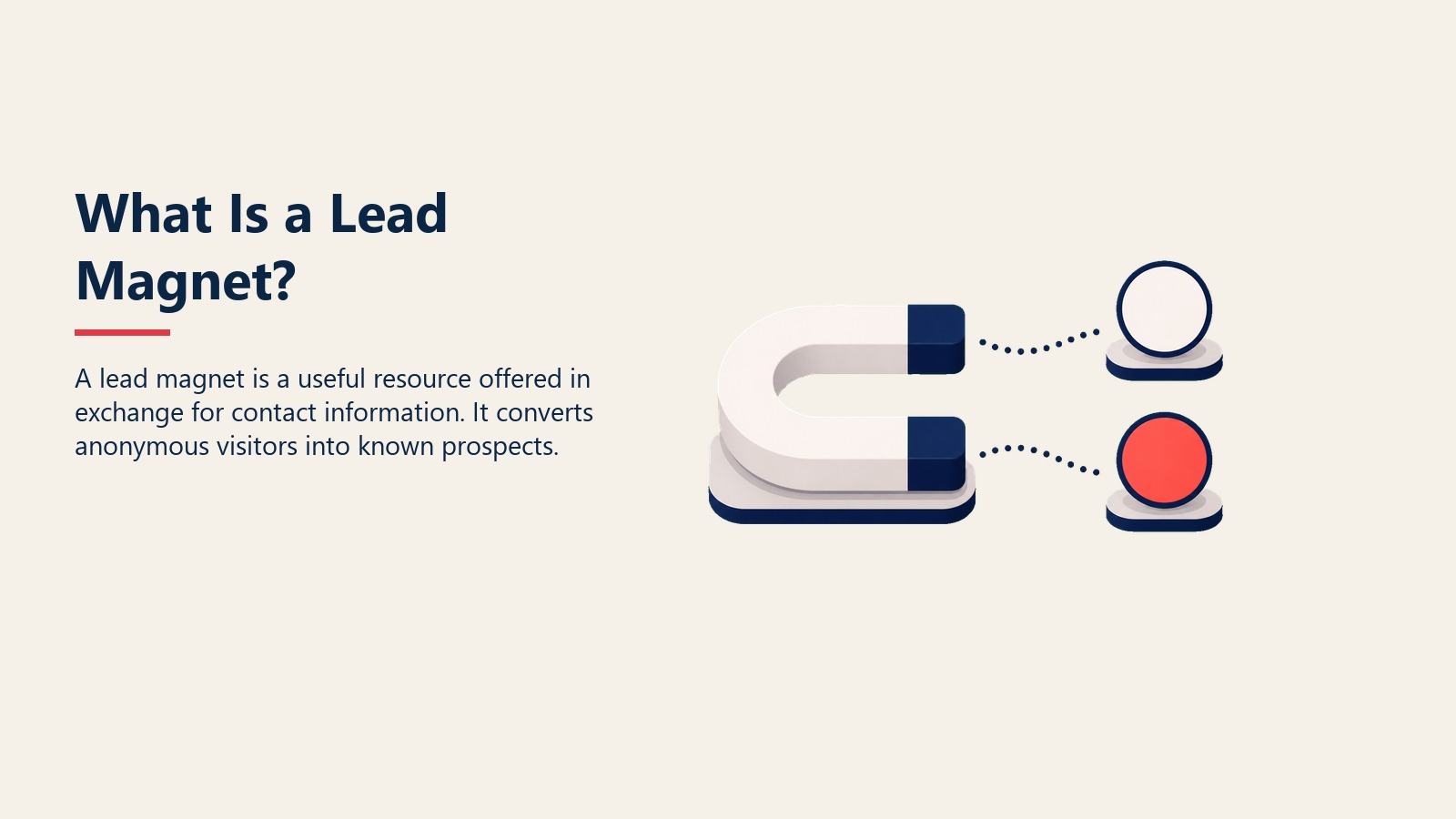
A lead magnet is a free resource or offer that a business provides to prospective buyers in exchange for their contact details, typically a name and email address. The exchange works because the value of the resource is higher to the prospect than the friction of sharing their information.
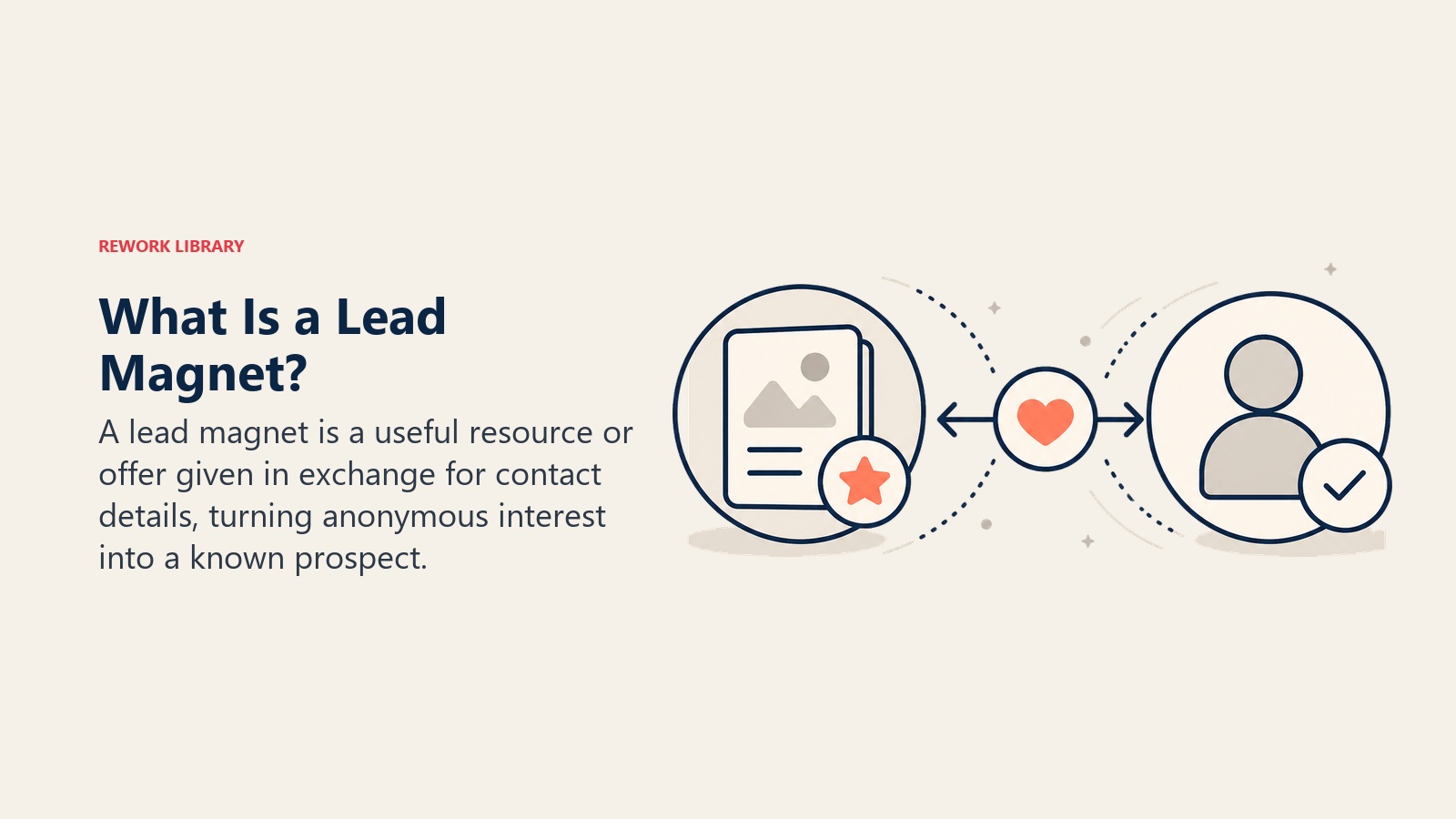
Unlike paid advertising that rents attention, a lead magnet builds an asset: a list of people who voluntarily opted in and raised their hand for more. That intent signal makes lead magnets one of the most cost-effective tools in inbound lead generation.
Key terms:
- Opt-in rate: the percentage of page visitors who submit the form
- Lead quality: how closely the contact matches your ideal customer profile
- Value exchange: the perceived benefit to the prospect relative to the ask
Key Facts
- Content marketing generates 3x more leads per dollar spent than outbound marketing (Content Marketing Institute, 2023).
- 50% of marketers say gated content is their top lead generation tactic (HubSpot State of Marketing, 2024).
- The average landing page conversion rate for lead magnets is 23% when the offer is specific and targeted (Unbounce Conversion Benchmark Report, 2023).
Lead magnet ideas and formats
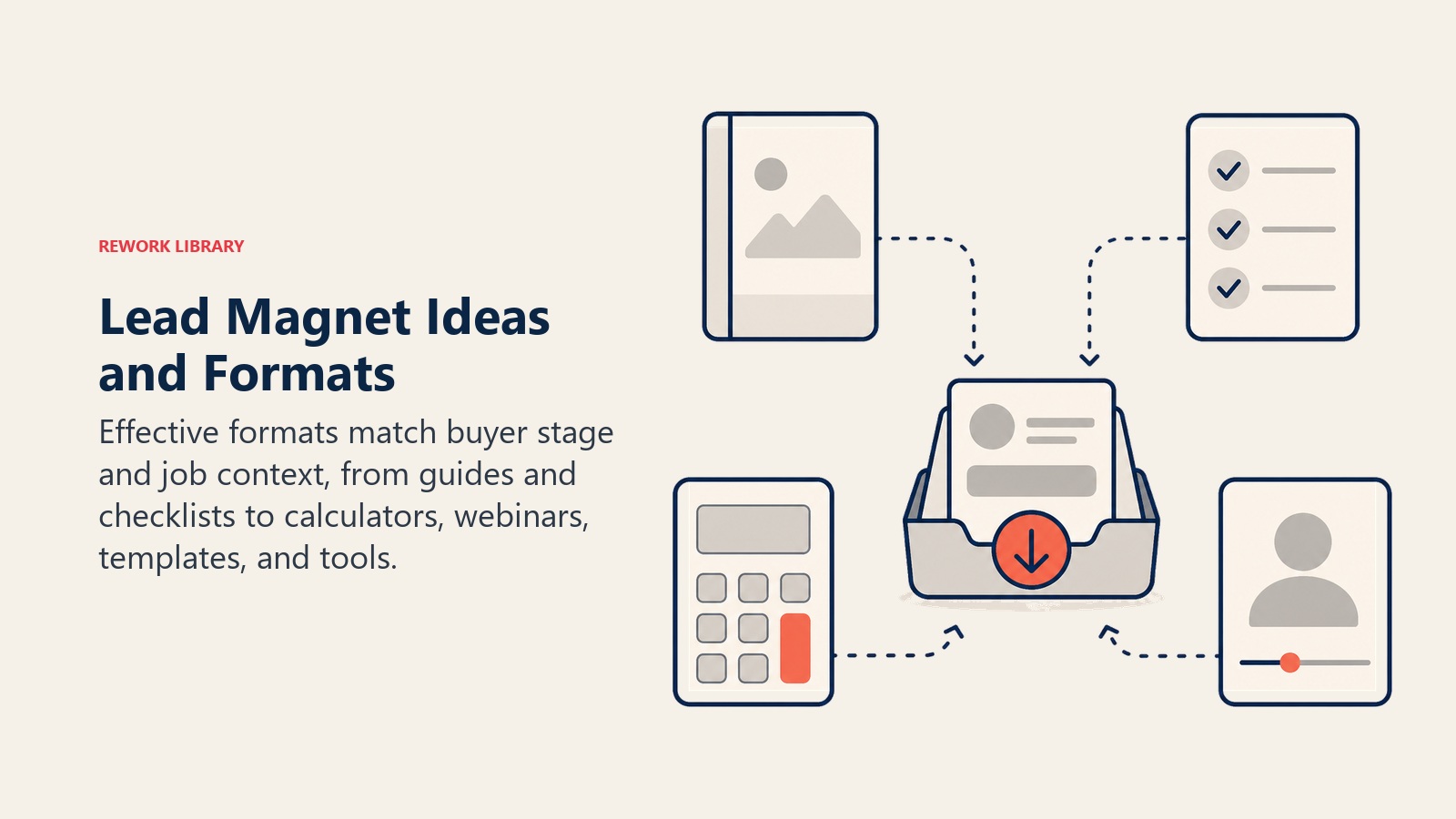
The best format depends on your audience's funnel stage and the information they need right now. A buyer who just discovered the problem wants quick education; a buyer comparing vendors wants proof and decision tools.
| Format | Best for | Example |
|---|---|---|
| Ebook or guide | Top-of-funnel awareness | "The Complete Guide to Sales Pipeline Management" |
| Checklist | Quick-win, actionable need | "10-Point Lead Qualification Checklist" |
| Template | Recurring task with a defined structure | "CRM Onboarding Email Sequence Template" |
| Webinar or on-demand video | Mid-funnel education, builds trust | "How to Build a B2B Lead Scoring System" |
| Free tool or calculator | High-intent, decision-stage | "CAC Payback Calculator" |
| Free trial or freemium | Product-led, bottom-of-funnel | 14-day free trial with onboarding checklist |
| Quiz or assessment | Personalized insight, any stage | "What Lead Generation Strategy Fits Your Business?" |
| Report or benchmark data | Thought leadership, awareness | "State of B2B Lead Conversion 2025" |
| Email course | Mid-funnel nurture | 5-day email series on "Mastering Lead Nurturing" |
| Swipe file | Quick reference, tactical buyers | Top-performing cold outreach subject lines |
| Case study collection | Decision stage, proof-seeking | "How 3 SaaS Companies Cut CAC by 40%" |
| Resource library | Broad audience, recurring value | Sales enablement content bundle |
The format should match the problem your buyer persona is trying to solve right now. A CFO researching spend efficiency wants a calculator, not a 40-page ebook.
Benefits of lead magnets
They qualify interest before your team spends time. Someone who downloads a guide on B2B lead scoring is already thinking about that problem. That intent is far more useful than a cold list of company names.
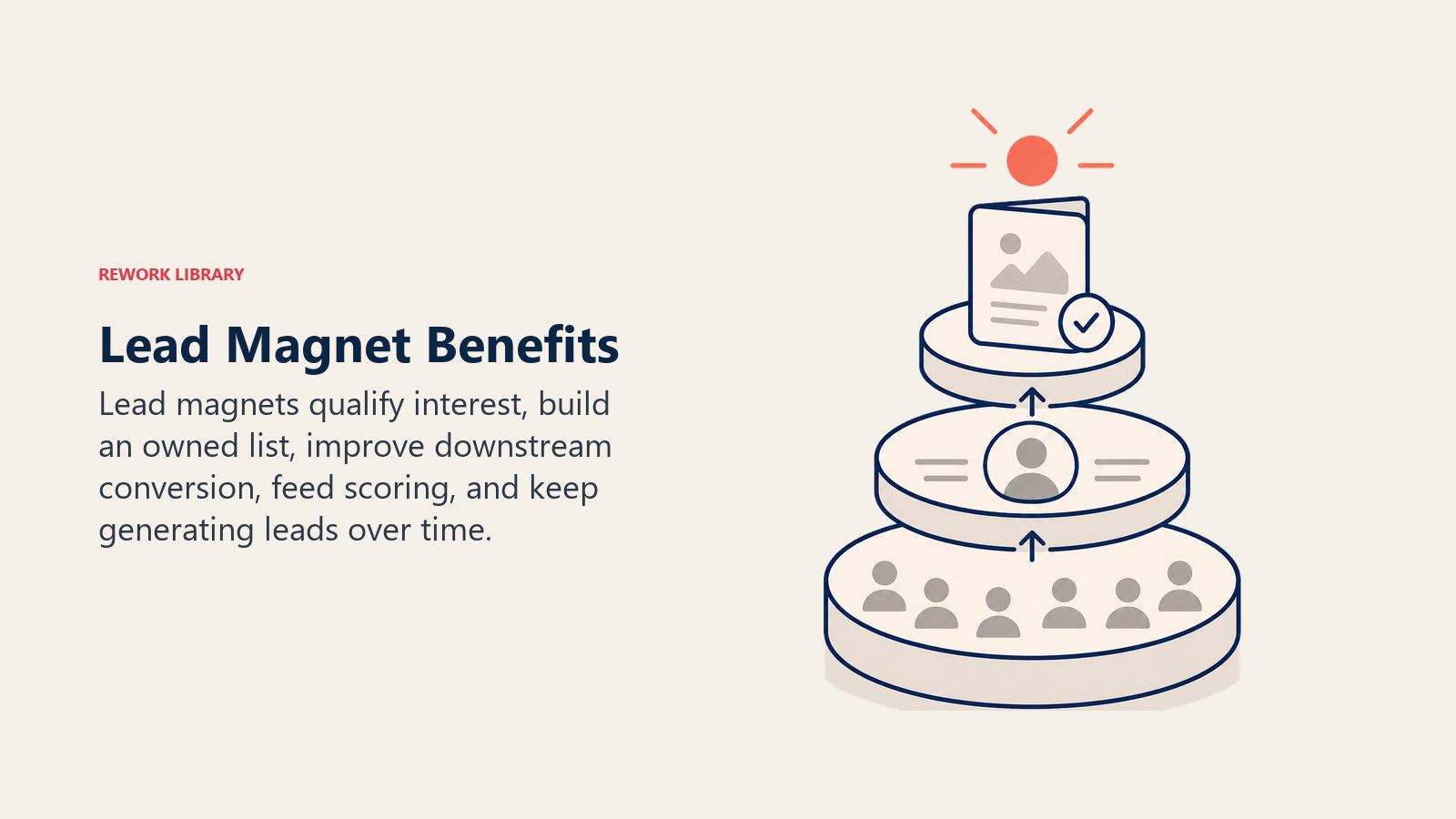
They build your email list as a durable asset. Unlike social media followers, your email list belongs to you. Lead nurturing programs run on that list to move contacts toward a buying decision over weeks or months.
They improve lead conversion rates downstream. Contacts who opted in for a relevant resource convert to sales meetings at higher rates because trust is established early.
They feed your lead scoring system. The specific lead magnet a contact chose tells you which problem they're working on. That behavioral signal boosts scoring accuracy.
They work around the clock. A well-built lead magnet on a high-traffic page generates leads while your team sleeps, with no incremental cost per lead after setup.
Common lead magnet mistakes
Making it too broad. "The Ultimate Marketing Ebook" attracts everyone and converts no one. Narrow the topic until it speaks directly to one job title solving one specific problem.
Burying the landing page. A great lead magnet nobody finds is worthless. Promote it in blog posts, paid ads, social posts, and email signatures. Pair it with a well-designed landing page for lead capture that removes every distraction from the form.
Asking for too much information. Every extra field you add drops conversion. Start with name and email. Add phone number or company only if your sales process genuinely requires it to qualify the lead.
Delivering low value. If the content doesn't deliver on its promise, you get unsubscribes and distrust. The lead magnet is your first impression. Thin, generic content signals that your paid product probably isn't great either.
No follow-up sequence. A lead magnet without a nurture sequence is a list that goes cold. Build at least a 3-email welcome sequence that continues the conversation started by the resource.
Mismatched audience. If your lead magnet attracts a different audience than your product serves, you'll fill your CRM with contacts who will never buy. Align the topic tightly with your ideal customer profile.
How to create a lead magnet
Step 1: Define the problem you're solving
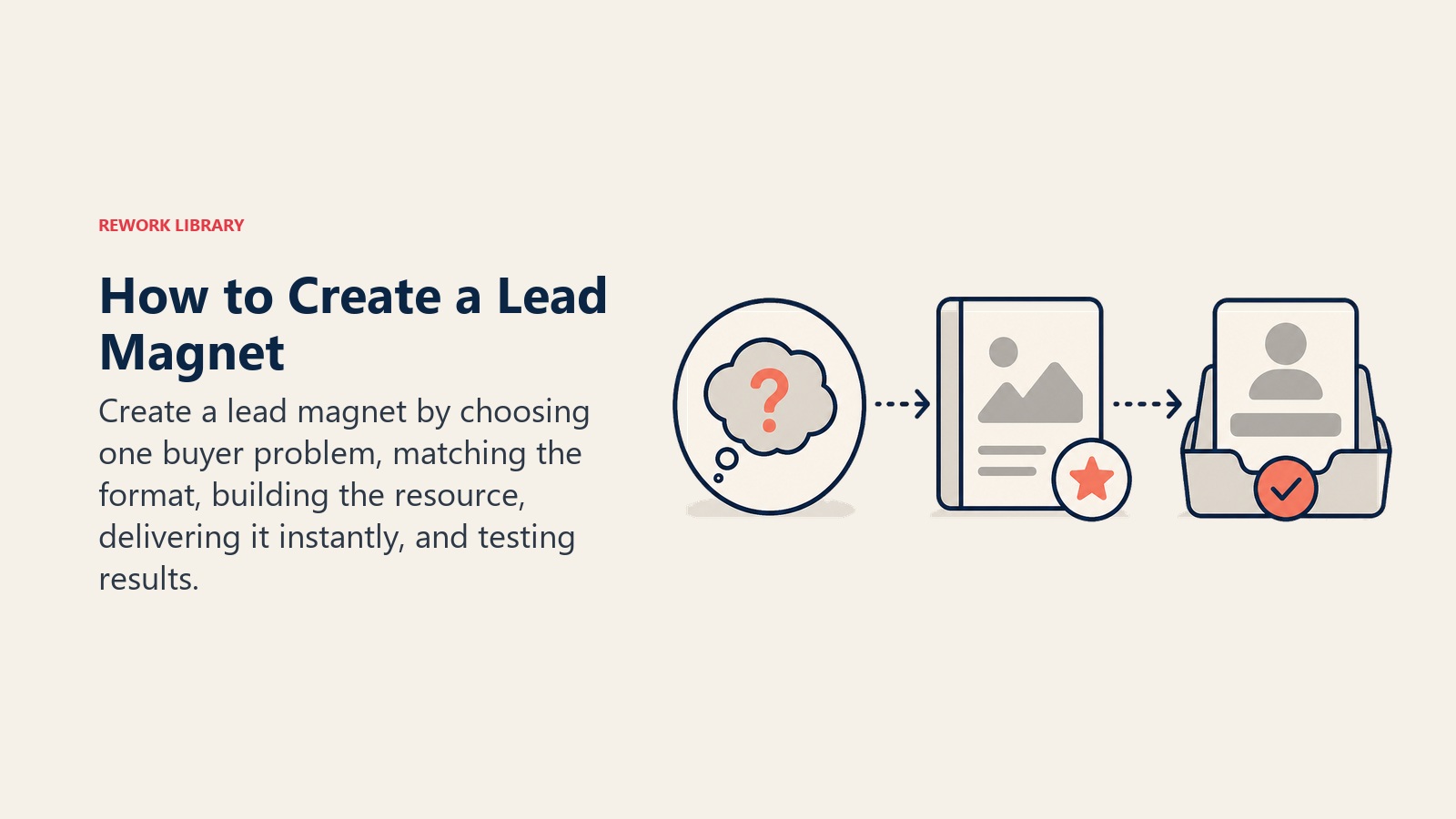
Pick one specific pain point your best customers had before they found you. The more concrete the problem, the more magnetic the offer. Look at your sales call notes, support tickets, and customer interviews for recurring questions.
Step 2: Choose the right format
Match format to your audience's context. Busy executives prefer one-page frameworks or calculators. Practitioners want templates and checklists. Evaluators want case studies and comparison guides. Think about how much time they can commit and what format they'll actually use.
Step 3: Create the content
Set a scope that you can deliver excellently in a short time. A 5-page checklist that solves one problem thoroughly beats a 40-page ebook that skims ten. Include real data, specific examples, and actionable steps. Generic advice is easy to find for free.
Step 4: Build the delivery page
Write a landing page headline that states the outcome the prospect gets, not just the title of the resource. Use a short bulleted list of what they'll learn or receive. Keep the form short. Remove your site navigation so the only action is to submit or leave.
Step 5: Set up the delivery and follow-up
Use your CRM or email platform to send the resource immediately after opt-in. Follow with a 3-to-5-email welcome sequence that provides additional value and moves the contact toward the next step, whether that's a product demo, a related article, or a multi-channel lead capture flow.
Step 6: Test and iterate
Track opt-in rate (aim for 20%+ on targeted traffic), unsubscribe rate after delivery, and downstream conversion to qualified meetings. A/B test the headline and the form length. Swap out lead magnets that under-perform after 90 days.
Lead magnet examples
Different industries and functions need different proof points and resource types. Here are examples organized by use case.
| Industry / Function | Lead magnet | Why it works |
|---|---|---|
| B2B SaaS (sales) | "Sales Pipeline Audit Checklist" | Speaks to a specific pain; used in the day-to-day work |
| B2B SaaS (marketing) | "Content Calendar Template + 6-Month Topic Bank" | Saves hours of planning time; highly shareable |
| HR / People Ops | "Job Description Template Library (10 Roles)" | Practical, immediately usable |
| Finance / CFO | "Budget Variance Calculator (Excel)" | Quantifies value; fits a familiar workflow |
| Consulting / Agency | "Free 30-Minute Strategy Session" | Low friction; positions expertise through conversation |
| E-commerce (SMB) | "5 Email Sequences That Recover Abandoned Carts" | Revenue-linked outcome; specific and credible |
| Real estate | "Neighborhood Market Report (Quarterly)" | Data-rich; timely; builds local authority |
| Recruiting | "Hiring Manager Interview Scorecard Template" | Solves a recurring process problem |
| EdTech | "Free Mini-Course: First Module" | Demonstrates product quality; creates buy-in |
For account-based marketing programs, lead magnets can be hyper-personalized, such as a benchmark report specific to a prospect's industry segment, making them far more compelling than generic offers.
Best practices
One promise, one CTA. Every element on your landing page should point to the single action of submitting the form. Remove social share buttons, nav links, and footer widgets.
Name it for the outcome, not the format. "The Revenue Leak Diagnostic" performs better than "Free Ebook on Sales Operations." The outcome-led name signals what the person gets, not what it is.
Deliver instantly. Set up instant email delivery. Any delay trains the contact that you're slow to respond, which is the opposite of the first impression you want to make.
Segment by magnet. Tag contacts in your CRM by which lead magnet they downloaded. That tag feeds smarter lead scoring and more relevant follow-up sequences.
Update it regularly. A 2021 benchmark report hurts your credibility in 2026. Refresh the data or swap for a timeless format like a template or calculator that doesn't date.
Gate only what's worth it. If the content is too thin to justify an email address, publish it ungated and link to a stronger offer within it. Gating weak content trains visitors not to trust your forms.
Promote beyond the landing page. Place the lead magnet offer in relevant blog posts via inline CTAs, in your types of leads education content, in social posts, and in paid retargeting. The landing page isn't the only entry point.
Frequently Asked Questions about Lead Magnet
What is the difference between a lead magnet and a content upgrade?
A lead magnet is a standalone offer that lives on its own landing page and attracts any relevant visitor. A content upgrade is a lead magnet embedded within a specific piece of content, such as a checklist that expands on a blog post, and it converts readers who are already engaged with that exact topic. Content upgrades typically convert at higher rates because the offer matches the reader's current interest precisely.
How long should a lead magnet be?
Length depends on format, not a word count target. A checklist should be one page. A how-to guide might be five to ten pages. A webinar can run 45 minutes. The rule is: include everything needed to deliver the promised outcome, and cut anything that doesn't serve that goal. Longer is not better. Useful is better.
Should I gate high-quality content or keep it free?
Gate content when the trade is clearly worth it for the prospect, meaning the resource saves them significant time or gives them insight they can't find elsewhere. Keep content free when you're building awareness or SEO traffic. A common model is to publish the concept ungated and gate the implementation resource, such as a free article on lead scoring paired with a gated scoring template.
What is a good opt-in rate for a lead magnet?
Opt-in rates vary by traffic source and how targeted your audience is. Warm audiences from email or retargeted ads convert at 30 to 50%. Cold paid traffic often lands at 10 to 20%. Organic blog visitors typically convert at 5 to 15%. If you're below these ranges, test the headline, simplify the form, or strengthen the value statement.
How do I measure if my lead magnet is working?
Track three numbers: opt-in rate (form submissions divided by page views), lead quality rate (percentage of contacts who match your ICP, usually measured after a sales qualification call), and pipeline contribution (how many deals in a given period came from lead magnet contacts). Opt-in rate tells you if the offer resonates; pipeline contribution tells you if it's worth keeping.
Getting the lead magnet right is often the fastest lever in your top-of-funnel. A well-targeted offer on a clean landing page can consistently turn page views into qualified pipeline without scaling ad spend. Start narrow, deliver real value, and build the follow-up sequence before you launch.

Principal CRM Strategist
On this page
- What is a lead magnet?
- Lead magnet ideas and formats
- Benefits of lead magnets
- Common lead magnet mistakes
- How to create a lead magnet
- Step 1: Define the problem you're solving
- Step 2: Choose the right format
- Step 3: Create the content
- Step 4: Build the delivery page
- Step 5: Set up the delivery and follow-up
- Step 6: Test and iterate
- Lead magnet examples
- Best practices