Customer Success Revenue Strategy: Turning CS Into a Growth Engine

Turn this article into takeaways for your work.


Each assistant summarizes the article only for you and suggests best practices for your work.
Here is a number that should reframe how you think about customer success: acquiring a new customer costs 5-7x more than expanding an existing one.
But most companies still treat CS as a cost center. A support function. Something to keep customers from leaving, not a place where revenue actually gets generated.
The organizations beating their growth targets in 2026 have figured something out: their CS team is not just protecting existing revenue. It is creating new revenue. Through expansions. Through referrals. Through the kind of trust that turns a satisfied customer into an unpaid sales rep.
This is how to build that.
Key Facts: Customer Success Revenue Impact
- Companies that excel at customer success see Net Revenue Retention above 120%, meaning their existing customer base grows by 20% or more annually without any new logos. (Gainsight, 2024 CS Benchmark Report)
- 70% of B2B SaaS revenue at mature companies comes from existing customers through renewals and expansions, not new logo acquisition. (Forrester Research, 2024)
- A 5% increase in retention rates increases profits by 25-95%, according to research from Bain and Company, because retained customers buy more and cost less to serve over time.
- CSMs who hold expansion quotas close 43% more expansion revenue than those whose compensation is tied only to retention or health scores. (Gainsight CS Compensation Survey, 2025)
- Referred customers have a 16% higher lifetime value and a 37% higher retention rate than non-referred customers, making referral programs one of the highest-ROI lead sources available. (Wharton School of Business Research)
The Revenue Math on Customer Success
Before getting into execution, understand the math. This is why CS belongs in a revenue conversation.
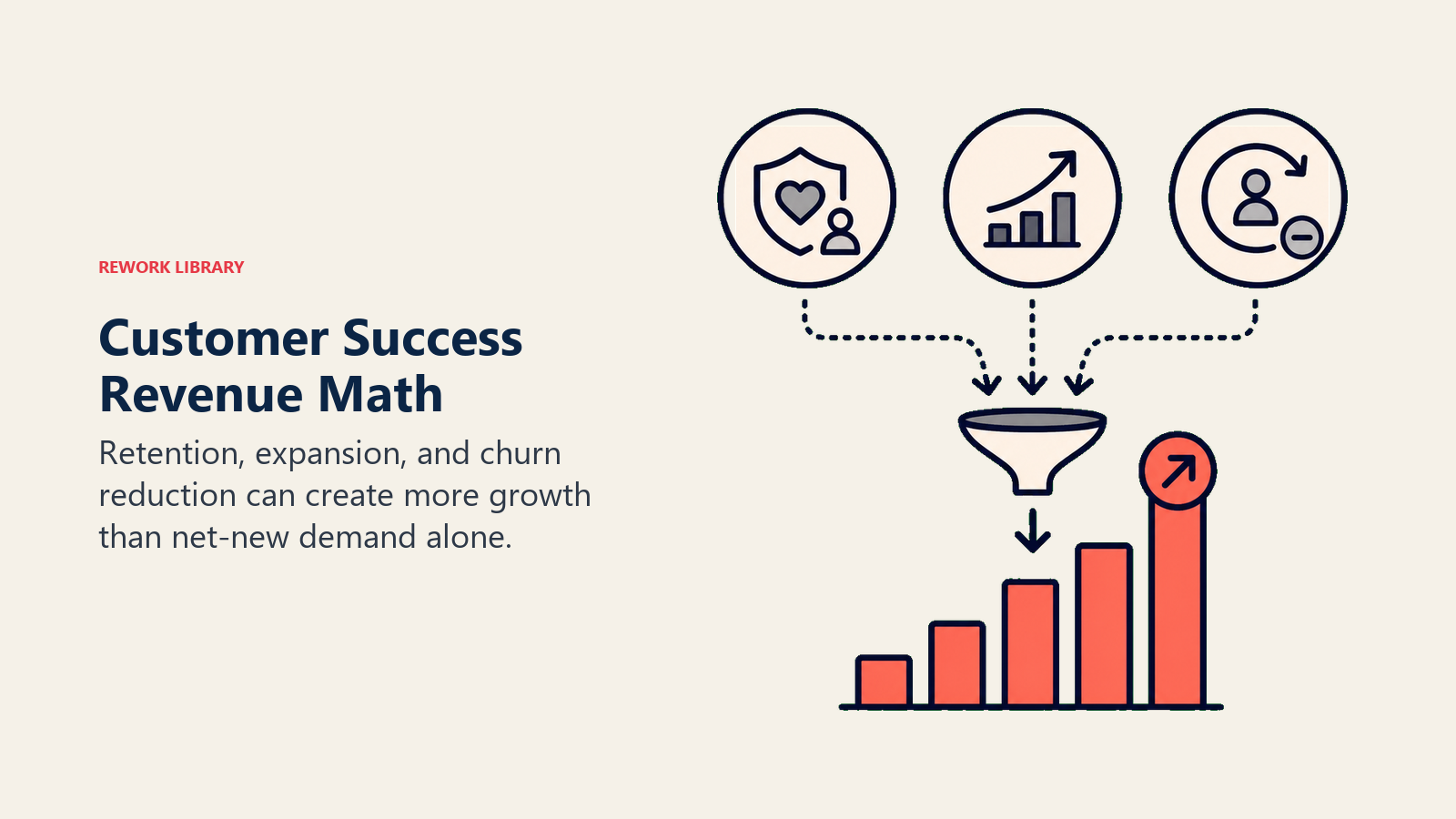
A company with 100 customers paying $50K ARR each has $5M ARR. If it grows 30% through new logo acquisition but churns 15% of existing customers, net revenue growth is only 15%. The sales team runs hard and the growth feels modest because the bucket is leaking.
Flip the churn rate to 5% and suddenly that 30% new logo growth becomes 25% net growth on a larger base. The same sales effort produces dramatically better outcomes because CS is holding the floor.
Now add expansion. If CS can grow each account by 15-20% annually through add-on seats, expanded contracts, or new product lines, that is another $750K-$1M in ARR without a single new logo. And because expansion revenue closes at a much higher rate than new business (customers already know the product works), the cost to generate that revenue is a fraction of what sales spends.
And referrals. One happy customer who sends two qualified referrals per year contributes more pipeline than most paid channels at a fraction of the cost.
The fully loaded CS revenue strategy captures all three: expansion, churn prevention, and referral generation. Each one is a distinct motion that requires a different playbook.
The Three Revenue Levers in Customer Success
Lever 1: Expansion Revenue
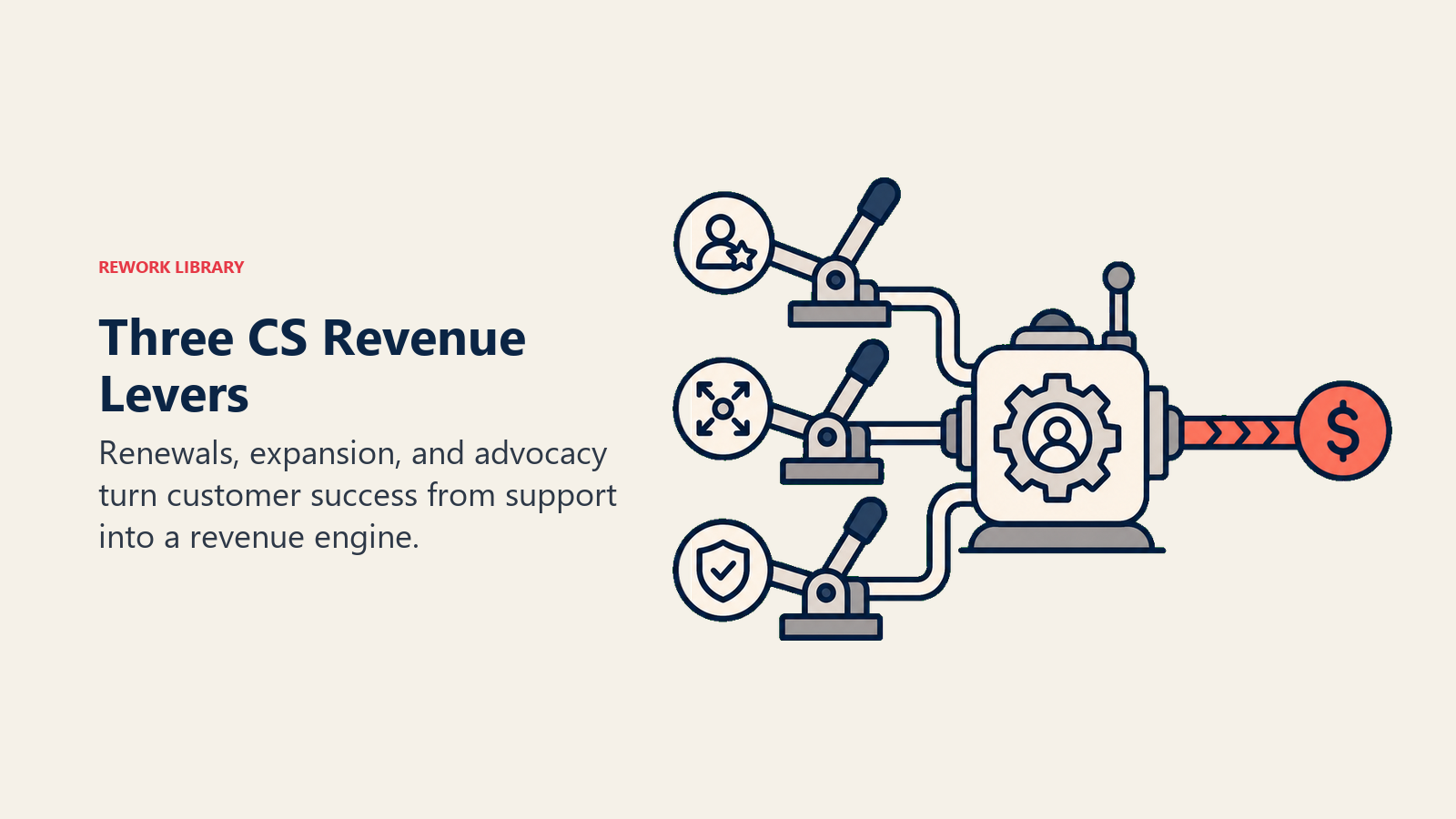
Expansion revenue is the most direct way CS creates new ARR. It comes in three forms.
Upsell: moving the customer to a higher tier, larger plan, or adding more seats to an existing subscription. This is usually the simplest expansion motion because the customer already knows what they are getting. The CSM's job is to connect usage data to the conversation: "You have 15 active users on a 10-seat plan. You are capping out. Here is what the next tier unlocks."
Cross-sell: selling a different product or module to an existing customer. This requires more preparation. The CSM needs to understand which other products the customer is a good fit for and position them around outcomes the customer cares about, not features.
Contract expansion: renegotiating scope, geography, or business units into an existing contract. In enterprise accounts, this often happens when a successful deployment in one region prompts a decision to expand company-wide.
The CSM who drives expansion is not a sales rep with a different name badge. They are a trusted advisor who surfaces the right conversation at the right moment, backed by data showing value delivered. That trust is what makes the close rate on CS-led expansion so much higher than cold outreach.
To build this motion, you need: usage data accessible to CSMs, a documented process for identifying expansion signals, clear handoff criteria for when a CSM-led deal escalates to a formal sales process, and compensation that rewards CSMs for expansion outcomes. Without that last element, most CSMs will protect their relationship rather than risk it on a sales conversation they are not incentivized to have.
Lever 2: Churn Prevention
Churn prevention is revenue strategy. Every customer you keep is revenue you do not have to replace.
But most churn prevention happens too late. By the time a customer says "we are not renewing," the decision has usually been made weeks or months earlier. The CSM is reacting to a signal they should have caught early.
The better model is predictive. You track health indicators: product usage trends, support ticket volume, NPS scores, executive sponsor turnover, contract renewal dates. You build thresholds that trigger proactive outreach before the customer gets to the "we are leaving" conversation.
The playbook looks something like this:
When usage drops 20% in a 30-day window, a CSM reaches out within 48 hours to understand what changed. Not a check-in email. A real conversation focused on what is blocking adoption and how to remove that friction.
When an executive sponsor leaves the company, the CSM initiates an executive sponsor introduction within two weeks. The new stakeholder needs to understand the value the platform delivers before they start asking whether to continue the contract.
When NPS drops below a threshold, it triggers a structured recovery process: acknowledgment, root cause analysis, a specific remediation plan with timelines, and a follow-up to confirm resolution.
Churn risk is also where lead recycling strategies intersect with CS. Customers who churn are not necessarily lost forever. A CSM who handles a departure well, maintains the relationship, and stays in touch can re-engage the customer 12-18 months later when their circumstances change or the competing solution disappoints.
Lever 3: Referral Generation
Happy customers are the best sales channel you have. But most companies wait for referrals to happen organically. That is leaving significant pipeline on the table.
A structured referral program run through CS looks like this:
Identify your best candidates. Customers with high usage, strong NPS scores, and clear documented ROI from your product are your referral targets. They know the value, they can speak to it credibly, and they have relationships with peers who have similar problems.
Make the ask at the right moment. Timing matters more than most teams realize. Ask for a referral right after a win: a successful go-live, a quarterly business review where you showed strong ROI numbers, or when a customer mentions they told a colleague about your product. Do not ask during contract renewal negotiations when the conversation is transactional.
Give them the tools to refer. Most customers who want to refer you do not know how to make the introduction land well. A brief email template, a one-page case study they can forward, or a short video testimonial they can share with a colleague removes the friction from making the referral.
Create a formal referral process. Track referrals as a lead source in your CRM. Measure referral conversion rates separately from other channels (they should be significantly higher). Close the loop with the referring customer when a deal closes. A thank-you call, a gift card, or recognition in a customer newsletter reinforces the behavior.
Referrals from CS should feed into your lead sources overview as a tracked, measured channel, not just an occasional bonus.
Building the CS Revenue Stack: What You Need
Turning CS into a revenue function is not just about changing mindset. It requires infrastructure.
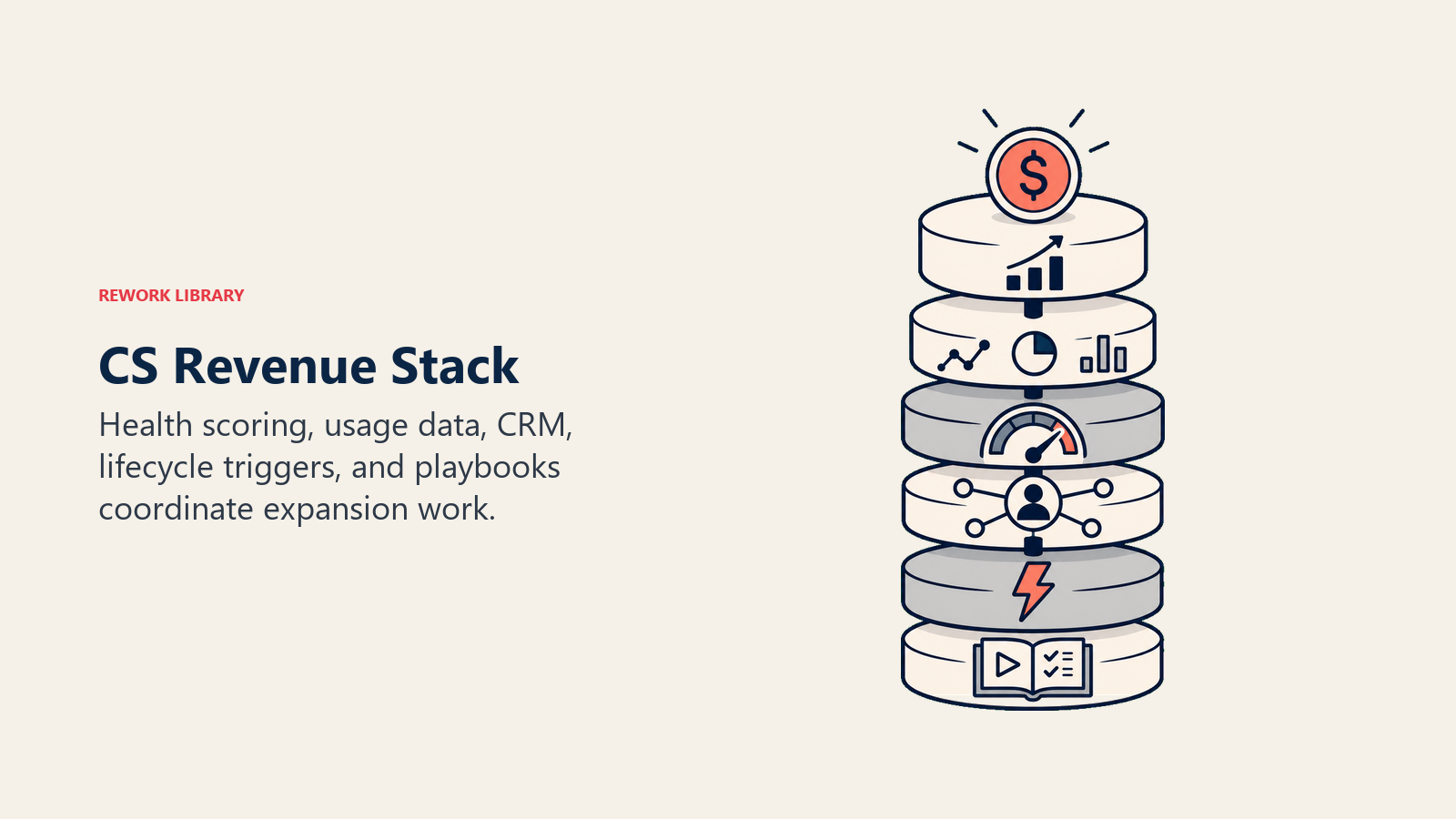
Data and Health Scoring
You need a health score that means something. Not a vanity metric that shows green across the board until a customer churns. A health score built on real signals: login frequency, feature adoption depth, support ticket sentiment, NPS trends, and contract value relative to potential.
Build the score collaboratively with CS leadership and validate it against historical churn data. If your health score was not predictive of the churn you actually saw last year, rebuild it.
Every CSM should be able to pull up a customer's health trajectory at any time, not just at renewal.
CSM Compensation Structure
How you pay CSMs determines what they optimize for. If compensation is tied only to churn prevention, CSMs will protect relationships and avoid difficult expansion conversations. If expansion is in the comp plan, expansion happens.
A common model for CS organizations that own revenue:
- 60-70% base salary
- 20-25% tied to retention metrics (gross revenue retention, logo retention)
- 10-15% tied to expansion outcomes (net revenue retention, expansion ARR)
Some organizations add a small percentage tied to referral generation, measured by qualified leads generated. This is less common but reinforces the full revenue mandate.
For CSMs who manage strategic accounts where expansion deals are complex, a quota-based model with deal-by-deal commission on expansions often works better than a simple NRR target.
Playbooks for Each Motion
Every CSM needs a documented playbook for:
- The expansion conversation (when to have it, how to frame it, how to handle objections)
- The at-risk customer intervention (what triggers it, what the script sounds like, escalation criteria)
- The renewal call (preparation checklist, value summary format, renewal ask)
- The referral ask (who qualifies, timing, what to provide)
Playbooks are not scripts to read word for word. They are frameworks that ensure the team is consistent and that new CSMs ramp faster.
CRM Integration
CS activity needs to live in the same CRM as sales activity. Separate systems mean incomplete customer records, poor handoffs, and a broken lead follow-up best practices loop between sales and CS.
At minimum, CSMs should be logging: account health score updates, expansion opportunities created, key stakeholder changes, and referrals generated. Sales needs to see the account history that CS has built. CS needs to see what sales promised during the original deal. Neither side can serve the customer well without the other's context.
CS Revenue Metrics That Actually Matter
If you are just starting to build CS into a revenue function, focus on these four numbers.
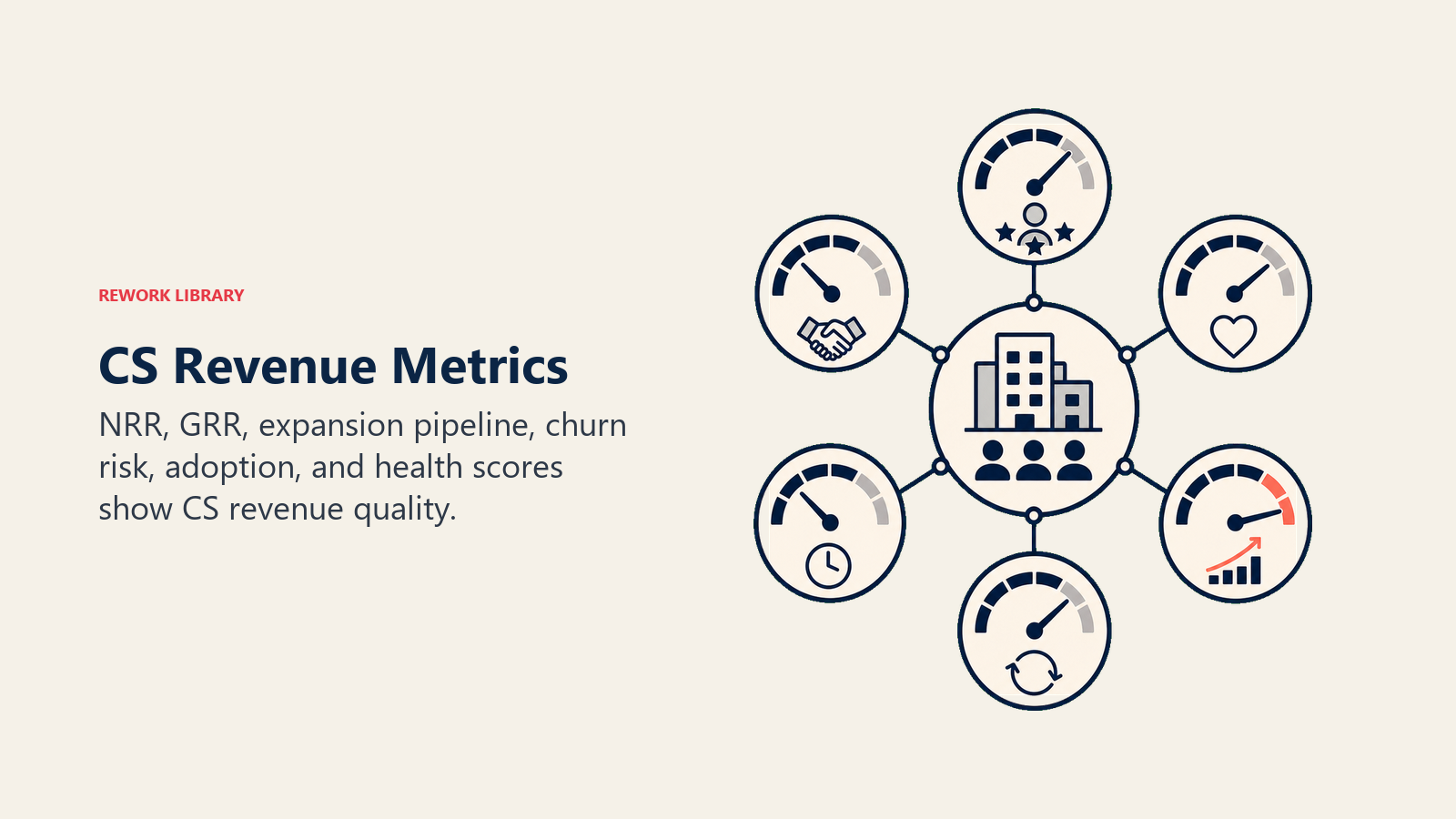
Net Revenue Retention (NRR): Total revenue from existing customers at end of period divided by total revenue from those same customers at start of period, expressed as a percentage. Above 100% means expansion is outpacing churn. World-class SaaS companies run NRR above 120%. This is the single most important metric for a CS revenue strategy.
Gross Revenue Retention (GRR): Total revenue retained before expansions. This isolates churn from expansion and tells you how well you are holding the base. The floor for healthy B2B SaaS is 85%. Below that, no amount of expansion will offset the leak.
Expansion ARR: New ARR generated from existing customers through upsells, cross-sells, and contract expansions. Track this separately from new logo ARR and measure it monthly.
Time to Value (TTV): How long it takes a new customer to achieve their first meaningful outcome. Shorter TTV correlates strongly with higher retention, faster expansion, and more referrals. If customers take six months to see value, you will see most of your churn happen at or before the 12-month mark.
These metrics should feed directly into your overall lead conversion rate reporting alongside metrics from new business acquisition, giving leadership a complete picture of revenue efficiency across the customer lifecycle.
The Handoff: Where CS and Sales Meet
The transition from sales to CS is where revenue is most often at risk. Customers who experience a bad handoff feel sold, not served. That feeling drives churn faster than almost anything else.
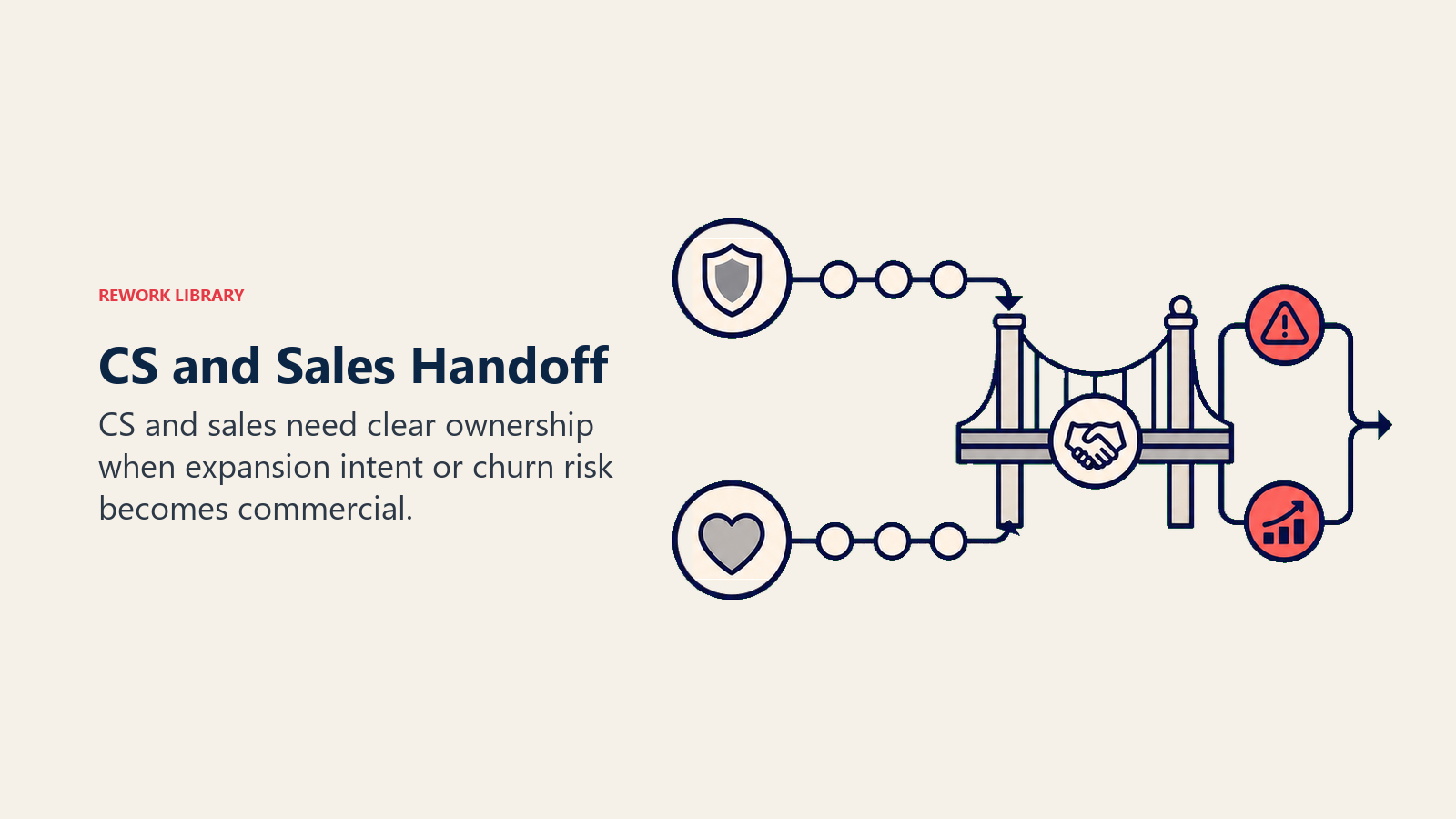
A clean handoff requires: a formal transition call with the customer where the CSM is introduced by the AE who closed the deal, complete context passed from sales to CS (deal history, specific promises made, key stakeholders, implementation timeline), a defined success plan co-created with the customer in the first 30 days, and clarity on who owns what going forward.
For enterprise accounts, consider keeping the AE involved in the account for the first 90 days. This maintains relationship continuity while the CSM builds their own trust with the customer. After 90 days, the AE formally hands off ownership.
The reverse handoff matters too. When CS identifies a significant expansion opportunity that goes beyond what a CSM can close independently, they need a clear path to bring in a sales rep or account executive without losing the relationship or the deal.
Integrating CS Revenue into Your Lead Management System
Customer success is a lead source. Most teams do not think about it this way, but it should be tracked like one.
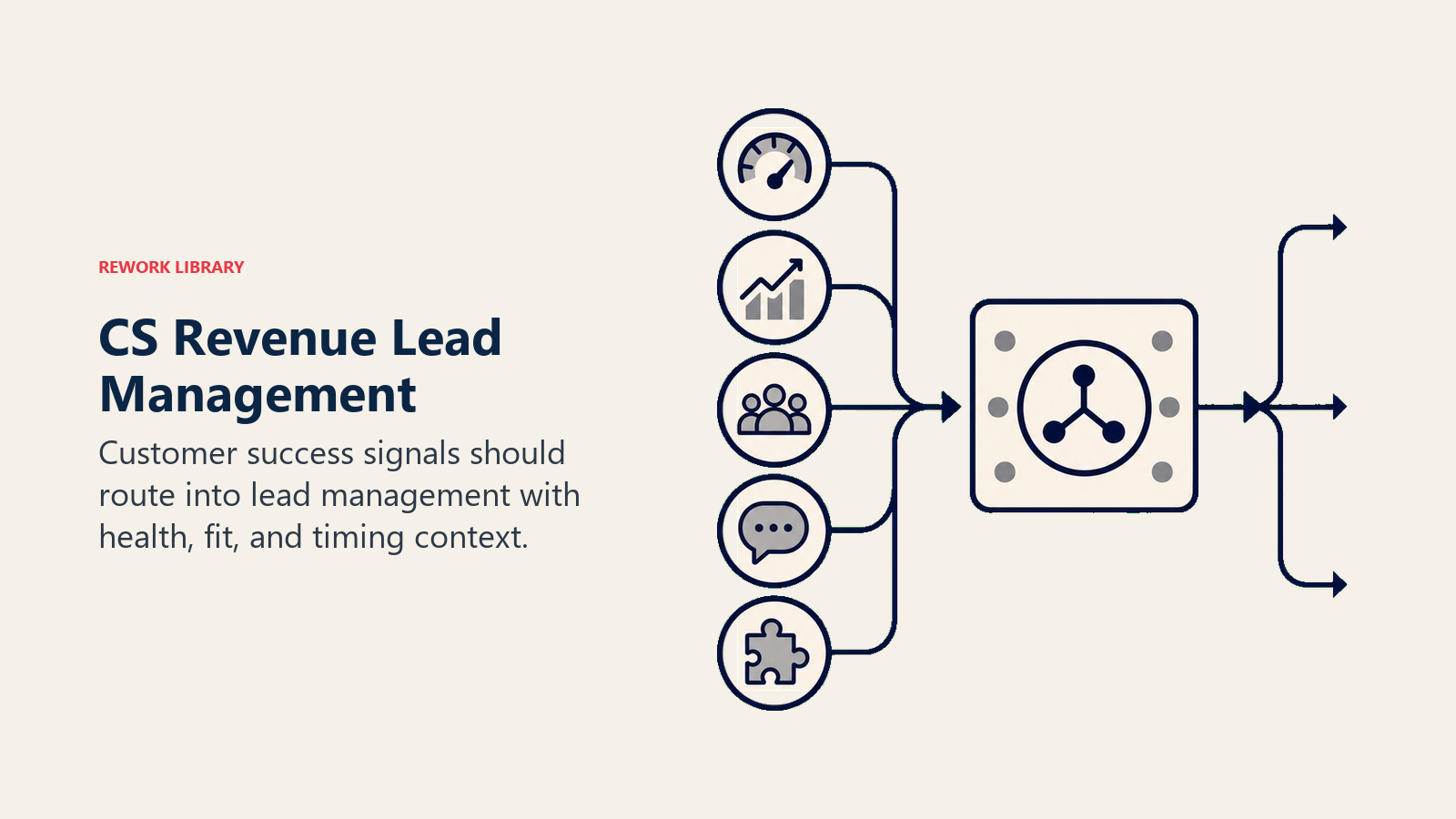
Referrals from CS should appear in your lead distribution strategy as a distinct source with its own conversion tracking. Expansion opportunities identified by CSMs should be routed through a formal sales process when they exceed a certain dollar threshold. Churned customers should enter a re-engagement nurture sequence, not disappear from your database.
The CS team that generates expansion ARR, drives referral leads, and flags re-engagement opportunities is not a support function. It is a revenue engine that complements and amplifies everything your acquisition channels are doing.
Build it that way. Measure it that way. Compensate it that way.
Frequently Asked Questions about Customer Success Revenue Strategy
What is Net Revenue Retention and why does it matter for CS?
Net Revenue Retention (NRR) measures the percentage of revenue retained from existing customers after accounting for expansions, contractions, and churn. An NRR above 100% means your existing customer base is growing, which means you need fewer new logos to hit growth targets. Companies with NRR above 120% can sustain strong revenue growth even with moderate new logo acquisition. It is the primary metric for a CS team operating as a revenue function.
Should CSMs have sales quotas?
Yes, but designed carefully. CSMs who are compensation-tied only to retention tend to avoid expansion conversations to protect the relationship. Adding an expansion component (typically 10-20% of total compensation tied to expansion ARR or NRR) aligns CS incentives with revenue growth without turning CSMs into aggressive salespeople. The key is giving CSMs the training, playbooks, and tools to have commercial conversations confidently.
When is the right time to ask a customer for a referral?
Immediately after a win. The best timing is right after a successful implementation, after a quarterly business review where strong ROI is documented, or when a customer spontaneously mentions they told a colleague about your product. Avoid asking during renewal negotiations or when the customer is dealing with an open support issue. The ask should feel natural and low-pressure, not transactional.
How do you prevent churn before it is too late?
Proactive health monitoring is the answer. Build a health score using real usage and engagement signals (not just NPS alone). Set thresholds that trigger CSM outreach 60-90 days before the behavior becomes a churn risk. The most common early warning signals are: declining login frequency, rising support ticket volume without resolution, executive sponsor turnover, and a drop in feature adoption breadth. Catching these early gives you time to address root causes rather than save a deal that has already decided to leave.
How do you track referrals from customer success in your CRM?
Create a lead source called "CS Referral" or "Customer Referral" in your CRM and train CSMs to log every referral introduction in the account record. The lead should be created in your system with the referral source noted, the referring customer linked, and the CSM who generated it credited. Track referral conversion rates separately from other lead sources so you can measure the true value of your referral program and prioritize the customers most likely to generate it.

Principal CRM Strategist
On this page
- The Revenue Math on Customer Success
- The Three Revenue Levers in Customer Success
- Lever 1: Expansion Revenue
- Lever 2: Churn Prevention
- Lever 3: Referral Generation
- Building the CS Revenue Stack: What You Need
- Data and Health Scoring
- CSM Compensation Structure
- Playbooks for Each Motion
- CRM Integration
- CS Revenue Metrics That Actually Matter
- The Handoff: Where CS and Sales Meet
- Integrating CS Revenue into Your Lead Management System