Weighted Pipeline: 確率に基づく商談評価とForecasting
Turn this article into takeaways for your work.


Each assistant summarizes the article only for you and suggests best practices for your work.
Weighted pipelineとは、各商談の金額に成約する確率を掛け合わせたsales forecastであり、合計が生のパイプラインではなく期待される受注額を反映するものです。確率30%の20万ドルの商談は6万ドルとしてカウントされます。この確率調整されたビューは、現実的に何が成約するかを教えてくれます。だからこそ財務や収益責任者は、パイプライン総額ではなくこれに頼るのです。
あなたの営業担当VPがこう発表します。「Q2のパイプラインは420万ドルあります。成約する必要があるのは120万ドルだけです。安泰ですね」。
四半期末の3週間前、実際に成約したのは60万ドルでした。「確実」だった商談の半分が先送りになりました。取締役会は、非常に気まずいものになりました。
これが起きるのは、多くの企業がパイプライン総額、つまりすべての商談を等しく成約する可能性があるかのように扱う無意味な数字を追跡しているからです。ヒアリング段階にある10万ドルの商談(確率10%)は、契約レビュー中の10万ドルの商談(確率90%)とまったく同じようにカウントされます。パイプラインダッシュボードは豊かさを示していますが、あなたのforecastはフィクションです。
Weighted pipelineは、商談の金額に成約の確率を掛け合わせることでこれを解決します。それは、パイプラインにあるものと実際に受注できるものを分けて追跡することの違いです。予測可能な収益を求めるCFOや、forecastの外れにうんざりしているCROにとって、weighted pipelineは任意の分析ではなく、運用上の現実です。
Weighted Pipelineとは何か
Weighted pipelineは、成約する可能性の高さに応じて商談の金額に確率の乗数を適用します。すべての商談を額面通りに合計するのではなく、それぞれの期待値を計算します。
計算式はシンプルです。
加重価値 = 商談金額 × 成約確率
確率30%の20万ドルの商談は、weighted pipelineに6万ドル貢献します。確率80%の5万ドルの商談は4万ドル貢献します。この確率調整されたビューは、理論上追いかけているものではなく、現実的に何を成約できるかを示します。
なぜパイプライン総額は誤解を招くのか
パイプライン総額は3つの問題を生み出します。
水増しされた初期段階の商談による偽りの安心感。 ヒアリング段階にある50万ドルの商談を10件抱える営業担当者は、500万ドルのパイプラインを示します。ヒアリングからの転換率が15%なら、実際の価値は75万ドルです。quota達成を計画する際には、これは大きな差です。
質と量を区別できない。 2人の営業担当者がどちらも200万ドルのパイプラインを示しています。1人は平均確率20%の40件の商談を抱え、もう1人は平均確率70%の8件の商談を抱えています。パイプライン総額はこの2人を同等だと言いますが、weighted pipelineは後者の営業担当者が3〜4倍の収益を成約することを明らかにします。
カバレッジモデルのずれ。 パイプライン総額に対して3倍のカバレッジを使っていると、初期段階を大幅に過剰に構築し、終盤ステージを過小に構築することになります。weightedモデルは、ステージ確率別のカバレッジを適正なサイズに調整します。
結果はどうなるでしょうか。営業リーダーは、商談が成熟するにつれて消えていく幻のパイプラインに基づいて、採用、quota、テリトリーの意思決定を行うことになります。
確率割り当ての方法
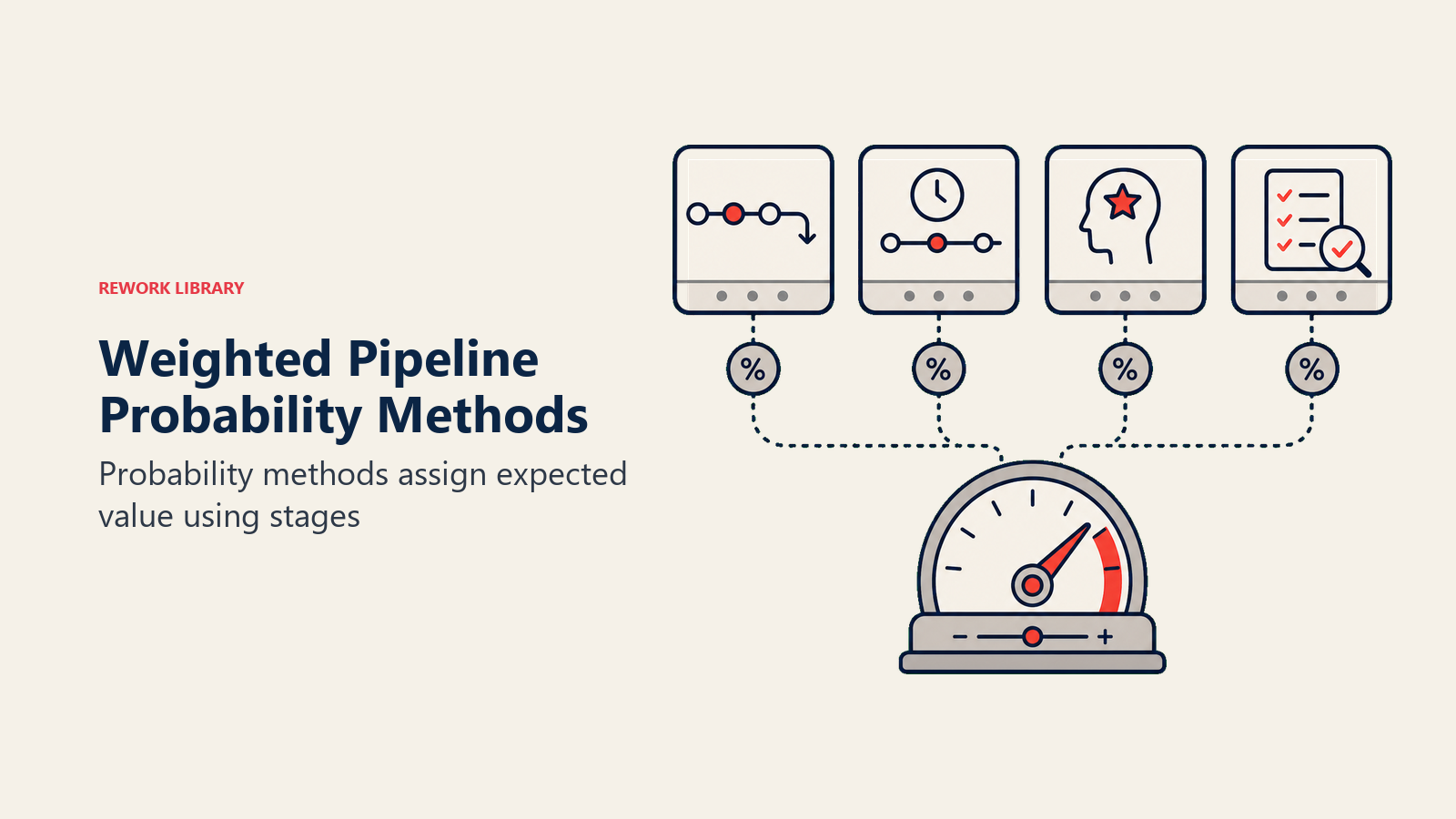
Weighted pipelineの精度は、確率の割り当て方に完全に依存します。主に4つの方法があります。
1. ステージベースの自動割り当て
最も一般的なアプローチは、過去の転換率に基づいて各パイプラインステージに固定確率を割り当てるものです。商談が「Proposal」に進むと、そのステージに定義された確率(通常40〜50%)が自動的に付与されます。この方法は、商談進行を統制するstage gate criteriaと密接に整合しています。
利点:
- シンプルで一貫性があり、営業担当者の入力を必要としない
- CRMのワークフローに実装しやすい
- 標準化されたforecastカテゴリーを作れる
- 確率評価から個人のバイアスを取り除く
欠点:
- 商談固有の事情(競合状況、予算のタイミング、推進者の強さ)を無視する
- あるステージのすべての商談が同じ成約確率を持つと仮定する
- ステージ進行をめぐる駆け引きを生む可能性がある
- テリトリーやセグメントの違いに適応しない
ステージベースは、deal velocityが高く、購買パターンが一貫していて、営業担当者の裁量が限られたトランザクション型のセールスに最も適しています。
2. 営業担当者の判断(手動オーバーライド)
営業担当者は商談の健全性、競合状況、購買担当者のコミットメントに対する自分の評価に基づいて、成約確率を手動で設定します。これはステージベースのデフォルトを上書きするか、補完するものです。
利点:
- 商談固有のインテリジェンス(エグゼクティブの支持、予算確定、競合の排除)を捉える
- 営業担当者の経験と判断を組み込む
- 異例の事情や加速したタイムラインに対応できる
- 商談のダイナミクスのリアルタイムな変化を反映する
欠点:
- バイアスを持ち込む(楽観的な営業担当者は過大評価し、悲観的な営業担当者は過小評価する)
- チーム間で基準が一貫しない
- 検証やベンチマークが難しい
- インセンティブに基づくsandbaggingや過度に強気なforecastingを許してしまう可能性がある
手動オーバーライドは、商談の複雑さや独自性のために標準化された確率が意味をなさない場合、つまりエンタープライズ商談、複雑なサービス、カスタム導入などに機能します。
3. AI/MLによる予測
機械学習モデルは、商談の特性、購買担当者の行動、エンゲージメントパターン、営業活動、過去の結果といった数十のシグナルに基づき、過去の商談データを分析して成約確率を予測します。
利点:
- 人間やルールベースのシステムよりもはるかに多くの変数を処理する
- 結果から学習し、精度を継続的に改善する
- 自明ではない予測パターンを特定する
- 確率評価から人間のバイアスを取り除く
欠点:
- 相当量の過去データを必要とする(通常2年以上、数千件の商談)
- ブラックボックスの予測は透明性に欠ける
- データに含まれる過去のバイアスを継続してしまう可能性がある
- 市場の変化や過去のパターンを持たない新製品には対応しにくい
AI主導の確率は、十分な過去データと、モデルを実装・維持する技術的な高度さを持つ、高velocityな収益組織に機能します。
4. ハイブリッドアプローチ
成熟したforecastingオペレーションのほとんどは、複数の方法を組み合わせたハイブリッドモデルを使っています。
- ベースラインとしてのステージベース確率
- 特定の条件(承認済み予算、サイン済みLOI、確定した導入日)が正当化する場合の営業担当者オーバーライド
- 営業担当者の評価と予測確率の乖離をフラグするAIモデル
- 営業担当者オーバーライドがモデル予測から大きく乖離する商談についてのマネージャーレビュー
この層状のアプローチは、一貫性、判断、データドリブンな予測のバランスを取りながら、説明責任を維持します。
標準的なステージ確率
標準確率は、各ステージの期待転換率でパイプラインを重み付けするための出発点となるモデルを提供します。
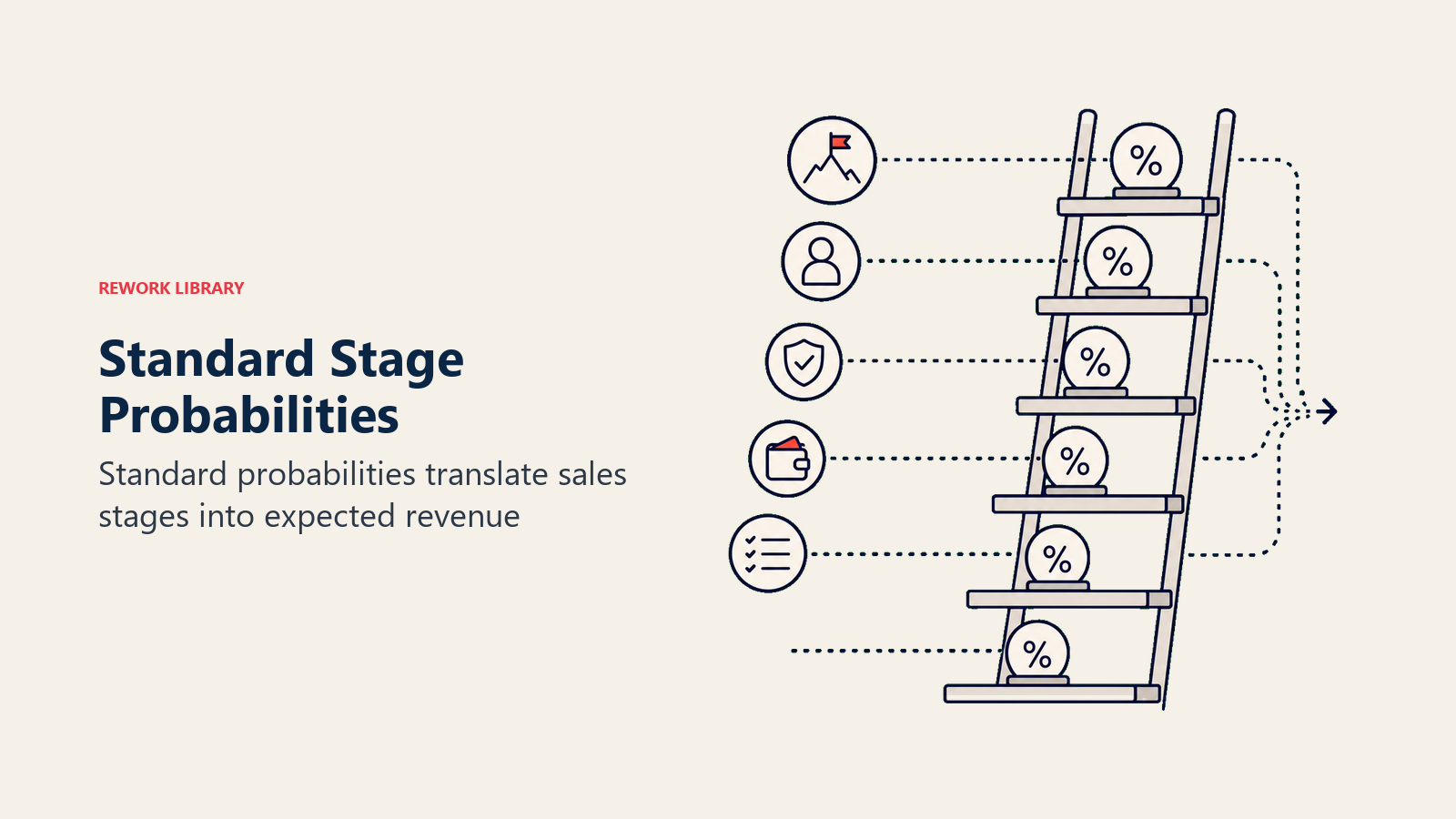
営業プロセスはそれぞれ異なりますが、業界ベンチマークはステージベースの確率割り当てのための出発点を提供します。
Discovery / 初回接触(10〜20%)
商談がパイプラインに入ったばかりです。適格性判断は予備的なものです。購買担当者は関心を示していますが、予算、タイムライン、決裁権限はまだ確認されていません。このステージでは、ほとんどの商談が失格になるか停滞します。
典型的な特徴:
- 初期のニーズ評価が実施されている
- 基本的なfitが確認されている(適切な会社規模、業界、ユースケース)
- 購買担当者が探索的な会話に同意している
- 予算やタイムラインはまだ検証されていない
このステージでの効果的な商談適格性判断は、不適格な商談によるパイプラインの膨張を防ぎます。
次のステージへの転換率: 25〜35%
Qualification / ニーズ分析(20〜30%)
商談は初期の適格性判断を通過しています。購買担当者は、本物の課題、おおよそのタイムライン、予算レンジを確認しています。主要なstakeholderと決裁者を特定できています。ただし、競合の代替案はまだ残っており、購買担当者は特定のソリューションアプローチにcommitしていません。
典型的な特徴:
- BANTまたはMEDDICの適格性判断が完了している
- 決裁者が特定され、アクセス可能である
- 説得力のあるイベントまたはビジネス上のドライバーが確認されている
- タイムラインが定義されている(四半期または月単位)
次のステージへの転換率: 40〜50%
Proposal / ソリューションプレゼンテーション(40〜50%)
購買担当者が正式な提案書を要求した、またはソリューションプレゼンテーションに参加しています。価格と導入アプローチを提示済みです。商談には勢いがありますが、異議や競合の圧力はまだ残っています。
典型的な特徴:
- 正式な提案書が提出されている
- 価格が共有され、話し合われている
- 導入計画が示されている
- 複数のstakeholderとのミーティングが行われている
次のステージへの転換率: 50〜60%
Negotiation / 契約レビュー(60〜75%)
購買担当者が積極的に条件を交渉している、または契約文言をレビューしています。法務・調達チームが関与しています。この商談は、fitや価値ではなく、条件次第で成約するか失われるかが決まります。値引きや譲歩に関する話し合いが進行中です。
典型的な特徴:
- 「Commit」または「Closed Won - Forecast」としてマークされている
- 法務チームが契約をレビューしている
- 調達部門が条件を交渉している
- エグゼクティブの承認が求められている
- 導入タイムラインが話し合われている
次のステージへの転換率: 70〜85%
口頭Commitment / サイン待ち(80〜90%)
購買担当者が購入に口頭でcommitしています。契約条件は合意済みです。サイン、最終承認、または支払い処理を待っています。異例の事情(予算凍結、エグゼクティブの離任、買収)が発生しない限り、この商談は成約します。
典型的な特徴:
- 決裁者からの口頭コミットメント
- すべての異議が解消されている
- 条件が確定している
- PO番号を受領済み、またはサイン待ち
- 導入キックオフが予定されている
成約への転換率: 85〜95%
これらの確率はB2Bセールス全体の平均値です。過去データから計算した実際の転換率を、自社固有の確率割り当ての参考にすべきです。
過去データを使った確率のカスタマイズ
汎用的なステージ確率は出発点であり、絶対的な真理ではありません。成熟したforecastingオペレーションは、実際の転換データに基づいて確率をキャリブレーションします。
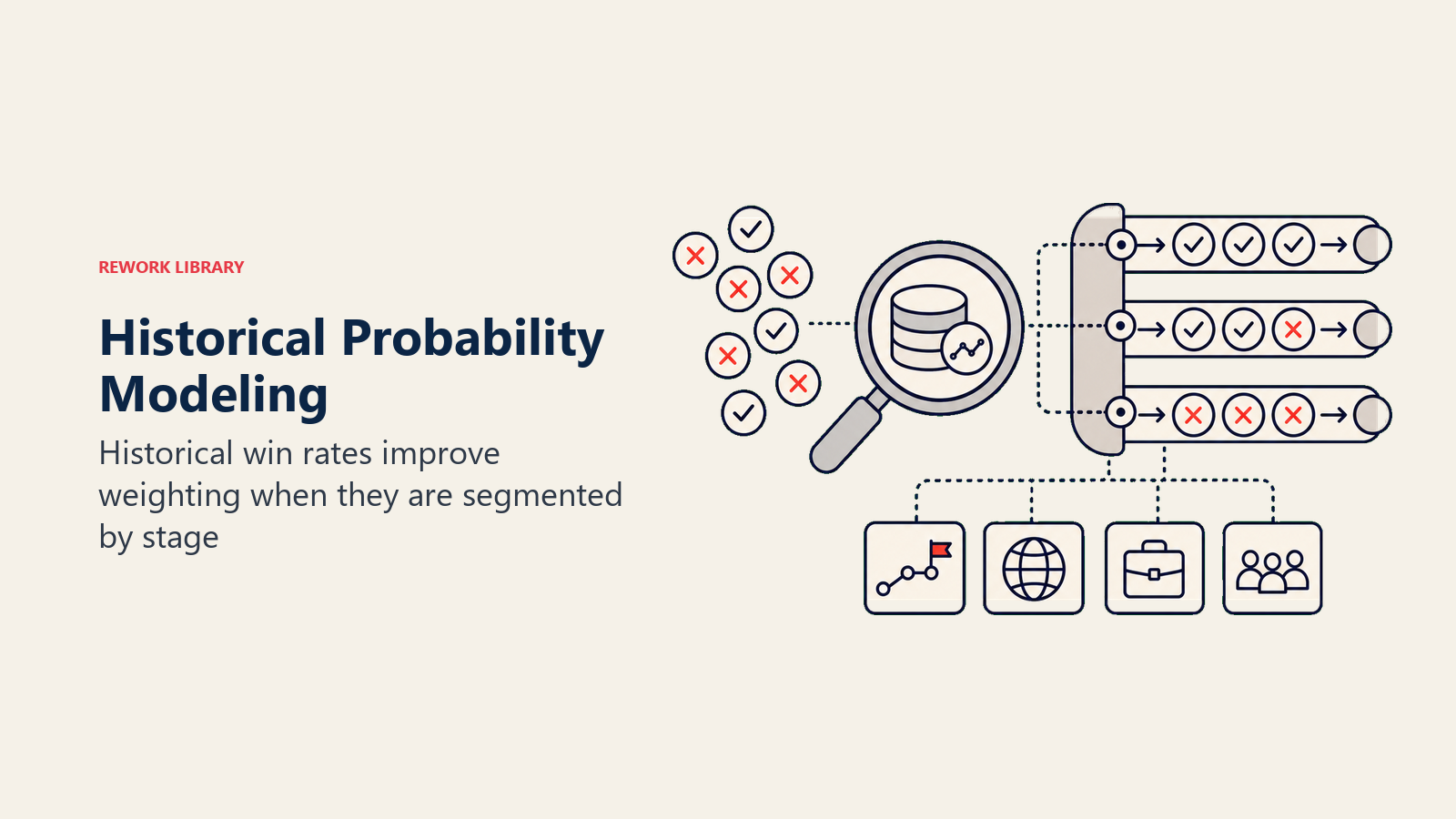
過去の転換率を計算する
12〜24か月分の成約した商談(受注・失注の両方)を取り出します。各ステージについて以下を計算します。
ステージ転換率 = (次のステージへ進んだ商談数) ÷ (このステージに到達した商談総数)
「Proposal」ステージに到達した商談が250件あり、そのうち125件が「Negotiation」へ進んだ場合、Proposal → Negotiationの転換率は50%です。
ステージ別の転換率を掛け合わせることで、各ステージからの累積成約確率が得られます。
Proposal成約確率 = Proposal→Negotiation転換率 × Negotiation→口頭Commit転換率 × 口頭Commit→成約率
この計算により、業界平均や直感ではなく、過去の結果に基づく実際のステージ別成約率が明らかになります。
商談の特性でセグメント分けする
集計された転換率は、大きなばらつきを覆い隠してしまいます。以下の軸で分析をセグメント分けしましょう。
商談規模: エンタープライズ商談(10万ドル超)は、通常SMBの商談(2万5千ドル未満)よりステージ確率が低いものの、営業サイクルは長くなります
営業セグメント: 新規ビジネスは、拡張や更新の商談とは異なる転換率を示します
業界の垂直領域: 規制業界(ヘルスケア、金融サービス)は、複雑な承認プロセスのため、初期段階での確率が低くなりがちです
リードソース: 意図の高いチャネル(デモ依頼、価格問い合わせ)からのインバウンド商談は、アウトバウンドのコールド商談の2〜3倍の割合で転換します
営業担当者の在籍年数: 1年目の営業担当者は、通常ベテラン営業担当者より15〜25%低い転換率になります
これらの特性に基づいてベースライン確率を調整する確率マトリックスを構築しましょう。ヘルスケア業界の20万ドルの新規エンタープライズ商談はProposalステージで25%の確率かもしれませんが、既存顧客との3万ドルの拡張商談は同じステージで60%かもしれません。このアプローチには、これらの特性に基づいて商談を整理する効果的なパイプラインセグメンテーションが必要です。
ステージ到達別の勝率を追跡する
ステージ間の転換を超えて、各ステージに到達した商談の最終的な勝率を追跡しましょう。これにより累積成約確率が明らかになります。
- Discoveryに到達した商談: 最終的に12%が成約する
- Qualificationに到達した商談: 最終的に28%が成約する
- Proposalに到達した商談: 最終的に45%が成約する
- Negotiationに到達した商談: 最終的に68%が成約する
- 口頭Commitに到達した商談: 最終的に87%が成約する
これらの累積勝率は、確率割り当てを検証するものです。Proposalに到達した商談が45%の割合で成約するなら、正確なweighted forecastを生み出すためには、Proposalステージの確率も45%に近いべきです。
WeightedとUnweightedのパイプライン: 使い分け
WeightedビューとUnweightedビューは、それぞれ異なる目的を果たします。
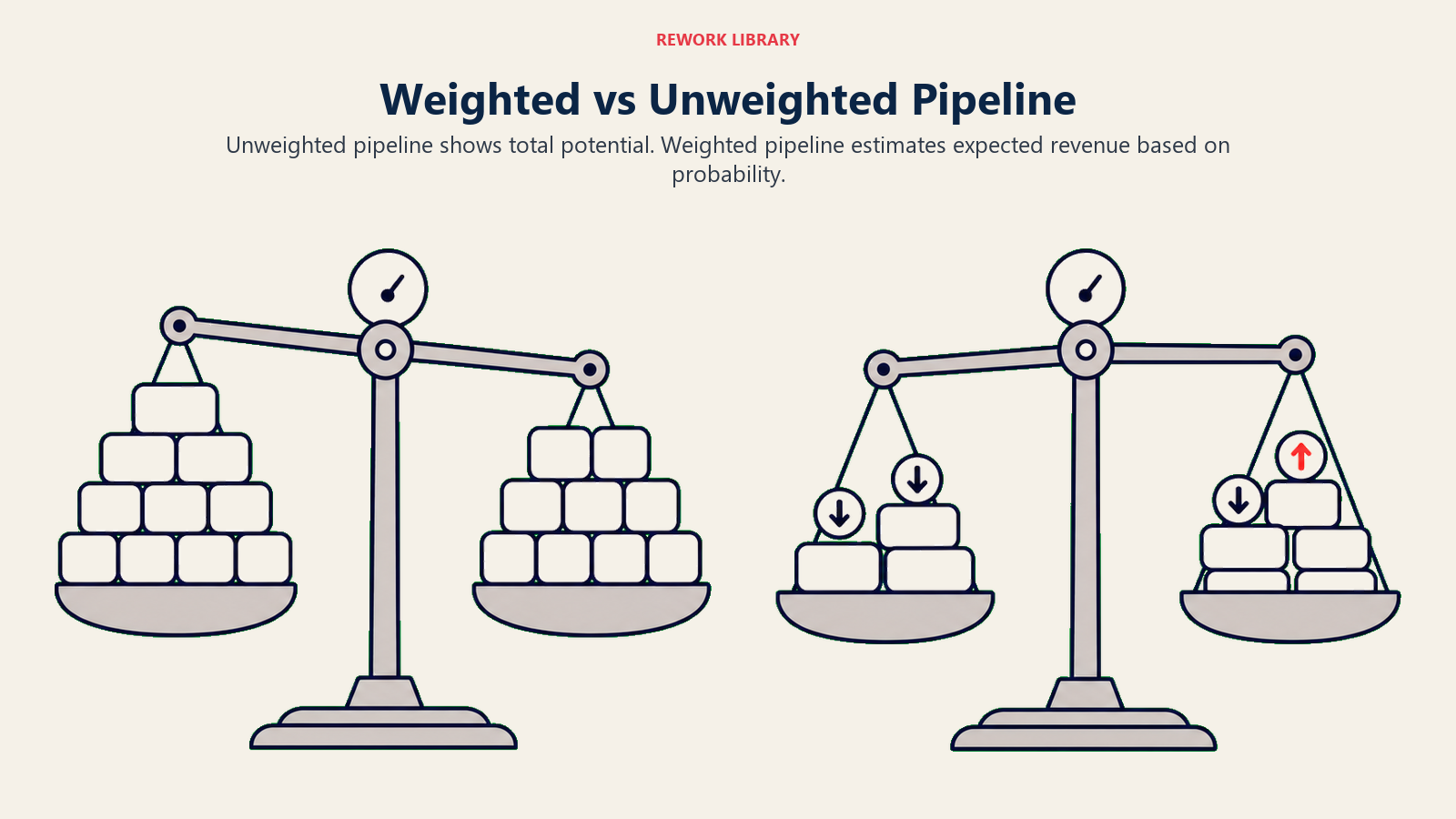
Unweightedパイプラインを使うべき場面
キャパシティ計画と営業担当者の業務量: 商談の総数と金額は、成約確率に関係なく、営業担当者がどれだけ忙しいかを示します。60件の商談を持つ営業担当者は、weighted valueが同じであっても、15件しか持たない営業担当者よりも多くの時間とサポートを必要とします。
マーケティングとリード獲得の目標: マーケティングはトップ・オブ・ファネルのボリュームを生み出します。確率の割り当ては適格性判断の後、下流で行われるため、彼らの成功指標はweighted pipelineではなく創出されたパイプライン総額を追跡します。
初期段階のパイプライン健全性: DiscoveryとQualificationステージの健全性は、将来の四半期にとって重要です。Unweightedの初期段階パイプラインは、2〜3四半期先のweightedな終盤パイプラインを予測します。
活動へのインセンティブ設計: 一部の報酬プランは、見込み客開拓活動を促すためパイプライン創出に報酬を与えます。Unweighted指標は、確率操作によるsandbaggingを防ぎます。
Weightedパイプラインを使うべき場面
収益forecasting: Weighted pipelineは期待受注額と直接相関します。正確なquota達成と収益予測の土台です。
カバレッジ分析: 目標達成に必要なパイプラインを判断するには、weighted pipelineに依存します。200万ドルの受注が必要で、weighted pipelineが180万ドルなら、パイプライン総額に関係なくカバレッジのギャップがあります。
商談の優先順位付け: 営業担当者は成約に近い高確率の商談に集中すべきです。Weighted valueは、確率80%の5万ドルの商談が、確率15%の20万ドルの商談よりも価値が高いことを示します。
パフォーマンス評価: 営業担当者の有効性は、パイプライン総額の水増しよりもweighted pipelineの進行で測る方が適切です。新しい商談を追加しなくても、商談をステージに進める営業担当者はweighted valueを向上させます。商談進行の管理の実践は、weighted pipelineの成長に直接影響します。
リソース配分: sales engineering、ソリューションコンサルティング、エグゼクティブスポンサーシップは、初期段階の見込み薄よりも高確率のweighted商談を優先すべきです。
最も優れたforecastingシステムは、それぞれをいつ使うべきかの明確な文脈とともに、両方のビューを提示します。
Weighted Pipelineカバレッジ分析
Weightedカバレッジ分析は、リスク調整済みのパイプラインをquotaとforecastのニーズに対して比較します。
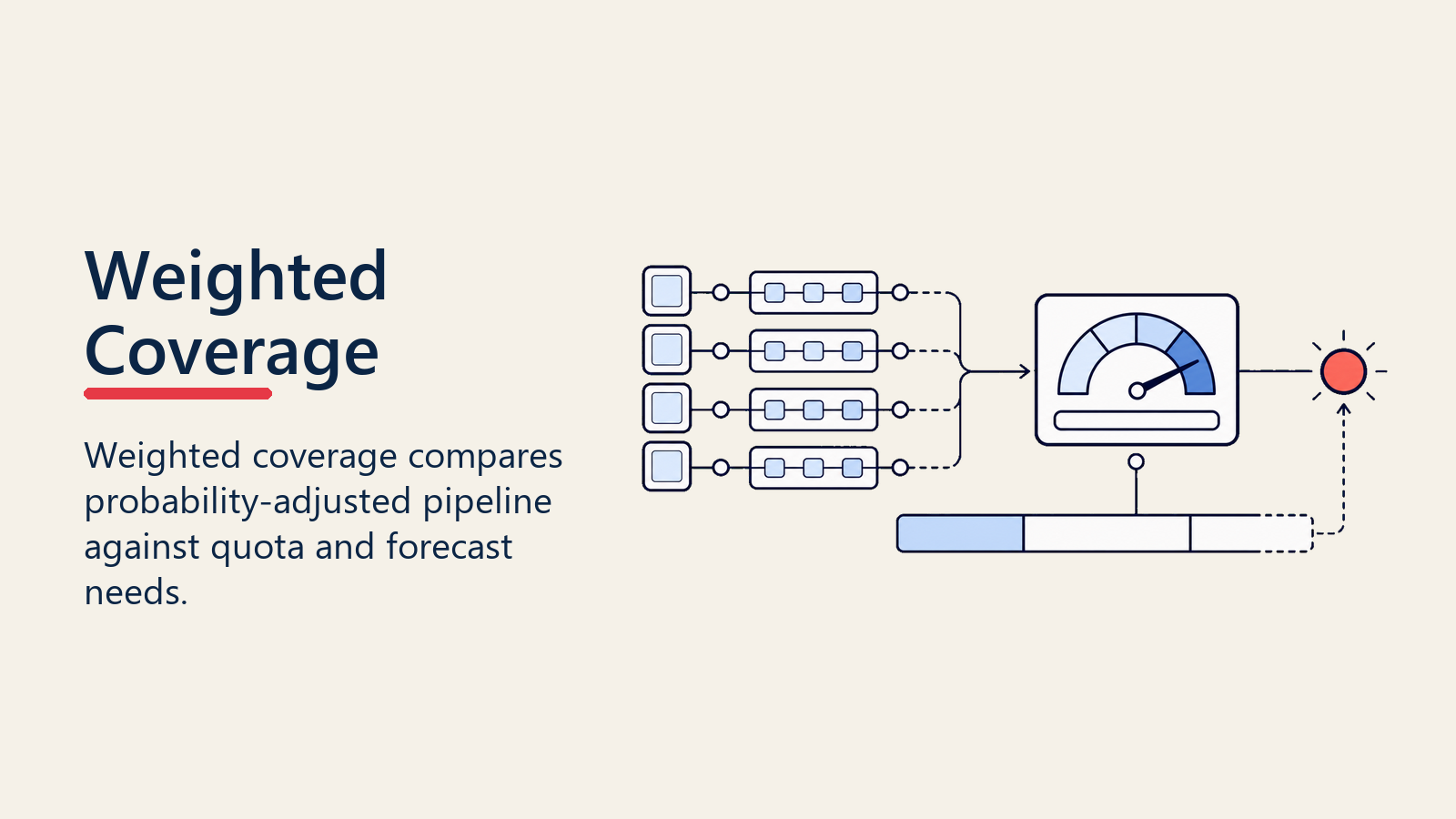
カバレッジ比率、つまりquota達成に必要なパイプラインの倍率は、weightedとunweightedのどちらのパイプラインに対して計算するかで劇的に変わります。
従来の(Unweighted)カバレッジ
標準的なモデルでは、3〜5倍のパイプラインカバレッジが必要だとされます。
- Quota: 100万ドル
- 必要なパイプライン: 300〜500万ドル(総額)
- 前提: パイプライン総額の20〜33%が成約する
これは大まかな経験則としては機能しますが、精度に欠けます。終盤ステージの商談300万ドル(目標達成の見込みが高い)と、初期段階の商談300万ドル(大きく未達になる見込みが高い)を区別できません。
Weightedカバレッジモデル
Weightedアプローチは、必要なカバレッジがパイプラインの構成によって異なることを認識します。
パイプラインの大半が初期段階の場合(平均確率20%):
- Quota: 100万ドル
- 必要なweighted pipeline: 100万ドル(目標達成のため)
- 必要なパイプライン総額: 500万ドル(unweighted)
- カバレッジ倍率: 5倍
パイプラインの大半が終盤ステージの場合(平均確率70%):
- Quota: 100万ドル
- 必要なweighted pipeline: 100万ドル
- 必要なパイプライン総額: 140万ドル(unweighted)
- カバレッジ倍率: 1.4倍
これは、単純なカバレッジ比率がなぜ誤解を招くのかを明らかにします。必要な倍率は、パイプラインの質(ステージ分布と成約確率)に完全に依存します。
ステージ別のカバレッジ要件
成熟したパイプライン管理は、ステージ別にカバレッジ目標を設定します。
- Discoveryステージ: カバレッジ10倍(確率10%)
- Qualification: カバレッジ4倍(確率25%)
- Proposal: カバレッジ2.5倍(確率40%)
- Negotiation: カバレッジ1.5倍(確率67%)
- 口頭commit: カバレッジ1.1倍(確率90%)
バランスの取れたパイプラインは、継続的な進行を確保するため各ステージで適切なカバレッジを維持します。Proposalのカバレッジが2倍を下回れば、初期段階のパイプラインが豊富にあっても目標を逃してしまいます。
Forecastカテゴリーとweighted pipelineの統合
多くのCRMは、商談のconfidenceを分類するためforecastカテゴリー(Commit、Best Case、Pipeline、Omitted)を使っています。これらのカテゴリーは、確率帯を通じてweighted pipelineと統合されます。
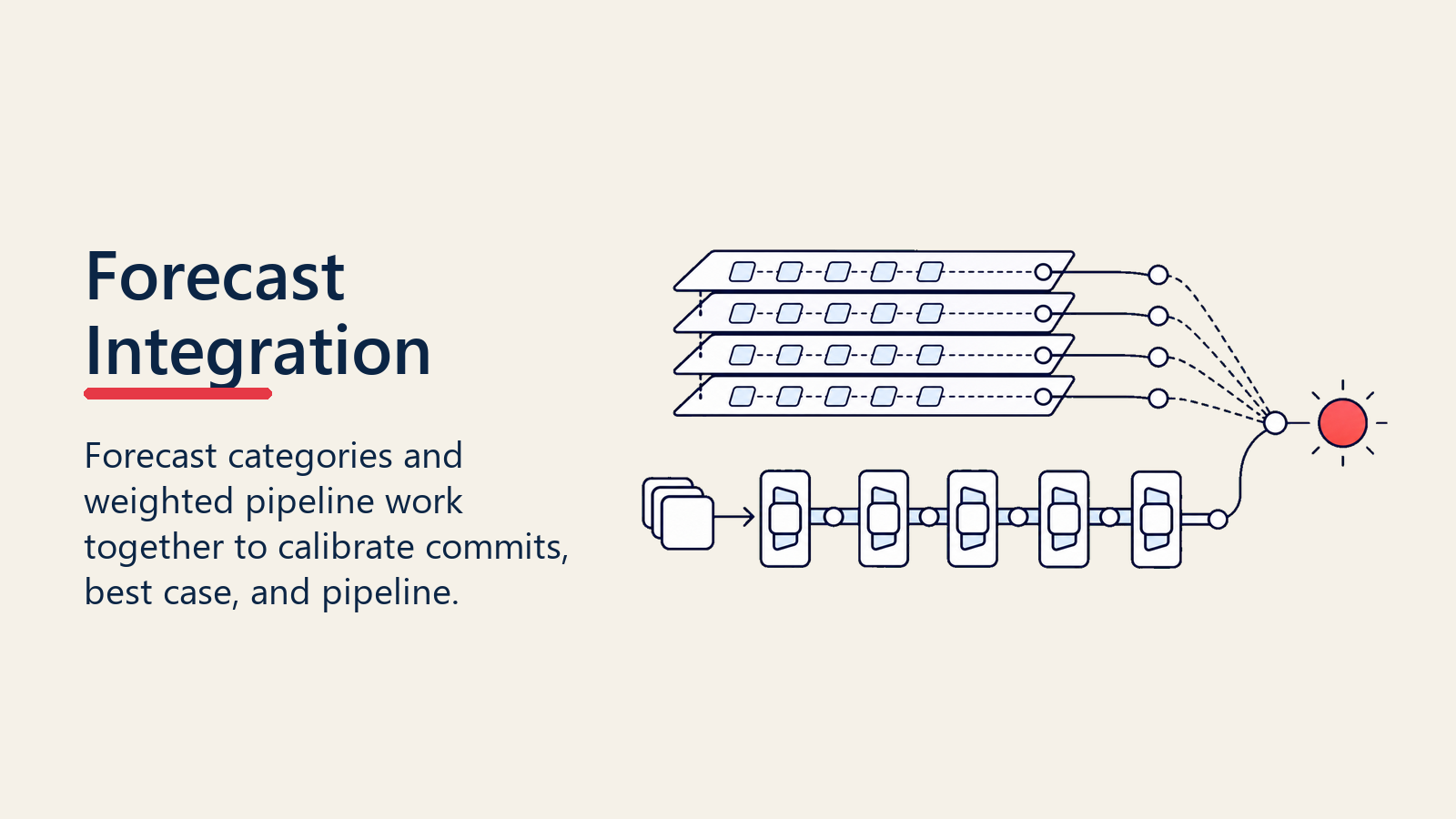
Commit(確率90〜100%)
営業担当者が今期成約すると保証する商談です。口頭コミットメントを受領済み、契約が最終レビュー中、あるいはサイン待ちですでに受注しているものです。これらの商談は、経営陣が取締役会に報告する「Commit Forecast」を構成します。
Weighted pipelineでの扱い: フルまたはほぼフルの価値(乗数90〜100%)
Best Case(確率60〜89%)
成約する可能性は高いものの保証はされていない商談です。ポジティブな勢いはあるものの潜在的な障害を伴う、negotiationまたは契約レビュー中の商談です。「Best Case Forecast」(Commit + Best Case)を構成します。
Weighted pipelineでの扱い: 特定のステージに基づき乗数60〜89%
Pipeline(確率1〜59%)
初期・中間段階の商談です。正当な可能性を持つ適格な商談ですが、大きな不確実性を伴います。パイプラインカバレッジ分析と将来期間の計画に使われます。
Weighted pipelineでの扱い: 特定のステージに基づき乗数1〜59%
Omitted(確率0%)
営業担当者が今期成約しないと考える商談で、将来の四半期に先送りされるか、失われる可能性が高いものです。現在の期間のforecastからは除外されますが、パイプラインの可視性のためCRMには残されます。
Weighted pipelineでの扱い: 乗数0%(weighted計算からは除外)
このカテゴリーと確率の整合により、forecastのロールアップがweighted pipelineの計算と一致するようになります。あなたの「Commit Forecast」は、90〜100%でweightedされた商談の合計と一致すべきであり、パイプライン分析とforecastレポーティングの間に内部的な一貫性が生まれます。
確率のオーバーライド: 営業担当者がいつ、どう調整するか
ステージベースの確率は一貫性を提供しますが、商談固有の事情によって手動でのオーバーライドが正当化されることがあります。重要なのは、オーバーライドが適切な場合について明確なガバナンスを確立し、根拠を求めることです。
確率を引き上げる正当な理由
予算が文書で確認された: 購買担当者がPO番号、承認済みの資金文書、または文書での予算確認を提供した
競合が排除された: 購買担当者が自社のソリューションのみで進めると明言し、代替案の評価を止めた
エグゼクティブスポンサーシップが確保された: C-levelの推進者が積極的に商談を推進しており、具体的なタイムラインにcommitしている
法務レビューが進行中: 契約が法務レビューに進んでおり、本気度と社内承認のマイルストーン通過を示している
導入日が予定されている: 購買担当者が導入をスケジュールし、プロジェクトマネージャーを割り当て、キックオフ日を設定した
確率を引き下げる正当な理由
予算に異議が出ている: 財務チームがコストに反発している、または将来の期間への延期を求めている
新たなstakeholderが登場した: これまで知られていなかった意思決定者が終盤に現れ、新たに説得が必要になった
競合の圧力が強まった: 説得力のある差別化要因や既存の関係を持つ強力な競合が現れた
タイムラインが後ろ倒しになった: 購買担当者が明確な根拠や新しいタイムラインなしに目標決定日を先送りした
推進者が離脱した: 社内の推進者が退職した、異動した、または影響力を失った
エンゲージメントの欠如: 購買担当者がアウトリーチへの反応を止めた、またはミーティングを何度もリスケジュールした
オーバーライドのガバナンス
ガードレールを設けることで、確率操作を防ぎます。
文書での根拠を求める: 営業担当者はCRMのメモにオーバーライドの具体的な理由を記録しなければならない
オーバーライドの上限を設定する: マネージャー承認なしでのオーバーライドの範囲を制限する(例: ステージのデフォルトから±20%)
マネージャーレビューをトリガーする: 大幅なオーバーライド(特に20%を超える引き上げ)を伴う商談は、マネージャーのレビューキューに現れる
オーバーライドの精度を追跡する: オーバーライドされた商談とステージデフォルトの商談の成約率を測定し、一貫した過度の楽観やsandbaggingを特定する
高額なオーバーライドを監査する: 10万ドル(または自社の閾値)を超える商談で確率オーバーライドがある場合、マネージャーまたはVPの承認を必要とする
このガバナンスは、営業担当者の判断と組織としての一貫性・説明責任のバランスを取ります。
精度の追跡とモデルの検証
Weighted pipelineは、確率が現実を反映して初めて価値を発揮します。継続的な検証により、モデルが正確なforecastを生み出していることを保証します。
Forecast対実績の分析
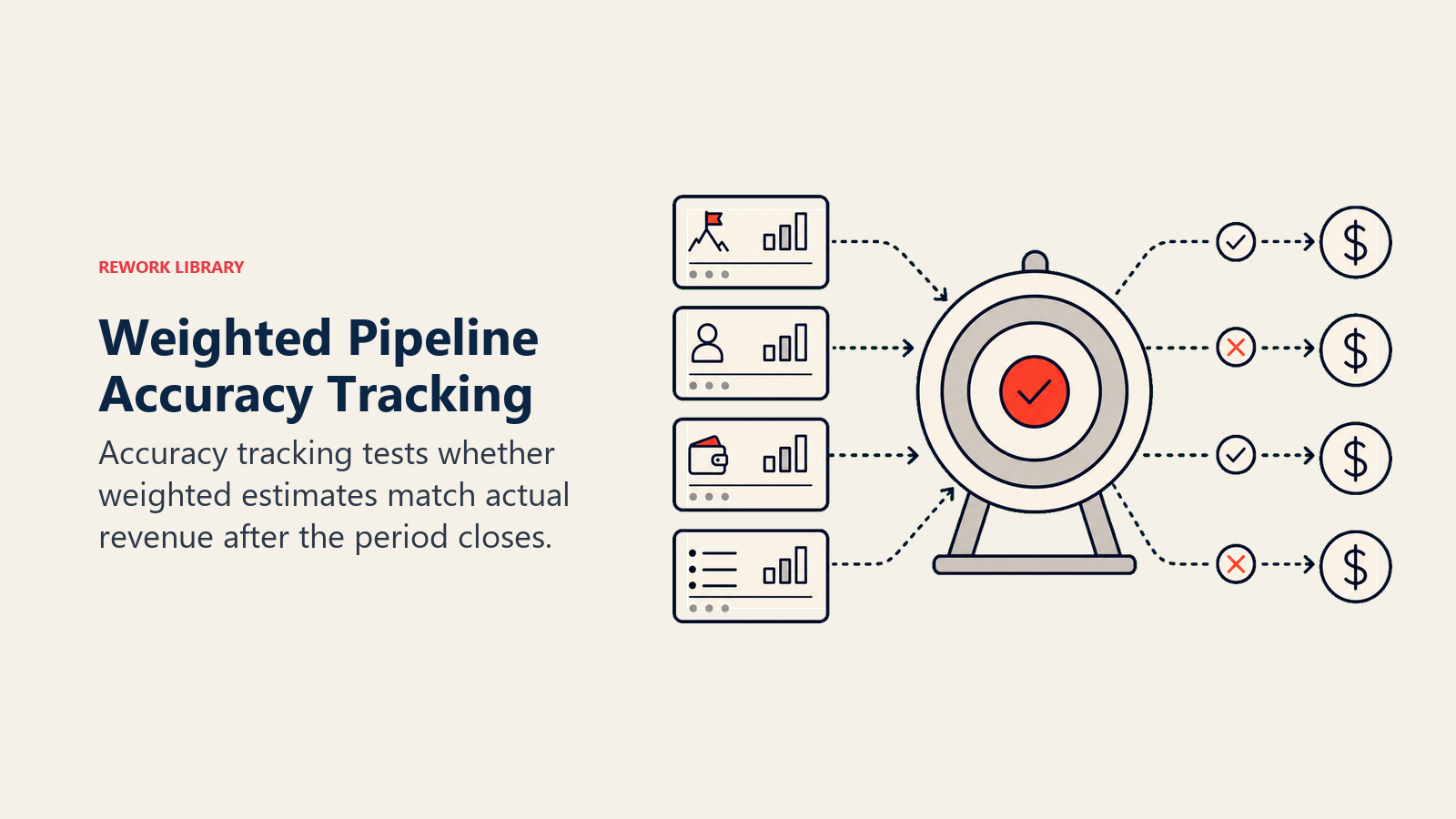
各期間ごとに、forecastされた収益(期間開始時点のweighted pipeline合計)を実際の受注額と比較します。以下を計算します。
Forecast精度 = (実際の受注額 ÷ Forecastされた受注額) × 100
成熟した組織は、「Commit」レベルで90〜95%、「Best Case」レベルで80〜85%のforecast精度を目標とします。
時間の経過とともに精度のトレンドを追跡しましょう。精度が改善しているなら、確率のキャリブレーションがうまくいっています。精度が低下しているなら、モデルのドリフトや操作のシグナルです。
確率のキャリブレーションテスト
各確率帯(0〜20%、21〜40%、41〜60%、61〜80%、81〜100%)ごとに、実際の成約率を計算します。
確率60〜80%が割り当てられた商談が実際には45%の割合でしか成約しないなら、確率が過大評価されています。確率40〜60%が割り当てられた商談が65%で成約するなら、確率が過度に保守的です。
理想的なキャリブレーション: 実際の成約率が、割り当てられた確率帯と5〜10%以内で一致すること。大きな乖離があれば確率の調整が必要です。
ステージ進行の分析
各ステージから、何件の商談が進み、何件が停滞・先送り・失注しているかを追跡します。
- 次のステージへ進んだ: 確率評価を検証する
- 将来の期間へ先送りされた: 現在のタイミングに対して確率が高すぎたことを示す
- 失注: 高い確率を持つべきではなかった商談だったことを裏付ける
- 60日以上停滞: パイプラインを水増ししたままの死んだ商談を示唆する
ステージvelocityを計算しましょう。受注した商談と失注した商談それぞれの、各ステージでの平均日数です。素早く成約する受注商談は、初期段階に費やす時間が短くなります。商談がProposalに45日以上滞留しているなら、確率を下げるべきです。パイプラインvelocity指標を理解することは、タイミングに基づく確率調整をキャリブレーションする助けになります。
営業担当者レベルの精度スコアリング
個々の営業担当者のforecast精度を測定し、体系的なバイアスを特定しましょう。
楽観的な営業担当者: 一貫して実際の成約率より高くforecastする(forecast精度80%未満)
Sandbaggingする営業担当者: 一貫してforecastを上回る実績を出す(forecast精度120%超)
正確な営業担当者: 一貫して実際の受注額の10%以内でforecastする(精度90〜110%)
このデータを、コーチング、報酬の調整、そして集計forecastにおいて営業担当者のオーバーライドにどれだけの重みを与えるかの判断に活用しましょう。
Weighted Pipelineの実装: 実践的な展開
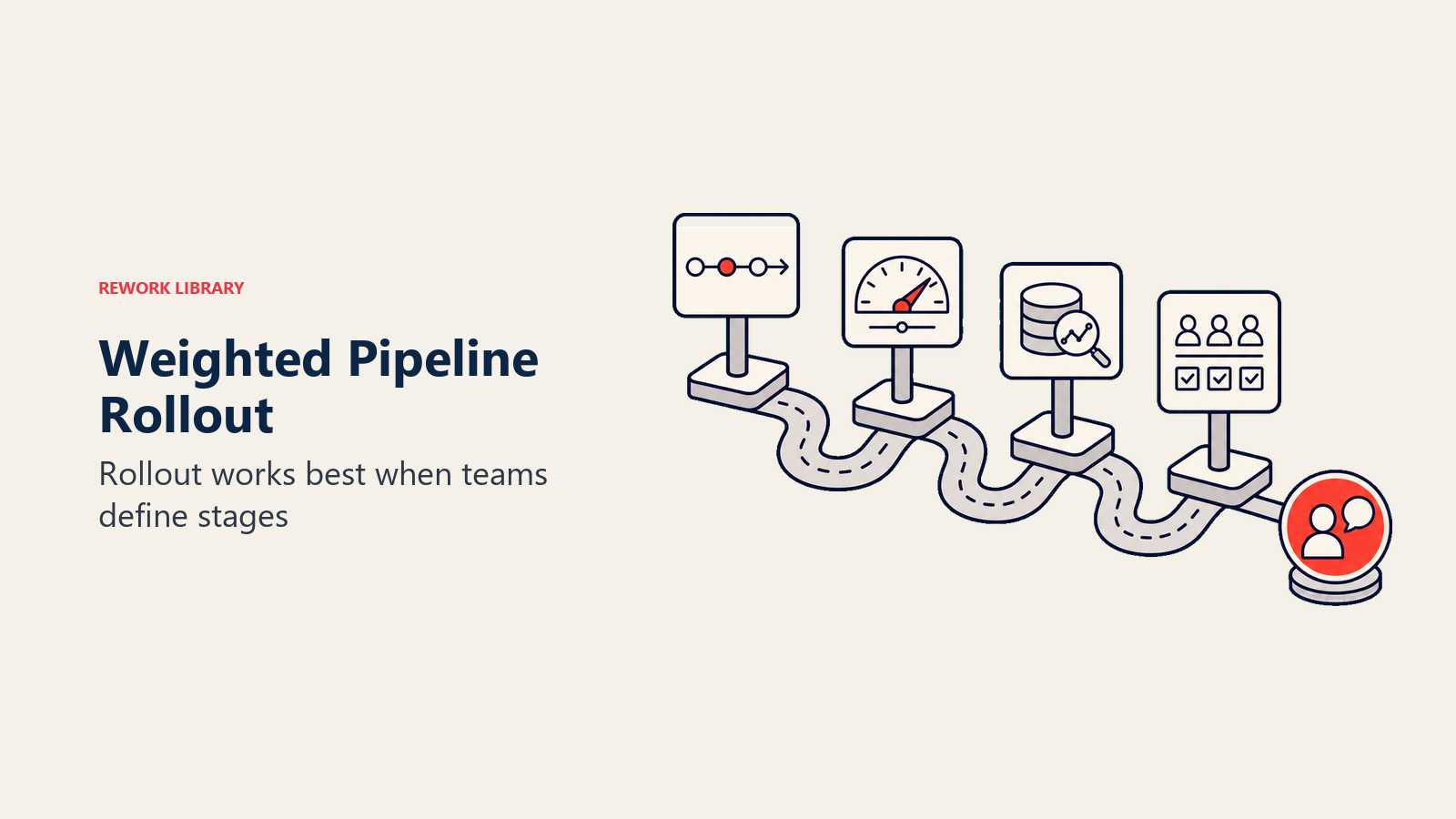
パイプライン総額からweighted pipelineへの移行には、技術的なセットアップ、プロセスの変更、組織としての足並みが必要です。
技術的な設定
CRMのセットアップ:
- ステージごとにデフォルト値を持つ確率フィールドを設定する
- forecastカテゴリーを確率帯にマッピングする
- weighted pipelineのレポートとダッシュボードを構築する
- 承認ルーティングを伴うオーバーライドのワークフローを確立する
データのクリーンアップ:
- パイプラインを歪めている古い商談(90日以上活動なし)を削除する。パイプラインの衛生管理のベストプラクティスを参照
- ステージ定義とエントリー基準を標準化する
- 精度のベースラインのため過去の確率データを遡って入力する
プロセスの実装
ステージエントリー基準を定義する: 商談がいつ進むかを決める明確で客観的な基準(営業担当者の裁量だけに頼らない)
オーバーライドポリシーを設定する: 手動での確率調整がいつ適切か、必要な承認レベルを文書化する
forecastのケイデンスを確立する: 週次の営業担当者によるforecast提出、マネージャーによるロールアップ、乖離分析
レビューの儀式を作る: パイプラインレビューは、weighted value、ステージ別カバレッジ、商談進行に焦点を当てる
組織としての変革管理
営業チームのトレーニング: なぜweighted pipelineがより良いforecastを生むのか、それがforecastの提出方法をどう変えるのかを説明する
マネージャーの育成: 確率のキャリブレーション、オーバーライドのガバナンス、営業担当者に正確なforecastingをコーチングする方法についてマネージャーをトレーニングする
経営陣の足並みを揃える: weightedとunweightedの指標の違い、どちらをどの意思決定に使うべきかを経営陣が理解していることを確認する
インセンティブの整合: 量より質に報いるため、weighted pipelineの達成度を報酬に組み込むことを検討する
移行には1〜2四半期かかります。初期の期間は、確率がキャリブレーションされ行動が調整されるにつれて、forecastの変動が大きくなります。この調整期間を乗り越えれば、3四半期目までに精度は劇的に改善します。
結論: 勘から統計的なForecastへ
一貫して目標を達成する企業と、大きく乱高下する企業の違いは何でしょうか。forecastの方法論です。パイプライン総額は現実を覆い隠しながら安心感を与えます。Weighted pipelineは、実際に何が成約するのかについて正直であることを強います。
確率に基づくforecastingは、パイプライン管理を主観的な技芸から測定可能な科学へと変えます。会話を、「十分なパイプラインがあるか」(文脈なしには無意味)から、「Q3の目標を達成するために、Proposalステージで十分なweightedカバレッジがあるか」(実行可能で具体的)へとシフトさせます。
規律あるweighted pipelineの方法論を実装する組織は、3つの利点を得ます。
予測可能な収益: あなたのforecastは、採用、投資、取締役会へのコミットメントを推進できるほど信頼できるものになります。
効率的なリソース配分: 営業支援、エグゼクティブの関与、商談加速のためのリソースが、高確率の商談へと流れます。
正確なキャパシティ計画: テリトリー設計、quota設定、人員採用の意思決定が、水増しされた総額ではなく現実的なパイプライン転換率に基づくようになります。
この実装には、技術的な設定、プロセスの規律、文化的な変革が必要です。しかし、希望と合計値に基づいてforecastを続けるという代替案は、変動と目標未達が続くことを保証するようなものです。
Weighted pipelineは完璧ではありません。確率がすべての商談のニュアンスを捉えることは決してないでしょう。しかし、すべての商談が等しく成約する可能性があると装うよりは、はるかに正確です。forecastingにおいては、おおよそ正しいことが、精密に間違っていることに勝ります。
予測可能な収益を求めるあなたのCFO、forecastの外れにうんざりしているあなたのCRO、一貫した成長を期待するあなたの取締役会。全員が同じものを必要としています。パイプラインの幻想ではなく、確率で重み付けされた現実です。
確率に基づくforecastingを実装する準備はできましたか。 パイプライン指標の概要とstage-based forecastingを参照し、完全なforecastingシステムを構築しましょう。
よくある質問
Weighted pipelineとは何ですか。 Weighted pipelineとは、各商談の金額に成約確率の乗数を適用し、その結果を合計したものです。ステージに関係なく10万ドルの商談を10万ドルとしてカウントするのではなく、その期待値(例えば確率40%の10万ドルは4万ドルになる)としてカウントします。合計は、追いかけているものではなく、実際に受注できそうなものを示します。
Weighted pipelineの価値はどう計算しますか。 各商談について加重価値 = 商談金額 × 成約確率という計算式を使い、それらを合計します。確率30%の20万ドルの商談は6万ドル貢献し、確率80%の5万ドルの商談は4万ドル貢献し、合計のweighted pipelineは10万ドルになります。
Weighted pipelineとunweighted pipelineの違いは何ですか。 Unweighted(総額)パイプラインは、すべての商談を額面通りに合計するもので、キャパシティ計画やリード獲得の目標に有用です。Weighted pipelineは成約確率を織り込んだもので、収益forecasting、カバレッジ分析、商談の優先順位付けにとってより良い基準となります。
各パイプラインステージにはどの成約確率を使うべきですか。 一般的なB2Bベンチマークでは、discoveryでおおよそ10〜20%、qualificationで20〜30%、proposalで40〜50%、negotiationで60〜75%、口頭コミットメントで80〜90%です。これらのベンチマークを固定値として扱うのではなく、自社の過去の転換データに照らしてキャリブレーションしてください。
関連リソース

On this page
- Weighted Pipelineとは何か
- なぜパイプライン総額は誤解を招くのか
- 確率割り当ての方法
- 1. ステージベースの自動割り当て
- 2. 営業担当者の判断(手動オーバーライド)
- 3. AI/MLによる予測
- 4. ハイブリッドアプローチ
- 標準的なステージ確率
- Discovery / 初回接触(10〜20%)
- Qualification / ニーズ分析(20〜30%)
- Proposal / ソリューションプレゼンテーション(40〜50%)
- Negotiation / 契約レビュー(60〜75%)
- 口頭Commitment / サイン待ち(80〜90%)
- 過去データを使った確率のカスタマイズ
- 過去の転換率を計算する
- 商談の特性でセグメント分けする
- ステージ到達別の勝率を追跡する
- WeightedとUnweightedのパイプライン: 使い分け
- Unweightedパイプラインを使うべき場面
- Weightedパイプラインを使うべき場面
- Weighted Pipelineカバレッジ分析
- 従来の(Unweighted)カバレッジ
- Weightedカバレッジモデル
- ステージ別のカバレッジ要件
- Forecastカテゴリーとweighted pipelineの統合
- Commit(確率90〜100%)
- Best Case(確率60〜89%)
- Pipeline(確率1〜59%)
- Omitted(確率0%)
- 確率のオーバーライド: 営業担当者がいつ、どう調整するか
- 確率を引き上げる正当な理由
- 確率を引き下げる正当な理由
- オーバーライドのガバナンス
- 精度の追跡とモデルの検証
- Forecast対実績の分析
- 確率のキャリブレーションテスト
- ステージ進行の分析
- 営業担当者レベルの精度スコアリング
- Weighted Pipelineの実装: 実践的な展開
- 技術的な設定
- プロセスの実装
- 組織としての変革管理
- 結論: 勘から統計的なForecastへ
- よくある質問
- 関連リソース