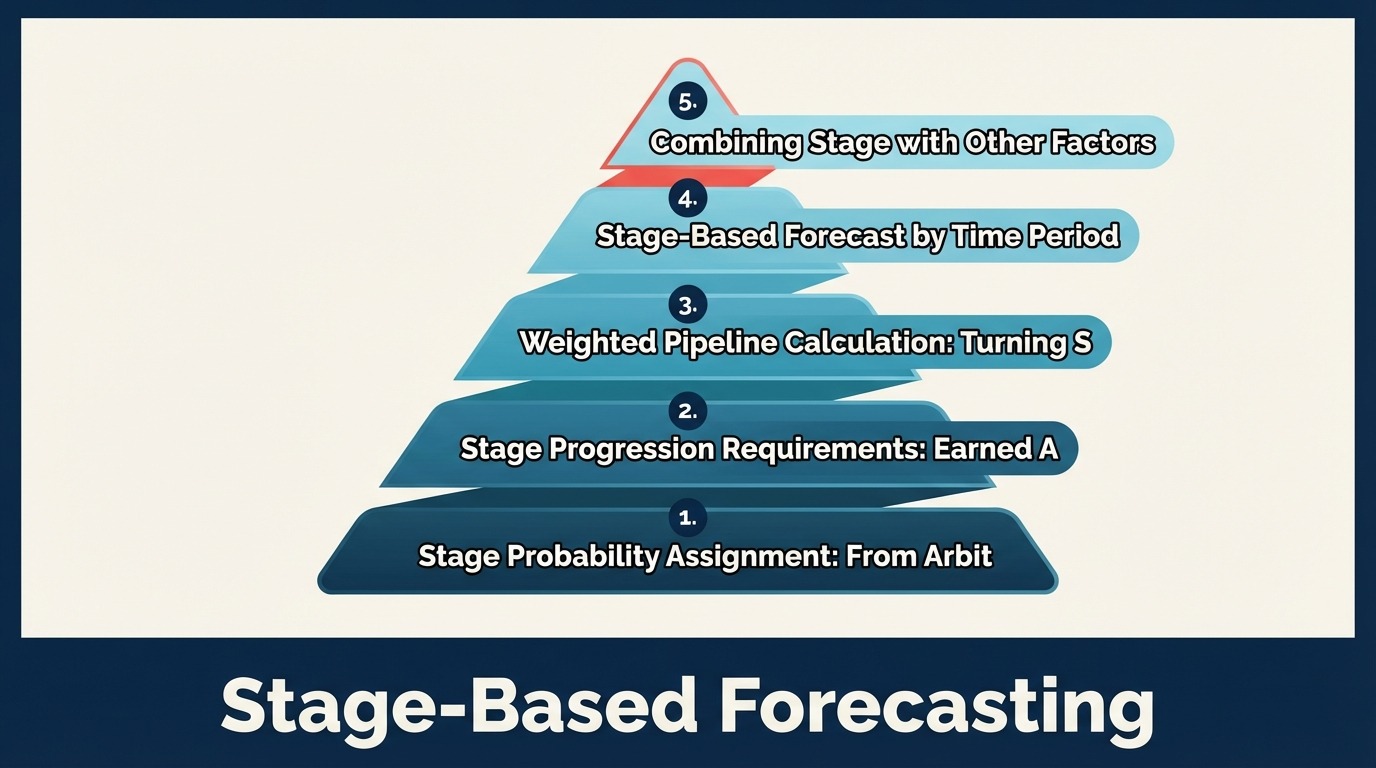
Stage-Based Forecasting: パイプラインステージで収益を予測する
Turn this article into takeaways for your work.


Each assistant summarizes the article only for you and suggests best practices for your work.
正確に予測できるforecasterと、常にforecastの外れを説明し続けるforecasterを分けるものは何でしょうか。予測を勘ではなく客観的な商談の進行に結びつけていることです。
ある商談が成約するかどうかを最も信頼できる形で予測するのは、営業担当者がどう思っているかでも、見込み客がどれだけ熱心に見えるかでも、パイプラインにどれだけ長く留まっているかでもありません。検証可能な購買担当者の行動に基づき、その商談がどのステージに到達したかです。forecastingの基礎を理解することは、この洞察から始まります。
Stage-based forecastingは、パイプラインステージを確率の代理指標として扱います。「Discovery」にある商談の成約確率は20%です。それが「Proposal Submitted」に進めば60%に跳ね上がります。「Negotiation」まで進めば80%です。これはこの数字が感覚的に正しいからではなく、これらのステージにある商談が実際にこの割合で成約することを過去データが証明しているからです。
組織にforecastの規律を築こうとしているなら、stage-basedの方法論が出発点になります。客観的で、監査可能で、改善できるものだからです。
なぜステージ進行が最良の先行指標なのか
多くのforecastingアプローチが失敗するのは、遅行指標(deal年齢、金額)や主観的な入力(営業担当者の自信度スコア)に依存しているからです。ステージ進行は違います。何か具体的なもの、つまり購買担当者が次のステップを踏んだかどうかを測定します。
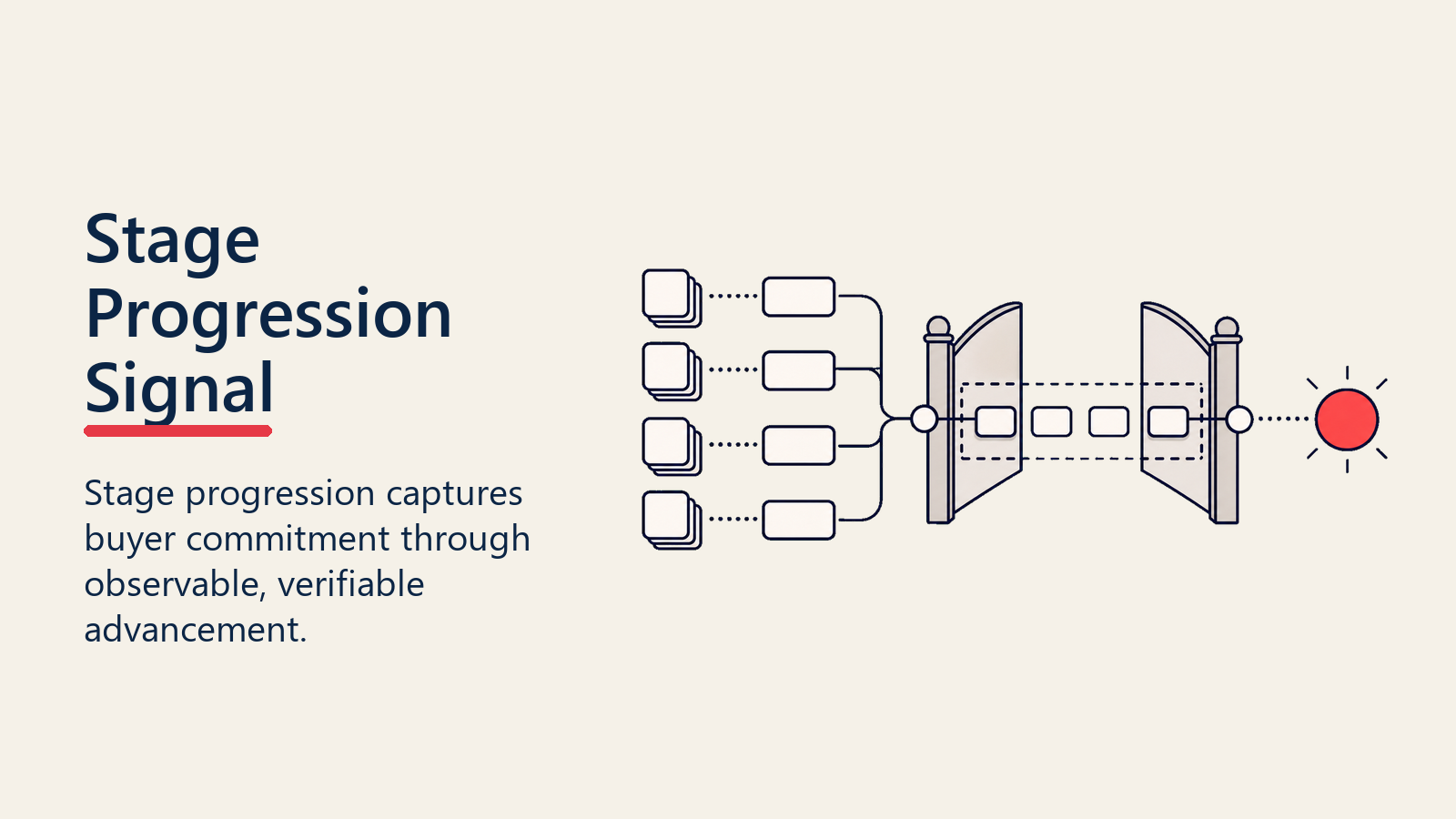
ステージ進行は購買担当者のコミットメントを捉えます。 「Initial Contact」から「Needs Analysis」への移行は、見込み客がヒアリングの通話に同意したことを意味します。「Proposal」への進行は、要件と評価基準を共有したことを意味します。それぞれのステージ移行は、売り手の希望ではなく購買担当者による検証を表しています。
ステージの進行は観察可能です。 提案書が提出されたか、技術検証が行われたか、法務レビューが始まったかを検証できます。営業担当者の自信度スコアとは異なり、ステージ移行は反証可能です。証拠があるかないか、どちらかです。
ステージデータは時間とともに積み重なります。 成約した商談はそれぞれ、どのステージを通過したか、各ステージにどれだけ留まったか、次回はどの確率を割り当てるべきかというデータポイントを追加します。何百もの商談を分析した後、あなたのステージ確率は統計的に検証された予測になります。
これが、優れた収益オペレーションチームがステージ定義とステージ規律に強くこだわる理由です。ステージが実際の購買担当者の進行を正確に反映していれば、forecastは予測可能になります。ステージが曖昧だったり飛ばされたりしていれば、forecastはフィクションです。適切なパイプラインステージの設計は、このプロセスの土台です。
Stage-Based Forecastingとは何か
Stage-based forecastingとは、現在のパイプラインステージに基づいて商談に成約確率を割り当て、deal金額×ステージ確率でweighted pipeline値を計算する方法論です。
中核となる計算式は以下の通りです。
Weighted Pipeline Value = Deal Amount × Stage Probability
「Proposal Submitted」ステージにある確率60%の10万ドルの商談の場合、以下の通りです。
Weighted Value = $100,000 × 0.60 = $60,000
これらのweighted valueをすべての商談で合計すれば、期間別の総収益を予測できます。これがあなたのforecastです。
シンプルな概念です。しかし実行するには以下が必要です。
- 実際の購買担当者の進行を反映する、正確に定義されたステージ
- 恣意的なパーセンテージではなく、データに基づく確率の割り当て
- 獲得した進行によってのみ商談が進む、ステージの規律
- 時間軸(今四半期、来四半期など)をまたぐweighted計算
- forecastと実際の結果を比較する継続的な検証
正しく行えば、stage-based forecastingは、今四半期で85〜95%、来四半期で70〜80%という精度で将来の収益への可視性を提供します。
雑なステージ定義、恣意的な確率、ステージの飛ばしがあれば、当てずっぽうと変わりません。ステージ確率を検証する助けとなるコンバージョン率分析についても学んでみてください。
ステージ確率の割り当て: 恣意的からデータドリブンへ
多くのチームは、勘に基づく確率から始めます。「Discoveryは20%くらいの感覚、Proposalは50%くらい、Negotiationは75%くらい」。これは何もないよりはましですが、大差ありません。
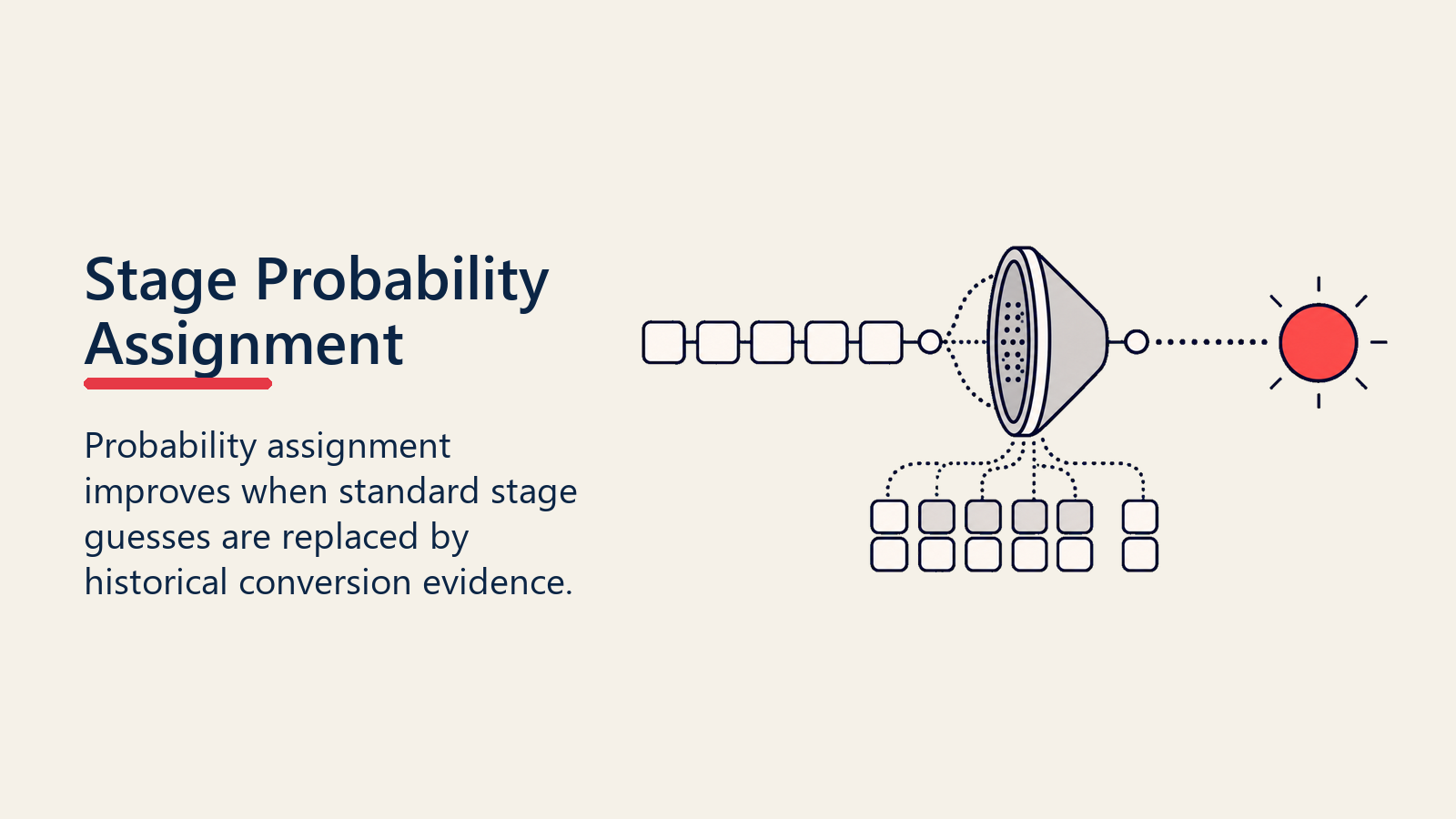
進化の過程は以下のようになります。
標準的なステージ確率(出発点)
多くのチームが使う一般的なベースライン確率は以下の通りです。
| ステージ | 標準確率 |
|---|---|
| Lead/Inquiry | 5% |
| Qualification | 10% |
| Discovery/Needs Analysis | 20% |
| Solution Presentation | 40% |
| Proposal Submitted | 60% |
| Negotiation | 80% |
| Verbal Agreement | 90% |
| Closed Won | 100% |
これらは出発点のフレームワークとしては機能しますが、汎用的です。あなたの事業には、独自のsales cycle、購買担当者の行動、コンバージョンパターンがあります。標準確率はすぐに運用を開始させてくれますが、精度を高めるのは過去データの分析です。
過去のコンバージョンに基づく確率(データドリブン)
6〜12か月分の成約した商談が蓄積したら、ステージ別の実際のコンバージョン率を分析します。
ステップ1: ステージから成約までのコンバージョン率を計算する
- 「Discovery」ステージに到達した商談は何件か(例: 500件)
- そのうちclosed-wonしたのは何件か(例: 100件)
- コンバージョン率 = 100 / 500 = 20%
ステップ2: 商談の特性でセグメント分けする すべての商談が同じ割合でコンバージョンするわけではありません。エンタープライズの商談はDiscoveryから15%でコンバージョンする一方、SMBは30%でコンバージョンするかもしれません。インバウンドの商談は25%、アウトバウンドの新規開拓は10%のコンバージョンかもしれません。
過去データの分析を以下の軸でセグメント分けしましょう。
- deal規模(SMB、ミッドマーケット、エンタープライズ)
- ソース(インバウンド、アウトバウンド、パートナー、拡張)
- プロダクトライン
- 業界の垂直領域
ステップ3: セグメント別のコンバージョンに基づいて確率を割り当てる
「Discovery = 20%」という単一のルールではなく、以下のようになるかもしれません。
- Discovery(インバウンド、エンタープライズ)= 25%
- Discovery(アウトバウンド、エンタープライズ)= 12%
- Discovery(インバウンド、SMB)= 35%
このセグメンテーションは、異なる商談タイプが実際にどう振る舞うかを反映するため、forecast精度を劇的に改善します。パイプラインセグメンテーションが確率の割り当てにどう役立つか検討してみてください。
業界ベンチマーク(キャリブレーションチェック)
自社の確率が大きく外れていないかを検証するために、業界ベンチマークを使いましょう。SaaS事業では典型的に以下のような傾向が見られます。
- Qualificationから成約まで: 15〜25%
- Demo/Discoveryから成約まで: 20〜30%
- Proposalから成約まで: 50〜70%
- Negotiationから成約まで: 75〜85%
自社のデータが大きく異なるパターンを示している場合(例えばProposalステージのコンバージョンが25%など)、その理由を調べましょう。ステージ定義が甘い、商談が早すぎるタイミングで進んでいる、あるいは市場のダイナミクスが本当に異なる、のいずれかです。
カスタム確率モデル(上級編)
高度なforecastingチームは、ステージを主要因としつつも唯一の要因とはしない、複数変数のモデルを構築します。
Deal Probability = Base Stage Probability × Age Factor × Engagement Score × Deal Health Score
例えば以下の通りです。
- 基本ステージ確率(Proposal): 60%
- 年齢係数(ステージ滞在30日、最適な範囲内): 1.0
- エンゲージメントスコア(購買担当者の活動が活発): 1.1
- deal健全性スコア(競合の脅威を検知): 0.9
組み合わせた確率: 0.60 × 1.0 × 1.1 × 0.9 = 59.4%
このアプローチは、ステージを基準としながらもニュアンスを捉えます。文脈が重要であることを認めつつ、主観的な「deal健全性」スコアへの過度な依存を防ぎます。
ステージ進行の要件: 時間ベースではなく獲得された進行
Stage-based forecastingは、ステージ移行が規律を持って行われて初めて機能します。forecast精度を最も破壊するものは何でしょうか。獲得されないままステージを進んでいく商談です。
獲得された進行とは、次のステージに移る前に特定のエグジット基準が満たされなければならないことを意味します。
エグジット基準の例は以下の通りです。
Qualification → Discovery:
- 予算レンジが確認されている、または予算保有者が特定されている
- タイムラインが話し合われている(6か月以内の購入)
- 主要な意思決定者が特定されている
- 初期のpain pointが文書化されている
Discovery → Solution Presentation:
- 決裁者または推進者(社内の支持者)とのヒアリングの通話が完了している
- 現在のプロセスとpain pointが検証されている
- 成功基準が定義されている
- 競合が特定されている
Solution Presentation → Proposal:
- ソリューションのデモ・プレゼンテーションが完了している
- 技術要件が収集されている
- 評価基準が確認されている
- 価格パラメータが話し合われている
Proposal → Negotiation:
- 正式な提案書が提出されている
- 決裁者によって提案書がレビューされている
- 質問・異議が文書化されている
- 次のステップが合意されている
これらの明確なエグジットがなければ、営業担当者は時間を理由に(「Discoveryステージに3週間いるから前に進めよう」)、あるいは希望的観測で(「そろそろ提案を受け入れる準備ができていると思う」)商談を進めてしまいます。これはステージと確率の相関関係を破壊します。適切なstage gate criteriaの導入がこの劣化を防ぎます。
進行前に完了しなければならない必須フィールド、ステージ進行が検証されるdeal reviewミーティング、証拠(提案書の添付、ミーティングメモ)を求めるCRMワークフロー、ステージvelocityの異常を示すレポーティングを通じて、ステージ規律を徹底しましょう。
最も難しいのはどこでしょうか。営業担当者に、商談を後戻りさせる必要があると伝えることです。ある商談が「Negotiation」ステージに到達したものの、決裁者が実際には関与していない場合、それは「Discovery」ステージに戻す必要があります。これは苦しいことですが、forecastの整合性のために必要です。
Weighted Pipelineの計算: ステージデータを収益予測に変える
Weighted pipelineは、案件価値に確率を適用することで、ステージの証拠を期待収益のビューへと変換します。
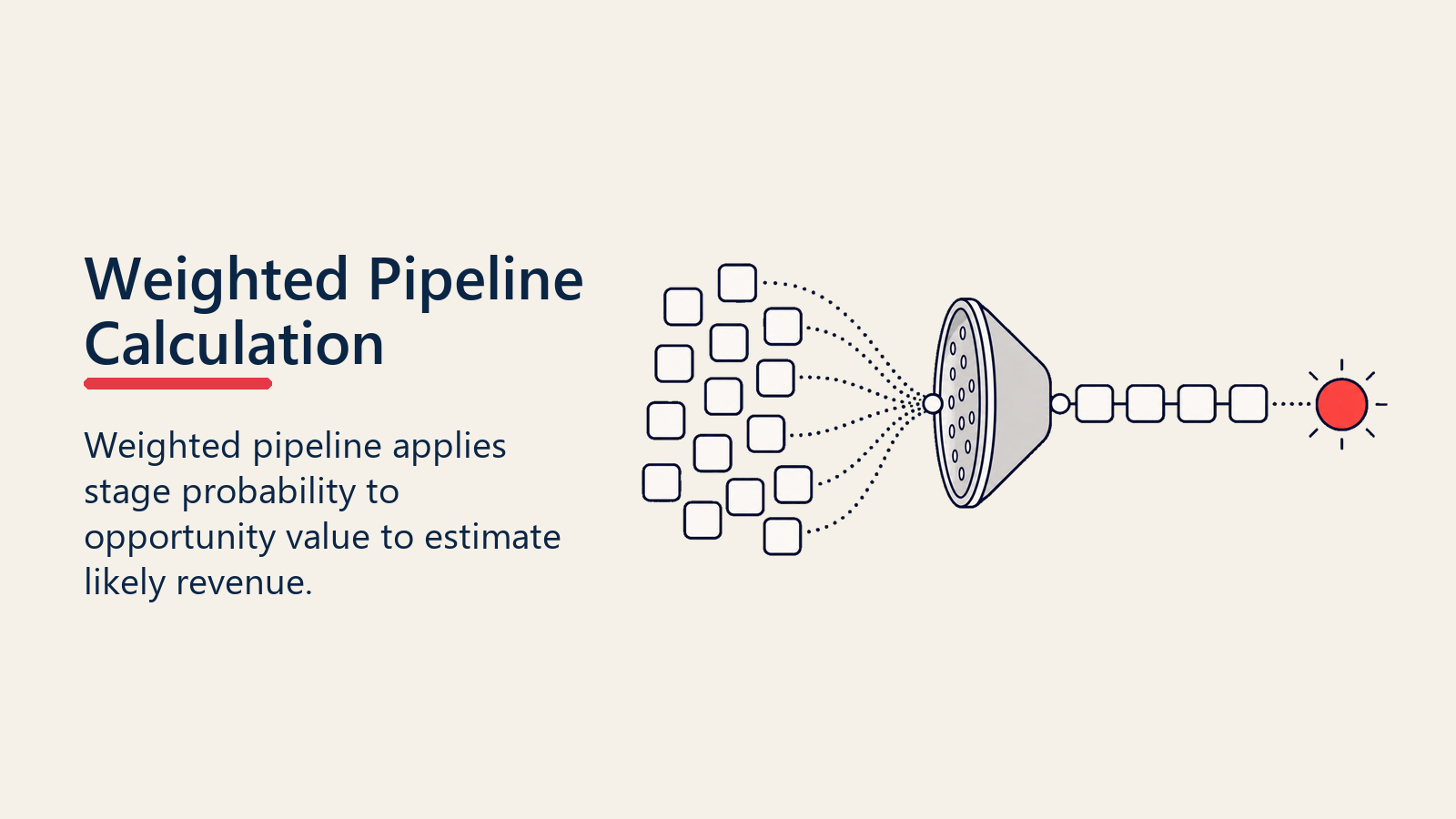
ステージ確率が割り当てられたら、weighted pipelineの計算は簡単です。
基本的なWeighted Pipelineの計算式
Weighted Pipeline = Σ (Deal Amount × Stage Probability)
パイプラインの例は以下の通りです。
| Deal | 金額 | ステージ | 確率 | Weighted Value |
|---|---|---|---|---|
| Acme Corp | $120,000 | Proposal | 60% | $72,000 |
| Beta Inc | $80,000 | Discovery | 20% | $16,000 |
| Gamma LLC | $200,000 | Negotiation | 80% | $160,000 |
| Delta Co | $50,000 | Qualification | 10% | $5,000 |
パイプライン総額: $450,000 Weighted pipeline総額: $253,000
この253,000ドルが、これら4つの商談から統計的に見込まれる収益です。保証された収益ではありませんが、商談の現在地に基づく最善の予測です。
Weighted Pipeline対 生のパイプライン
生のパイプライン(この例では450,000ドル)は、すべての商談を等しく扱うため誤解を招きます。Negotiationにある20万ドルの商談と、Qualificationにある20万ドルの商談はまったく異なります。
Weighted pipelineはこの現実を織り込みます。「過去のパターンが続くなら、この45万ドルのパイプラインからは約25万3千ドルの成約済み収益が生まれる」と教えてくれます。
だからこそ、「quotaに対してパイプラインを3倍維持する」といった生のパイプラインカバレッジ比率は原始的なのです。平均ステージ確率が33%であれば3倍の比率で十分かもしれませんが、初期段階の商談を多く抱えているなら不十分です。
より良い指標はweighted pipelineカバレッジ比率です。包括的なアプローチについてはパイプラインカバレッジ分析をさらに参照してください。
Weighted Coverage = Weighted Pipeline / Quota Target
quota50万ドルに対しweighted pipelineが25万3千ドルの場合、以下の通りです。
Weighted Coverage = $253,000 / $500,000 = 0.51 (51%)
これは、パイプラインが目標のおよそ半分不足していることを示しています。より多くの商談が必要か、既存の商談をより確率の高いステージへ進める必要があります。堅実なパイプライン創出戦略がこのギャップに対処します。
期間別のStage-Based Forecast
Stage-based forecastingは、通常四半期または月次で期間ごとにセグメント分けすると運用可能になります。
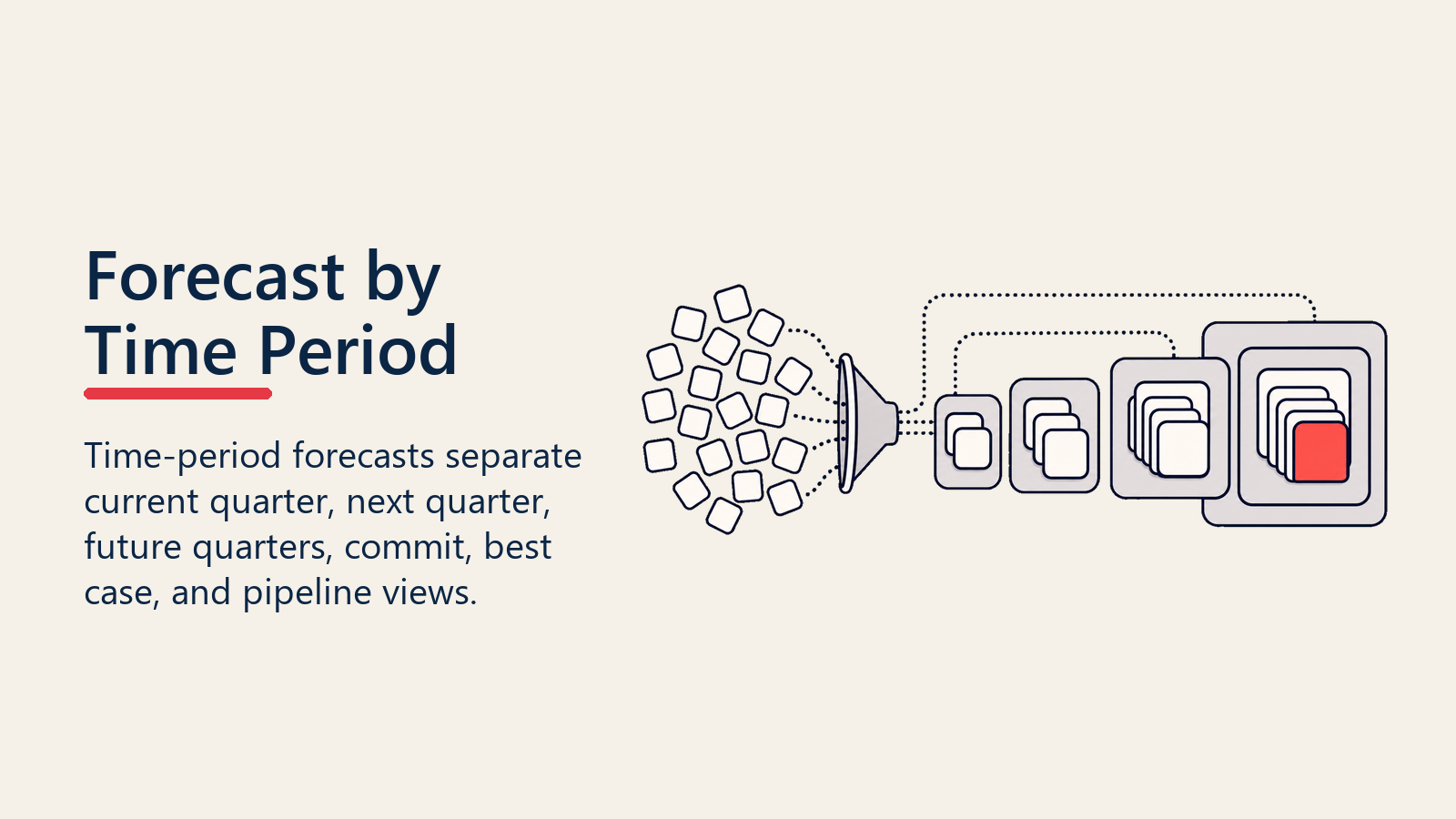
今四半期のForecast
close dateが今四半期にある商談でパイプラインをフィルタリングし、stage-basedの重み付けを適用します。
| ステージ | deal数 | 合計金額 | 確率 | Weighted Value |
|---|---|---|---|---|
| Negotiation | 8 | $800,000 | 80% | $640,000 |
| Proposal | 15 | $1,200,000 | 60% | $720,000 |
| Discovery | 25 | $1,500,000 | 20% | $300,000 |
| 合計 | 48 | $3,500,000 | $1,660,000 |
今四半期のForecast: $1,660,000
今四半期のforecastは、商談がより進んでおりclose dateが近いため、通常最も精度が高くなります(85〜95%)。
来四半期のForecast
来四半期のパイプラインについて同じ計算を行います。
| ステージ | deal数 | 合計金額 | 確率 | Weighted Value |
|---|---|---|---|---|
| Proposal | 10 | $900,000 | 60% | $540,000 |
| Discovery | 30 | $2,100,000 | 20% | $420,000 |
| Qualification | 50 | $2,500,000 | 10% | $250,000 |
| 合計 | 90 | $5,500,000 | $1,210,000 |
来四半期のForecast: $1,210,000
来四半期のforecastは、商談が初期段階にあり、close dateがコミットメントではなく予測にすぎないため、精度は下がります(70〜80%)。
さらに先の四半期のForecast
来四半期より先になると、stage-based forecastingは正確なものというより方向性を示すものになります。まだ高確率のステージに到達しておらず、タイムラインが不確かな商談を予測することになるからです。
ベストプラクティス: 将来の四半期のforecastは、確定的なコミットメントではなく「パイプライントレンド」分析として切り分けましょう。パイプライン開発が必要な箇所を示すため、ステージ別のweighted valueを示します。
ローリングForecastのアプローチ
静的な四半期forecastの代わりに、高度なチームはローリングforecastを維持しています。
- Commit Forecast: 近いclose dateを持つ高確率の商談(Negotiation、Proposal)
- Best Case: commitに加え、予定通り進めば中確率の商談(Discovery)
- Pipeline: 初期段階の商談を含むすべてのweighted pipeline
この3段階のアプローチは、可視性を提供しつつ不確実性を認めます。Commit forecastは90%以上の精度を持ちます。Best caseは70〜80%です。Pipeline forecastは方向性を示すものです。
ステージと他の要因の組み合わせ
Stage-based forecastingは土台ですが、トップクラスのforecasterは追加のシグナルを重ねます。
Deal年齢係数
通常のvelocityを超えてステージに留まっている商談は、ステージだけが示唆する以上に低い成約確率を持つことがよくあります。
調整の例:
- 典型的な「Proposal」ステージの所要期間: 15日
- ある商談はProposalに45日間留まっている
- 基本確率: 60%
- 年齢調整後の確率: 60% × 0.8 = 48%
これにより、失格にはなっていないものの進展していない停滞商談によって、forecastが人為的に水増しされることを防げます。効果的なdeal aging管理は、forecast精度を維持する上で重要です。
営業担当者の判断によるオーバーレイ
経験豊富な営業担当者は、ステージデータが捉えきれないシグナル、懸念を持つ新たなstakeholder、予期しない予算凍結、競合の動きなどを見抜くことがよくあります。
ベストプラクティス: 営業担当者がstage-based確率を±20%まで調整できるようにし、必ず根拠を求めましょう。これにより、現場の実情を認めつつステージを基準として維持できます。
営業担当者による調整後のforecastを、純粋なstage-based forecastと比較しましょう。その調整が精度を改善するなら、そのシグナルを確率モデルに組み込みます。調整が一貫して間違っている(通常は過度に楽観的)なら、その重みを下げましょう。
顧客エンゲージメントのシグナル
最新の収益プラットフォームは、購買担当者のエンゲージメント、メール開封、提案書の閲覧、stakeholderの活動を追跡します。これらはstage-based確率をさらに精緻化できます。
- 高いエンゲージメント(複数のstakeholderが活発、提案書の閲覧が頻繁): ステージ確率に+10%
- 低いエンゲージメント(14日間活動なし): ステージ確率に-15%
このオーバーレイは、buying committeeが複雑で、エンゲージメントレベルが本当の関心を示す大型商談において特に価値があります。
過去の商談パターン
十分なデータがあれば、ステージコンバージョンを超えたパターンを分析しましょう。
- 特定の業界の商談はProposalに到達すると全体平均55%に対し70%で成約する
- 特定の推進者(社内の支持者)のペルソナを持つ商談はより高い割合でコンバージョンする
- 技術検証ステージを含む商談は、それがない商談の65%に対し80%で成約する
こうしたパターンに基づく調整を、時間をかけて確率モデルに組み込んでいきましょう。
Stage-Based対 Repの判断: 競合ではなく補完
古典的な論争があります。forecastはstage-basedであるべきか、営業担当者の判断に基づくべきか。
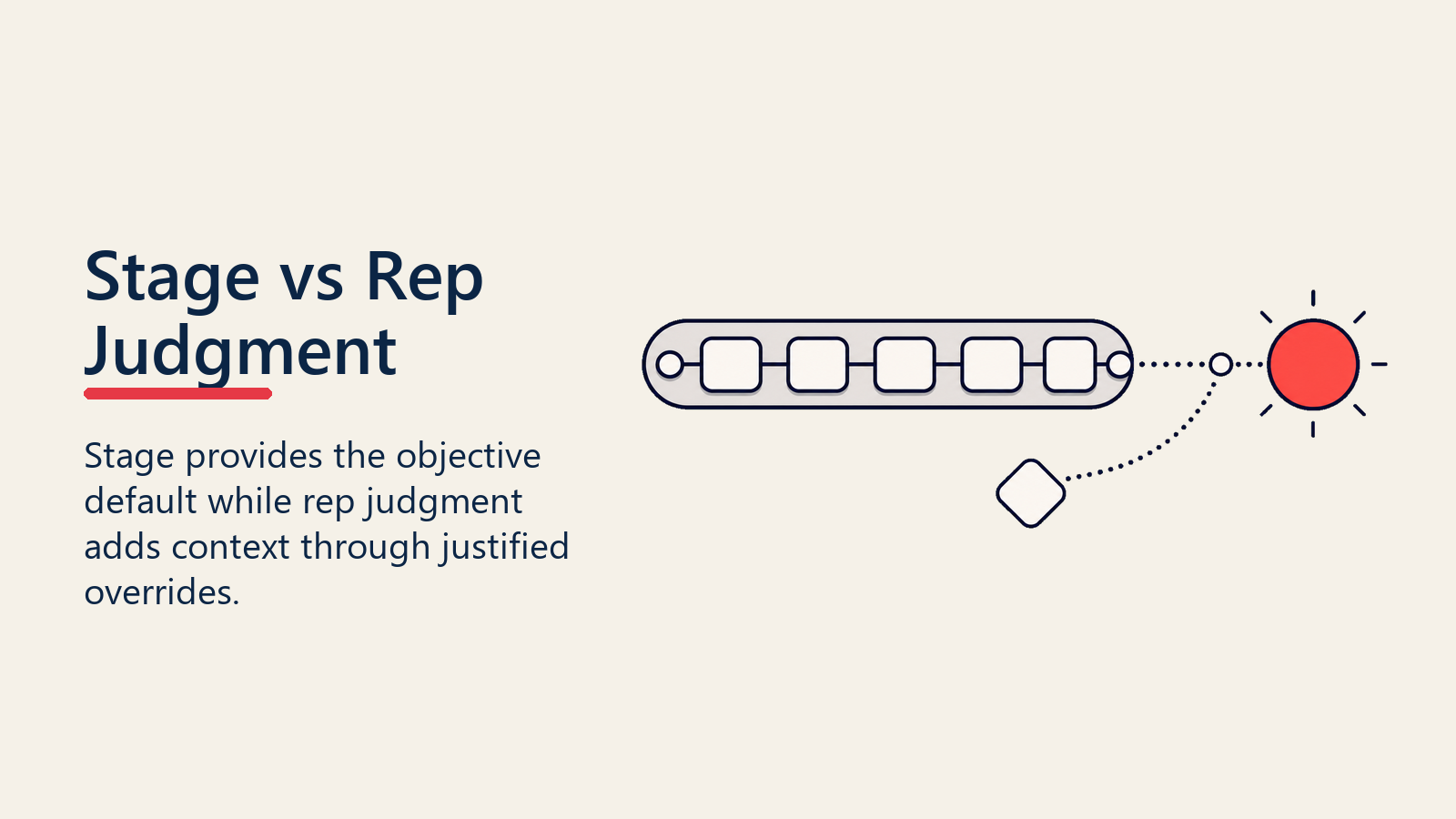
答えは、両方であり、ステージをデフォルトとすることです。
Stage-Based Forecastingの利点
客観性: ステージは観察可能で検証可能です。「提案書は提出されたか」は事実の問題です。
一貫性: すべての営業担当者が同じ確率フレームワークを使うため、チーム間でパイプラインを比較できます。
説明責任: Discoveryステージに留まったままの商談が「90%で成約しそう」と感じられることはありません。ステージの規律が現実を突きつけます。
改善可能性: 過去データの分析により、実際の結果に基づいてステージ確率を精緻化でき、時間とともにforecastの精度が上がります。
先行指標: ステージ進行は、現在の収益、deal年齢、営業担当者の楽観論よりも将来の収益をよく予測します。
Repの判断が価値を加える場面
ニュアンスの捕捉: 営業担当者は、ステージデータには反映されない競合の脅威、予算の変化、推進者の離脱などを知っています。
早期警告: 経験豊富な営業担当者は、正式なステージの後退より前に商談がおかしくなっていることを察知することがよくあります。
文脈の豊かさ: すべての「Proposal」ステージが同じというわけではありません。営業担当者は、どの提案書が強力な推進者(社内の支持者)を持ち、どれが冷めた関心しかないかを知っています。
最適なハイブリッド: Rep Overrideを伴うStage-Based
デフォルトとしてstage-based確率を使いましょう。必ず根拠を求めた上で、営業担当者による調整を許可します。
| Deal | 金額 | ステージ | ステージ確率 | 営業担当者による調整 | 営業担当者の根拠 |
|---|---|---|---|---|---|
| Acme | $120K | Proposal | 60% | 75% | 「CFOが口頭でcommitした、条件を確定させているだけ」 |
| Beta | $80K | Discovery | 20% | 5% | 「推進者(社内の支持者)が退職、関係を再構築中」 |
営業担当者によるオーバーライドの精度を追跡しましょう。ある営業担当者が一貫してオーバーライドでforecast精度を改善しているなら、その判断の重みを高めます。オーバーライドが一貫して間違っている(通常は過度な楽観)なら、オーバーライドの権限を縮小します。
このアプローチは、現場の情報が重要であることを認めつつステージの規律を維持します。定期的なパイプラインレビューが、こうしたオーバーライドのキャリブレーションに役立ちます。
精度の検証: ステージ予測と実績の比較
Stage-based forecastingは、正確であって初めて価値を持ちます。継続的な分析を通じて検証し、改善しましょう。
四半期ごとのforecast精度レビュー
四半期末に、以下を比較します。
- forecastされた収益(四半期開始時点のweighted pipeline)
- 実際の収益(成約した商談)
- 精度 = 実際の収益 ÷ forecast
例:
- Q1のweighted pipeline(1月1日時点): $2,000,000
- Q1の実際の成約済み収益: $1,850,000
- 精度: 92.5%
目標: 今四半期のforecastで85〜95%の精度。
ステージconversionの検証
各ステージの実際のconversion率と割り当てられた確率を分析します。
| ステージ | 割り当てられた確率 | 到達したdeal数 | closeしたdeal数 | 実際のconversion | 乖離 |
|---|---|---|---|---|---|
| Negotiation | 80% | 40 | 34 | 85% | +5% |
| Proposal | 60% | 80 | 42 | 52.5% | -7.5% |
| Discovery | 20% | 200 | 44 | 22% | +2% |
この例では、「Proposal」ステージが過大評価されています。60%が割り当てられていますが、実際には52.5%でしかコンバージョンしていません。今後は確率を55%に下方修正しましょう。
セグメント別の精度
以下の軸で精度を分解しましょう。
- Rep/チーム: どのチームが正確にforecastし、どのチームが一貫して過大・過小評価しているか
- deal規模: エンタープライズdealはSMBよりも正確にforecastされているか
- ソース: インバウンドの商談は予測通りコンバージョンし、アウトバウンドは下回っているか
- プロダクトライン: 一部の製品はより予測可能なsales cycleを持っているかもしれない
この分析により、確率をどこで精緻化すべきか、ステージの規律をどこで改善すべきかが明らかになります。失注分析は、forecast精度のギャップについてさらなる洞察を提供します。
時間軸別の精度
より長い時間軸にわたって精度がどう低下していくかを追跡しましょう。
- 今四半期: 精度90%
- 来四半期: 精度75%
- 2四半期先: 精度55%
これにより、より長期のforecastにどれだけの確信を置くべきかがキャリブレーションされ、パイプライン開発のニーズが明らかになります。収益の予測可能性を理解することは、各時間軸に対して適切な期待値を設定する助けになります。
Forecastingのためのステージ設計: ステージと購買担当者の行動プロセスの整合
ステージの定義がforecast精度を左右します。設計の甘いステージ、多すぎる、少なすぎる、あるいは実際の購買担当者の進行とずれている、といった場合、stage-based forecastingは機能しなくなります。
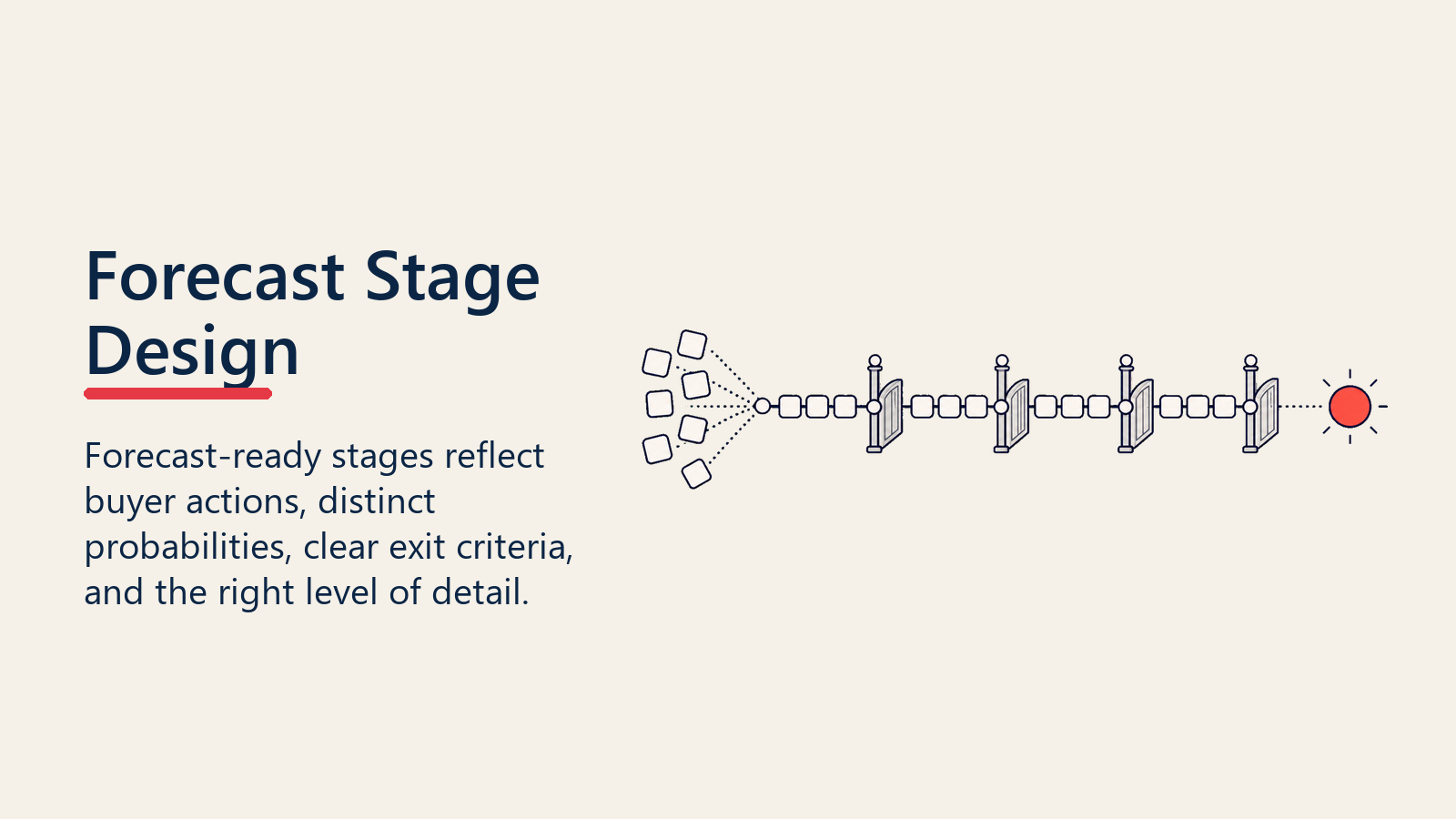
Forecast最適化されたステージ設計の原則
1. ステージは売り手の活動ではなく、購買担当者の行動を反映すべき
❌ 悪い例: 「デモが設定された」(売り手の活動) ✅ 良い例: 「ソリューションが検証された」(購買担当者の行動、ニーズに合うと合意した)
❌ 悪い例: 「提案書を送付した」 ✅ 良い例: 「提案書がレビューされた」(購買担当者が実際にレビューした)
2. 各ステージは意味のある異なる成約確率を持つべき
「Needs Analysis」(20%)、「Discovery Call」(22%)、「Pain Points Documented」(21%)がすべてほぼ同じ割合でコンバージョンするなら、それらを1つのステージに統合しましょう。似た確率を持つステージが多すぎると、精度を高めることなく複雑さだけが増します。
3. ステージには明確で観察可能なエグジット基準が必要
「Qualification」ステージは、商談が適格になるための基準が定義されていなければ意味がありません。すべてのステージには、検証可能な具体的なエグジット要件が必要です。適格性判断のベストプラクティスについてはopportunity qualificationを参照してください。
4. ステージ数はsales cycleの複雑さに合わせるべき
- シンプルな販売(1〜2回の接触、トランザクション型): 4〜5ステージ
- 中程度の複雑さ(3〜5回の接触、SMB/ミッドマーケット): 6〜7ステージ
- 複雑な販売(10回以上の接触、エンタープライズ): 7〜9ステージ
必要以上に多いステージは事務的な負担を生みます。必要より少ないステージは予測の解像度を失います。
例: B2B SaaS向けに最適化されたステージフレームワーク
| ステージ | 購買担当者の行動 | エグジット基準 | 典型的な確率 |
|---|---|---|---|
| Qualification | 見込み客が意図のシグナルとともに関与する | 予算、決裁権限、ニーズ、タイムラインが検証されている | 10% |
| Discovery | 見込み客が現在のプロセスとpain pointを共有する | ヒアリングのミーティングが完了し、要件が文書化されている | 20% |
| Solution Design | 見込み客がソリューションが自社ニーズに合うと合意する | デモが完了し、技術的なfitが検証されている | 40% |
| Proposal | 見込み客が正式な提案書をレビューする | 提案書が提出され、決裁者によってレビューされている | 60% |
| Negotiation | 見込み客が商業的な話し合いに入る | 価格・条件の話し合いが進行中で、法務レビューが始まっている | 80% |
| Verbal Commit | 見込み客が条件に口頭で合意する | 口頭合意を受け取り、事務手続きが保留中 | 90% |
この6ステージのフレームワークは、予測としての価値と運用のシンプルさのバランスを取っています。各ステージは意味のある購買担当者の進行を表し、明確なエグジット基準を持ち、統計的に区別できる成約確率を持ちます。
結論: 運用上の規律としてのStage-Based Forecasting
Stage-based forecastingは単なる計算方法論ではありません。パイプラインで実際に何が起きているかを明確にすることを強いる、運用上の規律です。
forecastをステージ進行に結びつけると、希望的な予測よりも獲得された進行を評価する仕組みを構築でき、すべての営業担当者とチームにわたって一貫した確率フレームワークを提供でき、過去のコンバージョン率が確率を精緻化するにつれてデータドリブンな改善が可能になり、観察可能なステージ基準を通じて説明責任が生まれ、規律を持って実行すれば85〜95%の精度で収益を予測できるようになります。
正確にforecastできる組織は、運が良いわけではありません。完璧な直感を持つ魔法のような営業担当者がいるわけでもありません。彼らが持っているのは運用上の規律、つまり実際の購買担当者の進行を反映するよく定義されたステージ、過去データに基づく確率の割り当て、そしてステージの水増しを防ぐ進行要件です。
もしあなたのforecastが一貫して外れていたり、四半期末の結果に絶えず驚かされたりしているなら、問題は営業担当者の判断でも市場の予測不可能性でもありません。stage-basedの規律がないことが問題です。
土台を築きましょう。意味のあるステージを定義し、現実を反映する確率を割り当て、ステージの水増しを防ぐ進行基準を徹底する。forecastの精度はそれについてきます。
ステージの規律を通じてforecast精度を築く準備はできましたか。 forecastingの基礎とパイプラインステージの設計を参照し、データドリブンなforecastingオペレーションを構築しましょう。
さらに詳しく:

On this page
- なぜステージ進行が最良の先行指標なのか
- Stage-Based Forecastingとは何か
- ステージ確率の割り当て: 恣意的からデータドリブンへ
- 標準的なステージ確率(出発点)
- 過去のコンバージョンに基づく確率(データドリブン)
- 業界ベンチマーク(キャリブレーションチェック)
- カスタム確率モデル(上級編)
- ステージ進行の要件: 時間ベースではなく獲得された進行
- Weighted Pipelineの計算: ステージデータを収益予測に変える
- 基本的なWeighted Pipelineの計算式
- Weighted Pipeline対 生のパイプライン
- 期間別のStage-Based Forecast
- 今四半期のForecast
- 来四半期のForecast
- さらに先の四半期のForecast
- ローリングForecastのアプローチ
- ステージと他の要因の組み合わせ
- Deal年齢係数
- 営業担当者の判断によるオーバーレイ
- 顧客エンゲージメントのシグナル
- 過去の商談パターン
- Stage-Based対 Repの判断: 競合ではなく補完
- Stage-Based Forecastingの利点
- Repの判断が価値を加える場面
- 最適なハイブリッド: Rep Overrideを伴うStage-Based
- 精度の検証: ステージ予測と実績の比較
- 四半期ごとのforecast精度レビュー
- ステージconversionの検証
- セグメント別の精度
- 時間軸別の精度
- Forecastingのためのステージ設計: ステージと購買担当者の行動プロセスの整合
- Forecast最適化されたステージ設計の原則
- 例: B2B SaaS向けに最適化されたステージフレームワーク
- 結論: 運用上の規律としてのStage-Based Forecasting