Deal Progression Management:営業ステージを通じて商談を前進させる方法
Turn this article into takeaways for your work.


Each assistant summarizes the article only for you and suggests best practices for your work.
つらい現実をお伝えします。多くのセールスパイプラインは、動いていない商談で埋まっています。何週間も同じステージにとどまり、担当者は楽観的な forecast を出し、マネージャーは「そのうち受注できるだろう」と期待するだけです。やがて四半期末が来ると、そうした商談は翌四半期に持ち越されるか、消えてしまいます。
停滞した商談は、単なる機会損失ではありません。大きなコストがかかります。根拠のない期待でパイプラインを膨らませ、新しいリードに充てられたはずの営業リソースを拘束し、forecast accuracy を損ないます。forecast に載せた商談の 40〜60% が予定どおりに受注できないなら、問題はクロージングではなく、商談の進行にあります。
成果を出すセールスチームとそれ以外のチームを分けるのは、才能や製品との適合性だけではありません。体系的な商談の進行管理です。トップチームは、商談を同じステージに居座らせません。エビデンスに基づくゲートを通して商談を進め、ブロッカーを素早く特定して解消し、ベロシティ管理について担当者をコーチングします。
これは見込み客に圧力をかけたり、購買プロセスを急がせたりすることではありません。営業ステージを買い手の実際の進捗に合わせ、商談のあらゆる前進が「想定」ではなく「獲得」したものであるようにすることです。
Deal Progression とは何か
Deal progression とは、買い手の準備状況を示す具体的なエビデンスに基づき、営業案件をパイプラインのあるステージから次のステージへ体系的に進めるプロセスです。時間が経ったから、あるいは担当者が CRM の項目を更新したからではなく、商談が本当に前進したから先へ進む状態をつくります。
本当の前進とは、買い手側に何かが変わったということです。新しい情報を共有した、行動を起こした、決定を下した、あるいはネクストステップにコミットした、といった変化です。ステージの変更は、希望的観測ではなく、購買プロセスにおける実際の動きを反映するものです。
運用上の課題は次のとおりです。各ステージで何が正当な前進にあたるのかを定義するフレームワーク、商談がどこで詰まっているかの可視性、そして見込み客を遠ざけずに担当者がブロッカーを乗り越えられるようにするコーチングの仕組みが必要です。そこで、可視性と説明責任を保つためにパイプラインレビューが欠かせなくなります。
多くのチームがつまずくのは、パイプラインのステージを、買い手に沿ったマイルストーンではなく、事務的なチェックボックスとして扱っているためです。担当者がディスカバリーコールを終えただけで、買い手が適格であると示したわけでもないのに、商談が「ディスカバリー」から「クオリフィケーション」に進んでしまう。これがステージの水増しであり、forecast の精度を損ないます。
ステージ移行の原則
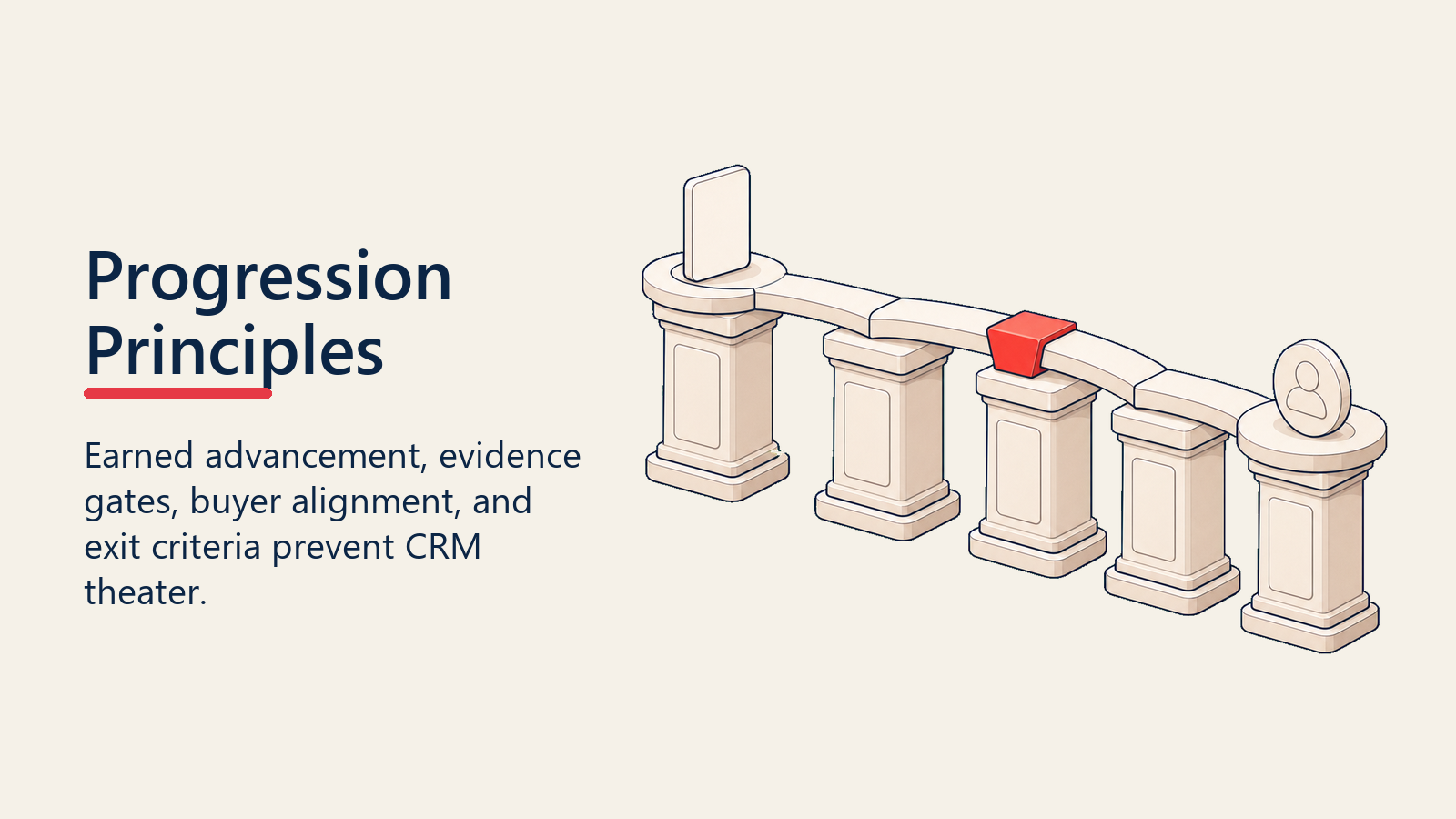
本当の商談進行と、CRM 上の見せかけを分ける原則は 4 つあります。
獲得して進む(時間では進めない)
商談は、2 週間経ったからではなく、前進を獲得したときに進みます。担当者が待ちきれなくなったという理由だけで、「提案送付済み」から「交渉」に移ってはいけません。買い手が提案を確認し、フィードバックを返し、条件の協議に同意したときに移るのです。
すべてのステージに、完了条件が必要です。商談が前進する準備ができたことを、何が証明するのか。買い手は何をしたのか。何にコミットしたのか。どんな情報を共有したのか。
これがなければ、パイプラインはベルトコンベアになります。買い手が実際に何をしたかに関係なく、商談が自動的に先へ進んでしまいます。これが forecast の水増しを招き、担当者が不意を突かれる原因です。
エビデンスに基づくゲート
ステージの移行には、すべてエビデンスが必要です。「関心はありそうです」や「折り返し連絡すると言われました」では足りません。本当のエビデンスとは、記録された買い手の行動、共有された情報、明確なコミットメントです。
何がエビデンスになるのでしょうか。
- 予算について話し合ったことを確認できる議事メモ
- 経済的決裁者がネクストステップに同意したメール
- 結果が記録された、完了済みの技術評価
- 具体的な要件を伴う正式な提案依頼
- 法務からのフィードバックを受領した契約レビュー
- 発行された発注書番号
エビデンスは譲れない条件にしましょう。エビデンスがなければ、前進もありません。これにより forecast の精度が守られ、商談が実際にどこにあるのかについて、正直な対話が促されます。
買い手に沿ったステージ
パイプラインのステージは、自社の営業プロセスではなく、買い手のジャーニーに対応させるべきです。買い手が意思決定を進めるのに合わせて、パイプラインのステージもその進捗を映し出す必要があります。
自社のステージが「プロスペクティング、クオリファイ、デモ、提案、交渉、クロージング」なのに、買い手のジャーニーが「課題の認識、ソリューションの調査、ベンダーの評価、ビジネスケースの作成、承認プロセス、導入計画」であれば、両者にずれが生じています。
買い手に沿ったステージは、「この見込み客は、購買プロセスのどの段階にいるのか」という問いに答えます。「担当者が最近何をしたか」ではありません。この整合性があれば、買い手が意思決定プロセスを実際に進む動きを追えるため、前進がより自然になります。
買い手の実態を反映するステージの設計方法は、パイプラインステージの設計で解説しています。
明確な完了条件
各ステージには、具体的な完了条件が必要です。商談が前進する前に、どんな条件を満たす必要があるのか。これにより曖昧さがなくなり、説明責任が生まれます。
完了条件は、たとえば次のようなものです。
- ディスカバリーからクオリフィケーション:予算の範囲を確認済み、意思決定者を特定済み、X 円のコストを生んでいるペインポイントを記録済み、90 日以内のタイムラインにコミット済み
- クオリフィケーションから提案:経済的決裁者が関与している、技術要件が記録されている、評価基準が確認されている、提案依頼を受領している
- 提案から交渉:意思決定者と提案内容をレビュー済み、価格・条件についてフィードバックを受領済み、範囲について口頭で合意済み、法務レビューを開始済み
- 交渉からクロージング:すべてのステークホルダーが足並みを揃えている、契約条件に合意している、発注プロセスが始まっている、導入スケジュールが確認されている
完了条件によって、主観的な判断が客観的な評価に変わります。商談は、条件を満たしているか、満たしていないかのどちらかです。
これらのゲートを定義する詳しいフレームワークは、ステージゲート基準で扱っています。
進行の指標:商談が前進できる状態を示すシグナル
進行の指標は、売り手の活動や、ステージでの経過時間ではなく、買い手のコミットメントを示すものでなければなりません。
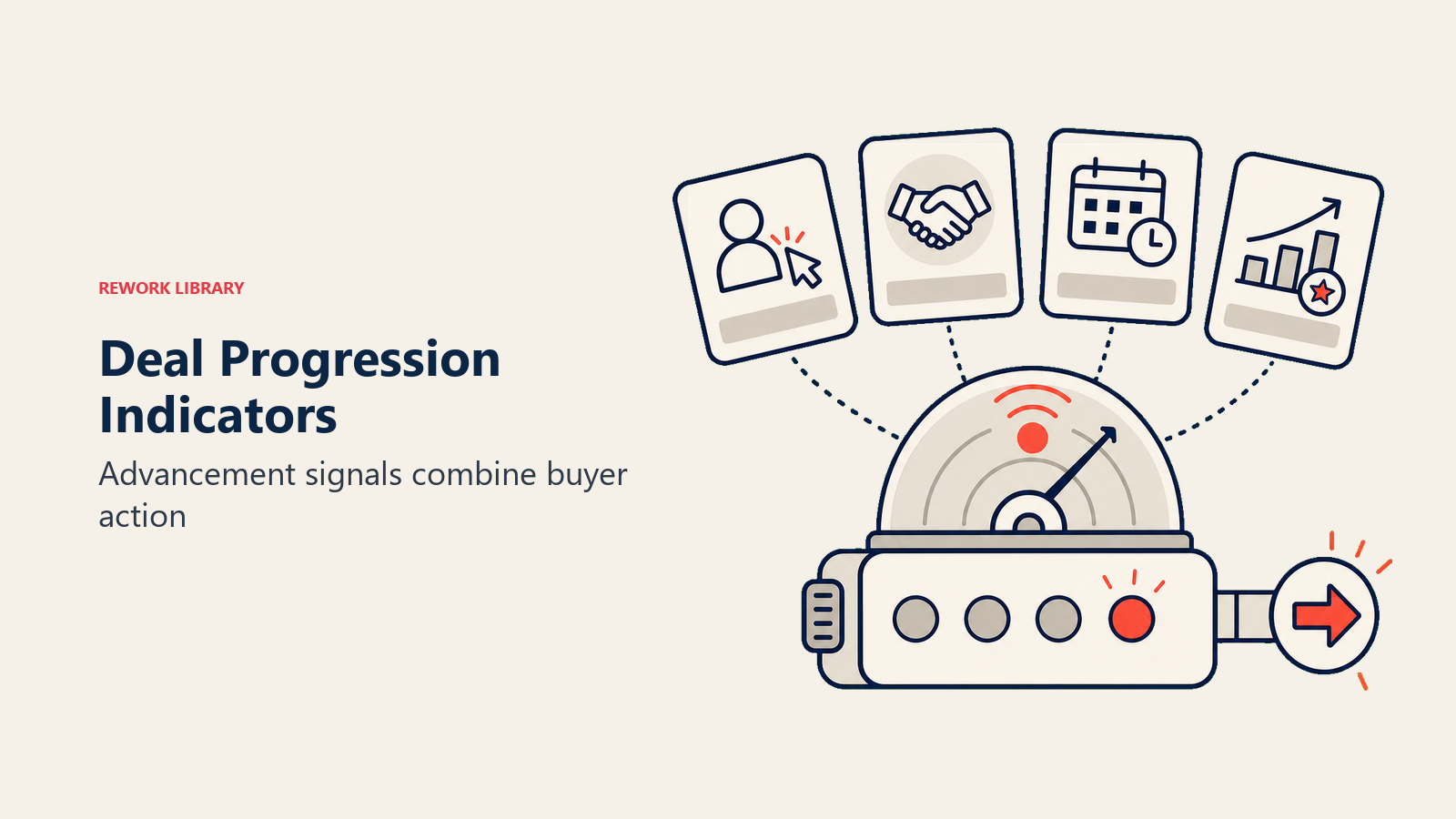
正式な完了条件に加えて、本当の前進を示す買い手の行動にも注目してください。担当者がこうしたシグナルに気づけるよう、コーチングしましょう。
エンゲージメントの頻度が高まる - 返信が速くなる、促さなくても会議を設定してくれる、先方から連絡してくる。48 時間かかっていた返信が当日中に届くようになったら、何かが変わったということです。
関与するステークホルダーが広がる - 新しい人が会話に加わります。CFO がデモに同席したがる。法務が契約について質問し始める。CRM が更新されていなくても、社内で商談は動いています。
社内情報を共有してくれる - 予算の詳細、戦略的な取り組み、競合の圧力、社内の力関係について話してくれます。情報の共有は、信頼と本気度のシグナルです。
行動を起こす - 宿題を終わらせる、社内でパイロットを実施する、提案書をチームに共有する、他部門を紹介してくれる。行動は、投資を意味します。
導入の詳細を話し合う - 会話が「これは機能するのか」から「これをどう機能させるのか」に変わります。オンボーディングの時期、連携要件、トレーニング計画に関する質問が出てきたら、評価の段階はすでに過ぎています。
競合に関する言及 - 「2 社に絞り込んだ」と伝えてくる、あるいは特定の競合との違いを尋ねてくる。これは後期段階の購買行動です。
投入する時間が増える - 会議が長くなる、複数回のセッションが設けられる、より多くのステークホルダーが参加する。買い手の時間は、最良の見極めシグナルです。
こうした指標は完了条件の代わりにはなりませんが、前進を裏付けます。商談が完了条件を満たし、かつこうした行動シグナルも見られるなら、自信を持ってステージを進められます。
ステージごとの前進:重要な移行点
特定のステージ移行は、特に停滞が起きやすく、重点的な管理が必要です。最も重要な移行への対処法を紹介します。
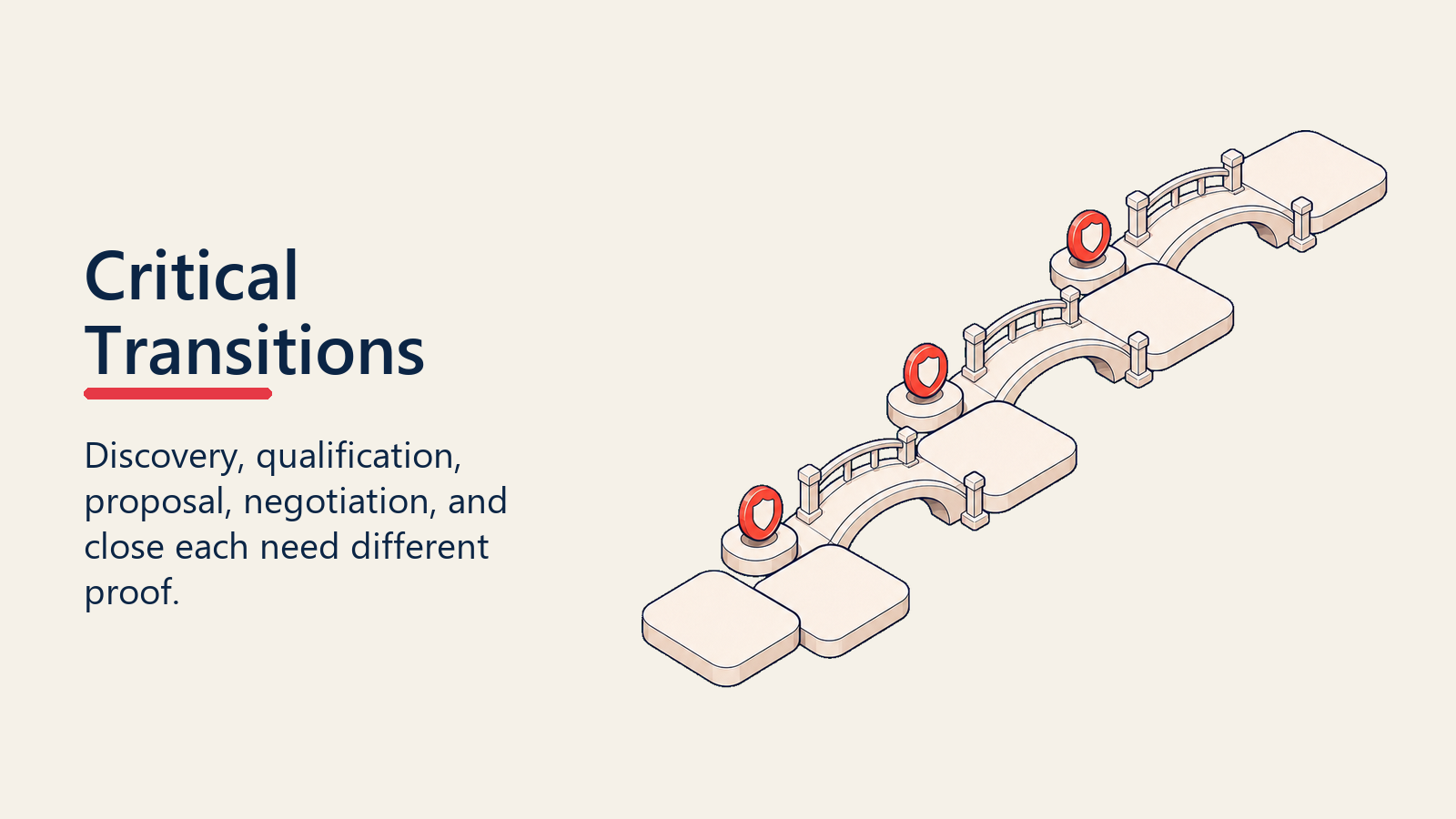
ディスカバリーからクオリフィケーションへ
この移行は、ただ眺めているだけの人と、正当な商談を分けるものです。最大の間違いは、「うまくいった」1 回のディスカバリーコールだけを根拠に、早すぎる段階で先へ進めてしまうことです。
必要なこと:見込み客が、解決する価値のある課題、それに対処する予算、意思決定の権限、そして行動を起こす緊急性を持っていると示す必要があります。基本的な商談の見極めの基準を満たさなければなりません。
よくある停滞ポイント:
- 経済的決裁者を特定できない、または相手が明かそうとしない
- 予算に関する情報が曖昧、または矛盾している
- 緊急性を生む明確なスケジュールやビジネス上の動機がない
- 課題は認識されているが、優先順位が高くない
前進のためのコーチング:担当者が、一歩踏み込んだ質問をできるよう支援します。「予算はありますか」ではなく、「この種の取り組みには、予算がどのように割り当てられていますか」と尋ねます。「誰が決定しますか」ではなく、「過去に同様の購入を、御社ではどのように承認されましたか。流れを教えてください」と尋ねます。
2〜3 回の会話を経てもクオリフィケーションの基準を満たせない商談は、まだ準備ができていません。ナーチャリングに移し、時期を改めて戻ってきましょう。クオリフィケーションのアプローチを整理するために、BANT フレームワークや MEDDIC フレームワークの活用を検討してください。
クオリフィケーションから提案へ
ここは、課題の理解から、ソリューションの提示へと移る段階です。重大な失敗は、要件や意思決定基準を十分に理解する前に、早すぎる段階で提案書を送ってしまうことです。
必要なこと:記録された要件、明確な評価基準、成功指標についての合意、そしてソリューションを評価する権限を持つ人からの明示的な提案依頼が必要です。
よくある停滞ポイント:
- 明確な RFP や要件がないまま提案書を送ってしまう
- 優先事項が食い違う複数のステークホルダーがいる
- 評価基準が確認・記録されていない
- 「良い提案」がどのようなものか、合意がない
前進のためのコーチング:提案書の送付を申し出るのではなく、提案依頼を獲得するよう担当者に指導します。「これまでのお話を踏まえて、提案書をまとめることができます。その提案書が役立つものになるには、何が必要でしょうか」。これにより評価基準が明らかになり、準備ができているかも確認できます。
提案が依頼され、どのように評価されるかが分かるまでは、先へ進めないでください。
提案から交渉へ
提案書を送ったあと、このステージでは、買い手が本当に前向きに進める気があるかが試されます。多くの提案は、ブラックホールに消えてしまいます。それは前進ではなく、前進を装った停滞です。
必要なこと:買い手が提案を確認し、内容のあるフィードバックを返し、条件、価格、導入について議論に応じる必要があります。反応がないなら、まだ準備ができていないということです。
よくある停滞ポイント:
- 提案書を送ったがフィードバックが届かない
- 「社内で検討しています」と言われるが、時期の目安がない
- 価格への異論が出るが、代替案が話し合われていない
- 競合する優先事項により、決定が先延ばしになる
前進のためのコーチング:提案書を送る際に、期待値をそろえておきます。「本日お送りします。来週 30 分ほど時間をいただき、内容のご説明とご質問への対応をさせていただくのはいかがでしょうか」。これにより、確認することへの責任が生まれます。
提案内容について実質的な議論がないまま 2 週間が過ぎたなら、その商談は前進していません。停滞しています。交渉中のふりをせず、その点に正面から向き合いましょう。
交渉からクローズへ
この最終ステージは、口頭での合意と、署名された契約を分けるものです。誰もが「足並みを揃えている」にもかかわらず、事務的な障壁、リスク回避、土壇場の迷いで勢いを失い、ここで消える商談は少なくありません。
必要なこと:すべての意思決定者が条件に同意し、契約を法務が審査・承認し、調達プロセスが完了し、支払いや発注の手続きが整っている必要があります。
よくある停滞ポイント:
- 法務レビューが想定より長引く
- 土壇場でステークホルダーから異論が出る
- 予算の凍結や再配分
- ビジネス上の優先事項の変化
- 買い手の後悔やリスク回避
前進のためのコーチング:担当者が、クロージングの手続きを先回りして管理できるよう支援します。買い手の承認プロセスを詳細に把握しましょう。誰がレビューするのか。法務は通常どのくらい時間がかかるのか。何が遅れを招くのか。そのうえで、目標のクローズ日から逆算し、各ステップに時間を確保します。
買い手側でも、この商談を社内で後押ししてもらいましょう。主要なコンタクトにこう尋ねます。「土壇場で、この話を頓挫させかねないものは何でしょうか。それをどう防げばよいでしょうか」。これにより、隠れた地雷が見つかります。
進行のブロッカー:各ステージでよくある障害
ブロッカーはステージごとに異なるため、進行管理には、画一的なフォローアップではなく、ステージ別の診断が必要です。
商談は、予測できる理由で停滞します。効果的な進行管理とは、ブロッカーが商談を潰す前に、特定して対処することです。
情報の欠落 - 予算、意思決定者、技術要件、評価基準についての重要な詳細が分かっていない状態です。理解していないものは、前に進められません。対処法:戻って、本来もっと早く尋ねておくべきだった質問をします。
ステークホルダーへのアクセス不足 - 話している相手が違っていて、意思決定者にたどり着けません。対処法:現在のコンタクトに、紹介を頼みます。「皆さまの優先事項に対応するために、ほかにどなたがこの会話に加わるべきでしょうか」。
競合する優先事項 - 商談は重要でも、緊急ではありません。ほかの取り組みが優先され続けます。対処法:先延ばしのコストを定量化します。もう 1 四半期待つと、どれだけの損失になるのか。緊急性を示すビジネスケースをつくります。
リスク回避 - 買い手は誤った判断を恐れて、決定を先延ばしにします。対処法:パイロットプログラム、段階的な導入、あるいは先方の具体的な懸念に応える顧客事例を提案します。感じているリスクを減らします。
予算の不確実性 - 購入したい気持ちはあるものの、資金が確定していません。対処法:ビジネスケースの作成を支援します。予算承認を後押しする ROI モデル、参考事例、エグゼクティブブリーフィングを提供します。
社内の力学 - 部門間の対立、経営陣の交代、組織の不確実性が、身動きの取れない状態を生みます。対処法:慎重に立ち回ります。力関係を把握し、適切な社内のチャンピオンと連携します。
分析麻痺 - 調査を続け、さらに多くのベンダーを比較し、追加の情報を求め続けます。対処法:期間限定のオファーで緊急性をつくる、競合の脅威を示す、あるいは先延ばしによるコストの増加を示します。
定期的な商談レビューでは、ブロッカーを体系的に洗い出し、解消の方針を割り当てるべきです。担当者が「見込み客からの連絡待ち」のまま、何週間も商談を停滞させてはいけません。パイプラインのボトルネック分析を理解すれば、チーム全体に共通するパターンを特定できます。
ベロシティ管理:遅れの特定と解消
パイプラインベロシティとは、商談がパイプラインをどれだけ速く進むかを表すものです。ベロシティが高ければ、営業サイクルが短く、収益化が早まります。低ければ、停滞、遅延、目標未達につながります。
ベロシティを適切に管理するとは、商談がどこで時間を費やしているかを把握し、速度が落ちたときに介入することです。
ステージ滞留期間の測定
パイプラインの各ステージで、平均滞留期間を追跡します。これにより、営業プロセスのどこで自然と時間がかかり、どこで商談が詰まるのかが分かります。
たとえば次のとおりです。
- ディスカバリー:平均 7 日
- クオリフィケーション:平均 14 日
- 提案:平均 21 日
- 交渉:平均 28 日
- クロージング:平均 10 日
個々の商談がこの平均を 50% 以上超えたら、注意が必要です。提案ステージに 35 日とどまっている商談は、通常どおりに進んでいるとは言えません。何かがおかしいのです。パイプラインの健全性を保つうえで、商談エイジング管理が重要になるのはこのためです。
パイプラインベロシティの指標は、パフォーマンスをベンチマークし、改善の機会を見つける助けになります。
時間ベースのアラート
予想される期間内に前進していない商談にフラグを立てるよう、CRM を設定します。次の場合に、自動アラートがマネージャーに通知されます。
- 商談が、平均期間の 2 倍の間、同じステージにとどまっている
- 7 日以上、アクティビティが記録されていない
- ネクストステップの期日が過ぎている
- クローズ日の更新が必要である
こうしたアラートをきっかけに、商談インスペクションのプロセスによるレビューが行われ、マネージャーが前進を妨げているものを調べます。
加速のための戦術
商談の速度が落ちたときは、マネージャーが加速のテクニックを担当者にコーチングします。
緊急性をつくるには、期間限定のインセンティブ、キャパシティの制約、期限付きのオファーを使います。「月末までに最終合意できれば第 2 四半期に導入を開始できますが、第 3 四半期の枠は急速に埋まっています」。
意思決定を簡単にするには、大きな決定を小さなコミットメントに分けます。「契約全体に取り組む前に、まず技術アーキテクチャに合意しましょう。そうすれば、残りがずっと楽になります」。
希少性を活かすのは、それが正当な場合に限ります。本当にキャパシティが限られている、価格改定が控えている、競合からの圧力がある、といった場合は、それを明確に伝えます。
エンゲージメントの頻度を高めて、勢いを維持します。毎週のチェックインは、商談を買い手の頭に置き続け、「去る者は日々に疎し」という停滞を防ぎます。
エグゼクティブの関与は、後期段階の商談を加速させることがあります。適切な場面では、VP of Sales や CEO を同席させ、先方の経営陣と会ってもらいます。同じ立場の人同士の対話が、残っていた懸念を解消することはよくあります。
目的は、見込み客に圧力をかけることではありません。懸念に先回りして対処することで、摩擦を取り除き、自然な購買の勢いを保つことです。商談を加速させる包括的な戦略については、パイプライン加速と営業サイクルの短縮をご覧ください。
後退への対処:商談を戻すべきとき
商談をパイプライン上で後ろのステージに戻す必要が生じることもあります。後退は失敗のように感じられ、抵抗を覚えがちですが、見せかけの前進より、正直な後退のほうが優れています。
後退が正当な場合
次のような場合は、商談を戻します。
クオリフィケーションの前提が誤っていた - 予算があると思っていたのに、実はなかった。予算が確保されるまで、ディスカバリーまたはナーチャリングに戻します。
ステークホルダーが変わった - ソリューションを気に入っていたチャンピオンが退職した。後任者とは一からやり直しです。これは、初期段階の関係構築への後退にあたります。
要件が大きく変わった - 小さなプロジェクトとして始まったものが、予算、スケジュール、意思決定者の異なる全社展開になった。これは実質的に、新しい商談です。
意思決定者から押し戻された - 承認できると言っていたマネージャーと進めてきたが、VP の承認が必要になった。上位者に働きかける間は、クオリフィケーションに戻します。
スケジュールが大幅に延びた - 今四半期に予定されていた商談が、予算サイクルや競合する優先事項のため、来年に延期された。まだ進行中のふりをせず、ナーチャリングに移します。
購買プロセスが振り出しに戻った - ほかのベンダーも比較したい、追加のパイロットを実施したい、調達をやり直したいと言われた。これは、前のステージへの後退です。
後退とディスクォリファイの違い
後退は、ディスクォリファイとは異なります。後退した商談にはまだ可能性がありますが、思っていたほど進んでいなかったというだけです。ディスクォリファイされた商談は終わりであり、パイプラインから外すべきです。
次の場合は、ディスクォリファイします。
- 明らかに、ソリューションの費用を負担できない
- 意思決定者が、はっきりと競合を選んだ
- 先方の課題が、自社のソリューションに合わない
- 誰からも何も購入するつもりがない
- 投じる時間が、見込まれるリターンを明らかに上回る
後退は、商談を適切なステージのままパイプラインに残します。ディスクォリファイは、パイプラインから完全に取り除きます。どちらも正直な評価であり、商談を誤ったステージに放置するよりずっと良い選択です。商談が失敗する理由をさらに深く分析するには、失注分析で、パターンを特定し、今後のパフォーマンスを改善しましょう。
後退への心理的な向き合い方
担当者が後退に抵抗するのは、失敗を認めるように感じるからです。マネージャーは、それを捉え直してあげる必要があります。正直な後退は forecast の精度を高め、担当者が労力を適切に振り向ける助けになります。
「条件に合意していないなら、この商談は実際には交渉にありません。提案ステージに戻して、フィードバックについて話し合う通話を設定しましょう。それが本当に必要な仕事です」。
後退は失敗ではありません。正確なパイプライン管理です。楽観ではなく、正直さを評価しましょう。
マネージャーの役割:コーチング、インスペクション、介入
セールスマネージャーは、主に 3 つの仕組みで商談の進行を推進します。
進行のためのコーチング
効果的な進行のコーチングは、定期的な 1on1 や商談レビューの場で行われます。マネージャーは、次のように問いかけるべきです。
「この商談が前進できる状態にあるという、どんなエビデンスがありますか」 これにより、担当者は感覚ではなく、具体的な証拠を言葉にすることになります。
「この商談が次のステージに進むには、何が必要ですか」 これにより完了条件が明確になり、アクションプランが生まれます。
「重要なのに、まだ話せていない相手は誰ですか」 これにより、ステークホルダーを漏れなく押さえられます。
「この商談の前進を妨げうるものは何ですか」 これにより、懸念が早期に浮かび上がります。
「経済的決裁者と最後に話したのはいつですか」 これにより、関係の深さを確認できます。
「この商談が予定どおりに受注できないとしたら、その理由は何でしょうか」 これにより、正直な評価が促されます。
良いコーチングは、担当者がアクティビティの完了だけを根拠に反射的にステージを更新するのではなく、進行について批判的に考える助けになります。
パイプラインコーチングのフレームワークは、こうした対話のための体系的なアプローチを提供します。
インスペクションの規律
マネージャーは、forecast の提出期限が来たときだけでなく、体系的に商談をインスペクションする必要があります。定期的なインスペクションのリズムには、たとえば次のものがあります。
週次のパイプラインレビューは、後期ステージ(提案、交渉、クロージング)のすべての商談を対象にします。ブロッカー、ネクストステップ、スケジュール上のリスクに焦点を当てます。
月次の詳細レビューは、中間ステージに平均より長くとどまっている商談を調べます。なぜ前進していないのか。介入の計画はどうなっているのか。
四半期ごとのステージ監査は、各ステージの商談をサンプルで確認し、本当にそのステージにふさわしいかを検証します。完了条件は本当に満たされているか。
インスペクションは、マイクロマネジメントではありません。パイプラインの信頼性を保つ品質管理です。定期的なインスペクションを通じてパイプラインの衛生管理を維持すれば、データは forecast と意思決定のために信頼できる状態に保たれます。
戦略的な介入
マネージャーが、商談に直接介入する必要がある場面もあります。
エグゼクティブの紹介は、同じ立場の人同士の対話が役立つ場合に行います。自社の VP が先方の VP と会うことで、停滞したエンタープライズ案件が動き出すことがあります。
商談の再構成は、提案したソリューションが実際のニーズに合っていない場合に行います。範囲、価格、条件を変えて、提案を作り直す必要がある場合もあります。
ステークホルダーマッピングは、担当者が下位のコンタクトとしか接点を持てずにいる場合に有効です。マネージャーは、上位層へ働きかけるためのネットワークや影響力を持っていることがよくあります。
交渉の支援は、担当者がまだ持っていない経験を要する複雑な条件の場合に行います。シニアメンバーと組んで、クロージングの活動を進めます。
ディスクォリファイの判断は、担当者が楽観的すぎる、あるいは入れ込みすぎている場合に行います。マネージャーが客観的に評価します。「この商談はディスクォリファイして、先に進む必要があります」。
介入は、日常的にではなく、戦略的に行うべきです。すべての商談に介入しているなら、それは育成の問題か、採用の問題です。
テクノロジーによる支援:CRM の自動化、アラート、ダッシュボード
テクノロジーは、管理業務を増やすのではなく、進行管理を楽にするものであるべきです。効果的な CRM の設定には、次のものが含まれます。
ステージ移行の自動化ワークフロー
次のようなワークフローを設定します。
- 必須項目が入力されていない場合は、ステージを進められないようにする
- ステージ変更を許可する前に、完了条件を裏付けるエビデンスの記録を必須にする
- 商談が進んだときに、ネクストステップのテンプレートを自動入力する
- 重要なステージで、ステークホルダーマッピングの更新を促す
- 商談が後期ステージに到達したら、マネージャーに確認通知を送る
こうしたガードレールにより、マネージャーの監督だけに頼らず、進行の規律を自動的に徹底できます。
時間ベースのアラートとフラグ
次の場合に、自動アラートを設定します。
- 7 日以上動きがない商談(記録されたアクティビティがない)
- 平均期間の 1.5 倍より長くステージにとどまっている商談
- クローズ日が過ぎている商談
- ネクストステップの期日が過ぎている商談
- ステージに必要な項目が欠けている商談
こうしたアラートにより、マネージャーの注意が、介入が必要な商談に向けられます。
進行分析ダッシュボード
次のような内容を示すダッシュボードを構築します。
- 担当者別・商談規模別の、平均ステージ滞留期間
- ステージごとのコンバージョン率(各ステージから前進する商談の割合)
- 時間経過に伴うベロシティの推移(パイプラインは速くなっているか、遅くなっているか)
- ブロッカー分析(停滞の最も一般的な理由)
- 後退率(商談が後ろに戻る頻度)
こうした指標により、個々の商談にとどまらない、構造的な進行上の問題を特定できます。コンバージョン率分析を理解すれば、パイプラインのどこで機会がこぼれ落ちているのかを正確に突き止められます。
セールスエンゲージメントツールとの連携
CRM をセールスエンゲージメントのプラットフォームと連携させ、次のようにします。
- 買い手のエンゲージメントデータ(メールの開封、コンテンツの閲覧、会議への出席)を、進行のエビデンスに反映する
- 自動シーケンスを、パイプラインのステージに応じて調整する
- アクティビティデータで、担当者が商談に適切に取り組んでいることを検証する
- 音信不通の検知により、返信が止まった見込み客にフラグを立てる
テクノロジーは、本当の前進や、懸念すべき停滞を示すシグナルを浮かび上がらせ、すべての商談を手作業で追う負担を減らすものであるべきです。
チームに Deal Progression の規律を導入する
場当たり的なステージ更新から、体系的な進行管理へ移行するには、運用の変更が必要です。
1. すべてのステージの完了条件を文書化する - 商談が前進する前に、どんなエビデンスが必要かをチームで揃えます。明示的にし、譲れない条件にします。
2. 現在のパイプラインを監査する - 各ステージの商談を見直し、本当にそこに属しているかを正直に評価します。商談を適切なステージに移し、終わっているものはディスクォリファイします。
3. インスペクションのリズムを確立する - 後期ステージの週次レビュー、隔週のパイプライン全体のレビュー、月次のベロシティ分析を行います。インスペクションを、事後対応ではなく日常にします。
4. CRM のガードレールを設定する - 必須項目、ステージ変更時の検証、自動アラートを追加し、進行の規律を徹底します。
5. 進行のコーチングを教える - マネージャーが、楽観的な評価を受け入れるのではなく、エビデンスに基づく前進について担当者をコーチングできるよう育成します。
6. 正確さを測定し、評価する - forecast accuracy とステージのコンバージョン率を追跡します。正直な後退を伴うとしても、パイプラインを整然と保つ担当者を評価します。確度モデリングを活用して、forecast の精度を高めましょう。
7. 見直しと改善 - ステージの定義、完了条件、進行の指標を、四半期ごとに見直します。学んだことに基づいて調整します。
これは一度きりのプロジェクトではありません。営業チームの働き方の一部となる、運用上の規律です。
まとめ
Deal progression management は、本当のパイプラインの健全性と、CRM 上の見せかけを分けるものです。担当者が活動を示す必要があるからでも、forecast の数字を達成したいからでもなく、商談が本当に前進したから先へ進むようになれば、正確な forecast、より短い営業サイクル、より高い win rate が得られます。
核となる原則はシンプルです。前進は獲得するものであり、想定するものではありません。ステージの変更はすべて、具体的なエビデンスで裏付けられた、買い手の実際の進捗を反映すべきです。
そのためには、担当者の規律、マネージャーのコーチング、そして進行を可視化し測定できる仕組みが必要です。商談が実際にどこにあるのかについて、たとえ後退やディスクォリファイを意味するとしても、正直な対話を重ねなければなりません。
しかし、見返りは大きいものです。進行を体系的に管理するチームは、forecast の精度が 20〜30% 向上し、営業サイクルが 15〜25% 短縮され、win rate も大きく高まります。実際に前進している商談にエネルギーを集中できるからです。
期待で膨らんだ停滞パイプラインを受け入れるのはやめましょう。商談を体系的に前進させる、あるいは正直にディスクォリファイする、そのための運用規律を築いてください。
**パイプラインを加速させませんか?**買い手に沿ったパイプラインステージの設計の方法と、forecast の精度とベロシティを高めるエビデンスベースのステージゲート基準の導入方法をご覧ください。
さらに詳しく:
- 商談インスペクションのプロセス:商談の健全性と進行をレビューするための体系的なフレームワーク
- パイプラインベロシティ:商談の流れを加速させるための指標とテクニック
- パイプラインコーチング:進行の規律について担当者をコーチングする体系的なアプローチ
- Win Rate の改善:パイプライン全体でクローズ率を高めるための戦略
- Forecasting の基礎:進行データに基づいて、信頼できる売上予測を立てる

On this page
- Deal Progression とは何か
- ステージ移行の原則
- 獲得して進む(時間では進めない)
- エビデンスに基づくゲート
- 買い手に沿ったステージ
- 明確な完了条件
- 進行の指標:商談が前進できる状態を示すシグナル
- ステージごとの前進:重要な移行点
- ディスカバリーからクオリフィケーションへ
- クオリフィケーションから提案へ
- 提案から交渉へ
- 交渉からクローズへ
- 進行のブロッカー:各ステージでよくある障害
- ベロシティ管理:遅れの特定と解消
- ステージ滞留期間の測定
- 時間ベースのアラート
- 加速のための戦術
- 後退への対処:商談を戻すべきとき
- 後退が正当な場合
- 後退とディスクォリファイの違い
- 後退への心理的な向き合い方
- マネージャーの役割:コーチング、インスペクション、介入
- 進行のためのコーチング
- インスペクションの規律
- 戦略的な介入
- テクノロジーによる支援:CRM の自動化、アラート、ダッシュボード
- ステージ移行の自動化ワークフロー
- 時間ベースのアラートとフラグ
- 進行分析ダッシュボード
- セールスエンゲージメントツールとの連携
- チームに Deal Progression の規律を導入する
- まとめ