Lost Deal Analysis:失注から学び、win rate を高める
Turn this article into takeaways for your work.


Each assistant summarizes the article only for you and suggests best practices for your work.
Lost deal analysis とは、商談を失った理由を記録し、理由を分類し、見極め、ポジショニング、製品、コーチングの改善点を示すパターンを見つけ出す体系的な取り組みです。これをしっかり実践している組織は、同じ理由で同じ商談を二度失うことがなくなるため、12か月以内に win rate を15〜25%改善しています。
勝てる営業組織とそれ以外を分けるのは、「なぜ負けるのか」を理解することへのこだわりです。
「自分たちを責めて落ち込もう」という意味ではありません。「すべての失注を体系的に分解し、パターンを特定し、根本的な問題を直そう」という意味です。
多くの企業は、失注した商談を忘れるべき失敗として扱います。優れた営業組織は、競合インテリジェンス、製品へのフィードバック、プロセス改善の機会が詰まった宝の山として扱います。
win rate を本気で改善したいなら、lost deal analysis にも本気で取り組む必要があります。四半期ごとの形だけのレビューではなく、変化を生み出す実質的で体系的な分析です。
勝てる組織が失注にこだわる理由
不都合な真実ですが、勝ちよりも負けのほうから多くを学べます。
勝ちは気分が良く、自分たちのやり方が正しいと裏づけてくれます。しかし、どこに弱点があるのか、競合が何を上手くやっているのか、自社の見極め基準のどこが誤っているのかについては、多くを教えてくれません。
失注はすべてを教えてくれます。次のようなことが分かります。
特定の競合に対して自社の提供価値が通用しない場面。 自社は連携機能で勝っていると考えていても、実際には競合 X に商談の70%を負けているかもしれません。競合 X の UI のほうが分かりやすく、買い手は技術的な深さよりも使いやすさを重視しているからです。
実際には成約を予測できない見極め基準。 企業規模を優先しているのに、本来の「ど真ん中」のセグメントの商談を、ユースケースの成熟度に注目する競合に奪われているかもしれません。自社の商談の見極めの基準を見直す必要があるかもしれません。
実際の売上を失わせている製品のギャップ。 SSO がないせいでエンタープライズ案件の30%を失っているなら、それはもう「あれば便利」な機能ではありません。製品チームが優先すべき、売上を阻む要因です。
失注と相関する営業の行動。 担当者が早い段階で経営層に働きかけた商談では win rate が60%なのに、現場担当者のレベルにとどまった商談では75%を失っているかもしれません。これは逸話ではなくデータであり、コーチングの進め方を変えるべき根拠です。
失注を体系的に分析している組織は、12か月以内に win rate を15〜25%改善しています。魔法ではなく、パターンを特定し、壊れている部分を直した結果です。
失注分析の価値
Lost deal analysis は、複数の側面で価値をもたらします。
win rate の改善
最も直接的な効果は、今後の win rate に表れます。商談を失った理由を理解すれば、次のことができるようになります。
- 見極め基準を調整し、勝てる見込みのあるオポチュニティに集中する
- メッセージを磨き、よくある反論を出てくる前に解消する
- 実際の失注パターンに基づき、競合に対するポジショニングを担当者に教育する
- ディスカバリーのプロセスを改善し、危険信号をより早く見つける
競合インテリジェンス
失注した商談は、競合インテリジェンスの絶え間ない供給源です。次のようなことが分かります。
- どの競合が、どのような場面で勝つのか
- 競合がどのようなメッセージとポジショニングを使っているのか
- 競合がどのように価格設定とパッケージ化をしているのか
- 競合の実際の強みと弱みは何か(マーケティングが語る内容ではなく)
こうしたインテリジェンスは、自社の市場における買い手の実際の意思決定に基づいているため、アナリストのレポートよりも価値があります。
プロセスの改善
失注分析は、プロセスのギャップを明らかにします。
- 「決定なし」で失った商談は、緊急性の醸成が弱いことを示す
- 終盤での失注は、それより前の段階で見極めに失敗していたことを示唆する
- 特定のセグメントでの競合への失注は、ポジショニングの問題を示す
- 予算を理由とする失注は、価格モデルのずれを示している可能性がある
こうした知見は、「もっと頑張ろう」といった漠然とした宣言ではなく、具体的なプロセス改善につながります。
製品へのフィードバック
製品のギャップは、失注した商談にはっきりと表れます。あるセグメントの失注の40%が特定の機能の欠如を挙げているなら、それは機能要望のノイズではありません。売上に影響する戦略的な製品判断です。
失注分析は、市場の現実から製品ロードマップの優先順位づけへの直接的なフィードバックループをつくります。
見極め基準の調整
時間が経つにつれ、どのような商談の特徴が失注を予測するのかが、失注のパターンから見えてきます。たとえば、次のような案件を追いかけているかもしれません。
- 既存ベンダーに一貫して負けている業界の企業
- 自社の価格モデルが成り立たない規模の商談
- 相性が良さそうに見えても、成約に至らないユースケース
失注分析によって、こうしたパターンをより早く対象外にでき、成約確率の高いオポチュニティにキャパシティを振り向けられます。
失注データの記録:基盤をつくる
良い分析は、良いデータから始まります。記録していないものは、分析できません。
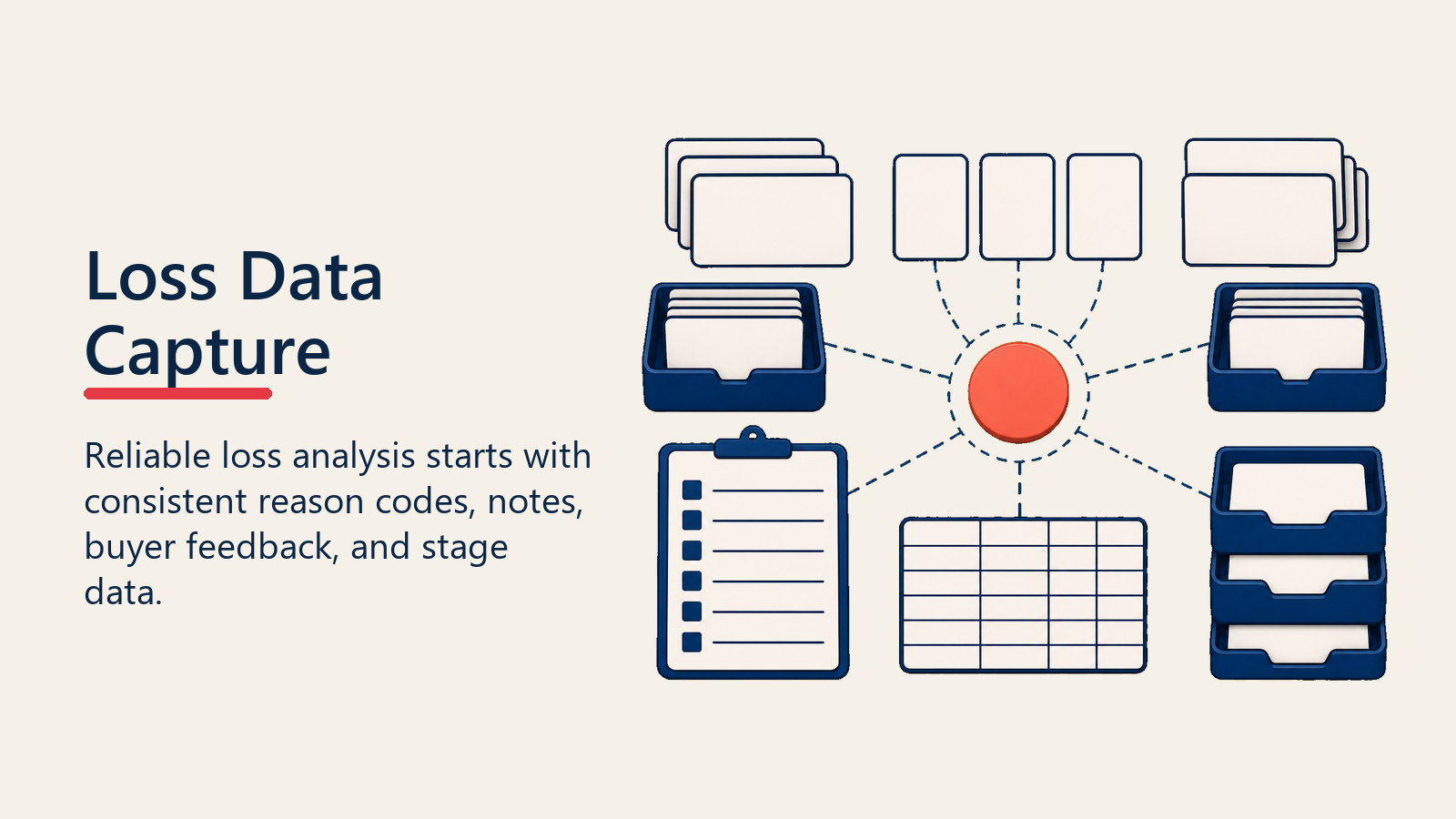
必須項目
失注したオポチュニティでは、必ず次を記録します。
主な失注理由 - 失注を引き起こした主たる要因です。パターン分析ができるよう、標準化されたカテゴリー(詳細は後述)を使います。
具体的な競合 - 「他のベンダー」や「競合への失注」ではなく、実際の競合の名前を記録します。「Salesforce に負けた」は行動につながります。「競合に負けた」では役に立ちません。
副次的な要因 - 失注には複数の要因が関わっていることが多くあります。主な理由に加えて2〜3個を記録し、状況の複雑さを把握します。
失注時のステージ - セールスプロセスのどの時点で失ったのでしょうか。ディスカバリーでの失注と最終交渉での失注は、異なる問題を示します。パイプラインステージの設計を理解しておくと、商談がどこでつまずいているかを位置づけやすくなります。
顧客のフィードバック - 見込み客が別の選択をした理由について、会話の中で得た直接の発言です。この定性データが、定量的なパターンに文脈を加えます。
担当者の見立て - 失注の原因は何だったと担当者は考えているでしょうか。伝えられた理由と異なることもあり、そのギャップが示唆に富みます。
商談の特徴 - 企業規模、業界、ユースケース、商談規模、セールスサイクルの長さです。これらがセグメント別の分析を可能にします。
担当者の入力要件
失注データの入力は、オポチュニティのクローズ時に必須にします。任意ではなく、「時間があるときに」でもありません。完了するまでステータスを変更できない必須項目にします。
なぜなら、記憶はすぐに薄れるからです。失注の連絡を受けた直後にオポチュニティをクローズした担当者は、関連する状況を覚えています。3週間後には、「価格だったと思います」程度になってしまいます。
入力項目は、担当者が実際に入力を終えられるよう簡潔にしつつ(最大でも5〜7項目)、分析ができる構造にしておきます。
顧客への離脱インタビュー
重要な失注(エンタープライズ案件、戦略的アカウント、競合による置き換え)では、顧客への離脱インタビューを実施します。
これは、見込み客が別の方向に決めた後に、先方の担当者と行う短い(15〜20分の)対話です。次のことを尋ねます。
- 意思決定の上位3つの要因は何でしたか
- 各要因について、選ばれたベンダーと比べて自社はどうでしたか
- 何が変われば決定が変わった可能性がありますか
- 選定の過程で、こちらから聞いてほしかったことは何でしたか
離脱インタビューからは、担当者が見落としていることや、見込み客がセールスプロセスの中で直接伝えなかった事実が見えてきます。
タイムラインの記録
失注した商談の重要な局面を記録します。
- オポチュニティはいつ作成されましたか
- 競合はいつ検討に加わりましたか
- 勢いはいつ止まりましたか
- 失注の決定に先立って、どのような出来事がありましたか
タイムライン分析により、参入が遅かったのか、動きが遅すぎたのか、重要な局面で相手に上回られたのかが分かります。これはパイプラインベロシティの最適化に直結します。
主な失注理由:分類体系
失注理由の分類体系があれば、バラバラの説明が構造化されたパターンに変わり、見極め、ポジショニング、イネーブルメントの改善に活かせます。
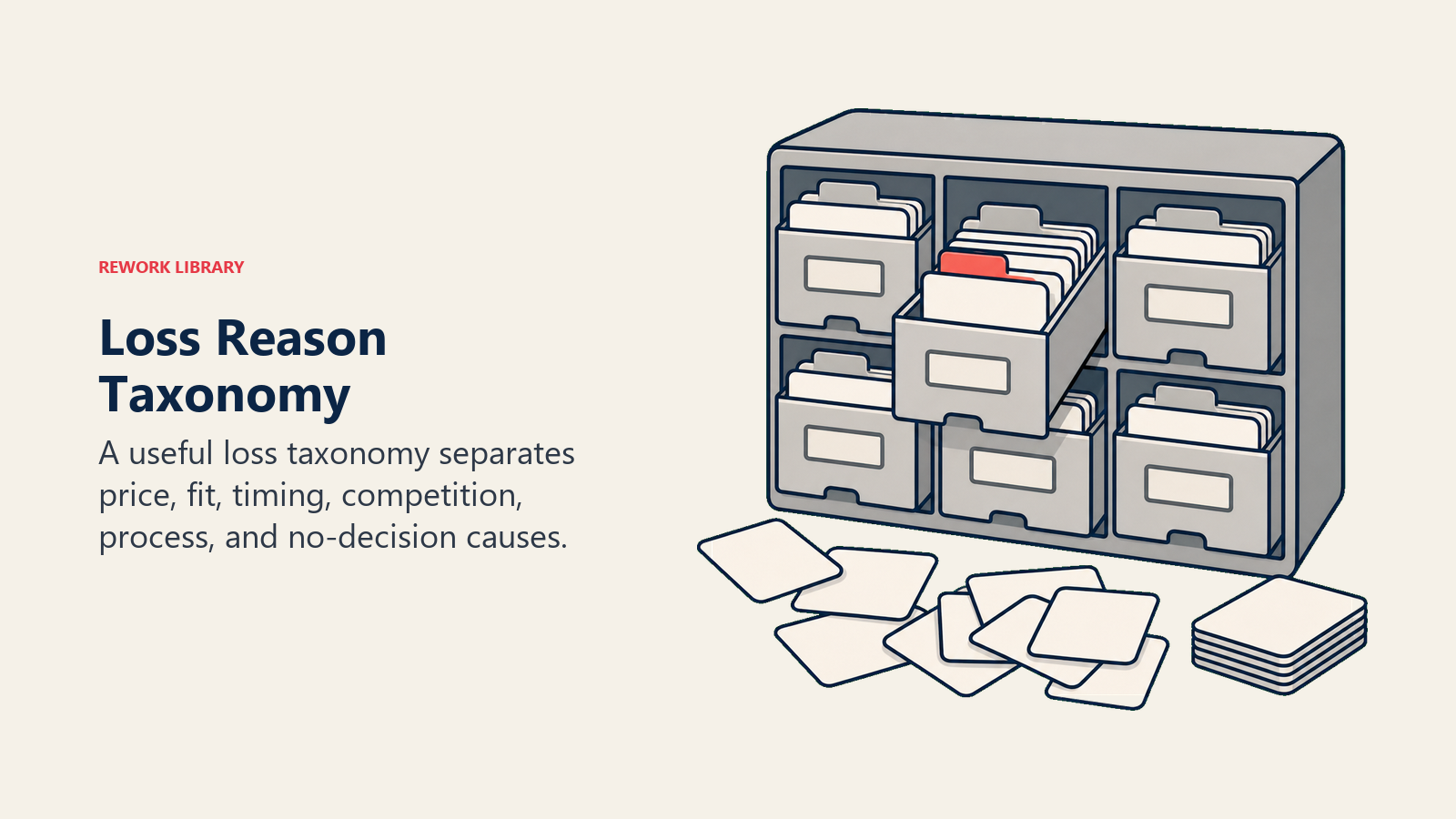
失注のカテゴリーを標準化すると、パターン分析ができるようになります。実績のある分類は次のとおりです。
特定の競合への失注
見込み客が競合のソリューションを選びました。必ずどの競合かを記録します。競合分析とポジショニングの改善に活かせるため、最も行動につなげやすいカテゴリーです。
価格・予算の制約
見込み客が自社のソリューションを購入できなかった、または主にコストを理由に、より安い代替策を選んだケースです。「代替策より高すぎる」と「利用可能な予算がない」は区別します。
決定に至らず
見込み客がどのソリューションも採用しなかったケースです。B2B の営業では、これが最大の「競合」であることがよくあります。緊急性の醸成が弱い、ROI が不明確、経営層のスポンサーシップが弱いといったことを示します。
タイミングの問題
見込み客は自社のソリューションを気に入っているものの、予算サイクル、他の優先事項、組織変更などでタイミングが合わないケースです。再度アプローチできるオポチュニティになることがよくあります。
適合しないと判明
自社または見込み客が、そのソリューションは先方のユースケース、技術要件、組織に合わないと判断したケースです。理想は早い段階で見つけることですが、終盤になって判明することもあります。
社内のチャンピオンが退職
案件を推進していた人が退職または異動したケースです。新しい担当者は、経緯を知らないか、異なる優先事項を持っています。
製品・機能のギャップ
購入を妨げた、特定の機能の欠如です。製品チームが商談への影響度に基づいて優先順位をつけられるよう、何が足りなかったのかを正確に記録します。
技術・連携の問題
自社のソリューションが必要なシステムと連携できなかった、技術的な制約があった、または proof-of-concept の要件を満たせなかったケースです。
競合による置き換え
既存顧客で、更新を競合に奪われたケースです。新規ビジネスの失注とは力学が異なります。
ベンダーとの関係の問題
信頼、対応の速さ、関係性の問題が失注の原因になったケースです。正直に向き合えばまれですが、起きたときには必ず特定することが重要です。
失注分析のフレームワーク:パターンを見つける
このフレームワークは、セグメント、競合、ステージ、担当者の行動をまたいで繰り返される原因を探します。
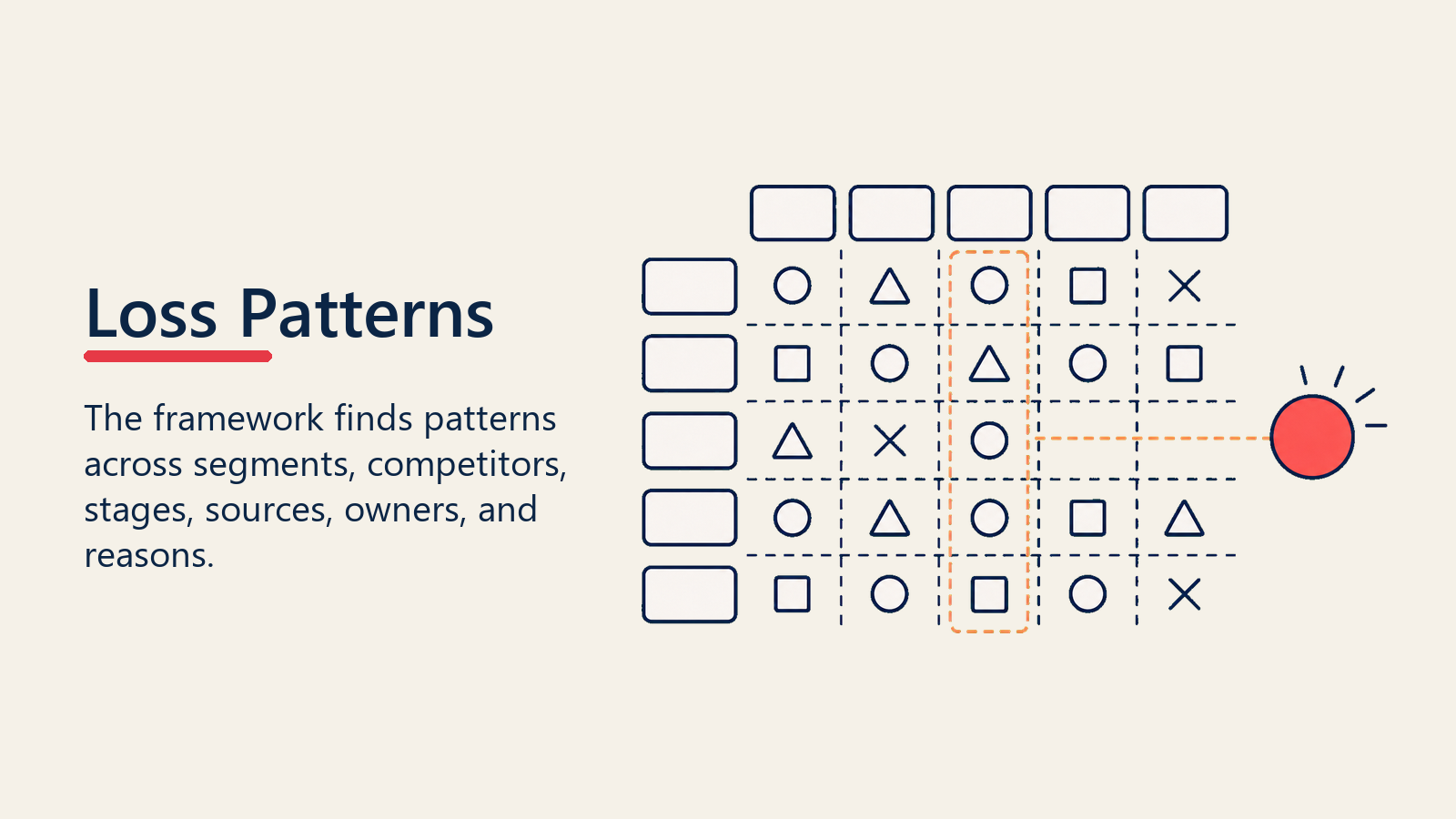
生の失注データは、ただのノイズです。構造化された分析が、それを知見に変えます。
失注カテゴリー別のパターン特定
まず頻度の分析から始めます。直近の四半期について、次を確認します。
- 各カテゴリーが失注全体に占める割合はどれくらいか
- 過去の期間と比べてどうか
- 特定の失注理由は増えているか、減っているか
失注の45%が「決定なし」で、前四半期の30%から増えているなら、緊急性の醸成、経済的決裁者への働きかけ、見極め基準のいずれかという、対処すべき具体的な問題があります。こうした傾向は、定期的なパイプラインレビューで表に出てくるはずです。
経時的な傾向分析
複数の四半期にわたって失注パターンを見ます。
- 競合 X への失注は増えているか
- 新しい価格モデルの導入後、価格を理由とする失注は減っているか
- 機能のリリースに伴い、製品ギャップによる失注は減っているか
傾向分析により、改善の取り組みが効果を上げているのか、問題が拡大しているのかが分かります。
セグメント別の分析
失注を次の切り口で分解します。
製品・ソリューション - 失注率の高いサービスはあるか。それはなぜか。
商談規模 - 小さな商談(2万5千ドル未満)と大きな商談(25万ドル超)のどちらをより多く失っているか。失注パターンが違えば、必要な対策も違います。
業界・バーティカル - 失注は特定の業界に集中しているか。そうであれば、その市場でのポジショニングの問題や、競合の強さを示している可能性があります。
失注時のセールスステージ - ディスカバリーでの失注は見極めの問題を示唆します。交渉での失注は競合や価格の問題を示唆します。ステージゲート基準を見直せば、商談が早すぎるタイミングで進んでいる箇所を特定できます。
担当者・チーム - 失注は均等に分布しているか、特定の担当者に集中しているか。個人のパフォーマンスの問題か、構造的な問題かを見分けます。
地域・テリトリー - 地域ごとの競合の力学や、市場の成熟度の違いです。
こうしたセグメント分析から、自社の「失注の問題」は一つではなく、個別の対策が必要な複数の問題であることが分かります。
競合ポジショニングの分析
競合への失注については、競合ごとに分析します。
- 競合 A に対する win rate:35%
- 競合 B に対する win rate:58%
- 競合 C に対する win rate:22%
そのうえで、理由を掘り下げます。
- 競合 C のほうが優れている点について、見込み客は何と言っているか
- どのような場面で競合 B に勝てているか
- 各競合に対する勝ち負けを予測する特徴は何か
こうしたきめ細かな競合インテリジェンスは、差別化されたポジショニングと見極めの土台になります。
Win/Loss の比較:勝てる担当者は何が違うのか
失注だけを分析してはいけません。勝ちと比較します。
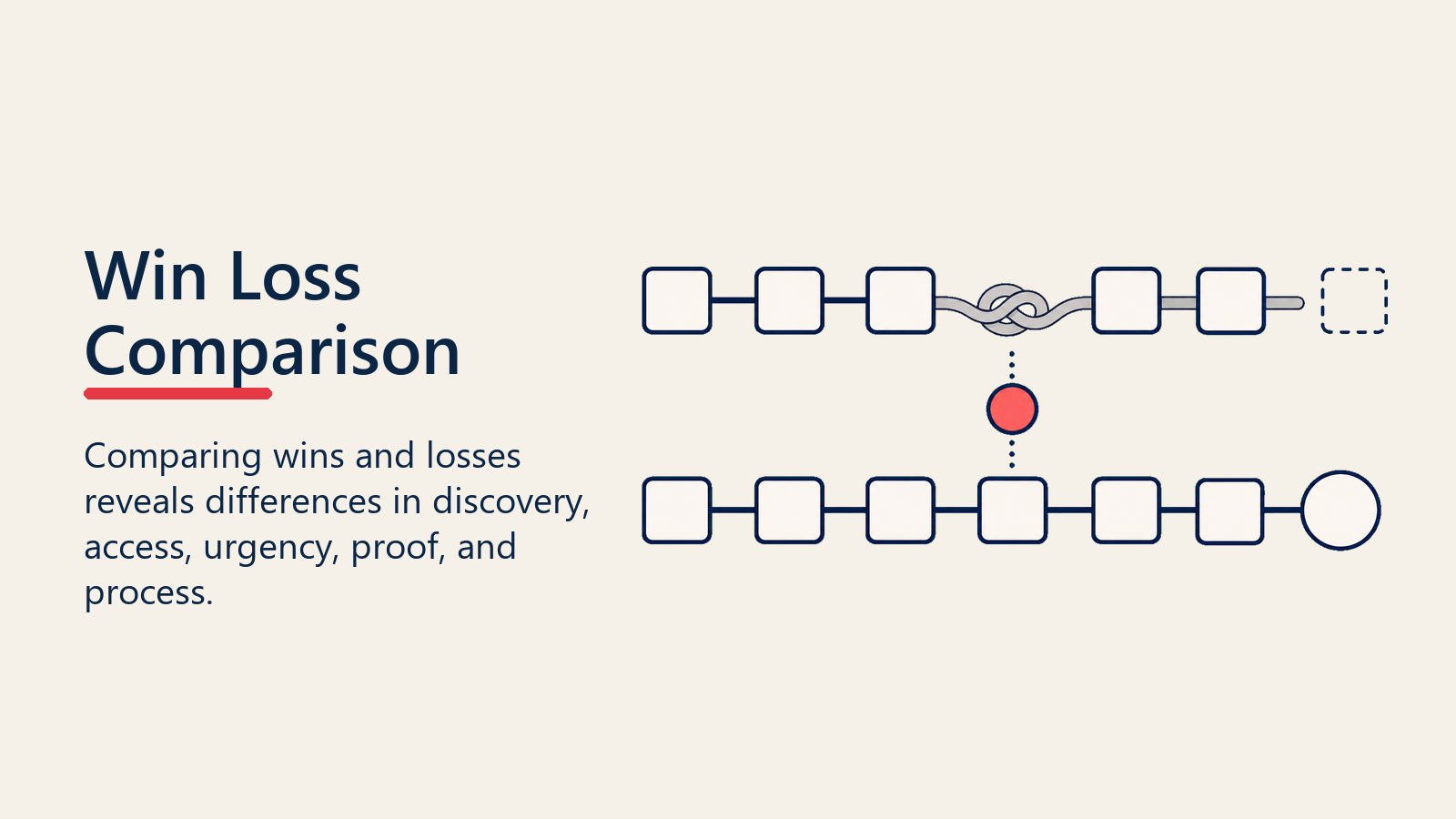
勝った商談と競合に負けた商談について、次を比較します。
ディスカバリーの深さ - 勝った商談のほうが、ディスカバリーコールの回数が多かったか。巻き込んだステークホルダーが多かったか。ニーズ分析がより深かったか。
経営層の関与 - 勝った商談のほうが、C-level の関与が早かったか。より頻繁だったか。
タイムライン - 勝った商談は、負けた商談より早く成約するか、遅く成約するか。セールスサイクルの長期化は、失注と相関しているか。
チャンピオンの強さ - 勝った商談と負けた商談で、チャンピオンの関与をどのように測定しているか。
価値の実証 - 勝った商談では、パイロット、POC、トライアルを実施していたか。負けた商談ではどうだったか。
価格・交渉 - 勝った商談と負けた商談では、一般的な値引き幅がどの程度違ったか。
この比較分析により、どのような行動や商談の特徴が勝ちと相関するのかが分かります。それが、パイプラインコーチングの優先事項とプロセス改善の対象になります。
失注の予防策:カテゴリーごとの対処
「営業の効果を高める」といった漠然とした施策では、win rate は動きません。失注パターンに基づいた的を絞った施策が、win rate を動かします。
「決定なし」による失注への対策
これは、価値の訴求が弱い、緊急性が不明確、経営層のスポンサーシップが弱いことを示します。
対策:
- 後のステージに進める前に、経済的決裁者の関与を必須にする
- ROI を定量化するビジネスケースのテンプレートを導入する
- 課題の掘り下げと緊急性の醸成のフレームワークについて、担当者を教育する
- 評価への関与を確実にするため、意思決定基準を文書化する
- MEDDIC フレームワークを使い、課題とタイムラインをより早く見極める
競合への失注への対策
競合ごとに、必要な戦略は異なります。
対策:
- 実際の失注フィードバックに基づき、競合別のバトルカードを作る
- 早期に仕掛ける「地雷」(競合が弱いテーマ)を特定する
- 見極めを調整し、win rate が高い場面に集中する
- 実際に響いたものに基づき、差別化メッセージを磨く
- 評価基準を捉え直す、柔道のような切り返しの技を教育する
価格・予算による失注への対策
価格を理由とする失注のすべてが、高すぎることが原因とは限りません。価値を十分に示せていないケースもあります。
対策:
- ROI の定量化とビジネスケースの作成を改善する
- 予算の制約に対応できる柔軟なパッケージを用意する
- 予算の実態と意思決定プロセスを、より早く見極める
- 社内で予算承認を後押ししてくれるチャンピオンを育てる
- 失注が特定のセグメントに集中している場合は、価格モデルの調整を検討する
製品ギャップによる失注への対策
商談への影響度で重みづけし、製品チームへ直接フィードバックします。
対策:
- 特定のギャップによって危うくなっている売上を定量化する
- 要望の件数ではなく、影響を受ける商談の金額に基づいて機能の優先順位をつける
- 重大なギャップについては、暫定的な回避策やパートナーのソリューションを用意する
- ギャップが障害になる商談を除外できるよう、見極めを調整する
- ロードマップと現在の機能の違いについて、早い段階で期待値をそろえる
タイミングの問題による失注への対策
これらは本当の失注ではなく、再度アプローチできるオポチュニティです。
対策:
- フォローアップのスケジュールを定めた、明確な再アプローチのワークフローをつくる
- タイミングが合うまで、ナーチャリングのコンテンツで関係を維持する
- タイミングが変わった可能性を示すトリガーを特定する
- 適切なパイプラインの衛生管理により、再アプローチ中の商談を本当の失注と分けて追跡する
競合への失注の分析:戦場を理解する
競合への失注を深く掘り下げると、戦略的なポジショニングの機会が見えてきます。
競合別の Win/Loss マトリクス
主要な競合ごとに、次を示すマトリクスを作ります。
- 直接対決での win rate
- その競合に負けたときによくある失注理由
- その競合に勝ったときによくある勝因
- 勝ち負けを予測する商談の特徴
例:「競合 X に対しては、製造業で予算10万ドル以上の商談では、早期に VP レベルを巻き込めば65%で勝てています。小売業で予算5万ドル未満の商談では、先方より遅れて参入すると80%で負けています。」
こうした具体性が、的を絞った見極めとポジショニングを後押しします。
メッセージのテスト
自社に勝った競合について、見込み客は何と言っているでしょうか。次のライブラリを作ります。
- 競合の価値提案(競合のマーケティングの言葉ではなく、見込み客の言葉で)
- 競合の強みと弱みとして認識されている点
- 意思決定に実際に影響した差別化要素
- 自社が乗り越えられなかった反論
これを使ってメッセージを磨き、実際に効果のある方法を担当者に教育します。
製品ポジショニングの調整
競合への失注を分析すると、自社のポジショニングが、買い手の実際の評価の仕方とずれていることが分かる場合がよくあります。
自社は「エンタープライズ級のセキュリティ」を前面に出しているのに、「導入のしやすさ」を打ち出す競合に商談を奪われているかもしれません。(特定のセグメントでは)買い手は、セキュリティ機能よりも早く稼働できることを重視しています。
失注データは、自社が勝つべきだと考えるメッセージではなく、実際の評価で勝つメッセージを教えてくれます。
組織学習:フィードバックループを閉じる
失注分析が win rate を改善するのは、得られた知見が組織の変化につながったときだけです。

製品チームへのフィードバック
失注に関するインテリジェンスを製品のリーダーと共有する、正式なプロセスを確立します。
- 影響を受けた商談の金額別に、製品ギャップを示す月次の失注サマリー
- 失注に基づく、四半期ごとの競合機能の分析
- 製品の不足点に関する、顧客からの具体的なフィードバック
製品の優先順位づけでは、機能要望の件数だけでなく、失注による売上への影響も考慮されるようにします。
マーケティングチームへのフィードバック
マーケティングチームは、次を磨くために失注に関するインテリジェンスを必要としています。
- 競合に対するポジショニングとバトルカード
- 実際の反論に応えるメッセージ
- 失注が起きるステージで営業を支援するコンテンツ
- 成約確率の低い見込み客を除外するリードの見極め基準
営業とマーケティングが四半期ごとに失注レビューを行えば、メッセージを市場の現実に根ざしたものに保てます。
営業リーダーへのフィードバック
営業リーダーは、失注分析を次のことに活用します。
- 勝ちと負けを分ける行動に基づく、コーチングの優先事項
- 失注が集中するステージを対象としたプロセス改善
- 成約確率の高い商談に集中するための、見極め基準の調整
- 競合の力学に基づく、テリトリーと担当者の専門化
個々の担当者へのフィードバック
担当者には、自分自身の失注パターンを見せます。
- 自分の失注カテゴリーが、チームの平均とどう違うか
- どの競合に最も頻繁に負けているか
- 自分の勝ちと負けに相関する行動は何か
これにより説明責任が生まれ、コーチングを具体的な改善領域に集中できます。
継続的な改善:失注分析を運用に組み込む
一度きりの失注分析では、結果は変わりません。変えるのは、体系的で継続的な分析です。
定期的なレビューのリズム
リズムを確立します。
- 毎週: パイプラインレビューで、失注の兆候を示すリスクのある商談に旗を立てる
- 毎月: カテゴリー別の失注サマリー、傾向、早期警戒のフラグ
- 四半期ごと: 競合の詳細な分析と、プロセス改善の計画
- 年次: win rate の傾向と、複数年にわたるパターンの戦略的レビュー
商談インスペクションへの組み込み
失注パターンから得た知見を、商談インスペクションのプロセスに組み込みます。過去の失注パターンを使い、進行中の商談の警告サインを特定します。
- 過去の失注と特徴が一致する商談は、より注意深く精査する
- 競合がいる状況では、学んだ対抗策を適用する
- 勝ちと相関していた要素が欠けている場合は、コーチングで介入する
win rate のモニタリング
複数の観点から win rate を追跡します。
- 全体の平均 win rate
- 製品・ソリューション別の win rate
- セグメント別(業界、商談規模、地域)の win rate
- 競合別の win rate
- 担当者・チーム別の win rate
明確な目標を置いて、これらを継続的に監視します。win rate の改善は、失注分析の知見と結びついた、常設の目標にすべきです。
戦略の見直しサイクル
四半期ごとに、次を問いかけます。
- 今四半期の失注から何を学んだか
- その学びに基づき、どのような変更をすべきか
- 前四半期の変更のうち、成果を改善したものはどれか
- 対策を講じたにもかかわらず、残っている失注パターンは何か
変更を文書化し、効果を測定します。分析と行動の間のループを閉じます。
パイプラインの整理
失注分析は、ほとんど成約しない商談のパターンを明らかにすることで、パイプラインの整理に役立ちます。
- よくある失注と特徴が一致するオポチュニティは、より早く対象外にすべき
- 見極め基準は、何が勝ちと負けを予測するかに応じて適応させるべき
- 営業のキャパシティを、成約確率の低い商談から高い商談へ振り向ける
測定フレームワーク:改善を追跡する
失注分析が成果を生んでいることを示す指標を定めます。
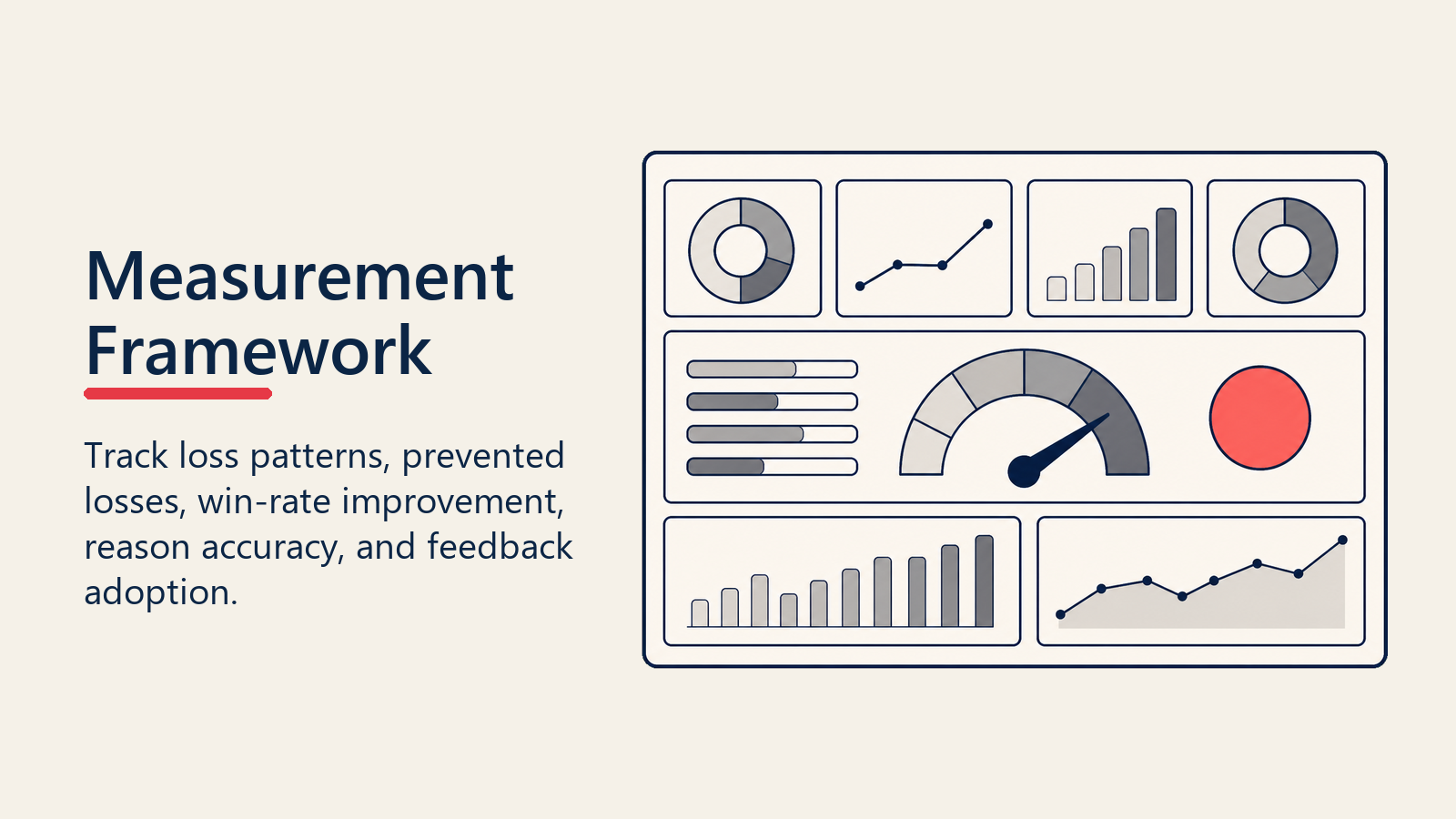
Win Rate の推移 - 全体の win rate は、四半期ごとに改善しているか。
失注カテゴリーの分布 - 影響の大きい失注カテゴリー(「決定なし」など)は減っているか。
競合別の win rate - 特定の競合に対して改善しているか。
失注までの期間 - 適合しない商談を、より早く特定して対象外にできているか。
失注分析の完了率 - 担当者は、必須の失注項目を実際に入力しているか。
アクション項目の完了 - 失注分析から得た知見は、完了した改善アクションを生んでいるか。
売上への影響 - 失注パターンの是正によって取り戻した売上を定量化できるか。
これらの指標により、失注分析をビジネス上の成果につなげる説明責任が生まれます。パフォーマンス指標の全体像は、パイプライン指標の概要をご覧ください。
まとめ:戦略的資産としての失注
優れた営業組織は、失注した商談を恥ずかしい失敗ではなく、戦略的資産として扱います。
失注データを体系的に記録し、パターンを分析し、競合インテリジェンスを引き出し、製品の優先順位づけを後押しし、メッセージを磨き、プロセスを調整し、競合との評価で実際に起きていることに基づいて担当者をコーチングします。
同じ理由で同じ商談を二度失うことはありません。
多くの組織は、失注を忘れるべきものとして扱います。その場では「なぜ負けたのか」と問うかもしれませんが、そのまま次へ進みます。文書化もなく、パターン分析もなく、組織としての学びもありません。
win rate の差は予測可能です。体系的な失注分析を導入した組織は12か月で15〜25%改善し、導入しない組織は横ばいか低下します。
問うべきは、失注分析に価値があるかどうかではありません。データは明白です。問うべきは、それを体系的に行う規律を築けるかどうかです。
なぜなら、負ける理由を理解することが、より多く勝つための最短の道だからです。
関連記事:

On this page
- 勝てる組織が失注にこだわる理由
- 失注分析の価値
- win rate の改善
- 競合インテリジェンス
- プロセスの改善
- 製品へのフィードバック
- 見極め基準の調整
- 失注データの記録:基盤をつくる
- 必須項目
- 担当者の入力要件
- 顧客への離脱インタビュー
- タイムラインの記録
- 主な失注理由:分類体系
- 特定の競合への失注
- 価格・予算の制約
- 決定に至らず
- タイミングの問題
- 適合しないと判明
- 社内のチャンピオンが退職
- 製品・機能のギャップ
- 技術・連携の問題
- 競合による置き換え
- ベンダーとの関係の問題
- 失注分析のフレームワーク:パターンを見つける
- 失注カテゴリー別のパターン特定
- 経時的な傾向分析
- セグメント別の分析
- 競合ポジショニングの分析
- Win/Loss の比較:勝てる担当者は何が違うのか
- 失注の予防策:カテゴリーごとの対処
- 「決定なし」による失注への対策
- 競合への失注への対策
- 価格・予算による失注への対策
- 製品ギャップによる失注への対策
- タイミングの問題による失注への対策
- 競合への失注の分析:戦場を理解する
- 競合別の Win/Loss マトリクス
- メッセージのテスト
- 製品ポジショニングの調整
- 組織学習:フィードバックループを閉じる
- 製品チームへのフィードバック
- マーケティングチームへのフィードバック
- 営業リーダーへのフィードバック
- 個々の担当者へのフィードバック
- 継続的な改善:失注分析を運用に組み込む
- 定期的なレビューのリズム
- 商談インスペクションへの組み込み
- win rate のモニタリング
- 戦略の見直しサイクル
- パイプラインの整理
- 測定フレームワーク:改善を追跡する
- まとめ:戦略的資産としての失注