パイプラインセグメンテーション: 分析と管理のための商談整理

Turn this article into takeaways for your work.


Each assistant summarizes the article only for you and suggests best practices for your work.
パイプライン内のすべての商談を同じように扱うと、何が起きるでしょうか。1万ドルのSMB案件が50万ドルのエンタープライズ商談と同じ扱いを受け、expansion案件が新規ロゴ獲得のように管理され、30日のセールスサイクルが180日のエンタープライズ案件と同じモデルでforecastされてしまいます。
それなのに、なぜforecastがいつも外れるのか不思議に思うわけです。
RevOpsを運営していたり、営業組織をマネジメントしていたりすれば、これは直感的にわかっているはずです。すべての商談が同じ価値を持つわけではありません。それぞれ異なるプロセス、異なるリソース、異なるタイムライン、異なるマネジメント手法を必要とします。それにもかかわらず、ほとんどのパイプラインレポートはすべてを均質なものとして扱っています。
パイプラインセグメンテーションは、これを解決する手段です。共通の特性に基づいて商談をグループ化し、適切に分析、forecast、管理できるようにする運用上の実践です。正しく実行すれば、パイプラインは商談の単なる一覧から、より良い意思決定を導く分析資産へと変わります。的を絞った分析のためにセグメント化を始めると、sales pipelineとは実際に何なのかを理解することがさらに重要になります。
パイプラインセグメンテーションとは何か
パイプラインセグメンテーションとは、商談規模、製品タイプ、セールスモーション、地域など、自社のビジネスの実態に関連するあらゆる軸に基づき、共通の特性ごとにsales opportunityを明確なグループへと体系的に整理することです。
基本原則はシンプルです。似た特性を持つ商談は似たような振る舞いをします。同程度のconversion rateで転換し、同程度のスピードでステージを進み、同様のマネジメント介入に反応します。これらをグループ化することで、集計されたパイプラインビューでは得られない分析力が手に入ります。
マーケティングにおけるmarket segmentationと同じだと考えてください。エンタープライズバイヤーとSMBバイヤーに同じキャンペーンを実施することはないはずです。それと同様に、50万ドルのエンタープライズ商談を1万5000ドルのSMB案件と同じ方法で管理、コーチング、forecastすべきではありません。
パイプラインセグメンテーションは、セグメントごとのconversionモデルを構築することで正確なforecastを可能にし、画一的なアドバイスではなく商談特性に基づく的確なコーチングを実現し、高価値セグメントを特定することでリソース配分を最適化します。どのセグメントが期待を下回っているかを明らかにし、特定の商談タイプに合わせた専用プレイブックを支え、どこに投資しどこを削るべきかという戦略的判断を後押しします。
強力なパイプラインセグメンテーションを持つ企業とそうでない企業の違いは何でしょうか。一方は実績の5〜10%以内でforecastを的中させます。もう一方は四半期forecastを、まるで占いのように扱っています。
一般的なセグメンテーション軸
セグメンテーション軸を使うことで、チームはセールスモーション、セグメント、ソース、地域、製品ラインごとにパイプラインのパフォーマンスを比較できます。
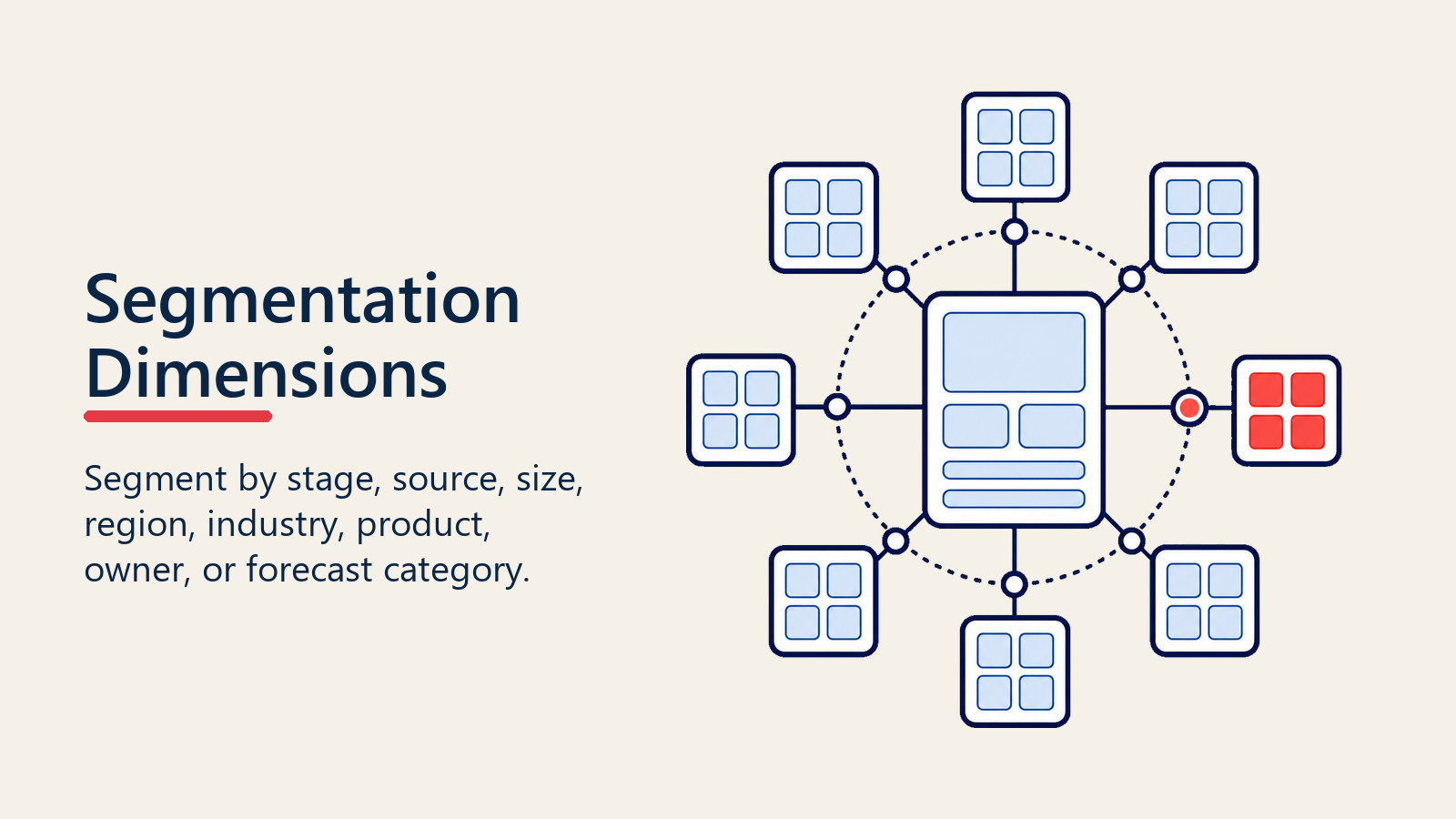
効果的なパイプラインセグメンテーションは、適切な軸、つまり商談をグループ化するために使う特性を選ぶことから始まります。どの軸を優先するかは企業のgo-to-market戦略によって異なりますが、ほぼ普遍的に使われる軸もいくつか存在します。
商談規模によるセグメンテーション
最も一般的で、しばしば最もインパクトの大きいセグメンテーション軸です。商談規模は、案件がどのように管理され、forecastされ、受注に至るかを根本的に変えます。
SMBセグメント(通常5,000〜25,000ドル): 高ボリューム、短いセールスサイクル(30〜60日)、self-serviceまたはlow-touchのセールスモーション、個々の商談額は小さいものの高いvelocity。これらの商談には効率化と自動化が求められます。
ミッドマーケットセグメント(通常25,000〜150,000ドル): 中程度のボリューム、中程度の長さのサイクル(60〜120日)、デモを多用したconsultative selling、ボリュームと価値のバランス。これらの商談は、体系化されたプレイブックと一貫したopportunity qualificationから恩恵を受けます。
エンタープライズセグメント(通常150,000ドル以上): 低ボリューム、長いサイクル(120〜180日以上)、複雑なstakeholder管理、高い戦略的価値だが予測しづらいタイミング。これらの商談には経営層のスポンサーシップとアカウントプランニングが必要です。
商談規模でセグメント化すると、明確なパターンがすぐに見えてきます。1万ドルの商談は45日サイクルで35%のconversion rateかもしれません。20万ドルの商談は150日サイクルで18%のconversion rateかもしれません。これらを一つのプールとして扱うと、forecastの精度は損なわれます。
製品・ソリューションタイプ
多くの企業は、異なるセールスモーション、バイヤーペルソナ、競合構造を持つ複数の製品を販売しています。製品別にセグメント化すると、集計指標では隠れてしまうパフォーマンスのばらつきが見えてきます。
シンプルなSaaS製品と複雑なプロフェッショナルサービスの両方を販売する企業では、SaaS側のwin rateが40%、サービス側が25%になることがあります。セグメンテーションがなければ、実際に何が起きているかを理解する助けにならない、集計値32.5%のwin rateを見ているだけになります。
製品別のセグメンテーションは、的を絞ったコーチングも可能にします。製品A(技術的差別化)を売るために必要なスキルは、製品B(ROIの正当化と調達プロセスの誘導)とはまったく異なるかもしれません。
セールスモーションによるセグメンテーション
商談がどのように発生し、どのような種類の取引であるかは、その後の軌道を根本的に左右します。
New Business: 純粋な新規顧客獲得。長いサイクル、高い摩擦、より多くのqualificationが必要。これらの商談は最も丁寧な育成を必要とし、conversion rateは低くなりがちですが、長期的な戦略価値を持ちます。
Expansion: 既存顧客に対するupsellまたはcross-sell。短いサイクル、確立された関係性、高いwin rate。これらの商談は既存の信頼関係と製品理解を活用します。
Renewal: 既存顧客の契約更新。主にretention重視で、タイミングは予測しやすく、リスクプロファイルも異なります。これらの商談は価値実感の証明と競合防衛が焦点になります。
それぞれのモーションには異なるconversionの経済性、タイミングのパターン、マネジメント上の要件があります。new businessをコーチングする営業リーダーが必要とする視点は、renewalを管理するリーダーとは異なります。
地域・地理によるセグメンテーション
地理的要因は、購買行動、競合環境、規制要件、営業チームの構造に影響を与えます。地域別にセグメント化すると、テリトリー間のパフォーマンスのばらつきが見えてきます。
調達プロセスの違いにより、EMEAの商談が北米よりも40%長くかかることが判明するかもしれません。あるいは、その地域特有の競合構造によってAPACのconversion rateが低迷していることもあります。地域別のセグメンテーションがなければ、こうした洞察は集計データの中に埋もれたままです。
地域別のセグメンテーションは、テリトリー設計、人員配置、市場投資の優先順位づけといった運用上の意思決定も支えます。
業界(バーティカル)別セグメンテーション
複数の業界にまたがって販売する企業にとって、バーティカル別のセグメンテーションは、どの市場が好調で、どの市場に注意が必要かを明らかにします。
ヘルスケア業界の商談は、コンプライアンス要件のためにサイクルが長くなることがあります。金融サービスは平均商談額が高い一方、調達プロセスが厳しくなりがちです。テクノロジー業界のバイヤーはself-serviceのトライアルを期待するかもしれません。各バーティカルには、パイプライン管理に影響する固有の特性があります。
バーティカル別のセグメンテーションは、業界特化のプレイブック、ケーススタディの活用、競合ポジショニングも可能にします。
商談ステージと成熟度
現在のステージでセグメント化すると、商談がどこで滞留し、どこでconversion rateが落ち込んでいるかが見えてきます。
初期ステージ(qualification、discovery)にある商談は、後期ステージ(交渉、法務レビュー)にある商談とは異なる振る舞いをします。ステージ別のセグメンテーションはボトルネックの特定に役立ちます。もし商談の40%が提案ステージで滞留しているなら、解決すべき具体的な問題があるということです。定期的にパイプラインボトルネック分析を行うことで、商談がどこで滞留しているのかを正確に突き止められます。
この軸は、時間軸に基づく介入も支えます。想定されるvelocityに対してステージに長く留まりすぎている商談は、加速措置または失注判定の対象候補になります。
ソースとチャネル
商談がどのようにパイプラインに入ってくるかは、その質、conversion rate、velocityに影響します。
インバウンドリード(コンテンツ、ウェブサイト、オーガニック): 高い意欲、速いqualification、良好なconversionだが商談規模は小さくなりがち。
アウトバウンドプロスペクティング: 長いサイクル、より多くの育成が必要、商談規模は大きくなる可能性があるが初期のconversion rateは低い。
パートナー経由: パートナーによって質にばらつきがあり、インセンティブ構造も異なり、パートナーとのco-sellingモーションが必要になる場合がある。
マーケティングキャンペーン: 明確なアトリビューション、ROI分析が可能、一時的なボリュームの急増とその後の正常化が見られることがある。
ソース別のセグメンテーションは、パイプラインのパフォーマンスをdemand generationに結びつけ、どのチャネルが最も価値の高い商談を生み出しているかをclosed-loopで分析できるようにします。
フォーカスとリソース配分のための戦略的セグメンテーション
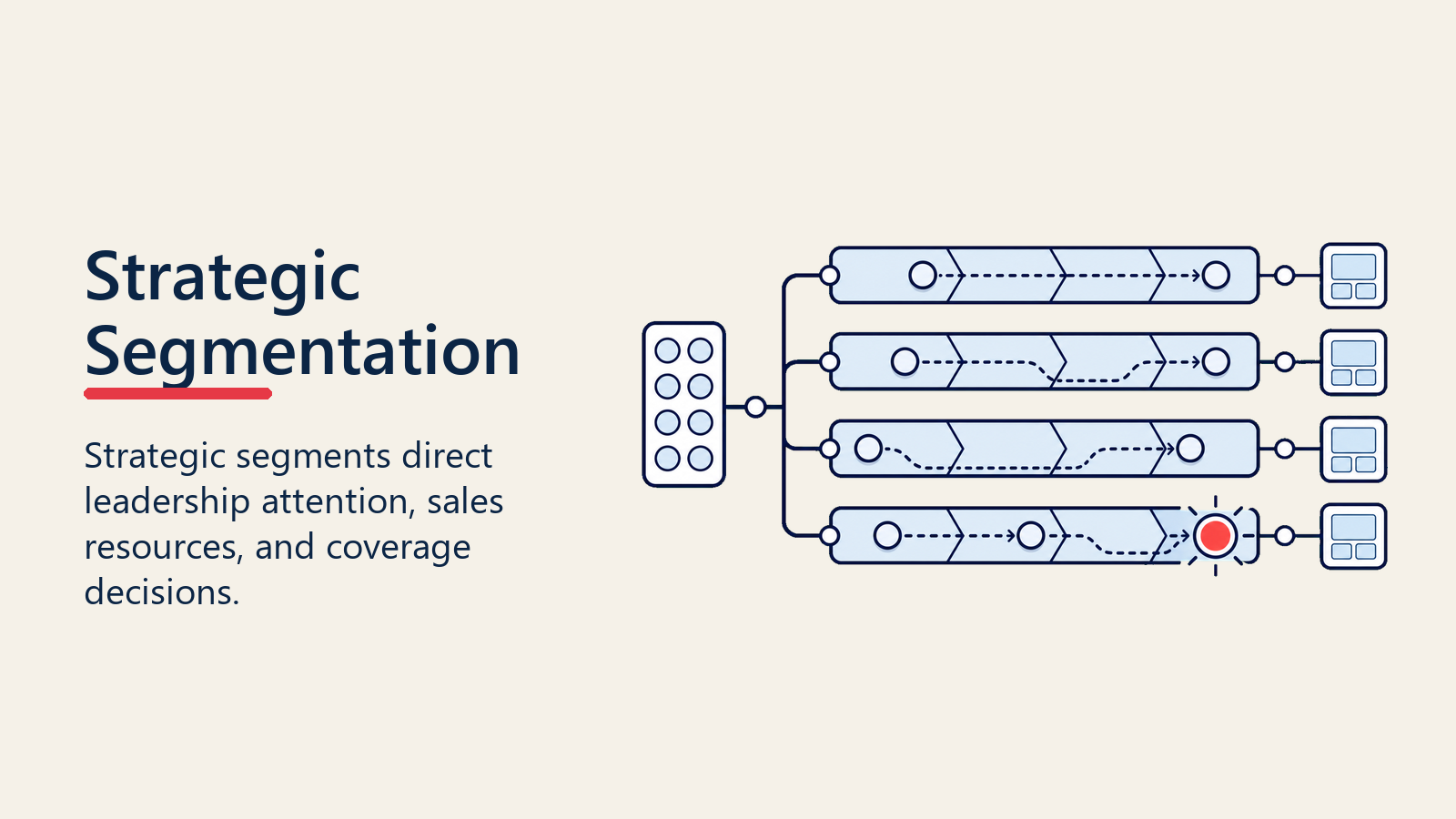
運用上の分析にとどまらず、パイプラインセグメンテーションは、どこに注力し、どのようにリソースを配分するかという戦略的な意思決定を後押しします。
高価値セグメントの特定
すべてのパイプラインセグメントが同じだけの投資に値するわけではありません。戦略的なセグメンテーションは、どこで勝てているか、どこで苦戦しているか、そして最大の機会がどこにあるかを明らかにします。
セグメント別の期待値を計算しましょう。(平均商談規模)×(win rate)×(ボリューム)です。平均商談額20万ドル、win rate15%、四半期あたり40件の商談を持つセグメントは、120万ドルの期待収益を生み出します。これを、ボリュームは大きいが価値が低いセグメントや、win rateは高いが商談数が少ないセグメントと比較してみてください。セグメント別にweighted pipelineを計算するこの手法は、はるかに正確な収益予測をもたらします。
この分析は、追加投資、増員、より優れたツール、専門リソースが最も高いリターンを生むのはどこかを明らかにします。
カバレッジモデルの最適化
セグメントが異なれば、必要な営業カバレッジモデルも異なることが多くあります。エンタープライズ商談では、solution engineerと経営層のスポンサーを伴う専任のAEが必要になるかもしれません。SMB商談では、インサイドセールスやself-serviceのモーションで進めることができるでしょう。
パイプラインセグメンテーションは、こうしたカバレッジの意思決定を、感覚ではなくデータドリブンなものにします。エンタープライズセグメント(商談数の20%)が収益の60%を生み出しているなら、専任リソースの正当化ができます。SMBセグメントのconversion rateが高い一方でキャパシティが限られているなら、スループットを高めるために自動化に投資すべきかもしれません。
的を絞ったリソース配分
SalesOpsのリソース、イネーブルメント、ツール、プロセス改善は、常に限られています。セグメンテーションは、どこに投資すべきかを示してくれます。
expansionセグメントのwin rateが45%あるのに、パイプライン全体の15%しか占めていないなら、expansion施策と専任リソースを優先すべきかもしれません。アウトバウンドセグメントのconversionが振るわないなら、qualification基準の改善やアウトバウンドプレイブックの見直しに投資すべきかもしれません。
セグメンテーションがなければ、リソース配分の意思決定は分析的なものではなく、政治的なもの(「声の大きい人が勝つ」)になってしまいます。
パイプラインセグメンテーションの運用上のメリット
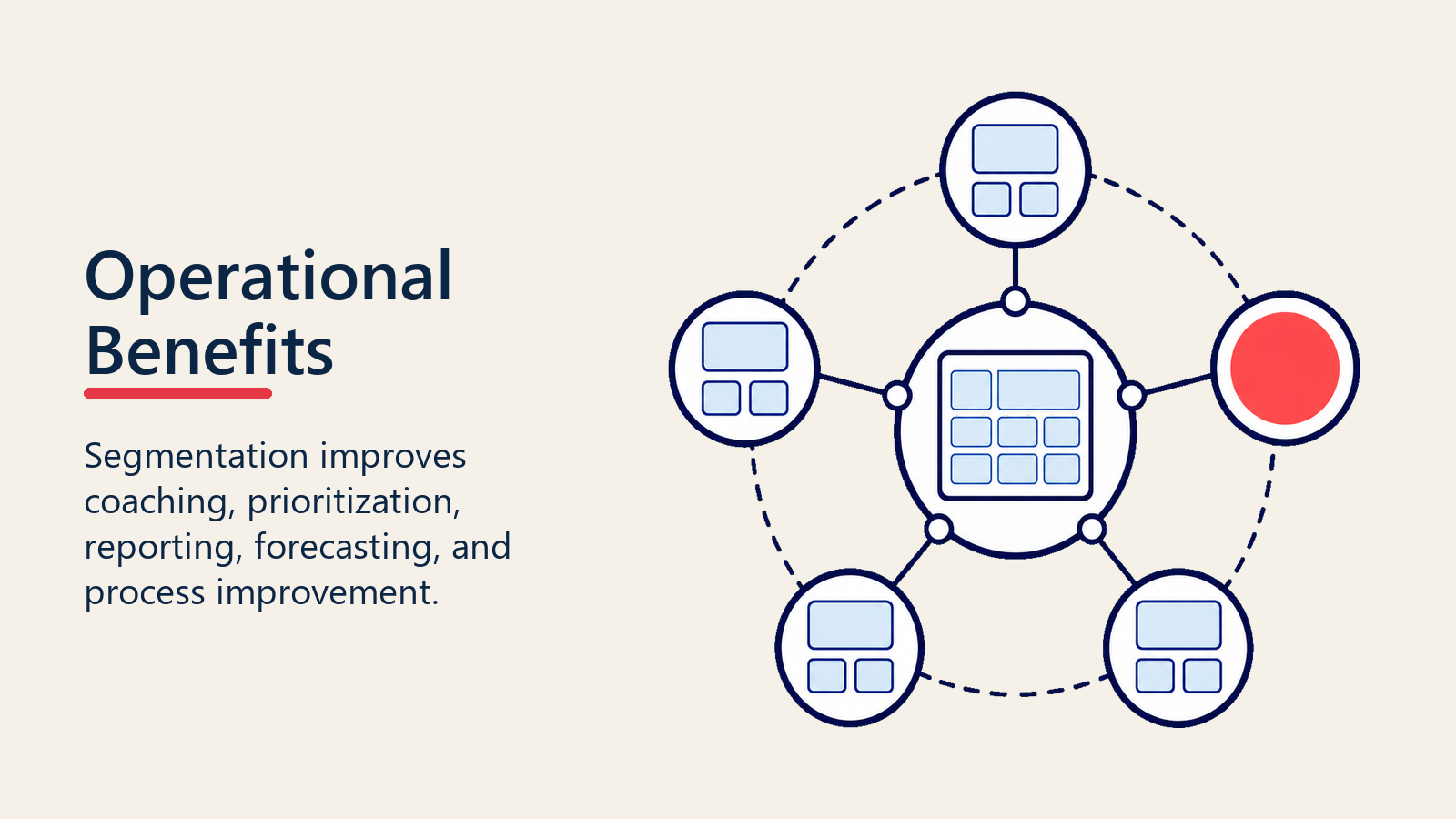
セグメンテーションが日々の運用にもたらす価値は、コーチング、プロセス設計、パフォーマンスマネジメントの中に表れます。
的を絞ったコーチングと育成
「活動量を増やせ」「もっとうまくqualifyしろ」「もっと強く迫れ」といった画一的なセールスコーチングは、商談のコンテキストを無視しているため機能しません。セグメンテーションは、実際の商談特性に基づいた具体的で実行可能なコーチングを可能にします。効果的なパイプラインコーチングには、真の改善をもたらすためにこの粒度が必要です。
エンタープライズ商談に苦戦している担当者には、stakeholder mappingや経営層とのエンゲージメント、複雑な調達プロセスの誘導に関するコーチングが必要です。SMB商談に苦戦している担当者には、効率性、qualificationのスピード、大量の案件をさばくobjection handlingに関するコーチングが必要です。これらはまったく異なるスキルセットです。
セグメント別のコーチングは測定可能です。担当者ごと、セグメントごとにconversion rateを追跡しましょう。ある担当者のエンタープライズconversion rateが10%で、チーム平均が18%であれば、具体的な育成ニーズを特定できたことになります。
専用のプレイブックとプロセス
画一的な営業プロセスは摩擦を生みます。180日のエンタープライズ商談向けに最適化されたプロセスは、30日のSMB商談には意味を成しません。
セグメンテーションは、セグメント別のプレイブックを正当化します。
- 異なるqualification基準(SMB向けのBANT、エンタープライズ向けのMEDDIC)
- 異なるステージ定義(SMBは3ステージ、エンタープライズは7ステージ)
- 異なる必須アクティビティ(デモ、POC、ビジネスケース、法務レビュー)
- 異なる承認ワークフローと値引き権限
これらのプレイブックは単なるドキュメントではなく、CRMのワークフロー、自動リマインダー、ステージ進行の要件として組み込まれています。
セグメント別の正確なforecast
集計されたパイプラインforecastは、あらゆるばらつきを平均化してしまうため、精度が低いことで知られています。セグメント別のforecastは、はるかに高い精度を実現します。
セグメントごとにconversionモデルを構築しましょう。エンタープライズセグメントは150日サイクルで18%のconversion、SMBセグメントは45日サイクルで42%のconversion、expansionセグメントは30日サイクルで55%のconversionになるかもしれません。
こうすることで、各セグメントを個別にforecastし、それらを積み上げて総収益予測を導き出せます。このアプローチは、集計forecastの誤差率15〜25%に対し、一貫して5〜10%のforecast accuracyを実現します。
セグメント別のforecastは、タイミングの問題も明らかにします。エンタープライズセグメントが通常Q2とQ4にクローズする傾向があるなら、四半期ごとの収益の変動に驚かされるのではなく、あらかじめ計画を立てられます。
パフォーマンス分析とベンチマーキング
パイプラインセグメンテーションは、公平な条件でのパフォーマンス比較を可能にします。
エンタープライズ商談だけを担当する担当者(長いサイクル、低いconversion)と、SMB商談を担当する担当者(短いサイクル、高いconversion)を公平に比較することはできません。しかし、エンタープライズ担当者同士、SMB担当者同士であれば比較できます。
セグメント別のベンチマークは、真のパフォーマンスのばらつきを明らかにします。集計win rateが25%の担当者は、SMBセグメント(チーム平均40%)では期待を下回っている一方、エンタープライズ(チーム平均15%)では期待を上回っているかもしれません。この粒度が、より良いパフォーマンスマネジメントを実現します。
商談特性によるセグメンテーション
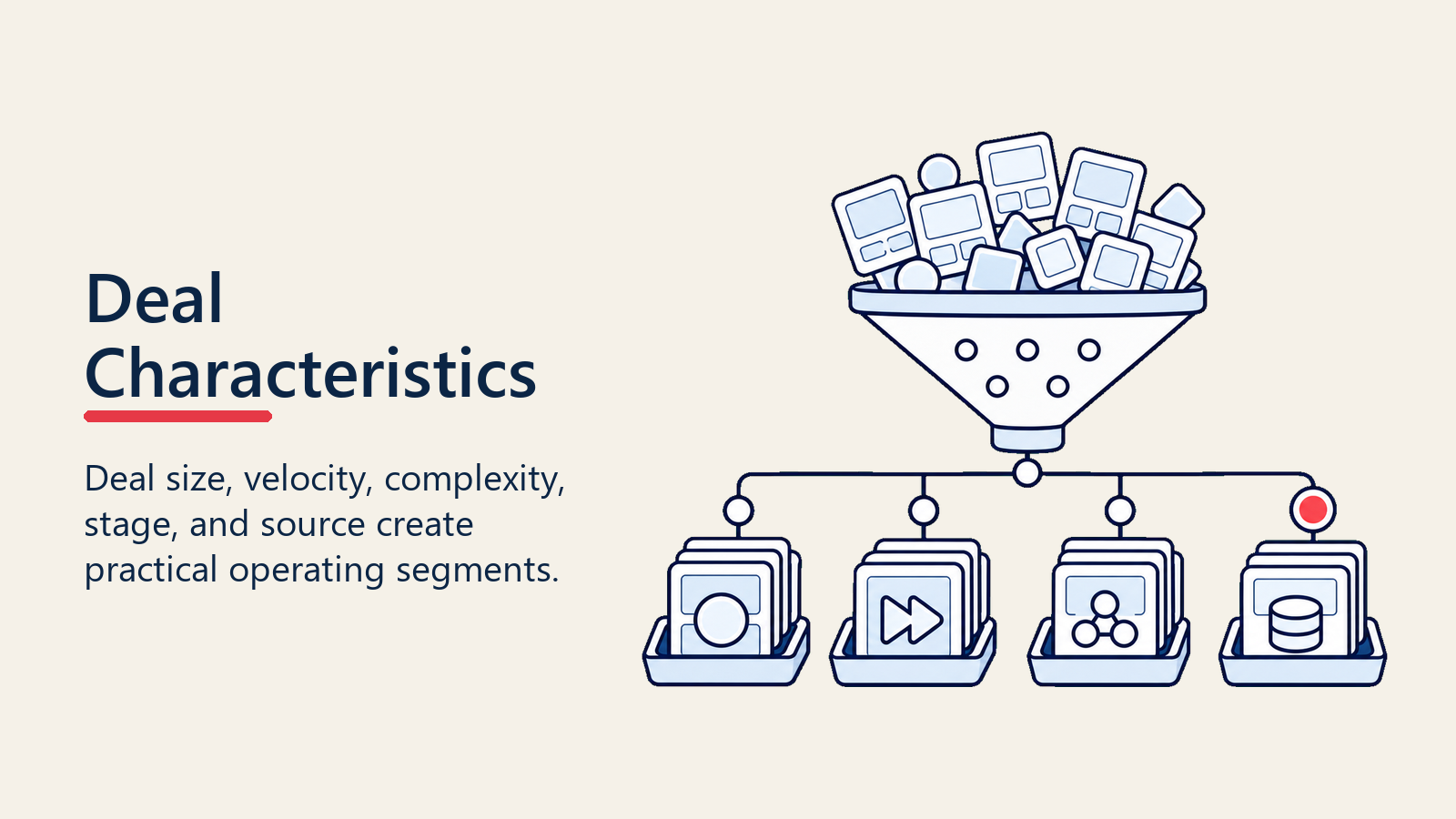
規模、地域、製品といった軸別のセグメンテーションにとどまらず、複雑さ、戦略的価値、リスクを示す商談固有の特性でもセグメント化できます。
複雑さによるセグメンテーション
商談の中には、規模にかかわらず構造的に複雑なものがあります。複雑な商談には、複数のstakeholder、技術的な統合、調達プロセス、法務交渉、セキュリティレビューなどが関わってきます。
複雑さでセグメント化すると、商談規模がわずか7万5000ドルであっても、「複雑」な商談は180日サイクルで15%のconversionにとどまることが見えてきます。これらの商談には、単純なtransactional dealとは異なるマネジメント、より多くのリソース、経営層のスポンサーシップ、プロジェクトマネジメントが必要です。
複雑さを示す指標には、stakeholderの数、カスタム要件、統合のニーズ、セキュリティレビューの要件、調達プロセスの関与などが含まれます。
戦略的価値によるセグメンテーション
すべての収益が同じ価値を持つわけではありません。商談の中には、戦略的アカウントへの参入、主要競合の排除、将来の成長を後押しするリファレンス可能なロゴ獲得を意味するものもあります。
Fortune 500企業のロゴを伴う10万ドルの商談は、無名企業との20万ドルの商談よりも高い戦略的価値を持つことがあります。戦略的な商談は、商談規模だけでは正当化できない追加投資、経営層の関与、カスタムPOC、納期の前倒しを正当化できます。
戦略的なセグメンテーションは定性的なものですが、アカウント規模、ブランド価値、競合排除、リファレンスの可能性、expansionの機会といったスコアリング基準によって体系化できます。
リスクによるセグメンテーション
商談の中には、実行リスク、タイトすぎるタイムライン、不明確な要件、競合状況、顧客の財務上の懸念といったリスクを抱えるものがあります。
リスクでセグメント化すると、先回りしたマネジメントが可能になります。高リスクの商談には、経営層による監督、提案前の法務レビュー、スコープクリープを防ぐ契約条件などが必要になるかもしれません。低リスクの商談は標準プロセスで進めることができます。
リスクによるセグメンテーションは、forecastにも影響します。確率90%だが実行リスクの高い50万ドルの商談は、確率80%でリスクの低い30万ドルの商談よりも低いウェイトが付けられるかもしれません。
ダイナミックセグメンテーション: 変化するセグメント
ほとんどのセグメンテーション軸は静的です(商談規模、製品、地域)が、中には動的なセグメントもあり、商談が進むにつれて変化します。
ステージ滞留期間によるセグメンテーション
商談は、想定されるvelocityに対して現在のステージにどれだけ長く留まっているかによってセグメント化できます。
順調な商談: 過去のステージ滞留期間に基づき、正常に進行している商談。
滞留気味の商談: そのセグメントの75パーセンタイルよりも長くステージに留まっており、停滞の兆候を示す商談。
停滞した商談: 90パーセンタイルよりも長くステージに留まっており、即座の介入または失注判定が必要な商談。
このダイナミックセグメンテーションは、先回りしたパイプラインハイジーンを可能にします。週次レビューでは、すべてを均等にレビューするのではなく、滞留・停滞した商談に焦点を当てられます。強力な商談滞留管理の実践を導入することで、セグメントを健全かつ実行可能な状態に保てます。
エンゲージメントによるセグメンテーション
商談は、直近のエンゲージメント活動によってもセグメント化できます。アクティブ(直近のミーティング、デモ、提案)、パッシブ(メールのみのやり取り)、休眠(14日以上エンゲージメントなし)といった具合です。
エンゲージメントによるセグメンテーションは、どの商談が本当に進行していて、どの商談が放置されているのかを明らかにします。後期ステージにある休眠商談は、優先的に介入すべき対象です。初期ステージにあるアクティブな商談は、加速の候補になるかもしれません。
forecastカテゴリーによるセグメンテーション
商談がクローズに近づくにつれ、forecast categories、つまりpipeline、commit、best case、closedへと移行していきます。forecastカテゴリーでセグメント化すると、それぞれ異なるマネジメントの焦点を当てられます。
Commit商談は、実行への注力、障害の除去、社内リソースの調整、法務・調達の管理が求められます。
Best case商談は、加速のための施策、経営層のエンゲージメント、期間限定のインセンティブ、競合の排除が求められます。
Pipeline商談は、次ステージへの前進、重要なミーティングの設定、discoveryの完了といった、進行への注力が求められます。
このダイナミックセグメンテーションによって、マネジメントの注意が商談の緊急度と確度に合わせて向けられるようになります。
レポーティングと分析: セグメント別指標
パイプラインセグメンテーションは、レポーティングを画一的な指標から実行可能なインサイトへと変えます。
セグメントパフォーマンスダッシュボード
セグメント別に主要指標を示すダッシュボードを構築しましょう。パイプライン指標の全体像は、各セグメンテーション軸ごとに分解すべきです。
ボリューム指標: 商談数、パイプライン総額、平均商談規模。
Conversion指標: win rate、loss rate、ステージ別conversion rate。
Velocity指標: 平均セールスサイクル、ステージ滞留期間、time-to-close。セグメント別にpipeline velocityを理解することで、どの商談が最も速く進んでいるかがわかります。
成果指標: 生み出された収益、受注件数、失注理由別の失注件数。
セグメントパフォーマンスダッシュボードを見ると、エンタープライズセグメントはボリュームが大きい(パイプライン500万ドル)ものの、conversionが弱い(目標18%に対し12%)一方、expansionセグメントはボリュームが限られている(120万ドル)ものの、conversionが優れている(55%)ことが明らかになるかもしれません。
これらのインサイトは具体的なアクションにつながります。エンタープライズのqualificationを改善する、expansionパイプラインの創出に投資する、といった具合です。
セグメント別トレンド分析
セグメント指標を時系列で追跡し、パフォーマンスが改善しているのか悪化しているのかを見極めましょう。
前四半期のエンタープライズwin rateが22%で、今四半期が15%であれば、調査すべき具体的な問題があるということです。セグメント別にconversion rate analysisを適用することで、根本原因の診断に役立ちます。expansionパイプラインが前四半期比で40%成長している一方でnew businessパイプラインが横ばいなら、go-to-marketの変化をリアルタイムで目の当たりにしていることになります。
セグメント別のトレンド分析は、集計指標では見逃してしまうパイプラインの健全性の問題に対する早期警戒システムとなります。
セグメント内のコホート分析
同じ時期に作成された商談群を、特性でセグメント化しながらライフサイクルを通じて追跡します。
コホート分析では、Q1に作成されたすべてのエンタープライズ商談を追跡し、その後の四半期にわたってconversion rate、サイクルタイム、失注理由を分析することがあります。これをQ1のSMBコホートと比較すれば、セグメントごとに成熟の仕方がどう異なるかがわかります。
コホート分析は、最近のプロセス変更や市場状況が特定のセグメントに異なる影響を与えているかどうかを明らかにします。
多次元分析: セグメント横断のインサイト
本当の分析力は、複数のセグメンテーション軸を組み合わせたときに発揮されます。
セグメント横断のパフォーマンス比較
複数の軸を同時に組み合わせてパフォーマンスを分析します。
- エンタープライズ + New Business + EMEA: 欧州における新規エンタープライズ商談のパフォーマンスはどうか。
- SMB + Expansion + インバウンド: SMBセグメントにおけるインバウンドexpansion商談のconversion rateはどうか。
- ミッドマーケット + アウトバウンド + テクノロジー業界: テック業界におけるアウトバウンドのミッドマーケット商談のパフォーマンスはどうか。
多次元分析は、単一軸のビューでは見逃してしまう具体的なパターンを明らかにします。北米のエンタープライズexpansion商談のconversion rateが65%である一方、EMEAのエンタープライズnew businessは12%であることが判明するかもしれません。これはリソース配分の意思決定を変えるようなインサイトです。
セグメント間の相互作用効果
セグメント同士が、一見わかりにくい形で相互に影響し合うこともあります。エンタープライズのインバウンドリードは、SMBのインバウンドリードよりも高いconversionになることがあります(通常はSMBの方がconversionが高いため、直感に反します)。パートナー経由の商談は、エンタープライズのサイクルを短縮する一方、SMBのサイクルを長引かせることがあります。
こうした相互作用効果は、go-to-market戦略に反映されるべきです。パートナー経由の商談がエンタープライズのパフォーマンスを改善するなら、エンタープライズ向けのパートナープログラムに投資しましょう。アウトバウンドプロスペクティングが特定のバーティカルで振るわないなら、ターゲティング基準を調整しましょう。
ポートフォリオの最適化
パイプラインを投資ポートフォリオのように扱いましょう。セグメントごとに異なるリスクとリターンのプロファイルがあります。
- 高ボリューム、高conversion、低価値: 安全で予測可能な収益だが、上振れは限定的
- 低ボリューム、低conversion、高価値: リスクは高いが潜在的なリターンも大きい
- 高ボリューム、中程度のconversion、中程度の価値: バランスの取れた成長エンジン
ポートフォリオの最適化が問うのは、どのセグメントの組み合わせが、許容できるリスクの範囲内で収益目標を達成できるかということです。エンタープライズのキャパシティ(高価値、低conversion)を増やすべきか、それともSMBのキャパシティ(低価値、高conversion)を増やすべきでしょうか。
この分析は、採用、テリトリー設計、市場投資の意思決定に反映されます。
実装: セグメンテーションを運用に落とし込む
戦略的なセグメンテーションフレームワークも、運用に落とし込まなければ意味がありません。ここでは、セグメンテーションを実際に機能させる方法を紹介します。
CRMフィールドとデータ取得
セグメンテーションにはデータが必要です。セグメンテーション軸を取得するCRMフィールドを実装しましょう。
- 商談規模ティア: 商談金額から自動計算
- 製品・ソリューションタイプ: 商談作成時の必須フィールド
- セールスモーション: new business、expansion、renewal(アカウントとの関係性から導出できることが多い)
- 地域: アカウントデータから自動入力
- 業界(バーティカル): アカウントレコードの必須フィールド
- ソース・チャネル: コンバージョン時のリードソースから取得
可能な限り自動化しましょう。商談規模ティアは自動計算できます。地域はアカウントから導出できます。ソースはリードレコードから引き継げます。
セグメント別ビューとレポーティング
担当者やマネージャーが関連する商談に集中できるよう、セグメントであらかじめフィルタリングされたCRMビューを作成しましょう。
- エンタープライズパイプラインビュー(15万ドル超の商談)
- SMBパイプラインビュー(2万5000ドル未満の商談)
- Expansion商談ビュー
- EMEAパイプラインビュー
- セグメント別滞留商談ビュー
定期的なパイプラインレビューの一部となる、セグメント別のレポートとダッシュボードを構築しましょう。週次のパイプラインレビューには、集計数値だけでなく、セグメント別のパフォーマンススナップショットを含めるべきです。
セグメント別プロセス
セグメント別のプロセスをCRMワークフローに組み込みましょう。
- セグメント別の異なるステージ定義(エンタープライズは7ステージ、SMBは4ステージ)
- セグメント別の必須フィールド(エンタープライズは経営層スポンサーが必須、SMBは不要)
- セグメント別の承認ワークフロー(20万ドル超のエンタープライズ商談はVP承認が必要)
- セグメント別の自動アラート(滞留したエンタープライズ商談はステージ14日経過でトリガー、SMBは7日)
こうしたプロセス統制によって、セグメンテーションが単なるレポーティングにとどまらず、運用として徹底されることが保証されます。
トレーニングと定着
セグメンテーションは、チームが理解し実際に使ってはじめて機能します。トレーニングでは以下をカバーすべきです。
- セグメンテーションが重要な理由(forecastの向上、的を絞ったコーチング、リソースの最適化)
- 商談を正しく分類する方法(商談規模ティア、セールスモーション、製品タイプ)
- セグメント別のビューとレポートの使い方
- セグメント別のプレイブックとプロセス
マネージャー向けのトレーニングが極めて重要です。マネージャーは、集計指標ではなくセグメント別のインサイトを使ってパイプラインレビューを主導する必要があります。マネージャーの定着が、チーム全体の定着を後押しします。
継続的な改善
セグメンテーションは一度設定したら終わりというものではありません。セグメントが今も妥当かどうかを定期的に見直しましょう。
- ビジネスの成長に伴い、商談規模ティアの区切りは今も適切か
- 新興の製品や市場のために新しいセグメントが必要か
- 一部のセグメントが細かすぎて(ノイズを生み)いないか、あるいは広すぎて(ばらつきを隠して)いないか
- セグメント別のconversion rateとサイクルタイムは安定しているか、変化しているか
四半期ごと、または半年ごとのセグメンテーションレビューによって、フレームワークがビジネスの成長とともに進化し続けることが保証されます。
結論: 画一的なリストから分析資産へ
パイプラインセグメンテーションは、パイプラインを商談の単なる一覧から、より良い意思決定を導く分析資産へと変えます。
効果的にセグメント化している企業は、5〜10%の精度でforecastし、データに基づいてリソースを配分し、具体的なインサイトで担当者をコーチングし、収益上の問題になる前に期待を下回るセグメントを特定します。
すべての商談を同じように扱う企業は、20〜30%の精度でしかforecastできず、政治力学でリソースを配分し、響かない画一的なコーチングを行い、四半期目標を逃してはじめてセグメントの問題に気づきます。
違いは複雑さではありません。商談規模とセールスモーションによる基本的なセグメンテーションだけで、価値の80%が得られます。違いを生むのは運用上の規律です。正しいデータを取得し、セグメント別のプロセスを構築し、セグメント別の指標をレビューし、セグメント別の意思決定を行うことです。
パイプラインにはシグナルが含まれています。セグメンテーションは、それをノイズの中から抽出する手段です。
関連記事
パイプライン管理を最適化する準備はできていますか。 パイプラインアーキテクチャとマルチパイプライン管理が、効果的なセグメンテーションの土台をどのように作るのかを学びましょう。
関連トピックを見る:

On this page
- パイプラインセグメンテーションとは何か
- 一般的なセグメンテーション軸
- 商談規模によるセグメンテーション
- 製品・ソリューションタイプ
- セールスモーションによるセグメンテーション
- 地域・地理によるセグメンテーション
- 業界(バーティカル)別セグメンテーション
- 商談ステージと成熟度
- ソースとチャネル
- フォーカスとリソース配分のための戦略的セグメンテーション
- 高価値セグメントの特定
- カバレッジモデルの最適化
- 的を絞ったリソース配分
- パイプラインセグメンテーションの運用上のメリット
- 的を絞ったコーチングと育成
- 専用のプレイブックとプロセス
- セグメント別の正確なforecast
- パフォーマンス分析とベンチマーキング
- 商談特性によるセグメンテーション
- 複雑さによるセグメンテーション
- 戦略的価値によるセグメンテーション
- リスクによるセグメンテーション
- ダイナミックセグメンテーション: 変化するセグメント
- ステージ滞留期間によるセグメンテーション
- エンゲージメントによるセグメンテーション
- forecastカテゴリーによるセグメンテーション
- レポーティングと分析: セグメント別指標
- セグメントパフォーマンスダッシュボード
- セグメント別トレンド分析
- セグメント内のコホート分析
- 多次元分析: セグメント横断のインサイト
- セグメント横断のパフォーマンス比較
- セグメント間の相互作用効果
- ポートフォリオの最適化
- 実装: セグメンテーションを運用に落とし込む
- CRMフィールドとデータ取得
- セグメント別ビューとレポーティング
- セグメント別プロセス
- トレーニングと定着
- 継続的な改善
- 結論: 画一的なリストから分析資産へ
- 関連記事