パイプラインレビュー: 商談インスペクションのための実施リズム、構成、ベストプラクティス
Turn this article into takeaways for your work.


Each assistant summarizes the article only for you and suggests best practices for your work.
不都合な真実をお伝えします。予測未達の73%は、不十分なパイプラインレビューに起因しています。
データの悪さではありません。営業スキルの弱さでもありません。市況のせいでもありません。パイプラインレビューの質が低いのです。
多くの営業マネージャーは、パイプラインレビューを状況確認の場として扱っています。「この商談、今どうなってる?」「成約予定日は?」「次は何をする?」。これらはレビューではありません。単なる点呼です。
本物のパイプラインレビューは、商談を検証して機会の健全性を確認し、リスクを早期に特定し、前進に対するアカウンタビリティを生み出します。それが正確な予測と希望的観測を分ける違いです。
予測可能な収益を構築しようとしているなら、実際のパイプラインレビューがどのようなものかをここで解説します。
パイプラインレビューとは何か
パイプラインレビューとは、営業リーダーと担当者が商談の健全性を検証し、進行状況を確認し、リスクを特定し、商談を前進させるか、あるいはパイプラインから除外するために必要なアクションについて合意する、構造化されたミーティングです。
ここで重要なのは「構造化された」という点です。何気ない声かけやSlackでの近況報告の話をしているのではありません。パイプラインレビューには、決まったリズム、標準化された質問、文書化の要件、そして明確な成果があります。
3つの核となる目的
すべてのパイプラインレビューは、3つの目的を果たします。
1. 商談の健全性を検証する
商談が希望的な見込みではなく、実際の購入側の行動に基づいて進行していることを確認します。商談は適切なステージにあるか。勢いは本物か。見極め基準は今も満たされているか。
2. リスクを特定し軽減する
サプライズになる前に危険信号を浮かび上がらせます。停滞した活動、欠けているステークホルダー、非現実的なタイムライン、競合の脅威、予算の変化。これらを対処できるうちに早期に捉えます。
3. アカウンタビリティと行動を促す
担当者と期限が明確な次のステップを作ります。アクションアイテムのないパイプラインレビューは状況報告会にすぎません。アクションアイテムのあるレビューは商談を前進させます。
レビューの種類と実施リズム
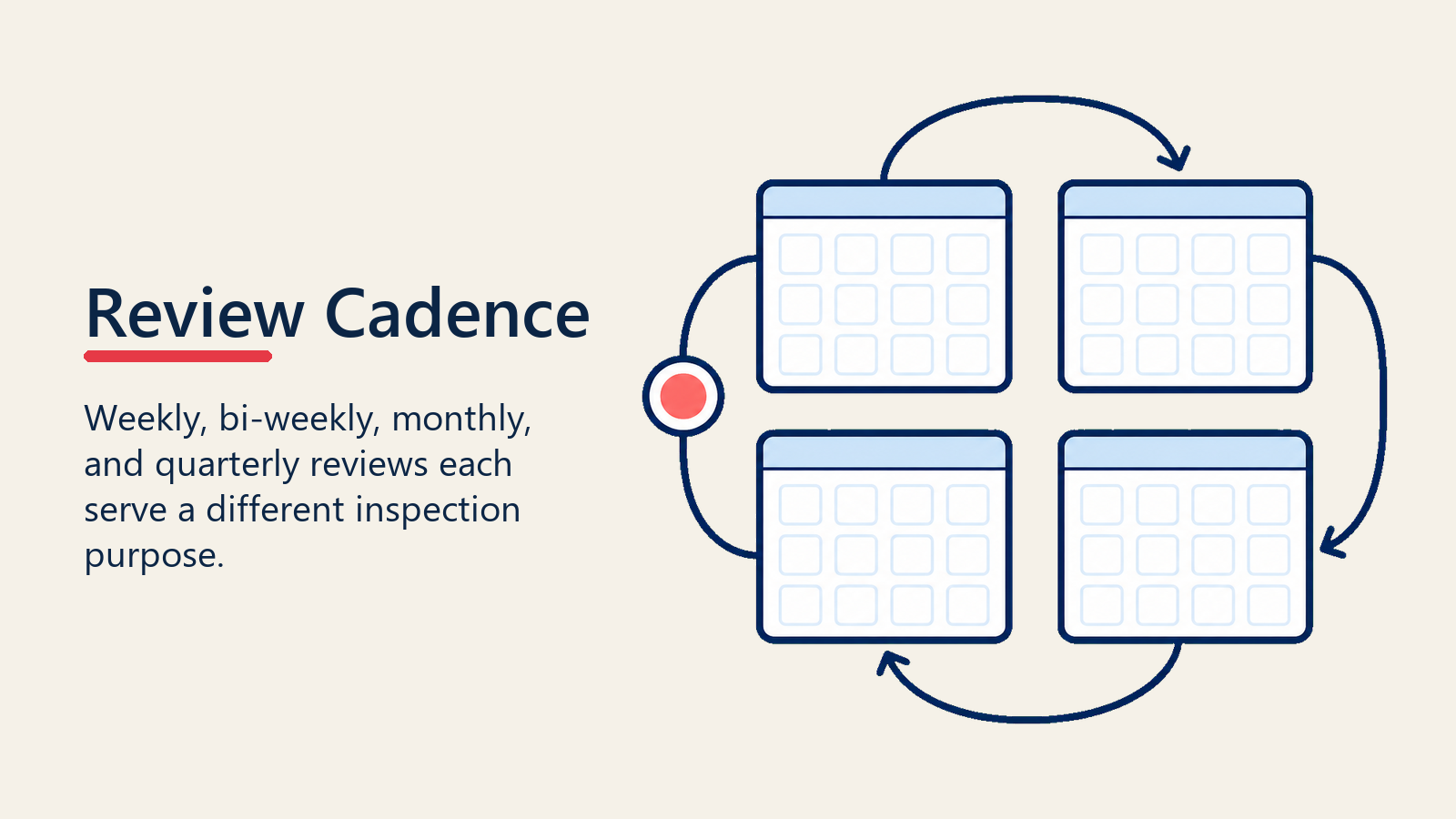
異なる種類のレビューは異なる目的を果たします。成熟した営業組織は、それぞれ焦点と参加者が異なる複数のレビューリズムを運用しています。パイプラインとフォーキャストの違いを理解することは、各レビュー種別が何を達成すべきかを明確にする助けになります。
週次の担当者・マネージャー1on1
参加者: 担当者個人 + 直属のマネージャー 所要時間: 30〜45分 焦点: 稼働中の商談ごとのコーチング
これが主要な商談インスペクションの場です。高額商談やリスクのある商談を3〜5件、深く掘り下げます。パイプライン全体を広く見渡すのではなく、コーチング、戦略、介入が実際に結果を変えうる商談に集中してください。
主な質問:
- 前回のレビュー以降、何が起きたか
- 商談に何か変化があったか(購入側の行動、タイムライン、競合)
- 現在のステージを裏付ける証拠は何か
- 何が前進を妨げているか
- 今週具体的にどんなアクションを取るか
隔週のチームレビュー
参加者: 営業チーム + マネージャー 所要時間: 60〜90分 焦点: チーム横断の可視性、パターンの特定、リソース配分
チームレビューは共有学習を生み出します。他の担当者が学べる商談や、集団の意見が役立つ商談を中心に、異なる担当者から2〜3件の商談を取り上げます。
チームレビューは以下の目的で活用してください。
- パターンの特定(よくある反論、競合による失注、購買プロセスの変化)
- チーム内での勝ちパターンの共有
- 共有リソースの配分(SE、経営層、専門人材)
- 相互の可視性を通じたチームのアカウンタビリティ構築
月次の予測レビュー
参加者: マネージャー + 経営層 所要時間: 90〜120分 焦点: 予測精度、パイプラインカバレッジ、コミット商談
これはコミットメントを確認するセッションです。マネージャーは勘ではなく、商談インスペクションの厳密さに基づいて自身の予測を裏付けます。経営層は方法論を検証し、前提に疑問を投げかけます。
月次レビューでは以下に焦点を当てます。
四半期のパイプラインプランニング
参加者: 営業リーダーシップ + RevOps 所要時間: 半日のワークショップ 焦点: 戦略的なパイプラインの健全性、キャパシティプランニング、プロセス改善
個々の商談から一歩離れて、パイプライン運用全体を評価します。リードソースは機能しているか。見極めはうまくいっているか。コンバージョン率はどこで低下しているか。どんなプロセス変更が成果を改善するか。
レビューミーティングの構成
レビューの構成は、CRMの読み上げではなく、リスク、進捗、意思決定、担当者コーチングにミーティングの焦点を保ちます。
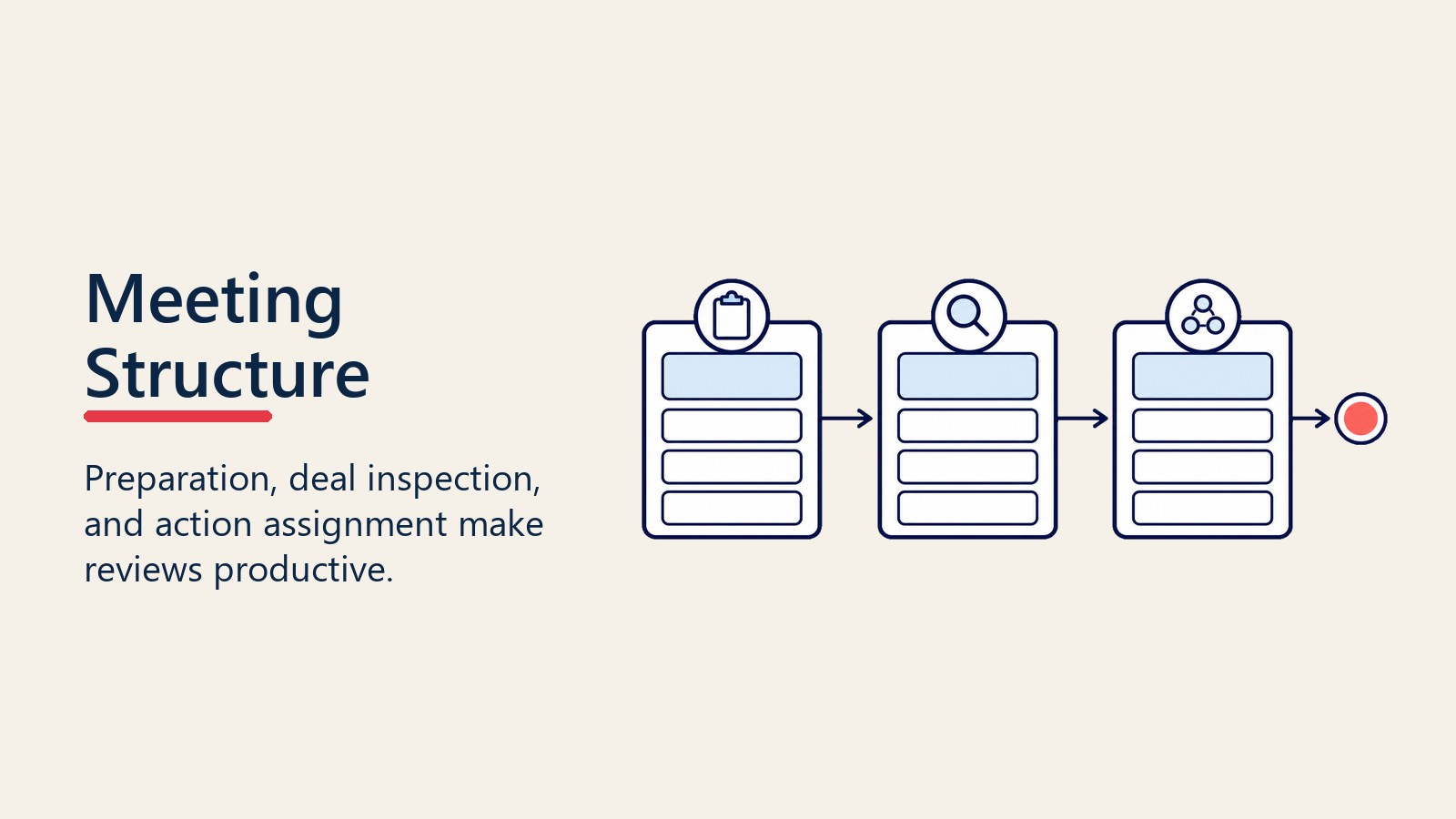
効果的なパイプラインレビューは一貫した構成に従います。一貫性は効率を生みます。担当者は何を準備すべきかを把握し、マネージャーは何を検証すべきかを把握し、チーム全体がレビューの流れに習熟していきます。
事前準備
パイプラインレビューは、参加者が準備不足のまま臨むと失敗します。標準的な事前準備を求めましょう。
担当者の準備(ミーティング前):
- 最新の商談情報でCRMを更新する
- 最近の活動と購入側とのやり取りを文書化する
- レビューする商談を特定する(高額、リスクあり、停滞中)
- 具体的な質問や助けが必要な点を準備する
- 前回セッションのアクションアイテムを確認する
マネージャーの準備:
- パイプラインダッシュボードで傾向と異常をレビューする
- 警告サインを示している商談にフラグを立てる(活動なし、ステージ滞在期間、データ欠落)
- コーチングの機会を特定する
- 商談ステージと経緯に基づいた関連質問を準備する
テクノロジーによる支援: ほとんどのCRMは、ミーティング前レポートを生成できます。ステージ別の商談、14日以上活動のない商談、今月成約予定の商談、前月から先送りされた商談などです。
商談ごとのインスペクション
最も重要な商談から始めます。一貫したインスペクションのフレームワークを使いましょう。
1. 商談の背景(1〜2分)
- 簡単な要約: 企業名、商談規模、現在のステージ、成約予定日
- 前回のレビュー以降に起きたこと
2. 見極めの検証(3〜5分)
BANTやMEDDICのようなフレームワークを使って検証します。
- フィットの検証: 依然として適格な購入者か
- ニーズの確認: 事業課題は変化したか
- 権限の検証: 実際に意思決定しているのは誰か
- 予算の確認: 資金は今も確保されているか
- タイムラインの検証: なぜ今購入するのか
3. 進行の証拠(3〜5分)
- 現在のステージを裏付ける購入側の行動は何か
- 最近関与したステークホルダーは誰か
- 購入側はどんな情報を提供したか
- 前進しているのか、それとも連絡を取り合っているだけなのか
4. リスク評価(2〜3分)
- この商談を頓挫させうるものは何か
- どんな情報が欠けているか
- まだ話していないが話す必要がある人は誰か
- 競合は何をしているか
- 購買環境に変化はあるか
5. アクションプラン(2〜3分)
- 次に何をする必要があるか
- 各アクションの担当者は誰か
- タイムラインはどうか
- 担当者にはどんなサポートが必要か
商談1件あたりの合計時間: 10〜15分。45分の1on1であれば、10〜15件を表面的に扱うのではなく、3〜4件を徹底的に検証することになります。
アクションアイテムの割り当てと追跡
すべての商談インスペクションは、具体的なアクションを生み出すべきです。明確に文書化しましょう。
- 何を実施するか
- 誰が担当するか(担当者、マネージャー、その他の人物)
- いつまでに完了するか
- なぜそれが重要か(商談の進行との関連)
レビューの間にアクションアイテムを追跡してください。新しい商談に移る前に「先週のアクションアイテムを確認しましょう」から始めます。これによりアカウンタビリティが生まれ、アクションが実際に商談を前進させているかどうかが明らかになります。
何をレビューすべきか: インスペクションチェックリスト
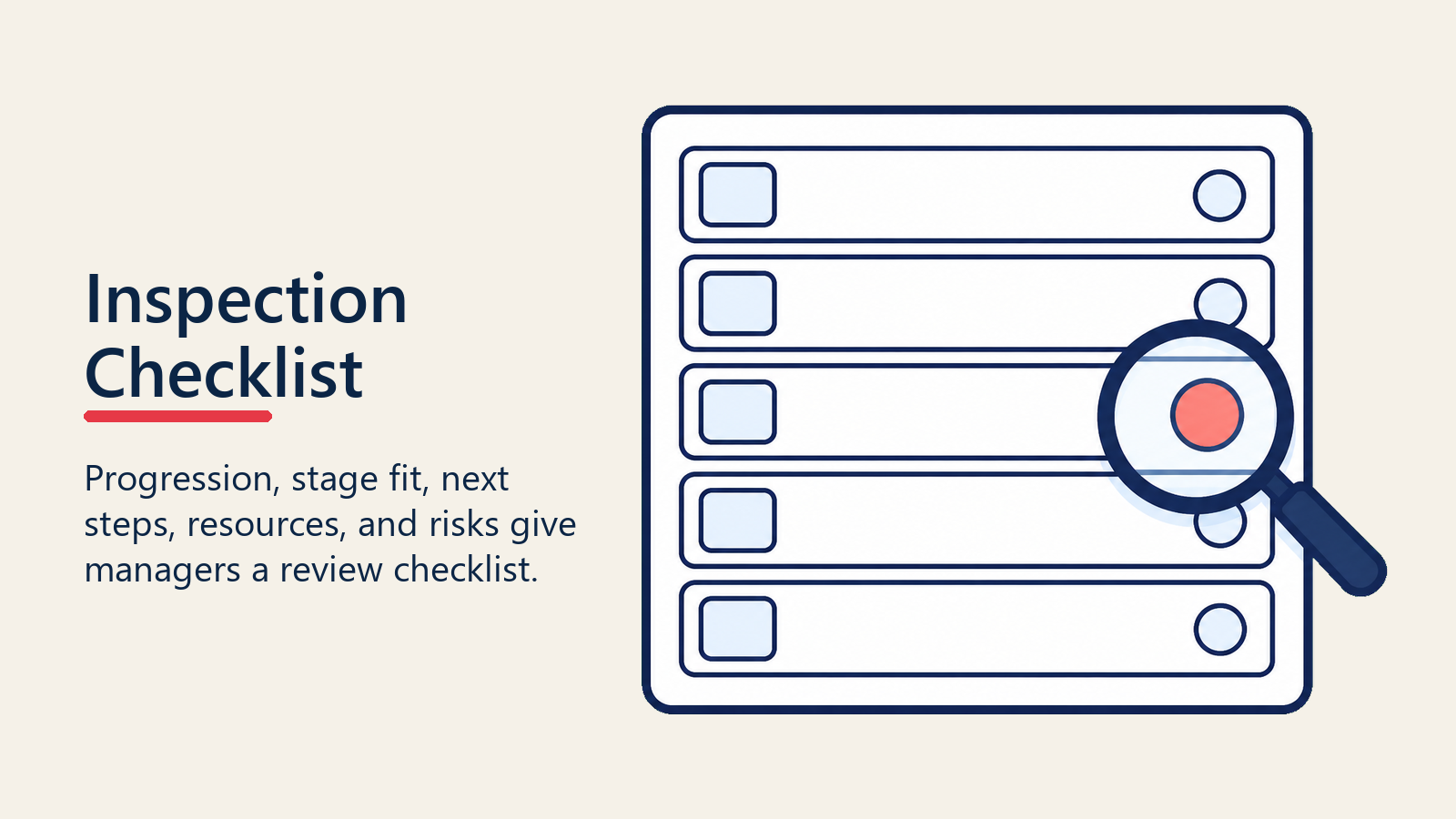
重要な商談の健全性指標を確実にカバーするために、このチェックリストを活用してください。
商談進行の指標
- 最近の活動: 過去7〜14日以内に意味のあるやり取りがあったか
- 購入側の関与: 返信している、情報を共有している、時間を投資しているか
- マルチスレッディング: 複数のステークホルダーと関与しているか
- 情報交換: 組織図、予算、タイムライン、技術要件を提供してもらえたか
- プロセスの進行: 評価段階に進んだか、ステークホルダーへの提示は行われたか、調達プロセスは始まったか
ステージの妥当性
- 参入基準の充足: この商談は現在のステージの要件を満たしているか。ステージゲート基準をレビューしましょう。
- 通過基準への進捗: ステージ進行に向けて前進しているか、それとも止まっているか
- ステージ滞在期間: 現在のステージにどれくらいとどまっているか。それは正常か。商談滞留管理で追跡しましょう。
- 後退リスク: 商談が後退すべき兆候はあるか
次のステップの明確さ
- アクションの定義: 次のステップは曖昧ではなく具体的か
- 相互のコミットメント: 次のステップに購入側もコミットしたか、それとも担当者だけか
- タイムライン: 具体的な日時があるか
- 判断基準: 次のステップの後に何が起こるかを把握しているか
必要なリソース
- 必要なサポート: SE、経営層、専門人材、法務、財務のどれが必要か
- タイミング: いつサポートが必要か
- 準備: サポートリソースは何を知っておく必要があるか
- 可用性: リソースが確保できることを確認したか
リスク要因
- 競合: 誰と競合しているか。競合の切り口は何か
- 社内チャンピオン: いるか。効果的に機能しているか
- 意思決定プロセス: 相手がどう意思決定するかを十分理解しているか
- 経済環境: 予算凍結、レイオフ、組織再編はあるか
- ステークホルダーの変化: キーパーソンの離脱や新しい意思決定者の登場はあるか
特定すべき危険信号
危険信号は、商談のストーリーがそのステージ、予測カテゴリー、成約予定日が示唆するものよりも弱いことを明らかにします。
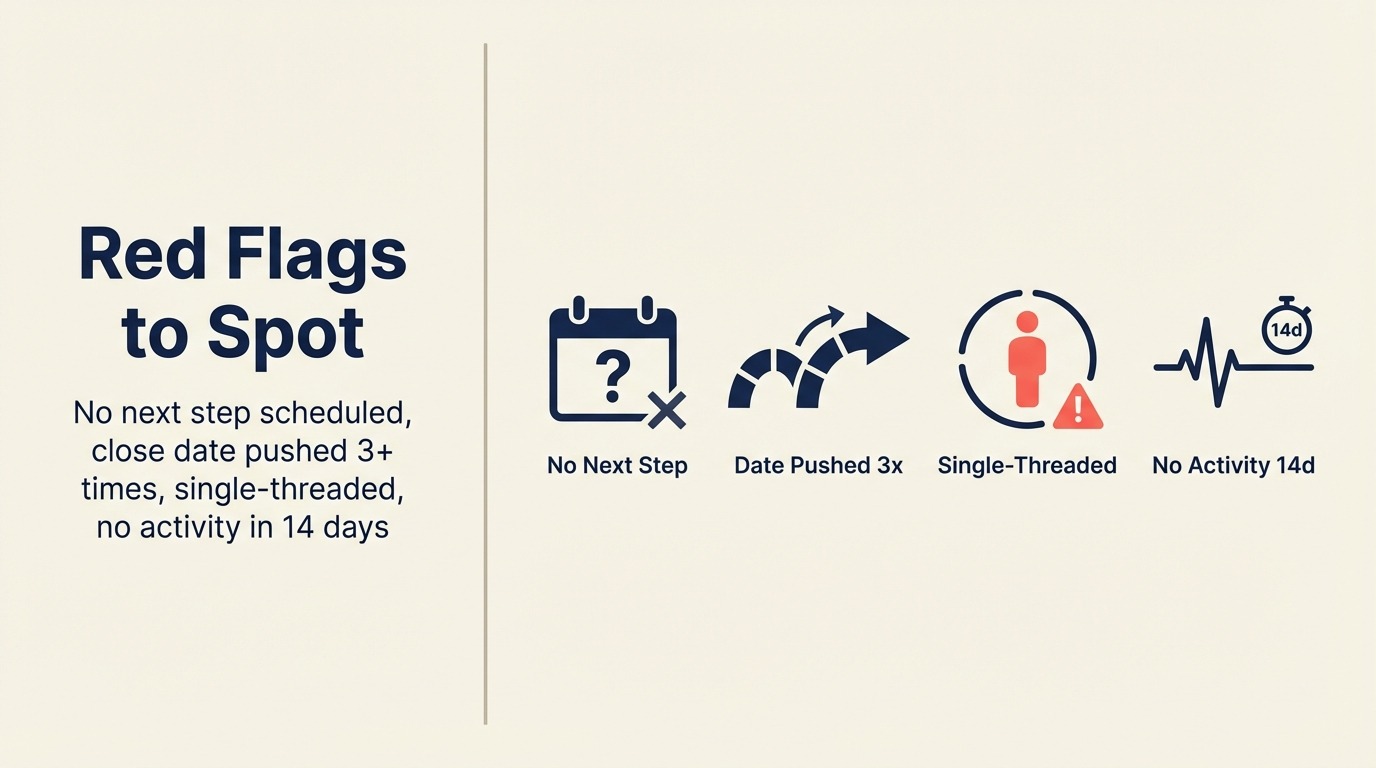
経験豊富なマネージャーは、問題のある商談に対するパターン認識を養っています。最も信頼できる警告サインは次のとおりです。
活動ベースの危険信号
14日以上活動がない
2週間、アカウント内の誰とも話していないなら、それは稼働中の商談ではありません。単なる希望です。ここでパイプラインハイジーンが重要になります。
メールでのやり取りのみ
商談は会話を通じて成約するのであって、文書のやり取りだけでは成約しません。電話や面談の機会を得られないなら、相手はこの購入を優先していません。
担当者側からの連絡のみ
すべての活動が自社側から発信されている場合、それは前進ではなく追いかけているだけです。健全な商談では、購入側から連絡があります。
情報に関する危険信号
マルチスレッディングがない
一人だけ、特に経済的決裁者でない人物とだけ話している状態は、「追って連絡します」の後に沈黙が続くための下地です。
予算情報が欠けている
金額、出所、承認プロセスを知らないまま「確実に予算は確保されている」と考えているなら、実際には何も知らないのと同じです。
曖昧な次のステップ
「2週間後にフォローアップします」や「提案書を検討中です」は次のステップではありません。単なる先延ばしです。
意思決定者へのアクセスがない
キーパーソンが購入承認者への紹介を渋るなら、その人物が本当にキーパーソンなのか疑うべきです。
タイムラインに関する危険信号
非現実的な成約予定日
先週作成された商談なのに、3週間後に成約予定日が設定されている。それは適格な商談ではなく、単なる希望です。
繰り返される日付の先送り
商談の成約予定日が3回先送りされているなら、表面的な説明を受け入れるのはやめましょう。何か根本的な問題があります。失注分析でパターンを分析し、根本原因を理解してください。
恣意的なタイミング
事業上の推進力なしに「四半期末までに成約したい」というのは偽りの緊急性を生みます。本物の緊急性は事業上の痛みから生まれます。
見極めに関する危険信号
「興味がある」
興味は見極めではありません。誰もが課題解決に興味を持っています。見極めとは、予算を確保した上で今すぐ解決するというコミットメントです。
単一スレッドのキーパーソン
一人だけがこれを優先事項だと考えていて、他の人々が関与していないなら、組織的な合意は得られていません。
現行ベンダーとしての競合
すでに競合を利用しているなら、なぜ乗り換えるのかを理解する必要があります。「他の選択肢を見ているだけ」はめったに成約につながりません。
レビューで使う質問: マネージャーのツールキット
優れたパイプラインレビューは優れた質問によって駆動されます。目的別に整理した質問集を紹介します。
見極めを検証する質問
- 「次の四半期ではなく今解決する必要がある理由を教えてください」
- 「この問題が解決されないと、誰の仕事が危うくなりますか」
- 「もし何もしないと決めたらどうなりますか」
- 「予算はどこから出ますか。そのお金は他に何に使えますか」
- 「[キーパーソンの名前]以外に、これを優先事項だと考えている人はいますか」
進行の証拠を確認する質問
- 「購入側は、コミットメントを示すどんな行動を取りましたか」
- 「本気でなければ共有しないような、どんな情報を共有してくれましたか」
- 「過去2週間で誰と会いましたか。何がわかりましたか」
- 「前回のレビュー以降、商談に何か変化がありましたか」
- 「[ステージ]にいるとすれば、それを裏付ける証拠は何ですか」
リスクを特定する質問
- 「この商談で何がうまくいかなくなる可能性がありますか」
- 「まだ話していないが、この商談を潰しうる人は誰ですか」
- 「知っておくべきなのに、まだ知らないことは何ですか」
- 「もしあなたが競合だったら、どう自社に対抗しますか」
- 「予定通り成約しなかった場合のプランBは何ですか」
意思決定プロセスに関する質問
- 「相手がどのようにこの意思決定を行うか、正確に教えてください」
- 「誰がイエスと言う必要がありますか。誰がノーと言えますか」
- 「どんな評価基準を使っていますか。自社はどう評価されていますか」
- 「今から意思決定日までの間に何が起きますか」
- 「以前にもこのような購入をしたことがありますか。そのときのプロセスはどうでしたか」
コーチングと育成のための質問
- 「もしこの商談を最初からやり直せるとしたら、何を変えますか」
- 「この商談について最も不安に感じていることは何ですか」
- 「もしこの商談が破談になるとしたら、その理由は何だと思いますか」
- 「これを前進させるために、私からどんな助けが必要ですか」
- 「この商談から何を学んでいますか」
最も優れた質問は、イエス・ノーや表面的なデータでは答えられません。実際に考えることを要求し、何が本当にわかっていて何が想定にすぎないかを明らかにし、対処すべきギャップを浮かび上がらせることが多いのです。こうしたスキルの伸ばし方については、パイプラインコーチングのテクニックを参照してください。
文書化の基準
ミーティング後に学びが失われてしまうなら、パイプラインレビューには意味がありません。明確な文書化要件を定めましょう。
CRM更新の要件
すべてのレビュー後、担当者に以下の更新を求めます。
- 活動ログ: 議論・決定された内容の要約
- 次のステップ: 期日付きの具体的なアクション
- 商談メモ: 主要なインサイト、特定されたリスク、戦略の変更
- ステージの検証: ステージを確認する、または必要に応じて変更する
- 成約予定日: タイムラインが変わった場合は更新する
これは交渉の余地なく徹底しましょう。「CRMに記録されていないことは起きていない」という原則は、共有の記録を作り、「あなたが対応していると思っていた」という混乱を防ぎます。
アクションアイテムの追跡
失われがちなミーティングメモに頼らないでください。一貫したシステムを使いましょう。
選択肢1: CRMタスク
CRM内に、担当者と期日を割り当てたフォローアップタスクを作成します。これにより可視性とリマインダー通知が確保されます。
選択肢2: 共有トラッカー
すべてのレビューからのアクションアイテムをまとめた運用ドキュメント(スプレッドシート、プロジェクト管理ツール、共同編集ドキュメント)を維持します。次のミーティングまでにステータスを更新します。
選択肢3: レビューダッシュボード
一部のチームは、担当者、商談、経過期間別に未完了のアクションアイテムを表示するカスタムダッシュボードを構築しています。アカウンタビリティが視覚化されます。
意思決定ログ
商談に関する主要な決定を文書化します。
- 「年間契約ではなく複数年契約を追求することを決定」
- 「来週、技術的な深掘りのためにSEを投入予定」
- 「ナーチャリングに移行: タイムラインが来会計年度に先送りされたため」
- 「見極め対象外に: 予算なし、単なる評価目的」
意思決定ログは同じ議論の繰り返しを防ぎ、新しいチームメンバーが商談の経緯を素早く理解する助けになります。
マネージャーのスキル: パイプラインコーチングの技術
効果的なパイプラインレビューには特定のマネージャースキルが必要です。コーチング志向のレビューと尋問との違いを見ていきましょう。
質問のテクニック
教えるのではなく問いかける
すぐに解決策を提示したくなる衝動を抑えましょう。担当者自身が状況を考え抜けるような質問をします。
悪い例:「VPに接触する必要があります」 良い例:「まだ話していないが影響を与える必要がある人は誰でしょうか」
糸をたどる
答えが曖昧なときにそのまま流さないでください。本当の情報にたどり着くまで質問し続けます。
担当者:「相手は提案書を検討中です」 マネージャー:「具体的に何を検討していますか」 担当者:「自社の要件との適合性です」 マネージャー:「その要件とは何ですか。誰が評価していますか。いつ完了しますか。その後どうなりますか」
真実を話せる安心感を作る
「わかりません」や「この商談は危ういです」と言っても大丈夫だという空気を作りましょう。担当者が良い知らせしか共有しないなら、真実ではなく演技を受け取っていることになります。
コーチングの瞬間
商談を検証するだけでなく、スキルを育成するためにレビューを活用しましょう。
パターン認識
「この件で調達が遅れて進行が滞るのは、これで3件目ですね。もっと早い段階で何ができるでしょうか」
戦略的思考
「3手先まで考えてみましょう。パイロットにイエスと言ってもらえたら、それを拡大するには何が必要ですか」
競合ポジショニング
「相手は[競合名]も検討しています。ロールプレイをしましょう。あなたがキーパーソン役、私が上司役として、なぜ相手ではなく自社を選ぶべきか聞きます。私を説得してください」
リスクマネジメント
「順調に進んでいるように見えますが、[X]が気になります。心配すべきでない理由を教えてください」
マイクロマネジメントなきアカウンタビリティ
常に監視するのではなく、構造と期待値を通じてアカウンタビリティを生み出しましょう。
明確な期待値の設定
「次回のレビューまでに、購入側とのやり取りがあれば24時間以内にCRMを更新し、異なるステークホルダーと少なくとも2回、意味のある会話をしてください」
信頼しつつ検証する
すべてを疑う必要はありませんが、主要な主張は検証しましょう。「VPが予算を承認したとのことですが、そのメールを転送してもらえますか。正確な文言を確認したいです」
エスカレーションの基準
いつ自分が関与するかを定義しましょう。「72時間連絡がなければ教えてください。私からVPに連絡します」
優れた実行を称える
担当者が何かをうまくやったとき(優れたディスカバリーコール、効果的なキーパーソン育成、良好なリスク軽減)、具体的に評価してください。強化は再現可能な卓越性を育てます。
テクノロジーによる支援
テクノロジーはレビューをより複雑にするのではなく、より効果的にするべきものです。実際に役立つものを紹介します。
レビューダッシュボード
注意が必要な商談を浮かび上がらせる、あらかじめ構築されたビューを作成しましょう。
- 停滞商談: 14日以上活動がない
- リスクのあるコミット: 今月成約予定だが警告サインのある商談
- ステージ滞在期間の外れ値: 平均より長くステージにとどまっている商談
- 情報欠落: 重要なデータ項目が欠けている商談
- 高額商談フォーカス: 金額上位10件の商談
優れたダッシュボードは、マネージャーが素早く一覧し、深く検証すべき対象に絞り込むことを可能にします。
アジェンダテンプレート
レビューのアジェンダを標準化し、準備を習慣化しましょう。
1on1レビューのアジェンダ:
- 前回セッションのアクションアイテム確認(5分)
- 商談1の深掘り(12分)
- 商談2の深掘り(12分)
- 商談3の深掘り(12分)
- パイプラインの簡易スキャン、他に危険信号はないか(5分)
- コーチングトピックまたはスキル開発(10分)
チームレビューのアジェンダ:
- チーム指標のレビュー(10分)
- 商談1のウォークスルー + チームからの意見(20分)
- 商談2のウォークスルー + チームからの意見(20分)
- パターンの議論、何を学んでいるか(15分)
- 来週の優先事項(5分)
追跡とレポーティング
レビューの効果を示すシンプルなレポートを構築しましょう。
レビュー頻度レポート
各担当者の最終レビュー日を表示します。実施リズムの一貫性を確保します。
アクションアイテム完了率
期日までに完了したアクションアイテムの割合を追跡します。レビューが実際にアクションを促しているかどうかを明らかにします。
レビュー後の商談ベロシティ
レビュー前後で商談の進行速度に差があるかを測定します。レビューが時間を消費するだけでなく、成果を改善していることを検証します。
予測精度の推移
予測された成約予定日と実際の日付を比較します。精度の低下は、レビューの厳密さが緩んでいることを示唆します。時間の経過とともに精度を改善するために確率モデリングを活用してください。
パイプラインレビュー文化を築く
最良のレビュープロセスは、コンプライアンス上の義務ではなく文化的な規範になります。その文化を築く方法を紹介します。
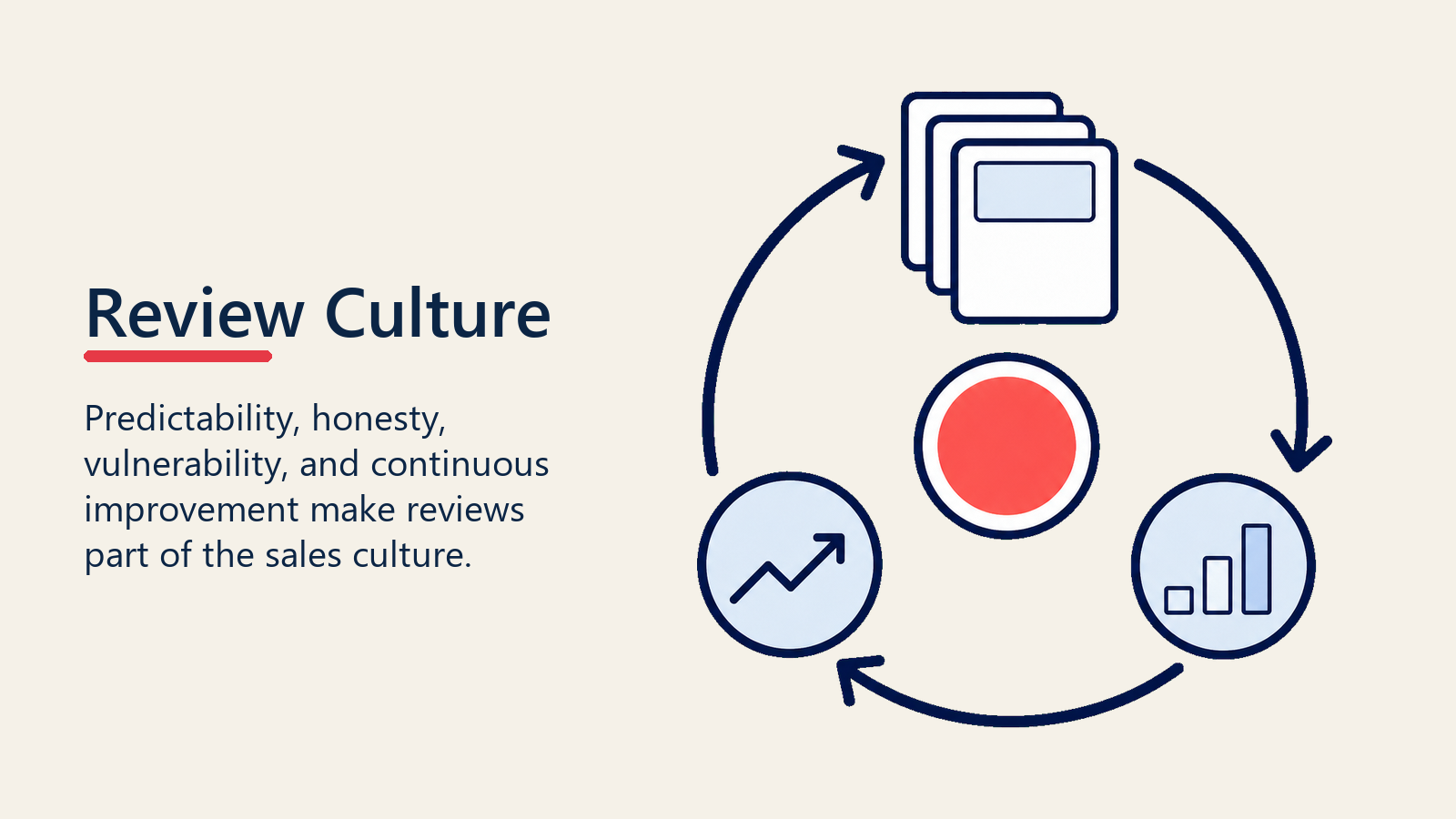
「なぜ」から始める
レビューは担当者のミスを捕まえるためではなく、より多くの商談を勝ち取る手助けをするために存在することをチームに理解してもらいましょう。レビューは次のように位置づけてください。
- 手遅れになる前のリスク特定
- マネージャーの経験とサポートへのアクセス
- コーチングを通じたスキル開発
- 経営層からの信頼を築く正確な予測
予測可能にする
リズムを設定し、その時間を守りましょう。週次1on1は毎週、同じ曜日、同じ時間に実施します。緊急時を除いてリスケジュールしません。一貫性が重要性を示します。
弱さを見せる
マネージャー自身も、自分の不確実性や失敗を共有しましょう。「前四半期に成約すると経営層に伝えましたが、外れました。レビューで見落としていた点はこうです」と話すことで、担当者が正直になれる安心感が生まれます。
正直さに報いる
担当者がリスクを早期に指摘したり、実体のない商談を見極め対象外にしたりしたときは、それを評価しましょう。「指摘してくれてありがとうございます。悪い商談をパイプラインから取り除くことは、良い商談を追加することと同じくらい価値があります」
継続的に改善する
四半期ごとにチームに尋ねましょう。「レビューでうまくいっていることは何か。うまくいっていないことは何か。何を変えるべきか」。レビューは固定されたものであるべきではありません。実際に役立つことに基づいて進化させましょう。
パイプラインレビューでよくある間違い
経験豊富なマネージャーでも、次のような落とし穴にはまります。
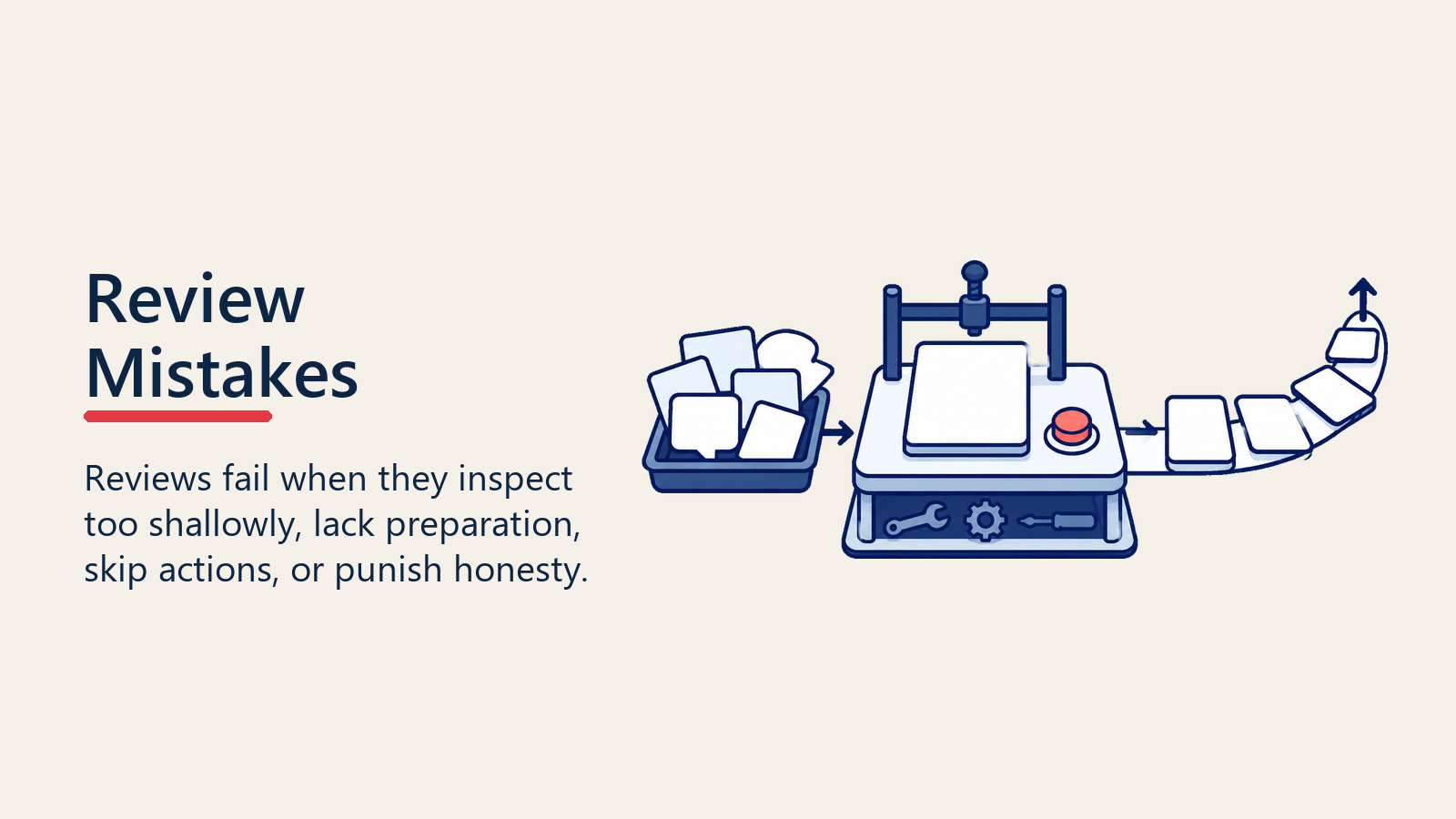
間違い1: 表面的なカバレッジ
15件の商談をそれぞれ3分ずつ扱うと生産的に感じますが、実際の洞察はほとんど得られません。少数の商談を深く掘り下げましょう。
間違い2: マネージャーの独演
担当者よりもマネージャーが多く話しているなら、それはコーチングではなく講義です。レビューは担当者が70%話し、マネージャーが30%質問とコーチングをするくらいが適切です。
間違い3: フォローアップの欠如
追跡もレビューもされないアクションアイテムを作ることは、レビューが実際には重要視されていないことを示すシグナルになります。フォローアップをプロセスに組み込みましょう。
間違い4: 毎週同じ商談ばかり
進展のないまま同じ商談を何度もレビューしているなら、何かがおかしいのです。商談が滞留しているか(パイプラインボトルネック分析で対処してください)、あるいは見極め対象外にするという難しい会話を避けているかのどちらかです。
間違い5: 曖昧な回答を受け入れる
「興味を持ってくれています」「返事待ちです」「相手は忙しいので」は受け入れられる回答ではありません。具体性を求めるか、不確実性を認めましょう。
間違い6: リスクの議論を省略する
うまくいっていることばかりを扱うレビューでは、現実に備えられません。常に「何がうまくいかなくなる可能性があるか」を問いましょう。
間違い7: レビューが尋問になっている
担当者がレビューを恐れているなら、それはコーチングではなく詰問を作り出しています。雰囲気は協力的な問題解決であるべきで、防御的な弁明であってはなりません。
結論: 予測精度の土台としてのレビュー
パイプラインレビューは事務的な雑務ではありません。正確な予測と希望的な推測とを分ける規律です。
コーチング重視のパイプラインレビューを実施する組織は次のことを実現します。
- 対処できるうちにリスクを早期に特定する
- 一貫したコーチングを通じて営業スキルを育成する
- 経営層からの信頼を築く予測精度を生み出す
- マイクロマネジメントなしにアカウンタビリティを育てる
- チーム全体での共有学習を生み出す
レビューを状況報告として扱う、あるいは省略する組織は次のようになります。
- 頓挫する商談に驚かされる
- 学びが蓄積されず、同じミスを繰り返す
- 誰も信頼しない予測を生み出す
- 問題が見過ごされたまま商談が停滞するのを見過ごす
その違いは才能やテリトリーではありません。規律です。
レビューのリズムを構築し、構成に従い、難しい質問を投げかけ、学びを文書化し、プロセスを通じてコーチングしてください。これを1四半期続ければ予測精度の改善が見えてきます。1年続ければ、それが競争優位性になります。
さらに学ぶ
パイプラインレビューのプロセスを改善する準備はできましたか。包括的なパイプライン管理システムを構築するために役立つ関連リソースをご紹介します。
- 商談インスペクションプロセス: 体系的な商談検証テクニックを深く掘り下げる
- 商談進行管理: 明確なマイルストーンで商談を前進させる
- パイプラインベロシティ: 商談がステージを通過する速度を測定し改善する
- 勝率改善: より多くの適格な商談を成約させる戦略

On this page
- パイプラインレビューとは何か
- 3つの核となる目的
- レビューの種類と実施リズム
- 週次の担当者・マネージャー1on1
- 隔週のチームレビュー
- 月次の予測レビュー
- 四半期のパイプラインプランニング
- レビューミーティングの構成
- 事前準備
- 商談ごとのインスペクション
- アクションアイテムの割り当てと追跡
- 何をレビューすべきか: インスペクションチェックリスト
- 商談進行の指標
- ステージの妥当性
- 次のステップの明確さ
- 必要なリソース
- リスク要因
- 特定すべき危険信号
- 活動ベースの危険信号
- 情報に関する危険信号
- タイムラインに関する危険信号
- 見極めに関する危険信号
- レビューで使う質問: マネージャーのツールキット
- 見極めを検証する質問
- 進行の証拠を確認する質問
- リスクを特定する質問
- 意思決定プロセスに関する質問
- コーチングと育成のための質問
- 文書化の基準
- CRM更新の要件
- アクションアイテムの追跡
- 意思決定ログ
- マネージャーのスキル: パイプラインコーチングの技術
- 質問のテクニック
- コーチングの瞬間
- マイクロマネジメントなきアカウンタビリティ
- テクノロジーによる支援
- レビューダッシュボード
- アジェンダテンプレート
- 追跡とレポーティング
- パイプラインレビュー文化を築く
- 「なぜ」から始める
- 予測可能にする
- 弱さを見せる
- 正直さに報いる
- 継続的に改善する
- パイプラインレビューでよくある間違い
- 結論: 予測精度の土台としてのレビュー
- さらに学ぶ