Lead-to-Opportunity Conversion(リードから商談への転換): 収益の分かれ目となる重要な転換点
Turn this article into takeaways for your work.


Each assistant summarizes the article only for you and suggests best practices for your work.
あなたのファネルには1000万ドル規模の問題が潜んでいます。しかも、あなたが思っているのとは違う場所に。
それはリード獲得の問題ではありません(そこも改善の余地はあるでしょうが)。商談のクロージングの問題でもありません(そこも常に改善できます)。問題は、リードが商談になる、あるいはならない、その48時間の窓にあります。
これがリードから商談への転換です。収益オペレーションの中で最も重要な引き継ぎでありながら、多くの企業がここで盛大に失敗します。早すぎるタイミングで転換し、質の悪いものでパイプラインを膨らませてしまうか、遅すぎるタイミングで転換し、動きの速い競合に商談を奪われてしまうかのどちらかです。
ここをうまくやれている企業はどうなるでしょうか。予測可能な収益エンジンを構築できます。うまくやれていない企業は、なぜパイプラインが一向に転換しないのか首をかしげ続けることになります。
Lead-to-Opportunity Conversion(リードから商談への転換)とは何か
リードから商談への転換とは、見込み客開拓(リード管理)から積極的な売り込み(パイプライン管理)への正式な移行です。「この人は興味を持っているか」と問う段階から、「この商談を受注できるか」と問う段階へ切り替わります。
しかしこれは、CRM上のステータスを切り替えるだけの作業ではありません。リードを商談に転換するということは、次のことを意味します。
- この見込み客は自社の適格性基準を満たしている
- 実際のビジネス上の商談機会を特定できた
- この商談を追いかけるために営業リソースを投じる
- この商談はforecastに組み込まれる
この転換の判断こそが、どの見込み客にフルの営業対応をするか、どの見込み客を育成に留めておくかを決定します。緩すぎれば、決して受注しない案件でパイプラインが埋まってしまいます。厳しすぎれば、正当な商談機会を逃し、動きの速い競合に先を越されます。sales pipelineとは何かと、商談がそこをどう流れていくかを理解すると、この違いがより明確になります。
転換の運用を誤ることの本当のコスト
数字の話をしましょう。リードから商談への転換プロセスが機能不全な企業は、2つの方向で損失を出します。
早すぎる転換は、商談の60〜70%がそもそも実体のないものだった、という膨れ上がったパイプラインを生み出します。営業担当者は受注しない商談に何時間も費やします。forecastは信頼できないフィクションと化します。経営陣は水増しされたパイプラインデータをもとに誤った判断を下します。だからこそパイプラインの衛生管理がこれほど重要なのです。
遅すぎる転換は、本来パイプラインに入っているべき商談がリードの停滞地帯に留まり続け、その間に動きの速い競合から見込み客が購入してしまうことを意味します。売れないから負けているのではありません。相手が買う準備ができたタイミングを見極めるのが遅すぎるから負けているのです。
その中間、つまり正しい転換の閾値こそが、収益が築かれる場所です。そしてそれには規律が必要です。
適格性の閾値: SAL → SQL → Opportunity
成熟した収益オペレーションでは、商談作成に至るまでに3つの明確な適格性判断のステージを設けています。
Sales Accepted Lead (SAL)
マーケティングがリードを引き渡します。セールスはそれを追いかける価値があると受け入れます(基本的な適合条件を満たし、何らかの意図を示している)。これが営業の関与が始まる入口です。
Sales Qualified Lead (SQL)
初回のアウトリーチとヒアリングを経て、セールスはそのリードに実際の課題、予算能力、意思決定権限があることを確認します。「そう、ここには何かある」と言えるステージです。
Opportunity
実のあるヒアリングの会話を経て、セールスは、これがforecast対象として追跡すべき商談であることを裏付ける具体的な条件を確認します。ここでパイプラインに入ります。設定する商談のエントリー基準が、このステージでの質を左右します。
SALとOpportunityの間には、ほとんどのリードが消えていくギャップがあります。それが正しい理由(本当に適格ではなかった)で消えているなら問題ありません。誤った理由(フォローアップの質が低い、ヒアリングが不十分、コミュニケーション不足)で消えているなら問題です。
転換基準フレームワーク: 何がリードを商談化できる状態にするのか
転換基準とは、リードが営業側の所有する商談になる前に必要な最低限の証拠を定義するものです。
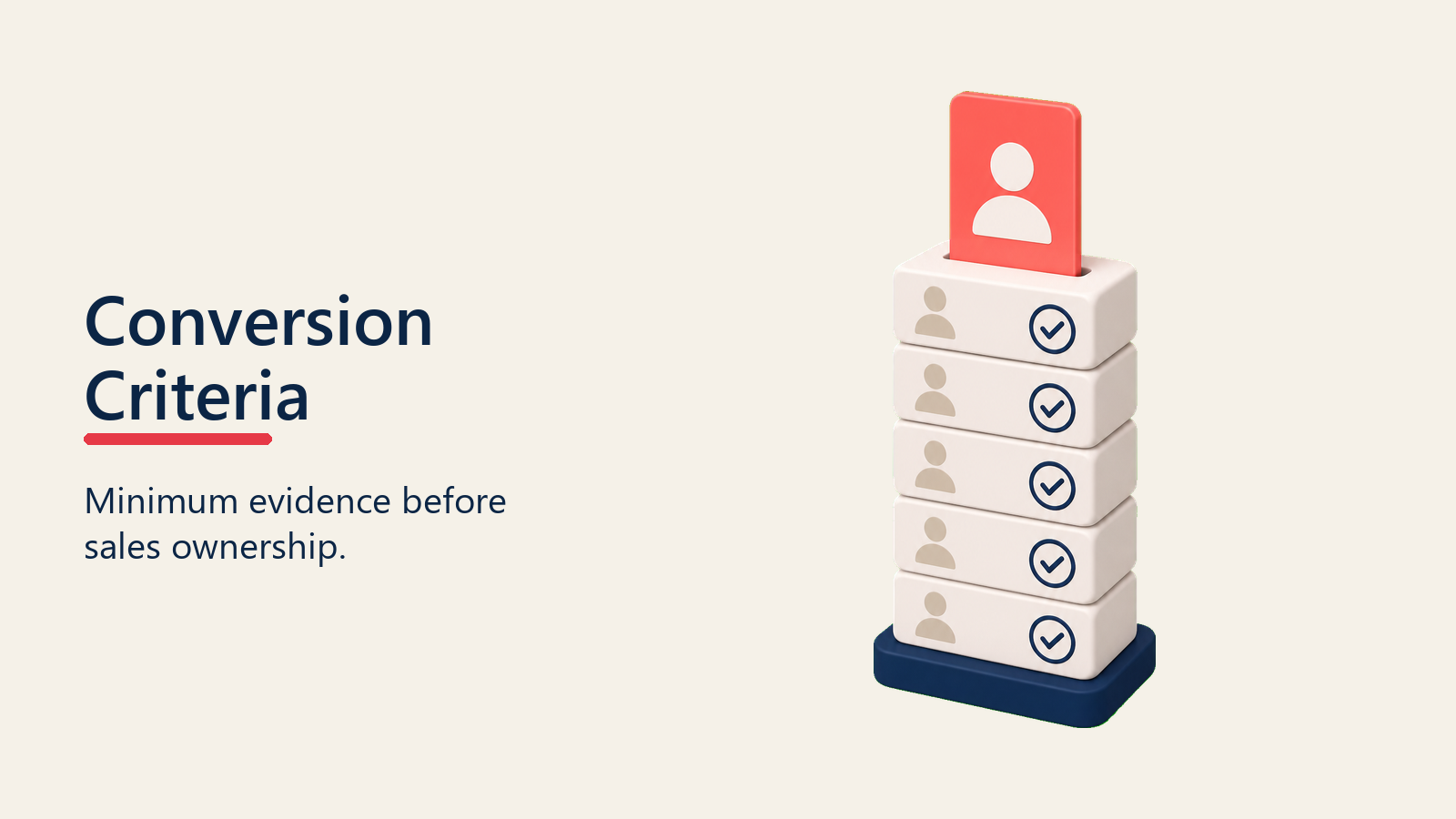
商談を作成する前に、次の5つを検証する必要があります。
1. 予算の確認(または予算確保への道筋)
「予算はありますか」ではありません(誰でもここでは嘘をつきます)。「このような購入の承認プロセスはどうなっていますか」「予算を管理しているのは誰ですか」「次の予算サイクルはいつ始まりますか」と尋ねましょう。
必要なのは、資金が実在するか、妥当な期間内に確保できるという証拠です。
2. 決裁権限の特定
最終的な意思決定者は誰か。あなたが話している相手(多くの場合影響力を持つ人物や推進者)ではなく、実際に契約にサインできる人物です。
決裁者や意思決定ユニットを名指しできないなら、それは商談ではありません。ただの興味深い会話です。
3. ニーズの検証
これは「彼らが自社の製品を欲しがっている」以上のことを意味します。彼らが解決しようとしている具体的なビジネス課題は何か。それを解決しないことのコストは何か。なぜ今なのか。
ヒアリングを通じてニーズが検証されていなければ、あなたが追いかけているのは意図ではなく単なる興味です。
4. タイムラインの明確化
「オプションを検討している最中です」はタイムラインではありません。「製品ローンチをサポートするため、Q3までに導入する必要がある」はタイムラインです。
本物の商談には、ビジネスイベント、契約更新、コンプライアンス期限、戦略的イニシアチブといった、行動を後押しする要因(forcing function)があります。forcing functionがなければ緊急性はありません。そして緊急性のない商談は、パイプラインの中で永遠に停滞します。
5. 意思決定プロセスの理解
どのように意思決定するのか。誰が関わるのか。どんな基準が重視されるのか。評価のタイムラインは。他にどんなベンダーが検討されているのか。
意思決定プロセスを把握できていなければ、「委員会が別の方向で決定した」と言われて不意を突かれることになります。
これが基本線です。企業によっては、商談規模や複雑さ、営業モデルに応じてさらに基準を追加します。しかしこの5つが土台です。BANTやMEDDICといった人気のフレームワークは、これらの基準を検証するための体系的なアプローチを提供します。
転換プロセス: 引き継ぎは実際どう機能するのか
引き継ぎのプロセスは、コンテキストを保持し、オーナーシップを確認し、売り手にとって明確な次のアクションを生み出すものでなければなりません。
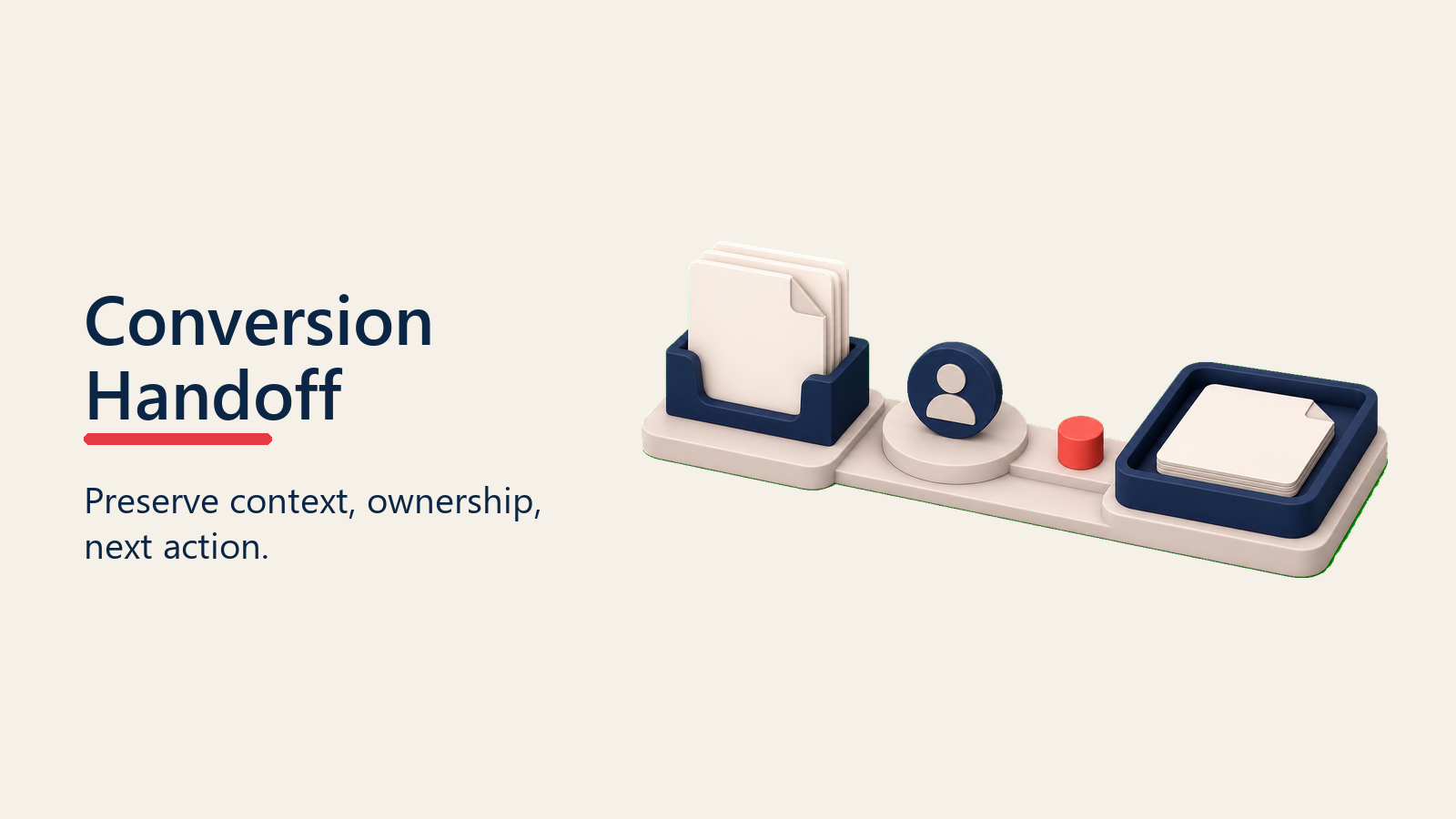
ハイパフォーマンスなチームは、リードから商談への移行を4つのステップで実行します。
ステップ1: SDR/LDRが適格性判断を完了する
Sales Development RepまたはLead Development Repが初回のアウトリーチとヒアリングを行います。リードが基本的な適格性基準を満たしているかを検証し、Account Executiveとのヒアリングミーティングを設定します。
引き継ぎに必要な要件:
- 会社の背景と適合度の評価
- 連絡先情報と組織図(可能な範囲で)
- 判明した課題(ペインポイント)とビジネス上のコンテキスト
- これまでの関与履歴
- BANTまたはMEDDIC基準に照らした適格性判断のメモ
- 推奨される次のステップ
ステップ2: Account Executiveによるヒアリングの通話
AEは、ビジネス課題、意思決定プロセス、予算、タイムラインの理解に焦点を当てた、より深いヒアリングの会話を行います。ここで「興味を持っている相手」から「適格な商談」へと変わります。
ヒアリングで得られる成果:
- 予算と決裁権限の検証
- ニーズと緊急性の詳細な理解
- タイムラインと意思決定プロセスの把握
- 競合状況の理解
- 価値提案との整合性の確認
ステップ3: 商談の作成
ヒアリングが適格性基準を裏付けた場合、AEはCRM上で必要なフィールドをすべて入力し、商談を作成します。
必要なデータ:
- 商談名(標準化されたフォーマット)
- アカウントと主要な連絡先
- 商談規模の見積もり(判明したニーズに基づく)
- 予定成約の日付(検証されたタイムラインに基づく)
- ステージ(通常「Discovery」または「Qualification」)
- ソースのアトリビューション(元のリードソース)
- 次のステップとフォローアップ計画
ステップ4: アカウントと連絡先の紐付け
商談は適切なアカウントレコードに紐付けられ、関係するすべての連絡先がそれぞれの役割(決裁者、推進者、影響力を持つ人物、技術評価担当者)とともに関連付けられます。
これにより、商談がアカウントレベルのコンテキストを引き継ぎ、関係性のマッピングが完成します。正式なパートナープログラムを持つ企業では、これにdeal registrationのプロトコルが関わることもあります。
転換率のベンチマーク: 何が標準的な水準か
リードから商談への転換率は、業界、商談規模、ソースによって大きく異なります。ただし、目安となる典型的なベンチマークは以下の通りです。
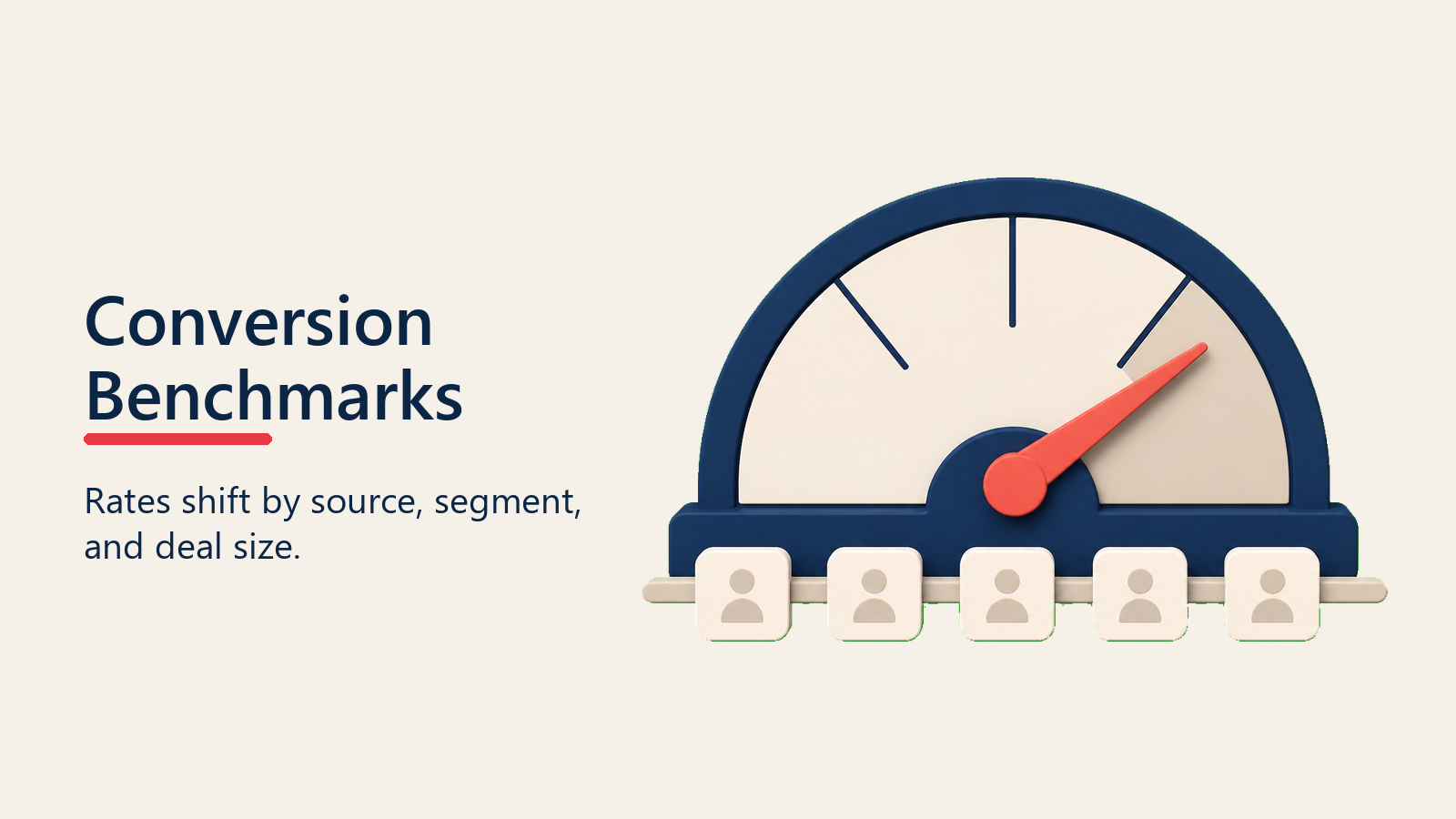
全体の転換率
リードの5〜20%が商談になります。 そう、リードの80〜95%は転換しません。これは失敗ではありません。フィルタリングです。
成熟した適格性判断プロセスを持つ企業は、一般的に10〜15%の転換率を示します。20%を超えている場合、おそらく判断基準が緩すぎます。5%を下回っている場合、基準が厳しすぎるか、マーケティングが質の低いリードを送ってきています。
ソース別
インバウンドリード: 転換率15〜25%。これらの見込み客は自ら接触してきているため、意図が高い傾向にあります。
アウトバウンドリード: 転換率3〜10%。こちらから接触しているため、意図の低さと戦うことになります。
リファラル: 転換率25〜40%。信頼できるソースによって事前に適格性判断されているため、より高い転換率になります。
イベント・ウェビナー: 転換率8〜15%。イベントの種類やフォローアップの速さによって意図はばらつきます。
セグメント別
エンタープライズ商談: 転換率20〜35%。リード数は少ないものの、引き継ぎ前に念入りに適格性判断されています。
ミッドマーケット: 転換率10〜20%。量と判断の厳密さのバランスが取れています。
SMB: 転換率5〜12%。量が多く、判断は軽め、セルフサービス志向が強めです。
業界ごとの違い
SaaS: 典型的な転換率は12〜18% 専門サービス業: 20〜30%(関係性主導で、判断がより厳密) 製造業: 8〜15%(サイクルが長く、評価がより複雑) 金融サービス業: 15〜25%(規制要因により判断基準がより明確)
これらのベンチマークは自社のパフォーマンスを評価する材料として使いましょう。ただし、転換率だけを最適化してはいけません。質の低い商談による25%の転換率は、堅実な商談による10%の転換率より劣ります。より深い分析については、自社の数字を左右する要因を理解するためにコンバージョン率分析を参照してください。
運用要件: 省略できないデータ
不完全なデータのまま商談を作成すると、後になって、forecastの不正確さ、コンテキストの喪失、質の低いハンドオフ、レポーティングの欠落といった問題が生じます。
譲れないフィールドは以下の通りです。
商談の識別情報
- 商談名(標準化: 会社名 - 製品/サービス - ユースケース)
- 商談のオーナー(担当AE)
- アカウント(会社レコード)
- 主要な連絡先(決裁者または推進者)
財務データ
- 見積もり商談規模(判明したニーズと価格に基づく)
- 通貨(複数通貨を扱う場合)
- 値引きや特別な価格条件
タイムラインとプロセス
- 予定成約日(検証済みであり、推測ではない)
- ステージ(営業プロセス内の現在位置)
- 確率(加重forecastingを使っている場合)
- 次のステップ(担当者と期日を明記した具体的なアクション)
適格性判断のコンテキスト
- ソースのアトリビューション(元のリードソース)
- キャンペーンのアトリビューション(該当する場合)
- 転換時点のリードスコア(分析用)
- 適格性判断のメモ(BANT/MEDDICのサマリー)
必須のカスタムフィールド(事業内容により異なる)
- プロダクトラインまたはソリューションカテゴリー
- ユースケースまたは業界の垂直領域
- 意思決定基準や評価要因
- 競合状況
- リスク要因や商談のブロッカー
最低限のデータ品質基準:
- 必須フィールドがすべて入力されている(「TBD」や「不明」がない)
- 成約日が妥当な期間内にある(多くのB2Bで90〜180日)
- 商談規模がヒアリングに基づいており、当て推量ではない
- 少なくとも1つの連絡先の役割が特定されている(購買担当者、推進者、影響力を持つ人物)
このデータがなければ、その商談はforecast可能な商談ではなく、単なるプレースホルダーです。パイプライン指標の概要では、このデータがどのようにレポーティングと分析に流れ込むかを示しています。
よくある転換の問題(とその解決策)
以下の繰り返し起こるパターンを使って、転換の問題が適格性判断、タイミング、引き継ぎの質、共通の定義のどこに起因するのかを診断しましょう。
問題1: 早すぎる転換(パイプラインの水増し)
症状: 商談パイプラインが実際の成約率の3〜5倍あり、ほとんどの商談が初期ステージのまま永遠に動かない。
原因: 活動指標を達成するため、または「適格」という言葉が実際に何を意味するのか理解していないために、営業担当者が適格性判断が完了する前にリードを転換している。
解決策:
- 商談作成に必須フィールドを設ける
- 初期ステージの商談に承認ワークフローを導入する
- (転換率だけでなく)転換品質の指標を追跡する
- 適格性判断のフレームワークについて担当者をコーチングする
- 商談数だけで担当者にインセンティブを与えるのをやめる
問題2: 遅すぎる転換(商談の喪失)
症状: 商談に転換されないままリードから直接成約する商談がある、あるいはパイプラインに入る前に競合に受注をさらわれる。
原因: 厳しすぎる適格性判断基準、SDRとAE間の引き継ぎの遅さ、あるいは「完璧な情報」が揃うまで転換を待つ担当者の姿勢。
解決策:
- 最低限必要な適格性判断基準を明確にする
- SDRからの引き継ぎ後のヒアリングの通話にSLAを設定する
- 「転換しているべきだった」のに競合に奪われた商談を追跡する
- 文書化された根拠があれば担当者が転換できるようにする
- 却下された商談を見直し、基準をキャリブレーションする
- 遅い転換によるボトルネックを特定するためパイプラインvelocityを分析する
問題3: 質の低い引き継ぎコミュニケーション
症状: AEがリードの質について不満を漏らし、ヒアリングの質問を繰り返し、SDRとの会話のコンテキストを見失っている。
原因: 標準化された引き継ぎのテンプレートがない、CRMの衛生管理が甘い、良い引き継ぎとは何かについての合意がない。
解決策:
- 正式な引き継ぎのチェックリストを作成する
- 引き継ぎ前にSDRがCRMにヒアリング内容を記録することを義務付ける
- 重要な商談についてSDRとAEの簡単な同期ミーティングをスケジュールする
- 引き継ぎの品質を測定・報告する
- SDRの報酬を(ミーティング設定数だけでなく)商談への転換に連動させる
問題4: 情報伝達の不備
症状: 見込み客の状況、課題(ペインポイント)、意思決定プロセスに関する重要なコンテキストが引き継ぎの過程で失われる。
原因: 情報がCRMではなく、メールやSlack、担当者の頭の中にしか存在していない。
解決策:
- 引き継ぎプロセスの一環としてCRMへの記録を義務付ける
- 構造化されたフィールドとテンプレートを使って重要情報を捕捉する
- コンテキストを保存するため通話の録音・文字起こしを導入する
- SDRが記入する「引き継ぎブリーフ」テンプレートを作成する
- 商談レコードの完全性を監査する
問題5: 適格性判断に関する意見の対立
症状: マーケティングは「適格」と言い、セールスは「適格ではない」と言う。AEがSDRから引き渡された商談を却下する。
原因: 適格性基準についての共通の定義がない、あるいは基準は存在するが徹底されていない。
解決策:
- 正式な適格性判断フレームワーク(BANT、MEDDICなど)を確立する
- チーム間で文書化されたService Level Agreementを作成する
- 承認済みと却下されたリードを見直す定期的なキャリブレーションセッションを実施する
- リードの質についてセールスからマーケティングへのフィードバックループを追跡する
- 受注確定分析に基づき、リードスコアリングとルーティングを調整する
SLAと説明責任: 転換を予測可能にする
Service Level Agreementは、転換プロセスに明確さと説明責任をもたらします。ハイパフォーマンスなチームがコミットしていることは以下の通りです。
SDR-to-AE引き継ぎSLA
- SDRのコミットメント: リード受け入れから48時間以内に適格なミーティングを設定し、必要なフィールドをすべて満たした引き継ぎ文書を完成させ、ウォームハンドオフのためヒアリングの通話の最初の15分に同席する
- AEのコミットメント: 引き継ぎから5営業日以内にヒアリングの通話を実施し、24時間以内にリードの質についてフィードバックを提供し、文書化された根拠とともに商談を承認または却下する
転換の所要期間の目安
- SALからSQL: 3〜7日(初回のアウトリーチと適格性判断)
- SQLからDiscovery: 5〜10日(ミーティングの設定と実施)
- Discoveryから商談化: 0〜3日(適格であれば即座に作成、そうでなければ理由とともに失格とする)
承認・却下のプロトコル
AEがハンドオフを受け取った際の対応は以下の通りです。
- 承認: ヒアリングを進め、適格であれば商談を作成する
- 却下: 具体的な理由を記録する(ICPに合わない、予算なし、決裁権限なし、タイムラインなし、担当違い、重複など)
- リサイクル: 再エンゲージすべきタイミングの具体的な条件とともに育成へ差し戻す
却下には根拠が必要です。説明なしの「悪いリード」は認められません。これにより、マーケティングへのフィードバックループが生まれ、キャリブレーションが可能になります。
マーケティングへのフィードバックループ
- 週次レポート: 承認率、却下理由、ソース別の転換率
- 月次のディープダイブ: 受注確定分析、質の高いリードの特徴の特定
- 四半期キャリブレーション: 適格性基準とスコアリングモデルの合同レビュー
紛争解決プロセス
セールスとマーケティングの間で、あるリードが転換されるべきだったかどうか意見が対立した場合の手順です。
- リードレコードを取り出し、文書化された適格性基準と照らして見直す
- 通話の録音やメールスレッドを確認する
- 対立の原因が基準そのもの(プロセスの問題)なのか、実行(個人の問題)なのかを判断する
- 結果を記録し、学びの事例として共有する
- パターンに基づいて基準やトレーニングを更新する
マーケティングとセールスの連携: 転換成功の土台
リードから商談への転換こそ、マーケティングとセールスがついに合意しなければならない場所です。その連携がどのようなものかを見てみましょう。
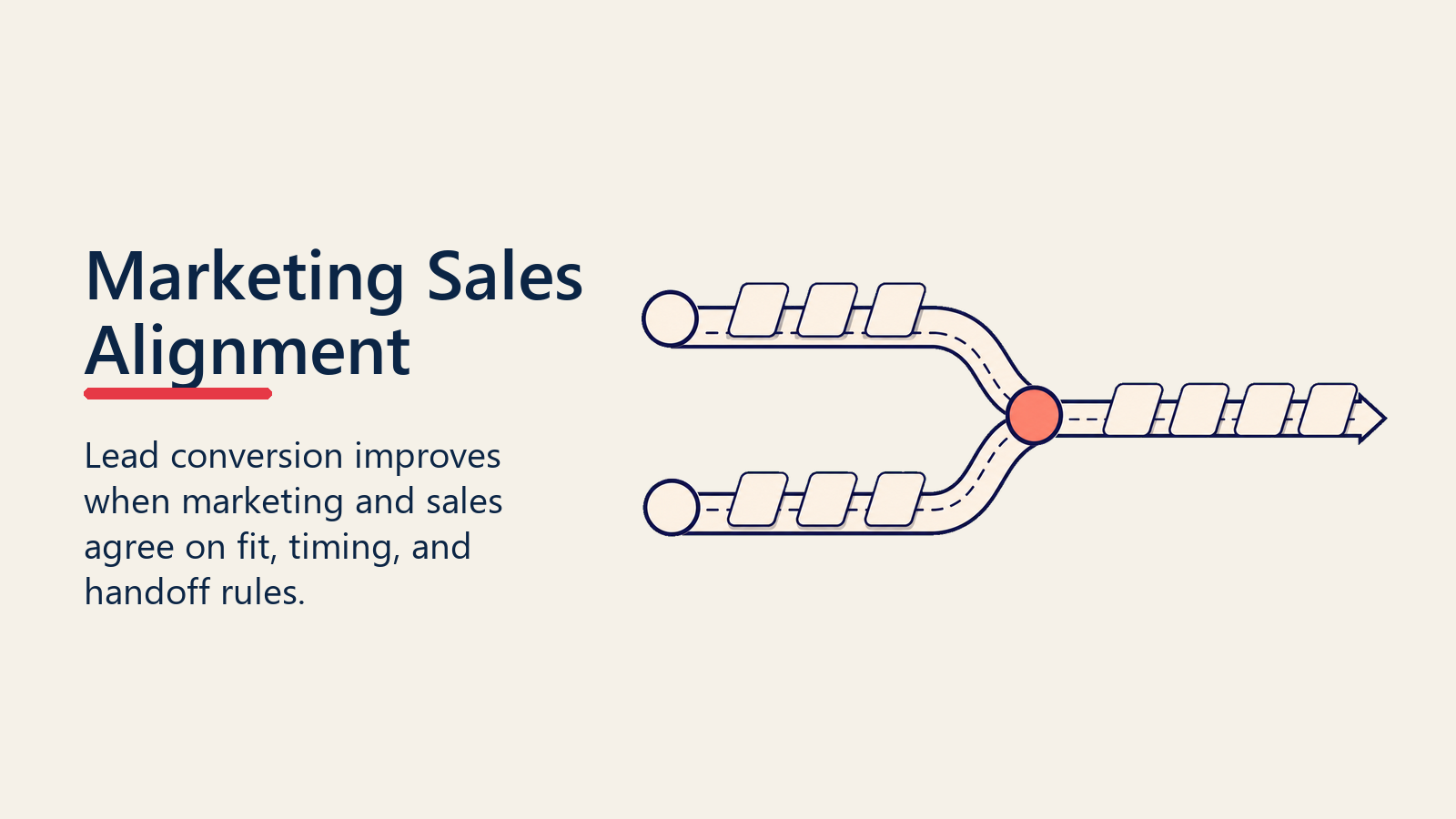
合意された適格性基準
両チームは共同で以下を定義し、文書化します。
- どのような会社が適合するとみなされるか(ICPの定義)
- どのような行動が意図を示すシグナルとなるか(リードスコアリングモデル)
- 転換前に検証しなければならない情報は何か(BANT、MEDDICなど)
- 何がリードを失格させるか(除外基準)
これはマーケティングがセールスに指図することでも、セールスがマーケティングに文句を言うことでもありません。データに基づいた交渉の末の合意です。具体的には、受注確定した商談を分析し、共通する特徴を特定することです。
転換のゴールとターゲット
- マーケティングのターゲット: 月にX件の適格なリード
- セールスのターゲット: マーケティング適格リードの承認率Y%
- 共同のターゲット: 平均商談規模W ドルでZ件の商談作成
これらのターゲットは相互に依存しています。マーケティングはただ量を投げつけるだけでは済みません。セールスもすべてを却下するだけでは済みません。両者とも、量だけでなく転換の質で評価されます。
定期的なキャリブレーションミーティング
マーケティングとセールスが以下を行う、週次または隔週のセッションです。
- 直近のリードから生まれたパイプラインを見直す
- 承認・却下のパターンについて議論する
- ソースやキャンペーン別の質のトレンドを特定する
- 発見内容に基づいてリードスコアリングやルーティングを調整する
- 勝ちを共に祝い、負けを共に分析する
クローズドループレポーティング
マーケティングはMQLだけを追跡するのではありません。MQL → SQL → 商談 → 受注確定の流れを追跡します。この可視性により以下が可能になります。
- ソースおよびキャンペーン別のROI分析
- コンバージョン率の高いチャネルと低いチャネルの特定
- 実際に受注につながった要素に基づくメッセージングとターゲティングの最適化
- マーケティング投資に基づくパイプライン創出のforecast
クローズドループレポーティングがなければ、マーケティングは収益指標(受注した商談)ではなく虚栄の指標(獲得したリード数)を最適化してしまいます。
テクノロジーによる実現: 自動化、検証、ワークフロー
現代のリードから商談への転換は、基準を徹底し、スピードを実現するためにテクノロジーに依存しています。
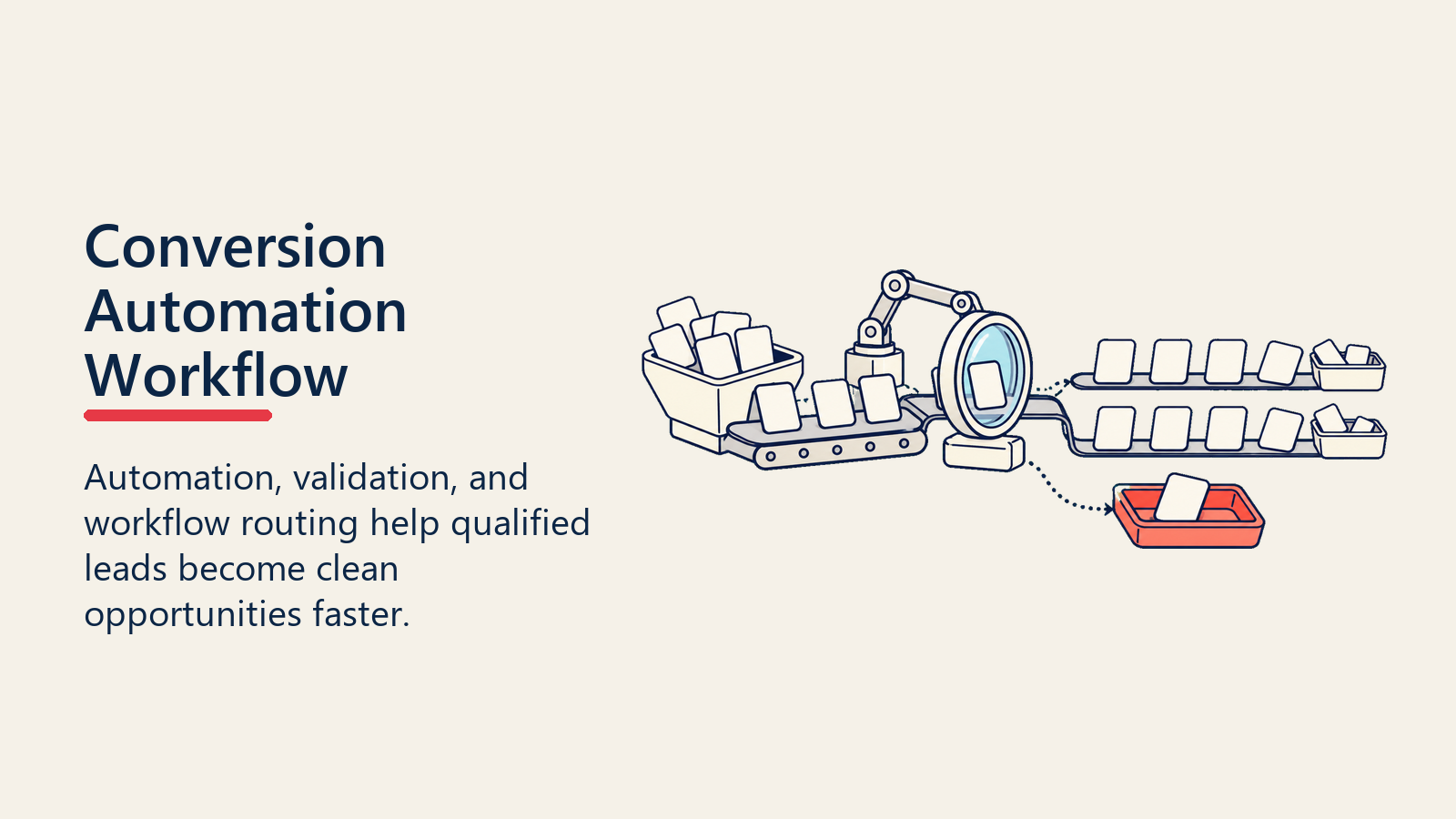
自動化のトリガー
- リードの割り当て: テリトリー、業界、アカウントの所有権に基づき、適切なSDR/AEへ自動的にルーティングする
- ミーティングのスケジューリング: カレンダー統合により、見込み客が直接営業担当者のカレンダーに予約できるようにする
- 商談の作成: AEが適格性を確認した時点で、商談レコードを事前入力しておく
- 通知アラート: 引き継ぎが発生した際、またはSLA違反が迫った際にSlackやメールで通知する
検証ルール
CRMの検証機能がデータ品質を担保します。
- 商談作成に必須のフィールド(未入力では保存できない)
- 標準化された命名規則(商談名を自動フォーマット)
- 成約日のロジック(X日以内でなければならず、過去の日付にはできない)
- 商談規模の検証(異常に大きい、または小さい商談をレビュー対象としてフラグする)
ワークフローの設計
自動化されたワークフローが、転換プロセスを通じて担当者を導きます。
- SDRの適格性判断フロー: ヒアリングの質問がすべて聞かれ、記録されることを保証するステップバイステップのプロンプト
- AEのヒアリングチェックリスト: BANTまたはMEDDIC基準が検証されることを保証する誘導型フィールド
- 承認ワークフロー: 特定の商談タイプや規模に対してマネージャーレビューを必須にする
- 失格処理のルーティング: 却下されたリードを、文書化された理由とともに自動的にマーケティングへ差し戻す
統合ポイント
- リードエンリッチメント: ファーモグラフィックデータやテクノグラフィックデータを自動で付加する
- 通話の録音: コンプライアンスとコーチングのためにヒアリングの会話を記録する
- メールトラッキング: 見込み客のエンゲージメントを監視し、転換のタイミングの判断材料にする
- 収益インテリジェンス: 購買シグナルと意図データを表面化させ、適格性判断の指針とする
目的は人間の判断を置き換えることではありません。ベストプラクティスをスケールさせ、事務的な摩擦をなくすことです。
転換チェックリスト: 運用ガイド
すべての転換が適切に実行されていることを確認するために、このチェックリストを使ってください。
引き継ぎ前(SDR):
- リードが最低限の適格性基準を満たしている(ICPへの適合、基本的な意図のシグナル)
- ヒアリングの質問がCRMに記録されている
- 課題(ペインポイント)とビジネス上のコンテキストが捕捉されている
- SLAの期限内にAEとのミーティングが設定されている
- CRM上で引き継ぎの文書化が完了している
- AEに今後のヒアリングの通話が通知されている
Discovery中(AE):
- 予算が確認されている、または予算確保への道筋が特定されている
- 決裁権限者・意思決定者が特定されている
- 具体的なビジネス課題によりニーズが検証されている
- forcing functionを伴うタイムラインが明確化されている
- 意思決定プロセスと基準が理解されている
- 競合状況が評価されている
- 価値提案がニーズと整合している
商談作成(AE):
- 必須フィールドがすべて入力されている
- 判明したニーズに基づき商談規模が見積もられている
- 検証されたタイムライン(推測ではない)に基づき成約日が設定されている
- アカウントと連絡先の関係が確立されている
- ソースのアトリビューションが捕捉されている
- 次のステップが期日とともに記録されている
- ステージが適切に設定されている(通常DiscoveryまたはQualification)
- 商談規模が閾値を超える場合、マネージャーに通知されている
転換後:
- 商談がパイプラインレポートに表示されている
- フォローアップの活動が予定されている
- マーケティングに転換が伝えられている(クローズドループ)
- (戦略的な商談の場合)アカウントプランが開始されている
引き継ぎテンプレート: SDRからAEへの移行
商談引き継ぎブリーフ
会社: [会社名] 連絡先: [氏名、役職、メール、電話番号] リードソース: [元のソース・キャンペーン]
適格性判断のサマリー:
- 予算: [確認済み/推定/不明 + コンテキスト]
- 決裁権限: [意思決定者の氏名・役職、または意思決定者に至る経路]
- ニーズ: [特定された具体的なビジネス課題]
- タイムライン: [目標導入日またはforcing function]
Discoveryのメモ:
- どんな課題を解決しようとしているか
- なぜ今なのか。何が変わったのか
- これまで何を試してきたか
- 意思決定に他に誰が関わっているか
- 現在のプロセス・ソリューションは何か
エンゲージメント履歴:
- 初回接触の日付と方法
- タッチポイント(通話、メール、消費したコンテンツ)
- 反応パターンとエンゲージメントレベル
- 懸念材料や赤信号
推奨される次のステップ: [ヒアリングの通話でAEが取るべき具体的なアクション]
SDRの所見: [質と受注確度に関する個人的な見解]
このテンプレートにより、引き継ぎの過程で重要なコンテキストが失われることを防ぎます。
SLAフレームワーク: サンプル契約
マーケティング・セールス Service Level Agreement: リードから商談への転換
マーケティングのコミットメント:
- 文書化されたICP基準を満たすMQLを月にX件提供する
- すべてのリードが最低限必要なデータ(会社、連絡先、ソース)を備えていることを保証する
- 適格性判断から5分以内にリードをルーティングする
- リードのコンテキストとエンゲージメント履歴を提供する
セールスのコミットメント:
- 割り当てから24時間以内にMQLへ接触する
- 5営業日以内に、文書化された根拠とともにリードを承認または却下する
- ヒアリングから3日以内に適格なリードを商談に転換する
- ソース別のリード品質について週次でフィードバックを提供する
共同のコミットメント:
- 転換のパターンを見直す月次キャリブレーションミーティング
- 受注確定分析に基づく適格性基準の四半期レビュー
- 高価値アカウントに関するリアルタイムの連携
- MQLと収益を結びつけるクローズドループレポーティング
エスカレーションパス:
- 問題はRevenue Operationsへエスカレーションし解決する
- 継続的な品質懸念は合同のリーダーシップレビューで対応する
このSLAは相互の説明責任を生み出し、責任の押し付け合いをなくします。効果的なSLAは、双方に説明責任を課す定期的なパイプラインレビューによって強化されます。
結論: 転換の判断は収益の判断である
リードから商談への転換は事務的なステップではありません。会社がどこに営業リソースを配分するかを決める判断です。
早すぎるタイミングで転換すれば、受注できない商談にキャパシティを浪費します。遅すぎるタイミングで転換すれば、受注できたはずの商談を動きの速い競合に奪われます。正しく実行できれば、パイプラインの質がforecastの現実と一致する、予測可能な収益エンジンを構築できます。
この移行をマスターしている企業には、共通する特徴があります。
- 明確で文書化された適格性基準
- 迅速で構造化された引き継ぎプロセス
- マーケティングとセールスの間で整合したインセンティブ
- クローズドループの測定とフィードバック
- 摩擦を生まずに基準を徹底するテクノロジー
これは複雑なことではありません。しかし規律が必要です。そしてB2Bの収益において、規律こそが予測可能な成長と混沌とした願望との違いを分けるものです。
問われているのは、リードを商談に転換しているかどうかではありません。あなたはすでにそうしています。問われているのは、基準、プロセス、測定、説明責任をもって体系的に行っているか、それとも行き当たりばったりでやりながら、なぜパイプラインが転換しないのか首をかしげているだけか、という点です。商談が作成された後は、それを成約へと進めるdeal progressionの管理へと焦点が移ります。
さらに詳しく
転換の土台を築く:
- What is Sales Pipeline - 転換を最適化する前に基礎を理解する
- Opportunity Qualification - forecast精度を左右する適格性判断プロセスをマスターする
- Pipeline Creation Process - リードから稼働中の商談に至る全プロセス
実証済みの適格性判断フレームワークを導入する:
- BANT Framework - Budget、Authority、Need、Timelineによる適格性判断
- MEDDIC Framework - Metrics、Economic Buyer、Decision Criteria、Decision Process、Identify Pain、Champion
- CHAMP Framework - Challenges、Authority、Money、Prioritizationのアプローチ
転換を測定し最適化する:
- Conversion Rate Analysis - 自社の転換数値を左右する要因を深掘りする
- Pipeline Velocity - 転換の速度がパイプライン全体の健全性にどう影響するか
- Stage Gate Criteria - 各ステージ移行のための明確な基準を定義する

On this page
- Lead-to-Opportunity Conversion(リードから商談への転換)とは何か
- 転換の運用を誤ることの本当のコスト
- 適格性の閾値: SAL → SQL → Opportunity
- Sales Accepted Lead (SAL)
- Sales Qualified Lead (SQL)
- Opportunity
- 転換基準フレームワーク: 何がリードを商談化できる状態にするのか
- 1. 予算の確認(または予算確保への道筋)
- 2. 決裁権限の特定
- 3. ニーズの検証
- 4. タイムラインの明確化
- 5. 意思決定プロセスの理解
- 転換プロセス: 引き継ぎは実際どう機能するのか
- ステップ1: SDR/LDRが適格性判断を完了する
- ステップ2: Account Executiveによるヒアリングの通話
- ステップ3: 商談の作成
- ステップ4: アカウントと連絡先の紐付け
- 転換率のベンチマーク: 何が標準的な水準か
- 全体の転換率
- ソース別
- セグメント別
- 業界ごとの違い
- 運用要件: 省略できないデータ
- 商談の識別情報
- 財務データ
- タイムラインとプロセス
- 適格性判断のコンテキスト
- 必須のカスタムフィールド(事業内容により異なる)
- よくある転換の問題(とその解決策)
- 問題1: 早すぎる転換(パイプラインの水増し)
- 問題2: 遅すぎる転換(商談の喪失)
- 問題3: 質の低い引き継ぎコミュニケーション
- 問題4: 情報伝達の不備
- 問題5: 適格性判断に関する意見の対立
- SLAと説明責任: 転換を予測可能にする
- SDR-to-AE引き継ぎSLA
- 転換の所要期間の目安
- 承認・却下のプロトコル
- マーケティングへのフィードバックループ
- 紛争解決プロセス
- マーケティングとセールスの連携: 転換成功の土台
- 合意された適格性基準
- 転換のゴールとターゲット
- 定期的なキャリブレーションミーティング
- クローズドループレポーティング
- テクノロジーによる実現: 自動化、検証、ワークフロー
- 自動化のトリガー
- 検証ルール
- ワークフローの設計
- 統合ポイント
- 転換チェックリスト: 運用ガイド
- 引き継ぎテンプレート: SDRからAEへの移行
- SLAフレームワーク: サンプル契約
- 結論: 転換の判断は収益の判断である
- さらに詳しく