マルチパイプライン管理: 複数のセールスモーションを同時運用する仕組み
Turn this article into takeaways for your work.


Each assistant summarizes the article only for you and suggests best practices for your work.
ほとんどの企業は、気づかないうちに単一パイプラインでは対応しきれなくなっています。
最初は一つのセールスプロセスから始まります。シンプルで、すっきりしています。そこにパートナーチャネルを追加し、第二の製品ラインを立ち上げ、新規ビジネスと拡張セールスを切り分けます。気づけば、根本的に異なる購買ジャーニーを同じステージに無理やり押し込もうとしていて、もはや何も筋が通らなくなっています。
セールスオペレーションや収益アーキテクチャを率いているなら、これを理解してください。単一パイプラインは美徳ではなく、制約です。セールスパイプラインとは実際に何かを理解することが、一つでは足りないと気づくための第一歩になります。問題は、いずれ複数パイプラインが必要になるかどうかではありません。それを意図的に設計するのか、それとも運用上の混乱へと成り行き任せで進化させてしまうのか、ということです。
単一パイプラインでは足りなくなるとき
単一パイプラインは、一つのセールスモーション、つまり一つの製品、一つの購買担当者タイプ、一つのチャネル、一つのvelocityパターンしかない場合に見事に機能します。この均一性が崩れた瞬間、すべてを同一のステージに無理やり通そうとすることが問題を生みます。
兆候は予測可能です。
ステージ名が意味を失う商談が半数に上ります。「Technical Validation」はトランザクション型のセールスには当てはまりませんし、「Proposal Sent」は提案書を送ることのないパートナーソース商談にとって無意味です。
Forecast精度が急落するのは、まったく異なるコンバージョンパターンとサイクルタイムを持つ商談を、単一のステージ集計にまとめてしまっているからです。
レポーティングが無意味になるのは、「Discovery」に始まったばかりのエンタープライズ商談と、まもなく成約するSMB商談の両方が含まれてしまう場合です。
営業担当者がプロセスを出し抜くようになり、ステージを飛ばしたり、自分の商談にとって本当に重要な情報を追跡するためのカスタムフィールドを作ったりします。
これはトレーニングの問題でもコンプライアンスの問題でもなく、あなたのビジネスモデルとパイプライン設計との間のアーキテクチャ上のミスマッチです。
複数パイプラインが必要な理由: 戦略的根拠
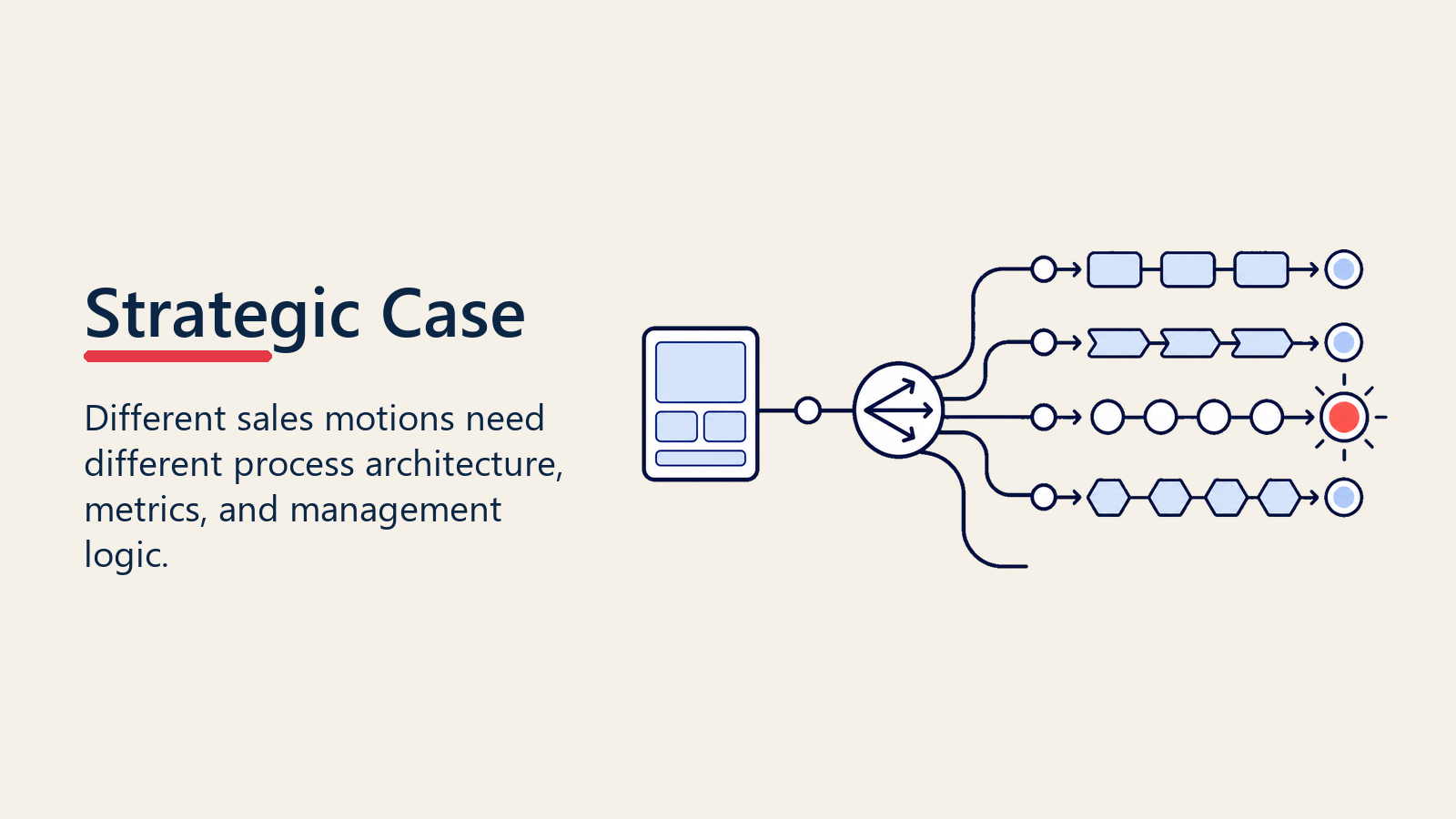
マルチパイプラインアーキテクチャは、根本的な真実を認識しています。異なるセールスモーションには、異なる運用フレームワークが必要だということです。
異なる購買プロセス
正式な調達プロセスに従うエンタープライズの購買担当者は、部門レベルの購入を行うSMBの購買担当者と同じステージを通りません。前者には法務レビュー、セキュリティ質問票、エグゼクティブの承認、複数ステークホルダーの合意が必要です。後者に必要なのはデモ、見積もり、クレジットカードだけです。
両方を同一のステージに押し込めば、エンタープライズ商談を過度に単純化するか、トランザクション型セールスに不要な複雑さを加えるかのどちらかになります。どちらもうまくいきません。
明確に異なるセールスモーション
何を売るかと同じくらい、どう売るかが重要です。Direct salesには、ディスカバリーコール、デモ、提案、交渉が必要です。パートナー主導のセールスには、deal registration、co-selling、パートナーenablementが伴います。Self-serviceセールスには、プロダクト主導のonboardingと拡張プレイが必要です。
それぞれのモーションには異なるアクティビティ、マイルストーン、成功基準があります。一つのパイプラインでは、この多様性を捉えようとすれば使い物にならなくなってしまいます。
個別のForecastingニーズ
パイプラインの種類が異なれば、コンバージョン率も異なり、進むスピードも異なり、リスクプロファイルも異なります。1万ドルのトランザクション型商談と50万ドルのエンタープライズ商談を並べてforecastしようとすれば、シグナルを覆い隠すノイズが生まれます。
マルチパイプラインアーキテクチャを使えば、それぞれのセールスモーションに適した前提、過去のパターン、confidence intervalを持つ、個別のforecastモデルを構築できます。複数のセールスモーションを管理する際には、パイプラインとforecastの違いを理解することが極めて重要になります。
製品固有の要件
導入の複雑さ、インテグレーションのニーズ、購買担当者のペルソナが異なる製品には、多くの場合、異なる適格性判断基準とセールスステージが必要です。シンプルなSaaS製品には、複雑なプラットフォーム販売と同じ「Implementation Planning」ステージは必要ありません。
パイプラインを分けることで、それぞれの製品ラインが、自分たちの商談にとって本当に重要なステージと適格性判断ゲートを維持できるようになります。
チャネルの違い
Direct sales、パートナーセールス、マーケットプレイスセールスは、根本的に異なる仕組みで動いています。パートナーはdiscoveryを行いません、彼らはすでに適格性判断済みの商談を持ち込んでくるのです。マーケットプレイスの商談には提案書は不要で、購買担当者はセルフサービスのチェックアウトを通じて購入します。
それぞれのチャネルには、そのチャネルが実際にどう機能しているかを反映したパイプラインステージが必要です。
よくあるマルチパイプラインのシナリオ
マルチパイプライン管理が必要になるのは、異なるモーションが異なるステージ、オーナーシップルール、forecastロジックを必要とする場合です。
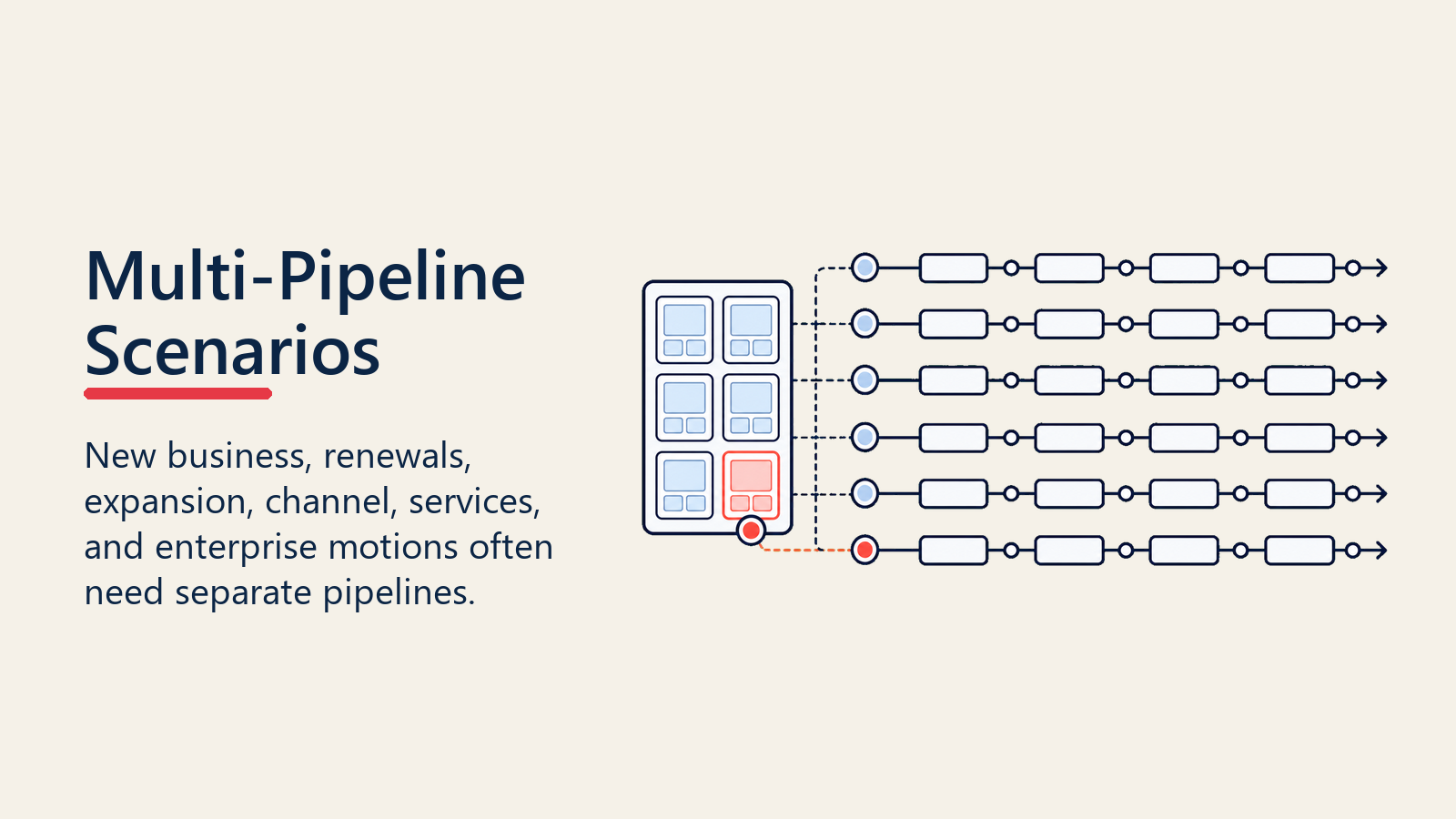
多くの組織は、次のような軸に沿って複数パイプラインを実装しています。
新規ビジネス vs 拡張
新規ビジネスパイプライン: プロスペクティング、Qualification、Discovery、デモ、Proposal、Negotiation、成約。
拡張パイプライン: 商談の特定、スコーピング、Proposal、承認、導入。
これらは根本的に異なるモーションです。新規ビジネスは顧客を獲得することであり、拡張は既存顧客を成長させることです。ステージ、パイプラインベロシティ、適格性判断基準は完全に異なります。
Direct vs パートナー/チャネル
Directパイプラインには、営業担当者がプロセスをコントロールする、標準的なセールスステージがすべて含まれます。
パートナーパイプラインは、パートナー主導という現実を反映しています。deal registration、パートナーenablement、co-selling、ディールサポート、成約です。
パートナー商談が異なるマイルストーンを通るのは、あなた自身がセールスプロセスを運用しているのではなく、他の誰かがそれを運用できるよう支援しているからです。
製品ラインA vs 製品ラインB
製品ごとにセールスサイクル、購買担当者のペルソナ、導入要件が大きく異なる場合には、パイプラインを分けることが理にかなっています。
例: シンプルなスタンドアロンツールと複雑なエンタープライズプラットフォームの両方を販売する企業には、異なるステージが必要です。スタンドアロン製品は、1回の商談でデモから購入まで進みます。プラットフォームにはtechnical validation、セキュリティレビュー、implementation planningが必要です。
Self-Service vs Sales-Assisted
Self-serviceパイプライン: トライアル開始、プロダクトのアクティベーション、利用マイルストーン、拡張の商談、購入。
Sales-assistedパイプライン: qualificationから成約までの従来型ステージ。
これらのパイプラインは、根本的に異なるジャーニーを捉えています。一方はプロダクト主導で、利用によって引き起こされます。もう一方は営業担当者主導で、会話によって進みます。
Transactional vs Enterprise
Transactionalパイプライン: インバウンドのqualification、デモ、見積もり、成約。短いサイクル、小さい商談規模、最小限の複雑さ。
Enterpriseパイプライン: discovery、technical evaluation、economic validation、procurement、成約。長いサイクル、大きい商談規模、複数のstakeholder。
意思決定のポイント、必要なアクティビティ、標準的な期間があまりにも異なるため、一つのパイプラインでは混乱を招きます。
パイプライン設計における考慮点
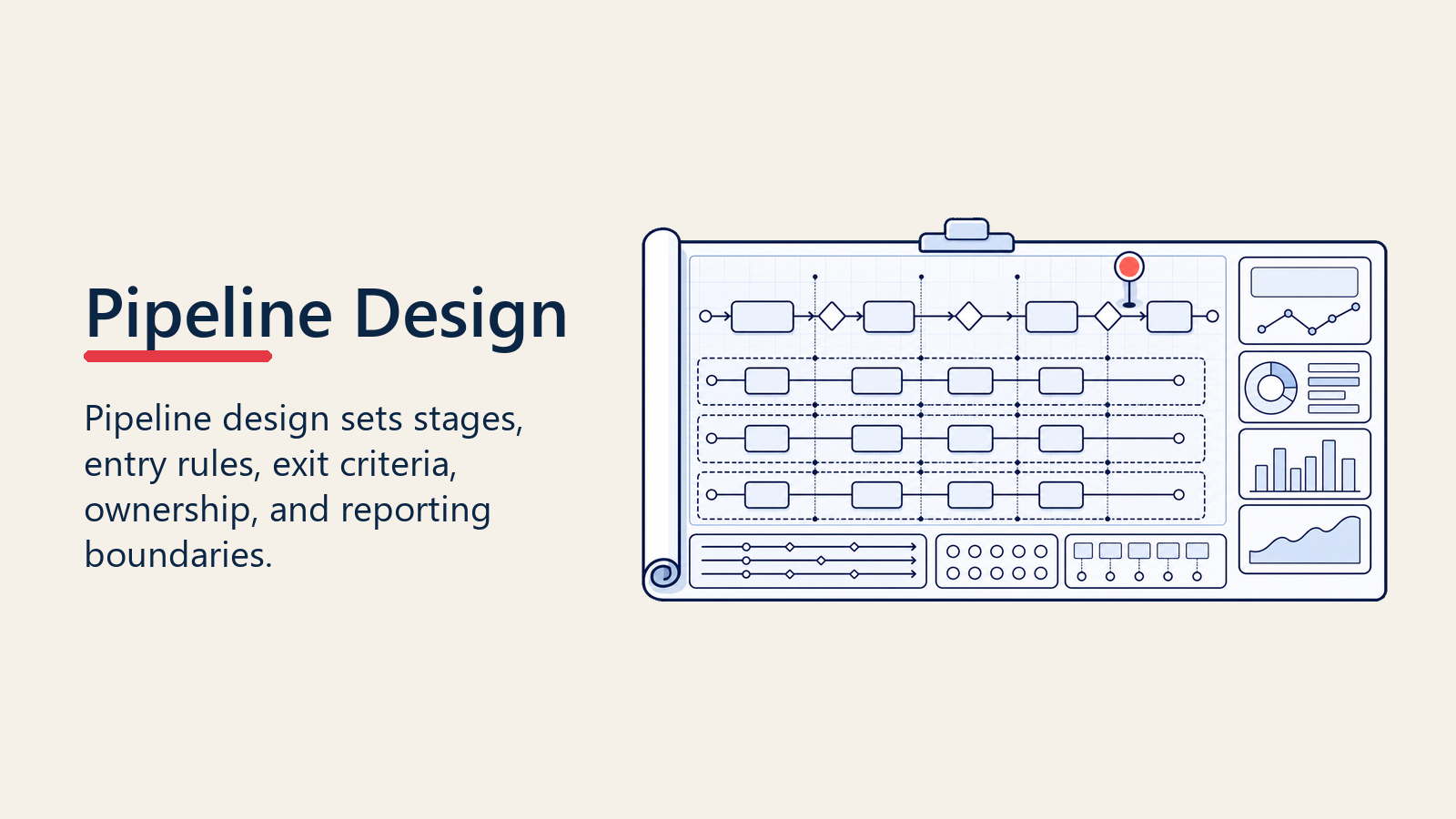
複数パイプラインを作ることは、既存のステージをコピーするだけの作業ではありません。それぞれのパイプラインには、意図的な設計が必要です。
個別のステージ vs 共有ステージ
ここで一つの選択に直面します。完全に個別のステージ定義にするか、パイプライン間で一部のステージを共有するかです。
個別のステージは最大限の柔軟性をもたらします。それぞれのパイプラインには、そのセールスモーションにとって意味のあるステージだけがあり、その文脈に固有の名称と定義が使われます。
共有ステージは一定の一貫性を強制します。「Closed Won」や「Closed Lost」のような共通ステージがすべてのパイプラインに現れるため、集計レポーティングが容易になります。
多くの組織は、その中間のどこかに落ち着きます。パイプラインごとに調整された初期・中間ファネルのステージを持ちながら、一貫性のために標準化されたクロージングステージを使うのです。
明確に異なる適格性判断基準
各パイプラインには、独自の商談の見極めフレームワークが必要です。エンタープライズ商談を適格とする基準は、トランザクション型商談を適格とする基準とは異なります。
エンタープライズのqualificationには、次のようなものが求められるかもしれません。
- 予算権限が確認されていること
- 技術要件が検証されていること
- 調達タイムラインが確立されていること
- Championが特定されていること
Transactionalのqualificationは、単純に次のようなものかもしれません。
- ICPプロファイルに合致していること
- 直近のニーズがあること
- 意思決定者が関与していること
すべてのパイプラインで一つのqualificationフレームワークを使うと、過剰なqualification(速い商談を遅らせる)か、不十分なqualification(弱いエンタープライズ商談を先に進めてしまう)のどちらかが必ず起こります。
異なるVelocityパターン
各パイプラインは、それぞれ固有の自然なvelocityで動きます。Transactional商談は数日から数週間で成約します。エンタープライズ商談は数か月から数四半期かかります。パートナー商談は、パートナーの能力とエンゲージメントによってばらつきます。
パイプライン設計は、こうした現実を反映すべきです。
- それぞれのパイプラインに適したステージ滞留期間の目標
- 商談のエイジング管理を通じた、フォローアップや失格をトリガーするエイジングの閾値
- すべての商談を横断してではなく、パイプライン内で商談を比較するvelocityトラッキング
独立したForecasting
マルチパイプラインアーキテクチャによって、パイプライン固有のforecastモデルが可能になります。それぞれのパイプラインは、次のような独自の要素を持ちます。
- ステージ別の過去のコンバージョン率
- 平均商談規模とvelocity
- 季節性パターン
- Confidence interval
この粒度の細かさは、種類を問わずすべての商談を集計する場合と比べて、予測精度を劇的に改善します。
運用上の複雑さ: 実際に何を管理しているのか
複数パイプラインは、意図的な解決策を必要とする運用上の課題をもたらします。
営業担当者のマネジメント: 単一 vs 複数パイプラインへのアサイン
個々の営業担当者は複数パイプラインを担当すべきか、それとも一つに特化すべきか。
営業担当者1人につき1パイプラインは、オペレーションをシンプルにします。それぞれの担当者は一つのセールスモーションを極め、深い専門性を身につけ、一貫して実行します。Forecastingとキャパシティプランニングが明快になります。
営業担当者1人につき複数パイプラインは、柔軟性を最大化します。担当者は、商談の有無やスキルに応じて、新規ビジネスと拡張、directとパートナー商談、あるいは複数の製品ラインを担当できます。
正解はビジネスモデルによって異なります。高ボリュームのtransactionalセールスは特化から恩恵を受けます。低ボリュームの複雑なセールスでは、何が来ても対応できる担当者が必要になるかもしれません。
パイプライン間でのQuota配分
営業担当者が複数パイプラインを担当する場合、quotaの配分は複雑になります。
選択肢は次のとおりです。
- パイプラインごとの個別quota: 担当者は新規ビジネスquotaと拡張quotaを持ち、それぞれ独立してトラッキングされる
- ウェイト付けされたブレンドquota: 商談タイプごとに、労力と価値に基づいて全体quotaへの寄与度が異なる
- 単一の収益quota(ソース非依存): 担当者は、商談の出どころに関係なく総収益目標を達成すればよい
それぞれのアプローチは異なるインセンティブを生み出します。個別quotaは、担当者が価値の低いパイプラインを軽視しないようにします。ブレンドquotaは効率性に報います。単一quotaは柔軟性を最大化しますが、戦略的なフォーカスを失うリスクがあります。
リソースのアサイン
マルチパイプラインのオペレーションには、リソース配分に関する明確さが必要です。
- どのsales engineerがどのパイプラインをサポートするのか
- 実装チームは、パイプラインの種類を横断してどう優先順位をつけるのか
- パイプラインによってマネジメントの注力度は異なるのか
明確な意思決定がなければ、リソースは戦略的な優先順位ではなく、一番声の大きい人のところへ流れてしまいます。
レポーティングの統合
経営陣には、統合されたビューとパイプライン固有のビューの両方が必要です。複数パイプラインがあると、定期的なパイプラインレビューはより複雑になりますが、より価値のあるものになります。
答えるべき問いは次のとおりです。
- すべてのセールスモーションを合わせたパイプライン総額
- 個々のパイプラインタイプ別のパイプライン
- 各パイプライン内のコンバージョン率
- パイプライン別のvelocity
- パイプライン別の予測精度
- 担当パイプライン内での営業担当者のパフォーマンス
これには、パイプライン固有の分析を保ちながらもきれいに集計できる、練り込まれたレポーティングアーキテクチャが必要です。
テクノロジー要件: 設定とインテグレーション
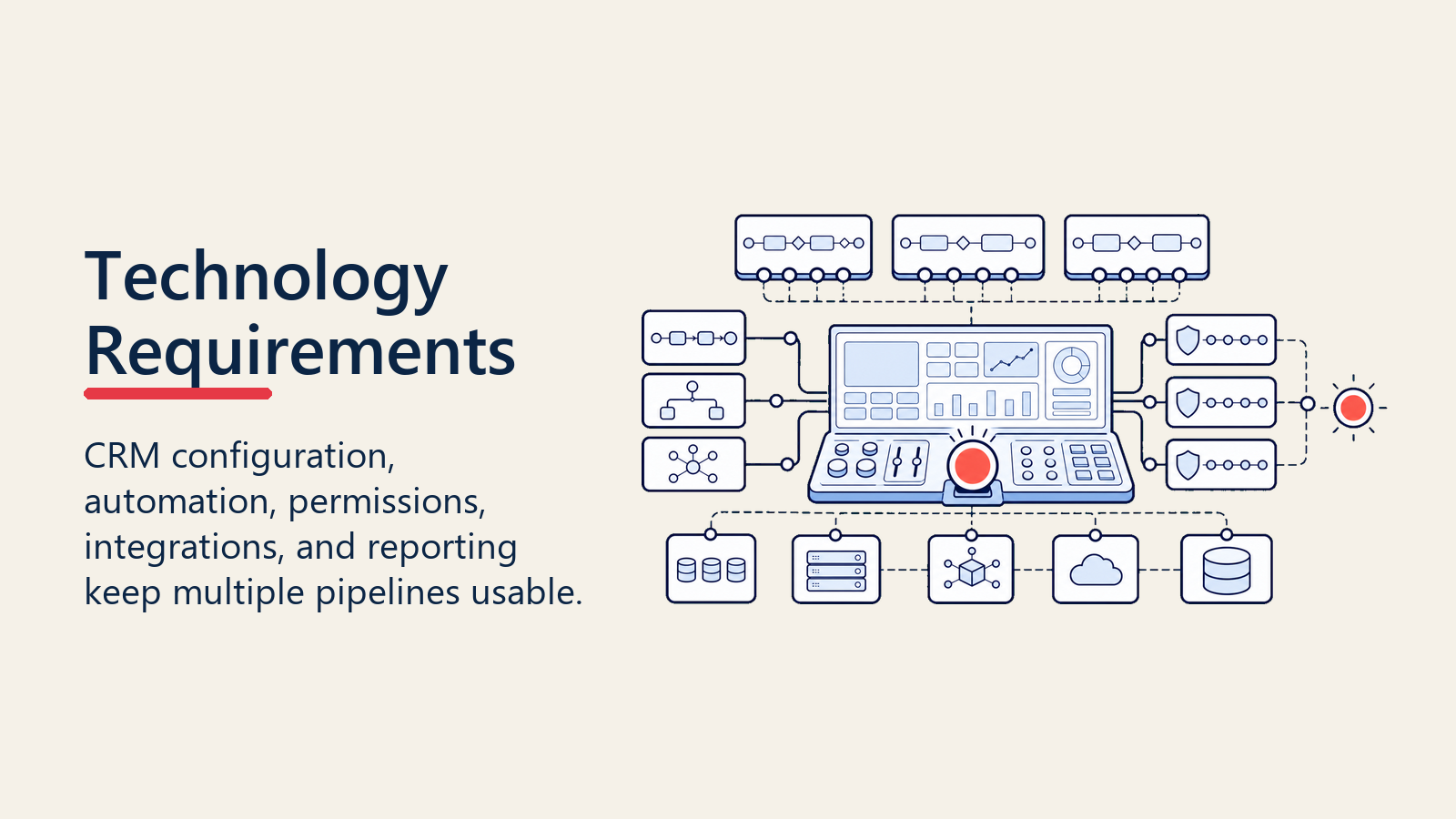
マルチパイプライン管理は、CRMの機能性と設定における規律に依存します。
CRMの設定
Salesforce、HubSpot、Pipedriveといった現代のCRMは、複数パイプラインの設定をネイティブにサポートしています。必要となる主要な機能は次のとおりです。
パイプラインの作成とカスタマイズ: 固有のステージ名、確率のパーセンテージ、フィールド要件を持つ複数パイプラインを定義できる機能。
パイプライン固有のフィールド: 特定のパイプラインタイプにのみ表示されるカスタムフィールドで、煩雑さと混乱を減らします。
パイプラインベースの自動化: 商談がどのパイプラインに属するかによって挙動が変わる、ワークフローとトリガー。
パイプライン固有のレイアウト: パイプラインに応じて関連情報を表示し、無関係なフィールドを非表示にするページレイアウト。
レポーティングインフラ
マルチパイプラインのレポーティングには、次のものが必要です。
- パイプラインの軸を横断して機能するフィルター
- パイプラインを横断して集計する、あるいは特定のパイプラインに絞り込むダッシュボード
- パイプライン固有のパターンを考慮した過去のトレンド分析
- パイプラインのコンテキストを維持したエクスポート機能
標準的なCRMレポートは、マルチパイプラインのシナリオをきれいに扱うために、カスタマイズが必要になることがよくあります。
自動化とインテグレーション
パイプラインが異なれば、トリガーされる自動化も異なる場合があります。
- 異なるチームにアラートを送る通知ルール
- 異なるシステムにデータをプッシュするインテグレーショントリガー
- 異なるアルゴリズムを適用するスコアリングモデル
- 異なるキャンペーンを起動するメールシーケンス
自動化プラットフォームは、パイプラインのコンテキストを理解し、それに応じて実行する必要があります。
ガバナンス: いつ分割し、いつ統合し、どう一貫性を保つか
マルチパイプラインアーキテクチャには、混乱を防ぐためのガバナンスが必要です。
意思決定フレームワーク: いつ分割すべきか
次の場合には、新しいパイプラインを作成しましょう。
セールスモーションが根本的に異なる場合: 既存のステージにマッピングできない、異なるアクティビティ、マイルストーン、ステージゲート基準がある。
Forecastingに異なるモデルが必要な場合: コンバージョン率、商談規模、velocityが大きく異なり、個別のforecastロジックを使うことで精度が改善する。
チームの特化が存在する場合: このタイプの商談だけを専任で扱うチームや担当者がすでにいる。
レポーティングに独立した可視性が必要な場合: 経営陣が、戦略的な意思決定のためにこのセールスモーションを個別にトラッキングする必要がある。
次の場合には、新しいパイプラインを作らないでください。
わずかなプロセスの違いしかない場合: 小さな違いは、完全に別のパイプラインにするのではなく、フィールドやタグ、サブステージで対応できる。
ボリュームが少なすぎる場合: 四半期あたり10〜20件未満の商談では、パイプライン固有の分析が意味をなさなくなる。
運用上の分離が存在しない場合: 同じ担当者、同じプロセス、同じforecastモデルで、単に商談のラベルを変えているだけ。
いつパイプラインを統合すべきか
次の場合には、パイプラインを統合しましょう。
- 運用上の違いがなくなった
- 一つのパイプラインのボリュームが少なすぎて個別管理する意味がなくなった
- チーム構造が統合された
- レポーティングのニーズがシンプルになった
パイプラインの乱立は複雑さを生みます。すべてのパイプラインが依然として戦略的な目的を果たしているかどうかを、定期的に監査しましょう。
一貫性の基準
複数パイプラインがあっても、重要な部分では一貫性を徹底しましょう。
命名規則: 何が含まれているかが即座に伝わる、明確で説明的なパイプライン名を使う。
確率の整合: ステージ名が異なっていても、すべてのパイプラインでステージ確率が現実を反映するようにする。
クロージングステージ: きれいなレポーティングのため、すべてのパイプラインで「Closed Won」と「Closed Lost」のステージを標準化する。
必須フィールド: コアとなるデータ要素(成約予定日、金額、オーナー)は、すべてのパイプラインで一貫させる。
ステージの入場・退場基準: 各パイプラインの各ステージに入る・出るために何が満たされていなければならないかを文書化する。
パイプラインの相互作用: 移行、クロスセル、アップセル
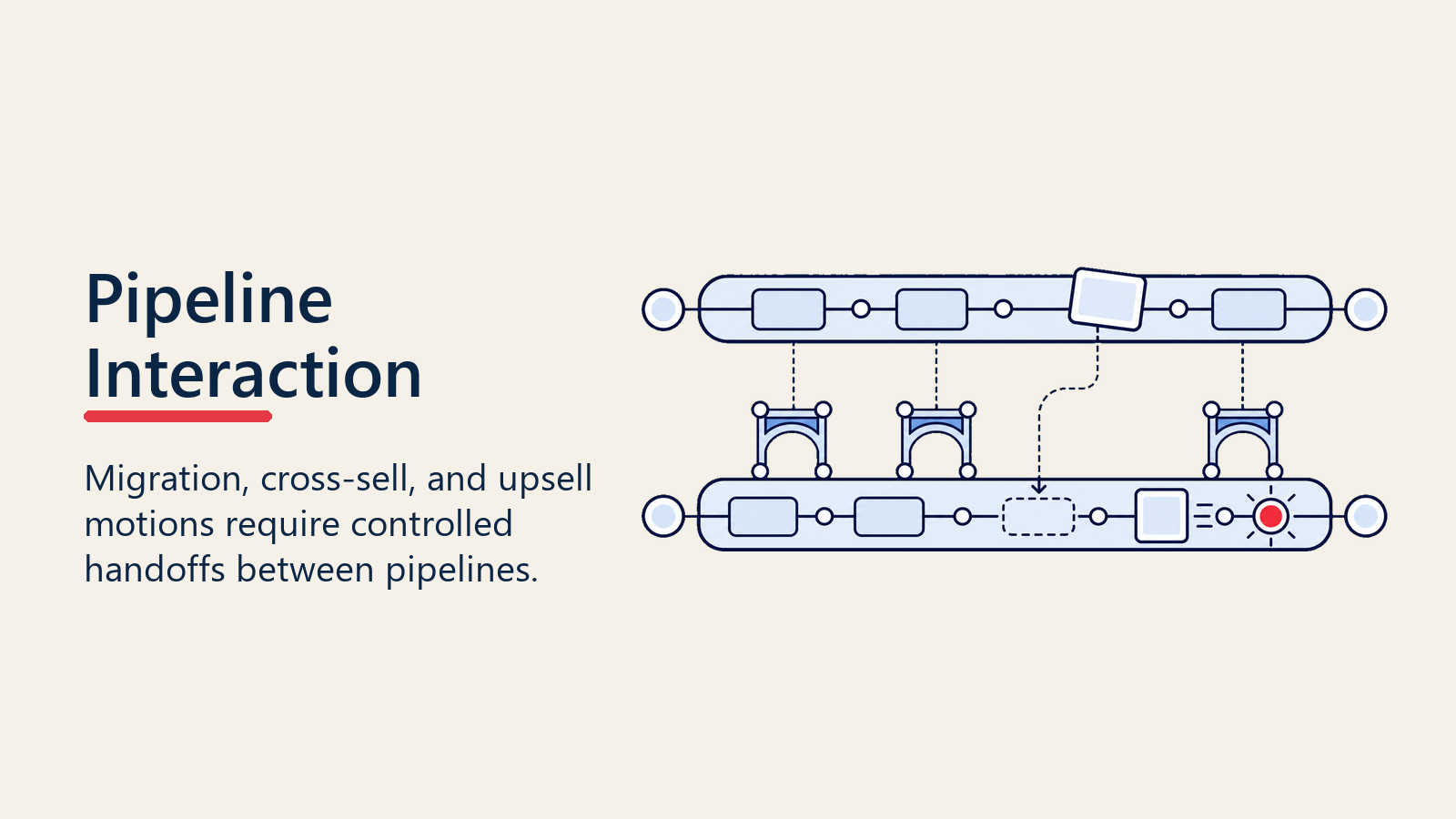
商談は常に一つのパイプラインに留まるとは限りません。商談がパイプライン間をどう移動するかを理解することが重要です。
商談の移行
よくある移行シナリオは次のとおりです。
Self-serviceからSales-assistedへ: ユーザーが無料トライアルを開始し、利用の閾値に達し、エンタープライズの会話のためにセールスへルーティングされる。商談はself-serviceパイプラインからエンタープライズパイプラインへ移行する。
パートナーからDirectへ: パートナーが商談をソースしたものの、成約させられない。商談は、異なるステージとオーナーシップを持つDirectパイプラインに移される。
Transactionalからエンタープライズへ: 小さな商談が大きくなり、エンタープライズのセールスモーションが必要な商談になる。商談はエンタープライズパイプラインへ移る。
それぞれの移行には、明確なルールが必要です。
- 何が移行のトリガーになるのか
- 誰が承認するのか
- オーナーシップはどう引き継がれるのか
- どのデータが引き継がれるのか
- クレジットはどう配分されるのか
クロスセルとアップセル
既存顧客が追加の製品を購入する場合、どのパイプラインを使うべきでしょうか。
選択肢には次のようなものがあります。
- 拡張パイプライン(製品を問わない)
- 製品固有のパイプライン(何を購入しているかに基づく)
- チャネルパイプライン(誰が売っているかに基づく)
正しい選択は、どう売り、どうforecastするかにとって、拡張というモーションと製品特性のどちらがより重要かによって決まります。
クレジットと報酬
パイプラインの相互作用は、報酬の複雑さを生み出します。
ソーシングクレジット: 商談をソースしたことのクレジットは誰が得るのか。持ち込んだ担当者か、成約させた担当者か。
クロージングクレジット: 商談がパイプラインを移行した場合、quotaクレジットとコミッションは誰が得るのか。
分配の取り決め: co-soldの商談で、パートナーとdirectの担当者間でクレジットをどう分配するのか。
明確なポリシーが、対立や不正な立ち回りを防ぎます。
レポーティングと分析: 統合ビューとパイプライン固有ビュー
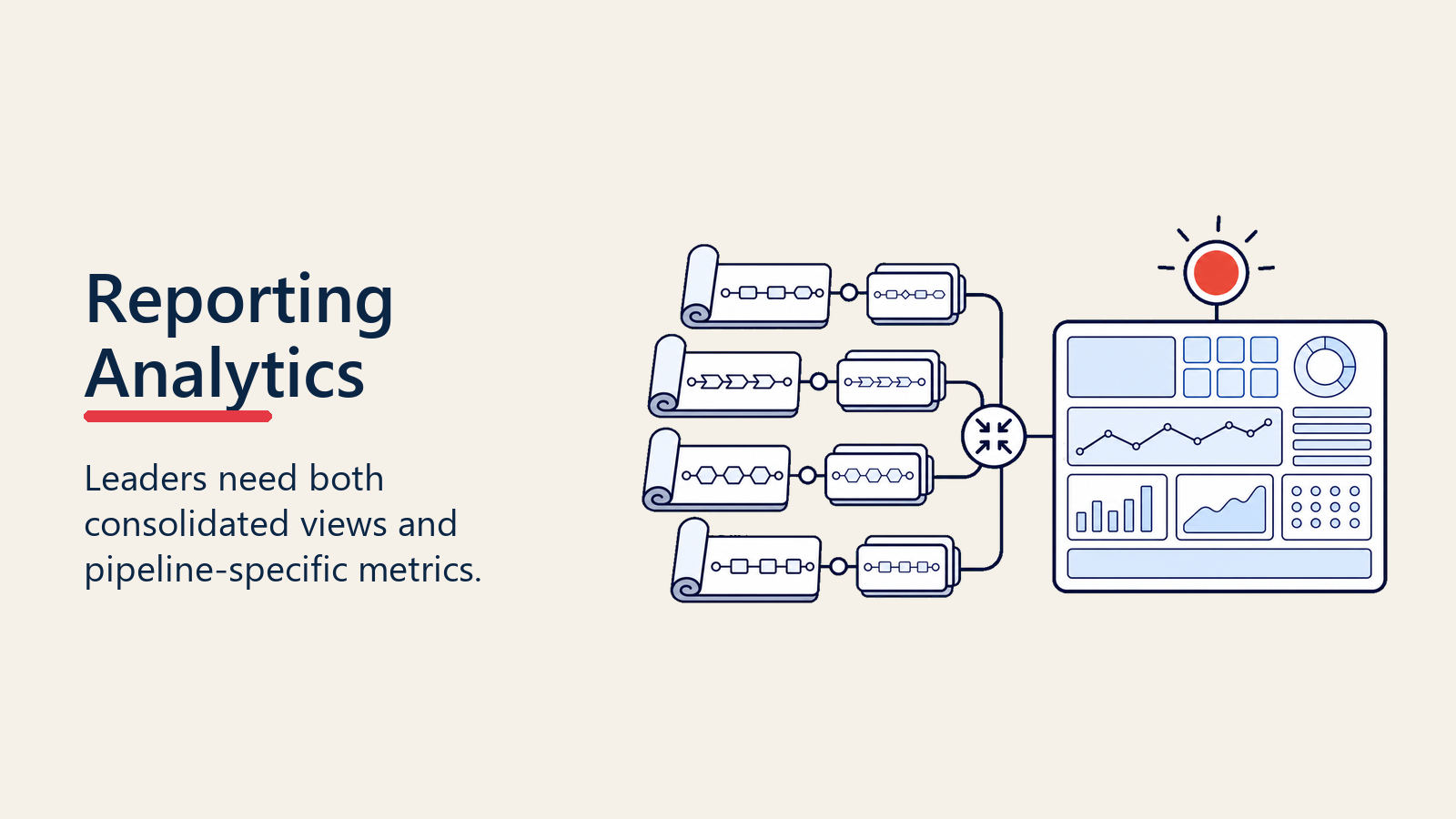
効果的なマルチパイプラインのレポーティングには、広さと深さの両方が必要です。
統合ビュー
経営陣は、ビジネス全体の健全性を把握する必要があります。
- すべてのパイプラインを合わせたパイプライン総額
- すべてのセールスモーションをブレンドしたtotal win rate
- ソースを問わない総ブッキングと収益
- 四半期目標に対してパイプライン総額を比較する**パイプラインカバレッジ**
- 集計されたエイジングとステージ分布を示す全体的なパイプラインの健全性
これらのビューは、ビジネス全体にわたって「目標数値を達成できるのか」という問いに答えます。
パイプライン固有の分析
オペレーションのリーダーには、パイプライン固有の指標が必要です。
- 各パイプライン内のステージ別コンバージョン率
- パイプラインタイプ別の平均商談規模
- パイプライン別のセールスvelocity
- パイプライン別の流入を示すパイプライン創出のトレンド
- 担当パイプライン内での営業担当者のパフォーマンス
これらのビューは、特定のセールスモーションの中で「運用上の問題はどこにあるのか」という問いに答えます。
比較分析
戦略的なインサイトは、パイプライン同士を比較することから生まれます。
- どのパイプラインが最も優れたCAC効率をもたらすか
- どのパイプラインが最もvelocityが速いか
- どのパイプラインが最も予測可能なforecastingを示すか
- どのパイプラインが最も高いACVを生み出すか
この分析は、リソース配分と戦略的な優先順位づけの判断材料になります。パイプラインごとに個別に失注分析を行うことで、それぞれ異なる改善機会が明らかになります。
先行指標
パイプラインが異なれば、必要な先行指標も異なります。
Enterpriseパイプライン: 初期段階のアクティビティ、ディスカバリーコールの件数、technical validationの完了率。
Transactionalパイプライン: デモから成約までの時間、見積もり承諾率、反論のパターン。
パートナーパイプライン: deal registrationの件数、パートナー認定率、co-sellのエンゲージメントレベル。
それぞれのパイプライン内で先行指標をトラッキングすることで、パフォーマンスが目標を逃しそうな際に早期の警告が得られます。
ベストプラクティス: 命名、アクセス、チェンジマネジメント
マルチパイプライン環境における運用の卓越性には、規律が必要です。
命名規則
明確で具体的なパイプライン名を使いましょう。
- 「Enterprise Pipeline」ではなく「New Business - Enterprise」
- 「Expansion」ではなく「Expansion - Existing Customers」
- 「Channel」ではなく「Partner - Channel Sales」
名前を見れば、どの商談がどのパイプラインに属するのか、そしてなぜ分かれているのかが、すぐに伝わるべきです。
アクセス制御
すべての営業担当者が、すべてのパイプラインにアクセスする必要があるわけではありません。役割に応じてパイプラインの可視性を制限することを検討しましょう。
- 新規ビジネス担当者は拡張パイプラインを見る必要がない
- Direct担当者はパートナーパイプラインへのアクセスを必要としない
- 製品Aのセールスチームは製品Bのパイプラインの可視性を必要としない
選択的なアクセスは、煩雑さを減らし、混乱を防ぎます。
チェンジマネジメント
マルチパイプラインアーキテクチャを導入する際には、次の点が重要です。
きれいな移行から始める: 新しいパイプラインを作るだけで、古い商談をレガシーパイプラインに放置してはいけません。既存の商談を適切な新パイプラインへ移行するか、クローズしましょう。
具体的にトレーニングする: 担当者に「パイプラインはこれです」と伝えるだけでなく、「どれをいつ使うのか、それぞれでどう働き方が違うのか」まで教えましょう。
ドキュメントを更新する: Playbook、適格性判断基準、ステージ定義、forecastingガイダンスはすべて、パイプライン固有のバージョンが必要です。
レポーティングのケイデンスを調整する: Forecastコールとパイプラインレビューは、複数パイプラインを考慮する必要があります。セッションを分けるか、それぞれのパイプラインを体系的にカバーする構造化されたアジェンダを使いましょう。
監査と最適化
マルチパイプラインの健全性を定期的にレビューしましょう。
- 商談は正しいパイプラインに入っているか
- 担当者はステージ進行のロジックに従っているか
- ステージ確率は実際のコンバージョン率を反映しているか
- パイプライン固有のqualification基準が適用されているか
マルチパイプラインアーキテクチャは、メンテナンスなしには劣化していきます。体系的なパイプラインの衛生管理を通じた四半期ごとの監査が、オペレーションをきれいに保ちます。
結論: 運用の現実のためのアーキテクチャ
マルチパイプライン管理は、複雑さのための複雑さではありません。それは、現実を認める運用アーキテクチャです。あなたのビジネスは複数の明確に異なるセールスモーションを走らせており、それらを一つのパイプラインに無理やり通すことは、解決する以上に多くの問題を生み出します。
マルチパイプラインアーキテクチャを意図的に(明確な意思決定フレームワーク、明確に異なるステージ設計、しっかりとしたガバナンス、練り込まれたレポーティングとともに)実装する組織は、3つの重要な優位性を手に入れます。
運用の明確さ: 担当者は、混乱や回避策なしに、それぞれの商談タイプをどう扱えばよいかを正確に理解しています。
予測精度: パイプライン固有のコンバージョンモデルとvelocityパターンが、収益の予測可能性を通じて予測を劇的に改善します。
戦略的な可視性: 経営陣は、収益がどこから来ているのか、どのモーションが最も機能しているのか、どこにリソースを投資すべきかを把握できます。
見当違いのシンプルさへのこだわりからマルチパイプラインアーキテクチャに抵抗する組織も、結局は複数パイプラインを抱えることになります。ただ、それらを効果的に管理するための運用コントロール、レポーティングの明確さ、ガバナンスの規律を持っていないだけです。
問題は、あなたのビジネスが複数パイプラインを運用しているかどうかではありません。それを意図的に設計し管理するのか、それとも無秩序に生まれるままにするのか、ということです。
マルチパイプラインのオペレーションを設計する準備はできましたか。 パイプラインアーキテクチャのフレームワークとパイプラインセグメンテーションの戦略が、どのように運用の明確さを生み出せるかを見ていきましょう。
関連記事:

Head of Enterprise Solutions
On this page
- 単一パイプラインでは足りなくなるとき
- 複数パイプラインが必要な理由: 戦略的根拠
- 異なる購買プロセス
- 明確に異なるセールスモーション
- 個別のForecastingニーズ
- 製品固有の要件
- チャネルの違い
- よくあるマルチパイプラインのシナリオ
- 新規ビジネス vs 拡張
- Direct vs パートナー/チャネル
- 製品ラインA vs 製品ラインB
- Self-Service vs Sales-Assisted
- Transactional vs Enterprise
- パイプライン設計における考慮点
- 個別のステージ vs 共有ステージ
- 明確に異なる適格性判断基準
- 異なるVelocityパターン
- 独立したForecasting
- 運用上の複雑さ: 実際に何を管理しているのか
- 営業担当者のマネジメント: 単一 vs 複数パイプラインへのアサイン
- パイプライン間でのQuota配分
- リソースのアサイン
- レポーティングの統合
- テクノロジー要件: 設定とインテグレーション
- CRMの設定
- レポーティングインフラ
- 自動化とインテグレーション
- ガバナンス: いつ分割し、いつ統合し、どう一貫性を保つか
- 意思決定フレームワーク: いつ分割すべきか
- いつパイプラインを統合すべきか
- 一貫性の基準
- パイプラインの相互作用: 移行、クロスセル、アップセル
- 商談の移行
- クロスセルとアップセル
- クレジットと報酬
- レポーティングと分析: 統合ビューとパイプライン固有ビュー
- 統合ビュー
- パイプライン固有の分析
- 比較分析
- 先行指標
- ベストプラクティス: 命名、アクセス、チェンジマネジメント
- 命名規則
- アクセス制御
- チェンジマネジメント
- 監査と最適化
- 結論: 運用の現実のためのアーキテクチャ