MEDDICフレームワーク:エンタープライズ営業における商談適格判定手法
Turn this article into takeaways for your work.


Each assistant summarizes the article only for you and suggests best practices for your work.
パイプラインにある商談の多くは、そもそもそこにあるべきではありません。はっきり言います。営業担当者は絶対に成約しない商談に取り組み、根拠ではなく期待に基づいて予測を立て、実際には購入できない見込み客に時間を浪費しています。
問題は努力の量ではなく、厳密さです。エンタープライズ商談は複雑で、複数のステークホルダーが関わり、社内政治が絡み合う環境であり、「見た目が良い」ことは「必ず成約する」ことを意味しません。すべての段階で確かな根拠を要求するクオリフィケーションフレームワークが必要です。効果的なセールスパイプラインを構成する要素を理解することは、厳密な適格判定から始まります。
それがMEDDICです。1990年代にPTC(旧Parametric Technology Corporation)が開発したこの手法は、思い込みではなく証拠を求めるため、複雑なB2B商談の適格判定における標準となりました。リードが「なんとなく」有望に感じられるかどうかではなく、6つの重要な要素が実際に存在することを証明できるかどうかが問われます。
MEDDICを厳密に実践している企業では、win rateが20〜30%向上し、予測精度も大幅に改善しています。ただし、注意点があります。MEDDICは要求水準が高い手法です。規律、綿密なヒアリング、そして基準を満たさない商談を思い切って外す姿勢が求められます。
エンタープライズソフトウェア、複雑なサービス、あるいはセールスサイクルが長く商談額が数十万ドル規模になるものを販売しているなら、これはぜひ習得すべきクオリフィケーションフレームワークです。
MEDDICフレームワークとは何か
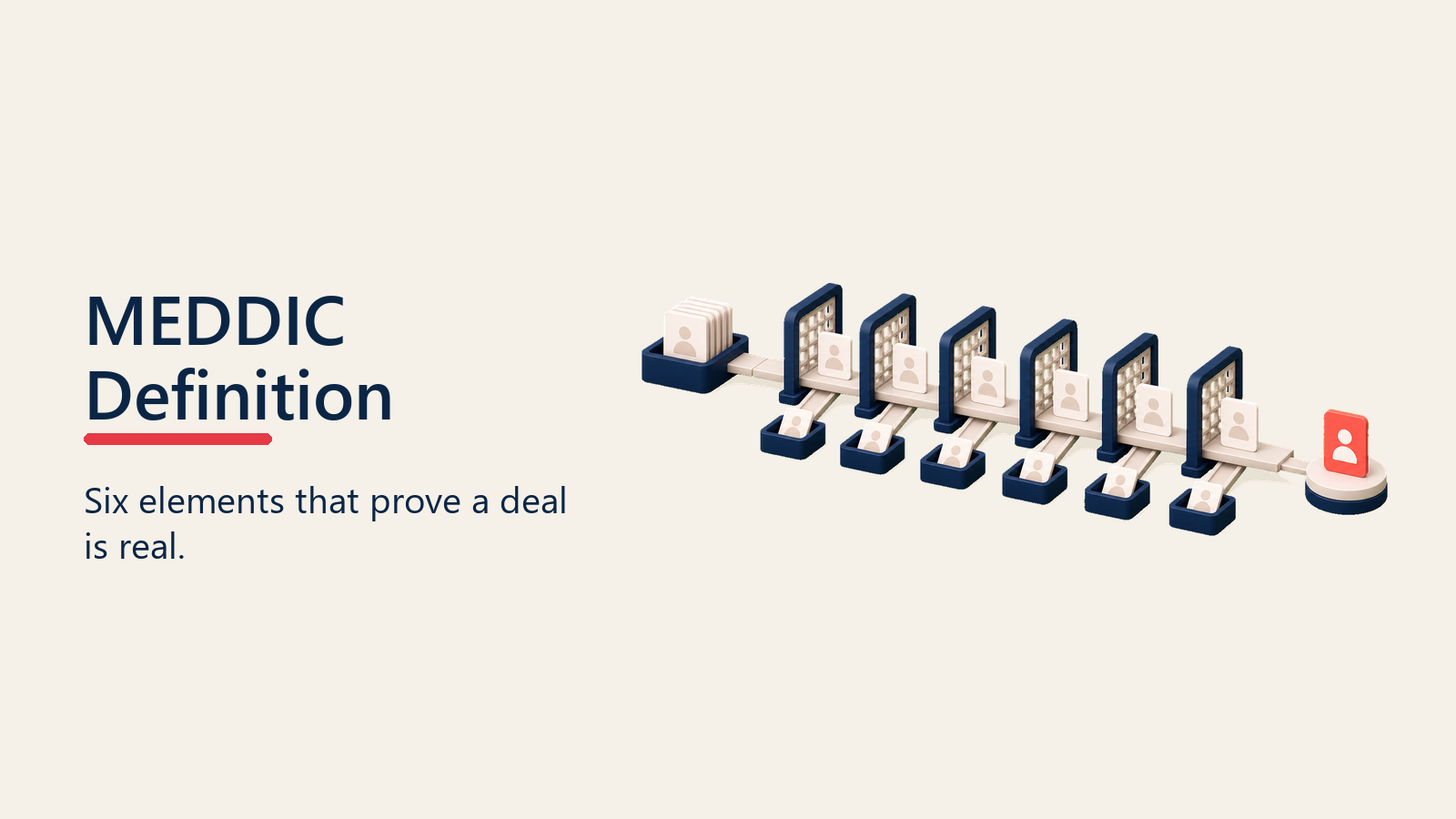
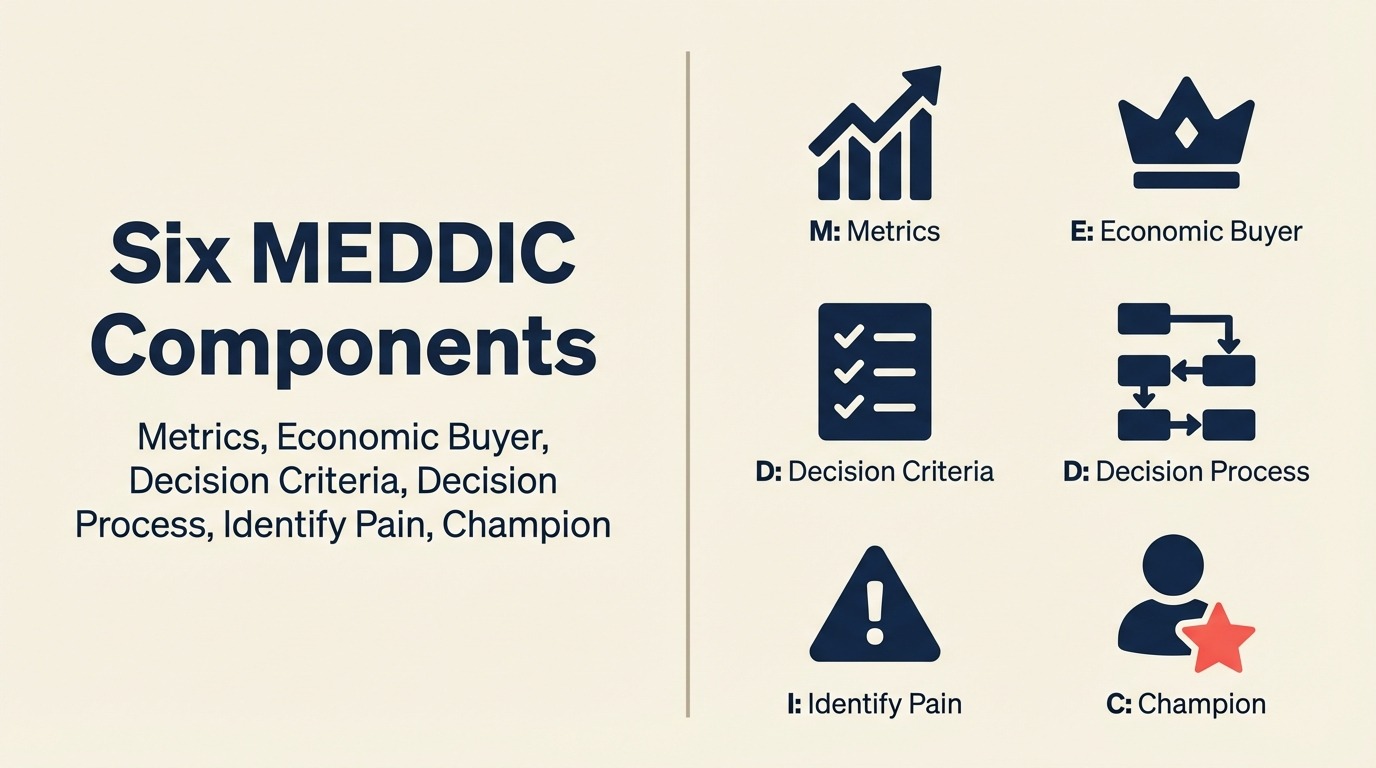
MEDDICは、商談が実在し、かつ成約可能かどうかを評価する6要素の適格判定メソドロジーです。各文字は、検証すべき重要な観点を表しています。
- Metrics(指標):定量化可能な価値とROI
- Economic Buyer(経済的決裁者):予算を握る人物
- Decision Criteria(意思決定基準):評価の要件
- Decision Process(意思決定プロセス):購買承認までの流れ
- Identify Pain(ペインの特定):緊急性を生むビジネス課題
- Champion(チャンピオン):社内であなたの代わりに売り込んでくれる推進者
このフレームワークは、各要素について具体的な証拠を集めることを求めます。会話が良い雰囲気だったからといって、その商談を適格と判定するわけではありません。経済的決裁者の名前を記録し、意思決定基準を相手自身の言葉で説明でき、承認プロセスを把握し、解決するペインを数値化し、社内で誰が自社ソリューションを推進してくれているかを特定できて初めて、その商談は適格と言えるのです。
MEDDICが機能するのは、エンタープライズ企業が実際に購買する方法をそのまま映し出しているからです。彼らは衝動買いをしません。基準に基づいて評価します。正式なプロセスに従います。ROIの正当化を求めます。複数のステークホルダーが関わります。MEDDICは、商談を予測に組み込む前に、この現実を確実に理解させてくれます。
エンタープライズ商談にMEDDICレベルの厳密さが必要な理由
エンタープライズ営業は、トランザクション型営業とは根本的に異なります。トランザクション型営業では、数日から数週間で決定できる一人の相手と話せば済みます。一方エンタープライズ営業では、複数部門にまたがるステークホルダー、正式な調達プロセス、法務レビュー、承認階層をくぐり抜けていく必要があります。
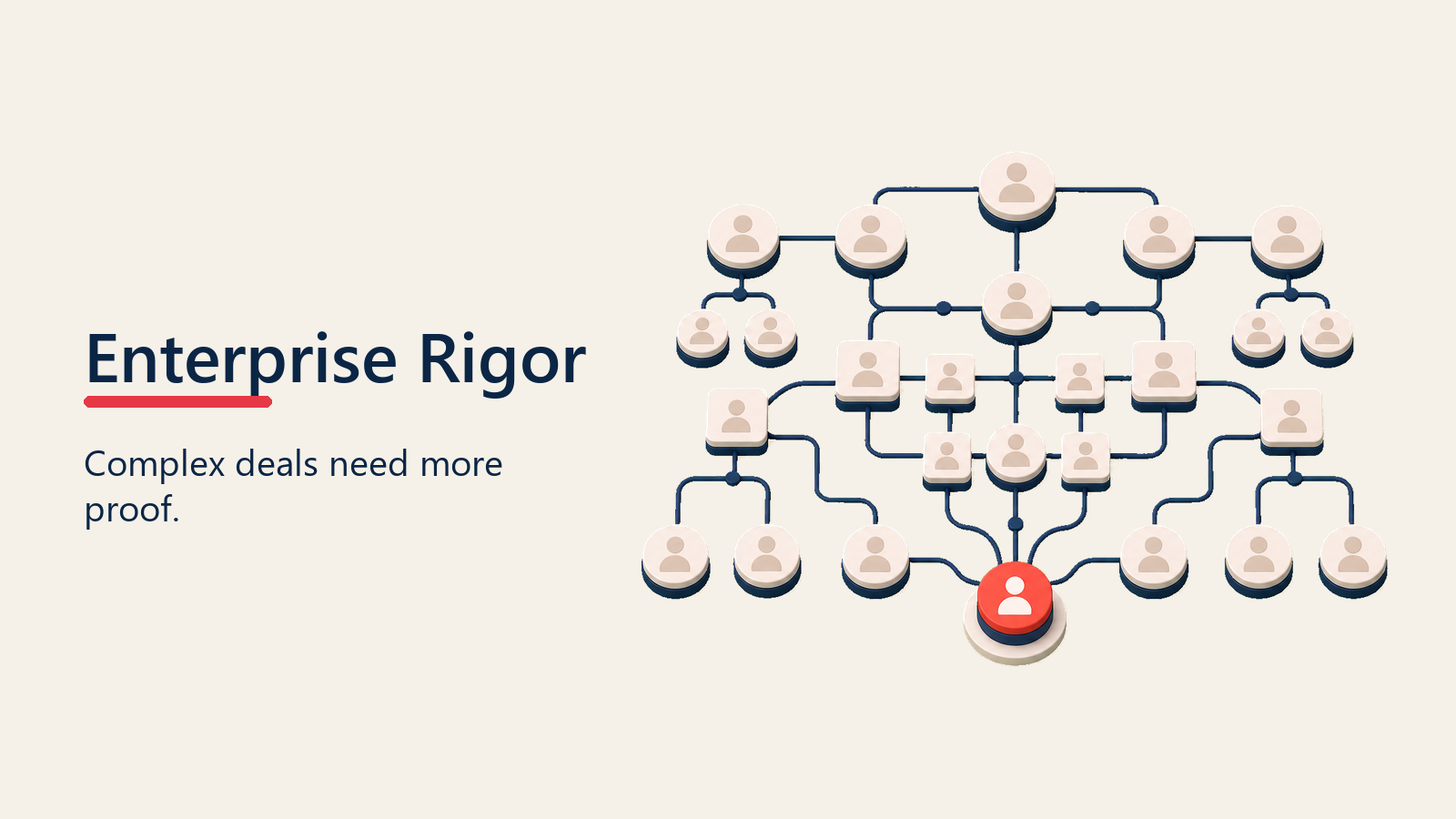
典型的なエンタープライズ商談で実際に起きていることは、次の通りです。
複数のステークホルダーは、それぞれ異なる優先事項を持っています。ITはセキュリティと連携性を気にします。財務部門はROIの正当化を求めます。オペレーション部門は導入の実現可能性を必要とします。エグゼクティブスポンサーは戦略的な成果を求めます。あなたのソリューションは、そのすべてを満たさなければなりません。
6〜18か月に及ぶ長いセールスサイクルは、状況が変わる余地を生みます。予算が凍結される。優先事項が変わる。チャンピオンが退職する。競合他社が評価に加わる。基礎をしっかり検証していなければ、Q2の時点で堅調に見えた商談も、Q4には消えてしまうことがあります。効果的なセールスサイクルの短縮には、適格でない商談のどこで時間が無駄になっているかを理解することが欠かせません。
商談額が大きいということは、調達部門が関与し、法務が契約を精査し、CFOが支出を厳しくチェックすることを意味します。$500Kのソフトウェア購入は、単なる承認だけでなく、ビジネスケースの文書化、競合評価、そして経営層のサインオフが必要になります。
複雑な意思決定プロセスには、技術評価、ビジネスケースの作成、ベンダー選定、契約交渉、経営層の承認といった段階があります。各段階にはゲートキーパー、基準、そして失敗しうるポイントが存在します。
MEDDICレベルの適格判定を行わなければ、手探りで商談を進めることになります。プロジェクトリーダーが自社ソリューションを気に入ってくれているからと有利な立場にいると思い込んでいても、実際に予算があるのか、その人物が本当に意思決定者なのか、最終決定を左右する基準は何か、そして自分がその場にいないときに誰かが代わりに売り込んでくれているのか、何も分かっていないかもしれません。
MEDDICは、それを必ず突き止めさせてくれます。
MEDDICの6要素を徹底解説
MEDDICが機能するのは、各要素がエンタープライズ商談の質と買い手のコミットメントの異なる側面を検証するからです。
以下では、各要素を分解し、答えるべき質問、注目すべきシグナル、そして適切な記録がどのようなものかを解説します。
Metrics(指標):定量化可能な価値とROI
指標とは、自社ソリューションがこの顧客にもたらす具体的で定量化可能なビジネスインパクトを言語化できることを意味します。一般的なROIの主張ではありません。「効率が上がります」という漠然とした話でもありません。相手のビジネスに直結した、実際の数字です。
必ず答えるべき質問:
- このソリューションはどの具体的な指標を改善するのか
- それらの指標の現在のベースラインはどうなっているか
- 目標とする改善幅はどれくらいか
- その改善がもたらす金銭的価値はいくらか
- この数字を見込み客と一緒にどう算出したか
- 投資回収期間はどれくらいか
ヒアリングで尋ねるべき質問:
- 「この問題は現在、金額・時間・リソースの面でどれくらいのコストになっていますか」
- 「[特定の指標]は現在どのように測定していますか。また、どこまで改善する必要がありますか」
- 「[指標]をX%改善できた場合、それは収益・コスト削減・効率という面でどれくらいの意味を持ちますか」
- 「[指標]が20%改善した場合、御社にとって年間でどれほどの価値がありますか」
- 「これらの指標を現在、チームはどのように追跡・報告していますか」
理想的な状態はこうです:
自社のCRMがセールスサイクルを90日から60日に短縮できることを示すビジネスケースを、顧客と共同で作成しました。四半期あたり平均$100Kの商談が50件あるとすると、30日の短縮によって年間12〜15件の追加成約が可能になります。これは$1.2M〜$1.5Mの追加収益に相当します。自社ソリューションのコストは$300Kなので、投資回収期間は3〜4か月です。
危険信号:
- 具体的な指標を言語化できない
- 見込み客が数字を検証していない
- ROIが相手のデータではなく、自分たちの想定に基づいている
- 改善すると主張している指標のベースラインを、相手がそもそも計測していない
- 価値が「ソフト」なもの(連携の向上、士気の向上など)にとどまり、金銭的インパクトが伴っていない
これが重要な理由:
指標は、商談が精査されるときの武器になります。CFOが「なぜこれに$300Kも使うのか」と尋ねたとき、あなたのチャンピオンには定量化された答えが必要です。優先事項が変わり予算が引き締められても、明確なROIを持つ商談は生き残ります。指標のない商談は、次の四半期に先送りされます。強力な指標は、より大きな投資を正当化することで商談規模の最適化にも貢献します。
Economic Buyer(経済的決裁者):予算を握る人物
経済的決裁者とは、他の誰かの承認を必要とせずに、その商談の予算を割り当てられる人物です。影響力を持つ人ではありません。推薦する人でもありません。決定権を握っている人です。
必ず答えるべき質問:
- この購買における最終的な予算権限は誰が持っているか
- その人物の名前と役職は何か
- 直接話をしたことがあるか
- その人物の優先事項や懸念は何か
- ビジネスケースを理解し、支持しているか
- その人物の上司は誰で、その承認も必要か
ヒアリングで尋ねるべき質問:
- 「このような取り組みの予算は、通常誰が承認しますか」
- 「御社では予算がどのように割り当てられるか、教えてください」
- 「このビジネス領域のP&Lは誰が持っていますか」
- 「説得力のあるビジネスケースを作成した場合、それを承認する権限は誰にありますか」
- 「このような購入について、これまで[経済的決裁者の名前]と一緒に仕事をしたことはありますか」
理想的な状態はこうです:
営業ツールの予算をVP of Salesが持っており、$500Kまでの裁量権限があることを特定しました。本人と直接面談し、ビジネスケースを提示したところ、予算が確保できることと戦略的な整合性を確認してもらえました。最終承認のためにCFOを紹介してもらいましたが、その会話を主導しているのは彼女自身です。
危険信号:
- マネージャーやディレクターとしか話しておらず、経営層と接触できていない
- 予算権限について尋ねると、「場合による」「これから確認する」といった答えが返ってくる
- 話している相手が「予算承認を得るためにビジネスケースを作る必要がある」立場にとどまっている
- 複数の人物が予算権限を主張しており、ガバナンスが不明瞭であることを示している
- 経済的決裁者に実際にはまだ会えていない
これが重要な理由:
経済的決裁者が関与していない商談は停滞します。自社ソリューションを気に入ってくれているミドルマネージャーと何か月もやり取りしても、結局予算が承認されないということが起こり得ます。さらに悪いケースでは、終盤になって初めて本当の意思決定者が別の優先事項を持っていることが判明し、あなたのチャンピオンではその反対意見を覆せない、ということもあります。
経済的決裁者は、最終的な成約相手でもあります。契約締結の段階では、「イエス」と言える人物が必要です。その人物の名前を挙げられなければ、その商談を成約させることはできません。
Decision Criteria(意思決定基準):評価の要件
意思決定基準とは、組織がベンダーを評価・選定する際に用いる、具体的で文書化された要件です。これは、成約するために満たさなければならないチェック項目です。
必ず答えるべき質問:
- 正式な評価基準は何か
- それらはどのように重み付け、優先順位付けされているか
- 誰がその基準を定めたのか
- 自社ソリューションは各基準にどう当てはまるか
- どこで優位に立ち、どこが弱いか
- 競合に有利に働く基準はあるか
ヒアリングで尋ねるべき質問:
- 「ソリューションの評価にはどのような基準を使っていますか」
- 「ベンダーをどのように採点、あるいはランク付けしますか」
- 「何が必須で、何が『あれば良い』程度のものですか」
- 「これらの要件を定める際、誰が関わりましたか」
- 「RFP、あるいは正式な要件文書を発行していますか」
- 「どのような場合にベンダーが検討対象から外れますか」
理想的な状態はこうです:
見込み客から、重み付けされた25の基準を含む正式なRFPを共有してもらいました。自社ソリューションを各基準に照らし合わせ、独自に強みを発揮できる項目が8つ、弱い項目が3つあることを把握し、強みを強調しながら弱みへの懸念に対応する戦略を立てました。相手がモバイル機能(自社の弱み)よりも連携性(自社の強み)を重視していることも分かっています。
危険信号:
- 正式な基準が存在せず、「まだ選択肢を検討しているだけ」の段階
- 基準が漠然としている(「使いやすいこと」「拡張性があること」など)
- 基準がどのように重み付けされているか分からない
- 基準が特定の競合を優位にするよう設計されているように見える
- 複数のステークホルダーが互いに矛盾する基準を持っている
これが重要な理由:
基準を理解していなければ、効果的にポジショニングすることはできません。勝敗を分ける機能を無視して、重要でない機能をデモしてしまうかもしれません。さらに悪ければ、競合が自分たちに有利になるよう基準を誘導していることにすら気づけません。
意思決定基準はまた、それが本物の評価なのか、単なる建前なのかを見極める手がかりにもなります。基準を言語化できない企業は、たいてい本気で購入を検討していません。ベンダーリサーチをしていたり、競合情報を集めていたり、調達部門の要件を満たすためだけに動いていたりするだけです。
Decision Process(意思決定プロセス):購買承認までの流れ
意思決定プロセスとは、評価から契約締結に至るまでに必要な、正式なステップ・承認・マイルストーンの流れです。これは、あなたが必ず進んでいかなければならないロードマップです。
必ず答えるべき質問:
- 相手の購買プロセスには具体的にどのような段階があるか
- 各段階には誰が関わり、何を必要としているか
- 各段階のタイムラインとマイルストーンはどうなっているか
- どのような承認が必要で、誰から得る必要があるか
- 何がプロセスを遅らせたり頓挫させたりする可能性があるか
- 過去に同様の購入を行ったことがあるか、その際どうだったか
ヒアリングで尋ねるべき質問:
- 「このようなソリューションを評価・購入する際の、御社の通常のプロセスを教えてください」
- 「どのような段階を経ることになりますか。それぞれに誰が関わりますか」
- 「技術評価が終わった後、次に何が起きますか」
- 「POを発行するまでに、誰のサインオフが必要ですか」
- 「各段階のタイムラインはどうなっていますか」
- 「過去の購入でどのような障害にぶつかりましたか。それをどう回避できますか」
理想的な状態はこうです:
6段階のプロセスを文書化しました。(1)ITとの技術評価(4週間)、(2)財務部門とのビジネスケース作成(2週間)、(3)ベンダー選定委員会の会議(1週間)、(4)VP of SalesとCFOによる経営承認(2週間)、(5)法務による契約レビュー(3週間)、(6)調達の最終手続き(1週間)。合計13週間です。各段階の主要なステークホルダーを特定し、チェックポイントもスケジュールに組み込みました。
危険信号:
- プロセスが不明確、あるいは「柔軟」だとされている
- タイムラインが何度も変わる(「たぶん来四半期、もしかしたらもっと早く」)
- 当初言及されていなかった新しいステークホルダーが次々に現れる
- 過去の購入が実際にどう進んだのか、誰も説明できない
- プロセスが、決定するためではなく先延ばしするために設計されているように見える
これが重要な理由:
意思決定プロセスを理解することが、正確な予測とプロアクティブな商談管理につながります。法務レビューに3週間かかり、四半期末までに終える必要があると分かっていれば、四半期の半ばまでに契約書を提出しなければなりません。$250Kを超える商談はすべてCFOが承認し、その人物が四半期の最後の2週間は出張していると分かっていれば、出発前に承認を得ておく必要があります。この理解は、予測を現実に根ざしたものにすることで、ステージ別の予測を直接改善します。
商談が停滞するのは、たいてい営業担当者がプロセスを理解、あるいは検証していなかったからです。確認しないまま次のステップを想定していた。承認要件を把握していなかった。レビューにかかる時間を見誤っていた、といった具合です。
Identify Pain(ペインの特定):緊急性を生むビジネス課題
ペインとは、今すぐ購入する必要に迫られるような、具体的で切迫したビジネス課題です。理論上のメリットではありません。あれば嬉しい程度の改善でもありません。実際に金銭、時間、あるいは競争優位性を失わせている、本物の痛みです。
必ず答えるべき質問:
- この取り組みを後押ししている具体的な問題は何か
- その問題のビジネスへの影響はどれくらいか
- なぜ来年ではなく今、解決する必要があるのか
- 解決しなければどうなるのか
- 誰がその痛みを最も強く感じているか
- これまで何を試し、なぜうまくいかなかったのか
ヒアリングで尋ねるべき質問:
- 「今、何がうまくいっておらず、ソリューションを検討することになったのですか」
- 「この問題は具体的にどれくらいのコストになっていますか」
- 「なぜ今これが優先事項なのですか。何が変わったのですか」
- 「[目標時期]までにこれに対応しなければ、どうなりますか」
- 「組織内で、この問題の影響を最も受けているのは誰ですか」
- 「これまでこの問題を解決しようと何を試み、結果はどうでしたか」
理想的な状態はこうです:
VP of Salesは、営業担当者が販売活動ではなく事務作業に60%の時間を費やしているために、四半期の収益目標を達成できていません。この非効率さは、年間で約$2Mの生産性損失につながっています。取締役会が収益成長を求めており、現在のペースでは年間目標を20%下回る見込みであるため、Q3までにソリューションを導入する必要があります。以前、スプレッドシートと簡易的なCRMで対応しようとしましたが、定着率が低く、データ品質も悪かったため失敗しました。
危険信号:
- ペインが漠然としている(「もう少し良くなればいいのに」程度)
- 緊急性がない(「今はただ選択肢を見ているだけ」)
- 問題が測定可能なコストを何も生んでいない
- 複数のペインポイントが存在し、優先順位が明確でない
- 自分たちが実際に感じている問題ではなく、誰かに言われて解決しようとしている問題である
これが重要な理由:
ペインは緊急性を生みます。緊急性は商談の成約を後押しします。大きなペインがなければ、問題のコストが変化のコストを下回っている限り、見込み客は決断をいつまでも先延ばしにします。
ペインはまた、本物の商談と冷やかし客を見分ける材料にもなります。ベンダーリサーチをしているだけの人は機能について尋ねるかもしれません。しかし本当にペインを抱えている人は、「どれくらい早く導入できますか」「この結果を保証できますか」と尋ねてきます。
商談の進みが遅くなったり止まったりするのは、たいていペインが十分に切迫していなかったからです。見込み客は、もう少しその問題を抱えたままでもやっていけると判断したのです。だからこそ、ペインを早い段階で検証することが極めて重要であり、それがその商談が本物かどうかを左右します。商談の停滞状況を監視することで、どこでペインの検証が不十分だったかを特定できます。
Champion(チャンピオン):社内であなたの代わりに売り込んでくれる人
チャンピオンとは、あなたがその場にいないときに、自社ソリューションを積極的に売り込んでくれる社内のステークホルダーです。組織内で信頼を持ち、あなたのソリューションが選ばれることを望み、それを実現するために自らの政治的な影響力を使うことをいとわない人物です。
必ず答えるべき質問:
- 自分たちのチャンピオンは具体的に誰なのか
- その人物は信頼と影響力を持っているか
- 個人的にこれを成功させたいと思う動機は何か
- 過去に同様の取り組みを成功に導いた経験はあるか
- 内部情報を共有し、プロセスを通じてコーチングしてくれるか
- 経済的決裁者や他の主要なステークホルダーへのアクセスを持っているか
ヒアリングで尋ねるべき質問:
- 「社内で、この問題の解決に最も意欲的なのは誰ですか」
- 「このソリューションが成功したとき、最も恩恵を受けるのは誰ですか」
- 「[関連する領域]について、周囲が耳を傾ける相手は誰ですか」
- 「私たちがその場にいなかったとしたら、誰がこのソリューションを推してくれますか」
- 「これまでベンダー選定を主導したことはありますか。その結果はどうでしたか」
- 「他の人からどのような懸念が出ると思いますか。それにどう対応しますか」
理想的な状態はこうです:
あなたのチャンピオンは、VP of Sales(経済的決裁者)の直属であるDirector of Sales Operationsです。彼女は2年間にわたり、より良い営業ツールの必要性を訴え続けてきました。以前にCRM移行を成功させた実績があり、社内での信頼も厚い人物です。社内政治についての洞察を共有し、CFOの懸念にどう対応すべきかコーチングしてくれ、経営陣へのビジネスケースのプレゼンも自ら買って出てくれました。ITと財務部門の担当者にも、自ら進んで引き合わせてくれています。
危険信号:
- チャンピオンだと思っていた人物が、実は単に感じが良いだけだった
- 内部情報を共有したり、人を紹介したりしてくれない
- 意思決定に対する影響力を持っていない
- 若手、あるいは組織に入って間もない人物である
- 前向きな発言はするが、商談を前に進める行動は取らない
- 何かを頼んでも(ミーティングの設定、資料の共有など)、はっきりした返事をしない
これが重要な理由:
複雑な商談には、あなたが立ち会えない会話が数多く含まれます。予算に関する議論。社内での議論。競合ベンダーとのミーティング。ステークホルダーの懸念。そうした会話の場にチャンピオンがいなければ、結果に影響を与えることはできません。
チャンピオンは、商談のリスクを下げてもくれます。主要な窓口が退職したり、意見を却下されたりしても、チャンピオンがいれば継続性が保たれます。競合が水面下で動いていても、チャンピオンが教えてくれます。経済的決裁者が直接口にしない懸念を抱えていても、チャンピオンがそれを伝えてくれるので、あなたはそれに対応できます。
営業担当者が犯す最大の間違いは、主な連絡窓口をチャンピオンだと思い込んでしまうことです。相手があなたに好意的だからといって、あなたのために闘ってくれるとは限りません。真のチャンピオンは、行動で示します。
MEDDICスコアリングシステム:商談の健全性を評価する
MEDDICのスコアリングは、商談のリスクが証拠の不足によるものなのか、それとも買い手側の本質的な問題によるものなのかをチームが見極める助けになります。

MEDDICによる適格判定は二択ではありません。商談は単純に「適格」か「不適格」かに分かれるわけではなく、各要素をどれだけ検証できているかによって、連続的なスペクトラム上に位置づけられます。
MEDDICのスコアリングシステムを使えば、商談の健全性を客観的に評価できます。ここでは、実践的な方法を紹介します。
MEDDICの各要素について、0〜3点でスコアを付けます:
- 0 = 未特定:この要素がまだ存在しない
- 1 = 特定済みだが未検証:分かっているつもりだが、確認は取れていない
- 2 = 検証済み:見込み客とともに確認済み
- 3 = 文書化・合意済み:証拠があり、合意も取れている
Metrics(指標):
- 0:ROIや価値が数値化されていない
- 1:この見込み客向けにカスタマイズされていない、一般的な価値提案
- 2:相手のデータに基づいて価値を数値化済み
- 3:共同でビジネスケースを作成し、合意済み
Economic Buyer(経済的決裁者):
- 0:予算権限を持つ人物が分からない
- 1:分かっているつもりだが、確認していない
- 2:特定済みで、面談も済んでいる
- 3:経済的決裁者が積極的に関与し、支持してくれている
Decision Criteria(意思決定基準):
- 0:基準が定義されていない
- 1:1人のステークホルダーからの非公式な基準のみ
- 2:正式な基準が文書化されている
- 3:複数のステークホルダーと基準を確認し、自社ソリューションと照合済み
Decision Process(意思決定プロセス):
- 0:プロセスを理解していない
- 1:1人からの大まかな理解のみ
- 2:段階とタイムラインを含む詳細なプロセスを文書化済み
- 3:プロセスを検証し、ステークホルダーを特定し、マイルストーンもスケジュール済み
Identify Pain(ペインの特定):
- 0:明確なペインが特定されていない
- 1:漠然とした問題の説明のみ
- 2:具体的で数値化されたペイン
- 3:放置した場合の悪影響を伴う、切迫したペイン
Champion(チャンピオン):
- 0:チャンピオンが特定されていない
- 1:好意的な窓口はいるが、行動は取らない
- 2:コーチングとアクセスを提供してくれる、積極的なチャンピオン
- 3:影響力と信頼を持ち、社内で積極的に売り込んでくれるチャンピオン
合計スコア:0〜18点
- 15〜18点:有望な商談。自信を持って予測に組み込める
- 12〜14点:中程度の商談。弱い部分を強化する必要がある
- 9〜11点:弱い商談。埋めるべきギャップが大きい
- 9点未満:不適格。スコアが改善するまで予測には含めない
このスコアリングシステムは、正直な評価を促します。すべての要素で2点以上を付けられないなら、その商談は適格ではありません。それだけのことです。
多くの組織は、これをCRMの必須項目として実装しています。営業担当者は、商談を「Qualified」や「Commit」といったフォーキャストカテゴリーに移す前に、各MEDDIC要素について証拠を記録しなければなりません。これにより、パイプラインの信頼性を損なう「なんとなく良さそう」という感覚頼みの予測がなくなります。
MEDDICが効果を発揮する場面(そうでない場面)
MEDDICは複雑なエンタープライズ営業のために作られた手法であり、まさにそこでこそ真価を発揮します。
MEDDICが効果を発揮する場面:
- 商談額が$100K以上
- セールスサイクルが6か月以上
- 複数のステークホルダー(5人以上)が関わる
- 正式な調達プロセスが存在する
- 大企業やミッドマーケット企業に販売している
- 購買プロセスが、明確な段階を伴って構造化されている
- 商談量よりもwin/lossの比率が重視される
- 予測精度が極めて重要である
MEDDICが不向きな場面:
- セールスサイクルが30日未満
- 単価の低いトランザクション型商品を販売している
- 委員会を介さず、一人の意思決定者が購入を決める
- 適格判定にかけられる時間が限られる、大量営業モデル
- 購買がそれほど形式張っていない、SMBや消費者向け販売
- ユーザーがセルフサーブするプロダクト主導型の成長モデル
2〜3週間で決断できるVPクラスの買い手に、年間$50Kの契約を販売しているなら、MEDDICはおそらくやりすぎです。BANTやCHAMPの方が適しているかもしれません。
しかし、IT、財務、オペレーション、C-suiteのステークホルダーが関わる9か月サイクルで、$500K以上のエンタープライズソリューションを販売しているなら、MEDDICは不可欠です。その厳密さは、商談の複雑さに見合っています。
MEDDICのバリエーション:MEDDPICとMEDDPICC
MEDDICのバリエーションは、Paper Process(契約手続き)、Competition(競合)、あるいはパートナーとの力学がリスクの性質を変えるような複雑な商談において、さらなる厳密さを加えるものです。
企業がMEDDICを導入していく中で、追加の適格判定の観点に対応するためのバリエーションが生まれました。
MEDDPIC:Paper Process(契約手続き)の追加
Paper Process(追加された「P」)とは、商談を成立させるために必要な契約、法務レビュー、調達手続きを指します。
答えるべき質問:
- 契約レビューのプロセスはどのようなものか
- 法務部門で誰がレビューと承認を行う必要があるか
- どのような条項が遅延の原因になりやすいか
- 法務レビューには通常どれくらいの時間がかかるか
- 法務承認の後、どのような調達手続きが続くか
- 早い段階で対応しておくべき非標準的な条項はあるか
MEDDPICが広まったのは、他のすべての要素が固まっていても、法務・調達の段階で商談が停滞することが少なくないためです。Paper Processを理解しておくことで、成約日を正確に予測し、契約交渉をプロアクティブに進められるようになります。
MEDDPICC:Competition(競合)の追加
Competition(2つ目の「C」)とは、競合の脅威を積極的に特定し、理解することを意味します。
答えるべき質問:
- 他にどのベンダーを検討しているか
- 自社の競争上のポジションはどうか
- 意思決定基準に対して、競合の強み・弱みはどうなっているか
- 見込み客は過去に競合を利用したことがあるか
- 各ベンダーに対して見込み客はどのような印象を持っているか
- 競合の脅威をどう差別化し、無力化するか
MEDDPICCは、他の選択肢との比較における自社のポジションが勝敗戦略を左右する、競争の激しい市場で価値を発揮します。常に同じ2〜3社のベンダーと競合しているなら、競合環境を明示的に適格判定に組み込むことで、効果的なポジショニングが可能になります。
どのバリエーションを使うべきでしょうか。まずは基本のMEDDICから始めてください。法務・調達がボトルネックになりがちなら、Paper Processを追加します。競争が激しく混み合った市場にいるなら、Competitionを追加します。実際に解決すべき課題がない限り、複雑さを増やす必要はありません。
導入:MEDDICを実際に定着させる方法
MEDDICについて読むことと、営業チームに厳密に実践させることは別問題です。ここでは、定着させるための方法を紹介します。
1. 経営層のスポンサーシップとその理由
MEDDICには規律と努力が求められます。営業担当者は、なぜこれが重要なのかを経営層から伝えられる必要があります。VP of SalesやCROは、以下を伝えるべきです。
- 不十分な適格判定のコスト(無駄になった時間、外れた予測)
- 期待される成果(win rateの向上、予測精度の改善)
- 譲れない期待事項(予測にはMEDDICスコアが必須であること)
経営層のコミットメントがなければ、MEDDICは「やってもやらなくてもいいもの」になり、定着は失敗します。
2. トレーニングプログラム
MEDDICは直感的に理解できるものではありません。以下についてのトレーニングが必要です。
- 各要素の意味と、それが重要である理由
- 各要素を明らかにするためのヒアリング質問
- 商談を記録し、スコアを付ける方法
- 難しい会話(予算について尋ねる、経済的決裁者を特定する)のロールプレイ練習
- 良いMEDDIC適格判定と不十分なMEDDIC適格判定のケーススタディ
初回トレーニング(4〜8時間)に加えて、商談レビューやコーチングを通じた継続的な強化も計画してください。
3. CRMのカスタマイズ
MEDDICをCRMのワークフローに組み込みます。
- 商談レコードにMEDDICの各要素に対応するフィールドを追加する
- 特定の段階に進む前にMEDDICスコアを必須にする(例:各要素が2点以上になるまで「Qualified」に進めない)
- パイプライン全体のスコアリングを示すMEDDICダッシュボードを作成する
- 不適格な商談を予測に含められないようにする検証ルールを追加する
CRMは、MEDDICの記録なしに商談を予測に含めることができない仕組みにすべきです。これにより規律が徹底されます。MEDDICスコアと連動した明確なステージゲート基準を定義してください。
4. 商談レビューとコーチング
商談インスペクションのプロセスを活用して、MEDDICの実践を強化しましょう。
- 営業担当者が主要な商談についてMEDDICの証拠を提示する、週次の商談レビュー
- マネージャーが「あなたのチャンピオンは誰ですか。その人物に影響力があると、なぜ分かるのですか」と踏み込んだ質問をする
- 「VPに予算権限があると言っていますが、それは本人に直接確認しましたか」と思い込みに疑問を投げかける
- 「これはよく適格判定された商談です。理由は…」と、良い適格判定を評価する
一貫したコーチングこそが、MEDDICを定着させます。
5. 指標と説明責任
定着状況と成果を追跡します。
- MEDDICスコアが完全に記録されている商談の割合
- 段階別、担当者別、セグメント別の平均MEDDICスコア
- MEDDICスコア別のwin rate(高いスコアが成約と相関することを証明する)
- MEDDIC導入後の予測精度の改善度合い
こうした指標をパイプラインレビューで共有し、効果を示しながら勢いを維持しましょう。
よくある落とし穴:MEDDICの定着を阻むもの
しっかりと導入していても、チームはMEDDICの効果を損なう、よくある間違いを犯しがちです。
チェックだけで満足する姿勢
営業担当者は、マネージャーを満足させるためにCRMのMEDDICフィールドを埋めますが、それは検証ではなく推測や思い込みにすぎません。一度も会ったことのない相手を「VP of Sales」として経済的決裁者欄に記入する。共同で作成したビジネスケースではなく、汎用のROI計算ツールに基づいてMetricsに「3」を付ける、といった具合です。
解決策:
答えだけでなく、証拠を求めましょう。「あなたの経済的決裁者は誰ですか」という質問には、「いつ会いましたか。何と言っていましたか」という質問を続けるべきです。記録には、具体的な発言の引用、面談メモ、あるいは成果物(共有されたビジネスケース文書、RFPの基準など)を含めるようにします。
見せかけのチャンピオン
営業担当者は、実際には影響力も行動する意思もない、単に感じの良い相手をチャンピオンだと見なしてしまうことがあります。その「チャンピオン」はミーティングでは前向きな発言をしますが、紹介をしてくれたり、内部情報を共有したり、いざというときに味方になってくれたりはしません。
解決策:
チャンピオンを試してみましょう。経済的決裁者を紹介してもらう、内部の評価基準を共有してもらう、ステークホルダーへのビジネスケースのプレゼンを頼む、といった行動を実際に依頼してみるのです。それをしてくれない、あるいはできないなら、その人物はチャンピオンではありません。それに応じてスコアを付けましょう。
思い込みによる指標
営業担当者は、業界のベンチマークや自分自身の想定に基づいてROIモデルを作成し、見込み客とその数字を検証しないことがあります。もっともらしく聞こえても、実際の顧客の状況を反映していない価値提案を提示してしまうのです。
解決策:
指標は共同で作りましょう。見込み客と(理想的には財務部門も交えて)向き合い、相手のデータを使ってビジネスケースを一緒に作成します。もしそこに時間を割いてもらえないなら、それは十分な価値を感じてもらえていないサインであり、ペインもまだ検証できていないことを意味します。
不完全なプロセスマッピング
営業担当者は、自分が知っているプロセスだけを記録し、隠れた段階、承認、ステークホルダーを見つけ出せないことがあります。その結果、「法務レビュー」が2週間ではなく8週間かかったり、終盤になって拒否権を持つ新たなステークホルダーが現れたりして、不意を突かれることになります。
解決策:
本来どうあるべきかではなく、過去の購入が実際にどう進んだかを尋ねましょう。「前回エンタープライズソフトウェアを購入したときのことを教えてください。想定より時間がかかった段階はどこでしたか。予想外だった承認はありましたか」。相手の過去の経験から学ぶのです。
弱いスコアを見過ごす
MEDDICスコアが低い商談も、営業担当者やマネージャーが「そのうち改善するだろう」と期待して、パイプラインに残り続けてしまいます。経済的決裁者の関与がなかったり、意思決定プロセスが不明確だったりする商談を、単に「関係が良さそうだから」という理由だけで予測に含めてしまうのです。
解決策:
最低基準を厳格に適用しましょう。一定のMEDDICスコアに満たない商談は、予測に含めません。それだけのことです。適格判定が改善するか、不適格として除外されるまで、初期段階のパイプラインにとどめておきます。これにより、正直な評価が徹底されます。定期的なパイプラインの健全性管理によって、不適格な商談がいつまでも居座ることを防げます。
MEDDICと商談の進行管理
MEDDICは静的なものではありません。商談が進むにつれて、各要素への理解は深まり、スコアも向上していくべきです。商談の進行管理とは、セールスサイクルを通じてMEDDICを継続的に検証し、更新し続けることを意味します。
初期段階(ヒアリング/適格判定):
- 目標:すべての要素で1〜2点
- 基本要素が存在することを検証する(経済的決裁者がいる、意思決定プロセスがある、ペインが存在する)
- 焦点:6要素すべてを特定するための広範なヒアリング
中間段階(ソリューション/提案):
- 目標:すべての要素で2〜3点
- 理解を深める(経済的決裁者との面談、意思決定基準の文書化、ビジネスケースの作成)
- 焦点:証拠の収集と合意形成
終盤段階(交渉/成約):
- 目標:すべての要素で3点
- 完全な検証(経済的決裁者が積極的に関与、チャンピオンが社内で売り込み中、意思決定プロセスのマイルストーンがスケジュール済み)
- 焦点:把握済みのプロセスに沿った実行
MEDDICスコアと連動したステージゲートを活用しましょう。すべての要素で2点以上に達するまで、商談はヒアリングからソリューションに進めません。Metrics、Economic Buyer、Championで3点に達するまでは、交渉に進めません。
これにより時期尚早な段階の進行を防ぎ、パイプラインの健全性を保つことができます。
MEDDICと商談の見極めのつながり
MEDDICは、より広い実践領域である商談の見極めの中の、一つのフレームワークにすぎません。MEDDICは複雑なB2B商談に焦点を当てていますが、他のメソドロジーはそれぞれ異なる文脈で役立ちます。
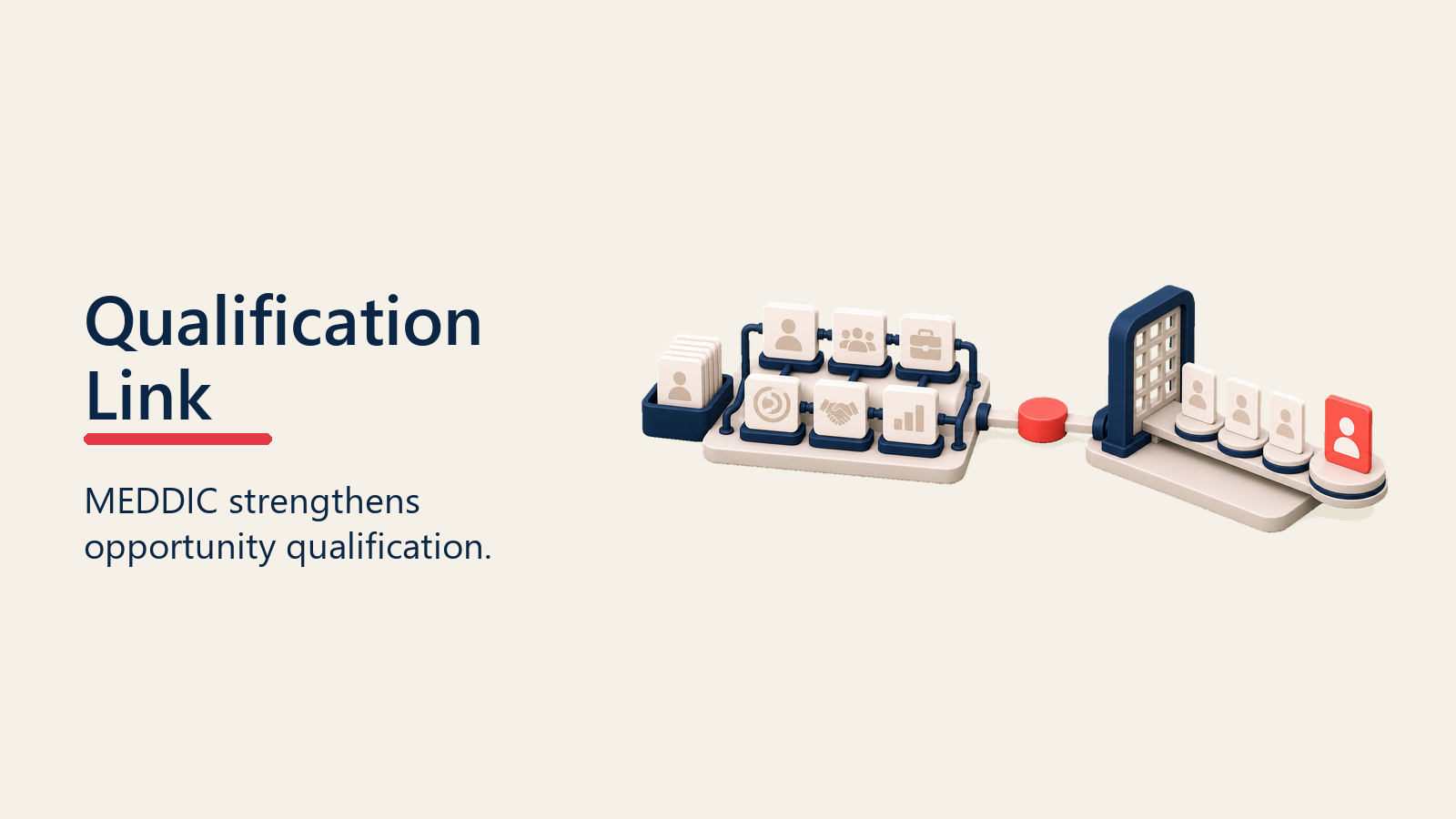
クオリフィケーションフレームワークを選ぶ際は、次の点を考慮してください。
- サイクルが短いトランザクション型商談にはBANTを使う
- サイクルが長く複数のステークホルダーが関わるエンタープライズ商談にはMEDDICを使う
- フレームワークを組み合わせる(最初の適格判定にBANT、BANTを通過した商談にMEDDIC)
- 自社の営業プロセスと買い手のジャーニーに合わせてフレームワークをカスタマイズする
- 適切な適格判定の基準を設定するために、リードから商談への転換の際にこれらの知見を活用する
重要なのは、どの略語を使うかではなく、体系的に適格判定を行うことです。MEDDICの強みは、思い込みが高くつく複雑な商談において、証拠と厳密さを求める点にあります。
結論:営業の規律としてのMEDDIC
MEDDICは単なる適格判定のチェックリストではなく、時間とリソースを投じる前に、営業担当者に商談を深く理解することを求める営業の規律です。それは、商談が成約することを願うことと、成約に何が必要かを知っていることの違いです。
MEDDICを厳密に導入している企業は、次のような測定可能な改善を実現しています。
- チームが成約可能な商談に集中し、強力なビジネスケースを構築することで、win rateが向上する
- しっかりと適格判定された商談だけが予測に含まれるため、予測精度が向上する
- 営業担当者が意思決定プロセスをプロアクティブに進めることで、セールスサイクルが短縮する
- Metricsがより大きな投資を正当化する価値の数値化を求めるため、商談規模が拡大する
しかし、MEDDICが機能するのは、正直に活用した場合に限られます。フィールドを埋めてチェックボックスを満たすだけでは、商談は適格になりません。予算、権限、競合について見込み客と厳しい会話をすること、それこそが商談を適格にするのです。
MEDDICを使いこなす営業担当者は、早い段階で厳しい質問を投げかけ、基準を満たさない商談は思い切って外し、6つの要素すべてが強固な商談に時間を投じます。そうすることで、信頼できるパイプラインと、達成できる予測を築くことができるのです。
厳密な商談の見極めを導入する準備はできていますか。 商談インスペクションのプロセスとパイプラインレビューが、営業組織全体でMEDDICの規律をどう徹底できるかをご覧ください。
関連記事:

On this page
- MEDDICフレームワークとは何か
- エンタープライズ商談にMEDDICレベルの厳密さが必要な理由
- MEDDICの6要素を徹底解説
- Metrics(指標):定量化可能な価値とROI
- Economic Buyer(経済的決裁者):予算を握る人物
- Decision Criteria(意思決定基準):評価の要件
- Decision Process(意思決定プロセス):購買承認までの流れ
- Identify Pain(ペインの特定):緊急性を生むビジネス課題
- Champion(チャンピオン):社内であなたの代わりに売り込んでくれる人
- MEDDICスコアリングシステム:商談の健全性を評価する
- MEDDICが効果を発揮する場面(そうでない場面)
- MEDDICのバリエーション:MEDDPICとMEDDPICC
- MEDDPIC:Paper Process(契約手続き)の追加
- MEDDPICC:Competition(競合)の追加
- 導入:MEDDICを実際に定着させる方法
- 1. 経営層のスポンサーシップとその理由
- 2. トレーニングプログラム
- 3. CRMのカスタマイズ
- 4. 商談レビューとコーチング
- 5. 指標と説明責任
- よくある落とし穴:MEDDICの定着を阻むもの
- チェックだけで満足する姿勢
- 見せかけのチャンピオン
- 思い込みによる指標
- 不完全なプロセスマッピング
- 弱いスコアを見過ごす
- MEDDICと商談の進行管理
- MEDDICと商談の見極めのつながり
- 結論:営業の規律としてのMEDDIC