Las Etapas de Desarrollo Grupal de Tuckman: Forming, Storming, Norming, Performing
Turn this article into takeaways for your work.


Each assistant summarizes the article only for you and suggests best practices for your work.
Las etapas de desarrollo grupal de Tuckman son un modelo que ha estado presente en todos los programas de liderazgo de equipos durante más de cincuenta años. Merece ese lugar porque le da nombre a algo que la mayoría de los equipos siente pero no puede articular: el incómodo y frustrante período intermedio en el que el conflicto estalla antes de que llegue la cohesión. Entender ese período cambia la manera en que se lidera a través de él.
¿Qué son las etapas de desarrollo grupal de Tuckman?
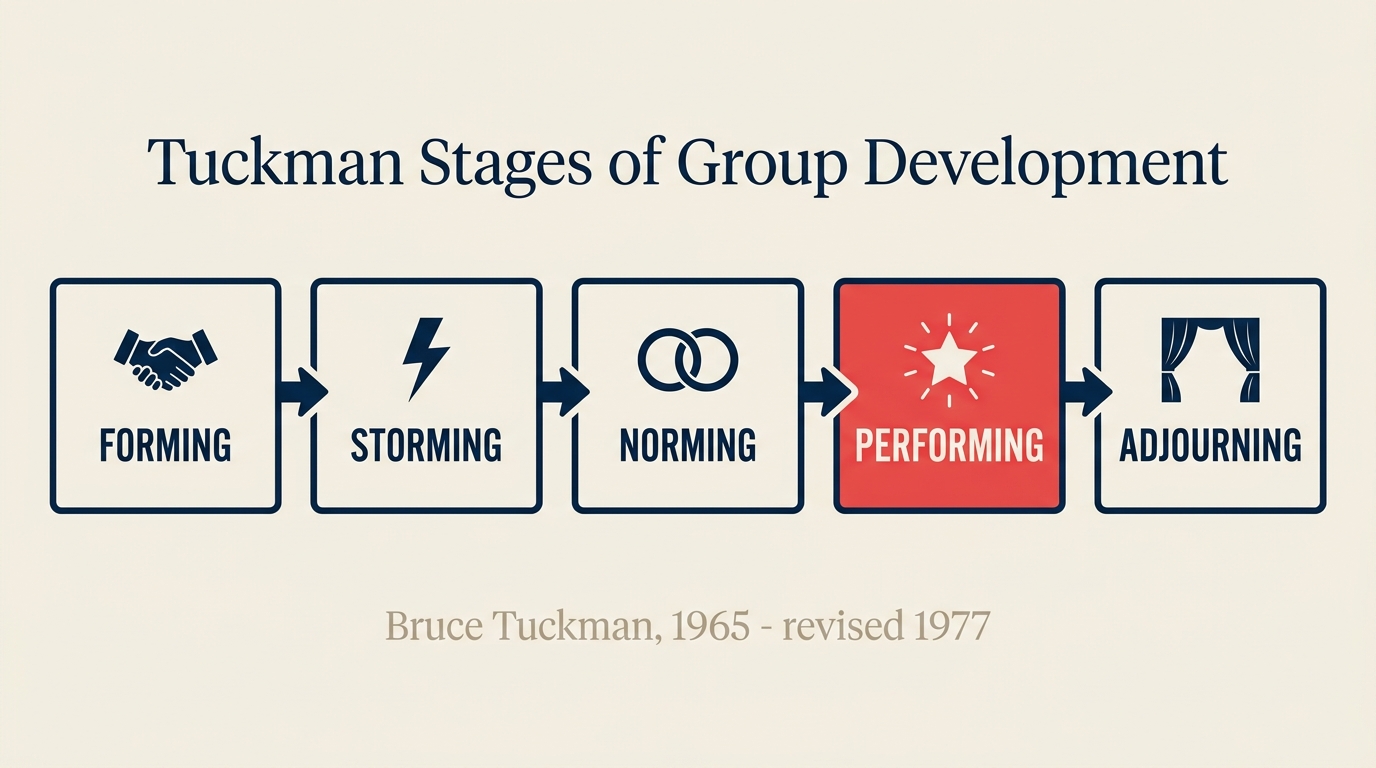
Las etapas de desarrollo grupal de Tuckman son un modelo de cinco fases que describe cómo los equipos se forman, luchan, se estabilizan y finalmente alcanzan el máximo desempeño. El psicólogo Bruce W. Tuckman publicó el marco por primera vez en 1965 en su artículo "Developmental Sequence in Small Groups" en el Psychological Bulletin. Ese artículo sintetizó los hallazgos de más de 50 estudios sobre el comportamiento de pequeños grupos y propuso cuatro etapas: Forming, Storming, Norming y Performing.
En 1977, Tuckman y Mary Ann Jensen revisaron el modelo en Group and Organization Studies y añadieron una quinta etapa: Adjourning, que captura lo que ocurre cuando el trabajo de un equipo ha concluido y el grupo se disuelve. El modelo se denomina en ocasiones modelo Tuckman-Jensen en reconocimiento de esa revisión.
El atractivo duradero del marco no se debe solo a su simplicidad. Se debe a la honestidad que encierra la Etapa 2. El Storming no es una señal de fracaso. Es un requisito del desarrollo.
Datos Clave
Datos Clave
- Tuckman, B.W. (1965), Psychological Bulletin: el modelo original de cuatro etapas sintetizó los hallazgos de una revisión de más de 50 estudios sobre pequeños grupos, incluyendo grupos terapéuticos, grupos T y grupos naturales.
- Tuckman, B.W. y Jensen, M.A.C. (1977), Group and Organization Studies: añadieron la quinta etapa "Adjourning" tras revisar 22 estudios adicionales publicados después de 1965.
- El informe State of the Global Workplace 2024 de Gallup encontró que solo el 23% de los empleados en todo el mundo está activamente comprometido en el trabajo, con los equipos nuevos y mal alineados identificados como un factor principal de la desvinculación, lo que le cuesta a la economía global un estimado de 8,9 billones de dólares.
Las 5 etapas explicadas
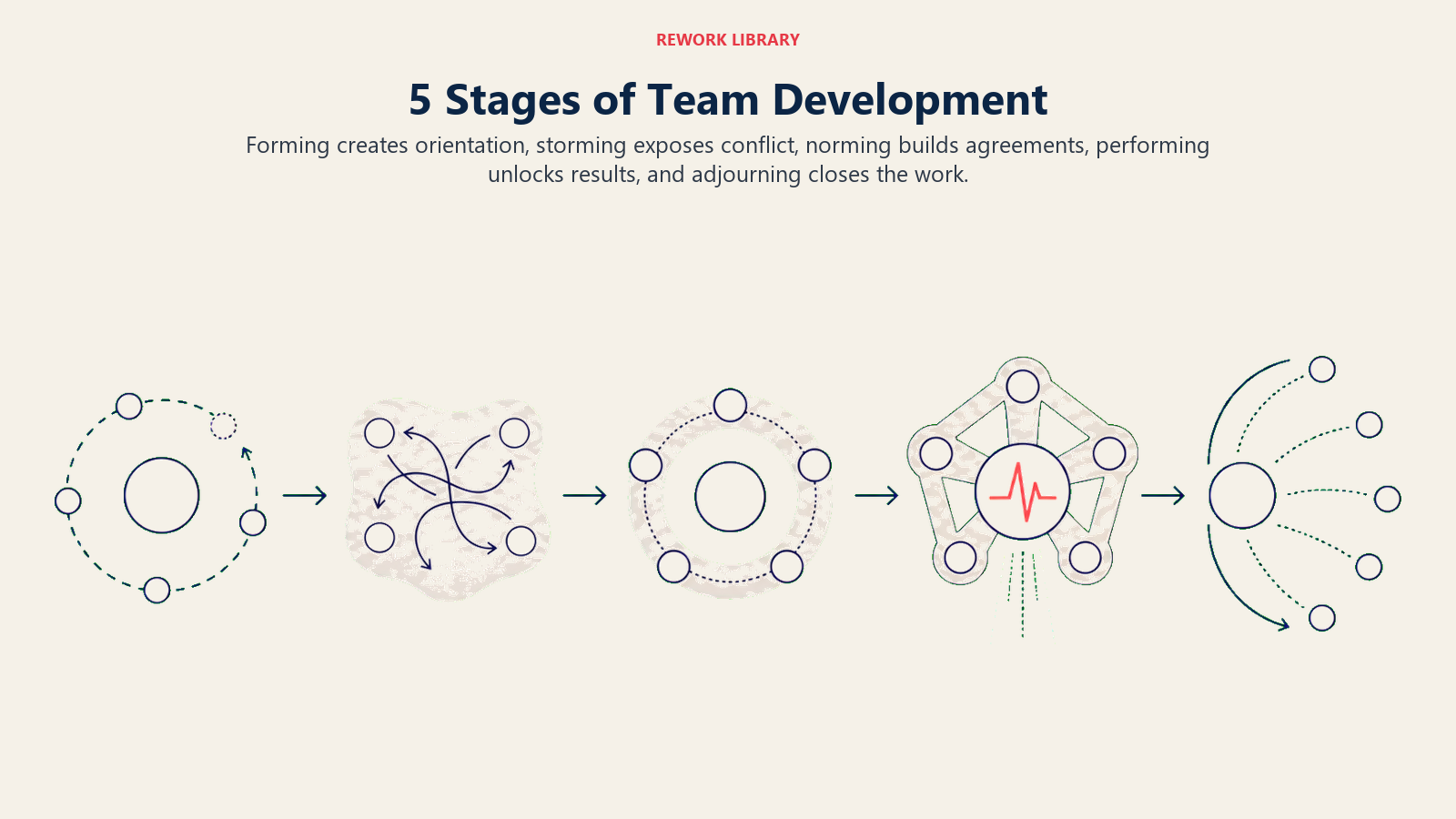
Las etapas de Tuckman no describen lo que hace un equipo. Describen lo que un equipo experimenta. La diferencia importa. Un líder que lee el comportamiento a través de este marco deja de reaccionar al Storming como a un problema personal y empieza a responderle como a una fase de desarrollo.
Etapa 1: Forming (Formación)
El Forming es la fase de orientación. Los miembros se conocen, delimitan el trabajo y descubren quién es quién. La cortesía domina porque nadie ha tomado una posición real todavía. La evitación del conflicto es alta, y la dependencia del líder es mayor en esta etapa. Las personas miran hacia quien está a cargo para que defina el propósito, la estructura y las expectativas.
La trampa aquí es confundir la calma con cohesión. No lo es. Es cautela.
Señales típicas del Forming:
- Alta dependencia del líder para recibir orientación
- Conversaciones excesivamente corteses o cautelosas
- Preguntas sobre roles, alcance y objetivos
- Baja productividad (las personas aún se están orientando)
- Entusiasmo mezclado con ansiedad sobre lo que viene
Comportamiento del líder: Directivo. Clarificar la misión, establecer expectativas y definir los roles. Este no es el momento de ser indiferente. Los equipos que no reciben una estructura clara en el Forming pasan más tiempo en el Storming.
Etapa 2: Storming (Conflicto)
El Storming es donde el modelo gana su reputación. Una vez que la cortesía inicial se desvanece, emergen las diferencias reales: estilos de trabajo, valores, autoridad, cómo se toman las decisiones. El conflicto aumenta. Se forman subgrupos. Las personas se oponen al líder o entre sí.
Esto es saludable. Los equipos que se saltan el Storming o lo suprimen tienden a estancarse en una armonía falsa. La tensión no resuelta no desaparece. Se va a la clandestinidad y envenena las etapas posteriores.
Señales típicas del Storming:
- Desacuerdo abierto o pasivo sobre el enfoque o las prioridades
- Competencia por la influencia o el reconocimiento
- Resistencia a las decisiones del líder o a las normas del grupo
- Conversaciones emocionales que se derraman fuera de las reuniones formales
- Formación de subgrupos por afinidad o interés
Comportamiento del líder: De coaching. Nombrar el conflicto sin amplificarlo. Ayudar al equipo a aflorar el desacuerdo real en lugar del argumento superficial. Aquí la inteligencia emocional importa más que la autoridad.
Etapa 3: Norming (Normalización)
El Norming es la fase de resolución. El equipo establece cómo funciona realmente: cómo se toman las decisiones, cómo es la comunicación, qué comportamientos son aceptables. La confianza crece porque las personas han superado un conflicto juntas. La colaboración aumenta y las personas empiezan a anteponer los objetivos del grupo a sus preferencias individuales.
El riesgo en el Norming es caer en el falso consenso. Un equipo que ha aprendido a evitar el conflicto puede dejar de cuestionar las ideas débiles en nombre de la armonía.
Señales típicas del Norming:
- Formas de trabajo acordadas que todos siguen
- Mayor disposición a dar y recibir retroalimentación
- Comunicación más abierta, incluyendo la lateral (entre pares) y no solo la vertical
- Productividad en aumento a medida que disminuye la fricción en los procesos
- Creciente sentido de identidad y pertenencia al grupo
Comportamiento del líder: De apoyo. Dar un paso atrás en la dirección. Reforzar las normas, facilitar la colaboración entre pares y permitir que las propias estructuras del equipo hagan más del trabajo. Liderar en exceso en esta etapa retrasa la capacidad del equipo para autogestión.
Etapa 4: Performing (Desempeño)
El Performing es el estado objetivo. El equipo funciona como una unidad cohesionada. Los roles son claros, la confianza es alta, el conflicto es constructivo y se resuelve con rapidez. Los miembros son interdependientes en el mejor sentido: se apoyan mutuamente en las fortalezas del otro sin perder la responsabilidad individual. La productividad alcanza su punto máximo porque la energía va al trabajo, no a la fricción interna.
No todos los equipos alcanzan el Performing. Muchas organizaciones oscilan entre Forming y Storming repetidamente a medida que cambia la composición del equipo. Los que llegan al Performing y lo sostienen suelen tener un líder que aceleró cada etapa anterior en lugar de saltársela.
Señales típicas del Performing:
- Alta autonomía con mínima supervisión necesaria
- Resolución de conflictos rápida y constructiva
- Resolución creativa de problemas y responsabilidad mutua
- Los miembros cubren proactivamente las brechas de los demás
- Calidad de producción y ritmo de entrega consistentes
Comportamiento del líder: Delegador. Confiar en que el equipo se gestione a sí mismo. El líder pasa de involucrarse en los detalles operativos a aportar orientación estratégica, eliminar obstáculos y reconocer los logros.
Etapa 5: Adjourning (Clausura)
El Adjourning (añadido por Tuckman y Jensen en 1977) captura el final del ciclo de vida de un equipo. Puede ser el cierre de un proyecto, una reestructuración departamental o la disolución de un grupo de trabajo temporal. Los miembros procesan el fin de su identidad compartida y hacen la transición de vuelta a roles individuales o a otros equipos.
El Adjourning se omite con frecuencia en la práctica, especialmente en organizaciones que tratan el cierre como algo blando u opcional. Es un error. Los equipos que terminan sin un cierre adecuado suelen llevar sentimientos no resueltos a la siguiente formación.
Señales típicas del Adjourning:
- Disminución del foco en el trabajo a medida que se acerca la fecha de cierre
- Conversaciones reflexivas sobre lo que logró el equipo
- Respuestas emocionales (orgullo, tristeza, ansiedad por lo que viene)
- Desvinculación de las normas del grupo ahora que ya no son necesarias
Comportamiento del líder: De cierre. Celebrar el trabajo, reconocer a las personas individualmente y crear espacio para que el equipo procese el final con intención.
Comparación rápida: comportamiento, conflicto y productividad por etapa
| Etapa | Comportamiento del equipo | Nivel de conflicto | Productividad | Enfoque del líder |
|---|---|---|---|---|
| Forming | Cortés, cauteloso, dependiente | Bajo (suprimido) | Baja | Dirigir, clarificar, estructurar |
| Storming | Desafiante, competitivo, resistente | Alto | Por debajo del potencial | Orientar, mediar, nombrar el conflicto |
| Norming | Colaborativo, confiado, consolidándose | Declinando | En aumento | Apoyar, reforzar las normas |
| Performing | Autónomo, interdependiente, adaptable | Bajo (constructivo) | Alta | Delegar, eliminar obstáculos |
| Adjourning | Reflexivo, desvinculándose, en transición | Variable | Declinando | Reconocer, celebrar, cerrar |
Cómo deben liderar los líderes en cada etapa (matriz de comportamiento)
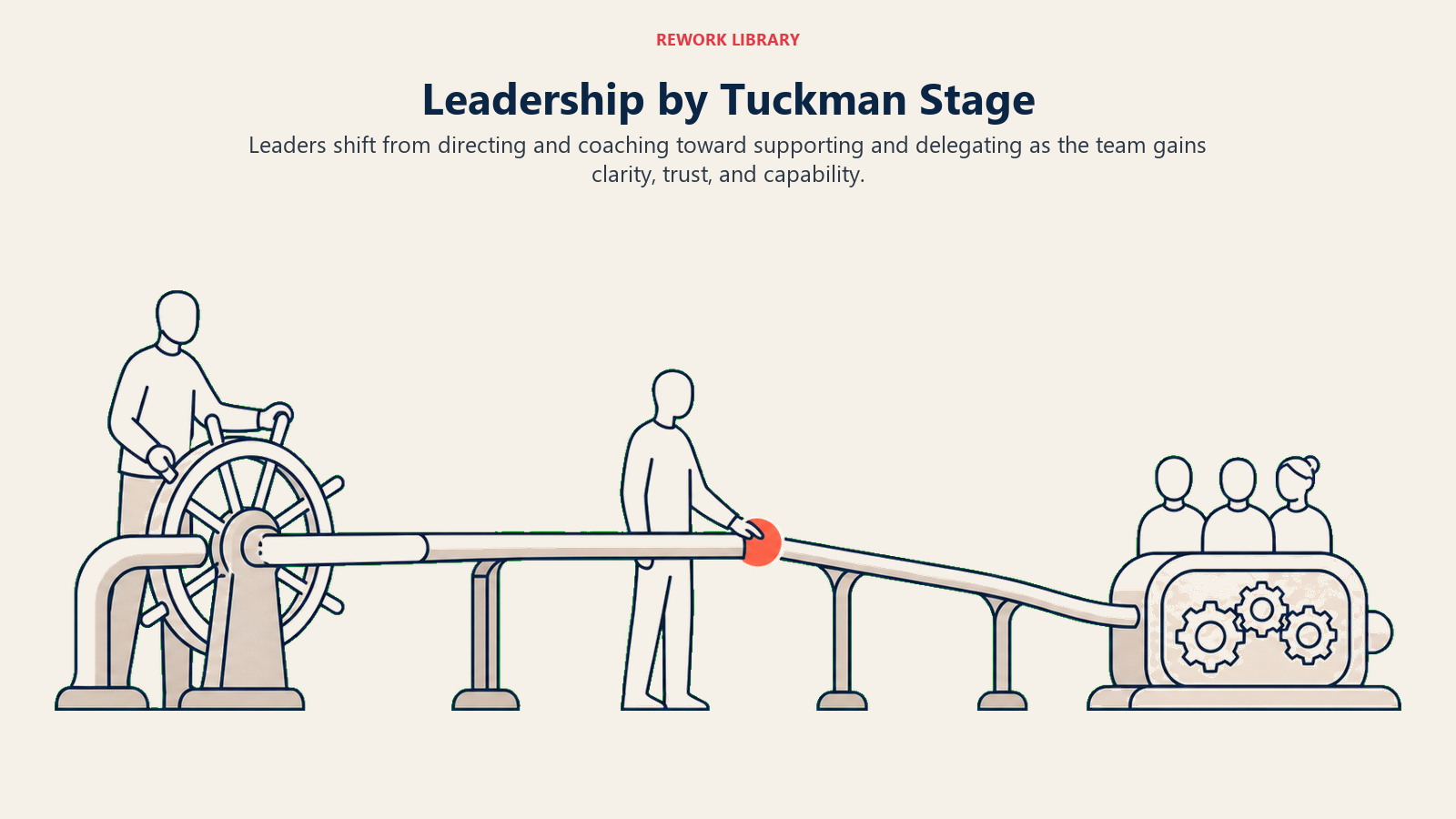
El mayor error de liderazgo con Tuckman es aplicar el mismo estilo en todas las etapas. Un líder que delega en el Forming deja al equipo a la deriva. Uno que dirige en el Performing destruye la iniciativa. El modelo encaja de manera natural con la teoría del liderazgo situacional, que sostiene que los líderes efectivos adaptan su estilo a la disposición de desarrollo del equipo.
Así se alinean los comportamientos:
Forming: Dirigir. Alto comportamiento orientado a la tarea, bajo comportamiento orientado a la relación. Definir los objetivos, asignar roles y establecer normas. El equipo necesita claridad más que autonomía en este punto.
Storming: Orientar (Coaching). Alto comportamiento orientado a la tarea, alto comportamiento orientado a la relación. Mantener el trabajo avanzando mientras se gestionan activamente las dinámicas emocionales. Las reuniones individuales importan aquí. También lo hace nombrar el desacuerdo real en lugar de dejarlo enconarse.
Norming: Apoyar. Bajo comportamiento orientado a la tarea, alto comportamiento orientado a la relación. El equipo tiene su base. La tarea del líder es reforzar los buenos patrones, no tomar el control. Aquí es donde la construcción de confianza se acumula.
Performing: Delegar. Bajo comportamiento orientado a la tarea, bajo comportamiento orientado a la relación. Dar un paso atrás. El equipo se autogestiona. El valor del líder ahora proviene de la estrategia, el acceso a los recursos y la protección frente al ruido organizacional.
Adjourning: Celebrar. El líder pasa de la gestión del desempeño al reconocimiento y el cierre. Reconocer la contribución importa para la experiencia de cada miembro en la organización después de que el equipo se disuelve.
Estos estilos de liderazgo situacional no implican una categorización permanente de ninguna persona o equipo. Describen lo que la situación requiere en un momento específico.
Tuckman en equipos reales: 3 ejemplos
Un nuevo equipo de producto tras una reestructuración
Una empresa SaaS de mercado mediano reestructuró sus equipos de producto tras una adquisición y creó un equipo interfuncional de cinco personas que nunca habían trabajado juntas. Las primeras tres semanas parecían tranquilas. Pero en la cuarta semana, el líder de ingeniería y el product manager estaban en conflicto abierto sobre las prioridades del Sprint. El equipo había llegado al Storming. El VP de Producto cometió el error de intentar resolverlo añadiendo más estructura y supervisión. Lo que el equipo realmente necesitaba era una sesión facilitada donde ambas partes nombraran sus preocupaciones subyacentes: el ingeniero sentía que la deuda técnica no era visible en el Roadmap; el PM sentía que la presión de los plazos no se estaba considerando en las decisiones de arquitectura. Una conversación movió al equipo del Storming al inicio del Norming más rápido que dos meses de cambios de proceso desde arriba.
Un grupo de trabajo interfuncional
Una red sanitaria regional reunió un grupo de trabajo de directores de departamento para rediseñar el proceso de admisión de pacientes. El grupo llegó con opiniones individuales firmes y lealtades institucionales. El Storming comenzó antes de la segunda reunión. La coordinadora aprendió a utilizar el modelo de Tuckman de forma explícita: nombró la etapa en la que se encontraba el grupo durante una retrospectiva inicial y utilizó ese encuadre para despersonalizar el conflicto. Cuando un director de departamento se opuso agresivamente en la tercera sesión, ella hizo referencia al Storming por su nombre. El grupo se rio con reconocimiento. Ese único momento de realidad nombrada transformó la energía de defensiva a productiva en veinte minutos.
Un equipo de ingeniería remoto
Un equipo completamente distribuido de ocho ingenieros se unió a una startup en Serie B durante una expansión rápida. Dado que el equipo era remoto, las señales normales del Forming eran más difíciles de leer: nadie tenía el "ambiente" de la presencia física. El directivo extendió intencionalmente la fase de Forming con rituales de incorporación estructurados: revisiones de código en pareja en la primera semana, un documento de acuerdo de trabajo compartido en la segunda semana y normas explícitas para la comunicación asincrónica en la tercera semana. El Storming llegó igualmente, en forma de desacuerdos sobre los estándares de código. Pero tener ya un acuerdo de trabajo en vigor le dio al equipo un documento contra el que argumentar en lugar de argumentar entre sí. Alcanzaron el Norming dos meses más rápido que el equipo remoto anterior.
Cuando los equipos se quedan atascados (y cómo desatascarse)
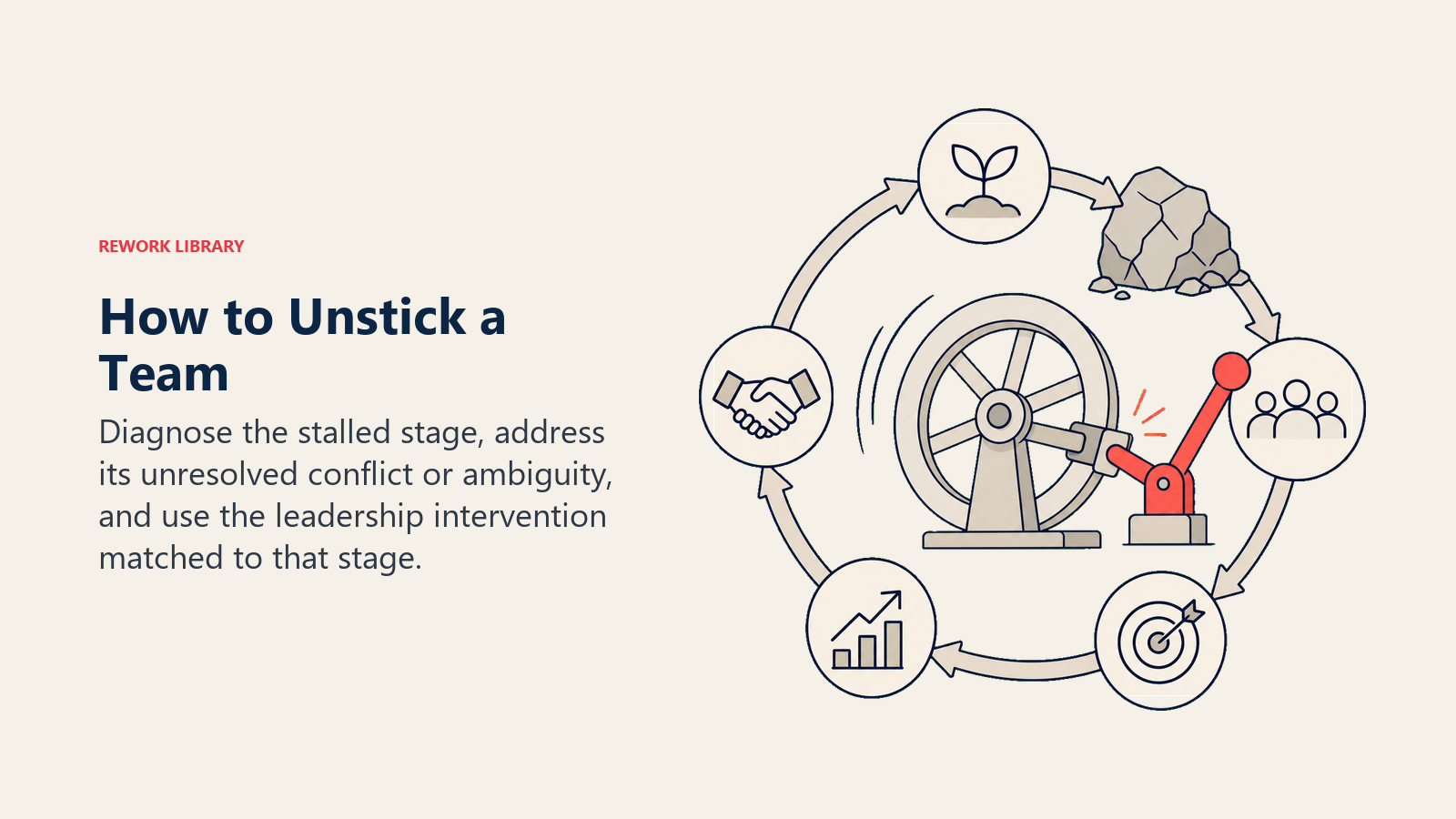
La mayoría de las disfunciones de los equipos no son aleatorias. Son equipos atascados en una etapa por la que deberían haber avanzado. A continuación se presentan las señales de advertencia y cómo responder.
Atascado en Forming:
- Síntomas: Preguntas persistentes sobre aspectos básicos, rechazo a actuar sin permiso explícito, ausencia de dinámicas entre pares
- Causa: Claridad insuficiente del líder, o un equipo que ha sido afectado por expectativas poco claras en el pasado
- Solución: Publicar un acuerdo de trabajo. Realizar un kickoff estructurado con roles, objetivos y derechos de toma de decisiones documentados explícitamente.
Atascado en Storming:
- Síntomas: Conflicto crónico, tensiones personales no resueltas, chismes como sustituto de la conversación directa, líder que pasa la mayor parte de su tiempo mediando
- Causa: El conflicto es real pero nadie lo nombra con claridad; o el líder está evitando el rol de mediador
- Solución: Nombrar el conflicto explícitamente. Realizar una retrospectiva estructurada. Aflorar el desacuerdo subyacente (generalmente sobre prioridades, propiedad o valores) y resolverlo con una decisión concreta en lugar de un compromiso vago.
Atascado en Norming:
- Síntomas: Acuerdo cortés que nunca se convierte en desafío honesto, buen ambiente pero resultados débiles, nadie dispuesto a cuestionar las ideas deficientes
- Causa: El equipo ha sobrecorregido desde el Storming y ahora prioriza la armonía sobre la verdad
- Solución: Introducir fricción constructiva a propósito. Asignar roles de abogado del diablo en las sesiones de planificación. Recompensar la disidencia cuando es sustancial. Crear un entorno seguro para ser la persona que dice "este plan no va a funcionar".
Atascado antes del Performing:
- Síntomas: El equipo es funcional pero nunca alcanza un alto nivel de producción, carece de apropiación, espera orientación incluso ante problemas familiares
- Causa: El líder no ha delegado lo suficiente, o el equipo no tiene el nivel de habilidad que el rol requiere
- Solución: Auditar dónde el líder sigue reteniendo decisiones que debería tomar el equipo. Transferir esas decisiones hacia abajo. Si las brechas de habilidades son la barrera, cerrarlas explícitamente.
Una verificación útil: si dedica la mayor parte de su energía de liderazgo semana tras semana al mismo tipo de problema, es probable que el equipo esté atascado en una etapa específica en lugar de enfrentarse a problemas puntuales.
Malentendidos comunes sobre el modelo de Tuckman
- Las etapas son siempre lineales. No lo son. Los equipos retroceden. Un cambio importante de personal, un fracaso clave en un proyecto o una transición de liderazgo pueden empujar a un equipo en Performing de vuelta al Storming. El modelo describe un arco de desarrollo, no una escalera mecánica de sentido único.
- Cada etapa tiene una duración fija. El tiempo varía enormemente según el tamaño del equipo, la complejidad, la historia y la calidad del liderazgo. Un equipo bien liderado puede pasar de Forming a Norming en semanas. Un equipo con conflictos heredados sin resolver puede permanecer en Storming durante trimestres.
- Añadir un nuevo miembro reinicia todo el ciclo. Reinicia aspectos del mismo. El equipo debe volver a formarse en torno al rol del nuevo miembro, lo que a menudo desencadena un mini-Storming antes de volver a estabilizarse. Por eso la incorporación es un desafío de liderazgo de equipo, no solo una tarea administrativa de recursos humanos.
- El Storming equivale a fracaso. Esta es probablemente la interpretación más perjudicial. El Storming es evidencia de que las personas se preocupan lo suficiente como para estar en desacuerdo. Un equipo que nunca experimenta Storming o bien recibe trabajo que no requiere colaboración real, o bien está suprimiendo un conflicto que surgirá más tarde a un costo mayor.
Estos malentendidos importan en la práctica. Un líder que espera un progreso lineal reaccionará en exceso ante el retroceso. Uno que espera un cronograma fijo empujará a los equipos por las etapas antes de que estén preparados, lo que casi siempre produce un Norming falso y un Performing atrofiado.
Cómo aplicar las etapas de Tuckman hoy (5 pasos prácticos)
Use esta secuencia cuando se una a un nuevo equipo o cuando herede uno a mitad del camino.
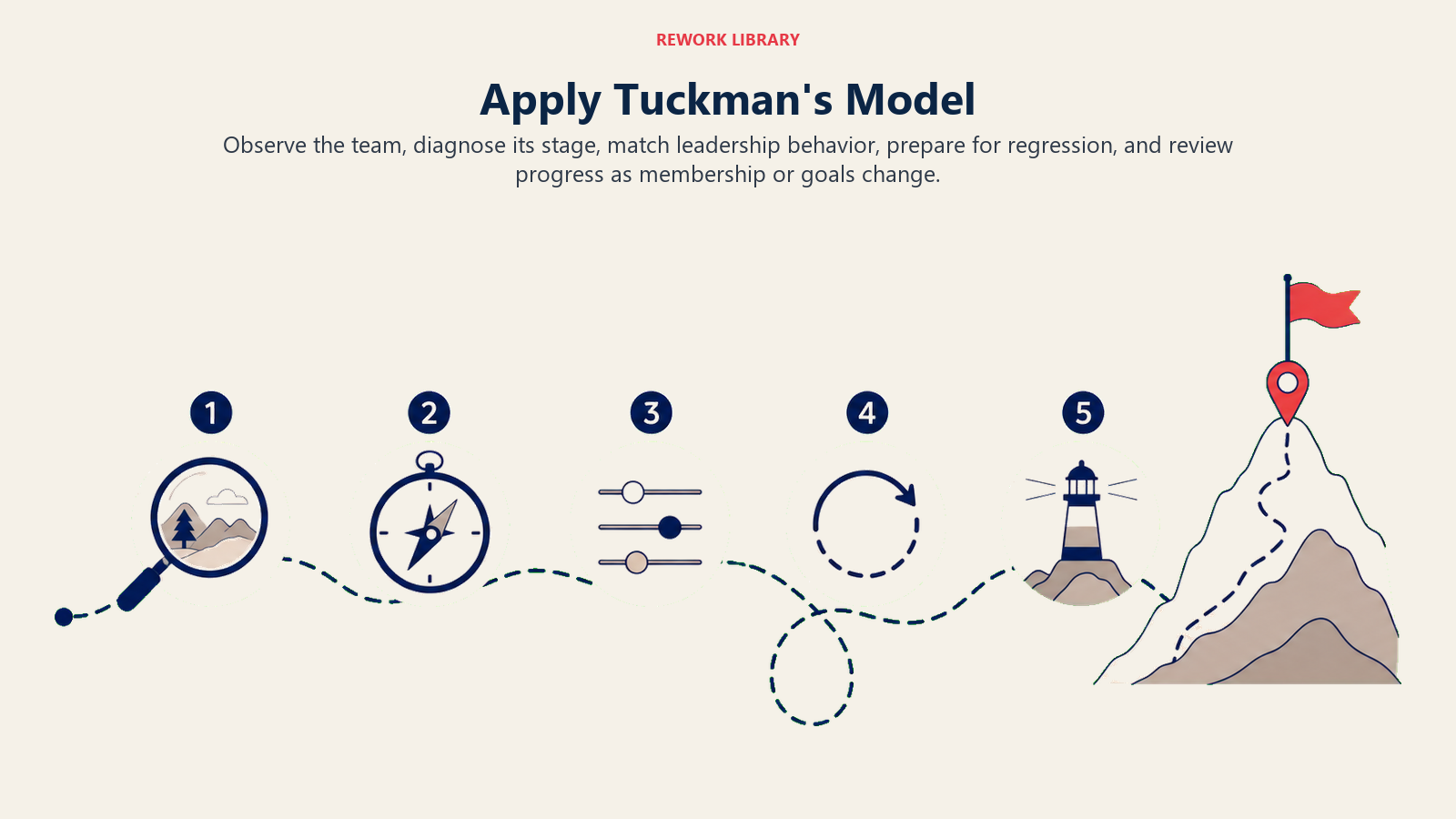
1. Diagnostique la etapa antes de actuar. Antes de hacer cualquier otra cosa, observe durante una o dos semanas. ¿Cuál es el patrón de conflicto? ¿A dónde va la energía? ¿Las personas dependen de usted para las pequeñas decisiones (Forming) o compiten en silencio entre sí (Storming)? Su prescripción de comportamiento depende de un diagnóstico preciso. Esto conecta con el conjunto de habilidades más amplio de liderazgo frente a gestión: los gestores optimizan el desempeño actual; los líderes desarrollan la capacidad del equipo con el tiempo.
2. Nombre el modelo explícitamente con el equipo. Tuckman es uno de los pocos marcos que ayuda a las personas a despersonalizar las dinámicas del grupo. Decir "estamos en Storming, lo cual es normal y necesario" cambia la relación del equipo con el conflicto. No es necesario organizar una sesión de formación. Una referencia de cinco minutos en una reunión de equipo suele ser suficiente para cambiar el encuadre.
3. Adapte su estilo de liderazgo a la etapa, no a su preferencia. La mayoría de los líderes tienen un estilo predeterminado: algunos prefieren dirigir, otros prefieren el coaching, otros prefieren delegar. El modelo de Tuckman es un mecanismo para anular ese predeterminado cuando la situación exige algo diferente. Use estilos de liderazgo clásicos como referencia para el conjunto de herramientas de comportamiento en todos los estilos.
4. Cree rituales específicos para cada etapa. El Forming se beneficia de una incorporación estructurada. El Storming se beneficia de retrospectivas periódicas con señales explícitas de seguridad psicológica. El Norming se beneficia de acuerdos de trabajo elaborados por el propio equipo. El Performing se beneficia de la autonomía y los desafíos estratégicos. El Adjourning se beneficia de eventos de cierre intencionales. El ritual en sí importa menos que la inversión deliberada en la etapa de desarrollo.
5. Audítese en busca de comportamientos bloqueadores. Los líderes suelen paralizar inadvertidamente a sus equipos. Un líder que centraliza las decisiones mantiene al equipo en Forming. Uno que evita el conflicto mantiene al equipo en Storming. Uno que microgestiona impide que el equipo llegue al Performing. Una autoevaluación periódica frente a los requisitos de cada etapa de Tuckman y los comportamientos esperados del líder es un hábito de liderazgo sencillo pero efectivo.
Comprender qué es el liderazgo en su esencia significa reconocer que su rol cambia a medida que el equipo madura. El marco de los 5 niveles de liderazgo captura una progresión similar: la autoridad importa al principio; el legado viene del desarrollo de los demás. Tuckman le muestra el cronograma de desarrollo con el que está trabajando. Para un encuadre del panorama completo de marcos de equipo y liderazgo, qué son las teorías del liderazgo ofrece un contexto útil.
Preguntas frecuentes sobre las etapas de desarrollo grupal de Tuckman
¿Son siempre lineales las etapas de Tuckman?
No. Las etapas describen un arco de desarrollo, no una secuencia garantizada. Los equipos pueden y efectivamente retroceden. Un cambio importante en la composición, un fracaso de alto riesgo o un cambio significativo en los objetivos puede empujar a un equipo hacia una etapa anterior. La regresión más común es del Norming de vuelta al Storming cuando un nuevo contratado de nivel senior se incorpora y cambia las dinámicas de poder del grupo. La implicación práctica: no asuma que un equipo que ha alcanzado el Performing se mantendrá ahí sin atención continua.
¿Cuánto tiempo dura cada etapa?
No hay una respuesta fija. La duración de la etapa depende del tamaño del equipo, la complejidad del trabajo, cuánto conflicto sin resolver lleva el equipo de experiencias pasadas, y la calidad del liderazgo a lo largo de cada fase. Los equipos bien liderados con miembros experimentados pueden pasar de Forming a Norming en cuatro a ocho semanas. Los equipos con conflictos heredados, objetivos poco claros o alta rotación de personal pueden permanecer en Storming durante seis meses o más. El modelo es descriptivo, no prescriptivo respecto al tiempo.
¿Qué ocurre cuando se incorpora un nuevo miembro?
El equipo se reinicia parcialmente. Como mínimo, vuelve a una versión del Forming a medida que incorpora a la nueva persona en sus roles, normas y patrones de comunicación. Si se produce un mini-Storming a continuación depende de cuán perturbadora sea la presencia del nuevo miembro para las dinámicas existentes, especialmente si llega con autoridad, un estilo de trabajo diferente o responsabilidad sobre una función antes perteneciente a otra persona. Los líderes inteligentes tratan la incorporación de nuevos miembros como una transición deliberada a nivel de equipo, no solo como una gestión administrativa individual de recursos humanos.
¿Es el Storming una señal de un mal equipo?
Todo lo contrario. Un equipo que nunca experimenta Storming o bien no está haciendo un trabajo que requiera interdependencia real, o bien está suprimiendo un conflicto que eventualmente aparecerá de formas más destructivas. El Storming es evidencia de que las personas están suficientemente involucradas como para estar en desacuerdo. Los equipos que se saltan el Storming visible y pasan directamente a una aparente armonía suelen tener tensiones subyacentes que emergen durante los momentos de alta presión, exactamente en el momento equivocado. El objetivo no es eliminar el Storming. Es atravesarlo de manera productiva, con el conflicto aflorado, abordado y resuelto en lugar de enterrado. Todo equipo que usted lidera se encuentra en algún punto de este modelo. La pregunta es si usted sabe dónde, y si está liderando con eso en mente. Los líderes que pueden leer las dinámicas de la etapa y adaptarse en consecuencia no son mejores personas. Están mejor informados. Esa es una brecha que vale la pena cerrar.

Senior Operations & Growth Strategist
On this page
- ¿Qué son las etapas de desarrollo grupal de Tuckman?
- Datos Clave
- Las 5 etapas explicadas
- Etapa 1: Forming (Formación)
- Etapa 2: Storming (Conflicto)
- Etapa 3: Norming (Normalización)
- Etapa 4: Performing (Desempeño)
- Etapa 5: Adjourning (Clausura)
- Comparación rápida: comportamiento, conflicto y productividad por etapa
- Cómo deben liderar los líderes en cada etapa (matriz de comportamiento)
- Tuckman en equipos reales: 3 ejemplos
- Cuando los equipos se quedan atascados (y cómo desatascarse)
- Malentendidos comunes sobre el modelo de Tuckman
- Cómo aplicar las etapas de Tuckman hoy (5 pasos prácticos)