Liderazgo de Marcapasos: Beneficios y Riesgos
Turn this article into takeaways for your work.


Each assistant summarizes the article only for you and suggests best practices for your work.
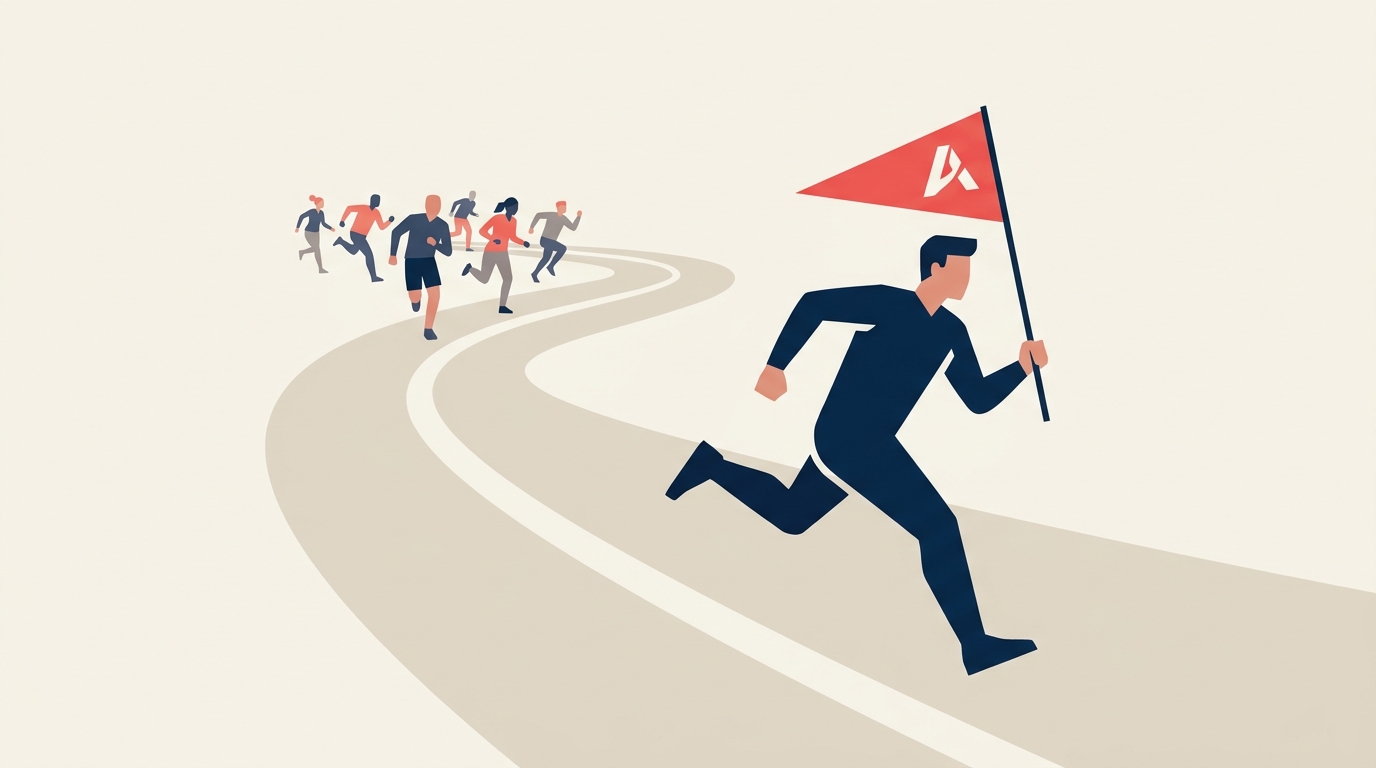
El liderazgo de marcapasos es uno de los estilos más seductores en el repertorio de cualquier directivo. Estándares elevados. Resultados rápidos. Un líder que modela con precisión lo que significa "excelencia". Pero también es el estilo que la investigación de Daniel Goleman identificó como el más propenso a deteriorar el clima de una organización cuando se usa en exceso.
Comprender cuándo el marcapasos ayuda y cuándo perjudica es una de las habilidades más prácticas que un directivo puede desarrollar.
¿Qué es el liderazgo de marcapasos?
El liderazgo de marcapasos es un estilo en el que el líder establece estándares de rendimiento excepcionalmente altos, los modela de forma personal y espera que el resto del equipo los alcance, de forma rápida y con orientación mínima. El foco está en la producción y la velocidad, no en el desarrollo ni en la explicación.
Es uno de los seis estilos de liderazgo emocional de Daniel Goleman, presentados en su célebre artículo de Harvard Business Review "El liderazgo que obtiene resultados" (2000). A diferencia del liderazgo de coaching, que desarrolla a las personas con el tiempo, el marcapasos se centra exclusivamente en conseguir que personas capacitadas rindan al máximo en este momento.
Términos clave: el marcapasos exige alto rendimiento desde el primer día, lidera con el ejemplo en lugar de con instrucciones, y tiene poca tolerancia hacia el bajo rendimiento o la necesidad de orientación constante.
Datos clave: liderazgo de marcapasos
- La investigación de Goleman encontró que el marcapasos tiene una correlación de -0,25 con el clima organizacional, siendo uno de los dos únicos estilos (junto al coercitivo) que obtienen una puntuación negativa. (Goleman, HBR "Leadership That Gets Results", 2000)
- El estilo de liderazgo representa hasta el 30% de la rentabilidad neta de una empresa, según el mismo estudio de Goleman. (Goleman, HBR, 2000)
- El 71% de los mandos intermedios en Estados Unidos declara sentirse agotado, más que cualquier otro grupo de trabajadores, lo que sugiere que la presión sostenida de alto rendimiento tiene un coste elevado en quienes están más cercanos a la ejecución. (High5Test Leadership Burnout Report, 2024)
Características de los líderes de marcapasos
Los líderes de marcapasos comparten un conjunto de comportamientos reconocibles. No son difíciles de identificar.
Estándares personales elevados. El líder de marcapasos no solo exige trabajo de calidad: lo produce de forma constante y en primera persona. Con frecuencia es el primero en llegar, el último en salir y quien detecta el error que todos los demás pasaron por alto. Ese es el listón que establece con el ejemplo.
Orientación a resultados ante todo. Los plazos importan más que el proceso. El producto importa más que el esfuerzo. Un marcapasos quiere ver el marcador, y quiere que se mueva en la dirección correcta y con rapidez.
Baja tolerancia al bajo rendimiento. Aquí es donde el marcapasos puede volverse en contra. El líder no dedica mucho tiempo a analizar por qué algo salió mal o cómo corregirlo la próxima vez. Espera que las personas lo resuelvan por sí mismas. Si un miembro del equipo no puede seguir el ritmo, el marcapasos suele intervenir y hacer el trabajo él mismo en lugar de guiar a la persona a través del problema.
Liderazgo a través del modelo. Las instrucciones son mínimas porque la demostración es el método preferido. El mensaje, expresado o implícito, es: "Observe lo que hago. Haga eso."
Urgencia por encima de la explicación. Los líderes de marcapasos frecuentemente omiten el contexto porque asumen que las personas competentes no lo necesitan. Esa suposición suele ser incorrecta.
Beneficios del liderazgo de marcapasos: cuándo funciona mejor
Existen situaciones reales en las que el marcapasos es exactamente la decisión correcta. La palabra clave es "situaciones". Este estilo funciona cuando las condiciones se alinean, no como modo de operación predeterminado.
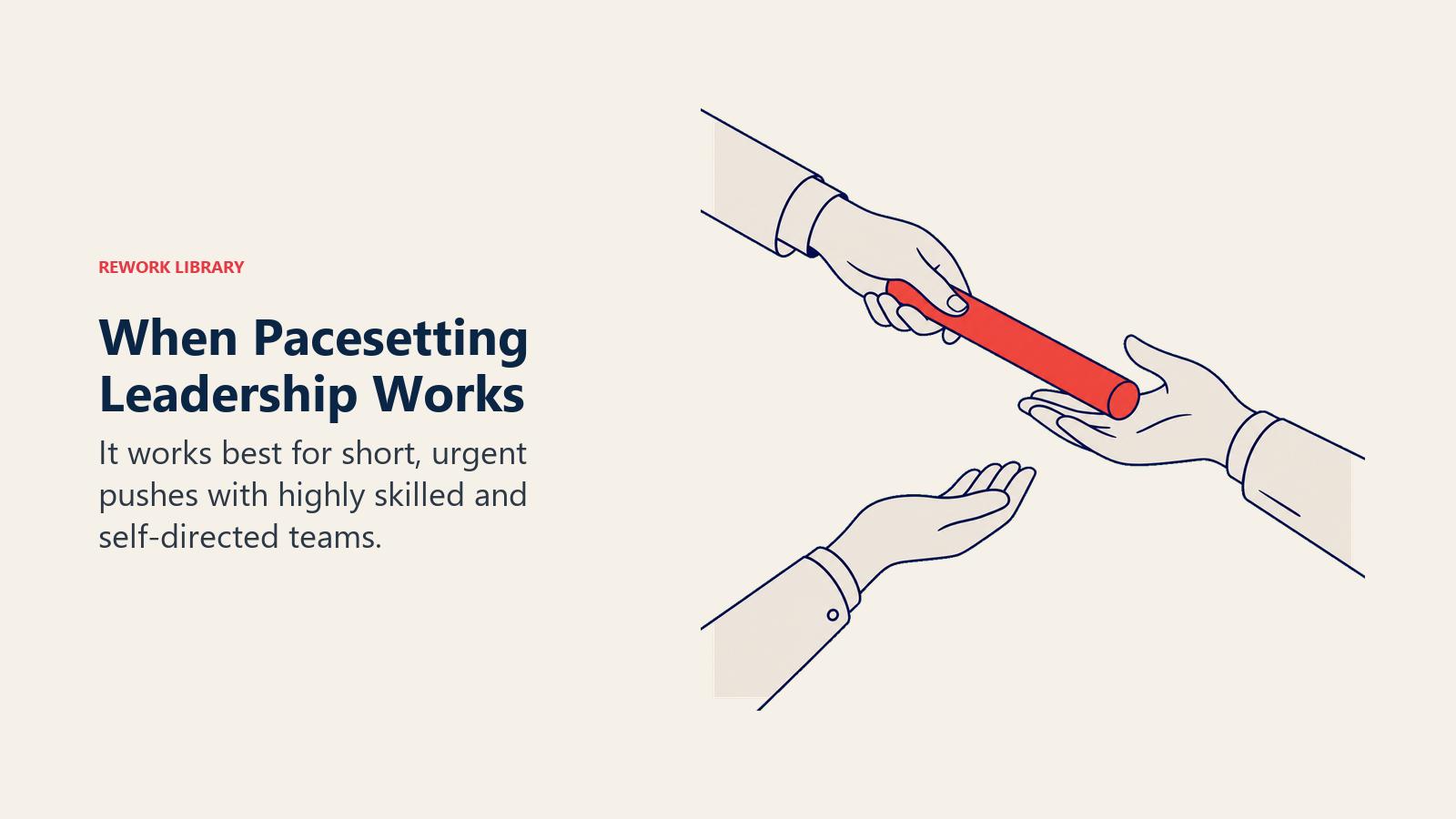
Equipos altamente cualificados y automotivados. Si todos en el equipo ya saben lo que significa la excelencia y genuinamente quieren producirla, un marcapasos puede encender la chispa sin quemar a nadie. Piense en un equipo de software sénior que lanza una versión crítica de un producto. No necesita orientación constante. Necesita a alguien que modele la urgencia y eleve la energía.
Sprints cortos y momentos de crisis. Cuando las apuestas son altas y el tiempo es escaso, como en un lanzamiento de producto, un cierre trimestral o una propuesta competitiva, el marcapasos aporta la velocidad necesaria. Es sostenible durante una semana. No lo es durante un trimestre.
Expertos que han superado sus retos actuales. Un analista con talento que se ha aburrido necesita a alguien que eleve el techo, no que lo baje. El marcapasos puede volver a involucrar a los colaboradores de alto rendimiento que se sienten poco desafiados por el ritmo actual.
Cuando los resultados son la única métrica que importa ahora mismo. A veces, la supervivencia de una organización depende de los números, no de la moral. Una situación de recuperación, una auditoría de alto riesgo, una propuesta decisiva. En esas ventanas, el marcapasos produce resultados.
Riesgos y desventajas
Aquí es donde la mayoría de los directivos subestiman el estilo. El marcapasos parece eficaz porque se ven resultados de inmediato. Lo que no se ve de inmediato es lo que se está erosionando por debajo.
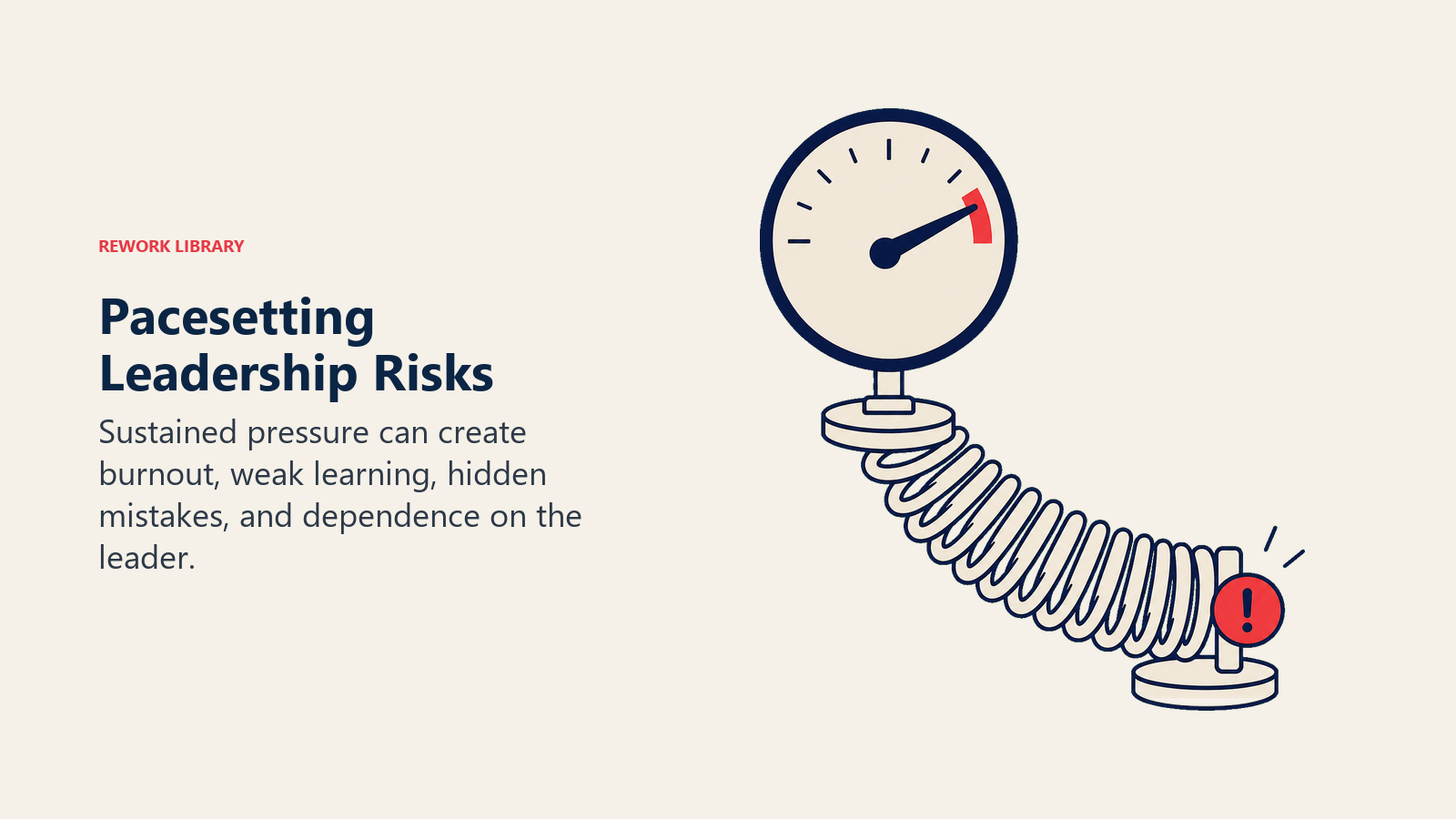
El agotamiento se propaga rápido. Los entornos de alta presión sostenida agotan a las personas, incluso a las buenas. Cuando el líder impone un ritmo poco realista y nunca da tregua, los miembros del equipo chocan contra una pared. Y cuando lo hacen, con frecuencia se marchan. El 45% de los empleados agotados está buscando activamente otro empleo, frente al 16% de los que no están agotados.
La moral cae en silencio. Los equipos bajo un marcapasos crónico suelen dejar de plantear problemas, dejar de proponer mejoras y dejar de sentir que son dueños de los resultados. El trabajo se vuelve transaccional: llegar, producir, irse. Eso supone una pérdida de productividad a largo plazo que no aparece en los números del trimestre actual.
El desarrollo se detiene. Los líderes de marcapasos raramente realizan coaching, explican o desarrollan la capacidad de los demás. Por eso, aunque el equipo pueda rendir bien hoy, no está creciendo. Cuando el marcapasos se marcha, o cuando el contexto cambia, el equipo suele tener dificultades.
La microgestión se cuela. Cuando un miembro del equipo no puede seguir el ritmo, el instinto del marcapasos es asumir la tarea en lugar de desarrollar a la persona. Eso genera dependencia, no competencia.
Lo "excelente" se convierte en enemigo de lo "suficientemente bueno". No todas las entregas deben ser excepcionales. Un marcapasos que aplica sus estándares de forma uniforme crea cuellos de botella, ciclos de revisión y compañeros frustrados que nunca saben cuándo algo está "terminado".
Goleman fue directo al respecto: "Nuestros datos muestran que, más a menudo que no, el marcapasos envenena el clima." No es una advertencia sobre los malos líderes de marcapasos. Es una advertencia sobre los buenos que no saben cuándo cambiar de marcha.
Liderazgo de marcapasos vs. liderazgo de coaching
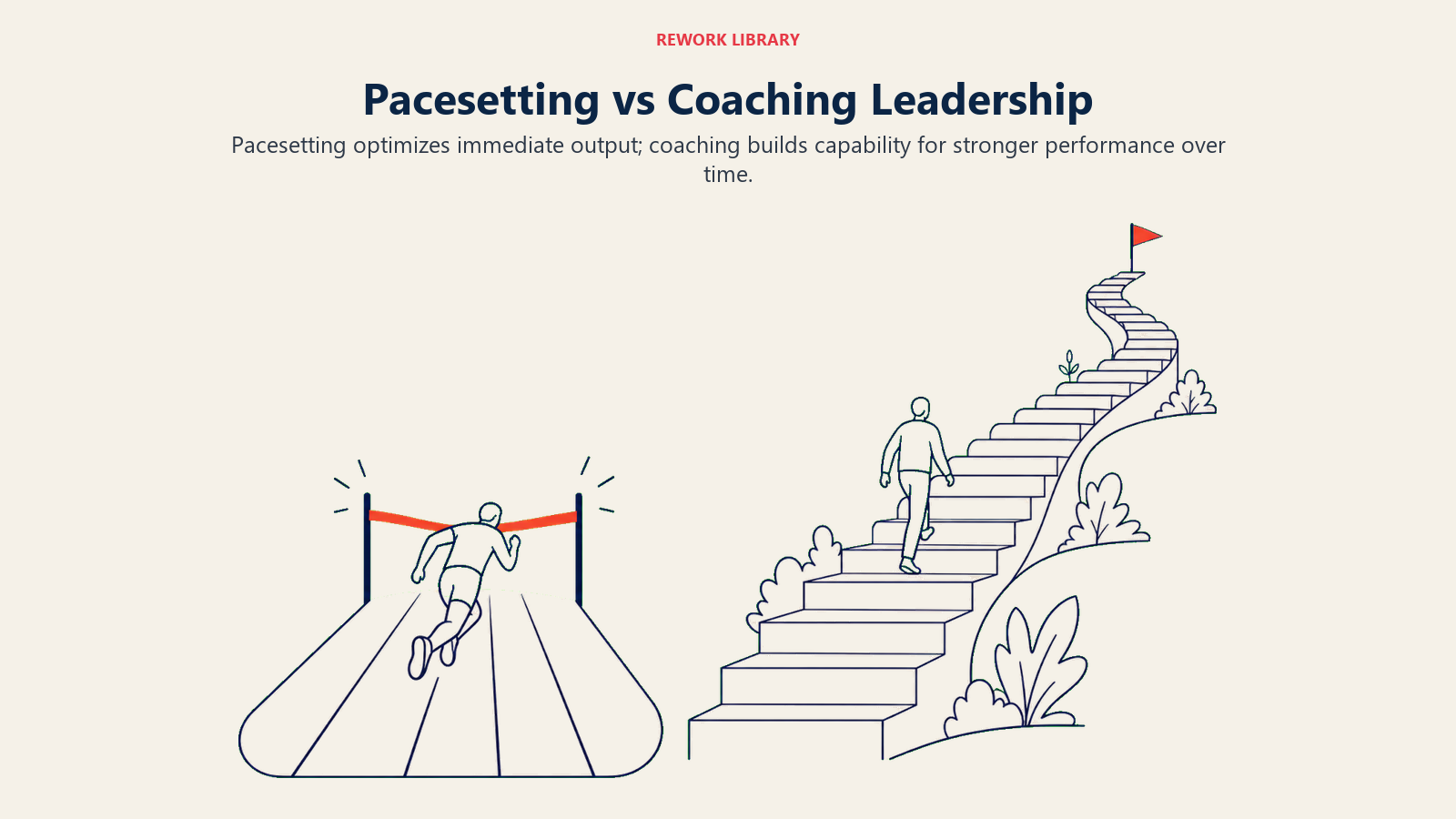
Estos dos estilos se sitúan en extremos opuestos del espectro en cuanto a cómo afectan a los equipos con el tiempo.
| Dimensión | Marcapasos | Coaching |
|---|---|---|
| Horizonte temporal | Resultados a corto plazo | Desarrollo a largo plazo |
| Estilo de comunicación | Directivo, por el ejemplo | Interrogativo, exploratorio |
| Efecto en el equipo | Alto rendimiento ahora, posible agotamiento después | Más lento al inicio, mayor capacidad con el tiempo |
| Enfoque de retroalimentación | Correctivo, centrado en el rendimiento | De desarrollo, centrado en el crecimiento |
| Más adecuado para | Equipos cualificados, crisis, sprints rápidos | Desarrollar talento, construir capacidad |
| Impacto en el clima | Con frecuencia negativo si se mantiene | Consistentemente positivo |
| Suposición del líder | "Ya sabe cómo hacerlo" | "Puede aprender y crecer" |
Un directivo que puede moverse con fluidez entre estos dos estilos, aplicando el marcapasos cuando la situación exige velocidad y el coaching cuando exige desarrollo, superará a quien adopta un modo por defecto. Consulte el artículo sobre estilo de liderazgo de coaching para conocer más sobre el enfoque complementario.
Cómo usar bien el liderazgo de marcapasos
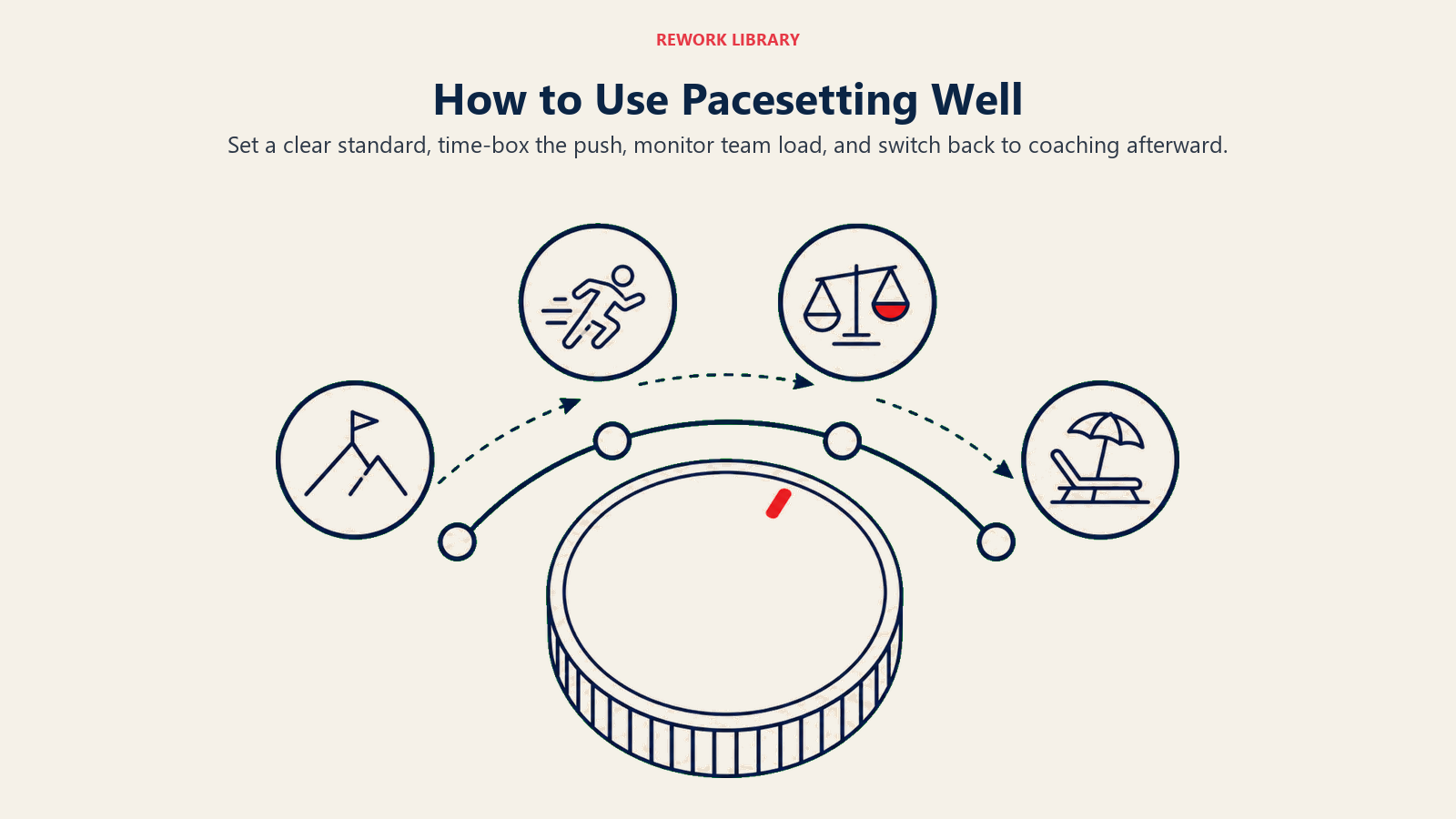
El marcapasos no es un estilo que deba abandonarse. Es un estilo que debe desplegarse con cuidado. A continuación se explica cómo hacerlo.
Paso 1: Adapte el estilo a la preparación del equipo
Antes de imponer un ritmo elevado, evalúe a su equipo. ¿Son las personas altamente cualificadas en esta tarea concreta? ¿Son autónomas? ¿Tienen el contexto que necesitan para tener éxito sin explicaciones constantes? Si la respuesta a alguna de esas preguntas es no, el marcapasos generará frustración, no resultados. Comience con el liderazgo visionario o el coaching para construir primero esa preparación.
Paso 2: Defina estándares claros antes de imponer el ritmo
El error más común del marcapasos es subir el listón sin explicar dónde está ese listón. Antes de exigir velocidad, defina qué significa "excelente" en la práctica. Un breve documento de estándares, un ejemplo resuelto, una rúbrica clara: cualquier cosa que haga que las expectativas sean concretas en lugar de supuestas.
Paso 3: Aplíquelo en sprints, no en maratones
Delimite temporalmente su modo de marcapasos. Dos semanas de producción intensa seguidas de un período de recuperación y reflexión son sostenibles. Seis meses de presión continua no lo son. Sea explícito con el equipo: "Estamos en modo sprint hasta fin de mes; después reduciremos el ritmo y haremos una retrospectiva."
Paso 4: Combine con coaching antes y después
El marcapasos funciona mejor cuando está enmarcado. Antes del sprint, invierta en conversaciones de coaching para reforzar la confianza y cubrir las brechas de habilidades. Después del sprint, realice retrospectivas honestas. Pregunte qué encontró difícil el equipo, qué haría de manera diferente y qué necesita para crecer. Eso indica que los ve como personas en desarrollo, no solo como máquinas de producción.
Paso 5: Observe las señales tempranas de agotamiento
Haga preguntas directas, no revisiones vagas. "¿Está usted demasiado sobrecargado ahora mismo?" llega mejor que "¿Cómo está?" Haga seguimiento de las tasas de error, el absentismo y la retirada de las reuniones. Si un miembro del equipo que antes estaba comprometido se vuelve callado, esa es una señal que vale la pena investigar antes de que la persona se marche.
Ejemplos de liderazgo de marcapasos
Ver el estilo en contexto aclara mejor las compensaciones.
| Contexto | Cómo se ve el marcapasos | Resultado |
|---|---|---|
| Startup antes del lanzamiento | El fundador programa junto a los ingenieros y espera un ritmo de entregas diario | MVP rápido, alta energía del equipo durante 3-4 meses, riesgo de rotación después |
| Cierre de trimestre de ventas | VP dirige llamadas personalmente con los representantes y eleva el estándar de close rate | Close rate sólido, los representantes sienten la presión pero entregan |
| Semana de propuesta en agencia | El director creativo rediseña trabajos que no alcanzan el nivel y espera una calidad equivalente | Se gana la propuesta, se desmoraliza a los diseñadores júnior que se sienten sin apoyo |
| Equipo experto con bajo compromiso | El nuevo directivo eleva las expectativas de producción y modela trabajo de alta calidad | Reinvolucra a los colaboradores de alto rendimiento, filtra a quienes ya se habían desconectado |
| Equipo con falta de personal en crisis | El directivo asume tareas directamente y eleva el ritmo en todo el equipo | Cobertura a corto plazo, resentimiento y desgaste a largo plazo |
El patrón es consistente. El marcapasos obtiene resultados a corto plazo. Si es sostenible depende de la capacidad inicial del equipo y de cuánto tiempo dura el ritmo elevado.
Como contraste, el liderazgo afiliativo prioriza los vínculos emocionales y la armonía del equipo, un contrapeso útil cuando su fase de marcapasos ha dejado al equipo agotado. Y para un enfoque estratégico a más largo plazo, el liderazgo visionario da a las personas dirección y significado en lugar de solo velocidad.
Mejores prácticas
Haga:
- Reserve el marcapasos para equipos cualificados y motivados
- Defina los estándares con claridad antes de acelerar el ritmo
- Delimite temporalmente los períodos de alta intensidad de forma explícita
- Combine con coaching para construir capacidad sostenible
- Consulte directamente la carga de trabajo y la moral del equipo
No haga:
- Aplicar el marcapasos como su estilo predeterminado en todas las situaciones
- Asumir que su equipo sabe lo que significa "excelente" sin mostrárselo
- Intervenir y hacer el trabajo usted mismo cuando alguien tiene dificultades: haga coaching en su lugar
- Ignorar las señales tempranas de agotamiento porque los números parecen buenos
- Usar el marcapasos como sustituto de dar retroalimentación de desarrollo
La Blake-Mouton Managerial Grid ofrece otro marco para entender esta compensación: los líderes de marcapasos suelen situarse con una orientación alta hacia las tareas y baja hacia las personas, lo que puede funcionar en sprints pero presenta dificultades en el largo plazo. El marco de los 5 Niveles de Liderazgo también recuerda que los líderes que construyen una influencia duradera lo hacen desarrollando a las personas, no solo impulsando la producción.
Si le interesa saber cuándo los enfoques directivos sí funcionan, el artículo sobre liderazgo autocrático aborda un estilo relacionado, centrado en el control y las decisiones rápidas en entornos de alto riesgo.
Preguntas frecuentes
¿Cuál es la diferencia principal entre el liderazgo de marcapasos y el liderazgo de coaching?
El marcapasos se centra en el rendimiento ahora. El líder establece estándares elevados y espera que las personas los cumplan, con explicaciones mínimas o apoyo al desarrollo. El coaching se centra en la capacidad a lo largo del tiempo. El líder hace preguntas, ofrece retroalimentación de desarrollo y se preocupa por dónde estará la persona en 6 o 12 meses. Ambos tienen valor real, pero sirven a objetivos diferentes.
¿Cuándo debería un líder evitar el estilo de marcapasos?
Evite el marcapasos cuando su equipo carece de experiencia o confianza en la tarea en cuestión, cuando la moral ya es baja, cuando las personas necesitan contexto y explicaciones para tener éxito, o cuando ya se opera a alta intensidad durante un período prolongado. En esas condiciones, el marcapasos acelera exactamente los problemas que se intenta evitar.
¿Puede el liderazgo de marcapasos causar agotamiento?
Sí, y la investigación lo respalda. Las expectativas de alta presión sostenidas, sin un desarrollo, recuperación o retroalimentación adecuados, llevan incluso a los colaboradores de alto rendimiento hacia el agotamiento. Y una vez que los empleados agotados comienzan a buscar la salida, casi tres veces más lo hacen en comparación con sus pares que no están agotados.
¿Es siempre negativo el liderazgo de marcapasos para el clima del equipo?
No siempre. En períodos cortos, con el equipo adecuado, el marcapasos puede elevar la energía y el enfoque. Los datos de Goleman muestran que los efectos negativos en el clima provienen del uso sostenido o mal dirigido del estilo. Usado de forma selectiva, puede ser la chispa que un equipo cualificado necesita.
¿Cómo sé si soy un líder de marcapasos?
Pregúntese: ¿Con frecuencia hago el trabajo yo mismo cuando alguien no cumple mis estándares? ¿Siento impaciencia al explicar cosas que me parecen obvias? ¿Asumo que las personas competentes no necesitan mucha orientación? ¿Los miembros de mi equipo parecen estresados o desconectados a pesar de alcanzar sus números? Si varias de esas preguntas le resultan familiares, el marcapasos es probablemente su estilo por defecto, y eso merece reflexión.
El liderazgo de marcapasos tiene un lugar real en el repertorio de cualquier líder. El problema no es el estilo en sí, sino aplicarlo como modo predeterminado en lugar de como una elección deliberada. Los líderes que lo usan bien saben exactamente cuándo pisar el acelerador y, con la misma importancia, cuándo reducir la velocidad e invertir en las personas que los rodean.

Senior Operations & Growth Strategist
On this page
- ¿Qué es el liderazgo de marcapasos?
- Características de los líderes de marcapasos
- Beneficios del liderazgo de marcapasos: cuándo funciona mejor
- Riesgos y desventajas
- Liderazgo de marcapasos vs. liderazgo de coaching
- Cómo usar bien el liderazgo de marcapasos
- Paso 1: Adapte el estilo a la preparación del equipo
- Paso 2: Defina estándares claros antes de imponer el ritmo
- Paso 3: Aplíquelo en sprints, no en maratones
- Paso 4: Combine con coaching antes y después
- Paso 5: Observe las señales tempranas de agotamiento
- Ejemplos de liderazgo de marcapasos
- Mejores prácticas