Teoría de la equidad de Adams sobre la motivación
Turn this article into takeaways for your work.


Each assistant summarizes the article only for you and suggests best practices for your work.
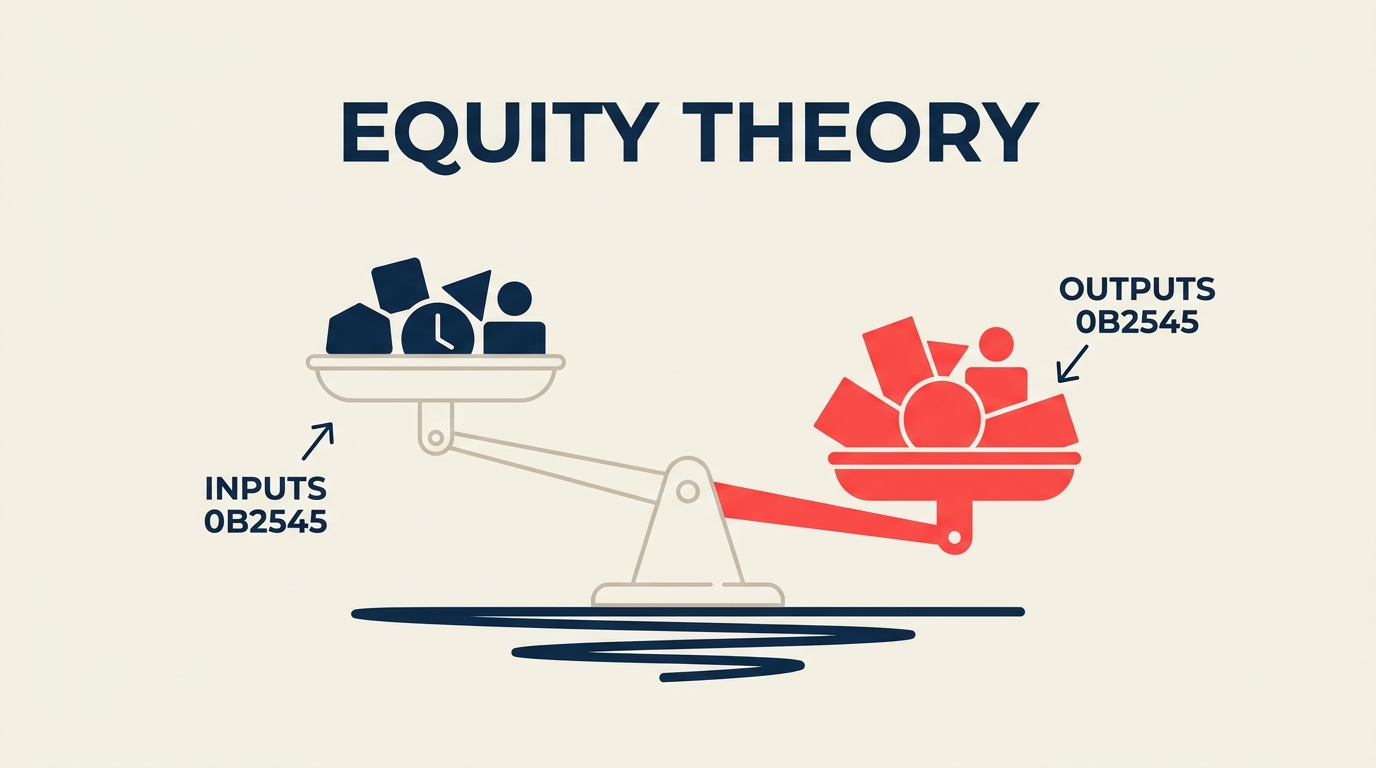
La teoría de la equidad es uno de los marcos más infrautilizados en la gestión de personas, y explica algo que los modelos puramente basados en recompensas pasan por alto: las personas no están motivadas solo por lo que reciben, sino por si lo reciben de manera justa. John Stacey Adams propuso en 1963 que los empleados comparan constantemente lo que aportan a su trabajo con lo que obtienen a cambio, y luego comparan esa proporción con la misma proporción de otra persona. Cuando esas proporciones se perciben equilibradas, las personas están motivadas para mantener el esfuerzo. Cuando no lo están, la motivación se deteriora, y no siempre de la manera que los líderes esperan.
¿Qué es la teoría de la equidad?
La teoría de la equidad, desarrollada por el psicólogo John Stacey Adams y publicada en 1963 y ampliada en 1965, es una teoría de la motivación basada en una observación central: las personas están poderosamente impulsadas por la justicia percibida. Específicamente, comparan su propia proporción aporte-resultado con la de un referente (un colega, un par en otra empresa o una norma del sector). Cuando las proporciones coinciden, perciben un trato equitativo y se mantienen comprometidas. Cuando no coinciden, experimentan inequidad y toman medidas para restablecer el equilibrio, incluso si esas medidas les perjudican a ellas o a la organización.
La teoría se sitúa dentro de una familia de modelos de motivación laboral junto a la teoría de las expectativas de Vroom, la teoría de los dos factores de Herzberg y la jerarquía de necesidades de Maslow. Lo que distingue el modelo de Adams es su fundamento relacional y comparativo. La motivación no depende solo de lo que usted tiene, sino de lo que tiene en relación con otra persona.
Datos clave
- John Stacey Adams presentó por primera vez la teoría de la equidad en su capítulo de 1963 "Toward an Understanding of Inequity" (Journal of Abnormal and Social Psychology) y la desarrolló en "Inequity in Social Exchange" (1965).
- Los informes State of the Global Workplace de Gallup encuentran de manera consistente que menos de un tercio de los empleados en todo el mundo se sienten comprometidos con su trabajo, siendo la percepción de injusticia en el reconocimiento y la compensación uno de los principales impulsores de la desconexión activa (Gallup, 2023).
- La investigación de Greenberg (1990) sobre "el robo como reacción a la inequidad por subpago" demostró que los empleados que percibían su salario como injusto aumentaban significativamente los hurtos a la organización en comparación con los grupos de control, ilustrando que las respuestas a la inequidad son conductuales, no solo actitudinales (Greenberg, Journal of Applied Psychology, 1990).
- Una formulación memorable de Adams (1965): "Una persona en una relación de intercambio esperará que las recompensas del intercambio sean proporcionales a sus inversiones en él." Ese instinto de proporcionalidad, argumentaba, es universal y persistentemente racional.
Aportes, resultados y la comparación
Cada empleado en cada rol lleva a cabo implícitamente un cálculo. Sopesa lo que aporta frente a lo que recibe, y compara esa fracción con la misma fracción de alguien que considera comparable.
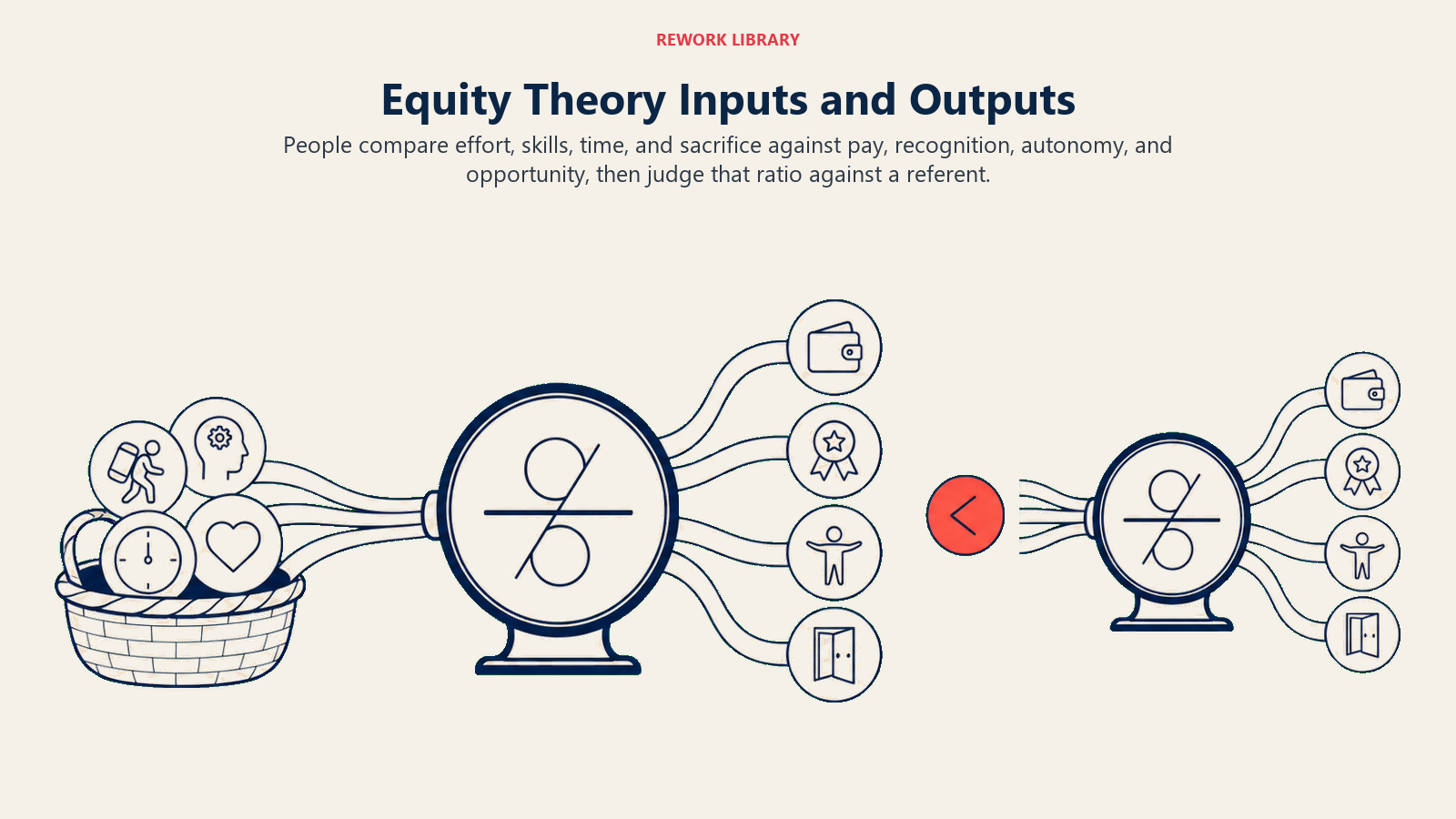
Los aportes son todo lo que una persona trae a su rol:
- Esfuerzo y tiempo invertidos
- Habilidades, calificaciones y experiencia
- Lealtad y antigüedad
- Sacrificio personal (desplazamiento, horas extra, viajes)
- Creatividad y resolución de problemas
- Trabajo emocional y contribución social
Los resultados (también llamados outputs) son todo lo que recibe a cambio:
- Salario, bonificaciones y beneficios
- Seguridad y estabilidad laboral
- Reconocimiento y estatus
- Posibilidades de promoción y desarrollo profesional
- Autonomía y trabajo interesante
- Sentido de logro y propósito
El referente es el punto de comparación. Puede ser un colega directo, un par en otro departamento, alguien del mismo sector en una empresa diferente o incluso la persona en su cargo anterior. Las personas eligen sus propios referentes, y los líderes a menudo no saben con quién se comparan los miembros de su equipo.
| Ejemplos de aportes | Ejemplos de resultados |
|---|---|
| Horas trabajadas, incluidas las horas extra no remuneradas | Salario base y bonificaciones |
| Formación académica y certificaciones | Beneficios: salud, pensión, vacaciones |
| Años de experiencia y antigüedad | Reconocimiento de la dirección |
| Compromiso con la cultura de la empresa | Promoción y desarrollo profesional |
| Iniciativa más allá de la descripción del cargo | Proyectos interesantes de alto impacto |
| Energía emocional en la gestión de clientes | Autonomía y poder de decisión |
La comparación no es una aritmética precisa. Es una sensación de equilibrio. Dos personas pueden contemplar proporciones objetivamente idénticas y llegar a veredictos completamente diferentes sobre la justicia, dependiendo de lo que valoran, quién es su referente elegido y lo que creen que son los aportes reales de ese referente. Esa brecha perceptual es lo que hace a la teoría de la equidad a la vez realista y difícil de gestionar.
Cómo responden las personas a la inequidad
Cuando alguien percibe un desequilibrio, rara vez lo tolera en silencio. Adams identificó seis respuestas conductuales y cognitivas que las personas utilizan para restablecer una sensación de equidad. Por lo general, intentan primero la opción menos costosa.
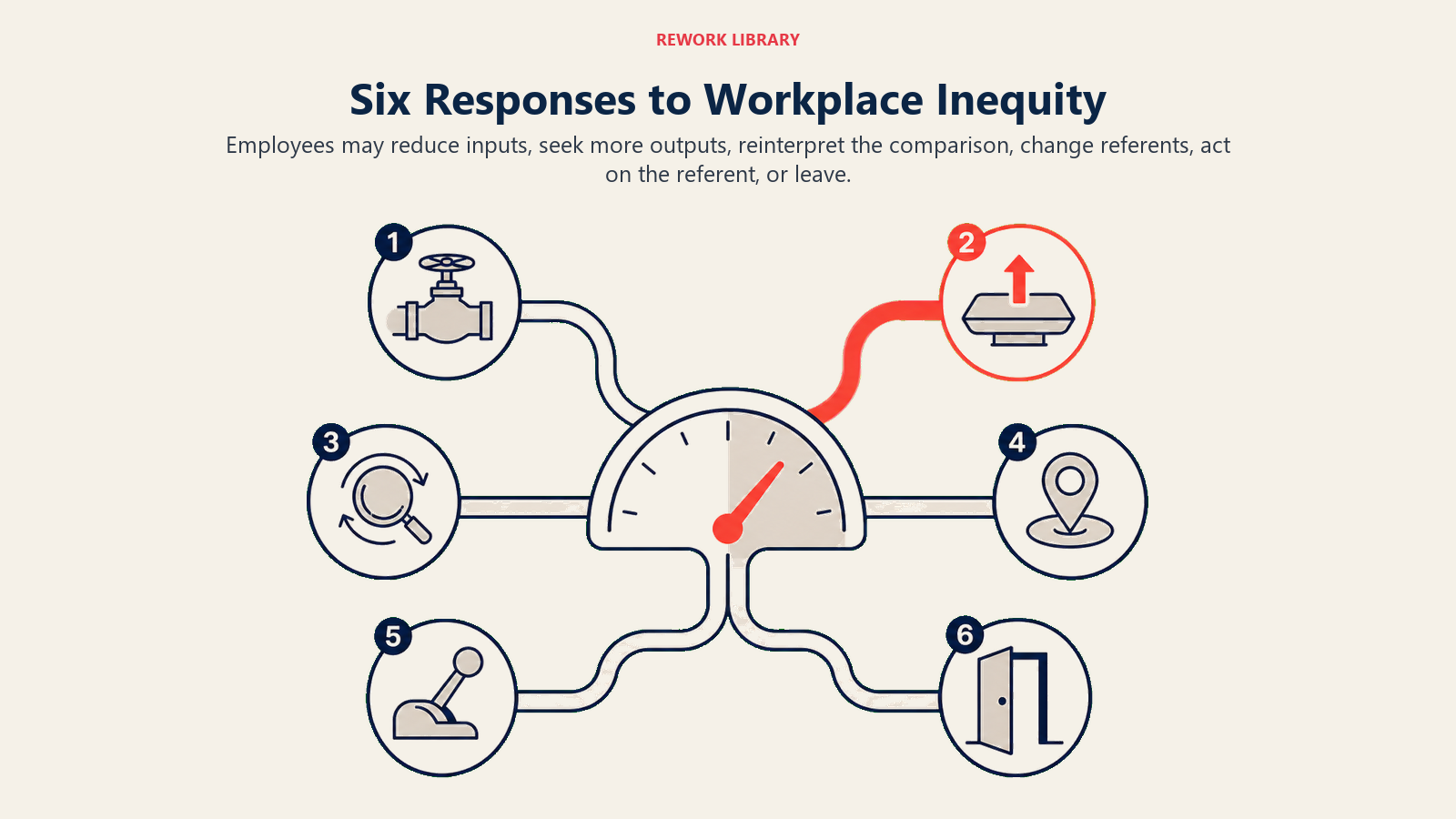
Cuando una persona se siente subcompensada (su proporción es peor que la del referente):
- Reducir aportes: esforzarse menos, tomarse más tiempo en las tareas, reducir la iniciativa. Esta es la respuesta más común y la más difícil de detectar tempranamente para los gestores.
- Buscar mayores resultados: pedir un aumento, presionar por una promoción, negociar mejores condiciones.
- Distorsionar la percepción de uno mismo: reencuadrar los propios aportes a la baja ("quizás no soy tan competente como creía") o los del referente al alza ("probablemente trabaja más de lo que parece").
- Cambiar el referente: dejar de compararse con el par percibido como más favorecido y encontrar un nuevo punto de referencia más bajo.
- Actuar sobre el referente: intentar reducir los resultados del referente o aumentar sus aportes ("voy a dejar de cubrirle las espaldas").
- Abandonar el campo: salir del rol, del equipo o de la organización por completo.
Cuando una persona se siente sobrecompensada (su proporción es mejor que la del referente):
La inequidad por sobrecompensación es real, pero está menos estudiada porque resulta psicológicamente incómodo reconocerla. Las personas que la experimentan tienden a aumentar sus aportes (trabajar más para justificar el resultado), a racionalizar la diferencia ("aporto cosas a este rol que no son visibles") o a reducir la importancia de la comparación por completo. Rara vez devuelven resultados de manera voluntaria.
La implicación práctica: la percepción de subcompensación es un problema de gestión mucho más inmediato que la percepción de sobrecompensación. Y la primera respuesta, reducir los aportes de manera silenciosa, es la que más frecuentemente se diagnostica erróneamente como desconexión o actitud negativa.
Ventajas y limitaciones de la teoría de la equidad
Lo que la teoría de la equidad acierta:
El modelo captura algo que las teorías puramente centradas en el individuo pasan por alto: el trabajo es social. Las personas no evalúan su situación de forma aislada. Miran hacia los lados, hacia arriba y hacia atrás. Cualquier estrategia de motivación que ignore la comparación es incompleta.
También explica comportamientos que parecen irracionales desde fuera. Un empleado que rechaza un aumento de sueldo, abandona un cargo con buena compensación o rinde peor después de una promoción puede tener todo el sentido a través de la lente de la equidad: el aumento no cerró la brecha percibida, los aportes del cargo no están igualados por sus resultados, o la promoción vino acompañada de nuevas comparaciones que la persona encuentra desfavorables.
Donde el modelo tiene limitaciones:
La teoría se basa enteramente en la percepción. Dos personas en situaciones objetivamente idénticas pueden sentir niveles de equidad completamente diferentes, dependiendo de con quién se comparen y qué ponderen. Esto hace que la predicción sea difícil.
Además, el modelo es más descriptivo que prescriptivo. Adams explica qué ocurre cuando surge la inequidad, pero no indica a los líderes cómo prevenir la percepción errónea en primer lugar ni cómo reconstruir la justicia percibida una vez que se ha dañado. Para eso se necesitan marcos adicionales.
El modelo infravalora la motivación intrínseca. Algunas personas están profundamente impulsadas por el propósito, la maestría y la autonomía independientemente de las proporciones comparativas. La teoría de la autodeterminación aborda esta dimensión de manera más directa.
Finalmente, el problema del referente está en gran medida fuera del control de un líder. Los empleados eligen sus propios puntos de comparación, y esas elecciones a menudo son invisibles para los gestores. Un líder que cree haber estructurado el salario de forma equitativa puede seguir enfrentando problemas de equidad porque los miembros del equipo se comparan con colegas en otra ciudad, un empleador anterior o un contacto de LinkedIn.
Cómo aplicar la teoría de la equidad como líder (paso a paso)
Audite la justicia percibida, explique las reglas de asignación, gestione las comparaciones, corrija las brechas reales y comunique por qué se tomaron las decisiones.
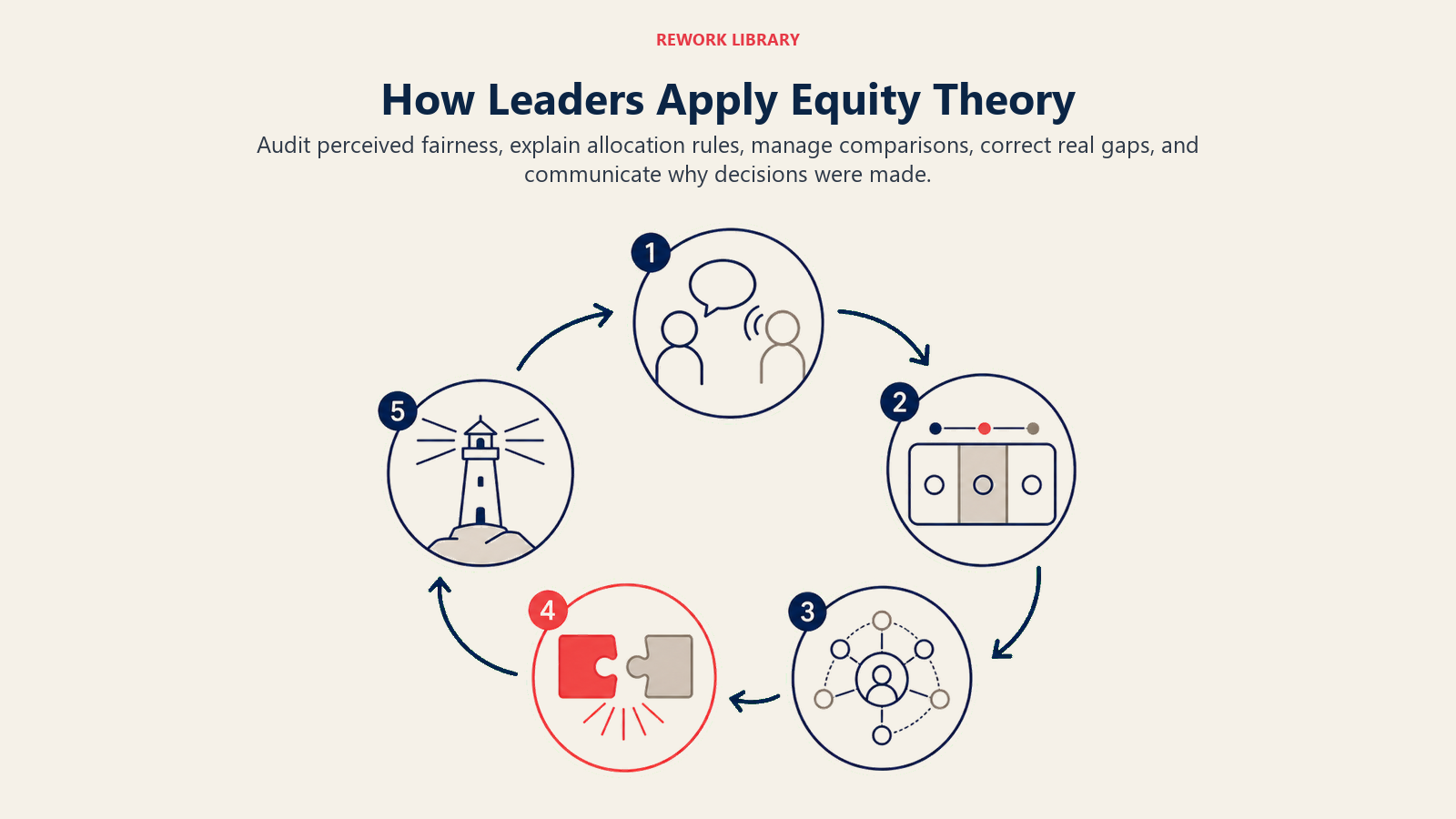
Paso 1: Audite la justicia percibida, no solo la justicia objetiva
Los datos objetivos sobre bandas salariales y distribución de la carga de trabajo son importantes, pero la equidad percibida es lo que impulsa el comportamiento. Comience por sacar las percepciones a la superficie de manera directa. En las reuniones individuales, pregunte: "¿Siente que el esfuerzo que pone en su trabajo está equilibrado con lo que recibe a cambio?" o "¿Hay algo que le parezca desequilibrado en este momento?" Las personas rara vez expresan estos sentimientos de forma espontánea; la pregunta indica que usted toma la justicia en serio.
Intente también identificar los referentes que utiliza su equipo. ¿Con quién se comparan? Esto frecuentemente revela brechas entre lo que usted cree que es el conjunto de comparación (la estructura interna de su equipo) y lo que ellos observan realmente (un par en otra división, un excolega que se fue a la competencia).
Paso 2: Sea transparente sobre cómo se asignan los resultados
La inequidad percibida surge a menudo de la opacidad, no de una injusticia real. Cuando las personas no saben por qué se tomaron las decisiones, llenan ese vacío con su propia interpretación, y esas interpretaciones tienden a ser negativas.
Haga explícita la lógica de las bandas salariales cuando sea posible. Explique por qué alguien no obtuvo una promoción, qué cambió y cómo es el camino a seguir. Cuando un colega recibe un reconocimiento visible, explique brevemente los criterios. La transparencia no significa divulgar información confidencial; significa que las personas comprenden las reglas del juego antes de jugar.
Paso 3: Gestione las comparaciones con referentes de manera proactiva
No puede impedir que las personas hagan comparaciones, pero sí puede influir en cuáles son las más visibles. Comparta datos de mercado sobre lo que se paga por cada rol en el sector. Haga visibles las contribuciones de sus empleados de alto rendimiento (no para avergonzar a los demás, sino para hacer concreto el lado de los aportes en la proporción). Cuando incorpore a alguien externo en un nivel superior, explique claramente la diferencia en el alcance del cargo.
Si no se gestionan, las comparaciones por defecto recaen sobre el par más visible, que suele ser quien está más cerca físicamente o quien más se comunica en Slack, no quien es el punto de referencia más preciso.
Paso 4: Corrija las inequidades reales, no solo las percepciones
Si la proporción aporte-resultado de alguien es objetivamente desfavorable, la gestión de la percepción por sí sola no bastará. Un empleado que asume más responsabilidades de las que refleja su cargo, o que cobra por debajo del mercado para sus habilidades, necesita un cambio real, no un reencuadre.
Aborde estas situaciones con rapidez. La inequidad percibida y real se agrava más rápido que la inequidad percibida pero incorrecta. Cuanto más tiempo persiste un desequilibrio genuino, más daña la confianza y más difícil resulta restaurarla, incluso después de que se haya aplicado la corrección.
Paso 5: Comunique el porqué, no solo el qué
Cuando realice cambios en la compensación, la carga de trabajo, los roles o el reconocimiento, explique el razonamiento que los sustenta. Las personas están más dispuestas a aceptar resultados que preferirían fueran diferentes cuando comprenden cómo se llegó a ellos. Los investigadores llaman a esto justicia procedimental: el juicio de que el proceso fue justo, independientemente del resultado.
Un miembro del equipo que no obtiene la promoción pero comprende el razonamiento, recibió retroalimentación honesta y cree que el proceso se aplicó de forma consistente tiene mucha menos probabilidad de responder con reducción de aportes que alguien que vivió el mismo resultado sin ninguna explicación.
Ejemplos de la teoría de la equidad
| Situación | Tipo de inequidad | Qué ocurre | Qué pueden hacer los líderes |
|---|---|---|---|
| Dos colegas en el mismo rol con experiencia similar descubren que sus salarios difieren significativamente | Subcompensación para el de menor salario | El empleado con menor salario reduce el esfuerzo discrecional o comienza a buscar externamente | Realice una auditoría salarial; aborde las brechas con un plan de acción |
| Un miembro del equipo recibe reconocimiento público de manera consistente; sus pares con resultados similares no | Subcompensación para los no reconocidos | Los empleados no reconocidos se desconectan del comportamiento colaborativo | Rote el reconocimiento; use elogios específicos basados en criterios |
| Un profesional senior es reasignado a un proyecto de menor visibilidad mientras un par junior lidera una iniciativa de alto perfil | Subcompensación para el empleado senior | El profesional senior retira el conocimiento institucional; puede convertirse en riesgo de fuga | Explique la lógica de la asignación; reequilibre con una oportunidad futura |
| Un candidato externo reciente recibe un salario más alto que el personal interno con antigüedad que realiza el mismo trabajo | Subcompensación para el personal con antigüedad | Los empleados internos sienten que su lealtad no es valorada; el referente cambia al nuevo contratado | Realice revisiones de equidad en el momento de contratar externamente; aborde la compresión salarial de forma sistemática |
| Un miembro del equipo que se quejó de la carga de trabajo recibe una reducción; sus pares mantienen la carga mayor | Sobrecompensación para el individuo; subcompensación para los pares | Los pares se sienten penalizados por no haberse quejado; crece el resentimiento | Aborde la carga de trabajo en todo el equipo, no para individuos específicos; explique cualquier excepción |
Teoría de la equidad frente a otras teorías de motivación
La teoría de la equidad se integra en un conjunto de marcos de motivación que los líderes utilizan de forma complementaria.
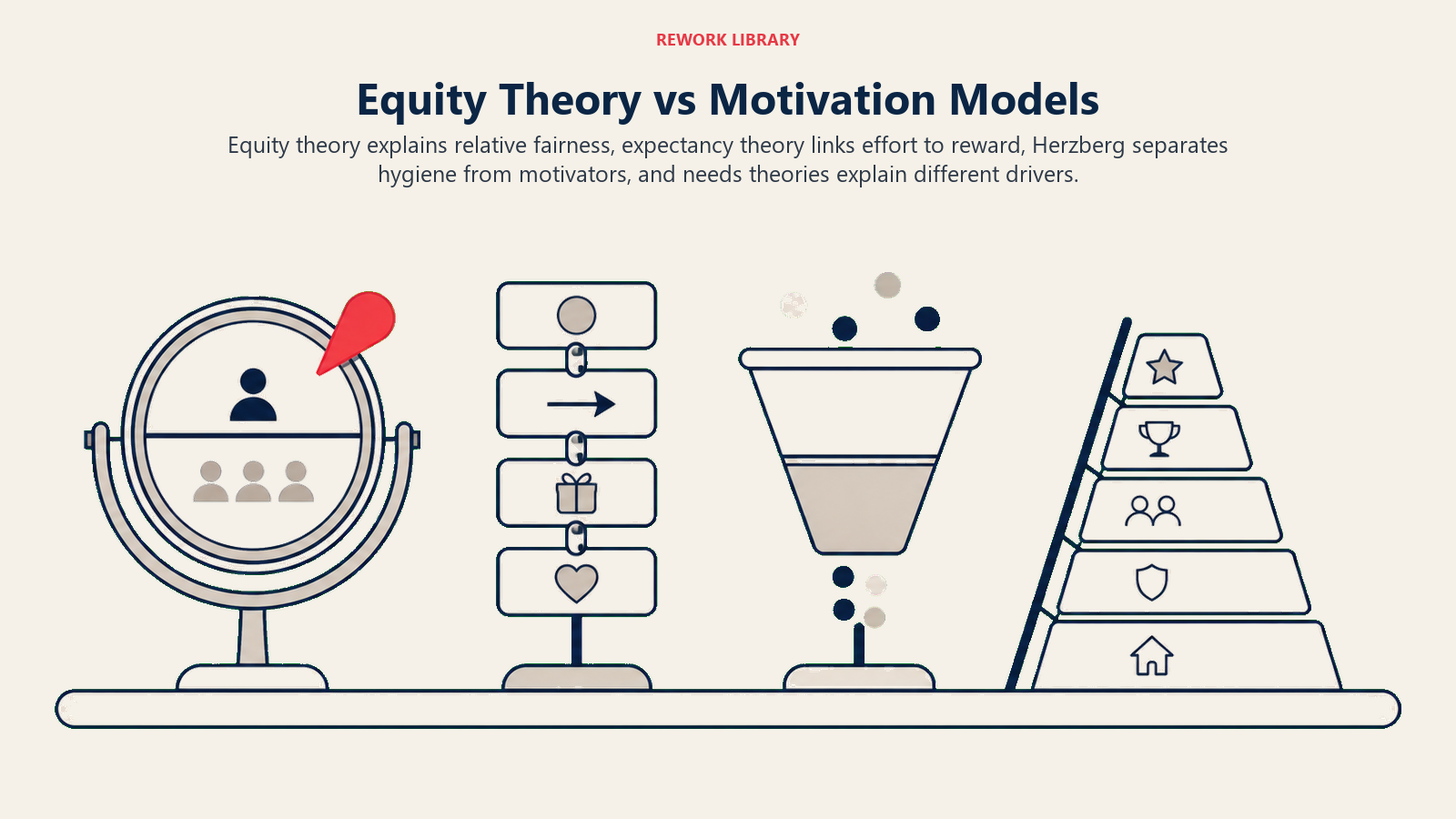
| Teoría | Planteamiento central | Relación con la teoría de la equidad |
|---|---|---|
| Teoría de las expectativas de Vroom (1964) | Motivación = Expectativa x Instrumentalidad x Valencia | Ambas son cognitivas y basadas en la percepción. La de Vroom se centra en las creencias sobre la relación esfuerzo-resultado; la de Adams, en la justicia de los resultados. Se complementan al diagnosticar motivación estancada. |
| Jerarquía de necesidades de Maslow (1943) | Las necesidades inferiores deben satisfacerse antes de que emerjan las superiores | La teoría de la equidad no asume una jerarquía. Funciona en cualquier nivel: alguien en la cima de la pirámide de Maslow puede seguir experimentando una intensa inequidad. |
| Teoría de los dos factores de Herzberg (1959) | Los factores de higiene previenen la insatisfacción; los motivadores generan compromiso | La justicia percibida en el salario es un factor de higiene en el modelo de Herzberg. La teoría de la equidad explica por qué el mismo salario puede ser un problema de higiene para una persona y no para otra: depende de la comparación. |
| Teoría X y Teoría Y de McGregor (1960) | Las suposiciones de los líderes sobre la naturaleza humana moldean su forma de gestionar | Las suposiciones de la Teoría X producen estilos de gestión que a menudo generan violaciones de equidad (control estricto, retención de información). Los entornos de Teoría Y tienden a favorecer una mejor justicia percibida. |
| Teoría de las necesidades de McClelland | Las personas se guían por necesidades de logro, afiliación o poder | La sensibilidad a la equidad varía según el tipo de necesidad. Las personas orientadas al logro se centran en los resultados vinculados al desempeño; las orientadas a la afiliación, en la justicia relacional. |
La diferencia clave entre la teoría de la equidad y la mayoría de los otros modelos de motivación es su arquitectura comparativa. La mayoría de las teorías preguntan: "¿Qué necesita o cree esta persona?" La teoría de la equidad pregunta: "¿Qué necesita o cree esta persona en relación con otra?" Esa dimensión relacional es lo que la hace especialmente útil para diagnosticar la desconexión motivada por la percepción de injusticia.
La justicia percibida no es una preocupación secundaria ni un aspecto cultural opcional. Es un impulsor directo de cuánto esfuerzo está dispuesto a sostener su equipo. La teoría de la equidad ofrece a los líderes un marco preciso para auditar esa justicia: aportes, resultados y la comparación que los une.
Para el contexto más amplio de la motivación, vea cómo la teoría de los dos factores de Herzberg separa las condiciones que previenen la insatisfacción de las que generan un compromiso real, o explore cómo la teoría de la autodeterminación amplía el trabajo de Adams explicando el papel de la autonomía y la motivación intrínseca junto a la justicia comparativa.

Senior Operations & Growth Strategist
On this page
- ¿Qué es la teoría de la equidad?
- Aportes, resultados y la comparación
- Cómo responden las personas a la inequidad
- Ventajas y limitaciones de la teoría de la equidad
- Cómo aplicar la teoría de la equidad como líder (paso a paso)
- Paso 1: Audite la justicia percibida, no solo la justicia objetiva
- Paso 2: Sea transparente sobre cómo se asignan los resultados
- Paso 3: Gestione las comparaciones con referentes de manera proactiva
- Paso 4: Corrija las inequidades reales, no solo las percepciones
- Paso 5: Comunique el porqué, no solo el qué
- Ejemplos de la teoría de la equidad
- Teoría de la equidad frente a otras teorías de motivación