Travel Marketing Strategy - Attracting and Converting Travelers 2026
Turn this article into takeaways for your work.


Each assistant summarizes the article only for you and suggests best practices for your work.
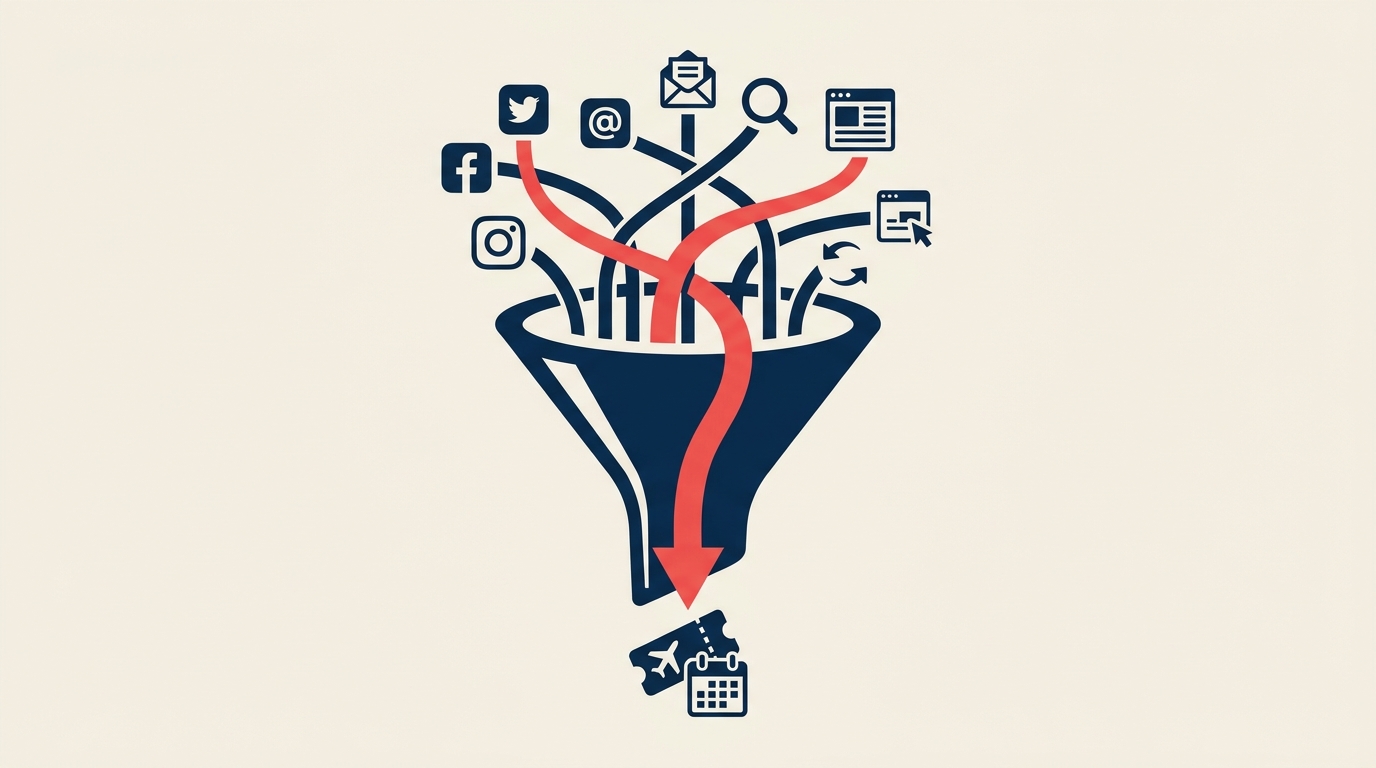
Most travel businesses have a marketing problem that looks like a sales problem.
The pipeline feels thin, conversion rates feel low, and the instinct is to hire more salespeople or offer more discounts. But the real issue is often upstream: the marketing is attracting the wrong travelers, at the wrong stage of their decision process, with messaging that does not differentiate.
A well-built travel marketing strategy solves this by defining exactly who you are targeting, building channels that reach them when they are actively planning, and creating content and experiences that position your agency as the obvious choice before they ever speak to a consultant.
This guide covers how to build that system from the foundations up.
Start with Audience Clarity
Travel marketing fails most often because it tries to appeal to everyone. A generic "dream vacation" message resonates with no one in particular and competes directly with every OTA and travel aggregator with a budget 50x yours.
Audience clarity means defining your best traveler with enough specificity to create marketing that speaks directly to them.
Your best traveler is not just a demographic. It is a combination of: trip type (adventure, cultural immersion, luxury, family, corporate), budget range, values (sustainability, exclusivity, authenticity), decision-making style (planner vs. spontaneous), and where they are in the planning cycle.
Travel customer segmentation formalizes this. When you know your segments with precision, every marketing decision becomes simpler: which channels to invest in, what content to produce, what offers to feature, and how to price and present your packages.
The Three-Stage Marketing System
Effective travel marketing matches the traveler's intent at each stage of their decision process.
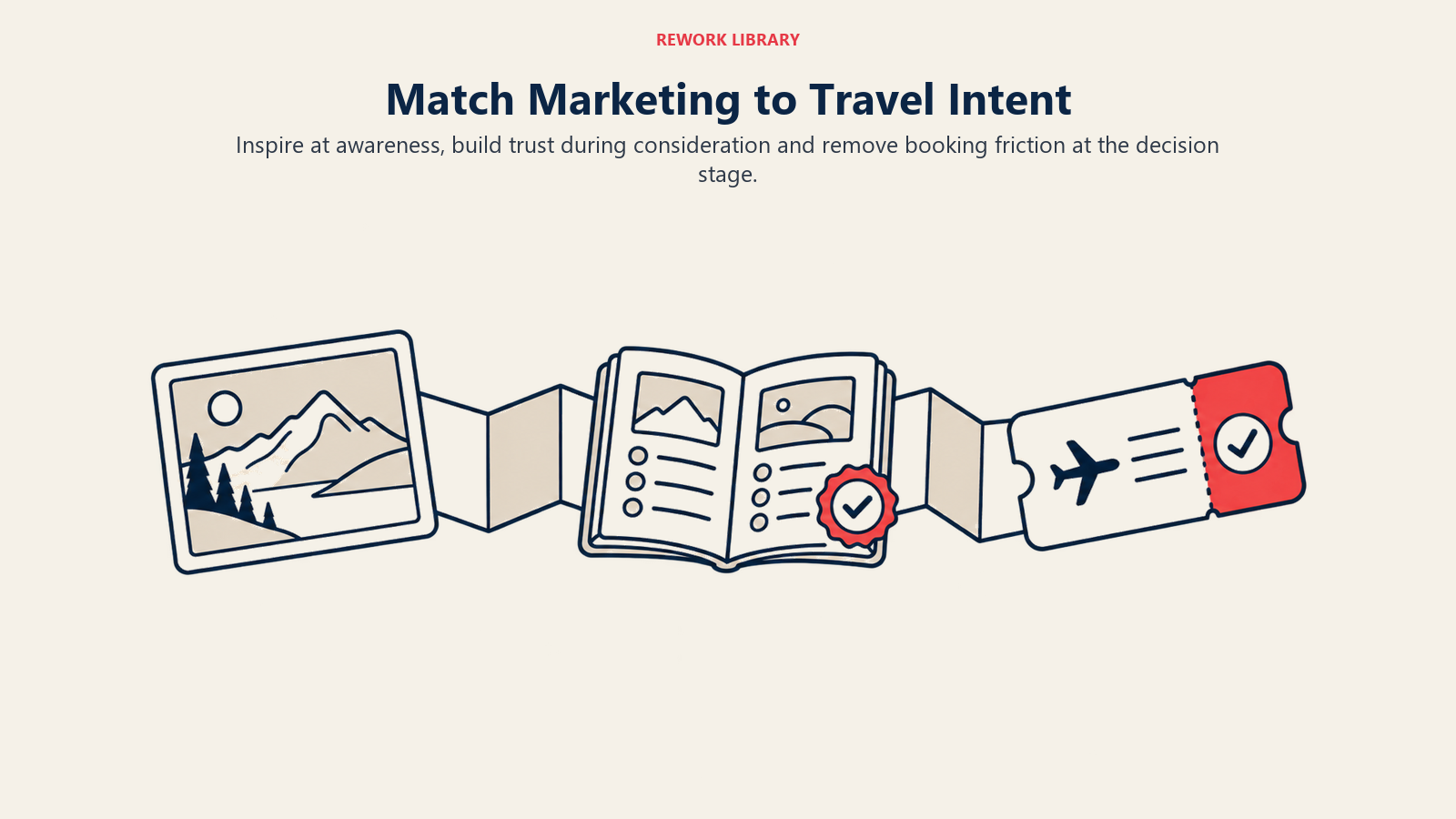
Awareness stage. The traveler is dreaming or exploring, not yet ready to book. They are browsing destination content, watching travel videos, consuming inspiration. At this stage, your goal is visibility and memorability, not conversion. Destination marketing strategy, social media for travel brands, and travel video marketing are the primary tools.
Consideration stage. The traveler has a destination or trip type in mind and is comparing options. They are reading itineraries, checking reviews, and evaluating which operator to trust with their trip. At this stage, your content needs to build credibility and address the questions that prevent commitment. Detailed trip pages, expert guides, travel review management, and travel content marketing carry the most weight here.
Decision stage. The traveler is ready to book and is comparing specific options. Pricing clarity, booking ease, trust signals (reviews, certifications, guarantees), and responsive consultation are what convert at this stage. Booking engine optimization and website conversion for travel are the levers to pull.
Most travel marketing over-invests in awareness and under-invests in decision-stage conversion. Fixing the bottom of the funnel often returns more revenue per dollar than expanding the top.
Core Marketing Channels
Search (SEO and Paid)
Search is where travelers with active intent find you. Someone searching "small group tour Italy 2026" or "family safari Kenya operator" is close to a booking decision. Being visible in those results is a direct revenue driver.
Travel SEO optimization builds long-term visibility for high-intent destination and trip-type queries. It takes 6-12 months to generate significant results but has compounding returns. Travel paid advertising delivers immediate visibility but requires ongoing budget. The combination of both, with SEO handling the long-tail and paid handling competitive terms, is the standard approach for scaling travel businesses.
Content Marketing
Content marketing builds authority and answers the questions travelers ask before choosing an operator. A comprehensive travel content marketing strategy produces destination guides, trip planning resources, packing guides, visa and entry information, and first-person traveler narratives that rank in search and build trust with prospective guests.
The key principle: create content for the questions your best prospects are actually asking, not the content you find easiest to produce. Destination-specific content targeting travelers considering a specific trip type performs significantly better than generic "why travel is good" content.
Social and Visual Media
Travel is a visual category. Instagram, YouTube, and Pinterest are not just brand-building platforms. They are discovery channels where travelers form opinions about destinations and operators.
Influencer marketing in travel and user-generated content strategy extend your reach with authentic social proof. Guest photos and videos from real trips consistently outperform polished brand content in engagement and conversion, because they answer the question "what would my trip actually look like?"
Email and CRM
For established travel businesses, email is the highest-ROI channel in the stack. Your subscriber list is an audience you own and control, without algorithmic gatekeeping or paid distribution.
Email marketing for travel works best when it is behaviorally segmented: travelers who enquired but did not book get different messages than guests who just returned from a trip, who in turn get different messages than travelers two years into their loyalty journey.
Referral and Partnerships
Word-of-mouth is the most trusted channel in travel and the most under-systematized. Travel referral programs convert the trust that satisfied guests already have into structured lead generation. A well-designed referral program can generate 15-20% of new bookings at near-zero acquisition cost.
Measurement and Budget Allocation
Travel marketing investment should be tracked against two primary metrics: cost per lead and cost per booking. Without these, you cannot make rational decisions about where to spend.
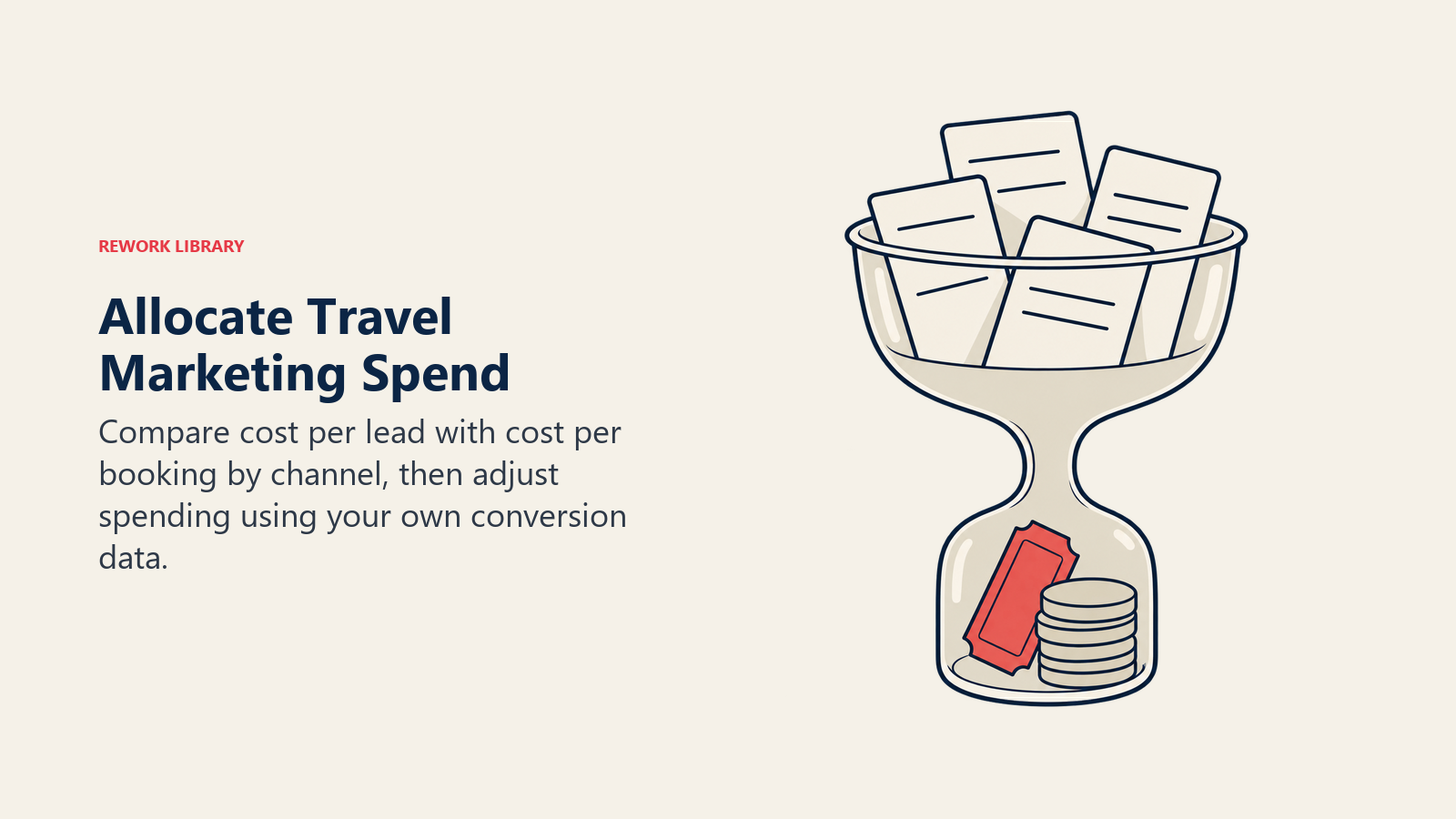
Track by channel. Paid search typically delivers lower-funnel leads at higher cost per lead but better conversion rates. Social media delivers higher-funnel awareness at lower cost per lead but lower purchase intent. Email has low direct cost but high maintenance requirements.
A starting allocation framework for a mid-market travel agency:
- 35-40% of marketing budget toward search (SEO services or paid)
- 20-25% toward content production (guides, video, photography)
- 15-20% toward paid social and retargeting
- 10-15% toward email and CRM tools
- 10% toward referral and partnership programs
Adjust based on your actual conversion data, not industry benchmarks. The right allocation is the one that generates the best cost per booking for your specific business model.
The Full Marketing and Booking Funnel
Marketing generates leads. The booking funnel converts them.
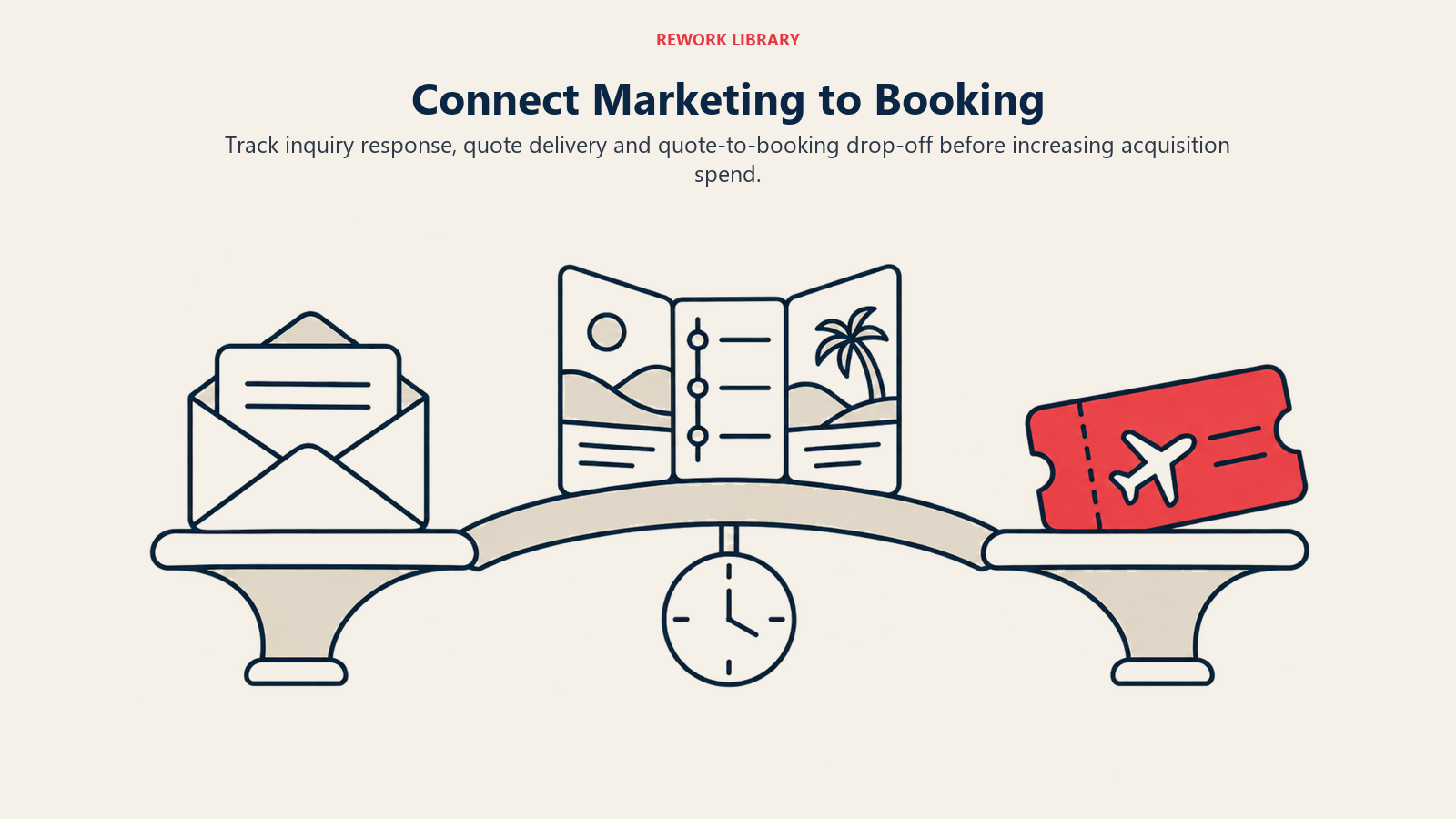
A marketing strategy that delivers strong leads into a weak booking process wastes the investment. The travel booking funnel from inquiry to confirmation needs to be equally optimized.
Key conversion points to monitor:
- Inquiry to first consultant contact (should be under 4 hours for peak conversion)
- First contact to quote delivered (under 48 hours for most trip types)
- Quote to booking (varies by trip complexity, but track drop-off rates at this stage)
If conversion rates are low despite strong lead volume, the problem is in the sales and booking process, not the marketing. Fix the funnel before scaling acquisition spend.
Common Mistakes
Competing on price. Travel marketing that leads with discounts trains prospects to expect discounts and attracts price-sensitive customers who will leave for the next deal. Lead with experience, expertise, and trust.
Ignoring direct booking strategy. Every booking that comes through an OTA takes a 15-25% commission. Direct bookings via your own website and channels should be a strategic priority, not an afterthought.
No consistent brand voice. Travelers booking a trip that costs thousands of dollars need to trust you. A fragmented brand presence across channels, where every piece of content looks and sounds different, erodes that trust even when the underlying quality is excellent.
Spreading budget too thin. It is better to be genuinely visible and strong in two channels than barely present across five. Choose the channels where your best travelers are most concentrated and commit to doing those well before expanding.
Key Facts
- Travel businesses that invest in both SEO and paid search together see 30-40% lower cost per booking than those using either channel in isolation, because they capture intent across different stages of the decision process.
- Decision-stage conversion improvements (better booking pages, stronger trust signals, faster response times) typically deliver 2-3x the revenue impact of equivalent investment in awareness-stage advertising.
- Direct bookings through owned channels average 15-25% higher margin than bookings via OTA intermediaries, making direct booking growth one of the highest-ROI marketing priorities.
- Travel referral programs generate leads that convert at 3-5x the rate of paid acquisition because they carry peer trust, making them the most capital-efficient channel for established operators.
Frequently Asked Questions about Travel Marketing Strategy - Attracting and Converting Travelers 2026
What is a travel marketing strategy?
A travel marketing strategy is a structured plan for attracting potential travelers, building their trust and interest, and converting them into bookings. It defines target audiences, selects appropriate channels (search, social, content, email, referrals), sets performance metrics, and allocates budget against measurable outcomes. A complete strategy covers all three stages of the traveler decision process: awareness, consideration, and booking.
What are the most effective marketing channels for travel agencies?
Search (both SEO and paid), content marketing, email to owned lists, and referral programs consistently deliver the best returns for travel agencies. Social media (Instagram, YouTube) performs well for awareness and visual credibility. The right mix depends on your business model, target traveler type, and budget. Most mid-market agencies should prioritize two to three channels before expanding the stack.
How do you measure travel marketing performance?
The primary metrics are cost per lead (by channel), cost per booking (by channel and campaign), conversion rate from inquiry to booking, and return on marketing spend. For longer-term tracking, add customer acquisition cost, first-booking-to-repeat-booking rate, and customer lifetime value by acquisition channel. These connect marketing investment directly to revenue outcomes.
What is the difference between travel marketing and travel advertising?
Travel advertising is a subset of marketing that covers paid placement (Google Ads, Meta ads, display retargeting, OTA listing ads). Travel marketing is the broader system that includes content, SEO, email, referrals, partnerships, and brand strategy alongside paid advertising. Most travel businesses that focus exclusively on advertising while neglecting content and retention achieve high acquisition costs and low lifetime value. The full marketing system delivers better unit economics.