Muda, Mura, Muri: Os 3 Desperdícios do Lean
Turn this article into takeaways for your work.


Each assistant summarizes the article only for you and suggests best practices for your work.
A maioria dos esforços de melhoria corrige o óbvio: o defeito, o gargalo, a reclamação. Mas muda, mura e muri pedem que você olhe uma camada mais fundo. O Toyota Production System não apenas catalogou problemas individuais; deu a eles três nomes distintos para que as equipes pudessem tratá-los de forma diferente. Acerte essa distinção e você para de remendar sintomas e passa a corrigir sistemas.
O que são muda, mura e muri?
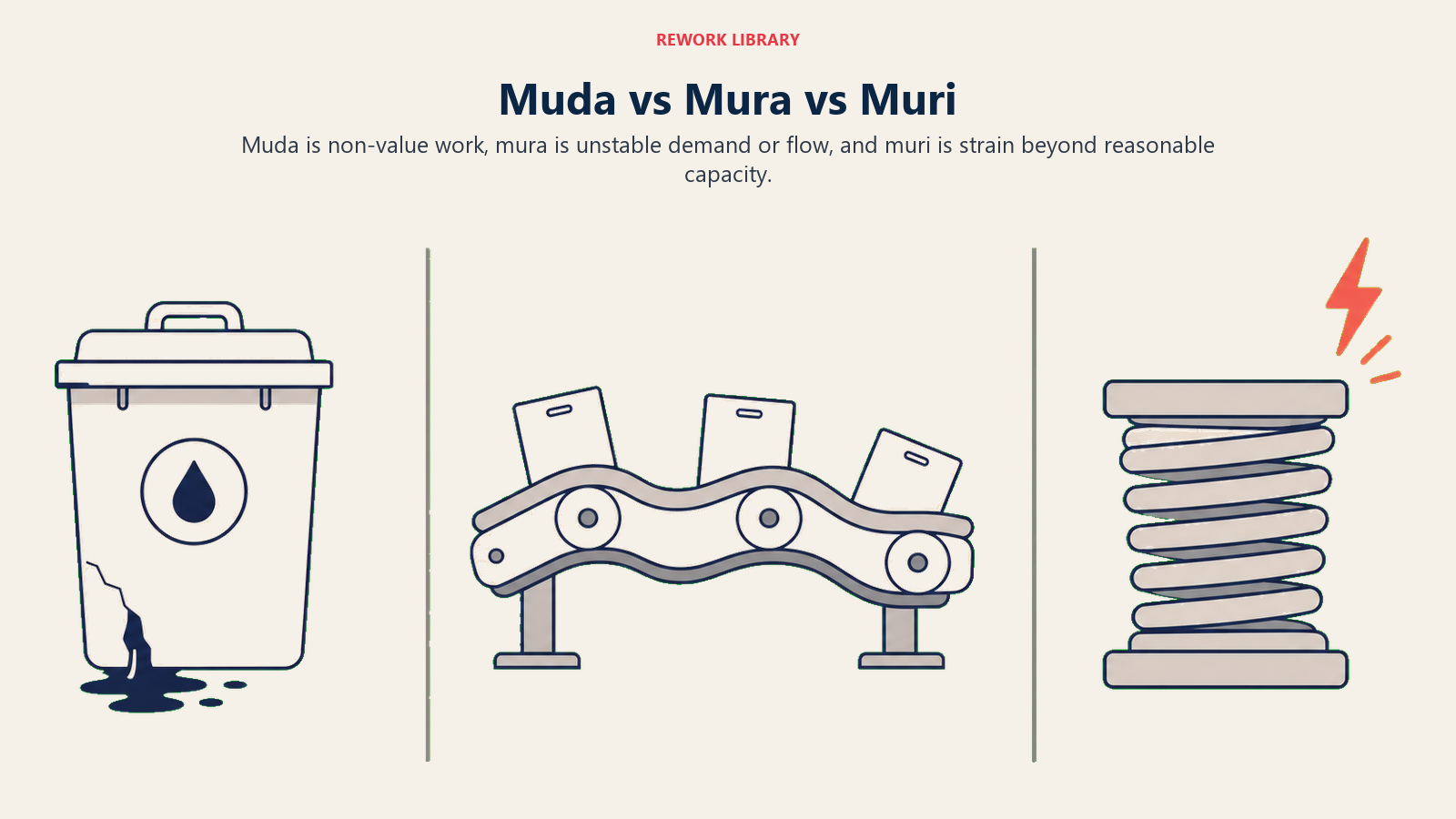
Os três termos vêm do Toyota Production System (TPS) e juntos formam os "3 Ms" do desperdício lean. Cada um nomeia um tipo diferente de tensão sobre um processo:
- Muda (desperdício): qualquer atividade que consome recursos sem agregar valor para o cliente.
- Mura (irregularidade): fluxo irregular ou desigual em um processo, causado por picos e vales na demanda ou no ritmo de trabalho.
- Muri (sobrecarga): exigir de pessoas ou equipamentos além de sua capacidade segura e razoável.
Principais fatos: muda, mura, muri
- Fabricantes lean que abordam sistematicamente as três categorias de desperdício relatam ganhos de produtividade de 15% a 25% já no primeiro ano de adoção (Lean Enterprise Institute, 2023).
- Estudos sobre ambientes de trabalho de conhecimento constatam que os funcionários gastam em média 40% do dia em tarefas de baixo ou nenhum valor, que se enquadram como muda (McKinsey Global Institute, 2022).
- A sobrecarga (muri) é uma das principais causas de lesões no trabalho: o Bureau of Labor Statistics constatou que lesões por esforço excessivo e movimento repetitivo respondem por cerca de 30% de todos os casos de lesão ocupacional nos EUA (BLS, 2023).
Muda versus mura versus muri
Entender os três desperdícios fica mais fácil com exemplos lado a lado.
| Termo | Significado | Exemplo real | Como abordar |
|---|---|---|---|
| Muda | Trabalho que não agrega valor | Imprimir um relatório que ninguém lê | Identificar, reduzir ou eliminar a atividade |
| Mura | Irregularidade / fluxo desigual | Pico de faturas no fim do mês depois de três semanas tranquilas | Nivelar o cronograma de trabalho (heijunka) |
| Muri | Sobrecarga de pessoas ou equipamentos | Operar uma máquina a 110% da capacidade para cumprir um prazo | Redistribuir a carga, construir capacidade ou definir metas realistas |
Os três não são isolados. Um pico recorrente de demanda (mura) força as equipes a acelerar (muri), e os erros produzidos durante essa aceleração se tornam defeitos (muda). Corrija só os defeitos e o padrão se repete.
Os 8 desperdícios do muda
O muda se desdobra em oito tipos específicos, muitas vezes lembrados pelo acrônimo DOWNTIME:
| Letra | Tipo de desperdício | Como se manifesta |
|---|---|---|
| D | Defeitos | Retrabalho, correções, produção descartada |
| O | Overprodução (superprodução) | Produzir mais do que o cliente precisa agora |
| W | Waiting (espera) | Tempo ocioso esperando aprovação, materiais ou dados |
| N | Non-utilized talent (talento não utilizado) | Habilidades, conhecimento ou ideias que o processo nunca aproveita |
| T | Transporte | Movimentação desnecessária de materiais ou arquivos entre locais |
| I | Inventário | Excesso de estoque, solicitações em fila, e-mails não lidos se acumulando |
| M | Movimento | Movimentação desnecessária das pessoas (procurar ferramentas, navegar por menus) |
| E | Extra-processing (processamento extra) | Etapas que não agregam valor ao cliente: assinaturas triplicadas, formatação redundante |
Ao fazer uma auditoria de desperdício, percorra o DOWNTIME em cada etapa do seu mapa de processo. Raramente você encontrará uma etapa com zero ocorrências.
Por que os 3 Ms importam
Remover desperdício não é só sobre custo. Quando você elimina muda, mura e muri de um processo, várias coisas acontecem juntas:
A capacidade se torna visível. Equipes que não estão soterradas em retrabalho ou ciclos de correria conseguem finalmente ver quanto throughput real possuem. Essa visibilidade torna o planejamento honesto.
A qualidade melhora naturalmente. A maioria dos defeitos remonta à sobrecarga ou ao fluxo desigual. Quando as pessoas não estão correndo para atender um pico artificial, as taxas de erro caem sem uma iniciativa de qualidade separada.
As pessoas permanecem mais tempo. O muri é uma fonte direta de esgotamento. Líderes de operações que acompanham a rotatividade voluntária costumam constatar que as funções com maior turnover são exatamente as que carregam mais sobrecarga.
A melhoria se acumula. Uma equipe que não está apagando incêndios tem tempo para conduzir experimentos. É daí que vêm os ganhos sustentáveis, não de cortes de custo pontuais.
Para uma visão mais ampla de como a eliminação de desperdício se encaixa no sistema completo de melhoria, veja a visão geral da metodologia lean.
Como os três se relacionam: mura e muri costumam criar muda
O erro mais comum dos praticantes é tratar o muda como o problema principal. Não é. Geralmente é o resultado.
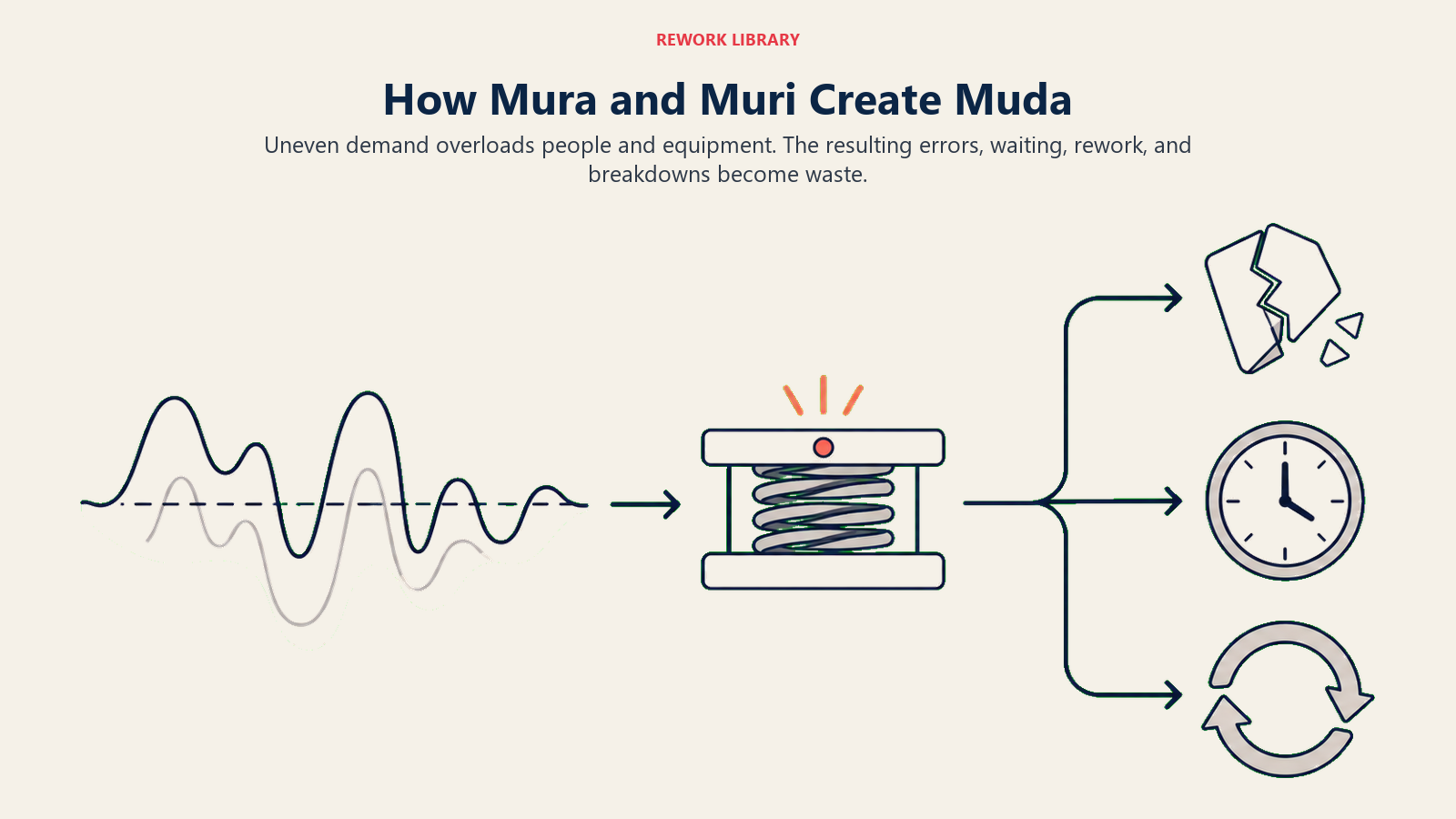
Considere uma equipe de vendas fechando negócios em um ritmo desigual: dez contratos nos últimos dois dias do mês, dois nas primeiras duas semanas. Isso é mura. A equipe de operações se apressa para processar tudo até o fim do mês (muri), comete erros sob pressão (muda na forma de defeitos), e se esgota ao longo do tempo (mais muri). Os defeitos parecem ser o problema, mas a causa real é o padrão de vendas desigual mais acima na cadeia.
É por isso que o mapeamento de fluxo de valor é tão útil ao lado dos 3 Ms. Ele permite rastrear onde o mura entra no processo, para que você trate a origem, não apenas os sintomas. E ferramentas como os 5 Porquês ajudam a perguntar por que a irregularidade ou a sobrecarga existe em primeiro lugar.
Como eliminar muda, mura e muri
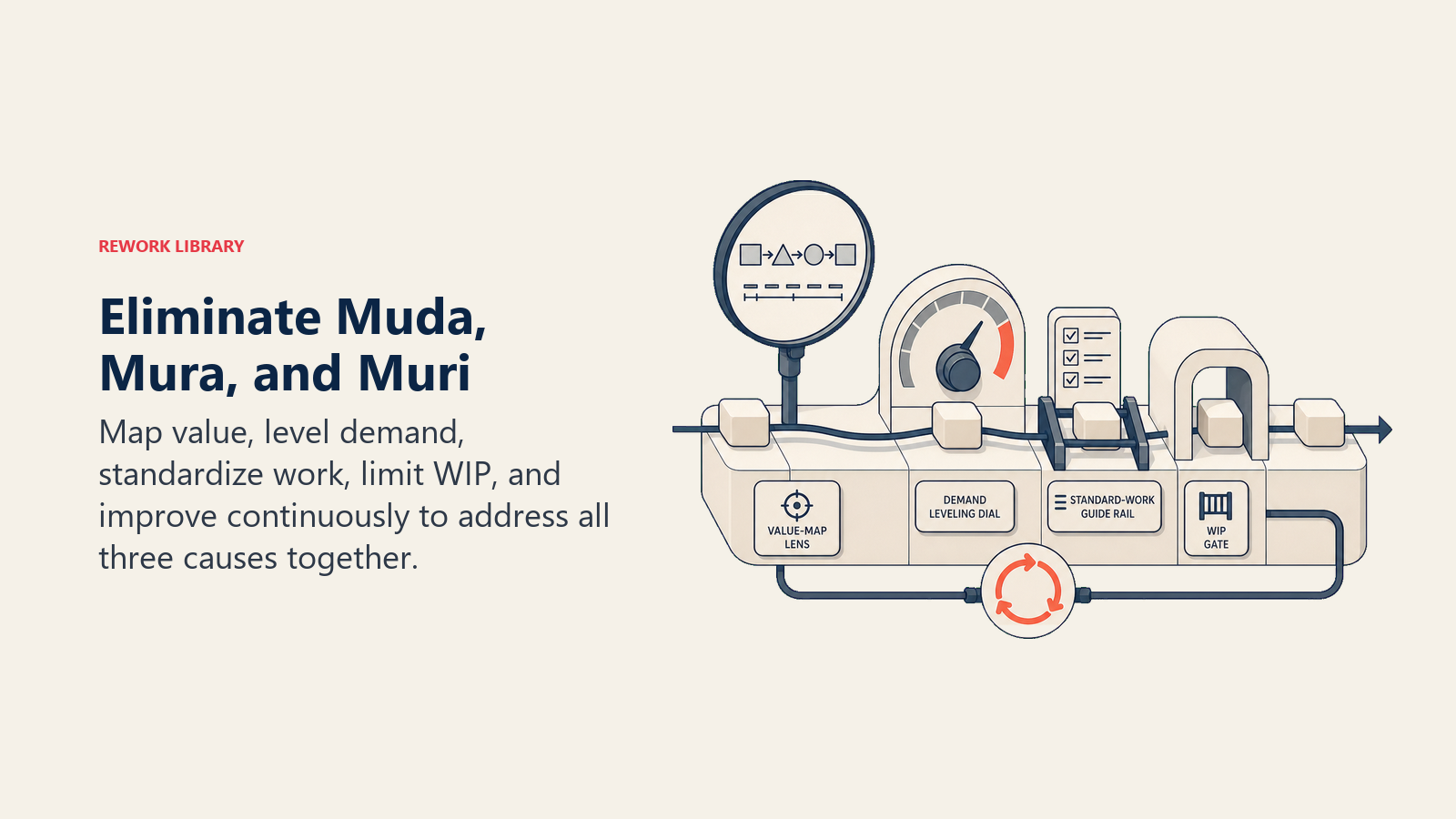
Você não precisa de um programa de transformação completo para começar. Uma abordagem de quatro etapas funciona no nível da equipe.
Etapa 1: Mapeie o processo
Desenhe cada etapa do fluxo de trabalho, incluindo transferências, estados de espera e pontos de decisão. Não pule etapas que parecem rotineiras. O mapeamento de fluxo de valor é a ferramenta padrão aqui, mas até um simples esboço no quadro branco revela mais do que a memória.
Para cada etapa, pergunte: isso agrega um valor pelo qual o cliente pagaria? Se não, é candidato à eliminação ou redução.
Etapa 2: Nivele a carga com heijunka
Heijunka é o termo japonês para nivelamento de produção. O objetivo é suavizar a demanda ao longo do tempo, para que sua equipe não fique ociosa em uma semana e sobrecarregada na seguinte.
Na prática, isso significa: quebrar lotes grandes em lotes menores e mais frequentes; estabelecer um ritmo de trabalho constante vinculado ao takt time (a taxa em que a demanda do cliente realmente chega); e resistir a prazos artificiais que criam picos artificiais.
Se você está fazendo produção just-in-time, o heijunka é um pré-requisito. Você não consegue puxar trabalho em um ritmo constante se os sinais de demanda são erráticos.
Etapa 3: Padronize o trabalho
O trabalho padronizado documenta o melhor método atualmente conhecido para concluir uma tarefa. Não se trata de rigidez. Trata-se de capturar a linha de base para que todos partam do mesmo ponto, e para que as melhorias possam ser medidas contra algo consistente.
Sem um padrão, você não consegue dizer se uma variação é uma melhoria ou um desvio. A metodologia 5S é um precursor útil: ela organiza o espaço de trabalho para que o padrão possa realmente ser seguido.
Etapa 4: Melhore continuamente
Uma vez que o processo esteja estável e visível, aplique resolução estruturada de problemas. O kaizen (pequenas melhorias contínuas) mantém os ganhos se acumulando. As ferramentas de Six Sigma ajudam quando você precisa reduzir a variação do processo estatisticamente. Os 5 Porquês tratam causas raiz individuais rapidamente.
O importante é não parar após a primeira rodada de melhorias. O lean não é um projeto com data de conclusão.
Muda, mura, muri na prática: exemplos por contexto
| Contexto | Exemplo de muda | Exemplo de mura | Exemplo de muri |
|---|---|---|---|
| Manufatura | Peças defeituosas que exigem retrabalho | Produção em lote criando fartura ou escassez na linha de montagem | Operar máquinas CNC além das horas nominais para cumprir um prazo de envio |
| Escritório / trabalho de conhecimento | Reuniões de status que poderiam ser um dashboard compartilhado | Picos de planejamento trimestral seguidos de lacunas de baixa produtividade | Um analista responsável por cinco prazos de projeto simultâneos |
| Saúde | Entrada duplicada de dados do paciente em dois sistemas | Horário imprevisível de alta de pacientes pressionando as unidades seguintes | Enfermeiros designados para mais pacientes do que as proporções seguras de equipe permitem |
| Desenvolvimento de software | Testes automatizados que ninguém executa há seis meses | Sprint de duas semanas seguido de uma fase de estabilização de três semanas | Um desenvolvedor em quatro equipes com quatro conjuntos de obrigações de daily |
O vocabulário se traduz bem para fora da manufatura. É parte do motivo pelo qual os 3 Ms se espalharam tanto além das fábricas da Toyota.

Melhores práticas
Faça isto:
- Comece pelo mura antes de atacar o muda. Suavizar o fluxo mais acima na cadeia evita que o desperdício se regenere.
- Envolva as pessoas que fazem o trabalho na auditoria de desperdício. Elas sabem onde está o atrito.
- Trate o muri como uma questão de segurança e sustentabilidade, não apenas de eficiência.
- Use o takt time como seu marcador de ritmo. Quando o ritmo de trabalho combina com o ritmo da demanda, o mura diminui naturalmente.
- Combine os 3 Ms com a análise de causa raiz dos 5 Porquês para rastrear cada desperdício até sua origem.
Evite isto:
- Não trate o muda isoladamente. Remover uma atividade de desperdício sem corrigir o desequilíbrio anterior que a criou apenas desloca o problema.
- Não confunda padronização com burocracia. Um padrão é o melhor método atual da equipe, não uma regra imposta de cima.
- Não estabeleça metas de utilização acima de 80-85% para trabalho de conhecimento complexo. A utilização total não deixa margem e cria muri rapidamente.
- Não pule a etapa de medição. Sem uma linha de base, você não consegue confirmar se as mudanças realmente ajudaram.
Perguntas frequentes
Qual é a diferença entre muda, mura e muri em termos simples?
Muda é desperdício: trabalho que consome recursos sem entregar valor. Mura é irregularidade: trabalho que chega em picos imprevisíveis em vez de um fluxo constante. Muri é sobrecarga: pedir a pessoas ou máquinas que façam mais do que conseguem sustentar. Os três prejudicam o desempenho, mas precisam de correções diferentes.
Qual dos 3 Ms você deve abordar primeiro?
Comece pelo mura (irregularidade), depois o muri (sobrecarga), depois o muda (desperdício). Essa ordem importa porque o mura e o muri costumam ser as causas raiz do muda. Atacar o muda primeiro, sem corrigir os problemas de fluxo mais acima na cadeia, faz com que o desperdício tenda a voltar.
Os 3 Ms são relevantes só na manufatura?
Não. Os conceitos se originaram nas fábricas da Toyota, mas se aplicam igualmente a software, finanças, saúde e qualquer ambiente de trabalho de conhecimento. A superprodução em um escritório se parece com relatórios que ninguém lê. O mura em uma equipe de software se parece com ciclos de correria em sprints. Os termos se transportam bem.
Como o muda se relaciona com os 8 desperdícios?
Os 8 desperdícios do lean (DOWNTIME: Defeitos, Overprodução, Waiting, Non-utilized talent, Transporte, Inventário, Movimento, Extra-processing) são todos subcategorias do muda. Eles dão rótulos mais específicos às muitas formas que o desperdício pode assumir dentro da categoria mais ampla de trabalho que não agrega valor.
O que é heijunka e por que importa para o mura?
Heijunka é o nivelamento de produção: a prática de suavizar o volume e o mix de trabalho ao longo do tempo para eliminar picos e vales. É a principal ferramenta para abordar o mura. Quando o trabalho flui em um ritmo constante e previsível, as equipes não precisam se sobrecarregar para acompanhar, e o tempo ocioso também diminui.
Muda, mura e muri não são teoria abstrata. São um checklist para olhar para qualquer processo e perguntar: onde o esforço está sendo desperdiçado, onde o fluxo é desigual, e onde pessoas ou máquinas estão sendo exigidas além do razoável? Responda a essas três perguntas com honestidade e você encontrará mais oportunidades de melhoria do que qualquer equipe sozinha consegue resolver de uma vez. A disciplina está em priorizar sistematicamente e voltar à lista toda vez que você resolver um lote de problemas.

On this page
- O que são muda, mura e muri?
- Muda versus mura versus muri
- Os 8 desperdícios do muda
- Por que os 3 Ms importam
- Como os três se relacionam: mura e muri costumam criar muda
- Como eliminar muda, mura e muri
- Etapa 1: Mapeie o processo
- Etapa 2: Nivele a carga com heijunka
- Etapa 3: Padronize o trabalho
- Etapa 4: Melhore continuamente
- Muda, mura, muri na prática: exemplos por contexto
- Melhores práticas