Radical Candor: El Marco de Retroalimentación que Une Cuidado y Franqueza
Turn this article into takeaways for your work.


Each assistant summarizes the article only for you and suggests best practices for your work.
La conversación de retroalimentación que la mayoría de los managers evita suele ser precisamente la que más necesita el miembro de su equipo. Y la versión de esa conversación que al final tienen, cuando el problema de desempeño es demasiado evidente para ignorarlo, generalmente llega demasiado tarde y se entrega de forma deficiente.
El marco de Radical Candor, desarrollado como práctica de gestión y ampliamente adoptado en organizaciones tecnológicas y empresariales, propone un modelo diferente: retroalimentación que es a la vez directa y genuinamente comprometida con la persona que la recibe, entregada con suficiente anticipación para ser útil y con suficiente precisión para ser accionable.
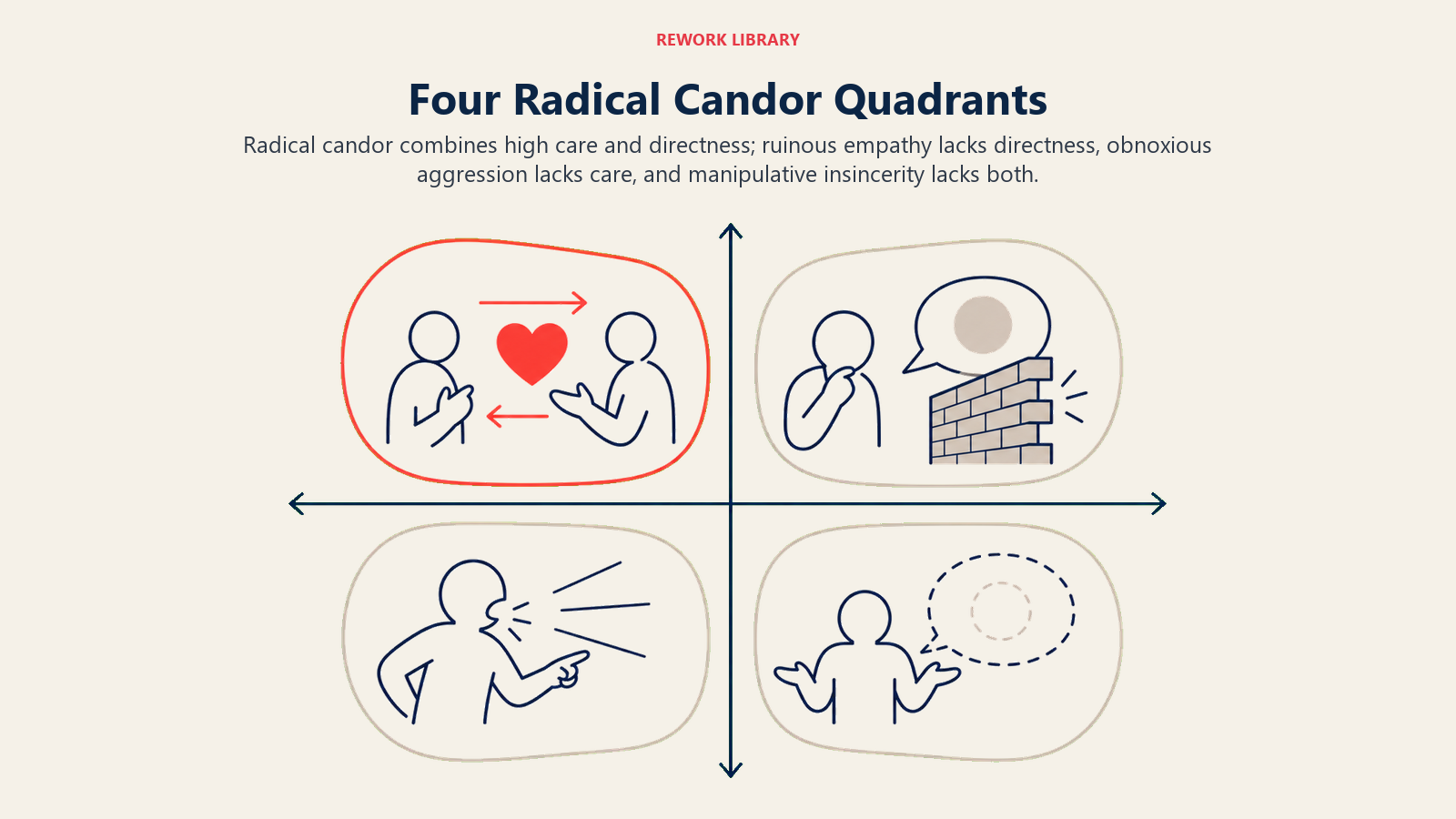
El marco clasifica el comportamiento de retroalimentación en dos dimensiones: cuánto se preocupa personalmente quien la da por quien la recibe, y qué tan dispuesto está a ser honesto de forma directa. La combinación de alto cuidado personal y alta franqueza define Radical Candor. Los modos de fallo son los patrones que resultan cuando una o ambas dimensiones están ausentes.
Las Dos Dimensiones del Marco
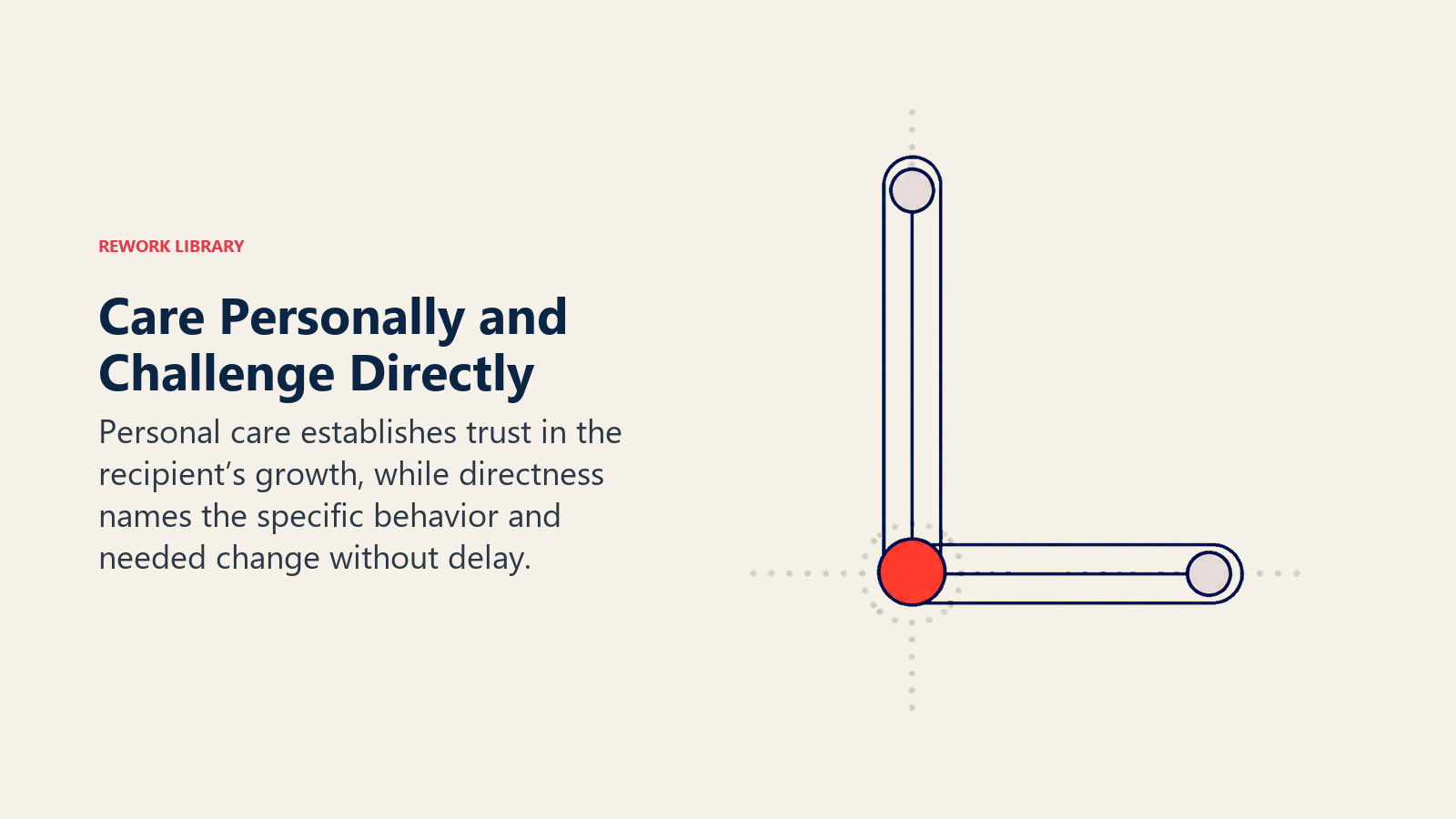
El cuidado personal establece confianza en el crecimiento de la persona que recibe la retroalimentación, mientras que la franqueza nombra sin demora el comportamiento específico y el cambio necesario.
El Cuidado Personal
El cuidado personal en Radical Candor significa una inversión genuina en el crecimiento, el bienestar y el éxito de la otra persona. No cortesía profesional ni cordialidad laboral, sino interés real en quién es esa persona, qué le importa y hacia dónde quiere llegar.
Esto es relevante para la retroalimentación porque cambia cómo es recibida. La retroalimentación honesta de alguien a quien el receptor cree que genuinamente le importa su bienestar se recibe de manera muy diferente a la misma retroalimentación de alguien percibido como un evaluador o juez. Las mismas palabras tienen un significado distinto según el contexto de la relación.
La mayoría de los managers no han desarrollado explícitamente la dimensión de cuidado personal en sus relaciones de gestión. Son profesionales, son amables y dan retroalimentación cuando es necesario. Pero no han invertido en entender a los miembros de su equipo como individuos, lo que hace que su retroalimentación directa a menudo sea recibida como crítica, no como inversión en la persona.
La Franqueza
La franqueza significa estar dispuesto a decir la verdad honesta y específica en lugar de algo cómodo y vago. Significa nombrar el problema en lugar de insinuarlo. Significa ser preciso sobre lo que no funcionó en lugar de ofrecer elogios generales que ocultan el problema. Y significa hacer todo esto en tiempo real, no meses después en una evaluación formal cuando la oportunidad de corrección ya ha pasado.
La mayoría de los managers luchan con la franqueza no porque no tengan opiniones, sino porque entregar retroalimentación honesta es incómodo. Pone en riesgo la relación. Puede molestar a la persona. Puede ser recibida de forma defensiva. El camino de menor resistencia es decir algo vago y positivo, o no decir nada, y esperar que el problema se resuelva solo o que la persona lo descubra por su cuenta.
Casi nunca ocurre así.
Los Cuatro Cuadrantes
El marco clasifica todo comportamiento de retroalimentación en uno de cuatro patrones, según dónde se ubica en las dimensiones de cuidado y franqueza.
Radical Candor
Alto cuidado combinado con alta franqueza. Este es el comportamiento objetivo: retroalimentación honesta y específica entregada en un contexto de genuina inversión personal en quien la recibe.
Radical Candor es lo que hace un buen mentor. Es lo que hace un entrenador cuando le dice a un atleta exactamente qué necesita mejorar, no para criticarlo, sino porque genuinamente quiere que alcance su potencial. Es incómoda de dar y de recibir, y sistemáticamente es la retroalimentación que las personas, mirando hacia atrás, dicen que realmente les ayudó.
La frase "desafiar directamente" captura la dimensión de franqueza. "Cuidar personalmente" captura la dimensión de cuidado. Juntas, definen una postura de retroalimentación que es a la vez honesta y humana.
Empatía Ruinosa
Alto cuidado combinado con baja franqueza. Este es el modo de fallo más común entre los managers que son genuinamente buenas personas.
La empatía ruinosa ocurre cuando un manager se preocupa por la persona y, por ese mismo cuidado, retiene la retroalimentación honesta que la persona necesita escuchar. El razonamiento es compasivo: no quiero hacerle daño, este no es el momento adecuado, ya está bajo presión, quizás mejore solo. El efecto es lo contrario de compasivo: la persona no mejora, el problema se agrava y eventualmente el manager se ve obligado a tener una conversación mucho más difícil de lo que habría sido necesario si hubiera sido directo antes.
La empatía ruinosa es el modo de fallo más peligroso en la gestión precisamente porque parece bondadoso. El manager que la practica suele creer que está siendo un buen manager. Pero está priorizando su propia comodidad para evitar una conversación difícil por encima del interés genuino del miembro del equipo en mejorar.
Agresión Ofensiva
Alta franqueza combinada con bajo cuidado. Esto es lo que la mayoría de las personas imaginan cuando escuchan "retroalimentación directa": crítica dura, contundente e impersonal que es honesta sobre el problema pero indiferente hacia la persona.
La agresión ofensiva es genuinamente directa y en ocasiones produce mejoras a corto plazo porque las personas no pueden ignorar una retroalimentación completamente clara. Pero daña las relaciones, genera respuestas defensivas y construye culturas organizacionales donde las personas temen cometer errores o admitir problemas. El costo en desempeño a largo plazo suele superar cualquier ganancia de corto plazo derivada de la franqueza.
La diferencia entre Radical Candor y la agresión ofensiva es la dimensión del cuidado. Quien entrega retroalimentación radicalmente franca es honesto porque quiere que la persona tenga éxito. Quien ejerce agresión ofensiva es honesto, o lo que experimenta como honestidad, sin esa inversión en el éxito de la otra persona.
Insinceridad Manipuladora
Bajo cuidado combinado con baja franqueza. Este es el peor patrón: ni honesto ni genuinamente comprometido, sino que ofrece retroalimentación vaga y vacía que sirve al deseo de quien la da de evitar el conflicto sin proporcionar nada útil al receptor.
La insinceridad manipuladora es la evaluación de desempeño que es técnicamente positiva pero no dice nada específico. Es el 1:1 que solo toca temas cómodos. Es la reacción ante un problema que no lo aborda ni lo ignora, sino que ofrece un estímulo vago que permite al emisor sentir que dijo algo mientras no proporciona nada accionable.
El término "manipuladora" hace referencia a la forma en que este patrón sirve a los intereses de quien da la retroalimentación (evitar la incomodidad, mantener una apariencia positiva) a expensas de las necesidades genuinas de quien la recibe.
Por Qué la Mayoría de los Managers Recurren a la Empatía Ruinosa
Entender por qué la empatía ruinosa es tan común resulta útil para los managers que quieren construir hábitos de retroalimentación más efectivos.
La incomodidad de la retroalimentación honesta es inmediata; el costo se difiere. Dar retroalimentación directa genera incomodidad ahora mismo: el momento incómodo, la posible reacción defensiva, el riesgo para la relación. El costo de no darla, el problema de desempeño que se agrava, el miembro del equipo que no mejora, la conversación aún más difícil que vendrá después, está en el futuro. Los seres humanos somos generalmente malos para sopesar costos diferidos frente a incomodidades inmediatas.
El silencio es fácil de racionalizar como bondad. "No quiero desmotivarla durante un proyecto difícil" o "este no es el momento dado lo que tiene en casa" son expresiones genuinas de cuidado. También son racionalizaciones para evitar la incomodidad de una conversación necesaria. El reto está en que desde dentro es muy difícil distinguir si la decisión de esperar es estratégica o es una evasión.
Las organizaciones no recompensan a los managers por dar buena retroalimentación; con frecuencia los penalizan por dar retroalimentación difícil. Los empleados que reciben retroalimentación crítica a veces se quejan. Las encuestas de satisfacción de empleados pueden penalizar a los managers que son honestos sobre los problemas de desempeño. Los incentivos organizacionales a menudo señalan en dirección contraria a los comportamientos que producen los mejores resultados a largo plazo para el equipo.
La mayoría de los managers nunca aprendieron cómo hacerlo. Dar retroalimentación específica, directa y comprometida es una habilidad. Como la mayoría de las habilidades, se aprende por observación y práctica. Los managers que crecieron en organizaciones donde la retroalimentación era inexistente o dura no han tenido modelos de cómo hacerlo de otra manera.
Aplicar el Marco en la Práctica
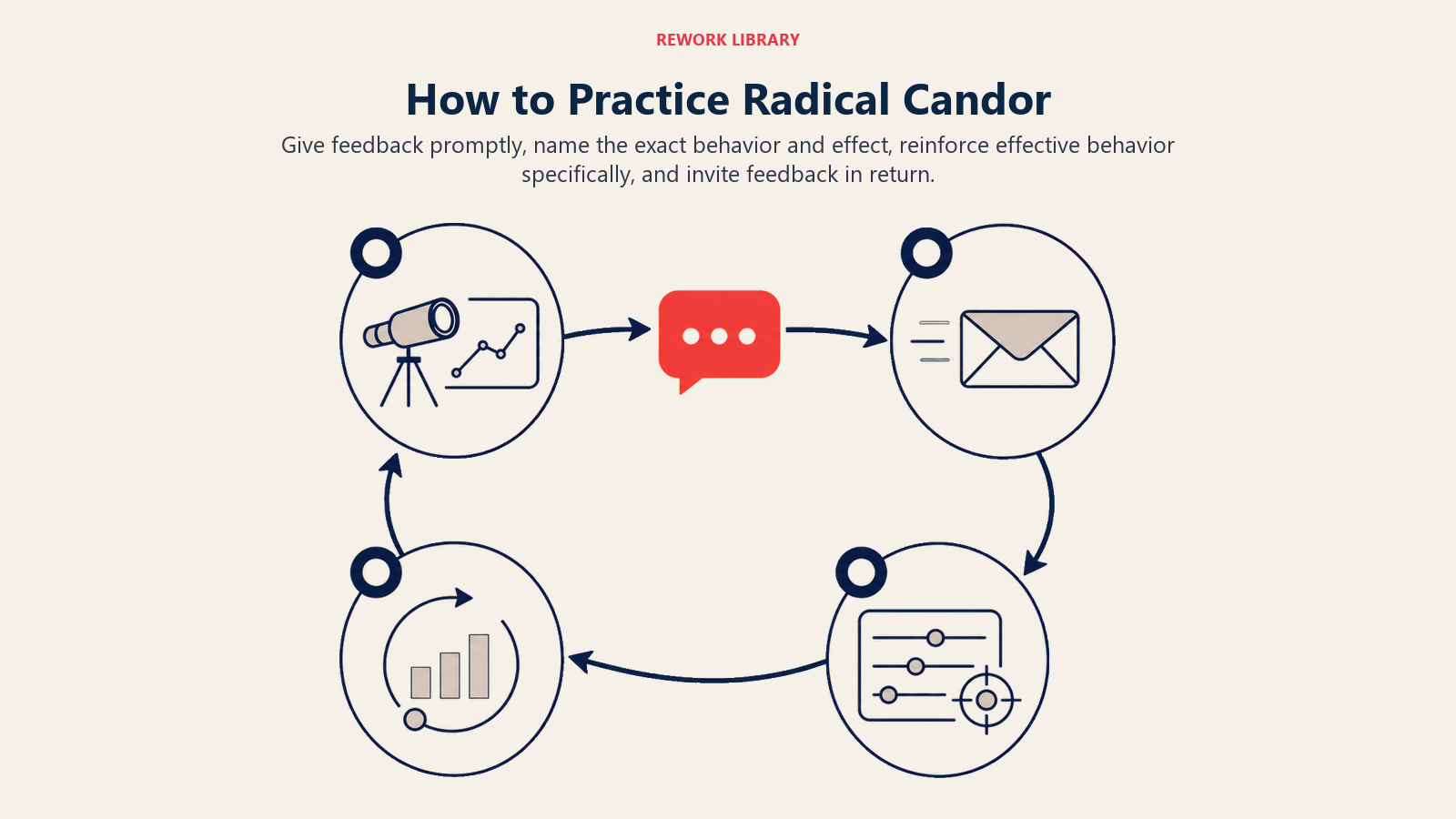
Dé retroalimentación con prontitud, nombre el comportamiento y el efecto exactos, refuerce de forma específica el comportamiento eficaz e invite a recibir retroalimentación a cambio.
La Retroalimentación Debe Ser Inmediata
La retroalimentación más útil se da cerca en el tiempo al comportamiento que aborda. Una conversación sobre una presentación específica, entregada el mismo día, es mucho más útil que una evaluación de desempeño que agrega impresiones de tres meses de trabajo.
La inmediatez importa porque la memoria se degrada rápidamente, porque el vínculo entre comportamientos específicos y sus efectos es más claro justo después del hecho, y porque la retroalimentación inmediata permite un ajuste en tiempo real en lugar de un inventario retrospectivo.
La implicación práctica es integrar la retroalimentación en los patrones de trabajo habituales en lugar de reservarla para los ciclos formales de evaluación. Retroalimentación al final de las reuniones. Conversaciones de seguimiento tras momentos importantes. 1:1s regulares que incluyen un intercambio genuino de retroalimentación, no solo actualizaciones de estado.
La Retroalimentación Debe Ser Específica
La retroalimentación vaga no es retroalimentación. "Necesitas ser más estratégico" o "tu comunicación podría mejorar" le dice al receptor que existe un problema sin proporcionar ninguna información sobre qué hacer de manera diferente. La retroalimentación específica nombra el comportamiento concreto, la situación concreta y el efecto concreto: "En la presentación al cliente, pasaste a los detalles del presupuesto antes de establecer el caso de negocio. El cliente comenzó a objetar cifras antes de entender el valor. La próxima vez, empieza por el resultado y establece el valor antes de mencionar ningún número."
La especificidad requiere que quien da la retroalimentación haya observado efectivamente el comportamiento que comenta, tenga una opinión sobre por qué fue o no efectivo, y pueda articular cómo sería un comportamiento diferente. Esto implica trabajo. Considerablemente más trabajo que ofrecer elogios o críticas genéricas. Pero es la única retroalimentación que le da al receptor algo accionable.
La Retroalimentación Positiva Importa Tanto como la Crítica
El marco de Radical Candor no trata principalmente de entregar retroalimentación crítica. Se aplica igualmente a la retroalimentación positiva, que la mayoría de los managers dan de forma deficiente: vaga, infrecuente y a menudo desvinculada del comportamiento específico que la motivó.
"Buen trabajo en esa presentación" es el equivalente positivo de "necesitas ser más estratégico". Le dice al receptor que hizo algo bien sin especificar qué, lo que significa que no puede reproducirlo de forma confiable.
La retroalimentación positiva específica refuerza exactamente el comportamiento que produjo el buen resultado: "La forma en que abriste nombrando el desafío específico del cliente, no un problema genérico del sector, captó su atención de inmediato. Eso estuvo exactamente bien." El receptor sabe qué repetir.
El marco de Radical Candor trata la retroalimentación positiva específica y genuina como igualmente importante que la retroalimentación crítica honesta, y con la misma franqueza. Ambas requieren la combinación de cuidado y franqueza para ser efectivas.
La Solicitud de Retroalimentación Es Bidireccional
Uno de los aspectos menos enfatizados del marco es la importancia de que los managers soliciten activamente retroalimentación de los miembros de su equipo. Un manager que da retroalimentación directa pero es defensivo al recibirla solo ha implementado la mitad de la práctica.
Pedir retroalimentación de forma genuina, y recibirla sin defensividad, logra varias cosas. Modela el comportamiento que el manager solicita. Hace emerger información sobre cómo el propio comportamiento del manager está afectando al equipo. Y demuestra el tipo de cuidado personal por el crecimiento, incluyendo el propio, que hace que la relación de retroalimentación sea recíproca en lugar de jerárquica.
El enfoque práctico es explícito: en los 1:1s habituales, el manager hace una pregunta específica sobre su propio comportamiento y escucha la respuesta sin explicar ni defenderse. Esto es más difícil de lo que parece, pero la información y la confianza que genera valen la incomodidad.
Radical Candor y la Seguridad Psicológica
El marco de Radical Candor funciona mejor en un contexto donde la seguridad psicológica está presente: donde los miembros del equipo creen que pueden expresarse, cometer errores y recibir retroalimentación honesta sin miedo a consecuencias punitivas.
Intentar implementar Radical Candor en una organización donde la seguridad psicológica es baja, donde la retroalimentación crítica históricamente ha sido usada como evidencia en contra de las personas en lugar de como inversión en su desarrollo, puede tener el efecto contrario. La dimensión de "cuidar personalmente" es lo que distingue Radical Candor de la agresión ofensiva, pero en un entorno de baja confianza, la retroalimentación directa puede ser percibida como agresión independientemente de la intención que haya detrás.
Construir la base de seguridad psicológica a menudo debe preceder a la implementación de prácticas de retroalimentación más directas. Esto implica que el manager demuestre falibilidad, reconozca errores abiertamente y cree una experiencia consistente de que la retroalimentación es segura de dar y recibir antes de pedirle al equipo que asuma el riesgo de la franqueza.
Hechos Clave
- Los managers que dan retroalimentación específica y oportuna son valorados como significativamente más efectivos por sus colaboradores directos que aquellos que dan retroalimentación principalmente en ciclos formales de evaluación, independientemente de si la retroalimentación es positiva o crítica.
- La queja más común de los empleados sobre la gestión no es que la retroalimentación haya sido demasiado dura, sino que fue insuficiente: los empleados frecuentemente reportan no saber con claridad cómo están rindiendo ni qué necesitan hacer de manera diferente.
- La seguridad psicológica y la retroalimentación directa son complementarias, no opuestas. Los equipos con alta seguridad psicológica manejan mejor la retroalimentación crítica directa, no peor, que los equipos con baja seguridad psicológica.
- La tasa de mejora en el desempeño para problemas abordados mediante retroalimentación directa, específica y oportuna es sustancialmente mayor que para problemas que emergen por primera vez en planes formales de mejora del desempeño, donde la relación y la confianza a menudo ya se han deteriorado.
Preguntas Frecuentes
¿Qué se hace cuando alguien responde de forma defensiva a la retroalimentación directa?
Mantenga la retroalimentación y mantenga la relación. La respuesta defensiva suele ser una señal de que la retroalimentación tocó algo real. Puede reconocer la dificultad de la conversación mientras mantiene el contenido de la retroalimentación: "Sé que esto es difícil de escuchar. Se lo digo porque creo que le va a ayudar." Si la defensa persiste, puede ser útil preguntar con qué parte de la retroalimentación no está de acuerdo, para identificar si el problema es el contenido o la forma de entregarlo.
¿Es Radical Candor lo mismo que ser brusco?
No. La brusquedad es una cuestión de estilo. Radical Candor es una cuestión de intención y relación. Puede entregar retroalimentación completamente honesta, específica y directa siendo también reflexivo sobre el momento, la forma y el contexto actual de la persona. El objetivo es que la retroalimentación sea recibida y actuada, no que sea técnicamente completa independientemente de su efecto.
¿Cómo se aplica Radical Candor a la retroalimentación entre pares, no solo de manager a colaborador?
Las mismas dimensiones aplican. La retroalimentación entre pares que combina cuidado genuino por el colega con voluntad de ser honesto es más útil y mejor recibida que la retroalimentación entre pares que es elogio vacío o crítica sin filtros. La dimensión del cuidado suele ser más fácil de establecer con los pares, ya que la relación es más igualitaria, lo que hace que la franqueza sea más alcanzable.
¿Qué pasa si alguien en su equipo dice explícitamente que no quiere retroalimentación directa?
Explore qué hay detrás de eso. Con frecuencia, las personas que dicen no querer retroalimentación directa han tenido experiencias de "retroalimentación directa" que en realidad era agresión ofensiva: honesta pero sin cuidado. Entender su experiencia puede ayudarle a demostrar que el tipo de franqueza que usted ofrece es diferente. En última instancia, el manager tiene la obligación de dar retroalimentación que ayude a la persona a mejorar, aunque el estilo se adapte a sus preferencias.
¿Cómo se da retroalimentación directa sobre un problema persistente sin que parezca un ataque acumulativo?
Manteniéndose en el problema específico en lugar de expandirse a una crítica más amplia. "Esta es la tercera vez que veo este patrón" es contexto apropiado. "Y además, aquí hay una lista de todo lo demás que no está funcionando" no lo es. Aborde el problema específico, proporcione la retroalimentación específica y deje que la conversación se mantenga enfocada.
Lectura relacionada: Seguridad Psicológica | Altos Estándares Sin Agotamiento | Comunicaciones Difíciles con Empleados | Keeper Test en el Desempeño | Liderazgo Inclusivo | Liderazgo Auténtico

On this page
- Las Dos Dimensiones del Marco
- El Cuidado Personal
- La Franqueza
- Los Cuatro Cuadrantes
- Radical Candor
- Empatía Ruinosa
- Agresión Ofensiva
- Insinceridad Manipuladora
- Por Qué la Mayoría de los Managers Recurren a la Empatía Ruinosa
- Aplicar el Marco en la Práctica
- La Retroalimentación Debe Ser Inmediata
- La Retroalimentación Debe Ser Específica
- La Retroalimentación Positiva Importa Tanto como la Crítica
- La Solicitud de Retroalimentación Es Bidireccional
- Radical Candor y la Seguridad Psicológica
- Hechos Clave