Gestión a Escala: Cómo Operan los Líderes Cuando el Management Directo Ya No Funciona
Turn this article into takeaways for your work.


Each assistant summarizes the article only for you and suggests best practices for your work.
En la carrera de la mayoría de los líderes llega un momento en que el enfoque de management que los llevó hasta aquí deja de funcionar. El equipo es demasiado grande para supervisarlo personalmente. Las decisiones son demasiado numerosas para centralizarlas. Los problemas son demasiado variados para que una sola persona los tenga todos en mente. Y, sin embargo, muchos líderes, incluso en niveles senior, siguen gestionando como si todavía dirigieran un equipo de doce, solo que con más personas.
El resultado es predecible: el líder es un cuello de botella, el equipo está esperando aprobaciones, la organización no aprende lo suficientemente rápido y el líder está agotado y frustrado porque nada parece avanzar sin él.
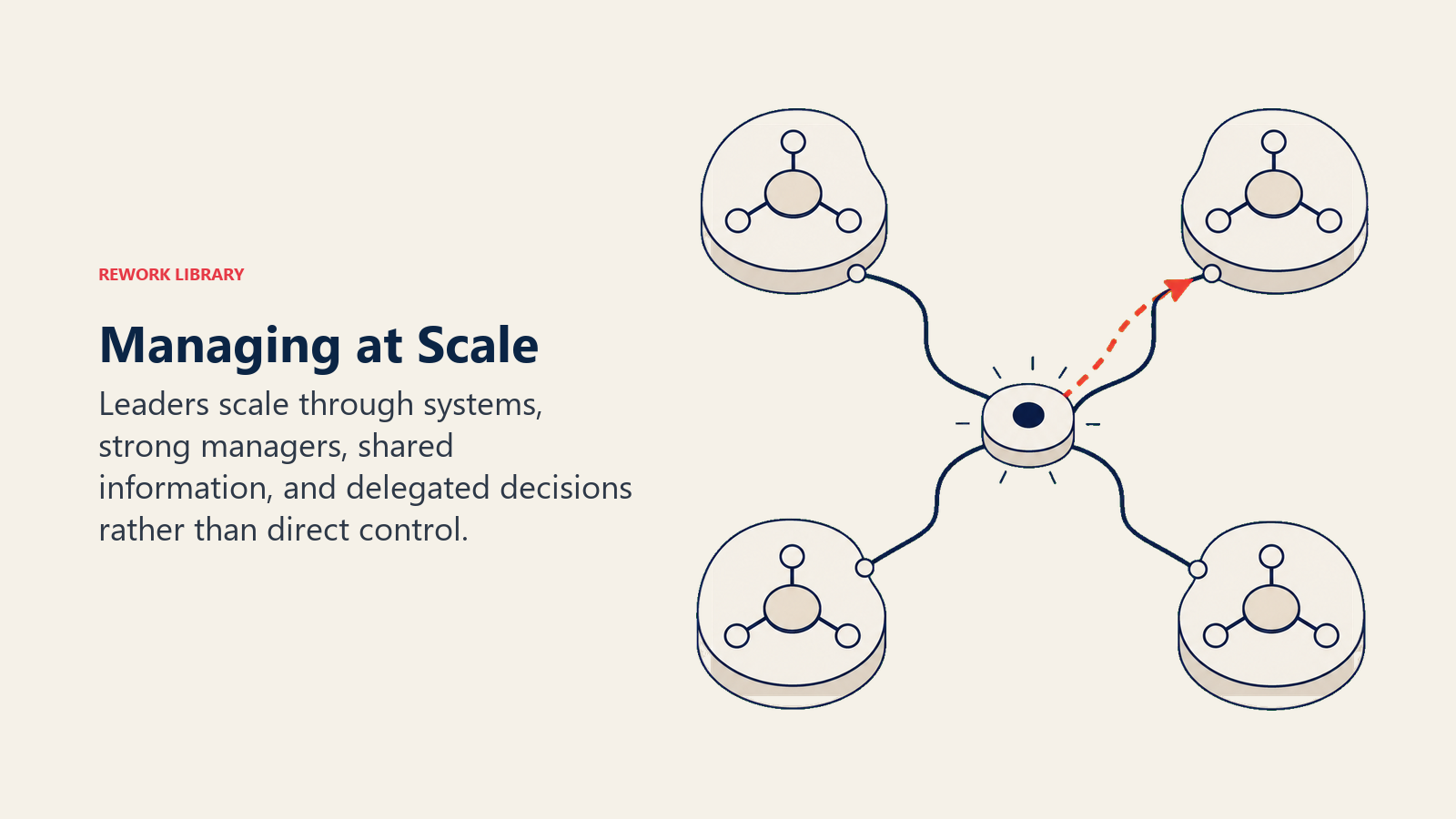
La gestión a escala es una disciplina distinta, no una versión más grande de gestionar un equipo pequeño. La transición requiere cambiar a qué se presta atención, qué se decide frente a qué se delega, cómo se mide el éxito y cómo se influye en la organización que no se puede supervisar directamente.
Qué cambia cuando se escala
El cambio más importante en la gestión a escala es pasar de gestionar personas a gestionar sistemas. A pequeña escala, un líder puede conocer individualmente a los miembros de su equipo, hacer seguimiento de lo que cada persona está haciendo e intervenir cuando algo sale mal. La calidad de la organización depende en gran medida de la calidad de las relaciones directas y la atención del líder.
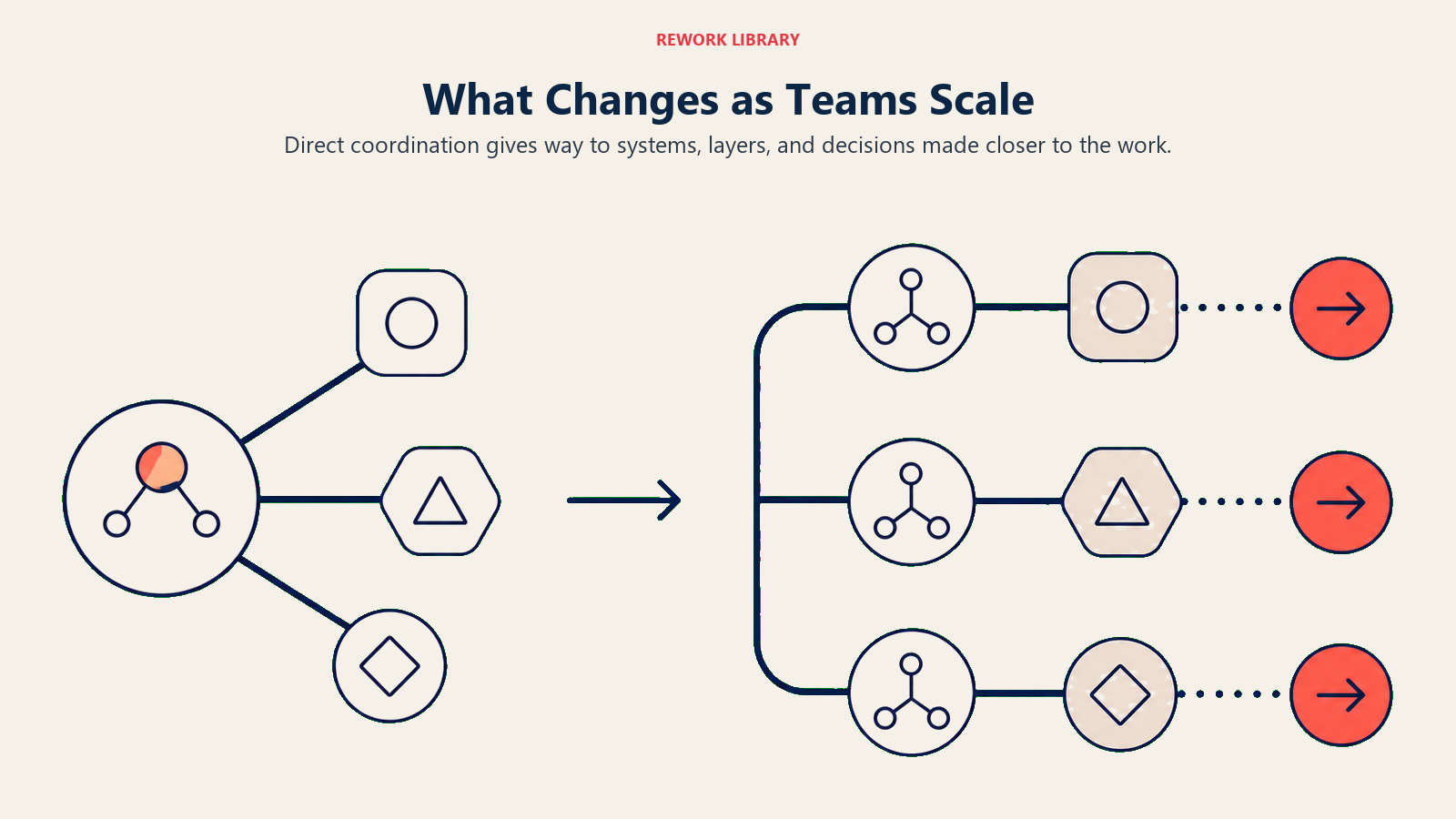
A gran escala, ese modelo se rompe. El líder no puede conocer a todo el mundo. No puede hacer seguimiento de cada línea de trabajo. Y si lo intenta, crea una estructura de management que ralentiza todo hasta el ritmo del ancho de banda de una sola persona.
Lo que reemplaza al management directo es un conjunto de sistemas: claridad en la estrategia y las prioridades, derechos de decisión claros, sistemas de gestión del desempeño, canales de comunicación y una cultura de responsabilidad que opera sin requerir la presencia personal del líder en cada conversación.
El trabajo del líder es diseñar y mantener esos sistemas, no sustituirlos.
Atención
A pequeña escala, la atención del líder sigue naturalmente al trabajo: quién hace qué, dónde están los problemas, qué acuerdos están avanzando. A gran escala, la atención debe gestionarse activamente. El líder que dedica todo su tiempo a los detalles de diez líneas de trabajo no puede ver los patrones a lo largo de doscientas.
Gestionar la atención a escala significa desarrollar un sentido de lo que realmente requiere la participación del líder y lo que no. Significa crear sistemas de información que hagan llegar las señales correctas sin que el líder tenga que ir a buscarlas. Significa confiar en los colaboradores para gestionar sus propios dominios e intervenir solo cuando algo lo requiere genuinamente.
El modo de fallo es bidireccional. Algunos líderes se adentran demasiado en los detalles (microgestionando por debajo del nivel del que son responsables). Otros se alejan demasiado (desconectándose de la organización por completo y perdiendo la capacidad de calibrar si las cosas van bien). La calibración correcta implica mantenerse genuinamente conectado a lo que está ocurriendo sin sustituir a las capas de management inferiores.
Toma de decisiones
A pequeña escala, un líder puede tomar la mayoría de las decisiones por sí mismo, con rapidez. A gran escala, la toma de decisiones centralizada es un lastre para el desempeño. Si cada decisión significativa requiere la aprobación del líder senior, la velocidad de decisión de la organización está limitada por el ancho de banda y la disponibilidad de una sola persona.
La respuesta es un marco claro de derechos de decisión: qué decisiones requieren la participación del liderazgo, cuáles se delegan a los colaboradores directos y cuáles puede tomar la siguiente capa. No se trata de abdicar la responsabilidad. Se trata de garantizar que las decisiones las tomen las personas más cercanas a la información relevante, con el nivel de autoridad adecuado.
El Modelo de Decisión Vroom-Yetton ofrece un marco útil para pensar cuándo la participación del líder agrega valor frente a cuándo genera retrasos. La pregunta central es si la participación del líder mejora la calidad de la decisión, dado quién más tiene información relevante y responsabilidad. Si la respuesta es no, el trabajo del líder es garantizar que la persona adecuada tenga la autoridad para decidir, no tomar la decisión él mismo.
Una heurística útil: si una decisión puede revertirse, deléguese. Si es irreversible y de alto impacto, el líder debe participar. La mayoría de las decisiones son reversibles.
Influencia
A pequeña escala, un líder influye en la organización principalmente a través de la conversación directa: lo que dice en los 1:1, en las reuniones de equipo, en las interacciones informales. A gran escala, estos canales directos solo pueden llegar a una fracción de la organización.
La influencia a escala funciona a través de mecanismos diferentes. La estrategia y el relato: si la organización comprende hacia dónde va y por qué, puede tomar decisiones coherentes sin necesidad de consultar al líder en cada momento. Las normas y la cultura: los comportamientos que se recompensan, toleran o penalizan crean expectativas que moldean la forma en que miles de personas toman decisiones cada día. El diseño organizacional: la estructura de la organización, quién reporta a quién, cómo se dividen las funciones, determina qué información fluye hacia dónde y quién tiene autoridad para qué.
Estas son palancas que se mueven más lentamente que la conversación directa, razón por la cual los líderes a menudo subestiman su importancia. Pero a escala, son los mecanismos que realmente determinan el comportamiento organizacional.
El desafío del pipeline de liderazgo
Una de las responsabilidades más trascendentes de un líder a escala es la calidad del pipeline de liderazgo que tiene por debajo. El Modelo de Pipeline de Liderazgo describe las capacidades distintas requeridas en cada nivel de liderazgo. La transición de gestionar colaboradores individuales a gestionar managers requiere un conjunto de habilidades diferente. La transición de gestionar managers a liderar una función amplia requiere otra más.
Los líderes que gestionan a escala deben reflexionar sobre si los líderes que tienen por debajo han realizado con éxito estas transiciones. Un director que está gestionando a su equipo como lo hacía cuando era colaborador individual, o un VP que no ha pasado de gestionar personas a diseñar sistemas, crea un cuello de botella en el medio de la organización que a menudo es más difícil de ver y abordar que uno en la cima.
Desarrollar las capacidades de liderazgo de los colaboradores directos no es, por tanto, solo una inversión en el desarrollo. Es una estrategia de escalabilidad. El líder que construye excelentes líderes en el siguiente nivel multiplica su propia efectividad. El líder que mantiene a sus mejores colaboradores individuales en roles de management donde no están operando al nivel correcto limita a toda la organización.
Construir inteligencia organizacional
A escala, el líder necesita sistemas de información que no dependan de que él mismo recopile la información. Sin ellos, o pierde contacto con lo que realmente está ocurriendo (operando con suposiciones y datos desactualizados) o dedica cantidades insostenibles de tiempo a la recopilación de información.
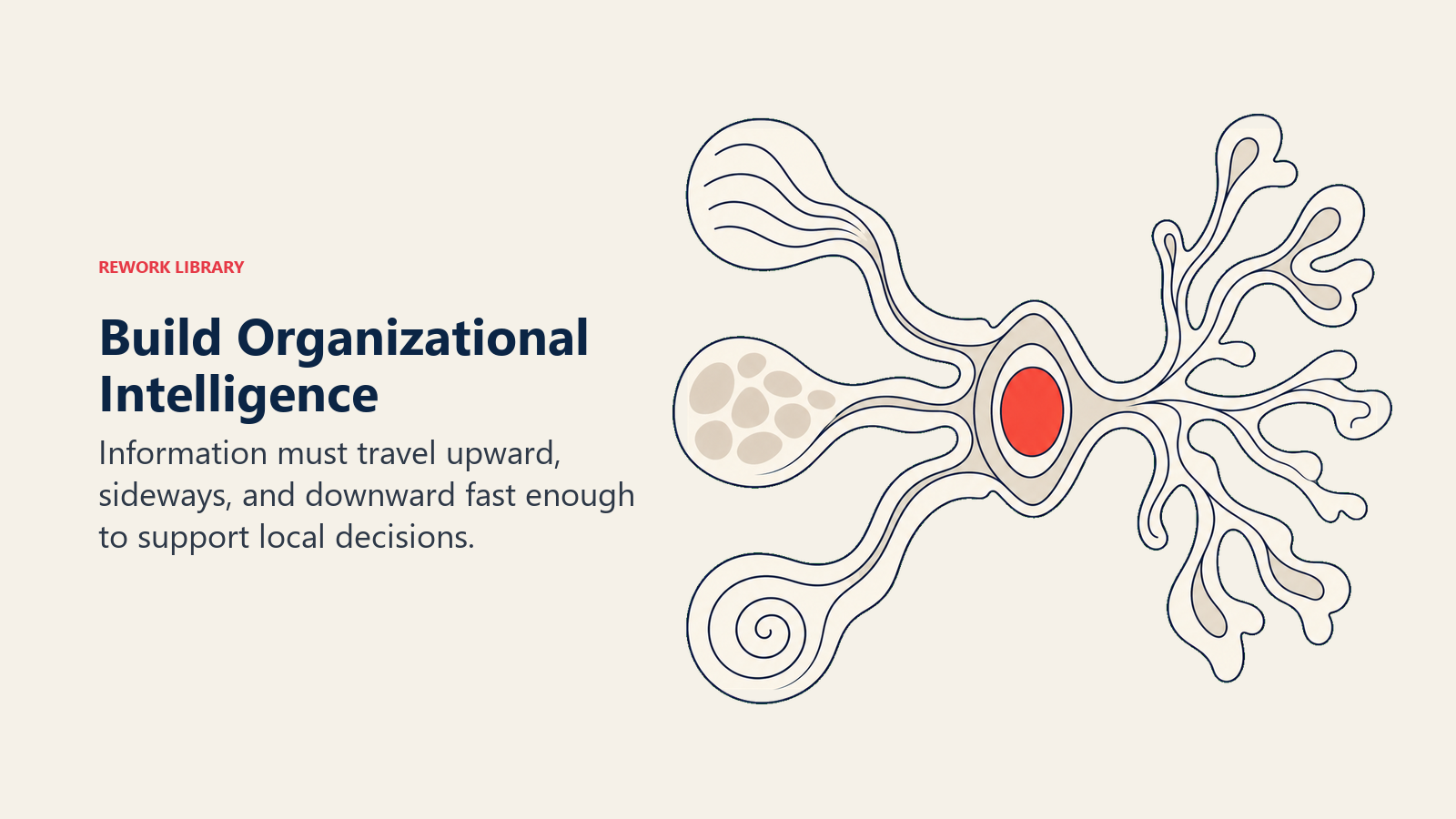
La inteligencia organizacional a escala requiere:
Vías de escalación estructuradas. ¿Qué problemas se escalan al líder? Las vías de escalación demasiado amplias significan que el líder está inundado con todo. Las demasiado estrechas significan que los problemas reales pasan desapercibidos. Calibrar esto correctamente requiere una conversación explícita con el equipo de liderazgo: ¿qué debería llegar realmente a mí y qué debería resolverse en el nivel siguiente?
Ritmos operacionales consistentes. Revisiones semanales del equipo de liderazgo. Revisiones de negocio mensuales. Sesiones trimestrales con toda la organización. Estos no son rituales burocráticos. Son la cadencia mediante la cual el líder permanece conectado a la organización sin necesitar revisiones informales constantes. La clave es garantizar que estos foros produzcan información real en lugar de presentaciones curadas.
Indicadores adelantados y rezagados. Los líderes a escala generalmente tienen acceso a indicadores rezagados: ingresos, beneficios, retención, puntuaciones de satisfacción del cliente. Estos dicen lo que ocurrió. No dicen lo que está a punto de ocurrir. Los líderes efectivos a escala también hacen seguimiento de indicadores adelantados: salud del pipeline, tendencias de compromiso del equipo, velocidad del desarrollo de productos, señales del mercado. Estos permiten corregir el rumbo antes de que los indicadores rezagados se deterioren.
Múltiples fuentes de información. Si la visión del líder sobre la organización proviene exclusivamente de los resúmenes de sus colaboradores directos, solo verá lo que ellos eligen mostrar. Esto no es necesariamente un engaño, es un sesgo de selección. Los líderes efectivos a escala complementan los informes formales con conversaciones directas en niveles inferiores, reuniones estructuradas de salto de nivel, conversaciones con clientes y una escucha organizacional más amplia.
La delegación como práctica estratégica
A pequeña escala, la delegación consiste en distribuir tareas. A gran escala, consiste en transferir responsabilidad por los resultados. La distinción importa.
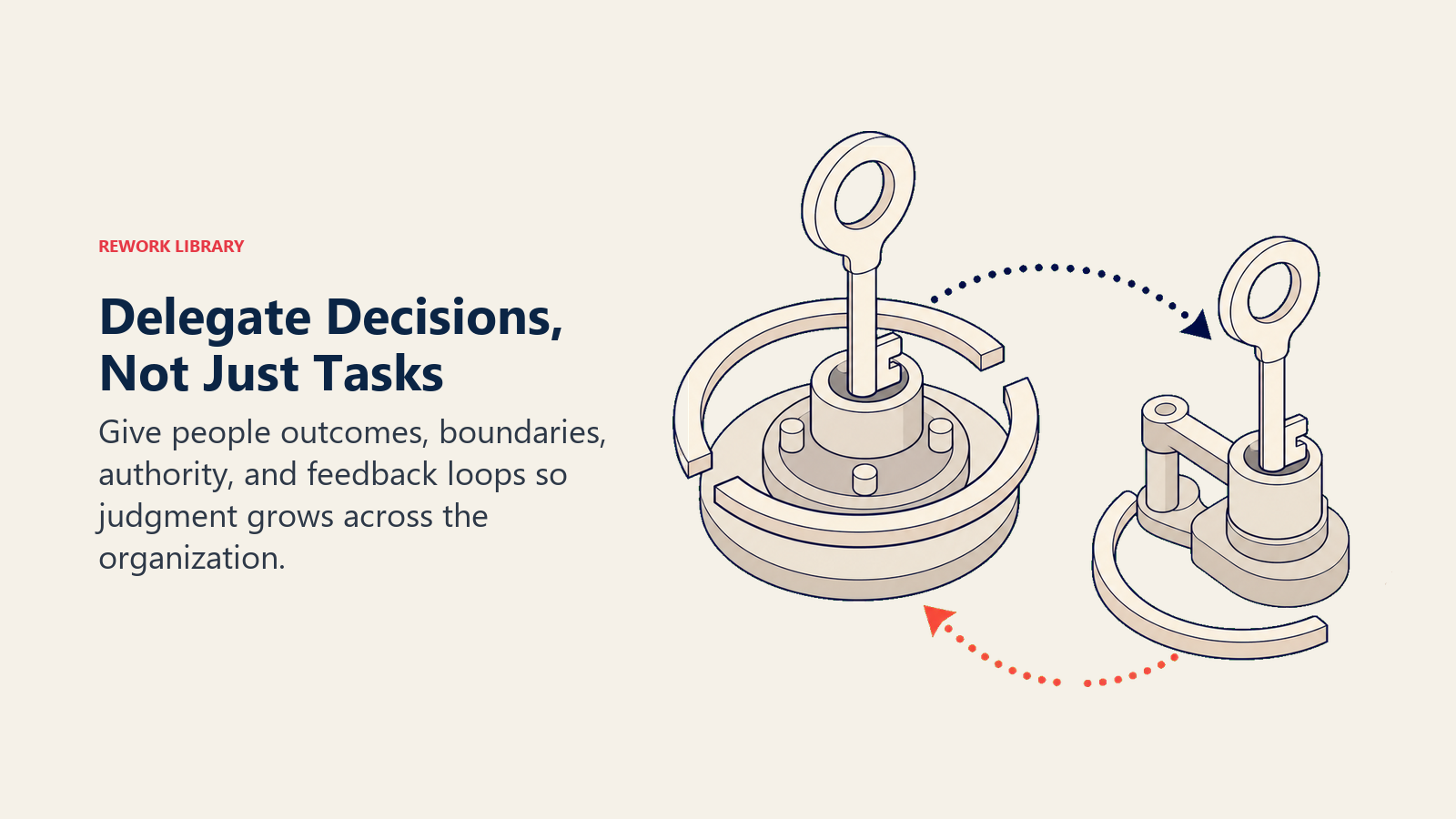
Una delegación de tarea dice: "Le pido que haga esta cosa específica." El líder sigue siendo responsable del resultado. Una delegación de responsabilidad dice: "Usted es responsable de este dominio. Tome las decisiones, gestione los recursos y entregue los resultados." El trabajo del líder pasa a ser crear las condiciones para el éxito y responsabilizar a la persona por los resultados, no tomar las decisiones.
La delegación efectiva de responsabilidad requiere que el delegado tenga claridad sobre cómo se ve el éxito, los recursos y la autoridad para lograrlo y una comprensión honesta de las consecuencias de no cumplir. Sin estas tres cosas, la delegación de responsabilidad es simplemente transferencia de culpa.
También requiere que el líder realmente dé un paso atrás. Uno de los fallos más comunes al delegar a escala es el líder que delega formalmente pero sigue tomando las decisiones de forma informal, mediante consejos que se interpretan como órdenes, mediante participación en reuniones que señalan falta de confianza, o revirtiendo decisiones delegadas cuando está en desacuerdo con el resultado. Esto crea lo peor de ambos mundos: el delegado es nominalmente responsable pero está efectivamente sin poder, y la organización aprende rápidamente que la responsabilidad sin autoridad es simplemente un cambio de título.
Gestionar la cultura a escala
A pequeña escala, el líder puede modelar la cultura directamente. Su comportamiento en la sala establece la norma. A gran escala, el líder no puede estar en la mayoría de las salas donde se está construyendo la cultura.
La cultura a escala funciona a través de sistemas y a través de los comportamientos de los líderes en todos los niveles. El trabajo del líder senior es garantizar que los valores y comportamientos que desea en la organización sean comprendidos, modelados y aplicados por las capas inferiores. Esto requiere:
Articulación explícita de la cultura deseada. No valores en una pared, sino comportamientos específicos que se esperan y comportamientos específicos que no son aceptables. Cuanto más específicos, más accionables.
Consecuencias visibles cuando se viola la cultura. Si un líder senior viola los valores declarados sin consecuencias, los valores declarados no son los valores reales. La cultura real de cada organización es la que se ve aplicar bajo presión.
Reconocimiento de los portadores de cultura. Las personas en niveles de management intermedio y de colaborador senior que modelan visiblemente la cultura son enormemente poderosas. Identificarlas, celebrarlas y darles influencia organizacional es una de las formas más efectivas en que un líder senior moldea la cultura a escala.
Datos clave
- Las organizaciones con marcos claros de derechos de decisión, documentados y comunicados, toman decisiones de forma mensurablemente más rápida y con una tasa más baja de escalación a los líderes senior que aquellas sin ellos.
- Las conversaciones de salto de nivel, donde los líderes senior se reúnen directamente con empleados dos niveles por debajo, se encuentran entre las actividades de recopilación de información de mayor valor disponibles para los ejecutivos, y entre las más infrautilizadas.
- El impedimento más común para la velocidad organizacional en las organizaciones escaladas es la participación del líder senior en decisiones que ha delegado formalmente, lo que crea ambigüedad sobre quién tiene realmente la autoridad.
- La capacidad de liderazgo en el nivel de director y VP tiene una correlación más alta con el desempeño organizacional que la capacidad de liderazgo a nivel de C-suite en organizaciones maduras, porque las capas intermedias toman la mayoría de las decisiones cotidianas de consecuencia.
Preguntas frecuentes
¿Cómo sé si estoy gestionando en el nivel equivocado (con demasiado detalle)?
Si con frecuencia está resolviendo problemas que sus colaboradores directos deberían resolver, tomando decisiones que tienen autoridad para tomar y realizando trabajo que corresponde al nivel de responsabilidad de su puesto anterior, está gestionando por debajo de su nivel. La señal organizacional es un equipo que espera su presencia antes de actuar.
¿Cómo me mantengo conectado sin microgestionar?
A través de mecanismos estructurados: revisiones operacionales regulares con informes consistentes, inmersiones periódicas más profundas en áreas específicas y conversaciones directas ocasionales en niveles por debajo de sus colaboradores directos. El objetivo es una visión sistémica de la organización, no una transaccional.
¿Qué debo hacer cuando una decisión delegada se toma de una manera con la que no estoy de acuerdo?
A menos que sea irreversible o genuinamente perjudicial, déjela estar. Revertir una decisión delegada enseña a la organización que la delegación no es real. En cambio, tenga una conversación directa sobre lo que observó y lo que habría preferido, como un insumo de desarrollo y no como una reversión.
¿Cuántos colaboradores directos son demasiados en el nivel ejecutivo?
Esto depende más de la complejidad e interdependencia de los roles que del número en sí. Entre cinco y ocho colaboradores directos bien seleccionados que sean capaces de gestionar sus propios dominios suele ser más efectivo que tres colaboradores directos gestionados de forma demasiado estrecha.
¿Cuál es el error más común que cometen los líderes senior al escalar sus organizaciones?
Seguir realizando el trabajo que los hizo exitosos en niveles anteriores en lugar de realizar plenamente la transición al nuevo trabajo de diseñar sistemas, desarrollar líderes y moldear la cultura. Es comprensible porque el trabajo anterior se siente productivo y familiar. Pero desplaza el trabajo genuinamente diferente que requiere la escalabilidad.
Lectura relacionada: Gestión de alto rendimiento | El Modelo de Pipeline de Liderazgo | Arquitectura cultural | Una cultura que escala | Planificación de la sucesión | Modelo de Decisión Vroom-Yetton
