Treacy und Wiersemas Value Disciplines erklärt
Turn this article into takeaways for your work.


Each assistant summarizes the article only for you and suggests best practices for your work.
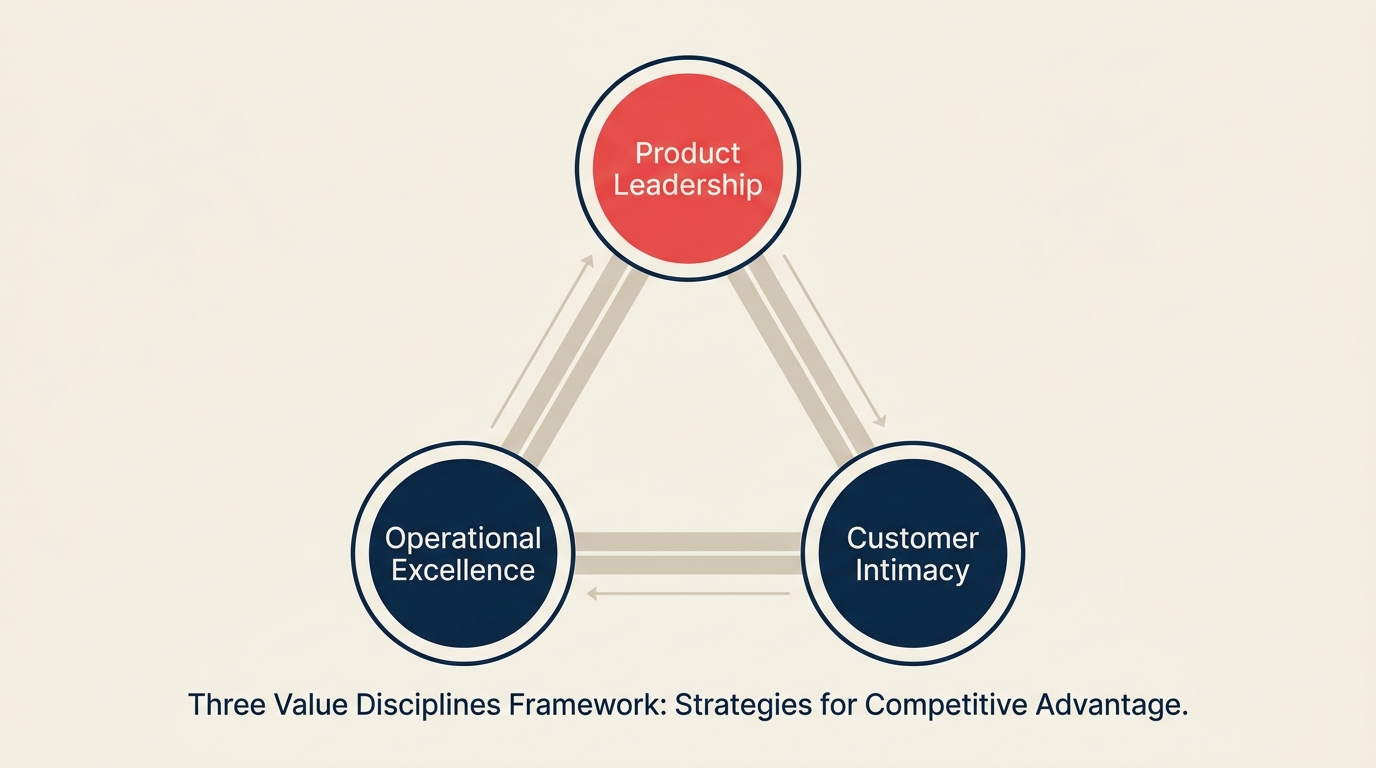
Das Value-Disciplines-Modell gibt Unternehmen einen klaren Rahmen für strategische Entscheidungen. Es besagt, dass Ihre Wettbewerbsposition davon abhängt, bei welcher Value Discipline Sie die Führung übernehmen, und dass der Versuch, bei allen drei gleichzeitig zu führen, alles verwässert.
Was sind die Value Disciplines?
Michael Treacy und Fred Wiersema stellten das Value-Disciplines-Framework 1993 in einem Artikel der Harvard Business Review vor und erweiterten es 1995 in ihrem Buch "The Discipline of Market Leaders." Das Kernargument ist einfach: Es gibt drei verschiedene Wege, mit denen ein Unternehmen seinen Kunden überlegenen Mehrwert liefern kann, und kein Unternehmen kann realistischerweise alle drei gleichzeitig meistern.
Wichtige Fakten
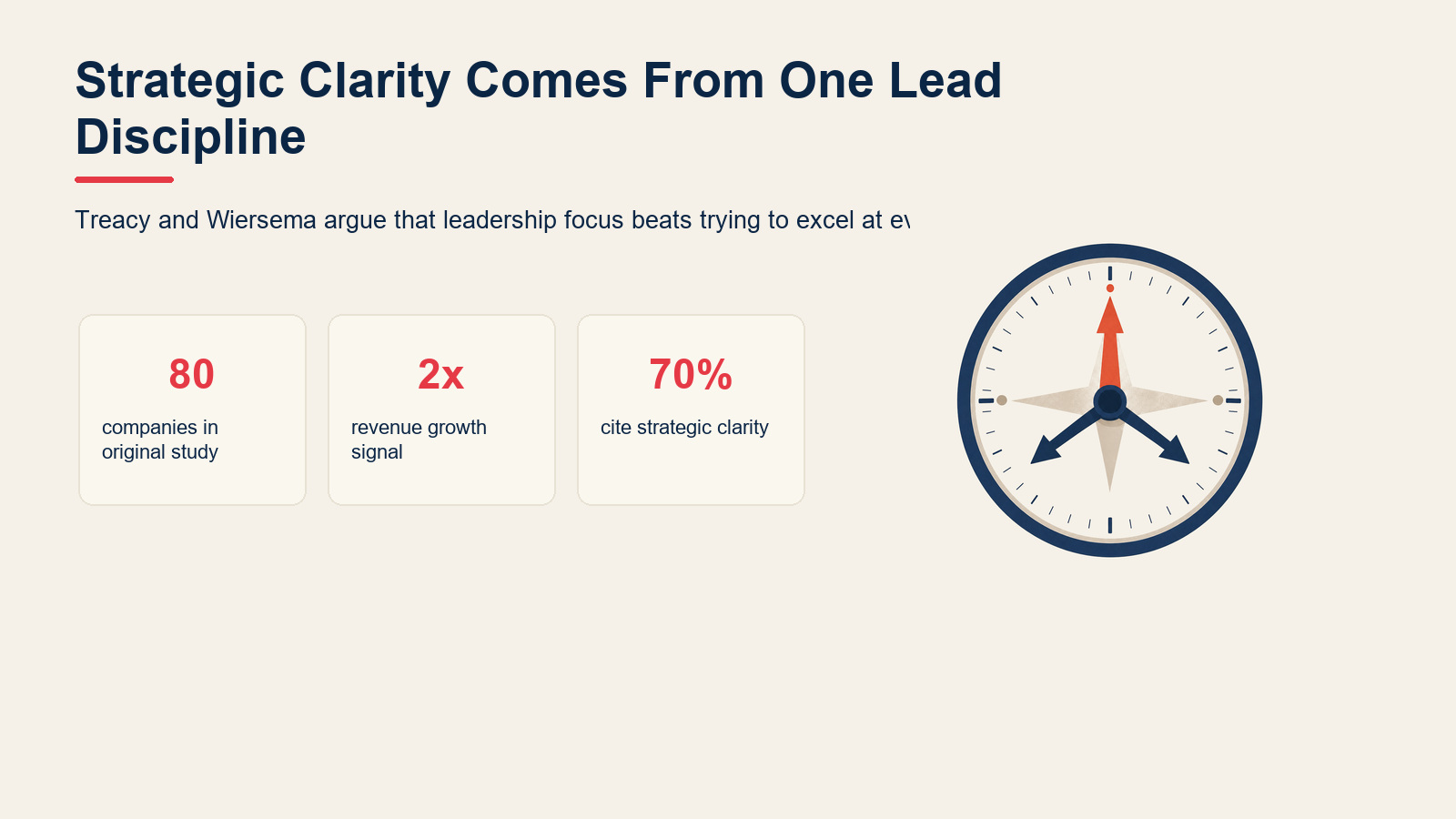
- Unternehmen, die eine einzige Value Discipline verfolgten, übertrafen laut Treacy und Wiersemas Originalforschung an 80 Unternehmen multifokussierte Wettbewerber über einen Zeitraum von 5 Jahren beim Umsatzwachstum um den Faktor 2 (HBR, 1993).
- Bain & Company-Forschungen zeigen, dass Unternehmen mit klarem strategischem Fokus mit 1,6-facher Wahrscheinlichkeit eine überdurchschnittliche Rentabilität in ihrem Sektor erzielen (Bain, 2017).
- McKinsey berichtet, dass 70 % der Führungskräfte strategische Klarheit als den wichtigsten Treiber organisationaler Ausrichtung nennen (McKinsey Global Survey, 2022).
Das Modell stellt zwei Anforderungen an jedes Unternehmen. Erstens wählen Sie eine Discipline, bei der Sie führen wollen: Hier investieren Sie überproportional und streben nach einer Best-in-Class-Position. Zweitens bleiben Sie bei den anderen beiden auf einem akzeptablen Niveau: nicht schwach, aber auch nicht mit dem Anspruch, dort zu gewinnen. Die Logik dahinter: Jede Discipline verlangt ein grundlegend anderes Betriebsmodell, eine andere Unternehmenskultur und andere Kompromisse. Wer alle drei gleichzeitig betreibt, erzeugt interne Widersprüche, die alles verlangsamen.
Dies ist kein Framework für Startups, die noch ihr Produkt entwickeln. Es ist ein Werkzeug für etablierte Organisationen, die entscheiden müssen, wo sie ihre Wettbewerbsenergie bündeln, wie sie Kapital einsetzen und welche Art von Talenten und Prozessen sie priorisieren.
Die drei Value Disciplines
| Discipline | Wertversprechen | Betriebsmodell | Beispielunternehmen |
|---|---|---|---|
| Operational Excellence | Niedrigste Gesamtkosten und höchste Bequemlichkeit | Standardisierte Prozesse, schlanke Abläufe, minimale Individualisierung, skalengetriebene Effizienz | IKEA, McDonald's, FedEx, Southwest Airlines |
| Product Leadership | Bestes, innovativstes Produkt oder beste Dienstleistung | R&D-Investitionen, schnelle Iteration, talentstarke Teams, Bereitschaft, bestehende Produkte zu kannibalisieren | Apple, Tesla, Gore-Tex, Intel |
| Customer Intimacy | Beste Gesamtlösung, individuell auf den einzelnen Kunden zugeschnitten | Enge Beziehungen, Account-Management, beratender Vertrieb, flexible Individualisierung | Salesforce Professional Services, McKinsey, Nordstrom |
Operational-Excellence-Unternehmen gewinnen durch Preis und Zuverlässigkeit. Sie haben ihre Lieferketten, Prozesse und die Distribution so optimiert, dass Wettbewerber ihre Kostenstruktur oder Geschwindigkeit nicht erreichen können. McDonald's behauptet nicht, den besten Burger der Welt zu servieren. McDonald's verspricht, Ihnen überall und schnell eine gleichbleibende, erschwingliche Mahlzeit zu liefern. Das ist das Versprechen.
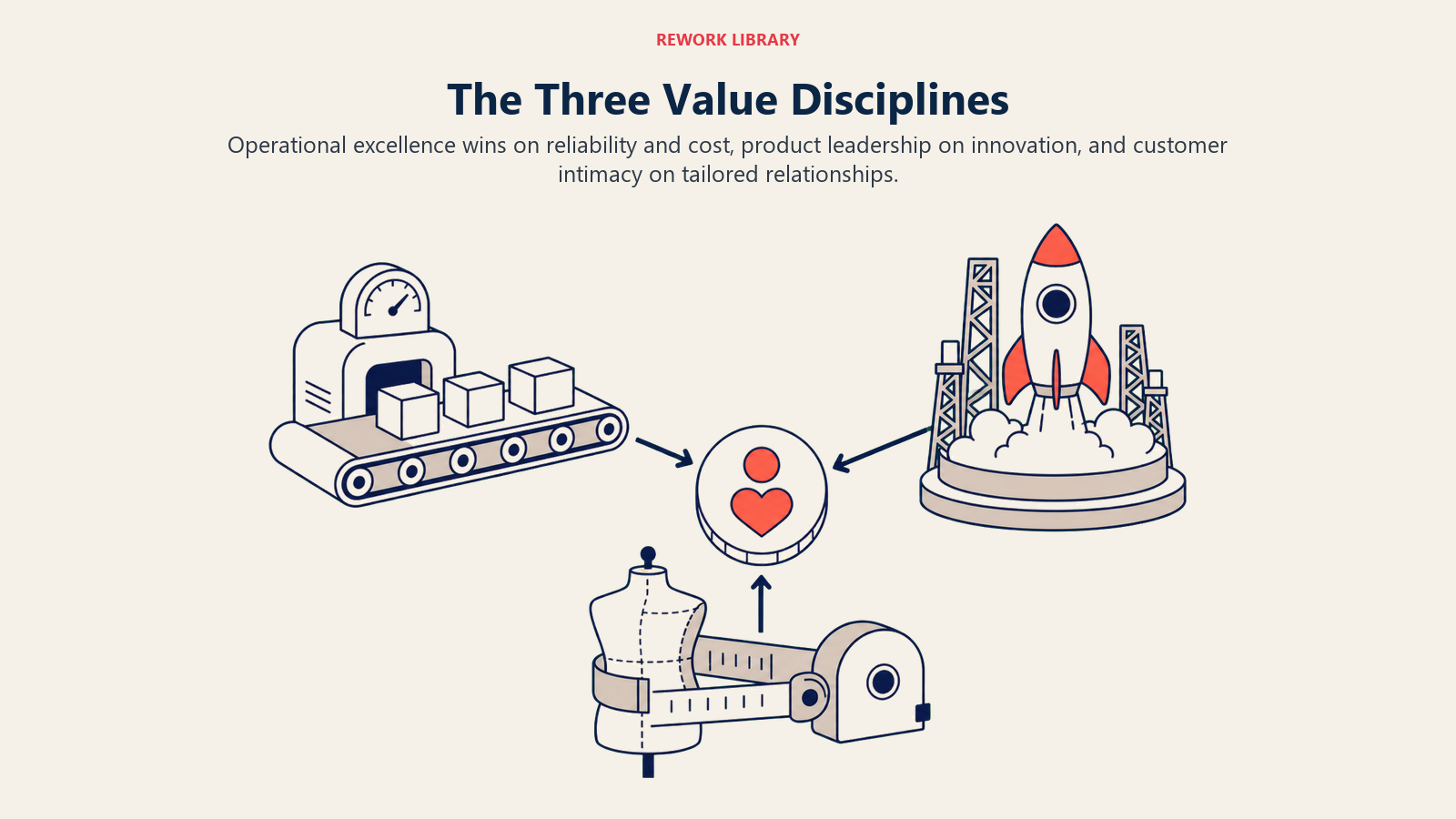
Product-Leadership-Unternehmen gewinnen, indem sie Dinge schaffen, die noch niemand anderes geschaffen hat. Sie investieren stark in R&D und akzeptieren das Risiko, ihre eigenen Produkte zu veralten, bevor ein Wettbewerber es tut. Apples Entscheidung, das iPhone auf den Markt zu bringen, obwohl klar war, dass es die iPod-Verkäufe kannibalisieren würde, ist das bekannteste Beispiel. Das Betriebsmodell dreht sich um Talente, Iterationsgeschwindigkeit und eine Kultur, die Scheitern im Streben nach Durchbrüchen toleriert.
Customer-Intimacy-Unternehmen gewinnen, indem sie bestimmte Kunden besser verstehen als alle anderen. Sie bauen langfristige Beziehungen auf, sammeln Wissen über jeden Account und schneiden Lösungen auf individuelle Bedürfnisse zu. Eine große Unternehmensberatung verkauft kein Standardprodukt. Sie verkauft ein Team von Menschen, das Ihr Unternehmen kennenlernt und Ihr spezifisches Problem löst. Die Marge ist hoch, weil der gelieferte Mehrwert hoch und im großen Maßstab schwer zu replizieren ist.
Warum Sie sich für eine entscheiden müssen
Treacy und Wiersema waren eindeutig: Die Disciplines schließen sich auf Führungsebene gegenseitig aus. Sie können bei allen drei eine Schwellenleistung aufrechterhalten. Aber Sie können nur bei einer führen.
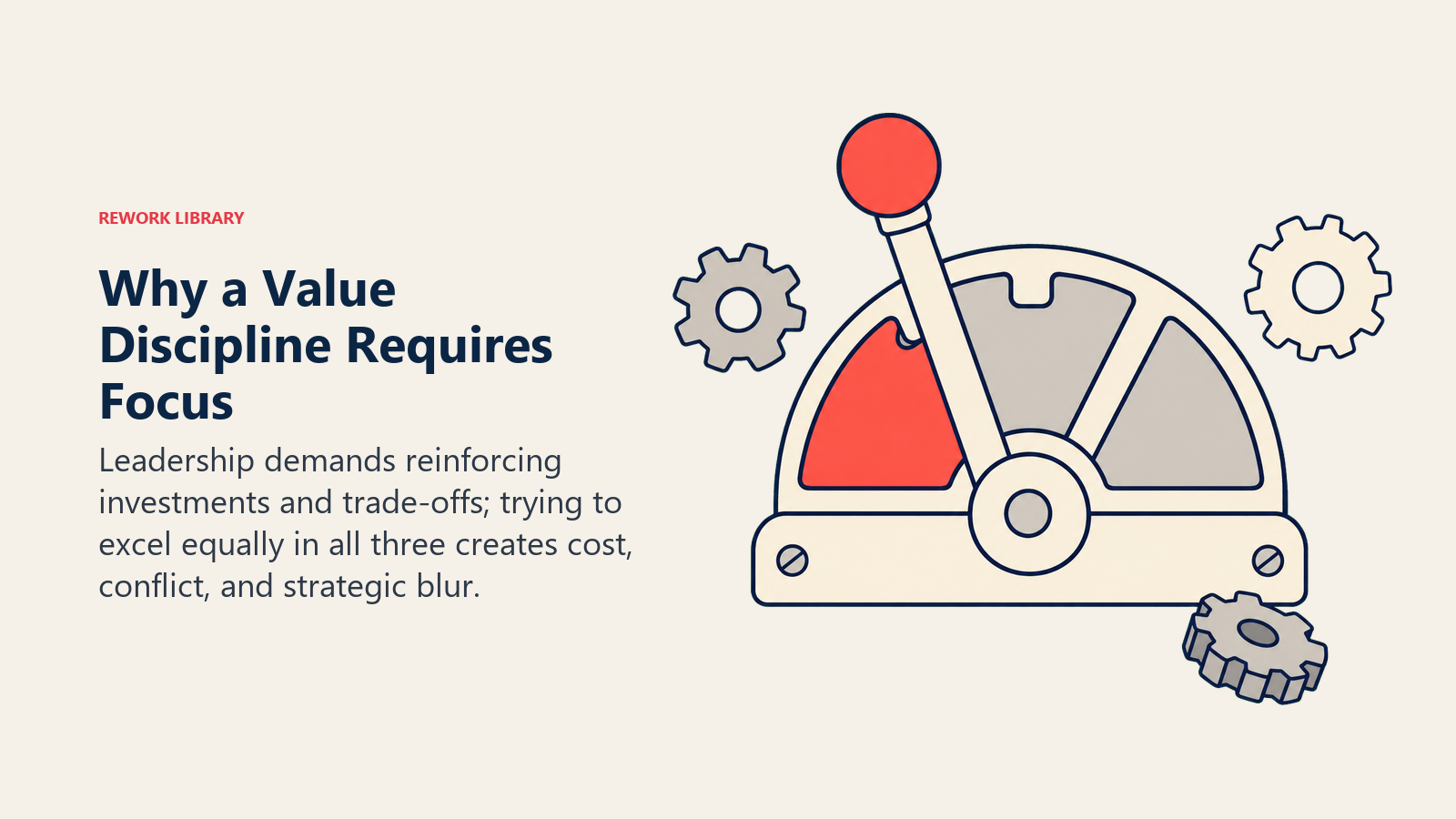
Der Grund ist struktureller Natur. Jede Discipline prägt Ihre Organisation auf eine Weise, die mit den anderen kollidiert. Operational Excellence erfordert Standardisierung und Prozessdisziplin. Customer Intimacy hingegen erfordert Flexibilität und Individualisierung, was Standardisierung untergräbt. Product Leadership erfordert Toleranz für Experimente und Misserfolge. Operational Excellence hingegen erfordert Vorhersagbarkeit und fehlerfreie Ausführung. Beide Kulturen können nicht in derselben Organisation gleichzeitig betrieben werden, ohne dass eine gewinnt und die andere verkümmert.
Hinzu kommt ein Ressourcenargument. Eine führende Position in einer Discipline erfordert über Jahre anhaltende, konzentrierte Investitionen. Unternehmen, die Investitionen auf alle drei aufteilen, landen bei jedem als Zweitbeste, und zweitbeste ist in Wettbewerbsmärkten selten eine Gewinnerposition.
Schwellenleistung ist ebenfalls wichtig. Ein Product Leader braucht Abläufe, die nicht desaströs sind. Ein Operational-Excellence-Unternehmen braucht Produkte, die Kunden tatsächlich wollen. Das Modell ist keine Erlaubnis, die anderen beiden Disciplines zu ignorieren. Es ist ein Leitfaden dafür, wo Sie Ihre Führungsenergie und Ihre Differenzierungsbudgets investieren.
Value Disciplines vs. Porter's Five Forces
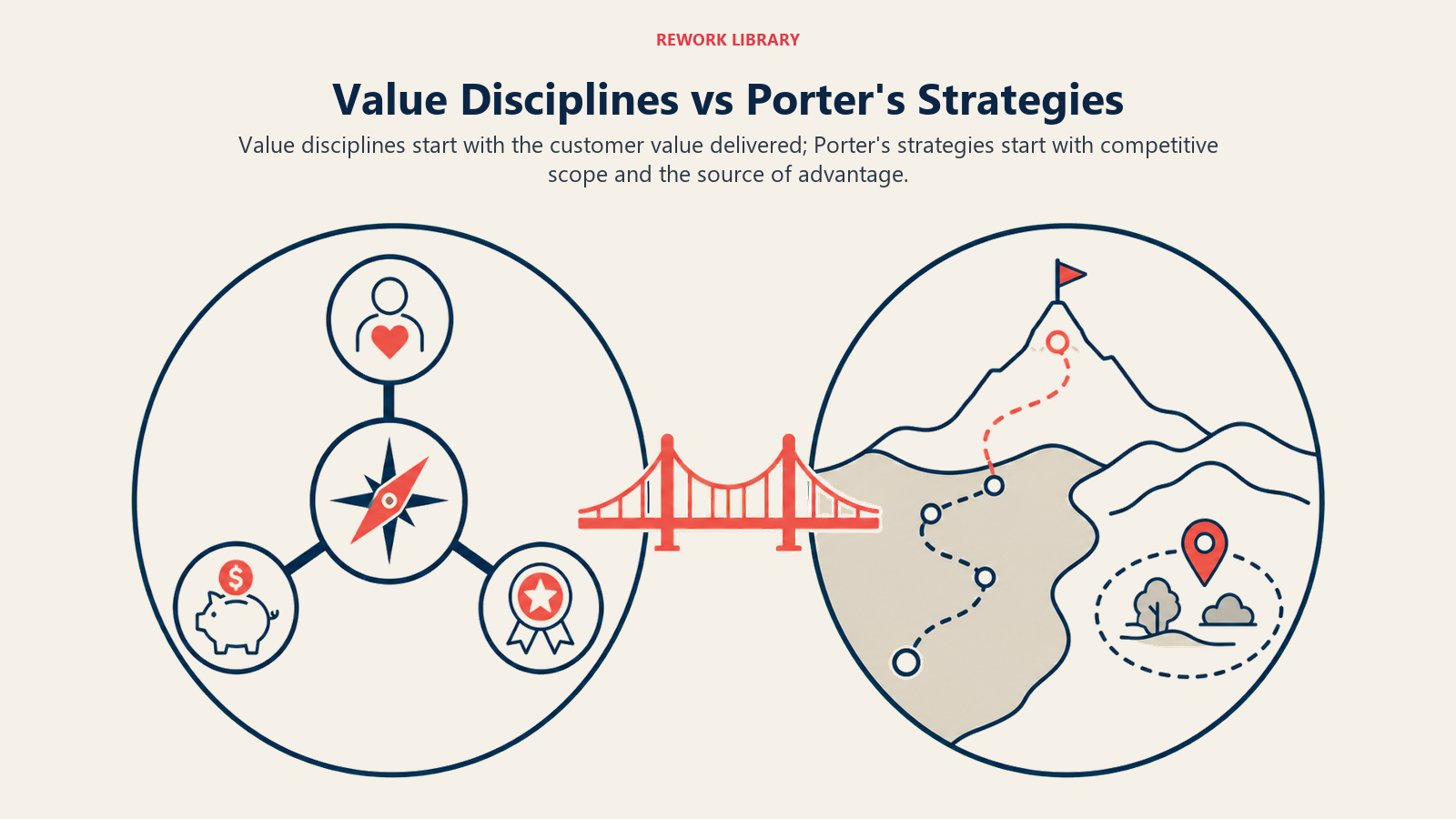
Michael Porters generische Strategien, 1980 veröffentlicht, behandeln ähnliches Terrain aus einem anderen Blickwinkel. Die beiden werden häufig direkt verglichen.
| Dimension | Porters generische Strategien | Treacy/Wiersema Value Disciplines |
|---|---|---|
| Anzahl der Strategien | 3 (Kostenführerschaft, Differenzierung, Fokus) | 3 (Operational Excellence, Product Leadership, Customer Intimacy) |
| Kernlogik | Wettbewerbspositionierung relativ zur Branche | Internes Betriebsmodell und Kundenmehrwertlieferung |
| Analyseeinheit | Strategic Business Unit vs. Branche | Betriebsmodell der gesamten Organisation |
| Kundenperspektive | Implizit (niedriger Preis oder wahrgenommene Differenzierung) | Explizit (was der Kunde tatsächlich schätzt) |
| Überschneidungen | Kostenführerschaft entspricht Operational Excellence; Differenzierung entspricht teilweise Product Leadership | Fokus (Porter) hat kein direktes Äquivalent; Customer Intimacy ist breiter als Porters Differenzierung |
Beide Frameworks stimmen darin überein, dass man nicht alles gleichzeitig verfolgen kann. Porter konzentriert sich jedoch auf Ihre Position gegenüber Wettbewerbern in einer Branchenstruktur. Treacy und Wiersema fokussieren auf das, was Ihre Organisation tatsächlich leisten soll. In der Praxis ergänzen sich beide Frameworks. Porter hilft Ihnen, die Wettbewerbsdynamik in Ihrem Markt zu verstehen; die Value Disciplines helfen Ihnen, die Organisation so zu gestalten, dass sie Ihre gewählte Position umsetzen kann.
Für mehr zu Wettbewerbsvorteil und Differenzierungsstrategie gehen die jeweiligen Artikel detaillierter auf die Umsetzungsebene ein.
Vorteile und Kritikpunkte
Vorteile:
- Erzwingt strategische Klarheit. Die meisten Organisationen haben Schwierigkeiten, Nein zu Chancen zu sagen. Das Value-Disciplines-Modell gibt Führungskräften einen prinzipientreuen Grund, Initiativen abzulehnen, die nicht zur gewählten Discipline passen.
- Richtet das Betriebsmodell an der Strategie aus. Sobald Sie eine Discipline gewählt haben, gibt es für Entscheidungen zu Einstellungen, Prozessen, Technologie und Unternehmenskultur einen klaren Test: Macht das uns besser in dem, was wir führend sein wollen?
- Kommuniziert die Richtung einfach. Mitarbeitende auf jeder Ebene können verstehen: "Wir gewinnen durch Zuverlässigkeit und Kosteneffizienz" oder "Wir gewinnen, weil unsere Produkte zwei Jahre vor allen anderen sind." Diese Klarheit fördert konsistente alltägliche Entscheidungen ohne ständige Top-down-Aufsicht.
Kritikpunkte:
- Das Framework ist statisch. Branchen verändern sich. Ein Unternehmen, das seine Identität um Operational Excellence aufgebaut hat, kann feststellen, dass dieser Vorteil zur Commodity wird, wenn ein neuer Wettbewerber dieselben Prozesse zu niedrigeren Kosten automatisiert. Das Modell sagt wenig darüber aus, wie man seine Discipline im Laufe der Zeit weiterentwickelt.
- Die drei Kategorien erfassen nicht alles. Plattformunternehmen, Netzwerkeffekt-Unternehmen und Ökosystem-Player leiten ihren Mehrwert oft auf Weisen ab, die sich nicht klar einer der drei Disciplines zuordnen lassen.
- Die Schwelle ist vage. "Bei den anderen beiden angemessen sein" ist richtungsweisend, aber operativ dünn. Was gilt als angemessen im Kundenservice für einen Händler mit Operational Excellence? Das Modell spezifiziert dies nicht.
- Reale Organisationen sind komplexer. Ein Großkonzern könnte in verschiedenen Geschäftsbereichen unterschiedliche Disciplines verfolgen. Das Framework funktioniert besser auf Geschäftsbereichsebene als auf Holdinggesellschaftsebene.
So wählen und operationalisieren Sie eine Value Discipline
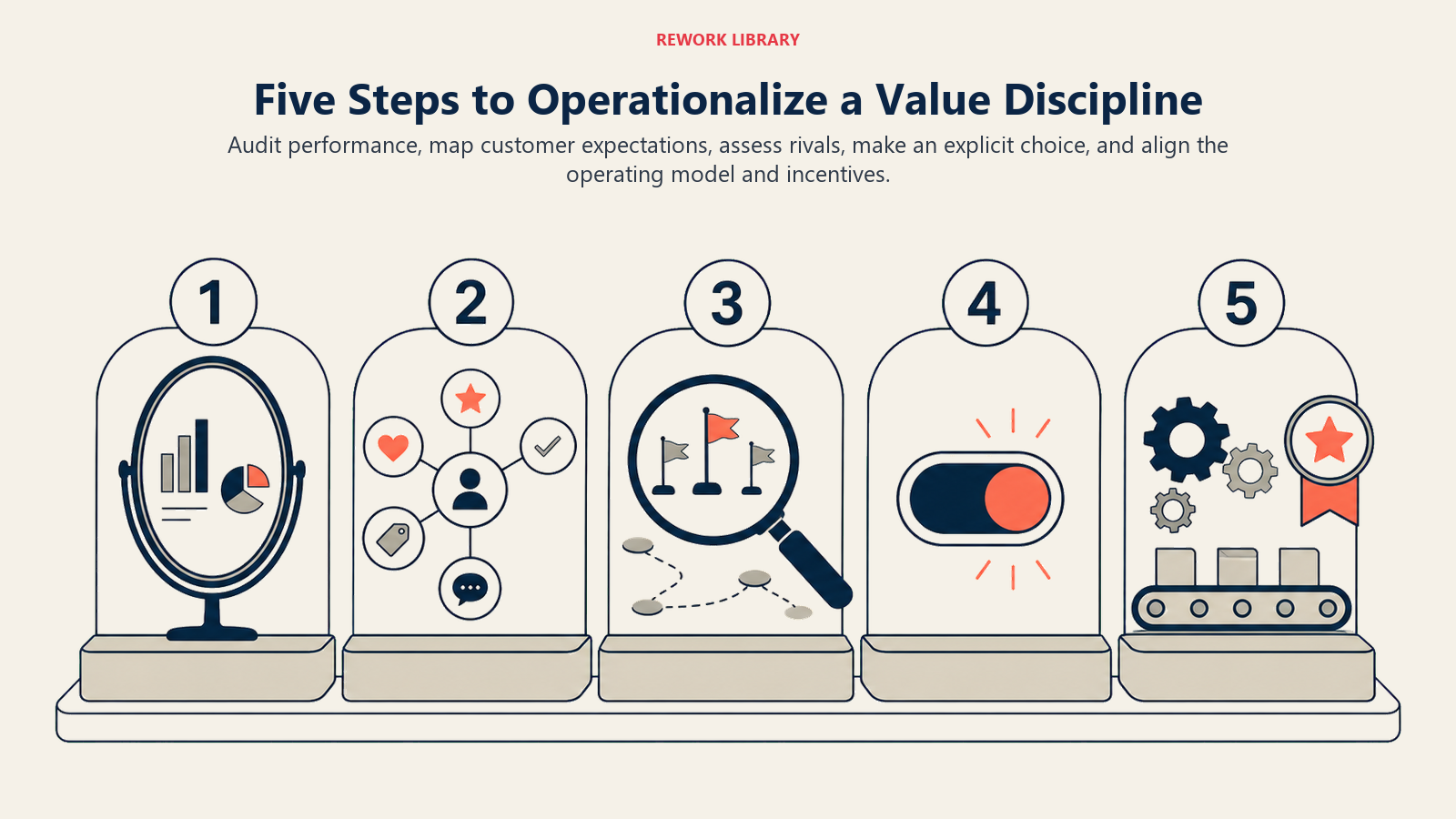
Schritt 1: Ihre aktuelle Position analysieren
Bevor Sie sich entscheiden, sollten Sie verstehen, wo Sie tatsächlich stehen. Betrachten Sie Ihre Kostenstruktur im Vergleich zu Wettbewerbern, Ihre Innovationsrate bei Produkten sowie Ihre Kundenbindungs- und Zufriedenheitsdaten. Die meisten Organisationen stellen fest, dass sie implizit eine Discipline verfolgt haben, aber in alle drei investiert haben, was intern gemischte Signale sendet. Nutzen Sie hier die Analyse von Kernkompetenzen, um herauszuarbeiten, worin Sie tatsächlich besser sind.
Schritt 2: Kundenwerterwartungen kartieren
Befragen Sie eine repräsentative Gruppe Ihrer besten Kunden. Was schätzen sie wirklich am meisten? Geschwindigkeit und Preis? Innovation? Das Gefühl, verstanden und gut bedient zu werden? Manchmal decken Organisationen eine Lücke auf: Sie haben in Produktinnovation investiert, während ihre besten Kunden Zuverlässigkeit und Support weit höher gewichten. Kundenforschung verankert die Entscheidung in der Marktrealität statt in internen Präferenzen.
Schritt 3: Den Wettbewerbskontext beurteilen
Schauen Sie sich an, wo Ihre wichtigsten Wettbewerber sich positioniert haben. Wenn drei Ihrer fünf Top-Wettbewerber Operational Excellence für sich beansprucht haben, erfordert ein Sieg dort massive Skalenvorteile, die möglicherweise nicht für Sie verfügbar sind. Lücken in der Wettbewerbslandschaft zeigen oft, wo Kundenbedürfnisse nicht ausreichend bedient werden. Die Analyse der Wettbewerbspositionierung ist hier neben dem Value-Disciplines-Blickwinkel nützlich.
Schritt 4: Die explizite Wahl treffen und definieren, was Führung bedeutet
Bleiben Sie nicht vage. "Wir wählen Product Leadership" reicht nicht. Definieren Sie, was Product Leadership für Ihr Unternehmen konkret bedeutet: welche Innovationsrate, welcher R&D-Anteil am Umsatz, welche Produkteinführungsfrequenz. Das gibt Ihnen messbare Schwellenwerte zum Verfolgen. Definieren Sie auch, wie eine akzeptable Schwellenleistung bei den anderen beiden Disciplines aussieht, damit Sie frühzeitig Verschlechterungen erkennen können.
Schritt 5: Betriebsmodell, Struktur und Anreize ausrichten
Hier scheitert die meiste Strategiearbeit. Eine gewählte Discipline muss die Organisation neu formen. Wenn Sie Customer Intimacy gewählt haben, müssen Ihre Account-Management-Struktur, Ihre CRM-Investitionen, Ihr Einstellungsprofil für Vertriebsmitarbeitende und Ihre Anreizsysteme diese Entscheidung verstärken. Wenn sie weiterhin Transaktionsvolumen über Beziehungstiefe belohnen, wird die Strategie nicht greifen. Wenn Operational Excellence Ihr Weg ist, lesen Sie auch Cost-Leadership-Strategie für die spezifischen Stellhebel.
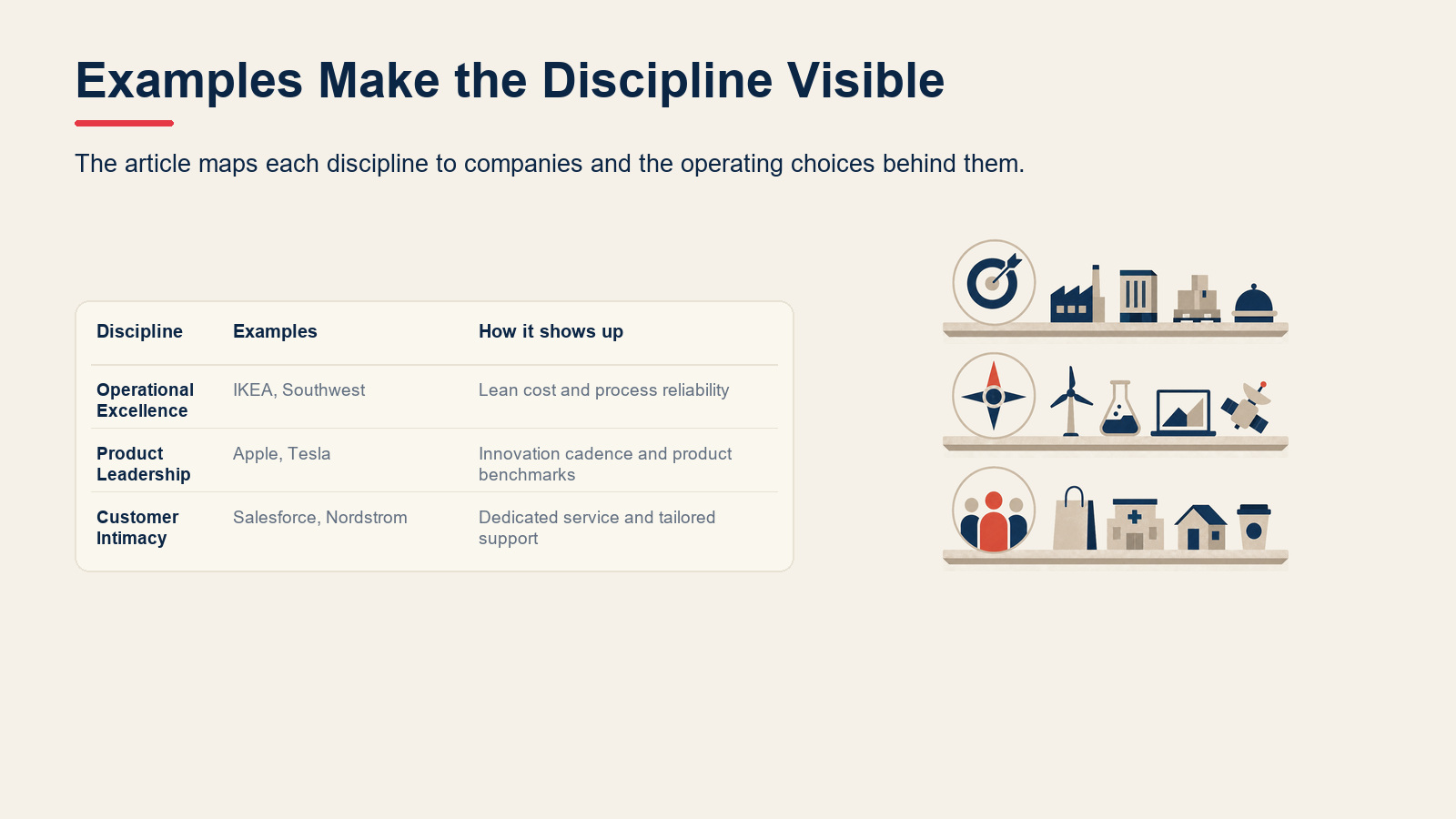
Beispiele nach Discipline
| Discipline | Unternehmen | Wie sie es ausdrücken |
|---|---|---|
| Operational Excellence | IKEA | Flachpack-Design eliminiert Montagekosten; selbstbedienungsfreundliches Ladenlayout reduziert Personalaufwand; globale Lieferkettenoptimierung hält die Preise im großen Maßstab vorhersehbar |
| Operational Excellence | Southwest Airlines | Einziger Flugzeugtyp (Boeing 737) reduziert Wartungskomplexität; keine Sitzplatzzuweisung beschleunigt das Boarding; Punkt-zu-Punkt-Strecken vermeiden Hub-Transfer-Kosten |
| Product Leadership | Apple | Jeder Produktzyklus setzt einen neuen Design- und Leistungsmaßstab; R&D bei 7-8 % des Umsatzes; bereit, erfolgreiche Produkte (iPod) zu pensionieren, wenn neuere sie ablösen |
| Product Leadership | Tesla | Over-the-Air-Software-Updates als Produktdifferenzierungsmerkmal; Batterietechnologieinvestitionen vor der Nachfrage; Autopilot als kontinuierlich verbesserte Produktfunktion |
| Customer Intimacy | Salesforce (Enterprise-Verträge) | Dedizierte Erfolgsteams pro Account; individuelle Implementierungs- und Integrationsunterstützung; vierteljährliche Business-Reviews, die an kundenspezifischen KPIs (Key Performance Indicators) ausgerichtet sind |
| Customer Intimacy | Nordstrom | Persönliche Stylisten, kulante Rückgaberichtlinien und Erinnerung der Vertriebsmitarbeitenden an individuelle Kundenpräferenzen über Jahre von Einkäufen hinweg |
Die Fokusstrategie lohnt sich neben diesen Beispielen zu lesen. Fokus fügt eine Marktbereichsdimension hinzu: Einige dieser Unternehmen verfolgen ihre Discipline in einem breiten Markt, andere innerhalb eines bestimmten Segments. Und Bowmans Strategy Clock bietet ein weiteres Kartierungswerkzeug, das diese Positionierungsentscheidungen auf einem Preis-wahrgenommener-Wert-Raster abbildet, was dabei helfen kann zu prüfen, ob Ihre gewählte Discipline für Kunden in Ihrem spezifischen Markt verständlich ist.
Weiterführende Lektüre
- Porter's Generic Strategies
- Competitive Advantage
- Core Competencies
- Differentiation Strategy
- Cost Leadership Strategy
- Competitive Positioning
- Focus Strategy
- Bowman's Strategy Clock
Das Value-Disciplines-Modell verspricht Ihnen keine fertige Strategie. Es verspricht Ihnen einen Test: Wenn Sie nicht klar sagen können, bei welcher Discipline Sie führen, und das Betriebsmodell nicht vorweisen können, das das belegt, ist Ihre Strategie wahrscheinlich eine Wunschliste. Unternehmen, die dieses Framework gut nutzen, behandeln die Wahl als dauerhaft, bis sie sich bewusst dazu entscheiden, sie zu ändern, und treffen jede wichtige Organisationsentscheidung so, dass sie diese Wahl verstärkt. Das ist es, was ein Framework in einen Wettbewerbsvorteil verwandelt.

Co-Founder & COO
On this page
- Was sind die Value Disciplines?
- Die drei Value Disciplines
- Warum Sie sich für eine entscheiden müssen
- Value Disciplines vs. Porter's Five Forces
- Vorteile und Kritikpunkte
- So wählen und operationalisieren Sie eine Value Discipline
- Schritt 1: Ihre aktuelle Position analysieren
- Schritt 2: Kundenwerterwartungen kartieren
- Schritt 3: Den Wettbewerbskontext beurteilen
- Schritt 4: Die explizite Wahl treffen und definieren, was Führung bedeutet
- Schritt 5: Betriebsmodell, Struktur und Anreize ausrichten
- Beispiele nach Discipline
- Weiterführende Lektüre