VRIO-Framework: Ihren Wettbewerbsvorteil analysieren
Turn this article into takeaways for your work.


Each assistant summarizes the article only for you and suggests best practices for your work.
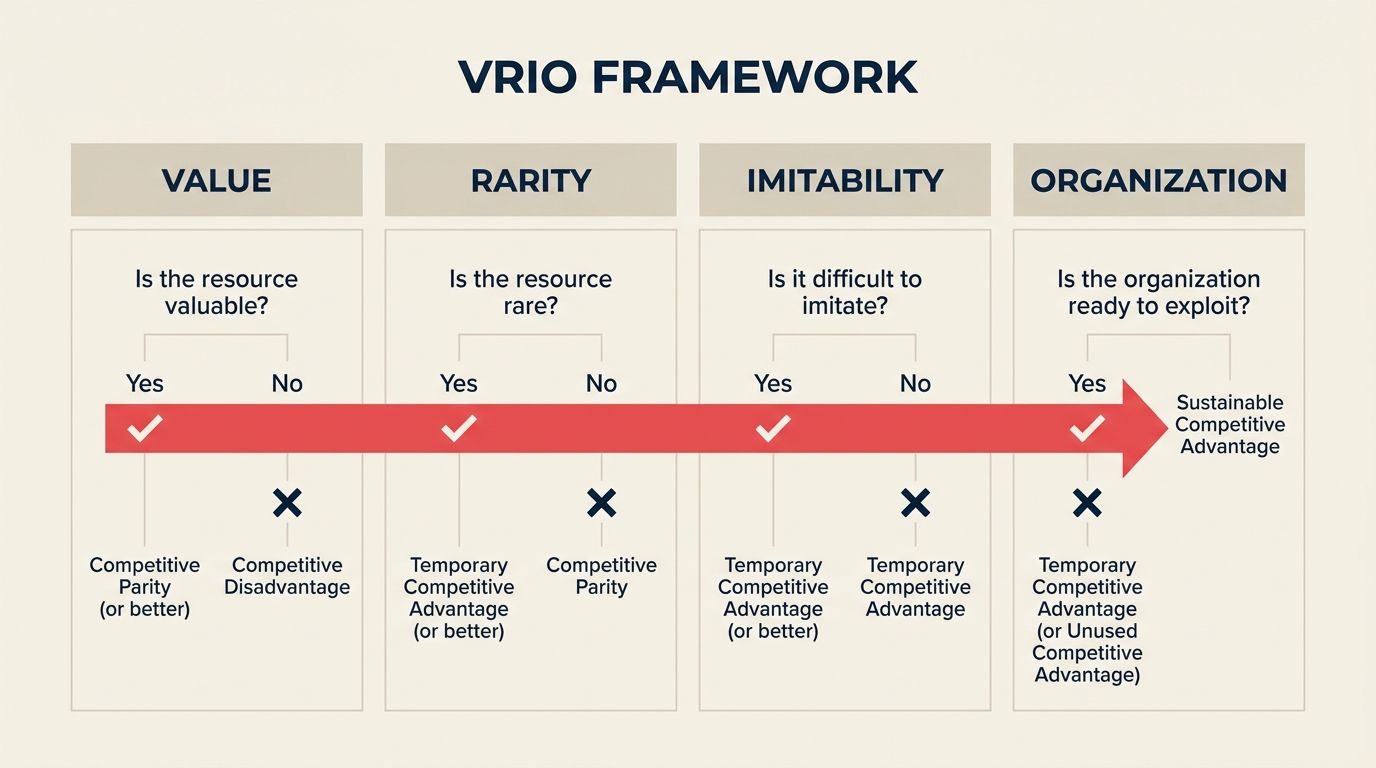
Das VRIO-Framework ist eines der klarsten Werkzeuge im strategischen Management, um eine täuschend einfache Frage zu beantworten: Welche Ihrer Ressourcen und Fähigkeiten verschaffen Ihnen wirklich einen dauerhaften Vorsprung? Die meisten Unternehmen haben mehr Ressourcen als sie ahnen, und weit weniger echte Wettbewerbsvorteile als sie glauben.
Was ist das VRIO-Framework?
Das VRIO-Framework ist ein ressourcenbasiertes Analysewerkzeug, das Jay Barney in einem wegweisenden 1991 in der Journal of Management veröffentlichten Aufsatz entwickelte. Es ist Teil der ressourcenbasierten Sichtweise (Resource-based View, RBV) der Strategie, die besagt, dass Wettbewerbsvorteil aus den internen Ressourcen und Fähigkeiten stammt, die ein Unternehmen kontrolliert, nicht nur aus dem externen Umfeld, in dem es operiert.
VRIO ist ein Akronym für vier Fragen, die man über jede Ressource oder Fähigkeit stellt:
- V (Valuable): Wertvoll?
- R (Rare): Selten?
- I (Costly to Imitate): Schwer zu imitieren?
- O (Organized): Organisiert, um Wert zu erfassen?
Eine Ressource, die alle vier Hürden überwindet, schafft einen nachhaltigen Wettbewerbsvorteil. Eine, die nur eine oder zwei überwindet, ist dennoch nützlich, aber sie wird Wettbewerber nicht lange fernhalten.
Wichtige Fakten
- Jay Barney (1991) "Firm Resources and Sustained Competitive Advantage," Journal of Management, Vol. 17, Nr. 1, S. 99-120. Dieser Aufsatz ist einer der meistzitierten im strategischen Management und etablierte die ressourcenbasierte Sichtweise als Mainstream-Framework neben Porters marktbasierten Ansätzen.
- Eine McKinsey Global Survey (2023) ergab, dass nur 20 % der Führungskräfte glaubten, ihr Unternehmen verfüge über eine wirklich distinctive Fähigkeit, die Wettbewerber nicht innerhalb von drei bis fünf Jahren replizieren könnten. Das legt nahe, dass die meisten Unternehmen die Dauerhaftigkeit ihrer Vorteile überschätzen.
- Barney (1991) definierte explizit vier Bedingungen, unter denen eine Ressource nachhaltigen Wettbewerbsvorteil erzeugen kann: Sie muss wertvoll, selten, schwer imitierbar und nicht substituierbar (VRIN) sein. Die VRIO-Revision fügte "Organisation" hinzu, um zu erfassen, warum Unternehmen manchmal versäumen, Ressourcen zu nutzen, die sie bereits besitzen.
Die vier VRIO-Fragen
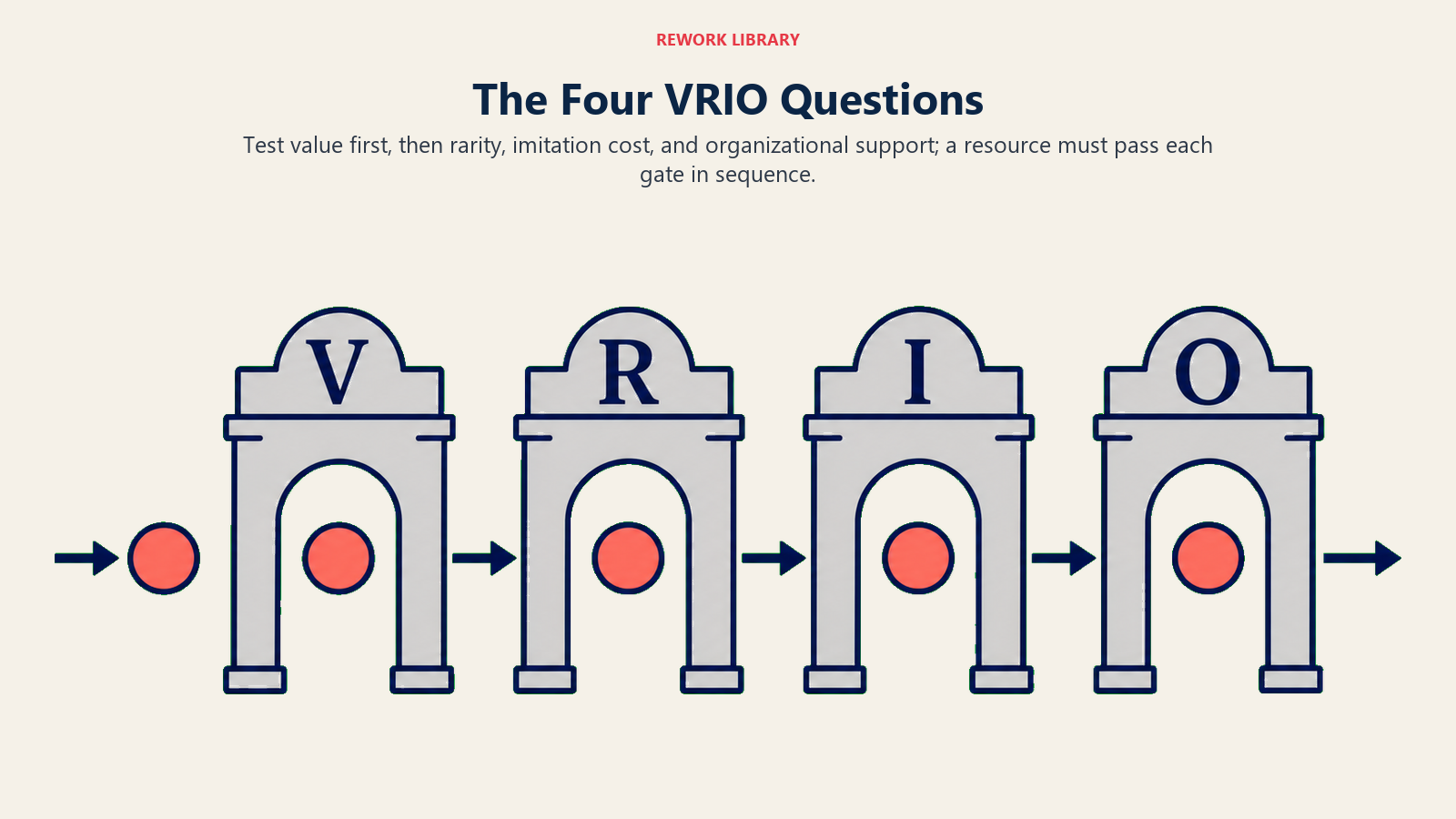
Jeder Buchstabe in VRIO ist ein Filter. Ressourcen durchlaufen sie der Reihe nach. Scheitert eine beim ersten Filter, erübrigt sich das Stellen der nächsten drei.
| Frage | Was sie fragt | Beispiel |
|---|---|---|
| Wertvoll (V) | Ermöglicht diese Ressource dem Unternehmen, eine Marktchance zu nutzen oder eine Bedrohung zu neutralisieren? | Die FDA-zugelassene Medikamenten-Pipeline eines Pharmaunternehmens ist wertvoll, weil sie Marktchancen eröffnet, die für nicht regulierte Wettbewerber nicht verfügbar sind |
| Selten (R) | Wird diese Ressource nur von einer kleinen Anzahl konkurrierender Unternehmen kontrolliert? | Proprietäre Fertigungsprozesse, die nur von einem oder zwei Akteuren in einer Branche gehalten werden, sind selten; Standard-ERP-Software, die jeder nutzt, ist es nicht |
| Schwer zu imitieren (I) | Wäre es für Wettbewerber erheblich teuer oder schwierig, dieselbe Ressource zu entwickeln oder zu erwerben? | Eine über Jahrzehnte aufgebaute Marke (denken Sie an Coca-Cola oder Apple) ist schwer zu imitieren; eine bestimmte Preisstrategie kann in Tagen kopiert werden |
| Organisiert (O) | Verfügt das Unternehmen über die Managementsysteme, Prozesse, Kultur und Struktur, um diese Ressource tatsächlich zu nutzen? | Ein Unternehmen mit brillanten Patenten, aber ohne Kommerzialisierungsteam, scheitert am Organisations-Test, die Ressource existiert, aber das Unternehmen kann ihren Wert nicht erfassen |
Die "Organisiert"-Frage wird am häufigsten übersehen. Viele Unternehmen entdecken durch die VRIO-Analyse, dass sie Ressourcen besitzen, die einen nachhaltigen Vorteil erzeugen könnten, aber die organisationale Infrastruktur fehlt, um sie einzusetzen. Das ist ein behebbares Problem, und VRIO macht es sichtbar.
Der VRIO-Entscheidungsbaum (Wettbewerbsimplikationen)
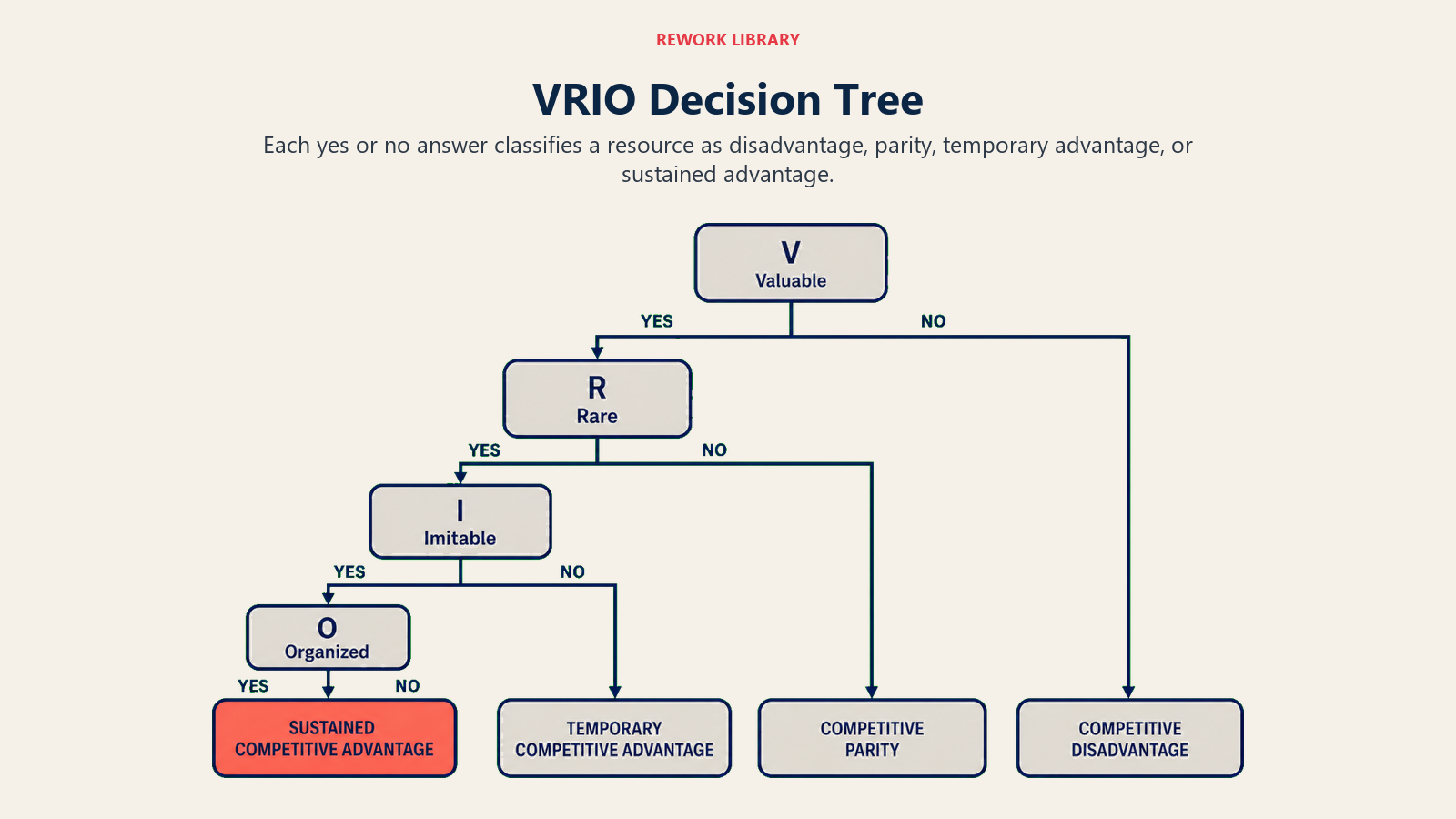
Die Stärke von VRIO liegt darin, dass es nicht nur starke Ressourcen identifiziert. Es klassifiziert jede Ressource nach der Wettbewerbsposition, die sie erzeugt. Die folgende Tabelle bildet jede Antwortenkombination auf ein spezifisches strategisches Ergebnis ab.
| Wertvoll? | Selten? | Schwer zu imitieren? | Organisiert? | Wettbewerbsimplikation | Leistung |
|---|---|---|---|---|---|
| Nein | -- | -- | -- | Wettbewerbsnachteil | Unterdurchschnittlich |
| Ja | Nein | -- | -- | Wettbewerbsparität | Durchschnittlich |
| Ja | Ja | Nein | -- | Temporärer Wettbewerbsvorteil | Durchschnittlich bis überdurchschnittlich |
| Ja | Ja | Ja | Nein | Ungenutzter Wettbewerbsvorteil | Durchschnittlich (Wert verbleibt auf dem Tisch) |
| Ja | Ja | Ja | Ja | Nachhaltiger Wettbewerbsvorteil | Überdurchschnittlich |
Ein paar Punkte, die hier erwähnenswert sind:
Wettbewerbsnachteil bedeutet, dass die Ressource tatsächlich eine Belastung ist. Wenn Wettbewerber effiziente Logistiknetzwerke haben und Ihres langsamer und kostspieliger ist, ist das nicht neutral, sondern ein Bremsanker.
Wettbewerbsparität ist die Baseline. Ressourcen, die wertvoll, aber weit verbreitet sind, halten Sie im Spiel, lassen Sie aber nicht gewinnen. Starke Kundenservice-Schulung, angemessene Projektmanagement-Tools und professionelle HR-Praktiken fallen für die meisten Branchen hierher.
Temporärer Wettbewerbsvorteil ist eine häufige Position für Unternehmen, die etwas wirklich Neues haben. Aber wenn Wettbewerber dieselbe Fähigkeit innerhalb weniger Jahre nachahmen oder erwerben können, ist der Vorteil ein Zeitfenster, keine Mauer.
Ungenutzter Wettbewerbsvorteil ist das strategisch frustrierendste Ergebnis. Die Ressource ist wertvoll, selten und schwer zu kopieren, aber das Unternehmen kann sie nicht nutzen, weil die organisationale Maschinerie nicht vorhanden ist. Das zeigt sich, wenn Unternehmen über proprietäre Technologie verfügen, sie aber nicht schneller auf den Markt bringen können als Wettbewerber, die weniger haben, aber besser ausführen.
Nachhaltiger Wettbewerbsvorteil ist das Ziel. Und er ist seltener als die meisten strategischen Präsentationen eingestehen.
VRIO vs. VRIN und andere Modelle
Barneys ursprünglicher Aufsatz von 1991 verwendete das Akronym VRIN (Valuable, Rare, Imperfectly Imitable, Non-substitutable). Das "N" stand für Nicht-Substituierbarkeit: Können Wettbewerber, auch wenn sie eine Ressource nicht genau kopieren können, dasselbe Ergebnis auf eine andere Weise erzielen?
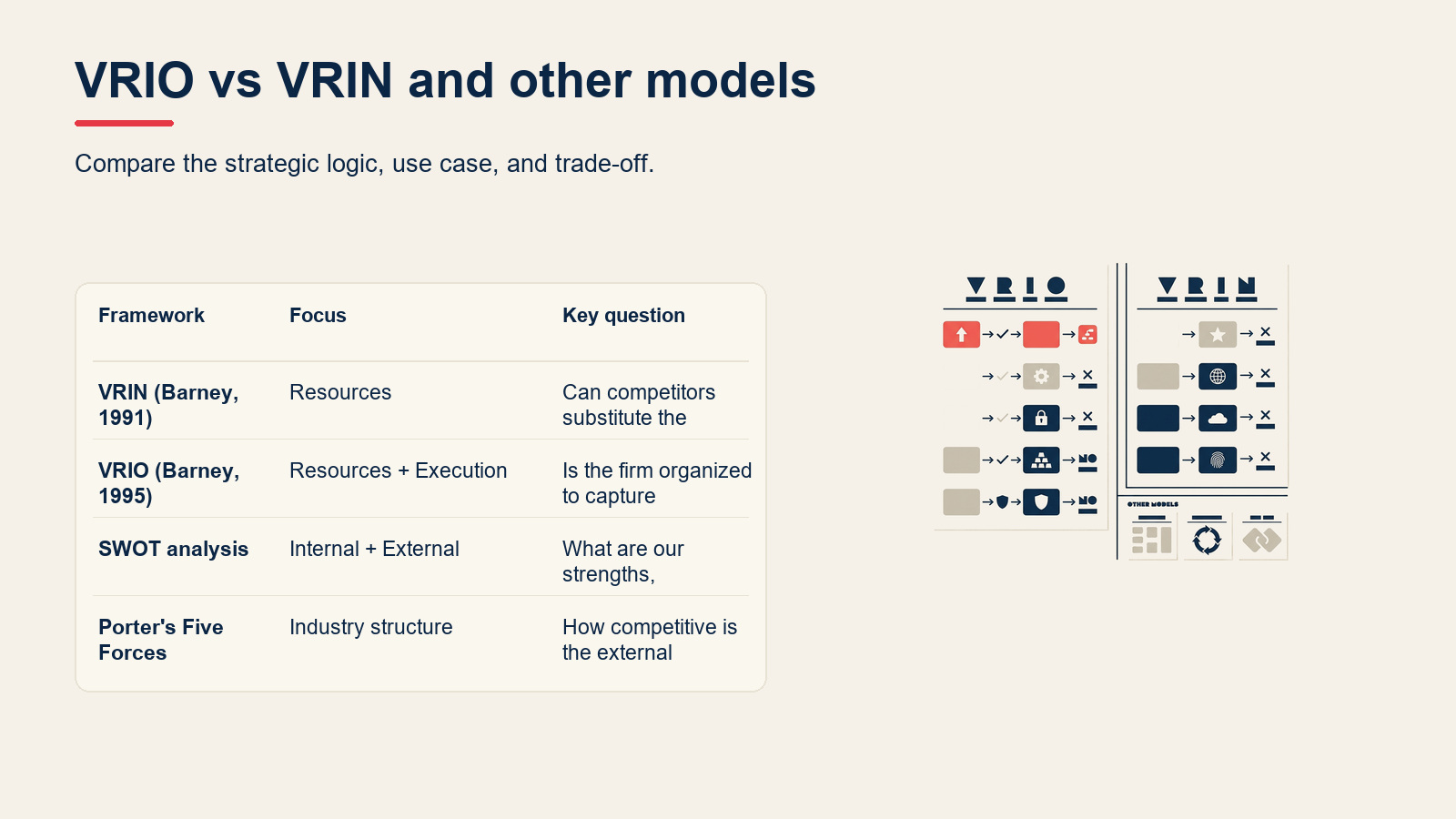
VRIO ersetzte das "N" durch "O" für Organisation in Barneys Lehrbuch von 1995. Die Begründung: Nicht-Substituierbarkeit ist schwer sauber zu bewerten, während die Organisationsfrage, kann das Unternehmen tatsächlich den Wert erfassen, sowohl beobachtbarer als auch handlungsrelevanter ist. Die meisten modernen Anwendungen verwenden VRIO.
| Framework | Fokus | Kernfrage | Einordnung |
|---|---|---|---|
| VRIN (Barney, 1991) | Ressourcen | Können Wettbewerber die Ressource vollständig substituieren? | Theoretisches Fundament |
| VRIO (Barney, 1995) | Ressourcen + Ausführung | Ist das Unternehmen organisiert, um Wert zu erfassen? | Angewandte Strategie |
| SWOT-Analyse | Intern + Extern | Was sind unsere Stärken, Schwächen, Chancen, Risiken? | Situationsaudit |
| Porter's Five Forces | Branchenstruktur | Wie wettbewerbsintensiv ist das externe Umfeld? | Marktanalyse |
VRIO und SWOT-Analyse sind natürliche Begleiter. Die "Stärken"-Kategorie von SWOT ist im Wesentlichen eine Vor-VRIO-Liste interner Ressourcen. VRIO auf diese Stärken anzuwenden, zeigt Ihnen, welche tatsächlich verteidigbar sind und welche lediglich Grundvoraussetzungen sind. Zusammen bieten sie ein schärferes Bild als jedes Modell allein.
Vorteile und Einschränkungen
Vorteile:
- Erzwingt ein detailliertes, ehrliches Inventar, was Ihr Unternehmen tatsächlich besitzt versus was es zu besitzen annimmt
- Identifiziert organisationale Lücken, die die Werterfassung verhindern, was sofort handlungsrelevant ist
- Bietet eine klare Hierarchie von Ressourcen, sodass die Führung priorisieren kann, wo zu investieren ist und wo man aufhören sollte, Boden zu verteidigen, der es nicht wert ist
- Funktioniert branchenübergreifend und für verschiedene Unternehmensgrößen, von Startups, die ihr frühes IP bewerten, bis hin zu multinationalen Unternehmen, die Divisionen beurteilen
- Ergänzt externe Frameworks gut, insbesondere Porter's Five Forces und Value Chain Analysis
Einschränkungen:
- Statisch von Natur. VRIO macht eine Momentaufnahme; es modelliert nicht, wie sich Wettbewerbsbedingungen und Technologie entwickeln. Eine heute seltene Ressource kann durch einen Plattformwandel in drei Jahren zur Massenware werden.
- Die Definition von "schwer zu imitieren" ist subjektiv. Unternehmen neigen dazu, zu überschätzen, wie schwer ihre Fähigkeiten zu kopieren sind, besonders bei Prozessen und Kultur.
- Es adressiert nicht, wie neue Ressourcen aufgebaut werden sollen, nur wie bestehende klassifiziert werden. Für das Aufbauen und Investieren brauchen Sie ergänzende Tools.
- Die Organisationsbewertung ist die schwierigste Dimension, um sie rigoros zu beurteilen. "Wir haben die Kultur, um das zu nutzen" ist leicht zu behaupten, schwer zu verifizieren.
- Es berücksichtigt externe Dynamiken nicht direkt. Dafür empfiehlt sich die Kombination mit Porter's Five Forces oder Szenarioplanung.
So wenden Sie das VRIO-Framework an
Schritt 1: Ihre Ressourcen und Fähigkeiten auflisten
Beginnen Sie damit, zu inventarisieren, was Ihr Unternehmen tatsächlich hat. Ressourcen sind materiell (Bargeld, Ausrüstung, Patente, physische Standorte) oder immateriell (Markenreputation, proprietäre Daten, Algorithmen, Geschäftsgeheimnisse). Fähigkeiten sind das, was das Unternehmen mit diesen Ressourcen tun kann: Routinen, Prozesse, Fertigkeiten und organisationales Wissen. Seien Sie spezifisch. "Großartige Leute" ist keine Ressource. "Ein Team aus 12 erfahrenen Machine-Learning-Ingenieuren mit 8+ Jahren bei führenden KI-Labors" ist eine.
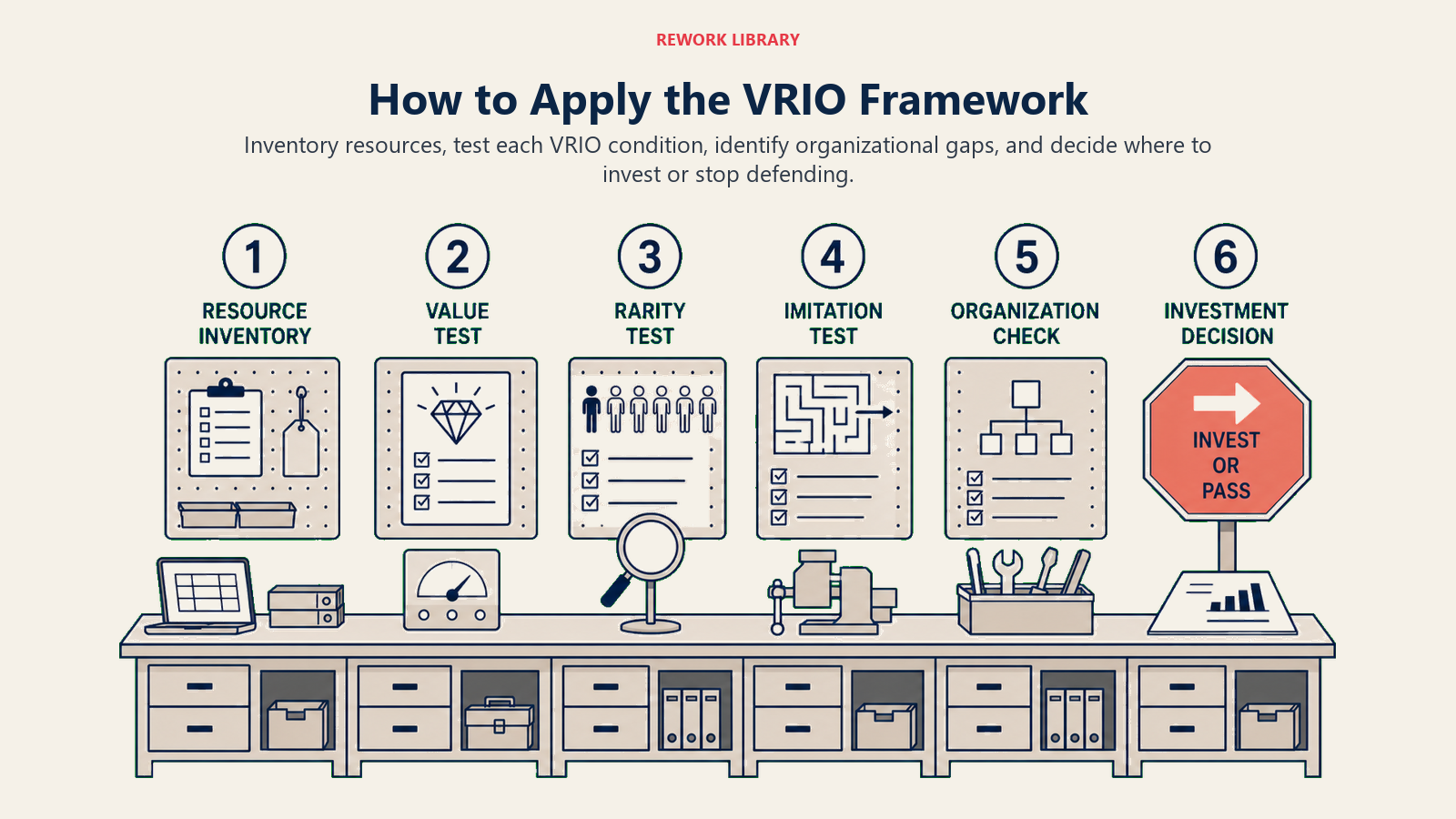
Schritt 2: Jede Ressource durch die vier Fragen führen
Beantworten Sie für jeden Punkt auf Ihrer Liste V, R, I und O der Reihe nach. Hören Sie auf, sobald eine Ressource eine Frage nicht besteht, da es keinen Sinn hat, weiterzumachen, sobald Sie die Obergrenze kennen. Dokumentieren Sie Ihre Begründung für jede Antwort, nicht nur die Antwort selbst. Die Begründung offenbart Annahmen, die getestet werden müssen.
Schritt 3: Wettbewerbsimplikation klassifizieren
Ordnen Sie jede Ressource einem der fünf Ergebnisse im Entscheidungsbaum zu: Wettbewerbsnachteil, Parität, temporärer Vorteil, ungenutzter Vorteil oder nachhaltiger Vorteil. Dieser Schritt überrascht Führungsteams oft. Ressourcen, die als strategische Vorteile angenommen wurden, entpuppen sich häufig als Paritätselemente. Und Ressourcen, die als operative Notwendigkeiten behandelt werden, erweisen sich gelegentlich als wirklich selten und schwer zu imitieren.
Schritt 4: Ihre nachhaltigen Vorteile priorisieren
Identifizieren Sie die kleine Anzahl von Ressourcen und Fähigkeiten, die alle vier VRIO-Kriterien erfüllen. Das sind diejenigen, die es wert sind, verteidigt, investiert und zur Grundlage Ihrer Strategie gemacht zu werden. Es lohnt sich auch, sie tief zu verstehen: Warum sind sie schwer zu imitieren? Was macht die organisationale Nutzung funktionieren? Das Verständnis des Mechanismus des Vorteils hilft Ihnen, ihn zu schützen, wenn sich die Bedingungen ändern.
Schritt 5: Die Organisation aufbauen, um verbleibende Lücken zu schließen
Für jede Ressource, die als "ungenutzter Wettbewerbsvorteil" klassifiziert ist, ist die Implikation klar: Die organisationale Lücke schließen. Das könnte Umstrukturierung, Fähigkeitsaufbau, Änderung von Anreizen oder Aufbau der Managementprozesse bedeuten, die benötigt werden, um das bereits Besessene zu kommerzialisieren. Hier verbindet sich VRIO am direktesten mit der operativen Planung. Für Frameworks, die diese organisationale Arbeit strukturieren helfen, kartiert das McKinsey 7S Framework die sieben Elemente des Organisationsdesigns, die aufeinander abgestimmt sein müssen, damit eine Fähigkeit vollständig genutzt werden kann.
VRIO Beispiel
Apples Ressourcen veranschaulichen gut das gesamte VRIO-Klassifikationsspektrum, weil das Unternehmen Ressourcen auf jeder Ebene der Hierarchie hat.
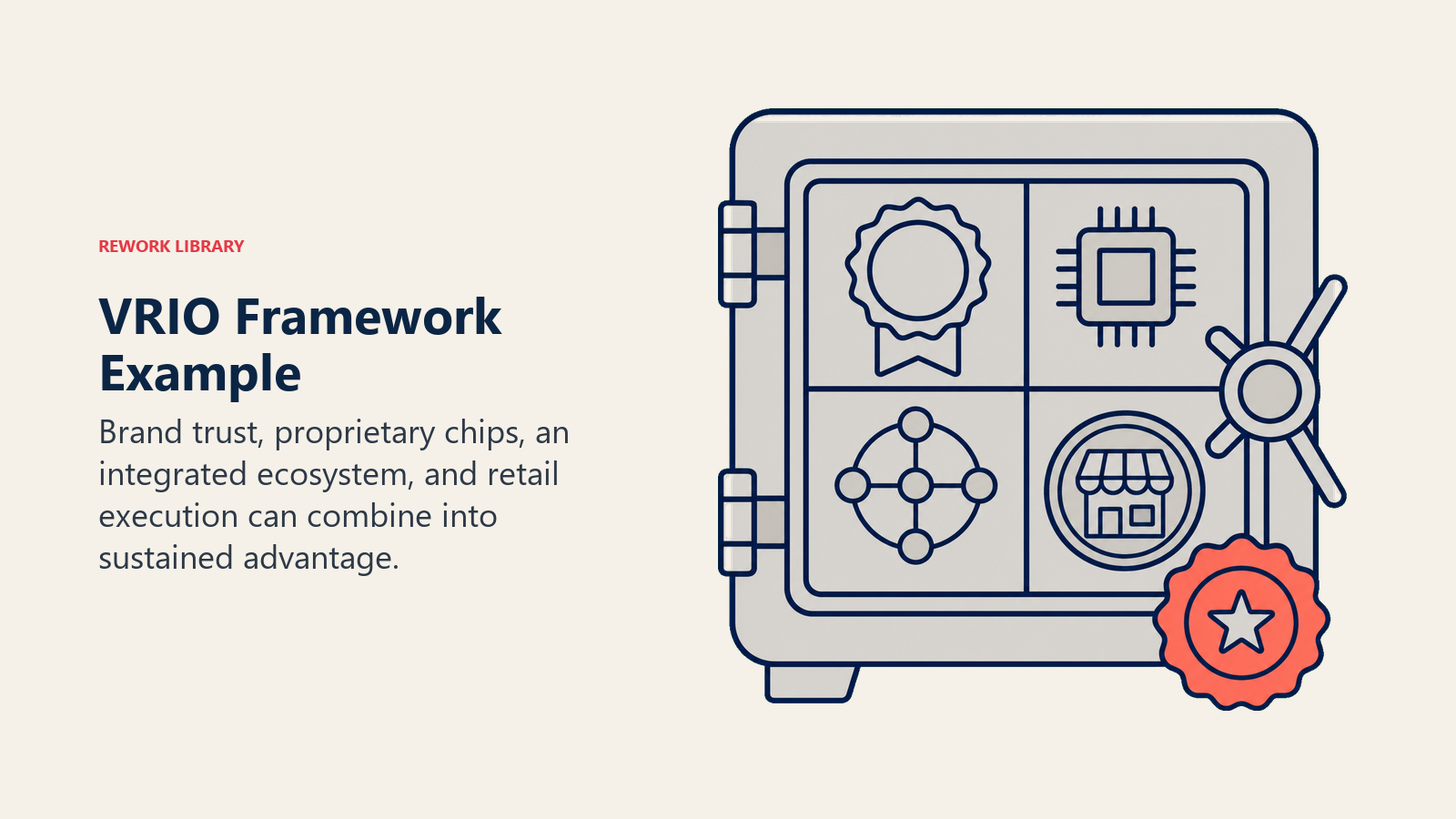
| Ressource / Fähigkeit | Wertvoll? | Selten? | Schwer zu imitieren? | Organisiert? | Implikation |
|---|---|---|---|---|---|
| Markenreputation | Ja | Ja | Ja, über Jahrzehnte aufgebaut, verbunden mit Designkultur und Nutzervertrauen | Ja | Nachhaltiger Wettbewerbsvorteil |
| Apple Silicon (M-Serie Chips) | Ja | Ja | Ja, erfordert proprietäre Architektur, Jahre von Fab-Partnerschaften und Design-Talente | Ja | Nachhaltiger Wettbewerbsvorteil |
| iOS-Ökosystem und App Store | Ja | Ja | Ja, zweiseitige Netzwerkeffekte potenzieren sich im Laufe der Zeit | Ja | Nachhaltiger Wettbewerbsvorteil |
| Einzelhandelsfilialnetz | Ja | Einigermaßen, andere Premium-Einzelhändler existieren | Nein, Premium-Einzelhandel kann aufgebaut werden; Amazon und Samsung haben Läden | Ja | Temporärer Wettbewerbsvorteil |
| Barreserven | Ja | Nein, Amazon, Google und Microsoft halten ebenfalls große Reserven | Nein | Ja | Wettbewerbsparität |
| Standard-Büro-Produktivitätssoftware | Ja | Nein | Nein | Ja | Wettbewerbsparität |
Das Muster ist aufschlussreich. Apples nachhaltige Vorteile konzentrieren sich auf Fähigkeiten, die Jahrzehnte zu entwickeln brauchten, in proprietärer Hardware-Software-Integration verankert sind und durch Ökosystem-Lock-in verstärkt werden. Diese sind kostspielig zu replizieren und lassen sich nicht leicht transferieren. Die Paritätselemente, wie Barreserven, sind nützlich, aber für jeden gut kapitalisierten Wettbewerber verfügbar.
Das VRIO-Framework sagt Ihnen nicht, welche Strategie Sie verfolgen sollen. Was es tut, ist zu zeigen, womit Sie tatsächlich arbeiten. Die meisten Organisationen arbeiten mit einer Mischung aus Paritätsressourcen, einigen temporären Vorteilen und, wenn sie sorgfältig aufgebaut haben, ein oder zwei wirklich nachhaltigen. Den Unterschied zwischen diesen Kategorien zu kennen, bestimmt, wo zu investieren ist, wo man aufhören sollte zu verteidigen, und was als Nächstes gebaut werden soll. Für einen Blick auf die externen Kräfte, die prägen, welche Ressourcen in Ihrem Markt am wichtigsten sind, sind Porter's Five Forces und Value Chain Analysis natürliche Begleiter für VRIO. Und für die Wachstumsstrategefragen, die sich aus dem Wissen über Ihren Vorteil ergeben, siehe Ansoff-Matrix, BCG-Matrix und Three Horizons of Growth.
Weiterführende Lektüre

Co-Founder & COO
On this page
- Was ist das VRIO-Framework?
- Die vier VRIO-Fragen
- Der VRIO-Entscheidungsbaum (Wettbewerbsimplikationen)
- VRIO vs. VRIN und andere Modelle
- Vorteile und Einschränkungen
- So wenden Sie das VRIO-Framework an
- Schritt 1: Ihre Ressourcen und Fähigkeiten auflisten
- Schritt 2: Jede Ressource durch die vier Fragen führen
- Schritt 3: Wettbewerbsimplikation klassifizieren
- Schritt 4: Ihre nachhaltigen Vorteile priorisieren
- Schritt 5: Die Organisation aufbauen, um verbleibende Lücken zu schließen
- VRIO Beispiel
- Weiterführende Lektüre