PESTEL-Analyse: Framework, Beispiele und Vorlage
Turn this article into takeaways for your work.


Each assistant summarizes the article only for you and suggests best practices for your work.
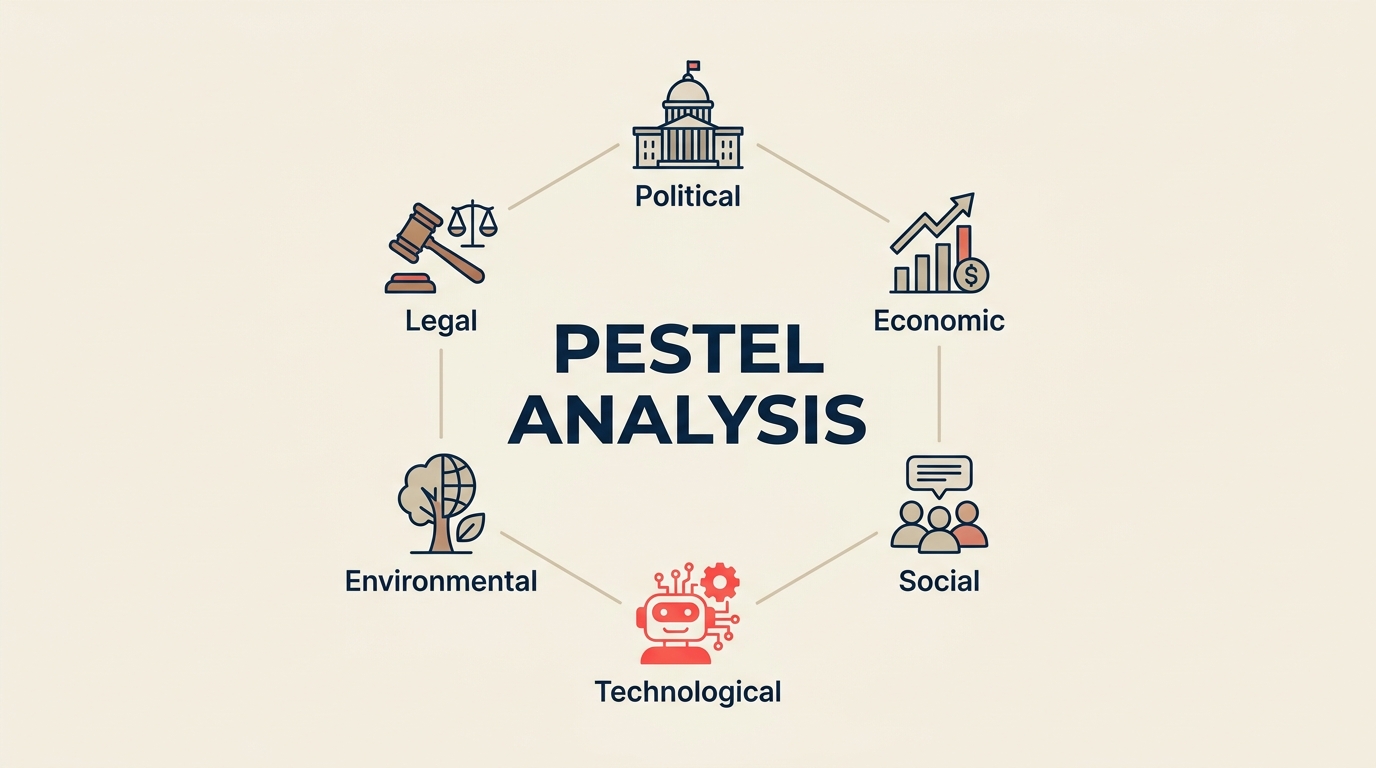
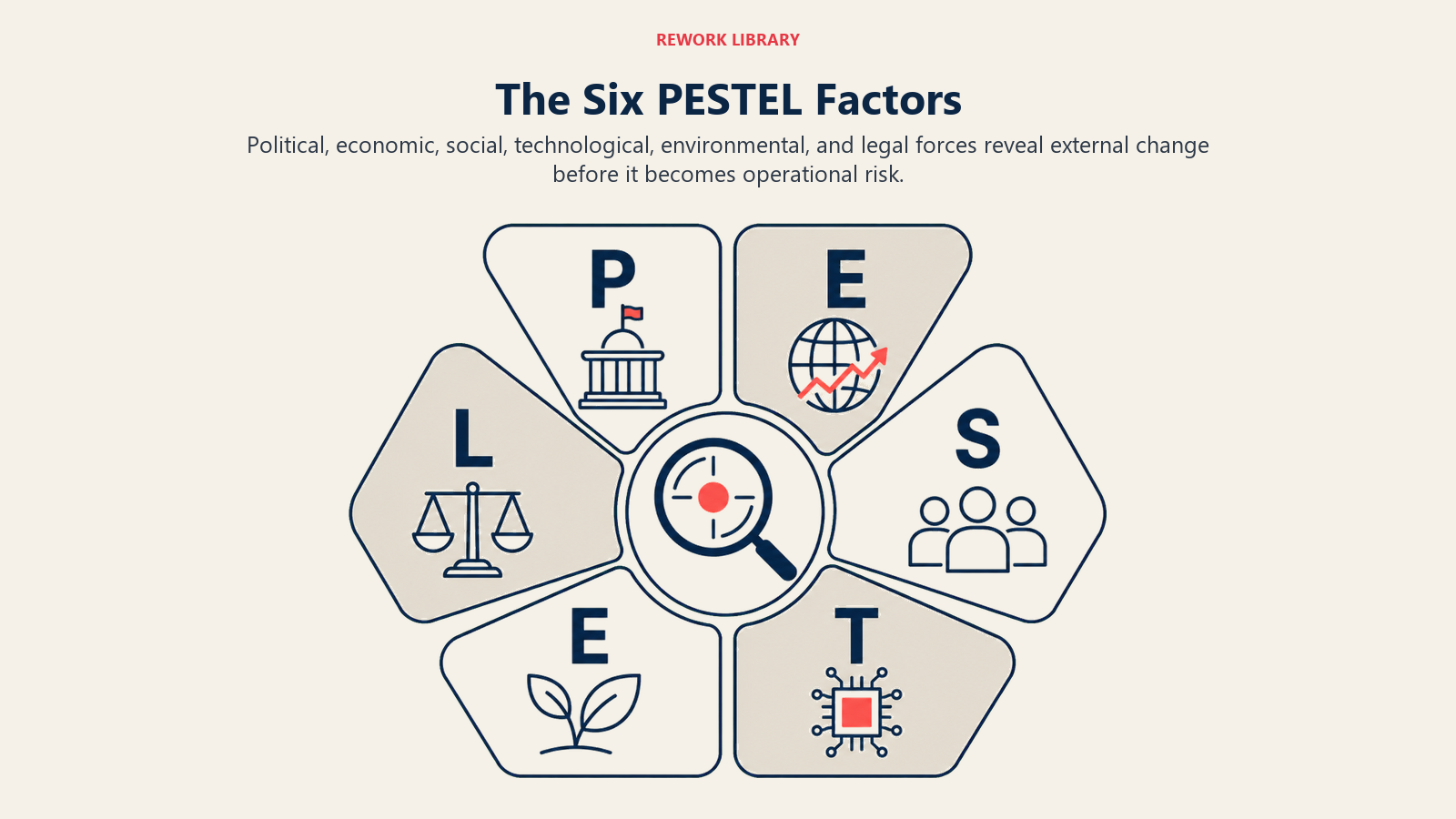
Die PESTEL-Analyse ist das Standard-Framework, um das Makroumfeld rund um Ihr Unternehmen systematisch zu erfassen. Sie ordnet externe Einflussfaktoren in sechs Kategorien, damit Strategen Risiken frühzeitig erkennen und Chancen nutzen können, bevor es der Wettbewerb tut.
Was ist eine PESTEL-Analyse?
Die PESTEL-Analyse ist eine strukturierte Methode zur Identifikation und Bewertung der externen Makro-Einflussfaktoren, die Strategie und Betrieb einer Organisation beeinflussen. Anders als die SWOT-Analyse, die interne und externe Faktoren gemeinsam betrachtet, konzentriert sich PESTEL ausschließlich auf äußere Kräfte, die das Unternehmen nicht direkt kontrollieren kann.
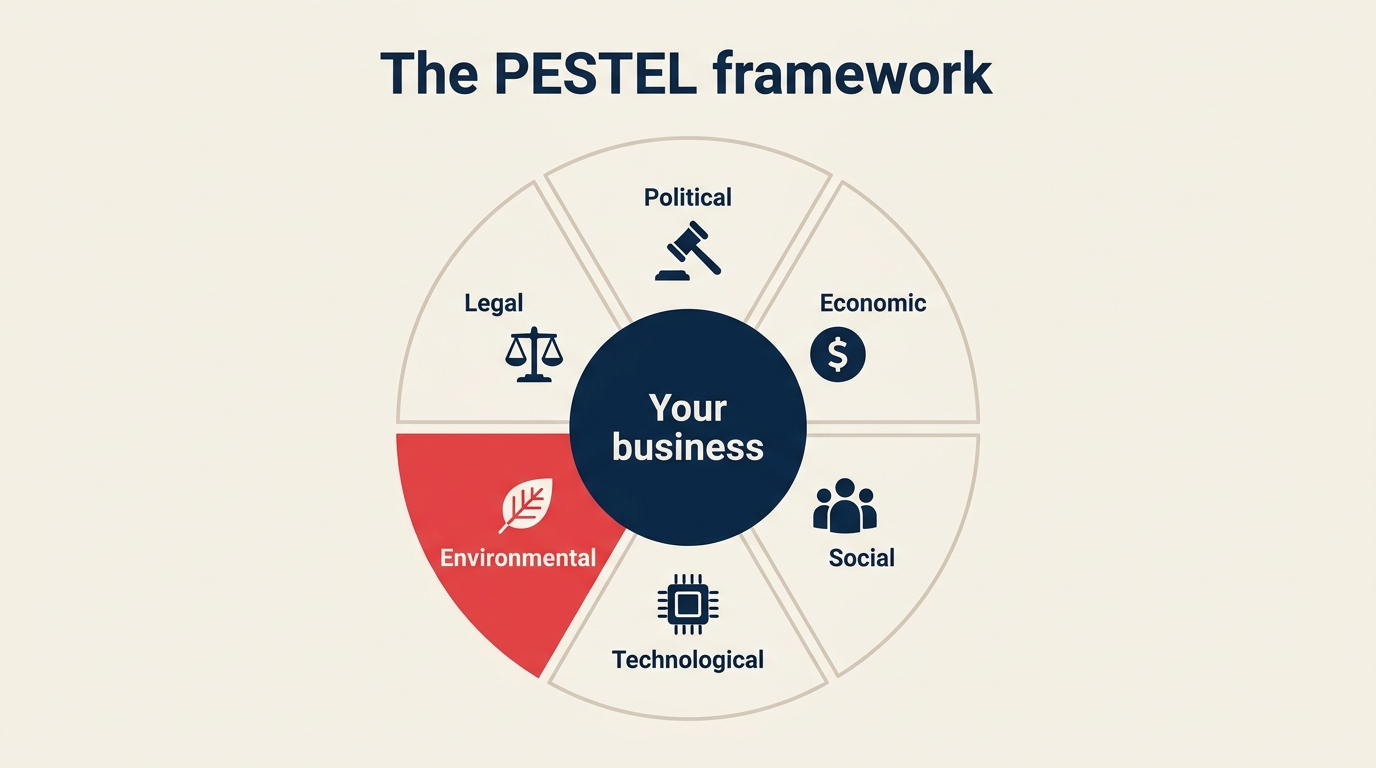
Der Ursprung des Frameworks geht auf den Harvard-Professor Francis Aguilar zurück, der 1967 in seinem Buch Scanning the Business Environment den ETPS-Scan (Economic, Technical, Political, Social) vorstellte. Forscher ordneten das Akronym später zu PEST um und ergänzten es in den 1980er- und 1990er-Jahren um die Dimensionen Environmental (Umwelt) und Legal (Recht), um der wachsenden regulatorischen Komplexität und dem zunehmenden Nachhaltigkeitsdruck Rechnung zu tragen. Daraus entstand das heute weit verbreitete Sechs-Faktoren-Modell PESTEL (manchmal auch PESTLE geschrieben), das im strategischen Denken und in der Planung fest verankert ist.
Wichtige Fakten
McKinseys Global Survey 2024 ergab, dass 70 % der Führungskräfte erwarten, dass geopolitische Risiken ihre Strategie in den kommenden drei Jahren spürbar beeinflussen werden. (McKinsey & Company, 2024)
Gartner prognostiziert, dass die weltweiten IT-Ausgaben 2025 die Marke von 5,6 Billionen US-Dollar übersteigen werden, ein Beleg dafür, wie schnell sich die technologische Dimension verändert. (Gartner IT Spending Forecast, 2025)
PwCs 27. jährliche Global CEO Survey zeigt, dass 45 % der CEOs nicht davon ausgehen, dass ihr Unternehmen ohne grundlegende Neuausrichtung in zehn Jahren noch bestehen wird. (PwC, 2024)
Die 6 PESTEL-Faktoren im Detail
Politisch
Politische Faktoren umfassen Regierungspolitik, politische Stabilität, Handelsabkommen, Zölle sowie die regulatorische Haltung von Behörden auf lokaler, nationaler und supranationaler Ebene. Sie bestimmen die Spielregeln für ganze Branchen.
Praxisbeispiele:
- US-chinesische Zollzyklen zwingen Elektronikhersteller dazu, ihre Lieferketten von der Abhängigkeit von einem einzelnen Land zu lösen
- Der Brexit verändert die Vertriebsnetze der Pharmaindustrie in Großbritannien und der EU grundlegend
- Staatliche Förderungen für Elektrofahrzeuge beschleunigen die EV-Verbreitung in Deutschland, China und Kalifornien
Wirtschaftlich
Wirtschaftliche Faktoren erfassen die makroökonomischen Bedingungen, die Kaufkraft, Kapitalkosten und Verbrauchervertrauen beeinflussen: BIP-Wachstum, Inflation, Zinssätze, Wechselkurse und Arbeitslosentrends.
Praxisbeispiele:
- Steigende Zinsen zwischen 2022 und 2024 erhöhen die Kosten für fremdfinanziertes SaaS-Wachstum und bremsen M&A-Aktivitäten
- Währungsabwertungen in Schwellenländern schmälern die in USD umgerechneten Umsätze von Unternehmen mit lokaler Preisgestaltung
- Arbeitskräftemangel nach der Pandemie treibt die Löhne in Logistik, Gastgewerbe und Gesundheitswesen in die Höhe
Sozial
Soziale Faktoren spiegeln den demografischen und kulturellen Kontext wider, in dem ein Unternehmen tätig ist: Altersstruktur der Bevölkerung, Urbanisierungsgrad, Bildungsniveau, veränderte Lebensstile und sich wandelnde Konsumentenwerte.
Praxisbeispiele:
- Alternde Bevölkerungen in Japan und Westeuropa erhöhen die Nachfrage nach Technologien und Dienstleistungen für die Altenpflege
- Die Präferenz der Generation Z für sinnstiftende Marken drängt Konsumgüterunternehmen zu mehr Transparenz bei Nachhaltigkeit
- Die Normalisierung von Remote-Arbeit verändert dauerhaft die Nachfrage nach Gewerbeimmobilien und Pendlerdienstleistungen
Technologisch
Technologische Faktoren umfassen das Innovationstempo, F&E-Investitionen, Automatisierung, digitale Infrastruktur und das Aufkommen disruptiver Plattformen, die verändern, wie Produkte entwickelt oder vertrieben werden.
Praxisbeispiele:
- Generative KI senkt die Kosten der Content-Produktion um Größenordnungen und drückt die Margen traditioneller Medienunternehmen
- Cloud-native Architekturen ermöglichen es Start-ups, Enterprise-taugliche Zuverlässigkeit ohne die Kosten einer Legacy-Infrastruktur zu erreichen
- Der 5G-Ausbau erschließt Echtzeit-Anwendungen des industriellen IoT in Fertigung und Logistik
Umwelt
Umweltfaktoren betreffen Klimarisiken, die Verfügbarkeit natürlicher Ressourcen, CO2-Regulierung, Abfallmanagement sowie die physischen Auswirkungen des Klimawandels auf Geschäftsbetrieb und Lieferketten.
Praxisbeispiele:
- Verpflichtende Vorgaben zur CO2-Berichterstattung (EU-CSRD, SEC-Klimaregel) erhöhen die Berichtskosten für börsennotierte Unternehmen
- Wasserknappheit in wichtigen Agrarregionen stört die Lieferketten für Lebensmittel und Getränke
- Extremwetterereignisse treiben Versicherungsprämien in die Höhe und zwingen zu einer Überprüfung der Standortwahl für Rechenzentren
Rechtlich
Rechtliche Faktoren umfassen Gesetzgebung, Rechtsprechung und Compliance-Anforderungen, die Geschäftsentscheidungen direkt einschränken oder ermöglichen: Arbeitsrecht, Schutz geistigen Eigentums, Kartellrecht und Datenschutzbestimmungen.
Praxisbeispiele:
- DSGVO und CCPA verändern grundlegend, wie SaaS-Unternehmen Nutzerdaten erheben, speichern und verarbeiten, und erhöhen den Compliance-Aufwand erheblich
- Die verschärfte kartellrechtliche Prüfung von Big-Tech-Übernahmen verlängert Transaktionszeiträume und erhöht das Risiko eines Scheiterns
- Strengere Anforderungen des EU-KI-Gesetzes zwingen KI-Anbieter, Hochrisiko-Anwendungskategorien neu zu konzipieren
PESTEL vs. SWOT vs. Porter's Five Forces
| Framework | Blickwinkel | Am besten geeignet für | Ergebnis |
|---|---|---|---|
| PESTEL | Makroumfeld (außerhalb der Branche) | Umfeldanalyse; strategischer Kontext | Liste von Chancen und Risiken aus externen Faktoren |
| SWOT-Analyse | Kombination aus intern und extern | Situationsbewertung; Strategieformulierung | Raster aus Stärken, Schwächen, Chancen, Risiken |
| Porter's Five Forces | Branchenstruktur (Wettbewerbsdynamik) | Wettbewerbspositionierung; Branchenattraktivität | Bewertung der Rentabilität des Wettbewerbsumfelds |
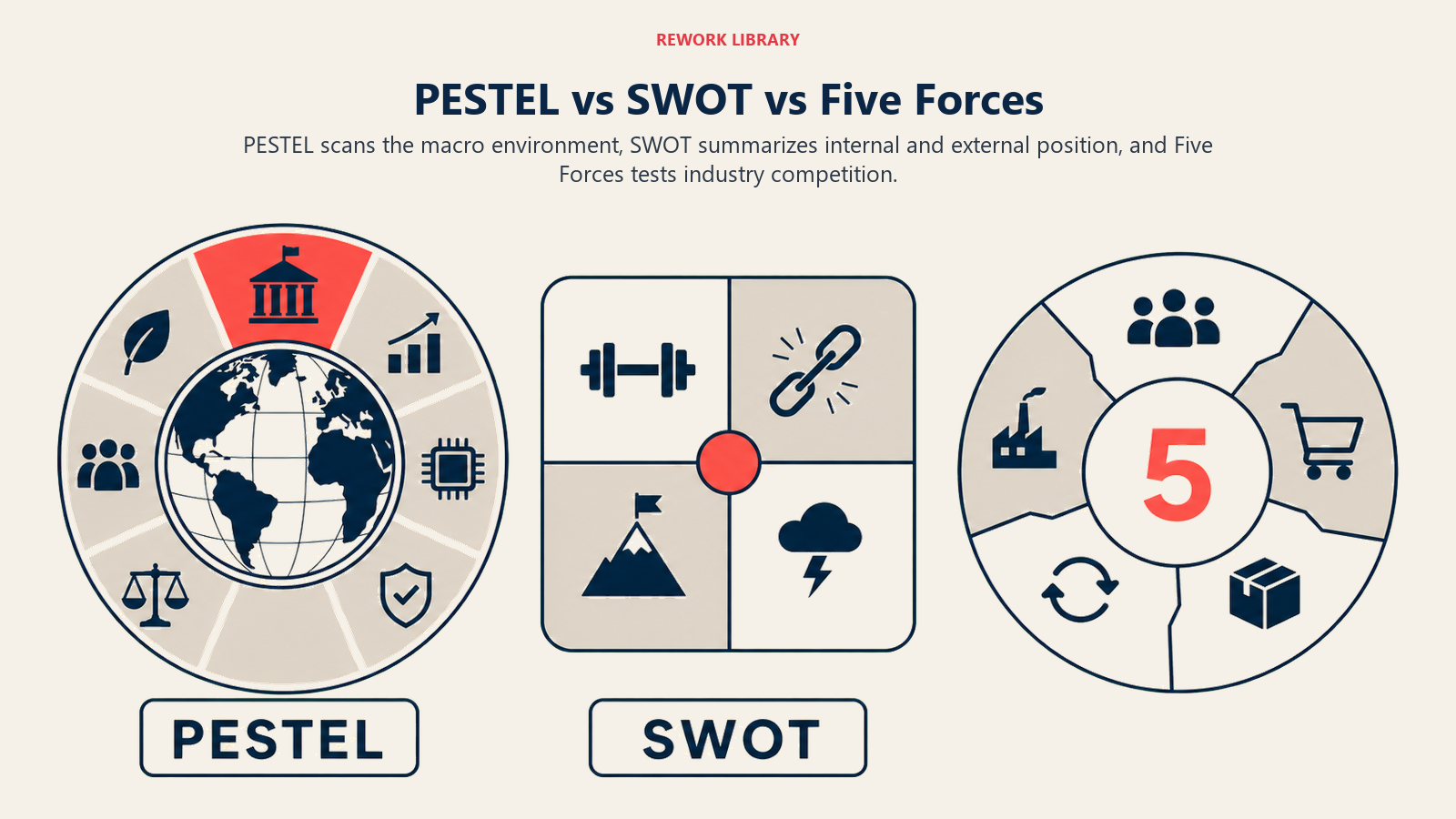
Diese Frameworks ergänzen sich, statt in Konkurrenz zueinander zu stehen. Eine gängige Reihenfolge lautet: zunächst PESTEL durchführen, um den makroökonomischen Kontext zu verstehen, die daraus gewonnenen Chancen und Risiken in eine SWOT-Analyse einfließen lassen und anschließend mit Porter's Five Forces die Wettbewerbspositionierung schärfen. Kombinieren Sie die PESTEL-Ergebnisse mit den kritischen Erfolgsfaktoren, um Investitionsprioritäten festzulegen.
Vorteile einer PESTEL-Analyse
Diese Übersicht trennt die zentralen Vorteile einer PESTEL-Analyse voneinander, damit die Details darunter leichter zu vergleichen sind.
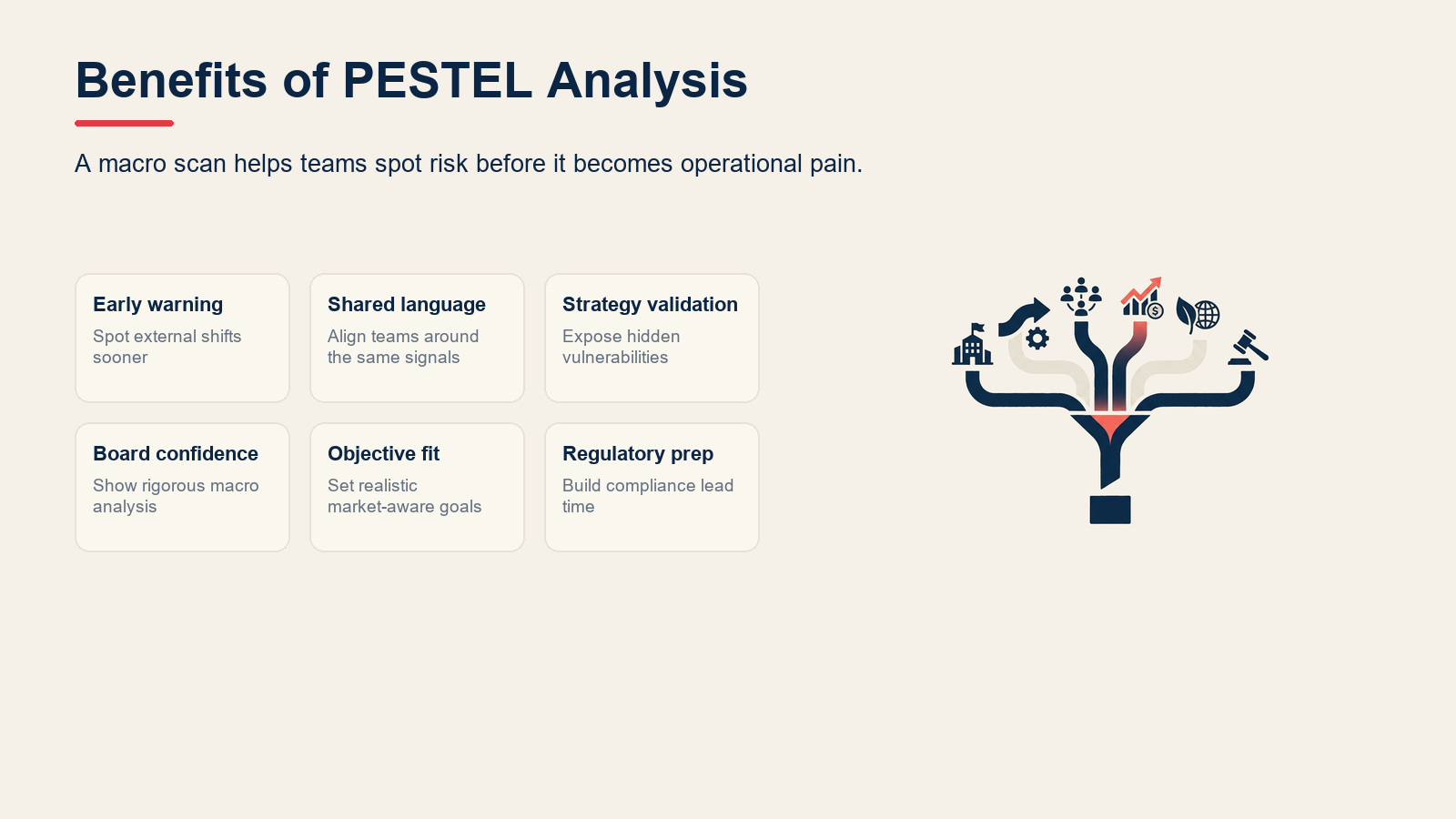
- Frühwarnsystem. Wer politische oder wirtschaftliche Verschiebungen erkennt, bevor sie zu Krisen werden, verschafft der Führung Zeit zum Anpassen statt zum bloßen Reagieren.
- Gemeinsame Sprache. Ein strukturierter Sechs-Faktoren-Scan bringt Vertrieb, Finanzen und Betrieb dazu, auf dieselben externen Signale zu blicken, und reduziert isolierte Annahmen in den Abteilungen.
- Strategievalidierung. Wird ein neues Produkt, ein Markteintritt oder ein Business Model Canvas gegen die PESTEL-Faktoren geprüft, treten verborgene Schwachstellen schnell zutage.
- Vertrauen von Vorstand und Investoren. Eine fundierte Makroanalyse in Strategiepräsentationen signalisiert Vorstand und Investoren, dass die Führung ihr operatives Umfeld versteht.
- Abstimmung mit SMARTen Unternehmenszielen. Umfelddaten helfen Führungskräften, realistische, kontextbezogene Ziele zu setzen statt ambitionierter Zahlen ohne Bezug zur Marktrealität.
- Regulatorische Vorbereitung. Wer rechtliche und ökologische Trends proaktiv verfolgt, senkt die Compliance-Kosten durch mehr Vorlaufzeit.
Grenzen von PESTEL
Diese Übersicht trennt die zentralen Grenzen von PESTEL voneinander, damit die Details darunter leichter zu vergleichen sind.
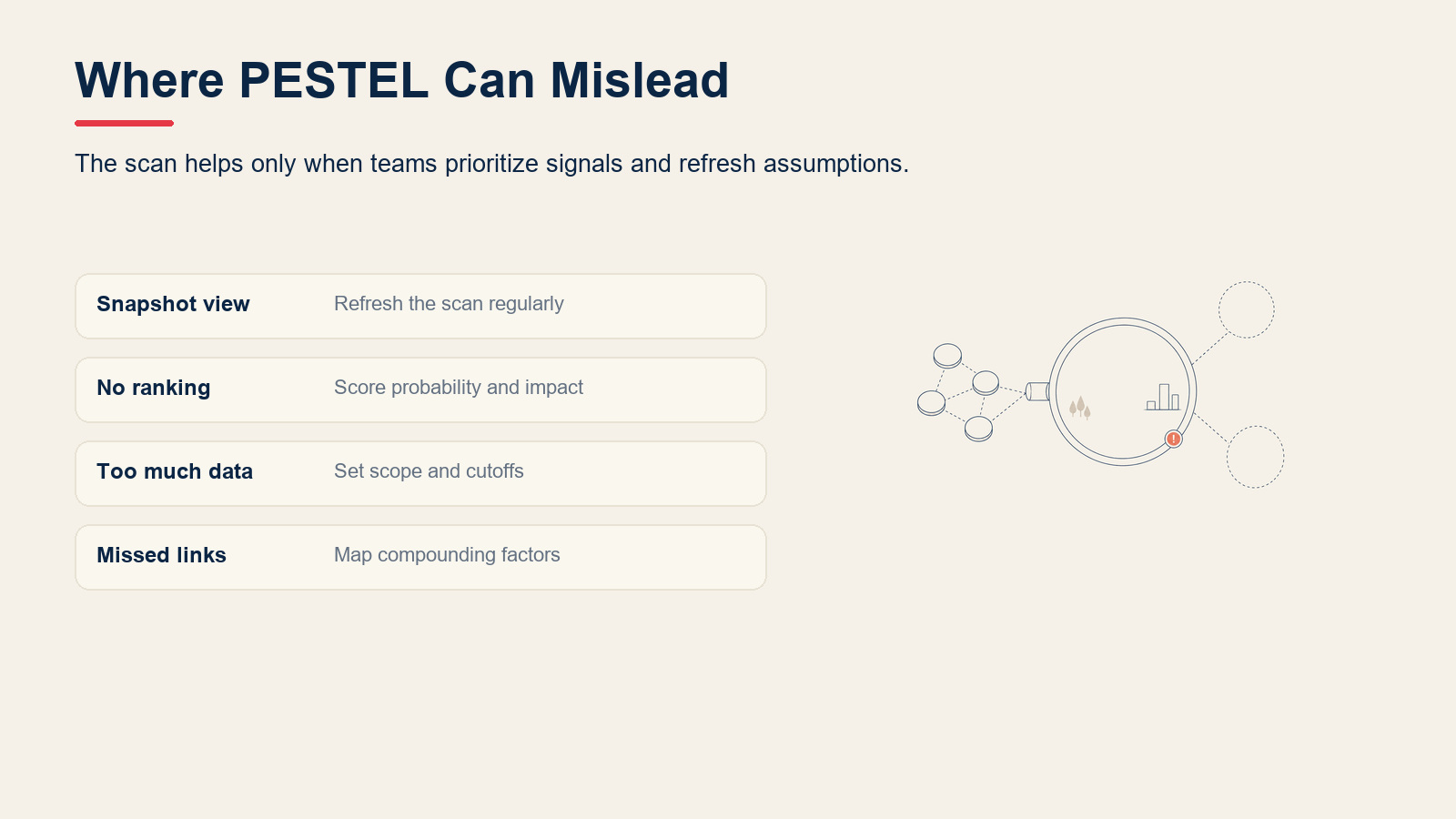
- Momentaufnahme, kein fortlaufender Film. PESTEL bildet den Zustand zu einem bestimmten Zeitpunkt ab. Ohne regelmäßige Aktualisierung veraltet die Analyse in schnelllebigen Branchen rasch.
- Keine eingebaute Priorisierung. Das Framework listet Faktoren auf, ordnet sie aber nicht nach Wahrscheinlichkeit oder finanzieller Auswirkung. Teams brauchen weiterhin einen Bewertungsschritt, um Wesentliches von Nebensächlichem zu trennen.
- Risiko der Analyse-Lähmung. Breit angelegte Scans können Hunderte Faktoren hervorbringen. Ohne klaren Rahmen und Abschneidekriterien verbringen Teams mehr Zeit mit dem Erfassen als mit dem Entscheiden.
- Wechselwirkungen werden leicht übersehen. Ein Zoll in der Lieferkette ist zugleich politisch und wirtschaftlich; die DSGVO ist zugleich rechtlich und technologisch. Wer Faktoren isoliert betrachtet, unterschätzt leicht sich verstärkende Risiken.
PESTEL-Analyse in 6 Schritten
Schritt 1: Umfang und Zeitrahmen festlegen
Klären Sie, was Sie analysieren und über welchen Zeithorizont. Bewerten Sie eine bestimmte Produktlinie, einen neuen Markt oder das gesamte Unternehmen? Ein taktischer 12-Monats-Scan unterscheidet sich deutlich von einer strategischen Fünfjahresperspektive. Bestimmen Sie von Anfang an einen Moderator und binden Sie funktionsübergreifende Perspektiven ein (Finanzen, Recht, Betrieb, Produkt).
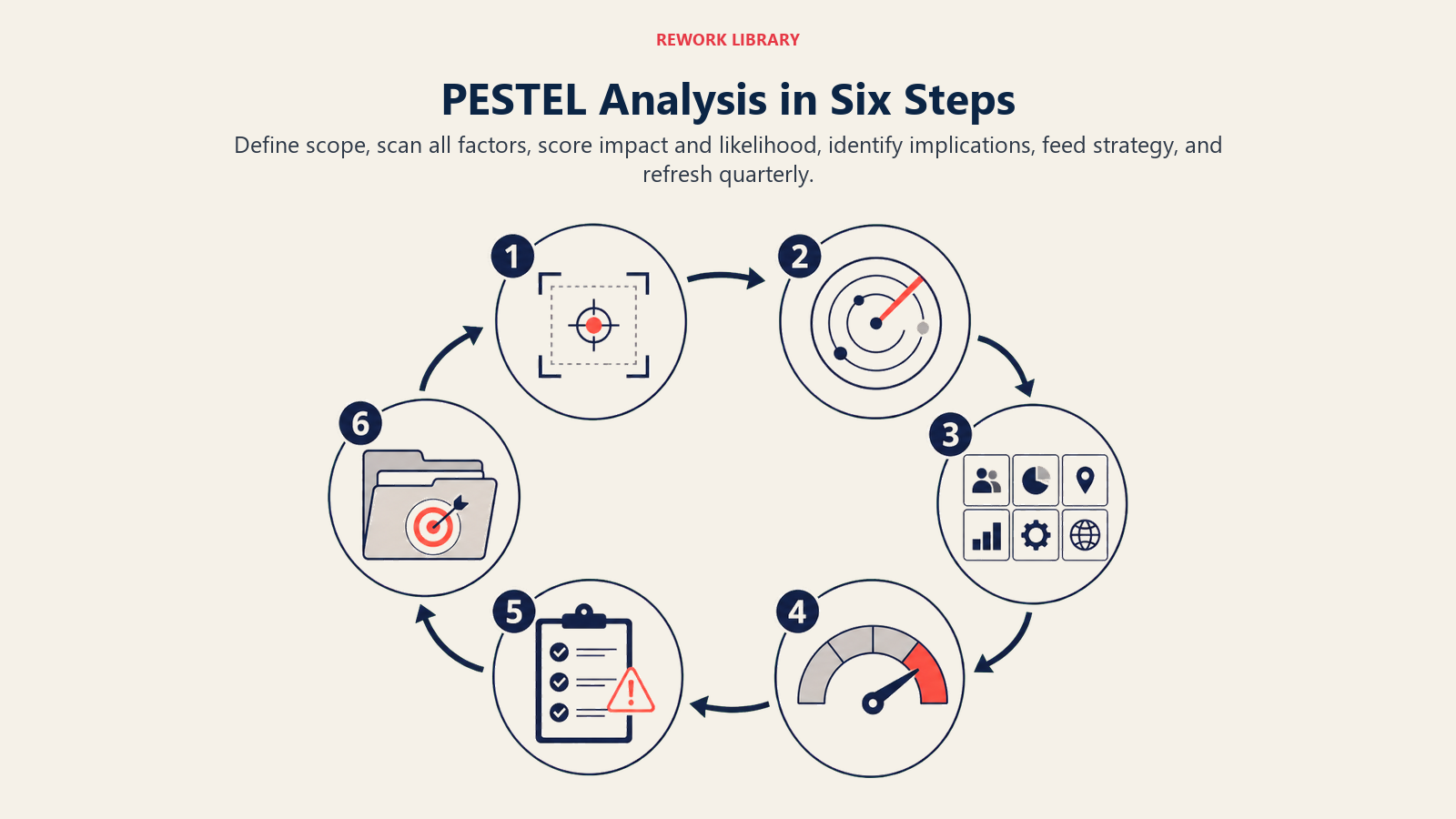
Schritt 2: Faktoren in allen 6 Kategorien sammeln
Nutzen Sie ein Workshop-Format mit sechs Spalten (oder einem gemeinsamen Dokument). Jedes Teammitglied trägt zunächst frei Faktoren bei, bevor gefiltert wird. Ziehen Sie Analystenberichte, regulatorische Tracker, Newsfeeds und Kundendaten heran. Streben Sie 5 bis 10 Kandidatenfaktoren je Kategorie an, bevor Sie auswählen.
Schritt 3: Auswirkung und Wahrscheinlichkeit bewerten
Bewerten Sie jeden Faktor anhand zweier Dimensionen: Wahrscheinlichkeit (wie wahrscheinlich ist dieses Szenario in Ihrem Zeitrahmen?) und Auswirkung (wie stark würde es das Unternehmen betreffen?). Eine einfache Skala von 1 bis 5 genügt. Tragen Sie die Faktoren in eine 2x2-Matrix aus Auswirkung und Wahrscheinlichkeit ein, um den Fokus sichtbar zu machen.
Schritt 4: Chancen und Risiken identifizieren
Prüfen Sie für jeden hoch bewerteten Faktor, ob er eine Chance eröffnet oder ein Risiko darstellt. Seien Sie präzise: "Steigende Zinsen" sind ein Risiko für kapitalintensives Wachstum, aber eine Chance für einen kapitalstarken Käufer. Dokumentieren Sie die Richtung der Auswirkung, nicht nur den Faktor selbst.
Schritt 5: In Strategie und Risikoregister einspeisen
PESTEL-Ergebnisse sind Grundlagen, keine Entscheidungen. Leiten Sie Risiken mit hoher Auswirkung mit Verantwortlichen und Maßnahmenplänen ins Risikoregister. Leiten Sie Chancen in den strategischen Planungszyklus, Strategiereviews oder das Backlog. Eine RACI-Matrix hilft zu klären, wer die Überwachung und Reaktion für jeden Faktor verantwortet.
Schritt 6: Vierteljährlich aktualisieren
Märkte verändern sich. Bestimmen Sie ein Team oder eine Person, die das PESTEL-Register jedes Quartal überprüft, erledigte Faktoren entfernt und neu aufkommende ergänzt. Viele Unternehmen koppeln die Aktualisierung an Berichtszyklen oder strategische Updates für den Vorstand.
PESTEL-Beispiele nach Branche
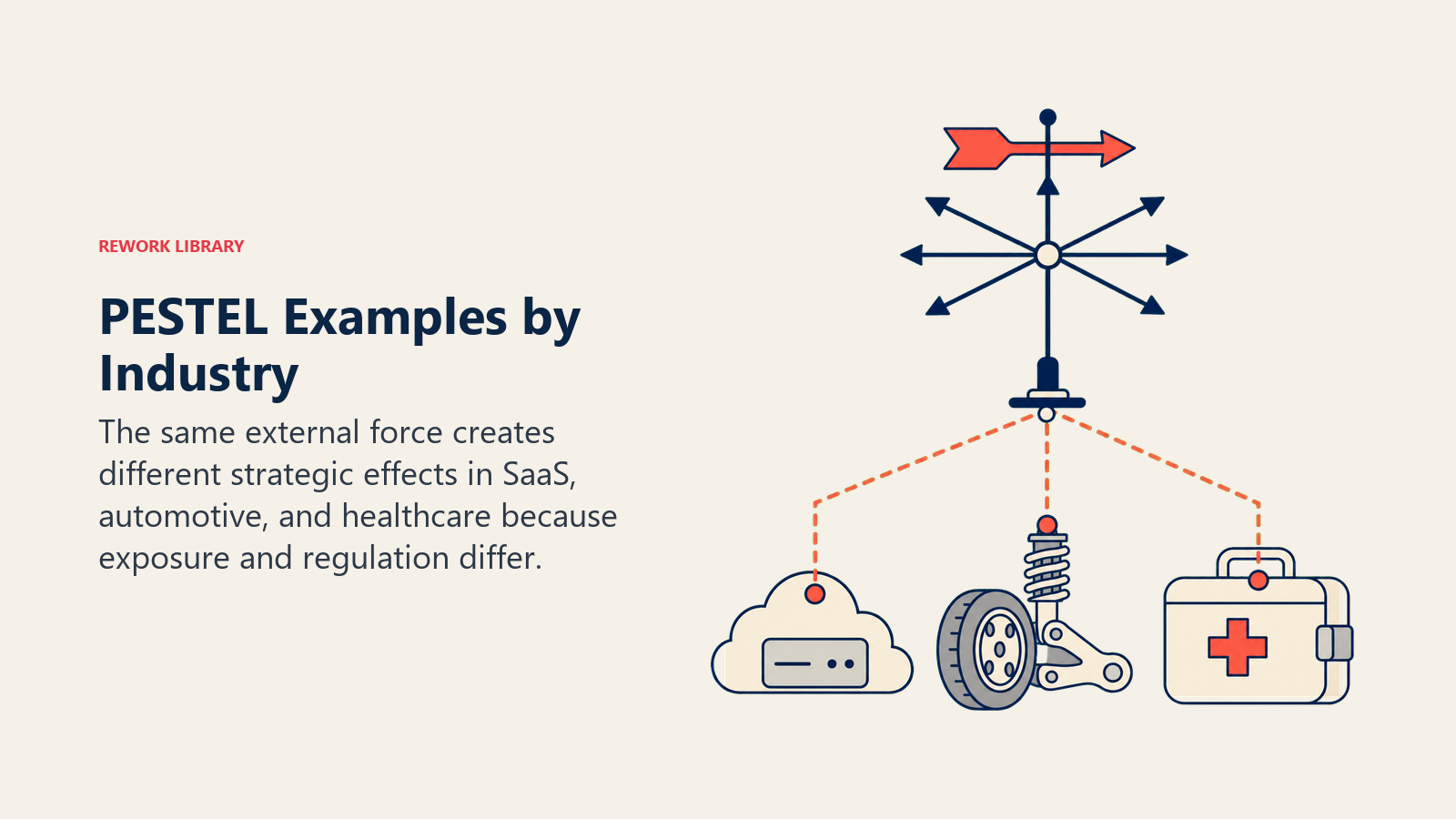
Diese Übersicht trennt die zentralen Aspekte der PESTEL-Beispiele nach Branche voneinander, damit die Details darunter leichter zu vergleichen sind.
SaaS
| Faktor | Signal | Wahrscheinliche Auswirkung | Strategische Maßnahme |
|---|---|---|---|
| Politisch | Hochrisiko-Einstufungen im EU-KI-Gesetz | Compliance-Mehraufwand für KI-gestützte Funktionen | Produkt-Roadmap prüfen; Budget für rechtliche Bewertung einplanen |
| Wirtschaftlich | Steigende Kosten für Cloud-Infrastruktur | Margendruck | Lieferantenverträge neu verhandeln; Rechenkosten optimieren |
| Sozial | Normalisierung hybrider Arbeitsmodelle | Anhaltende Nachfrage nach Kollaborationstools | Asynchrone Workflows im Produkt konsequent ausbauen |
| Technologisch | Generative KI verwandelt Basisfunktionen in Standardware | Wettbewerber erreichen schneller Funktionsparität | Investitionen auf proprietäre Daten und Workflows verlagern |
| Umwelt | Offenlegungspflichten für CO2 in Rechenzentren | Berichtskosten; ESG-Audits durch Kunden | Auf verifiziert CO2-arme Cloud-Regionen umstellen |
| Rechtlich | Verschärfte DSGVO- und CCPA-Durchsetzung | Bußgeldrisiko; Druck bei der Datenresidenz | Optionen zur Datenlokalisierung für Kunden in EU und Kalifornien einführen |
Automobilindustrie
| Faktor | Signal | Wahrscheinliche Auswirkung | Strategische Maßnahme |
|---|---|---|---|
| Politisch | Auslaufende staatliche EV-Förderungen in Schlüsselmärkten | Nachfragerückgang bei Elektrofahrzeugen für Privatkunden | Umsatz stärker auf Flotten- und Gewerbesegmente ausrichten |
| Wirtschaftlich | Schwankende Rohstoffpreise (Lithium, Kobalt) | Unsicherheit bei den Batteriekosten | Langfristige Lieferantenverträge sichern |
| Sozial | Stadtbewohner bevorzugen Carsharing gegenüber Eigenbesitz | Langfristiger Absatzrückgang in Großstädten | In Mobility-as-a-Service-Plattformen investieren |
| Technologisch | Reifende Regulierung für autonomes Fahren | Weg zu Premium-Funktionen im autonomen Fahren | Zertifizierungsprogramme für Software beschleunigen |
| Umwelt | Strengere Flottenemissionsziele (EU 2035) | Beschleunigter Druck zum Ausstieg aus Verbrennern | Investitionen in EV-Plattformen vorziehen |
| Rechtlich | Right-to-Repair-Gesetzgebung | Auswirkungen auf Garantie- und Ersatzteilumsätze | Netzwerke autorisierter Reparaturpartner aufbauen |
Gesundheitswesen
| Faktor | Signal | Wahrscheinliche Auswirkung | Strategische Maßnahme |
|---|---|---|---|
| Politisch | Reform der Arzneimittelpreisgesetzgebung | Margendruck bei Markenpharmazeutika | Portfolio an Generika und Biosimilars ausbauen |
| Wirtschaftlich | Kürzungen bei Erstattungssätzen der Kostenträger | Sinkender Umsatz pro Behandlung | Übergang zu wertorientierten Versorgungsverträgen |
| Sozial | Alternde Bevölkerung erhöht Volumen chronischer Erkrankungen | Steigende Nachfrage nach Langzeitpflege | Programme zum Management chronischer Erkrankungen aufbauen |
| Technologisch | KI-Diagnosetools durchlaufen regulatorische Zulassung | Effizienzgewinne; neue Wettbewerbertypen | Partnerschaften mit KI-Anbietern; Pilotprojekte in Abteilungen mit hohem Volumen |
| Umwelt | Zunehmende klimabedingte Krankheitslast | Neue Patientengruppen; Belastung der Lieferkette | Klimarisiken entlang der Lieferkette kartieren |
| Rechtlich | Verschärfte HIPAA-Durchsetzung bei digitaler Gesundheit | Steigende Haftung bei Datenschutzverletzungen | In Zero-Trust-Sicherheitsarchitektur investieren |
Kostenlose PESTEL-Vorlage (zum Kopieren)
Kopieren Sie diese Tabelle in ein Google Doc, eine Notion-Seite oder eine Präsentation, um Ihre eigene PESTEL-Analyse durchzuführen.
| Faktor | Beschreibung | Trend (+ / - / ~) | Wahrscheinlichkeit (1-5) | Auswirkung (1-5) | Chance oder Risiko? | Verantwortlich |
|---|---|---|---|---|---|---|
| Politisch | ||||||
| Politisch | ||||||
| Politisch | ||||||
| Wirtschaftlich | ||||||
| Wirtschaftlich | ||||||
| Wirtschaftlich | ||||||
| Sozial | ||||||
| Sozial | ||||||
| Sozial | ||||||
| Technologisch | ||||||
| Technologisch | ||||||
| Technologisch | ||||||
| Umwelt | ||||||
| Umwelt | ||||||
| Umwelt | ||||||
| Rechtlich | ||||||
| Rechtlich | ||||||
| Rechtlich |
So verwenden Sie die Vorlage: Tragen Sie pro Zeile einen externen Faktor ein. Bewerten Sie Wahrscheinlichkeit und Auswirkung von 1 (niedrig) bis 5 (hoch). Multiplizieren Sie beide Werte für einen Gesamtscore. Sortieren Sie absteigend, um die Faktoren zu finden, die sofortige strategische Aufmerksamkeit erfordern. Weisen Sie jedem hoch bewerteten Faktor einen Verantwortlichen zu, damit die Überwachung nicht unbemerkt liegen bleibt.

Co-Founder & COO
On this page
- Was ist eine PESTEL-Analyse?
- Wichtige Fakten
- Die 6 PESTEL-Faktoren im Detail
- Politisch
- Wirtschaftlich
- Sozial
- Technologisch
- Umwelt
- Rechtlich
- PESTEL vs. SWOT vs. Porter's Five Forces
- Vorteile einer PESTEL-Analyse
- Grenzen von PESTEL
- PESTEL-Analyse in 6 Schritten
- Schritt 1: Umfang und Zeitrahmen festlegen
- Schritt 2: Faktoren in allen 6 Kategorien sammeln
- Schritt 3: Auswirkung und Wahrscheinlichkeit bewerten
- Schritt 4: Chancen und Risiken identifizieren
- Schritt 5: In Strategie und Risikoregister einspeisen
- Schritt 6: Vierteljährlich aktualisieren
- PESTEL-Beispiele nach Branche
- SaaS
- Automobilindustrie
- Gesundheitswesen
- Kostenlose PESTEL-Vorlage (zum Kopieren)