Szenarioplanung: So bereiten Sie sich auf eine ungewisse Zukunft vor
Turn this article into takeaways for your work.


Each assistant summarizes the article only for you and suggests best practices for your work.
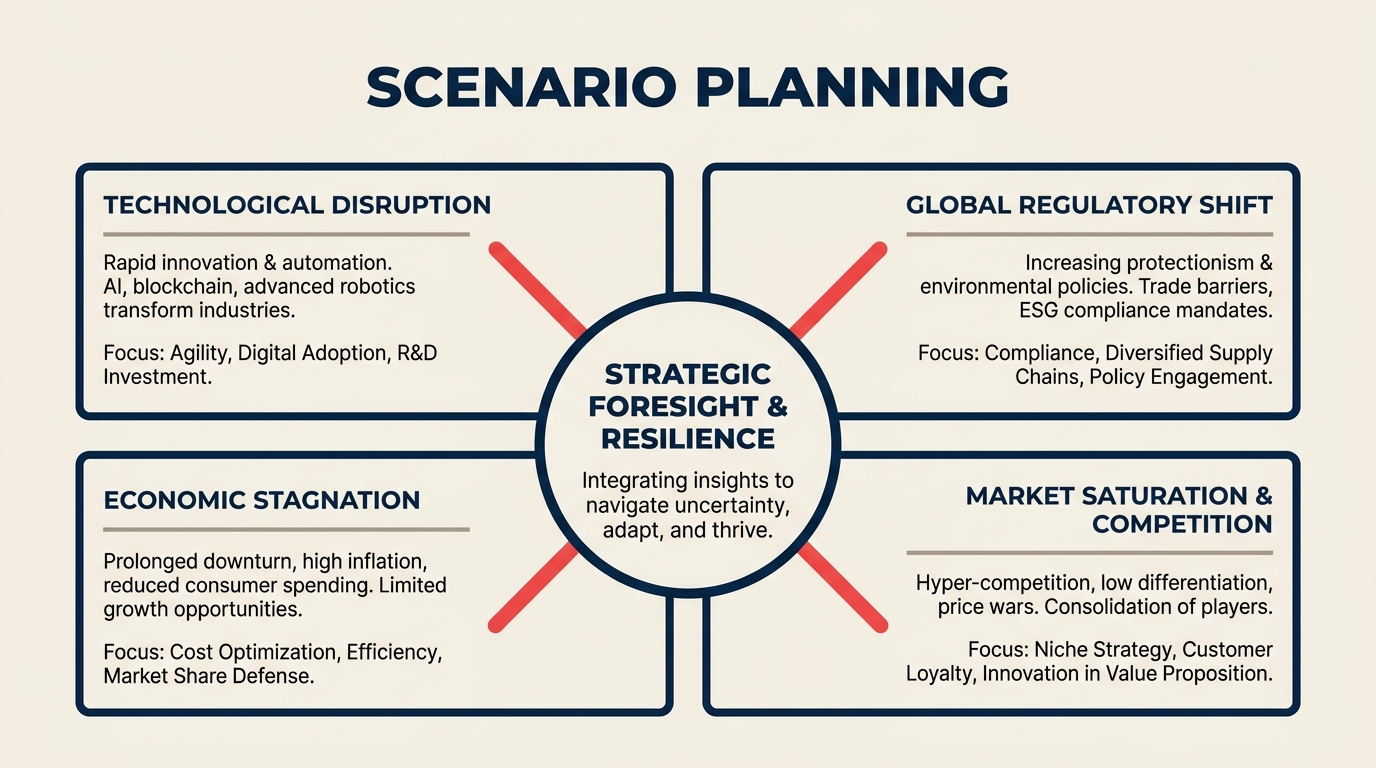
Szenarioplanung ist die Disziplin, mehrere plausible Zukunftsbilder zu entwickeln, damit Ihre Organisation Entscheidungen treffen kann, die auch dann standhalten, wenn die Welt nicht mitspielt. Anders als ein Budget oder eine Nachfrageprognose versucht sie nicht, ein einziges richtiges Ergebnis vorherzusagen. Sie bereitet Sie auf mehrere Möglichkeiten vor. Sie ist am wertvollsten in den komplexen und ungewissen Situationen, die das Cynefin-Framework beschreibt, in denen sich Ursache und Wirkung nicht im Voraus abbilden lassen.
Was ist Szenarioplanung?
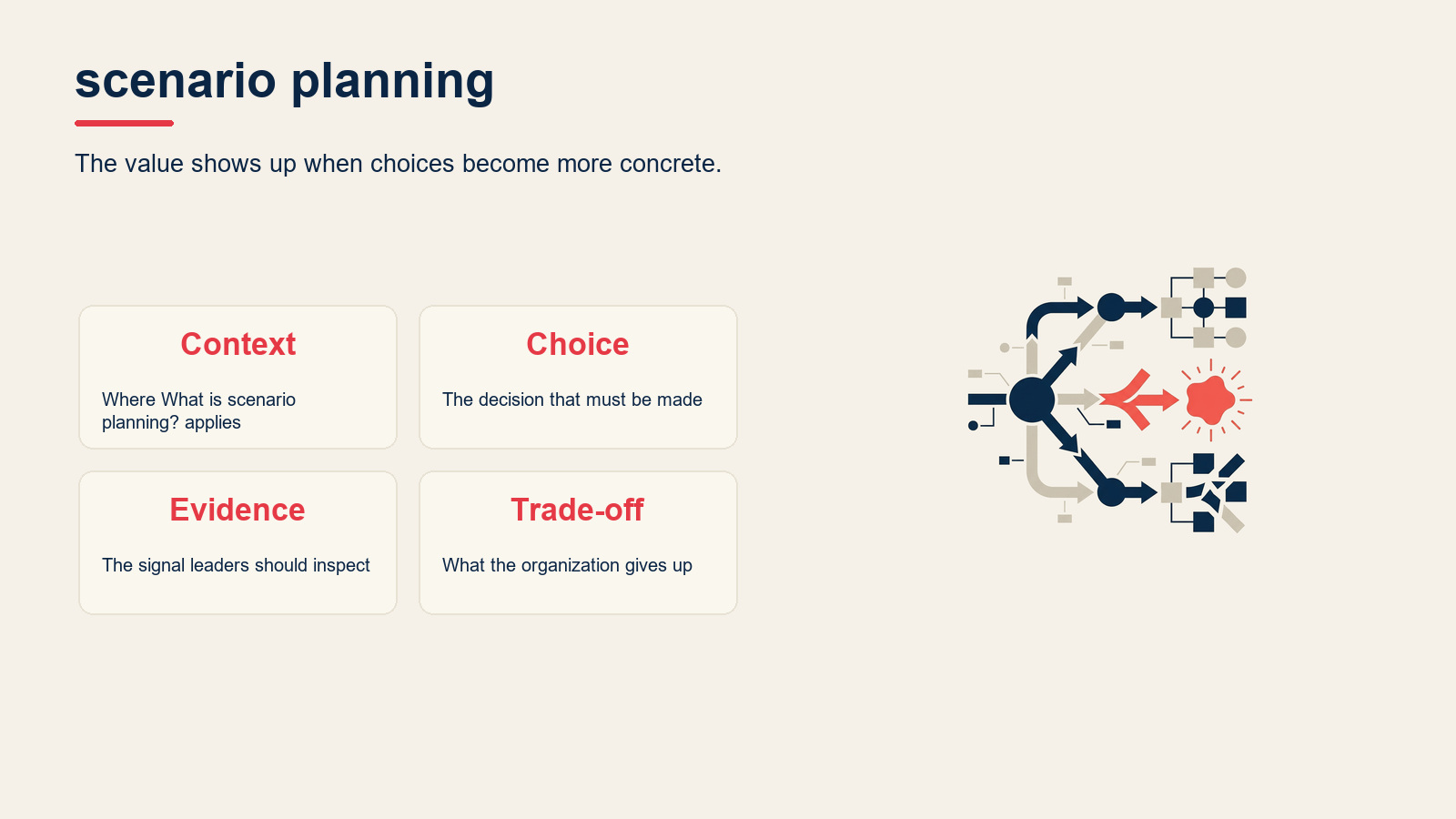
Szenarioplanung ist eine strategische Methode, bei der mehrere unterschiedliche, plausible Zukunftsbilder entwickelt werden, anstatt sich auf eine einzige Punktprognose festzulegen. Teams identifizieren die Kräfte, die ihr Umfeld voraussichtlich am stärksten prägen werden, bestimmen, welche dieser Kräfte am unsichersten sind, und konstruieren dann eine kleine Anzahl intern konsistenter Zukunftszustände. Jedes Szenario wird zu einem Stresstest und einem strategischen Auslöser.
Die Methode wurde von Pierre Wack und seinen Kollegen bei Royal Dutch Shell in den frühen 1970er Jahren bekannt gemacht. Shell nutzte sie, um die Ölkrise von 1973 und die anschließenden wirtschaftlichen Erschütterungen zu antizipieren, während Wettbewerber völlig unvorbereitet getroffen wurden. Die intellektuellen Wurzeln der Technik reichen bis zu Herman Kahns Arbeit bei der RAND Corporation in den 1950er Jahren zurück, wo Zukunftsdenken für die Militärplanung eingesetzt wurde. In den 1980er Jahren fand es seinen Weg in Unternehmensvorstandsetagen, und heute findet es sich in Regierungen, NGOs, Gesundheitssystemen und Technologieunternehmen gleichermaßen.
Die Kernerkenntnis ist einfach: Die Zukunft ist keine einzige Linie, die Sie von heute aus gerade weiterzeichnen können. Sie ist ein sich verzweigender Baum. Szenarioplanung zwingt Sie dazu, ernsthaft über mehrere Äste nachzudenken, bevor die Ereignisse Ihre Hand erzwingen.
Wichtige Fakten
Eine in Long Range Planning veröffentlichte Studie ergab, dass Organisationen, die Szenarioplanung praktizieren, deutlich häufiger Frühwarnsignale für große Marktverschiebungen erkannten als Unternehmen, die sich auf Einzelpunktprognosen verließen. (Chermack et al., 2010)
McKinsey-Forschungen zur strategischen Planung ergaben, dass Unternehmen mit dynamischen Planungsprozessen, also solche, die Annahmen bei veränderten Bedingungen überprüfen, über ein Jahrzehnt hinweg rund 40 % höhere Aktionärsrenditen erzielen als Unternehmen mit statischen Jahresplänen. (McKinsey & Company, 2018)
Laut Forschungen der Oxford Said Business School stieg die Nutzung von Szenarioplanung unter Fortune-500-Unternehmen von unter 25 % im Jahr 1985 auf mehr als 70 % Anfang der 2000er Jahre, was maßgeblich durch Shells publizierten Erfolg während der Ölkrisen angetrieben wurde. (Ramirez & Wilkinson, Strategic Reframing, Oxford University Press, 2016)
Szenarioplanung vs. Prognose
Prognose und Szenarioplanung adressieren dieselbe grundlegende Frage, nämlich "Was passiert als Nächstes?", beantworten sie aber auf völlig unterschiedliche Weise.
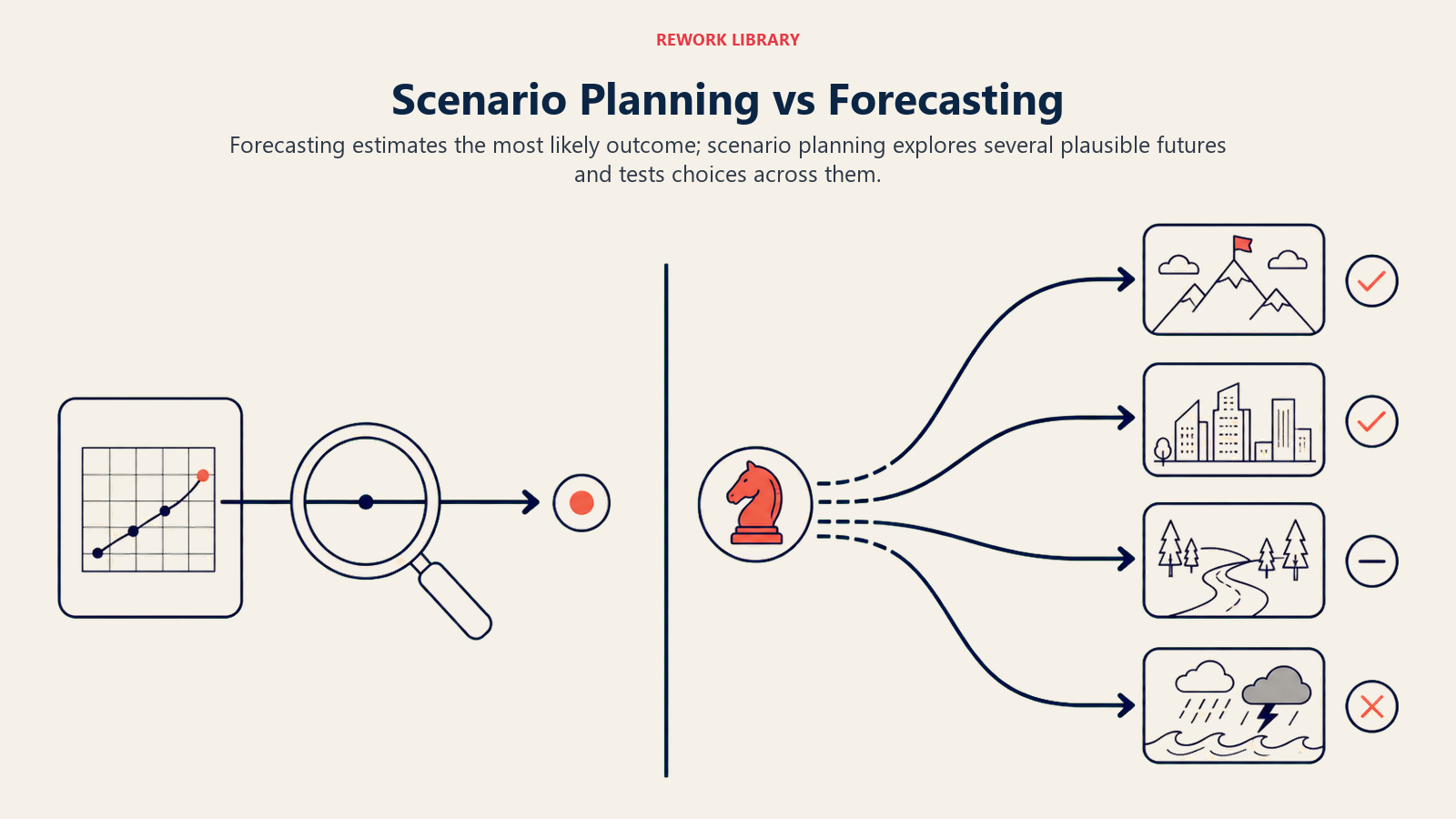
Eine Prognose liefert eine Zahl: Der Umsatz wird um 12 % wachsen, Öl wird 95 Dollar pro Barrel erreichen, die Abwanderungsrate wird auf 4,2 % sinken. Das Modell geht davon aus, dass sich die Zukunft ähnlich wie die jüngste Vergangenheit verhält und dass die wesentlichen Treiber sowohl erkennbar als auch messbar sind. Wenn diese Annahmen zutreffen, sind Prognosen nützlich. Wenn nicht, etwa in einer Pandemie, bei einem regulatorischen Kurswechsel oder einem plötzlichen Technologiewandel, wird eine Einzelpunktprognose zu einem falschen Anker, der die Organisation an eine Realität bindet, die längst nicht mehr existiert.
Szenarioplanung versucht nicht, die Zahl zu liefern. Sie produziert eine Reihe von Geschichten. Jede Geschichte ist konsistent, spezifisch und plausibel. Das Ziel besteht nicht darin, die richtige auszuwählen. Das Ziel ist es, Entscheidungen zu treffen, die über alle Szenarien hinweg robust sind, und im Voraus zu wissen, welche Frühsignale Ihnen zeigen, auf welchem Ast Sie sich tatsächlich befinden.
| Dimension | Prognose | Szenarioplanung |
|---|---|---|
| Grundannahme | Die Zukunft ist aus Vergangenheitsdaten weitgehend vorhersagbar | Die Zukunft ist ungewiss und verzweigt sich |
| Hauptergebnis | Eine einzige Zahl oder Spanne (Umsatz, Wachstumsrate, Preis) | 3-4 unterschiedliche narrative Zukunftsbilder |
| Am besten geeignet für | Kurzfristige operative Planung; stabile Umgebungen | Langfristige Strategie; hohe Unsicherheit; große Investitionsentscheidungen |
| Versagt wenn | Wesentliche Treiber sich diskontinuierlich verändern | Teams Szenarien als Prognosen behandeln und eine "wahrscheinlichste" auswählen |
| Kombiniert sich gut mit | Budgetzyklen, Nachfrageplanung, Finanzmodellierung | PESTEL-Analyse, Porter's Five Forces, SWOT-Analyse |
Die beiden Ansätze schließen sich nicht gegenseitig aus. Viele Organisationen nutzen Szenarioplanung, um strategische Entscheidungen zu rahmen, und Prognosen, um auf dem gewählten Pfad zu operieren. Stellen Sie sich Szenarien als die Karte vor und Prognosen als die GPS-Routenführung.
Arten der Szenarioplanung
Es gibt drei grundlegende Ansätze, und die meisten Organisationen verwenden je nach Entscheidungskontext eine Kombination davon.
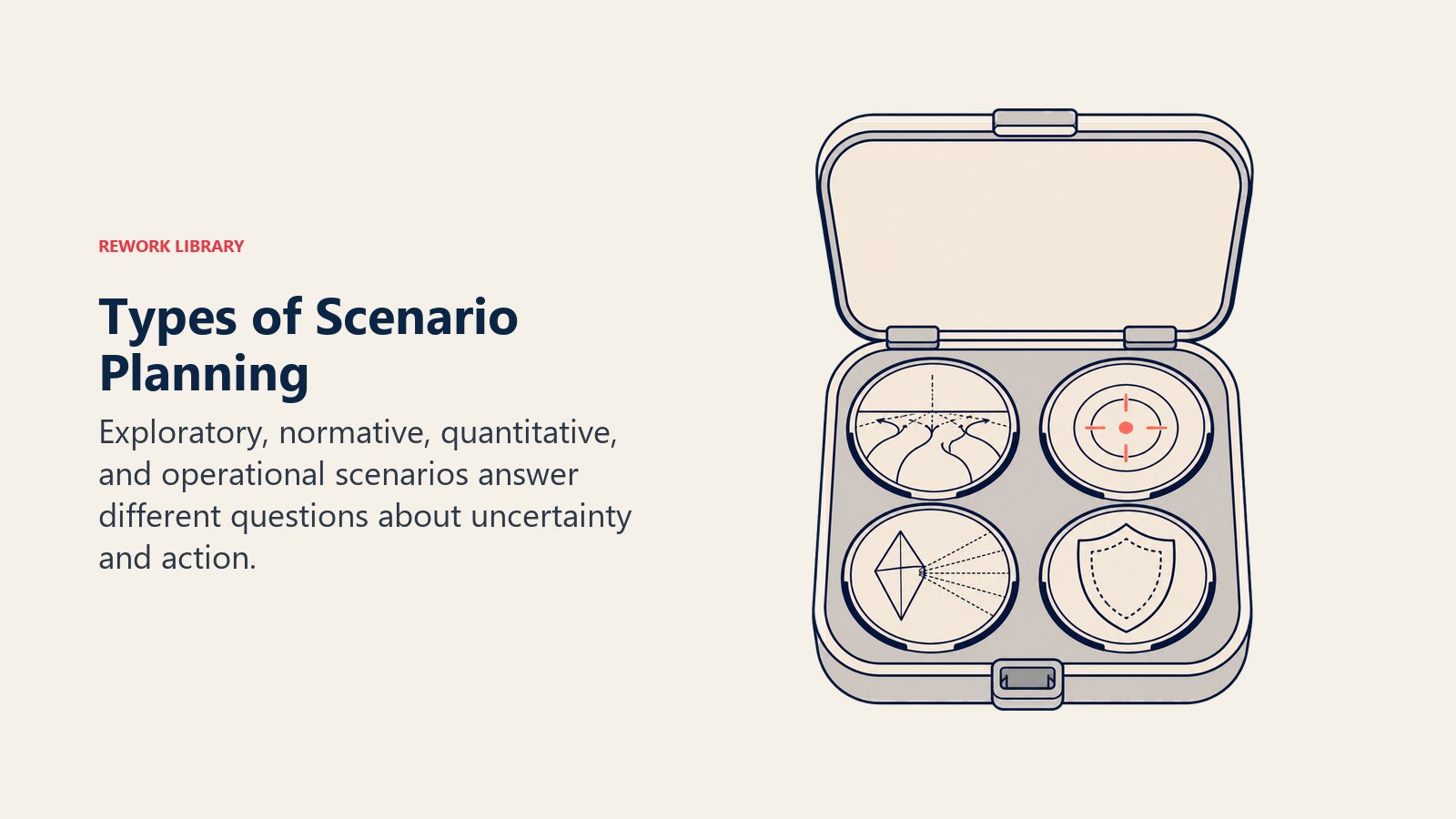
Quantitative Szenarioplanung entwickelt jedes Szenario auf der Grundlage expliziter numerischer Annahmen. Wirtschaftliche Modelle, demografische Projektionen und Finanzmodelle werden für jedes Szenario unterschiedlich parametrisiert. Dieser Ansatz eignet sich gut, wenn Sie über zuverlässige Daten verfügen und Szenarien direkt mit finanziellen Ergebnissen verbinden möchten. Investmentbanken und Versicherungsaktuar nutzen ihn bevorzugt.
Normative Szenarioplanung beginnt mit einem gewünschten Zukunftsbild und arbeitet rückwärts. Wie müsste die Welt 2035 aussehen, damit unsere Organisation floriert? Dieser Ansatz ist in der Wirtschaftspolitik, der Stadtplanung und der Nachhaltigkeitsstrategie verbreitet. Es geht weniger um Vorhersage als um die Gestaltung von Wegen zu einem Ziel.
Explorative Szenarioplanung mit der 2x2-Matrix der kritischen Unsicherheiten ist die am weitesten verbreitete Unternehmensmethode. Das Team identifiziert Dutzende von Treibern, grenzt sie auf die zwei wirkungsstärksten und unsichersten Achsen ein und erstellt ein Zwei-mal-Zwei-Raster. Die vier Quadranten werden zu den vier Szenarien. Shells ursprüngliche Arbeit aus den 1970er Jahren nutzte diese Struktur, und sie bleibt bis heute die Standardmethode für die meisten Strategie-Teams, weil sie vier bedeutend unterschiedliche Zukunftsbilder erzeugt, ohne das Team mit Kombinationsmöglichkeiten zu überfordern.
Vorteile und Einschränkungen
Gut durchgeführt bietet Szenarioplanung mehrere Vorteile, die andere Strategie-Tools nicht haben.
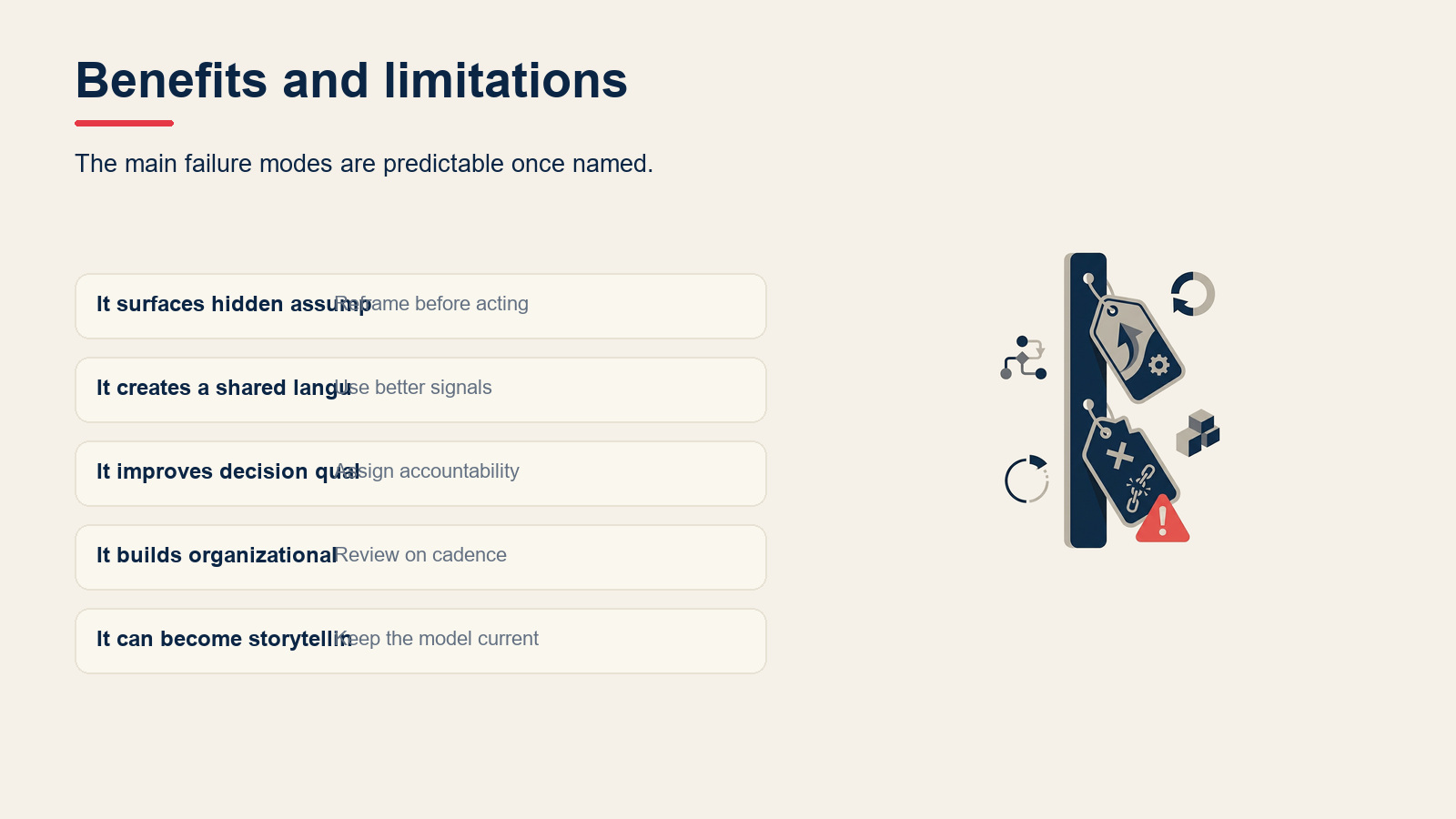
Sie macht verborgene Annahmen sichtbar. Der Prozess der Szenarioentwicklung zwingt Teams dazu, die Annahmen, die in jedem Strategiedokument vergraben sind, explizit zu machen. Sobald diese Annahmen sichtbar werden, können sie hinterfragt werden.
Sie schafft eine gemeinsame Sprache für Unsicherheit. Wenn alle Führungskräfte im Raum dieselben vier Szenarien gelesen haben, werden Gespräche über Risiken konkreter. "Das ist eine Welt-B-Situation" ist schneller und handlungsfähiger als in jeder Sitzung die Grundannahmen neu zu diskutieren.
Sie verbessert die Entscheidungsqualität unter Druck. Da Szenarioplanung vor der Krise stattfindet, haben Führungskräfte bereits darüber nachgedacht, wie sie reagieren würden. Im Voraus getroffene Entscheidungen sind fast immer besser als Entscheidungen, die unter Druck gefällt werden.
Sie stärkt die organisationale Widerstandsfähigkeit. Die Verbindung von Szenarien mit OKR-Frameworks oder Balanced Scorecards ermöglicht es Teams, Ziele zu setzen, die ausdrücklich szenariobedingt sind, statt bloß optimistischer Schätzungen.
Es gibt jedoch auch reale Einschränkungen.
Sie kann zum bloßen Storytelling werden. Wenn die Szenarien nicht in echten Treibern und spezifischen Unsicherheiten verankert sind, entwickeln Teams vier vage Zukunftsbilder, die sich zwar unterschiedlich anfühlen, aber zur selben Strategie führen. Das Ergebnis sollte entscheidungserzwingend sein, nicht intellektuell stimulierend, aber strategisch neutral.
Sie erfordert Zeit von Führungskräften und echtes Engagement. Szenarioplanungsworkshops, die an Junior-Analysten delegiert werden, liefern selten nützliche Ergebnisse. Die Auswahl der Treiber und das Gespräch über strategische Implikationen benötigen Menschen, die tatsächlich Entscheidungen treffen können.
Sie sagt Ihnen nicht, was zu tun ist. Szenarien beleuchten das Terrain. Sie wählen nicht die Route. Strategie erfordert weiterhin Urteilsvermögen, und Organisationen verwechseln manchmal das Vorhandensein der Karte mit dem Vorhandensein eines Plans.
Sie kann als Rechtfertigungsübung missbraucht werden. Teams entwickeln manchmal Szenarien rund um eine bereits getroffene Entscheidung, indem sie Treiber auswählen, die die gewünschte Zukunft als "wahrscheinlichstes" Ergebnis produzieren. Das ist Bestätigungsfehler mit zusätzlichen Schritten.
Wie man Szenarioplanung durchführt
Der praktische Ablauf führt von einer fokussierten strategischen Frage zu einer Reihe von Szenarien und schließlich zu Entscheidungen und Frühwarnsignalen.
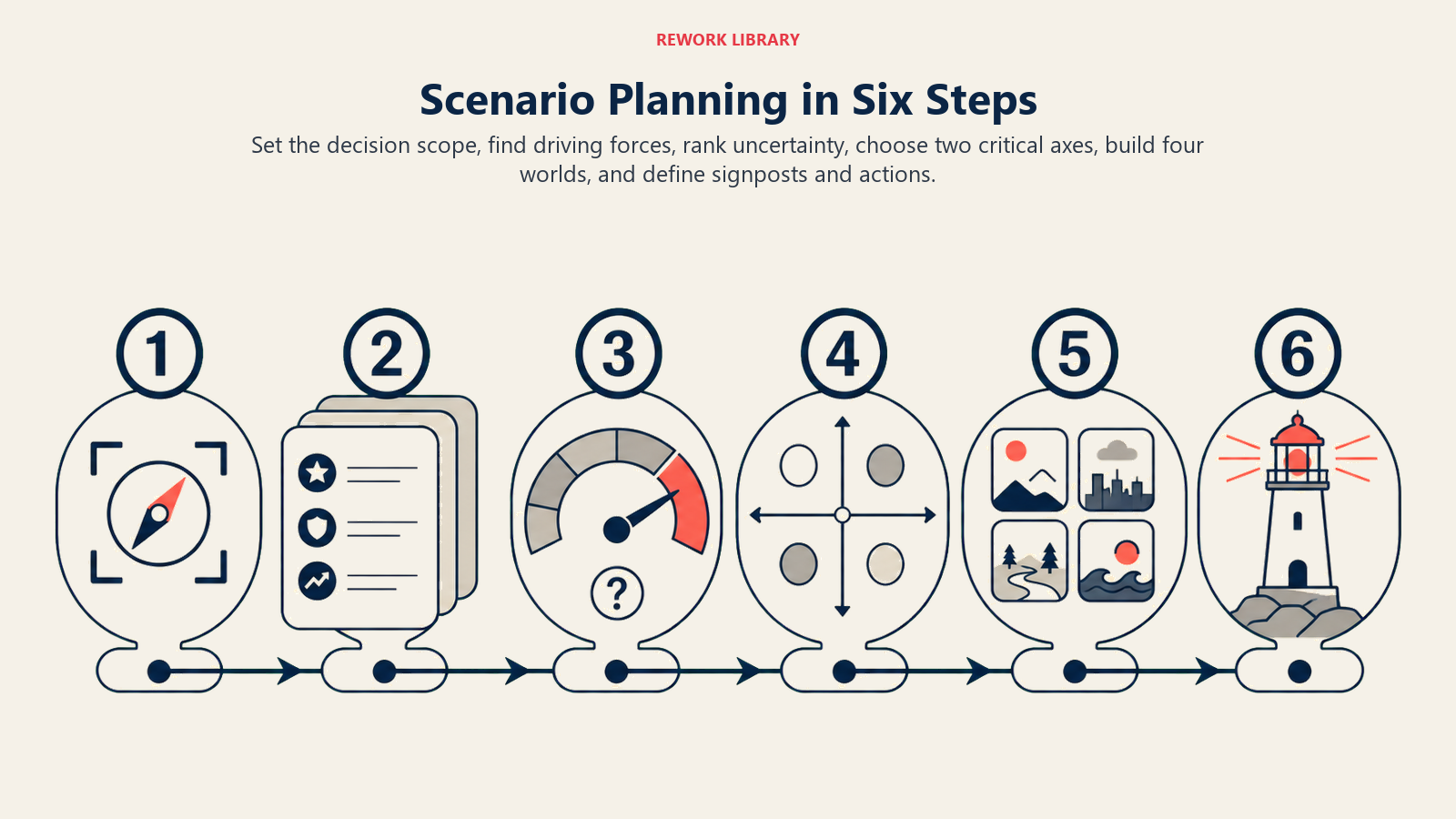
Schritt 1: Umfang und Zeithorizont festlegen
Einigen Sie sich zunächst darauf, welche Entscheidung oder Strategiefrage die Szenarien beantworten sollen. Vager Umfang führt zu vagen Szenarien. "Was ist die Zukunft unserer Branche?" ist zu breit gefasst. "Welche Markt- und Wettbewerbsbedingungen werden unsere Produktstrategie in den nächsten fünf Jahren prägen?" ist handhabbar.
Wählen Sie einen Zeithorizont, der zur Unumkehrbarkeit der Entscheidung passt. Kapitalinvestitionen mit zehnjährigen Amortisationszeiträumen erfordern Zehn-Jahres-Szenarien. Preisstrategien benötigen möglicherweise nur einen Zwei-Jahres-Horizont. Die meisten Unternehmensszenarien erstrecken sich über drei bis sieben Jahre. Über zehn Jahre hinaus werden Szenarien so spekulativ, dass sie ihren operativen Bezug verlieren.
Beauftragen Sie einen Moderator, stellen Sie fest, wer die Entscheidungsträger sind, und stellen Sie ein funktionsübergreifendes Team zusammen, das Personen einschließt, die dem Markt, der Regulierung und dem operativen Betrieb nahestehen.
Schritt 2: Treiber identifizieren
Treiber sind externe Trends und Dynamiken, die die Zukunft unabhängig von den Handlungen Ihrer Organisation prägen werden. Sie liegen außerhalb Ihrer Kontrolle. Erarbeiten Sie durch Recherche, Experteninterviews und PESTEL-Analyse eine umfangreiche Liste. Häufige Kategorien umfassen makroökonomische Bedingungen, regulatorische Veränderungen, Technologieadoption, demografische Veränderungen, geopolitische Dynamiken und Wettbewerberverhalten.
Streben Sie 20 bis 50 Kandidatentreiber an, bevor Sie eingrenzen. Dies ist die divergierende Phase. Filtern Sie noch nicht.
Schritt 3: Nach Auswirkung und Unsicherheit bewerten
Tragen Sie jeden Treiber auf einer Zwei-Achsen-Karte ein: wie stark er Ihre Kernfrage beeinflusst, und wie unsicher seine Richtung oder sein Ausmaß über Ihren gewählten Horizont ist.
Treiber mit hoher Auswirkung und geringer Unsicherheit sind "vorherbestimmte Elemente". Sie werden unabhängig vom Szenario eintreten. Schließen Sie sie als festen Kontext in alle Szenarien ein, aber bauen Sie die Szenariostruktur nicht um sie herum auf.
Treiber mit hoher Auswirkung und hoher Unsicherheit sind diejenigen, die fundamental unterschiedliche Zukunftsbilder definieren. Dies sind Ihre Kandidaten für die kritischen Unsicherheiten, die das 2x2-Raster strukturieren werden.
Schritt 4: Die zwei kritischen Unsicherheiten auswählen
Wählen Sie aus Ihren Kandidaten mit hoher Auswirkung und hoher Unsicherheit zwei aus, die voneinander unabhängig sind (sodass die vier Quadranten wirklich unterschiedlich sind) und bedeutend genug, dass eine Verschiebung in einer von ihnen Ihre Strategie grundlegend verändern würde.
Benennen Sie jede Achse an ihren beiden Polen. Zum Beispiel: "Technologieadoption: langsame Diffusion vs. schnelle Mainstream-Adoption" auf einer Achse. "Regulatorisches Umfeld: offen vs. restriktiv" auf der anderen. Die vier Schnittpunkte werden Ihre vier Szenarien.
Schritt 5: Die vier Szenarien entwickeln
Entwickeln Sie jeden Quadranten zu einem kohärenten Narrativ. Geben Sie jedem Szenario einen lebhaften, einprägsamen Namen, der seinen Charakter widerspiegelt, nicht nur "optimistisch" oder "pessimistisch". Ein Szenario mit dem Namen "Ummauerte Gärten" kommuniziert etwas Konkretes; "Szenario C" kommuniziert gar nichts.
Jedes Szenarionarrativ sollte beantworten: Was ist mit den kritischen Unsicherheiten passiert? Wie sah das breitere Umfeld aus? Wie war die Wettbewerbslandschaft? Was taten die Kunden? Was machten die Gewinner in dieser Welt anders? Das Narrativ muss nicht lang sein, aber es muss intern konsistent und spezifisch genug sein, um unterschiedliche strategische Reaktionen zu erzeugen.
Schritt 6: Strategien und Frühwarnsignale entwickeln
Identifizieren Sie für jedes Szenario die strategischen Schritte, die am wirkungsvollsten wären. Suchen Sie dann nach Schritten, die in mehreren Szenarien gut funktionieren. Dies sind Ihre "Maßnahmen ohne Reue", die Wetten, die es wert sind, unabhängig davon gemacht zu werden, welche Zukunft eintritt.
Ebenso wichtig: Definieren Sie die Frühwarnsignale für jedes Szenario. Welche Frühindikatoren würden Ihnen 6 bis 18 Monate im Voraus sagen, dass sich die Welt in Richtung Welt A statt Welt B bewegt? Beauftragen Sie jemanden, diese Signale zu beobachten. Szenarioplanung ohne Monitoring-Schleife ist lediglich kreatives Schreiben.
Integrieren Sie die strategischen Implikationen in Ihre Planungsinstrumente. Eine Überprüfung des McKinsey 7S Frameworks kann aufzeigen, welche organisationalen Fähigkeiten unabhängig vom eintreffenden Szenario gestärkt werden müssen. Die Ansoff-Matrix kann Teams dabei helfen, Produkt- und Marktentscheidungen szenario-weise zu rahmen.
Szenarioplanung Beispiel
Ein mittelgroßes B2B-Softwareunternehmen entscheidet, wie viel es in den nächsten vier Jahren in KI-gestützte Produktfunktionen investieren soll. Es identifiziert zwei kritische Unsicherheiten:
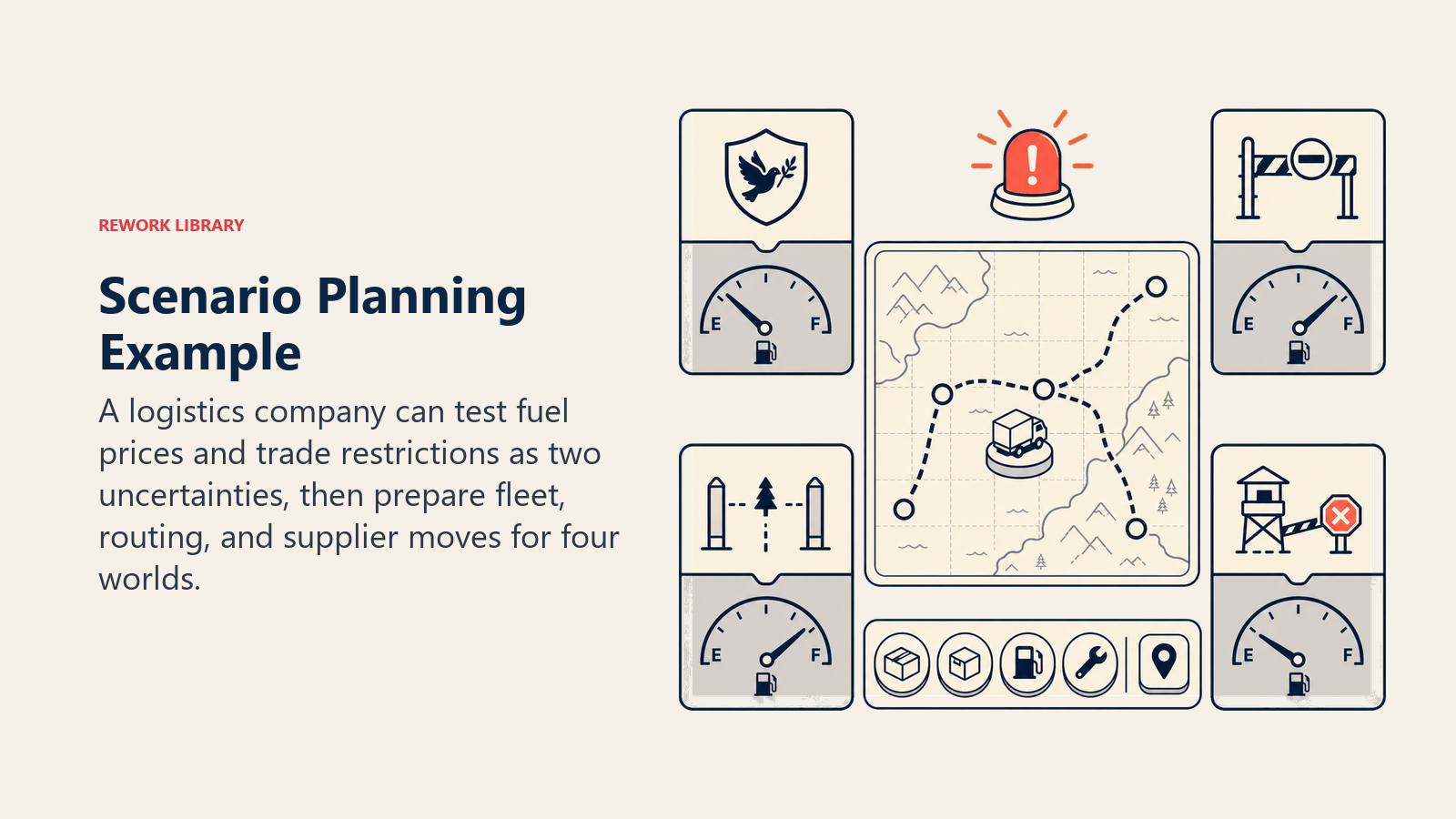
- KI-Fähigkeitsentwicklung: schrittweise (inkrementelle Verbesserungen bestehender Systeme) vs. schnell (bahnbrechende KI für allgemeine Zwecke, die Produktkategorien neu schreibt)
- Adoptionsgeschwindigkeit in Unternehmen: langsam (IT-Governance, Sicherheitsbedenken und Compliance-Verzögerungen) vs. schnell (aggressive Adoption durch Wettbewerbsdruck und Anbieterreife)
| Langsame Unternehmensadoption | Schnelle Unternehmensadoption | |
|---|---|---|
| Schrittweise KI-Entwicklung | "Stetiger Aufstieg": KI-Funktionen differenzieren, stören aber nicht. Kunden bewegen sich vorsichtig. Inkrementelle Investitionen zahlen sich aus. Ihre aktuelle Roadmap ist überwiegend richtig. | "Wettbewerblicher Ansturm": Kunden sind bereit, aber KI-Tools sind noch begrenzt. Erste Mover mit auch nur bescheidenen KI-Fähigkeiten gewinnen überproportionale Marktanteile. Schnelligkeit beim Ausliefern zählt mehr als Anspruch. |
| Schnelle KI-Entwicklung | "Fähigkeitsüberhang": Leistungsstarke KI-Tools existieren, aber Unternehmenskäufer können sie aufgrund von Beschaffungszyklen und Risikoaversion nicht schnell genug einsetzen. Eine Welle aufgestauter Nachfrage baut sich auf. | "Neue Regeln": KI schreibt die Produktkategorie neu. Feature-Parität bricht zusammen. Plattformen, die proprietäre Daten und Workflow-Integration kontrollieren, gewinnen. Ihre aktuelle Roadmap könnte überholt sein. |
In "Stetiger Aufstieg" sind moderate F&E-Investitionen ausreichend. In "Neue Regeln" muss das Unternehmen sofort auf Datenstrategie setzen und seinen Wettbewerbsmoat überdenken. Eine Maßnahme ohne Reue, die in allen vier Szenarien funktioniert: jetzt eine proprietäre Kundendatenschicht aufbauen, denn sie zahlt sich aus, ob die KI-Entwicklung schrittweise oder schnell verläuft, und ob die Adoption langsam oder schnell ist.
Best Practices
Benennen Sie Ihre Szenarien treffend. Lebhafte, aussagekräftige Namen machen Szenarien portabel. Teams können sie in Board-Präsentationen, Produktreviews und Budgetdiskussionen zitieren, ohne jedes Mal das vollständige Narrativ neu erläutern zu müssen.
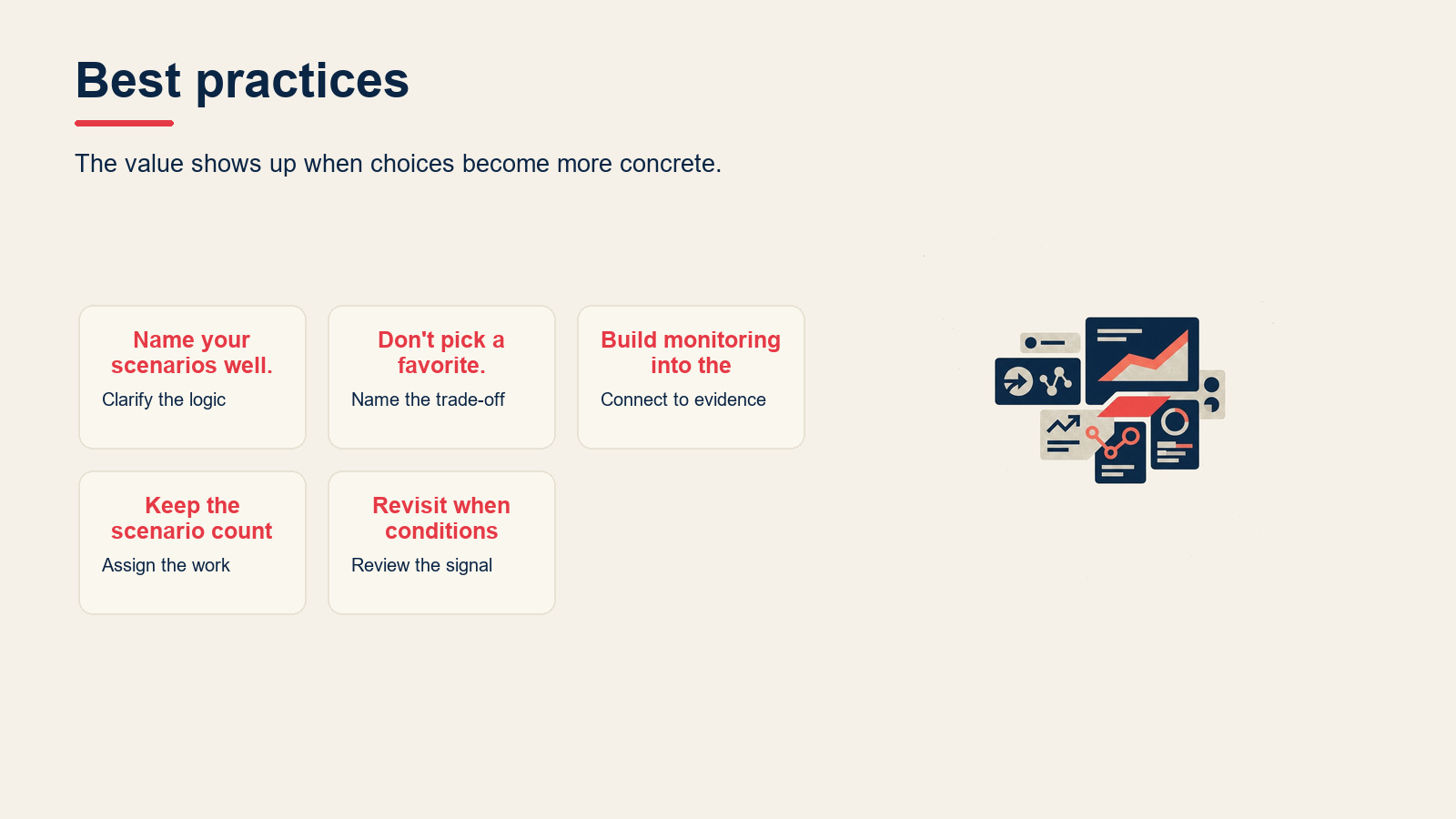
Wählen Sie keinen Favoriten. In dem Moment, in dem ein Team beginnt, ein Szenario als "wahrscheinlichstes" zu behandeln, nimmt es die anderen nicht mehr ernst. Widerstehen Sie diesem Druck. Der gesamte Sinn ist die Vorbereitung auf mehrere Ergebnisse.
Integrieren Sie Monitoring in den Rhythmus. Übertragen Sie die Zuständigkeit für Frühwarnindikatoren. Überprüfen Sie diese in vierteljährlichen Strategiesitzungen neben Ihren Balanced Scorecard-Kennzahlen. Szenarien ohne Monitoring-Zyklus veralten und geraten in Vergessenheit.
Behalten Sie vier Szenarien bei. Zwei Szenarien schaffen ein falsches Binär. Drei erzeugen eine implizite "sichere Mitte". Fünf oder mehr werden für Strategiegespräche kognitiv nicht mehr handhabbar. Vier ist das praktische Optimum für die meisten Teams.
Überprüfen Sie, wenn sich die Bedingungen ändern. Große Branchenereignisse, regulatorische Kehrtwenden oder technologische Durchbrüche können die Grundannahmen eines Szenarios entwerten. Behandeln Sie das Szenario-Set als lebendes Dokument, nicht als einmalige Lieferung.
Nutzen Sie Szenarien zum Stresstest der bestehenden Strategie. Führen Sie Ihren aktuellen strategischen Plan durch jedes Szenario und fragen Sie: Macht dieser Plan noch Sinn? Wo bricht er? Dieser Stresstest liefert oft unmittelbaren Mehrwert, der die Szenarien selbst übersteigt.
Weiterführende Lektüre

Co-Founder & COO
On this page
- Was ist Szenarioplanung?
- Szenarioplanung vs. Prognose
- Arten der Szenarioplanung
- Vorteile und Einschränkungen
- Wie man Szenarioplanung durchführt
- Schritt 1: Umfang und Zeithorizont festlegen
- Schritt 2: Treiber identifizieren
- Schritt 3: Nach Auswirkung und Unsicherheit bewerten
- Schritt 4: Die zwei kritischen Unsicherheiten auswählen
- Schritt 5: Die vier Szenarien entwickeln
- Schritt 6: Strategien und Frühwarnsignale entwickeln
- Szenarioplanung Beispiel
- Best Practices
- Weiterführende Lektüre