Mintzbergs 5 Ps der Strategie: Plan, Ploy, Pattern, Position, Perspective
Turn this article into takeaways for your work.


Each assistant summarizes the article only for you and suggests best practices for your work.
Die meisten Strategiegespräche behandeln das Wort „Strategie", als ob alle im Raum dasselbe meinen würden. Das tun sie nicht. Mintzbergs 5 Ps der Strategie ist das Framework, das diese Verwirrung auflöst, indem es zeigt, dass Strategie fünf klar unterschiedliche und gleichermaßen legitime Bedeutungen trägt, und dass das Ignorieren auch nur einer davon Ihre Strategie für Bedrohungen blind macht, die sie nicht kommen sah.
Was sind Mintzbergs 5 Ps der Strategie?
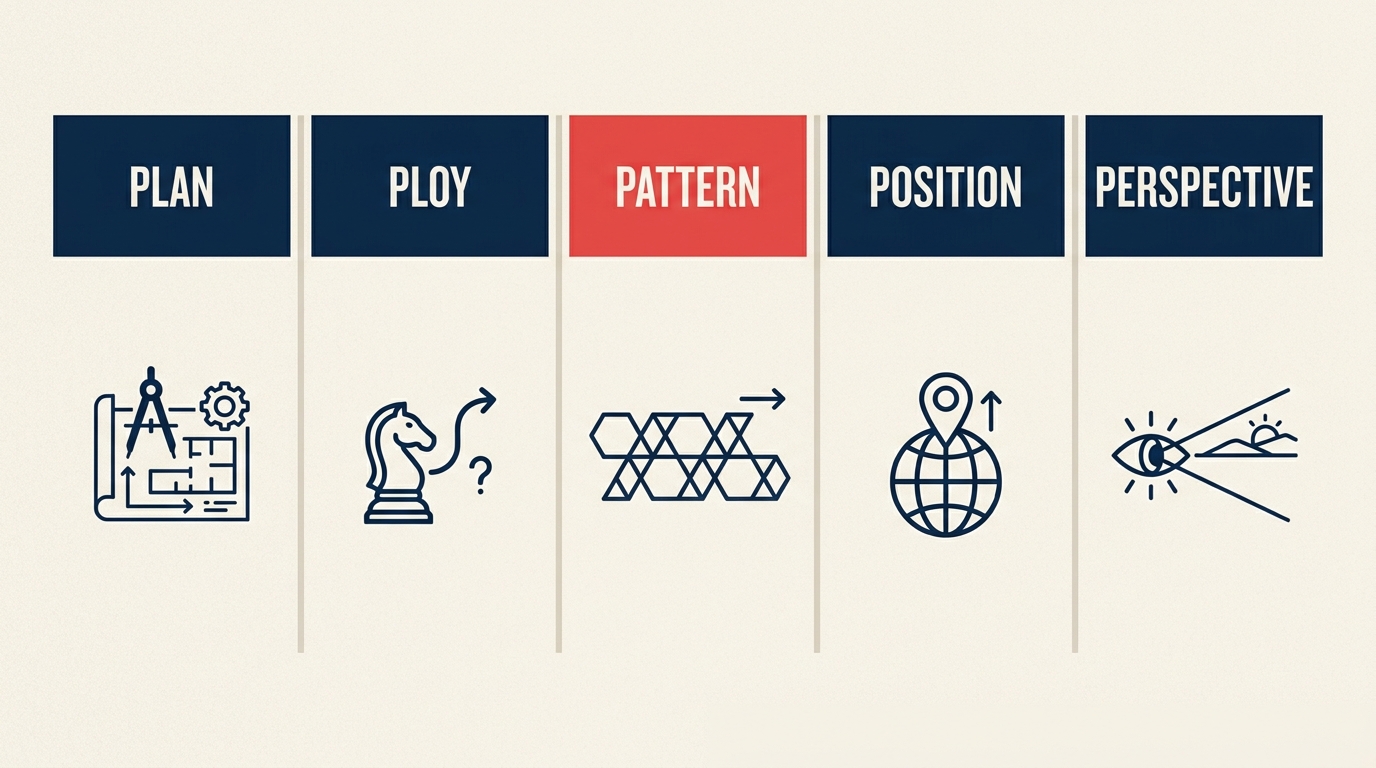
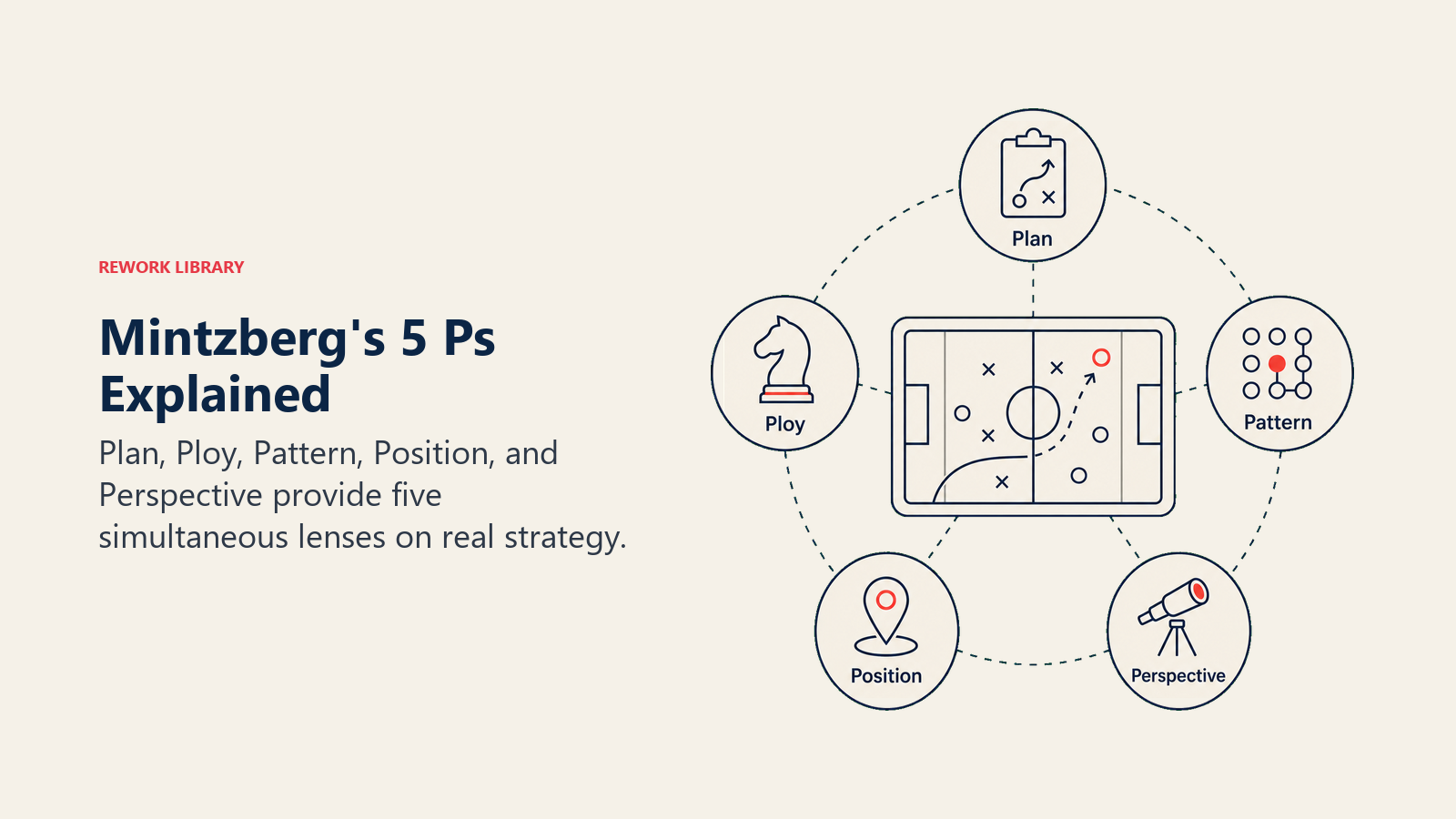
Mintzbergs 5 Ps der Strategie ist ein Framework, das Henry Mintzberg in seinem wegweisenden Aufsatz „Five Ps for Strategy" im California Management Review von 1987 veröffentlichte. Sein zentrales Argument: Das Wort „Strategie" wird auf fünf grundlegend verschiedene Weisen verwendet, und sie als austauschbar zu behandeln führt zu echten strategischen Fehlern. Die fünf Bedeutungen sind Plan, Ploy, Pattern, Position und Perspective.
Vor Mintzberg setzte die meiste Strategieliteratur auf eine einzige Definition: einen bewussten Plan mit erklärten Zielen. Mintzberg widersprach. Er wies darauf hin, dass Organisationen oft durch konsistentes Verhalten statt durch schriftliche Pläne strategisch handeln, durch Marktsignale statt durch echte Verpflichtungen, durch gemeinsame kulturelle Annahmen statt durch explizite Positionen. Sein Framework ersetzte frühere Modelle nicht. Es ordnete sie in einen Zusammenhang ein.
Wichtige Fakten
- Mintzbergs „Five Ps for Strategy" wurde erstmals im California Management Review, Vol. 30, Nr. 1, Herbst 1987, Seiten 11 bis 24 veröffentlicht. Es gehört bis heute zu den meistzitierten Beiträgen im strategischen Management.
- Mintzberg, Ahlstrand und Lampel erweiterten dieses Denken später in Strategy Safari (1998), in dem sie 10 Schulen des strategischen Denkens katalogisierten, mit den 5 Ps als konzeptuellem Anker.
- Forschungen zur realisierten Strategie zeigen, dass weniger als 10 % der explizit formulierten Strategien vollständig so umgesetzt werden, wie geplant (Mintzberg und Waters, „Of Strategies, Deliberate and Emergent", Strategic Management Journal, 1985), was direkt das Pattern-P motiviert.
Die 5 Ps erklärt
Jedes P gibt Ihnen eine andere Perspektive darauf, was Strategie eigentlich ist. Zusammen ermöglichen sie es Ihnen, eine Strategie vollständig zu sehen.
1. Plan
Bedeutung: Strategie als bewusst beabsichtigter Handlungskurs, der im Voraus festgelegt wird. Dies ist die vertrauteste Definition: der dokumentierte Plan, die Roadmap, der jährliche Betriebsplan, der im Boardroom präsentiert wird.
Beispiel: Ein SaaS-Unternehmen erstellt einen 12-Monats-Wachstumsplan, der Enterprise-Accounts im Finanzdienstleistungsbereich anvisiert, mit spezifischen Personalergänzungen, einem Roadmap-Meilenstein für die SOC-2-Zertifizierung und einem vierteljährlichen Umsatzziel. Diese dokumentierte Absicht ist der Plan.
Die Einschränkung: Pläne können von Ereignissen überholt werden. Ein Wettbewerber bringt ein Ersatzprodukt auf den Markt, eine regulatorische Änderung verändert die Kostenstruktur, oder eine Schlüsselperson tritt nicht an. Der Plan wird obsolet, bevor er halb ausgeführt ist. Genau deshalb sind die anderen vier Ps wichtig.
2. Ploy
Bedeutung: Strategie als spezifisches Manöver, das darauf abzielt, einen Wettbewerber auszuspielen. Es ist nicht die gesamte Ausrichtung der Organisation; es ist ein taktischer Zug, der darauf ausgelegt ist, einen Rivalen zu signalisieren, zu bedrohen oder in die Irre zu leiten.
Beispiel: Apple kündigt Produktkategorien vorab an (wie das ursprüngliche iPad vor dem Launch). Das verschiebt die Erwartungen der Verbraucher und friert die Entwicklungsbudgets der Wettbewerber ein. Der eigentliche Wert liegt nicht in der Ankündigung selbst; er liegt in der Störung, die sie in konkurrierenden Produkt-Roadmaps erzeugt. Das ist ein Ploy.
Die Einschränkung: Ploys sind kurzlebig und oft umkehrbar. Ein Unternehmen, das seine gesamte Strategie auf Ploys aufbaut, hat keine dauerhafte Grundlage. Das Ploy-P erinnert daran, nach der Wettbewerbs-Signaling-Ebene jeder Strategie zu suchen, ohne es für die Strategie selbst zu halten.
3. Pattern
Bedeutung: Strategie als Muster in einem Strom von Handlungen, ob beabsichtigt oder nicht. Wenn ein Unternehmen konsequent Produkte zu Premium-Preisen einführt, in angrenzenden Märkten akquiriert oder Märkte verlässt, wenn die Marge unter einen bestimmten Schwellenwert fällt, ist diese Verhaltensstabilität eine Strategie, unabhängig davon, ob sie je schriftlich festgehalten wurde.
Beispiel: Amazons konsistentes Muster des Markteintritts, aggressiven Preisens zum Marktanteilsaufbau, der Inkaufnahme kurzfristiger Verluste und der anschließenden Margenabschöpfung, sobald Wettbewerber ausgestiegen sind, ist eine Strategie durch Pattern. Es war nicht immer ein veröffentlichter Plan. Aber rückblickend ist das Muster unverkennbar.
Die Einschränkung: Muster können eine Organisation in Verhaltensweisen einschließen, die historisch sinnvoll waren, es aber nicht mehr sind. Das Erkennen des Musters ist der erste Schritt zur Entscheidung, ob man es fortsetzen oder durchbrechen soll.
4. Position
Bedeutung: Strategie als Standort der Organisation in ihrem Wettbewerbsumfeld, insbesondere wie sie ihre internen Fähigkeiten mit dem externen Markt in Einklang bringt. Dieses P entspricht eng Porters Sichtweise auf Strategie und Wettbewerbspositionierung.
Beispiel: Southwest Airlines nimmt eine spezifische Position ein: Kurzstrecke, Punkt-zu-Punkt, keine Extras, günstig. Jede operative Entscheidung, vom einheitlichen Flugzeugtyp bis zu keinen Sitzplatzzuweisungen, stärkt diese Position. Eine Änderung eines Elements riskiert das gesamte System.
Die Einschränkung: Position ist statisch, bis Sie sie verschieben wollen. Märkte verändern sich. Neue Marktteilnehmer definieren neu, was eine Position bedeutet. Ein Unternehmen, das sich ausschließlich auf positionelles Denken verlässt, kann überrascht werden, wenn sich das Wettbewerbsumfeld schneller verändert als seine Position sich anpassen kann.
5. Perspective
Bedeutung: Strategie als die tief verwurzelte Art und Weise, wie die Organisation die Welt sieht, ihr kollektives mentales Modell, ihre Kultur und ihre grundlegenden Annahmen darüber, in welchem Geschäft sie tätig ist und wie sie gewinnt. Während Position nach außen auf den Markt schaut, schaut Perspective nach innen auf das organisationale Denken.
Beispiel: 3Ms Strategie ist zu einem großen Teil eine Perspective: die tief verankerte Überzeugung, dass Innovation entsteht, wenn man Forschern freie Zeit gibt, Scheitern toleriert und Ideen über Produktlinien hinweg fließen lässt. Diese Weltanschauung prägt Ressourcenzuweisung, Einstellungen und Organisationsdesign auf Weisen, die kein einzelner Plan erfassen könnte.
Die Einschränkung: Gemeinsame Perspektiven schaffen Zusammenhalt, aber auch Starrheit. Die Perspective einer Organisation kann so dominant werden, dass sie eine echte Bedrohung von außen ihres mentalen Rahmens nicht wahrnehmen kann. Kodaks Perspective, ein Filmunternehmen statt ein Bildgebungsunternehmen zu sein, ist das klassische Beispiel.
Übersichtstabelle
| P | Bedeutung | Beispiel | Schlüsselfrage |
|---|---|---|---|
| Plan | Beabsichtigter Handlungskurs, im Voraus festgelegt | SaaS Enterprise-Wachstums-Roadmap | Was wollen wir erreichen? |
| Ploy | Wettbewerbsmanöver, um einen Rivalen auszuspielen | Apples Produktvorankündigungen | Welchen Zug signalisieren wir? |
| Pattern | Konsistentes Verhalten über die Zeit, emergent oder bewusst | Amazons Markteintritts-Playbook | Was verraten unsere vergangenen Handlungen? |
| Position | Übereinstimmung zwischen Organisation und Wettbewerbsumfeld | Southwests günstige Kurzstrecken-Nische | Wo spielen wir und warum? |
| Perspective | Gemeinsames mentales Modell und kulturelle Weltanschauung | 3Ms Innovationskultur | Wie sehen wir die Welt? |
Bewusste vs. emergente Strategie
Die nützlichste Spannung im 5-Ps-Framework liegt zwischen Plan und Pattern. Sie entspricht direkt Mintzbergs einflussreicher Unterscheidung zwischen bewusster und emergenter Strategie, die er in seinem Aufsatz von 1985 mit James Waters entwickelte.
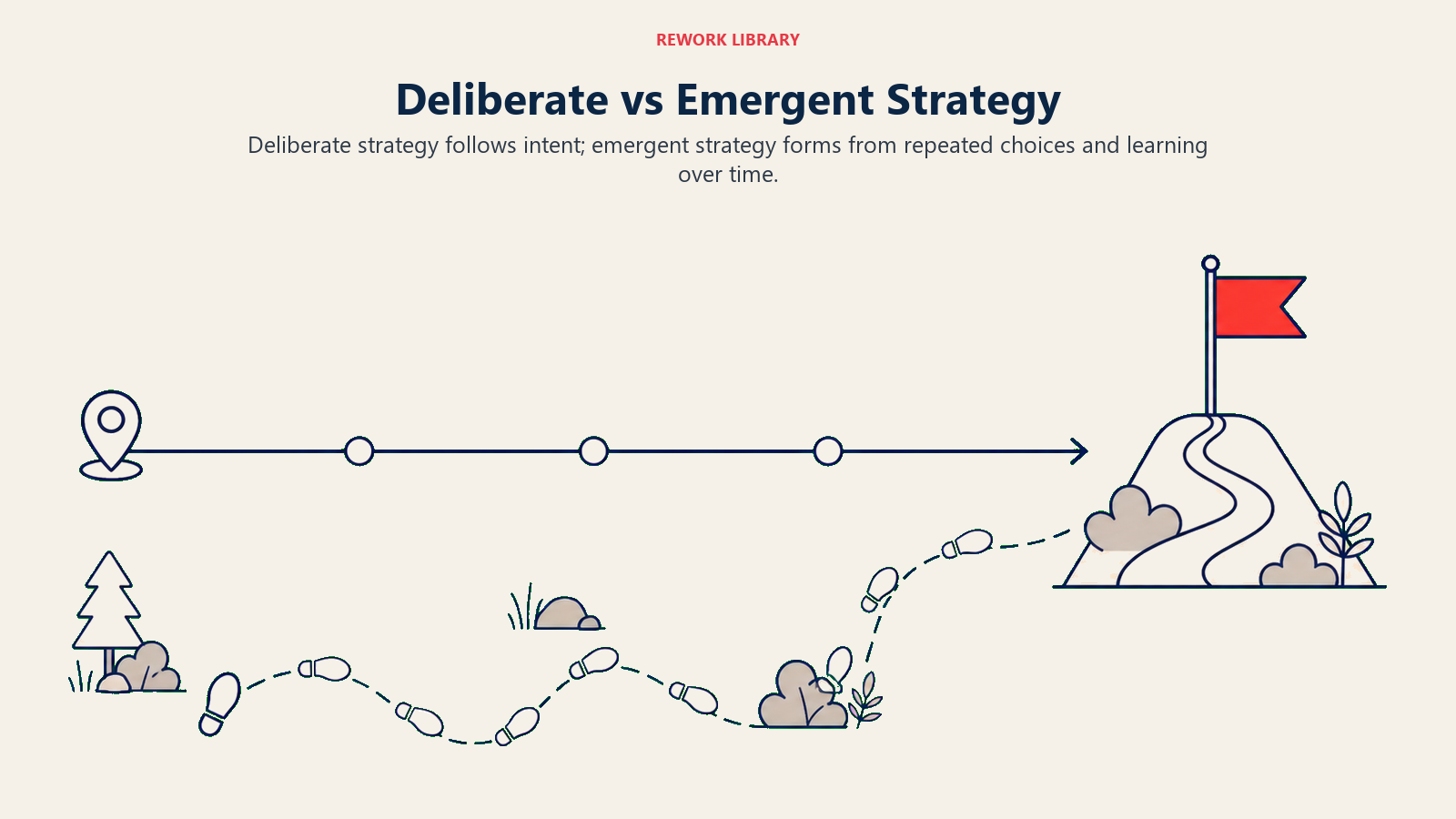
Bewusste Strategie wird so realisiert, wie beabsichtigt. Der Plan wird zum Pattern. Die Umsetzung folgt dem Entwurf.
Emergente Strategie entsteht, wenn sich konsistente Handlungsmuster ohne oder trotz eines formalen Plans bilden. Ein Vertriebsteam gewinnt wiederholt Aufträge, indem es einen bestimmten Anwendungsfall betont, den das Produktteam nie priorisiert hat. Mit der Zeit wird dieses Gewinnverhalten zur de-facto-Strategie, auch wenn niemand es geplant hat.
In der Praxis ist jede realisierte Strategie eine Mischung. Mintzberg und Waters argumentierten, dass eine rein bewusste Strategie nahezu perfekte Weitsicht und die Fähigkeit erfordert, Lernen aus der Erfahrung zu unterdrücken; sie ist im Grunde unmöglich. Eine rein emergente Strategie hat überhaupt keine intentionale Richtung; sie wird im Grunde nicht gemanagt. Echte Strategien befinden sich in der Mitte.
Das hat operative Bedeutung, weil es Führungskräften sagt, wo sie suchen sollen. Wenn eine Strategie nicht wie geplant umgesetzt wird, lautet die Frage nicht nur „Warum scheitert die Umsetzung?" Sondern auch: „Welche Muster entstehen stattdessen, und sind sie es wert, ihnen zu folgen?" Das Pattern-P verwandelt emergentes Verhalten von einer Quelle der Verlegenheit in ein legitimes strategisches Signal.
Weitere Informationen zur Verbindung von strategischer Absicht und Umsetzung finden Sie unter Strategischer Planungsprozess und Strategie vs. Taktik.
So nutzen Sie die 5 Ps
Die 5 Ps sind am nützlichsten als Prüfinstrument: eine strukturierte Möglichkeit, eine bestehende Strategie aus fünf Blickwinkeln zu untersuchen und Lücken zu finden. Hier ist ein praktischer Ansatz.
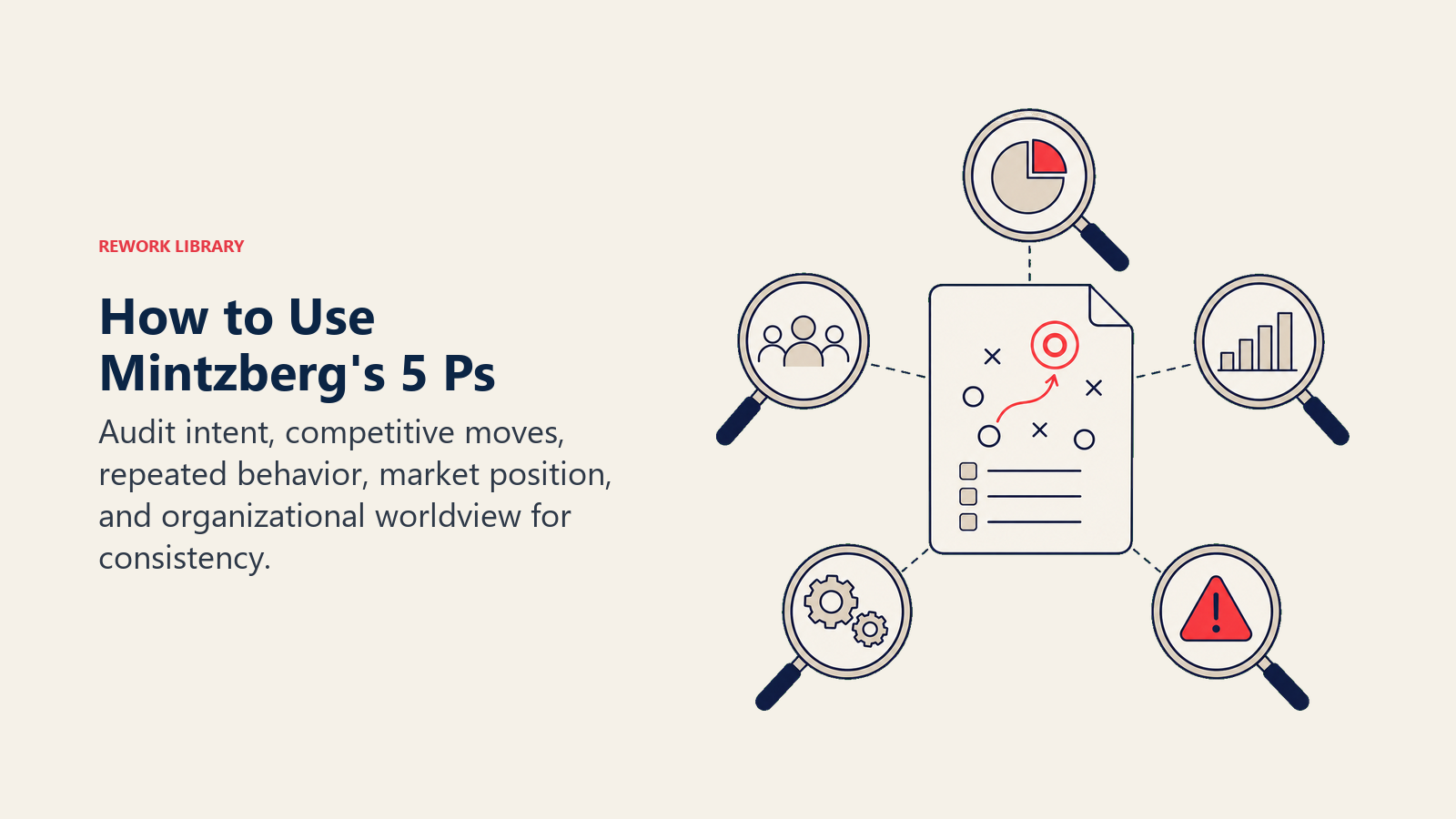
Schritt 1: Den erklärten Plan dokumentieren
Halten Sie die aktuelle Strategie der Organisation als Plan fest. Was sind die erklärten Ziele, der Zeithorizont, die Ressourcenverpflichtungen, die spezifischen getroffenen Entscheidungen? Seien Sie konkret. Vage Pläne überstehen die Prüfung genau deshalb, weil sie schwer zu widerlegen sind.
Schritt 2: Aktive Ploys identifizieren
Suchen Sie nach Wettbewerbs-Signaling in der Strategie. Gibt es eine Patentanmeldung, eine Preissenkung, eine Partnerschaftsankündigung oder einen Markteintritt, der in erster Linie darauf ausgelegt ist, das Verhalten von Wettbewerbern zu beeinflussen, statt Kunden direkt zu bedienen? Benennen Sie diese Züge explizit. Einen Ploy als das zu erkennen, was er ist, verhindert, dass er mit einer Kernverpflichtung verwechselt wird.
Schritt 3: Das Pattern aufdecken
Analysieren Sie zwei bis drei Jahre tatsächlicher Entscheidungen: Einstellungen, Investitionen, Produktwetten, betretene oder verlassene Märkte, Preisänderungen. Fragen Sie: Welche konsistenten Verhaltensweisen zeigen sich unabhängig davon, was der Plan sagt? Wenn der Plan „Premium-Positionierung" besagt, die Preishistorie aber wiederholte Rabattierungen zeigt, ist das Pattern die echte Strategie und der Plan ist eine Wunschvorstellung.
Schritt 4: Die Position einem Stresstest unterziehen
Kartieren Sie, wo die Organisation im Verhältnis zu ihrem Wettbewerbsumfeld steht. Nutzen Sie Frameworks wie Porters Generische Strategien oder Wettbewerbspositionierung, um die Position präzise zu formulieren. Die ressourcenbasierte Sicht bietet das Inside-Out-Gegengewicht: Eine Marktposition hält sich nur, wenn seltene, schwer imitierbare Ressourcen dahinter stehen. Dann fragen Sie: Ist diese Position angesichts der aktuellen Wettbewerbsdynamik verteidigungsfähig? Stimmt sie mit dem in Schritt 3 identifizierten Pattern überein?
Schritt 5: Die Perspective untersuchen
Befragen Sie wichtige Führungskräfte und fragen Sie, wie sie beschreiben, was das Unternehmen tut, wem es dient und was es nicht tun wird. Suchen Sie nach Konsens und nach Dissens. Wenn es eine erhebliche Lücke zwischen der offiziell erklärten Perspective (typischerweise in Mission oder Vision) und den tatsächlichen Überzeugungen gibt, die tägliche Entscheidungen prägen, hat die Strategie ein kulturelles Kohärenzproblem, das weder Planung noch Positionierung allein beheben kann. Lesen Sie Strategische Ziele, um zu erfahren, wie man die Perspective in messbare Verpflichtungen übersetzt.
Beispiel: Alle 5 Ps auf Netflix angewendet
Netflix in seiner Phase von 2010 bis 2015 ist ein nützlicher Fall, weil alle fünf Ps sichtbar und klar unterscheidbar sind.
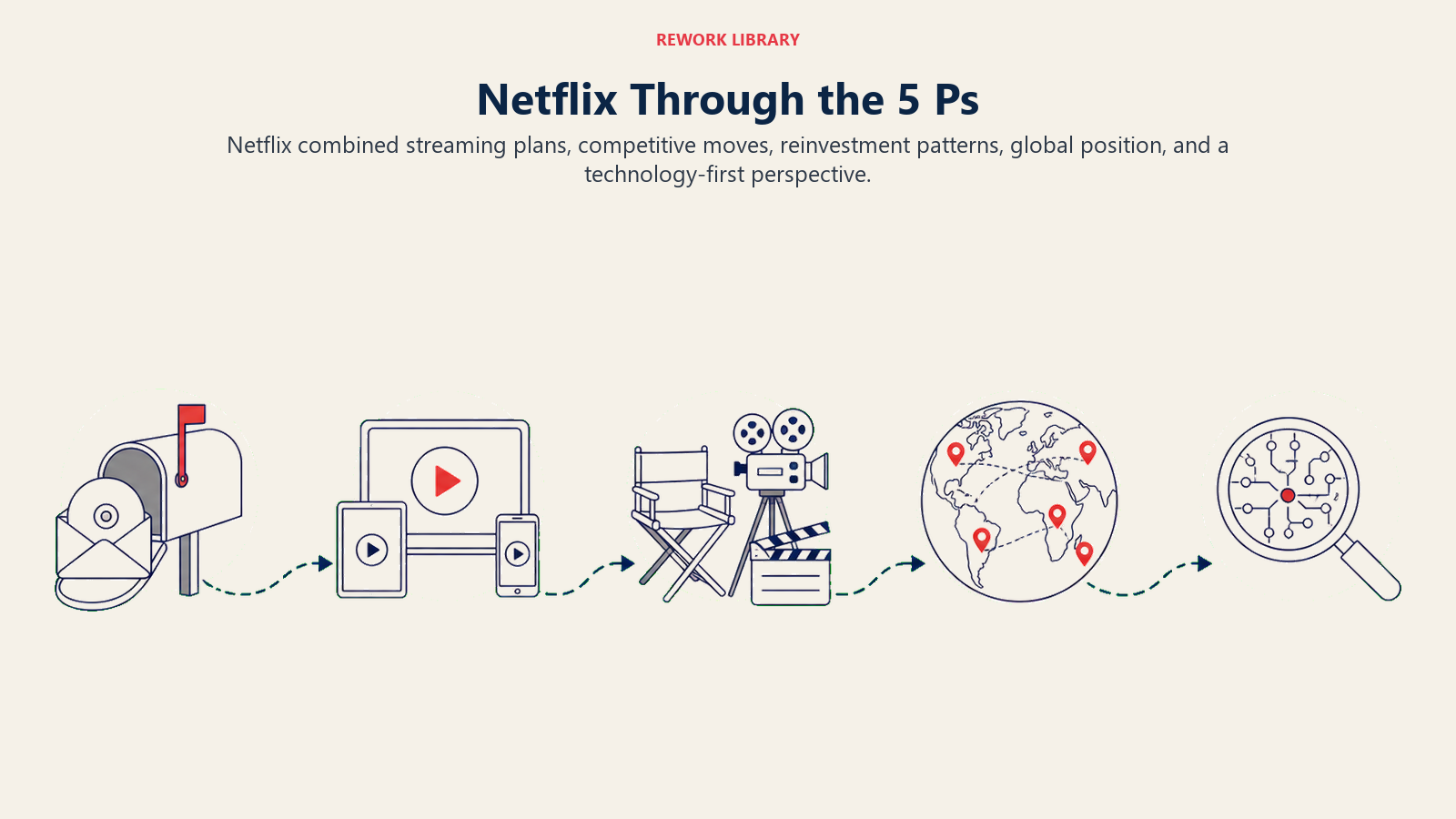
Plan: Explizit erklärter Übergang von physischer DVD-Vermietung zu Streaming, mit dem spezifischen Ziel, innerhalb von fünf Jahren Streaming für den Großteil der Abonnenten zu machen.
Ploy: Die Qwikster-Ankündigung 2011 (Trennung von DVD und Streaming in zwei Unternehmen mit zwei Abrechnungskonten) war ein strategisches Manöver, das teilweise darauf ausgelegt war, das Ausscheiden von DVD-Abonnenten zu beschleunigen und die Streaming-Identität voranzutreiben. Es scheiterte als Kundenkommunikationsmaßnahme, offenbarte aber die bewusste Signaling-Absicht dahinter.
Pattern: Konsequentes Verhalten, stark in Original-Content zu investieren, wenn Lizenzierungsunsicherheit entstand. Von „House of Cards" an folgte jedem größeren Scheitern bei Inhaltsverhandlungen eine Original-Content-Wette. Dieses Muster wurde zur Strategie, bevor es zum erklärten Plan wurde.
Position: Streaming-Plattform für On-Demand-Unterhaltung, mit einer klaren Grenze zu Live-Sport, linearem TV und nutzergeneriertem Content. Diese Position hielt sich, bis sie es nicht mehr tat: Der werbeunterstützte Tarif und Live-Events stellen eine bewusste Positionsverschiebung dar.
Perspective: Die Kernüberzeugung, dass Kunden reibungslosen Zugang zu großartigen Geschichten auf jedem Bildschirm wollen, nicht physisches Eigentum an Scheiben. Diese Perspective machte es für Netflix unmöglich, Blockbuster als ernstzunehmende Langzeitbedrohung zu behandeln, selbst als Blockbuster seinen DVD-per-Post-Service Feature für Feature nachbildete.
5 Ps vs. andere Strategie-Frameworks
Die 5 Ps ersetzen andere Strategie-Frameworks nicht. Sie rahmen ein, wie man sie nutzt.
Porters Five Forces und Generische Strategien operieren hauptsächlich auf dem Position-P. Es sind Werkzeuge zur Analyse der Wettbewerbsposition und zur Wahl zwischen Kostenführerschaft, Differenzierung und Fokus. Die 5 Ps erinnern Sie daran, dass Position eine von fünf Perspektiven ist, nicht das ganze Bild. Lesen Sie Porters Generische Strategien für einen tiefen Einblick.
Balanced Scorecard und OKRs operieren hauptsächlich auf dem Plan-P. Sie übersetzen strategische Absicht in messbare Ziele und kaskadierte Vorgaben. Die 5 Ps erinnern Sie daran, diese Pläne gegen die tatsächlichen Patterns zu prüfen, bevor Sie sie als realisierte Strategie behandeln.
Blue Ocean Strategy operiert an der Schnittstelle von Position und Perspective. Sie fordert Organisationen heraus, ihre Wettbewerbsperspektive neu zu rahmen und ihre Position so neu zu definieren, dass direkter Wettbewerb irrelevant wird. Lesen Sie Blue Ocean Strategy für eine vollständige Behandlung.
SWOT- und PESTEL-Analysen sind Umgebungseingaben, die Position und Plan informieren. Die 5 Ps geben Ihnen eine Möglichkeit zu strukturieren, was Sie mit diesen Eingaben tun.
Den einzigartigen Wert der 5 Ps liefern die Pattern- und Perspective-Perspektiven, die die meisten formalen Strategie-Werkzeuge schlicht nicht ansprechen. Und genau dort scheitern viele Strategien still: nicht weil der Plan falsch war, sondern weil das tatsächliche Pattern davon abwich, ohne dass jemand die Abweichung benannte, oder weil die Perspective die Organisation strukturell dazu unfähig machte, eine Bedrohung zu erkennen, bis es zu spät war.
Weitere Informationen zur Verbindung von Strategie und Marktposition finden Sie unter Wettbewerbspositionierung.
Häufig gestellte Fragen
Wer hat die 5 Ps der Strategie entwickelt?
Henry Mintzberg, der kanadische Managementtheoretiker und Professor an der McGill University, stellte das 5-Ps-Framework in seinem 1987 erschienenen Aufsatz „Five Ps for Strategy" im California Management Review vor. Mintzberg war eine der einflussreichsten und querdenkerischsten Stimmen im strategischen Management und widersprach konsequent rein rationalen, planungsbasierten Strategiemodellen.
Was ist der Unterschied zwischen Plan und Pattern?
Plan ist Absicht: was die Organisation sagt, dass sie tun wird, im Voraus entschieden. Pattern ist Verhalten: was die Organisation über die Zeit hinweg tatsächlich konsistent tut. Sie können übereinstimmen (bewusste Strategie) oder auseinanderfallen (emergente Strategie). Wenn sie auseinanderfallen, ist das Pattern in der Regel die genauere Beschreibung der echten Strategie, weil es die tatsächlichen Entscheidungen unter echten Bedingungen widerspiegelt und nicht die in Planungssitzungen getroffenen Wunschentscheidungen.
Kann eine Organisation alle 5 Ps gleichzeitig nutzen?
Ja, und sie sollte es. Die 5 Ps sind keine Alternativen; sie sind simultane Perspektiven. Jede echte Strategie wird durch jede anders aussehen. Der Wert liegt darin, alle fünf zu nutzen, um auf interne Konsistenz zu prüfen: Stimmt Ihr Plan mit Ihrem Pattern überein? Ergibt sich Ihre Position aus Ihrer Perspective? Dienen Ihre Ploys Ihrem Plan oder untergraben sie ihn?
Wie unterscheidet sich das 5-Ps-Framework von Porters Wettbewerbsstrategie?
Porters Framework fokussiert auf Position (wo Sie konkurrieren) und Plan (wie Sie durch Kostenführerschaft, Differenzierung oder Fokus einen nachhaltigen Wettbewerbsvorteil wählen). Mintzbergs 5 Ps behandeln Porters Arbeit als die Position- und Plan-Dimensionen eines größeren Bildes, das auch umfasst, wie Strategie aus Verhalten entsteht (Pattern), wie Organisationen Wettbewerber signalisieren (Ploy) und wie gemeinsame Weltanschauungen strategische Entscheidungen prägen (Perspective).
Ist Ploy wirklich eine Form von Strategie?
Mintzberg argumentiert ja, und die Belege unterstützen ihn. Wettbewerbs-Signaling, Vorabankündigungen, das Einreichen von Blockierpatenten und das Betreten eines Marktes ohne die Absicht, eine Position aufrechtzuerhalten, sind alle im realen Wettbewerbsverhalten beobachtbar. Sie als Lärm statt als Strategie zu behandeln bedeutet, das Verhalten von Wettbewerbern falsch zu lesen und die Signaling-Dimension der eigenen Züge nicht zu berücksichtigen.
Die 5 Ps sagen Ihnen nicht, welche Strategie Sie wählen sollen. Aber sie sagen Ihnen, ob die Strategie, die Sie zu haben glauben, tatsächlich die Strategie ist, die Sie fahren. Und diese Lücke zu schließen ist der Ort, wo der größte Teil der harten strategischen Arbeit stattfindet. Beginnen Sie mit Ihrem Pattern, prüfen Sie es gegen Ihren Plan, und Sie werden innerhalb einer Stunde mehr über Ihre echte Strategie wissen, als die meisten Planungszyklen in einem Quartal aufdecken.
Weitere Frameworks finden Sie unter Strategischer Planungsprozess, Strategie vs. Taktik und Strategische Ziele.

Co-Founder & COO
On this page
- Was sind Mintzbergs 5 Ps der Strategie?
- Wichtige Fakten
- Die 5 Ps erklärt
- 1. Plan
- 2. Ploy
- 3. Pattern
- 4. Position
- 5. Perspective
- Übersichtstabelle
- Bewusste vs. emergente Strategie
- So nutzen Sie die 5 Ps
- Schritt 1: Den erklärten Plan dokumentieren
- Schritt 2: Aktive Ploys identifizieren
- Schritt 3: Das Pattern aufdecken
- Schritt 4: Die Position einem Stresstest unterziehen
- Schritt 5: Die Perspective untersuchen
- Beispiel: Alle 5 Ps auf Netflix angewendet
- 5 Ps vs. andere Strategie-Frameworks