Strategic Fit: Definition, Typen und Umsetzung (mit Beispielen)
Turn this article into takeaways for your work.


Each assistant summarizes the article only for you and suggests best practices for your work.
Strategic Fit ist eines der Konzepte, das eine Strategie, die im Vorstandsdeck gut aussieht, von einer trennt, die tatsächlich dauerhaften Erfolg erzeugt. Gelingt er gut, verstärken sich die Aktivitäten gegenseitig so wirkungsvoll, dass Wettbewerber das Modell nicht kopieren können, ohne ihr gesamtes Betriebsmodell umzubauen. Gelingt er schlecht, verliert auch eine mutige Vision still und leise Quartal für Quartal an Wert.
Was ist Strategic Fit?
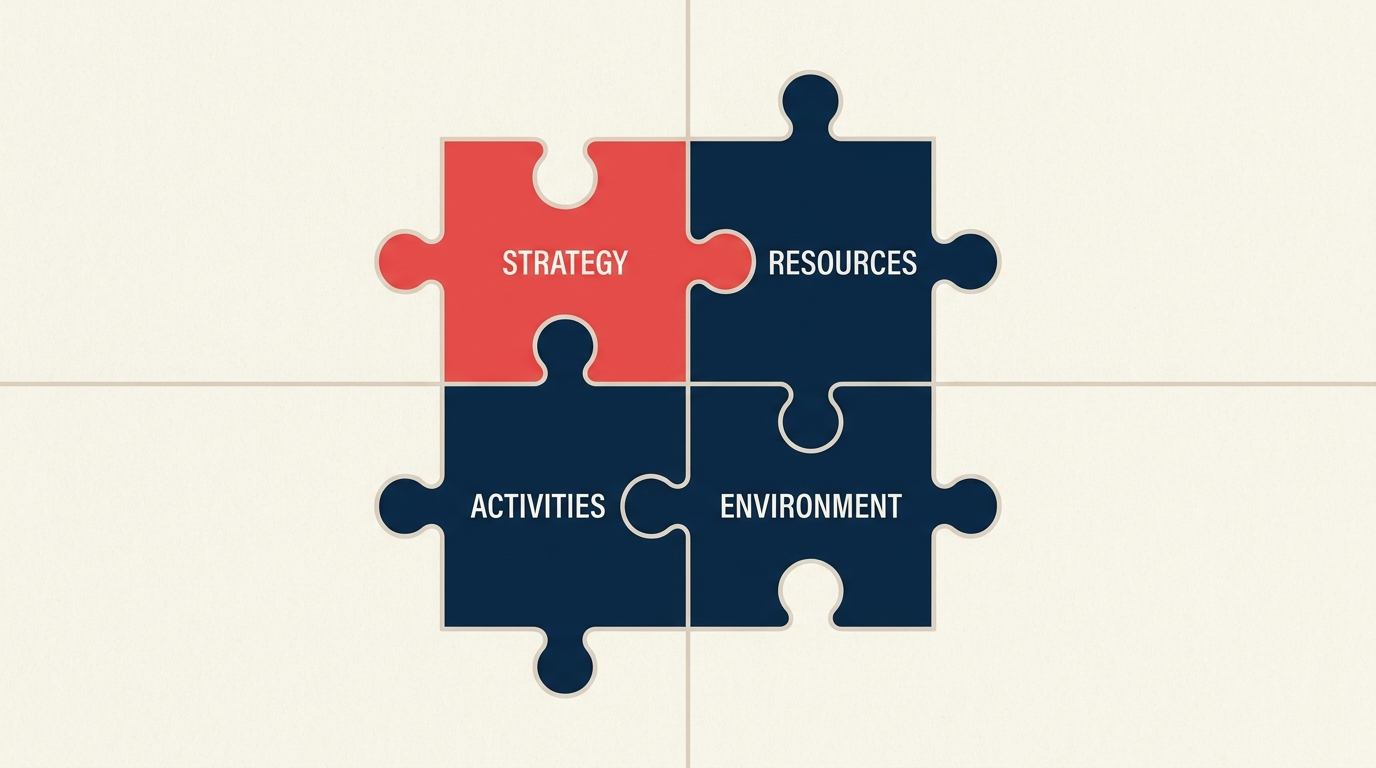
Strategic Fit bezeichnet das Ausmaß, in dem die Ressourcen, Aktivitäten und Fähigkeiten eines Unternehmens sowohl untereinander als auch mit dem externen Umfeld übereinstimmen, um die gewählte Strategie zu unterstützen. Er stellt eine einzige, schwierige Frage: Ziehen alle beweglichen Teile dieser Organisation tatsächlich in dieselbe Richtung?
Das Konzept wurde durch Michael Porters Harvard-Business-Review-Artikel "What Is Strategy?" aus dem Jahr 1996 zu einem Eckpfeiler des strategischen Managements. Porter argumentierte, dass Strategie nicht darin besteht, einzelne Aktivitäten isoliert gut auszuführen, sondern darin, Aktivitäten zu einem sich selbst verstärkenden System zu kombinieren, bei dem jede Aktivität den Wert jeder anderen verstärkt. Ein Unternehmen, das diese Art von Fit erreicht, ist weit schwieriger zu imitieren als eines, das lediglich einzelne Best Practices ausführt.
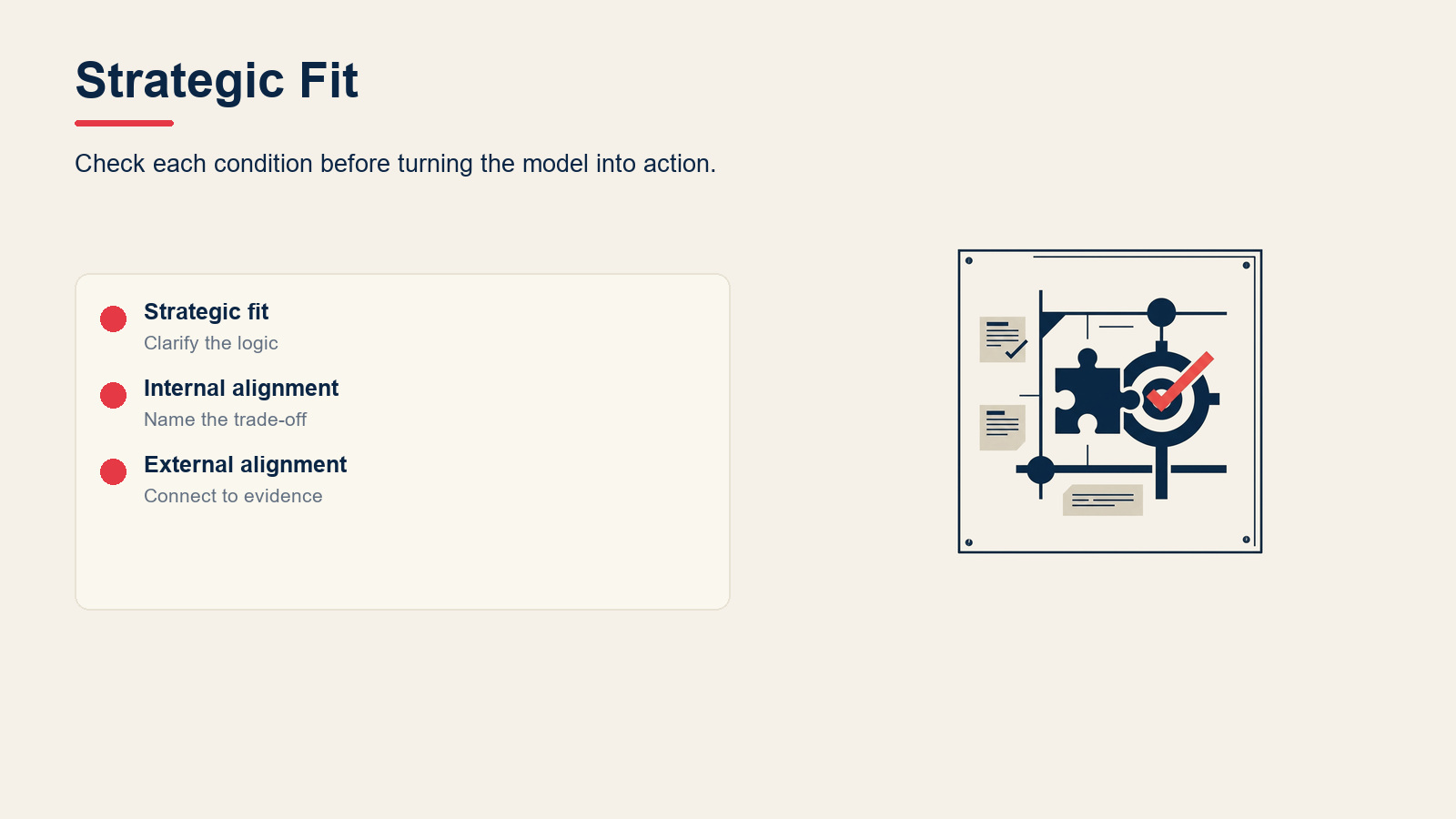
Zwei Bedingungen müssen für Strategic Fit erfüllt sein:
- Interne Ausrichtung: Die Ressourcen, Prozesse und Aktivitäten des Unternehmens verstärken einander, ohne wesentliche interne Widersprüche.
- Externe Ausrichtung: Die Gesamtstrategie passt zu den Anforderungen, Chancen und Einschränkungen des Marktes und des Wettbewerbsumfelds.
Sind beide Bedingungen gleichzeitig erfüllt, ist der Fit stark. Bricht eine davon zusammen, leckt Wert und die Wettbewerbsposition erodiert.
Wichtige Fakten
- Michael Porter (HBR, 1996) identifizierte drei Arten von Strategic Fit: einfache Konsistenz zwischen jeder Aktivität und der Gesamtstrategie; sich verstärkende Aktivitäten, die einander wertvoller machen; und Aufwandsoptimierung, die Redundanzen über Aktivitäten hinweg beseitigt.
- Porters Forschung zu Southwest Airlines zeigte, dass das Niedrigkosten-System der Airline Fit über mindestens 10 sich gegenseitig verstärkende Aktivitäten erzielte, was es für Vollservice-Wettbewerber nahezu unmöglich machte, es zu kopieren, ohne ihr eigenes Modell zu zerstören.
- Eine McKinsey-Umfrage unter 2.500 Führungskräften ergab, dass Unternehmen mit hoher interner Ausrichtung 3,5-mal wahrscheinlicher ein überdurchschnittliches Umsatzwachstum meldeten als solche mit geringer Ausrichtung (McKinsey Quarterly, "The aligned organization", 2015).
Arten von Strategic Fit
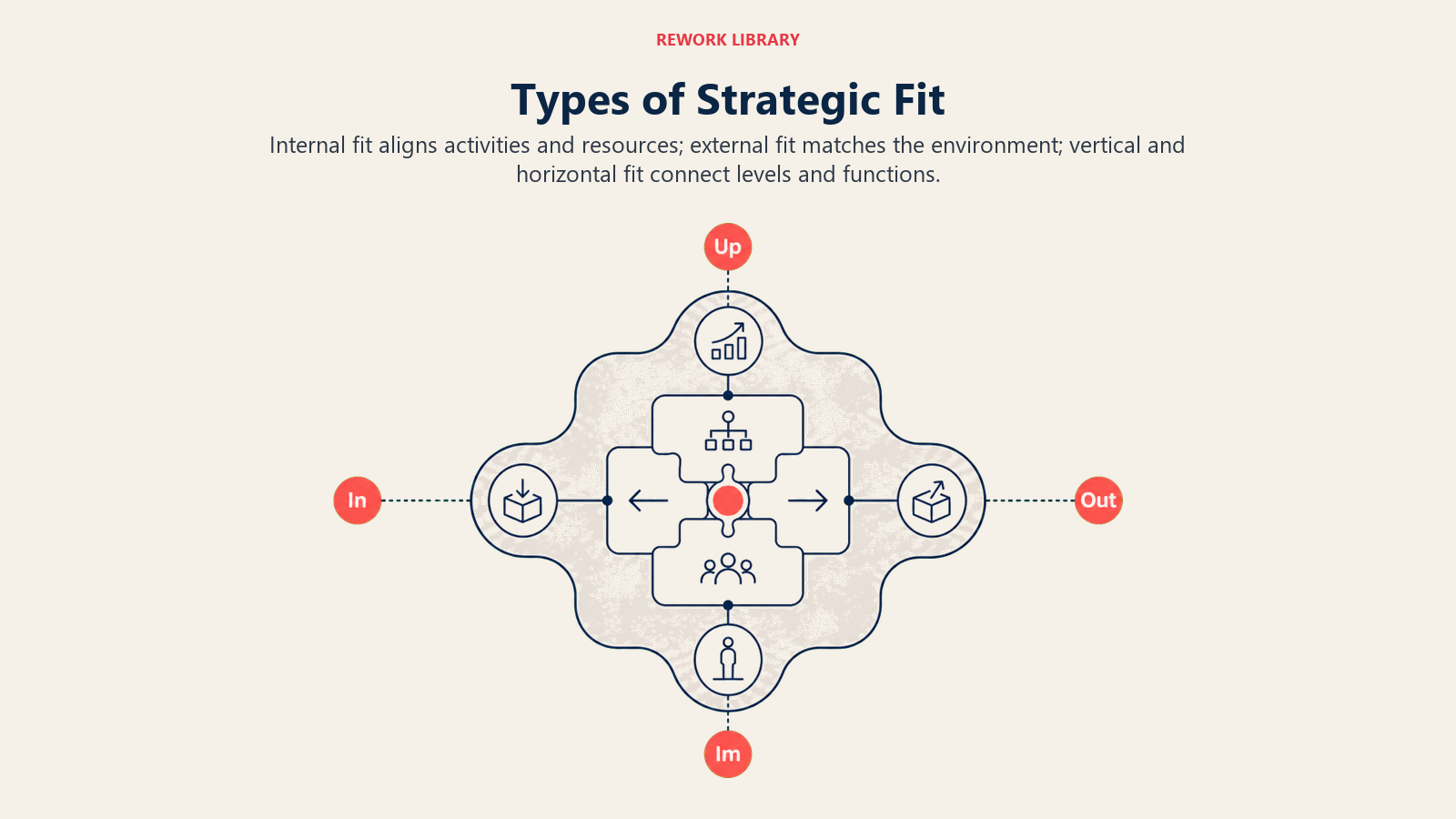
Strategic Fit ist nicht eindimensional. Er tritt in mehreren Ausprägungen auf, die jeweils unterschiedlich gemanagt werden müssen.
Interner vs. externer Fit
Interner Fit beschreibt, wie gut die Aktivitäten und Ressourcen eines Unternehmens untereinander übereinstimmen. Man kann sich das als interne Kohärenz vorstellen. Jede wesentliche Aktivität, Fähigkeit und Investition sollte dieselbe strategische Logik unterstützen. Positioniert sich ein Unternehmen auf Premiumqualität, kauft aber die günstigsten Komponenten und betreibt einen minimalen Kundenservice, ist der interne Fit schlecht.
Externer Fit (auch ökologischer oder positioneller Fit genannt) beschreibt, wie gut die Gesamtstrategie mit den externen Bedingungen übereinstimmt: Kundenbedürfnisse, Wettbewerbsdynamik, regulatorischer Kontext und makroökonomische Trends. Eine Strategie kann intern kohärent sein und dennoch scheitern, weil sie auf ein schrumpfendes Segment zielt oder einen disruptiven Wandel im Käuferverhalten ignoriert.
Vertikaler vs. horizontaler Fit
Vertikaler Fit verläuft von oben nach unten durch die Organisation. Unternehmensziele werden in Geschäftsbereichsstrategien übersetzt, die in funktionale Prioritäten übersetzt werden, die in Teamziele übersetzt werden. Verstärkt jede Ebene die darüberliegende, ist der vertikale Fit stark. Optimieren funktionale Teams für lokale Kennzahlen, die der Unternehmensstrategie widersprechen, bricht der vertikale Fit zusammen.
Horizontaler Fit verläuft über Funktionen oder Geschäftsbereiche auf derselben Ebene. Marketing, Betrieb, Vertrieb und Produktentwicklung müssen alle von einer konsistenten strategischen Logik ausgehen. Ein Unternehmen, das im Betrieb eine Niedrigkostenstrategie verfolgt, während das Marketing eine Premiumpositionierung kommuniziert, hat schlechten horizontalen Fit.
| Fit-Typ | Was wird verbunden | Häufiger Fehlermodus |
|---|---|---|
| Interner Fit | Aktivitäten und Ressourcen untereinander | Aktivitäten, die der strategischen Positionierung widersprechen |
| Externer Fit | Gesamtstrategie mit Markt und Umfeld | Zielgruppen in strukturellem Niedergang |
| Vertikaler Fit | Unternehmensziele mit funktionaler Ausführung | Geschäftsbereiche verfolgen widersprüchliche lokale KPIs |
| Horizontaler Fit | Funktionen auf derselben Ebene | Siloisierte Abteilungen mit widersprüchlichen Prioritäten |
Warum Strategic Fit wichtig ist
Der Grund, warum Strategic Fit Wettbewerbsvorteile schafft, liegt darin, dass ein gut ausgerichtetes System echte Schwierigkeiten beim Kopieren bereitet. Ein Wettbewerber kann jede einzelne Aktivität beobachten, benchmarken und in Monaten replizieren. Aber ein System aus 10 oder 15 sich gegenseitig verstärkenden Aktivitäten zu replizieren, ist eine völlig andere Herausforderung. Das Ändern eines Elements stört alles, was damit verbunden ist.
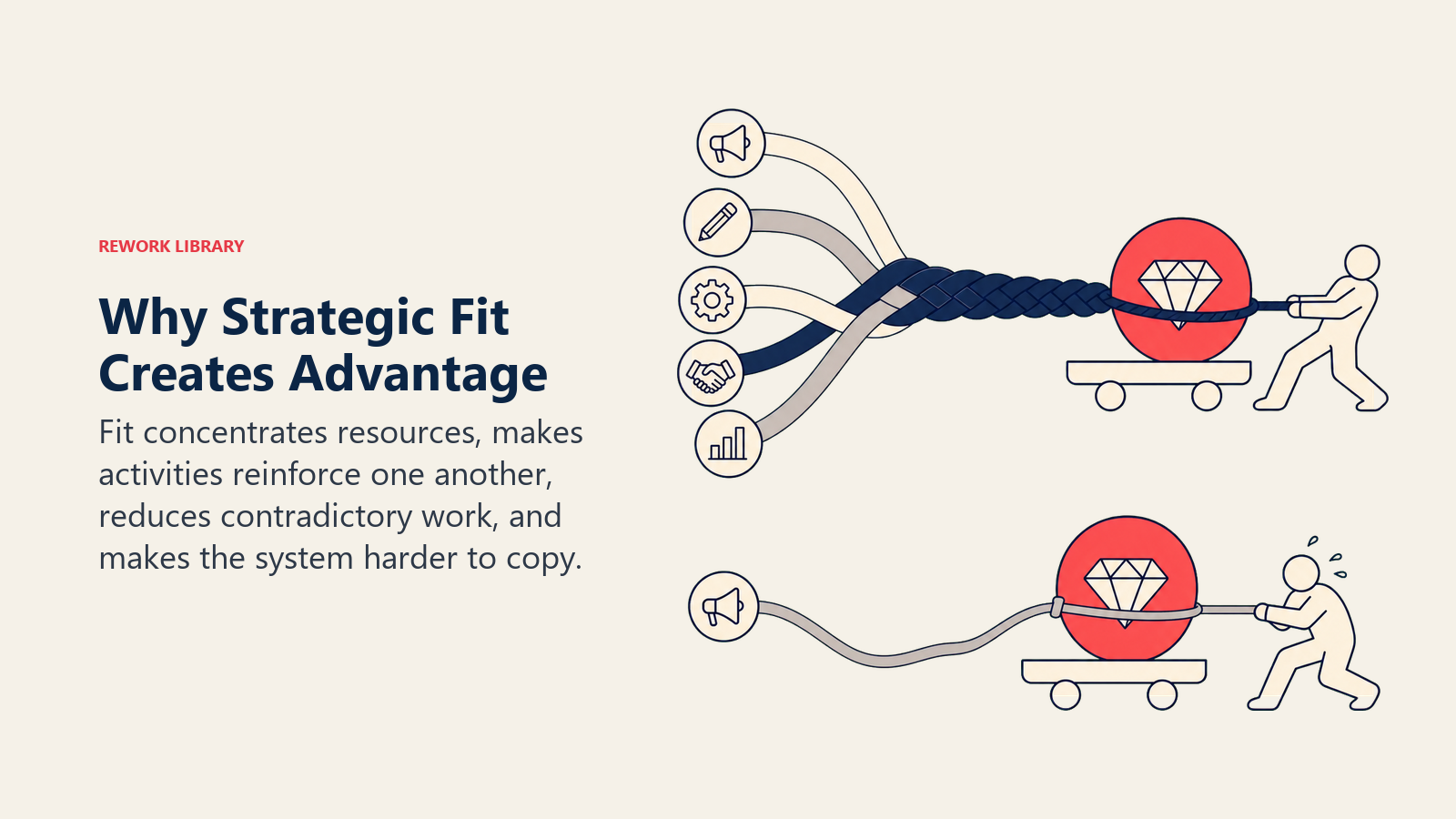
Porter nannte das das Aktivitätssystem. In einem Unternehmen mit starkem Fit verstärkt jede Aktivität den Wert jeder anderen. Southwest Airlines' kurze Umlaufzeiten sind nur möglich, weil die Airline Punkt-zu-Punkt-Routen fliegt, keine Gepäckweitergabe zwischen Airlines durchführt und einen einzigen Flugzeugtyp einsetzt. Jedes Element unterstützt alle anderen. Entfernt man eines, verliert das gesamte System an Kraft.
Fit schützt auch vor Imitation in einer Weise, wie es individuelle Fähigkeiten nicht können. Eine Kernkompetenz ist schwer zu kopieren. Ein integriertes Aktivitätssystem, das auf dieser Kompetenz aufbaut, ist noch schwerer. Deshalb argumentierte Porter, dass operative Effektivität, einzelne Aktivitäten besser als Wettbewerber ausführen, keine Strategie ist. Nur Fit schafft nachhaltige Differenzierung.
Es gibt einen zweiten Grund, warum Fit wichtig ist: Ausführung. Wenn Aktivitäten ausgerichtet sind, läuft die Organisation mit weniger Reibung. Menschen im gesamten Unternehmen treffen Entscheidungen, die die Strategie verstärken statt untergraben, weil die Logik überall konsistent ist. Bei schlechtem Fit riskiert jedes funktionsübergreifende Meeting, einen Widerspruch zwischen dem, wofür ein Team optimiert, und dem, was die Strategie tatsächlich erfordert, zu offenbaren.
Wie man Strategic Fit bewertet und erreicht
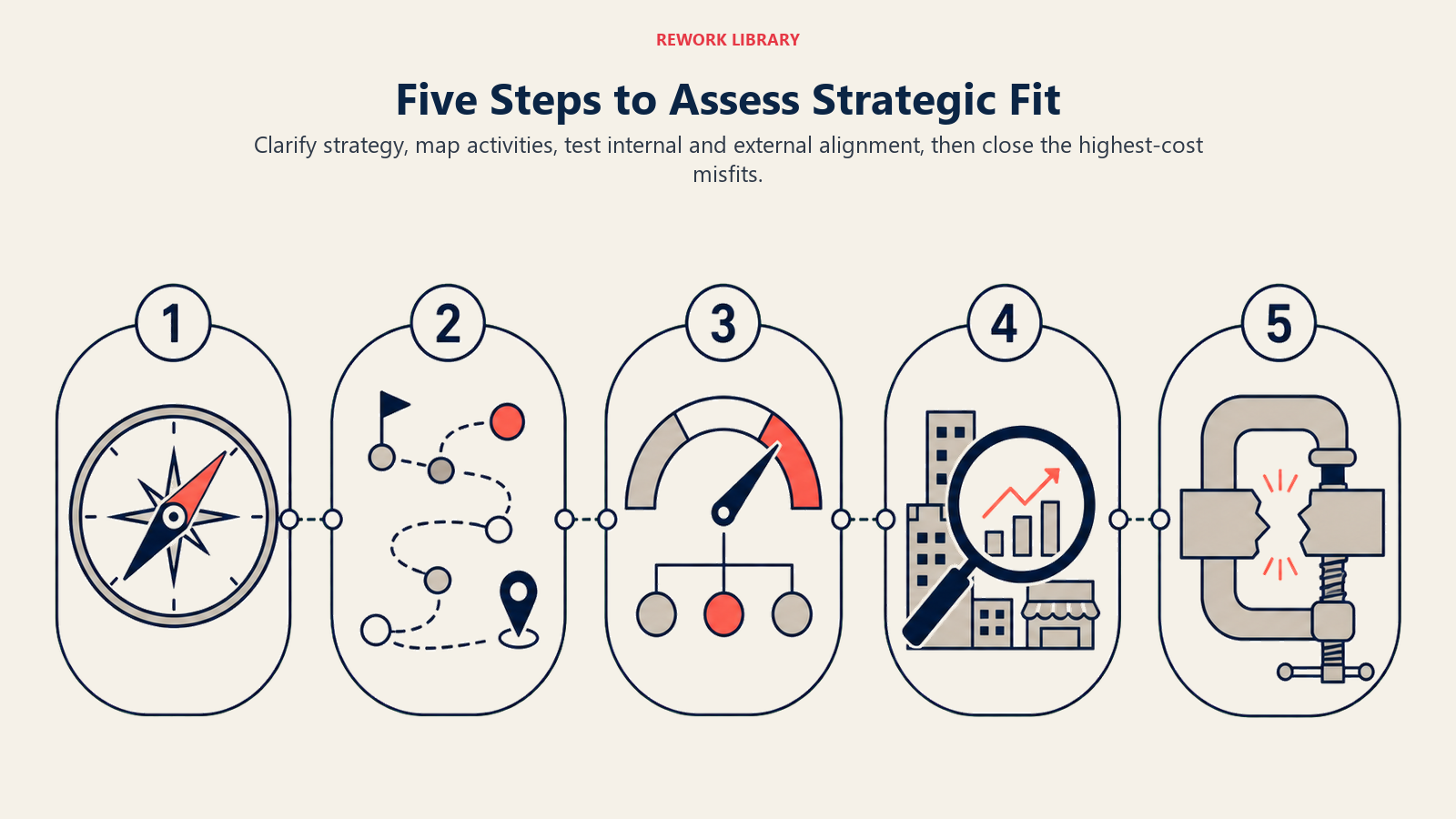
Starker Fit entsteht nicht zufällig. Er wird designed und dann aktiv gepflegt, wenn sich die Märkte verschieben. Hier ist eine praktische Fünf-Schritte-Methode.
Schritt 1: Strategie klären
Man kann Fit nicht testen, ohne zu wissen, wogegen man misst. Beginnen Sie mit einer klaren Aussage zur strategischen Position: wer der Zielkunde ist, welches Wertversprechen das Unternehmen bietet und was das Unternehmen bewusst nicht tun wird. Porters generische Strategien (Kostenführerschaft, Differenzierung, Fokus) sind ein nützlicher Ausgangsrahmen. Das McKinsey-7S-Framework hilft, die organisatorischen Dimensionen zu identifizieren, die ausgerichtet werden müssen.
Wenn das Führungsteam sich nicht auf eine einseitige Strategieaussage einigen kann, wird die Fit-Bewertung Widersprüche aufdecken, die kein Aktivitätsmapping auflösen kann. Die Strategie selbst muss zuerst geklärt werden.
Schritt 2: Das Aktivitätssystem kartieren
Listen Sie alle wesentlichen Aktivitäten, Ressourcen und Fähigkeiten auf, die das Unternehmen einsetzt. Zeichnen Sie dann die Verbindungen. Welche Aktivitäten unterstützen einander? Welche sind von denselben Ressourcen abhängig? Porters Wertkettenanalyse ist das richtige Werkzeug hier. Sie gliedert das Unternehmen in primäre Aktivitäten (Eingangslogistik, Betrieb, Ausgangslogistik, Vertrieb, Service) und Unterstützungsaktivitäten (Beschaffung, Technologie, HR, Infrastruktur). Der ressourcenbasierte Ansatz ergänzt dies, indem er aufzeigt, welche Ressourcen wirklich selten und schwer zu kopieren sind.
Die Visualisierung des Aktivitätssystems als Knoten-Verbindungs-Karte macht es weit einfacher zu erkennen, wo der Fit stark ist und wo Lücken bestehen.
Schritt 3: Interne Ausrichtung testen
Fragen Sie für jede Aktivität: Unterstützt diese Aktivität die strategische Position? Verstärkt sie andere Schlüsselaktivitäten, oder wirkt sie gegen sie? Suchen Sie gezielt nach:
- Widersprüchen: Eine Aktivität, die in die entgegengesetzte Richtung der Strategie zieht (Premiumqualitäts-Positionierung, aber Kostensenkung im Kundenservice).
- Lücken: Eine Aktivität, die die Strategie erfordert, die das Unternehmen aber derzeit nicht hat.
- Redundanzen: Aktivitäten, die Aufwand duplizieren, ohne das System zu verstärken.
Eine einfache interne Ausrichtungsbewertung, bei der jede Aktivität auf einer 1-5-Skala bewertet wird, wie stark sie die Strategie unterstützt, macht die größten Ausrichtungsprobleme schnell sichtbar.
Schritt 4: Externe Ausrichtung testen
Kartieren Sie die strategische Position des Unternehmens gegen das externe Umfeld. SWOT-Analyse und das McKinsey-7S-Framework helfen hier, aber die konkreten Fragen sind:
- Zielt die Strategie auf Kundensegmente mit echter, wachsender Nachfrage?
- Hält die Wettbewerbsposition gegenüber den fünf Wettbewerbskräften stand (Bedrohung durch Neueintreter, Käufermacht, Lieferantenmacht, Substitute, Rivalität)?
- Bewegen sich regulatorische, technologische oder demografische Trends zugunsten der Strategie oder dagegen?
Externer Fit erfordert eine regelmäßige Neubewertung, auch wenn sich intern nichts ändert, denn das Umfeld verändert sich, unabhängig davon, ob man es neu bewertet.
Schritt 5: Fehlausrichtungen schließen
Eine Lückenanalyse zwischen dem Ist-Zustand (wie in den Schritten 3 und 4 aufgedeckt) und dem gewünschten Zustand (wie in Schritt 1 definiert) ergibt eine priorisierte Liste von Fehlausrichtungen. Priorisieren Sie nach Auswirkung: Welche Fehlausrichtungen untergraben die Kernstrategieposition am direktesten? Diese zuerst angehen.
Das Schließen von Fehlausrichtungen bedeutet typischerweise eines von drei Dingen: Investition in den Aufbau einer fehlenden Aktivität oder Fähigkeit, Eliminierung einer Aktivität, die der Strategie widerspricht, oder Modifikation einer bestehenden Aktivität, um sie in Einklang zu bringen. Die schwierigsten Fälle sind Aktivitäten, die kurzfristig profitabel, aber strategisch falsch ausgerichtet sind. Diese erfordern bewusste Kompromisse.
Beispiele für Strategic Fit
Southwest Airlines: Interner Fit gelungen
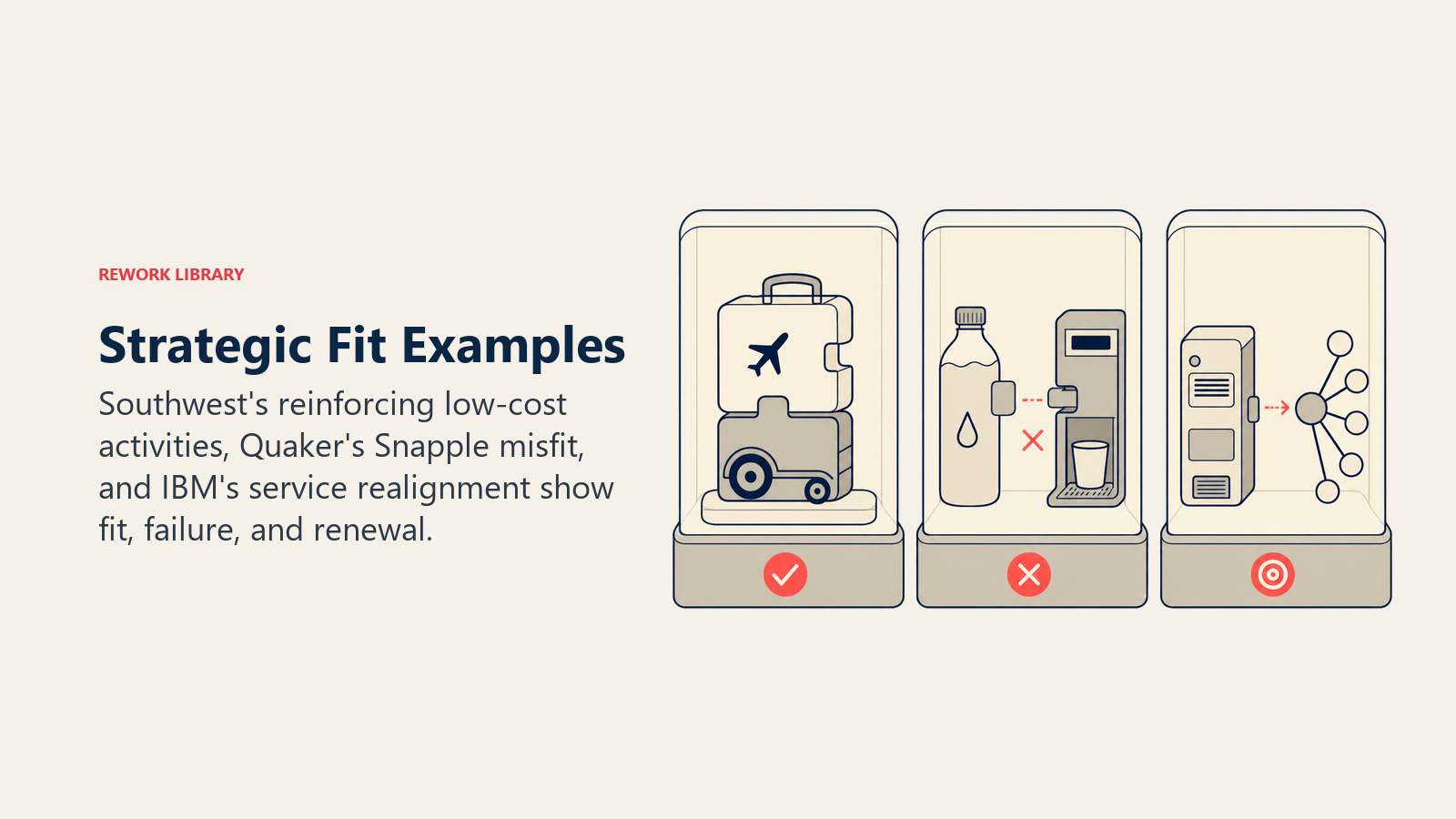
Southwest Airlines ist das kanonische Beispiel für ein gut ausgerichtetes Aktivitätssystem. Die Strategie ist kostengünstiger Punkt-zu-Punkt-Kurzstreckendienst für preissensible Freizeit- und Geschäftsreisende. Jede wesentliche Aktivität verstärkt diese Position:
- Keine Sitzplatzzuweisung beschleunigt das Einsteigen und reduziert die Umlaufzeit.
- Ein einziger Flugzeugtyp (Boeing 737) reduziert die Wartungskomplexität und Schulungskosten.
- Keine Mahlzeiten oder In-Flight-Entertainment streicht Kosten aus dem Servicemodell.
- Direktrouten (kein Hub-and-Spoke) bedeuten weniger Verspätungen und keine Gepäckweitergabe.
- Hochproduktive Bodenmannschaften, motiviert durch Gewinnbeteiligung, halten Flugzeuge länger in der Luft.
Jede Aktivität ist individuell relativ leicht zu beobachten. Aber eine Vollservice-Airline wie United kann das Kurzumlaufmodell von Southwest nicht übernehmen, ohne ihr Streckennetz, ihre Premium-Kabine und ihre Allianzpartnerschaften aufzugeben. Das System ist es, was den Vorteil von Southwest dauerhaft macht.
Eine gescheiterte Diversifikation: Snapple und Quaker Oats
Quaker Oats übernahm Snapple 1994 für 1,7 Milliarden Dollar. Innerhalb von drei Jahren verkaufte es die Marke für 300 Millionen Dollar, ein Verlust von rund 1,4 Milliarden Dollar. Die strategische Fehlausrichtung war gravierend. Quakers Stärke lag im Management großer Massenmarkt-Regalprodukte wie Gatorade über den Mainstream-Supermarkt-Vertrieb. Snapple war ein Premiumgetränk, das über unabhängige Händler vertrieben wurde, auf skurrilem Marketing, kleinen Ladenbeziehungen und einer treuen Fangemeinde aufgebaut.
Quaker versuchte, sein Vertriebsmodell und seinen Markenmanagement-Ansatz auf Snapple anzuwenden. Die Snapple-Distributoren wurden gestrichen. Das skurrile Marketing wurde standardisiert. Das externe Fit-Problem war, dass Snapple-Kunden keine Gatorade-Kunden waren, und das interne Fit-Problem war, dass Quakers Fähigkeiten aktiv zerstörten, worauf Snapple aufgebaut war. Keine Art von Fit war vorhanden, und die Akquisition vernichtete statt Wert zu schaffen.
Ein Neuausrichtungsbeispiel: IBMs Wandel zu Services
Anfang der 1990er Jahre war IBM ein Hardware-Unternehmen mit schlechtem externem Fit: PC-Commoditisierung zerstörte die Margen, die das Geschäftsmodell getragen hatten. Unter Lou Gerstner richtete IBM seine Strategie bewusst auf IT-Services und Beratung aus und verbrachte dann ein Jahrzehnt damit, sein Aktivitätssystem entsprechend umzubauen. Es übernahm Beratungsunternehmen, schulte seinen Vertrieb um auf den Verkauf von Ergebnissen statt Geräten, strukturierte die Preisgestaltung auf langfristige Verträge um und verkaufte schließlich seine PC-Sparte 2005 vollständig an Lenovo. Die Neuausrichtung war schmerzhaft und dauerte Jahre. Aber das Ergebnis war ein kohärentes Aktivitätssystem, das zum neuen externen Umfeld passte, und machte IBM zu einem der erfolgreichsten strategischen Schwenks eines Großunternehmens der letzten 30 Jahre.
Häufige Ursachen für schlechten Strategic Fit
Die meisten Fit-Probleme lassen sich auf einige wiederkehrende Muster zurückführen:
Strategy Drift. Das externe Umfeld verändert sich schrittweise. Kundenbedürfnisse entwickeln sich. Neue Wettbewerber treten ein. Aber das Aktivitätssystem des Unternehmens bleibt in der Konfiguration eingefroren, die vor fünf Jahren funktioniert hat. Fit erodiert, ohne dass jemand eine einzige schlechte Entscheidung trifft.
Akquisitionen ohne Integrationslogik. Ein Unternehmen zu kaufen, das nach einem anderen strategischen Modell operiert, und dann zu versäumen, es entweder in das Kernsystem zu integrieren oder es autonom zu managen. Der Fall Quaker-Snapple ist ein Beispiel. Die meisten Konglomerat-Misserfolge folgen demselben Muster.
Funktionale Silos. Jede Funktion optimiert ihre eigenen Kennzahlen. Finanzen kürzt Kosten, die der Betrieb benötigt, um Qualität aufrechtzuerhalten. Marketing macht Versprechen, die das Produkt nicht einhalten kann. Horizontaler Fit bricht zusammen, auch wenn die Strategie selbst solide ist.
Strategie durch Komitee. Führungskompromisse erzeugen eine Strategieaussage, die versucht, alles für alle Segmente zu sein. Ohne eine klare Kompromissstruktur können Aktivitäten nicht ausgerichtet werden, weil die Strategie nicht angibt, was das Unternehmen nicht tun wird.
Wachstum, das die Koordination übersteigt. Schnell wachsende Unternehmen fügen manchmal Aktivitäten, Regionen und Produktlinien schneller hinzu, als sie integriert werden können. Das Aktivitätssystem wird inkohärent, weil niemand die Verbindungen aktiv managt.
Starker Strategic Fit zeigt sich nicht in einer einzelnen Quartalszahl. Er zeigt sich im Laufe der Zeit als Wettbewerbsposition, die schwerer anzugreifen ist, je länger sie aufrechterhalten wird, und als Organisation, die große und kleine Entscheidungen immer wieder trifft, die dieselbe zugrunde liegende Logik verstärken. Unternehmen, die das erreichen, hören typischerweise auf, sich darüber Gedanken zu machen, was Wettbewerber tun, und beginnen, sich auf die Vertiefung der Kohärenz ihres eigenen Systems zu konzentrieren. Diese Verschiebung des Fokus ist oft das klarste Zeichen dafür, dass Fit funktioniert.

Co-Founder & COO
On this page
- Was ist Strategic Fit?
- Wichtige Fakten
- Arten von Strategic Fit
- Interner vs. externer Fit
- Vertikaler vs. horizontaler Fit
- Warum Strategic Fit wichtig ist
- Wie man Strategic Fit bewertet und erreicht
- Schritt 1: Strategie klären
- Schritt 2: Das Aktivitätssystem kartieren
- Schritt 3: Interne Ausrichtung testen
- Schritt 4: Externe Ausrichtung testen
- Schritt 5: Fehlausrichtungen schließen
- Beispiele für Strategic Fit
- Southwest Airlines: Interner Fit gelungen
- Eine gescheiterte Diversifikation: Snapple und Quaker Oats
- Ein Neuausrichtungsbeispiel: IBMs Wandel zu Services
- Häufige Ursachen für schlechten Strategic Fit