Value Chain Analysis: Porters Modell erklärt (mit echten Beispielen)
Turn this article into takeaways for your work.


Each assistant summarizes the article only for you and suggests best practices for your work.
Jeder CEO muss irgendwann dieselbe Frage beantworten: Woher kommt unsere Marge eigentlich? Die Value Chain Analysis bietet einen strukturierten Weg, das zu beantworten, indem das Unternehmen in einzelne Aktivitäten aufgeteilt und gefragt wird, welche Wert schöpfen und welche ihn still aufzehren.
Was ist Value Chain Analysis?
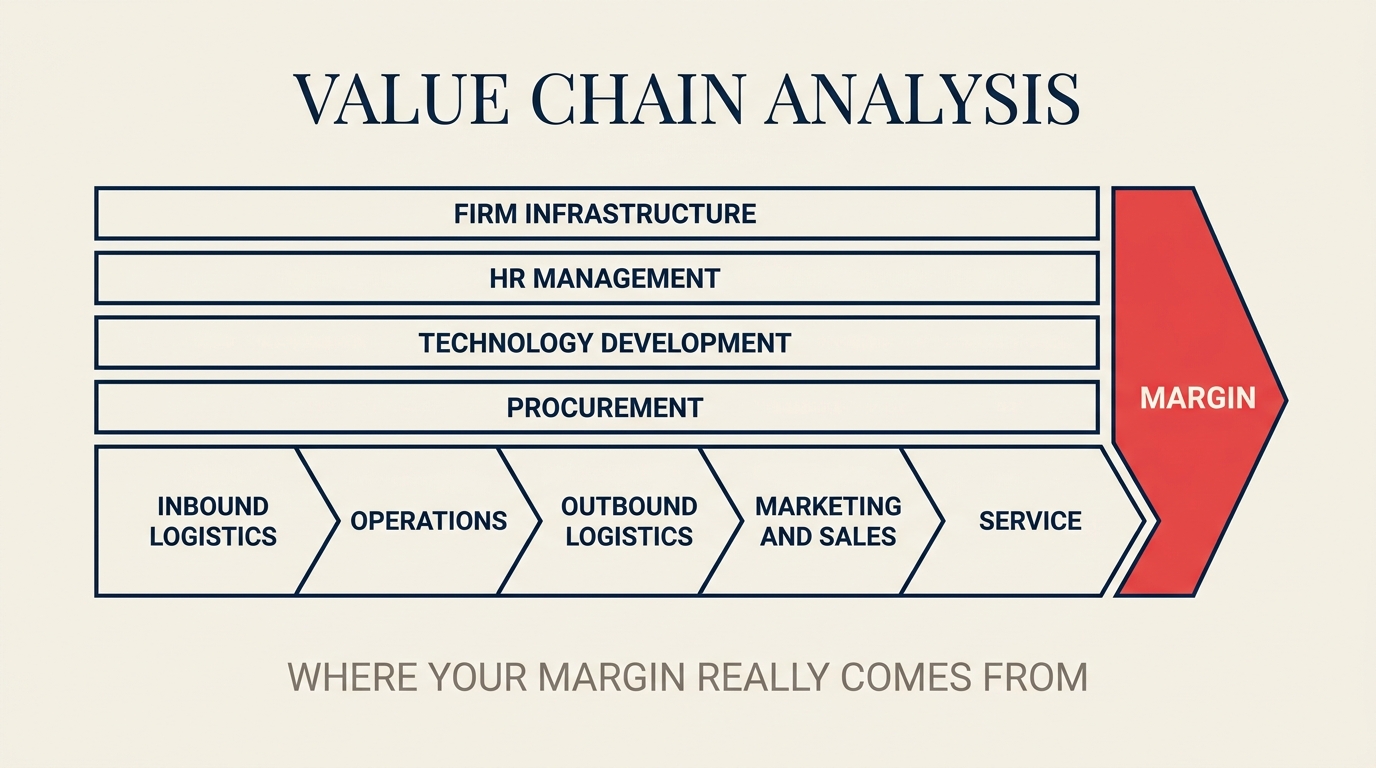
Value Chain Analysis ist ein strategisches Framework, das Michael E. Porter in seinem 1985 erschienenen Buch Competitive Advantage: Creating and Sustaining Superior Performance (Free Press) vorstellte. Es zerlegt ein Unternehmen in 9 Aktivitäten, bestehend aus 5 primären Aktivitäten und 4 unterstützenden Aktivitäten, und untersucht, wie jede einzelne auf dem Weg zur Marge Wert schöpft oder Kosten verursacht. Das Ziel ist nicht allein, Kosten zu verstehen. Es geht darum, zu finden, wo das Unternehmen gewinnen kann: entweder durch günstigere Ausführung als alle anderen oder durch eine Ausführungsweise, für die Kunden einen Aufpreis zahlen.
Wert bedeutet in Porters Modell, was Kunden bereit sind zu zahlen. Marge ist das, was nach Abzug der Gesamtkosten aller Aktivitäten von diesem Wert übrig bleibt. Die Analyse macht die Abwägungen sichtbar.
Wichtige Fakten
- Porter, M.E. (1985) Competitive Advantage: Creating and Sustaining Superior Performance, Free Press, Kapitel 2, ist die originale Quelle des Wertketten-Konzepts. Porter argumentierte, dass Wettbewerbsvorteile aus den spezifischen Aktivitäten eines Unternehmens entstehen, nicht aus dem Unternehmen als Ganzes.
- "Wettbewerbsvorteil kann nicht verstanden werden, indem man ein Unternehmen als Ganzes betrachtet. Er entsteht aus den vielen einzelnen Aktivitäten, die ein Unternehmen beim Entwerfen, Herstellen, Vermarkten, Liefern und Unterstützen seines Produkts ausführt." Michael E. Porter, Competitive Advantage (1985), S. 33.
- McKinseys Bericht 2024 zur Wertkettenrekonfiguration ergab, dass Unternehmen, die auch nur eine oder zwei primäre Aktivitäten neu gestalteten, beispielsweise durch Wechsel zu Direktvertrieb oder Insourcing einer zuvor ausgelagerten Tätigkeit, innerhalb von zwei Jahren nach der Umsetzung eine 15-25%ige Verbesserung der Bruttomarge erzielten.
Die 5 primären und 4 unterstützenden Aktivitäten
Die 9 Aktivitäten sind in zwei Ebenen angeordnet. Primäre Aktivitäten verlaufen von links nach rechts durch die Wertkette und berühren das Produkt oder die Dienstleistung auf dem Weg zum Kunden direkt. Unterstützende Aktivitäten befinden sich darüber und ermöglichen das Funktionieren aller fünf primären Aktivitäten.
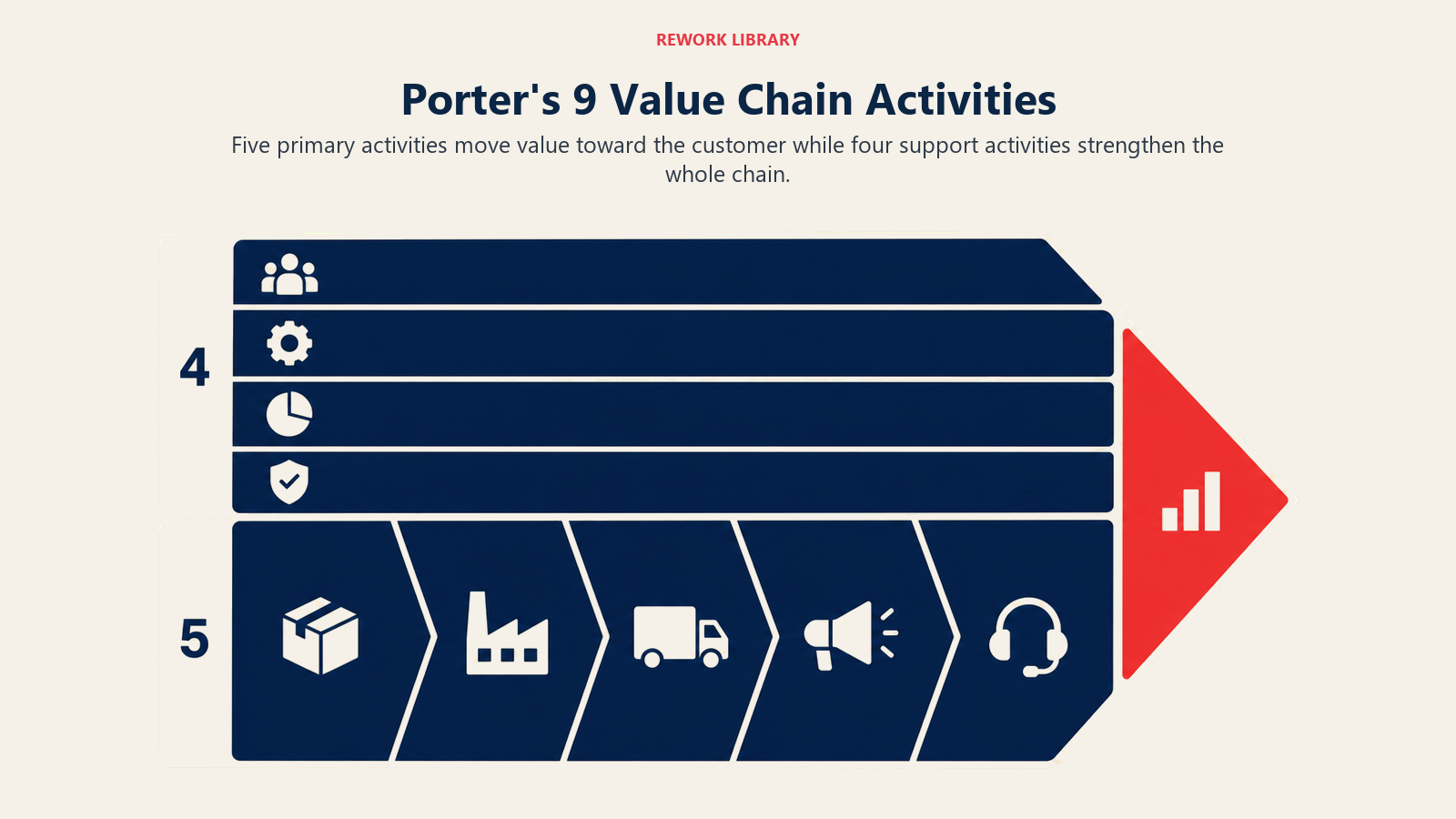
Primäre Aktivitäten
- Eingangslogistik (Inbound Logistics): Empfangen, Lagern und Verteilen von Inputs wie Rohmaterialien, Komponenten, Daten oder allem anderen, das der Betrieb zum Starten benötigt.
- Betrieb (Operations): Umwandlung dieser Inputs in das fertige Produkt oder die Dienstleistung, also Fertigung, Montage, Softwarekompilierung, Essenszubereitung, Serviceerbringung.
- Ausgangslogistik (Outbound Logistics): Lieferung der fertigen Ergebnisse an Käufer, also Lagerhaltung, Auftragsabwicklung, Versand, digitale Distribution, letzte Meile.
- Marketing und Vertrieb: Aktivitäten, die Käufer über das Produkt informieren und sie zum Kauf überreden, also Werbung, Kanalmanagement, Preisgestaltung, Vertriebsmitarbeiter, Promotionen.
- Service: Werterhaltung und -steigerung des Produkts nach dem Verkauf, also Installation, Garantiesupport, Schulung, Reparatur, Upgrades, Customer Success.
Unterstützende Aktivitäten
- Unternehmensinfrastruktur (Firm Infrastructure): allgemeines Management, Finanzen, Recht, Planung, Qualitätsmanagement, der Overhead, der jede primäre Aktivität unterstützt, ohne an eine einzelne gebunden zu sein.
- Personalmanagement (HRM): Recruiting, Schulung, Vergütung, Mitarbeiterbindung, die Personalarchitektur, die bestimmt, ob jede andere Aktivität gut oder schlecht funktioniert.
- Technologieentwicklung: Forschung und Entwicklung (F&E), Prozessautomatisierung, Software, Produktinnovation, also jeder Einsatz von Technologie zur Verbesserung von Aktivitäten oder Ergebnissen.
- Beschaffung (Procurement): Einkauf von Inputs für alle Aktivitäten, nicht nur Rohmaterialien, sondern auch Ausrüstung, Bürobedarf, Beratungsleistungen und Softwarelizenzen.
Die Pfeile in Porters Diagramm zeigen alle nach rechts in Richtung Marge. Marge ist geschaffener Wert minus angefallene Kosten.
Wie man eine Value Chain Analysis in 5 Schritten durchführt
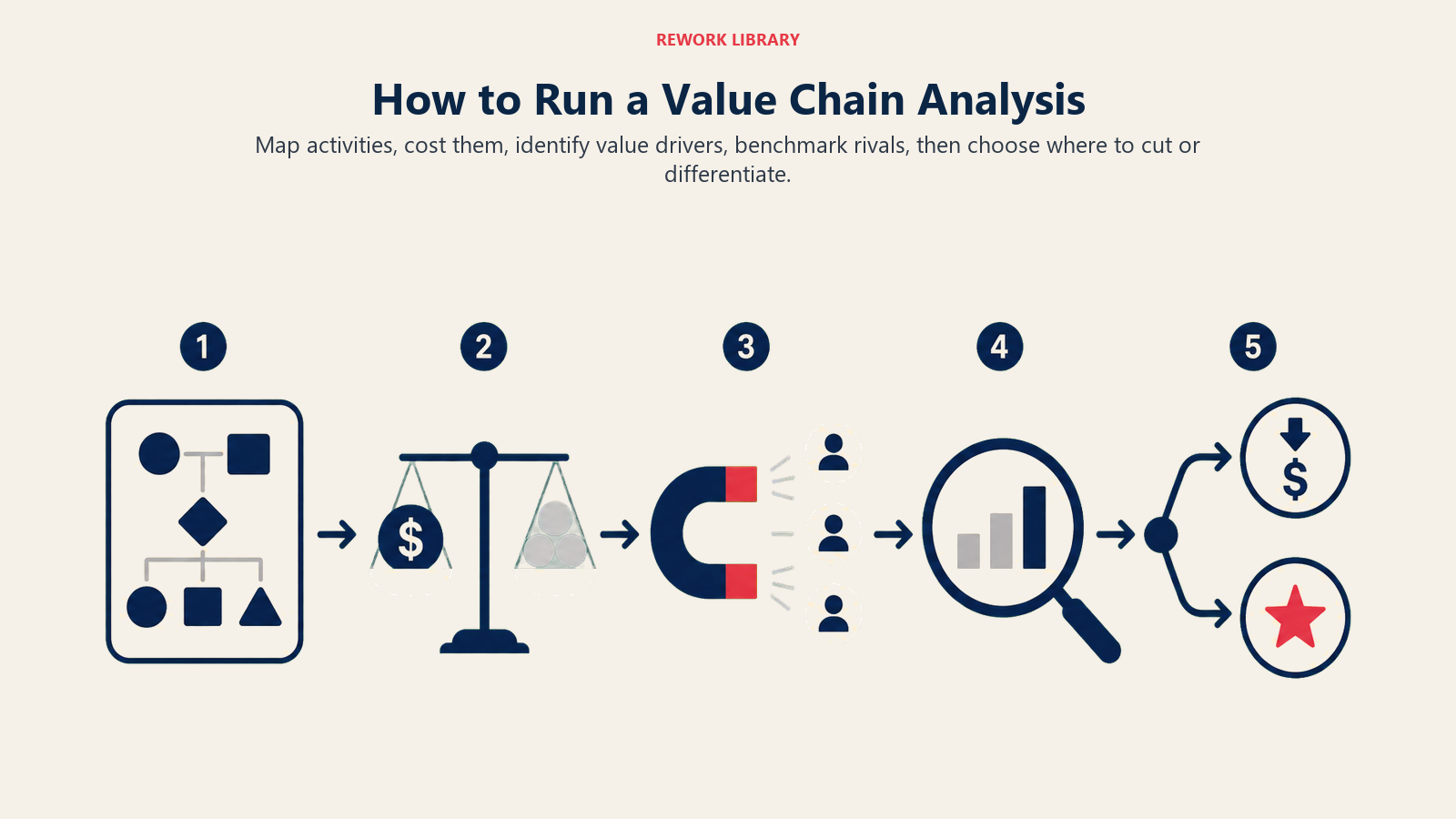
Eine nützliche Value Chain Analysis bewegt sich von einer granularen Aktivitätskarte zu einer bewussten Entscheidung über Kostensenkung oder Differenzierung.
Schritt 1: Alle Aktivitäten erfassen
Listen Sie alle Aktivitäten auf, die Ihr Unternehmen ausführt, und ordnen Sie jede einer der neun Kategorien zu. Seien Sie spezifisch. "Betrieb" bei einer Fluggesellschaft bedeutet Besatzungsplanung, Bodenabfertigung und Wartung. Bei einer Anwaltskanzlei bedeutet es Fallrecherche, Entwurf und Gerichtsauftritte. Widerstehen Sie dem Drang zur Vagheit. Je detaillierter Ihre Aktivitätskarte, desto nützlicher die Analyse.
Schritt 2: Jede Aktivität mit Kosten belegen
Weisen Sie jeder Aktivität Kosten zu. Buchhalterische Präzision ist nicht erforderlich, richtungsweisende Genauigkeit reicht in diesem Stadium. Beziehen Sie direkte Arbeit, Technologie, Overhead und Zeitkosten ein. Einige Unternehmen stellen fest, dass 80 % der Kosten in zwei oder drei Aktivitäten liegen, was den Fokus sofort einengt.
Schritt 3: Werttreiber identifizieren
Fragen Sie für jede Aktivität: Was interessiert den Kunden hier wirklich? Die Geschwindigkeit der Eingangslogistik spielt in der Fast Fashion eine große Rolle, bei Möbeln kaum. Servicequalität ist in Unternehmenssoftware enorm wichtig und in der Grundstoffherstellung kaum relevant. Die Aktivitäten, bei denen Kunden den Unterschied spüren, sind Ihre Werttreiber.
Schritt 4: Mit Wettbewerbern vergleichen
Wie vergleichen sich Ihre Aktivitätskosten und -qualität mit denen der Wettbewerber? Nutzen Sie öffentliche Benchmarks, Lieferantengespräche, Stellenausschreibungen (die Einstellungsmuster offenbaren) und Kundenfeedback. Wenn ein Wettbewerber konsistent schneller bei der Ausgangslogistik ist, prüfen Sie, ob er die Auftragsabwicklung anders automatisiert hat. Lückenanalysen auf Aktivitätsebene zeigen strategische Optionen auf.
Schritt 5: Kostensenkung oder Differenzierung priorisieren
Mit Kostendaten, Werttreibern und Wettbewerbslücken wählen Sie nun einen Weg. Kosten in Aktivitäten reduzieren, die keinen Kundenwert erzeugen. Stark in Aktivitäten investieren, die es tun. Hier verbindet sich die Value Chain Analysis direkt mit Porters zwei generischen Strategien, nämlich Kostenführerschaft und Differenzierung, auf die wir unten eingehen.
Ausgearbeitetes Beispiel: IKEA Value Chain Analysis
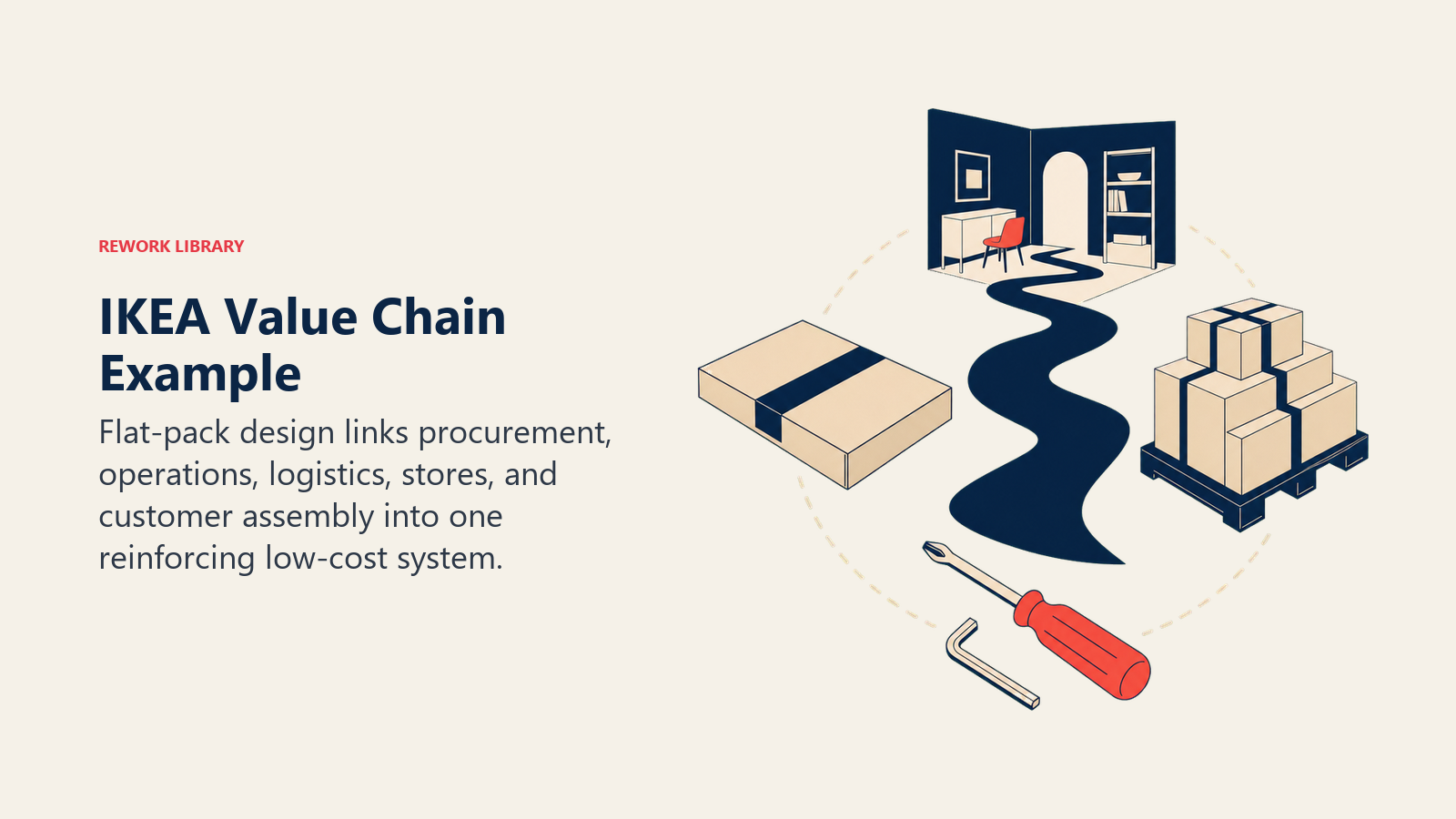
IKEA ist ein klassischer Wertketten-Fall, weil seine Kostenvorteile kein Zufall sind. Sie entstehen aus bewussten Entscheidungen auf Aktivitätsebene, die sich über die gesamte Kette gegenseitig verstärken.
| Aktivität | Was IKEA tut | Kosten- oder Differenzierungshebel |
|---|---|---|
| Eingangslogistik | Globale Beschaffung, konsolidierte Lieferungen, teils 20+ Jahre alte Lieferantenbeziehungen | Kosten: Mengeneinkauf, weniger Zwischenhändler |
| Betrieb | Hauseigenes Flachpack-Design; Produkte von Anfang an für kompakte Fertigung ausgelegt | Kosten: Reduziert Materialverschwendung und Fertigungskomplexität |
| Ausgangslogistik | Flachpack reduziert Versandvolumen pro Einheit erheblich; Kunden holen aus großen Außenstadtgeschäften ab | Kosten: Niedrigere Frachtkosten pro Einheit; Kunde übernimmt die letzte Meile |
| Marketing und Vertrieb | Jahresprospekt (historisch eine der meistverteilten Printpublikationen der Welt); Ausstellungsraum als Marketingvehikel | Differenzierung: Das Ladenerlebnis ist die Verkaufsstrategie; niedrige Werbeausgaben pro Verkauf |
| Service | Selbstmontage wird auf den Kunden übertragen; minimales After-Sales-Service-Modell | Kosten: Montage-Arbeitskosten auf den Käufer verlagert |
| Unternehmensinfrastruktur | Schlanker Hauptsitz in den Niederlanden; flaches Management; Franchise-Struktur | Kosten: Niedriger Unternehmens-Overhead |
| Personalmanagement | Ladenperonal als Generalisten ausgebildet; Selbstbedienungsmodell reduziert Mitarbeiter pro Quadratmeter | Kosten: Niedrigere Arbeitsintensität pro Transaktion |
| Technologieentwicklung | Hauseigene Produktdesign-Software; proprietäres Flachpack-Engineering | Differenzierung: Proprietäre Fähigkeit, die Wettbewerber nicht leicht kopieren können |
| Beschaffung | Zentralisierte globale Beschaffung; langfristige Lieferantenverträge im großen Maßstab | Kosten: Preisdruck und Stabilität durch langfristige Beziehungen |
Das Muster ist konsistent: IKEA designt Kosten aus Aktivitäten heraus, die Kunden nicht wertschätzen (Lieferung, Montage, Premiumstandort), und investiert in die Aktivitäten, die das Erlebnis antreiben, für das Kunden zahlen (Produktdesign, die Showroom-Reise). Das ist Wertkettendenken in der Praxis.
Value Chain Beispiele nach Branchen
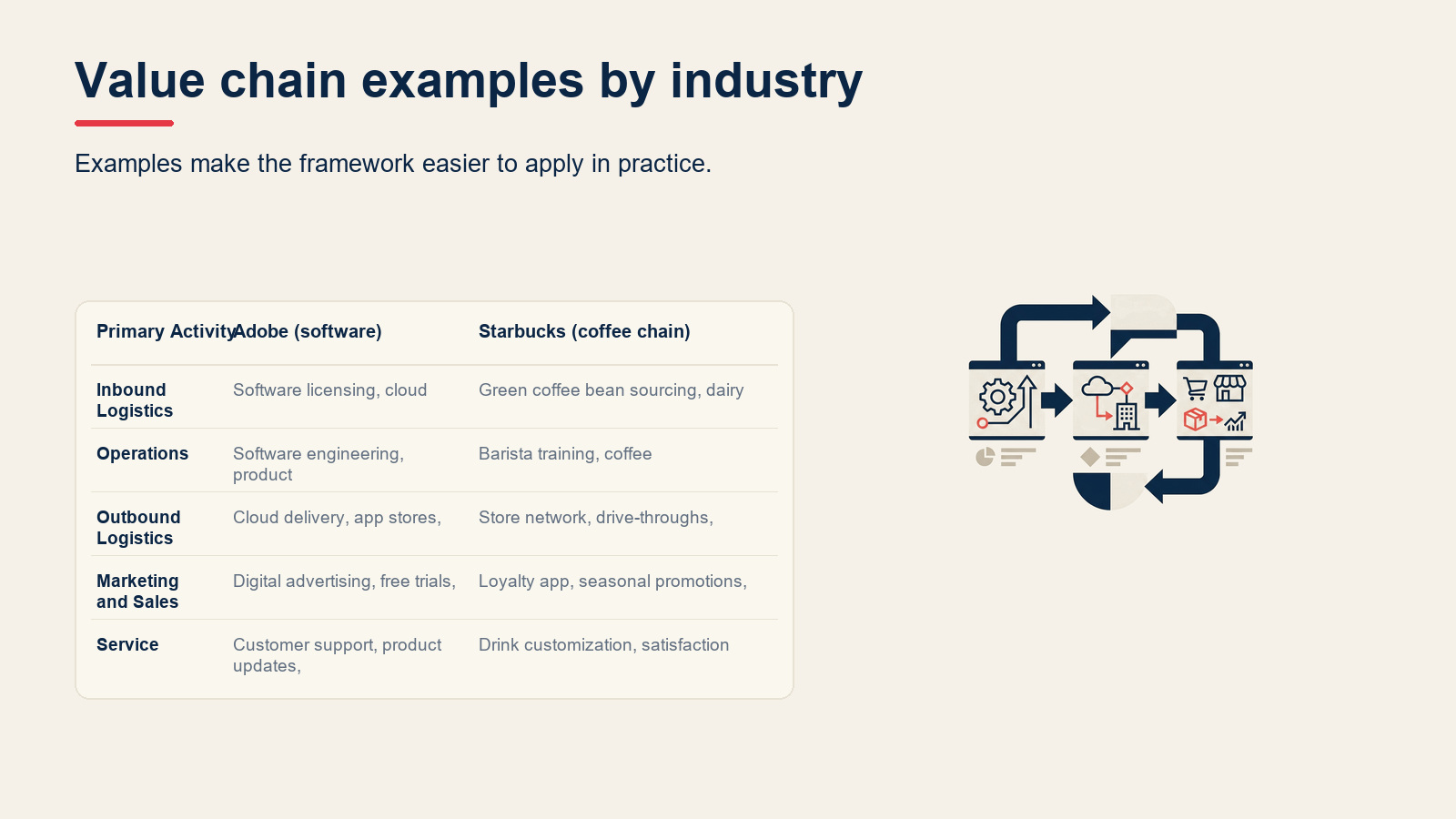
Die fünf primären Aktivitäten sehen je nach Branche sehr unterschiedlich aus. So vergleichen sich drei Sektoren in denselben Aktivitäten.
| Primäre Aktivität | Adobe (Software) | Starbucks (Kaffeehauskette) | Städtisches Krankenhaus |
|---|---|---|---|
| Eingangslogistik | Softwarelizenzen, Cloud-Infrastruktur, Talentakquisition | Rohkaffeebeschaffung, Milchlieferketten, Gerätebeschaffung | Medikamenten- und Materialbeschaffung, Medizingeräte, Personalplanung |
| Betrieb | Software-Engineering, Produktentwicklung, Cloud-Betrieb | Barista-Schulung, Kaffeezubereitung, Ladenbetrieb | Klinische Versorgung, Chirurgie, Diagnostik, Pflege |
| Ausgangslogistik | Cloud-Bereitstellung, App-Stores, digitaler Download | Filialnetz, Drive-throughs, mobile Bestellung und Abholung | Patientenentlassung, Überweisungsnetzwerk, ambulante Terminplanung |
| Marketing und Vertrieb | Digitale Werbung, kostenlose Testversionen, Innenvertrieb, Wiederverkäuferkanäle | Loyalty-App, saisonale Promotionen, Marken-Storytelling | Arztzuweisungen, Markenreputation, Krankenkassenverträge |
| Service | Kundensupport, Produktupdates, Community-Foren | Getränkeanpassung, Zufriedenheitsgarantien, Barista-Nachbesserungen | Entlassungsnachsorge, chronisches Krankheitsmanagement, Patientenportal |
Die Tabelle zeigt: "Betrieb" ist bei Adobe fast vollständig intellektuell, er findet in Code und auf Servern statt. Bei Starbucks findet er auf einem 10-Quadratmeter großen Raum mit einer Espressomaschine und einer Warteschlange statt. Und bei einem Krankenhaus ist der Betrieb stark reguliert, mit hohem Einsatz und größtenteils manuell. Das Wertketten-Framework gilt für alle drei, aber der Aktivitätsinhalt ist völlig unterschiedlich. Das ist die Stärke des Modells: Es gibt Ihnen eine gemeinsame Sprache für die Analyse grundlegend unterschiedlicher Unternehmen.
Kostenführerschaft vs. Differenzierung: zwei Strategien, die die Wertkette offenbart
Porters zwei generische Strategien, Kostenführerschaft und Differenzierung, bilden sich direkt ab auf die Art und Weise, wie Sie Ihre Wertkette optimieren.
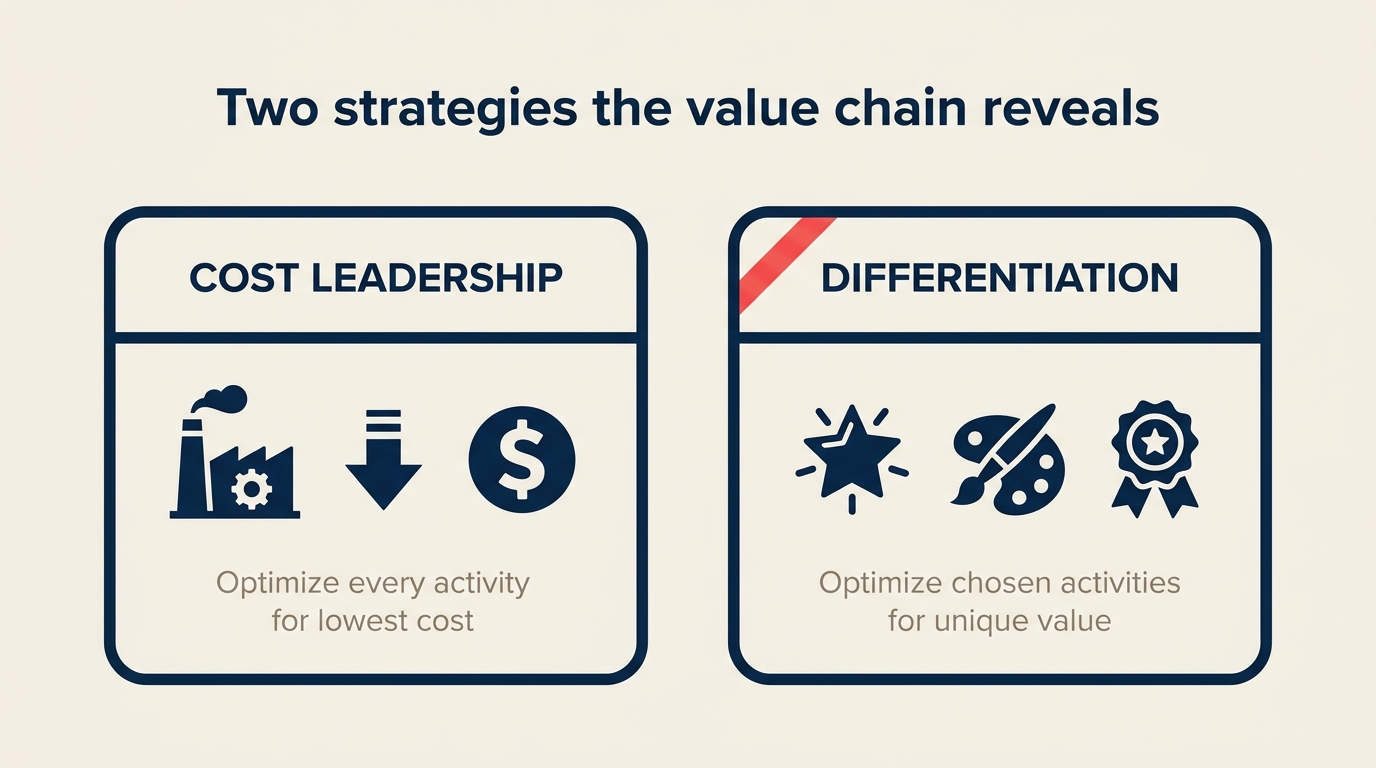
Kostenführerschaft bedeutet, jede Aktivität für die geringstmöglichen Kosten zu konfigurieren. Sie automatisieren die Eingangslogistik. Sie standardisieren den Betrieb. Sie minimieren den Service-Overhead. Sie verhandeln hart bei der Beschaffung. Das Ziel ist, der kostengünstigste Anbieter in der Branche zu sein und dabei die Mindestqualitätsschwelle zu erfüllen, die Kunden erwarten. IKEA, Ryanair und Amazon Basics führen alle Kostenführerschafts-Wertketten.
Differenzierung bedeutet, stark in die Aktivitäten zu investieren, die einzigartigen Wert liefern, und in diesen Bereichen höhere Kosten zu akzeptieren, weil Kunden einen Aufpreis zahlen werden. Apple investiert massiv in Technologieentwicklung sowie Marketing und Vertrieb. Nordstrom investiert in Service. Eine Boutique-Anwaltskanzlei investiert in Talente (HRM) und Betrieb auf Partnerebene. Die Value Chain Analysis sagt Ihnen, welche Aktivitäten die Premiumausgaben wert sind.
Der häufige Fehler ist der Versuch, beides gleichzeitig zu tun, ohne eine klare Priorität. Porter argumentierte, dass Unternehmen, die in der Mitte feststecken, also weder die günstigsten noch klar differenziert sind, tendenziell unterdurchschnittliche Renditen erzielen, weil sie von beiden Seiten angreifbar sind. Eine Entscheidung zu treffen erfordert, die eigenen Aktivitätskosten tatsächlich zu betrachten und zu fragen: Welche Aktivitäten optimieren wir, und für was?
Für einen tieferen Einblick in die Wettbewerbskräfte, die bestimmen, wie viel von dieser Marge man behalten kann, nachdem sie aufgebaut wurde, sind Porter's Five Forces der richtige Ausgangspunkt.
Value Chain Analysis vs. Supply Chain Analysis
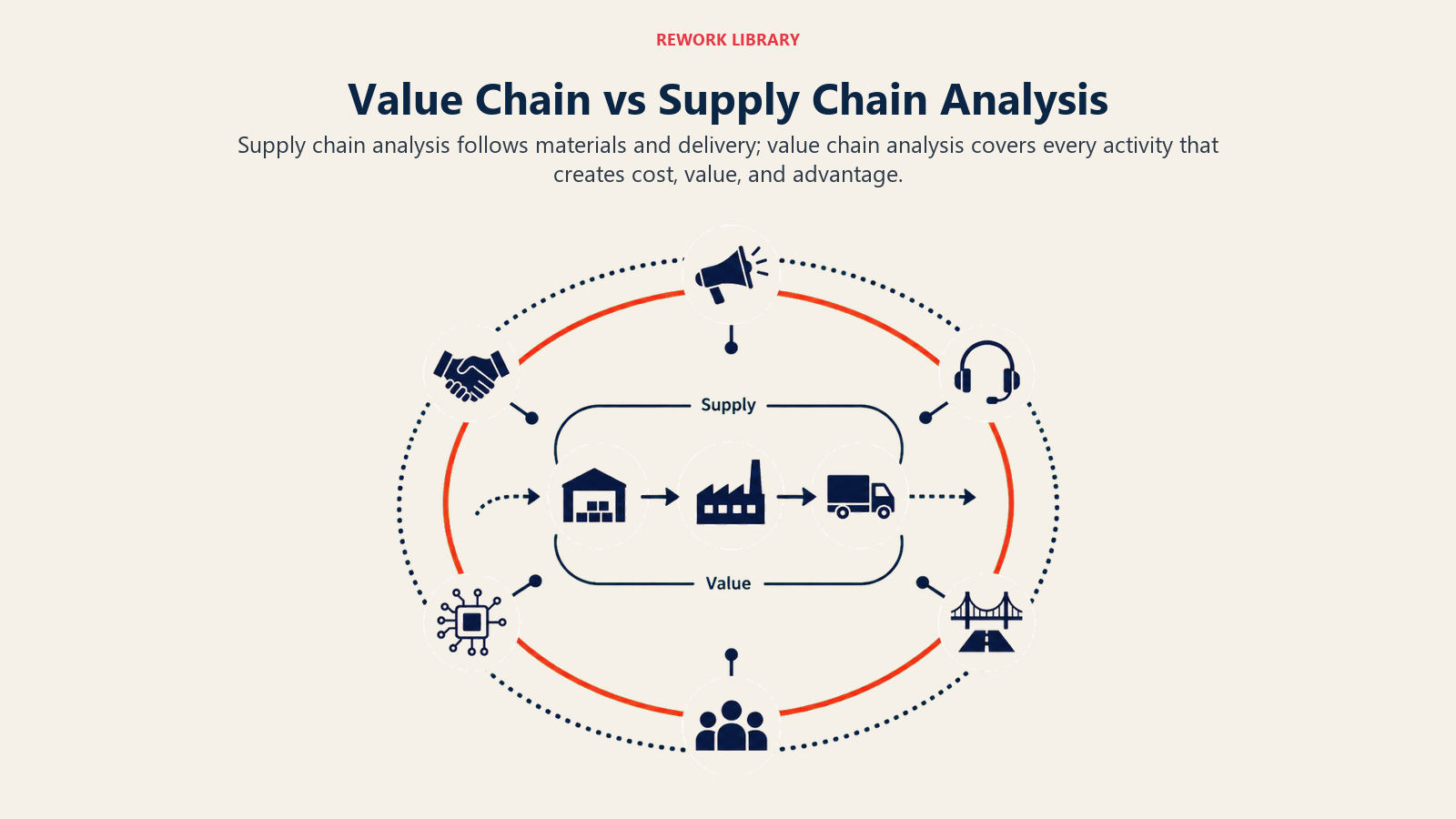
Diese beiden Begriffe werden ständig verwechselt. Hier ist der Unterschied.
| Aspekt | Value Chain Analysis | Supply Chain Analysis |
|---|---|---|
| Umfang | Intern + extern; alle 9 Aktivitätstypen einschließlich Marketing, HR und Infrastruktur | Primär externe Material- und Warenflüsse vom Lieferanten zum Endkunden |
| Fokus | Wo Wert und Kosten über das gesamte Unternehmen entstehen | Logistikeffizienz, Lieferantenbeziehungen, Inventar und Lieferung |
| Ziel | Quellen von Wettbewerbsvorteil oder Kostensenkung identifizieren | Geschwindigkeit, Kosten und Zuverlässigkeit von Material- und Produktflüssen optimieren |
| Ursprung | Porter (1985), strategisches Management | Betriebsmanagement, Logistiktheorie |
| Ergebnis | Eine strategische Karte der Aktivitäten, in die man investieren oder die man kürzen soll | Eine operative Karte, wie Waren schneller und günstiger bewegt werden können |
| Wer nutzt es | Strategie- und Führungsteams | Betriebs-, Beschaffungs- und Supply-Chain-Teams |
Eine Supply Chain ist eine Teilmenge der Wertkette. Ihre Lieferkette umfasst Eingangslogistik, Teile des Betriebs und Ausgangslogistik. Die Value Chain Analysis umfasst diese drei plus Marketing und Vertrieb, Service und alle vier unterstützenden Aktivitäten. Wenn Sie nur die Lieferkette betrachten, schauen Sie auf etwa ein Drittel Ihres Kosten- und Wertschöpfungsbildes.
Für breiteren Umgebungskontext, der jede Wertkettenarbeit rahmen sollte, hilft die PESTEL-Analyse dabei, externe Kräfte zu erkennen, wie Regulierung, Technologie und wirtschaftliche Verschiebungen, die in den nächsten drei bis fünf Jahren neu gestalten werden, welche Aktivitäten am wichtigsten sind.
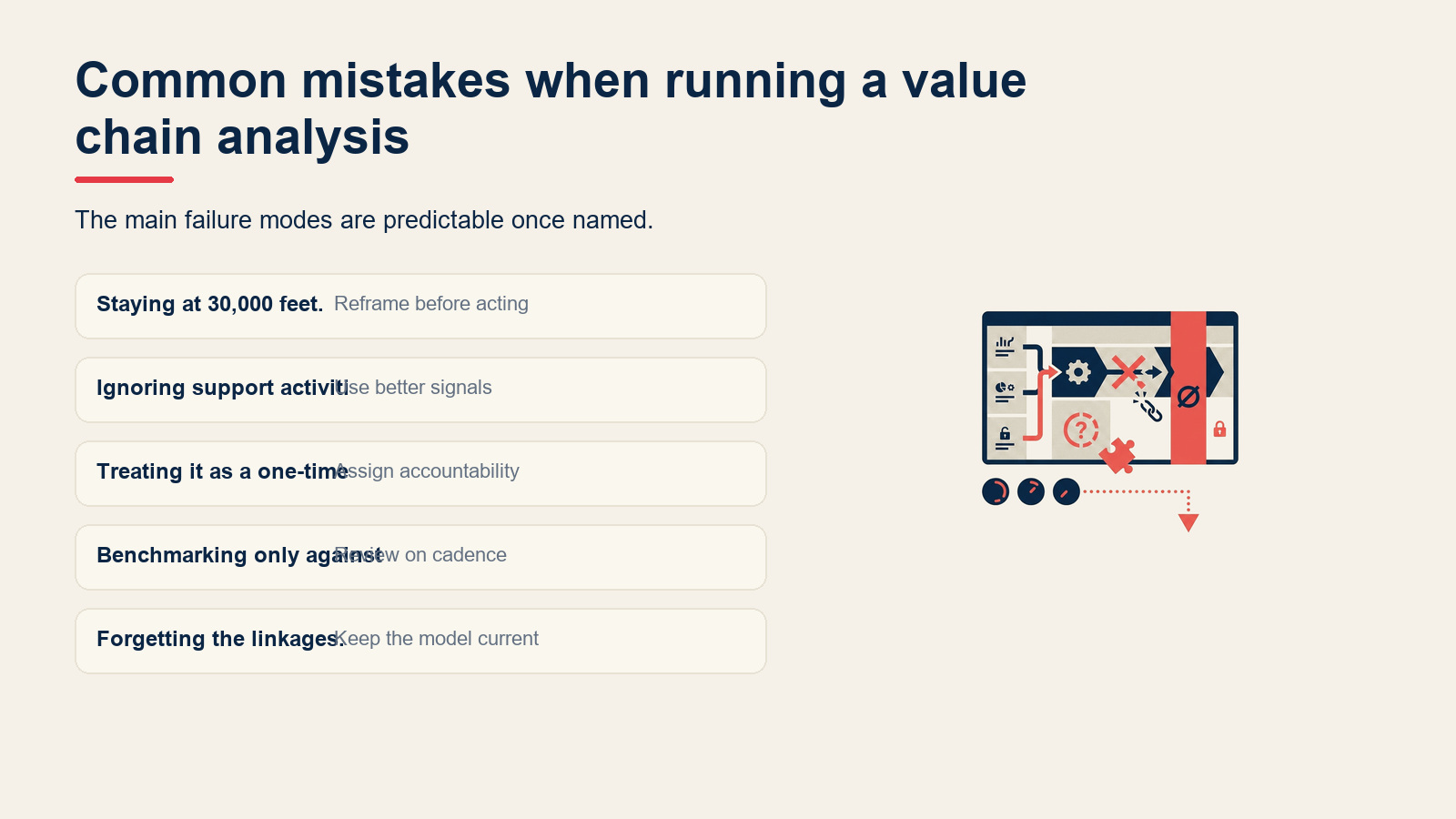
Häufige Fehler bei der Value Chain Analysis
- Auf 30.000 Fuß Höhe bleiben. "Betrieb" als einzelnen Posten aufzulisten sagt nichts. Zerlegen Sie ihn in die spezifischen Teilaktivitäten, die Ihr Unternehmen tatsächlich ausführt, und berechnen Sie jede einzeln.
- Unterstützende Aktivitäten ignorieren. Unternehmen fokussieren sich routinemäßig zu sehr auf die fünf primären Aktivitäten und vernachlässigen HRM und Technologieentwicklung, die oft der Ort sind, an dem die dauerhaftesten Vorteile aufgebaut werden oder wo der größte Kostenwuchs steckt.
- Als einmalige Übung behandeln. Eine 2019 gezeichnete Wertkette sieht für dasselbe Unternehmen in 2024 ganz anders aus. Wettbewerber-Moves, Technologieveränderungen und Lieferstörungen gestalten um, welche Aktivitäten relevant sind. Führen Sie die Analyse mindestens jährlich durch.
- Nur direkte Wettbewerber als Benchmark nutzen. Die gefährlichsten Bedrohungen kommen oft von benachbarten Unternehmen, die einen Teil Ihrer Wertkette neu konfiguriert haben. Streaming-Plattformen verglichen sich nicht mit herkömmlichen TV-Sendern; sie maßen sich an der Zeit, die für jede Freizeitaktivität aufgewendet wird.
- Die Verbindungen vergessen. Porter betonte, dass Aktivitäten nicht nur individuell zählen, sondern auch deren Zusammenhang. IKEAs Flachpack-Designvorteil liegt nicht allein im Betrieb. Er verbindet sich mit der Eingangslogistik (kompakte Inputs), der Ausgangslogistik (kompakte Outputs) und der Beschaffung (nach Kosten entwickelte Lieferantenspezifikationen). Eine Änderung in einer Aktivität wirkt sich immer auf andere aus.
Für eine ergänzende Innenansicht sitzt die SWOT-Analyse gut neben der Wertkettenarbeit: Die Kette sagt Ihnen, wo Kosten und Wert liegen, und die SWOT hilft Ihnen zu formulieren, welche davon echte Stärken gegenüber Bereichen echter Verletzlichkeit sind.
Die Wertkette ist kein kompliziertes Modell. Sie stellt eine Frage immer wieder: Schöpft diese Aktivität Wert, der mehr kostet als sie kostet? Führen Sie sie ehrlich durch, und sie zeigt Ihnen mit mehr Präzision als die meisten Strategie-Tools, wo Ihr Wettbewerbsvorteil tatsächlich liegt, und wo nicht. Von dort aus ist der Weg zu besserer Marge eine Reihe bewusster Entscheidungen, welche Aktivitäten optimiert, welche gestrichen und in welche weit mehr als heute investiert werden soll.
Für Frameworks, die neben der Value Chain Analysis auf verschiedenen Strategieebenen funktionieren, siehe Ansoff-Matrix für Wachstumsrichtungsentscheidungen, BCG-Matrix für Portfoliozuteilung und Business Model Canvas für die Abbildung, wie Ihre Wertkette mit Einnahmequellen und Kundensegmenten verbunden ist. Wenn Sie Evolution auf die Kette anwenden und sehen möchten, welche Aktivitäten Sie selbst aufbauen oder zukaufen sollten, ordnet Wardley Mapping jede Komponente danach ein, wie ausgereift und vorhersehbar sie geworden ist.

Co-Founder & COO
On this page
- Was ist Value Chain Analysis?
- Die 5 primären und 4 unterstützenden Aktivitäten
- Primäre Aktivitäten
- Unterstützende Aktivitäten
- Wie man eine Value Chain Analysis in 5 Schritten durchführt
- Schritt 1: Alle Aktivitäten erfassen
- Schritt 2: Jede Aktivität mit Kosten belegen
- Schritt 3: Werttreiber identifizieren
- Schritt 4: Mit Wettbewerbern vergleichen
- Schritt 5: Kostensenkung oder Differenzierung priorisieren
- Ausgearbeitetes Beispiel: IKEA Value Chain Analysis
- Value Chain Beispiele nach Branchen
- Kostenführerschaft vs. Differenzierung: zwei Strategien, die die Wertkette offenbart
- Value Chain Analysis vs. Supply Chain Analysis
- Häufige Fehler bei der Value Chain Analysis