Differenzierungsstrategie: Definition und Beispiele
Turn this article into takeaways for your work.


Each assistant summarizes the article only for you and suggests best practices for your work.
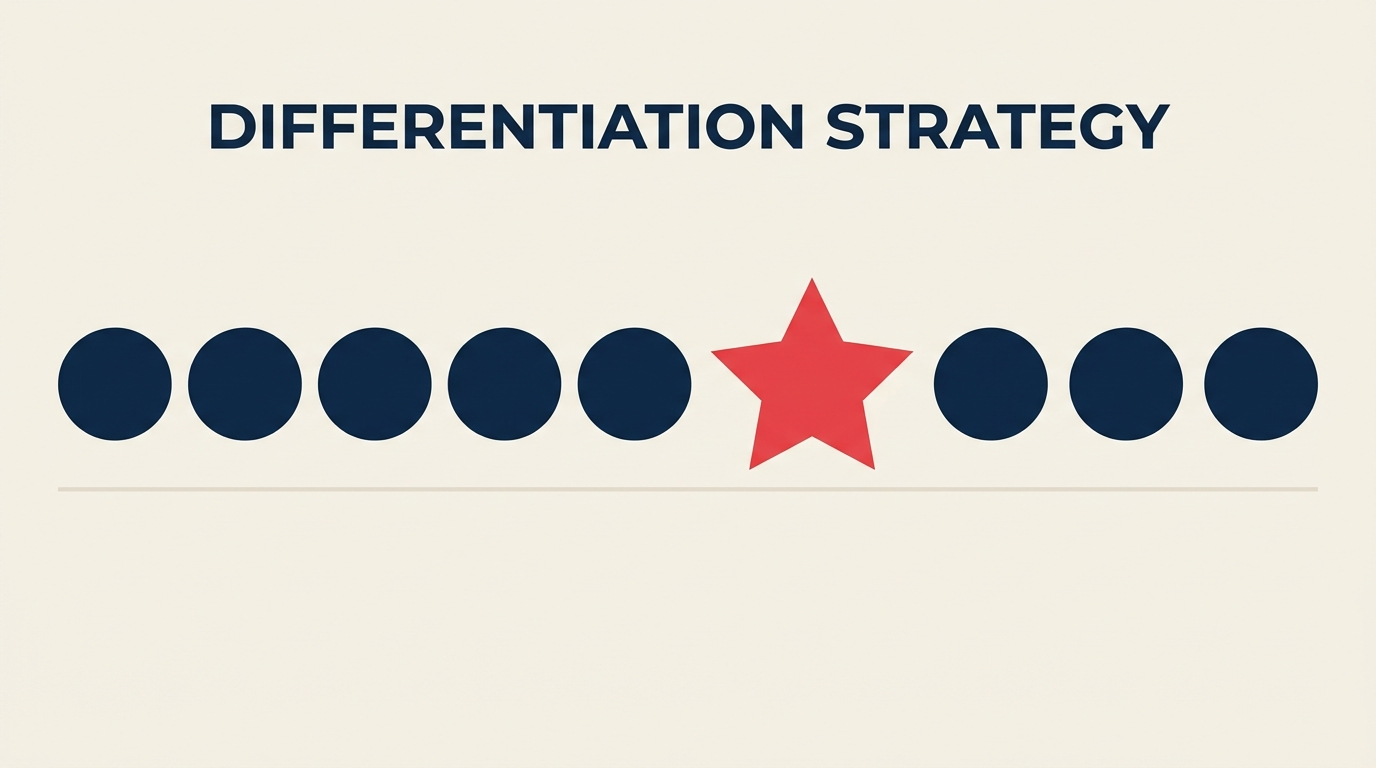
Eine Differenzierungsstrategie zeigt, wie ein Unternehmen dem Preiswettbewerb entkommt, indem es etwas anbietet, das Kunden einen Aufschlag wert ist. Wenn es funktioniert, ist es eine der dauerhaftesten Wettbewerbspositionen, die ein Unternehmen halten kann.
Die meisten Märkte haben mehr Wettbewerber als Kunden ihnen bewusst sind. Wenn alle Anbieter austauschbar wirken, wird der Preis zum einzigen echten Kauftreiber, und die Margen werden so lange gedrückt, bis die Branche für alle unattraktiv wird. Differenzierung ist die bewusste Entscheidung, aus dieser Falle auszubrechen.
Was ist eine Differenzierungsstrategie?
Eine Differenzierungsstrategie ist ein Wettbewerbsansatz, bei dem ein Unternehmen Produkte oder Dienstleistungen mit Attributen anbietet, die Käufer als tatsächlich eigenständig und wertvoll wahrnehmen, wodurch das Unternehmen überdurchschnittliche Preise verlangen und eine stärkere Kundenloyalität als nicht differenzierte Wettbewerber aufbauen kann.
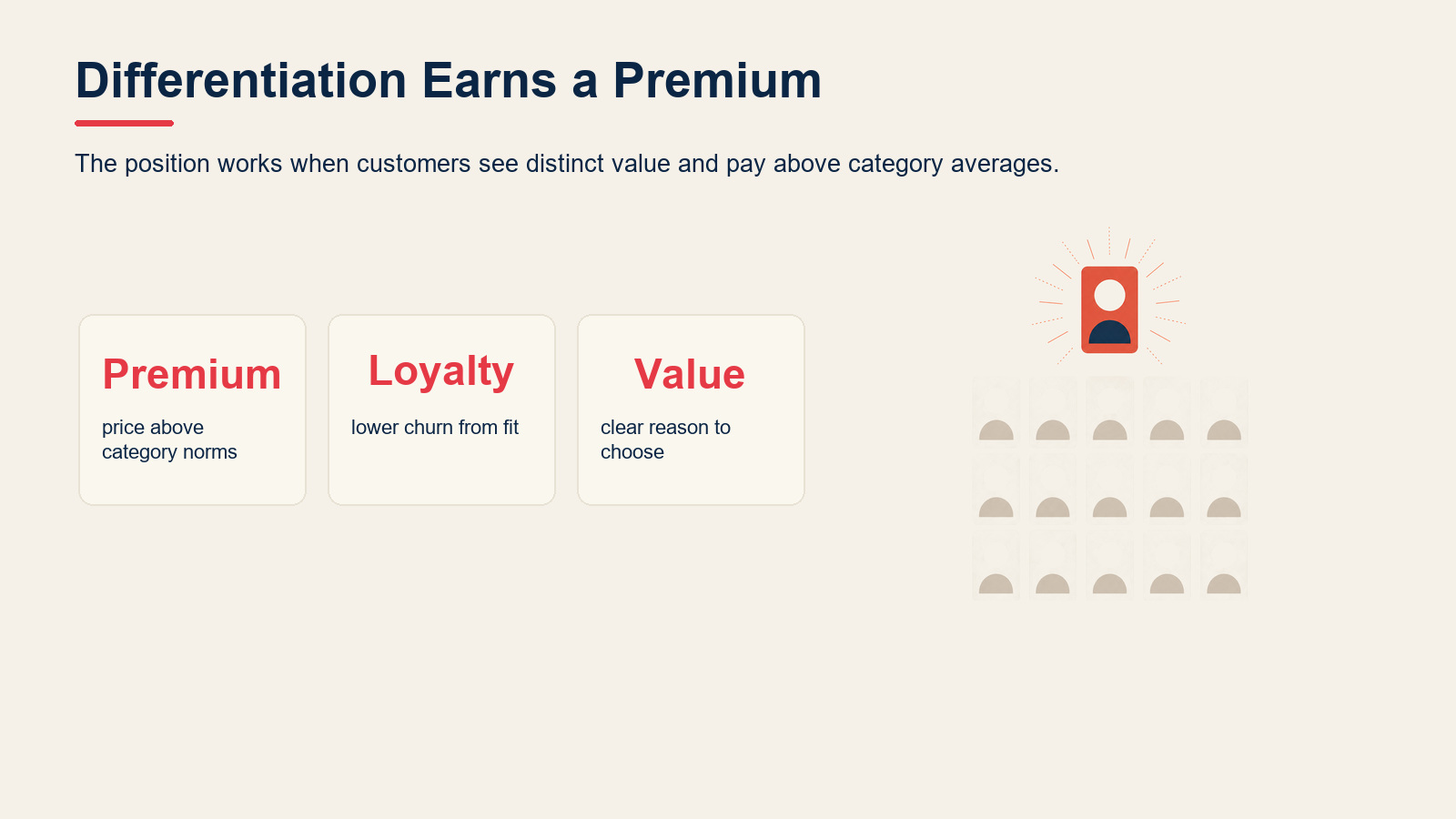
Michael Porter stellte die Differenzierung als eine von drei generischen Strategien in Wettbewerbsstrategie (1980) vor. Die Logik: Wenn ein Unternehmen nicht der günstigste Produzent in einer Branche sein kann, ist der einzige Weg zu überdurchschnittlicher Rentabilität, auf eine Weise bedeutsam anders zu sein, für die der Markt zahlt. Differenzierung und Kostenführerschaft sind nicht nur verschiedene Taktiken. Sie erfordern grundlegend unterschiedliche Aktivitätskonfigurationen, Kompromisse und organisatorische Prioritäten.
Der vollständige Rahmenkontext findet sich in Porters generischen Strategien, das alle drei Positionen (Kostenführerschaft, Differenzierung und Fokus) abdeckt und erklärt, warum das gleichzeitige Verfolgen von mehr als einer typischerweise mittelmäßige Ergebnisse produziert.
Wichtige Fakten: Differenzierungsstrategie
- Unternehmen mit klar differenzierten Wertversprechen wachsen 4-8 % schneller als Branchendurchschnitte und verlangen Preisaufschläge von 12-18 % (Bain & Company, 2022).
- Markenstärke allein, als Proxy für wahrgenommene Differenzierung, erklärt durchschnittlich rund 20 % des gesamten Unternehmenswerts der S&P-500-Unternehmen (Interbrand, 2023).
- Porters ursprüngliche Forschung ergab, dass Unternehmen, die "in der Mitte stecken" zwischen Kostenführerschaft und Differenzierung, in fast allen untersuchten Branchen unterdurchschnittliche Renditen erzielten, was die Strafe für unklare Positionierung unterstreicht (Wettbewerbsvorteil, 1985).
"Das Wesen von Strategie ist die Wahl, was man nicht tut." -- Michael Porter
Differenzierung vs. Kostenführerschaft
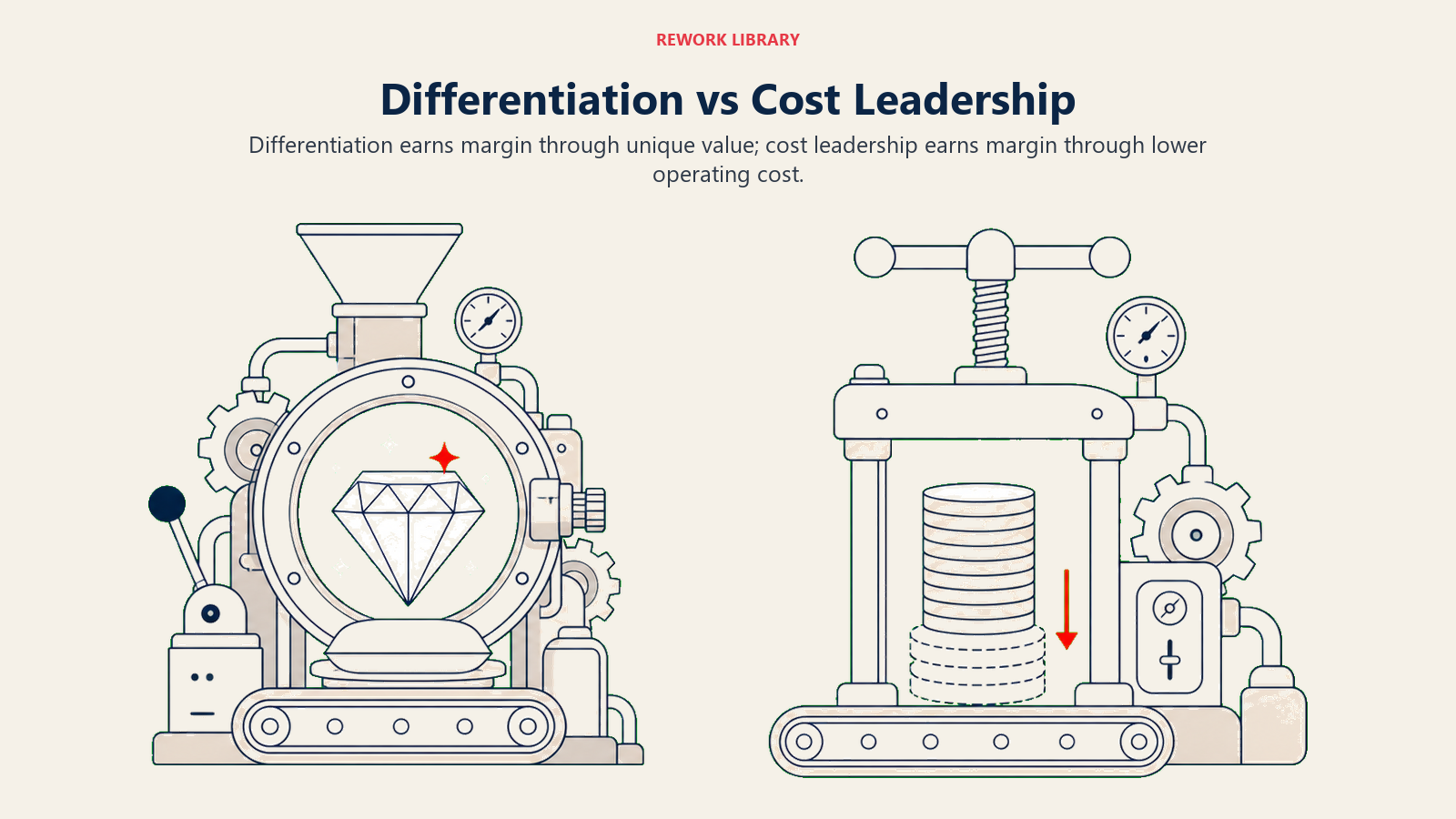
Diese beiden Strategien bilden den Kernkompromiss in Porters Framework. Den Unterschied zu verstehen ist entscheidend, bevor Ressourcen für einen der Wege eingesetzt werden.
| Dimension | Differenzierung | Kostenführerschaft |
|---|---|---|
| Kernlogik | Aufschlag verlangen durch Einzigartigkeit | Höhere Margen durch günstigeren Betrieb erzielen |
| Marginenquelle | Höherer Preis pro Einheit | Niedrigere Kosten pro Einheit |
| Investitionsfokus | F&E, Marke, Service, Design, Kundenerlebnis | Skalierung, Prozesseffizienz, Einkauf, Automatisierung |
| Kundenbeziehung | Loyalität durch wahrgenommenen Wert | Loyalität durch Wettbewerbsfähigkeit beim Preis |
| Hauptrisiko | Nachahmung erodiert den Aufschlag; Überdifferenzierung jenseits der Zahlungsbereitschaft | Kostenvorteil wird wegkonkurriert; Technologie verändert die Wirtschaftlichkeit |
| Klassische Beispiele | Apple, Salesforce, BMW | Amazon Fulfillment, Walmart, Ryanair |
Der wichtigste Punkt: Differenzierung bedeutet nicht nur "besser sein". Es bedeutet, in spezifischer Weise anders zu sein, die ein definiertes Kundensegment tatsächlich schätzt und die Wettbewerber nicht leicht replizieren können. Qualität allein ist keine Differenzierung, es sei denn, Kunden erkennen sie, schreiben sie Ihnen spezifisch zu und sind bereit, dafür zu zahlen.
Weitere Informationen zum alternativen Weg und wann jeder die richtige Wahl ist, finden Sie unter Kostenführerschaftsstrategie.
Arten der Differenzierung
Differenzierung zeigt sich in verschiedenen Dimensionen, und die stärksten Strategien kombinieren mehr als eine.
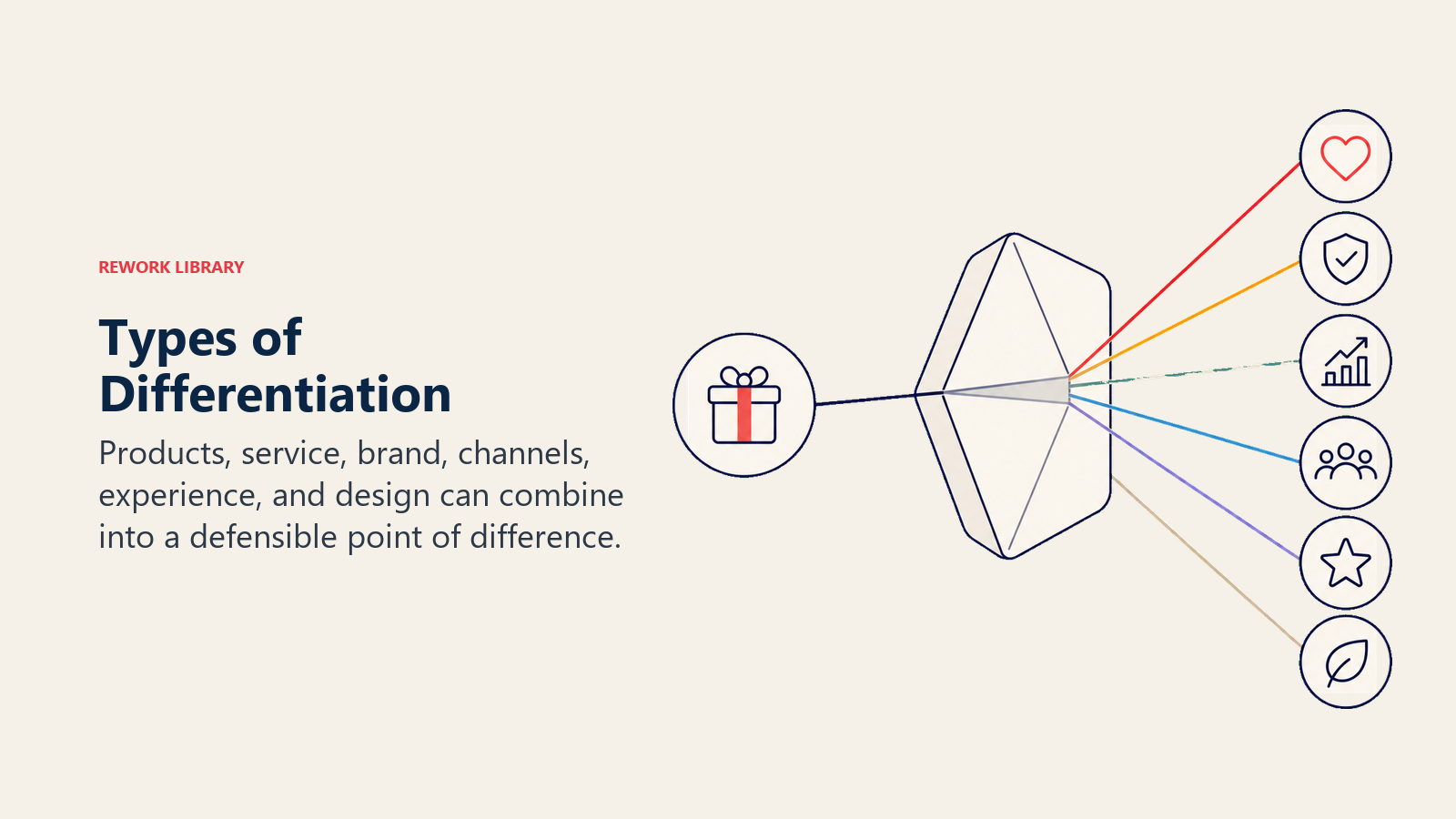
Produktdifferenzierung ist der sichtbarste Typ. Das Produkt hat Merkmale, Leistung, Haltbarkeit oder Technologie, die Konkurrenzprodukte nicht aufweisen. Dysons Zyklon-Staubsaugertechnologie, Teslas Batteriereichweite und Software-Update-Fähigkeit sowie Intels Chip-Architektur sind Beispiele dafür.
Servicedifferenzierung dreht sich darum, wie das Produkt geliefert, unterstützt und über seine Lebenszeit hinweg erlebt wird. Four Seasons bietet dieselbe Kategorie von Übernachtungsunterkünften wie ein Budgetmotel, aber das Serviceerlebnis ist so different, dass es einen 10-20-fachen Preisunterschied rechtfertigt. Zappos baute ein Milliardenunternehmen weitgehend auf Rückgaberichtlinien und Kundenservice auf, nicht auf Schuhauswahl.
Markendifferenzierung schafft wahrgenommenen Wert jenseits des Produkts selbst. Käufer zahlen für Louis Vuitton oder Rolex einen Aufschlag nicht nur wegen der materiellen Qualität, sondern wegen dem, was die Marke über sie kommuniziert. Marke ist eine der schwereren Differenzierungsformen, die aufzubauen sind (es dauert Jahre), aber auch eine der am schwersten zu imitierenden.
Kanaldifferenzierung bedeutet, Kunden über Vertriebsvorteile zu erreichen, die Wettbewerber nicht haben. Apples Einzelhandelsgeschäfte bieten ein kontrolliertes Kauferlebnis, das Apple direkte Kontrolle über Kundenaufklärung und Markeneindruck gibt. Direkt-zu-Verbraucher-Modelle wie Warby Parker haben den traditionellen Optikhandel gestört, indem sie den Zwischenhändler vollständig eliminierten.
Kundenerlebnisdifferenzierung konzentriert sich auf die ganzheitliche Reise von der Wahrnehmung über den Kauf bis hin zur laufenden Nutzung. So differenzieren sich zunehmend Softwareunternehmen, wenn Kernfunktionen zur Ware werden. Slack hat kein Enterprise-Messaging erfunden, aber es hat das Erlebnis so viel besser gemacht als Alternativen, dass es schnelle Akzeptanz ohne traditionelle Enterprise-Vertriebsbewegungen auslöste, eine produktgeführte Go-to-Market-Strategie für sich genommen.
Design- und Technologiedifferenzierung kann Form und Funktion in einem einheitlichen Vorteil kombinieren. Braun und Dieter Rams setzten das Muster, das Apple später explizit übernahm: Produkte, die so gut gestaltet sind, dass sie sowohl funktional als auch ästhetisch von allem anderen im Markt unterscheidbar sind.
Vorteile und Risiken der Differenzierung
Eine gut umgesetzte Differenzierungsstrategie liefert echte strukturelle Vorteile.
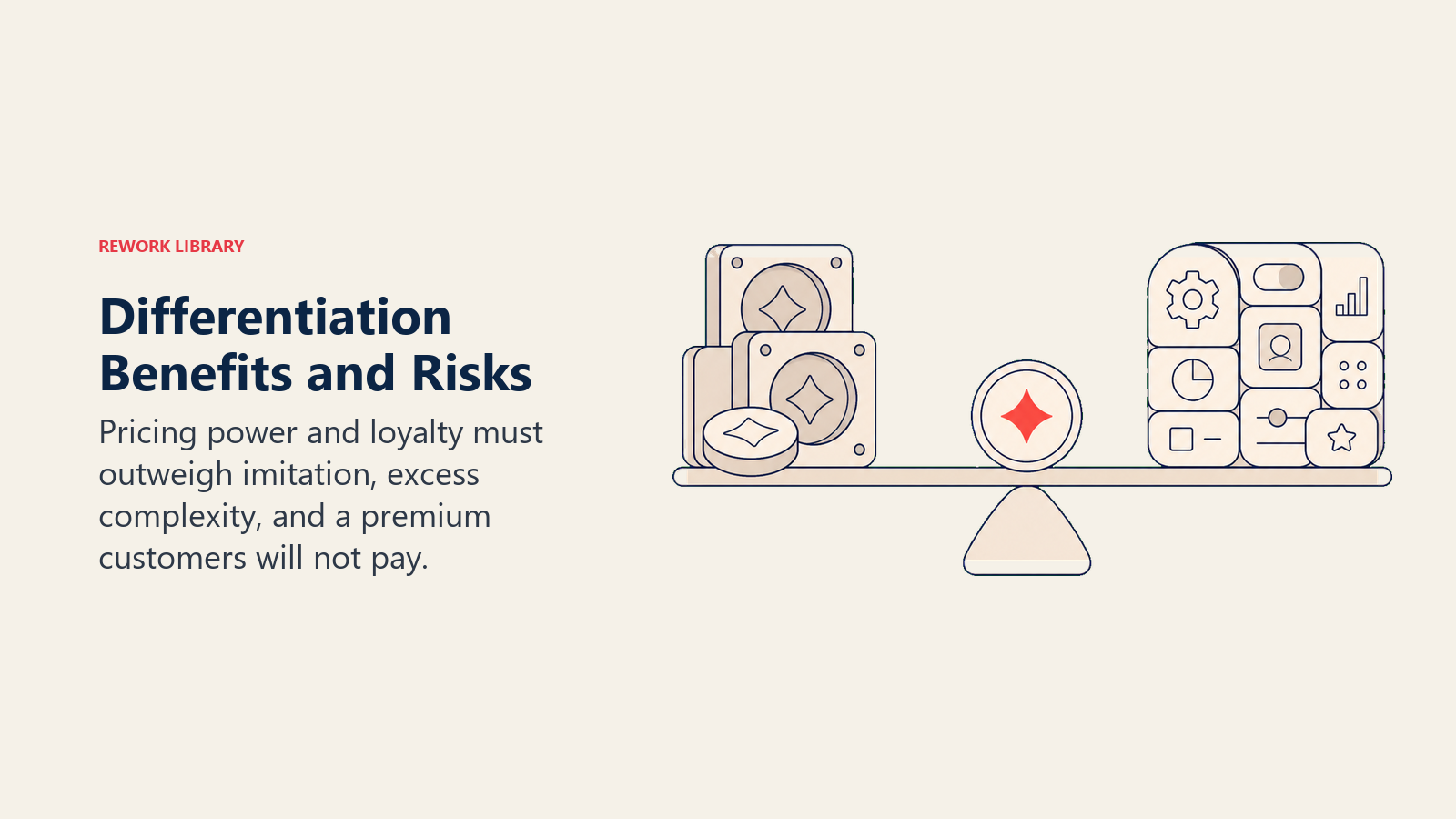
Preismacht. Differenzierte Unternehmen können mehr als Wettbewerber verlangen, ohne proportionale Abwanderung auszulösen. Dieser Aufschlag wirkt sich direkt auf die Marge aus.
Geringere Käufermacht. Wenn ein Produkt tatsächlich anders und wertvoll ist, haben Kunden weniger glaubwürdige Alternativen. Porters Five-Forces-Framework behandelt dies als direkte Reduktion der Verhandlungsmacht der Käufer.
Loyalität und Kundenbindung. Kunden, die Sie speziell wegen eines Unterscheidungsmerkmals gewählt haben, sind weniger preissensibel und kaufen mit größerer Wahrscheinlichkeit erneut. Der Wechsel bedeutet, auf das Attribut zu verzichten, das sie geschätzt haben, nicht nur ein anderes gleichwertiges Produkt zu finden.
Geringere Rivalitätsintensität. Echte Differenzierung verkleinert die Menge direkter Wettbewerber. Wenn niemand sonst genau das tut, was Sie tun, wird Kopf-an-Kopf-Preiswettbewerb zu einer weniger täglichen betrieblichen Herausforderung.
Aber Differenzierung birgt eigene Risiken, die Führungskräfte unterschätzen.
Nachahmung. Wettbewerber beobachten, was einen Aufschlag einbringt, und kopieren es. Produktmerkmale können repliziert werden. Design kann nachgeahmt werden. Die nachhaltigste Differenzierung tendiert dazu, aus eingebetteten Prozessen, Kultur oder Netzwerkeffekten zu kommen, die strukturell schwer zu kopieren sind, nicht aus einem einzelnen Produktmerkmal.
Überdifferenzierung. Merkmale, Qualität oder Komplexität jenseits dessen hinzuzufügen, wofür Kunden tatsächlich zahlen werden, erhöht Kosten ohne Verbesserung der Preismacht. Das ist das Differenzierungsäquivalent von Überengineering: Man baut etwas, das Ingenieure beeindruckt, aber keine Kaufentscheidungen bewegt.
Aufschlag zu hoch. Wenn die Preislücke zwischen Ihrem Angebot und der nächstbesten Alternative den Wert übersteigt, den Kunden Ihrem Unterscheidungsmerkmal zuschreiben, werden selbst loyale Kunden abwandern. Der Aufschlag muss am wahrgenommenen Wert kalibriert bleiben.
Sich verändernde Kundenpräferenzen. Was Kunden 2026 schätzen, ist möglicherweise nicht das, was sie 2016 geschätzt haben. Differenzierung, die auf einem statischen Bild der Kundenbedürfnisse aufgebaut wurde, erodiert, wenn sich Präferenzen verschieben, ohne dass das Unternehmen es merkt. Laufende Kundenforschung ist die Wartungsfunktion für Differenzierung.
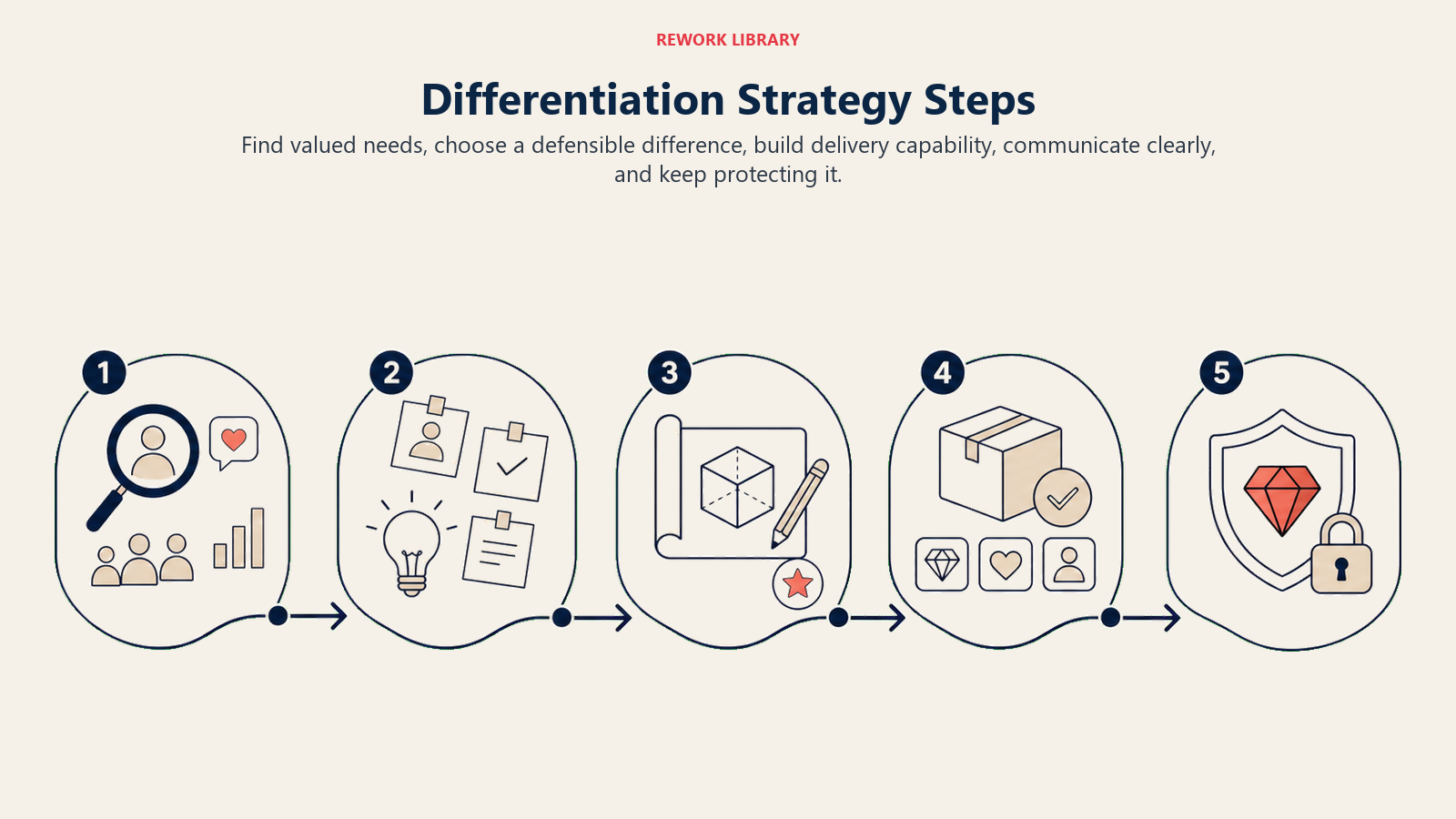
So bauen Sie eine Differenzierungsstrategie auf (Schritt für Schritt)
Schritt 1: Herausfinden, was Kunden tatsächlich schätzen
Beginnen Sie mit direkter Kundenforschung, nicht mit internen Annahmen. Welche Probleme beschäftigen Ihre Zielkunden am meisten? Wo enttäuscht die aktuelle Kategorie sie? Wofür würden sie einen bedeutenden Aufschlag zahlen, wenn jemand es sauber löst?
Der Value Proposition Canvas ist ein strukturiertes Werkzeug für diesen Schritt. Er bildet Kundentätigkeiten, -schmerzen und -gewinne gegenüber dem ab, was Sie anbieten, und macht Lücken und Möglichkeiten sichtbar. Das Ziel ist, Werttreiber zu finden, die real sind (Kunden interessieren sich tatsächlich dafür), unterversorgt (aktuelle Angebote adressieren sie schlecht) und zugänglich (Sie können plausibel eine überlegene Lösung aufbauen).
Schritt 2: Ein verteidigungsfähiges Unterscheidungsmerkmal wählen
Nicht alle Differenzierungen sind gleich verteidigbar. Merkmale können kopiert werden. Servicestandards können angepasst werden. Die verteidigbarsten Unterscheidungsmerkmale kommen aus Fähigkeiten, die strukturell schwer zu replizieren sind.
Fragen Sie: Was müsste ein gut finanzierter Wettbewerber tun, um das nachzuahmen, und wie lange würde das dauern? Wenn die Antwort "sechs Monate und ein anständiges Ingenieursteam" lautet, ist die Differenzierung nicht dauerhaft. Wenn die Antwort den Aufbau einer völlig anderen Organisationskultur, eines über Jahre angesammelten proprietären Datensatzes oder eines Netzwerks umfasst, das eine kritische Masse an Teilnehmern erfordert, bauen Sie etwas Verteidigenswertes auf.
Das knüpft direkt an Kernkompetenzen an: Die Fähigkeiten, die Ihre Organisation definieren und strukturell resistent gegen Nachahmung sind, weil sie in die Art und Weise eingebettet sind, wie Menschen denken, zusammenarbeiten und Entscheidungen treffen.
Schritt 3: Die Fähigkeit aufbauen, es konsistent zu liefern
Differenzierung, die in Marketingmaterialien existiert, aber nicht im tatsächlichen Produkt- oder Serviceerlebnis, ist nur Positionierung ohne Substanz. Die Fähigkeit, das Unterscheidungsmerkmal zu liefern, muss in den Betrieb eingebaut sein, nicht nachträglich aufgepfropft werden.
Wertkettenanalyse ist das richtige Werkzeug hier. Erstellen Sie eine Übersicht Ihrer primären und unterstützenden Aktivitäten und identifizieren Sie, welche die Differenzierung schaffen und erhalten. Investieren Sie dann unverhältnismäßig in diese Aktivitäten und schneiden Sie Kosten woanders rücksichtslos. Ein Differenzierer, der in jede Aktivität gleich investiert, hat einen teuren, diffusen Betrieb, der schwer zu führen und leicht zu kopieren ist.
Schritt 4: Klar und konsistent kommunizieren
Kunden können nur schätzen, was sie verstehen. Differenzierung, die in der Kommunikation eines Unternehmens über sich selbst unsichtbar ist, verdient keinen Aufschlag. Das Unterscheidungsmerkmal muss direkt geäußert, in jedem Berührungspunkt demonstriert und durch das Produkterlebnis selbst bestärkt werden.
Klarheit ist schwieriger, als es klingt. Die meisten Unternehmen beschreiben ihre Produkte mit kategoriengenerischer Sprache, die auf jeden Wettbewerber zutreffen könnte. Echte Differenzierungskommunikation erfordert die Disziplin, spezifisch zu sagen, was anders ist und warum es wichtig ist, nicht nur "wir sind besser".
Schritt 5: Die Position im Laufe der Zeit schützen
Differenzierung ist keine statische Errungenschaft. Sie erfordert laufende Investitionen und aktives Monitoring.
Verfolgen Sie, ob die Attribute, die Kunden schätzten, als Sie die Position aufgebaut haben, noch gelten. Beobachten Sie, wie Wettbewerber den Abstand verringern. Überwachen Sie, ob Technologieverschiebungen oder Geschäftsmodellinnovationen Ihre Differenzierung irrelevant machen könnten, statt nur unterlegen (das Kodak-Problem: Digitale Fotografie hat Film nicht beim Filmsein geschlagen, sie hat Film überflüssig gemacht).
Blue-Ocean-Strategie bietet eine ergänzende Perspektive: Wenn die Verteidigung einer bestehenden Differenzierungsposition teuer wird und Wettbewerber aufholen, ist der richtige Zug manchmal, den Wettbewerbsraum neu zu definieren, anstatt eine umstrittene Position zu halten.
Praxisbeispiele der Differenzierungsstrategie
Echte Unternehmen aus verschiedenen Branchen zeigen, wie sich jede Art von Differenzierung in der Praxis entfaltet.
| Unternehmen | Differenzierungstyp | Unterscheidungsmerkmal | Warum es einen Aufschlag verdient |
|---|---|---|---|
| Apple | Produkt + Marke + Ökosystem | Integriertes Hardware-/Software-Erlebnis, Designästhetik, App Store | Wechselkosten durch Ökosystembindung; Marke kommuniziert Identität |
| Salesforce | Produkt + Service + Wechselkosten | CRM-Plattform-Erweiterbarkeit, AppExchange-Ökosystem, tiefe Enterprise-Integration | In Vertriebsabläufen eingebettet; ein Wechsel erfordert Umschulung und Datenmigration |
| BMW | Produkt + Marke | Fahrdynamik, Präzisionstechnik, Markenstatus | 30-40 Jahre konsistente Positionierung um "ultimative Fahrmaschine" |
| Starbucks | Erlebnis + Marke | Dritter-Ort-Erlebnis, Personalisierungskultur, Loyalitätsprogramm | Ladenerlebnis und Personalisierung schaffen eine Gewohnheitsschleife, die Wettbewerber nicht billig replizieren können |
| Warby Parker | Kanal + Produkt + Preis-Wert | Direkt-zu-Verbraucher-Modell eliminiert Optik-Einzelhandelsaufschlag; Home-Try-on-Erlebnis | Disruption einer konzentrierten Branche durch Änderung des Kauferlebnisses, nicht nur des Produkts |
| Patagonia | Marke + Werteausrichtung | Im Geschäftsmodell verankerte Umweltmission; Produktreparaturprogramm | Kunden zahlen Aufschlag, um Ausgaben mit Werten in Einklang zu bringen; Reparaturprogramm ist Beweis, kein Marketing |
| Slack | Erlebnis + Ökosystem | Consumer-Grade-UX in Enterprise-Software; 2.400+ Integrationen | Interne Kommunikation deutlich verbessert; Integrationen schufen Abhängigkeit |
| Rolex | Marke + Produkt | Handwerkskunst, Exklusivität, Wiederverkaufswert | Aufschlag ist teils funktional (Qualität), aber vor allem Statussignalisierung und Wertaufbewahrung |
Keine dieser Positionen wurde in einem einzigen Produktzyklus aufgebaut. Apple verbrachte 30 Jahre damit, das Ökosystem aufzubauen, das Wechsel schmerzhaft macht. Salesforce brauchte 15 Jahre, um so operativ verankert zu werden, dass es schwer zu ersetzen ist. Die Auszahlung aus Differenzierung kommt spät, tendiert aber dazu, sich zu verstärken, sobald sie etabliert ist.
Häufige Fehler bei der Differenzierung
Auf Attribute differenzieren, die Kunden nicht schätzen. Interne Entwicklungsteams bauen oft Differenzierung basierend auf dem, was technisch beeindruckend ist, statt auf dem, was Kunden tatsächlich wichtig ist. Führen Sie Kundenforschung durch, bevor Sie sich für ein Unterscheidungsmerkmal entscheiden, nicht danach.
Annehmen, dass ein Preisaufschlag automatisch kommt. Differenzierung verdient einen Aufschlag nur, wenn das Unterscheidungsmerkmal für Käufer zum Kaufzeitpunkt sichtbar und wertvoll genug ist, um die Preislücke zu rechtfertigen. Wenn Kunden den Unterschied nicht sehen oder seinen Wert nicht verstehen, entstehen Kosten ohne den Aufschlag.
Die Kostenstruktur vernachlässigen. Differenzierung eliminiert nicht die Notwendigkeit für Kostendisziplin. Ein teures differenziertes Produkt mit einer bescheidenen Aufschlagsmarge ist ein fragiles Geschäft. Die besten differenzierten Unternehmen sind trotzdem effizient in Aktivitäten, die nicht zum Unterscheidungsmerkmal beitragen.
Differenzierung treiben lassen. Marken und Produktpositionen erodieren, wenn Unternehmen versuchen, zu viele Segmente anzusprechen. Jedes Merkmal, das hinzugefügt wird, um einen neuen Kundentyp anzusprechen, riskiert die Spezifität zu verwässern, die das Produkt für das Kernsegment wertvoll gemacht hat. Wissen Sie genau, für wen Sie differenzieren, und widerstehen Sie der Ausweitung.
Unterlassen, in die Investition zu reinvestieren. Differenzierung erfordert kontinuierliche Reinvestition. Die Produktattribute, Servicestandards oder Markenpositionen, die im ersten Jahr den Aufschlag verdienten, erhalten sich nicht von selbst. Unternehmen, die Differenzierung abschöpfen, ohne zu reinvestieren, stellen fest, dass sie eine Position ausgefahren haben, die nicht mehr existiert.
Differenzierungsstrategie ist kein Positionierungsstatement. Es ist eine Reihe von Entscheidungen: worin außergewöhnlich zu sein, für wen außergewöhnlich zu sein und welche Aktivitäten aufzubauen sind, um diese Außergewöhnlichkeit im Laufe der Zeit aufrechtzuerhalten. Unternehmen mit den dauerhaftesten differenzierten Positionen begannen mit klarer Klarheit über diese drei Fragen und hatten dann die organisatorische Disziplin, weiterhin in die Antworten zu investieren, selbst wenn kurzfristiger Druck dagegen argumentierte.
Die Frameworks helfen: Porters generische Strategien für die strukturelle Logik, Wertkettenanalyse für die operative Umsetzung und Kernkompetenzen für die interne Fähigkeitslinse. Aber die eigentliche Arbeit liegt in den Entscheidungen.
Weiterführende Lektüre

Senior Operations & Growth Strategist
On this page
- Was ist eine Differenzierungsstrategie?
- Differenzierung vs. Kostenführerschaft
- Arten der Differenzierung
- Vorteile und Risiken der Differenzierung
- So bauen Sie eine Differenzierungsstrategie auf (Schritt für Schritt)
- Schritt 1: Herausfinden, was Kunden tatsächlich schätzen
- Schritt 2: Ein verteidigungsfähiges Unterscheidungsmerkmal wählen
- Schritt 3: Die Fähigkeit aufbauen, es konsistent zu liefern
- Schritt 4: Klar und konsistent kommunizieren
- Schritt 5: Die Position im Laufe der Zeit schützen
- Praxisbeispiele der Differenzierungsstrategie
- Häufige Fehler bei der Differenzierung
- Weiterführende Lektüre