North Star Metric: So wählen Sie Ihre aus (mit Beispielen)
Turn this article into takeaways for your work.


Each assistant summarizes the article only for you and suggests best practices for your work.
Eine North Star Metric ist die einzige Zahl, die Ihre gesamte Organisation nutzt, um zu messen, ob sie Kunden echten Wert liefert. Wenn ein Team eine hat, kann sich jedes Squad, jede Funktion und jede Roadmap-Entscheidung daran orientieren. Wenn nicht, fühlt sich Wachstum oft schnell, aber hohl an.
Dieser Leitfaden erklärt, was die North Star Metric ist, wie sie sich von KPIs unterscheidet, und wie Sie die wählen, die tatsächlich zu Ihrem Unternehmen passt.
Was ist eine North Star Metric?
Eine North Star Metric ist die eine Kennzahl, die am besten den Kernwert erfasst, den Ihr Produkt Kunden liefert. Sie steht über allen anderen Zahlen. Wenn sie sich langfristig in die richtige Richtung bewegt, ist das Unternehmen wirklich gesund. Wenn sie stagniert oder fällt, kann kein kurzfristiger Umsatz das kompensieren.
Das Konzept wurde von Sean Ellis bekannt gemacht, der 2010 den Begriff „Growth Hacking" prägte und anschließend das North-Star-Metric-Framework als Weg für Growth-Teams beschrieb, an Kundenwert verankert zu bleiben, statt Vanity Numbers zu jagen. Die Idee verbreitete sich in den 2010er Jahren schnell durch Silicon-Valley-Growth-Teams und Produktorganisationen.
Eine North Star Metric ist nicht dasselbe wie Umsatz. Umsatz ist ein Ergebnis. Die North Star ist der Grund, warum Kunden weiter zahlen.
Key Facts
- Sean Ellis führte die Growth-Hacking-Methodik rund um 2010 ein, was das North-Star-Metric-Konzept in mainstream Produkt- und Growth-Teams brachte.
- McKinsey-Forschungen (2021) ergaben, dass Unternehmen mit einer einzigen, klar definierten strategischen Kennzahl mit 2,3-facher Wahrscheinlichkeit Mitbewerber beim langfristigen Umsatzwachstum übertrafen, verglichen mit solchen, die nur finanzielle Ergebnisse verfolgten.
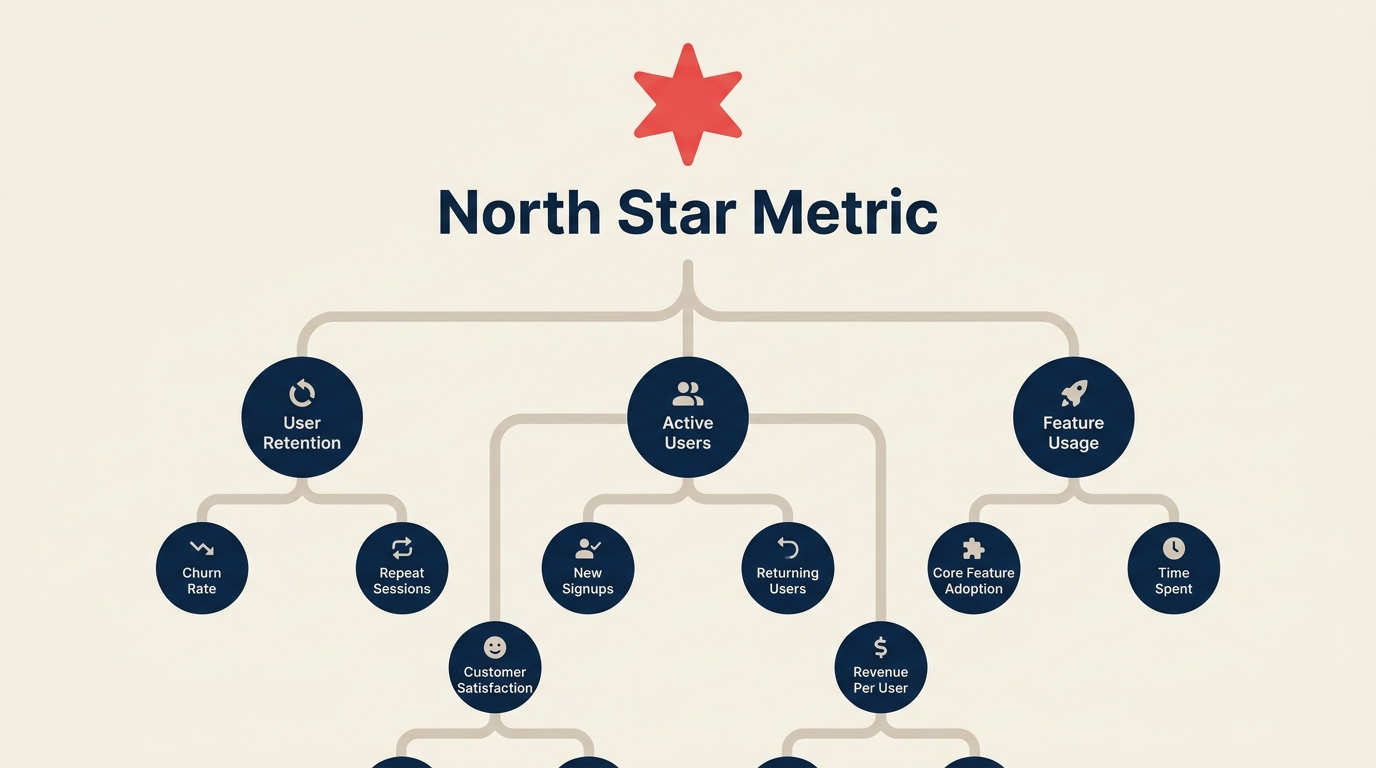
- Das North-Star-Framework kombiniert einen Leading Indicator des Kundenwerts mit einem Baum von Input-Metriken, die Teams direkt beeinflussen können, was es zu einem praktischen Planungswerkzeug macht, nicht nur einer Philosophie.
North Star Metric vs. KPIs und andere Kennzahlen
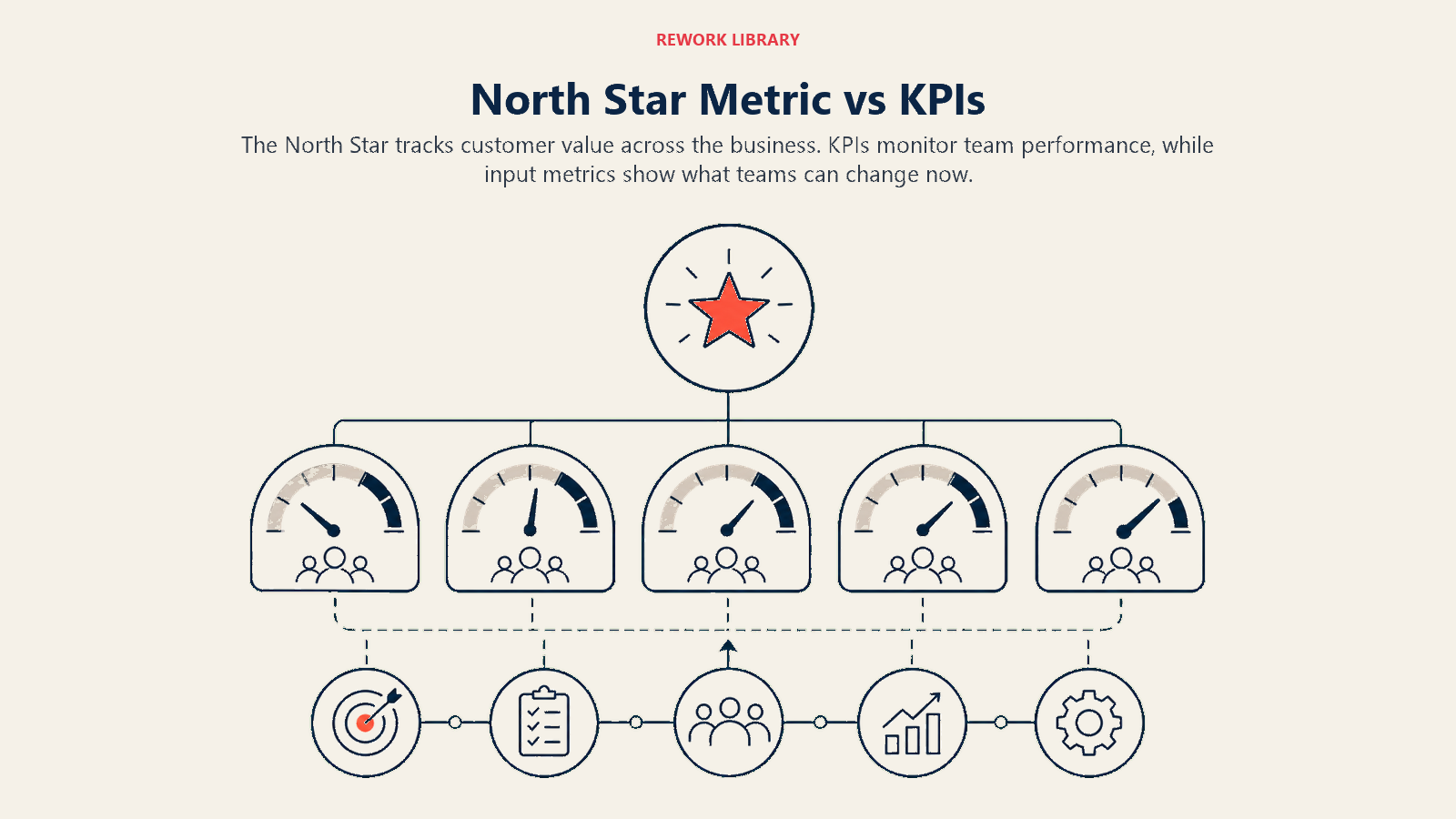
Die meisten Teams verfolgen Dutzende von KPIs über Abteilungen hinweg. Die North Star Metric ersetzt diese nicht. Sie ist das Organisationsprinzip darüber.
| Dimension | North Star Metric | KPIs |
|---|---|---|
| Anzahl | Genau eine | Viele, abteilungsübergreifend |
| Fokus | Gelieferter Kundenwert | Operative oder abteilungsspezifische Leistung |
| Zeithorizont | Langfristiges Gesundheitssignal | Wöchentliche, monatliche Ziele |
| Zielgruppe | Gesamtes Unternehmen | Team- oder Funktionsverantwortliche |
| Änderungen | Selten (vielleicht einmal pro Produktära) | Jedes Quartal oder Jahr angepasst |
| Beziehung | Richtungsgebend | Unterstützende Inputs und Outputs |
KPIs sagen Ihnen, ob einzelne Teile der Maschine gut laufen. Die North Star sagt Ihnen, ob die Maschine etwas aufbaut, um das Kunden sich kümmern. Sie brauchen beides, aber sie dienen verschiedenen Zwecken.
Für einen tieferen Einblick in die Unterschiede zwischen KPIs und Metriken auf Definitionsebene, lesen Sie KPI vs. Metric. Wenn Sie Ihre North Star mit Unternehmenszielen verbinden, deckt Strategische Ziele ab, wie diese Ziele organisationsübergreifend formuliert werden.
Merkmale einer guten North Star Metric
Nicht jede Kennzahl kann als North Star dienen. Die besten teilen vier Eigenschaften.
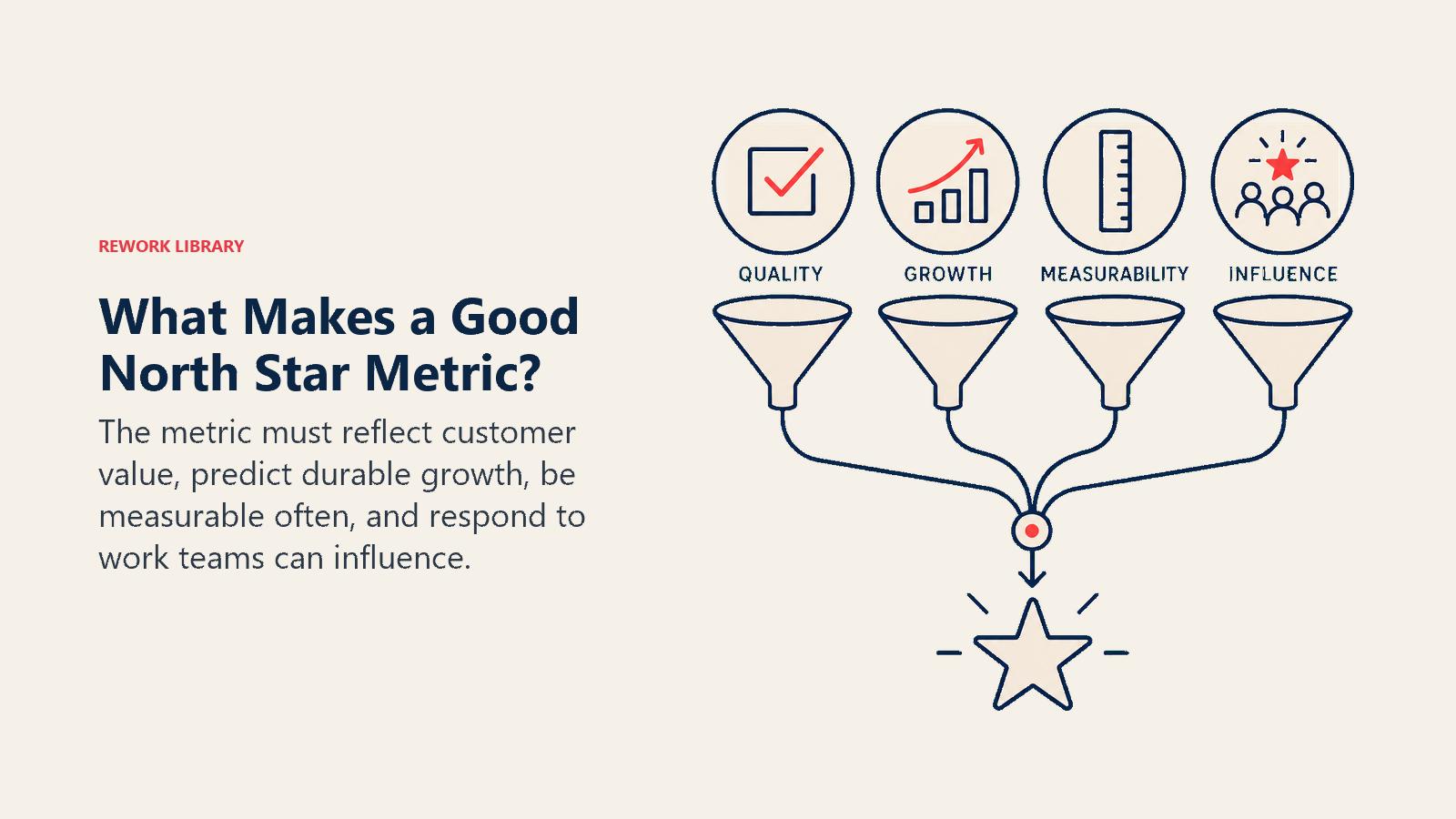
1. Sie spiegelt Kundenwert wider, nicht Unternehmensaktivität. Eine Kennzahl wie „unterzeichnete Verträge" misst, was das Unternehmen erreicht hat. Eine Kennzahl wie „von Kunden abgeschlossene Projekte" misst, was Kunden bekommen haben. Die North Star sollte immer auf der Kundenseite des Austauschs stehen.
2. Sie ist ein Leading Indicator. Umsatz ist ein Lagging Indicator. Er sagt Ihnen, was letztes Quartal passiert ist. Eine gute North Star Metric bewegt sich, bevor der Umsatz es tut. Wenn die wöchentliche aktive Nutzung diesen Monat fällt, folgt Churn im nächsten Quartal. Das ist das Signal, das Sie frühzeitig einfangen wollen.
3. Sie ist messbar und eindeutig. Jeder in der Organisation muss dieselbe Zahl aus derselben Quelle lesen. Wenn zwei Teams sie unterschiedlich berechnen, verliert sie ihre koordinierende Kraft.
4. Sie treibt das Unternehmen an. Eine Verbesserung der North Star sollte langfristig mit besseren Geschäftsergebnissen korrelieren. Wenn Sie zeigen können, dass höhere Werte dieser Kennzahl zu besserer Bindung, Expansion oder Lifetime Value führen, verdient sie sich ihren Platz.
Eine weitere Regel: Sie sollte etwas sein, das Ihr Team durch seine tägliche Arbeit tatsächlich beeinflussen kann. Eine Kennzahl, die vollständig außerhalb Ihrer Kontrolle liegt, ist eine Wettervorhersage, keine Strategie.
North Star Metric: Beispiele
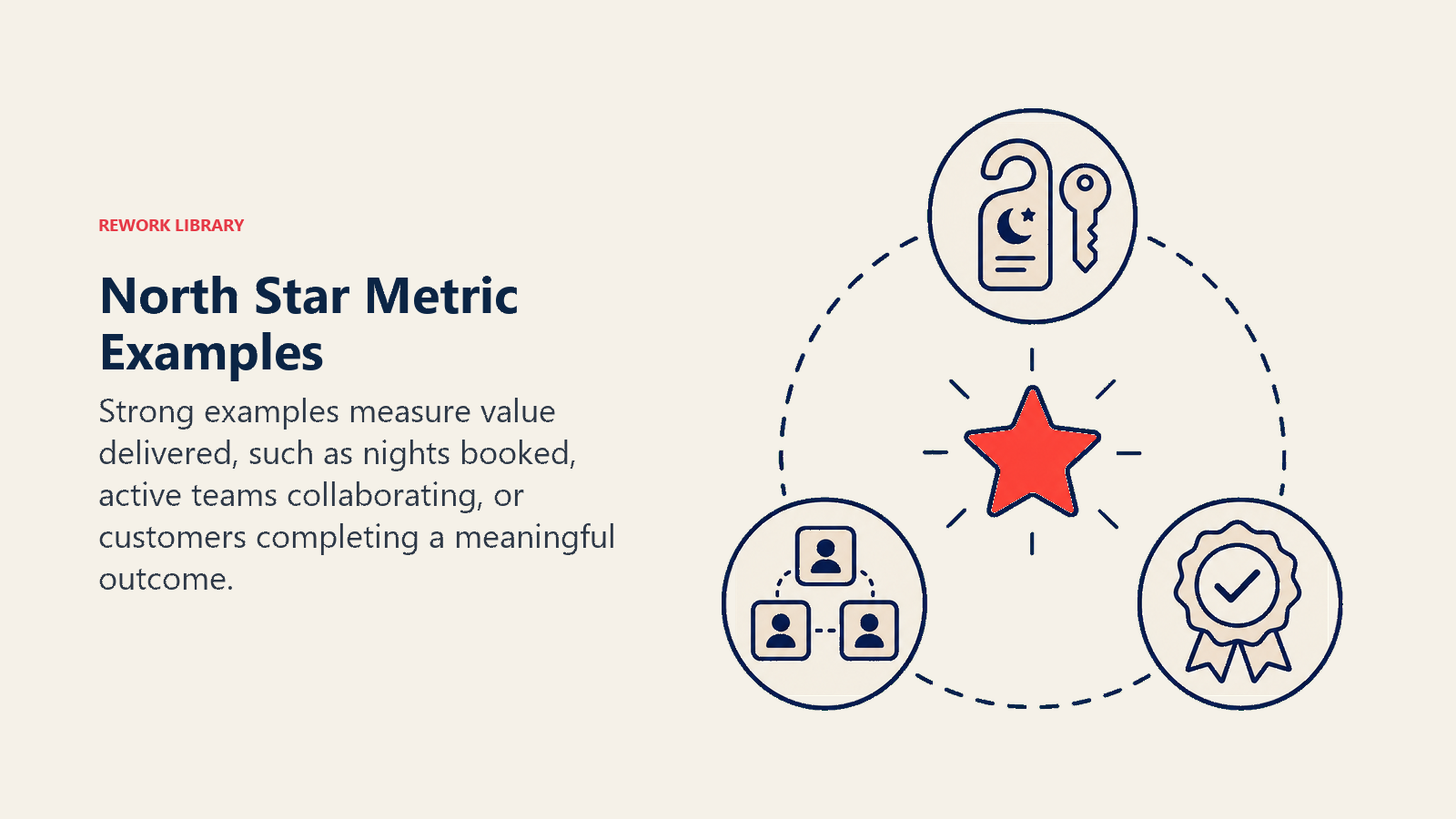
Die richtige North Star variiert je nach Geschäftsmodell. Hier sind Beispiele nach Typ geordnet. Diese sind illustrative Muster, die auf bekannten Unternehmensarchetypen basieren.
| Unternehmenstyp | Beispiel North Star Metric | Warum sie funktioniert |
|---|---|---|
| Kurzzeitvermietungsplattform | Gebuchte Nächte pro Monat | Erfasst den Wert für Gäste und Gastgeber gleichzeitig |
| Messaging-App | Gesendete Nachrichten pro Nutzer pro Tag | Aktiver Austausch bedeutet, das Produkt schafft echten Kommunikationswert |
| Musik-Abonnementdienst | Gehörte Zeit pro Nutzer pro Woche | Hörzeit spiegelt echtes Engagement wider, nicht nur Anmeldungen |
| B2B Projektmanagement-Tool | Abgeschlossene Projekte pro aktivem Team | Signalisiert, dass Teams echte Arbeit abschließen, nicht nur Aufgaben erstellen |
| Online-Marktplatz | Bruttoumsatzvolumen (GMV) | Zeigt gesundes Transaktionsvolumen auf Angebots- und Nachfrageseite |
| Freemium-Produktivitäts-App | Wöchentlich aktive Nutzer im Kern-Workflow | Verfolgt die Bildung stabiler Gewohnheiten statt bloße Logins |
Beachten Sie, dass keine davon einfach Umsatz oder MRR ist. Der Umsatz folgt diesen Kennzahlen über die Zeit. Die North Star ist die vorgelagerte Ursache.
So wählen Sie Ihre North Star Metric
Die richtige zu wählen erfordert bewusstes Nachdenken. Eine übereilte Entscheidung führt oft zu einer Kennzahl, die gut auf einem Dashboard aussieht, aber keine Entscheidungen tatsächlich leitet.
Schritt 1: Den Kernwert Ihres Produkts definieren
Schreiben Sie einen Satz: „Unser Produkt hilft [Kunde], [Ergebnis] zu erreichen." Die North Star Metric sollte dieses Ergebnis messen, nicht die dazu führende Aktivität.
Ein Tool, das Vertriebsteams beim Abschließen von Deals hilft, könnte „vom Kunden auf der Plattform abgeschlossene Deals pro Monat" messen. Nicht „onboarding SDRs". Onboarding ist Aktivität. Abgeschlossene Deals sind das Ergebnis.
Schritt 2: Kandidaten identifizieren
Generieren Sie drei bis fünf Kandidatenkennzahlen. Fragen Sie für jede:
- Misst sie Kundenwert oder Unternehmensaktivität?
- Ist sie ein Leading oder Lagging Indicator?
- Kann sie durch Tricks steigen? (Wenn ja, ist sie manipulierbar und wahrscheinlich falsch.)
- Würde das gesamte Unternehmen sie in einem Satz verstehen?
Schritt 3: Die Korrelation testen
Bevor Sie sich festlegen, prüfen Sie, ob historische Daten eine Beziehung zwischen Ihrer Kandidatenkennzahl und langfristigem Umsatz oder Kundenbindung unterstützen. Wenn Kunden, die bei dieser Kennzahl höher abschneiden, auch besser binden und mehr expandieren, haben Sie einen starken Kandidaten.
Dieser Schritt filtert oft Vanity Metrics heraus. „Registrierte Nutzer" korreliert selten mit Bindung. „Nutzer, die das Onboarding abgeschlossen und in Woche eins eine Kernhandlung ausgeführt haben" tut es in der Regel.
Schritt 4: Den Input-Metrik-Baum aufbauen
Sobald Sie die North Star haben, kartieren Sie die kleineren Kennzahlen, die sie beeinflussen. Das sind Ihre Input-Metriken, manchmal auch „Driver Metrics" genannt.
Wenn die North Star beispielsweise „abgeschlossene Projekte pro aktivem Team pro Monat" ist, könnten die Inputs sein:
- Anzahl aktiver Teams diese Woche
- Durchschnittlich abgeschlossene Aufgaben pro Projekt
- Zeit bis zur ersten Projekterstellung (Onboarding-Geschwindigkeit)
- Prozentsatz der Teams mit mindestens einem Projekt in den letzten 14 Tagen
Jedes Team im Unternehmen kann eine oder zwei Input-Metriken verantworten. Ihre Arbeit fließt in die North Star ein. So wird die Kennzahl zum Koordinationswerkzeug, nicht nur zu einer Zahl auf einer Folie. Lesen Sie das OKR-Framework, um zu erfahren, wie diese Input-Metriken mit Quartalszielen verbunden werden.
Schritt 5: Abstimmen und kommunizieren
Zirkulieren Sie die North Star und ihren Input-Metrik-Baum an jedes Team. Menschen müssen klar sehen, wie ihre tägliche Arbeit mit der Zahl zusammenhängt. Wenn jemand im Customer-Success-Team keine Linie von seiner Arbeit zur North Star ziehen kann, ist entweder seine Rolle falsch ausgerichtet oder die Kennzahl ist falsch.
Der Balanced-Scorecard-Ansatz kann helfen, die North Star in abteilungsspezifische Perspektiven zu übersetzen, besonders in größeren Organisationen, wo verschiedene Funktionen ihre eigene Sicht auf dieselbe Strategie brauchen.
Häufige Fehler bei der Wahl einer North Star Metric
Eine Umsatz- oder Anmeldekennzahl wählen. Umsatz ist ein Ergebnis, kein Wertlieferungssignal. Anmeldezahlen sagen Ihnen etwas über Top-of-Funnel-Marketing, nicht über Produktgesundheit. Beide sind wichtig, aber keine gehört als North Star.
Eine Kennzahl wählen, die das Team nicht beeinflussen kann. Wenn Ihre North Star vollständig von Marktbedingungen oder externen Partnern abhängt, ist sie ein Kompass, der zufällig dreht. Die Kennzahl muss auf das reagieren, was Ihre Teams tatsächlich tun.
In einem Meeting festlegen und vergessen. Die North Star braucht einen festen Platz in wöchentlichen Reviews, Quartalsplanung und Board-Berichterstattung. Wenn sie nur in einem jährlichen Strategiedeck erscheint, ist sie dekorativ.
Zu oft ändern. Die North Star sollte über Produktären hinweg stabil sein. Sie jedes Quartal zu ändern signalisiert strategische Verwirrung. Input-Metriken regelmäßig zu verfeinern ist in Ordnung. Die Top-Level-Kennzahl sollte halten.
Die Zahl optimieren, ohne die zugrunde liegende Realität zu verbessern. Jede Kennzahl kann manipuliert werden. Wenn Growth-Teams die North Star durch Dark Patterns oder irreführende Flows aufblähen, verliert sie ihren Wert als Signal. Die Disziplin besteht darin zu fragen, ob Verbesserungen echten Kundenwert widerspiegeln.
Weitere Informationen zur Ausrichtung Ihrer North Star auf die Unternehmensrichtung finden Sie unter Mission vs. Vision Statement, das behandelt, wie grundlegender Zweck prägt, welche Kennzahlen überhaupt wichtig sind.
Häufig gestellte Fragen
Was ist eine North Star Metric?
Eine North Star Metric ist die einzige Kennzahl, die am besten den Kernwert repräsentiert, den Ihr Produkt oder Ihre Dienstleistung Kunden liefert. Sie dient als Organisationsprinzip für Wachstums- und Produktstrategie und steht über allen abteilungsspezifischen KPIs.
Was ist ein Beispiel für eine North Star Metric?
Eine Kurzzeitvermietungsplattform könnte „gebuchte Nächte pro Monat" als North Star Metric nutzen. Diese Zahl steigt, wenn sowohl Gäste einen Wert im Erlebnis finden als auch Gastgeber die Plattform als lohnenswert empfinden. Damit ist sie ein echtes Signal der Kernwertlieferung statt nur einer Unternehmensaktivität.
Wie unterscheidet sich eine North Star Metric von einem KPI?
Ein KPI misst die Leistung gegenüber einem spezifischen Ziel innerhalb eines Teams oder einer Funktion. Eine North Star Metric misst, ob die gesamte Organisation den Wert liefert, für den Kunden gekommen sind. Sie haben möglicherweise 50 KPIs und genau eine North Star Metric. KPIs unterstützen die North Star und fließen in sie ein.
Wie oft sollten Sie Ihre North Star Metric ändern?
Selten. Eine gute North Star Metric sollte über Produktären hinweg stabil bleiben, typischerweise Jahre statt Quartale. Sie werden Input-Metriken und KPIs häufig aktualisieren, aber die North Star häufig zu ändern signalisiert grundlegende strategische Verwirrung. Ändern Sie sie nur, wenn sich das Kernwertversprechen des Produkts verschiebt.
Kann ein Unternehmen mehr als eine North Star Metric haben?
Technisch ja, aber praktisch untergräbt das den Zweck. Die Stärke einer North Star Metric kommt von ihrer Einzigartigkeit. Sie gibt jedem Team ein gemeinsames Ziel. Zwei konkurrierende North Stars erzeugen konkurrierende Prioritäten. Wenn Sie das Gefühl haben, zwei zu brauchen, bedeutet das in der Regel, dass Sie zwei klar unterschiedliche Produktlinien haben, die separate Strategien benötigen.
Die North Star Metric gehört zu den klareren strategischen Werkzeugen für Growth-Teams, eben weil sie ein hartes Gespräch erzwingt: Was tut Ihr Produkt eigentlich für Kunden? Finden Sie die richtige Antwort, messen Sie sie konsequent und bauen Sie einen Input-Metrik-Baum darum herum auf. Teams, die das tun, verbringen in der Regel weniger Zeit in Abstimmungsmeetings und mehr Zeit damit, die Arbeit zu liefern, die die Zahl bewegt.

Co-Founder & COO
On this page
- Was ist eine North Star Metric?
- North Star Metric vs. KPIs und andere Kennzahlen
- Merkmale einer guten North Star Metric
- North Star Metric: Beispiele
- So wählen Sie Ihre North Star Metric
- Schritt 1: Den Kernwert Ihres Produkts definieren
- Schritt 2: Kandidaten identifizieren
- Schritt 3: Die Korrelation testen
- Schritt 4: Den Input-Metrik-Baum aufbauen
- Schritt 5: Abstimmen und kommunizieren
- Häufige Fehler bei der Wahl einer North Star Metric