Resource-Based View (RBV): Wie interne Ressourcen den Wettbewerbsvorteil bestimmen
Turn this article into takeaways for your work.


Each assistant summarizes the article only for you and suggests best practices for your work.
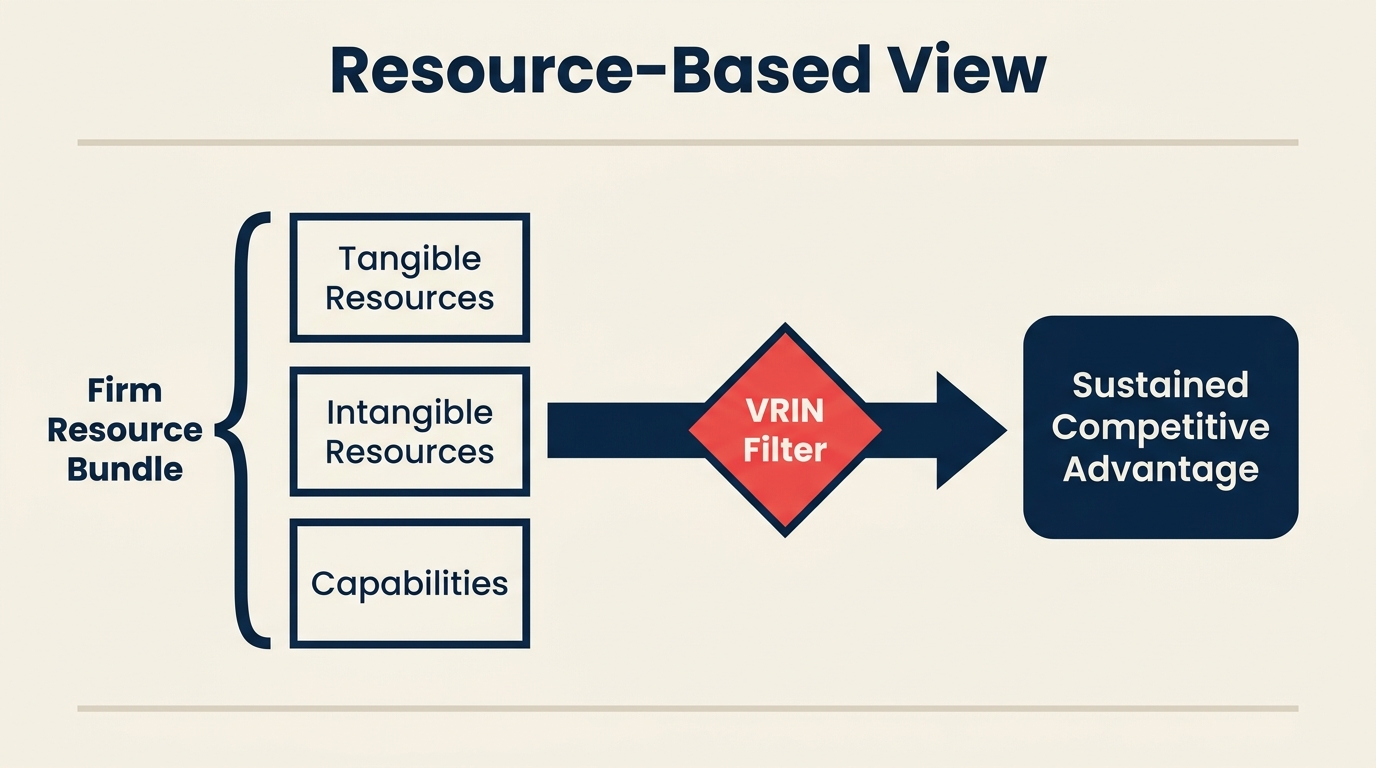
Der Resource-Based View (RBV) ist die strategische Theorie, die besagt, dass nachhaltiger Wettbewerbsvorteil im Inneren des Unternehmens liegt, nicht in der Branche um es herum. Zwei Unternehmen können im exakt selben Markt konkurrieren und völlig unterschiedliche Ergebnisse erzielen. RBV erklärt warum: Das Unternehmen, das gewinnt, besitzt ein Bündel von Ressourcen und Fähigkeiten, das Rivalen nicht kopieren oder einfach replizieren können.
Was ist der Resource-Based View?
Der Resource-Based View ist eine Strategietheorie, die nachhaltigen Wettbewerbsvorteil in einem einzigartigen Bündel wertvoller, seltener, schwer imitierbarer Ressourcen und Fähigkeiten eines Unternehmens verortet, anstatt in der Wahl der Branche oder der Marktposition.
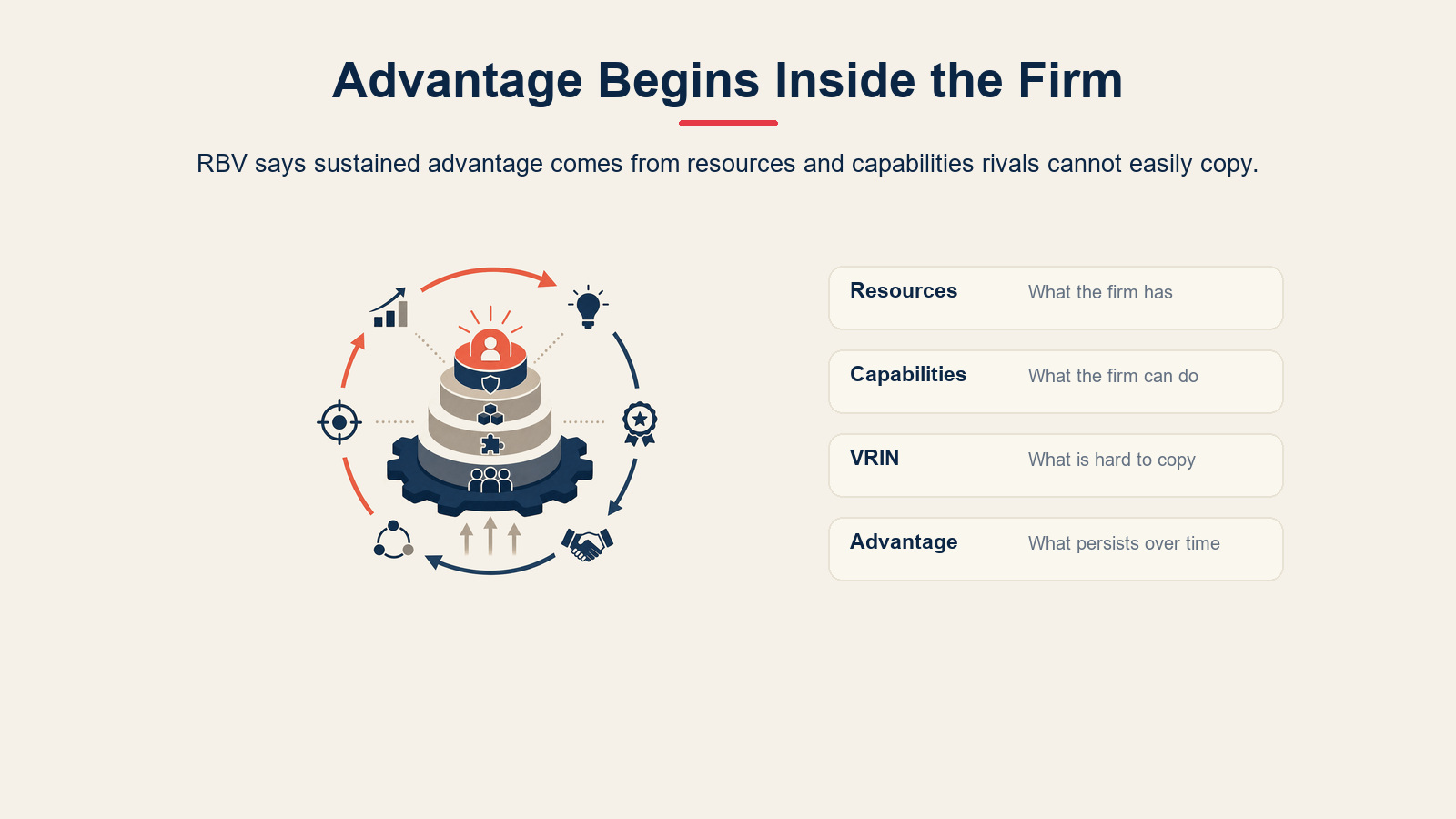
Der Begriff wurde von Birger Wernerfelt in einem Aufsatz von 1984 im Strategic Management Journal mit dem Titel "A Resource-Based View of the Firm" eingeführt. Zum Grundpfeiler des strategischen Managements wurde das Framework jedoch erst durch Jay Barneys Aufsatz von 1991 im Journal of Management, der die Bedingungen formulierte, die eine Ressource erfüllen muss, um nachhaltigen Vorteil zu erzeugen. Barney nannte diese Bedingungen VRIN: Valuable, Rare, Inimitable und Non-substitutable.
Die zentrale Erkenntnis ist bewusst einfach. Märkte sind wichtig, aber Märkte sind für alle zugänglich. Was konsequent hochperformante Unternehmen von anderen unterscheidet, ist der interne Bestand an Ressourcen und Fähigkeiten, den sie über die Zeit aufgebaut haben: Dinge, die schwer zu sehen, schwer zu bepreisen und schwer zu übertragen sind. Dieser interne Bestand ist der Ausgangspunkt für Strategie.
Wichtige Fakten
- Jay Barneys Aufsatz von 1991 "Firm Resources and Sustained Competitive Advantage" ist einer der meistzitierten Artikel in der Geschichte des strategischen Managements mit über 50.000 Zitaten Mitte der 2020er Jahre (Google Scholar).
- Barneys ursprüngliches VRIN-Framework wurde später zu VRIO erweitert (mit Organization als vierter Bedingung), um zu berücksichtigen, ob ein Unternehmen eine gehaltene Ressource tatsächlich nutzen kann.
- Eine Umfrage im Strategic Management Journal von 2002 stufte den Resource-Based View als die einflussreichste theoretische Entwicklung des Felds in den vorangegangenen zwei Jahrzehnten ein.
Ressourcen vs. Fähigkeiten
RBV zieht eine präzise Unterscheidung zwischen zwei Arten interner Vermögenswerte.
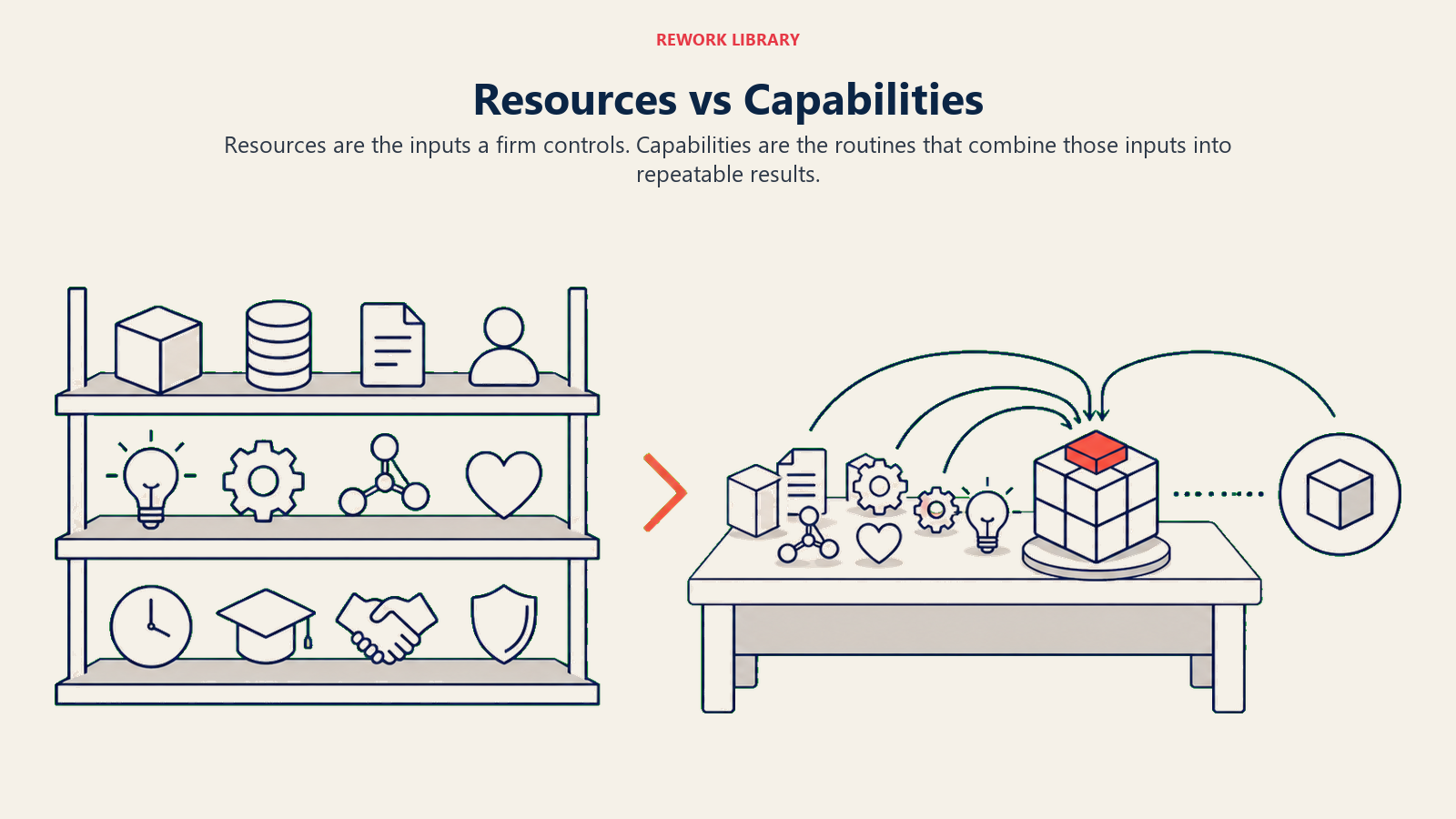
Ressourcen sind die Inputs, auf die ein Unternehmen Zugang hat. Fähigkeiten sind das, was ein Unternehmen mit diesen Inputs tun kann. Eine Datenbank mit Kaufhistorie von Kunden ist eine Ressource. Die Fähigkeit, diese Daten schneller in personalisierte Empfehlungen umzuwandeln als ein Wettbewerber, ist eine Fähigkeit. Beides ist wichtig, aber Fähigkeiten sind im Allgemeinen schwerer zu kopieren, weil sie in Routinen, Kultur und implizitem Wissen stecken statt in physischen oder finanziellen Vermögenswerten.
| Typ | Was es ist | Beispiele |
|---|---|---|
| Materielle Ressourcen | Physische und finanzielle Vermögenswerte, die man sehen und zählen kann | Produktionsanlagen, Kassenreserven, Patente, Immobilien |
| Immaterielle Ressourcen | Nicht-physische Vermögenswerte, die in Wissen, Reputation oder Beziehungen existieren | Markenwert, proprietäre Daten, Betriebsgeheimnisse, Kundenvertrauen |
| Fähigkeiten | Organisationale Routinen und Kompetenzen, die Ressourcen effektiv einsetzen | Supply-Chain-Ausführung, F&E-Prozesse, Talententwicklung, Vertriebsmethodik |
Die praktische Konsequenz: Inventarisieren Sie nicht nur, was Sie besitzen. Kartieren Sie, was Sie können. Fähigkeiten sind oft die Quelle der tiefsten und verteidigungsfähigsten Vorteile, weil sie Jahre brauchen, um aufgebaut zu werden, und nahezu unmöglich zu kaufen sind.
VRIN / VRIO: Der Test für eine strategische Ressource
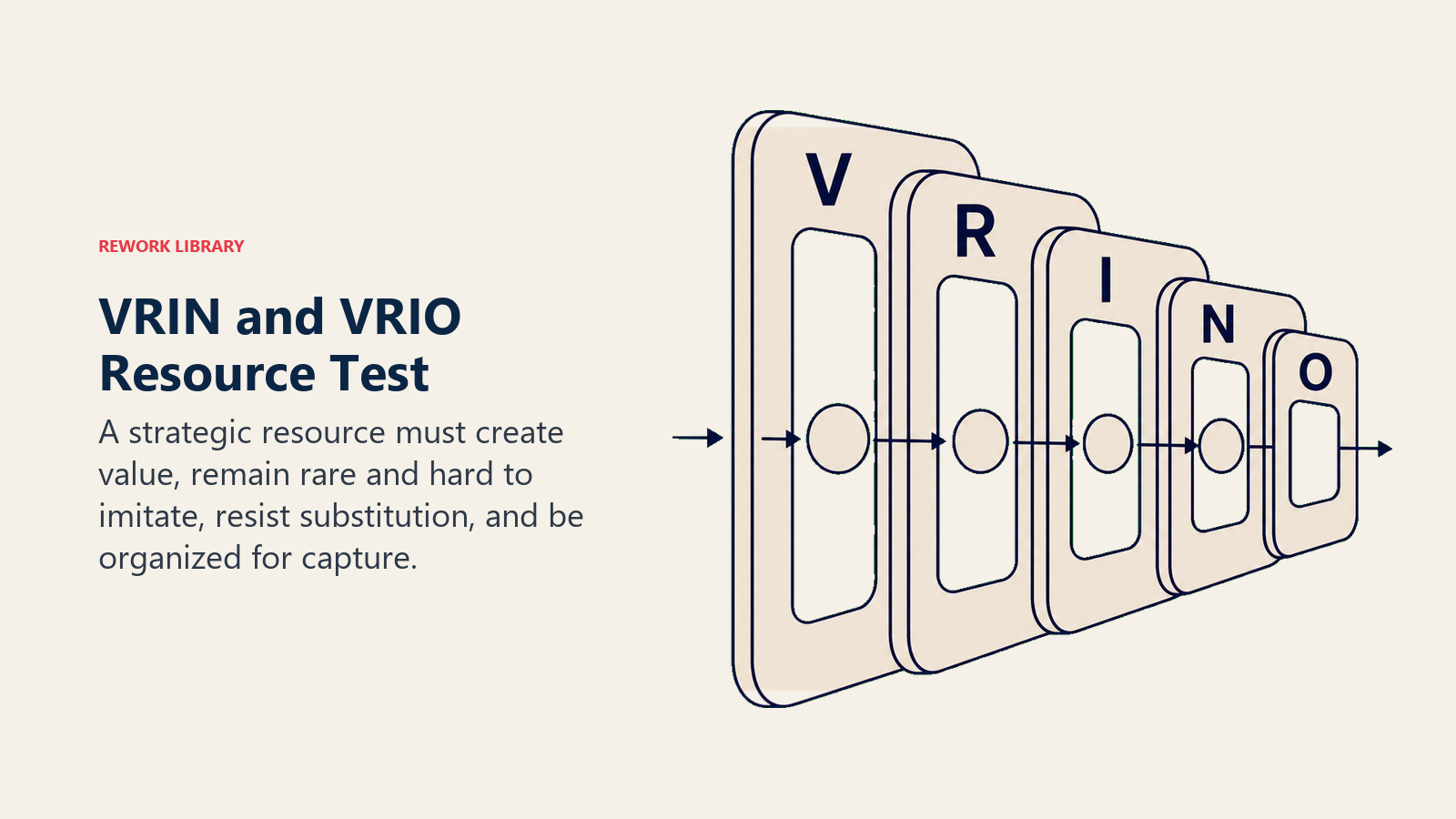
Nicht jede Ressource schafft einen Wettbewerbsvorteil. Barneys VRIN-Kriterien definieren die Messlatte, die eine Ressource überspringen muss, um nachhaltigen statt nur vorübergehenden Vorteil zu erzeugen.
| Kriterium | Zu stellende Frage | Warum es wichtig ist |
|---|---|---|
| Valuable (Wertvoll) | Ermöglicht diese Ressource dem Unternehmen, eine Chance zu nutzen oder eine Bedrohung zu neutralisieren? | Eine Ressource, die keinen Wert für Kunden schafft, ist strategisch nicht relevant |
| Rare (Selten) | Besitzen wenige (oder keine) Wettbewerber diese Ressource derzeit? | Gewöhnliche Ressourcen bringen Sie nur auf Augenhöhe, nicht nach vorn |
| Inimitable (Schwer imitierbar) | Ist es für Rivalen kostspielig oder zeitaufwendig, sie zu replizieren? | Leicht kopierbare Vorteile sind per Definition nur vorübergehend |
| Non-substitutable (Nicht ersetzbar) | Können Wettbewerber dasselbe strategische Ergebnis durch eine andere Ressource erreichen? | Selbst seltene, nicht imitierbare Ressourcen verlieren an Wirkung, wenn ein Substitut existiert |
Barney verfeinerte VRIN später zu VRIO, indem er eine vierte Bedingung hinzufügte: Organization (Organisation). Ein Unternehmen kann eine wertvolle, seltene, nicht imitierbare und nicht ersetzbare Ressource besitzen und trotzdem den Nutzen nicht realisieren, wenn Struktur, Prozesse und Anreize nicht darauf ausgerichtet sind, sie zu nutzen. Das VRIO-Framework macht aus der RBV-Theorie ein praktisches Diagnosewerkzeug.
Für die vollständige Vier-Fragen-VRIO-Methode, einschließlich der Bewertung von Ressourcen und des Aufbaus eines Fähigkeitsregisters, siehe den dedizierten VRIO-Framework-Leitfaden.
RBV vs. Porters Positionierungsansatz
RBV entstand teilweise als Reaktion auf das dominante strategische Paradigma der 1980er Jahre: Michael Porters Branchenstrukturansatz. Die beiden Sichtweisen schließen sich nicht gegenseitig aus, aber sie beginnen an entgegengesetzten Enden.
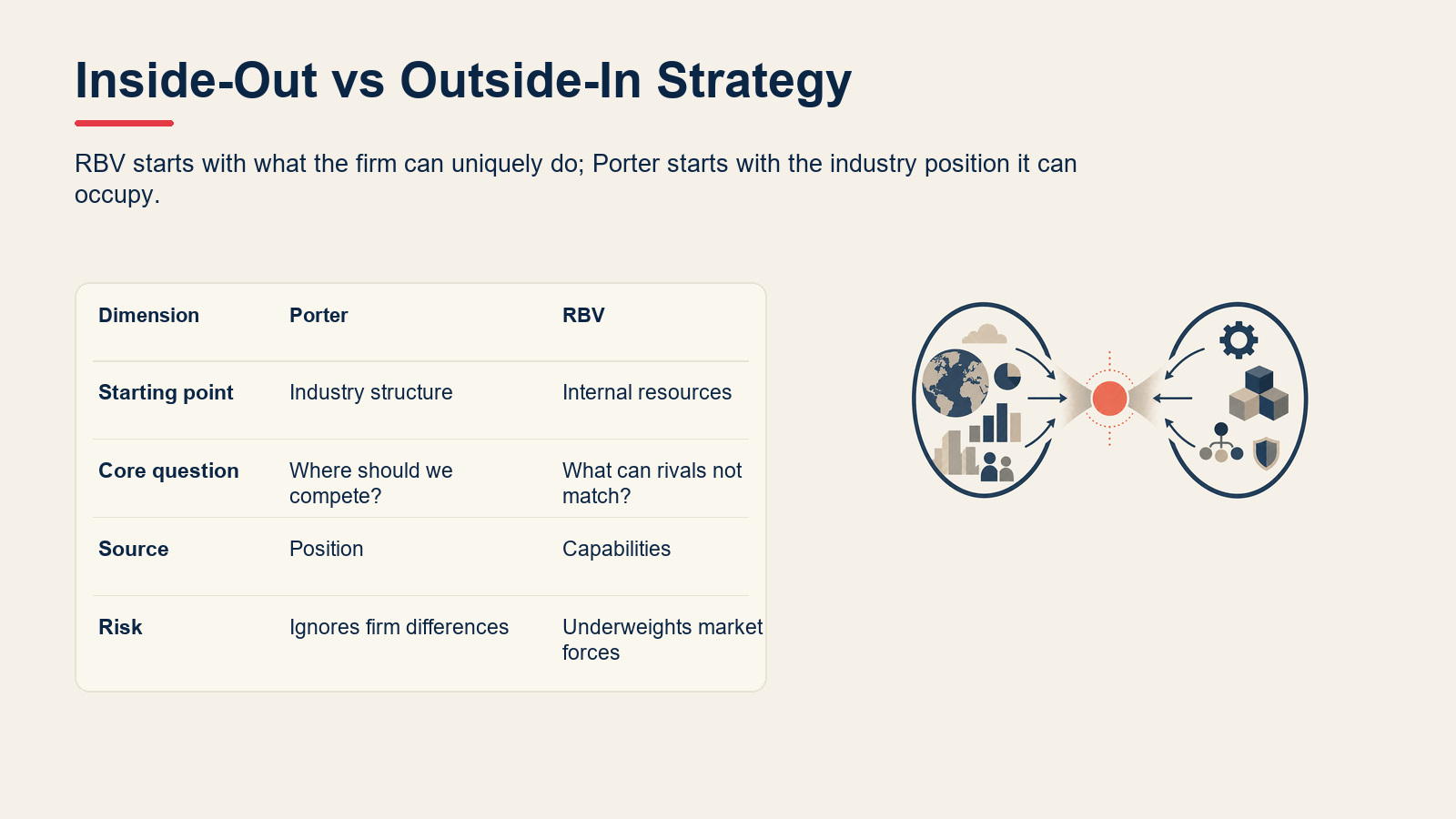
| Dimension | Porters Positionierungsansatz | Resource-Based View |
|---|---|---|
| Ausgangspunkt | Branchenstruktur (Outside-in) | Interne Ressourcen und Fähigkeiten (Inside-out) |
| Kernfrage | In welcher Branche sollten wir konkurrieren, und wo darin? | Was besitzen oder können wir, das Rivalen nicht ebenbürtig sind? |
| Vorteilsquelle | Günstige Wettbewerbsposition (Kostenführerschaft, Differenzierung) | Einzigartige, nicht imitierbare Ressourcen und Fähigkeiten |
| Schlüsselwerkzeuge | Porter's Five Forces, Generic Strategies | VRIN/VRIO, Kernkompetenzen |
| Einschränkung | Setzt hohe Unternehmensmobilität voraus; ignoriert interne Heterogenität | Kann Marktdynamiken und branchenweite Kräfte untergewichten |
Der Positionierungsansatz ist eine Outside-in-Logik: Scannen Sie die Umwelt, finden Sie eine attraktive Position, bauen oder kaufen Sie, was Sie benötigen, um sie zu halten. RBV ist eine Inside-out-Logik: Prüfen Sie, was Sie wirklich Einzigartiges haben, und finden oder schaffen Sie dann Märkte, in denen diese Einzigartigkeit den meisten Wert schafft.
Die meisten robusten Strategien tun beides. Aber RBV ist das Korrektiv zur Tendenz, Strategie als reines Marktauswahl-Problem zu behandeln. Wenn zwei Unternehmen dieselbe attraktive Branche betreten, fragt RBV, warum das eine zwanzig Jahre später noch das andere übertreffen wird.
Das Wertkettenanalyse-Framework verbindet die beiden Sichtweisen: Es kartiert interne Aktivitäten (RBV-Territorium) auf den für Kunden gelieferten Wert (Positionierungsterritorium) und zeigt, wo Ihre Fähigkeiten tatsächlich als Marge sichtbar werden.
So wenden Sie den Resource-Based View an
RBV anzuwenden ist keine jährliche Übung. Es ist eine wiederkehrende Disziplin, die direkt in die Strategieformulierung einfließen sollte. Hier ist ein praktischer Fünf-Schritte-Prozess.
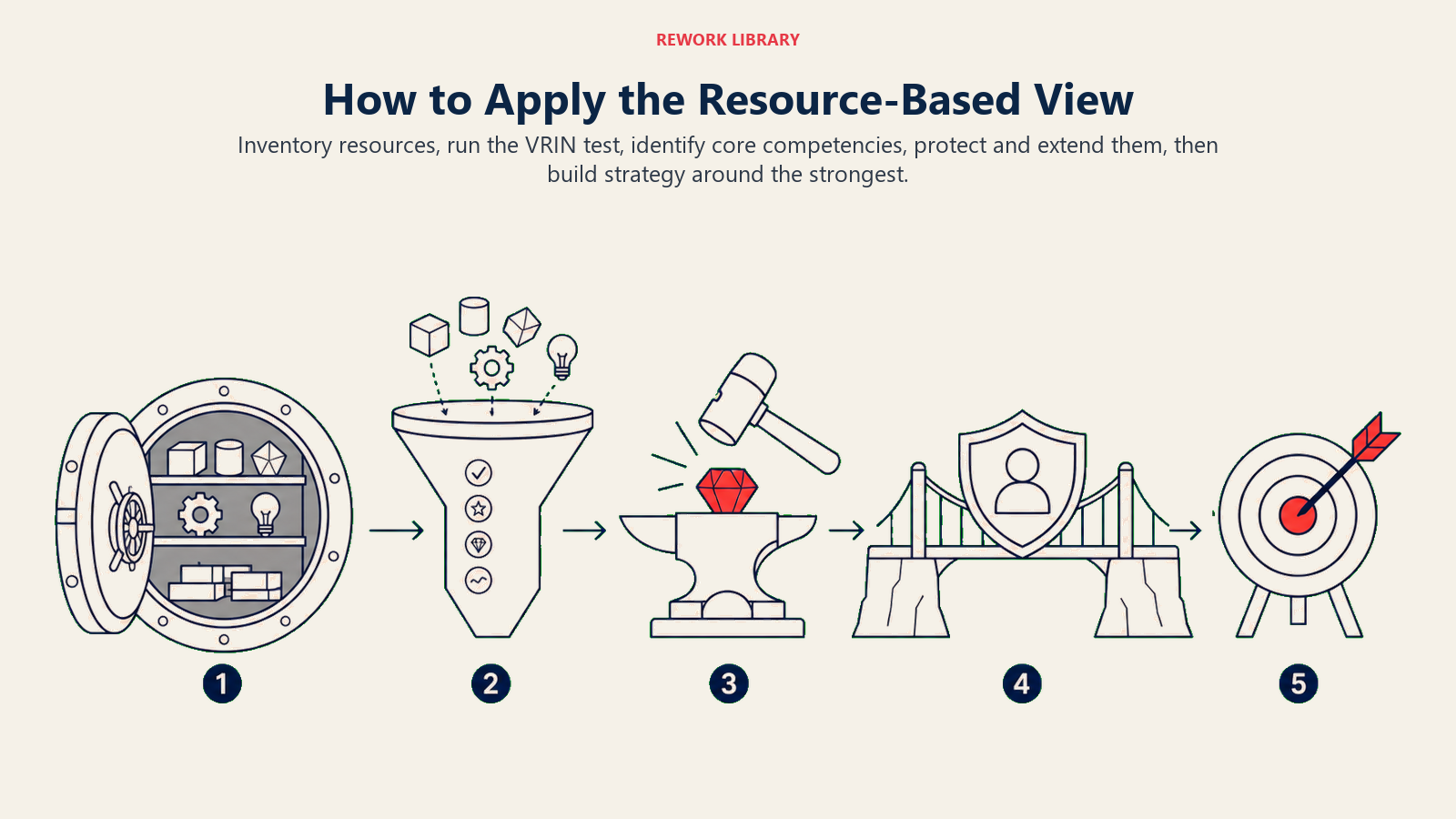
Schritt 1: Inventarisieren Sie Ihre Ressourcen
Kartieren Sie jede Ressource über die drei Kategorien: materielle, immaterielle und Fähigkeiten. Filtern Sie noch nicht. Schließen Sie Dinge ein wie Beziehungen zu wichtigen Zulieferern, institutionelles Wissen in einem kleinen Team, proprietäre Prozessdokumentation und Markenassoziationen. Die meisten Unternehmen unterschätzen ihre immateriellen Vermögenswerte in dieser Phase.
Schritt 2: Wenden Sie den VRIN-Test an
Stellen Sie für jede Ressource oder Fähigkeit die vier VRIN-Fragen. Seien Sie ehrlich bei "Selten" und "Nicht imitierbar". Ein häufiger Fehler ist, einen gut funktionierenden Prozess als nicht imitierbar zu behandeln, nur weil er Aufwand erfordert hat, aufgebaut zu werden. Fragen Sie: Könnte ein gut finanzierter Wettbewerber dies in zwei Jahren replizieren? Wenn ja, ist es wertvoll, aber keine Quelle nachhaltigen Vorteils.
Schritt 3: Identifizieren Sie Ihre Kernkompetenzen
Die Teilmenge von Fähigkeiten, die den VRIN-Test bestehen und an der Schnittmenge von Kundenwert, funktionsübergreifender Reichweite und Schwierigkeit der Replizierung liegen, sind Ihre Kernkompetenzen. Prahalad und Hamel definierten diese 1990 als Fähigkeiten, die Zugang zu einer Vielzahl von Märkten bieten, einen wesentlichen Beitrag zum wahrgenommenen Kundennutzen leisten und für Wettbewerber schwer zu imitieren sind. Das sind die, die es wert sind, geschützt und ausgebaut zu werden.
Schritt 4: Schützen und erweitern Sie Schlüsselressourcen
Nachhaltiger Vorteil erfordert aktives Management. Sichern und durchsetzen Sie IP-Schutzrechte. Binden Sie Schlüsseltalente. Vertiefen Sie Zulieferer- oder Partnerbeziehungen. Investieren Sie in die organisationalen Routinen, die eine Fähigkeit schwer umkehrbar machen. Und suchen Sie nach angrenzenden Anwendungen: Eine Fähigkeit, die in einem Markt Vorteil schafft, kann in anderen einsetzbar sein, was die Logik hinter verwandter Diversifikation ist.
Schritt 5: Bauen Sie Strategie um Ihre stärksten Ressourcen
Sobald Sie identifiziert haben, welche Ressourcen und Fähigkeiten Sie wirklich differenzieren, lassen Sie das die strategischen Entscheidungen treiben: Welche Märkte priorisieren, welche Kundensegmente bedienen, welche Partnerschaften eingehen, welche Investitionen tätigen. Das ist die Inside-out-Strategielogik in voller Stärke.
Diese Abfolge verbindet sich direkt mit dem Strategic Fit: Das Ziel ist es, die einzigartigen Ressourcen Ihres Unternehmens mit den Möglichkeiten auszurichten, bei denen diese Ressourcen den meisten Wert schaffen.
Beispiele
IKEA. Der Wettbewerbsvorteil des Unternehmens kommt nicht allein von attraktiven Stores oder einer populären Marke. Er basiert auf einem tief verankerten Satz von Fähigkeiten: über Jahrzehnte akkumuliertes Flatpack-Design-Know-how, eine proprietäre globale Lieferkette, optimiert auf Kleinstkosten, und eine Ladenformel, die Wettbewerber versucht haben und nicht replizieren konnten. Jede dieser Fähigkeiten besteht den VRIN-Test. Die Design-Fähigkeit ist wertvoll, mäßig selten, kausal mehrdeutig (von außen schwer zu verstehen) und nicht leicht zu ersetzen.
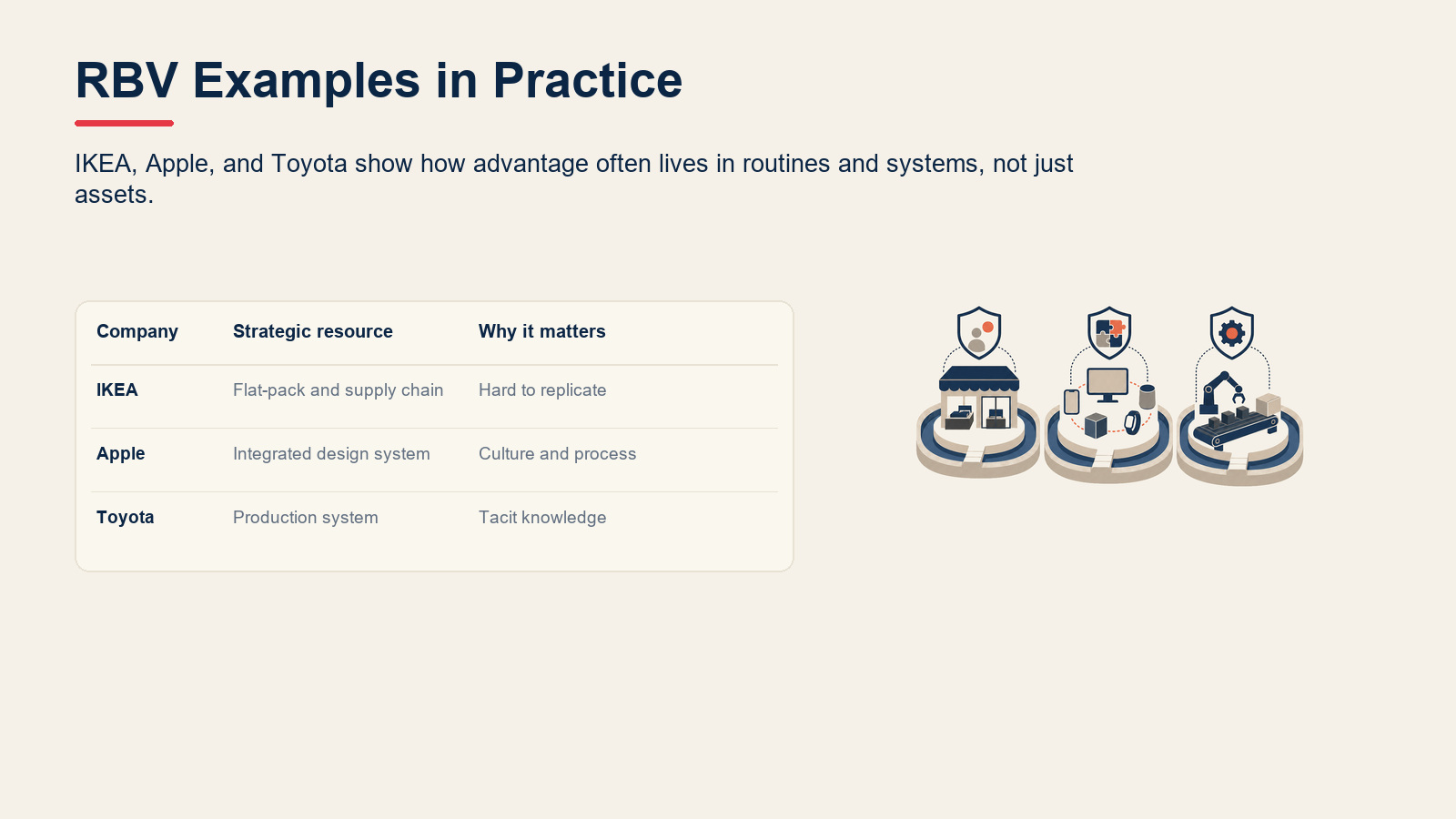
Apple. Die Integrationsfähigkeit (die Fähigkeit, Hardware, Software und Services als eng gekoppeltes System zu gestalten) ist ein Ressourcencluster, der Apples Vorteil seit der Rückkehr von Steve Jobs definiert hat. Wettbewerber haben versucht, ihn mit unterschiedlichem Erfolg zu replizieren. Was ihn nicht imitierbar macht, ist kein einzelnes Patent oder Produkt; es ist die Unternehmenskultur, das Einstellungsmodell und die internen Prozesse, die diese Integration erzeugen. Diese sind tief verankert und kausal undurchsichtig.
Toyota. Das Toyota Production System ist das Lehrbuch-RBV-Beispiel. Es ist eine Fähigkeit, kein physischer Vermögenswert. Es wurde von Tausenden von Wettbewerbern studiert, beschrieben und besucht. Und dennoch bleibt es eine Quelle dauerhaften Vorteils, weil das Wissen implizit ist, eingebettet in das Verhalten der Belegschaft statt in ein Handbuch. Zu wissen, was Toyota tut, ist nicht dasselbe wie es zu können.
Einschränkungen und Kritik
RBV ist eine leistungsstarke Theorie, hat aber echte Grenzen, die es zu kennen gilt.
Er erklärt vergangenen Vorteil besser als zukünftigen. Zu identifizieren, welche Ressourcen den gestrigen Erfolg geschaffen haben, ist einfacher als vorherzusagen, welche Fähigkeiten den morgigen antreiben werden. In schnell bewegenden Märkten können sich die VRIN-Kriterien rasch verschieben.
Er ist von Natur aus rückwärtsgerichtet. Der Test, ob eine Ressource nicht imitierbar ist, kann wirklich erst im Nachhinein beantwortet werden. Bevor ein Wettbewerber es versucht, machen Sie eine Vorhersage.
Er kann Trägheit rechtfertigen. Unternehmen, die sich zu sehr auf die Verteidigung bestehender Stärken konzentrieren, können scheitern, die neuen Fähigkeiten zu entwickeln, die notwendig sind, um relevant zu bleiben. RBV kann unbeabsichtigt zur Rechtfertigung werden, verdoppelt zu setzen auf das, was früher funktioniert hat.
Er untergewichtet Marktdynamiken. Eine ressourcenbasierte Strategie, die die Wettbewerbsvorteil-Landschaft oder Veränderungen im Kundenwert ignoriert, kann den Moment verpassen, in dem der Markt sich von dem entfernt, wofür Ihre Ressourcen gut sind.
Tautologierisiko. Kritiker wie Priem und Butler (2001) stellten fest, dass VRIN in seiner ursprünglichen Form etwas zirkulär ist: Eine Ressource ist wertvoll, wenn sie Wettbewerbsvorteil ermöglicht, und Wettbewerbsvorteil kommt von wertvollen Ressourcen. Die VRIO-Erweiterung und nachfolgende empirische Arbeiten haben vieles davon adressiert, aber es lohnt sich, das Framework mit angemessener kritischer Distanz zu halten.

Co-Founder & COO
On this page
- Was ist der Resource-Based View?
- Wichtige Fakten
- Ressourcen vs. Fähigkeiten
- VRIN / VRIO: Der Test für eine strategische Ressource
- RBV vs. Porters Positionierungsansatz
- So wenden Sie den Resource-Based View an
- Schritt 1: Inventarisieren Sie Ihre Ressourcen
- Schritt 2: Wenden Sie den VRIN-Test an
- Schritt 3: Identifizieren Sie Ihre Kernkompetenzen
- Schritt 4: Schützen und erweitern Sie Schlüsselressourcen
- Schritt 5: Bauen Sie Strategie um Ihre stärksten Ressourcen
- Beispiele
- Einschränkungen und Kritik