Lead Management Process: The 7-Step Operational Workflow That Converts Leads to Revenue
Turn this article into takeaways for your work.


Each assistant summarizes the article only for you and suggests best practices for your work.
There's a common pattern in companies that struggle with conversion. Marketing says leads are good. Sales says leads are bad. Leadership says the CRM isn't being used correctly. Everyone is partially right, but nobody's talking about the actual problem: the lead management process is broken, undefined, or doesn't exist.
Understanding what lead management is is the first step. But knowing the concept isn't enough. What most revenue operations teams need is the operational workflow: the specific, ordered sequence of actions that a lead goes through from the moment it enters your system to the moment it becomes a customer, a recycled nurture contact, or a disqualified record.
That's what this guide covers.
Key Facts: Lead Management Process Impact
- Companies with a documented, structured lead management process achieve 33% higher conversion rates than those with informal or undefined processes. (Aberdeen Group)
- Leads that are contacted within 5 minutes of form submission are 100x more likely to be reached and 21x more likely to qualify. (MIT/InsideSales Lead Response Management Study)
- B2B buyers complete 57% of their purchase decision before ever speaking to a sales rep, which means your process must capture and qualify signals before first contact, not just after. (Gartner)
- Organizations with automated lead routing reduce average response time by 72% and increase rep productivity by 35% compared to manual distribution. (Salesforce)
- 91% of leads from companies without a formal lead nurturing process go cold before ever speaking to sales. (DemandGen Report)
Overview: The 7-Step Lead Management Process
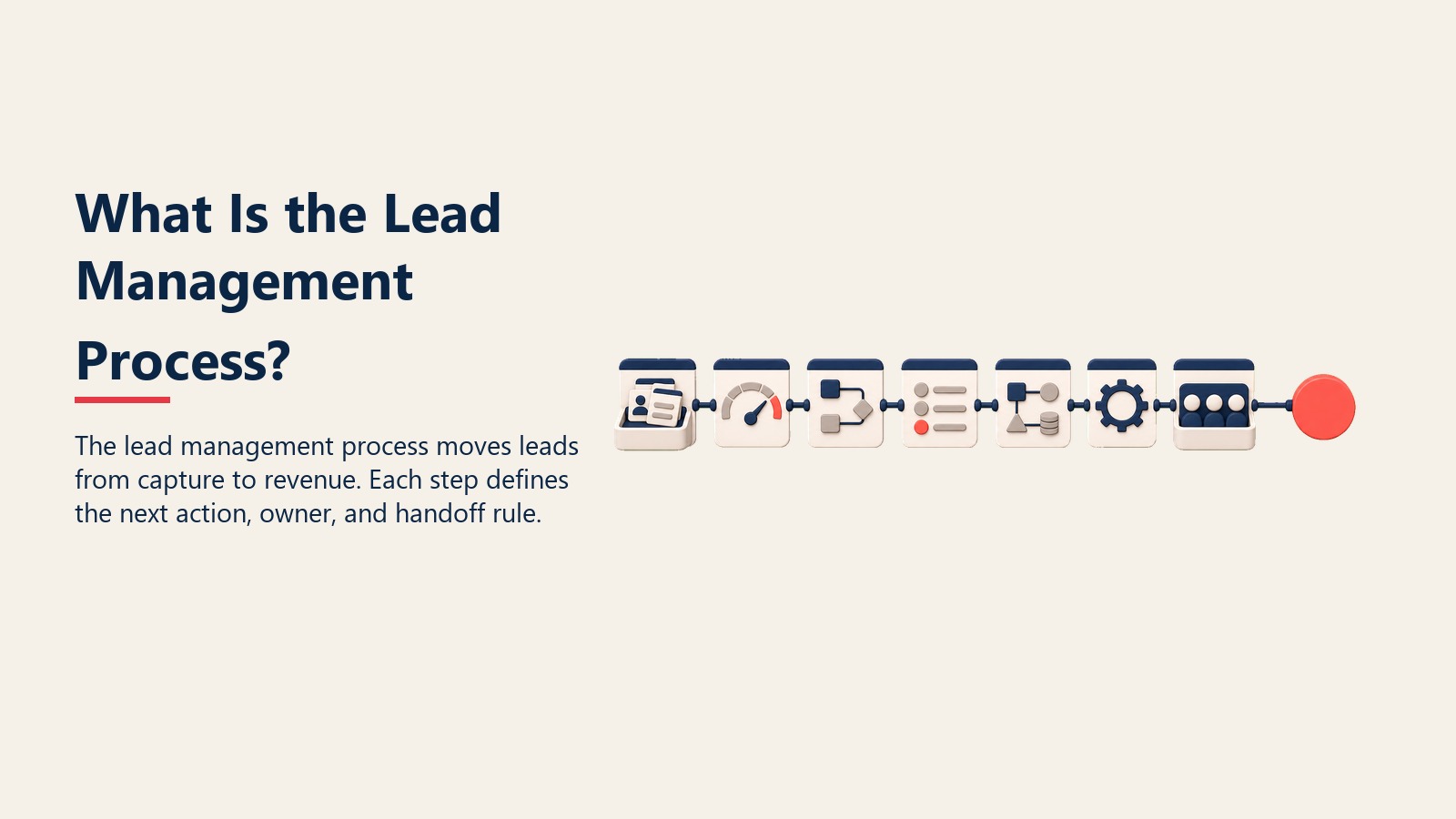
The lead management process is a sequential operational workflow. Each step has a defined purpose, a set of actions, and a handoff condition. Skipping or rushing a step creates downstream problems.
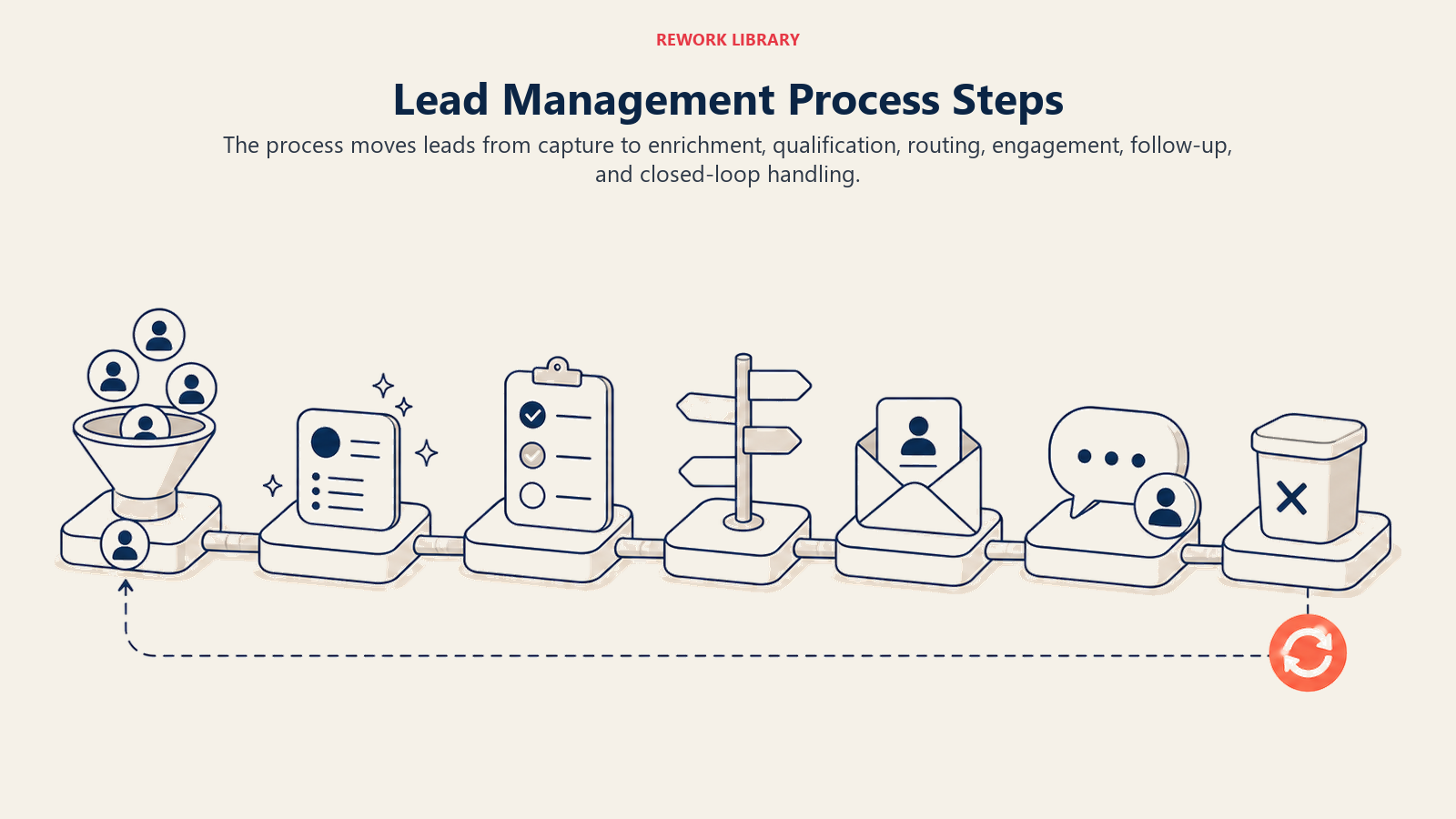
Step 1: Lead Capture - getting the lead into your system from every channel. Step 2: Lead Enrichment - filling gaps in the record so the team has context. Step 3: Lead Qualification - determining whether this lead is worth pursuing now. Step 4: Lead Routing - getting the lead to the right person, fast. Step 5: Lead Engagement - the first contact and initial outreach sequence. Step 6: Lead Follow-Up - structured persistence through the sales cycle. Step 7: Lead Recycling or Disqualification - closing the loop on leads that don't convert.
Step 1: Lead Capture
The lead capture step converts a prospect's interest signal into a record in your system. Every channel that generates leads needs a defined capture mechanism, and those mechanisms need to feed a central system.
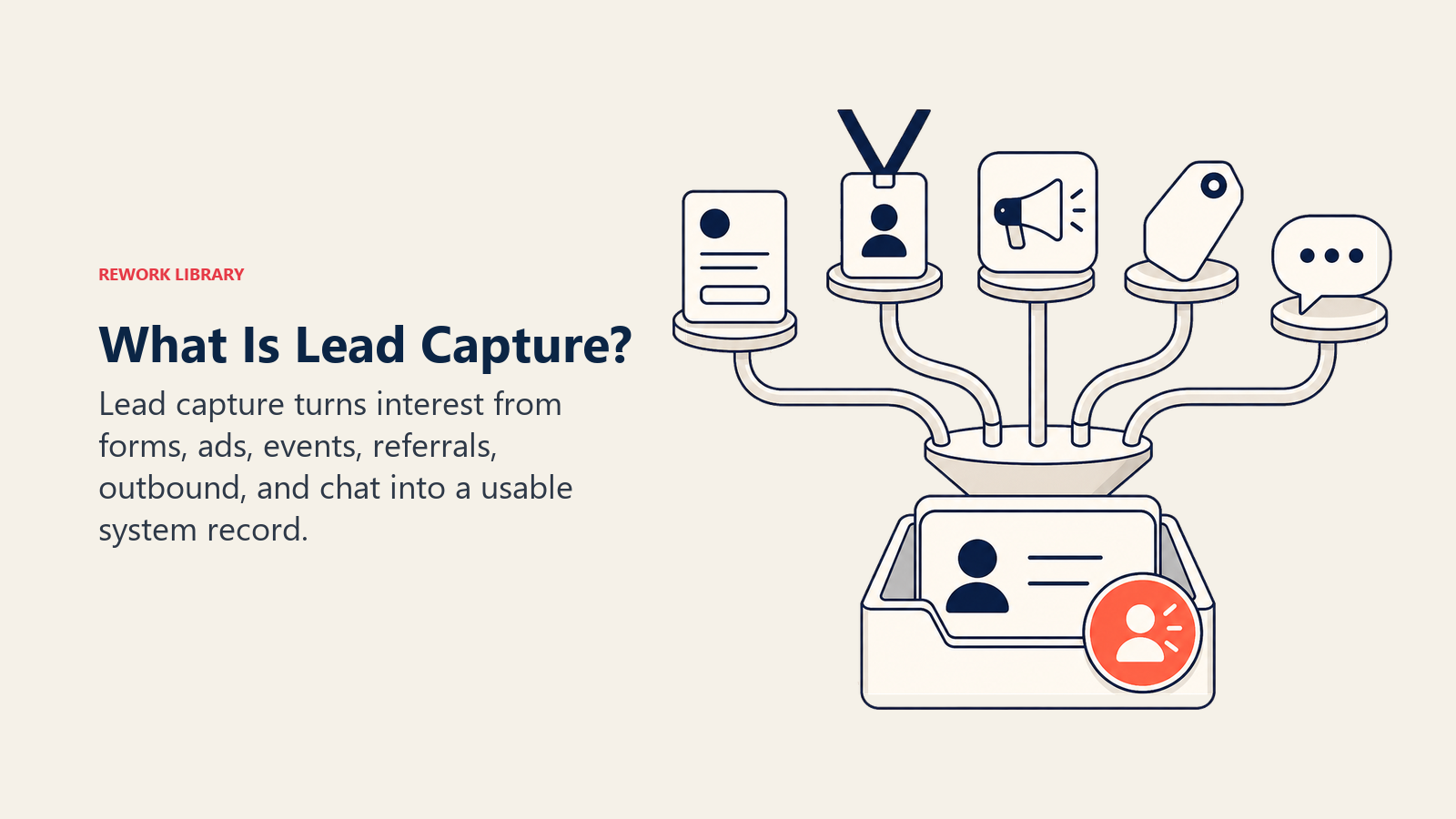
Common capture channels and their capture mechanisms:
- Web forms: connected directly to CRM via form-to-CRM integration. No manual data entry.
- Paid ads: landing page forms that auto-populate the lead source field.
- Events and webinars: badge scan data, registration lists, and chat interactions imported with source tags.
- Referrals: referred leads logged with referrer ID for attribution.
- Outbound sequences: replies and positive engagements from SDR outreach logged as leads.
- Chat and chatbot: conversations that reach a qualification threshold (e.g., "I want to see a demo") trigger a lead creation.
What can go wrong at capture: duplicate records created when a lead submits multiple forms, missing source attribution when forms aren't connected correctly, and data format inconsistencies (phone number formats, name capitalization, company name variations) that cause matching failures downstream.
Operational requirement: every lead must enter with at minimum: name, email, company, source. Everything else gets enriched in step 2.
Step 2: Lead Enrichment
A lead record with only the information a prospect typed into a form is not enough for a rep to have a meaningful first conversation. Step 2 fills the gaps automatically so the rep arrives to the conversation with context, not just a name and an email.
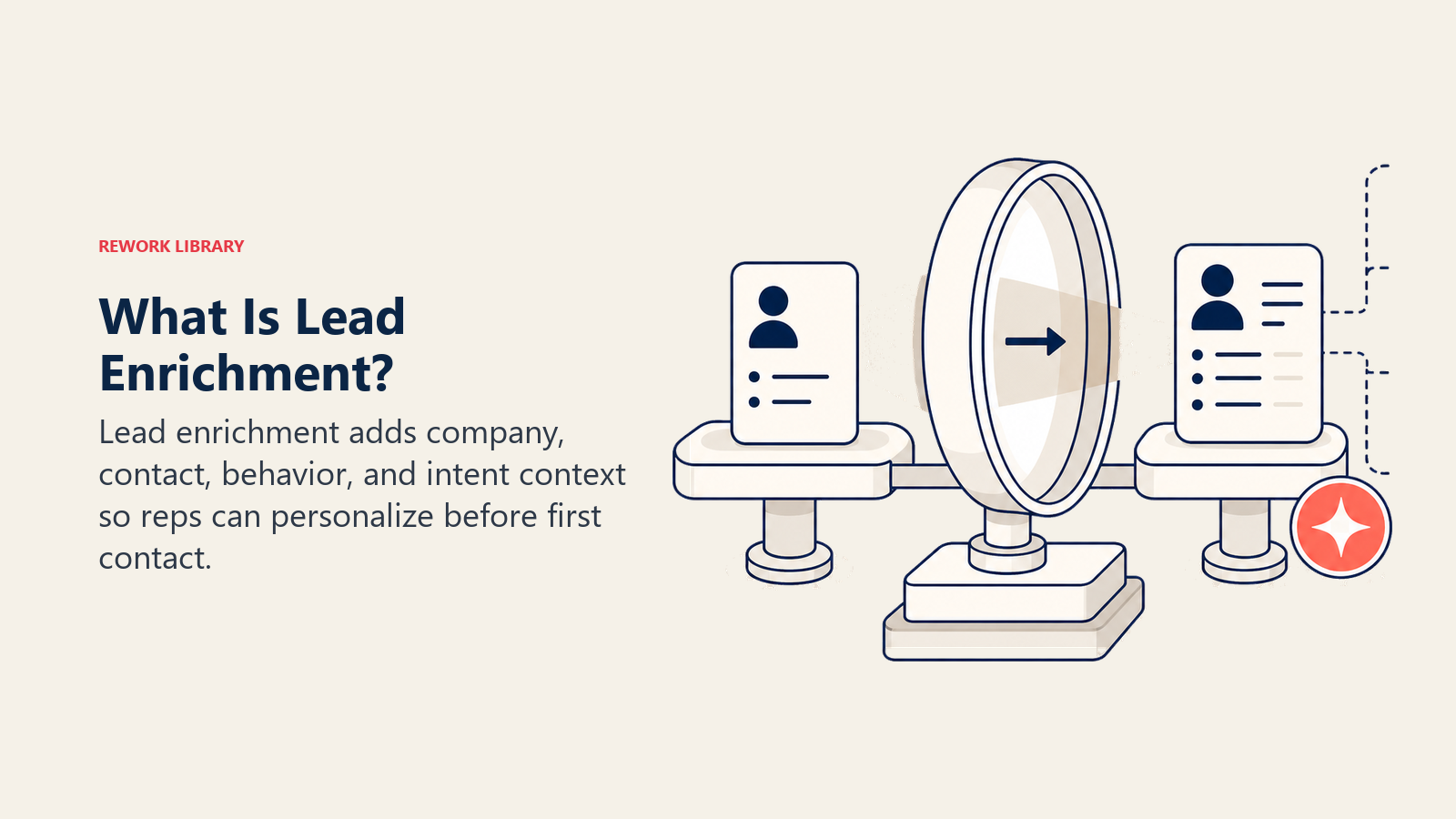
Lead data enrichment appends company and contact data from third-party sources (Clearbit, Apollo, 6sense, ZoomInfo) and first-party behavioral signals from your own systems:
Company-level data: headcount, revenue range, industry vertical, funding stage, technology stack, current vendors.
Contact-level data: job title, seniority level, department, direct phone number, LinkedIn profile.
Behavioral data: pages visited on your website, content downloaded, previous form submissions, email open history, product usage (for PLG companies).
Intent data: third-party signals that the company is actively researching your category (content consumption on review sites, keyword searches, competitor comparisons).
Enrichment serves two functions: it gives reps context before they call, and it feeds the lead scoring model that runs in step 3.
What can go wrong at enrichment: enrichment vendors vary in data quality by geography and company size. Enterprise and mid-market companies in North America are well-covered. SMBs and international companies often have thin data. Always build a fallback: if enrichment returns nothing, route the lead to a lower-priority queue with a note, rather than silently failing.
Step 3: Lead Qualification
Qualification answers the question: is this lead worth pursuing with active sales attention right now, or should it go into a nurture sequence?
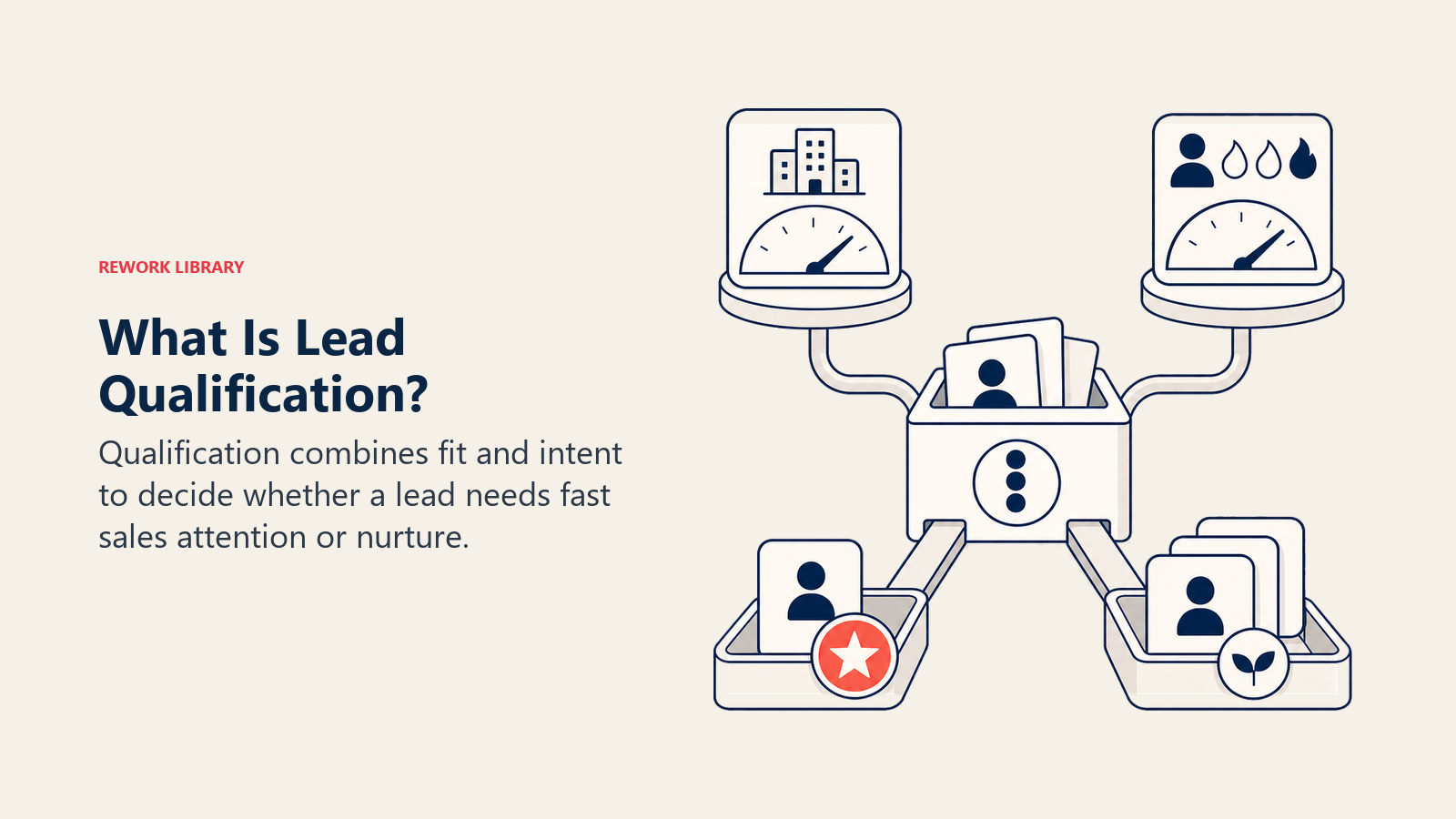
There are two dimensions to qualification:
Fit: does this company and contact match your ideal customer profile? ICP matching typically evaluates firmographics (company size, industry, geography, tech stack) and role fit (are we talking to someone who can buy?).
Intent: is there evidence this lead has a current, active buying need? Behavioral signals (demo request, pricing page visit, competitor comparison research) indicate hot intent. Downloaded a general educational piece 90 days ago is low intent.
Most lead qualification frameworks use a scoring model that combines fit and intent into a composite score, then buckets leads into tiers:
- Tier 1 (High fit, High intent): route immediately to sales as SQLs
- Tier 2 (High fit, Low intent): enter into a structured nurture program with periodic check-in triggers
- Tier 3 (Low fit, Any intent): disqualify or enter into a light nurture
- Tier 4 (High intent, No fit data): route to SDR for a qualification call to verify fit
The MQL to SQL handoff is one of the most contested points in most revenue operations teams. Marketing wants credit for every MQL. Sales wants only leads that are ready to buy. Align on a written definition and review it quarterly against closed-won data.
What can go wrong at qualification: over-relying on job title as a proxy for buying authority (a "Director" at a 10-person startup is very different from a "Director" at a 500-person company), under-weighting behavioral intent signals, and failing to re-qualify leads that return to the website after going cold.
Step 4: Lead Routing
A qualified lead that sits unassigned for hours or days is a qualified lead that goes cold. Step 4 is getting the right lead to the right rep, immediately.
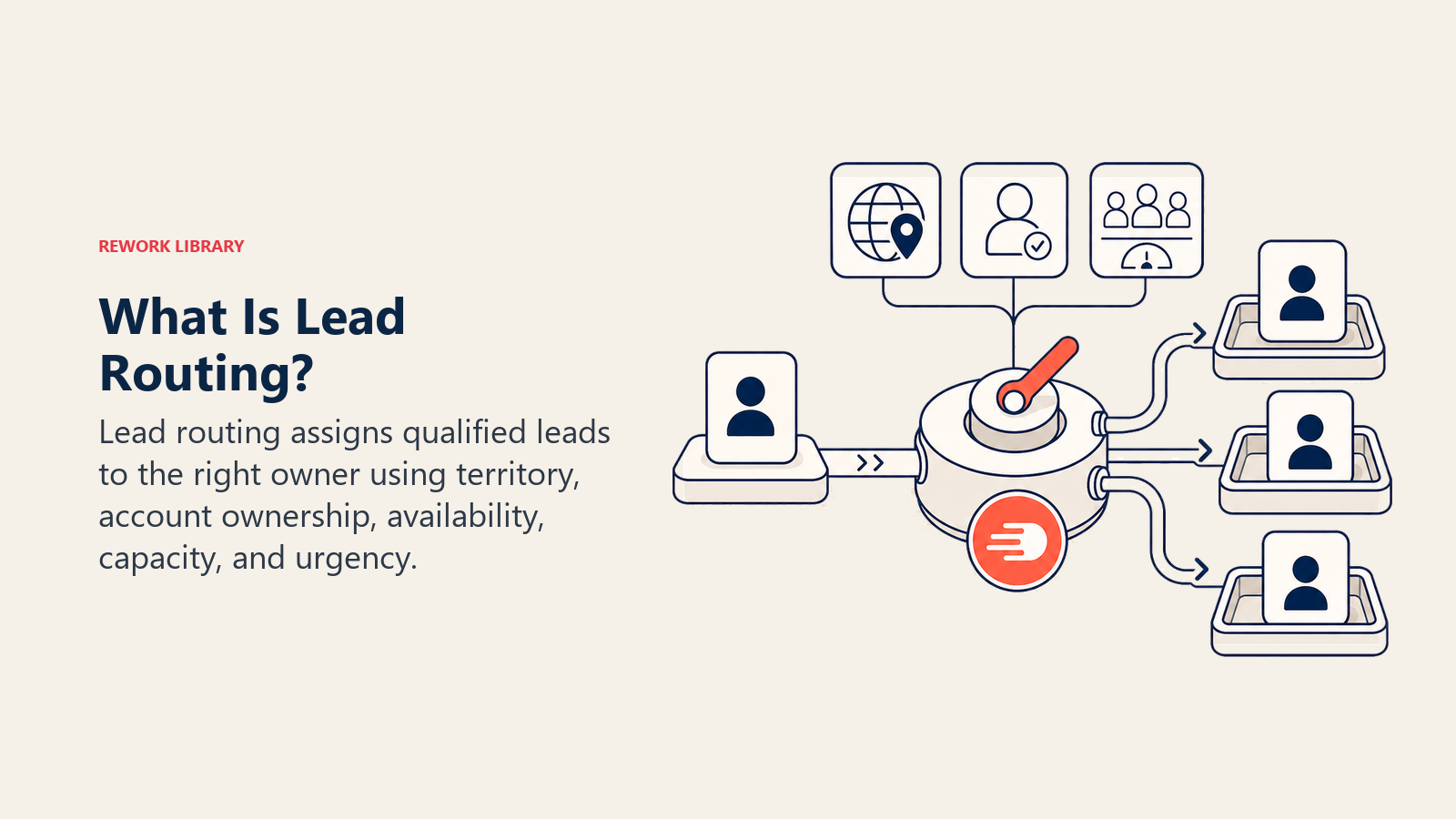
Lead routing automation should handle all tier-1 and tier-2 leads without human intervention. The routing logic considers:
- Territory: which rep owns this geographic or account segment? (Territory-based routing)
- Account ownership: is this company already in an existing rep's book of business? (Account-based routing)
- Availability: is the rep active right now, or is it 11pm in their time zone? Route to next available if primary is unavailable.
- Capacity: how many open leads does each rep currently have? Overloading one rep while others have empty queues is a common routing failure. (Lead queue management)
- Specialization: some leads are best handled by reps who specialize in a vertical, a deal size, or a competitor displacement scenario. Build routing conditions that match these cases.
The key lead assignment SLA metric: response time from form submission to first rep contact. This should be under 5 minutes for tier-1 leads during business hours, and under 2 hours for leads that arrive outside business hours if same-day response is operationally feasible.
What can go wrong at routing: routing rules that aren't maintained as territory maps change, reps who are over quota still receiving leads they can't service, leads that fall through when primary assignees are on vacation, and duplicate routing (same lead sent to two reps who reach out simultaneously).
Step 5: Lead Engagement
First contact is the highest-stakes moment in the lead management process. A well-timed, relevant first contact from a rep who knows the prospect's situation converts significantly better than a generic "I saw you filled out our form" call.
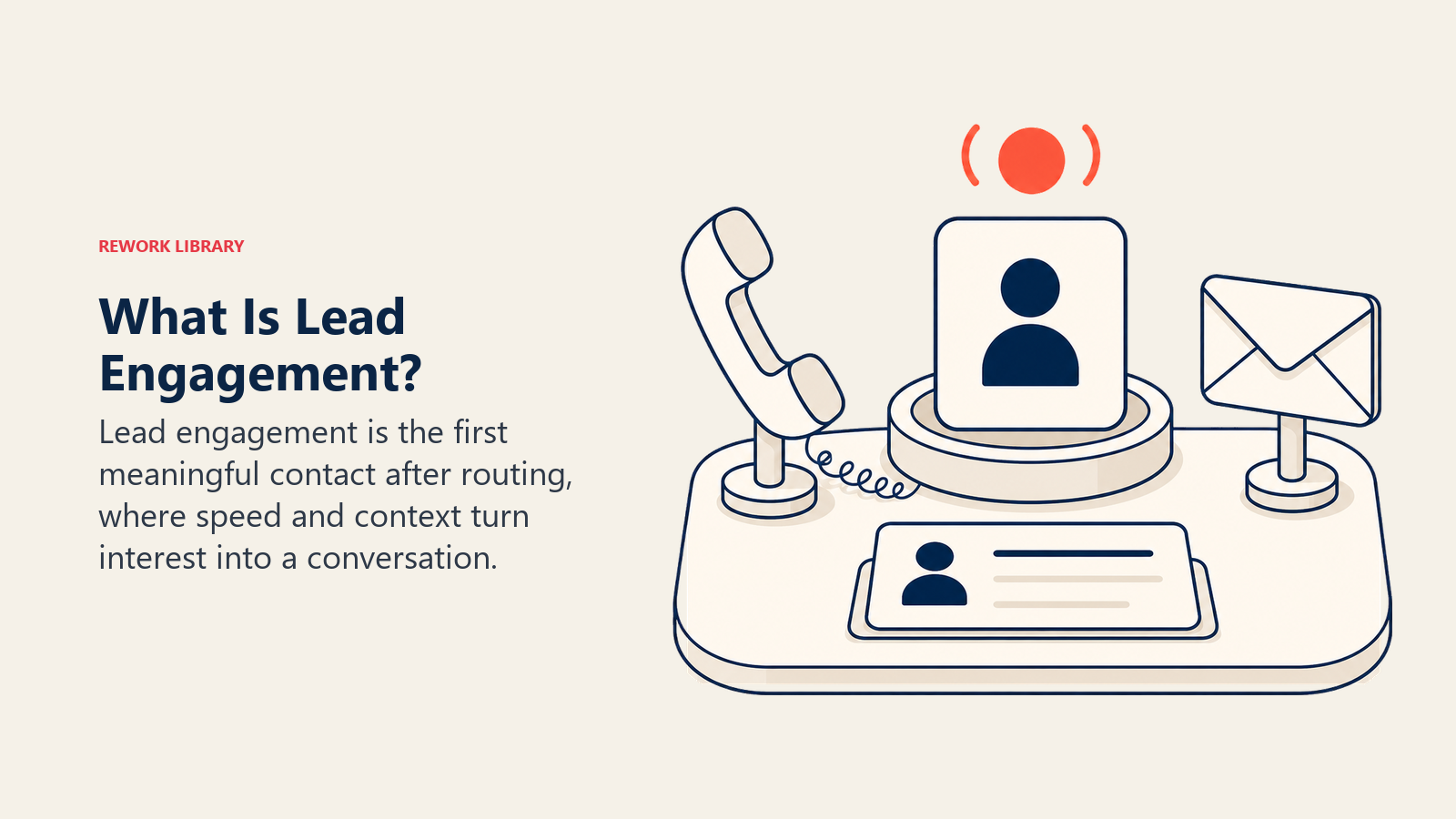
The components of effective first engagement:
Speed: the 5-minute rule applies. For a demo request or pricing inquiry, response within minutes while the prospect is still on your website doubles qualification rates. For less urgent inquiries, response within the same business day is the minimum.
Context: the rep should arrive to the call with the enrichment data from step 2. They know the company size, the industry, who the likely stakeholders are, and what content the prospect has consumed. This enables a first call that feels consultative rather than scripted.
Channel mix: for most tier-1 leads, the first contact is a phone call followed by an email in the same hour if no answer. For self-serve or product-led contexts, the first contact might be a triggered in-app message or a personalized email with a direct calendar booking link.
The first call goal: the purpose of the first call is not to pitch. It's to qualify and book the next meeting. Run a short discovery framework: understand the current situation, the problem they're trying to solve, their timeline, and whether they're the right person to continue the conversation with. If qualified, book the next step before ending the call.
Step 6: Lead Follow-Up
Most deals don't close on the first contact. Step 6 is the structured persistence that keeps leads moving through the pipeline rather than going cold between touches.
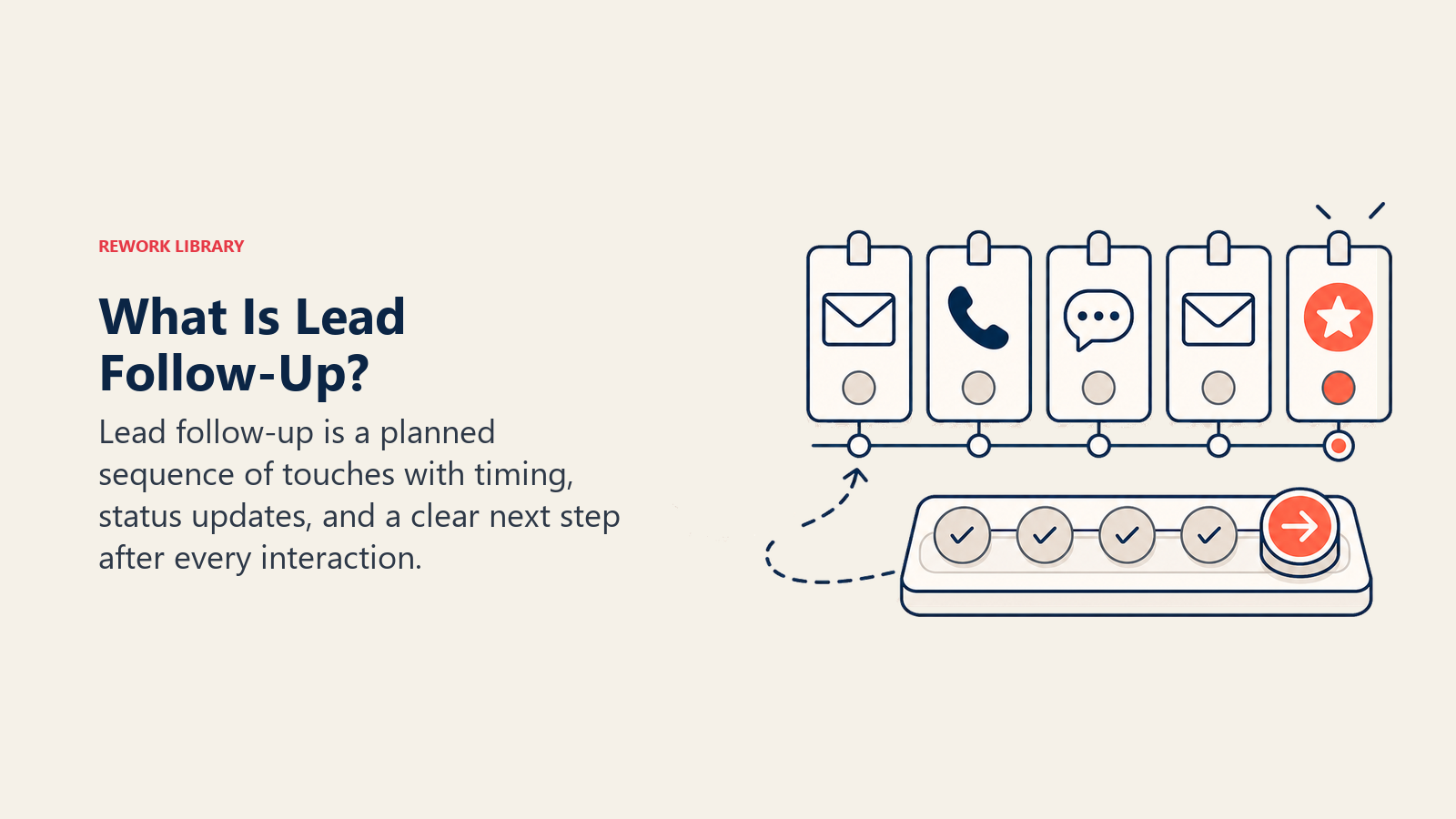
Lead follow-up should be systematic, not ad hoc. Reps who rely on memory or good intentions have inconsistent pipelines. Reps who follow a defined sequence with specific triggers and timelines convert at higher rates.
A basic follow-up sequence for a tier-1 lead after first contact:
- Day 1: initial call attempt + email if no answer
- Day 2: second call attempt, different time of day + LinkedIn connection
- Day 4: follow-up email with a relevant resource
- Day 7: third call attempt
- Day 10: "breakup" email that either re-engages or closes the loop
After a meeting is booked, the follow-up sequence shifts to pre-meeting preparation and post-meeting next steps. The critical rule: every interaction should end with a specific next step, a date, and a named owner on both sides.
Lead status management tracks where each lead is in the follow-up sequence and prevents contacts from falling through the cracks. Well-maintained status fields also give RevOps the data to identify bottlenecks: if a large percentage of leads are stuck at "follow-up #2" for weeks, there's a process or capacity problem.
Step 7: Recycle or Disqualify
Not every lead becomes a customer on the first pass. Step 7 closes the loop for leads that don't convert in the active sales cycle.
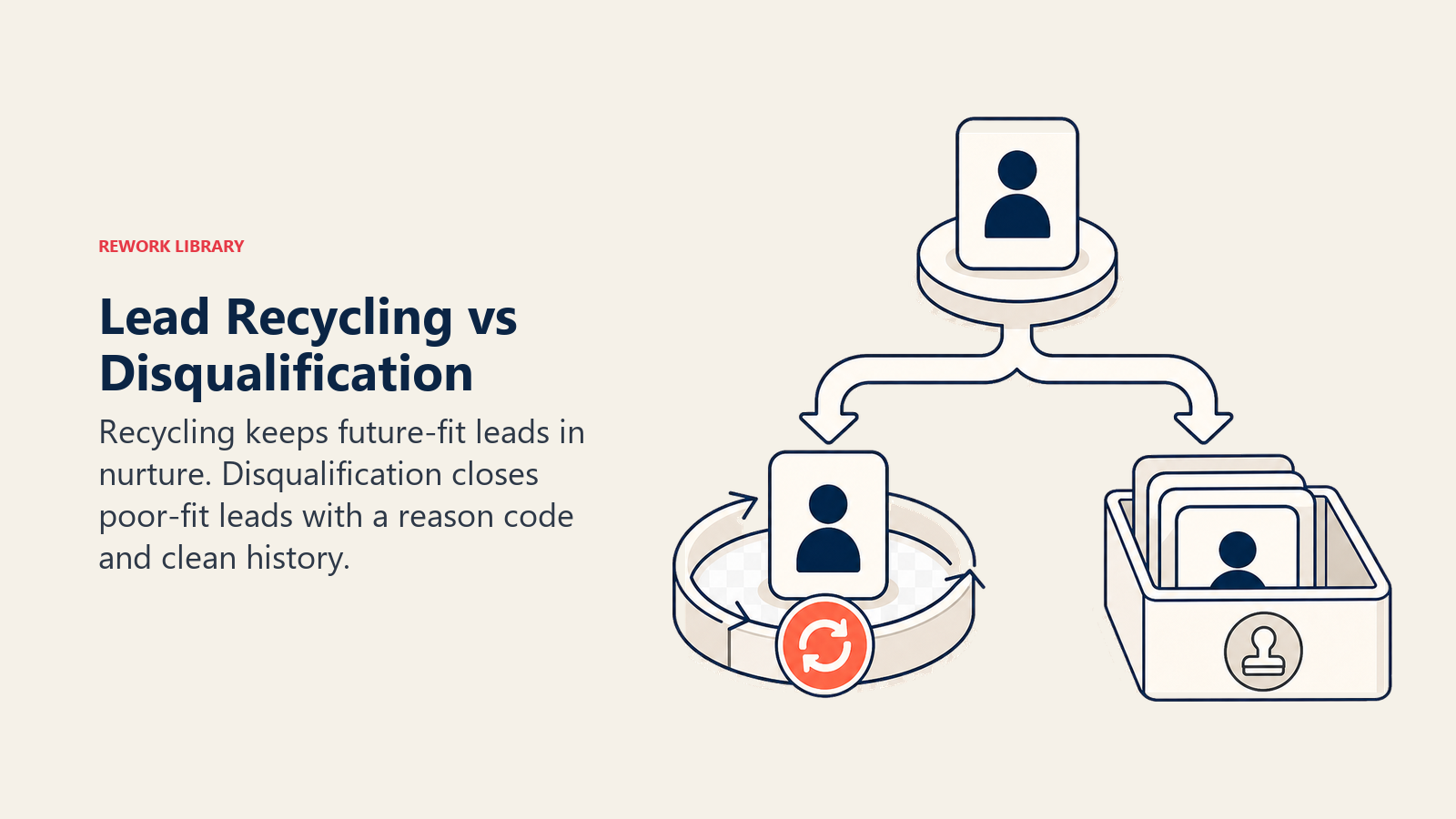
Disqualification: when a lead is definitively not a fit (wrong company size, no budget, no active problem, or they've chosen a competitor), mark them disqualified with a reason code. This keeps your pipeline clean and gives marketing data on which sources and campaigns generate unqualified leads.
Lead recycling: when a lead was a fit but the timing was wrong ("we're not ready until Q3", "budget is frozen this year", "not the right person, connect me with our successor in 6 months"), recycle them into a long-term nurture track. Set a re-engage trigger: a date, a behavioral signal (returns to pricing page), or a trigger event (job change, funding announcement).
Recycled leads that re-enter the process are often the highest-converting leads in the system because they've already been through the education phase. Don't treat them like new leads. Route them back to the original rep (if they're still on the team) with the full history of previous interactions.
What can go wrong at recycling: no trigger to re-activate leads (they sit in the nurture list forever), recycled leads re-entering the routing system as new leads with no prior context, and missing data on why a lead was disqualified (making it impossible to personalize the re-engagement).
Governance: Who Owns What
The lead management process fails without clear ownership at each handoff point.
- Marketing owns steps 1-2 (capture and enrichment) and the lead scoring model in step 3
- Revenue Operations owns routing rules in step 4 and status tracking in step 6
- Sales Development (SDRs/BDRs) owns step 5 (first engagement) and the early follow-up sequence
- Account Executives own the later stages of step 6 and close
- Marketing + Sales joint owns the MQL-to-SQL definition and the recycling criteria in step 7
Run a monthly process review that looks at stage-to-stage conversion rates. Where are leads dropping? Is it at qualification (scoring model needs tuning), routing (SLA isn't being met), or follow-up (reps aren't running the sequence)? The data tells you where to focus.
Summary: What Good Process Looks Like
A company running this process well has a lead that looks like this:
A prospect fills out a demo request form at 2:47 PM on a Tuesday. By 2:51 PM, the record is in the CRM, enriched with company size and intent data, scored, routed to the territory rep, and a mobile alert has gone to that rep's phone. The rep calls at 2:52. They book a discovery call for Thursday. The full contact history, enrichment data, and qualification notes are visible in the CRM.
That's not a hypothetical. That's a well-configured process running correctly. Build it step by step, measure at each stage, and it will outperform any team trying to run on spreadsheets and good intentions.
Related resources: