Late-Stage Deal Review: How to Protect Revenue at the Finish Line

Turn this article into takeaways for your work.


Each assistant summarizes the article only for you and suggests best practices for your work.
The last 30 days of a deal are when most of the damage happens. Not from competition. Not from budget cuts. From gaps nobody caught.
The legal review drags on longer than the champion promised. The economic buyer goes quiet. A new stakeholder surfaces who was never in the original conversation. The implementation team raises scope concerns that put the deal back to negotiation.
Every one of these is a recoverable situation. But only if you spot it before it kills the deal or pushes it to next quarter. That is what late-stage deal review is for.
Key Facts: Late-Stage Deal Risk
- 58% of enterprise deals are lost to "no decision" rather than a competitor, meaning the status quo wins because no one created sufficient urgency for the customer to complete their purchase process. (CSO Insights, 2024 Win-Loss Analysis)
- Sales managers who conduct structured late-stage reviews on their top 10 deals report 31% lower deal slippage into subsequent quarters compared to managers who rely on rep-reported status. (Gartner, 2024 Sales Leader Benchmark)
- 45% of forecast misses trace to deals that were marked as committed with less than 2 weeks to quarter close but had not yet cleared legal or procurement. (Salesforce Research, 2025 Forecasting Accuracy Study)
- Deals with a documented mutual action plan in the final 30 days close on time 62% more often than deals without one. (Forrester, 2024 B2B Sales Execution Report)
- When a new stakeholder surfaces in the final stages of a deal, close rates drop by an average of 34% if that stakeholder is not identified and addressed within 72 hours. (CEB/Gartner, The Challenger Customer)
Why Late-Stage Deals Need a Specific Review Process
Most sales organizations have some version of a pipeline review. They look at CRM data, listen to rep updates, and assess which deals are on track for the quarter. But general pipeline reviews are not built to catch late-stage deal risk.
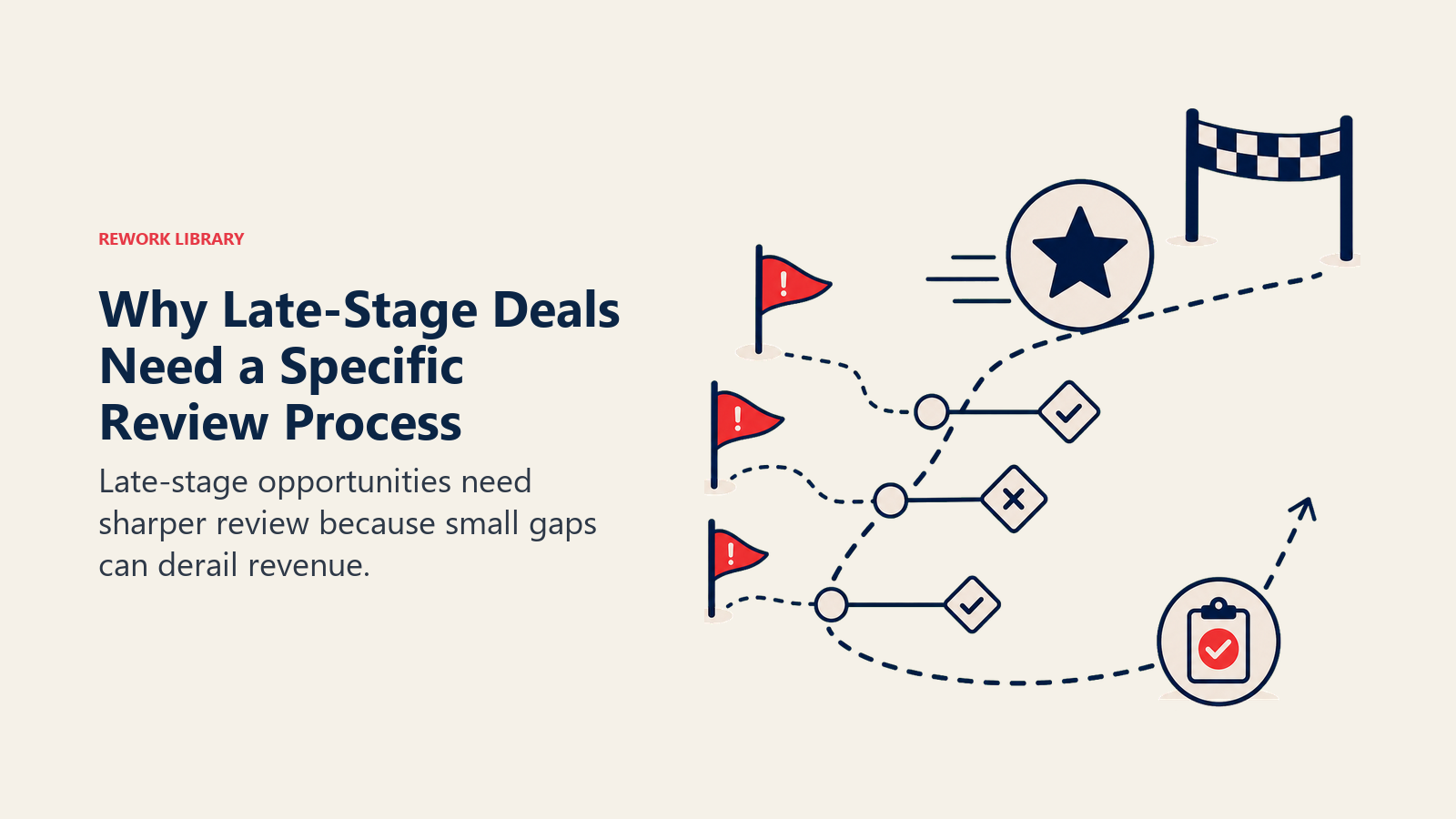
Late-stage deals have a specific set of failure modes that you will not surface by looking at stage labels or close dates. A deal marked Stage 4 at 90% probability can die in two weeks if:
- The champion has gone quiet and is no longer returning emails
- Legal found a clause they want to renegotiate that your rep does not have authority to concede
- The economic buyer's budget was reallocated in a quarterly review
- The person who said yes left the company
- A security assessment came back with findings that need remediation before procurement can approve
None of these show up as red flags in a standard pipeline report. They only surface if someone asks the right questions.
Late-stage deal review is that mechanism. It is a structured examination of specific risk factors on your highest-value, highest-probability deals in the final 30-45 days before their expected close date.
When to Run a Late-Stage Deal Review
Timing matters. Too early and you are reviewing deals that still have too many unknowns. Too late and you do not have time to act on what you find.
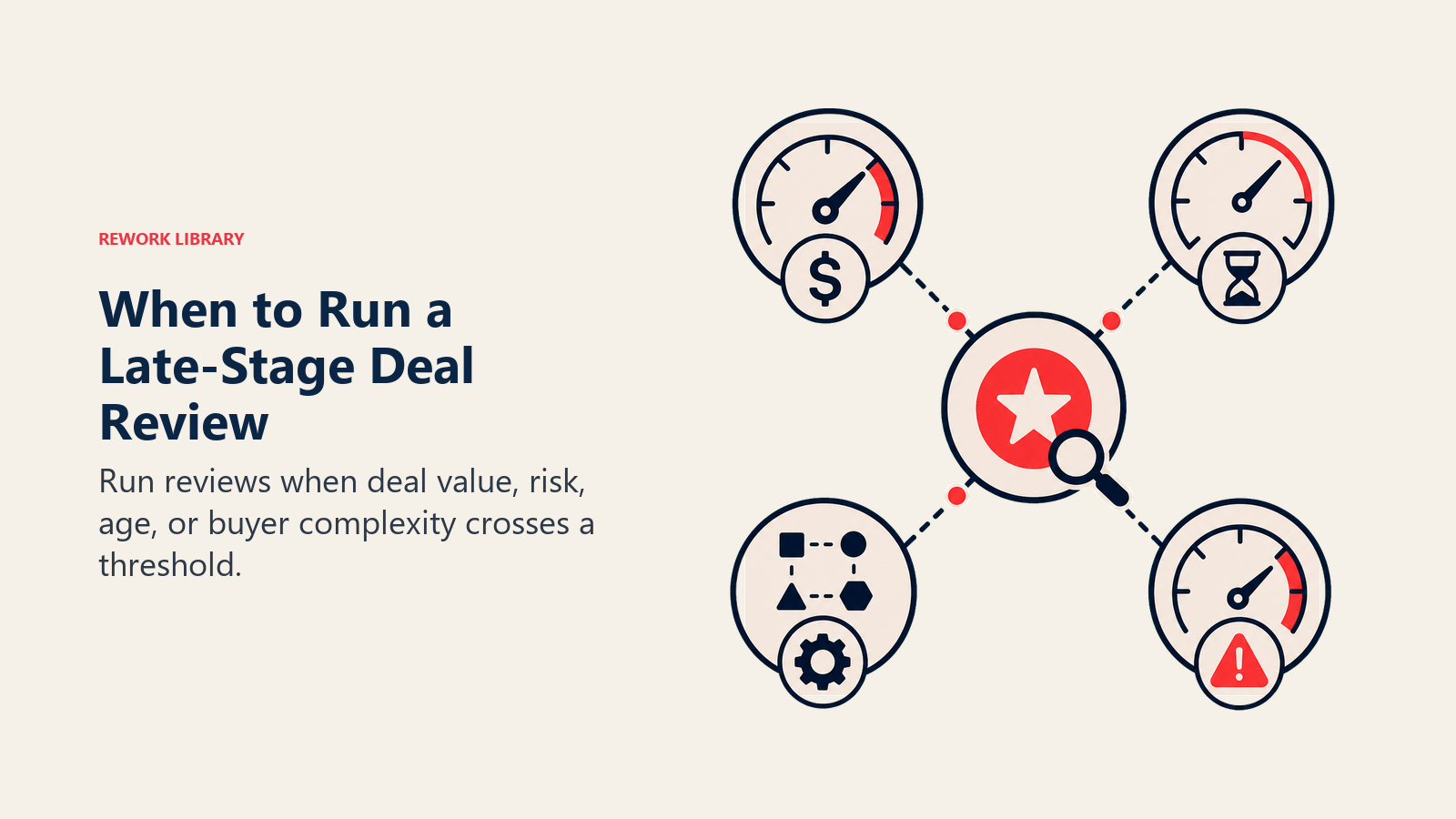
The right window is 30-45 days before the expected close date. At this point:
- The technical evaluation should be complete or nearly complete
- The economic buyer should be engaged and aware of the project
- A draft contract or SOW should exist or be imminent
- Implementation planning should have started
If any of those conditions are missing at the 30-day mark, that is itself a risk flag worth discussing.
Run formal late-stage reviews on every deal above a certain dollar threshold (define what that threshold is for your organization) and on any deal that is material to your quarter's forecast. These are the deals where a missed signal costs real money.
The Late-Stage Deal Review Framework
A thorough late-stage review examines six areas. Work through all six with the AE before drawing conclusions.
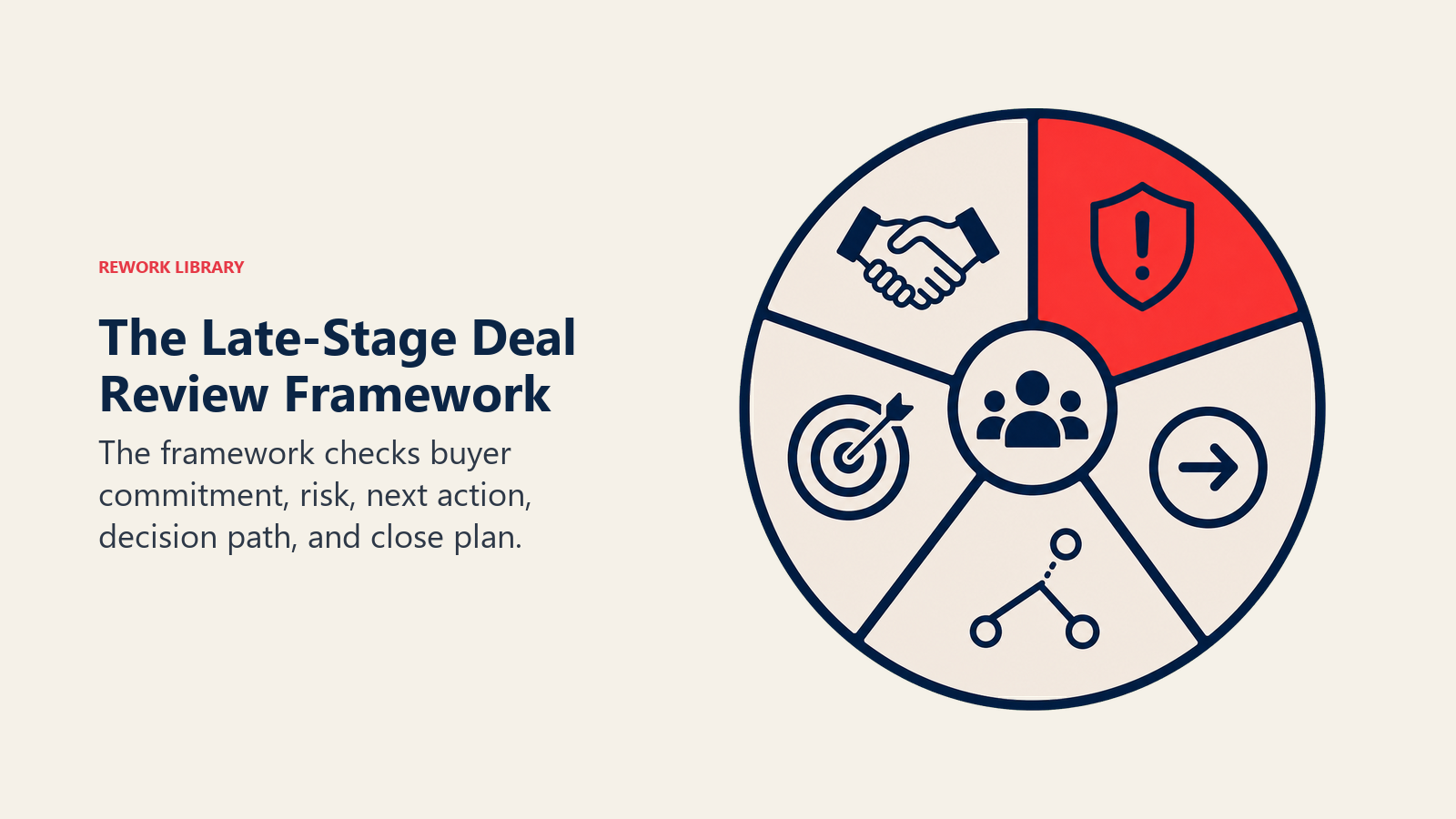
1. Champion Engagement
Your champion is the deal's circulatory system. If they are not engaged, nothing else moves.
Ask: When did you last speak with your champion? What was discussed? Are they still actively advocating internally or have they gone quiet? Have they introduced you to the other decision-makers you have not met? Have they received the materials they need to defend the decision internally?
Watch for: A champion who is hard to reach, suddenly vague in conversations, or who has stopped making internal introductions. This can mean they have lost confidence, lost political cover, or are dealing with a competing internal priority. It can also mean the deal is already decided internally in a direction you do not know about yet.
The fix: Get a direct conversation with the champion. Not an email check-in. A call. Ask them explicitly: "Where does this project stand internally? What are the concerns I should be helping you address?"
2. Economic Buyer Access and Commitment
You need to know that the person who will sign the contract is still committed to the purchase and has not been surprised by anything.
Ask: When did you last speak with the economic buyer? Do they know the final price? Have they seen the contract? Are they aware of the implementation requirements? Has anything changed in their business priorities that might affect the budget?
Watch for: An economic buyer who has not been in a conversation in the last 30 days, or who the AE is describing as "reachable through the champion." In late-stage enterprise deals, someone who has the final signature authority needs to have given a clear verbal yes to the terms, not just an old nod during a demo four months ago.
The fix: If the economic buyer has not been engaged recently, get a call scheduled this week. A brief executive call from a senior person on your side to theirs is often the fastest way to reconnect and get a clear read on commitment.
3. Decision Criteria Validation
Decision criteria can shift late in a sales process, especially if a new stakeholder surfaces or the competitive landscape changes.
Ask: Does the customer's evaluation team still agree that your solution meets their criteria? Have any new requirements come up in the last 30 days? Is there any unmet requirement that they are holding against you? Have they asked for a comparison to a competitor recently?
Watch for: New technical requirements that were not in the original evaluation, a request for a new product demonstration that seems to re-evaluate something you thought was settled, or a champion who is less confident about fit than they were 60 days ago.
The fix: If decision criteria have shifted, acknowledge it and address it directly. Trying to close a deal when the customer has unresolved doubts about fit produces either a no or a negotiated concession that costs you margin.
4. Procurement and Legal Status
The last mile of an enterprise deal runs through procurement and legal, and this is where deals slip most often.
Ask: Has procurement been initiated? Who owns the process on their side? Do we have a timeline for legal review? Have they started the contract process? Are there any outstanding security questionnaire items? Do we know who in procurement has authority to approve?
Watch for: Deals where procurement has not been initiated at the 30-day mark (a significant red flag), deals where legal has been reviewing for more than two weeks without progress, or deals where the AE does not have a direct relationship with the procurement contact and is relying entirely on the champion to relay information.
The fix: Get your AE on a call directly with procurement if they do not already have that relationship. Understand what is blocking progress. Is it a resource issue on their side (too many other vendor reviews)? Is it a specific contract term? Is it waiting for sign-off from someone who has not been engaged? Each blocker has a different response.
5. Competition and "No Decision" Risk
Late-stage deals can still die to a competitor or to the status quo, and the signs are different for each.
Ask: Are they still evaluating any other vendors? Have they done reference checks with your customers? Have they asked for a final pricing comparison? Has there been any mention of delaying the decision to next fiscal year or next quarter?
Watch for: Reference check requests (normal but monitor timing and outcome), requests to re-evaluate a feature that a competitor apparently has, and the most dangerous signal of all, a champion who starts talking about "internal alignment" taking longer than expected. That phrase often means a senior stakeholder is pumping the brakes.
Watch especially for "no decision" risk. This is the scenario where the customer decides not to decide. They were not ready to change. The status quo is painful but not painful enough to justify the risk and effort of a new purchase. You will not win those deals by discounting or adding features. You win them by making the cost of inaction tangible and specific.
The fix for competitive risk: understand exactly what the competitor has or offers that you do not, and address it directly with the champion. Trying to pretend the comparison does not exist does not make it go away.
The fix for no-decision risk: bring the customer's attention back to why they started this evaluation. What business problem were they trying to solve? What happens to that problem if they wait another year? Make the cost of inaction concrete with numbers if possible.
6. Close Plan and Next Actions
A late-stage deal without a clear, specific, near-term next action is a deal that is drifting.
Ask: What is the specific next step and who owns it? Does the AE know the exact date by which a contract needs to be signed to meet the customer's stated go-live date? Does the customer have that date in their calendar? Are all open items documented in a mutual action plan?
Watch for: Vague next steps ("they are reviewing the contract"), absence of a mutual action plan, AEs who cannot name a specific date for the next customer interaction, and deals where the urgency driver is internal to your company (quarter end) rather than external to the customer (their go-live date, their fiscal year).
The fix: Create or refresh the mutual action plan right now. Work backward from the customer's stated go-live date. Make every remaining step explicit with an owner and a date. Share it with the customer and ask them to validate it. This single action reduces deal slippage more than almost anything else.
Structuring the Review Meeting
A late-stage deal review is not a status update meeting. It is a diagnostic session. The AE should come prepared to answer specific questions, not just describe deal status.
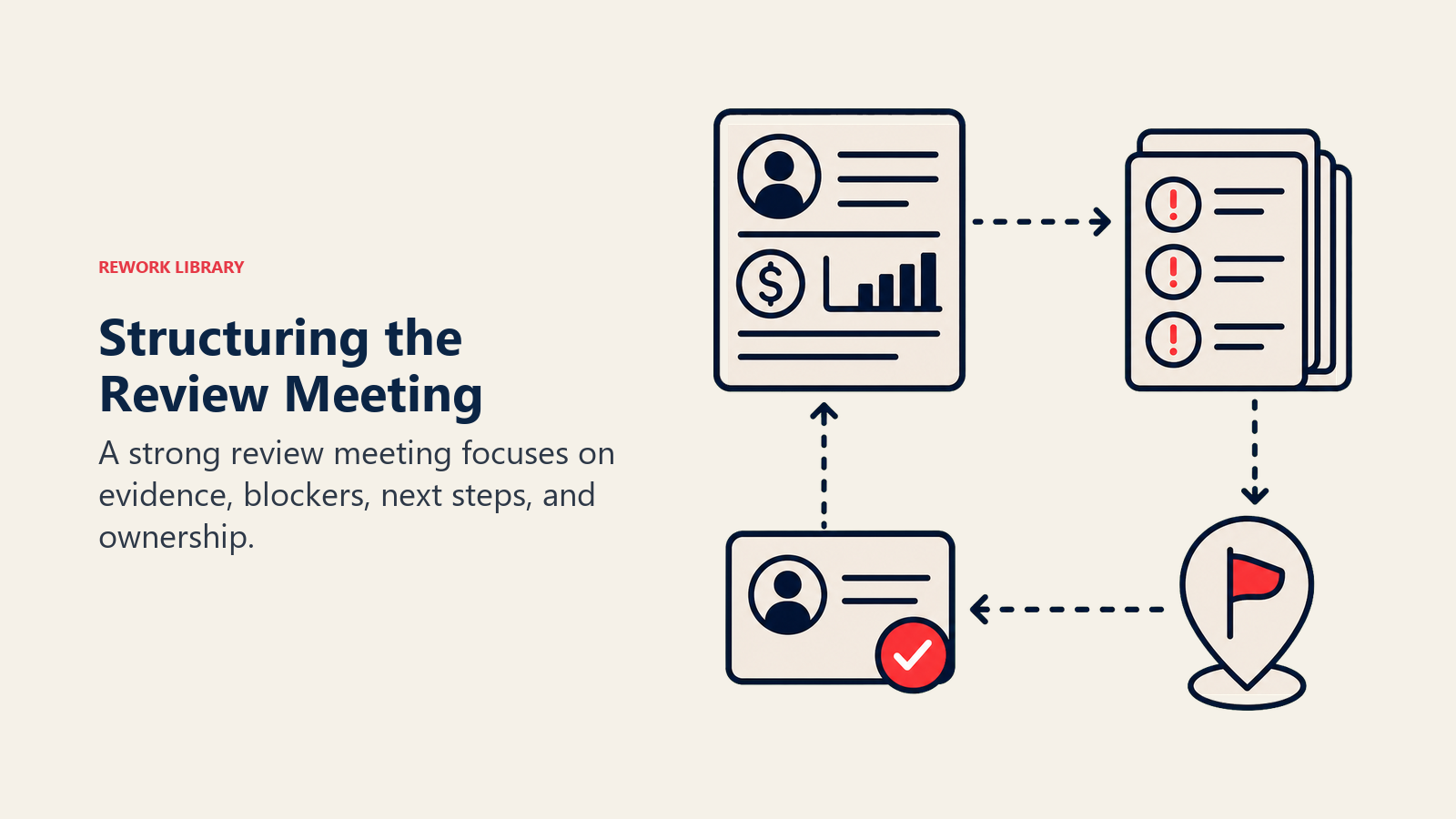
Keep reviews to 30 minutes per deal. More than that and you are either going too deep on early-stage issues or discussing things that should be happening outside the review.
The manager's role is to probe, not judge. Ask follow-up questions on anything that sounds rehearsed or vague. The AE knows more about this deal than you do. Your job is to help them surface what they know and identify what they do not.
End every review with a clear action list: who does what and by when. Follow up on those actions within 48 hours. A deal review that produces a list of actions nobody takes is worse than no review at all.
Document your findings in the CRM. Future forecasts become more accurate when you have a record of what was true about late-stage deals in prior quarters, not just whether they closed.
When to Escalate
Some late-stage deal situations call for escalation beyond the AE and front-line manager.
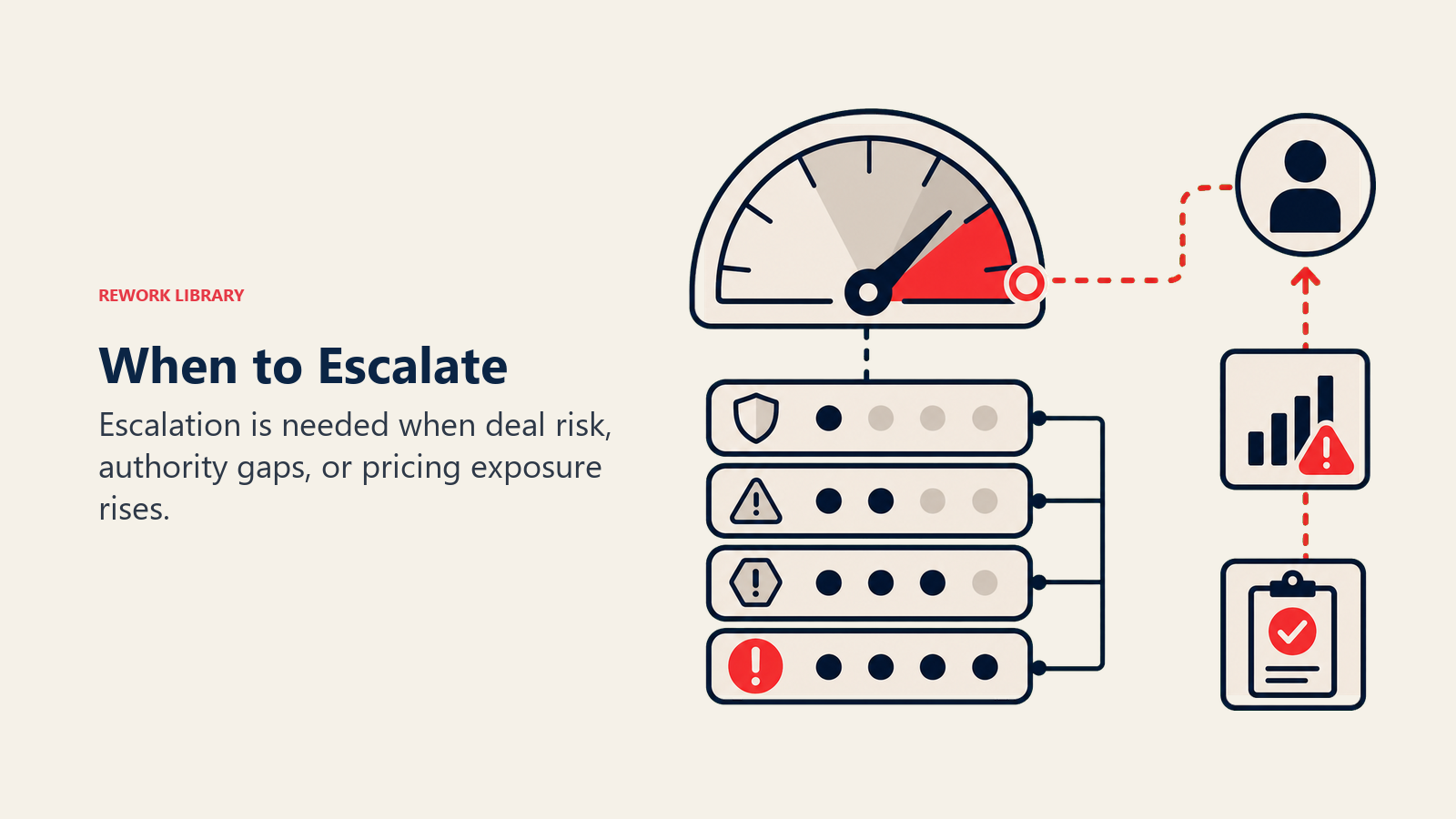
Escalate when: the economic buyer has gone quiet for more than two weeks and your champion cannot get a response, a procurement or legal issue has been stuck for more than three weeks without progress, a deal represents more than 10% of your quarter's forecast and it has a specific unresolved risk, or a new decision-maker surfaces at the C-suite level who has not been engaged.
Escalation means a senior executive from your side reaching out to a senior stakeholder on theirs. It is not a rescue mission or an admission of failure. Framed correctly, it is a signal of commitment and seriousness. "We value this partnership enough that our COO is reaching out directly to make sure we are meeting your expectations."
This kind of executive outreach resolves stalls faster than any amount of AE follow-up. But use it judiciously. Calling in executive escalation on a deal that does not warrant it wastes political capital.
Connecting Late-Stage Review to Your Lead System
Late-stage deal review is not just a closing tool. It is also a feedback mechanism for your entire lead lifecycle stages process.
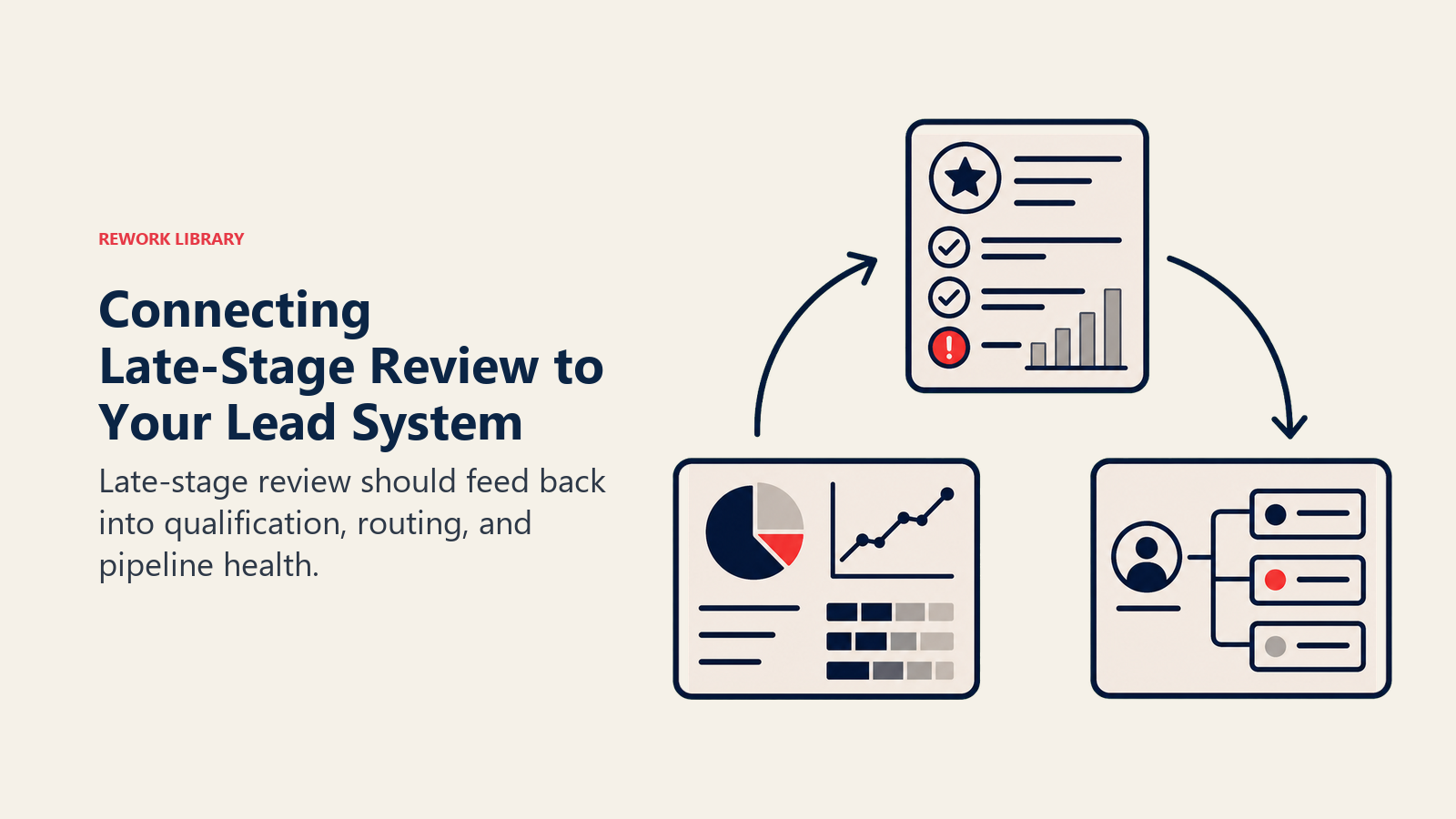
When you review late-stage deals and find patterns (champion engagement is consistently weak, or procurement always slows down a specific type of deal), those patterns should inform how you design earlier stages of your pipeline. If every enterprise deal gets surprised by a procurement process that takes six weeks, build six weeks into your sales cycle estimates and start the procurement relationship earlier in the process.
Feed the insights from late-stage reviews back into your lead scoring systems. Deals that had a specific profile when they entered late stage (champion engaged, economic buyer committed, contract initiated) should close at a higher rate. If they do, that profile becomes a scoring signal that upgrades the probability of new deals entering that stage with similar characteristics.
And use lead status management to make late-stage health visible to the whole revenue team, not just sales. When marketing sees which late-stage deals are at risk, they can provide targeted content support. When customer success sees which deals are closing, they can prepare for a smooth onboarding handoff before the ink is dry.
Frequently Asked Questions about Late-Stage Deal Review
How is a late-stage deal review different from a standard pipeline review?
A pipeline review looks at all open opportunities across all stages and assesses overall pipeline health and forecast accuracy. A late-stage deal review goes much deeper on a small number of high-value, high-probability deals that are within 30-45 days of their expected close. It examines specific risk factors (champion engagement, economic buyer commitment, procurement status, competitive threats) that general pipeline reviews do not surface. The goal is to catch problems while there is still time to fix them.
How often should late-stage deal reviews happen?
For most sales organizations, weekly reviews of deals within 30 days of their expected close date is appropriate. Deals in the final two weeks before a quarter end may warrant daily check-ins on specific actions. The review cadence should match the urgency. A deal with no unresolved risk issues needs a lighter touch than one where procurement has been stuck for two weeks.
What is the single biggest risk in late-stage deals?
"No decision" is the most common killer of late-stage enterprise deals, responsible for 58% of deals lost according to CSO Insights. The customer does not choose a competitor. They choose to keep living with the problem rather than accept the risk and effort of change. The antidote is making the cost of inaction concrete and specific, returning the customer to the original business problem they were trying to solve and quantifying what waiting another year costs them.
How do you handle a deal where the champion has gone quiet?
Start with a direct outreach to the champion to get a real conversation scheduled, not an email asking for an update. In that conversation, ask specifically: "What is the current status of this project internally? What concerns are you hearing from stakeholders I should be aware of?" If you cannot reach the champion directly within 48 hours, that silence is itself a signal. Look for an alternative contact inside the organization who can give you an honest read on what is happening. Escalating through another stakeholder is better than waiting.
Should late-stage deal reviews focus only on deals at risk?
No. Late-stage reviews should examine all high-value, high-probability deals in the window, not just the ones that look troubled. Deals that appear healthy sometimes have hidden risks that only surface through structured questioning. And healthy late-stage deals benefit from the review because it accelerates close plan execution, identifies opportunities to pull in the timeline, and ensures nothing falls through the cracks as you approach the finish line.

On this page
- Why Late-Stage Deals Need a Specific Review Process
- When to Run a Late-Stage Deal Review
- The Late-Stage Deal Review Framework
- 1. Champion Engagement
- 2. Economic Buyer Access and Commitment
- 3. Decision Criteria Validation
- 4. Procurement and Legal Status
- 5. Competition and "No Decision" Risk
- 6. Close Plan and Next Actions
- Structuring the Review Meeting
- When to Escalate
- Connecting Late-Stage Review to Your Lead System