Prospecting Strategy: A Framework for Finding and Qualifying Your Best Leads
Turn this article into takeaways for your work.


Each assistant summarizes the article only for you and suggests best practices for your work.
Ask most sales reps how they prospect and you get one of two answers. Either they work the same accounts they have always worked, or they pull a list from a database and start dialing. Neither is a strategy.
A real prospecting strategy is a systematic process for identifying the accounts most likely to buy, finding the right people inside those accounts, recognizing the signals that indicate they might be ready, and reaching them through the right channels at the right time with a message that actually resonates.
That process, built well, is the difference between a rep who consistently builds pipeline and one who scrambles for coverage every quarter.
Key Facts: B2B Prospecting
- Sales reps spend an average of 21% of their time on prospecting activities, but only 27% of that time results in a qualified conversation. Improving prospecting efficiency is one of the highest-leverage investments a sales leader can make. (InsideSales, 2024 Sales Activity Report)
- 78% of decision-makers say they have taken a meeting or responded to a vendor as a result of a cold email or call. But only 13% of cold outreach is considered relevant by the recipient. The gap is poor targeting, not channel failure. (RAIN Group, 2024 What Sales Winners Do Differently)
- Prospectors who use trigger events (funding rounds, leadership changes, product launches, expansion announcements) as the basis for outreach achieve 2x higher engagement rates than those who reach out without a specific event catalyst. (LinkedIn Sales Insights, 2024)
- 50% of the best leads go to whoever reaches them first. Speed of prospecting response to inbound signals and trigger events is a significant competitive advantage. (HubSpot State of Sales, 2024)
- Sales reps who follow a structured prospecting process (consistent ICP targeting, multi-touch sequences, tracking against daily activity metrics) generate 52% more pipeline than peers who prospect ad hoc. (Sales Benchmark Index, 2025)
The Core Problem with Most Prospecting
Random prospecting produces random results.
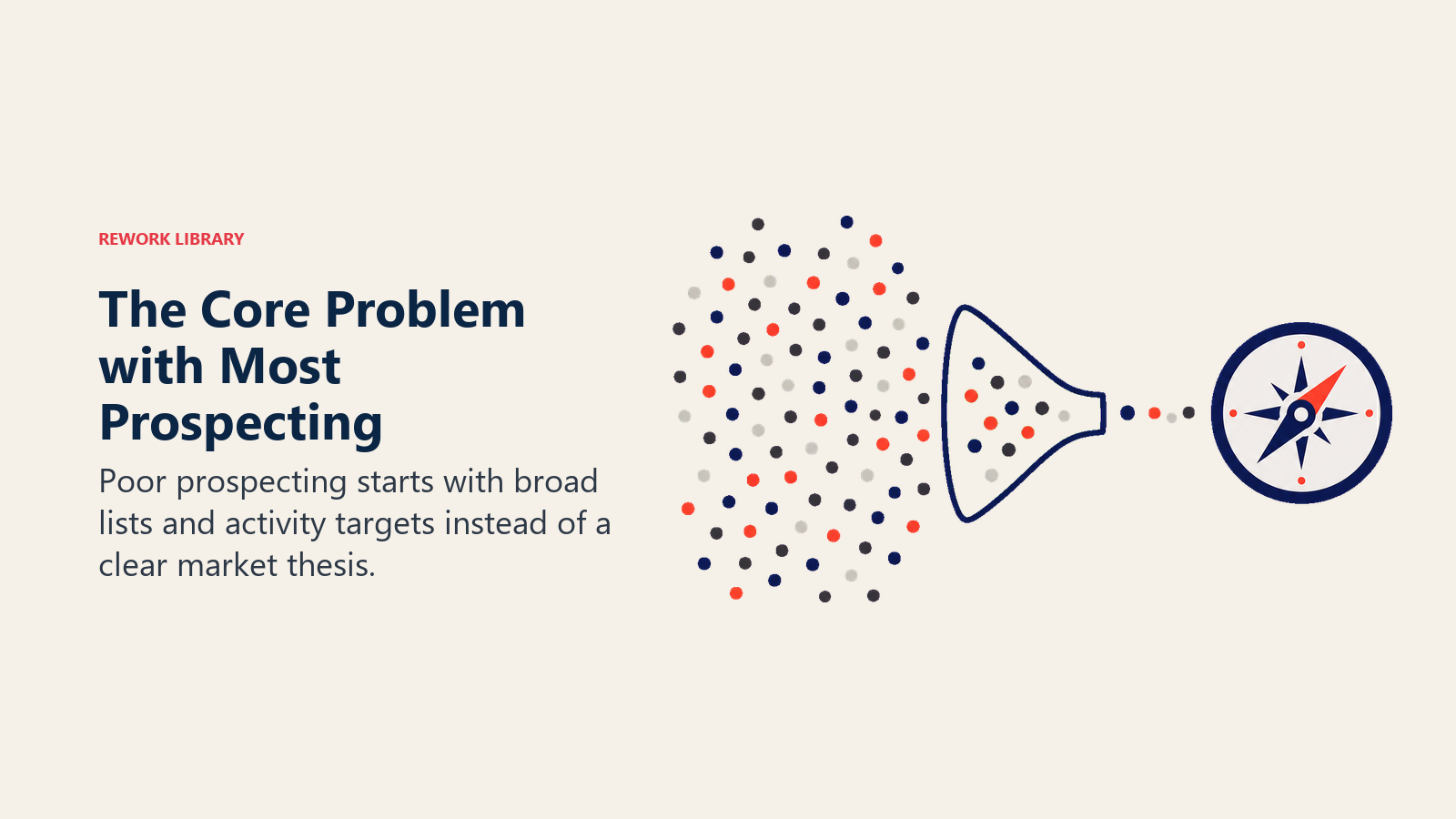
The problem is not effort. Most sales reps and SDRs work hard. The problem is that they are working without a clear picture of who they should be chasing, why those people might want what they are selling, and what signals tell them now is the right moment to reach out.
Without that clarity, prospecting becomes a volume game. Send 200 emails, make 50 calls, hope something sticks. This approach works well enough to feel productive and badly enough to keep people just short of quota.
The better approach treats prospecting as targeted research with a structured outreach plan. It starts with precision and earns its right to scale.
Step 1: Start With Your ICP, Not a Database
Prospecting starts before you open a list. It starts with a clear definition of who your best prospects actually are.
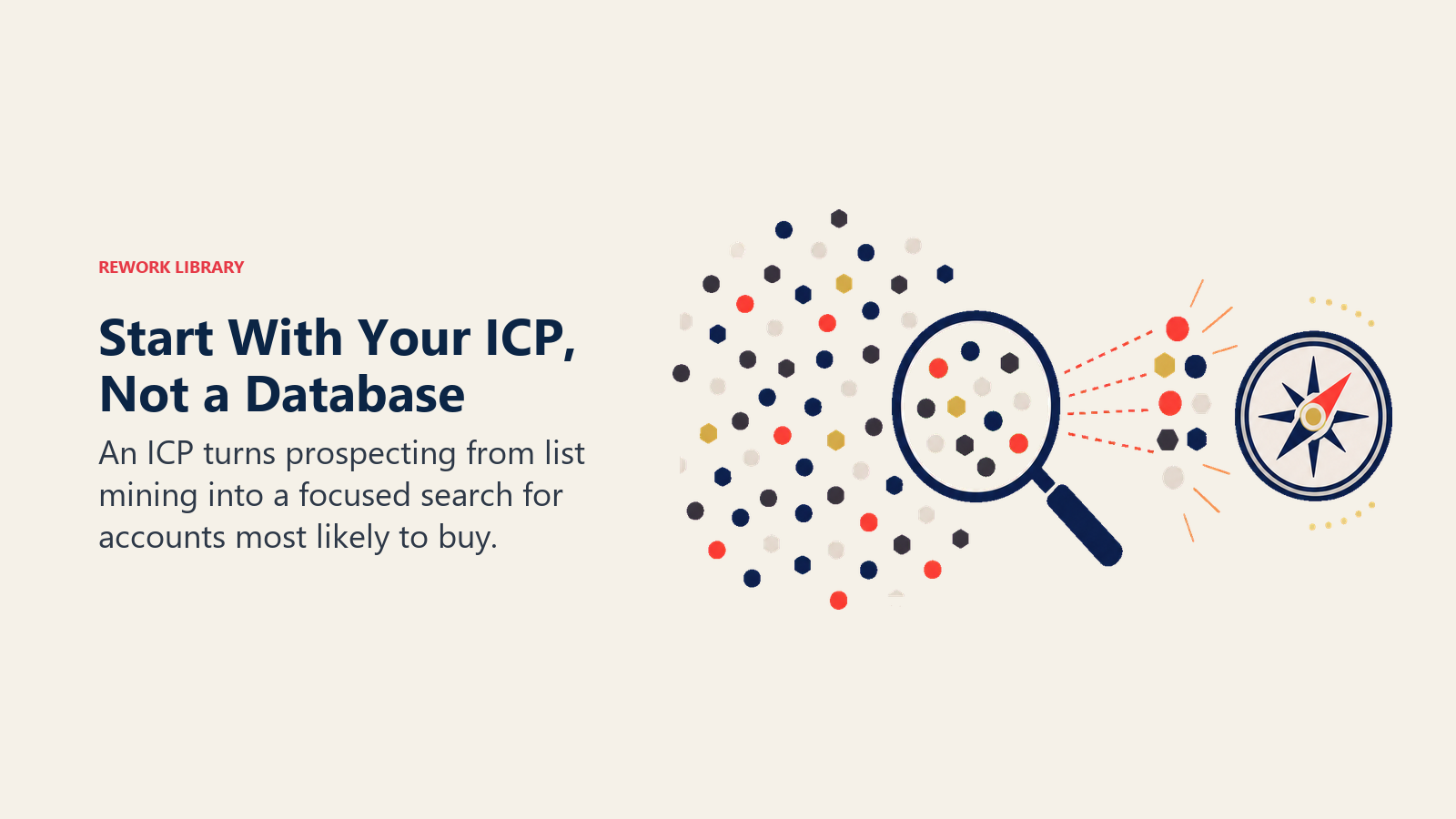
Your ideal customer profile is the anchor for every prospecting decision. It answers: what company characteristics predict good outcomes for your product? What does the company look like in terms of size, industry, growth stage, technology stack, and organizational structure?
But the ICP alone is not enough for prospecting. You also need a persona layer: within the right companies, which roles are most relevant to your product? Who has the problem you solve? Who controls the budget? Who has to approve the decision?
Get specific. "Companies between 100-500 employees in B2B SaaS with dedicated sales and marketing teams, where the VP of Operations or RevOps Director owns CRM administration" is a usable prospecting target. "Mid-market SaaS companies" is not.
If you do not have a documented ICP, start by analyzing your 20-30 best customers. What do they have in common? What made them successful? Why did they buy? The patterns in that analysis are your prospecting filter.
Reference the ICP every time you consider adding a new account to your prospecting list. If an account does not match the profile, it is a prospecting distraction. The time you spend on a poor-fit account is time taken away from a good one.
Step 2: Build a Targeted Account List
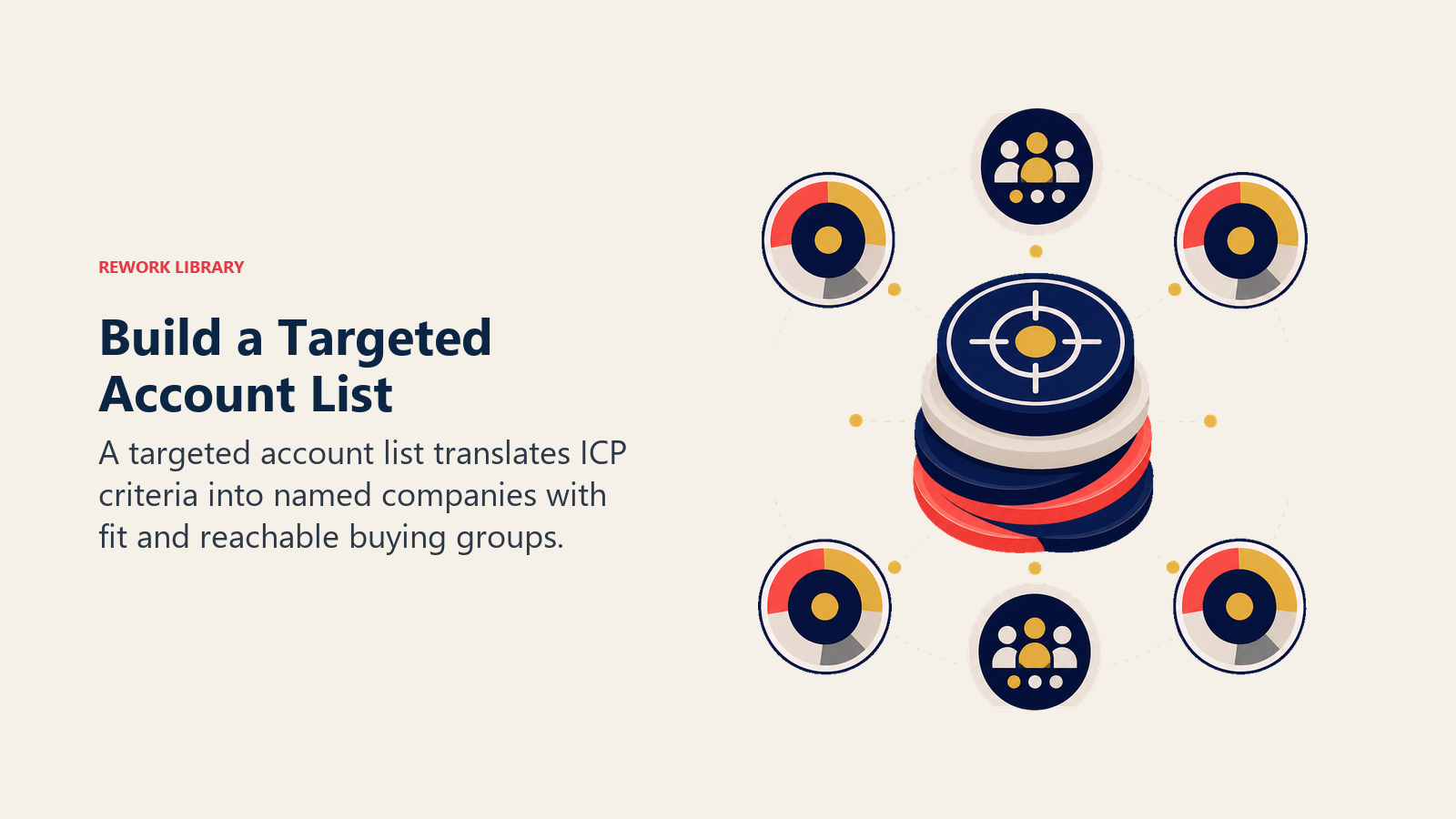
With a clear ICP in hand, building the right account list becomes a research exercise rather than a data dump.
Sources for enterprise and mid-market prospecting:
LinkedIn Sales Navigator is the most useful tool for most B2B situations. Filter by company size, industry, seniority, geography, and technology tools used. Use the "buyer intent" filter to surface companies that are actively researching your category.
Apollo, ZoomInfo, or Cognism provide contact data (email, direct dial) that supplements LinkedIn's professional profile data. Cross-reference these to build complete records with both firmographic context and contact information.
Crunchbase or Pitchbook are useful for funding signals. Companies that raised a round in the last 12 months often have budget authority and an initiative that aligns with your product.
G2, Capterra, and competitor review sites surface companies that are actively evaluating solutions in your category. A company leaving a review for a competitor you beat frequently is a prospect worth targeting.
Your own CRM is an underused prospecting source. Past opportunities that did not close, companies that had a champion who left, customers in adjacent industries to your existing base. These accounts already have some context on your company.
The goal is not the biggest possible list. It is the most accurate possible list. A list of 150 precisely matched accounts will outperform a list of 1,500 loosely matched ones.
After building the list, review it manually at the account level. Does this company look like it has the problem you solve? Is it in a growth phase where they are investing in tools like yours? Is there a specific event or signal that makes this a good moment to reach out? Add a note for each account on what your outreach angle will be.
Step 3: Identify Trigger Events
The timing of prospecting matters almost as much as the targeting. The same message sent at the wrong moment lands differently than the same message sent when the prospect is actively thinking about the problem you solve.
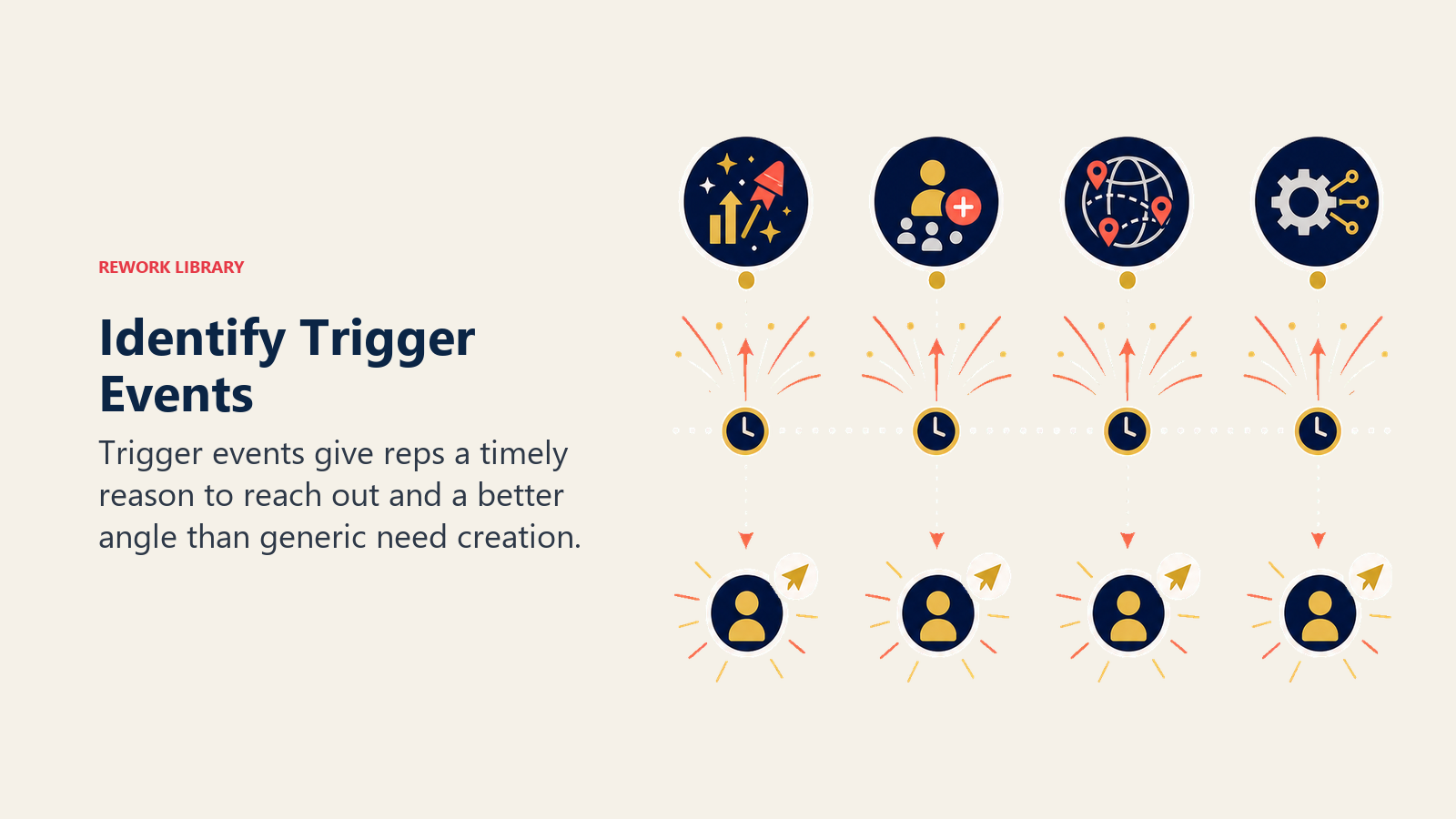
Trigger events are the signals that a company or individual is entering a buying-relevant moment.
Hiring signals. A company posting five new sales rep jobs is almost certainly building pipeline capacity. That creates demand for lead management, CRM, and sales enablement tools. A company hiring a VP of Revenue Operations has just created a role that will evaluate the entire revenue tech stack.
Funding announcements. Companies that close a funding round typically spend the next 6-12 months investing in infrastructure and people. The new CFO or VP of Finance who joined post-funding is often evaluating tools immediately.
Leadership changes. A new CRO, CMO, or VP of Sales typically reviews the existing tool stack within 90 days of starting. New executives want to put their own mark on operations.
Product launches or expansion. Companies launching a new product line or entering a new market will need support systems to manage that growth.
Competitor churn signals. Companies leaving competitors (visible in review platform activity, LinkedIn posts from employees mentioning tool changes) are actively in the market.
Content engagement signals. If you are using intent data tools, companies repeatedly searching for or consuming content about your category are showing buying intent.
Build a trigger monitoring system. Set up Google Alerts for your target accounts. Follow them on LinkedIn. Monitor the company news feeds in your CRM. The rep who sends a relevant message to a VP of Sales three days after a new funding announcement reaches them at exactly the right moment.
Step 4: Choose Your Prospecting Channels
Different channels work for different situations. The best prospecting strategy uses multiple channels rather than committing to one.
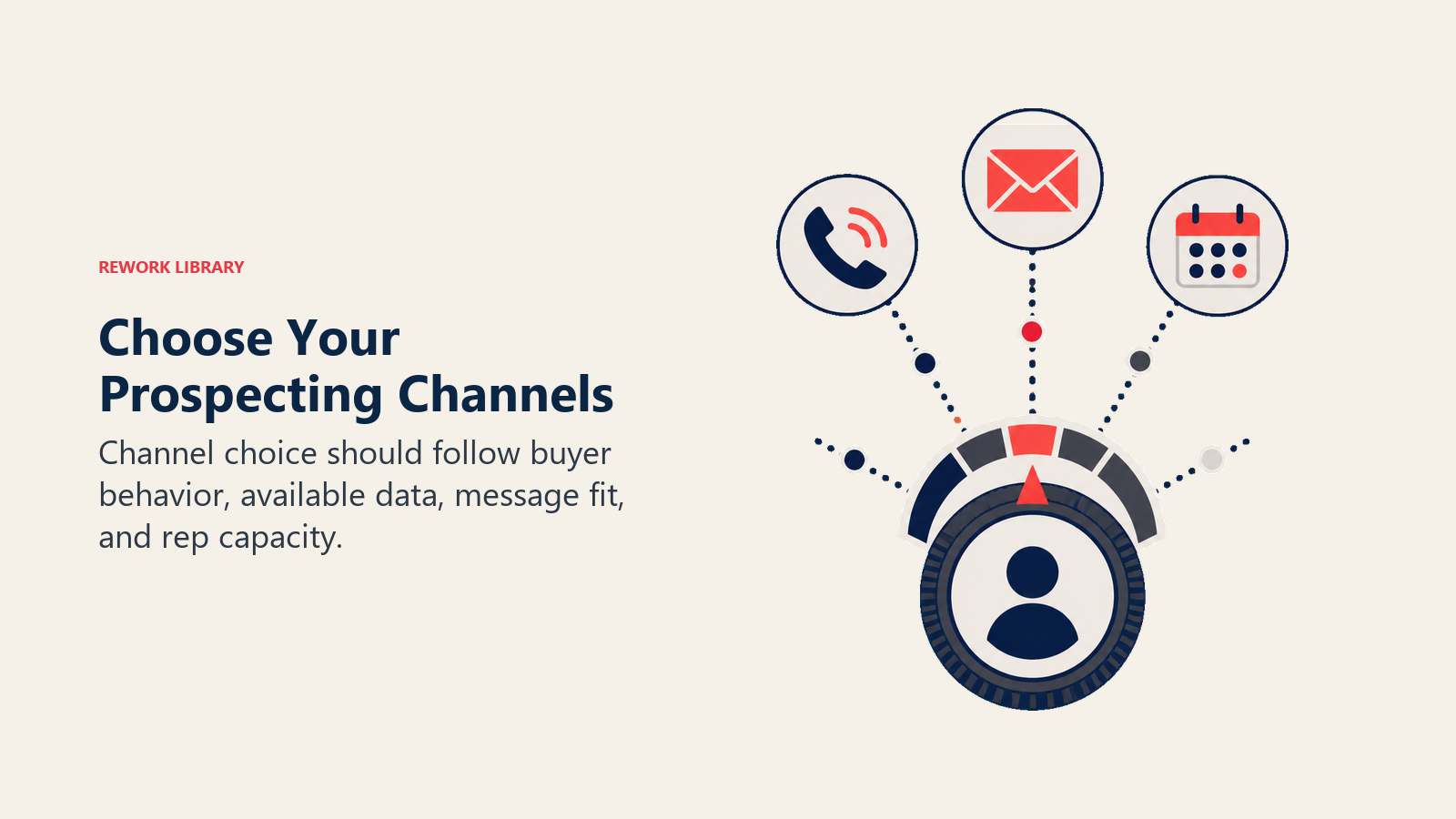
Email. High volume, asynchronous, trackable. Works best for initial outreach to mid-market prospects where personalization is possible at some scale. Less effective for senior executives who receive dozens of cold emails per day. For email prospecting, your cold email strategy and technical setup (deliverability, authentication, sending limits) need to be solid before scaling.
Phone. Higher effort, higher signal. A live conversation in the first 30 seconds reveals more about fit and interest than a week of email exchanges. Cold calling has lower connect rates than email open rates, but a connected conversation advances a deal much faster. Works especially well for senior roles at mid-market companies where getting a response by email is nearly impossible.
LinkedIn. Positioned between email and phone in terms of intrusion. A connection request with a personalized note, followed by a message once connected, is less disruptive than a cold call and more personal than a cold email. LinkedIn engagement (commenting on posts, sharing relevant content) also builds familiarity before the first direct outreach.
Warm introductions. The highest-converting prospecting channel, period. A mutual connection introduces you to a prospect and vouches for you before you say a word. Conversion rates on introduced meetings are 4-5x higher than cold outreach. Build this channel by systematically asking happy customers and partners for introductions to specific people in their networks.
Events and conferences. Industry events put you in physical proximity to your target audience. The conversation after a keynote, the hallway chat before a breakout session, the dinner with a small group of executives, all of these create relationship contexts that cold digital outreach can never replicate. Events require more investment but often produce the most durable pipeline.
For most B2B sales roles, a combination of email (for breadth and initial touchpoints), phone (for higher-value accounts and warmer leads), and LinkedIn (for senior executives and relationship-building) covers the majority of effective prospecting.
Step 5: Personalize the Outreach
Personalization is not adding the prospect's first name to an email template. It is demonstrating that you understand their specific situation well enough that your message could not have been sent to anyone else.
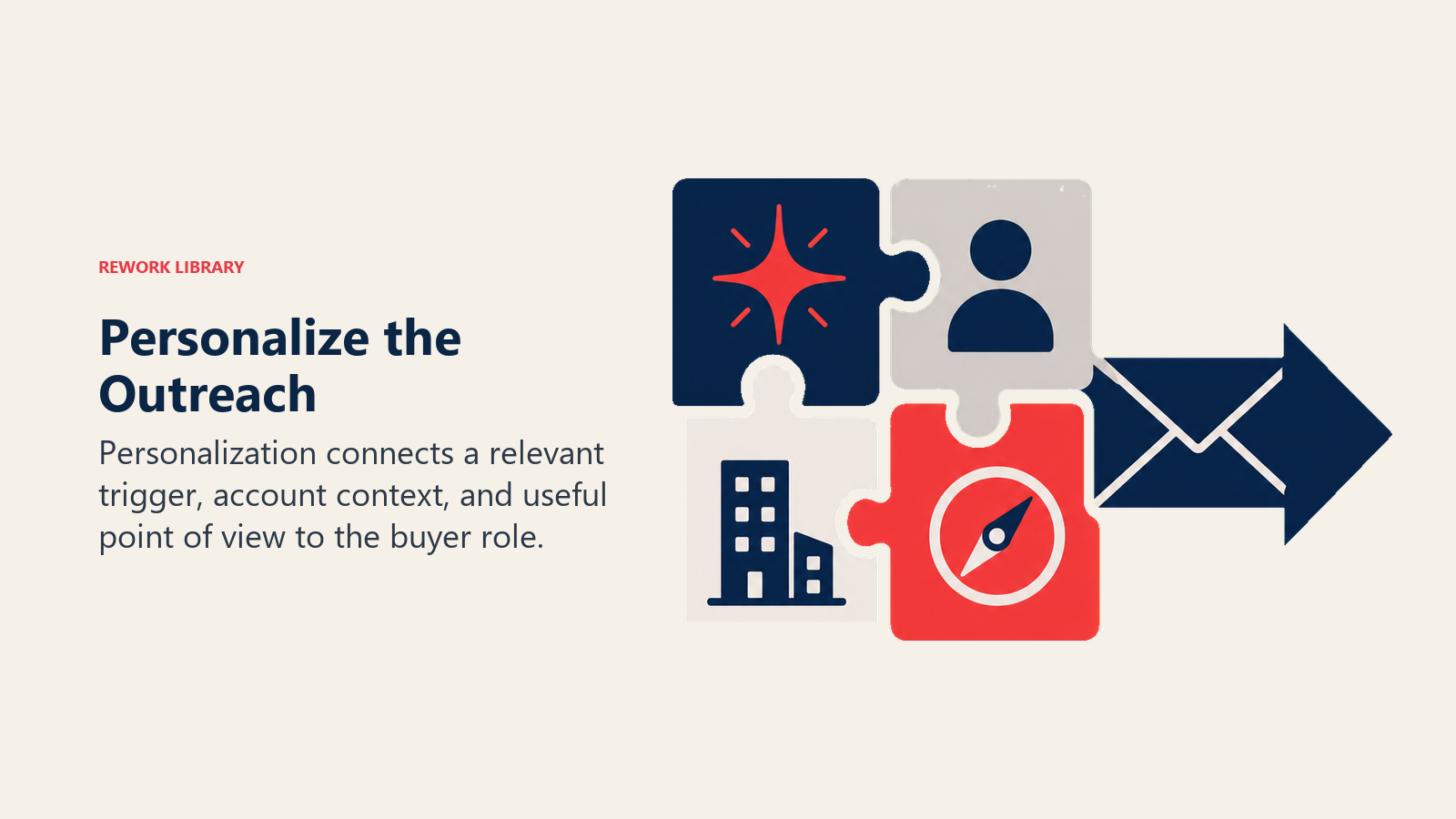
The level of personalization should match the deal value and stage. For a $5K SMB deal, you might personalize the company reference and job title but use the same structural template. For a $200K enterprise deal, each outreach should reference something specific to the account: a recent announcement, a LinkedIn post from the prospect, a challenge specific to their industry or stage.
The elements that create genuine personalization:
A specific observation. Reference something real about their company or role: "Saw you recently posted about the challenge of managing pipeline visibility at scale" or "Noticed you are hiring three new AEs this quarter."
A peer reference. Name a company similar to theirs that you work with, without revealing confidential details. "We help RevOps leaders at Series B SaaS companies like [Company X] solve exactly this."
A specific outcome. Do not describe your product. Describe a result. "Teams using this approach typically reduce their CRM data entry time by about 60% in the first 90 days."
A light call to action. Not "Can we do a 45-minute demo?" but "Would it be worth a quick call to see if any of this is relevant to what you are working on?"
This level of personalization takes time. Budget accordingly. Higher-value accounts warrant more time per touchpoint. Lower-value accounts need a balance between personalization and efficiency.
Step 6: Design Your Prospecting Cadence
A prospecting cadence is a structured sequence of outreach touches across multiple channels, spaced over a defined period. Without a cadence, prospecting becomes inconsistent and reps give up too soon.
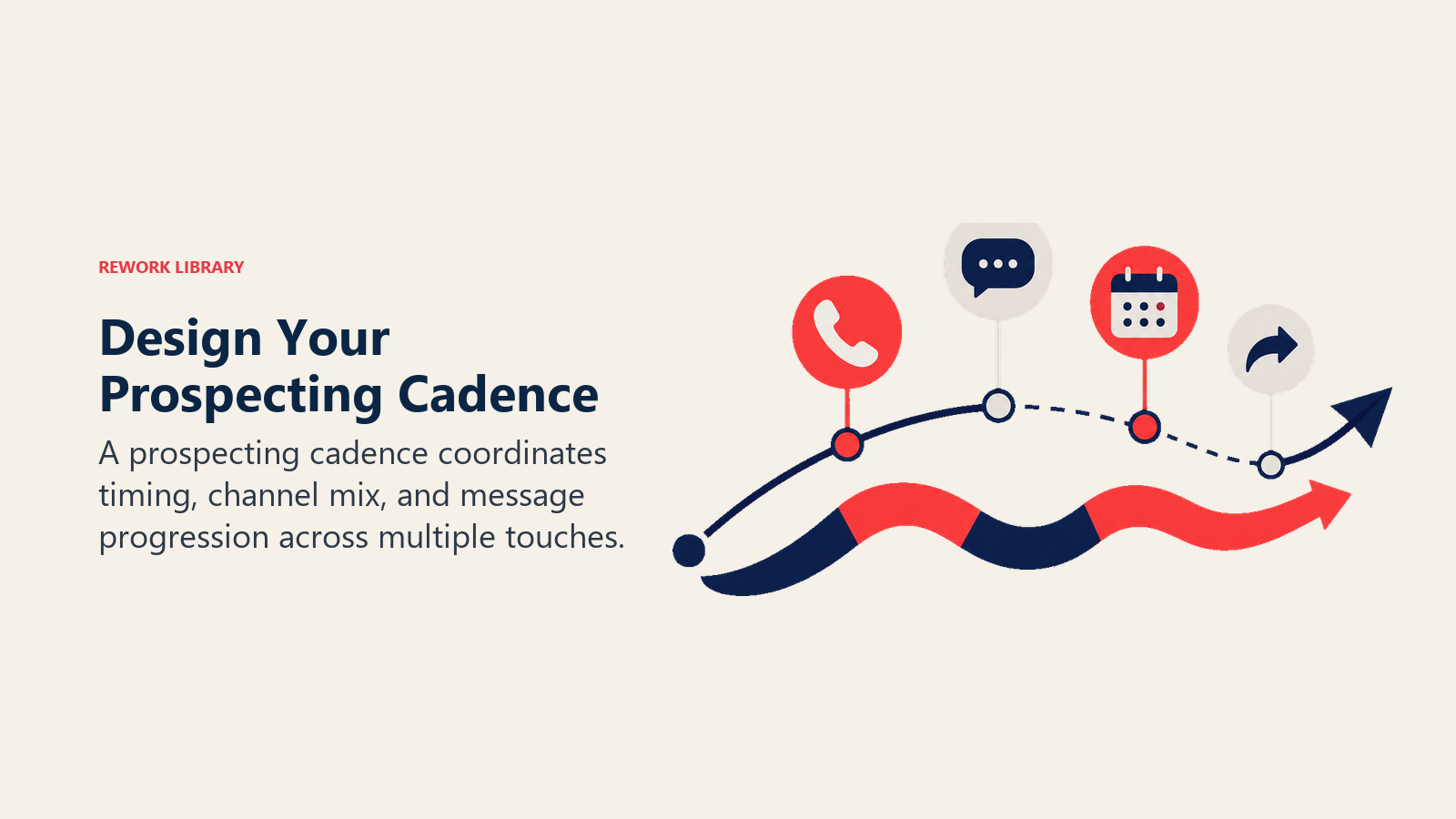
A standard outbound prospecting cadence for mid-market might look like:
- Day 1: Initial email (personalized, referenced trigger event if available)
- Day 3: LinkedIn connection request with short note
- Day 5: Second email (different angle, brief value statement)
- Day 8: Cold call with voicemail
- Day 12: Third email (case study or social proof, lighter touch)
- Day 15: LinkedIn message to connected prospect
- Day 20: Fourth email (break-up tone: "Should I close the file?")
- Day 25: Final call attempt
This eight-touch cadence over three weeks is more than most reps do and less than the research says is optimal. Adjust based on your own conversion data.
Key principles for cadence design: vary the channel with each touch, vary the angle (do not send the same value prop four times), and space touches with decreasing frequency over time. The goal is persistent presence, not daily harassment.
For outbound lead generation, the cadence design also needs to account for timing. Prospect emails sent Tuesday through Thursday outperform those sent Monday or Friday. Calls placed between 8-10 AM or 4-6 PM local time to the prospect see higher connect rates than midday calls.
Step 7: Qualify Before You Advance
Prospecting is not just about generating activity. It is about generating qualified activity. The rep who books 20 meetings a month with unqualified prospects will consistently underperform the rep who books 12 meetings with properly qualified ones.
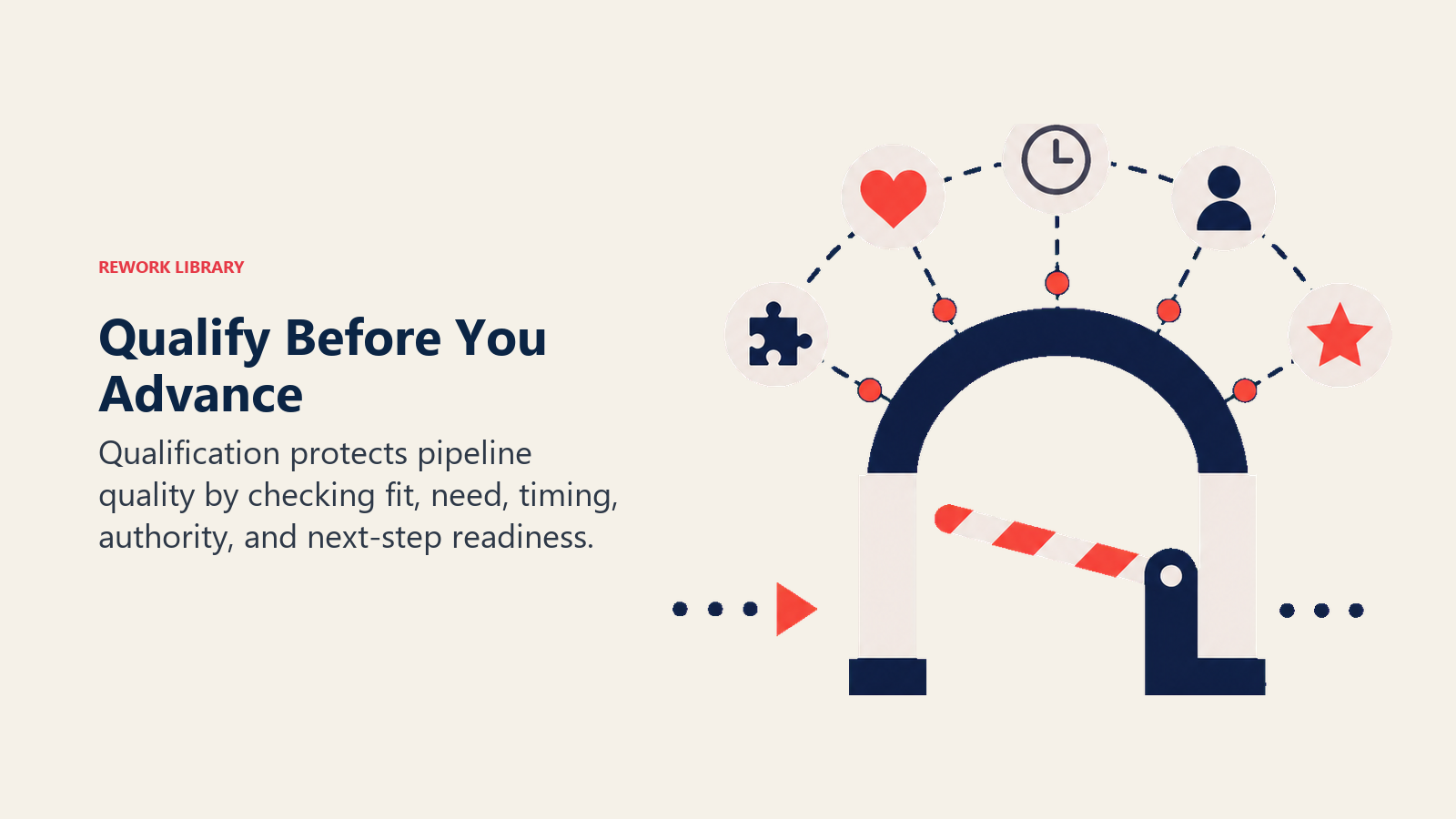
Use your lead qualification frameworks to assess every prospect before investing significant time in them. At a minimum, you want to understand:
- Problem: Do they have the problem your product solves? Is it painful enough that they would pay to fix it?
- Authority: Can this person influence or make the buying decision, or do you need to reach others in the organization?
- Timeline: Is there any urgency driving a decision? Or is this a "someday maybe" conversation?
- Budget: Does this company have the budget range your product requires?
You will not have all of these answers before the first conversation. But you should have some before investing in a meeting. And you should have all of them before moving a prospect into your formal sales process.
Qualifying hard early saves time for both parties. A prospect who is not the right fit at this stage should go into a longer-term lead nurturing programs sequence rather than taking up active sales capacity.
Prospecting Metrics That Drive Better Performance
You can not improve prospecting without measuring the right things.
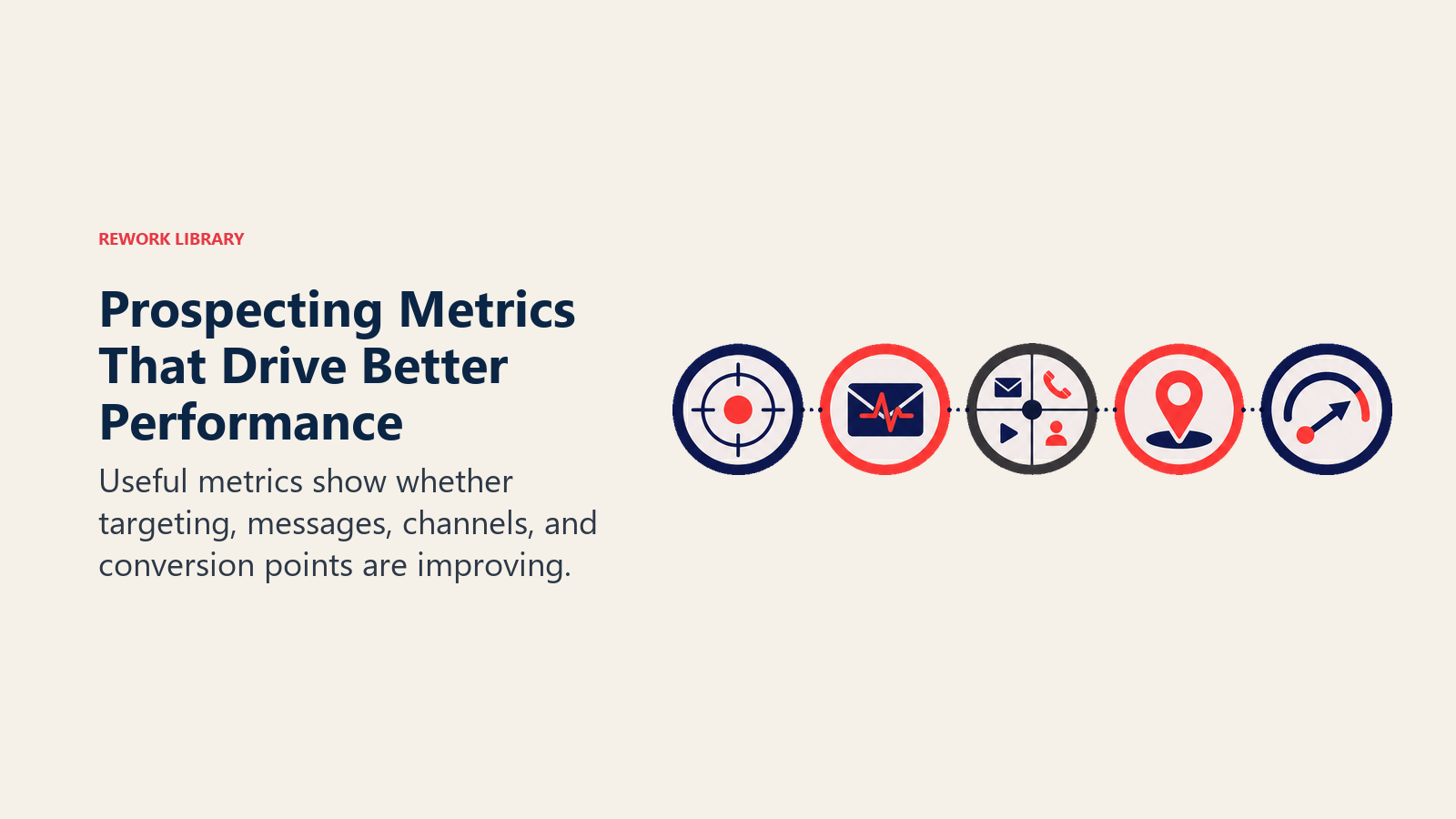
Prospect-to-conversation rate: Of every prospect you reach out to, what percentage result in a real two-way conversation? Below 5% suggests targeting or message problems. Above 15% on cold outreach is strong.
Conversation-to-meeting rate: Of the prospects who have a conversation with you, what percentage agree to a discovery meeting or demo? Below 30% suggests qualification issues or the wrong entry angle.
Meeting-to-opportunity rate: Of the meetings you book, what percentage qualify as real opportunities after the initial meeting? This tells you whether your prospecting targeting is finding people with genuine fit.
Activity metrics: At the rep level, how many outreach activities (emails, calls, LinkedIn messages) does it take to produce a meeting? Track this per channel. Then track whether those activities are producing the right kind of conversations.
These metrics feed back into your lead conversion rate analysis and help you understand the true efficiency of your outbound prospecting motion.
Building Prospecting Into a Daily Habit
The biggest execution failure in prospecting is inconsistency. Reps who prospect only when they have no other deals to work always end up in a feast-or-famine cycle. Strong quarters followed by pipeline drought, followed by a scramble to catch up.
The solution is treating prospecting as a daily discipline rather than a reactive activity.
Block time for prospecting on your calendar. Two hours in the morning before the day gets away from you. That block is sacred. No meetings, no internal calls, no administrative tasks. Just prospecting.
Set a daily activity target. Not a revenue target for prospecting (that will disappoint you every day) but an activity target. Reach out to X new accounts. Make Y calls. Send Z personalized emails. Activity targets are within your control. Results are not.
Track your prospecting activity in your CRM, not a personal spreadsheet. Activity that lives in the CRM is visible to your manager, countable toward pipeline reporting, and connected to the deals it eventually produces. Activity in a spreadsheet helps only you.
Review your prospecting metrics weekly. Which messages are getting replies? Which channels are producing meetings? Which account types are converting to opportunities? Use what you learn to adjust your approach the following week.
This consistency, applied over months, is what separates reps who always have pipeline from those who are always surprised by the gaps in it.
Frequently Asked Questions about Prospecting Strategy
How many prospects should a B2B sales rep be actively working at once?
For enterprise-focused reps managing complex deals, 25-50 active prospect accounts is a manageable number that allows for adequate personalization and follow-up. For mid-market or SMB reps running higher-volume prospecting, 100-200 accounts in active sequences is more typical. The right number is whatever lets you personalize appropriately for your deal size and still maintain consistent follow-up cadence. More accounts than you can follow up with produces worse results than a smaller, better-managed list.
What is the best channel for B2B prospecting?
There is no single best channel. The most effective prospecting combines email (for initial outreach and follow-up at scale), phone (for higher-value accounts and to advance warm leads quickly), and LinkedIn (for senior executives and relationship-building). Multi-channel sequences consistently outperform single-channel approaches. Start with email for breadth, add calls for depth on the highest-priority accounts, and use LinkedIn for the executives who are hardest to reach through other channels.
How do you write a prospecting message that gets a response?
The best prospecting messages have four elements: a specific observation about the prospect or their company (not generic industry commentary), a brief and clear statement of a problem you help solve, a proof point from a similar company (without revealing confidential details), and a low-commitment call to action that makes it easy to say yes. Keep the whole message under 100 words. The more specific and less generic the message, the higher the response rate.
When should you give up on a prospecting target?
After a full cadence of 7-8 touches across multiple channels over 3-4 weeks with no response, most prospects are not ready right now. But "not ready now" is not the same as "never." Move unresponsive prospects to a long-term nurture sequence where they receive relevant content every 4-6 weeks. Check their LinkedIn for trigger events (job change, company news) that might re-open the conversation. Re-activate them for direct prospecting when a new trigger event occurs or when 6-9 months have passed and it is reasonable to reintroduce yourself.
How does prospecting strategy differ for enterprise versus mid-market accounts?
Enterprise prospecting is more research-intensive and account-based. You might spend several hours on account research before sending the first message. You target multiple stakeholders within the same account simultaneously or in sequence. The outreach is more personalized and the cadence is longer (sometimes 60-90 days). Mid-market prospecting allows more templated personalization and broader lists. The qualification process also differs: for enterprise, you need to validate organizational fit (does this account have the structure to benefit from your product?) before investing significant time; for mid-market, you can often qualify in the first conversation.

On this page
- The Core Problem with Most Prospecting
- Step 1: Start With Your ICP, Not a Database
- Step 2: Build a Targeted Account List
- Step 3: Identify Trigger Events
- Step 4: Choose Your Prospecting Channels
- Step 5: Personalize the Outreach
- Step 6: Design Your Prospecting Cadence
- Step 7: Qualify Before You Advance
- Prospecting Metrics That Drive Better Performance
- Building Prospecting Into a Daily Habit