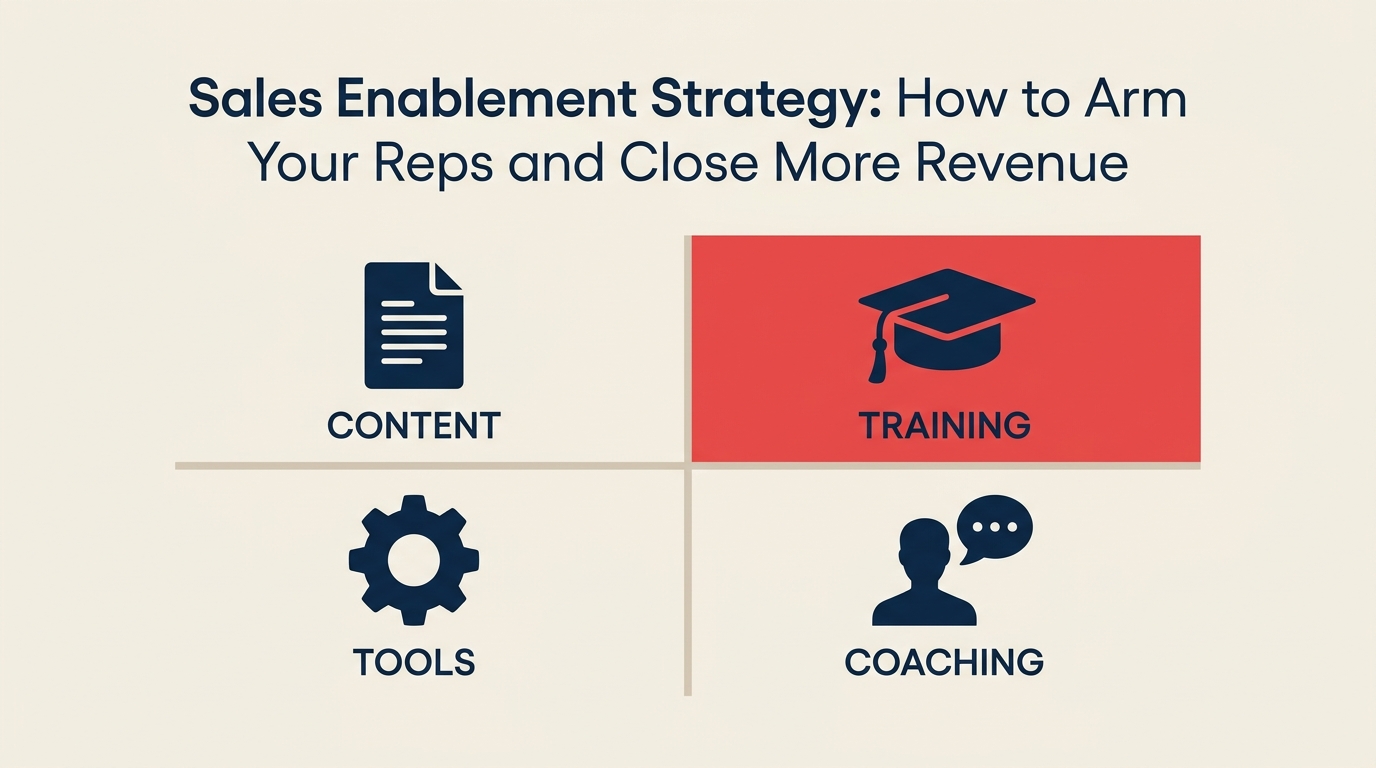
Sales Enablement Strategy: How to Arm Your Reps and Close More Revenue
Turn this article into takeaways for your work.


Each assistant summarizes the article only for you and suggests best practices for your work.
Most sales enablement programs die quietly. A VP of Sales gets frustrated with win rates, hires a sales enablement manager, they build a SharePoint folder full of case studies and pitch decks, and six months later nothing has changed except the sales team has more stuff they don't use.
Real sales enablement is not a content library. It's an operational system that consistently puts the right information, tools, and coaching in front of reps at the exact moment they need it, so they can move specific deals forward.
The difference is not subtle. One is a library. The other is infrastructure.
Key Facts: Sales Enablement Impact
- Companies with a formal sales enablement program achieve a 49% win rate on forecasted deals, versus 42.5% for those without one. (CSO Insights, Win Rate Report)
- Sales reps spend only 34% of their time actually selling. The rest goes to administrative tasks, finding content, and internal meetings. (Salesforce State of Sales)
- 65% of content created by marketing is never used by sales, primarily because reps can't find it or don't know it exists. (Forrester)
- Organizations that align sales and marketing through enablement see 36% higher customer retention and 38% higher sales win rates. (MarketingProfs)
- Reps who receive consistent coaching through a formal enablement program achieve 17% higher quota attainment compared to their peers. (Sales Management Association)
What Sales Enablement Actually Means
Sales enablement is the process of giving your sales team the resources they need to effectively engage buyers and close deals. Those resources fall into three categories:
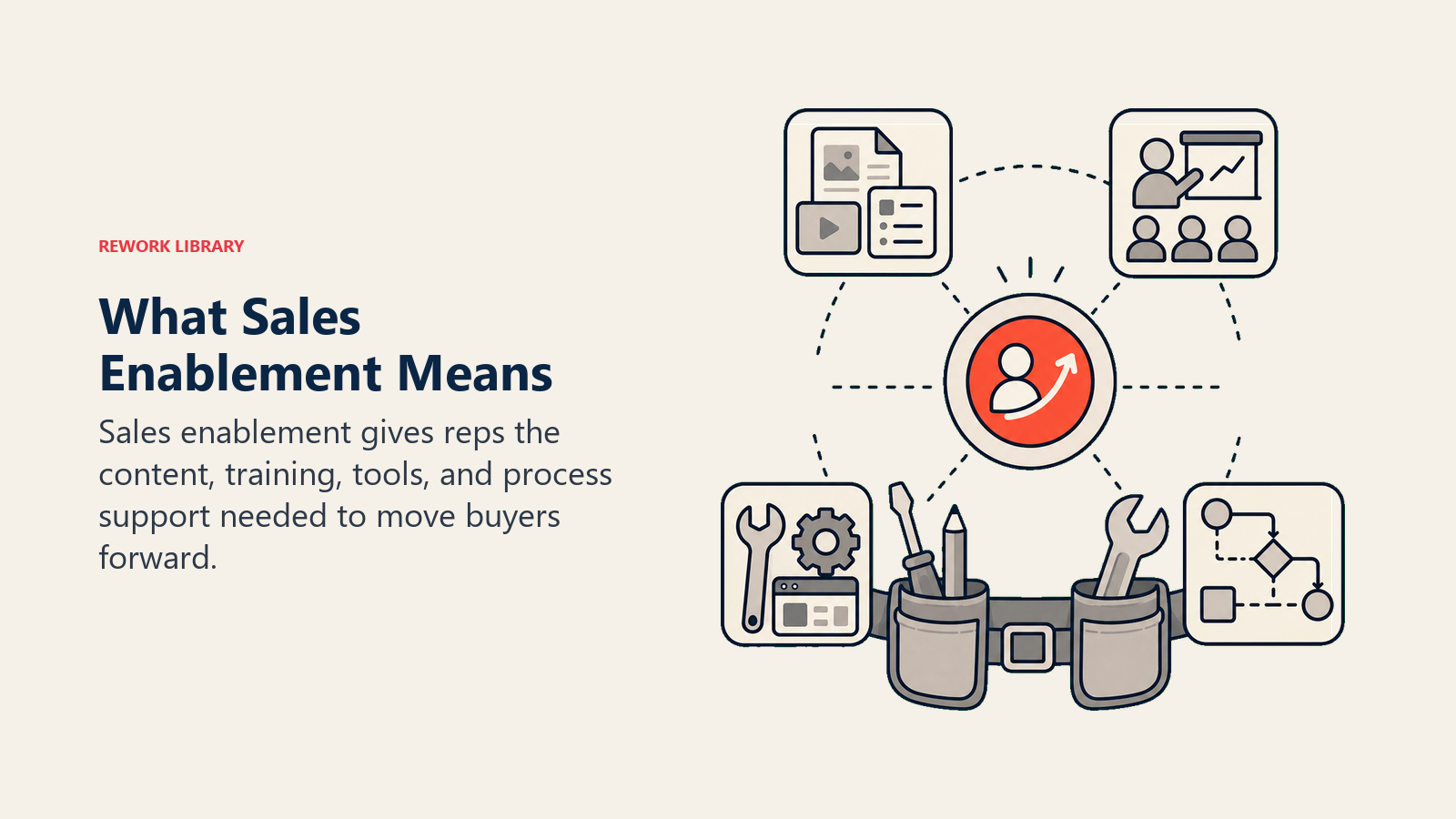
Content: case studies, pitch decks, competitive battle cards, ROI calculators, email templates, objection-handling guides, product one-pagers.
Training: onboarding programs, ongoing skills development, product knowledge updates, competitive training, coaching on specific deal stages.
Tools: CRM configuration, sales engagement platforms, conversation intelligence, content management, and the data feeds (like lead data enrichment) that give reps context before they reach out.
The problem is that most companies handle these three things separately, in different teams, with no unifying strategy. Marketing owns content. HR or training teams own learning. RevOps owns tools. Nobody owns the question of whether any of it is actually helping reps close deals.
Sales enablement strategy closes that gap. It creates accountability for the connection between resources and results.
The Four Pillars of Effective Sales Enablement
1. Content That Lives in the Workflow
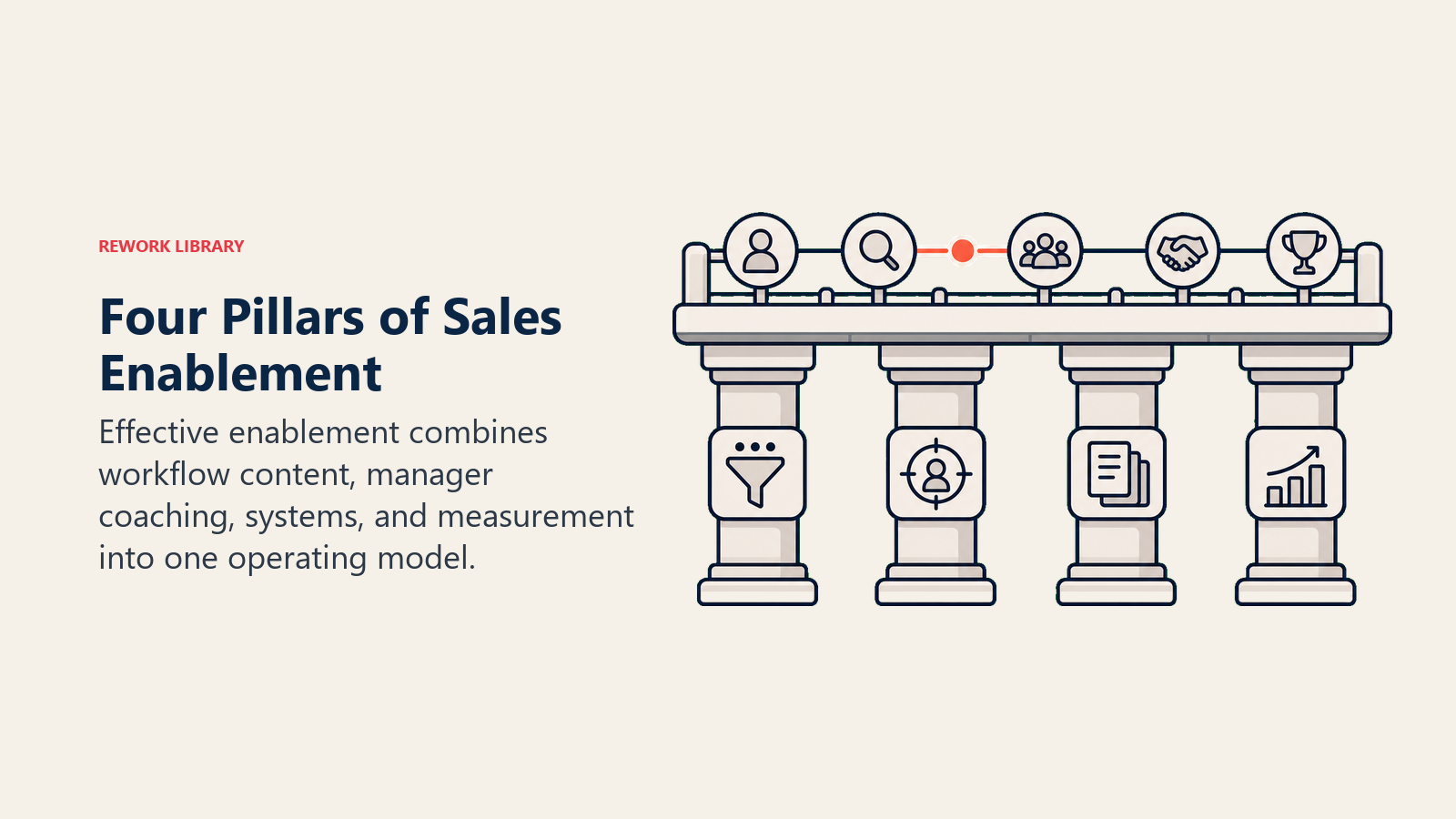
Sales content fails when it lives outside the sales workflow. If a rep has to leave their CRM, navigate to a SharePoint site, find the right folder, and remember which version is current, they won't do it. They'll wing it.
Effective content enablement puts materials inside the tools reps already use. Modern sales enablement platforms (Highspot, Seismic, Showpad) integrate directly into Salesforce so reps can pull relevant content based on the deal stage, industry, or competitor they're facing.
But you don't need expensive software to fix this. Even a well-organized CRM with templates, linked battle cards, and stage-specific checklists works better than a disorganized SharePoint that nobody visits.
The key criteria for content that actually gets used:
- Findable in under 30 seconds from inside the rep's primary tool
- Organized by buyer situation, not by team (not "Marketing Assets > Q3 > Campaigns")
- Version-controlled, so reps aren't accidentally using outdated pitch decks
- Tracked for usage, so you know what gets used and what doesn't
2. Training Tied to Real Deals
Generic sales training has a poor track record. A 2-day offsite on negotiation tactics sounds good, but the research is consistent: without immediate application and follow-up coaching, 87% of training content is forgotten within 30 days. (Sales Performance International)
The enablement programs with the highest win rate impact share a common structure:
Just-in-time training: short, specific training triggered by deal stage or situation, not just an annual schedule. A rep about to enter a competitive late-stage deal gets a 15-minute module on displacing that specific competitor, not a 3-hour sales methodology refresher.
Deal-based coaching: managers review actual deals in forecast calls and one-on-ones, not abstract scenarios. The conversation is about "what's happening in this specific opportunity and what does the rep need to do next" (see late-stage deal review for the framework).
Reinforcement cadence: spaced repetition through brief weekly quizzes or call reviews that keep key messages and methodologies fresh.
3. Playbooks for Repeatable Situations
The best enablement organizations document their best sales plays, so reps don't have to reinvent the wheel on situations they'll encounter hundreds of times.
A sales playbook is not a procedure manual. It's a practical guide that tells a rep exactly what to do in a specific situation: what to say, which assets to use, what objections to expect, and what the next step should be.
Common playbooks worth building:
- Inbound demo playbook: how to run the first call with a marketing-sourced lead, what questions to ask, how to set next steps
- Competitive displacement playbook: specifically for deals where the prospect is evaluating a named competitor
- Multi-stakeholder deal playbook: how to map a buying committee, identify the economic buyer, and build internal champions
- Stalled deal playbook: how to re-engage deals that have gone dark
Playbooks should be 1-2 pages, not 40. If a rep can't scan it in 5 minutes, it won't get used.
4. Feedback Loops Between Sales and Marketing
The most common sales enablement failure is a one-way content flow. Marketing creates content, publishes it, and moves on. Sales doesn't use it. Nobody knows why.
High-performing programs install feedback loops:
- Monthly "content council" calls where a few reps walk through which assets they used, what worked, and what buyers actually responded to
- Win/loss analysis that identifies messaging gaps (what did we not have that we needed?)
- Competitive intelligence gathered from the field and systematized back into battle cards
- Lead quality feedback loops where sales tells marketing which lead sources and campaigns are generating opportunities that actually close
This feedback loop is what makes enablement get better over time rather than stagnate.
Measuring Sales Enablement Effectiveness
Enablement programs that can't measure impact don't survive. Here are the metrics that actually indicate whether your program is working.
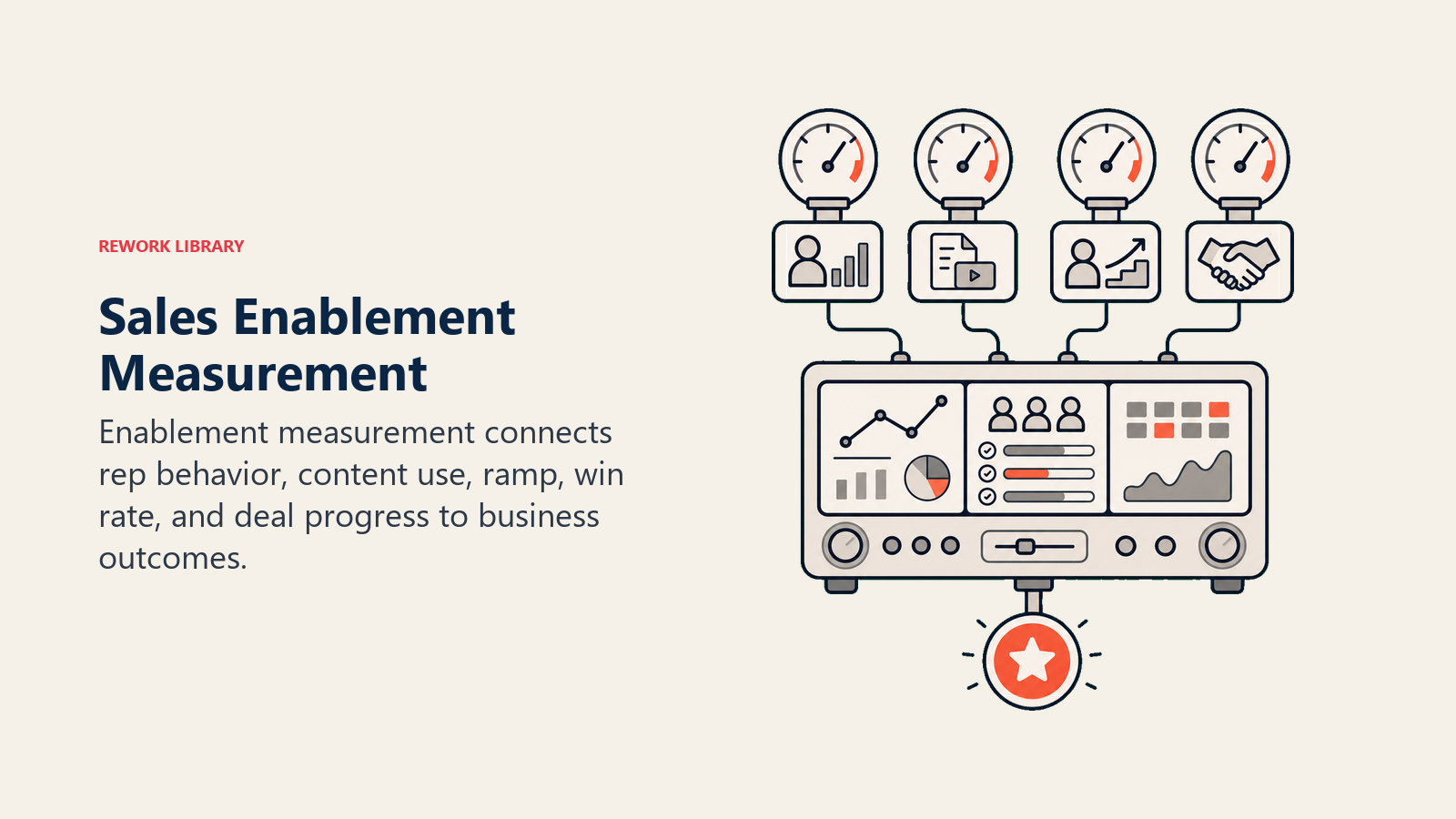
Win rate by rep cohort: compare win rates for reps who completed a specific training module versus those who didn't. If the training works, the difference should be measurable.
Ramp time for new hires: how long does it take a new rep to reach full productivity (defined as hitting 80% of quota)? Effective onboarding programs cut this from the industry average of 6-9 months to 3-4 months.
Content usage and influence: which assets do reps actually pull into deals? Which ones appear in opportunities that close versus ones that don't? Usage data without win correlation is vanity data.
Deal stage conversion rates: track lead conversion rate at each stage. If stage-to-stage conversion rates improve after an enablement intervention, you have evidence it's working. If they don't, something in the program isn't connecting to real buying behavior.
Time to first meaningful conversation: for inbound leads, how quickly can a rep transition from initial contact to a substantive qualifying conversation? Good enablement shortens this by giving reps immediate context and suggested openers.
Building Your Sales Enablement Charter
Before building programs, get clarity on governance. The single biggest cause of enablement failure is not budget or talent. It's unclear ownership.
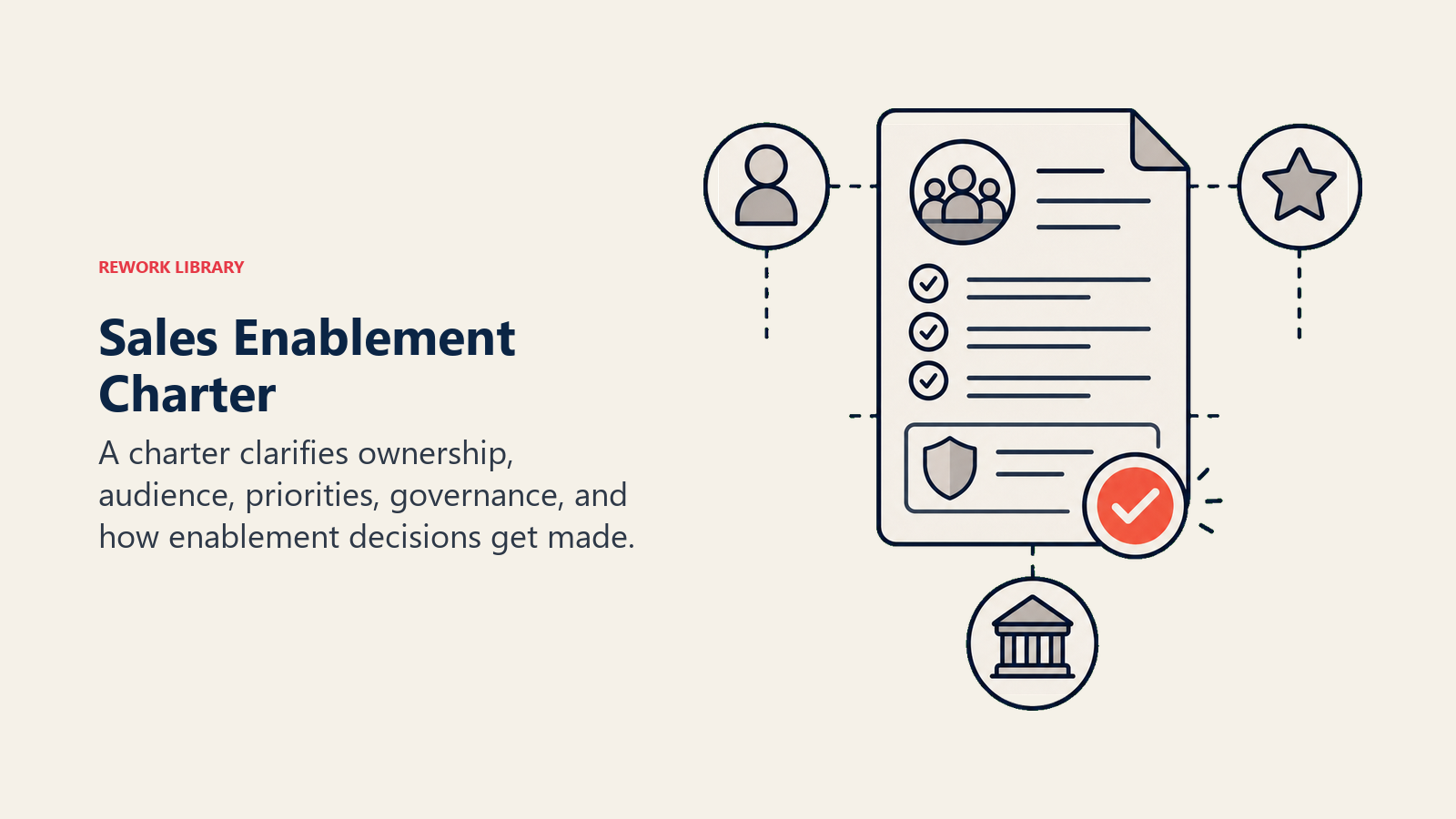
Answer these questions explicitly before starting:
Who owns enablement? Sales enablement programs fail when ownership is split between marketing and sales with no single person accountable for outcomes. The enablement leader needs a direct line to the VP of Sales and budget authority over training and content.
What outcomes will we be held to? Pick 2-3 metrics that the enablement team will own (win rate, ramp time, content adoption). If enablement is responsible for everything, it's responsible for nothing.
How will we prioritize requests? Sales teams will ask for content on everything. Marketing will push their latest campaign. Without a prioritization framework, enablement becomes reactive rather than strategic. Prioritize by: deal volume (how many deals face this situation?), deal value (what's the ACV at stake?), and gap severity (how big is the disadvantage when reps don't have this?).
How do we connect to the lead management system? Sales enablement works best when it's integrated with the lead management process. Reps who receive context on a lead before they reach out (company size, industry, intent signals) have better first conversations. Make sure your CRM and lead data pipelines feed the right information into the rep's workflow.
The Sales and Marketing Alignment Problem
Poorly aligned sales and marketing teams waste an enormous amount of effort. Marketing generates inbound leads that sales doesn't follow up on. Sales complains about lead quality. Marketing says sales doesn't use their content. Both are usually partially right.
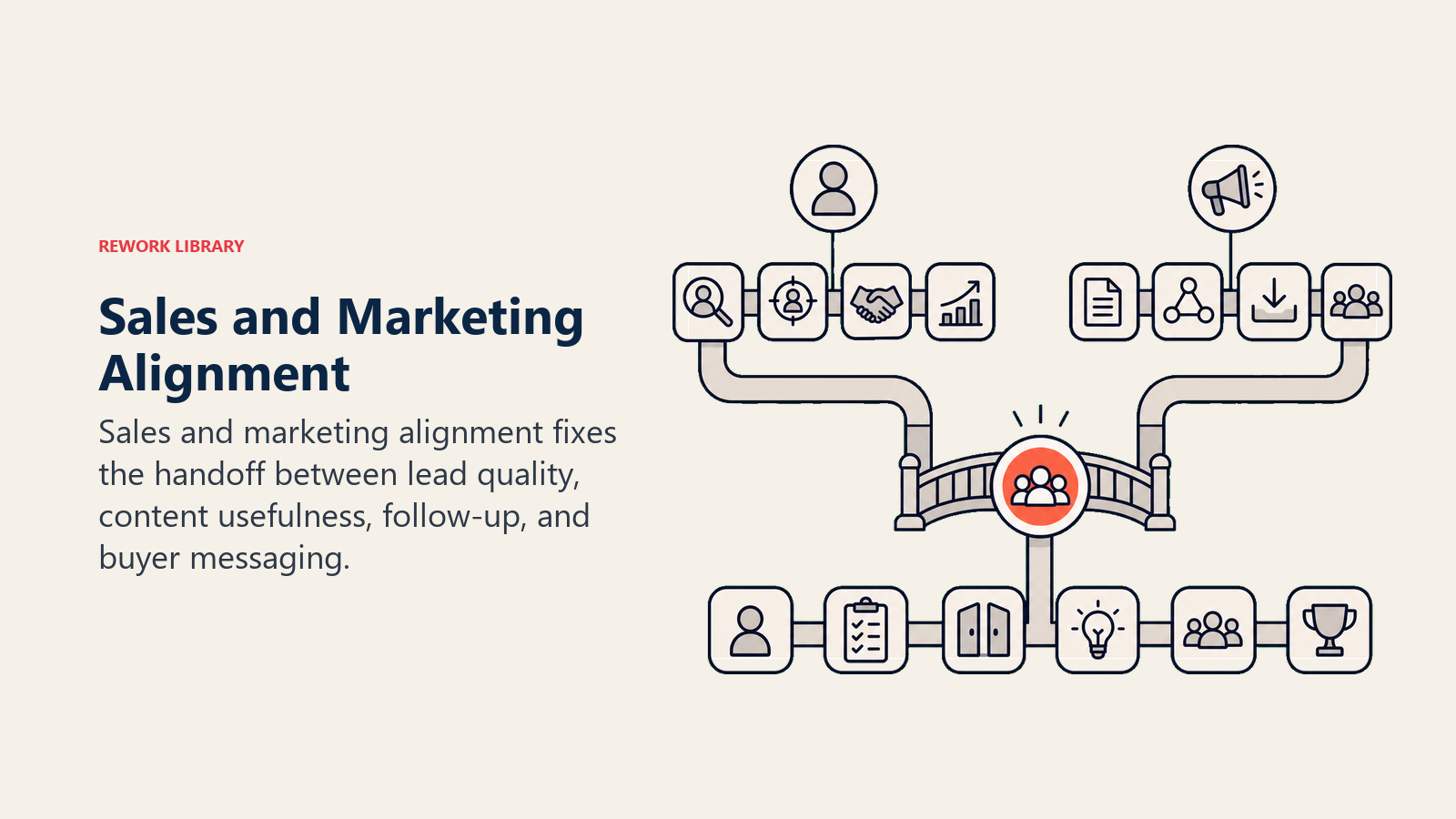
Sales enablement is the operational bridge between the two functions. It converts marketing's strategic priorities into sales-ready assets, and converts sales' field experience into marketing intelligence.
The alignment conversation needs specific, shared definitions:
- What does a marketing-qualified lead look like? (See MQL vs SQL)
- What content should marketing create versus what should sales adapt?
- How do we track whether a piece of content influenced a deal?
- What feedback does sales give marketing on a monthly cadence?
Getting these definitions on paper and reviewing them quarterly is more valuable than most enablement programs.
Common Enablement Failures and How to Avoid Them
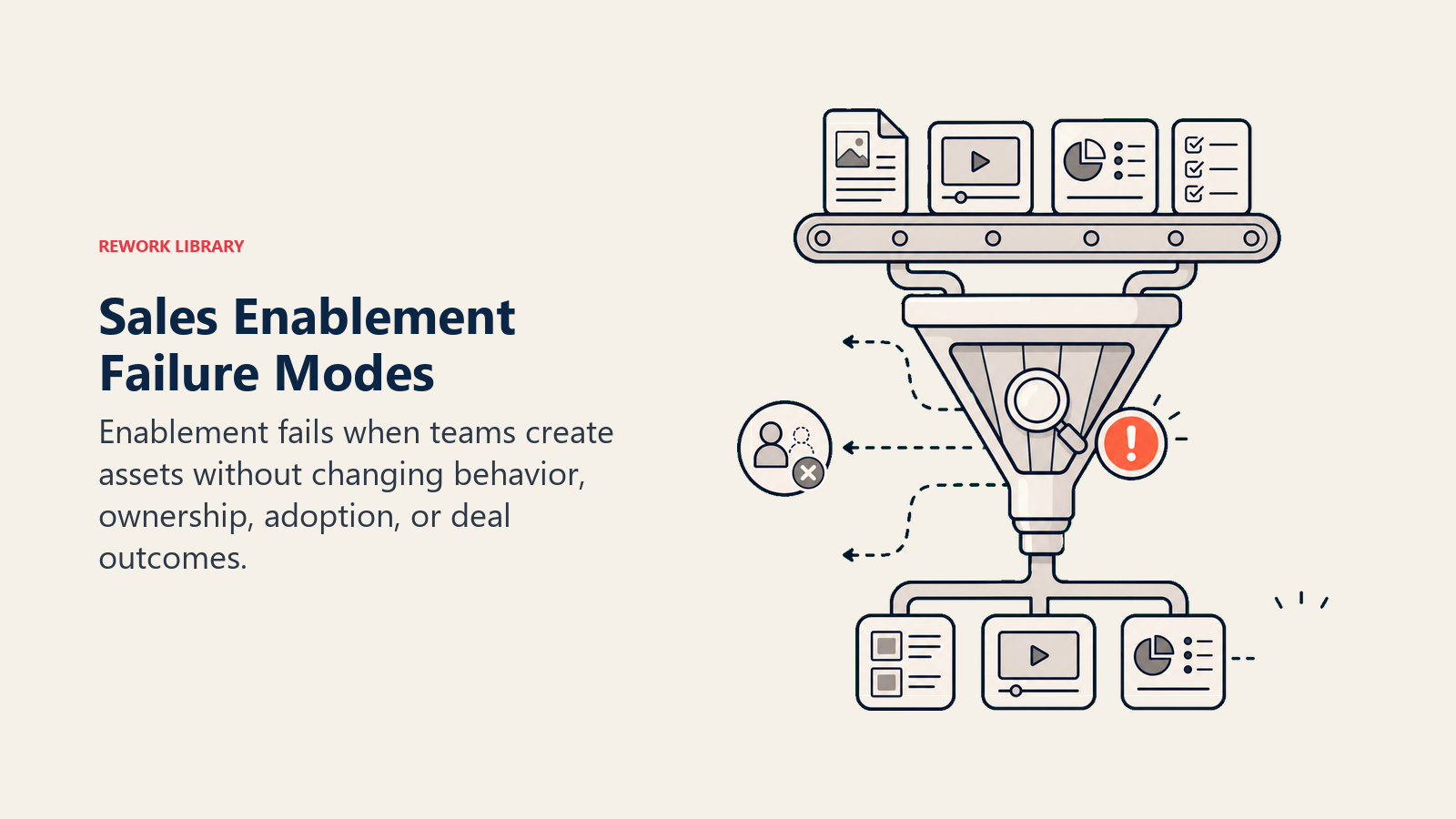
Building content instead of capability: content is an input, not an output. The question is never "did we create the asset?" but "did rep behavior change and did deals progress faster?"
Ignoring the technology layer: great content delivered through bad tools gets ignored. Reps use what's in their CRM. If your enablement system is outside the CRM, you're fighting human nature.
Skipping the rep perspective: the best validation of any enablement program is asking a frontline rep "when you're in a tough deal, does this help you?" Too many programs are designed by people who aren't in deals regularly.
Treating enablement as a launch event: a new playbook launch is not enablement. A launch plus 90 days of coaching, reinforcement, and measurement is enablement.
Disconnecting from lead follow-up processes: enablement for the early stages of a lead's journey matters just as much as deal-stage enablement. Reps need to know what to say in the first contact, not just how to negotiate at the end.
What Good Looks Like
A well-run sales enablement program looks like this in practice:
A new inbound lead comes in. The rep opens their CRM, sees the lead's company, industry, and behavior data pre-populated. There's a suggested email template pulled from the relevant campaign. The opportunity is automatically linked to the competitive battle card for the prospect's current vendor. The rep's manager has a 15-minute weekly call review scheduled where they go through the top 3 calls of the week.
Win rates go up not because reps suddenly became more talented, but because they stopped wasting time hunting for information and started spending it having better conversations.
That's the goal. Build toward it systematically, measure relentlessly, and iterate on what the data tells you.
Related resources:

On this page
- What Sales Enablement Actually Means
- The Four Pillars of Effective Sales Enablement
- 1. Content That Lives in the Workflow
- 2. Training Tied to Real Deals
- 3. Playbooks for Repeatable Situations
- 4. Feedback Loops Between Sales and Marketing
- Measuring Sales Enablement Effectiveness
- Building Your Sales Enablement Charter
- The Sales and Marketing Alignment Problem
- Common Enablement Failures and How to Avoid Them
- What Good Looks Like