Kedudukan Kompetitif: Strategi dan Contoh
Turn this article into takeaways for your work.


Each assistant summarizes the article only for you and suggests best practices for your work.
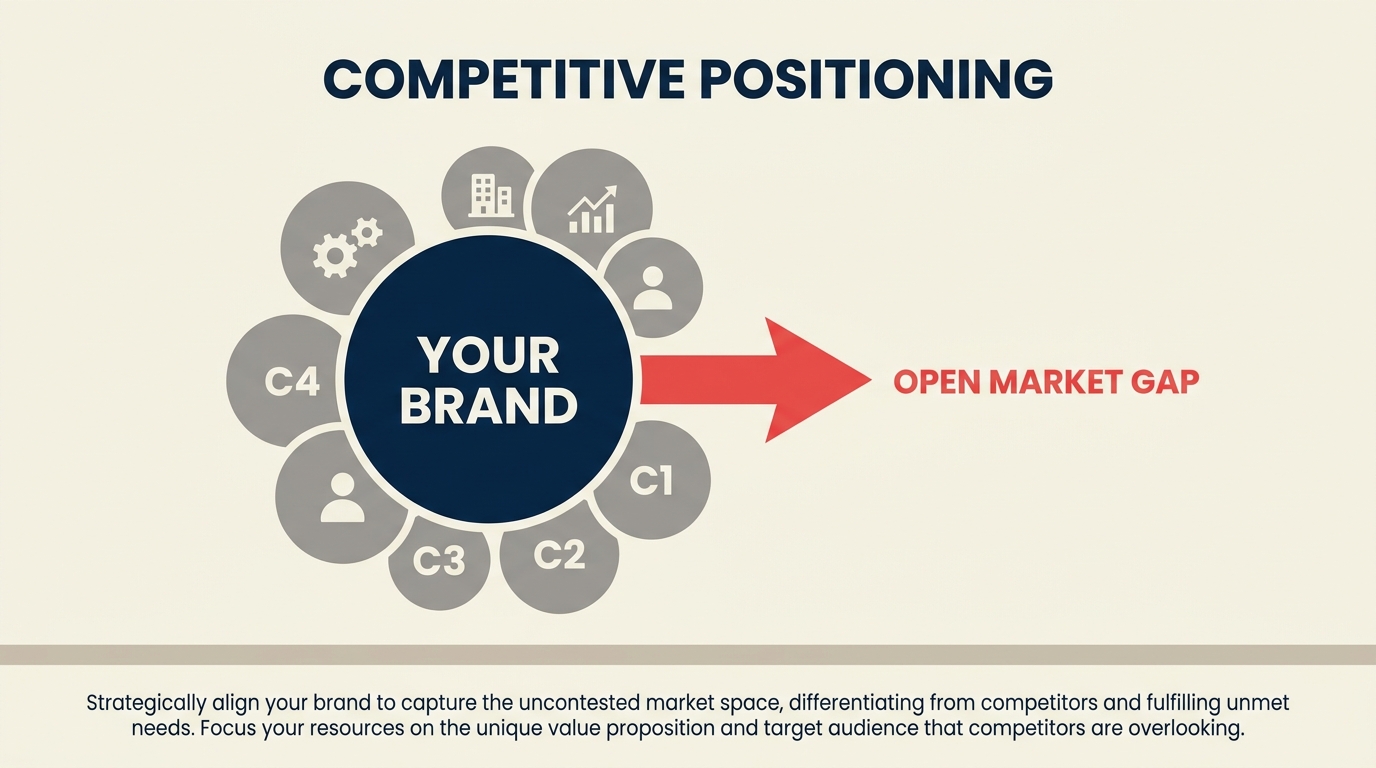
Kedudukan kompetitif adalah pilihan yang disengajakan tentang di mana jenama anda berada berbanding setiap pilihan lain yang boleh dipilih oleh pelanggan. Ia bukan tagline atau warna logo. Ia adalah keputusan strategik yang menentukan pelanggan mana yang anda menangkan, pesaing mana yang anda hadapi secara langsung, dan apa yang perlu anda kuasai dengan sungguh-sungguh untuk membenarkan harga anda.
Dapatkan dengan betul dan pelanggan akan memilih anda tanpa membandingkan. Dapatkan dengan salah dan anda akan berakhir dalam perang harga yang tidak anda pohon, bersaing atas dimensi yang satu-satunya tempat margin mati.
Panduan ini merangkumi strategi kedudukan utama, cara ia berbeza daripada konsep berkaitan seperti kedudukan jenama dan kedudukan pasaran, kaedah lima langkah untuk membina kedudukan anda sendiri, dan contoh konkrit daripada syarikat yang berjaya melaksanakannya.
Apakah Kedudukan Kompetitif?
Kedudukan kompetitif adalah cara sebuah syarikat membentuk persepsi pelanggan supaya produk atau perkhidmatannya menduduki tempat yang tersendiri dan bernilai dalam fikiran pelanggan berbanding alternatif. Matlamatnya bukan untuk menjadi yang terbaik dalam segala hal; ia adalah untuk menjadi pilihan yang paling jelas betul bagi pelanggan tertentu dalam situasi tertentu.
Konsep ini diformalkan oleh Al Ries dan Jack Trout dalam buku mereka yang berpengaruh Positioning: The Battle for Your Mind (1981). Hujah teras mereka: kedudukan anda tidak wujud dalam produk anda, ia wujud dalam kepala pelanggan. Sesiapa yang memenangi slot mental itu memiliki pasaran. Satu dekad lebih awal, penyelidikan Michael Porter di Harvard Business School menetapkan bahawa syarikat hanya boleh mengekalkan kelebihan daya saing melalui kedudukan strategik yang koheren, sama ada dengan menjadi pembekal kos terendah atau dengan berbeza dengan cara yang sanggup dibayar oleh pelanggan.
Penyataan kedudukan adalah dokumen dalaman yang menangkap kedudukan anda: siapa sasarannya, kategori mana yang anda bersaing, manfaat utama yang anda sampaikan, dan mengapa pelanggan harus mempercayainya berbanding pesaing.
Fakta Penting: Kedudukan Kompetitif
- Hujah asas Al Ries dan Jack Trout (1981): fikiran manusia hanya boleh memegang bilangan jenama yang kecil setiap kategori, jadi yang pertama mendakwa kedudukan dan mempertahankannya secara konsisten akan memenangi ingatan jangka panjang.
- Michael Porter mengenal pasti tiga strategi generik untuk mencapai kelebihan daya saing: kepimpinan kos, pembezaan, dan fokus (sama ada kos atau pembezaan dalam segmen sempit). Syarikat yang cuba menjadi murah dan premium serentak berisiko "tersekat di tengah" dengan pulangan di bawah purata. (Competitive Strategy, Porter, 1980)
- Penyelidikan Bain & Company menunjukkan syarikat dengan cadangan nilai yang dibezakan dengan jelas berkembang 4-8% lebih pantas daripada purata kategori dan mampu mengenakan premium harga 12-18%.
Jenis-Jenis Strategi Kedudukan Kompetitif
Tiada satu strategi kedudukan yang betul. Pilihan yang tepat bergantung pada struktur kos anda, pelanggan sasaran anda, dan di mana pesaing meninggalkan jurang. Di bawah adalah lima pendekatan yang paling biasa, setiap satu dipetakan kepada logik asasnya.
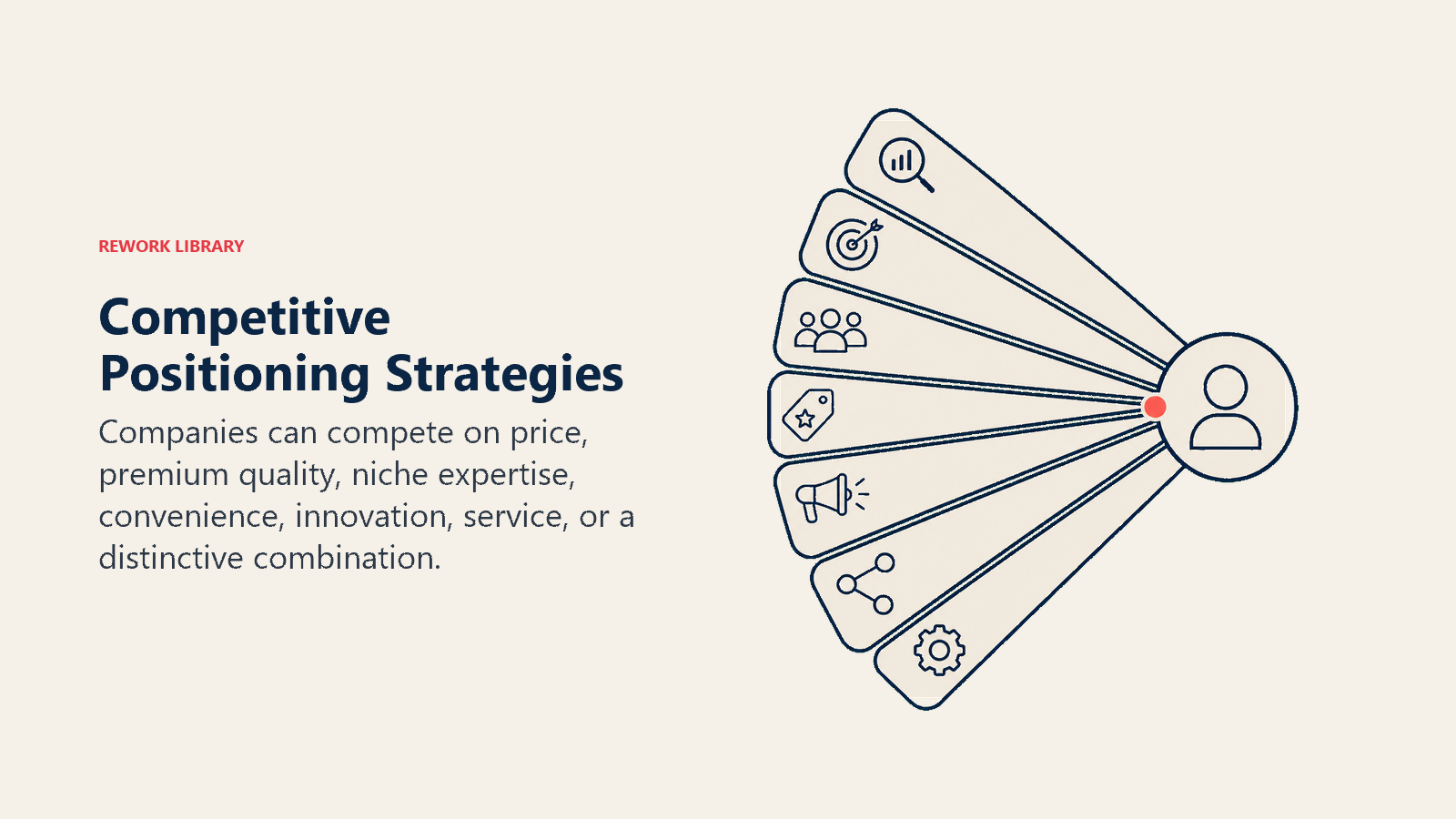
| Strategi | Tuntutan teras | Kelebihan asas | Contoh |
|---|---|---|---|
| Harga/Nilai | "Kita kosnya lebih rendah untuk hasil yang sama atau serupa" | Kepimpinan kos (Porter) | IKEA, Ryanair |
| Kualiti/Premium | "Kita memberikan hasil yang lebih baik yang berbaloi dengan premiumnya" | Pembezaan | Rolex, Rolls-Royce |
| Niche/Fokus | "Kita dibina khusus untuk satu jenis pelanggan" | Fokus (Porter) | Salesforce (CRM untuk jualan perusahaan) |
| Kemudahan | "Kita menghapuskan geseran lebih pantas daripada sesiapa pun" | Pembezaan melalui pengalaman | Amazon Prime, DoorDash |
| Inovasi | "Kita menyelesaikan masalah yang tidak ditangani oleh sesiapa pun" | Pembezaan melalui teknologi atau reka bentuk | Tesla (ketika ia dilancarkan), Zoom |
Harga/nilai dan kualiti/premium sering diposisikan sebagai bertentangan, tetapi paksi sebenar adalah persamaan nilai: apa yang diperoleh pelanggan berbanding apa yang mereka bayar. Sebuah syarikat boleh mengenakan premium dan masih memberikan nilai yang lebih baik jika hasilnya membenarkan kos itu.
Kedudukan niche/fokus, strategi generik ketiga Porter, adalah yang paling kurang digunakan oleh syarikat yang bercita-cita tinggi. Ia menukar saiz pasaran yang boleh ditangani secara keseluruhan dengan kedalaman kesesuaian: anda menjadi satu-satunya pilihan yang logik untuk satu segmen berbanding pilihan yang boleh dipercayai untuk ramai. Lihat Porter's Generic Strategies untuk huraian penuh.
Kedudukan Kompetitif vs Kedudukan Jenama vs Kedudukan Pasaran
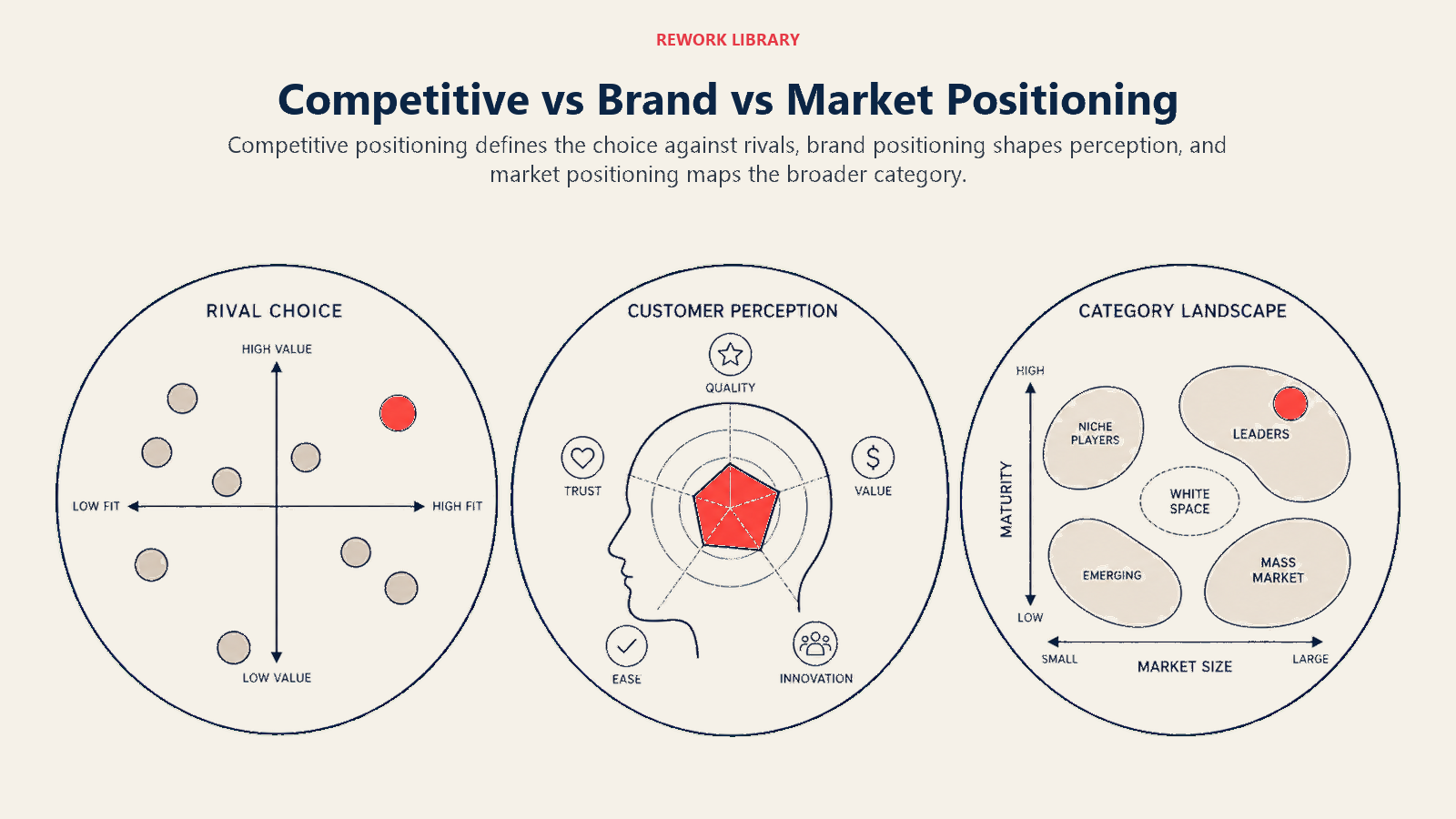
Ketiga-tiga istilah ini sering digunakan secara silih berganti. Ia saling berkaitan tetapi bukan perkara yang sama. Menganggapnya sebagai sinonim membawa kepada dokumen strategi yang kelihatan tajam tetapi tidak membuat apa-apa.
| Konsep | Soalan utama yang dijawab | Audiens utama |
|---|---|---|
| Kedudukan kompetitif | Bagaimana kita mengalahkan atau mengelak pesaing untuk pelanggan tertentu? | Ahli strategi, eksekutif |
| Kedudukan jenama | Perasaan dan identiti apa yang kita mahu pelanggan kaitkan dengan kita? | Pemasaran, pasukan kreatif |
| Kedudukan pasaran | Segmen mana dari pasaran keseluruhan yang kita sasarkan dan mengapa? | Produk, jualan, komunikasi pelabur |
Kedudukan kompetitif adalah konsep induk. Ia mendefinisikan pilihan strategik: pelanggan mana, pesaing mana, pembeza mana. Kedudukan jenama menterjemahkan pilihan itu kepada bahasa emosi dan visual. Kedudukan pasaran menggambarkan segmen yang telah anda tandai. Anda boleh mempunyai kedudukan jenama yang kuat dan kedudukan kompetitif yang lemah jika pesaing anda mempunyai identiti yang sama dan menyasarkan segmen yang sama.
Cara Membina Strategi Kedudukan Kompetitif
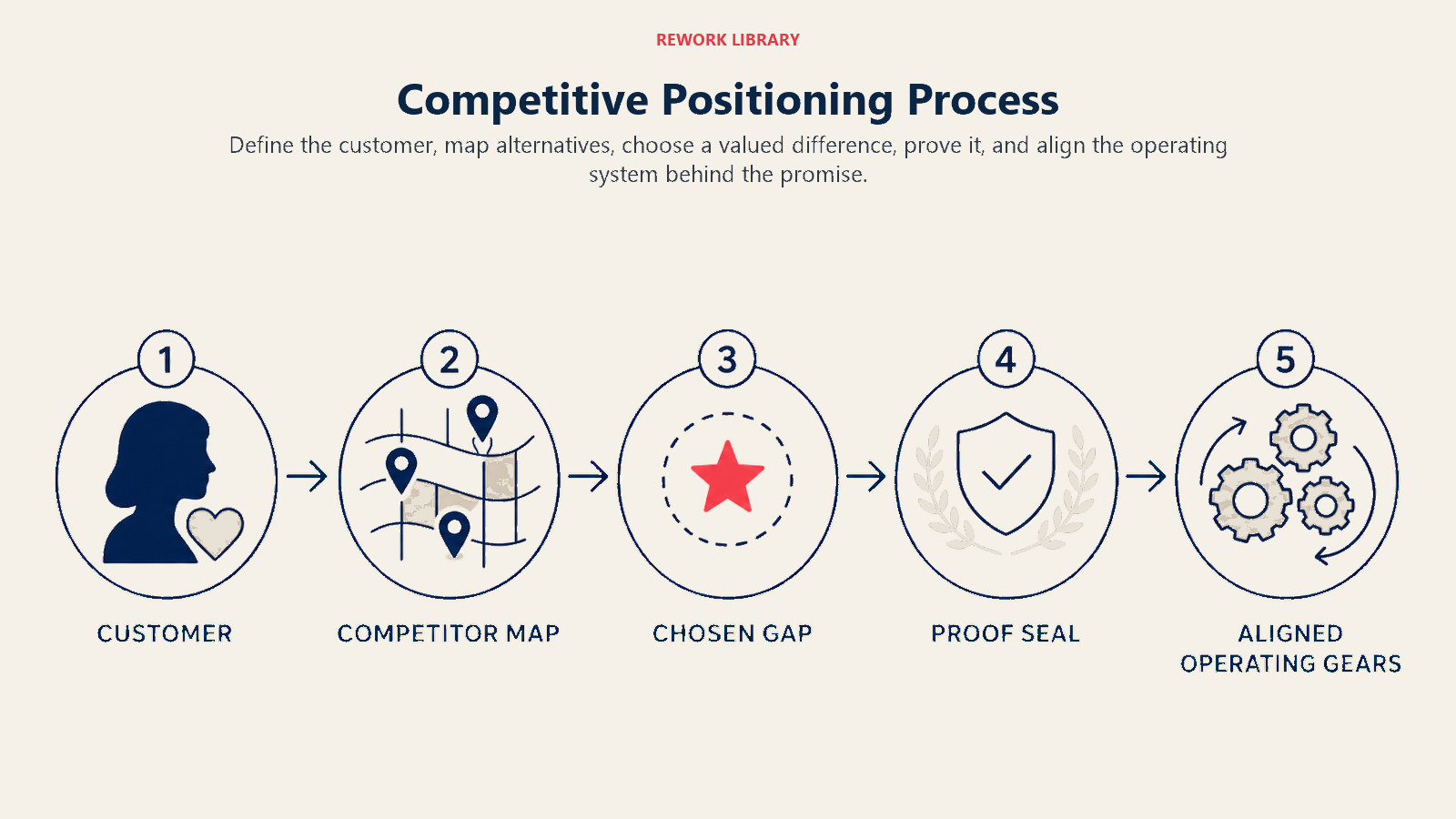
Kedudukan yang baik tidak dicipta dalam bengkel. Ia ditemui melalui analisis yang ketat dan kemudian diperhalus melalui maklum balas pelanggan. Lima langkah ini membawa anda dari kabur kepada spesifik.
Langkah 1: Tentukan Segmen Sasaran Anda
Mulakan dengan pelanggan, bukan produk. Kenal pasti kumpulan pembeli tertentu yang masalahnya anda selesaikan dengan lebih baik daripada sesiapa pun. Lebih sempit lebih baik. "Perniagaan kecil dan sederhana" bukan segmen; "pengurus HR di syarikat teknologi 50-500 orang yang menjalankan pasukan hibrid" adalah segmen.
Semakin ketat definisi anda, semakin mudah untuk mengenal pasti apa yang paling dihargai oleh pelanggan itu, yang merupakan input yang anda perlukan untuk setiap langkah berikutnya.
Langkah 2: Analisis Pesaing Anda
Petakan semua orang yang bersaing untuk perhatian dan belanjawan pelanggan sasaran anda. Termasuk pesaing langsung (kategori produk yang sama), pesaing tidak langsung (cara alternatif untuk menyelesaikan masalah yang sama), dan pilihan "tidak buat apa-apa."
Bagi setiap pesaing, kenal pasti: tuntutan kedudukan utama mereka, titik harga mereka, pelanggan sasaran yang mereka nyatakan, dan kelemahan yang ketara. Alat seperti pemetaan kumpulan strategik dan pemetaan perseptual membantu anda memvisualisasikan di mana semua orang berada dan di mana jurang wujud. Porter's Five Forces membantu anda memahami tekanan struktural pada mana-mana kedudukan yang mungkin anda pilih.
Langkah 3: Cari Pembeza yang Benar-Benar Dihargai Pelanggan
Pembeza hanya berguna jika dua syarat dipenuhi: (1) pelanggan sasaran anda mengambil berat tentangnya, dan (2) pesaing tidak boleh mudah menirunya. "Perkhidmatan pelanggan yang lebih baik" gagal kedua-dua ujian. Ia sukar disahkan dan mudah dituntut.
Pembeza yang kuat cenderung berakar pada kecekapan teras anda atau kelebihan struktural yang mahal untuk direplikasi: data proprietari, kesan rangkaian, integrasi mendalam, pengedaran unik, atau struktur kos yang datang dari skala. Lihat kelebihan daya saing untuk rawatan penuh tentang bagaimana pembeza yang tahan lama dibina.
Langkah 4: Bentuk Penyataan Kedudukan
Format penyataan kedudukan yang dibangunkan oleh Geoffrey Moore (diadaptasi dari Ries dan Trout) kekal sebagai cara paling jelas untuk menangkap kedudukan anda dalam satu perenggan:
"Untuk [pelanggan sasaran] yang [mempunyai masalah atau keperluan ini], [nama produk] adalah sebuah [kategori] yang [manfaat utama]. Tidak seperti [alternatif utama], kami [pembeza utama]."
Ini adalah dokumen dalaman, bukan tagline. Tugasnya adalah memaksa kejelasan. Jika anda tidak dapat mengisi setiap ruang kosong tanpa teragak-agak, kedudukan anda belum nyata.
Langkah 5: Sampaikan Secara Konsisten Merentasi Setiap Titik Sentuh
Strategi kedudukan hanya berfungsi jika setiap interaksi mengukuhkannya. Penetapan harga, ciri produk, perbualan jualan, nada sokongan pelanggan, pilihan perkongsian, pengambilan pekerja: setiap satunya sama ada mengukuhkan kedudukan atau mencairkannya.
Syarikat yang kerap mengubah kedudukan mereka mengelirukan pelanggan dan kehilangan hartanah mental yang telah mereka peroleh. Konsistensi adalah mekanisme yang menukar pilihan strategik kepada kepercayaan pelanggan. Anggaplah ia sebagai lapisan pelaksanaan strategi pembezaan anda.
Kelebihan Kedudukan Kompetitif
Kedudukan yang jelas menghasilkan kelebihan yang boleh diukur selain kesedaran jenama.
Kuasa penetapan harga. Apabila pelanggan percaya anda menduduki ruang tersendiri yang tidak diisi oleh sesiapa pun, mereka membandingkan anda dengan alternatif tidak menyelesaikan masalah itu, bukan dengan pesaing yang lebih murah. Itu mengubah perbualan harga sepenuhnya. Syarikat dengan kedudukan yang kuat jarang menang atas harga; mereka menang atas kesesuaian.
Kecekapan jualan. Syarikat yang diposisikan dengan baik menghabiskan lebih sedikit masa meyakinkan pelanggan yang salah dan lebih banyak masa menutup yang betul. Pelanggan ideal anda sudah memahami mengapa anda wujud sebelum perbualan pertama.
Keputusan produk yang lebih pantas. Apabila pasukan mempunyai pemahaman bersama yang jelas tentang siapa yang anda layani dan mengapa, keutamaan ciri menjadi lebih pantas dan kurang bersifat politik. Setiap permintaan boleh diuji terhadap kedudukan: adakah ini mengukuhkan siapa kita untuk pelanggan sasaran kita?
Pengurangan churn. Pelanggan yang membeli anda untuk apa yang anda sebenarnya ada akan kekal lebih lama berbanding pelanggan yang membeli anda atas sebab yang tidak dapat anda sampaikan secara konsisten.
Kesilapan Lazim
Kebanyakan kegagalan kedudukan bukan kesilapan strategik; ia adalah kegagalan disiplin. Syarikat tahu apa yang perlu mereka lakukan dan tidak melakukannya.
Mencuba untuk memenuhi semua pihak. Porter menyebutnya "tersekat di tengah." Apabila anda cuba menjadi pilihan murah dan pilihan premium untuk perusahaan besar dan pengguna tunggal sekaligus, anda akhirnya menjadi pilihan kedua untuk semua orang dan pilihan pertama untuk tiada sesiapa.
Mengelirukan ciri dengan kedudukan. "Kita mempunyai 47 integrasi" adalah ciri. "Kita adalah satu-satunya CRM yang dibina untuk pasukan jualan yang diketuai pengasas" adalah kedudukan. Ciri boleh ditiru; kedudukan yang dimiliki dengan ketat mengambil bertahun-tahun untuk disingkirkan.
Mengabaikan model mental sedia ada pelanggan. Pelanggan sudah mempunyai kedudukan untuk kategori anda dalam fikiran mereka. Jika anda melancarkan jenama kedua ke dalam ruang di mana seseorang memiliki slot mental, anda memerlukan tuntutan yang berbeza secara bermakna atau segmen yang tidak dimiliki oleh sesiapa pun.
Membuat kedudukan semula tanpa sebab. Kedudukan semula mengelirukan pelanggan sedia ada dan jarang menarik yang baru melainkan kedudukan lama benar-benar rosak. Ubah kedudukan hanya apabila pasaran telah beranjak, bukan apabila kepimpinan berasa bosan.
Membiarkan kedudukan hanyut dalam pelaksanaan. Pasukan jenama berkata "premium." Pasukan jualan memberi diskaun 40% untuk mencapai kuota. Pasukan sokongan bertindak balas dalam 48 jam. Kedudukan wujud dalam pembentangan, bukan dalam pengalaman pelanggan.
Contoh Kedudukan Kompetitif
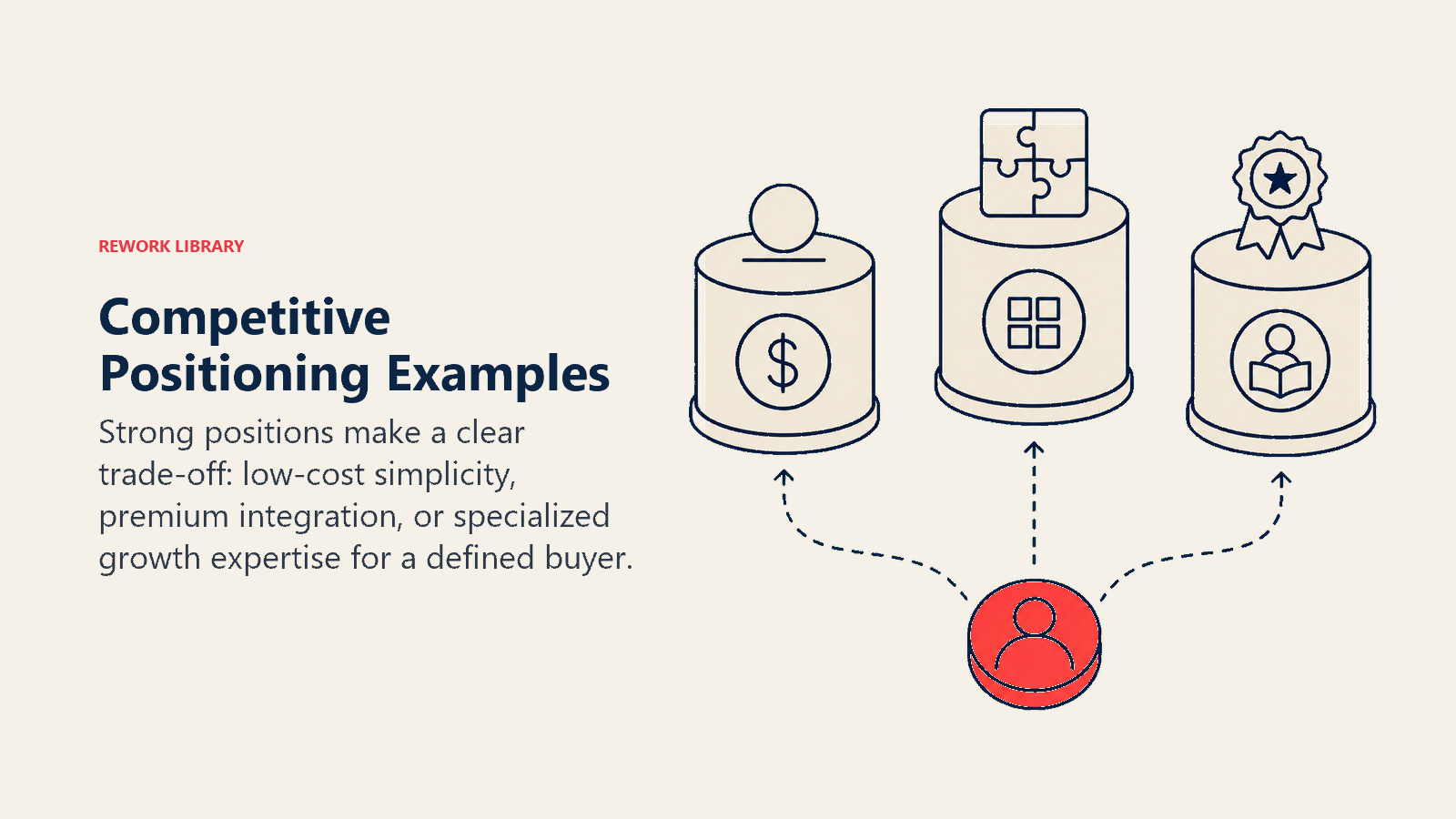
Contoh kedudukan yang paling kukuh berkongsi sifat yang sama: syarikat membuat pilihan yang jelas dan kemudian menolak untuk menjejaskannya.
| Syarikat | Strategi kedudukan | Tuntutan teras | Apa yang mereka lepaskan |
|---|---|---|---|
| Southwest Airlines | Fokus harga/nilai | Tambang paling rendah untuk laluan domestik titik-ke-titik | Kelas perniagaan, hab warisan, kemudahan perkhidmatan penuh |
| Apple (Mac) | Kualiti/inovasi | Komputer peribadi premium untuk profesional kreatif | Bahagian pasaran segmen sensitif kos |
| HubSpot | Niche/fokus | Platform pemasaran masuk untuk pemasar PKS | Ciri perusahaan besar, penyesuaian mendalam |
| Notion | Kemudahan + niche | Ruang kerja semua-dalam-satu untuk pasukan kecil yang tidak suka banyak alat | Pengguna kuasa yang memerlukan fungsi mendalam satu tujuan |
| Dollar Shave Club | Harga/nilai + terus-ke-pengguna | Pencukur yang cukup baik dihantar dengan murah, selama-lamanya | Ekuiti jenama premium, ruang rak runcit |
Kedudukan Southwest adalah aplikasi buku teks strategi kepimpinan kos. Setiap pilihan operasi dari jenis pesawat yang mereka terbangkan hingga proses menaiki kapal memberi makan kepada kedudukan kos rendah. Tiada yang kebetulan. Kedudukan Apple menerapkan strategi pembezaan di peringkat produk, menjadikannya benar-benar sukar bagi pesaing untuk mendakwa ruang yang sama dengan kredibiliti yang sama.
Amalan Terbaik
Petakan kedudukan anda secara visual sebelum komit. Gunakan peta perseptual dua paksi dengan dimensi yang benar-benar dipedulikan oleh pelanggan sasaran anda (harga vs kualiti, kelajuan vs fleksibiliti, kemudahan penggunaan vs kuasa). Jika kedudukan anda bertindih dengan pesaing yang kukuh, kembali ke Langkah 3.
Uji kedudukan dengan pelanggan, bukan rakan sekerja. Pasukan dalaman adalah hakim terburuk bagi kedudukan mereka sendiri. Jalankan 10 temu bual pelanggan dengan soalan terbuka tentang cara mereka memilih antara alternatif. Anda akan mendapati dengan cepat sama ada pembeza yang anda tuntut adalah nyata.
Pilih satu pembeza utama. Anda boleh mempunyai titik bukti sokongan, tetapi tuntutan utama hendaklah begitu jelas sehingga pekerja baru boleh menerangkannya dalam dua ayat. Jika penyataan kedudukan anda memerlukan tiga poin untuk menyatakan pembeza, ia belum menjadi kedudukan.
Semak semula setiap tahun, bukan setiap suku tahun. Kedudukan kompetitif hendaklah tahan lama. Jika anda menyemaknya setiap suku tahun, anda bertindak balas kepada hingar. Semakan tahunan menangkap anjakan pasaran yang tulen tanpa memperkenalkan kekeliruan organisasi akibat perubahan yang berterusan.
Pastikan kanvas cadangan nilai sejajar. Tuntutan kedudukan anda mesti berhubung terus dengan pekerjaan, kesakitan, dan keuntungan pelanggan yang telah anda kenal pasti. Penyataan kedudukan yang terputus daripada apa yang pelanggan benar-benar alami adalah rekaan yang akan senyap-senyap ditinggalkan oleh pasukan jualan anda.
Soalan Lazim
Apakah perbezaan antara kedudukan kompetitif dan kelebihan daya saing?
Kelebihan daya saing adalah apa yang memberi anda kemampuan untuk mengatasi pesaing, seperti struktur kos yang lebih rendah, paten, atau rangkaian proprietari. Kedudukan kompetitif adalah cara anda berkomunikasi dan menduduki tempat tertentu dalam fikiran pelanggan. Kelebihan adalah enjin; kedudukan adalah kenderaan. Anda boleh mempunyai kelebihan yang nyata dan menyampaikannya dengan buruk, atau memposisikan diri anda dengan jelas sementara kelebihan anda terhakis. Kedua-duanya penting.
Berapa banyak strategi kedudukan boleh digunakan oleh sebuah syarikat serentak?
Satu strategi utama, dilaksanakan dengan jelas. Tuntutan sokongan adalah baik sebagai bukti sokongan, tetapi syarikat yang mendakwa secara serentak menjadi yang termurah, kualiti tertinggi, dan paling inovatif mengelirukan pembeli dan mencairkan ketiga-tiga mesej. Disiplinnya adalah memilih satu tuntutan yang boleh anda miliki sepenuhnya dan membina model perniagaan di sekitar penyampaiannya.
Berapa kerap sebuah syarikat perlu menilai semula kedudukan kompetitifnya?
Lakukan semakan formal setiap tahun, dengan imbasan kompetitif yang lebih ringan setiap suku tahun. Pencetus untuk semakan segera: pemain baru yang memiliki tuntutan yang hampir dengan tuntutan anda, anjakan dalam apa yang paling dihargai oleh segmen sasaran anda, atau bukti daripada temu bual churn bahawa pelanggan pergi untuk alternatif tertentu.
Apakah penyataan kedudukan dan adakah saya memerlukannya?
Penyataan kedudukan adalah dokumen dalaman yang pendek (lazimnya empat hingga enam ayat) yang mendefinisikan: pelanggan sasaran anda, kategori yang anda bersaing, manfaat utama anda, dan mengapa pelanggan harus mempercayainya berbanding pesaing. Anda tidak perlu menerbitkannya. Tetapi jika pasukan eksekutif, pasukan produk, dan pasukan jualan anda tidak boleh bersetuju tentang satu versi, anda tidak mempunyai kedudukan; anda mempunyai koleksi pendapat.
Adakah kedudukan kompetitif berlaku untuk perniagaan kecil?
Ia berlaku lebih mendesak untuk perniagaan kecil berbanding yang besar. Sebuah syarikat besar boleh mengekalkan kehadiran rak melalui pengedaran dan perbelanjaan pemasaran sementara kedudukannya kabur. Sebuah perniagaan kecil menang atas kejelasan: pelanggan yang betul perlu menemui anda dengan cepat dan memahami tepat mengapa anda adalah jawapan mereka. Kedudukan yang ketat adalah salah satu daripada sedikit kelebihan asimetri yang boleh dipegang oleh syarikat kecil terhadap pesaing yang kaya sumber.
Kedudukan kompetitif adalah salah satu tuas yang paling tahan lama dalam strategi. Syarikat yang membina bahagian pasaran yang berkekalan hampir selalu memiliki kedudukan mental yang mudah, boleh dipercayai, dan dikukuhkan secara konsisten. Mereka yang bergelut biasanya tahu apa yang mereka mahu kedudukannya tetapi membuat terlalu banyak kompromi kecil untuk memegangnya.
Mulailah dengan memetakan di mana anda sebenarnya berada hari ini, bukan di mana pembentangan berkata anda berada. Jurang antara kedua-duanya adalah kerja strategi yang perlu dilakukan.

Senior Operations & Growth Strategist
On this page
- Apakah Kedudukan Kompetitif?
- Jenis-Jenis Strategi Kedudukan Kompetitif
- Kedudukan Kompetitif vs Kedudukan Jenama vs Kedudukan Pasaran
- Cara Membina Strategi Kedudukan Kompetitif
- Langkah 1: Tentukan Segmen Sasaran Anda
- Langkah 2: Analisis Pesaing Anda
- Langkah 3: Cari Pembeza yang Benar-Benar Dihargai Pelanggan
- Langkah 4: Bentuk Penyataan Kedudukan
- Langkah 5: Sampaikan Secara Konsisten Merentasi Setiap Titik Sentuh
- Kelebihan Kedudukan Kompetitif
- Kesilapan Lazim
- Contoh Kedudukan Kompetitif
- Amalan Terbaik
- Soalan Lazim
- Apakah perbezaan antara kedudukan kompetitif dan kelebihan daya saing?
- Berapa banyak strategi kedudukan boleh digunakan oleh sebuah syarikat serentak?
- Berapa kerap sebuah syarikat perlu menilai semula kedudukan kompetitifnya?
- Apakah penyataan kedudukan dan adakah saya memerlukannya?
- Adakah kedudukan kompetitif berlaku untuk perniagaan kecil?