Objetivos Estratégicos: Definición, Ejemplos y Cómo Establecerlos
Turn this article into takeaways for your work.


Each assistant summarizes the article only for you and suggests best practices for your work.
La mayoría de los equipos directivos tienen una visión convincente. Muchos menos cuentan con un conjunto claro de objetivos estratégicos que traduzcan esa visión en algo sobre lo que las personas puedan trabajar realmente. Ahí es donde la estrategia se estanca.
Los objetivos estratégicos son los resultados específicos y medibles que una organización se compromete a lograr en un período de tiempo definido (normalmente de uno a tres años) para avanzar hacia su dirección a largo plazo. Se sitúan entre una visión amplia y el trabajo diario, actuando como la capa de traducción que hace posible la ejecución.
¿Qué son los objetivos estratégicos?
Los objetivos estratégicos son los resultados concretos a escala organizacional que una empresa se compromete a alcanzar durante un período definido (habitualmente de uno a tres años) y que, en conjunto, la acercan a su visión a largo plazo.
No son aspiraciones. No son valores. Y no son lo mismo que las tareas que sus equipos completan cada semana. Un objetivo estratégico nombra un estado final específico que será mediblemente cierto cuando se alcance el objetivo. "Convertirnos en el líder del mercado de software de recursos humanos para medianas empresas en 2028" es un objetivo estratégico. "Trabajar duro para hacer crecer nuestro negocio de software" es una esperanza.
Los objetivos estratégicos ofrecen a los líderes una respuesta coherente a la pregunta que todo directivo y empleado acaba formulando: ¿qué estamos tratando realmente de lograr?
Datos clave
- Las organizaciones que documentan formalmente sus objetivos estratégicos tienen 2,4 veces más probabilidades de alcanzar un rendimiento excepcional, según Harvard Business Review (2022).
- Solo el 5% de los empleados afirma entender la estrategia de su empresa en el día a día, según una encuesta de Gartner sobre la fuerza laboral (2023).
- Las empresas que revisan el progreso respecto a los objetivos estratégicos de forma trimestral (en lugar de anual) tienen un 31% más de probabilidades de mantenerse en el buen camino, según la investigación de Bain & Company (2022).
Objetivos estratégicos frente a metas frente a KPI
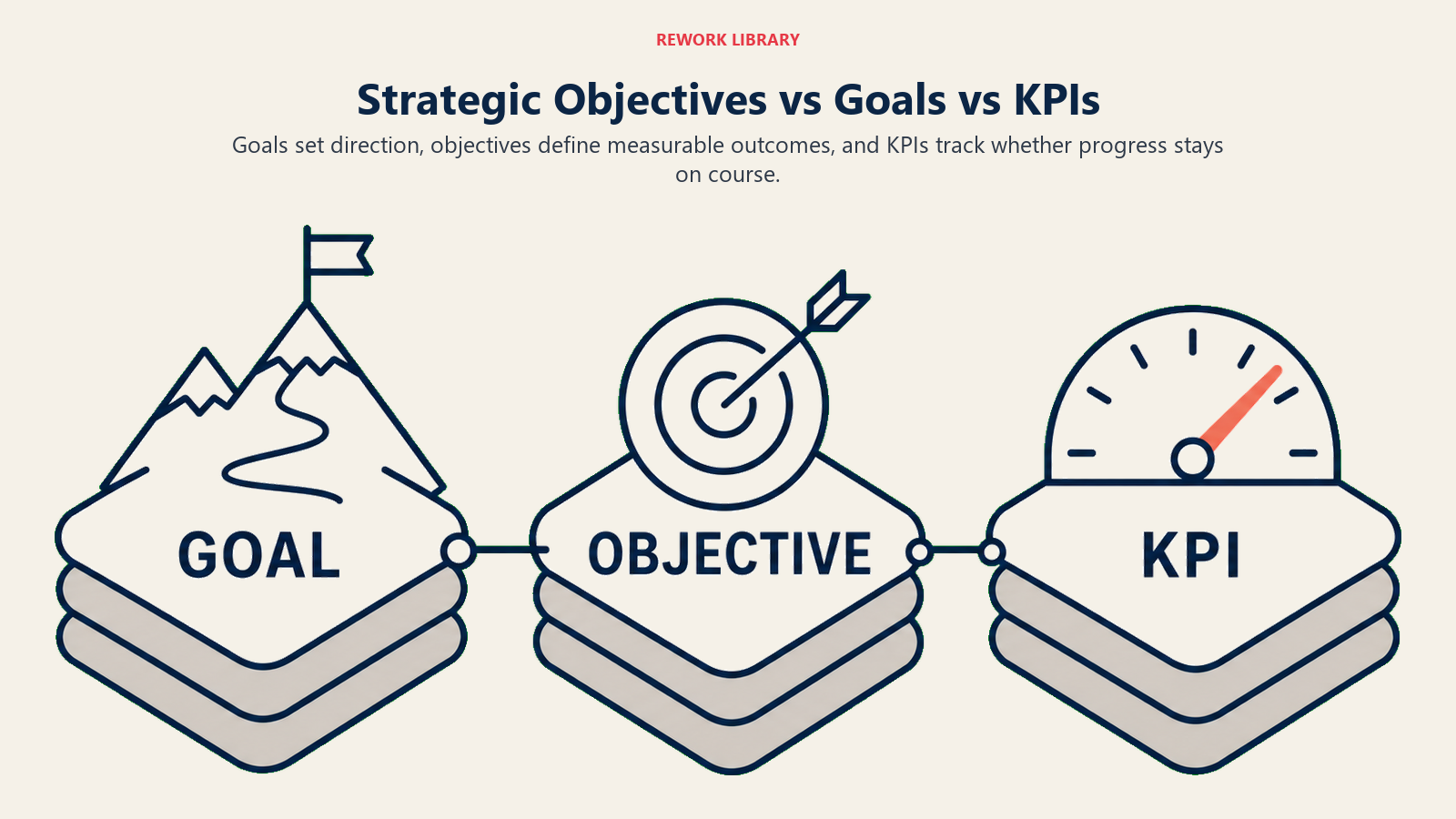
Estos tres términos se usan indistintamente, pero cumplen funciones muy diferentes en un sistema de planificación. Confundirlos es una de las razones más habituales por las que los documentos de estrategia no se leen a partir de febrero.
| Concepto | Lo que responde | Horizonte temporal | Ejemplo |
|---|---|---|---|
| Visión o misión | ¿Por qué existimos? ¿Hacia dónde vamos? | 5 a 20 años | "Ser el proveedor de software empresarial más confiable del mundo." |
| Objetivo estratégico | ¿Qué resultados debemos lograr para llegar ahí? | 1 a 3 años | "Alcanzar el 92% de retención de clientes en todas las cuentas empresariales para finales de 2027." |
| Meta | ¿Qué proyecto o hito hace avanzar este objetivo? | 3 a 12 meses | "Lanzar un programa dedicado de éxito de clientes para cuentas superiores a 100.000 dólares ARR antes del tercer trimestre." |
| Indicador clave de rendimiento (KPI) | ¿Cómo medimos el progreso y la salud? | Continuo | "Retención Neta de Ingresos (NRR), medida mensualmente." |
Piense en la relación como un embudo. La visión señala una dirección. Los objetivos estratégicos definen los hitos. Las metas y los proyectos son el trabajo que le lleva de un hito al siguiente. Y los KPI le indican en tiempo real si avanza con suficiente rapidez.
El marco OKR es un método popular para conectar los objetivos estratégicos con las metas a nivel de equipo. Los OKR funcionan mejor cuando los objetivos estratégicos a los que se vinculan ya son claros y estables.
Tipos de objetivos estratégicos
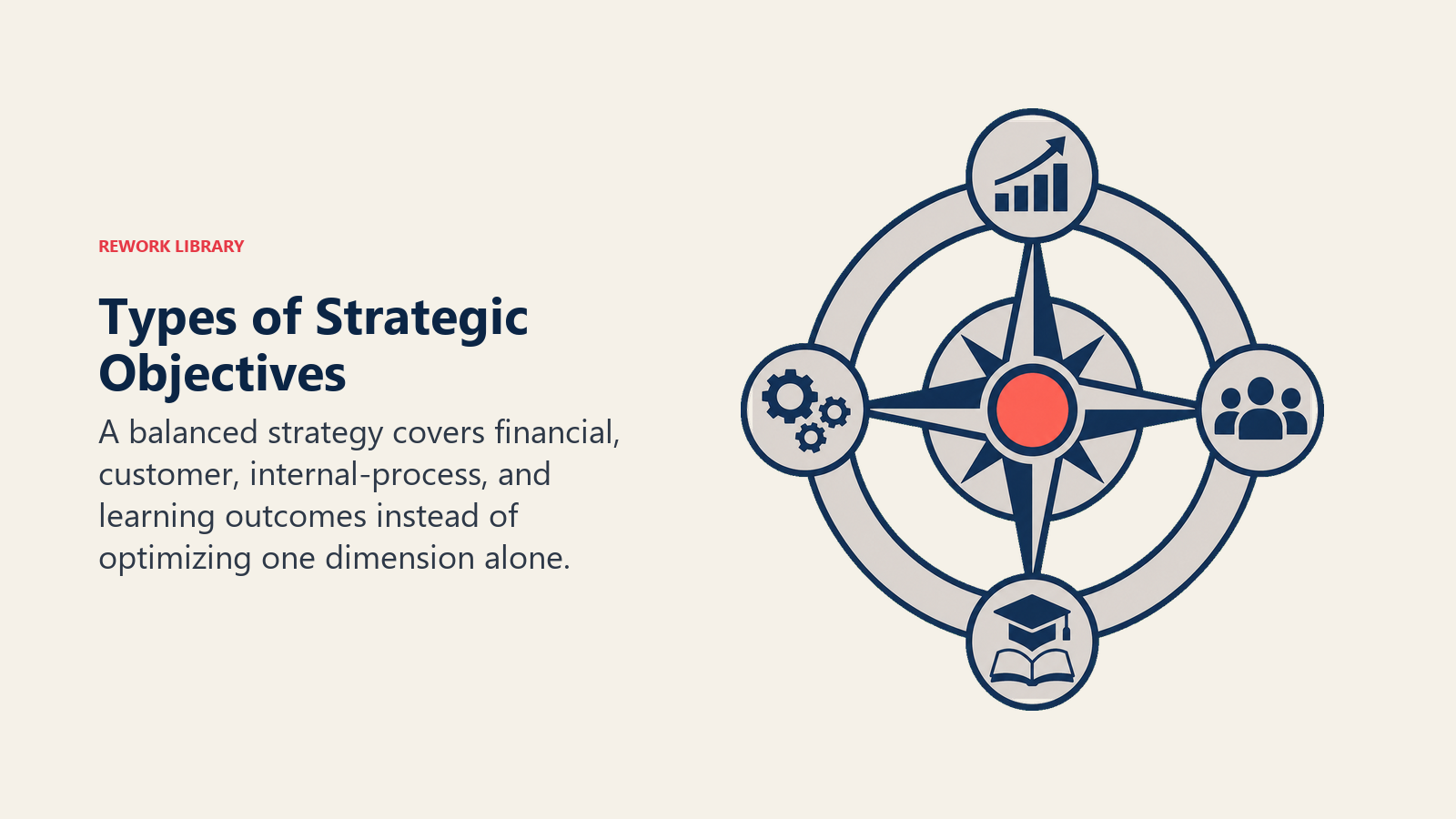
La forma más sólida de categorizar los objetivos estratégicos proviene del cuadro de mando integral, que los agrupa en cuatro perspectivas. Esto importa porque las organizaciones que solo establecen objetivos financieros tienden a sobreoptimizar los resultados a corto plazo a expensas de la salud a largo plazo.
| Perspectiva | Enfoque | Lo que captura | Ejemplo de objetivo |
|---|---|---|---|
| Financiera | Rentabilidad, crecimiento, valor para el accionista | Ingresos, margen, retorno sobre el capital | "Aumentar el margen bruto del 58% al 65% en 24 meses." |
| Clientes | Valor entregado a las personas a las que se sirve | Retención, satisfacción, cuota de mercado | "Alcanzar una puntuación Net Promoter Score (NPS) superior a 60 en nuestro segmento principal." |
| Procesos internos | Eficiencia operativa y capacidad | Tiempo de ciclo, calidad, velocidad de entrega | "Reducir el ciclo de ventas promedio de 47 días a 30 días antes de fin de año." |
| Aprendizaje y crecimiento | Personas, cultura y sistemas que lo sustentan todo | Talento, habilidades, tecnología | "Construir capacidad interna de desarrollo de IA con un equipo de 8 ingenieros antes del cuarto trimestre." |
Un conjunto equilibrado de objetivos estratégicos incluye normalmente al menos uno de cada perspectiva. Las organizaciones que omiten la perspectiva de aprendizaje y crecimiento suelen descubrir que sus objetivos financieros y de clientes se estancan porque la capacidad subyacente nunca se construyó.
Para un análisis más profundo de cómo estas perspectivas se conectan con la ejecución estratégica, véase el resumen de niveles de estrategia.
Cómo establecer objetivos estratégicos
Los buenos objetivos estratégicos no surgen de un retiro de un día. Requieren un proceso estructurado que trabaje hacia atrás desde el destino y hacia adelante desde la realidad actual. A continuación se presenta un método fiable de seis pasos.
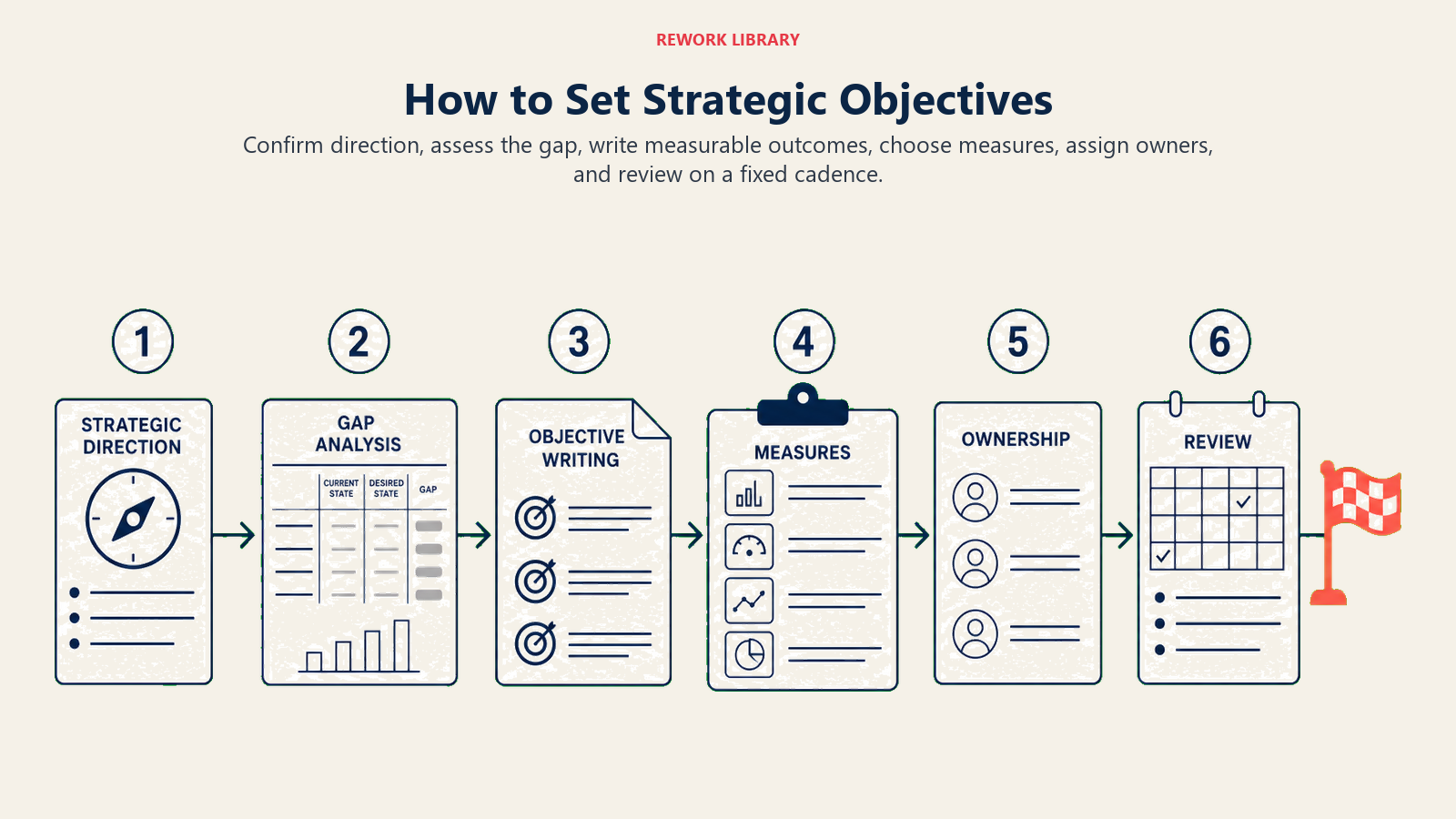
Paso 1: Confirme su dirección estratégica
Antes de redactar un solo objetivo, asegúrese de que su equipo directivo está de acuerdo sobre hacia dónde se dirige la organización. Eso significa tener una respuesta compartida a: ¿cómo es el éxito en tres a cinco años? Sin ese ancla, los diferentes líderes redactarán objetivos que apuntan en direcciones distintas.
Si su organización cuenta con un proceso de planificación estratégica documentado, este paso ya está incorporado. Si no es así, incluso una declaración de "norte estratégico" de una página compartida antes de que comience el establecimiento de objetivos ahorrará horas de desalineación posterior.
Paso 2: Evalúe su situación actual
Mapee la brecha entre su estado actual y su destino deseado. Utilice un diagnóstico como un análisis SWOT, una auditoría de capacidades o una revisión competitiva para identificar las brechas más críticas. Los objetivos que establezca deben abordar las brechas que, una vez cerradas, producirían el mayor avance hacia su visión.
El método de los factores críticos de éxito (CSF) es útil aquí: le obliga a identificar las tres a cinco áreas donde el rendimiento es innegociable para que la estrategia funcione.
Paso 3: Elabore objetivos en las cuatro perspectivas
Usando las perspectivas del cuadro de mando integral como lista de verificación, elabore una lista larga de objetivos candidatos. No se autocensure todavía. Apunte primero a la amplitud: resultados financieros, resultados para los clientes, mejoras operativas e inversiones en capacidad.
Una pregunta de elaboración útil: "¿Qué debe ser cierto sobre nuestra organización en tres años que no lo es hoy?"
Paso 4: Aplique la prueba SMART
Para cada objetivo candidato, aplique los criterios SMART: Específico, Medible, Alcanzable, Relevante y con Tiempo definido. Si un objetivo no supera alguno de estos criterios, es demasiado vago para ejecutarlo o es un deseo en lugar de un compromiso.
El artículo sobre objetivos empresariales SMART cubre este marco en detalle, incluidos los modos de fallo más habituales y cómo corregirlos.
| Criterio SMART | Pregunta que hay que hacer | Señal de alerta |
|---|---|---|
| Específico | ¿Está claramente definido el resultado? | "Mejorar la experiencia del cliente" (¿mejorar cómo? ¿en cuánto?) |
| Medible | ¿Hay un número o un estándar claro asociado? | "Aumentar los ingresos" (¿desde qué base, hacia qué objetivo?) |
| Alcanzable | ¿Es realista dados los recursos y el horizonte temporal? | Un objetivo de crecimiento 10x en 12 meses para un negocio estable |
| Relevante | ¿Se conecta directamente con su dirección estratégica? | Un objetivo de infraestructura de TI que no se conecta a ninguna prioridad empresarial |
| Con tiempo definido | ¿Hay un plazo específico? | "Alcanzar eventualmente el 80% de retención" |
Paso 5: Compruebe la coherencia
Lea el conjunto completo de objetivos como un todo. ¿Cuentan una historia coherente? ¿Se apoyan mutuamente o tiran en direcciones opuestas? Una organización que establece un objetivo de reducir costes en un 20% mientras establece simultáneamente un objetivo de lograr una satisfacción de clientes premium suele crear decisiones de equilibrio imposibles para los directivos intermedios.
Pregúntese: si logramos todos estos objetivos, ¿llegamos al destino que describimos en el paso 1? Si es así, el conjunto es coherente. Si no, falta algo o hay una desalineación.
Esta comprobación de coherencia es también el momento de confirmar que los objetivos se conectan hacia abajo con cómo la ejecución de la estrategia ocurrirá realmente dentro de los equipos y las funciones.
Paso 6: Asigne responsabilidades y establezca la cadencia de revisión
Cada objetivo estratégico necesita un responsable con nombre. No un equipo, no un departamento, sino una persona concreta que sea responsable del progreso y que tenga la autoridad para reasignar recursos cuando el objetivo se desvíe.
A continuación, establezca una cadencia de revisión antes de finalizar los objetivos. Las revisiones trimestrales son el mínimo para la mayoría de las organizaciones. Las revisiones mensuales son mejores para objetivos con métricas de movimiento rápido. Las revisiones anuales son casi siempre demasiado infrecuentes para detectar la desviación antes de que se acumule.
Ejemplos de objetivos estratégicos
Los objetivos estratégicos tienen un aspecto diferente según la función y el contexto sectorial. A continuación se presentan ejemplos del mundo real organizados por ambas dimensiones.
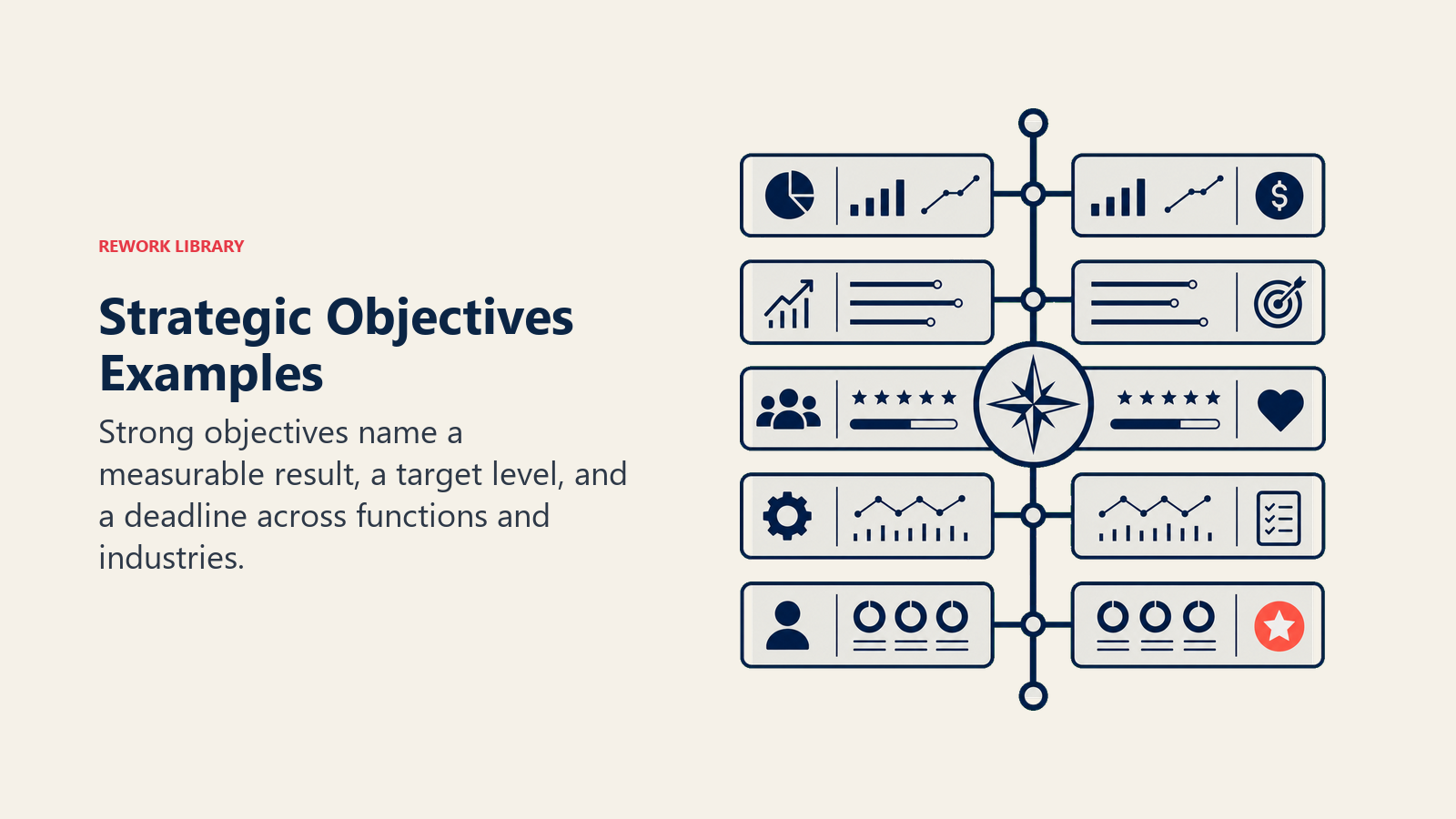
| Función | Ejemplo de objetivo estratégico | Perspectiva del cuadro de mando integral |
|---|---|---|
| Finanzas | "Alcanzar un margen EBITDA del 22% al cierre del año fiscal 2027." | Financiera |
| Ventas | "Aumentar el ARR empresarial de 12 millones a 20 millones de dólares en 24 meses." | Financiera |
| Éxito de clientes | "Reducir la pérdida de clientes del 18% a menos del 10% anual antes del cuarto trimestre de 2027." | Clientes |
| Marketing | "Incrementar la contribución del pipeline de entrada del 30% al 50% del pipeline total en 18 meses." | Clientes |
| Operaciones | "Reducir el tiempo promedio de tramitación de pedidos de 5 días a 2 días antes de fin de año." | Procesos internos |
| Producto | "Lanzar un flujo de incorporación de autoservicio que reduzca el tiempo hasta el primer valor de 14 días a 3 días antes del tercer trimestre." | Procesos internos |
| RR. HH. o Personal | "Alcanzar puntuaciones de calidad directiva superiores al 90% en las encuestas de compromiso y reducir la rotación evitable por debajo del 8%." | Aprendizaje y crecimiento |
| Tecnología | "Migrar el 100% de la infraestructura central a la nube antes del segundo trimestre, reduciendo los costes de alojamiento en un 30%." | Aprendizaje y crecimiento |
Por sector:
| Sector | Ejemplo de objetivo estratégico |
|---|---|
| Comercio minorista | "Abrir 12 nuevas ubicaciones en la región sureste manteniendo una NPS a nivel de tienda superior a 70." |
| Sanidad | "Reducir el tiempo de espera promedio a menos de 20 minutos en todas las instalaciones ambulatorias antes de 2027." |
| Fabricación | "Obtener la certificación ISO 9001 y reducir la tasa de defectos por debajo del 0,5% en todas las líneas de producción." |
| SaaS | "Alcanzar 50 millones de dólares de ARR con una NRR superior al 110%, demostrando un crecimiento eficiente impulsado por la expansión." |
| Servicios profesionales | "Aumentar los ingresos por consultor facturable en un 25% en 24 meses mediante la especialización y la fijación de precios premium." |
Errores frecuentes
Establecer demasiados objetivos
Cuando todo es prioritario, nada lo es. La mayoría de las organizaciones pueden ejecutar entre cuatro y ocho objetivos estratégicos a la vez. Por encima de esa cifra, el conjunto se convierte en una lista de aspiraciones en lugar de un compromiso enfocado. Reduzca la lista a los objetivos que realmente diferenciarán su trayectoria.
Redactar objetivos basados en actividades en lugar de en resultados
"Implementar un nuevo CRM" es una actividad. "Reducir el tiempo administrativo de ventas en un 40% y aumentar la visibilidad del pipeline al 90% de precisión" es un resultado. La distinción importa porque los equipos pueden completar una actividad sin lograr el objetivo subyacente. Redacte los objetivos como resultados: ¿qué será diferente cuando esto esté hecho?
Sin responsable con nombre
La responsabilidad compartida equivale a no tener responsabilidad. Cuando un objetivo pertenece "al equipo de liderazgo", no pertenece a nadie. Asigne a una única persona responsable, aunque el trabajo sea interfuncional.
Establecer objetivos de forma aislada del equipo
Los objetivos entregados sin contexto casi siempre fracasan. Las personas necesitan entender por qué importa el objetivo, no solo qué es. Y los equipos que realizan el trabajo suelen tener la visión más clara de lo que es alcanzable. Involucrar a los directivos en el proceso de establecimiento de objetivos produce mejores objetivos y una adhesión significativamente mayor.
Tratar el plan anual como algo sagrado
El entorno empresarial cambia. Un objetivo estratégico que tenía sentido en enero puede ser obsoleto en junio. Establezca detonadores explícitos para cuando un objetivo deba revisarse: un movimiento de un competidor, un cambio de mercado, una capacidad que no se materializó. La adhesión rígida a objetivos que ya no encajan con la realidad le cuesta a las organizaciones tiempo y credibilidad.
Mejores prácticas
- Limítese a los pocos críticos. Cuatro a ocho objetivos estratégicos son suficientes para la mayoría de las organizaciones. Menos suele ser mejor.
- Redacte desde el futuro. Enmarque cada objetivo como una declaración de lo que será cierto al final del período, no una descripción de lo que hará en el camino.
- Equilibre las perspectivas. Use las cuatro perspectivas del cuadro de mando integral como mecanismo de control. Si tiene seis objetivos financieros y ninguno de aprendizaje y crecimiento, probablemente está optimizando el presente a expensas del futuro.
- Despliegue con intención. Los objetivos estratégicos pertenecen al nivel organizacional. Los departamentos y equipos los traducen después en metas y proyectos que apoyan los objetivos. No omita este paso de traducción.
- Revise trimestralmente y ajuste cuando la evidencia lo justifique. Las revisiones trimestrales deben ser sustantivas: ¿este objetivo está en camino? Si no es así, ¿por qué no? ¿Qué debe cambiar? Las revisiones anuales no detectarán la desviación a tiempo para corregirla.
- Conecte los objetivos con sus marcos de planificación. Herramientas como el cuadro de mando integral, el marco OKR y la cascada de estrategia corporativa funcionan mejor cuando los objetivos estratégicos ya son claros y acordados. No utilice la herramienta como sustituto de hacer primero el pensamiento estratégico.
Preguntas Frecuentes
¿Cuál es la diferencia entre un objetivo estratégico y una meta?
Un objetivo estratégico es un resultado a escala organizacional que abarca de uno a tres años, vinculado directamente a la visión a largo plazo de la empresa. Una meta es un hito a más corto plazo (normalmente de tres a doce meses) que un equipo o proyecto persigue para hacer avanzar el objetivo estratégico. Los objetivos estratégicos responden a "¿hacia dónde vamos?"; las metas responden a "¿qué hacemos a continuación para llegar ahí?"
¿Cuántos objetivos estratégicos debe tener una empresa?
La mayoría de las organizaciones gestionan bien entre cuatro y ocho objetivos estratégicos. Por debajo de cuatro, el conjunto puede ser demasiado estrecho para capturar una visión equilibrada de la salud organizacional. Por encima de ocho, el enfoque suele deteriorarse y los objetivos pierden su poder para guiar las decisiones. El número correcto depende del tamaño y la complejidad de la organización, pero menos es casi siempre más eficaz.
¿Quién es responsable de establecer los objetivos estratégicos?
El equipo directivo senior es el propietario de los objetivos estratégicos, típicamente con el CEO siendo responsable del conjunto global. Pero "de titularidad del liderazgo" no significa "decidido de forma aislada". Las organizaciones eficaces involucran a los líderes de unidades de negocio y a los responsables funcionales en la elaboración y validación de los objetivos, y luego usan el conjunto final para desplegar la planificación a través de la organización.
¿Con qué frecuencia deben revisarse los objetivos estratégicos?
Trimestralmente es la línea de base. Las revisiones mensuales son mejores cuando los objetivos están vinculados a mercados de movimiento rápido o métricas operativas. Las revisiones anuales son demasiado infrecuentes para cualquier cosa significativa. El objetivo de las revisiones periódicas no es reescribir los objetivos constantemente; es detectar la desviación pronto, hacer preguntas honestas sobre el progreso y realizar pequeñas correcciones antes de que los pequeños problemas se conviertan en grandes.
¿Cuál es la diferencia entre los objetivos estratégicos y los indicadores clave de rendimiento (KPI)?
Los objetivos estratégicos definen los resultados a los que se compromete a alcanzar. Los KPI miden su salud y progreso de forma continua. Un KPI le indica cómo está funcionando el negocio ahora mismo. Un objetivo estratégico le indica hacia dónde se dirige. Los dos trabajan juntos: un buen objetivo estratégico tendrá uno o dos KPI que hacen un seguimiento de si está en camino de lograrlo, pero no son lo mismo. Establecer objetivos estratégicos claros es una de las cosas de mayor apalancamiento que puede hacer un equipo directivo. Cuando se hacen bien, se le ofrece a cada directivo y colaborador individual una respuesta fiable a la pregunta más motivadora de cualquier organización: ¿qué estamos construyendo realmente aquí, y por qué importa?

Senior Operations & Growth Strategist
On this page
- ¿Qué son los objetivos estratégicos?
- Objetivos estratégicos frente a metas frente a KPI
- Tipos de objetivos estratégicos
- Cómo establecer objetivos estratégicos
- Paso 1: Confirme su dirección estratégica
- Paso 2: Evalúe su situación actual
- Paso 3: Elabore objetivos en las cuatro perspectivas
- Paso 4: Aplique la prueba SMART
- Paso 5: Compruebe la coherencia
- Paso 6: Asigne responsabilidades y establezca la cadencia de revisión
- Ejemplos de objetivos estratégicos
- Errores frecuentes
- Establecer demasiados objetivos
- Redactar objetivos basados en actividades en lugar de en resultados
- Sin responsable con nombre
- Establecer objetivos de forma aislada del equipo
- Tratar el plan anual como algo sagrado
- Mejores prácticas