Objetivos Estratégicos: Definição, Exemplos e Como Defini-los
Turn this article into takeaways for your work.


Each assistant summarizes the article only for you and suggests best practices for your work.
A maioria das equipes de liderança tem uma visão convincente. Muito poucas têm um conjunto claro de objetivos estratégicos que traduzem essa visão em algo que as pessoas possam de fato trabalhar para alcançar. Essa lacuna é onde a estratégia estagna.
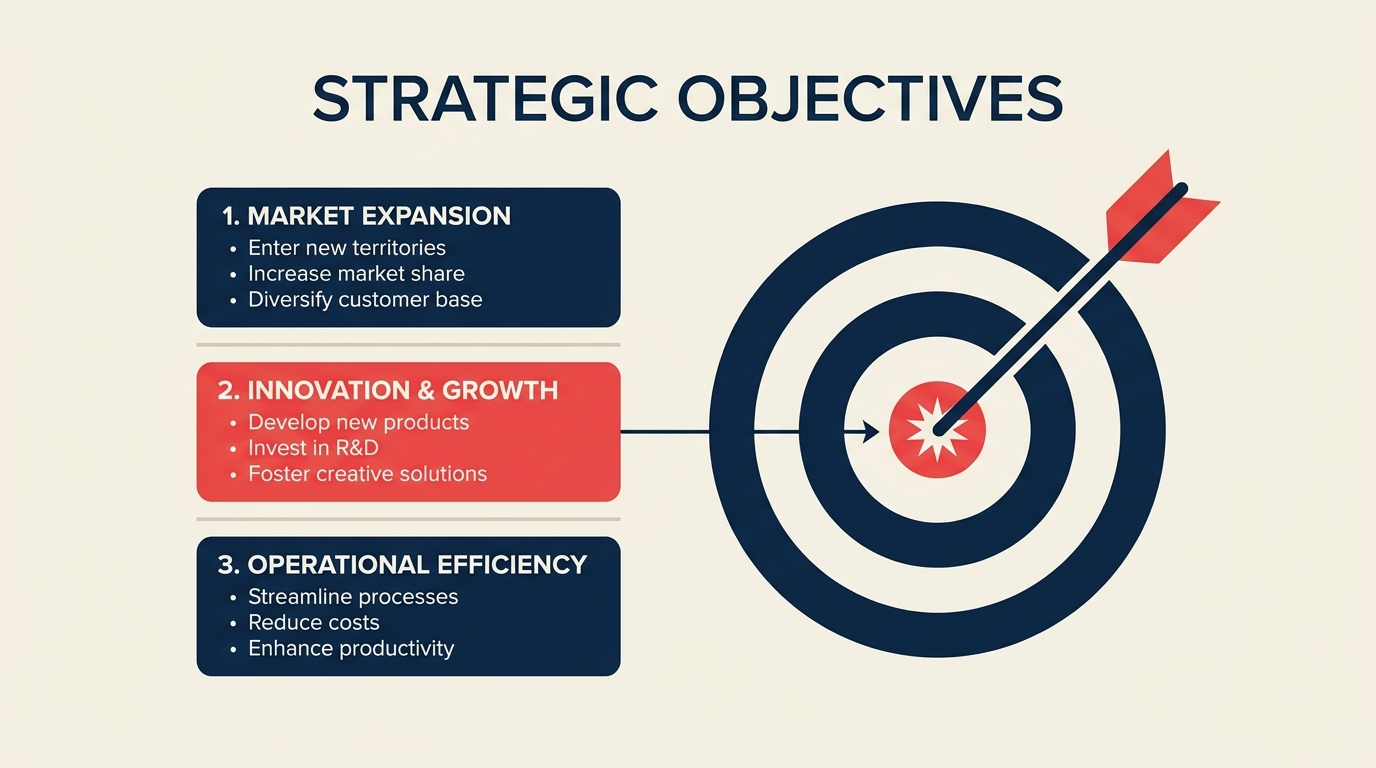
Objetivos estratégicos são os resultados específicos e mensuráveis que uma organização se compromete a alcançar em um período definido, tipicamente de um a três anos, para avançar em sua direção de longo prazo. Eles ficam entre uma visão ampla e o trabalho do dia a dia, atuando como a camada de tradução que torna a execução possível.
O que são objetivos estratégicos?
Objetivos estratégicos são os resultados concretos, de abrangência organizacional, que uma empresa se compromete a alcançar em um período definido, geralmente de um a três anos, que coletivamente a movem em direção à sua visão de longo prazo.
Não são aspirações. Não são valores. E não são o mesmo que as tarefas que suas equipes completam a cada semana. Um objetivo estratégico nomeia um estado final específico que será mensurável quando o objetivo for atingido. "Tornar-se líder de mercado em software de RH para empresas de médio porte até 2028" é um objetivo estratégico. "Trabalhar duro para crescer nosso negócio de software" é uma esperança.
Objetivos estratégicos dão aos líderes uma resposta consistente para a pergunta que todo gestor e colaborador eventualmente faz: o que estamos realmente tentando alcançar?
Fatos-Chave
- Organizações que documentam formalmente seus objetivos estratégicos têm 2,4 vezes mais probabilidade de atingir desempenho excepcional, segundo a Harvard Business Review (2022).
- Apenas 5% dos colaboradores dizem entender a estratégia de sua empresa no dia a dia, segundo uma pesquisa de força de trabalho da Gartner (2023).
- Empresas que revisam o progresso em relação aos objetivos estratégicos trimestralmente (em vez de anualmente) têm 31% mais probabilidade de permanecer no rumo certo, segundo pesquisa da Bain & Company (2022).
Objetivos estratégicos vs. metas vs. KPIs
Esses três termos são usados de forma intercambiável, mas servem a funções muito diferentes em um sistema de planejamento. Confundi-los é uma das razões mais comuns pelas quais os documentos de estratégia ficam sem leitura até fevereiro.
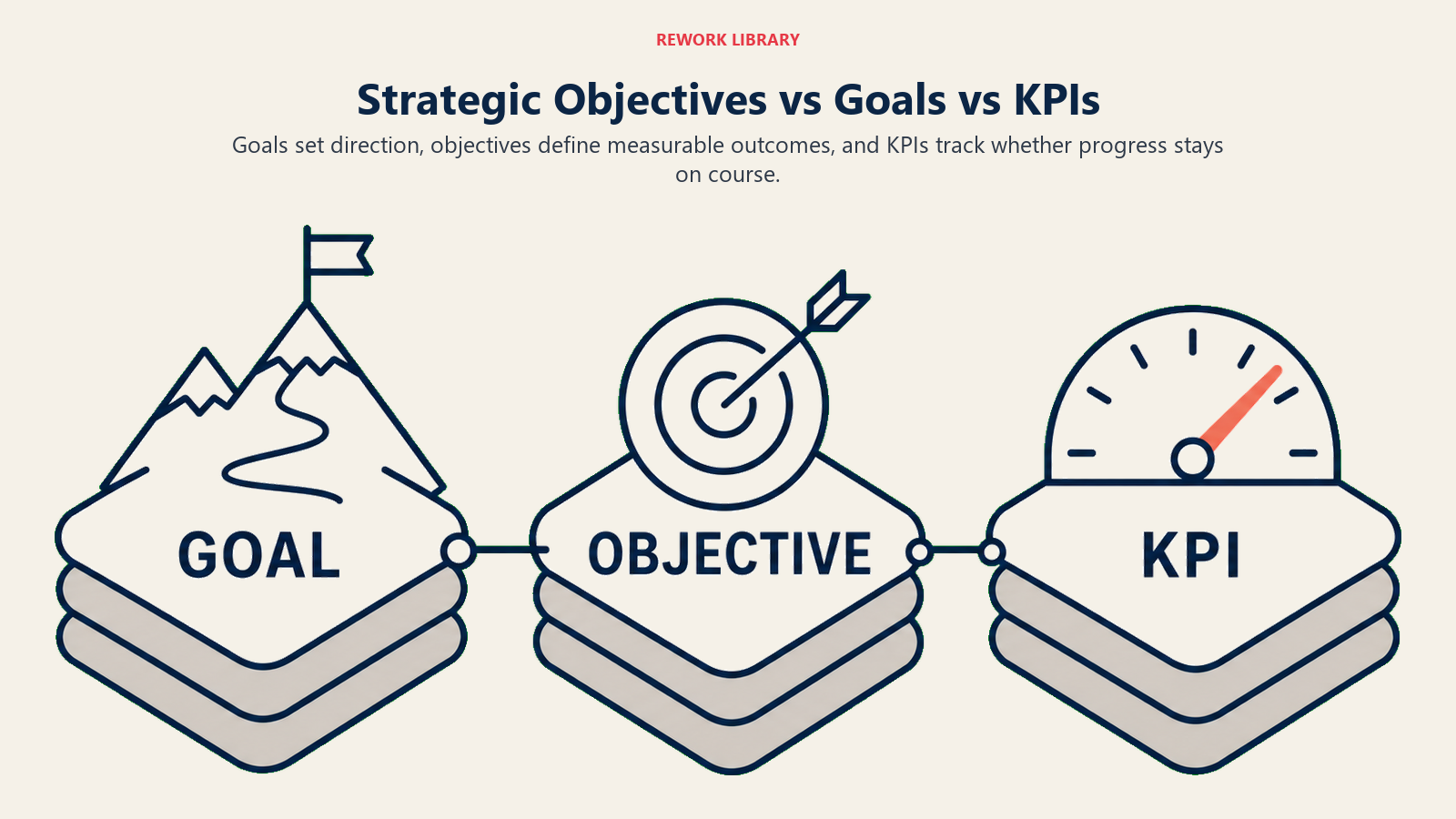
| Conceito | O que responde | Horizonte temporal | Exemplo |
|---|---|---|---|
| Visão / Missão | Por que existimos? Para onde vamos? | 5 a 20 anos | "Ser o fornecedor mais confiável de software de negócios do mundo." |
| Objetivo estratégico | Quais resultados precisamos alcançar para chegar lá? | 1 a 3 anos | "Atingir 92% de retenção de clientes em todas as contas corporativas até o final de 2027." |
| Meta | Qual projeto ou marco avança esse objetivo? | 3 a 12 meses | "Lançar um programa dedicado de customer success para contas acima de R$ 500K ARR até o T3." |
| Indicador-chave de desempenho (KPI) | Como medimos o progresso e a saúde? | Contínuo | "Net Revenue Retention (NRR), medido mensalmente." |
Pense no relacionamento como um funil. A visão aponta uma direção. Os objetivos estratégicos definem os pontos intermediários. As metas e projetos são o trabalho que o move entre esses pontos. E os KPIs dizem em tempo real se você está avançando rápido o suficiente.
O framework OKR é um método popular para conectar objetivos estratégicos a metas no nível das equipes. Os OKRs funcionam melhor quando os objetivos estratégicos aos quais estão conectados já são claros e estáveis.
Tipos de objetivos estratégicos
A forma mais duradoura de categorizar objetivos estratégicos vem do balanced scorecard, que agrupa os objetivos em quatro perspectivas. Isso importa porque organizações que definem apenas objetivos financeiros tendem a otimizar os resultados de curto prazo à custa da saúde de longo prazo.
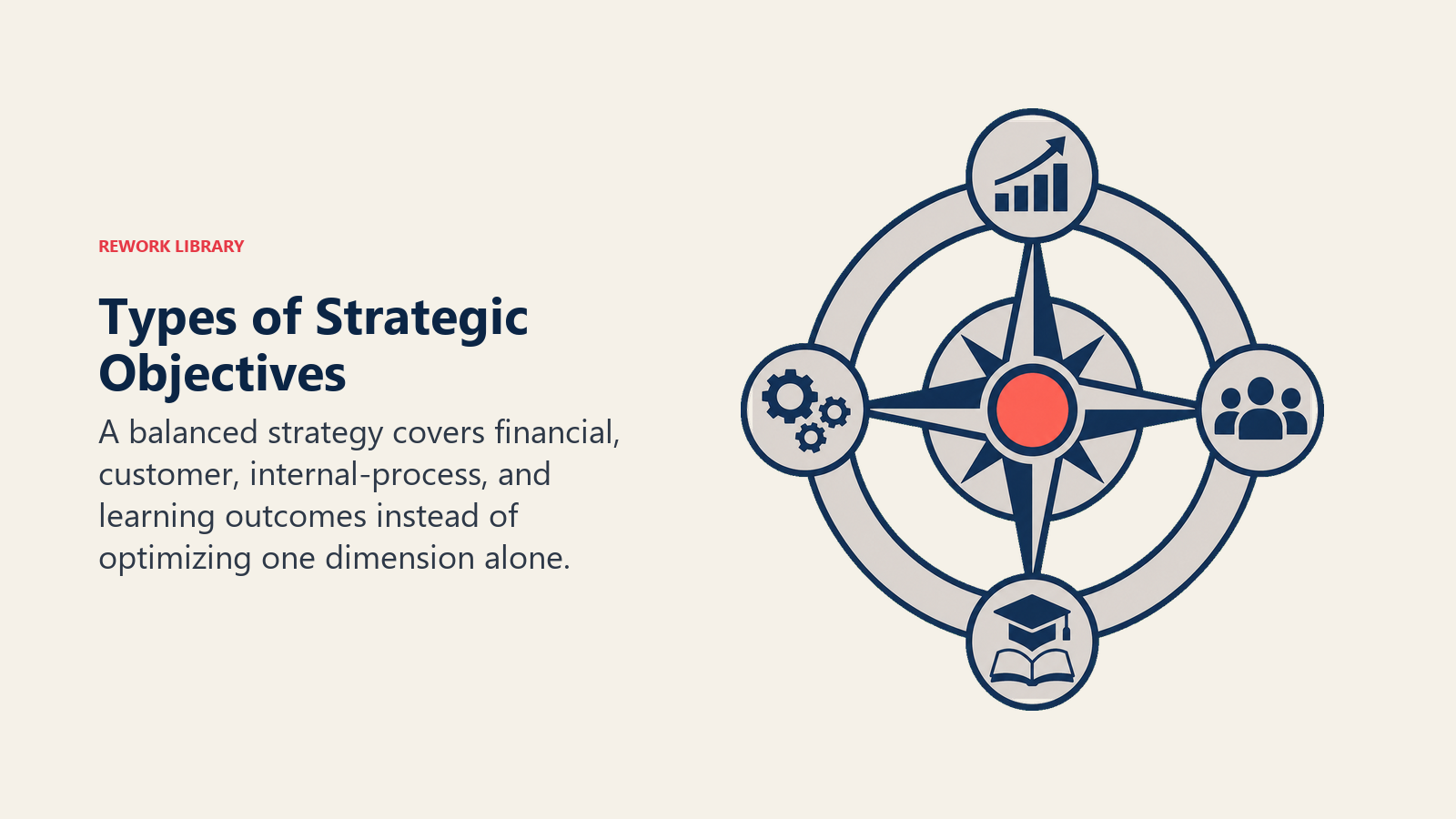
| Perspectiva | Foco | O que captura | Exemplo de objetivo |
|---|---|---|---|
| Financeira | Rentabilidade, crescimento, valor para o acionista | Receita, margem, retorno sobre o capital | "Aumentar a margem bruta de 58% para 65% em 24 meses." |
| Clientes | Valor entregue às pessoas que você serve | Retenção, satisfação, participação de mercado | "Atingir um Net Promoter Score (NPS) acima de 60 no nosso segmento principal." |
| Processos Internos | Eficiência operacional e capacidade | Tempo de ciclo, qualidade, velocidade de entrega | "Reduzir o ciclo médio de vendas de 47 para 30 dias até o final do ano." |
| Aprendizado e Crescimento | Pessoas, cultura e sistemas que viabilizam todo o resto | Talentos, habilidades, tecnologia | "Construir capacidade interna de desenvolvimento de IA com uma equipe de 8 engenheiros até o T4." |
Um conjunto equilibrado de objetivos estratégicos tipicamente inclui pelo menos um de cada perspectiva. Organizações que ignoram a perspectiva de aprendizado e crescimento frequentemente descobrem que seus objetivos financeiros e de clientes estancam porque a capacidade subjacente nunca foi construída.
Para uma visão mais aprofundada de como essas perspectivas se conectam à execução estratégica, veja a visão geral dos níveis de estratégia.
Como definir objetivos estratégicos
Bons objetivos estratégicos não emergem de um retiro de um dia. Eles exigem um processo estruturado que parte do destino e avança a partir da realidade atual. Veja uma abordagem confiável em seis etapas.
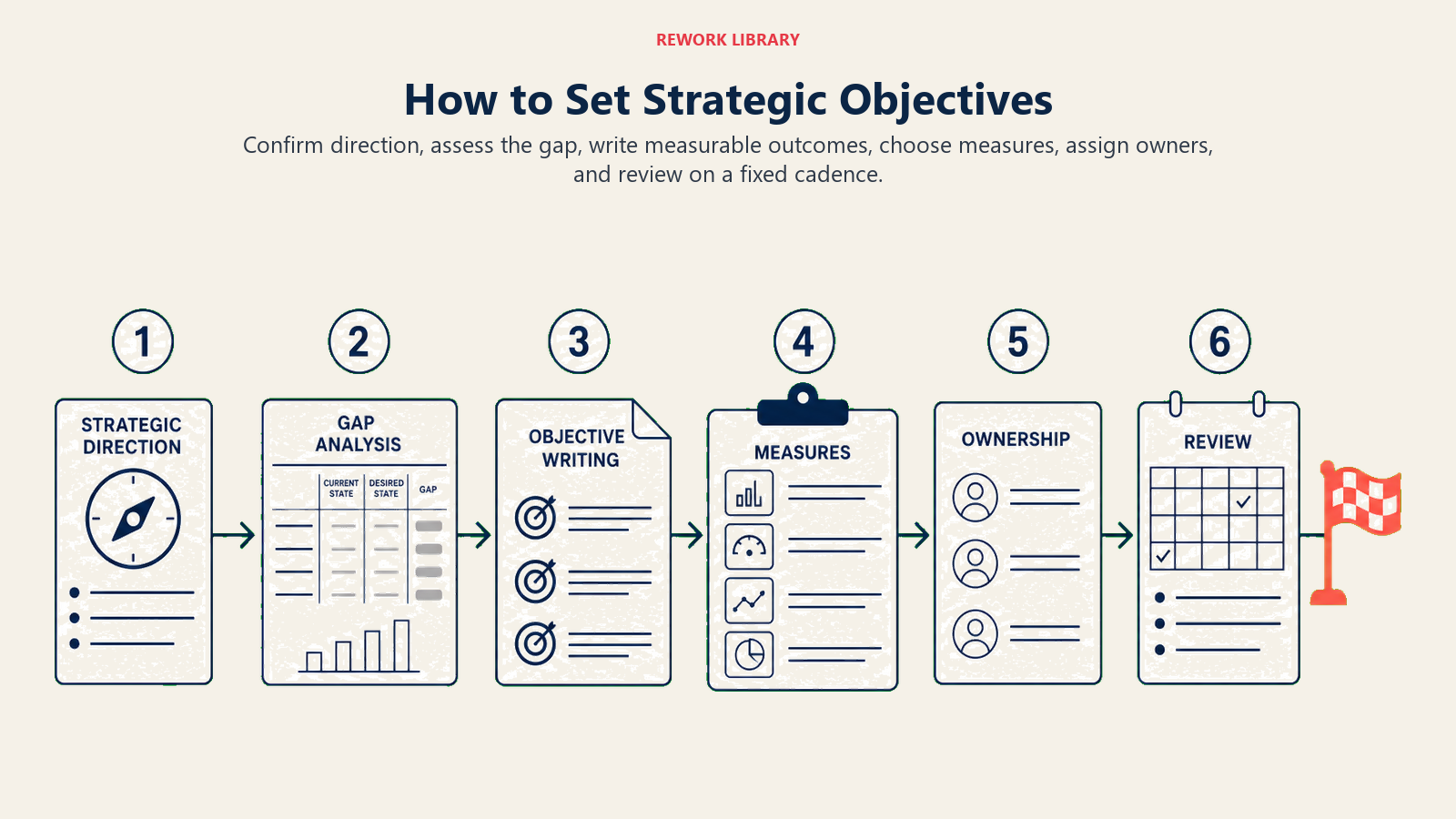
Etapa 1: Confirme a direção estratégica
Antes de escrever um único objetivo, certifique-se de que sua equipe de liderança concorda sobre para onde a organização está indo. Isso significa ter uma resposta compartilhada para: como é vencer daqui a três a cinco anos? Sem esse ponto de ancoragem, diferentes líderes escreverão objetivos que apontam em direções diferentes.
Se sua organização tem um processo de planejamento estratégico documentado, essa etapa já está incorporada. Se não, até mesmo uma declaração de "estrela guia estratégica" de uma única página compartilhada antes da definição de objetivos poupará horas de desalinhamento depois.
Etapa 2: Avalie onde você está hoje
Mapeie a lacuna entre seu estado atual e seu destino desejado. Use um diagnóstico como análise SWOT, auditoria de capacidades ou revisão competitiva para revelar as lacunas mais críticas. Os objetivos que você define devem endereçar as lacunas que, se fechadas, produziriam o maior avanço em direção à sua visão.
O método dos fatores críticos de sucesso (CSF) é útil aqui: ele força você a identificar as três a cinco áreas onde o desempenho é inegociável para a estratégia funcionar.
Etapa 3: Esboce objetivos em todas as quatro perspectivas
Usando as perspectivas do balanced scorecard como lista de verificação, esboce uma longa lista de objetivos candidatos. Não se autocensure ainda. Busque amplitude primeiro: resultados financeiros, resultados para clientes, melhorias operacionais e investimentos em capacidades.
Uma pergunta útil para o esboço: "O que precisa ser verdade sobre nossa organização em três anos que não é verdade hoje?"
Etapa 4: Aplique o teste SMART
Para cada objetivo candidato, aplique os critérios SMART: Específico, Mensurável, Alcançável, Relevante e com Prazo definido. Se um objetivo falhar em qualquer um desses critérios, ele é vago demais para executar ou é um desejo em vez de um compromisso.
O artigo sobre objetivos de negócios SMART cobre esse framework em detalhes, incluindo modos comuns de falha e como corrigi-los.
| Critério SMART | Pergunta a fazer | Sinal de alerta |
|---|---|---|
| Específico | O resultado está claramente definido? | "Melhorar a experiência do cliente" (melhorar como? em quanto?) |
| Mensurável | Há um número ou padrão claro associado? | "Aumentar a receita" (de qual baseline, até qual meta?) |
| Alcançável | Isso é realista dados os recursos e o prazo? | Uma meta de crescimento 10x em 12 meses para um negócio estável |
| Relevante | Isso se conecta diretamente à direção estratégica? | Um objetivo de infraestrutura de TI que não se conecta a nenhuma prioridade de negócios |
| Com Prazo definido | Há um prazo específico? | "Eventualmente atingir 80% de retenção" |
Etapa 5: Teste a coerência
Leia seu conjunto completo de objetivos como um grupo. Eles contam uma história coerente? Eles se sustentam mutuamente ou puxam em direções opostas? Uma organização que define um objetivo de cortar custos em 20% enquanto simultaneamente define um objetivo de atingir satisfação de clientes de nível premium frequentemente cria escolhas impossíveis para os gestores intermediários.
Pergunte: se alcançarmos todos esses objetivos, chegamos ao destino que descrevemos na Etapa 1? Se sim, o conjunto é coerente. Se não, algo está faltando ou desalinhado.
Essa verificação de coerência é também o momento de confirmar que os objetivos se conectam a como a execução da estratégia acontecerá de fato dentro das equipes e funções.
Etapa 6: Atribua responsabilidade e defina a frequência de revisão
Cada objetivo estratégico precisa de um responsável nomeado. Não uma equipe, não um departamento, mas um indivíduo nomeado que é responsável pelo progresso e que tem autoridade para realocar recursos quando o objetivo está fora do curso.
Depois, defina uma frequência de revisão antes de finalizar os objetivos. Revisões trimestrais são o mínimo para a maioria das organizações. Mensal é melhor para objetivos com métricas de ritmo acelerado. Revisões anuais são quase sempre insuficientes para identificar desvios antes que se agravem.
Exemplos de objetivos estratégicos
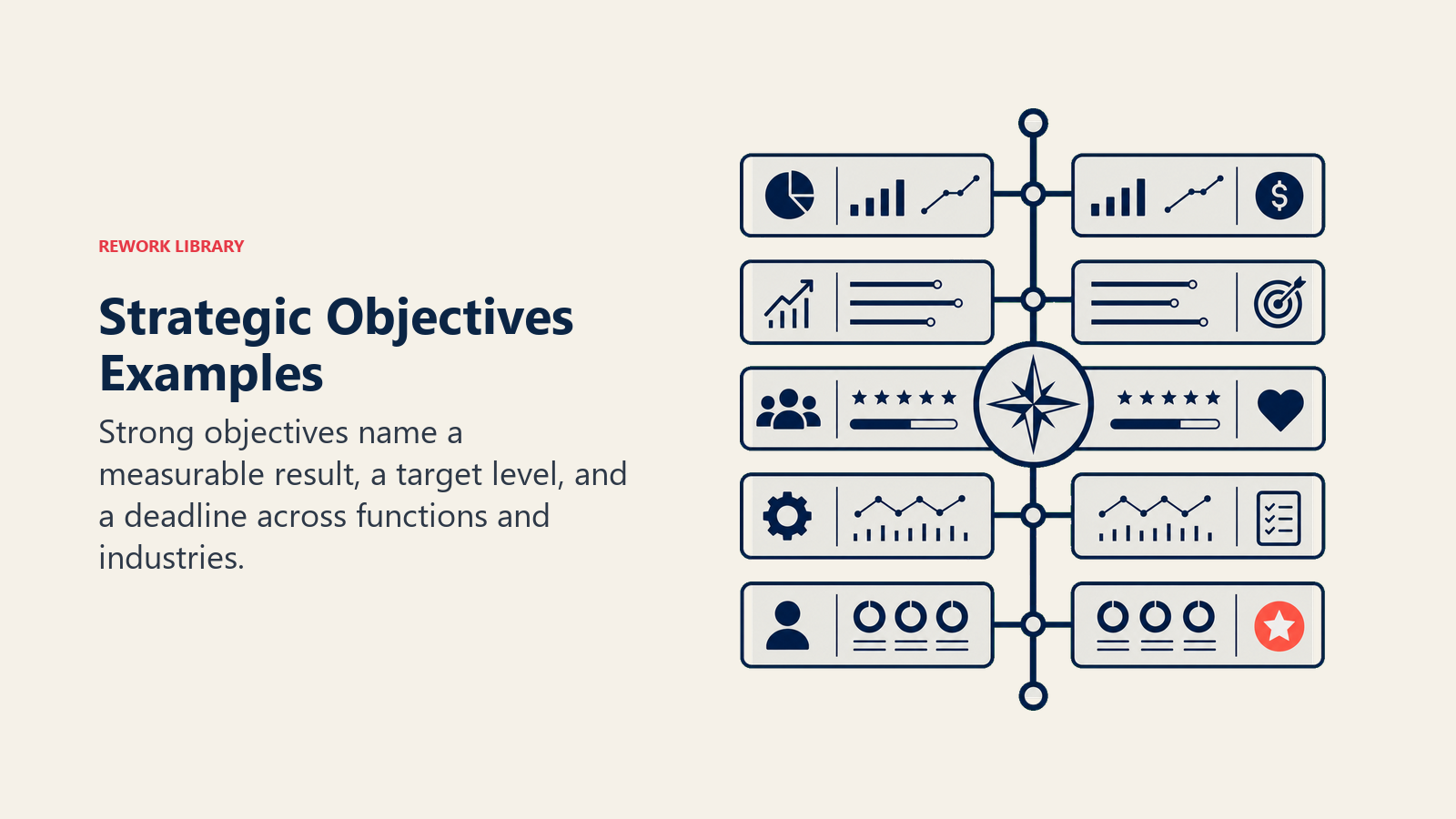
Os objetivos estratégicos têm aparências diferentes dependendo da função e do contexto do setor. Veja exemplos reais organizados por ambas as dimensões.
| Função | Exemplo de objetivo estratégico | Perspectiva do balanced scorecard |
|---|---|---|
| Financeiro | "Atingir margem EBITDA de 22% até o final do ano fiscal de 2027." | Financeira |
| Vendas | "Aumentar ARR corporativo de R$ 12M para R$ 20M em 24 meses." | Financeira |
| Customer Success | "Reduzir o churn de clientes de 18% para menos de 10% anualmente até o T4 2027." | Clientes |
| Marketing | "Aumentar a contribuição do pipeline inbound de 30% para 50% do pipeline total em 18 meses." | Clientes |
| Operações | "Reduzir o tempo médio de atendimento de pedidos de 5 para 2 dias até o final do ano." | Processos Internos |
| Produto | "Lançar um fluxo de onboarding self-service que reduza o tempo até o primeiro valor de 14 para 3 dias até o T3." | Processos Internos |
| RH/Pessoas | "Atingir pontuações de qualidade de gestão acima de 90% nas pesquisas de engajamento e reduzir a rotatividade lamentável abaixo de 8%." | Aprendizado e Crescimento |
| Tecnologia | "Migrar 100% da infraestrutura central para a nuvem até o T2, reduzindo os custos de hospedagem em 30%." | Aprendizado e Crescimento |
Por setor:
| Setor | Exemplo de objetivo estratégico |
|---|---|
| Varejo | "Abrir 12 novas unidades na região Sudeste mantendo o NPS por loja acima de 70." |
| Saúde | "Reduzir o tempo médio de espera para menos de 20 minutos em todas as unidades ambulatoriais até 2027." |
| Manufatura | "Obter certificação ISO 9001 e reduzir a taxa de defeitos para menos de 0,5% em todas as linhas de produção." |
| SaaS | "Atingir R$ 50M de ARR com NRR acima de 110%, demonstrando crescimento eficiente liderado por expansão." |
| Serviços Profissionais | "Aumentar a receita por consultor faturável em 25% ao longo de 24 meses por meio de especialização e precificação premium." |
Erros comuns
Definir objetivos demais
Quando tudo é prioridade, nada é. A maioria das organizações consegue executar de quatro a oito objetivos estratégicos simultaneamente. Além disso, o conjunto se torna uma lista de aspirações em vez de um compromisso focado. Reduza a lista aos objetivos que genuinamente diferenciarão sua trajetória.
Escrever objetivos baseados em atividades em vez de resultados
"Lançar um novo sistema de CRM" é uma atividade. "Reduzir o tempo administrativo de vendas em 40% e aumentar a visibilidade do pipeline para 90% de precisão" é um resultado. A distinção importa porque as equipes podem completar uma atividade sem alcançar o objetivo subjacente. Escreva objetivos como resultados: o que será diferente quando isso estiver concluído?
Nenhum responsável nomeado
Responsabilidade compartilhada é ausência de responsabilidade. Quando um objetivo pertence a "a equipe de liderança," ele não pertence a ninguém. Atribua uma única pessoa responsável, mesmo que o trabalho seja interfuncional.
Definir objetivos em isolamento da equipe
Objetivos entregues de cima para baixo sem contexto quase sempre falham. As pessoas precisam entender por que o objetivo importa, não apenas o que é. E as equipes que fazem o trabalho frequentemente têm a visão mais clara sobre o que é alcançável. Envolver os gestores no processo de definição de objetivos produz melhores objetivos e muito mais comprometimento.
Tratar o plano anual como sagrado
O ambiente de negócios muda. Um objetivo estratégico que fazia sentido em janeiro pode estar obsoleto em junho. Defina gatilhos explícitos para quando um objetivo deve ser revisitado: um movimento de concorrente, uma mudança de mercado, uma capacidade que não se materializou. A adesão rígida a objetivos que não correspondem mais à realidade custa às organizações tempo e credibilidade.
Boas práticas
- Limite-se aos poucos que realmente importam. Quatro a oito objetivos estratégicos são suficientes para a maioria das organizações. Menos costuma ser melhor.
- Escreva a partir do futuro. Enquadre cada objetivo como uma declaração do que será verdade ao final do período, não uma descrição do que você fará ao longo do caminho.
- Equilibre as perspectivas. Use as quatro perspectivas do balanced scorecard como força motivadora. Se você tem seis objetivos financeiros e zero de aprendizado e crescimento, provavelmente está otimizando o hoje à custa do amanhã.
- Faça o desdobramento de forma intencional. Os objetivos estratégicos pertencem ao nível organizacional. Departamentos e equipes então os traduzem em metas e projetos que os apoiam. Não pule essa etapa de tradução.
- Revise trimestralmente, ajuste quando a evidência justificar. As revisões trimestrais devem ser substantivas: este objetivo está no rumo certo? Se não, por quê? O que precisa mudar? Verificações anuais não identificarão desvios a tempo de corrigi-los.
- Conecte os objetivos aos seus frameworks de planejamento. Ferramentas como o balanced scorecard, o framework OKR e o desdobramento de estratégia corporativa funcionam melhor quando os objetivos estratégicos já são claros e acordados. Não use a ferramenta como substituto para fazer o pensamento estratégico primeiro.
Perguntas Frequentes
Qual é a diferença entre um objetivo estratégico e uma meta?
Um objetivo estratégico é um resultado de nível organizacional que abrange de um a três anos, diretamente vinculado à visão de longo prazo da empresa. Uma meta é um marco de prazo mais curto (tipicamente de três a doze meses) que uma equipe ou projeto persegue para avançar o objetivo estratégico. Objetivos estratégicos respondem "para onde estamos indo?"; metas respondem "o que fazemos a seguir para chegar lá?"
Quantos objetivos estratégicos uma empresa deve ter?
A maioria das organizações gerencia bem de quatro a oito objetivos estratégicos. Abaixo de quatro, o conjunto pode ser estreito demais para capturar uma visão equilibrada da saúde organizacional. Acima de oito, o foco tipicamente se dilui e os objetivos perdem seu poder de orientar as decisões. O número certo depende do tamanho e da complexidade da organização, mas menos quase sempre é mais eficaz.
Quem é responsável por definir os objetivos estratégicos?
A equipe de liderança sênior é proprietária dos objetivos estratégicos, tipicamente com o CEO responsável pelo conjunto geral. Mas "de propriedade da liderança" não significa "decidido em isolamento." Organizações eficazes envolvem líderes de unidades de negócios e chefes funcionais na elaboração e validação dos objetivos e usam o conjunto final para desdobrar o planejamento por toda a organização.
Com que frequência os objetivos estratégicos devem ser revisados?
Trimestralmente é o padrão. A revisão mensal é melhor quando os objetivos estão vinculados a mercados de ritmo acelerado ou métricas operacionais. Revisões anuais são insuficientes para qualquer coisa significativa. O objetivo das revisões regulares não é reescrever os objetivos constantemente; é identificar desvios cedo, fazer perguntas honestas sobre o progresso e fazer pequenas correções antes que pequenos problemas se tornem grandes.
Qual é a diferença entre objetivos estratégicos e indicadores-chave de desempenho (KPIs)?
Objetivos estratégicos definem os resultados que você está comprometido em alcançar. Os KPIs medem sua saúde e progresso de forma contínua. Um KPI lhe diz como o negócio está se saindo agora. Um objetivo estratégico lhe diz para onde você está indo. Os dois trabalham juntos: um bom objetivo estratégico terá um ou dois KPIs que acompanham se você está no caminho para alcançá-lo, mas não são a mesma coisa. Definir objetivos estratégicos claros é uma das coisas de maior alavancagem que uma equipe de liderança pode fazer. Acerte-os e você dá a cada gestor e colaborador uma resposta confiável para a pergunta mais motivadora de qualquer organização: o que estamos realmente construindo aqui, e por que isso importa?

Senior Operations & Growth Strategist
On this page
- O que são objetivos estratégicos?
- Objetivos estratégicos vs. metas vs. KPIs
- Tipos de objetivos estratégicos
- Como definir objetivos estratégicos
- Etapa 1: Confirme a direção estratégica
- Etapa 2: Avalie onde você está hoje
- Etapa 3: Esboce objetivos em todas as quatro perspectivas
- Etapa 4: Aplique o teste SMART
- Etapa 5: Teste a coerência
- Etapa 6: Atribua responsabilidade e defina a frequência de revisão
- Exemplos de objetivos estratégicos
- Erros comuns
- Definir objetivos demais
- Escrever objetivos baseados em atividades em vez de resultados
- Nenhum responsável nomeado
- Definir objetivos em isolamento da equipe
- Tratar o plano anual como sagrado
- Boas práticas