Integración Vertical: Hacia Adelante vs Hacia Atrás (Con Ejemplos)
Turn this article into takeaways for your work.


Each assistant summarizes the article only for you and suggests best practices for your work.
La integración vertical ocurre cuando una empresa toma control de etapas adicionales en su cadena de suministro, ya sea moviéndose hacia las materias primas y proveedores, o hacia el cliente final y la distribución. Es uno de los movimientos estratégicos más importantes que puede tomar un equipo de liderazgo, y también uno de los más fáciles de ejecutar mal.
¿Qué Es la Integración Vertical?
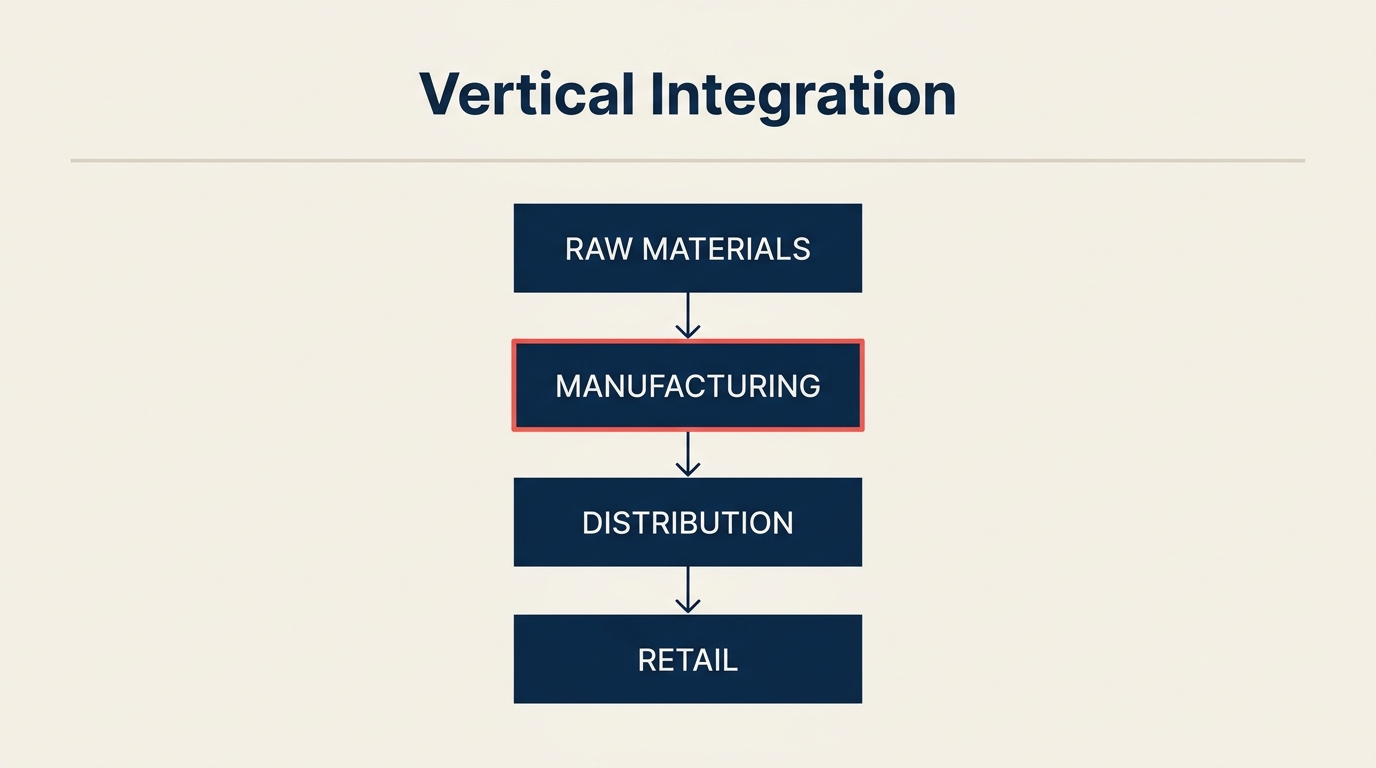
La integración vertical es una estrategia empresarial mediante la cual una empresa expande sus operaciones para controlar más etapas de su proceso de producción o distribución, ya sea adquiriendo proveedores aguas arriba, clientes o distribuidores aguas abajo, o ambos.
La palabra clave es "control." Una empresa verticalmente integrada no solo trabaja con la siguiente etapa de la cadena de valor; la posee. Esa propiedad cambia la economía, el perfil de riesgo y la dinámica competitiva del negocio de maneras que las relaciones puras con proveedores o clientes no pueden.
Datos Clave
- Investigaciones de McKinsey sobre la industria automotriz global encontraron que integrar actividades de la cadena de suministro aguas arriba podría ahorrar a los fabricantes de equipos originales y sus proveedores entre 40 y 65 mil millones de euros anuales, lo que representa aproximadamente un aumento del 50% en la rentabilidad a los márgenes típicos de la industria. (McKinsey, "When and When Not to Vertically Integrate")
- Un estudio de Harvard sobre la integración vertical en las cadenas de suministro de empresas encontró que los negocios se integran menos cuando la demanda es muy incierta, y más cuando las sinergias con las unidades de negocio adyacentes son sustanciales. (Harvard, "Firm Supply Chains," Tan, 2023)
- Las interrupciones en la cadena de suministro han acelerado las decisiones de integración vertical: las empresas con mayores puntuaciones de integración vertical muestran diferenciales de rendimiento mediblemente menores, lo que refleja un menor riesgo percibido de la cadena de suministro por parte de los mercados de deuda. (ScienceDirect, Journal of Transport Research, 2025)
La integración vertical es parte de un conjunto más amplio de decisiones de crecimiento. A diferencia de la integración horizontal (adquirir competidores en la misma etapa), la integración vertical lo mueve a lo largo de la cadena de suministro en lugar de a través de un mercado. A diferencia de la diversificación (entrar en industrias completamente diferentes), la integración vertical permanece en la misma cadena de valor. La lógica estratégica es el control, no la amplitud.
Integración Hacia Adelante vs Integración Hacia Atrás
Hay dos direcciones principales en las que una empresa puede moverse al integrarse verticalmente, y la elección depende de dónde se sitúa el mayor valor o riesgo en la cadena.
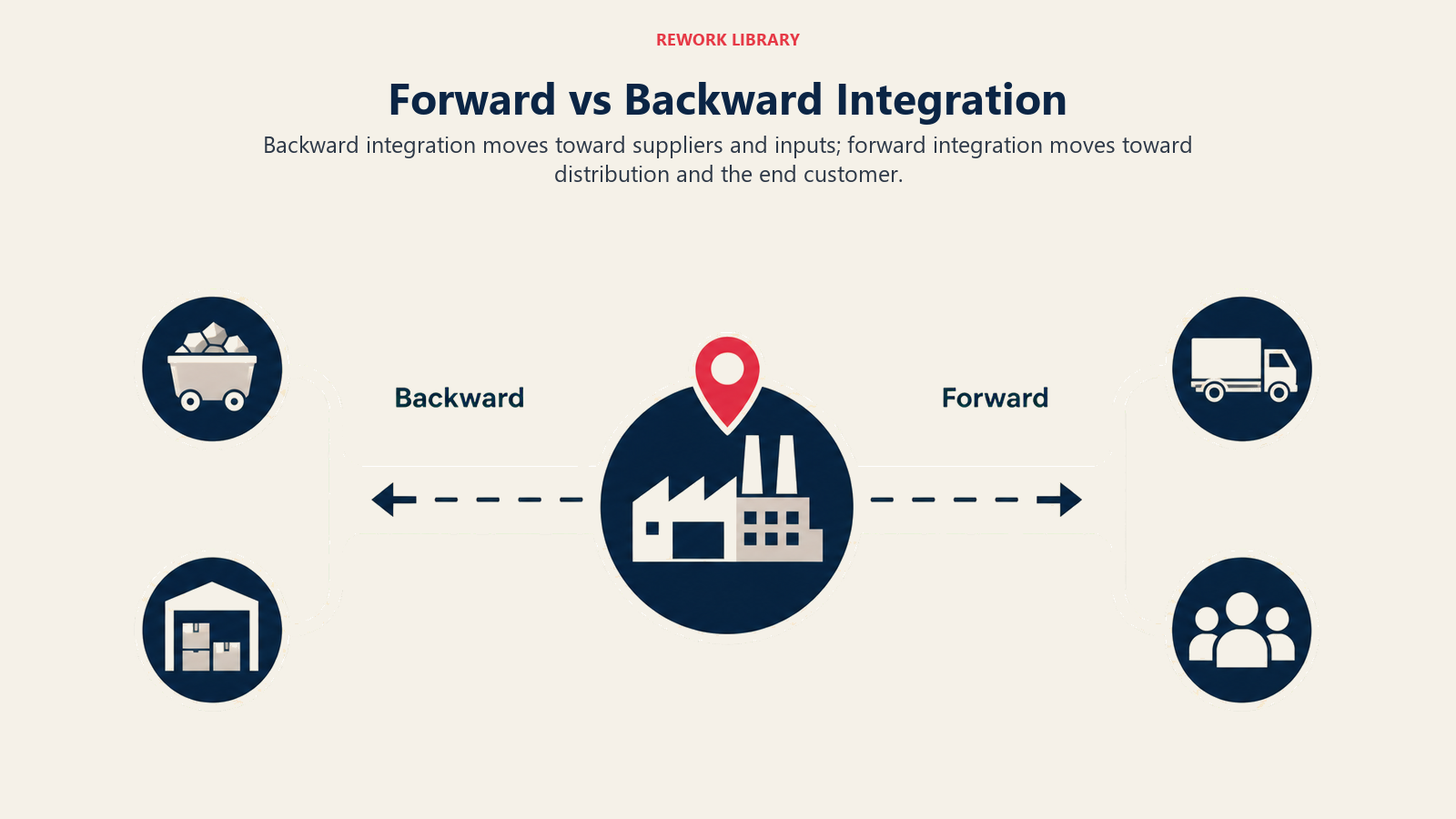
La integración hacia atrás significa moverse aguas arriba hacia sus proveedores. Se toma control de los insumos: materias primas, componentes, capacidad de fabricación o logística que antes estaban en manos de un proveedor. El objetivo suele ser reducir los costos de insumos, asegurar el suministro o capturar el margen que fluía hacia un proveedor.
La integración hacia adelante significa moverse aguas abajo hacia sus clientes o canales de distribución. Se toma control de la siguiente etapa que entrega su producto o servicio al comprador final. El objetivo suele ser capturar más de la relación con el cliente, mejorar los márgenes eliminando intermediarios o controlar la experiencia de marca.
| Dirección | Qué cambia | Ejemplos clásicos |
|---|---|---|
| Hacia atrás (aguas arriba) | La empresa adquiere o desarrolla capacidades de proveedor | Apple diseñando sus propios chips; Tesla fabricando sus propias celdas de batería; Starbucks comprando fincas de café en Costa Rica |
| Hacia adelante (aguas abajo) | La empresa adquiere o desarrolla capacidades de distribución o retail | Nike abriendo sus propias tiendas minoristas; Netflix produciendo su propio contenido; Amazon lanzando su propia red de delivery |
| Completa (equilibrada) | La empresa posee ambos extremos de la cadena | ExxonMobil controlando la exploración de petróleo, el refinamiento y las estaciones de retail; una marca de ropa que posee fábricas de telas y tiendas propias |
Las dos direcciones no son mutuamente excluyentes. Algunas de las empresas verticalmente integradas más poderosas se mueven en ambas direcciones con el tiempo, construyendo una posición genuinamente difícil de replicar.
Integración Vertical vs Integración Horizontal
Estos dos términos se confunden, pero describen movimientos fundamentalmente diferentes.
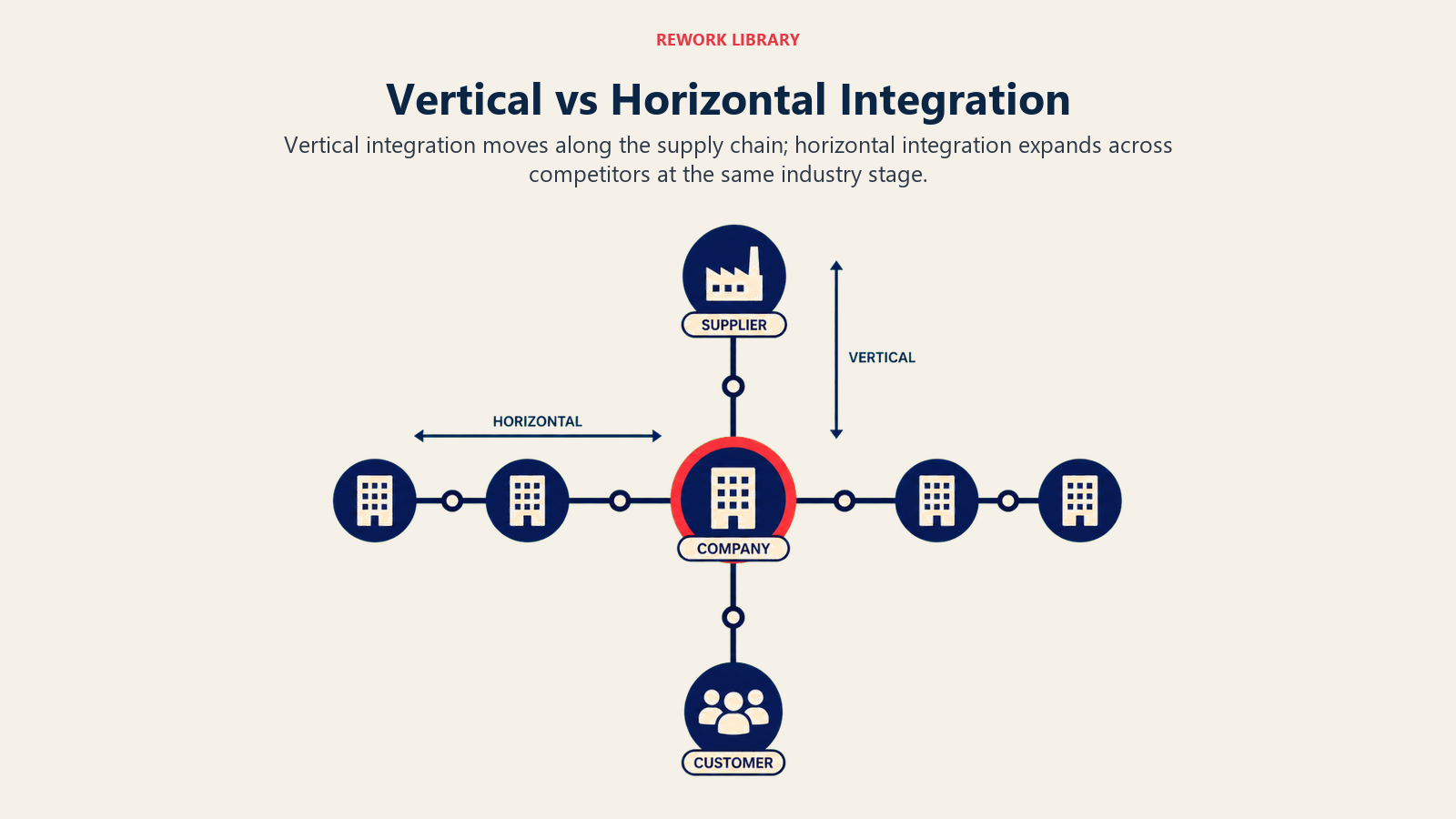
La integración vertical, como se describió anteriormente, amplía el control de una empresa a lo largo de la cadena de suministro. La integración horizontal amplía la presencia de una empresa dentro del mismo nivel de la industria mediante la adquisición o fusión con competidores. Facebook comprando Instagram es horizontal. Amazon adquiriendo Whole Foods es vertical.
Los objetivos estratégicos difieren:
- La integración vertical apunta al control de la cadena de suministro, la captura de margen y la reducción de la dependencia de terceros.
- La integración horizontal apunta a la cuota de mercado, las economías de escala y la eliminación de competidores.
Ambas pueden crear ventaja competitiva, pero a través de diferentes mecanismos. La integración vertical crea ventaja a través del control y la estructura de costos. La integración horizontal crea ventaja a través de las economías de escala y el poder de mercado.
Si está pensando en la estrategia de crecimiento de forma más amplia, la estrategia de diversificación es la tercera opción: entrar en mercados o industrias completamente nuevos, lo que conlleva el mayor riesgo de ejecución pero puede reducir la exposición al ciclo económico.
Beneficios de la Integración Vertical
Bien ejecutada, la integración vertical produce un conjunto de ventajas que se acumulan.
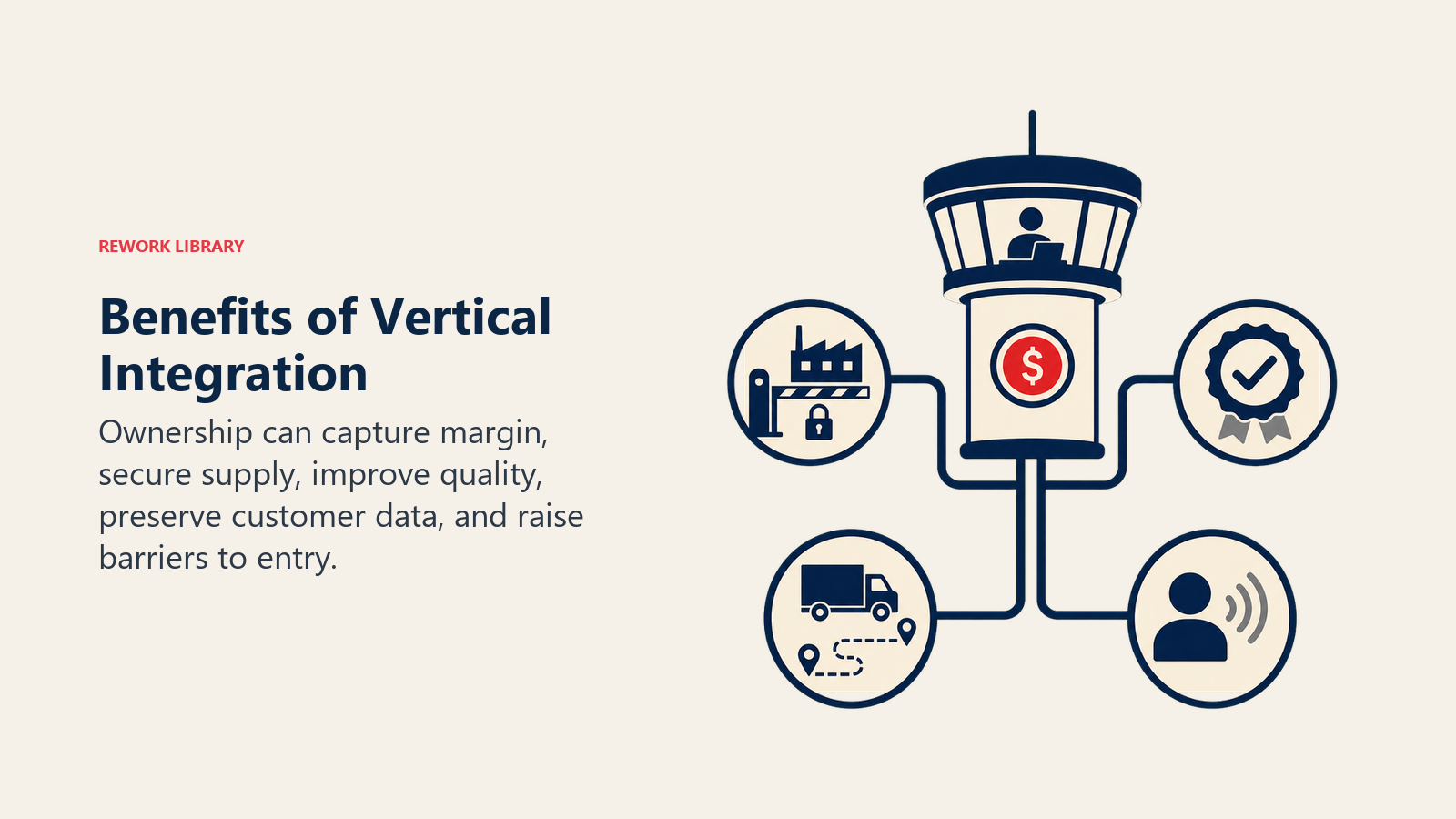
Reducción de costos y mejora del margen. Cuando se posee la etapa que previamente le suministraba, se deja de pagar el margen de ese proveedor. Para los negocios de alto volumen, esto es significativo. La decisión de Tesla de desarrollar su propia tecnología de baterías internamente redujo los costos por unidad de forma significativa en comparación con el sourcing de proveedores de baterías establecidos.
Seguridad del suministro. Poseer su cadena de suministro significa que no está a merced de los precios del proveedor, las restricciones de capacidad o las disrupciones geopolíticas. El movimiento vertical de Apple hacia el diseño de chips con la serie M1 la aisló de la escasez de semiconductores que paralizó a los competidores en 2021 y 2022.
Control de calidad. Cuando se posee el proceso de producción, se establecen los estándares de calidad en lugar de negociarlos con un tercero. Esto importa más en los negocios donde la diferenciación por calidad es central para la marca.
Propiedad de datos y relación con el cliente. La integración hacia adelante en canales directos al consumidor le da datos de primera parte que los mercados y minoristas no comparten. Esos datos mejoran el desarrollo de productos, el marketing y la retención.
Barrera de entrada para los competidores. Un competidor verticalmente integrado es más difícil de desplazar. Replicar su posición requiere no solo igualar su producto sino reconstruir su infraestructura de cadena de suministro o distribución. Esta es una de las formas más duraderas de foso competitivo.
El análisis de cadena de valor es la herramienta adecuada para identificar exactamente dónde la integración capturaría el mayor valor en su negocio específico antes de comprometerse.
Riesgos y Limitaciones
La integración vertical es de alto riesgo. La misma propiedad que crea control también crea exposición.
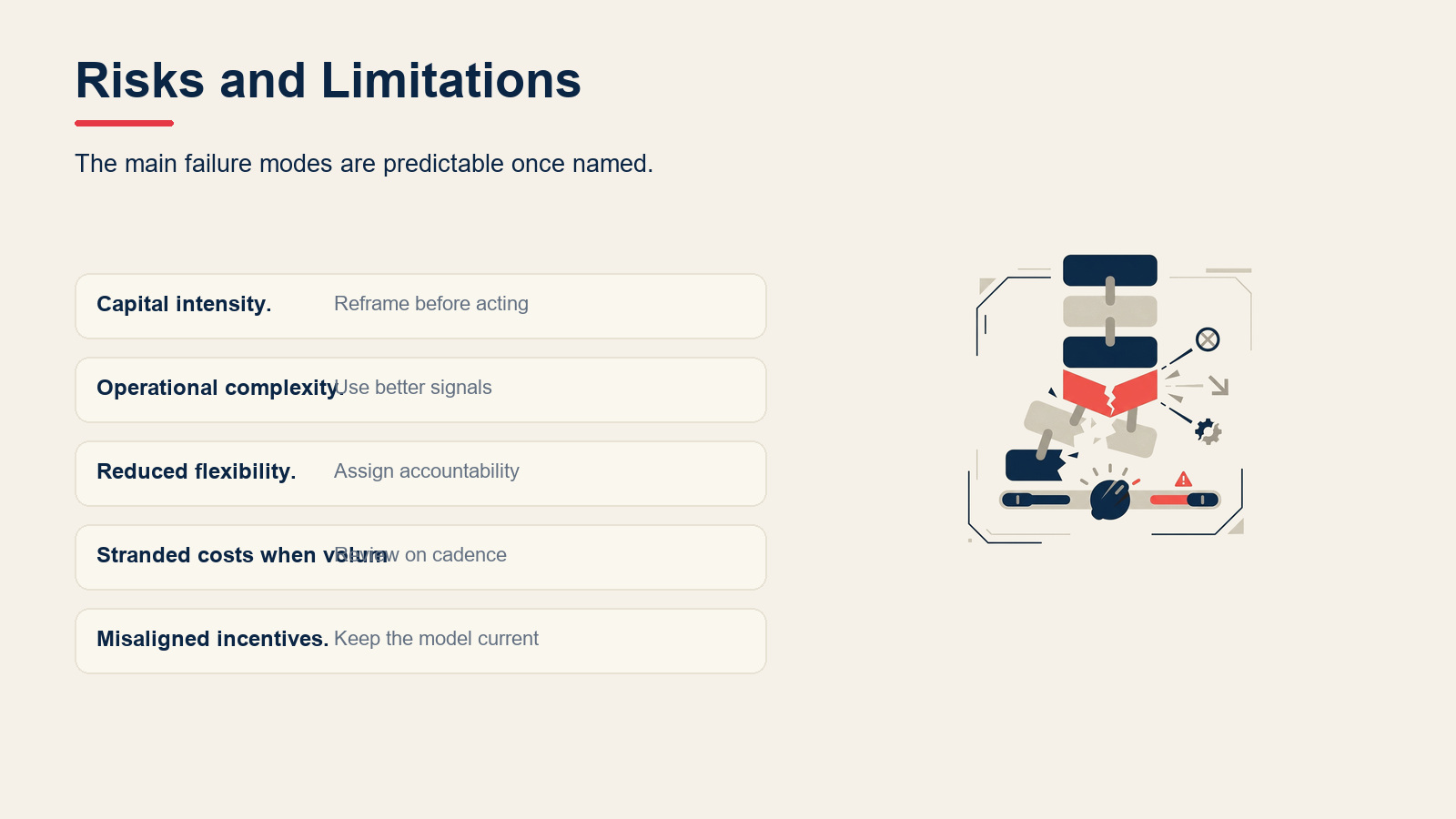
Intensidad de capital. Construir o adquirir etapas en una cadena de suministro requiere una inversión inicial significativa. Ese capital queda inmovilizado y no puede redistribuirse rápidamente si la estrategia cambia.
Complejidad operativa. Gestionar el negocio de un proveedor es genuinamente diferente a gestionar su negocio principal. Una marca de consumo que adquiere una empresa de logística de repente necesita ser competente en operaciones de entrega de último kilómetro. El margen de maniobra de la dirección es finito, y la complejidad mata el enfoque.
Reducción de la flexibilidad. Poseer activos fijos lo ata a proveedores, geografías o tecnologías específicos. Si surge una tecnología mejor, una empresa verticalmente integrada no puede simplemente cambiar de proveedor. Tiene que amortizar activos y cambiar sus propias operaciones.
Costos hundidos cuando cae el volumen. La integración vertical crea estructuras de costos fijos. En una caída de la demanda, no se puede apagar una fábrica que se posee de la misma manera que se puede cancelar un contrato con un proveedor.
Incentivos desalineados. Una división proveedora interna no compite por su negocio de la misma manera que un competidor externo del mercado. Con el tiempo, las divisiones internas pueden volverse menos innovadoras y competitivas en costos que las alternativas externas, el llamado problema del "proveedor cautivo."
El análisis de Porter's Five Forces es útil para evaluar si los riesgos de la integración vertical superan los beneficios en un entorno competitivo dado antes de comprometerse.
Cómo Decidir Si Integrar Verticalmente
No todas las empresas deben integrarse verticalmente, y la dirección correcta (hacia adelante vs hacia atrás) depende de dónde se sitúan sus vulnerabilidades y oportunidades específicas.
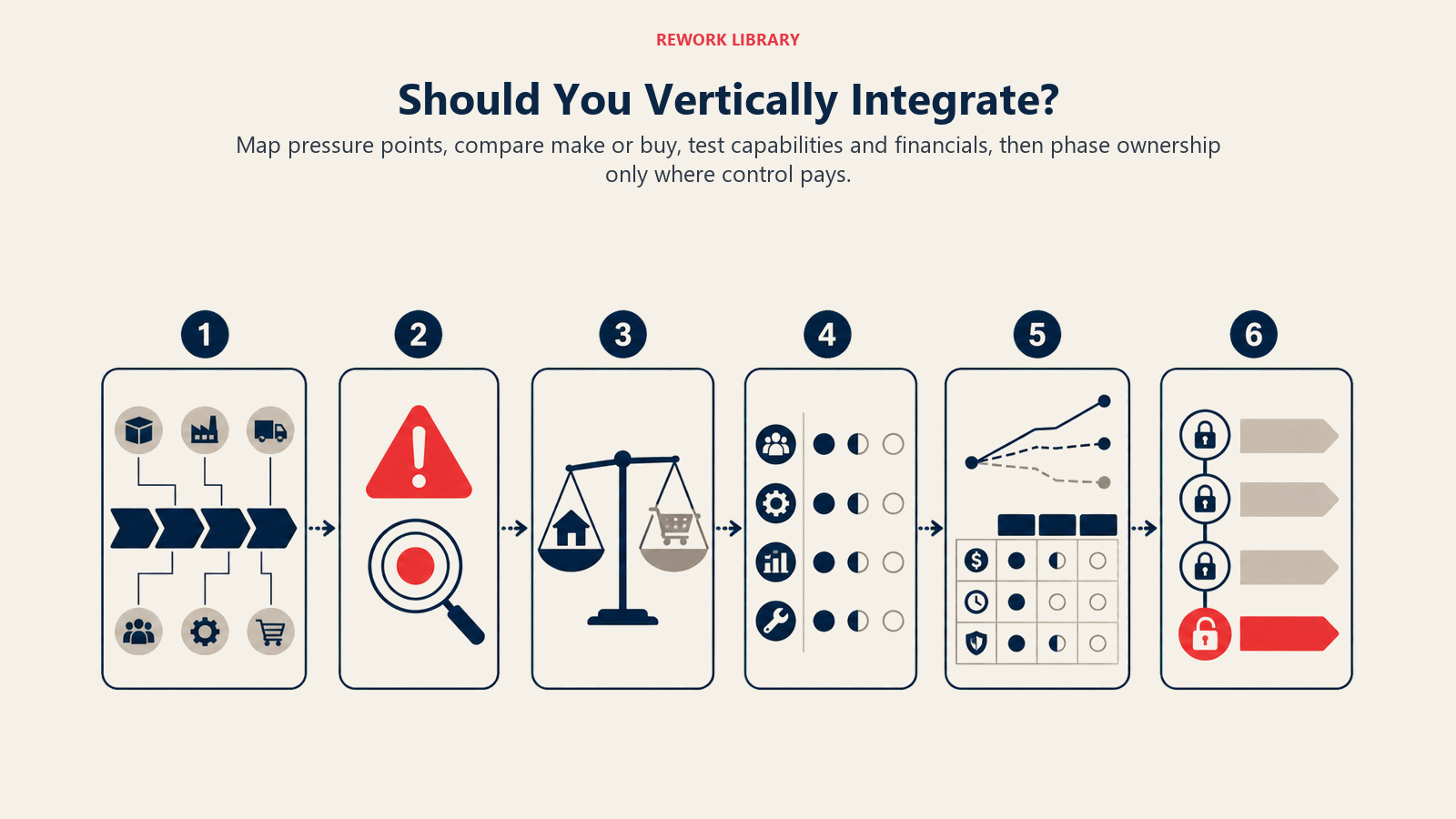
Paso 1: Mapee su cadena de valor actual
Antes de decidir nada, comprenda en qué etapas participa actualmente y qué se sitúa aguas arriba y aguas abajo. Use el análisis de cadena de valor para identificar qué actividades añaden más valor y dónde se filtra el margen hacia partes externas.
Paso 2: Identifique los puntos de presión clave
¿Dónde está más expuesto su negocio? ¿Un solo proveedor controla un insumo crítico? ¿Los intermediarios capturan margen mientras controlan la relación con el cliente? ¿Los fallos de calidad se originan en una etapa que no posee? Las respuestas señalan dónde el control tendría mayor impacto.
Paso 3: Evalúe hacer vs comprar
Para cada punto de integración potencial, compare el costo y el riesgo de construir internamente contra adquirir un operador existente. Compare también con alternativas contractuales como acuerdos de suministro a largo plazo, empresas conjuntas o acuerdos de socio preferente. Estos pueden ofrecer algunos de los beneficios de la integración sin el compromiso total de capital y operativo.
Paso 4: Evalúe la capacidad organizacional
¿Tiene la profundidad de gestión y la competencia operativa para ejecutar el nuevo negocio? Una empresa de software que adquiere un fabricante de hardware está asumiendo un modelo operativo completamente diferente. Las brechas de capacidad se pueden contratar o adquirir, pero llevan tiempo y conllevan riesgo de ejecución.
Paso 5: Modele los financieros en distintos escenarios
Construya un modelo financiero realista para el escenario integrado que incluya el capital requerido, los retornos objetivo y el impacto en su costo de capital. Ejecútelo en escenarios base, optimista y pesimista de demanda. Los argumentos de economías de escala suelen parecer convincentes en los modelos de caso base y mucho menos cuando el volumen es un 20% inferior al planeado.
Paso 6: Considere un enfoque parcial o por fases
La integración vertical completa a menudo no es el primer movimiento correcto. La integración parcial (poseer algo pero no todo de una etapa), los programas piloto o las empresas conjuntas pueden proporcionar aprendizaje y opcionalidad antes de comprometer el capital completo.
Ejemplos de Integración Vertical
Los ejemplos más instructivos abarcan industrias, porque la lógica es la misma aunque la mecánica difiera.
| Empresa | Dirección | Qué integraron | Resultado estratégico |
|---|---|---|---|
| Apple | Hacia atrás | Diseño de semiconductores (Apple Silicon) | Desacoplada del roadmap de Intel; ganancias de rendimiento de 3-4x por vatio; aislada de las disrupciones en el suministro de chips |
| Tesla | Hacia atrás | Fabricación de celdas de batería (Gigafactory) | Menor costo por kWh que los rivales que sourced de proveedores externos; iteración más rápida en la química de baterías |
| Netflix | Hacia atrás | Producción de contenido original (Netflix Studios) | Menor dependencia del contenido licenciado; retención de suscriptores asegurada para títulos exclusivos; mayor margen por espectador |
| Amazon | Hacia adelante | Delivery de último kilómetro (Amazon Logistics) | Menor dependencia de UPS y FedEx; ventanas de entrega más rápidas; menor costo por paquete a escala |
| ExxonMobil | Equilibrada (ambas) | Exploración aguas arriba y estaciones minoristas aguas abajo | Captura completa del margen desde el petróleo en el subsuelo hasta el combustible en la bomba; amortiguación contra la volatilidad del precio del crudo |
| Starbucks | Hacia atrás | Sourcing de café (Centros de Apoyo a Agricultores) | Control de calidad en el origen; historia de sourcing ético; seguridad del suministro de granos premium |
Lo que estas empresas comparten: todas se integraron en la dirección de su mayor vulnerabilidad o su mayor oportunidad de margen. Ninguna se integró simplemente porque era teóricamente posible.
Preguntas Frecuentes
¿Cuál es la diferencia entre integración vertical e integración horizontal?
La integración vertical amplía el control de una empresa a lo largo de la cadena de suministro (hacia proveedores o clientes). La integración horizontal amplía el control a través del mismo nivel de mercado mediante la adquisición de competidores. Un fabricante de automóviles que adquiere un proveedor de acero es vertical. El mismo fabricante adquiriendo otra marca de automóviles es horizontal.
¿Es la integración vertical siempre una buena estrategia?
No. La integración vertical es apropiada cuando el control de una etapa específica crea una ventaja competitiva duradera y cuando la empresa tiene el capital y la capacidad operativa para gestionar bien esa etapa. Es el movimiento equivocado cuando añade complejidad sin mejorar la estructura de costos o la posición competitiva, o cuando el capital podría generar retornos más altos en otro lugar.
¿Cuál es un ejemplo real de integración hacia atrás?
El desarrollo de Apple de sus propios chips es el ejemplo moderno más claro. En lugar de depender de Intel para los procesadores, Apple diseñó los chips de la serie M internamente, lo que le dio control sobre el rendimiento, la eficiencia energética y el momento del roadmap de productos que ningún proveedor externo podría igualar.
¿Cuál es un ejemplo real de integración hacia adelante?
El movimiento de Nike hacia el retail directo al consumidor y su propia plataforma Nike.com es un ejemplo claro de integración hacia adelante. Al poseer la relación con el cliente en lugar de canalizarla a través de grandes almacenes, Nike captura un mayor margen, posee la experiencia de marca y recopila datos de primera parte del cliente.
¿Cómo se relaciona la integración vertical con la ventaja competitiva?
La integración vertical puede crear ventaja competitiva al reducir costos (capturando el margen del proveedor), asegurar insumos críticos (reduciendo el riesgo de suministro), controlar la calidad (protegiendo la marca) y elevar las barreras de entrada (exigiendo a los competidores replicar una cadena de valor completa en lugar de solo un producto). Pero la ventaja solo es duradera si las etapas integradas se gestionan genuinamente mejor internamente de lo que lo haría un especialista independiente.
La integración vertical no es una estrategia para todas las empresas ni para todos los momentos. Pero para los negocios que enfrentan vulnerabilidad en la cadena de suministro, erosión de márgenes por intermediarios o la necesidad de controlar la calidad a escala, la propiedad de etapas adicionales de la cadena de valor puede ser el movimiento que crea una distancia competitiva duradera. La prueba no es si la integración es teóricamente atractiva. Es si su organización puede gestionar bien la etapa integrada con la suficiente calidad como para justificar el capital y la complejidad que requiere.
Lectura Relacionada

Senior Operations & Growth Strategist
On this page
- ¿Qué Es la Integración Vertical?
- Integración Hacia Adelante vs Integración Hacia Atrás
- Integración Vertical vs Integración Horizontal
- Beneficios de la Integración Vertical
- Riesgos y Limitaciones
- Cómo Decidir Si Integrar Verticalmente
- Paso 1: Mapee su cadena de valor actual
- Paso 2: Identifique los puntos de presión clave
- Paso 3: Evalúe hacer vs comprar
- Paso 4: Evalúe la capacidad organizacional
- Paso 5: Modele los financieros en distintos escenarios
- Paso 6: Considere un enfoque parcial o por fases
- Ejemplos de Integración Vertical
- Lectura Relacionada