Jobs to Be Done (JTBD): Marco, Ejemplos y Cómo Aplicarlo
Turn this article into takeaways for your work.


Each assistant summarizes the article only for you and suggests best practices for your work.
La mayoría de los productos fracasan no porque el equipo haya construido algo técnicamente equivocado, sino porque nunca entendió por qué los clientes compraban en primer lugar. El marco jobs to be done (JTBD) es la lente que corrige ese punto ciego. Desplaza la unidad de análisis del producto en sí al progreso que el cliente intenta lograr.
¿Qué es jobs to be done (JTBD)?
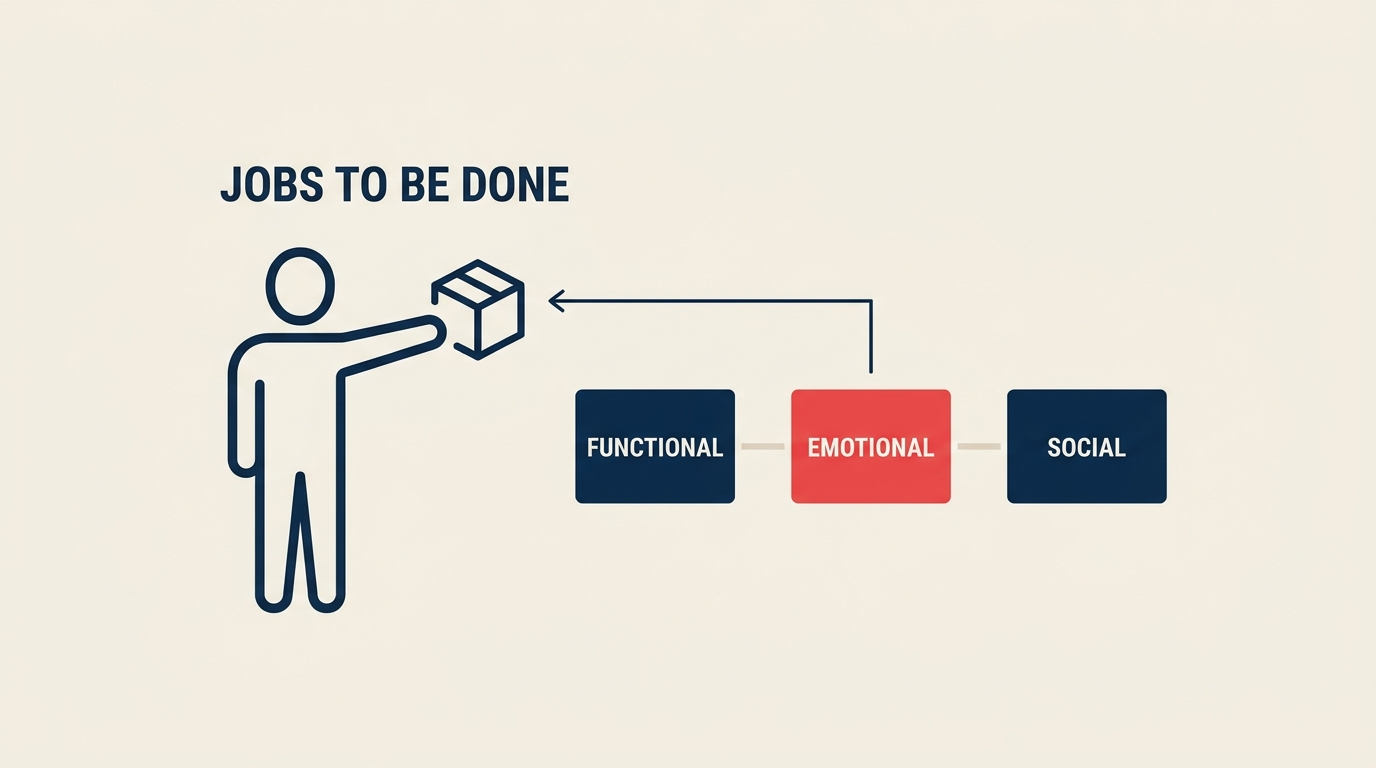
Jobs to be done (JTBD) es una teoría de la motivación del cliente que sostiene que las personas no compran productos o servicios directamente. Los "contratan" para realizar un trabajo específico en su vida. Un trabajo, en este contexto, es el progreso que una persona intenta lograr en una situación particular, incluida la tarea funcional que desea completar, el estado emocional que desea alcanzar y la percepción social que desea gestionar.
El marco fue desarrollado y popularizado por el profesor de Harvard Business School Clayton Christensen junto con sus colegas Tony Ulwick y Bob Moesta. Surgió de la investigación de Christensen sobre por qué empresas bien gestionadas todavía eran sorprendidas por competidores, un problema que exploró más tarde en la innovación disruptiva. La conclusión era simple pero contraintuitiva: los clientes raramente piensan en términos de categorías de productos. Piensan en términos del resultado que necesitan ahora mismo.
Datos clave
- Los productos diseñados a partir de investigación JTBD tienen una tasa de éxito de nuevos productos del 86%, en comparación con aproximadamente el 17% para los productos desarrollados de forma tradicional, según la investigación de innovación orientada a resultados de Strategyn (2016).
- Solo el 5% de los nuevos productos lanzados en EE. UU. cada año tienen éxito según la mayoría de las métricas de la industria, a pesar de la fuerte inversión en investigación de mercado, según datos de Nielsen IQ (2014).
- El 95% de los nuevos productos fracasan porque las empresas se centran en el cliente en lugar de en el trabajo que el cliente intenta realizar, según el análisis de Clayton Christensen de Harvard Business School (2016).
La fórmula del enunciado de trabajo
Un enunciado de trabajo es la herramienta central del JTBD. Captura lo que el cliente intenta lograr en un formato estructurado que lo hace comprobable y accionable. La fórmula estándar es:
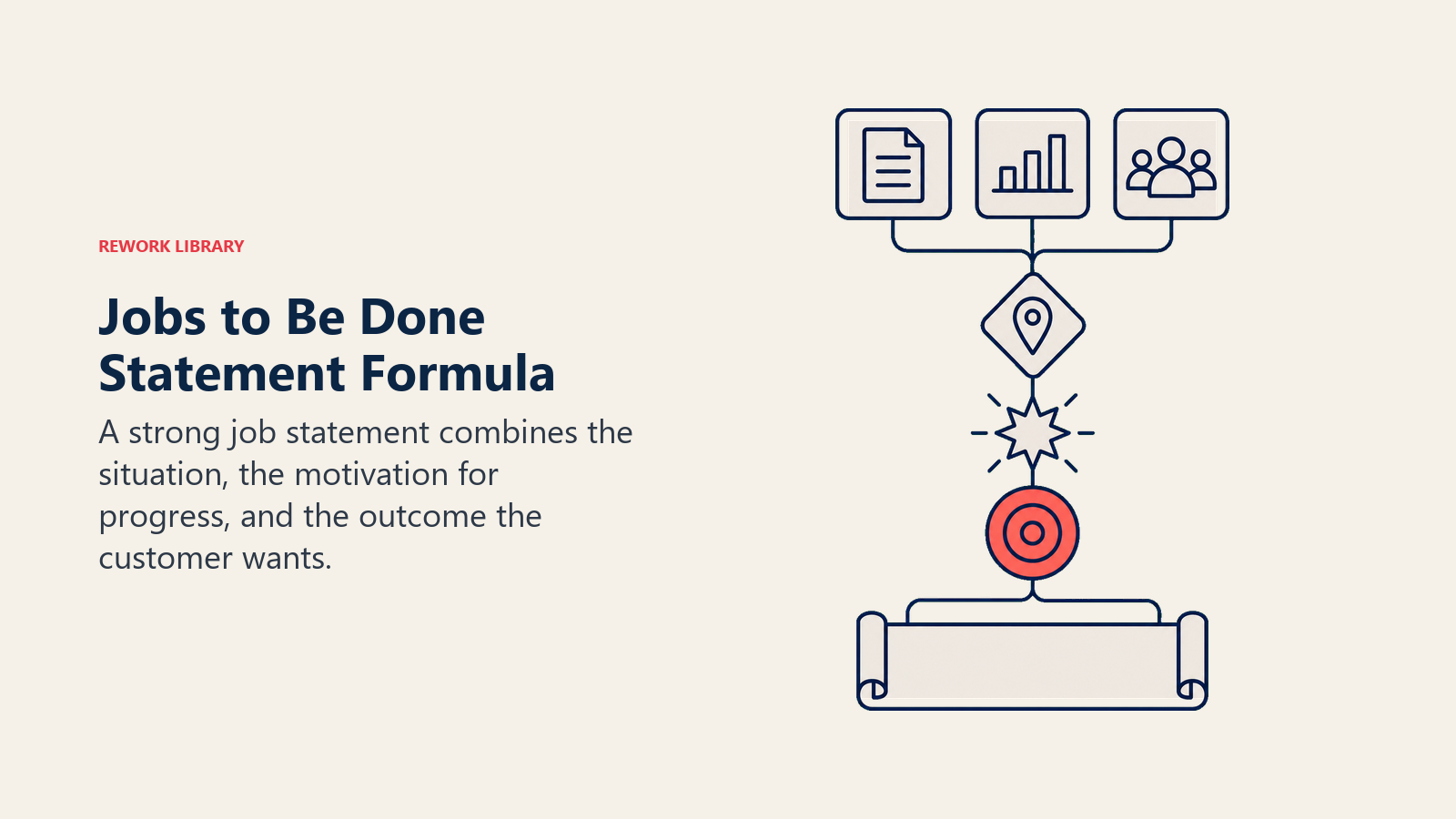
Cuando [situación], quiero [motivación], para poder [resultado deseado].
Esta estructura le obliga a anclar el trabajo en un contexto real (no en un dato demográfico), identificar el impulso subyacente (no una solicitud de función) y nombrar el beneficio que al cliente realmente le importa (no lo que dijo que quería).
Así se manifiesta en distintos productos y situaciones:
| Situación | Motivación | Resultado deseado | Producto "contratado" |
|---|---|---|---|
| Estoy atrapado en el tráfico durante un trayecto largo | Quiero sentirme productivo y no desperdiciar el tiempo | Terminar un libro que llevo meses posponiendo | Aplicación de audiolibros |
| Mi equipo acaba de perder un plazo y necesito explicárselo al liderazgo | Quiero comunicar la situación con claridad y calma | Preservar la confianza con las partes interesadas de nivel superior | Plantilla de informe de estado del proyecto |
| Me estoy reuniendo con nuevos clientes por primera vez en un almuerzo de trabajo | Quiero sentirme seguro y no pasar vergüenza | No tener que comer algo desordenado o incómodo | Comida rápida, limpia y fácil de comer con los dedos |
| Soy fundador y me estoy preparando para una reunión de junta directiva | Quiero demostrar claridad estratégica, no solo detalles operativos | Demostrar que estoy pensando al nivel correcto | Marco estratégico como el business model canvas |
| Un nuevo empleado acaba de unirse de forma remota | Quiero incorporarlo a la cultura del equipo rápidamente | Hacerle sentir bienvenido y capaz desde el primer día | Herramienta de workflow de onboarding |
Observe que en cada fila, el producto mencionado al final no es lo que el cliente le diría que está buscando. Le diría algo mucho más cercano a las columnas de situación y motivación.
Trabajos funcionales, emocionales y sociales
Cada trabajo para el que un cliente contrata un producto tiene hasta tres capas. La mayoría del trabajo estratégico solo aborda la primera.
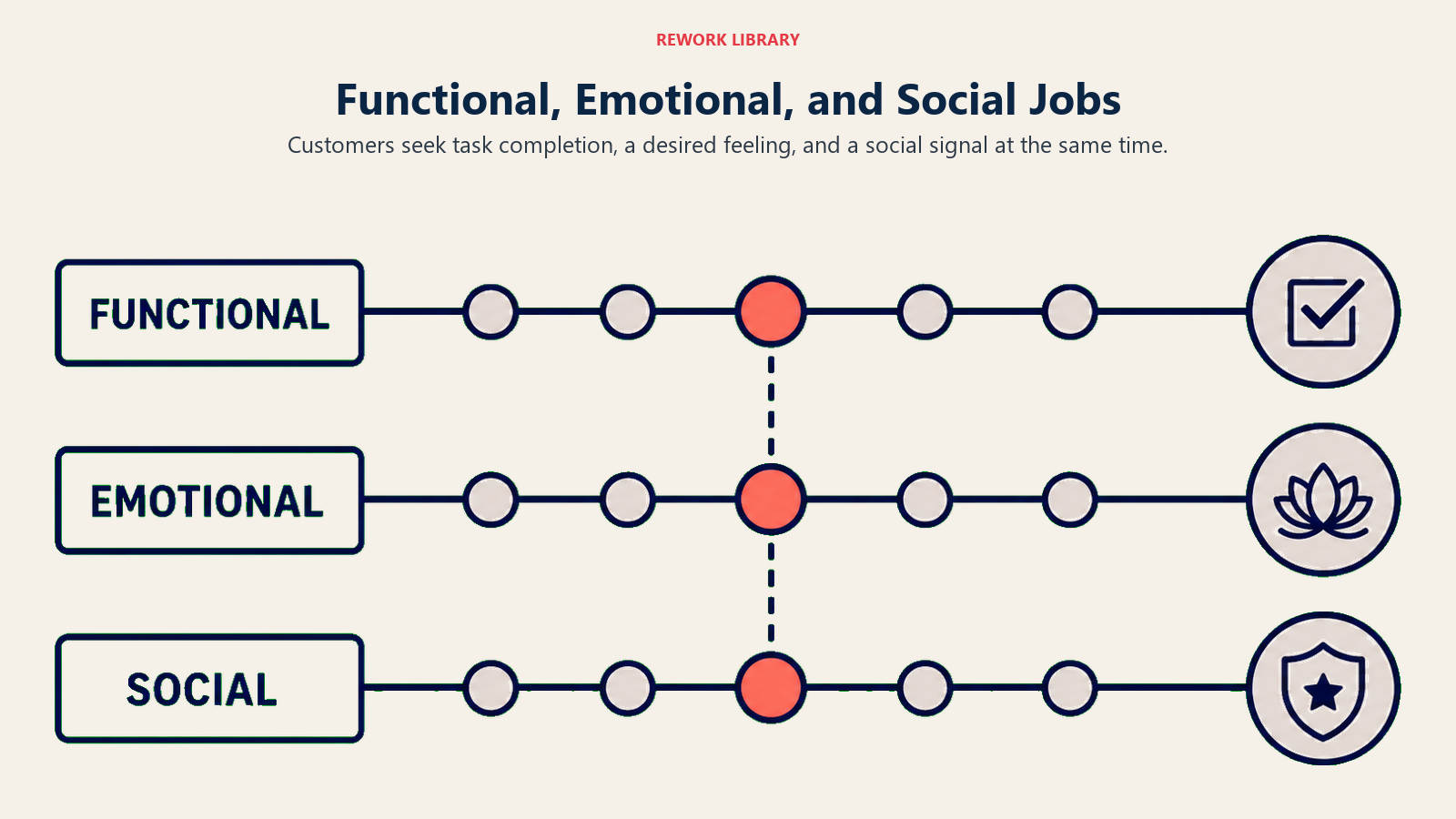
| Tipo de trabajo | Lo que captura | Ejemplo |
|---|---|---|
| Funcional | La tarea práctica a completar | "Programar reuniones sin correos electrónicos de ida y vuelta" |
| Emocional | El sentimiento interno que el cliente quiere ganar o evitar | "Sentirme en control de mi agenda, no reactivo" |
| Social | Cómo quiere ser percibido el cliente por los demás | "Ser visto como alguien que respeta el tiempo de las personas" |
Una herramienta de programación que solo resuelve el trabajo funcional es un producto genérico. Una que también reduce la ansiedad al programar (emocional) y hace que el usuario parezca profesional y organizado (social) está genuinamente diferenciada. Por eso JTBD es más que un método de investigación: es una guía de dónde tiene margen de crecer su propuesta de valor.
Las tres capas también revelan por qué ocurren los cambios de producto. Los clientes no cambian de producto por las funciones. Cambian cuando el producto actual deja de generar progreso en el trabajo emocional o social, aunque el trabajo funcional todavía se esté satisfaciendo de forma adecuada.
Cómo aplicar el marco jobs to be done
Aplicar JTBD en la práctica sigue una secuencia consistente. El objetivo en cada paso es acercarse al trabajo real y alejarse de sus suposiciones al respecto.
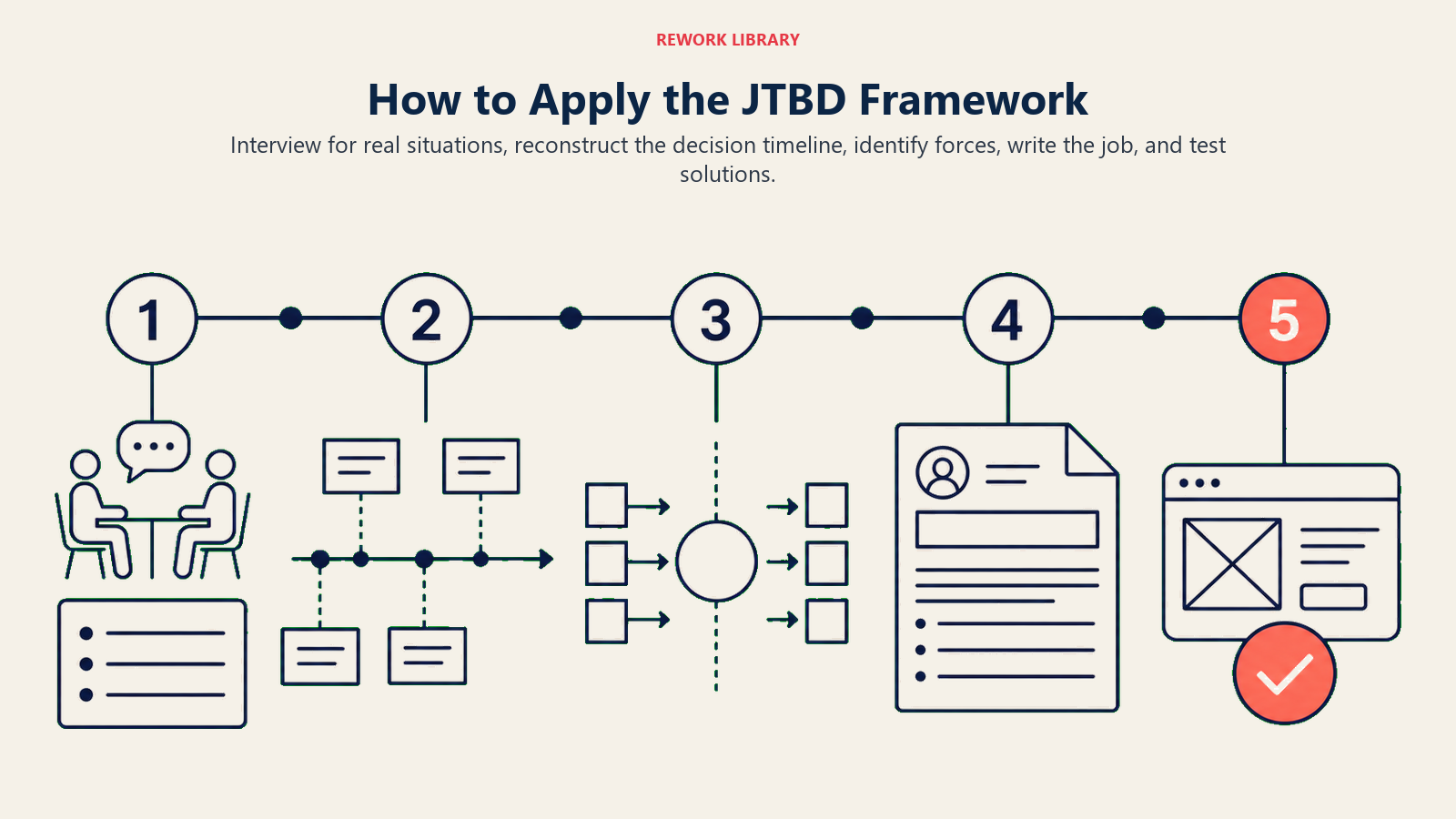
Paso 1: Entrevistar a los clientes en torno a eventos, no a opiniones
No le pregunte a los clientes qué quieren en un producto. Pídale que le guíen por la última vez que contrataron algo para realizar un trabajo en particular. ¿Qué desencadenó la búsqueda? ¿Qué opciones consideraron? ¿Qué les hizo cambiar? ¿Qué esperaban que cambiara la nueva solución?
Tony Ulwick llama a esto "entrevistas de cambio". Se intenta reconstruir la línea de tiempo de la demanda: el momento en que la solución anterior se volvió inadecuada, el momento en que el cliente comenzó a buscar y el empujón final que le llevó a actuar. Apunte a entre 10 y 15 entrevistas antes de buscar patrones.
Paso 2: Extraer y nombrar los trabajos
De las transcripciones de las entrevistas, extraiga las situaciones, motivaciones y resultados deseados recurrentes. Agrupelos en conjuntos de trabajos. En esta etapa, está construyendo un mapa de todos los trabajos que sus clientes intentan realizar, no solo los que su producto aborda actualmente.
Escriba cada trabajo como un enunciado usando la fórmula cuando-quiero-para poder. Mantenga el lenguaje en la voz del cliente, no en su vocabulario interno.
Paso 3: Identificar resultados subatendidos
Para cada trabajo, haga dos preguntas: ¿Qué tan importante es hacerlo bien? ¿Qué tan satisfecho está el cliente con las soluciones actuales? Los trabajos que son importantes pero mal atendidos son las brechas donde vive la innovación real. Este es el núcleo del método de innovación orientada a resultados de Ulwick, y se conecta directamente con la estrategia del océano azul, que enmarca la competencia como encontrar espacios donde la demanda no está satisfecha.
Mapee los trabajos en una matriz dos por dos: importancia en un eje, satisfacción en el otro. El cuadrante de alta importancia y baja satisfacción es su zona de oportunidad de producto.
Paso 4: Priorizar según el ajuste estratégico
No todos los trabajos subatendidos son suyos para resolver. Filtre las oportunidades frente a sus capacidades existentes, su posicionamiento competitivo y los mercados que ha elegido atender. Esto es una cuestión de ajuste estratégico: los trabajos que vale la pena perseguir son aquellos que sus recursos y actividades ya refuerzan. Use los hallazgos de JTBD como entrada para su planificación de la Matriz de Ansoff: ¿este trabajo abre un nuevo mercado o profundiza su posición en uno existente?
Paso 5: Diseñar y probar soluciones en torno al trabajo
Construya funciones, mensajes o productos completamente nuevos en torno al trabajo específico y sus tres capas. Luego pruébelos directamente frente al enunciado de trabajo. ¿Esta solución ayuda al cliente a lograr el progreso que describió? ¿Aborda las capas emocional y social, no solo la funcional?
El buen diseño orientado a JTBD a menudo elimina funciones en lugar de agregarlas. Una vez que conoce el trabajo real, una gran cantidad de funcionalidad que parecía importante resulta ser ruido que dificulta lograr el progreso central.
Ejemplos de jobs to be done
La historia de JTBD más citada es el estudio del batido de McDonald's, y vale la pena entenderla completamente porque muestra cuán equivocado puede ser el pensamiento intuitivo sobre productos.
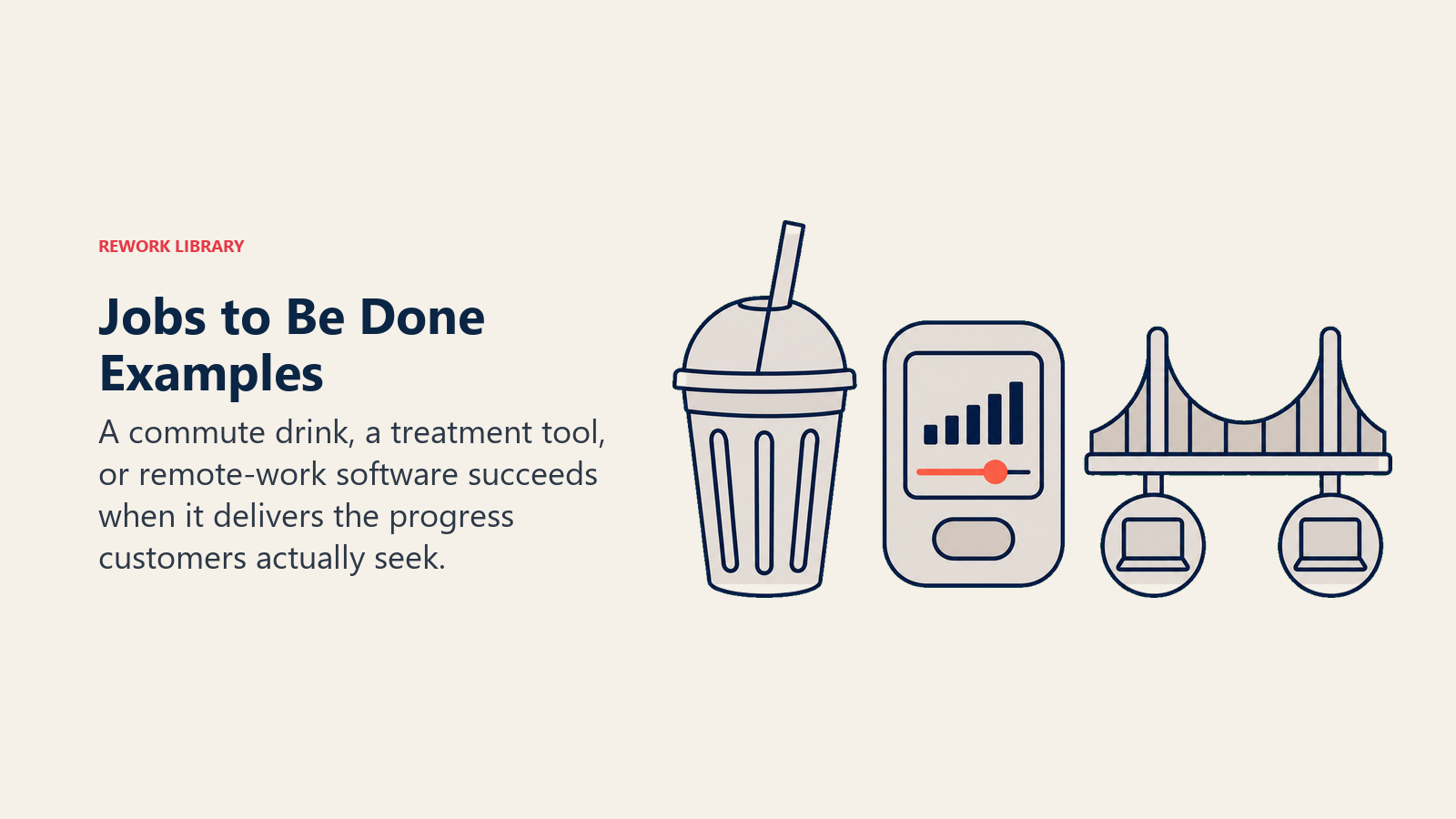
McDonald's quería aumentar las ventas de batidos. Encuestaron a los clientes y obtuvieron respuestas predecibles: la gente quería batidos más espesos, más sabores, vasos más grandes. Mejoraron todo esto. Las ventas no se movieron.
Un investigador de JTBD pasó un día observando cuándo la gente compraba batidos y entrevistándolos. El hallazgo fue inesperado. Casi la mitad de todas las ventas de batidos ocurrían antes de las 8 de la mañana. Estos clientes tenían trayectos largos solos. No tenían suficiente hambre para una comida completa, pero necesitaban algo que los sostuviera hasta el almuerzo. El batido lo hacía perfectamente: tardaba mucho tiempo en consumirse, cabía en el portavasos, no era desordenado y era más saciante que un plátano o una barrita de granola.
El trabajo no era "quiero un capricho sabroso". El trabajo era "ayúdame a pasar un trayecto aburrido sin tener hambre y sin hacer un desastre". Los competidores no eran los batidos de Wendy's. Eran los plátanos, los bagels y las barritas energéticas.
Aquí hay tres ejemplos adicionales en diferentes industrias:
| Producto | Trabajo obvio | JTBD real | Implicación estratégica |
|---|---|---|---|
| LinkedIn Premium | Acceder a mensajes de reclutadores e InMail | Sentirse un profesional competitivo y creíble que no pierde oportunidades | El marketing debería enfatizar la confianza en la carrera, no el volumen del buzón |
| Slack | Plataforma de mensajería de equipo | Reducir la culpa de los correos electrónicos sin responder y sentirse siempre al corriente sin esfuerzo | El onboarding debería abordar la ansiedad por quedarse atrás, no los tutoriales de funciones |
| Notion | Espacio de trabajo de productividad todo en uno | Crear una versión de su vida laboral que parezca organizada e intencional para usted mismo y los demás | El diseño del producto debería optimizarse para el orgullo de "mi sistema", no solo para la capacidad de almacenamiento |
En cada caso, entender el trabajo real sugiere un mensaje de marketing diferente, una experiencia de onboarding diferente y diferentes funciones a priorizar. Y a menudo revela competidores que no se estaban siguiendo porque se estaba mirando la categoría de producto equivocada.
Errores comunes
Confundir segmentos con trabajos. "Profesionales millennials que trabajan de forma remota" es un segmento demográfico, no un trabajo. Los trabajos trascienden las demografías: un ejecutivo de 55 años y un autónomo de 28 pueden tener exactamente el mismo trabajo cuando se sientan a escribir una propuesta.
Tratar las preferencias declaradas como trabajos. Cuando un cliente dice "quiero un producto más rápido", esa es una preferencia, no un trabajo. El trabajo está debajo: "Cuando presento a clientes, quiero parecer competente para poder ganar su confianza." La velocidad es una forma de hacer ese trabajo. No es el trabajo en sí.
Resolver solo la capa funcional. Muchos equipos realizan investigación JTBD, identifican el trabajo funcional con precisión y luego diseñan solo para eso. Se preguntan por qué la adopción es baja o por qué los clientes se van a los 90 días. Los trabajos emocionales y sociales no se abordaron, por lo que el cliente eventualmente encontró algo que se sentía mejor, aunque fuera funcionalmente similar.
Saltarse el paso de priorización. Una vez que mapea todos los trabajos subatendidos, es tentador intentar abordarlos todos. Eso conduce a productos inflados que hacen muchas cosas de forma deficiente. Priorice según el ajuste estratégico, no solo el tamaño de la oportunidad.
Dejar que el marco quede obsoleto. Los trabajos cambian a medida que cambian las circunstancias. Un trabajo que estaba subatendido hace dos años puede estar ahora adecuadamente atendido por un competidor. La investigación JTBD necesita actualizarse periódicamente, no tratarse como un descubrimiento de una sola vez.
Mejores prácticas
- Entreviste en torno a eventos reales, no a hipotéticos. "¿Qué querría?" produce pensamiento desiderativo. "Cuénteme la última vez que contrató algo para esto" produce información accionable.
- Observe lo que los clientes no compran, no solo lo que compran. El no consumo a menudo revela un trabajo que ningún producto actual está atendiendo suficientemente bien. Esta es una de las fuentes clave de la innovación disruptiva.
- Mapee los hallazgos de JTBD al ciclo de vida de su producto. Diferentes trabajos de clientes dominan en diferentes etapas del ciclo de vida del producto. Los clientes en etapa de crecimiento a menudo tienen trabajos primarios diferentes a los de los primeros adoptantes.
- Use los enunciados de trabajo para escribir mejores textos de posicionamiento. Una buena investigación JTBD se traduce directamente en mensajes: su texto debería describir la situación y el resultado deseado, no solo las características del producto.
- Conecte JTBD con su análisis competitivo. La lente de los trabajos le ayuda a ver su conjunto competitivo real. Una vez que sabe para qué trabajo se contrata su producto, puede identificar cualquier otra solución que el cliente podría usar en su lugar, incluido el no consumo.
- Combine JTBD con métricas de resultados. El método de Ulwick asigna puntuaciones de importancia y satisfacción a cada trabajo, lo que le da una herramienta de priorización cuantitativa en lugar de solo una historia cualitativa.

Senior Operations & Growth Strategist
On this page
- ¿Qué es jobs to be done (JTBD)?
- La fórmula del enunciado de trabajo
- Trabajos funcionales, emocionales y sociales
- Cómo aplicar el marco jobs to be done
- Paso 1: Entrevistar a los clientes en torno a eventos, no a opiniones
- Paso 2: Extraer y nombrar los trabajos
- Paso 3: Identificar resultados subatendidos
- Paso 4: Priorizar según el ajuste estratégico
- Paso 5: Diseñar y probar soluciones en torno al trabajo
- Ejemplos de jobs to be done
- Errores comunes
- Mejores prácticas